A resort town under a white crust
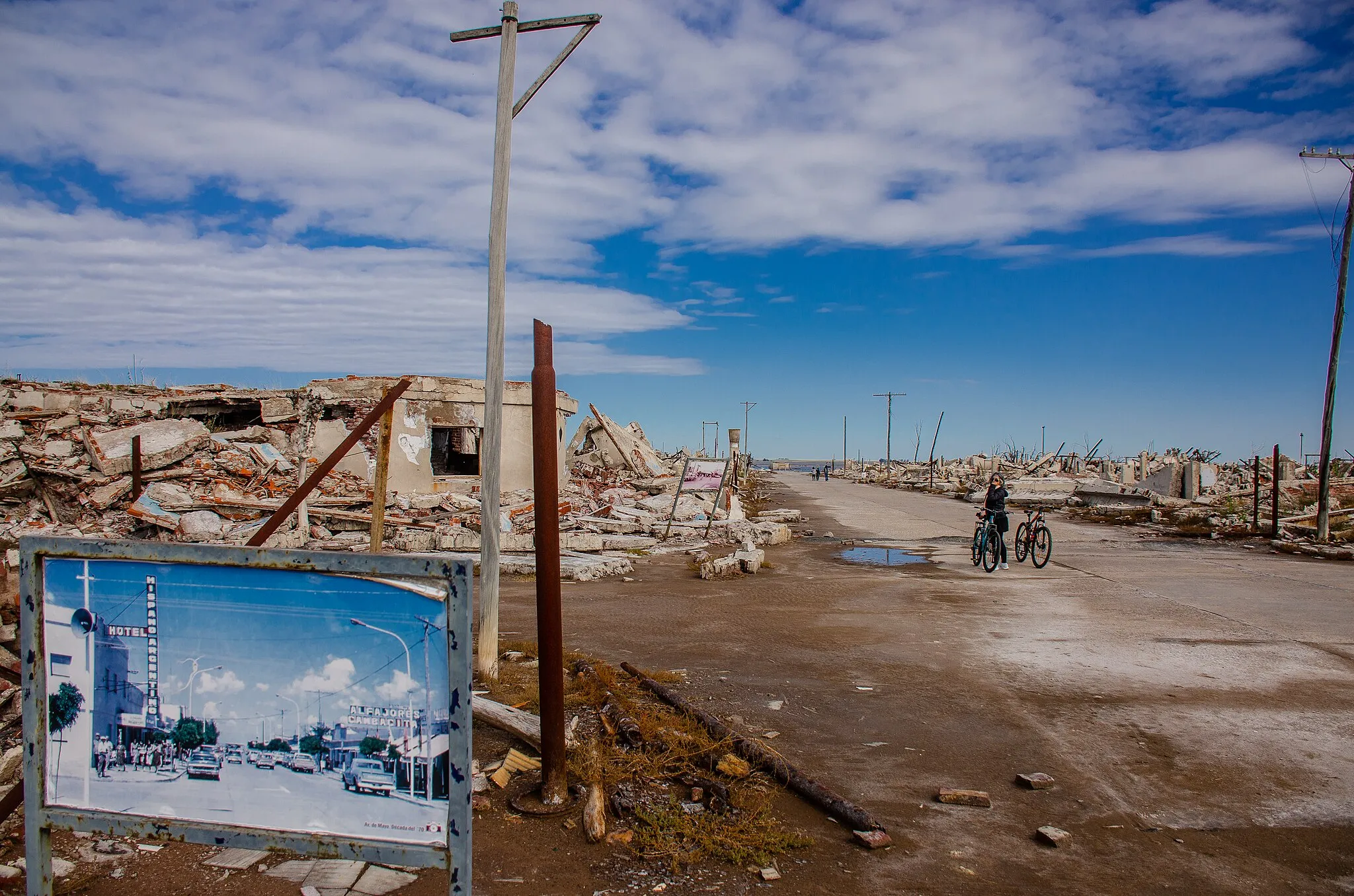
Villa Epecuén is in Buenos Aires Province, on the eastern shore of Lake Epecuén, in the partido of Adolfo Alsina. It sits at about 97 metres above sea level and, depending on the source, between roughly 7 and 12 kilometres from the town of Carhué. Today it is a ghost village. The streets are still there, along with the stumps of trees and the shells of buildings, but almost everything is the colour of chalk.
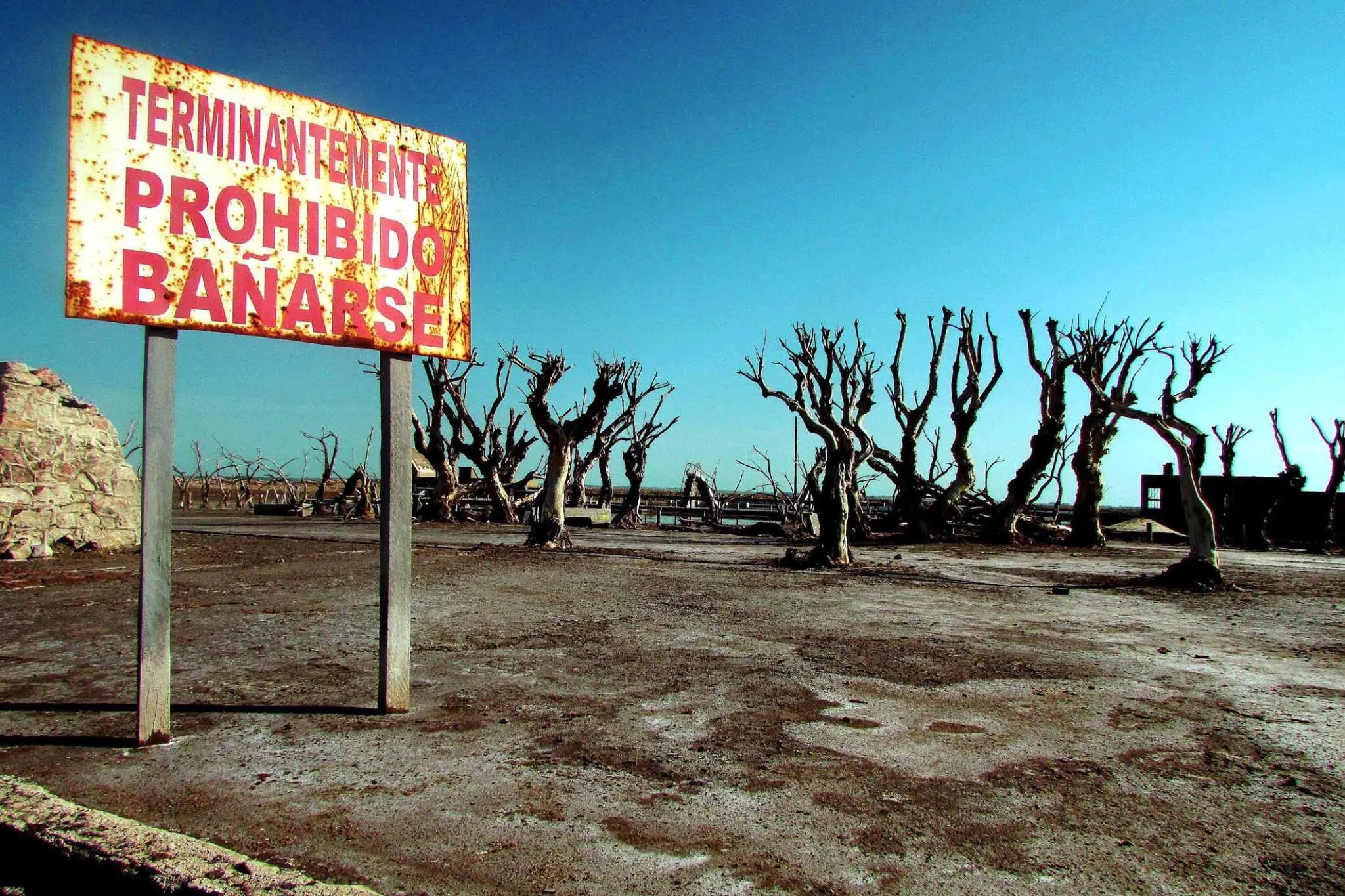
The reason is the lake. For about twenty-five years, the entire town sat under water that carried so much salt that it preserved some things and ate others. When the lake went down, the dead trees were bleached, the concrete was pitted and the ground was crusted white. One visitor wrote that the trees looked burnt rather than drowned. Another described the place as a city chewed to its bones.
It is easy to treat that as a curiosity, a photographer’s location, and it is that too. But Villa Epecuén was a real town where people spent holidays and raised families. Its story is also an example of what can happen when a region’s water has nowhere to go.
A spa resort in the Pampas
Lake Epecuén is part of a chain of lakes in the west of Buenos Aires Province. The other lakes in the system include Alsina, Cochicó, del Monte and del Venado. The system has no drainage outlet, so the water that arrives by streams has nowhere to go. The water in Epecuén is extremely salty: one source gives almost 350 grams of salt per litre, which is roughly ten times the salt content of typical seawater. Visitors compare it to the Dead Sea, and local lore says the lake formed from the tears of a heartbroken chief.
The first resort on the shore was established in the early 1920s. Wikipedia gives 1920 in its summary and “early 1920s” in the text, and other sources say 1921. The land was leased by an Englishman, according to one source, who promoted the lake for its supposed healing powers and hired Italian scientists to support the claim. Visitors came for the water’s reputed healing properties.
The location helped. The Sarmiento Railway line ran a station at Villa Epecuén, which gave direct access from Buenos Aires. Other lines, the Midland Railway and the Buenos Aires Great Southern Railway, brought passengers to Carhué.
The golden years
The village grew through the middle of the twentieth century. By its peak, up to 280 businesses were operating, including lodges, guesthouses and hotels, and the village could accommodate at least 5,000 visitors at once. Sources give the number of tourists as about 20,000 in a year in one place and up to 25,000 in a November-to-March season in another. Pablo Novak, who lived there, said it rivalled Mar del Plata, Argentina’s best-known Atlantic resort, for city holidaymakers in the 1950s, 1960s and 1970s.
The year-round population was much smaller than the visitor numbers. Wikipedia gives a peak population of about 1,500. One travel piece says about 2,000, though it also quotes a resident who put it at 1,500. A 2011 article and a 2015 one say 5,000. That last number is probably the capacity figure, meaning how many people the village could hold in summer, rather than the number who lived there all year, and the sources do not explain the gap.
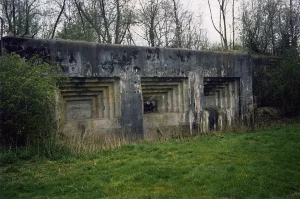
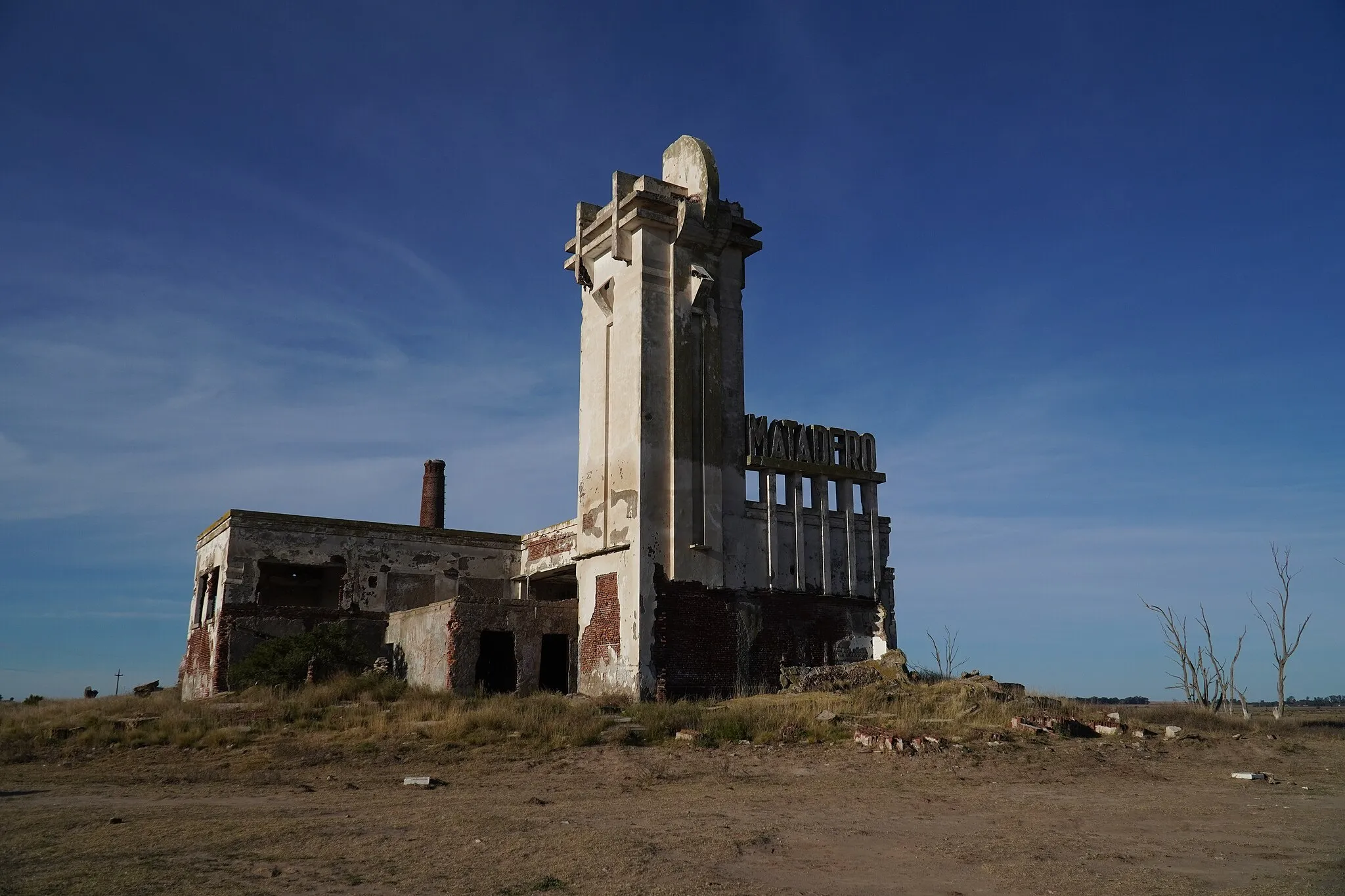
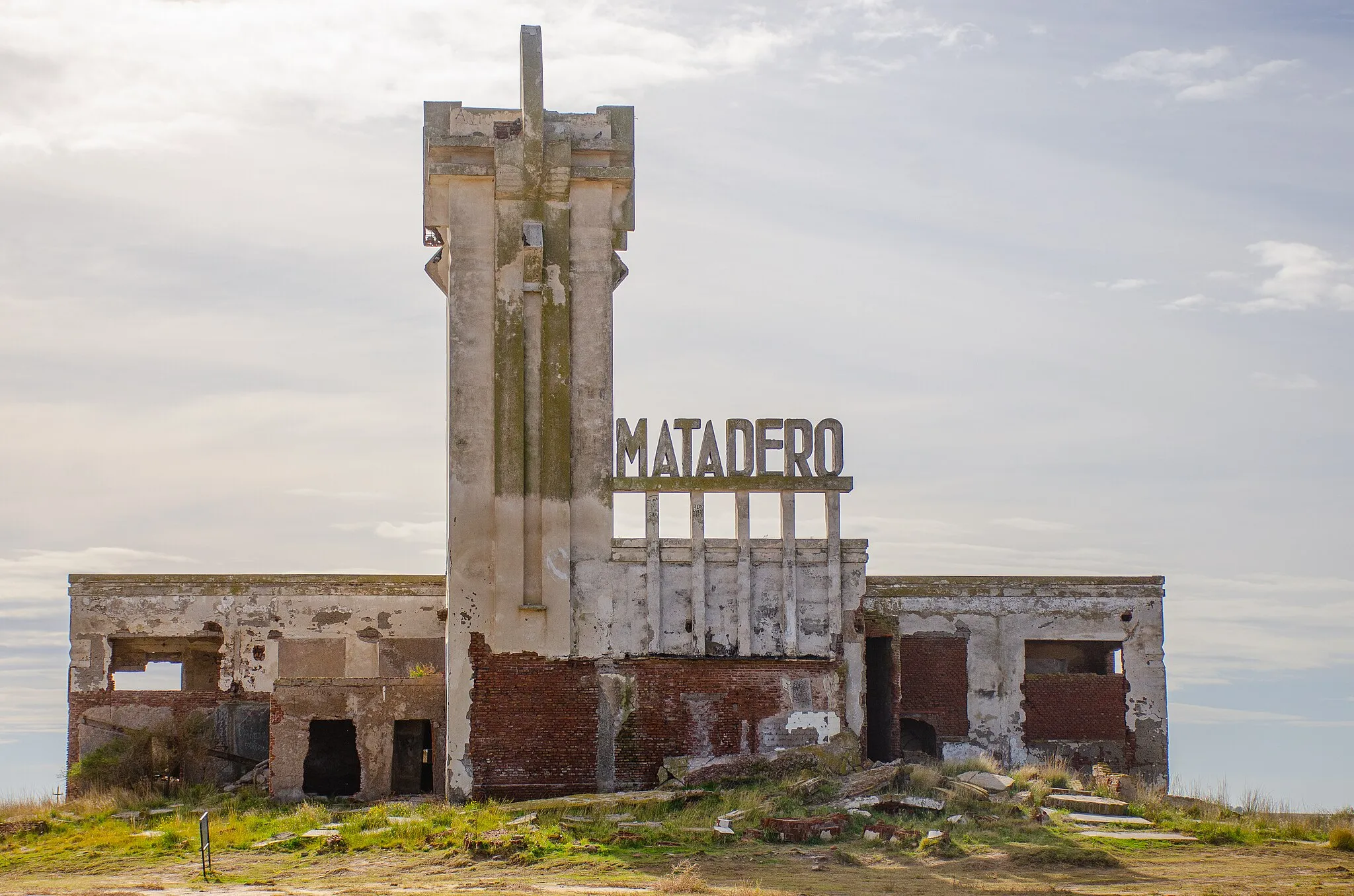
The Art Deco architect Francisco Salamone designed the slaughterhouse at the entrance to Villa Epecuén, and also Carhué’s city hall. The town cemetery dated back to 1890, which makes it older than the resort itself.
The lakes begin to rise
The problem began years before the flood. The first floods came in 1977. To control the water, a collector channel known as the Florentino Ameghino canal was built in 1979. It was 92 kilometres long, 30 metres wide and 2.5 metres deep, and it was said to have cost 30 million dollars, according to an anthropologist’s paper from 1997. A plug on the Huascar stream was repeatedly broken by the currents.
One account says that no complementary regulation works were carried out from 1980 to 1985, and puts that down partly to poor foresight by the agencies responsible. It is a harsh judgement and it comes from one author, so it is best taken as a view. Other sources say simply that years of heavy rain put pressure on the defences. By 1985, almost five million hectares of Buenos Aires Province were flooded, so Epecuén was one town in a much wider disaster.
Pablo Novak said his father had warned that the water would come back to land where people were building in the 1980s. Novak’s family had helped build the town, and he always assumed it would be rebuilt after any flood. That did not happen.
November 1985: the embankment gives way
The sources agree on the broad story and differ on the details. One version, from Wikipedia, says that a rare weather pattern produced a seiche, a sloshing of the lake’s water, that first broke a nearby dam and then the dike protecting the village, on 6 November 1985. Another says the terraplén, the earth embankment that held the water back, gave way on 10 November 1985 after years of rain and growing pressure. A third gives 10 November for the start of the flooding and 17 November for the evacuation. The most sensible reading is that the water broke through in the first half of November and that the evacuation took days.
The water flooded the fields first, and animals, including cows, horses, pigs, sheep and goats, had to be driven to higher ground. According to a 2011 account, people first waited on their roofs, assuming the water would go down, and within two days of the initial surge the town was almost empty. Pablo Novak, who remembered that night, said that “a sense of helplessness filled the air”, as people heard the screams and saw the tears.
The water rose to a peak of about 10 metres. A different source says more than 30 feet, which is the same depth in other units, and another says dozens of feet. One source says no one died. People lost their homes and most of what was in them, and they had to leave at once. Most of them moved to Carhué and never came back.
One of the strangest details concerns the cemetery. As the water rose over the graveyard, coffins began to float. From December 1985, workers called extractors began removing the coffins, and some had drifted up to the houses. Novak told firefighters whenever a coffin floated up to his own house.
Twenty-five years under water
The village was not rebuilt. For more than two decades the water stayed. The sources give the length of the submersion as more than 20 years, about 25 years and, in one headline, 30 years. The differences probably come from different counts of the starting and ending points, because 1985 to 2009 is about 24 years.
When the lake finally went down, the change came from the climate and the weather, not from engineering. A long-term shift in regional rainfall lowered the water level. One source says the water receded between 2007 and 2008, and that by 2009 the town could be reached and a clean-up had begun. A 2011 article says the town began re-emerging a couple of years earlier, which fits.
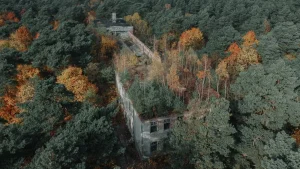
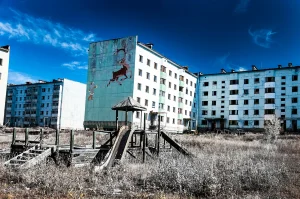
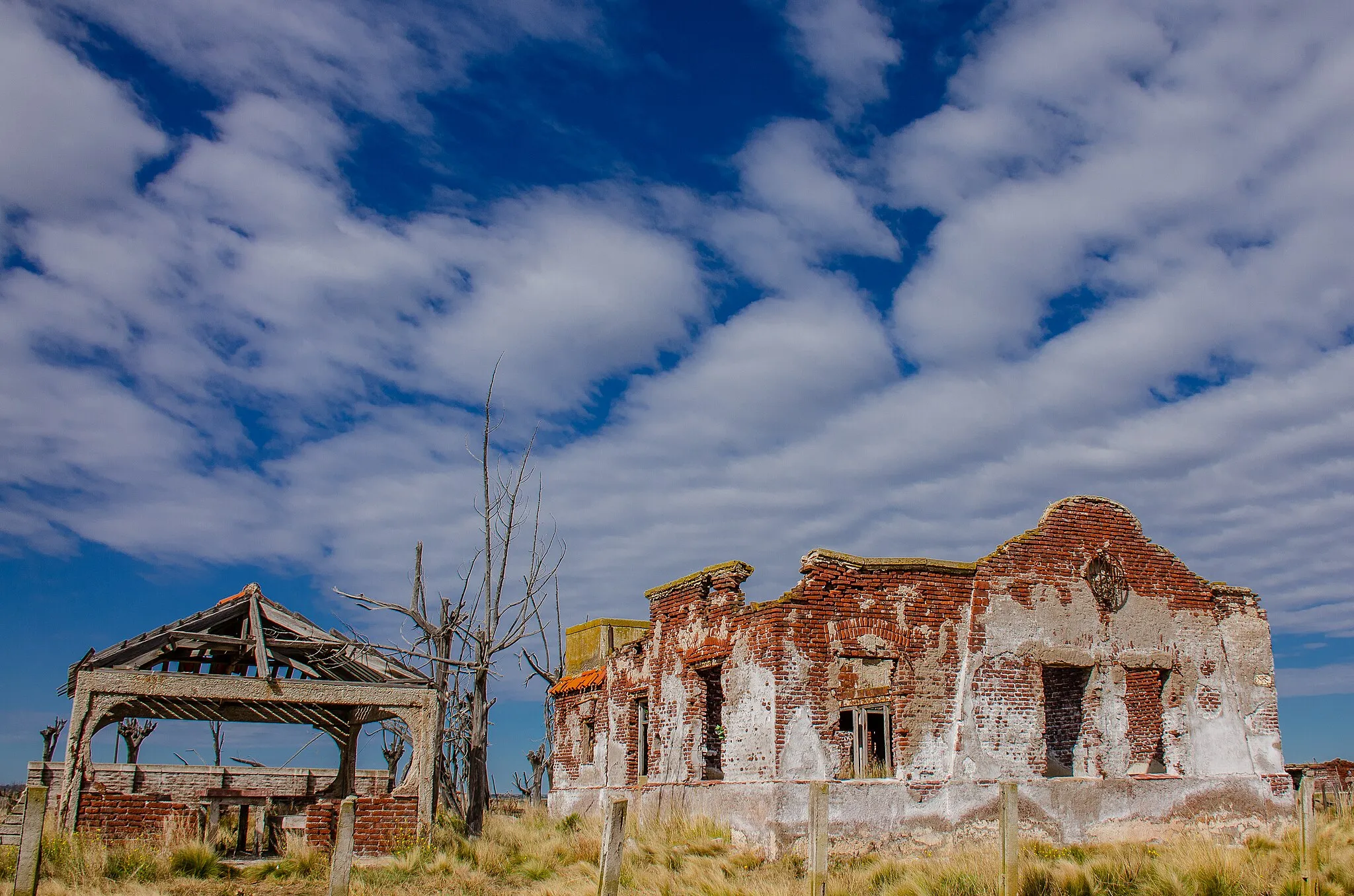
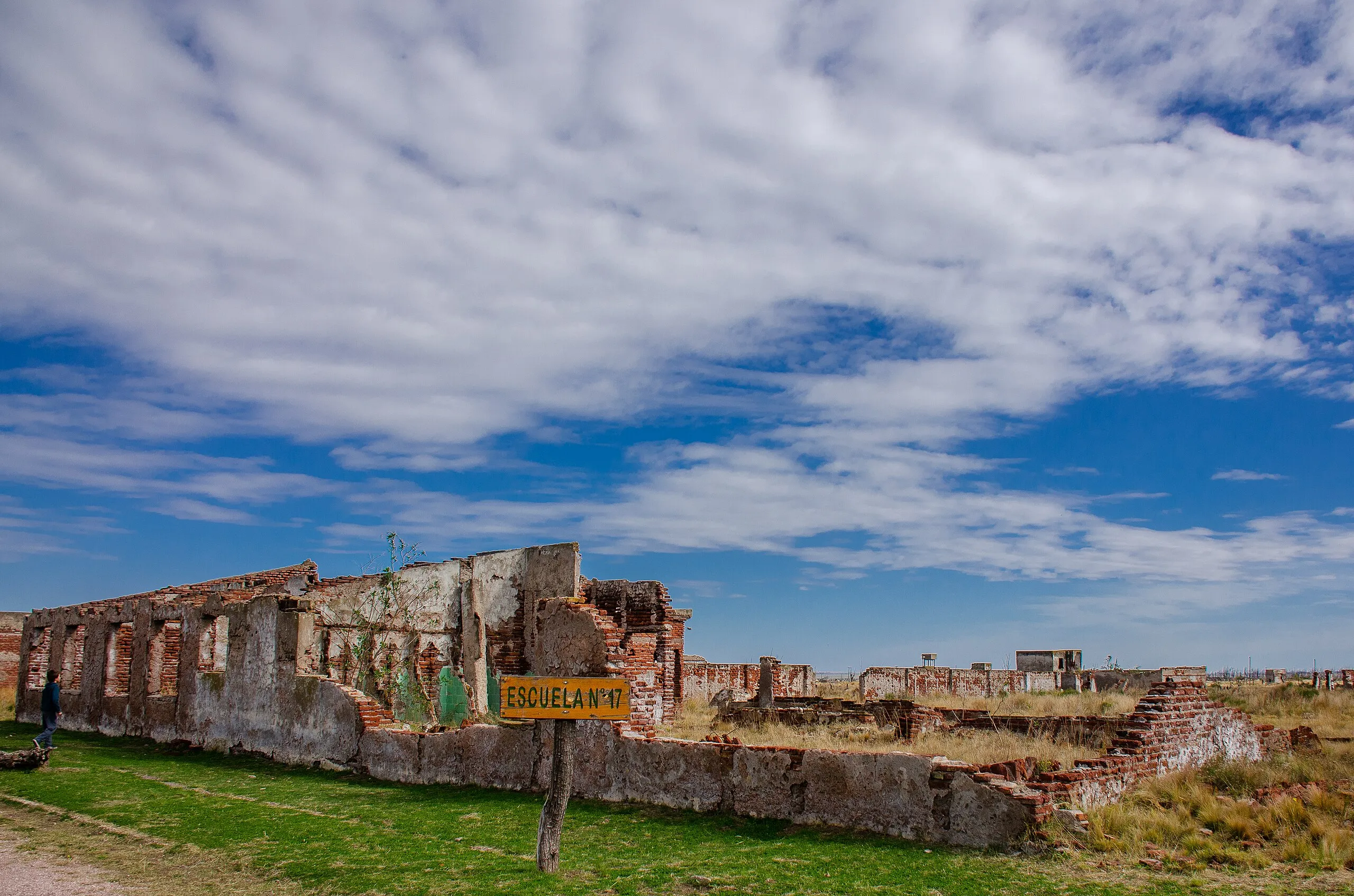
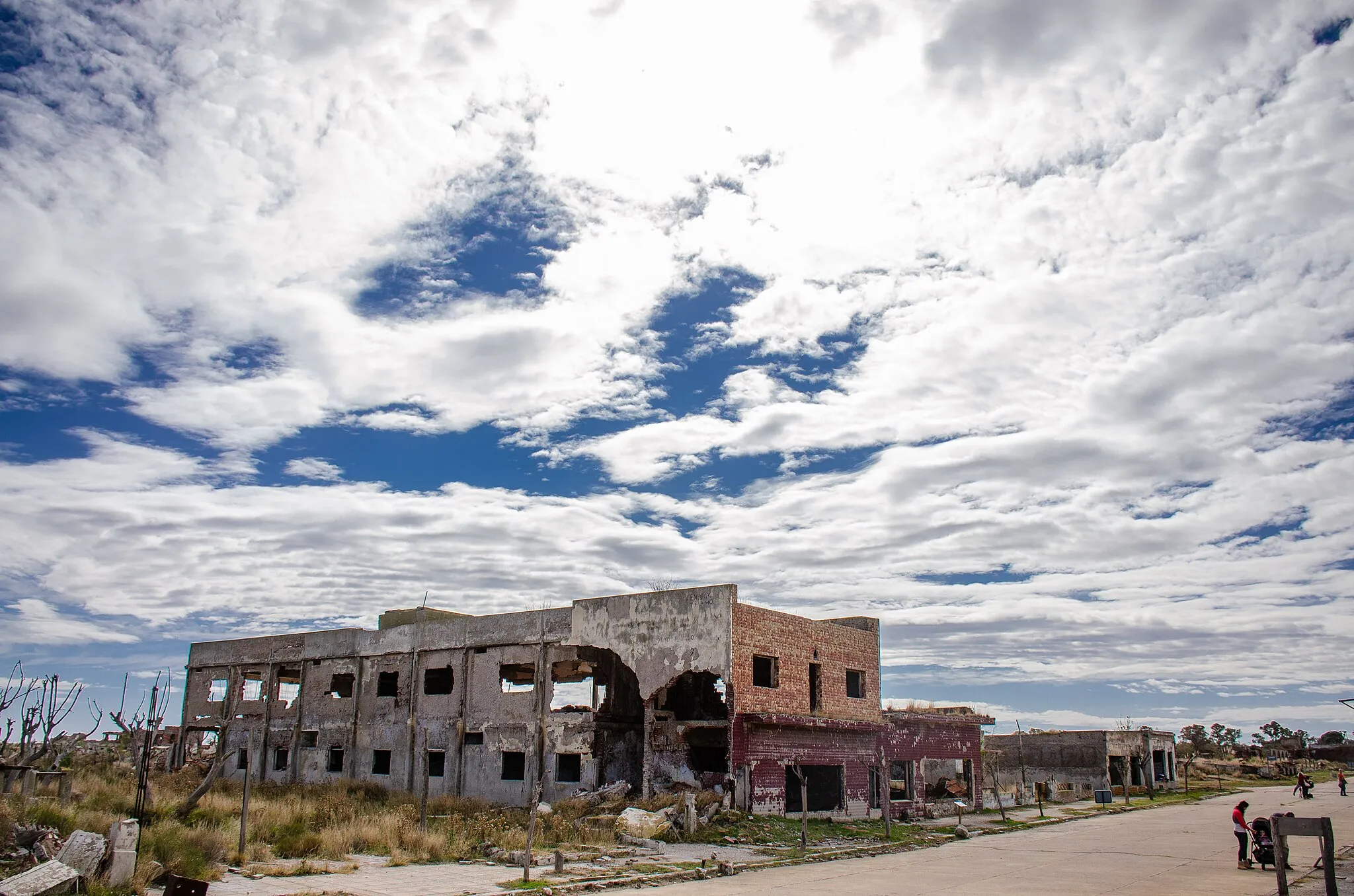
What they found was a town ruined by salt. Trees stood in rows, and road signs marked derelict hotels. The ruins of the municipal spa were visible. The salt had bleached the wood and corroded the walls. One visitor in 2011 found beds, Coke bottles, plates, glasses, number plates and signposts scattered among the trees.
Carhué and the monuments
Carhué, the nearby town, took in most of the people who had left. It is about 12 kilometres from the village by one account and 7 by another, so the sources again disagree. It is the best base for anyone who wants to visit, because the village has no permanent inhabitants and no overnight accommodation.
Not everything was left to the water. One account says that Carhué authorities had monuments above the waterline demolished at night, by boat, and that the action was contested. Some locals say a referendum was held. The concrete Christ designed by Salamone was moved closer to Carhué, and it now stands on a wooden platform reached by ladder.
Pablo Novak, the last resident
The best-known person in the story is Pablo Novak. Born in 1930, he came from a family that had helped build the village. After the flood, his family bought a home in a neighbouring village. In 2009, when the water had gone down, he came back to his old home. Another source says he moved back about 20 years after the flood, which is close.
For years he was the only person living in the ruins. Sources describe his home in different ways: a stone hut with a fridge, a hob and calendars on the wall; or a well-equipped house four blocks from the ruins, which he shared with his dogs. He refused to move to Carhué. He gave guided tours of the ruins to journalists and visitors, and a video tour he narrated of his old home town won awards. CNN called him Argentina’s loneliest man, and a 2013 documentary, Pablo’s Villa, followed him and the town.
Novak died on 22 January 2024. After his death, according to Wikipedia, Villa Epecuén was officially declared a deserted village, and the population is recorded as zero.
What there is to see
The ruins today are a mix of the dramatic and the quiet. The slaughterhouse by Francisco Salamone stands at the entrance. One writer who stayed in it in 2011 found it smelling of the sea after about 25 years under water, with thousands of pigeons roosting inside and the tarmac road outside disappearing into the lake. Dead trees stand in neat rows, with knotted roots about a metre above the ground.
The former railway station has been turned into a free museum, with old photographs and salvaged objects such as record players and clothing. Other sights include damaged homes, rusted cars, the remains of the spa and the white crust that covers much of the ground.
The village is also a film and television location. It appeared in the 2010 film And Soon the Darkness, starring Amber Heard and Karl Urban, and in a street trials video by the cyclist Danny MacAskill. It was in the television series Abandoned Engineering and Mysteries of the Abandoned. The director Roland Joffé was filming There Be Dragons near the slaughterhouse when one visitor was there, according to that visitor.
Visiting Villa Epecuén
Villa Epecuén is a day trip, not a place to sleep. Carhué is the base. One travel piece says the village is about a 20-minute drive from Carhué, or a walk of about an hour and a half, and that visitors can take a coach from Retiro terminal in Buenos Aires to Carhué, a trip of about nine hours. The same piece says a hotel and spa in Carhué has thermal pools and offers guided tours of the village. A 2026 Argentine news piece describes Epecuén as a tourist attraction that draws travellers, photographers and curious visitors.
The details are less clear. A 2011 account said the site was not protected by law, and that people often scavenged there. The sources do not give entry fees, opening hours or current rules, and the details above come from travel pieces of different years. Anyone planning a trip should check locally before relying on them.
The ruins deserve some caution. The ground is crusted with salt and buildings are damaged. Stay out of buildings that look unstable and leave things where they are. The place is a memorial for the people who lost their homes.
Conclusion
Villa Epecuén is a place defined by water. The lake that attracted holidaymakers in the 1920s, for its salt and its supposed cures, was also the lake that took the town in 1985, and the lake that gave it back a quarter of a century later, in a condition no one had planned for. One source says no one died in the flood, but the town did. It was never rebuilt, and the people who lived there spent the next decades in Carhué and elsewhere.
The last chapter of the story belonged to one man. Pablo Novak went back to the town after the water left, lived among the ruins for years, and gave tours to anyone who came. With his death in 2024, the village lost its last resident. What is left is a landscape of salt, dead trees and concrete, which keeps drawing visitors who want to see what a drowned town looks like when it comes back.
Did you know?
- Lake Epecuén contains almost 350 grams of salt per litre, which is roughly ten times typical seawater.
- Villa Epecuén was developed in the early 1920s, and one source says an Englishman leased the land and promoted the lake's healing properties.
- At its peak, up to 280 businesses operated in the village.
- The Sarmiento Railway line had its own station at Villa Epecuén.
- The Florentino Ameghino collector channel, built in 1979, was 92 km long and reportedly cost 30 million dollars.
- Sources give 6 November or 10 November 1985 for the flood, with evacuation on 17 November in one account.
- The water reached a peak of about 10 metres, which is more than 30 feet.
- Almost five million hectares of Buenos Aires Province were flooded in 1985.
- As the water covered the cemetery, coffins floated, and workers began removing them from December 1985.
- The water receded between about 2007 and 2009.
- The slaughterhouse at the entrance was designed by the architect Francisco Salamone, who also designed Carhué's city hall.
- Pablo Novak, born in 1930, returned in 2009 and lived among the ruins until he died on 22 January 2024.
- The village appeared in the 2010 film And Soon the Darkness and in the 2013 documentary Pablo's Villa.