

A laboratory at the top of Switzerland
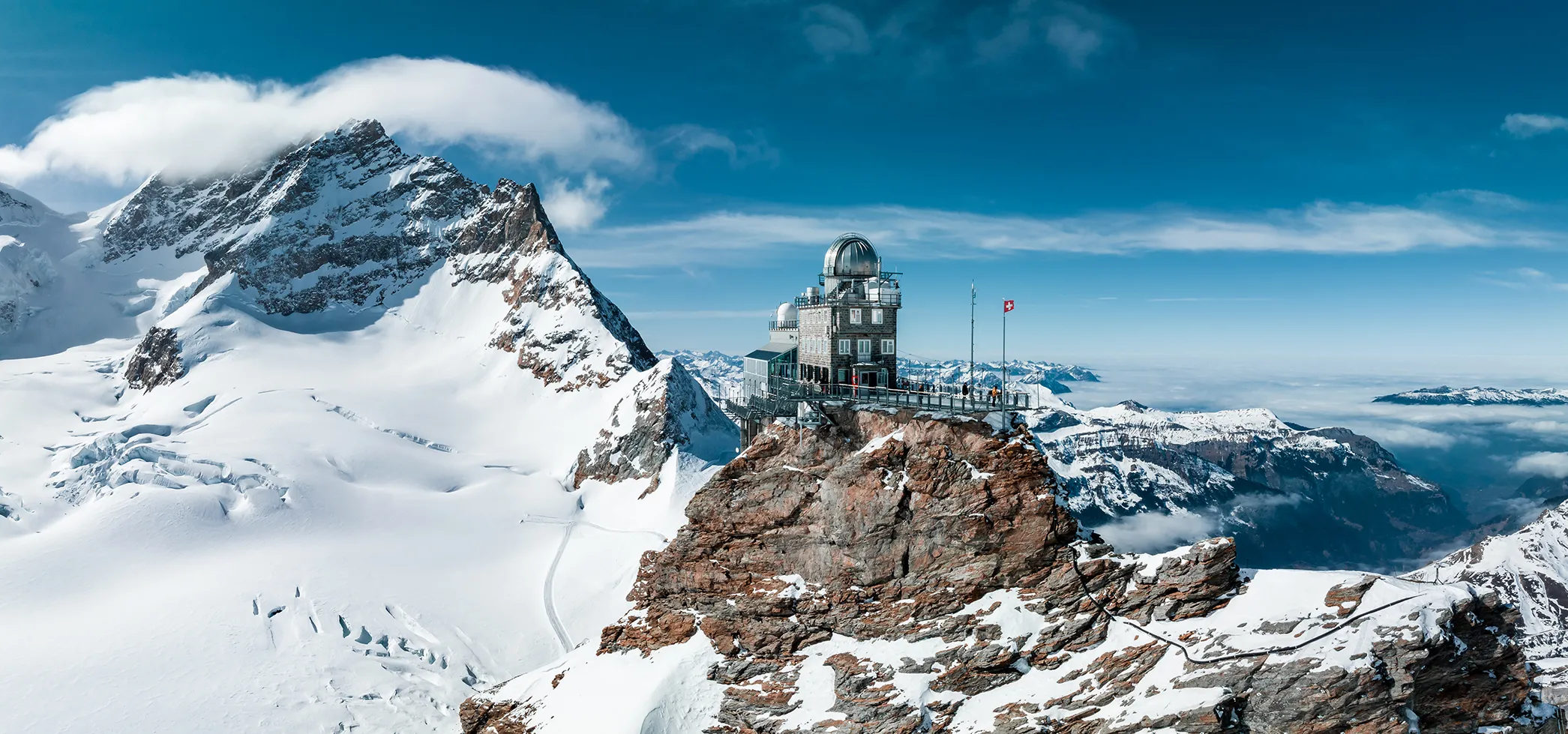
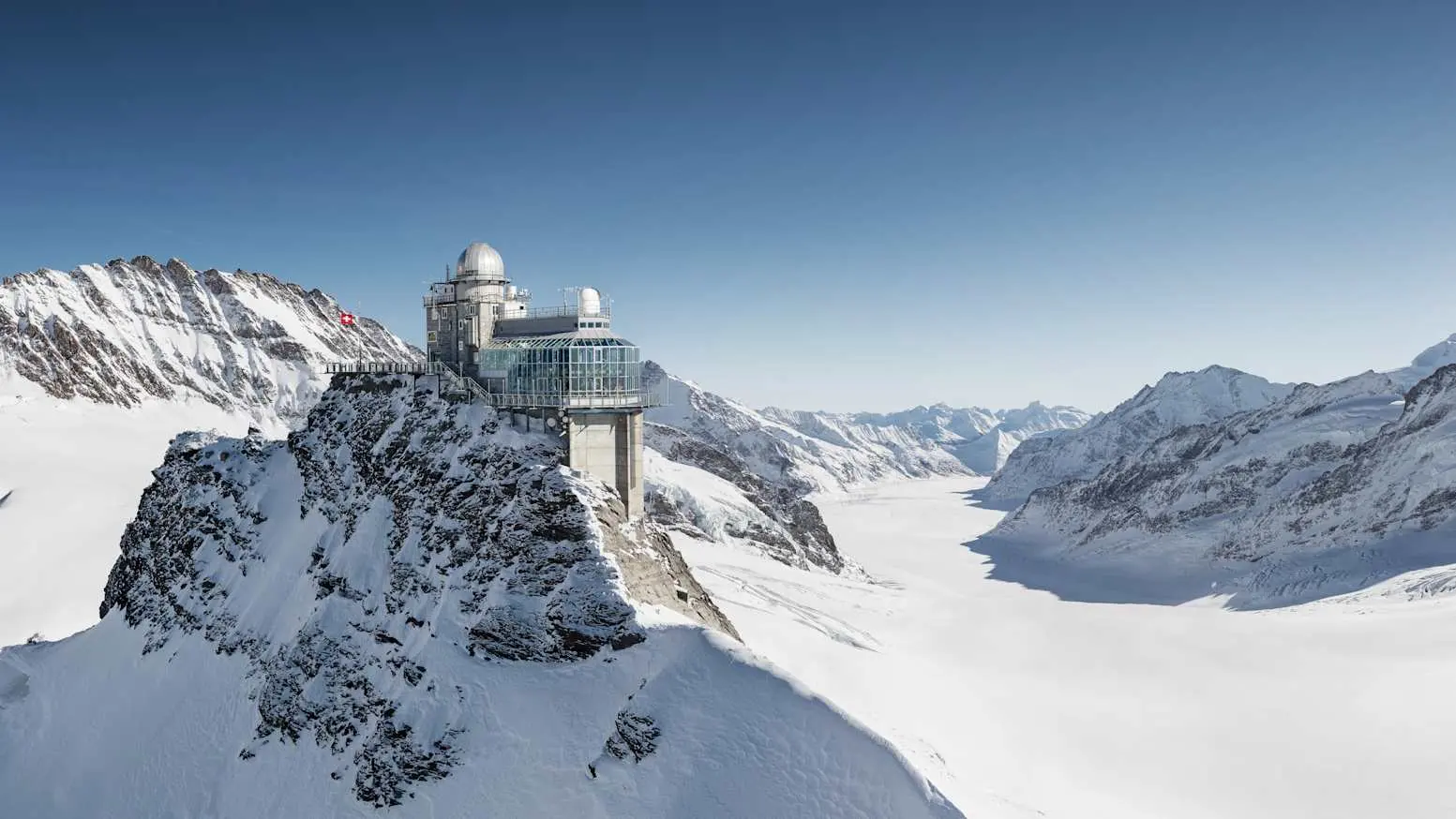
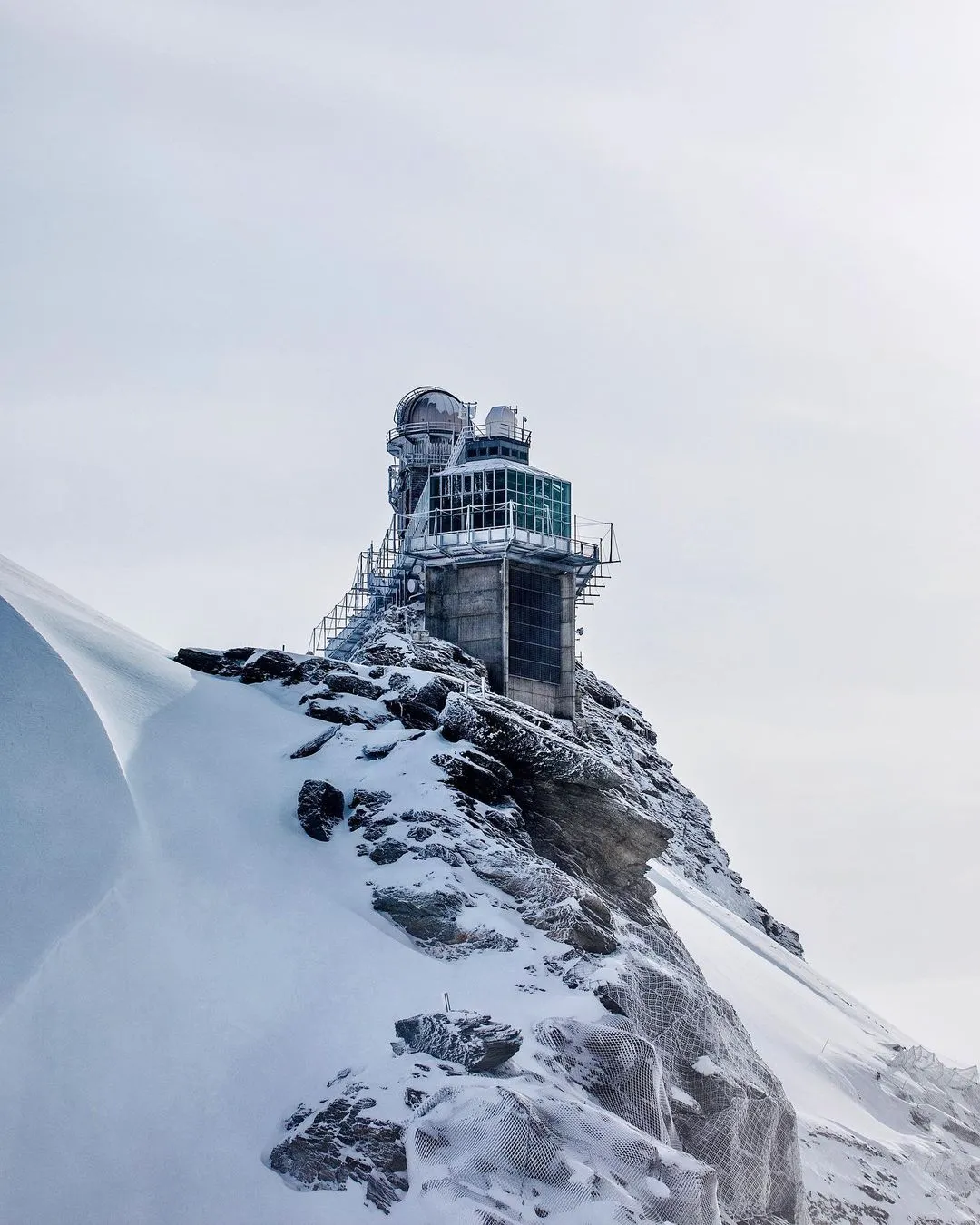
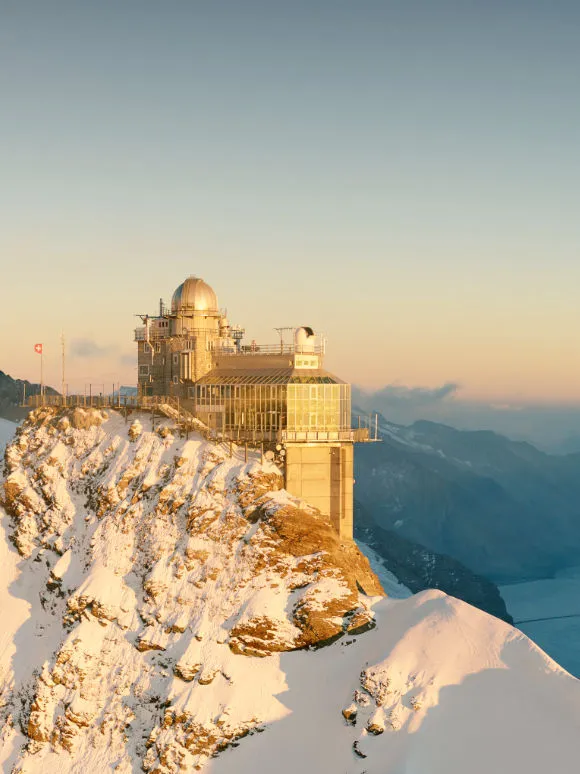
The Sphinx Observatory sits on a rocky summit above the Jungfraujoch, the saddle between the Jungfrau and the Mönch in the Bernese Alps, on the border of the cantons of Bern and Valais. It stands at about 3,571 metres, or 11,716 feet, with the viewing platform given as 3,572 metres in one source, and it is among the highest observatories in the world. The research station below it, at about 3,450 metres, is on the upper end of the Aletsch Glacier, inside the Swiss Alps Jungfrau-Aletsch World Heritage area.
The railway that made it possible
None of this would exist without a railway. In 1894 the industrialist Adolf Guyer-Zeller received a concession to build a line towards the summit of the Jungfrau, and the Swiss Federal Council made it a condition that the project support a research station. Construction began in 1896, tunnellers broke through to the Jungfraujoch on 21 February 1912, and the station was inaugurated on 1 August 1912. Guyer-Zeller died in 1899, and an explosion that year killed six workers and led to a four-month strike. The line never reached the summit, and it ended at the saddle.
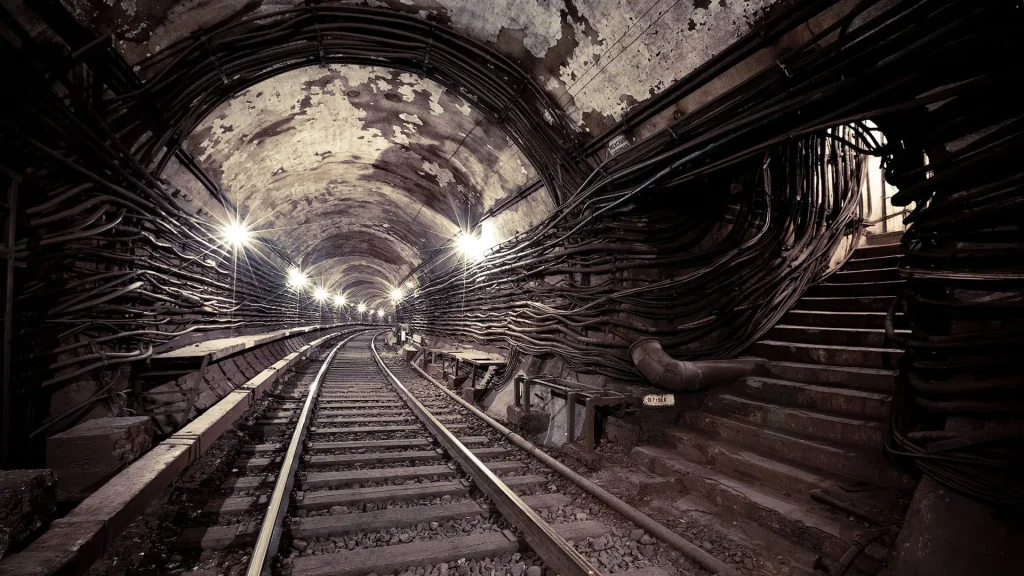
The railway runs for about 9.3 kilometres from Kleine Scheidegg, around 80% of it in tunnels, partly under the Eiger and Mönch. The station is at 3,454 metres and is described as the highest in Europe. The railway climbs about 1,400 metres in roughly 30 minutes, and it was the route for every part, tool and person that went to build the research station. The research station is on the south slope, a short walk from the station through a tunnel.
Science before the station
The idea of a laboratory came first from Alfred de Quervain, a Swiss geophysicist and Arctic researcher who judged in 1912, after returning from Greenland, that the Jungfraujoch, with its railway and hotel, was well suited to a high-alpine station. In 1922 the Swiss Academy of Sciences set up a Jungfrau Commission, and from 1922 to 1927 astronomers observed from the terrace of the Hotel Berghaus while cosmic radiation was measured at the Mönchsjoch. The physician and Nobel laureate Walter Rudolf Hess became president after de Quervain and widened the research. He favoured a guest principle that opened the station to Swiss and foreign scientists alike, and it became an international institution.
Building the research station, 1929 to 1931
Ground preparation began in 1929 beside the Berghaus Jungfraujoch. The Zurich architects Gebruder Pfister planned and supervised the build, and costs rose quickly because the rock was fractured, wet and prone to rockfall. A long tunnel dug from the railway station through the Sphinx nearly exceeded the project budget. On 2 August 1931 a rockfall damaged the flat roof, which had to be cleared. The station opened in summer 1931 (4 July in two sources), after just over two years of work. It had laboratories, a library, a kitchen, bedrooms and a dining and common room, and it received its first guests soon afterwards. Switzerland offered it as an international facility at a time when many European countries were closing their borders.
The observatory, 1937
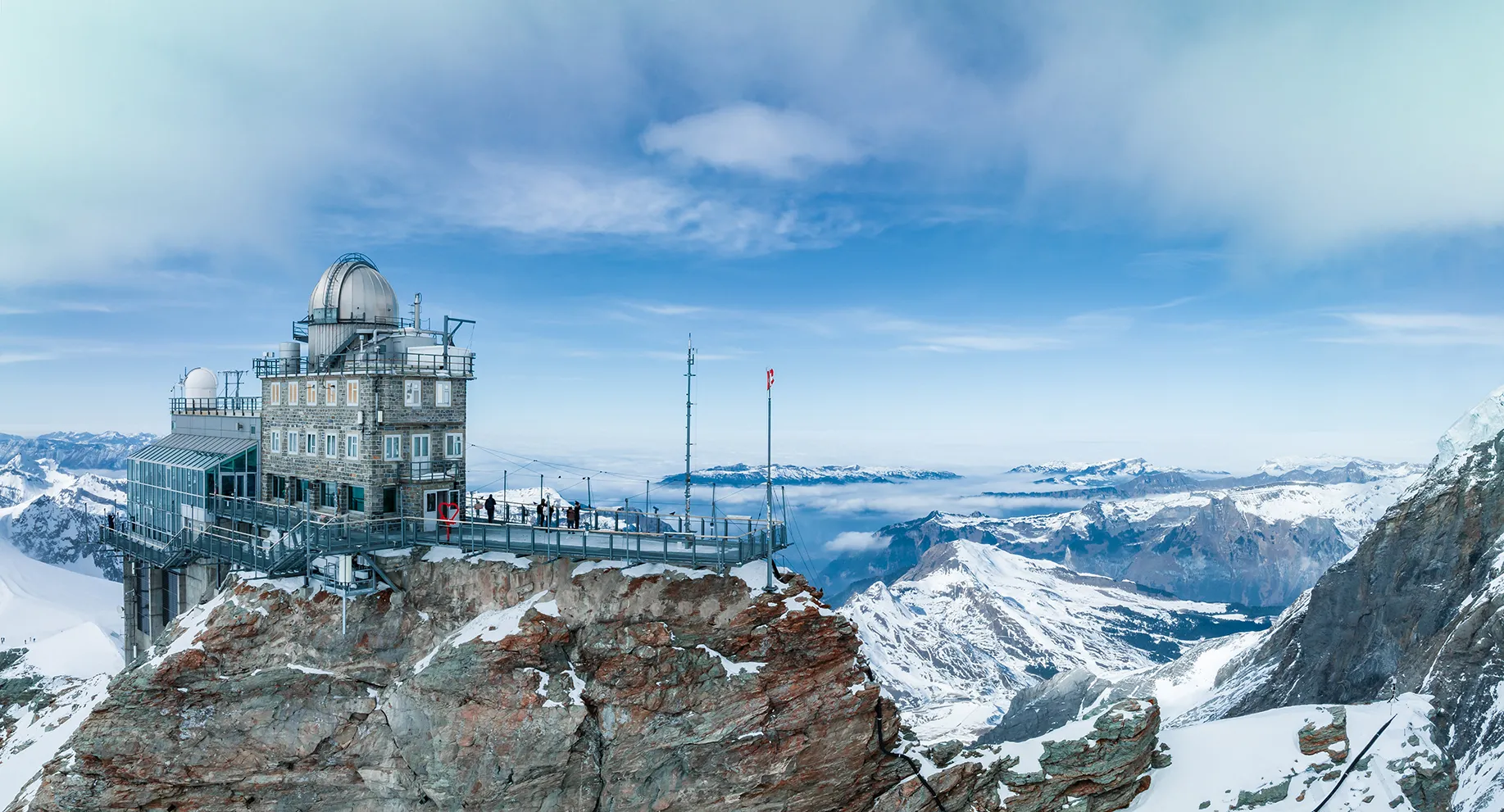
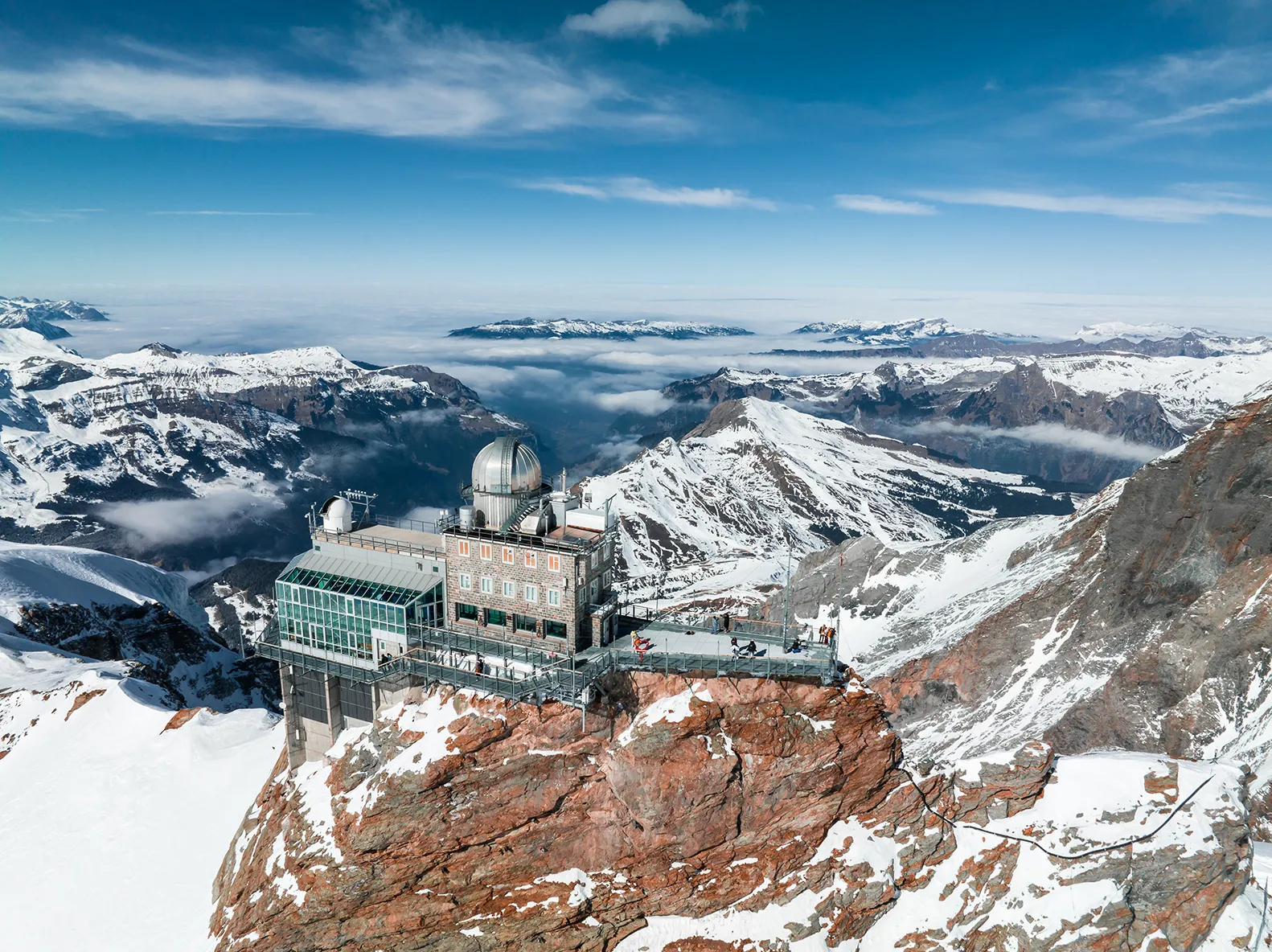
In 1937 an observatory was added on the summit of the Sphinx. It opened with one lift, which in the 1990s was replaced by two modern ones, and these have since been modernised. According to one account the lifts rise about 108 metres in 25 seconds, pulled by machines that weigh over two tonnes each in shafts cut from the rock. The same work in the 1990s added a glazed viewing hall and terraces around the building. An astronomical dome followed in 1950, paid for with UNESCO funds.
The observatory is part of the Sphinx building, which belongs to Sphinx AG Jungfraujoch, a subsidiary of Jungfraubahn Holding. It is at the disposal of the international foundation that runs the high-alpine research stations, known as HFSJG, and space for other projects is available on request.
What is inside
The observatory has two large and two small laboratories, two terraces for experiments, a workshop and a weather observation station. There are two cupolas, one astronomical and one meteorological. The astronomical dome holds a 76 centimetre telescope with Cassegrain and Coude foci, which is no longer in use. Many long-term experiments are installed in the laboratories. The research station itself has five laboratories, a library, ten bedrooms and a machine that makes liquid air for cooling, and in 2014 the foundation added lab space on the Jungfrau east ridge, at 3,700 metres, in a former relay station.
The science
The research station covers the effects of altitude on the body, the composition of the air, and meteorological and astronomical observations. In the early years it concentrated on altitude medicine and radiation physics. The British physicists Patrick Blackett and Cecil Powell each refined measurements of cosmic rays here, independently of one another, and they won the Nobel Prize in Physics in 1948 and 1950. In 1949, nuclear emulsion plates exposed to cosmic rays at the Sphinx gave early precise evidence for the charged K-meson. The Belgian scientist Marcel Migeotte measured the sun’s spectrum from here, work that is still used to check whether the ozone layer and greenhouse gases are recovering, and the observatory serves as a solar spectrometer for the University of Liege. Max Perutz, later a Nobel laureate in chemistry, studied glacier ice here with support from British ski clubs.
Astronomy now matters far less than the air. The station is a global centre for atmospheric research, with around 50 projects measuring more than 100 parameters, and it belongs to the Global Atmosphere Watch network. It plays a key role in a lidar experiment run by EPFL, the Swiss federal technical university in Lausanne. A few hundred researchers visit each year. A gas analyser nicknamed Medusa, because of its many steel lines, tests a fresh sample of air every hour. Swiss atmospheric chemists from Empa were the first in the world to measure modern refrigerants here, and the weather models they use can trace polluted air back to France, Germany and the Po Valley, and sometimes to individual factories.
We measure up here because we normally have very clean air.
Stefan Reimann, atmospheric chemist, Empa
The research station has outlasted many comparable high-alpine projects of the 20th century, largely because of the international foundation behind it. It carries two awards, EPS Historic Site from the European Physical Society and Chemical Landmark from the Swiss Academy of Sciences. Peking University joined the foundation in spring 2020. Thawing permafrost is now a concern for future rockfall risk.
Extreme conditions
The conditions are harsh. Records for the Jungfraujoch site show air temperatures from -36.6 degrees Celsius on 6 March 1971 to 12.8 degrees on 19 August 2012, with a mean of about -7 degrees, and a peak gust of 267 kilometres per hour on 6 January 1998. Air pressure has ranged from 614.6 hectopascals in 1989 to 675.1 in 2015. Oxygen is about a third lower than in the valley. High altitude affects breathing and concentration and can cause headaches and dizziness, which is why workers who install equipment at the Sphinx rest and acclimatise first.
Living at the top
The station also has a household. Two custodian couples work in alternating shifts, looking after the building, hosting the researchers and sending daily weather reports to MeteoSwiss. When the Swiss news site swissinfo profiled one of them, Martin and Joan Fischer, they worked three weeks at a time before another couple took over for 11 days. Martin starts around six in the morning by clearing snow from the Sphinx terrace and takes weather readings five times a day, while Joan looks after the rooms and meals and leads two or three tours a month. The station has ten rooms for up to 20 researchers and had 1,000 to 1,500 overnight stays a year.
We run something like a hotel: the researchers check in and out.
Joan Fischer, custodian of the research station
Alexander von Muralt, one of the foundation’s presidents, called it a “scientific hotel” in much the same spirit.
On screen
The observatory has appeared in the films The Grand Budapest Hotel, The Hero: Love Story of a Spy and Krrish 3, in episode 16 of the Korean drama Crash Landing on You, and in a leg of the American series The Amazing Race. It features in the 2016 video game Steep, and it heavily inspired the 2025 game Abiotic Factor.
Visiting
The public viewing deck beside the observatory looks out over the Jungfrau, Mönch and Eiger, which are all within a few kilometres, and in good weather over the Aletsch Glacier and parts of France, Germany and Italy. You reach it by the Jungfrau Railway and then a walk of about ten minutes through a tunnel to the lift through the rock. More than half a million people a year come to the Jungfraujoch. The laboratories are for researchers, though a small exhibition on the station’s history is inside the mountain. The deck is open during the railway’s operating hours, so check with the Jungfrau Railway for prices and times. At this altitude it can be cold, with thin air, so dress warmly and take it slowly.
Conclusion
The Sphinx is a working laboratory with a view. It was cut into the rock by builders who had to fight rockfall and the cost of altitude, and for almost ninety years it has kept measuring the air, the sky and the cosmic rays that reach it.
Did you know?
- The Sphinx Observatory stands at about 3,571 metres above sea level.
- The railway concession of 1894 required support for a research station.
- The research station opened in 1931, and the observatory was added in 1937.
- The Jungfraujoch railway station, at 3,454 metres, is described as the highest in Europe.
- The lifts rise about 108 metres in 25 seconds, according to one account.
- Blackett and Powell, who both won physics Nobel prizes, refined cosmic-ray measurements here.
- In 1949 plates exposed to cosmic rays here gave early evidence for the charged K-meson.
- A peak wind gust of 267 km/h was recorded at the site in 1998.
- The coldest temperature recorded at the site is -36.6 degrees Celsius, on 6 March 1971.
- A gas analyser nicknamed Medusa tests the air every hour.
- Peking University joined the foundation in 2020.