An island with a quiet name
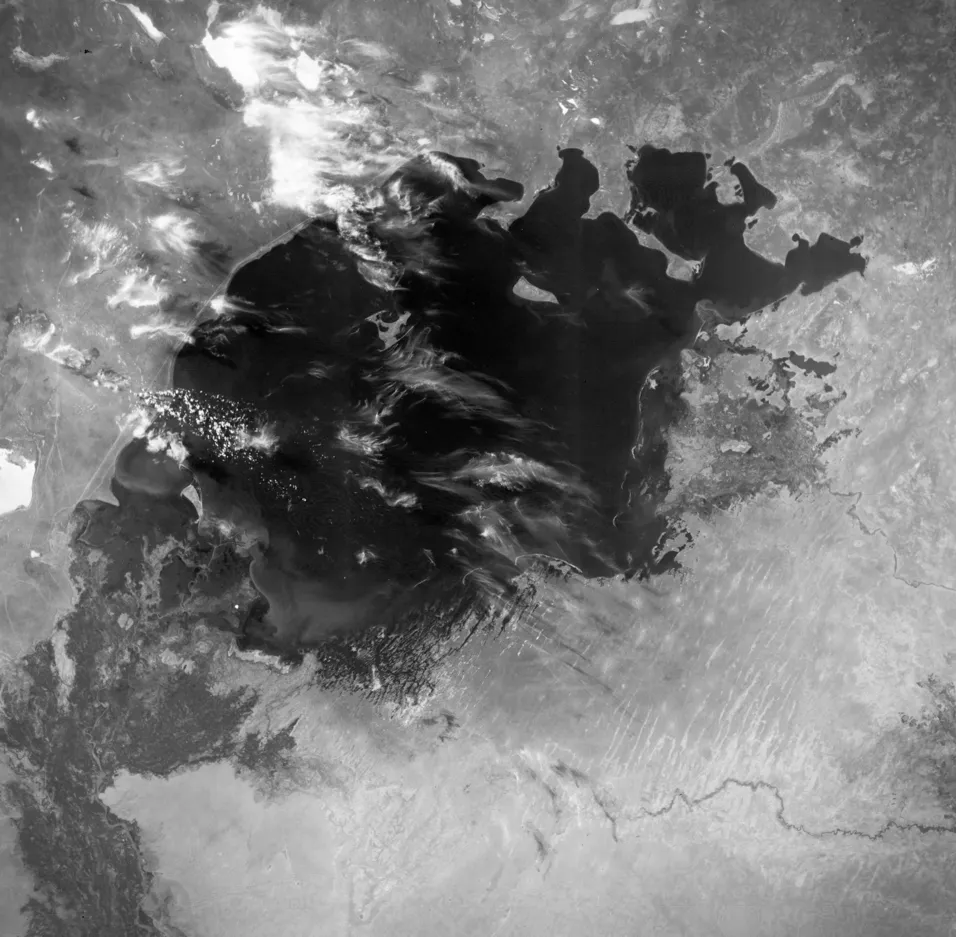
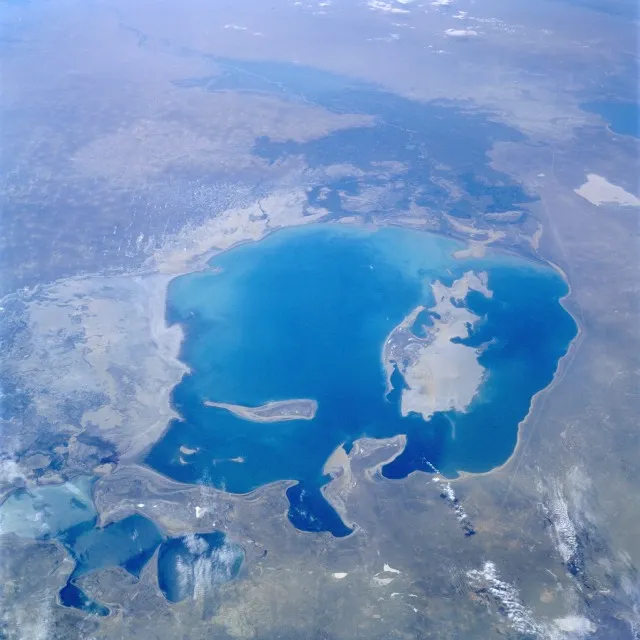
The Aral Sea was once the fourth-largest lake in the world. Its shores held fishing towns and it was dotted with islands. In 1848 a Russian expedition under Lieutenant Alexei Butakov surveyed the sea and named a group of islands for the imperial family. The artist Taras Shevchenko was aboard. The largest island was named for the tsar, Nicholas I. After the revolution it was renamed Vozrozhdeniya, a word that means rebirth or renaissance.
It was about 200 square kilometres of flat, sandy, thinly vegetated ground. Summers were fierce and the winters hard. Almost nobody lived there. In the 1920s a small seasonal fishing community used it, and an OGPU prison camp held exiled kulaks for a while. Those who chose the island for its later purpose liked everything about it: it was hot, dry, empty and far from anything important.
It would have been hard to find a better name for the next century of its story. The island was reborn several times. It became a laboratory, a town that was not on maps, a range for weapons that were banned by treaty, and then an international emergency. Finally the sea itself disappeared and left the island attached to the desert.
Why the Red Army wanted a remote island
The idea of a Soviet biological weapons centre goes back to the 1920s. The Red Army looked for a site where dangerous experiments could be run without risk to cities. The candidates included Lake Baikal, one of the Solovetsky Islands in the White Sea, Gorodomlya Island on Lake Seliger and the Aral island. Gorodomlya housed a research institute for a while. The Aral site was chosen in the end, in part because it lay well inside Soviet borders. Strong winds and the hot, dry climate were seen as helpful: they would blow aerosols out to sea or across the desert and kill many microbes quickly.
The army took the island from the secret police in 1936. That summer Ivan Velikanov, head of the Biotechnical Institute, led a first expedition of about a hundred people. He was arrested in 1937, during Stalin’s purges, and shot. The English Wikipedia entry on the island and a popular history of the site both say the charges against him were not credible. Leonid Khatanever led a second expedition that summer, using two ships and two aircraft to test the spread of tularemia. Then the experiments stopped. The record on the island goes quiet for years.
When did the base begin in earnest? Sources differ. English Wikipedia says a top-secret laboratory was established in 1948 and expanded and renamed Aralsk-7 in 1954. A paper from the Monterey Institute’s Center for Nonproliferation Studies (CNS) says field testing resumed in 1952. Russian-language sources, including the Russian Wikipedia and the photo-story on Lenta.ru, give 1942 as the year the laboratory was moved to the island from Gorodomlya, and call the whole complex “Barkhan”. The safest summary is that the range took its permanent form between the late 1940s and the mid 1950s, and ran until 1992.
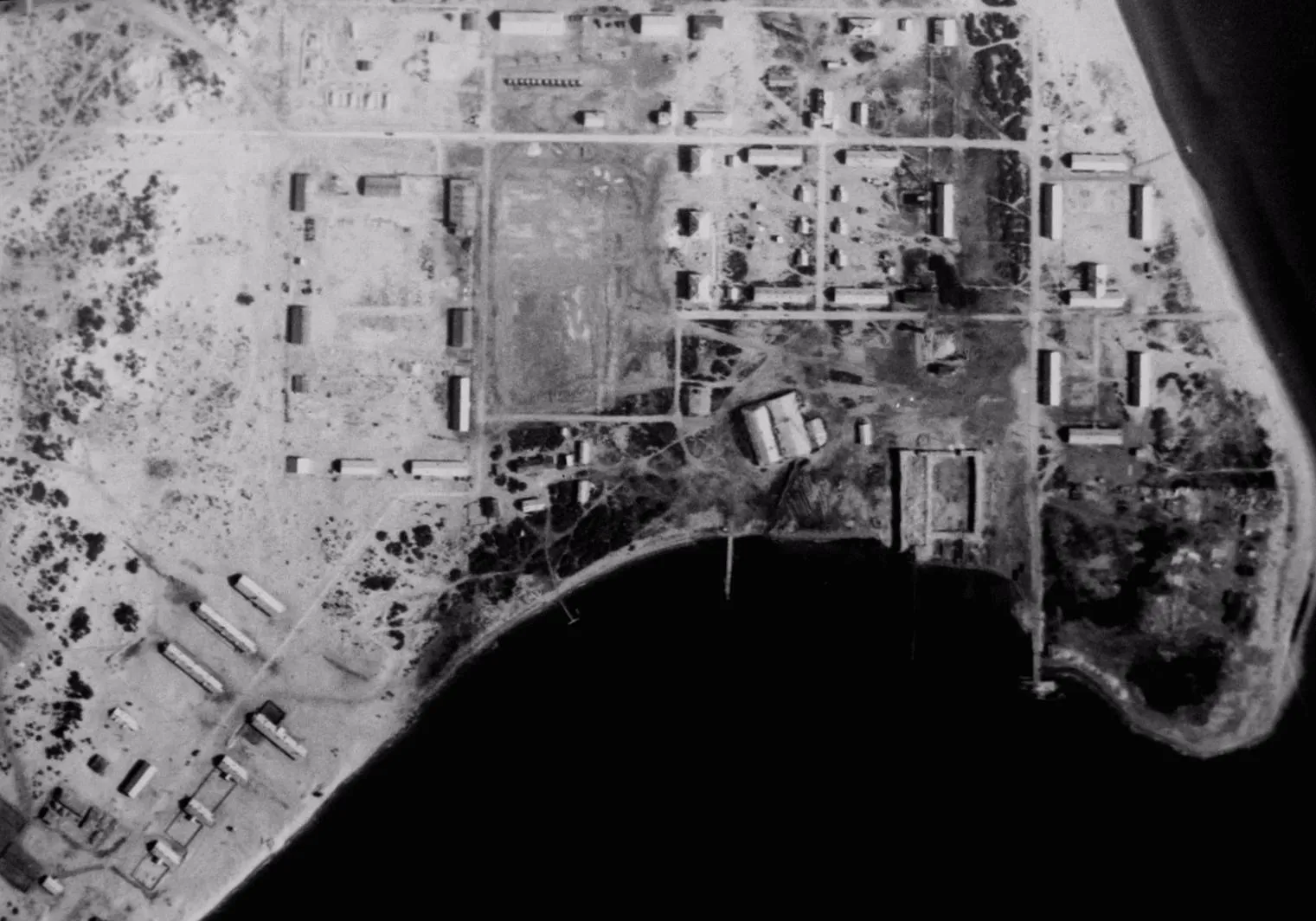
Aralsk-7: a town that did not exist
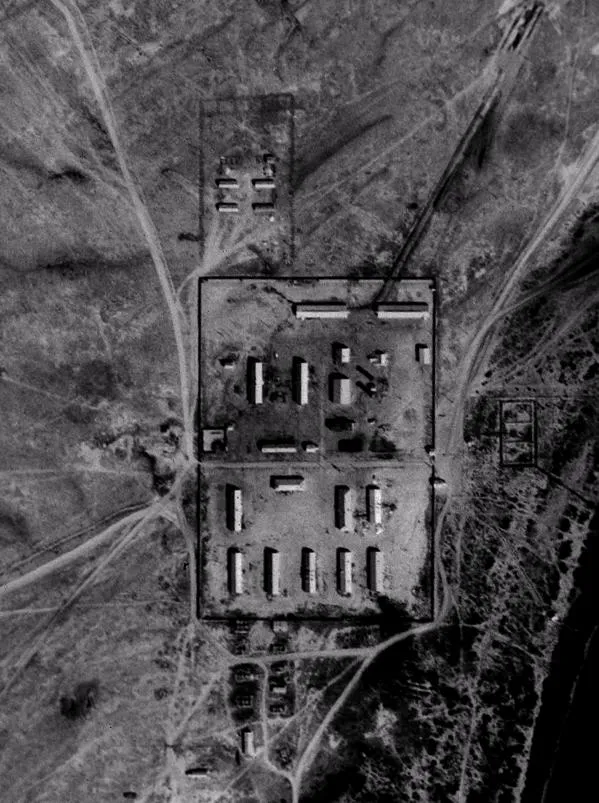
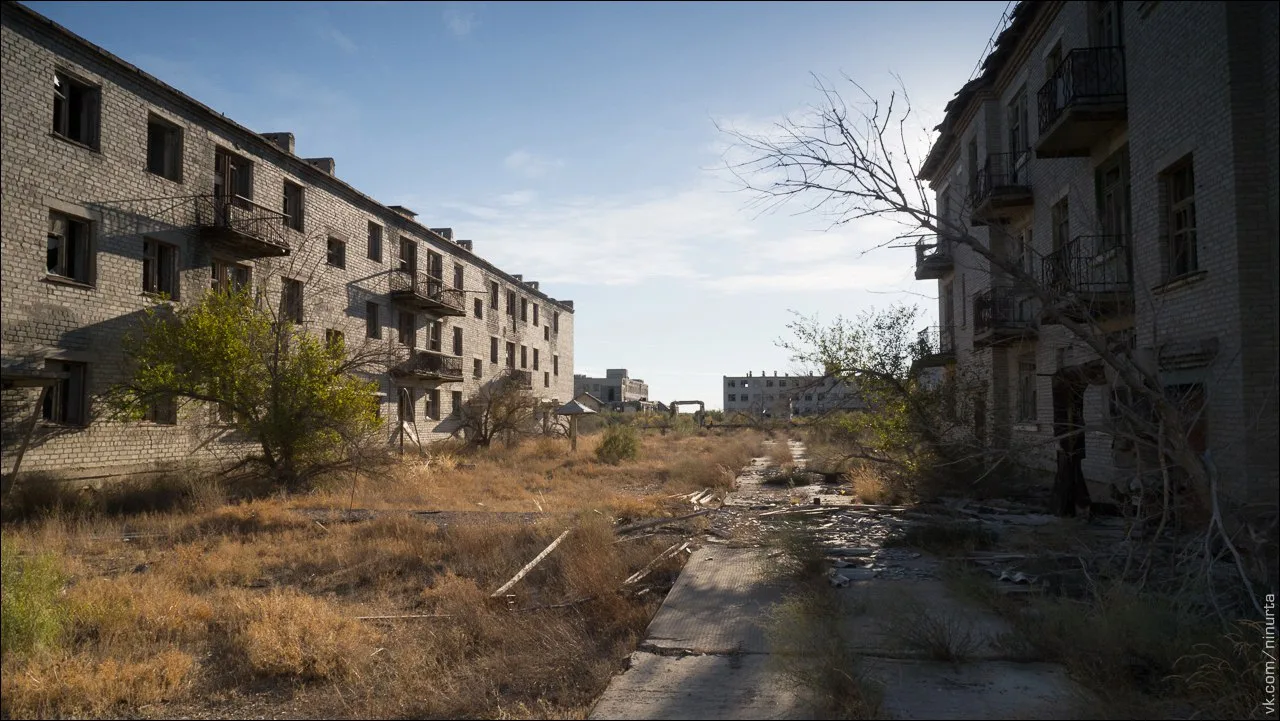
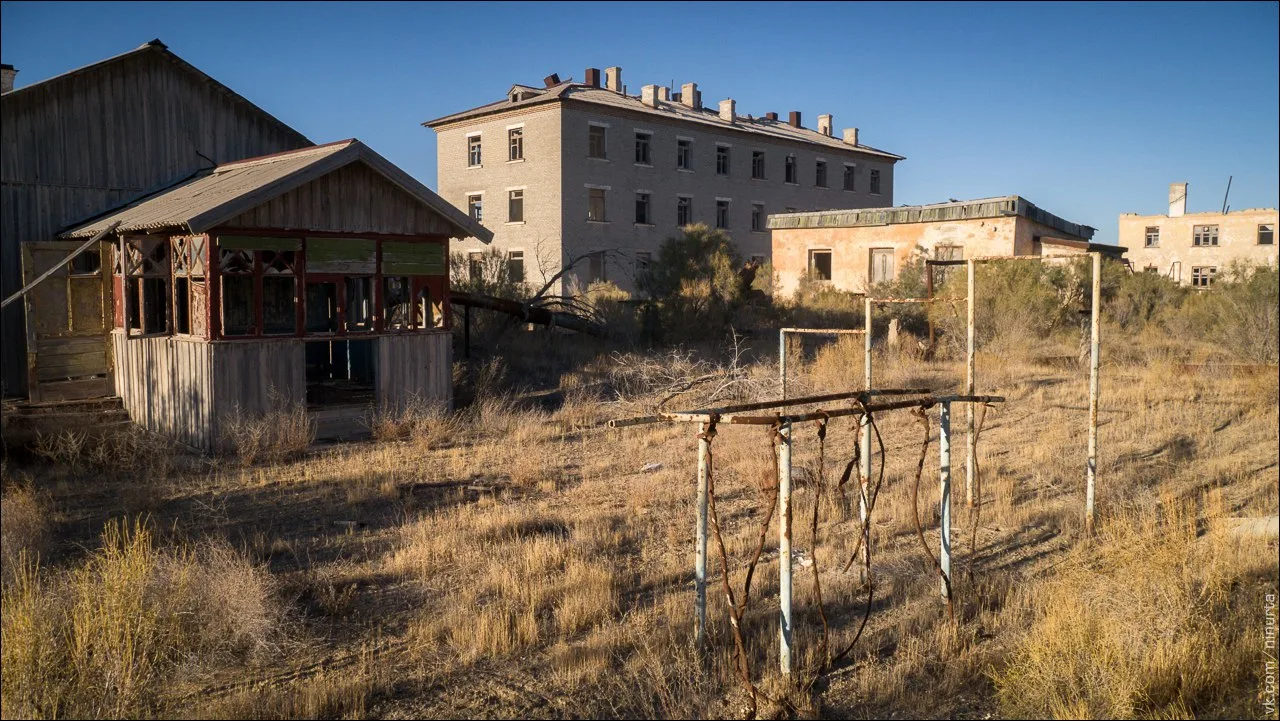
Kantubek, in the north of the island, was the home of the people who ran the range. Officially it was Aralsk-7, an address that put it in the city of Aralsk on the mainland, where the supply and administrative units were based. It held about 1,500 people, scientists, officers, conscripts and their families. The sources list a school, a kindergarten, a stadium, a cinema, shops, canteens, barracks, a club, a power station and more than a dozen three-storey blocks of flats. One Russian chapter on the site says water came by barge and was rationed by rank, with the worst of it going to first-year soldiers. Some staff were given extra benefits, and officers reportedly got two years of service credit for each year they spent there.
The island’s other key piece of infrastructure was the Barkhan airfield. It had four runways laid out like the spokes of a wheel, so that aircraft could always land into whichever wind was blowing. Animals and supplies came in by plane, and the Fedorov book on Soviet biological weapons even says that condemned prisoners were flown in, though that claim is hard to check. A port in Udobnaya Bay on the north coast handled shipping, and patrol boats circled the island. The nearby mainland towns of Muynak and Kungrad were closed to foreigners so that nobody could take samples.
The laboratory complex lay a few kilometres south of the town. Research teams came from the military biological centres at Kirov, Sverdlovsk and Sergiev Posad (then Zagorsk), and other institutes, and the pathogens were prepared at plants in Stepnogorsk, Omutninsk, Obolensk and elsewhere. Further south still lay the open-air range, more than 100 square kilometres by one count. The geography was meant to keep the town upwind of the tests.
The Americans reportedly knew something was there. A U-2 flight in 1957 is said to have photographed the island and shown more than 150 buildings with housing for about 1,500 people. One account says the Soviet Union listed Aralsk in its Biological Weapons Convention declaration in 1987 but left the island out until 1992.
What was tested here
The list of agents is long. The English Wikipedia entry names anthrax, smallpox, plague, brucellosis and tularemia, and other sources add Q fever, typhus, Venezuelan equine encephalitis and botulinum toxin. Scientists from the Soviet programme who later defected, including Vladimir Pasechnik, who left for Britain in 1989, and Kanatjan Alibekov, who became Ken Alibek in America in 1992, said some strains were altered to resist antibiotics and vaccines. These claims come from the defectors, and nobody outside the old programme has been able to check them.
Smallpox needs care. General Pyotr Burgasov, a former chief sanitary physician of the Soviet Union, said in interviews that the virus was tested on the island. The CNS paper notes that its own foreword lists smallpox among the agents, but also that no official documentation confirms it, and it treats parts of Burgasov’s version as inaccurate. It is best to say that smallpox was reportedly tested here, not that it definitely was.
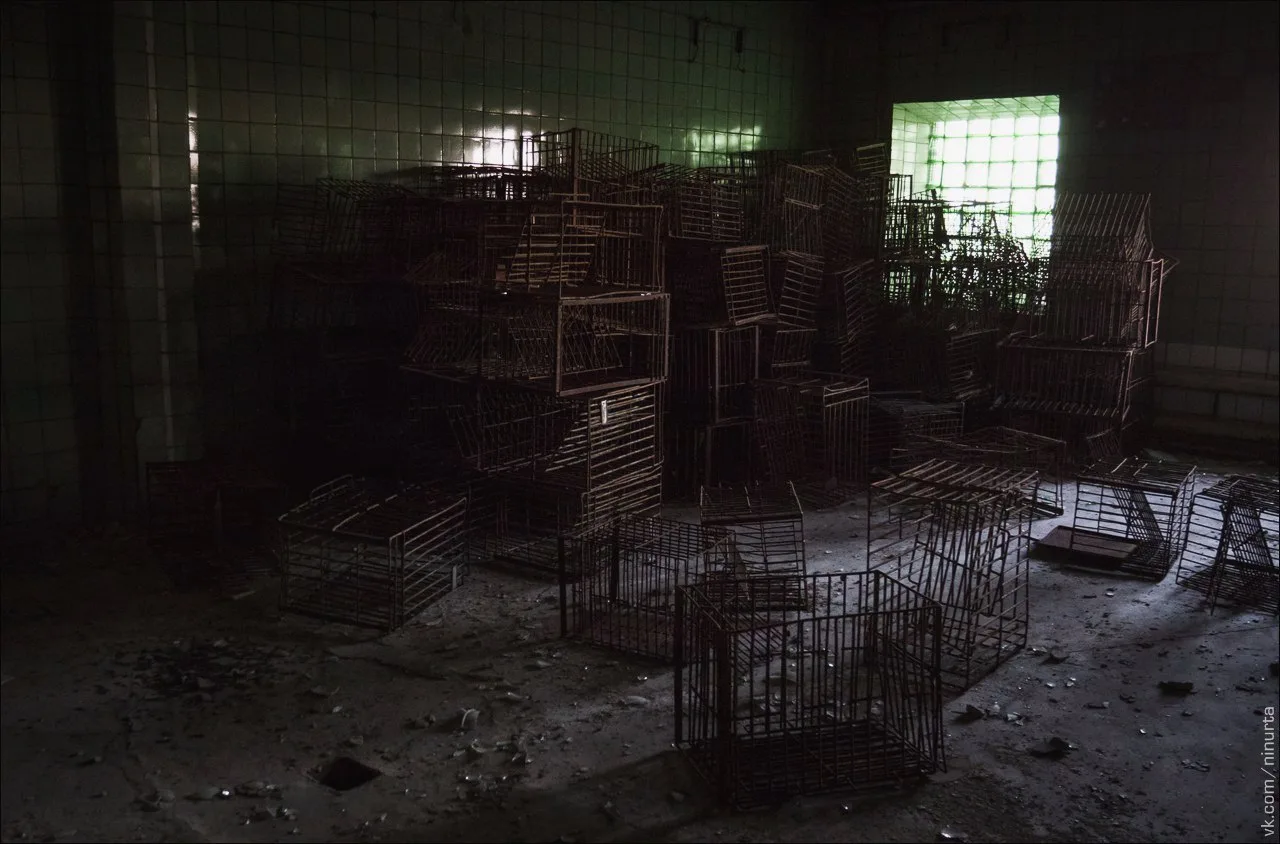
The method was simple, and grim. Animals, mostly monkeys, horses, sheep and donkeys, were placed in the test area, tied to posts or kept in cages at set distances. Munitions were exploded or an agent was sprayed from aircraft, instruments sampled the air, and soldiers in protective suits later gathered the animals and carried them to the laboratory. Accounts say the range was decontaminated afterwards and that specialists went through a month of quarantine. Sergeant Aleksandr Karenin, whose 1969 service is described in the Fedorov book, remembered taking animals to the range and waiting in a vehicle during the detonations.
The same book describes one large test in 1982 and 1983. A tularemia agent developed at Omutninsk by Alibekov was tested with 20 bombs and about 500 monkeys that were reportedly brought from Africa. Nearly all of the vaccinated monkeys died. The army asked for the test to be repeated, and it was, in 1983, in a form described as more correct. The carcasses were burned. This account comes from one Russian source, so it should be read as reported, but it fits Alibek’s own descriptions of the programme.
Not everything stayed on the island. One Russian article mentions saiga antelope and wild horses being infected during tests. The CNS notes mention reports of fish die-offs and plague outbreaks in the region. These are claims made by scientists and journalists, not proven links.
The 1971 smallpox outbreak
The best-documented accident connected to the island happened in 1971, in Aralsk, a city of about 50,000 people on the mainland. The details come from an official Soviet report and from an analysis by the American epidemiologist Alan Zelicoff, both published in a 2002 occasional paper by the Monterey Institute.
In July 1971 a biological research ship, the Lev Berg, left Aralsk on a survey of the sea, calling at several ports on its route. It came back on 11 August. A 24-year-old woman on the crew, a fisheries graduate, later fell ill. The official Soviet report says she fell ill on 6 August on the ship and was infected in a port town. In an interview with Zelicoff she gave a different version: she had never left the ship, felt well while on board, and fell ill on or around 11 or 12 August after she got home. Zelicoff’s reading was that she could have been infected around 30 July near the island, and that this would fit the timing of her rash.
Her nine-year-old brother developed a rash from about 27 August and was misdiagnosed as having hives. Over the next weeks more people fell ill. By October the total was ten cases, three of them fatal: a 23-year-old woman and two infants, aged about nine months and four months. All three had the haemorrhagic form of smallpox and none was vaccinated. Five of the six adults who were infected had been vaccinated, and survived.
The disease was recognised late. On 21 September a doctor examined one of the later patients and suspected smallpox, and specialists confirmed it the next day. The response was fast and severe. Hospital wards were quarantined on 22 September. Police sealed the city on 24 September. Nearly 50,000 people were vaccinated in under two weeks, and travellers could not buy tickets without proof of vaccination. A 150-bed isolation ward was set up at a children’s summer camp, and by 1 October 68 more people were being watched in an observation ward. More than 5,000 square metres of living space and about 18 tonnes of household goods were disinfected. More than 140 medical staff arrived from elsewhere. The Soviet Union did not report the outbreak to the World Health Organization, as international rules required.
How did the virus reach the city? The official report suggested three possibilities: infection at a port, an import from Afghanistan, or the local market. It did not choose between them. In 2001, decades later, Burgasov gave an interview to Moscow News in which he said a smallpox formulation had been exploded on the island and had infected a laboratory worker on the ship, which he said had passed within about 15 km of the island although the restricted zone ran to 40 km. He said he called the head of the KGB, Yuri Andropov, about it. Zelicoff considered parts of this account wrong but plausible in outline. The New York Times reported more details in June 2002, which is when the incident became widely known. The question that remains is simple: nobody can prove what happened on the island that July.
The anthrax that was buried
The most lasting thing the Soviet programme left behind was buried in the ground. In spring 1988, according to accounts that go back to Alibek and to reporting in the New York Times, the Soviet leadership became worried that American intelligence knew about a stockpile of an anthrax weapon agent, called Anthrax-836 in one source. A military plant near Sverdlovsk, now Yekaterinburg, was told to get rid of the material. The Russian Wikipedia account says it was placed in stainless steel containers, soaked in bleach, and sent by rail to Aralsk in 24 wagons. From there it was taken to the island and buried in pits.
The number of pits is given as ten in some English sources and eleven in the Russian one. The quantity is a matter of dispute as well. The English Wikipedia page for Kantubek says the 2002 cleanup neutralised 100 to 200 tonnes of anthrax, and other writers give figures as high as 300. Treat all of these as estimates.
The bleach, it turned out, had not killed everything. After the Soviet Union broke up, Alibek told Western officials about the burial. Soil samples taken in late 1992 reportedly contained live spores, and in 1995 officials from Uzbekistan and Kazakhstan asked Washington for help. According to the Russian Wikipedia, American specialists took samples from six burial sites in 1995, and the spores had not been completely destroyed despite the disinfection. Further visits followed in 1997 and 1999, when the Americans also tested their own vaccines against the strain found there.
The end of the range
The programme came apart as the Soviet Union did. Desertions reportedly started around 1990, and in November 1991 a meeting at the military virology centre at Zagorsk decided to end experimental work on the island. Early in 1992 Boris Yeltsin acknowledged that the Soviet Union had run an offensive biological weapons programme and signed a decree to end it. By the end of April 1992 the military units had left, according to English Wikipedia. A Russian source says the last unit and its families moved to Kirov in the autumn. Either way, the evacuation was fast, and people left their furniture, televisions and much of the laboratory equipment.
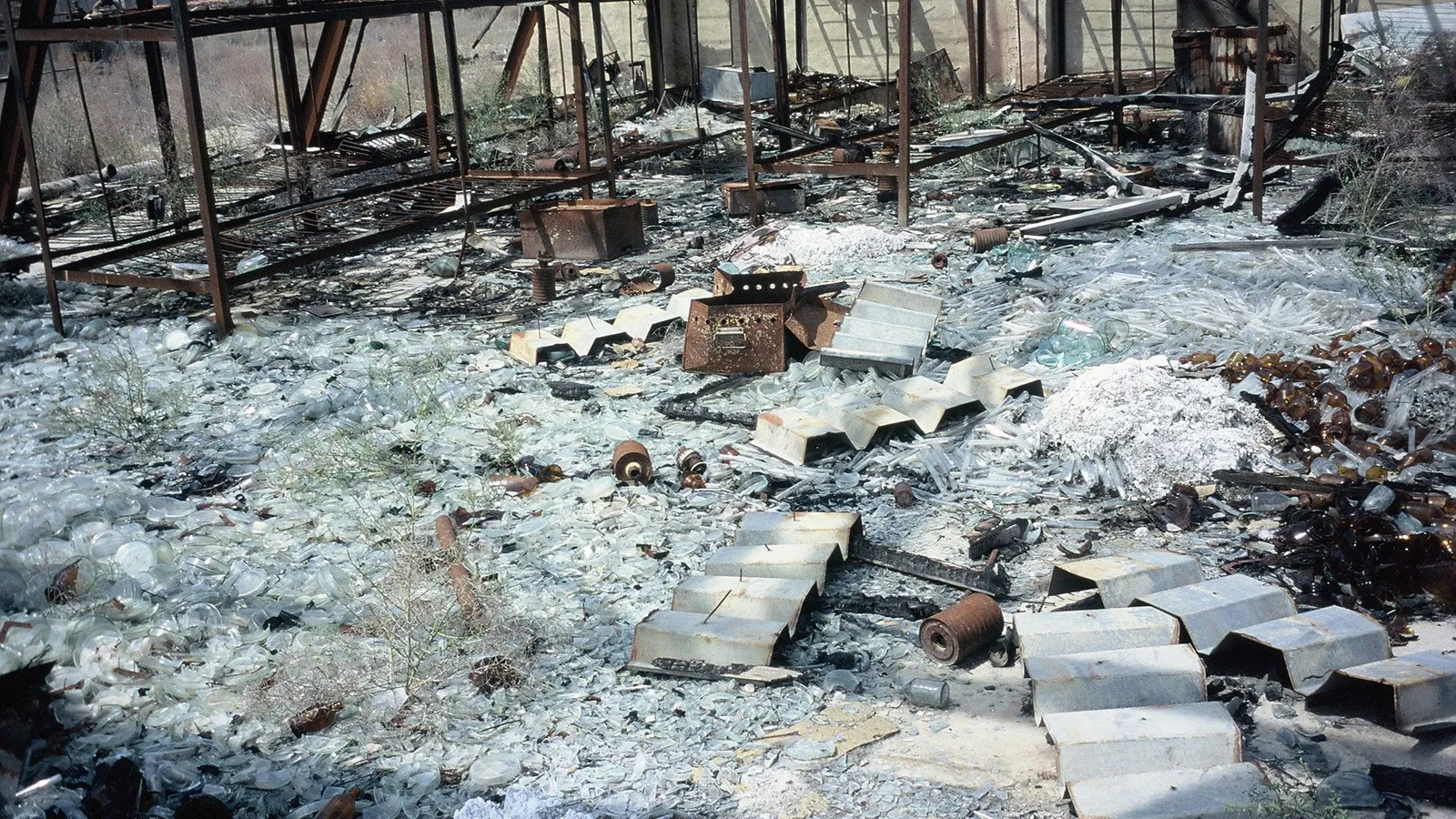
The details of what was done with the laboratory are vague. Russian sources say that dangerous strains were destroyed or sealed in burial sites, that the documentation and some equipment were taken to Russia, and that the rest was left. Over the next years local scavengers took everything of value from the town. The island’s Barkhan airfield and the shell of Kantubek stood empty.
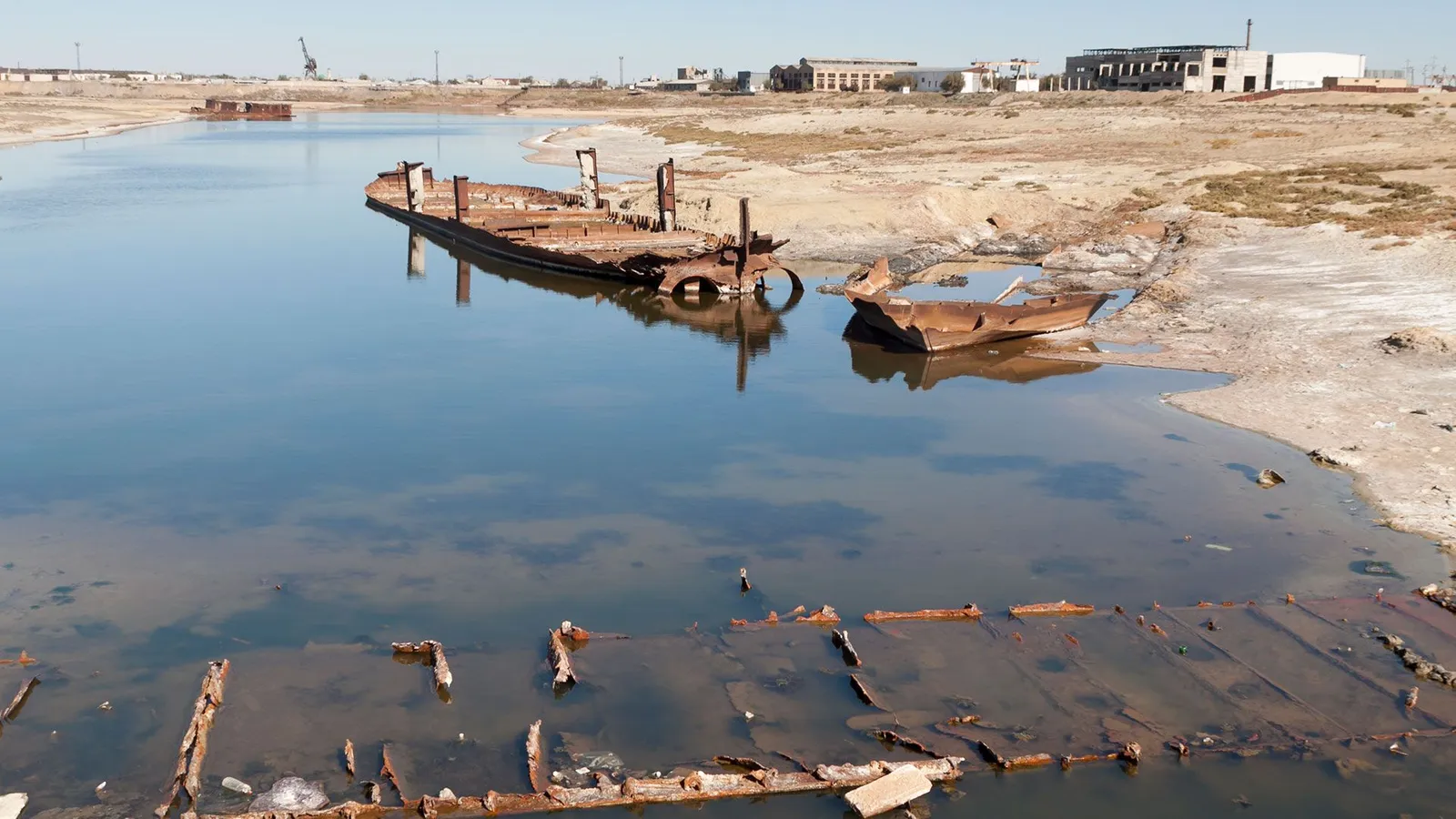
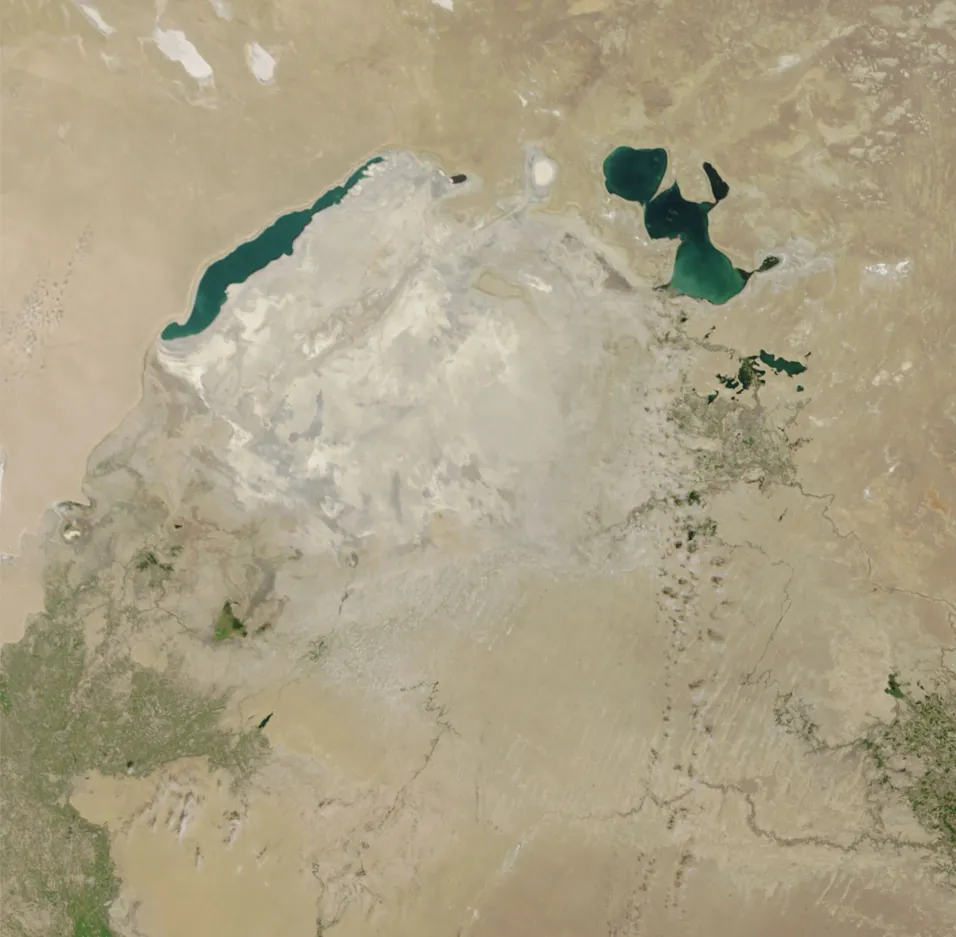
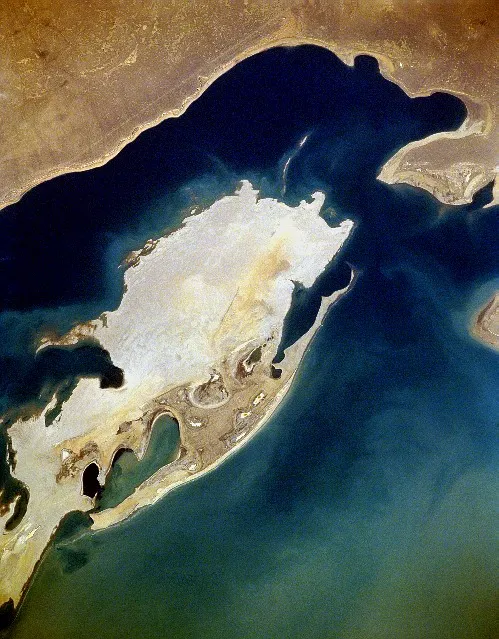
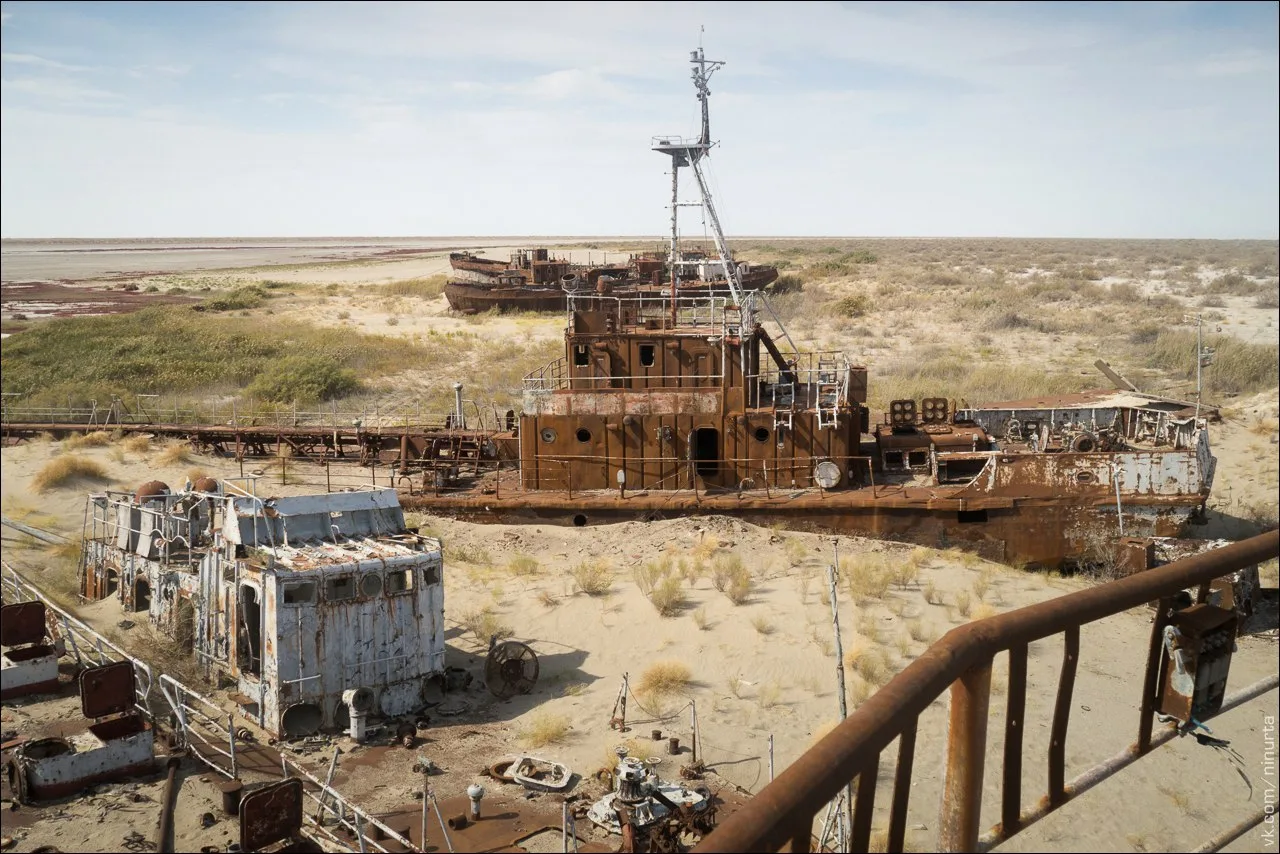
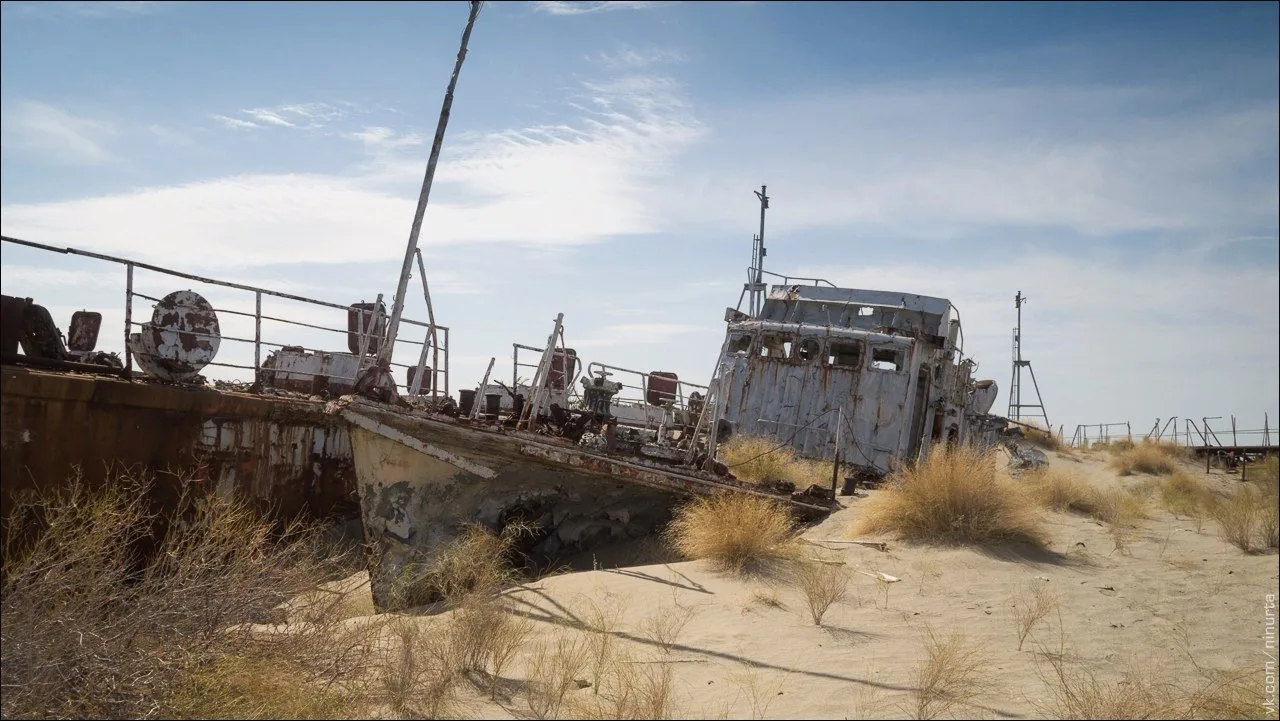
According to one account, Uzbekistan and Kazakhstan asked Russia to clean the site and Russia agreed but did not do it. The nearby sea was disappearing. Rivers that had fed the Aral, the Amu Darya and Syr Darya, were diverted for irrigation, mainly for cotton, and the water level fell. The island grew from 200 square kilometres to many times that size at its peak, then joined the mainland around 2001, with the south-eastern part of the sea gone by 2008. By 2014 the whole area was part of the new Aralkum Desert.
The land bridge brought a new set of fears. Animals could now cross to the island, and out of it. Scientists and former programme members worried that plague bacteria could persist in rodent populations and be carried by fleas. After the September 2001 attacks and the anthrax letters in the United States, there was also a worry that terrorists could reach the burial pits. The CNS newsletter of March 2002 pointed to exactly these concerns.
Cleaning up the pits
The United States and Uzbekistan signed an agreement on 22 October 2001 under which the Americans would pay about 6 million dollars to decontaminate the burial sites and dismantle the old laboratory. The work was led by the US Defense Threat Reduction Agency. In the spring of 2002 a team based at Muynak in Uzbekistan began, and the English Wikipedia page for Kantubek says the leader was Brian Hayes, a biochemical engineer. A team of 113 people worked for about three months. They treated the burial sites with a decontaminating agent and tested the soil. The cost was somewhere around 5 million dollars, and the job finished in June 2002.
The US declared the main anthrax dumps neutralised. How much that settles is still debated. The work focused on anthrax, not on any other agent, and it did not cover the whole island. Independent scientists have not all agreed that every danger is gone, and the American announcement is a government statement, not a peer-reviewed survey. At the same time Russia announced in February 2002 that its own experts would research contamination on the island in cooperation with Kazakhstan, and the two plans did not always fit together.
What was left in the ground
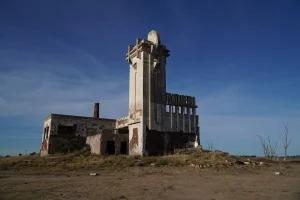
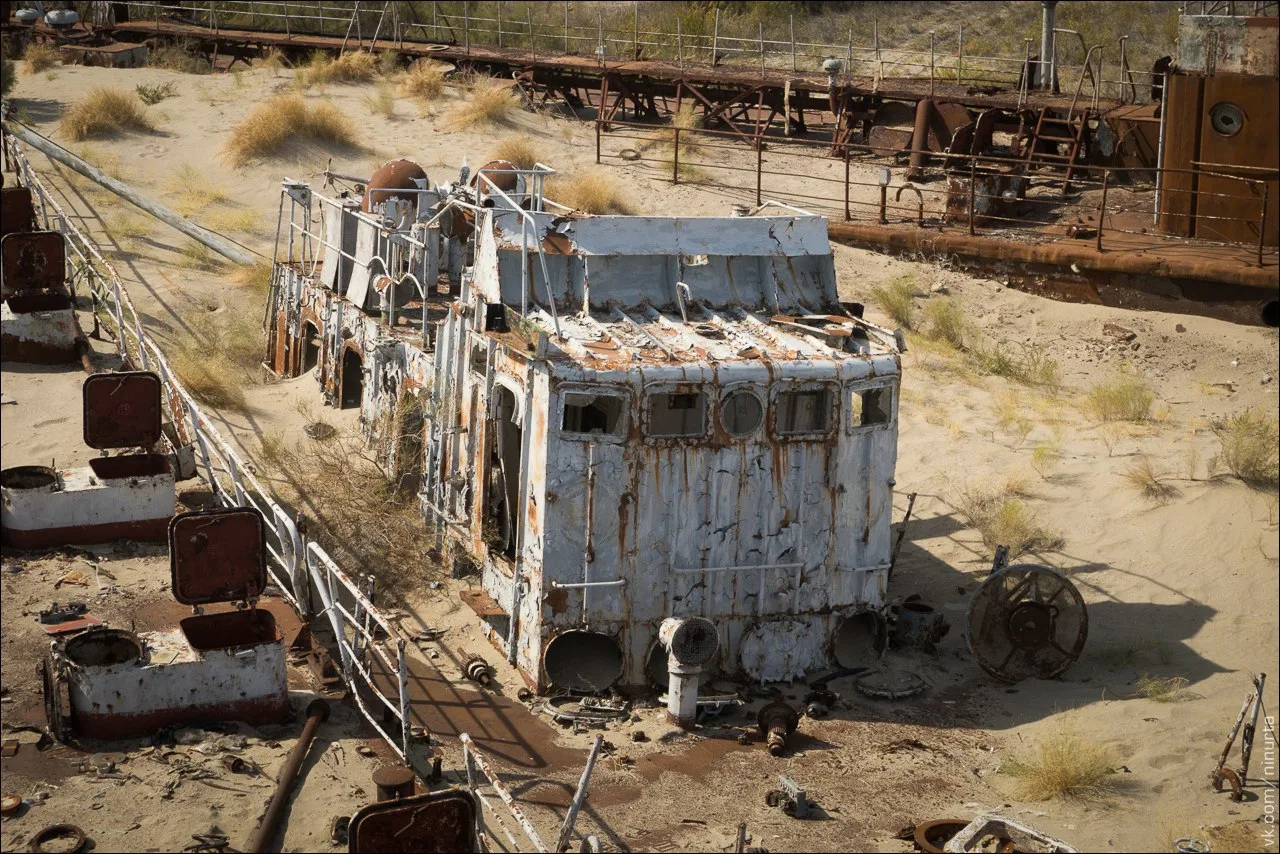
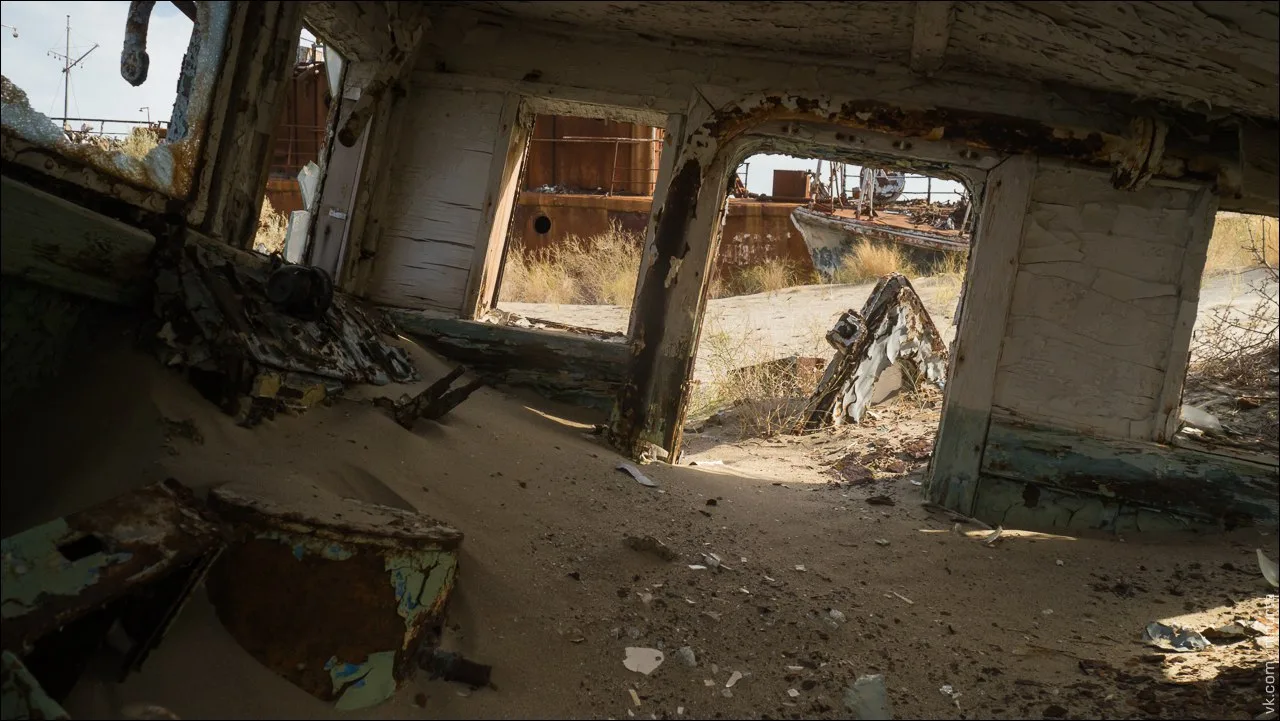
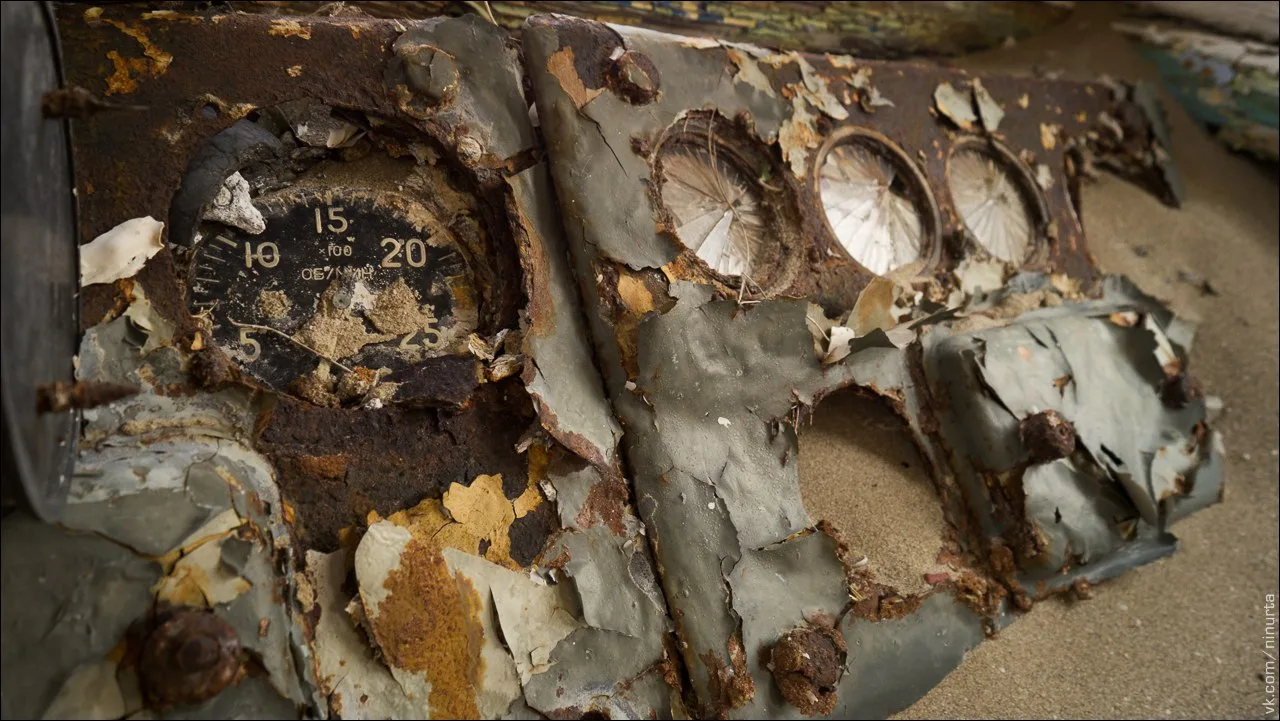
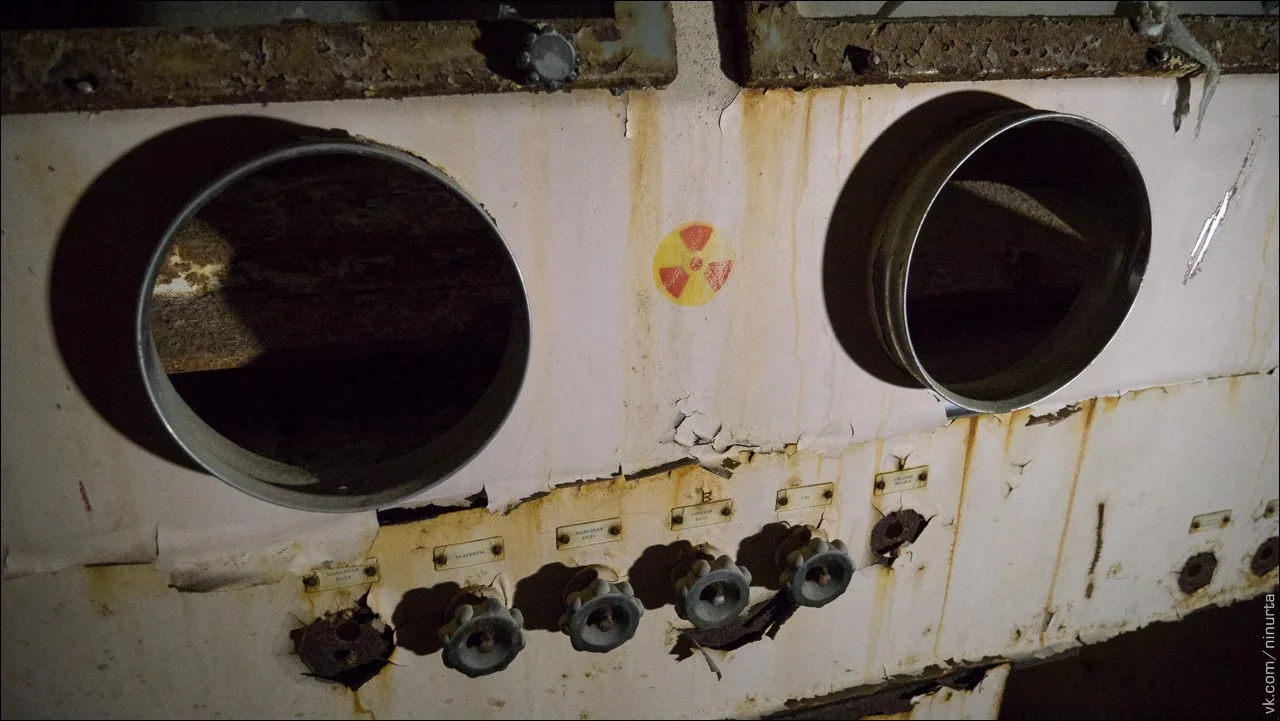
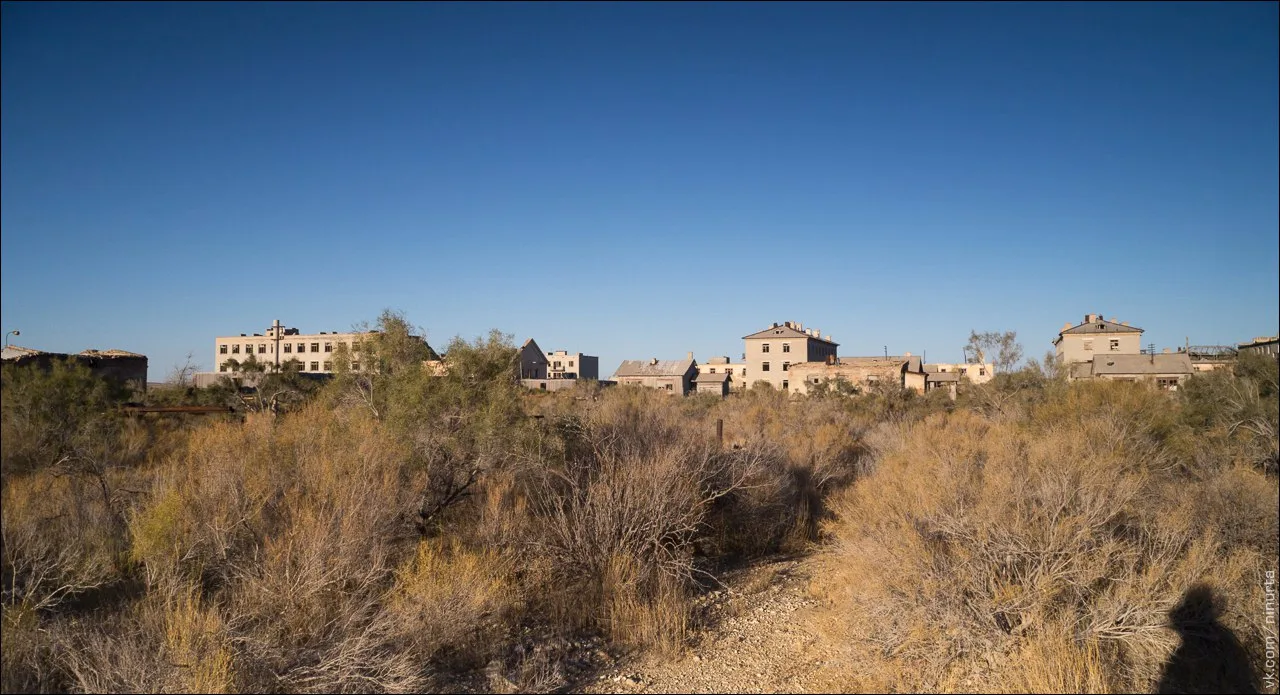
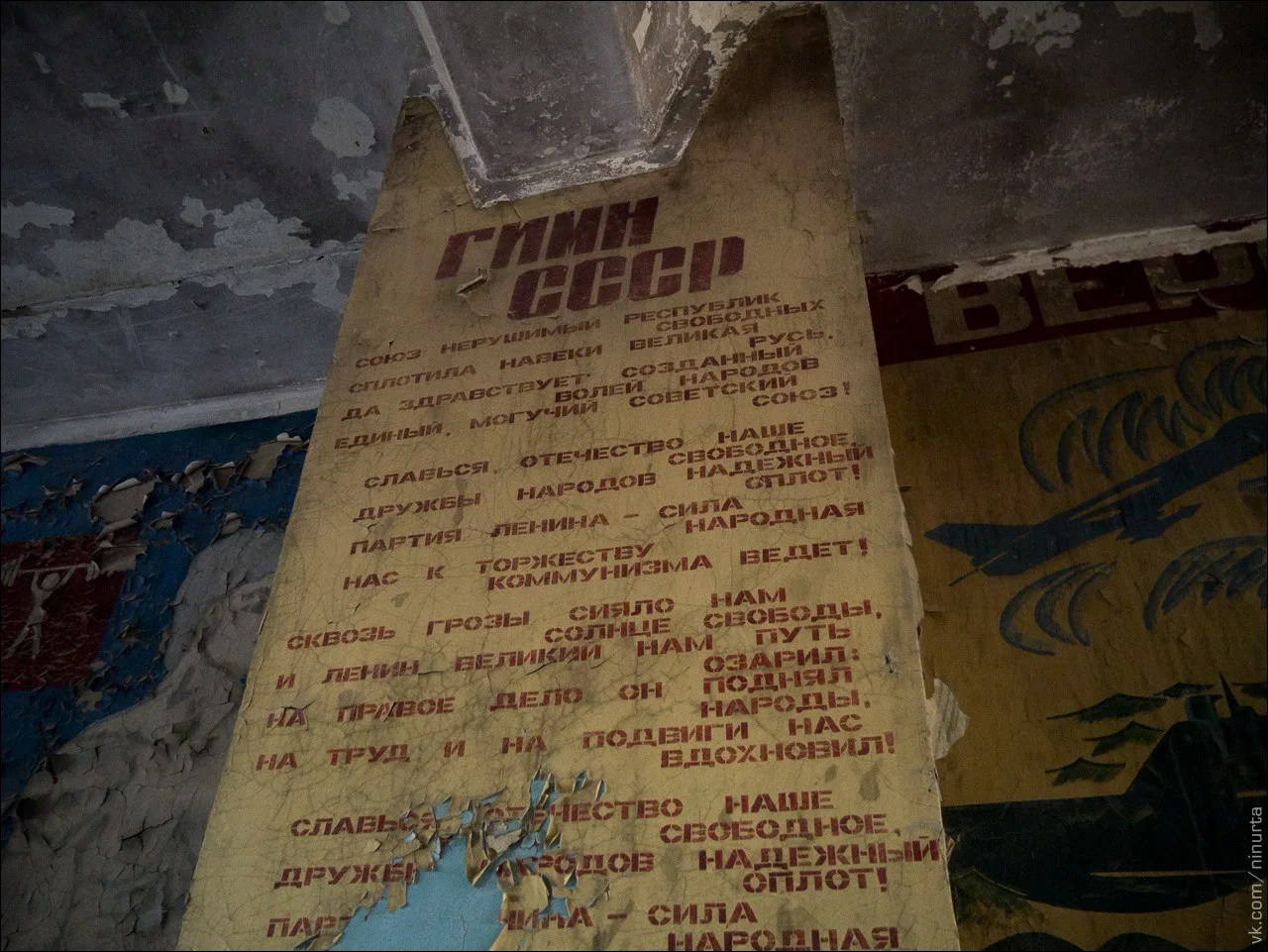
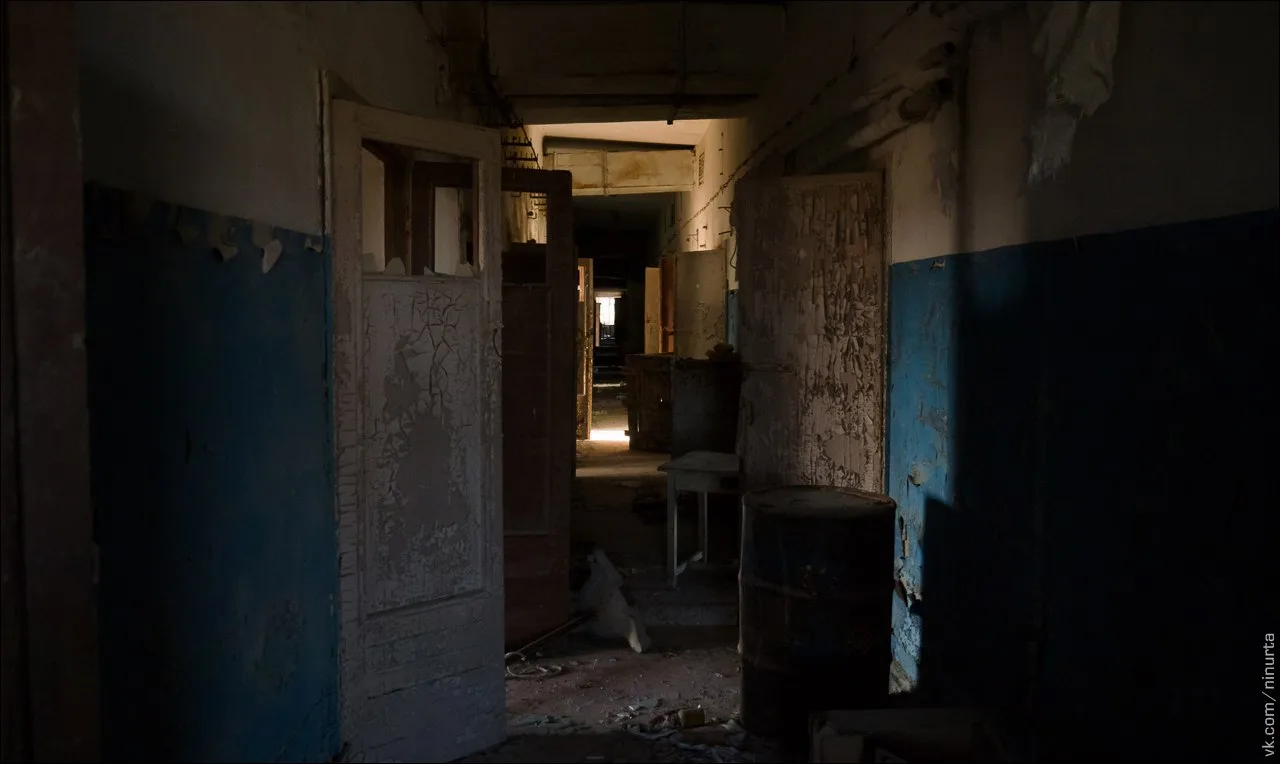
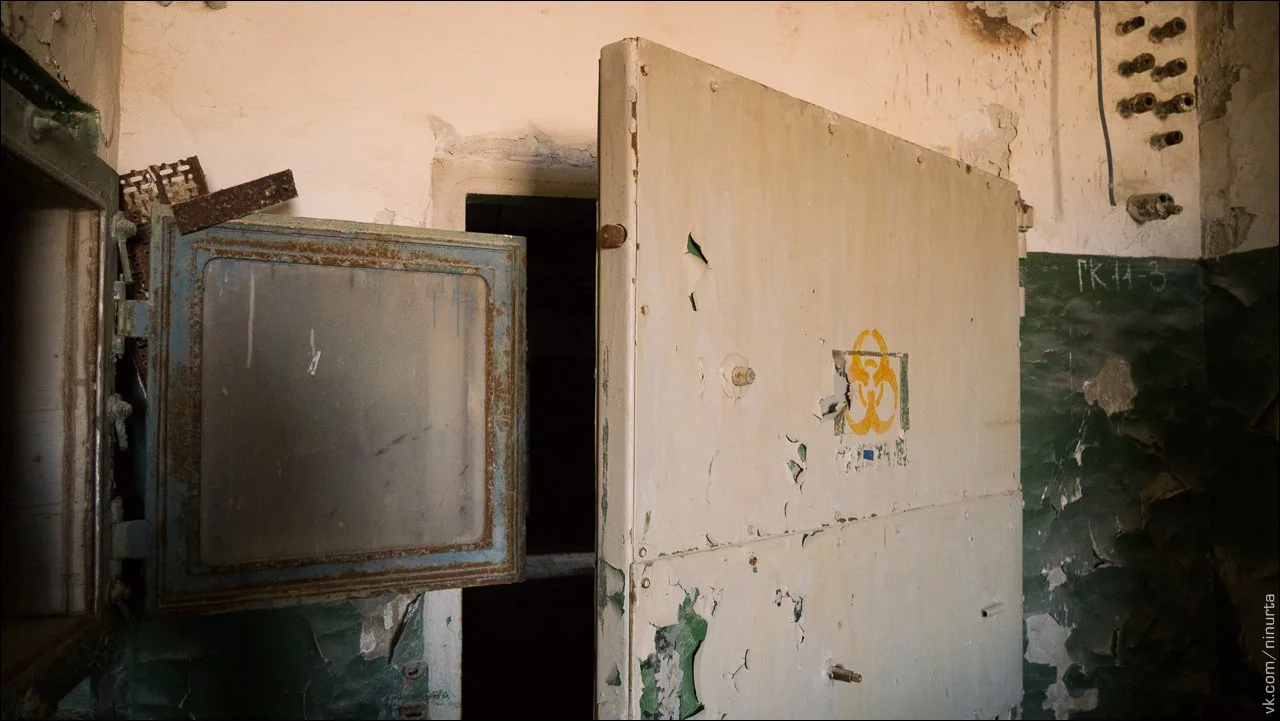
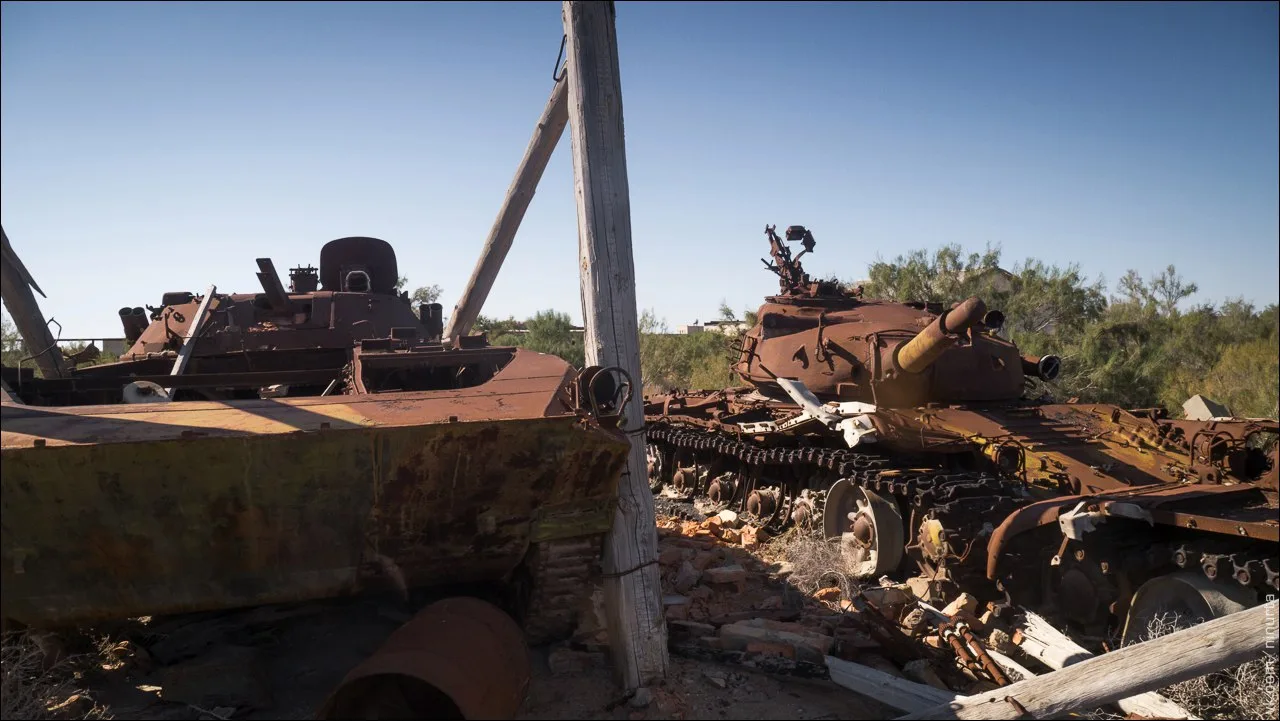
Today the old island is a patch of desert on the edge of what used to be a sea. Photographs from the 2000s and 2010s, including a 2008 set collected by Lenta.ru and a 2018 essay on Meduza by Elyor Nematov, show a ghost town of ruined blocks of flats and the star-shaped lines of the old airfield.
Reports about the buildings disagree. English Wikipedia says the town has been demolished, with plans to make the area a national park, and the Dark Atlas travel page says Uzbek authorities knocked down the remaining structures. Another page says satellite images and local reports suggest much of it still stands. All of these accounts are secondhand, and without a reliable recent visit it is not possible to say which is true. What seems certain is that nobody lives there. The population in 2018 was zero, according to the Russian Wikipedia.
Kazakhstan’s government has been more optimistic than the scientists. In August 2018 Zhandarbek Bekshin, head of a committee at the Kazakh Ministry of Health, said the Kazakh part could be passed into economic use under supervision from the sanitary service. His reasons were that no dangerous infection had been recorded there in 25 years, that scavengers had hauled out metal and equipment without falling ill, and that there were many hares and foxes. He added that there had only been occasional expeditions, in 2003, 2005, 2008 and 2010, and that the island would get a fresh epidemiological study before anything was done. The first use he mentioned was mineral extraction, including a search for hydrocarbons. The plan also called for a road and a pontoon bridge across the isthmus, which varies between 50 and 300 metres wide. Oil and gas exploration had already taken place on the Uzbek side in 2008, according to the Russian Wikipedia.
Whether the ground is safe is the point on which opinions differ. Some argue that sunlight, heat and time have killed most of what lay on the surface. Anthrax spores are tough, though, and the CNS notes and several writers point out that they can last for decades in soil, which is why the 2002 operation mattered. The sensible position is that the island is probably much less dangerous than it was in 2001, that nobody can say it is clean, and that nobody should dig there.
Visiting, and why you should not
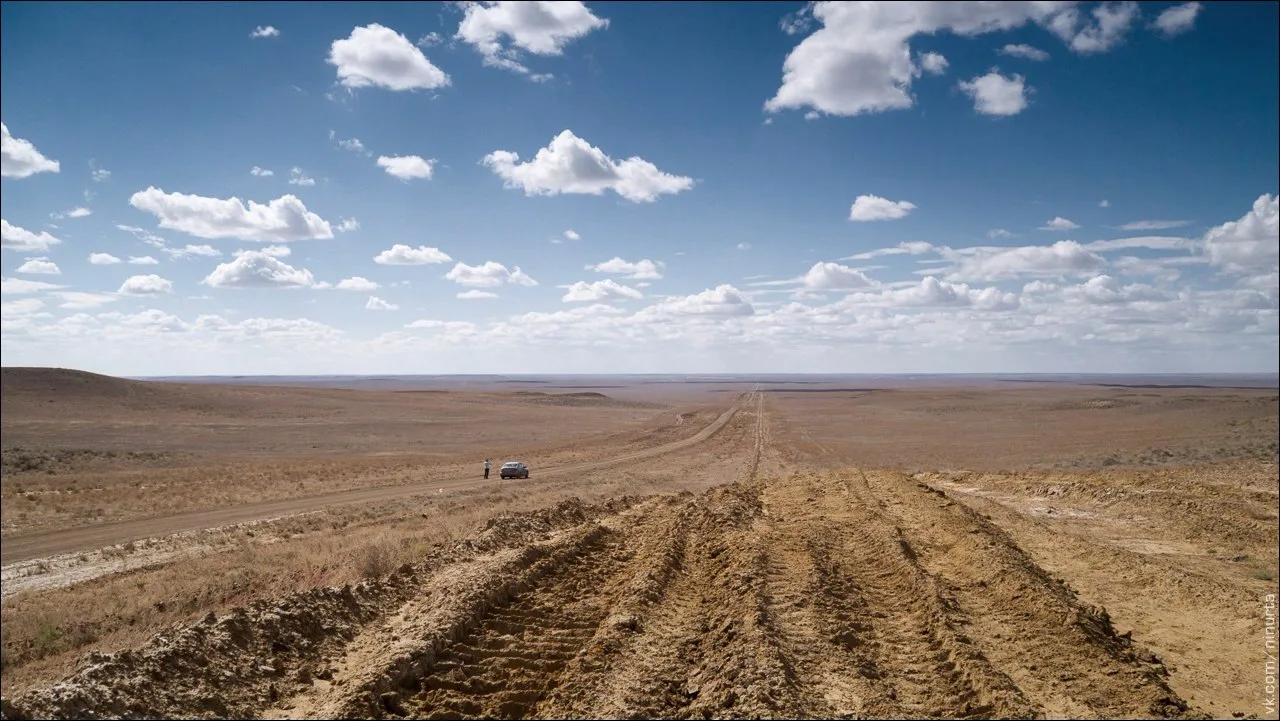
This is not a destination. There is no tourism infrastructure. Travel accounts describe an approach from the Uzbek town of Muynak across rough desert, and one source mentions army checkpoints. A Russian article from 2016 says a border post was set up in Aralsk to stop people entering the old range. The ground may hold old burial sites and unexploded or contaminated debris. The advice from every serious source is the same: do not go, and certainly do not dig.
The island has become a place in popular culture. It appears in the video games Call of Duty: Black Ops and Command and Conquer: Generals, and a later Call of Duty: Warzone map is named after it. Those versions are fiction. The real story has its own details: a plan for a bridge, a list of animals, a ghost town of three-storey flats and a school.
Conclusion
Vozrozhdeniya Island is a rare site where almost every part of the story is tied to a larger one. The Soviet Union picked a remote island for a project it was legally forbidden to run. The Aral Sea, which made the island remote, was drained by another Soviet project. The same drying that removed the water turned the island into a peninsula, and a secret that was supposed to be safe because of distance became a problem that could be reached on foot.
Some things are well documented. There was a laboratory and a town. The 1971 outbreak in Aralsk is described in an official Soviet report and an independent analysis. Anthrax was buried in 1988, and an American-funded team treated the burial sites in 2002. Other parts are uncertain, from the date the range really started to what is left of Kantubek and what exactly came out of the ground. Ten people fell ill and three died in 1971. Nobody has proved whether a cloud from an island test caused it. What remains is a quiet stretch of desert where a sea used to be, with the outlines of runways in the sand and the pits somewhere under it.
Did you know?
- Vozrozhdeniya means "Rebirth", and the island was named Nicholas I Island before the revolution.
- The island was first charted in 1848 by an expedition that carried the artist Taras Shevchenko.
- Kantubek, its secret town, was officially listed as Aralsk-7 and held about 1,500 people.
- The Barkhan airfield had four runways laid out like the spokes of a wheel.
- The first Soviet test expedition in 1936 was led by Ivan Velikanov, who was shot in 1937.
- A 1971 smallpox outbreak in the city of Aralsk infected ten people and killed three.
- About 50,000 people in Aralsk were vaccinated in under two weeks after the outbreak.
- In spring 1988 anthrax from a military plant near Sverdlovsk was buried in pits on the island.
- A US-funded team of 113 people treated the burial sites in 2002 for about 5 million dollars.
- Around 2001 the island became a peninsula as the Aral Sea retreated.