A sea that turned to salt
About 250 million years ago, the land around Soledar lay under a shallow sea. When it dried up it left thick beds of salt, which were slowly buried by movements of the earth’s crust. People found the salt long before they dug for it. Brine springs, where groundwater had dissolved the buried salt, bubbled out of the ground, and from the 16th century local people boiled the brine to make salt. The fires used so much wood that forests to the south of the town were cut down. Coal replaced wood later, but production stayed small.
The village, founded in the late 17th century by Don Cossacks as Briantsivka, lay on the old Chumak road. The Chumaks were Ukrainian merchants who carried salt and fish by ox cart across the steppe, and for them it was a stop on a trade route. The deep deposit was found around 1880, and the first mine opened in 1881, when the area was part of the Russian Empire. A railway station called Sol, the Russian word for salt, was built nearby in 1913.
A gift of salt
The settlement was renamed Karlo-Libknekhtovsk in the mid-1920s after the German socialist Karl Liebknecht, and in 1991 it took the name Soledar, which means “gift of salt”. One source says the mines were destroyed during the Second World War, and that the first reopened in 1947. By Soviet times Soledar was one of the main salt producers of the Union. One travel report says it provided about 40% of the country’s rock salt and exported to 21 countries. The state company Artemsil, formed in 1976, ran the industry, and it continued as a state-owned business after Ukraine became independent. A privatisation attempt in 2020 was dropped later that year.
By the 2020s it was the biggest salt producer in the country. Over more than a century around 250 million tonnes of salt had been taken out, and the explored reserves were put at about 5 billion tonnes. Depending on the source, Artemsil supplied about 70% to 95% of Ukraine’s salt. The mine area covers about 53 square kilometres, and in 2021 the company shipped 1.9 million tonnes, a 60% jump over the year before. Its geologists described the rock as 98.5% sodium chloride or better.
The mine itself
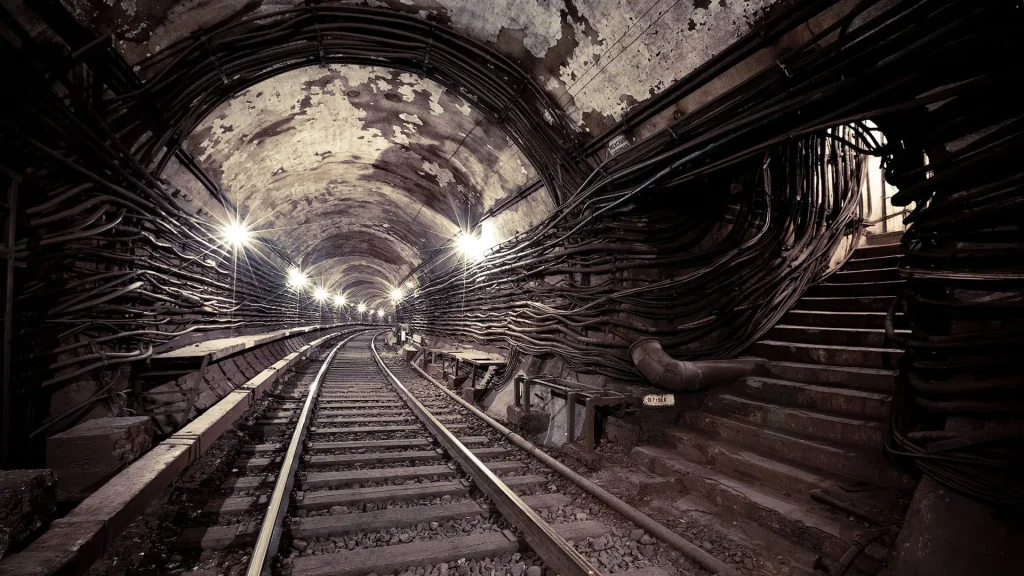
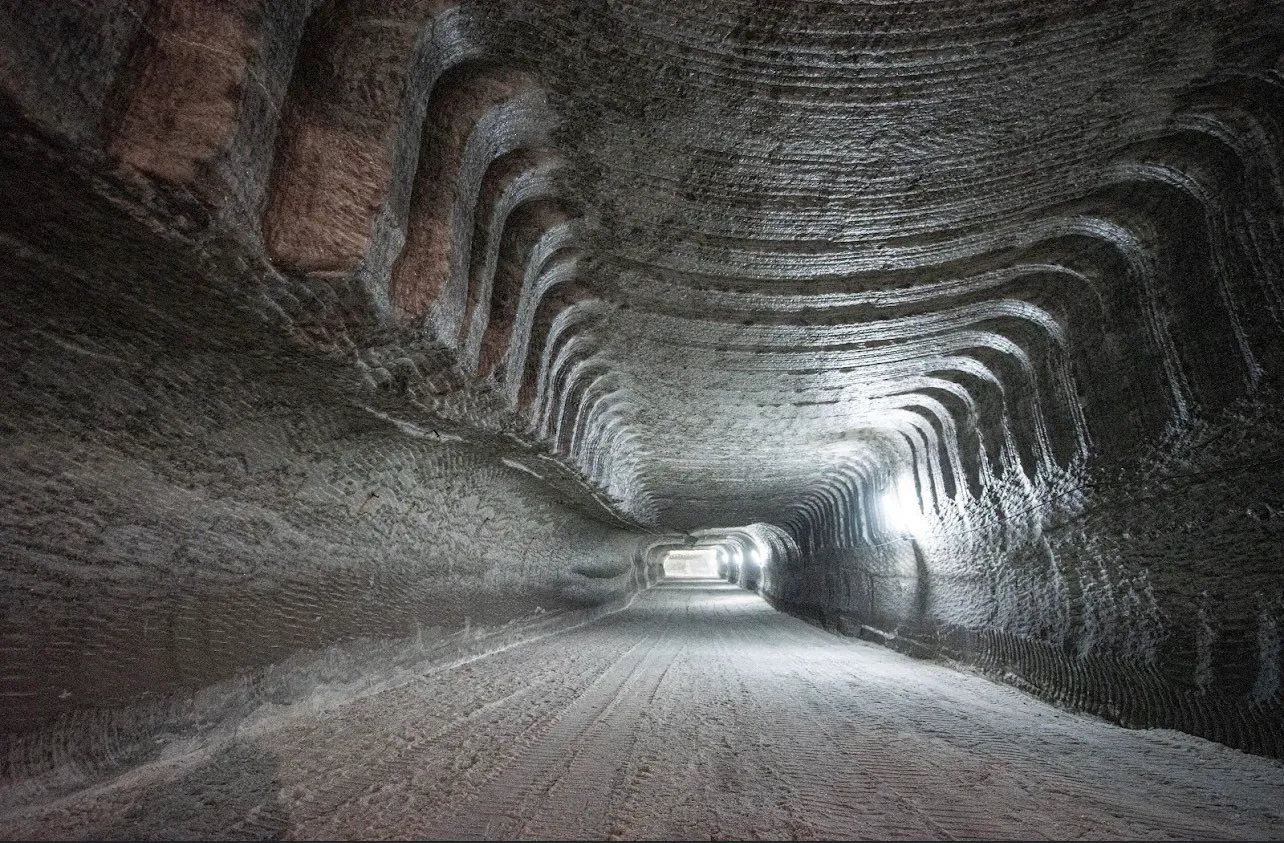
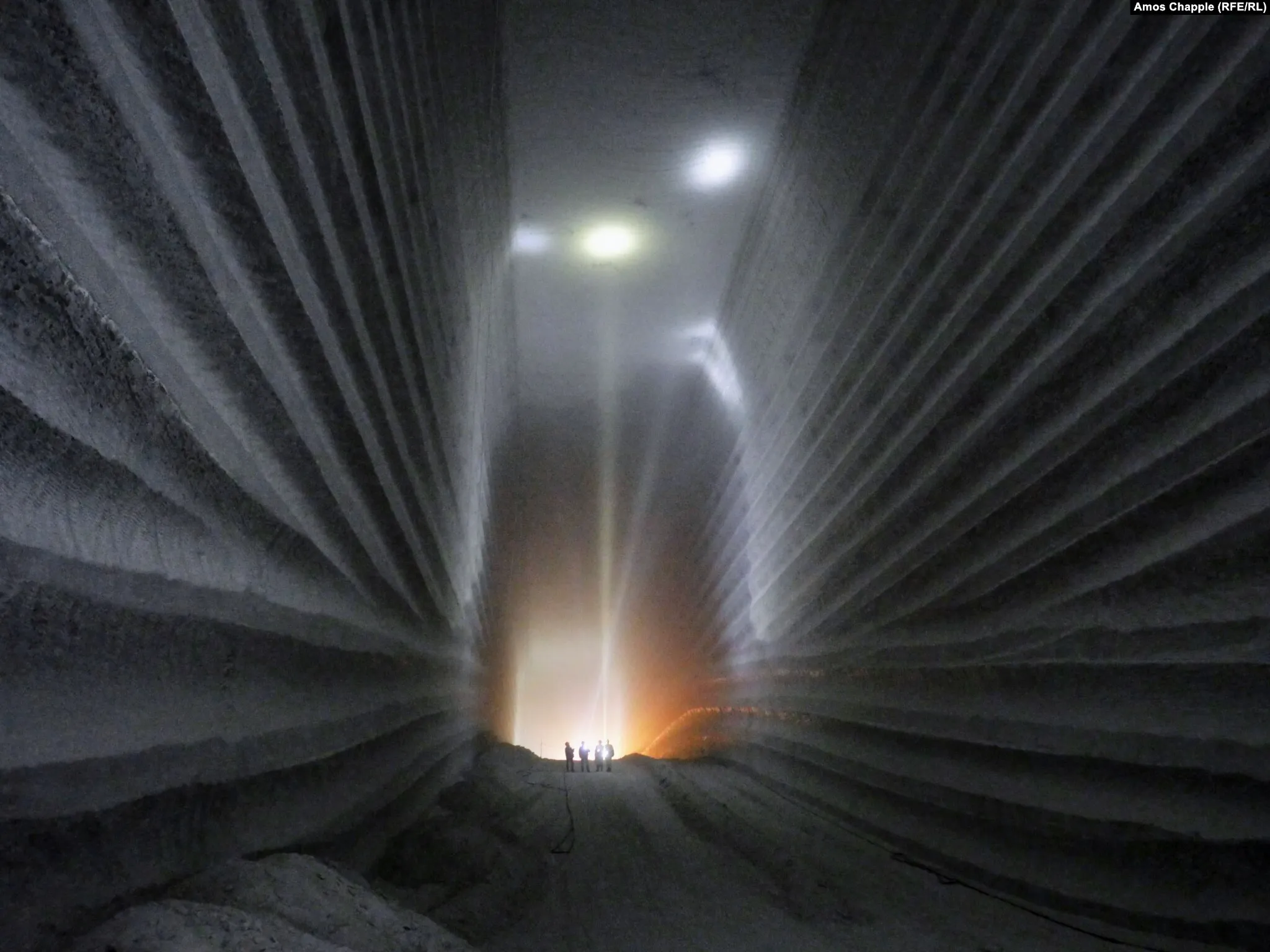
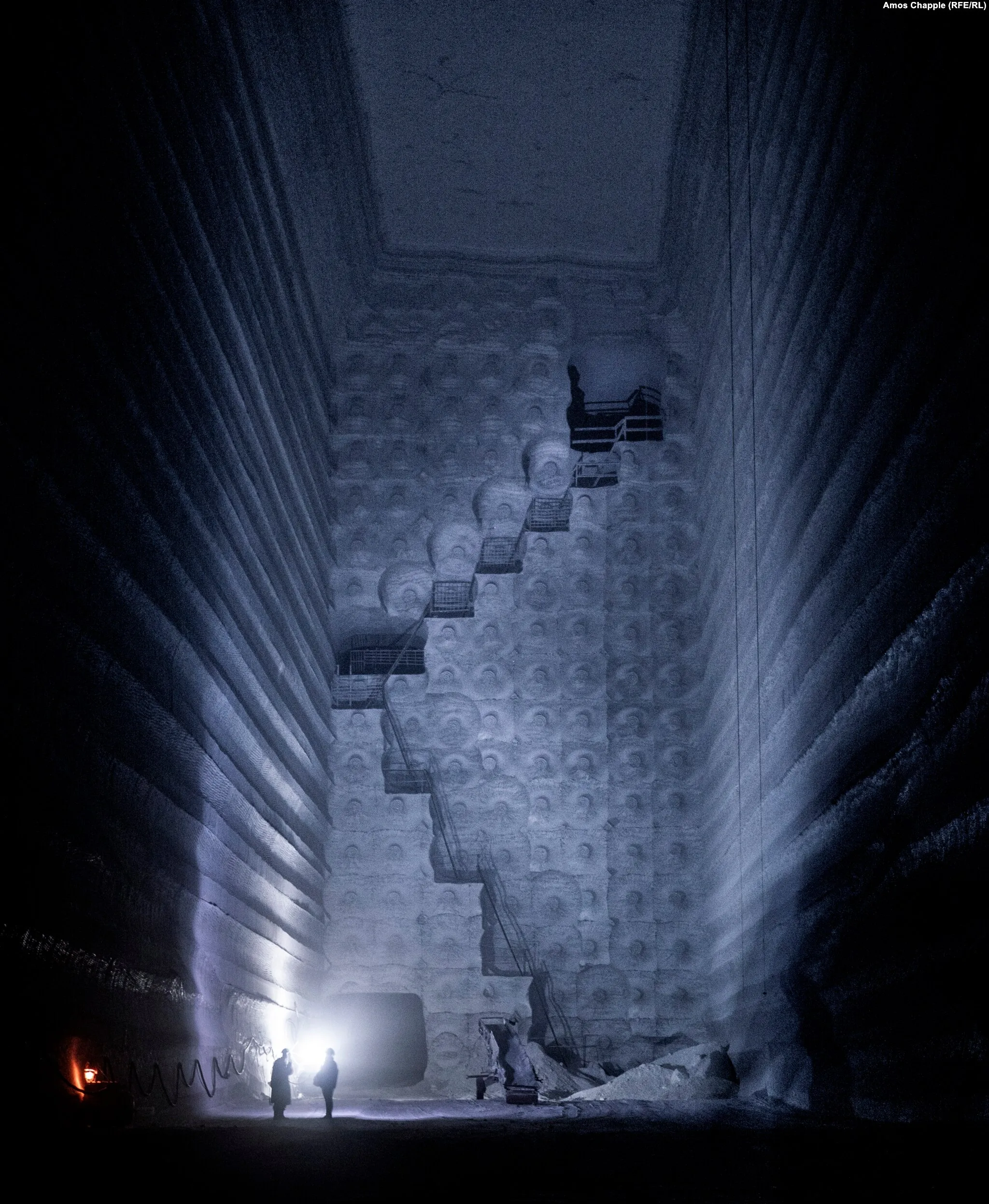
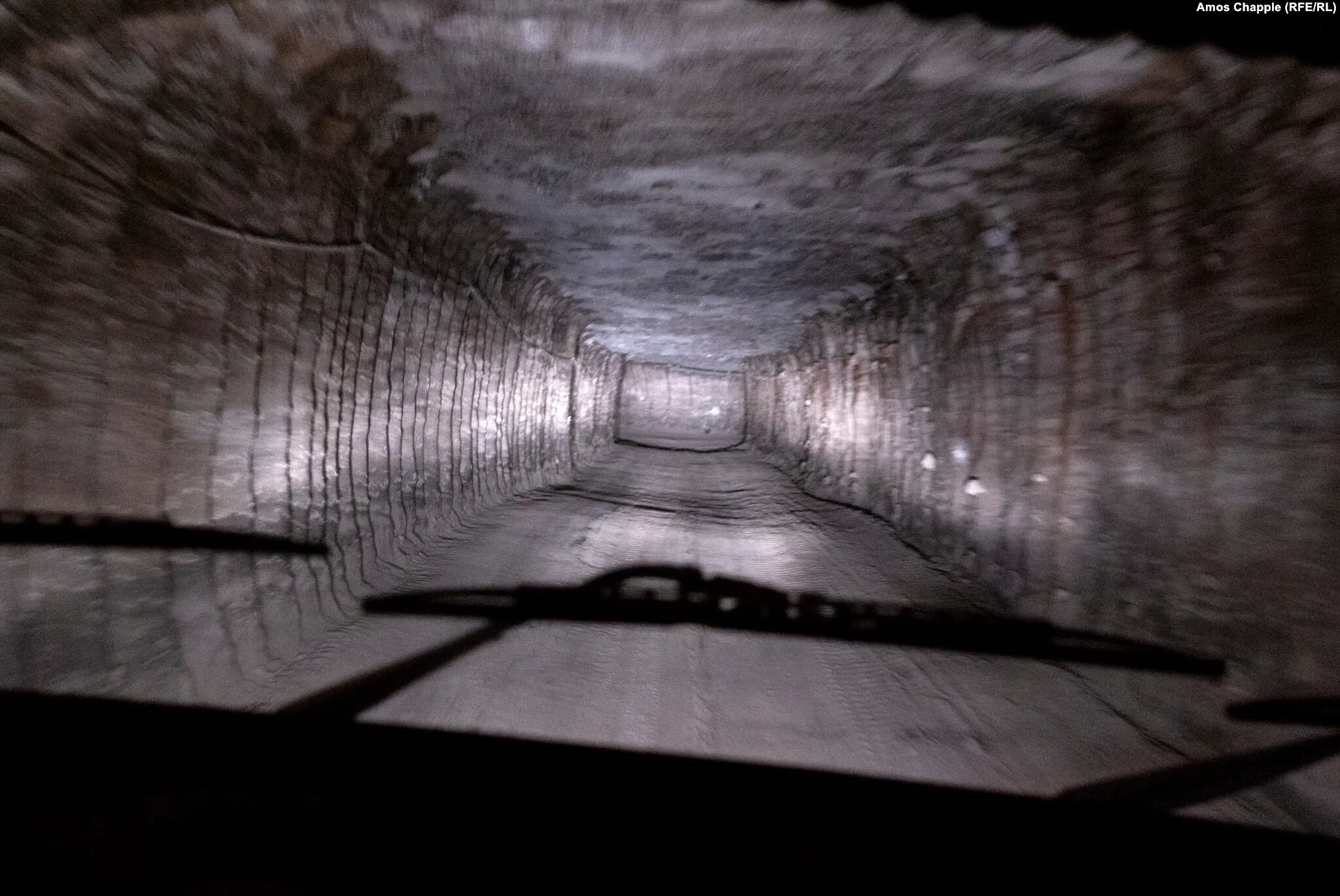
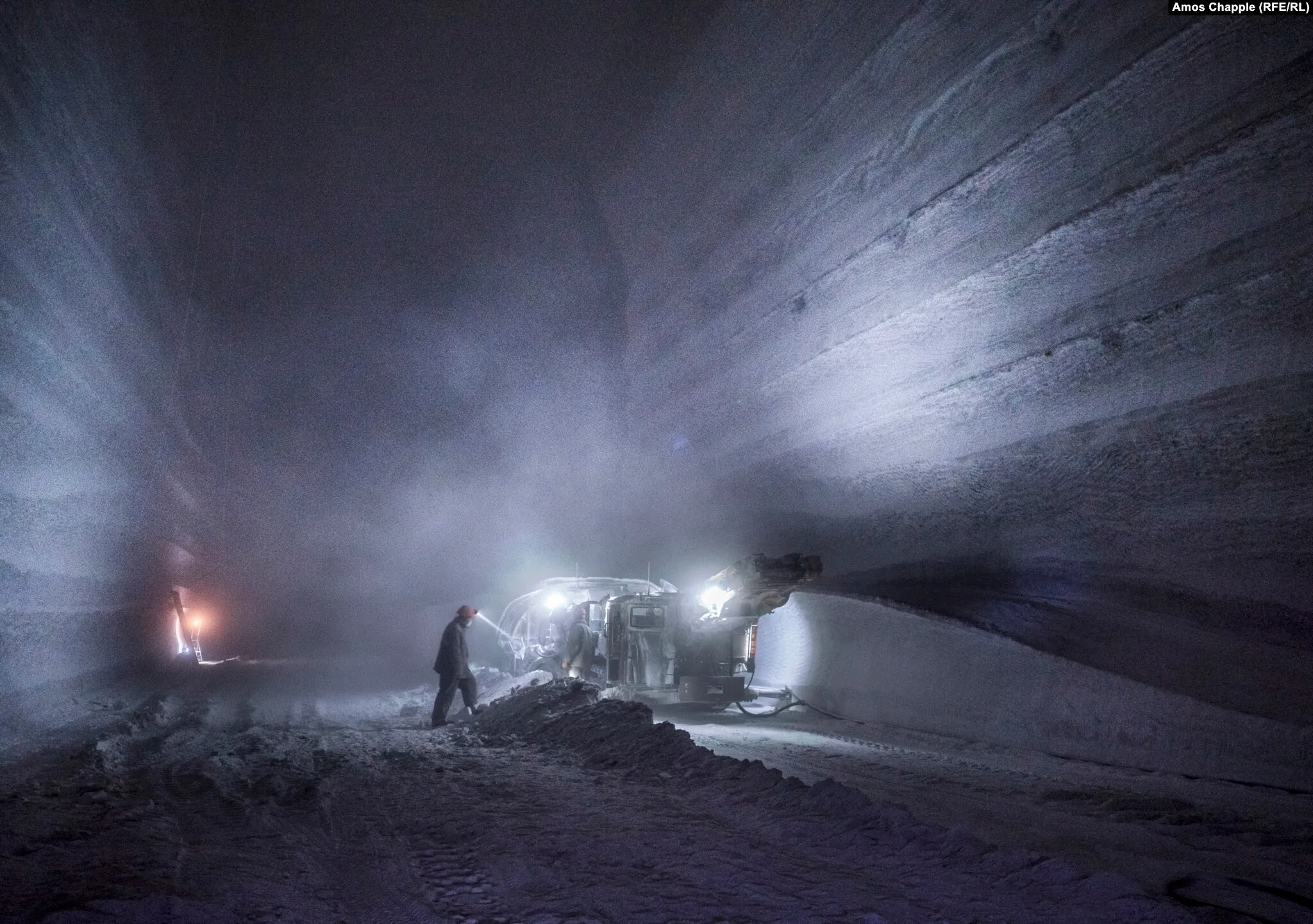
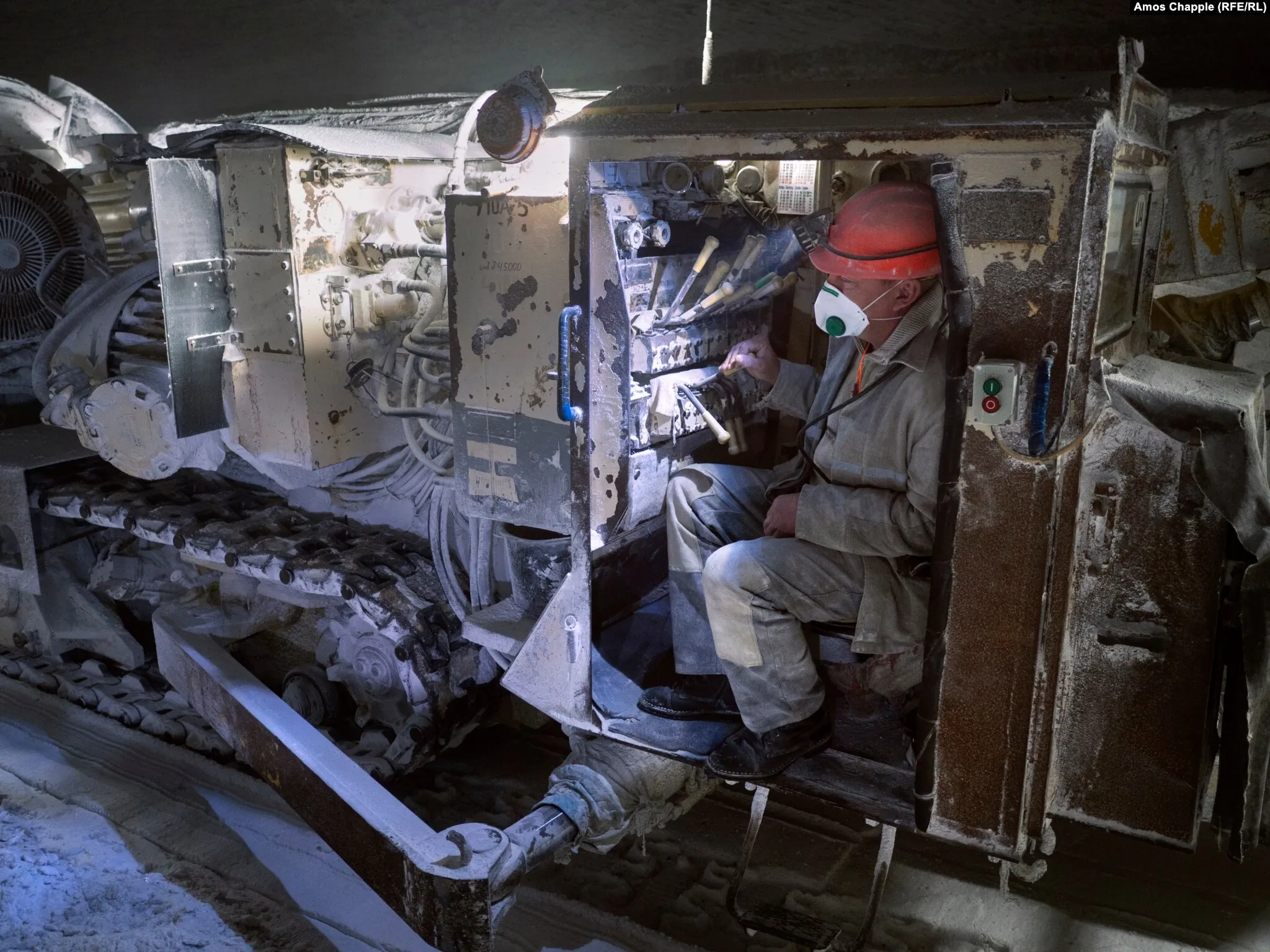
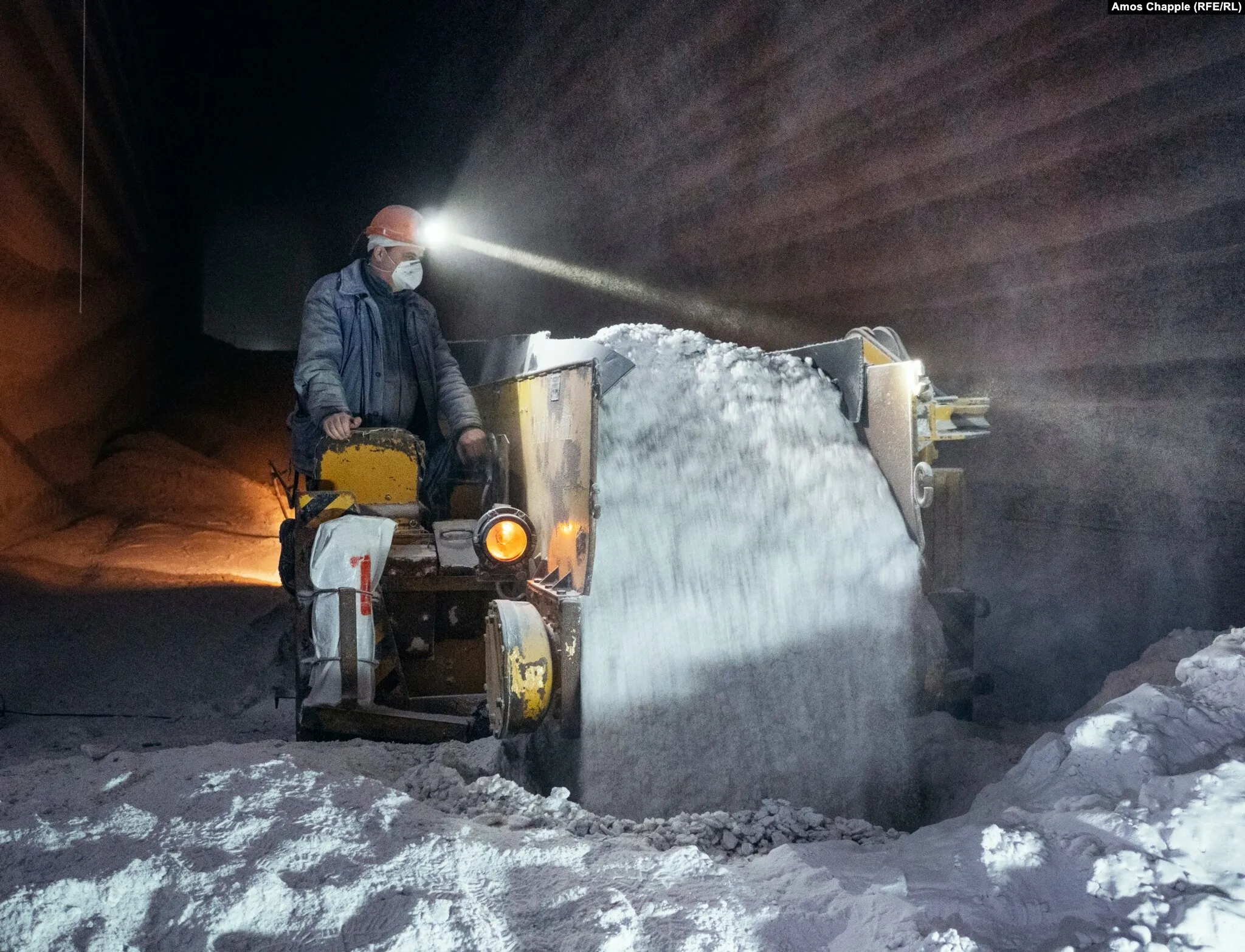
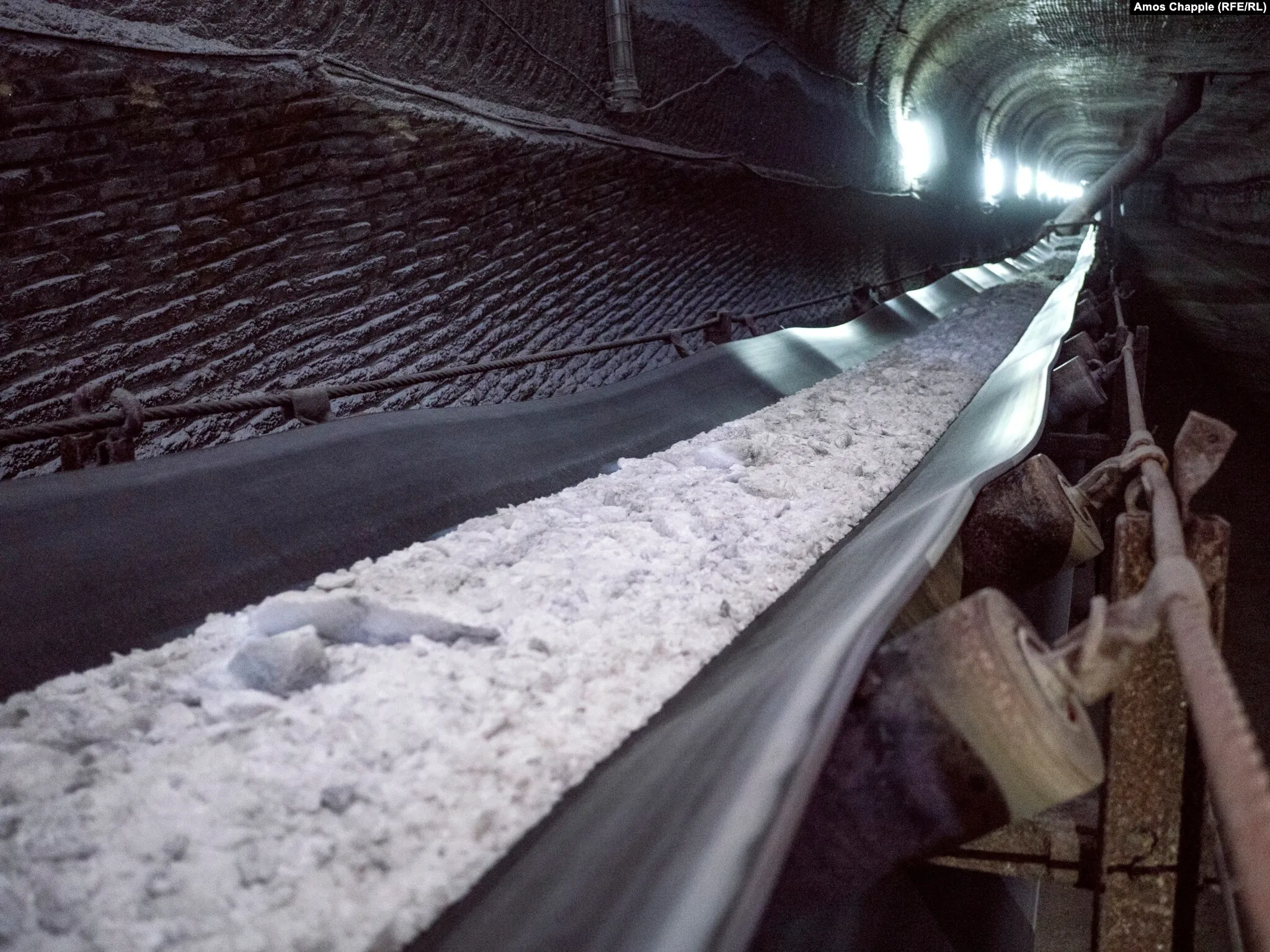
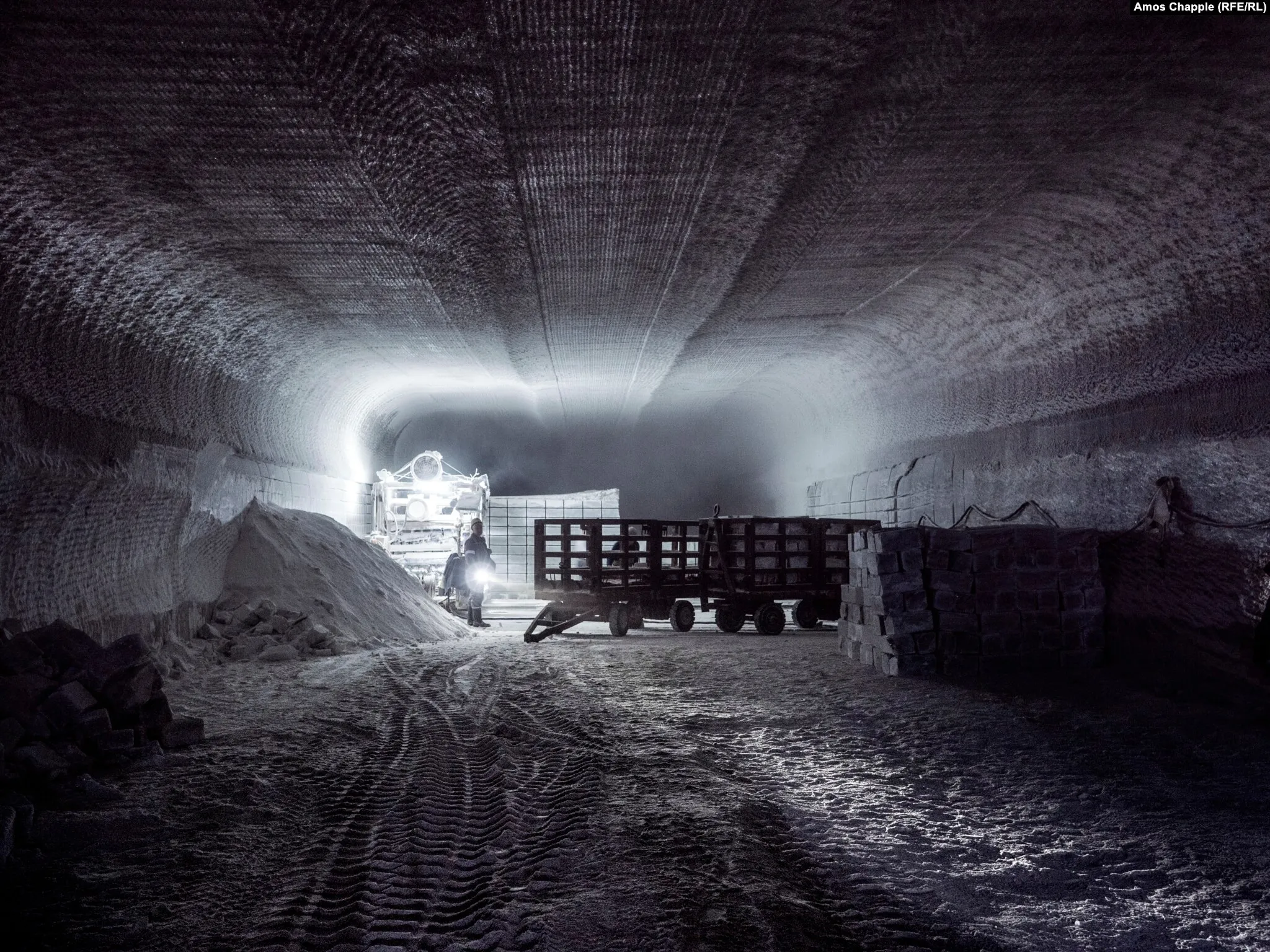
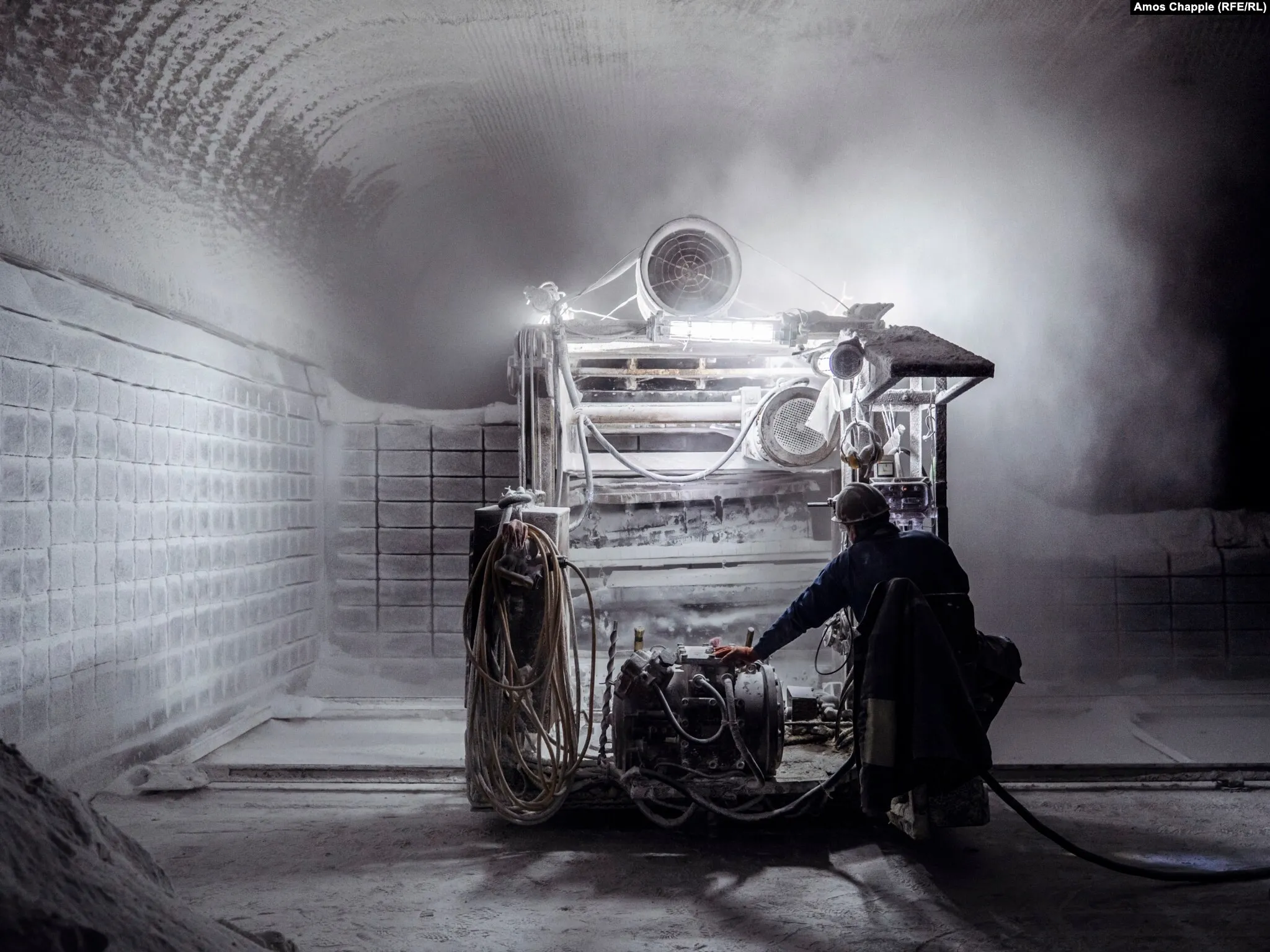
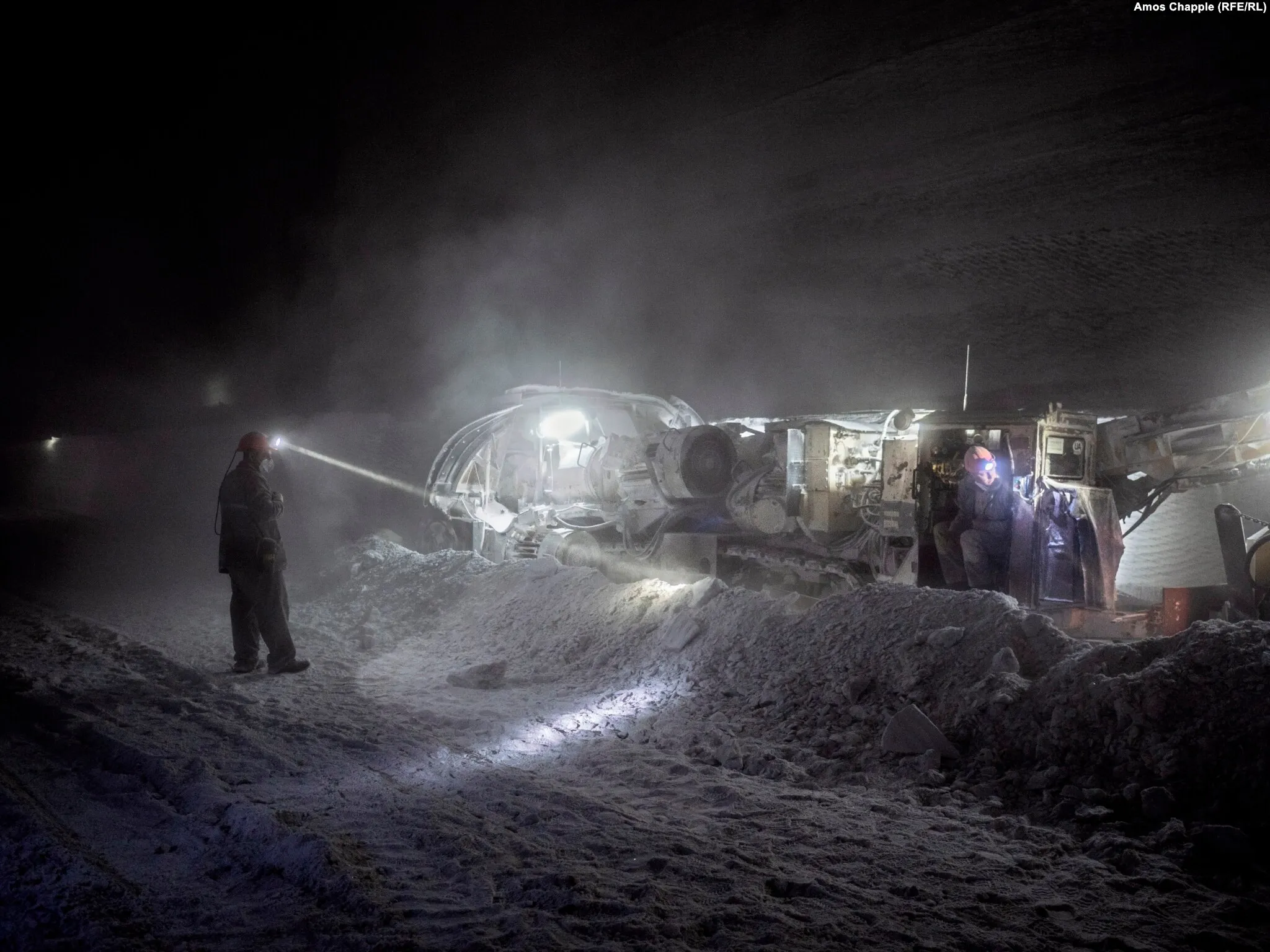
The mine grew over more than a century into one of the largest in Europe. Its tunnels run to around 200 kilometres, over several mines, with the oldest, the Bryantsev mine, dating from 1881 and Mine No. 1 from 1898. They reach depths of roughly 288 to 300 metres, and a visitor was lowered by lift at about four metres a second. Many of the chambers are about 30 metres high. The temperature stays at 14 to 15 degrees Celsius all year, with humidity around 60%.
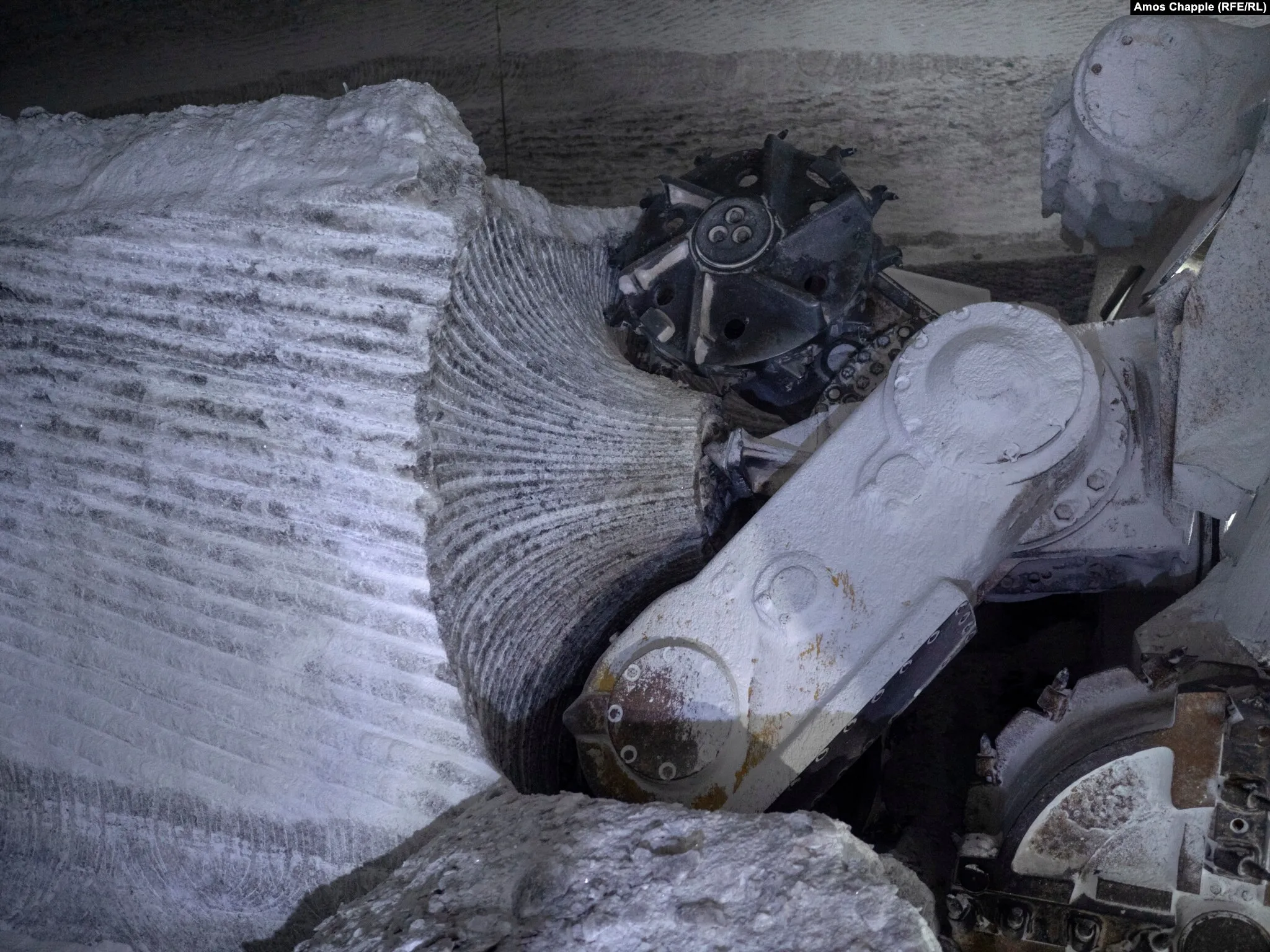
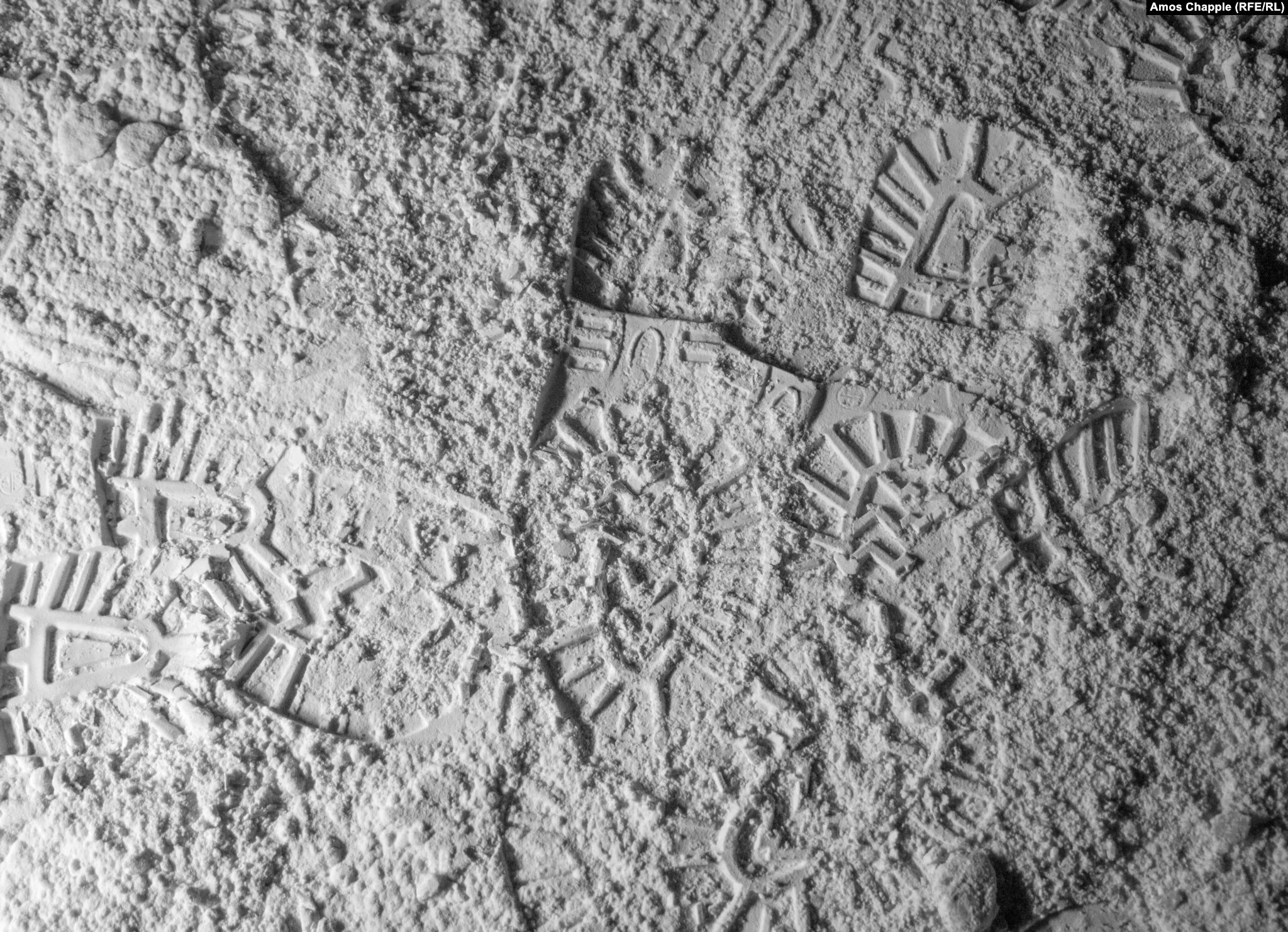
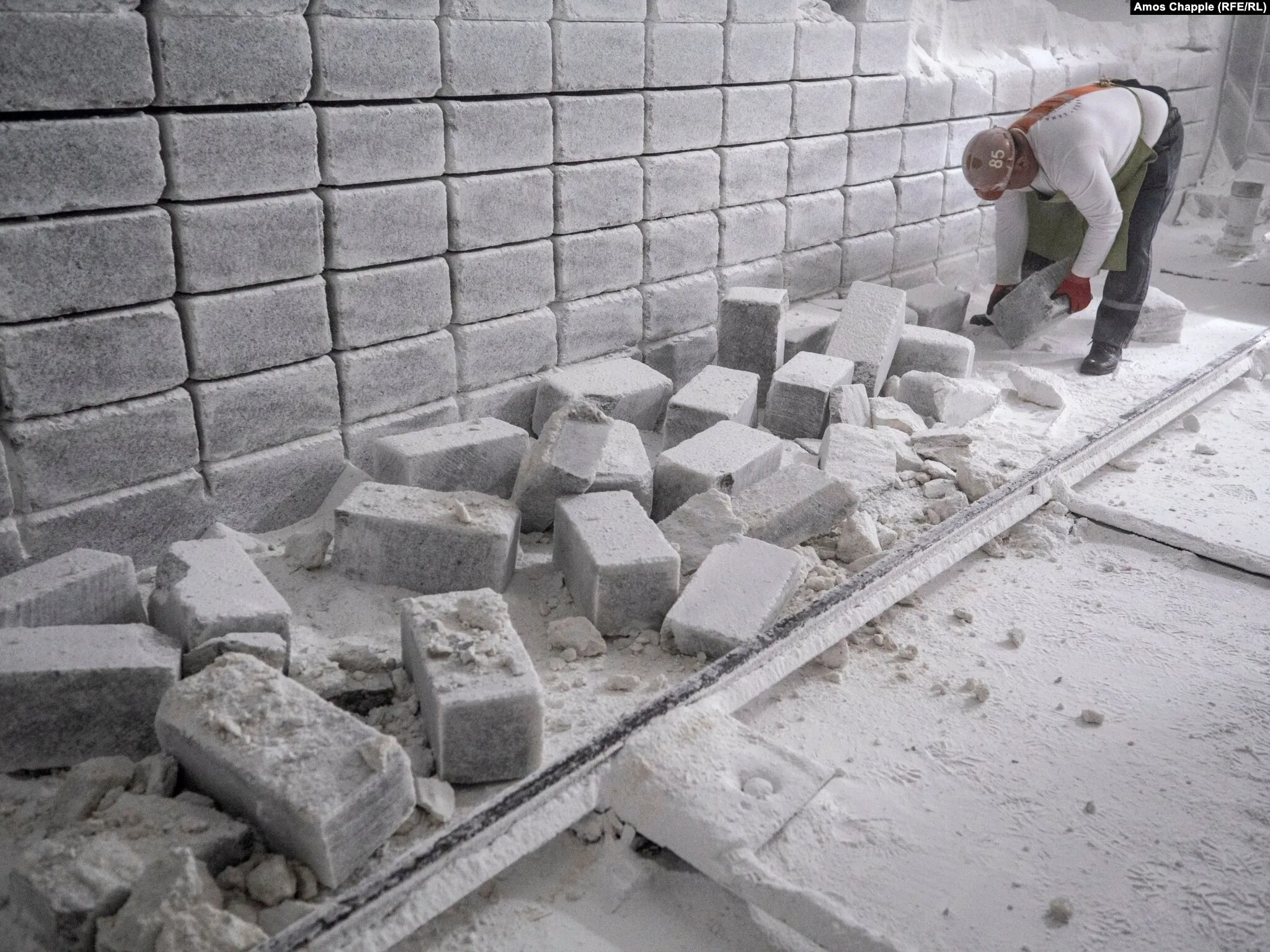
It is a dry, quiet place, because salt does not drip or rot. The walls are pale grey or amber and sparkle in a torch beam, and the salt cuts cleanly, so miners cut galleries with sharp vertical walls and flat roofs. The mine has an unusual acoustic quality too.
A cathedral of salt
Part of the mine became one of Ukraine’s best-known tourist attractions. The salt museum was popular around the 2012 European football championships, and guided tours went down to about 200 to 300 metres. Visitors were given helmets and a safety briefing, then rode the lift down. A route of a few hundred metres took them past salt sculptures: a replica of a salt palm, a gnome and a pair of swans, where visitors tossed a coin between their necks for luck. There were benches, a cafe, a projector room and a football pitch, where an organised match was played underground in September 2020.
The most moving place was the miners’ church. It began as a small chapel dedicated to the Holy Ascension, where miners prayed before and after shifts. It was closed for nearly 80 years and was restored and reopened to visitors. In April 2021 the old Bryantsev mine, Mine No. 1, opened a new route, called Secrets of the Underground Salt World, with a light and sound show. It went down about 200 metres, took about two hours, covered almost half a kilometre and included a Museum of Salt Production with historic tools and equipment.
Music, a balloon and a clinic
The acoustics made the mine a concert venue. In 2004 an underground hall holding about 250 listeners hosted the Salt Symphony classical music festival, with an Austrian conductor, Kurt Schmid, and the Vienna Opera soloist Victoria Lukyanets. The tickets reportedly cost between 580 and 2,000 euros. Symphony orchestras, opera singers and jazz festivals followed. In 2003 a hot air balloon flew underground in one of the huge halls, the first manned underground balloon flight, and the record was registered with Guinness.
The air was used for treatment too. Since the early 1990s the mine has had a speleosanatorium, called Salt Symphony, about 300 metres down, where people with breathing problems and allergies stayed in underground rooms. The treatment is controversial among doctors. A particle physics detector, the Artyomovsk Scintillation Detector, is also reported to have been working in the mine since 1977, though the detail is poorly sourced.
War reaches the mine
Russia invaded Ukraine in February 2022. Soledar lay on the front line east of Bakhmut, and it was shelled for months. The mine was hit by a missile in the spring, and Artemsil stopped production in the spring of 2022, with its administration building partly destroyed. By August 2022 the town was estimated to be about 90% destroyed. Before the war it had around 10,500 people. Artemsil re-registered in Kyiv, and the shortage of salt became a national problem. In February 2023 the government sold 100,000 packs of the company’s old stock through the United24 fundraising platform to pay for FPV drones,.
The Battle of Soledar lasted from August 2022 to January 2023. Wagner Group fighters began their breakthrough attempt on 27 December 2022, and Ukrainian airmobile and mechanised brigades defended the town. The British Ministry of Defence said the tunnels into the mine were a top Russian priority. Both sides made claims about the capture that did not match: Russian officials said the town had fallen between 10 and 13 January 2023, Ukraine said fighting continued, and Russian forces took the last sector of the industrial zone on 16 January. Ukraine confirmed its withdrawal on 25 January. Casualty figures from both sides remain disputed.
The myth of the tunnels
The mine quickly produced its own myths. On 10 January 2023 the Wagner Group’s founder, Yevgeny Prigozhin, said he had visited the mines and claimed that tanks and infantry vehicles could drive through them, and posted a video of himself underground. Ukraine’s military communications centre said he was not in the mines, citing an analyst who compared the video with real photographs. The idea that a network of tunnels ran from Soledar to Bakhmut was rejected by a regional official.
This is not a system of underground passages from town to town.
Tetyana Ihnatchenko-Tyurina, Donetsk regional military administration
The mine’s own geologist, Viktoria Skrypnyk, pointed out why a military use was unlikely: the shafts are narrow, so equipment has to be dismantled and reassembled to be lowered, the ventilation had stopped and the air might not contain enough oxygen. The British Ministry of Defence said that both sides were probably worried that the tunnels could be used to get behind their lines.
After the capture, Russian media and Wagner showed videos in April and May 2023 of what they said was a large Soviet-era arms depot in the mine, with old rifles, machine guns and a repair shop. One report said that 150 metres down it held 28 galleries over 5 kilometres and about 292,000 boxes of small arms, mostly ammunition. A defence blogger who examined the footage concluded that most of the weapons were old and that the figures came from a single interviewee, so they should be treated as unverified claims.
Damaged, silent and occupied
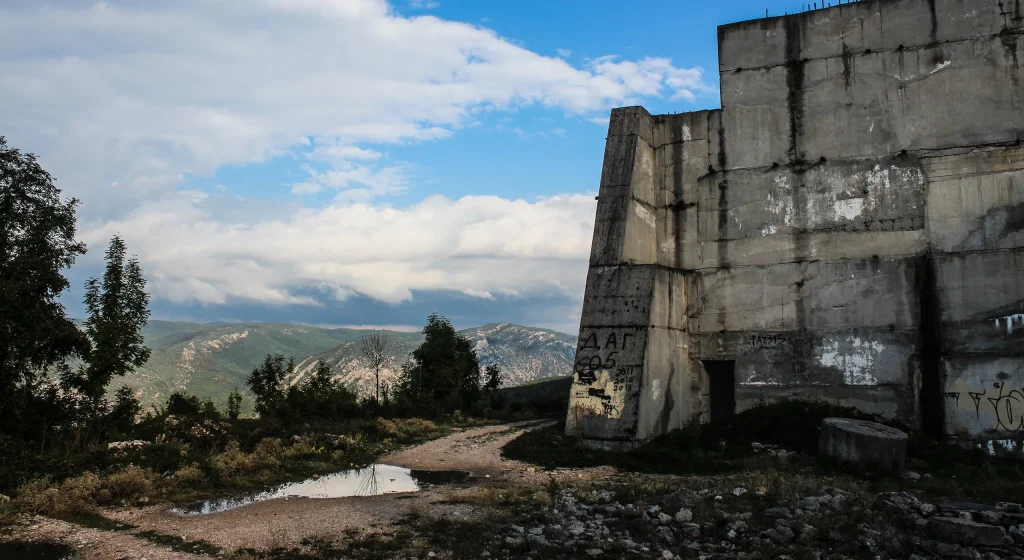
Russia has held the ruins since January 2023, and Soledar served as a staging post for the attack on nearby Bakhmut, which fell in May 2023. Nothing in the sources tells us what shape the tunnels, the church or the museum are in now. The town’s population is thought to be close to zero.
Visiting
Visiting is not possible. The mine closed in 2022 and Soledar is a destroyed town in occupied territory close to the front line. Before the war the tourist tours ran for about two hours, and in 2013 cost 100 hryvnias, but they are no longer offered. A virtual 3D tour of the mine, made before the invasion, is one of the few ways to see inside.
Conclusion
For more than a century the Soledar mines were a working industry that also became a place of music, prayer and recovery. The salt is still there, but the tunnels are damaged and the town above is in ruins. What happens to them next depends on how the war ends.
Did you know?
- Soledar means "gift of salt".
- The mine has around 200 kilometres of tunnels.
- The temperature underground stays at 14 to 15 degrees Celsius all year.
- The miners' underground church was closed for nearly 80 years before it was restored.
- A hot air balloon is said to have flown underground in 2003, a Guinness record.
- Tickets to the 2004 Salt Symphony festival reportedly cost up to 2,000 euros.
- Visitors tossed a coin between the necks of two salt swans for luck.
- Brine from local springs was boiled for salt from the 16th century.
- In 2023 old stock of Artemsil salt was sold to raise money for drones.