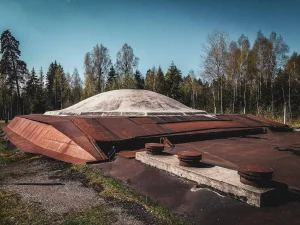
A steppe the size of a small country
The Semipalatinsk Test Site lies in the north-east of Kazakhstan, south of the valley of the Irtysh river, in what is now Zhanasemey District of the Abai Region. It covers about 18,000 square kilometres of open steppe, though History Today puts the figure at 18,500. One think tank describes it as roughly five times the size of the American test site in Nevada. The scientific buildings stood about 150 kilometres west of the city of Semipalatinsk, now called Semey.
Locals call the whole site the Polygon, the Russian word for a firing range or proving ground. In Soviet times it was secret. The administrative centre, a closed town now called Kurchatov, was known only by a postal code, Semipalatinsk-21, and on Soviet maps it appeared under the name Konechnaya, or “Last Stop”. The place stayed a state secret until the end of the Soviet period, and residents who spoke out risked punishment.
An “uninhabited” steppe
The site was chosen in 1947 by Lavrentiy Beria, the political head of the Soviet atomic bomb project, who called the steppe uninhabited. It was not. The area was about 120 kilometres from the city of Semipalatinsk, with towns and rural communities nearby, and the villages around the site would be among the first to feel the consequences.
The first facilities were rough. Gulag prisoners built the primitive test installations, including a laboratory complex on the south bank of the Irtysh. When the labour camp closed, the 217th Separate Engineering and Mining Battalion took over the construction, and men from the same unit later built the Baikonur Cosmodrome. The laboratory town was renamed Kurchatov, after Igor Kurchatov, the physicist who led the Soviet bomb programme. It was founded in 1947, incorporated as a city in 1948, and grew into a closed city of more than 20,000 people.
29 August 1949
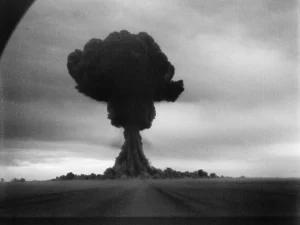
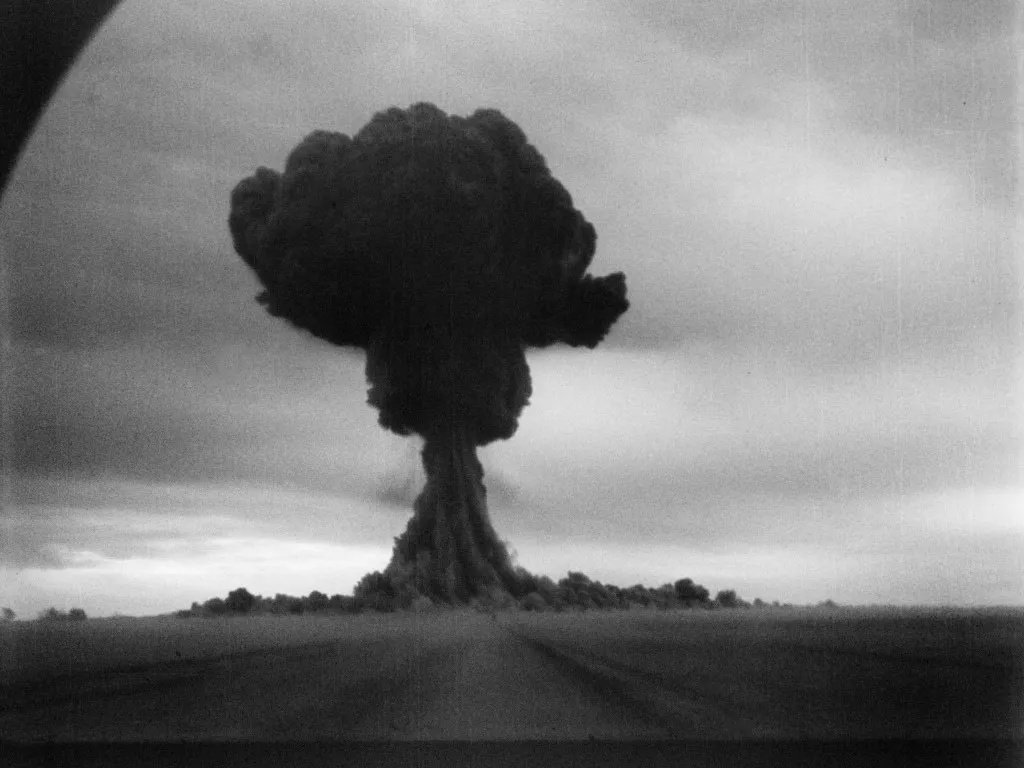
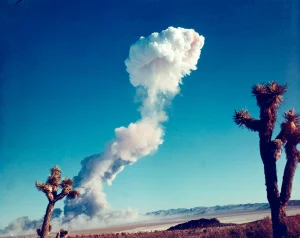
The first Soviet atomic bomb, called RDS-1 in Russia and Joe-1 in the West after Joseph Stalin, was fired from a tower at 7:00 in the morning, local time, on 29 August 1949. It had a yield of 22 kilotons. The design was roughly based on the American Fat Man bomb. At Beria’s insistence it was an implosion weapon with a solid plutonium core, and the designers set aside a more sophisticated design, tested later as RDS-2, in favour of the proven Fat Man type. Mikhail Pervukhin chaired the testing commission, Igor Kurchatov and Yulii Khariton were in charge of weapon development, and Beria supervised the test.
The ground around the tower was turned into a model of a town under attack. Workers built wooden and brick houses, a bridge and a simulated metro railway. About 50 aircraft and a large amount of armoured equipment were brought in, along with more than 1,500 animals to test the effects of the bomb on living things. Around 100 guns and mortars were placed 250 to 1,800 metres from ground zero, and those within about 500 to 550 metres were destroyed or needed factory repair.
The United States soon knew. On 3 September 1949 a US Air Force WB-29 weather reconnaissance aircraft fitted with filters flew from Misawa Air Base in Japan to Eielson Air Force Base in Alaska, collecting radioactive debris, and later flights confirmed that the Soviet Union had tested a nuclear weapon. On 23 September President Truman publicly announced the evidence. The test also pushed the United States into a crash programme to develop a hydrogen bomb.
Bigger bombs
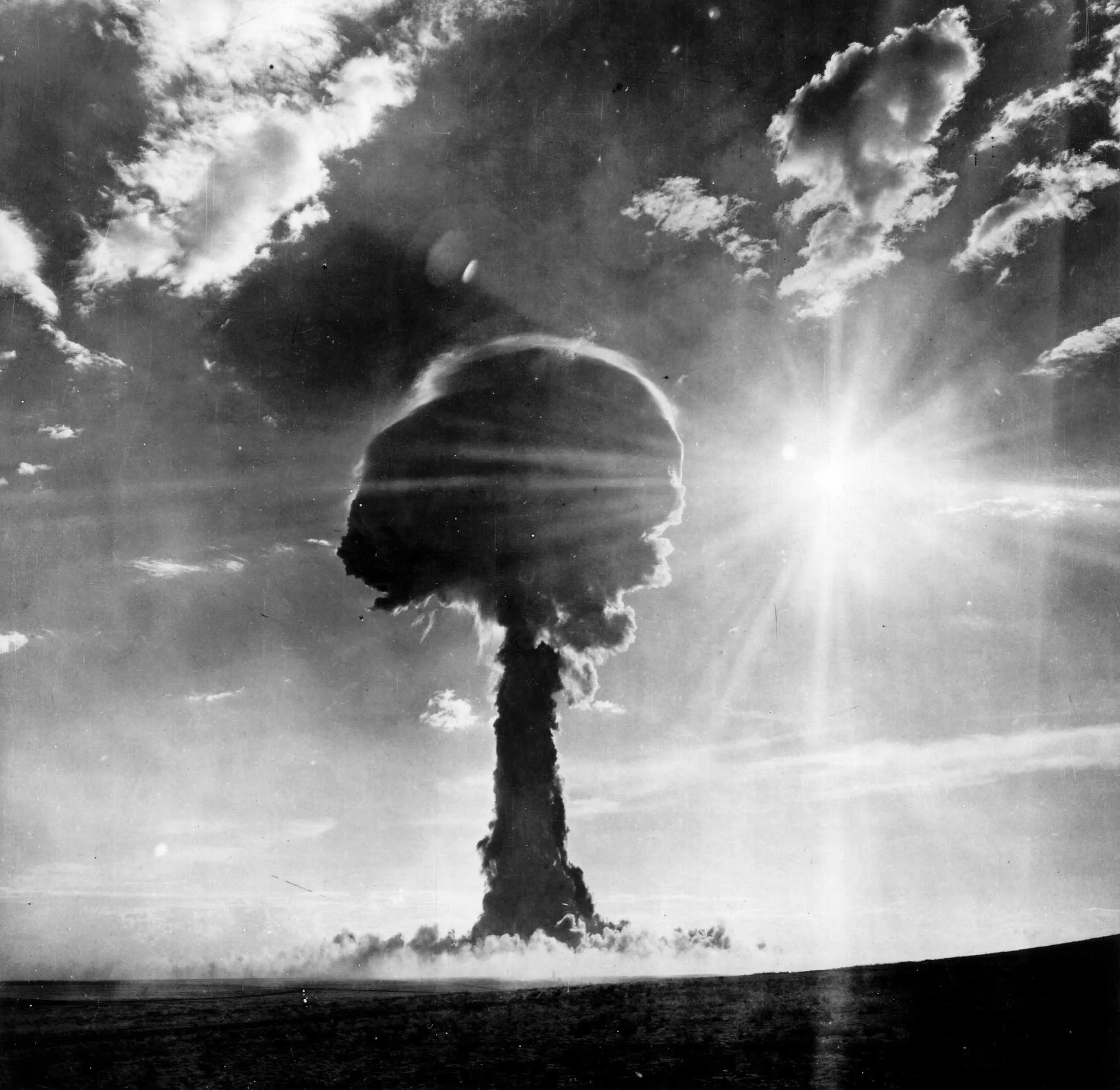
The Polygon was also where the Soviet Union developed its thermonuclear weapons. On 12 August 1953 it fired RDS-6s, a device with a yield of about 400 kilotons, in the “Sloika” or “layer cake” design, with alternating layers of fission and fusion fuel around a fissile core. Andrei Sakharov proposed the layered idea in 1948, and Vitaly Ginzburg suggested lithium-6 deuteride as the fusion fuel in March 1949. The Americans called the test Joe-4.
The next step came on 22 November 1955, when an air-dropped device called RDS-37 was exploded over the site from a Tupolev Tu-16 bomber at a height of 1,550 metres. Its measured yield was 1.6 megatons, and it was the Soviet Union’s first true two-stage thermonuclear test, and the first air-dropped multi-stage thermonuclear test in the world. The shock wave was unexpectedly directed downward because the bomb detonated under an inversion layer. At the test site a trench collapsed on a group of soldiers and killed one of them, and in Kurchatov, about 65 kilometres away, a building collapsed and killed a young girl.
The people downwind
The test programme depended on the surrounding population knowing nothing about it. People who grew up near the site have described it to History Today. Galina Tornoshenko, born in 1949, remembered the mushroom clouds as big and terrifying. Residents were told by radio to go outside because of an “earthquake”, and many were ordered into the street before blasts. Teachers reportedly covered children with felt during explosions. A health institution, Anti-Brucellosis Dispensary Number 4, officially studied cattle disease but in fact researched the effects of radiation on humans.
The effects on the villages are still the subject of dispute. A 2006 report in The Tyee described the village of Dolon, about 31 miles from the site, where all 800 villagers were exposed to high radiation from the first test in 1949. Regional cancer rates were reported at twice the world rate, and Soviet-era records showed leukaemia rates twice those of other regions from 1949 to 1963. Local doctors suspected small, continual radiation doses and genetics, and also cited stress, malnutrition and diet. A 2010 BBC programme claimed that in the worst-affected places one child in twenty had a genetic defect. The same Tyee report described Zharlanka, a village of about 2,000 people some 18 kilometres from the site, where the local doctor said about 90 per cent of villagers had skin conditions, and Sarzhal, where construction stopped in 1994 when funds ran out and unfinished buildings still stand. The pattern of illness is real. Its causes are hard to separate, and because of the Soviet secrecy that surrounded the tests, much of the original data is missing or is held in Moscow.
Figures for the exposed population vary widely. Kazakh experts estimate that 1.5 million people were exposed to fallout, health studies suggest direct impacts on about 200,000 residents, and Kazakhstan recognises more than a million victims. The Tyee cites a Kazakh government estimate of 1.2 million affected in total, and about 200,000 directly exposed to dangerously high radiation until 1962. A study of people exposed between 1949 and 1956 found about 80 per cent more mutations at certain DNA regions, and about 50 per cent more in their children. The Tyee also reported that about 30,000 soldiers served at the site and that only about 100 were alive at the time of its report.
Going underground
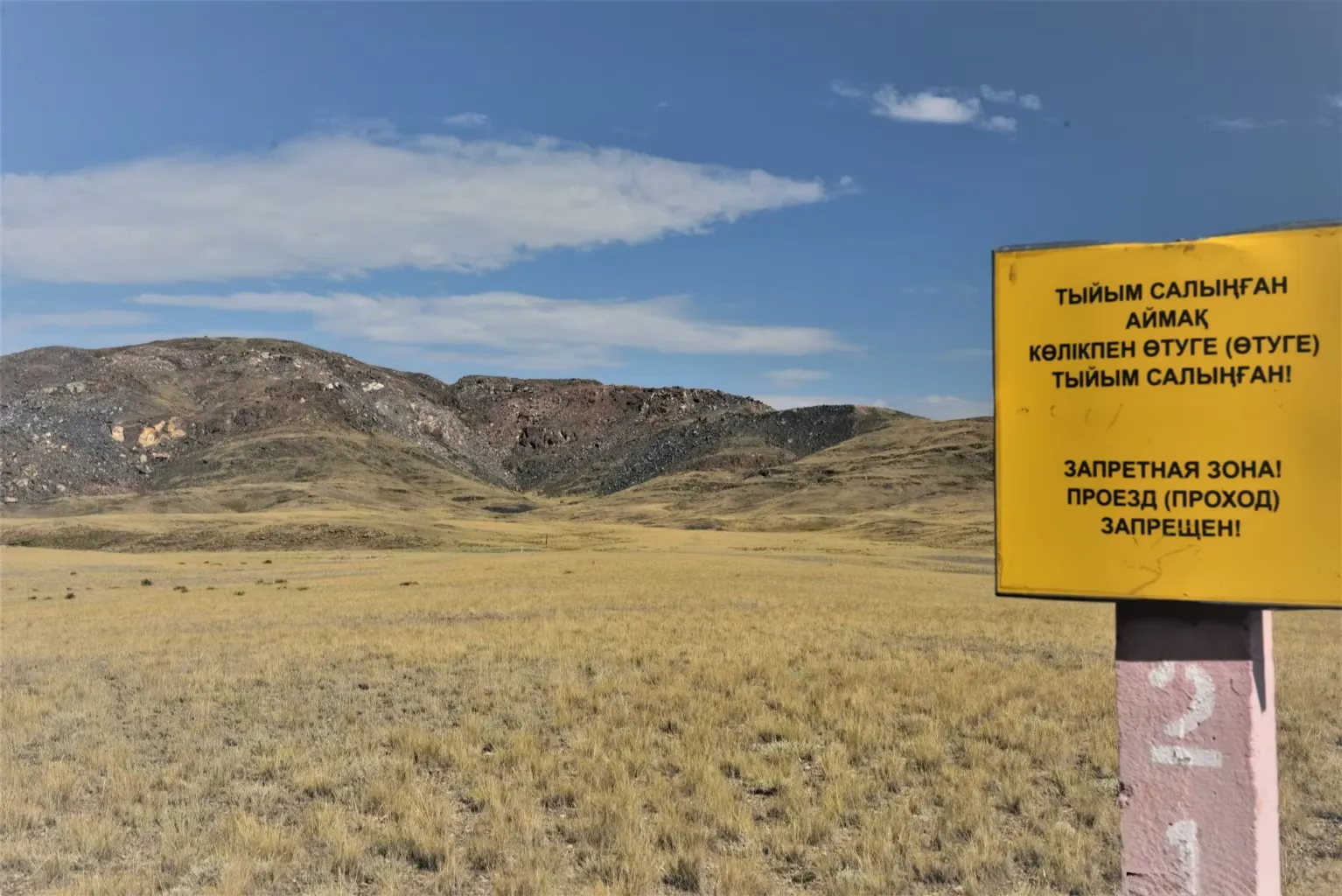
Atmospheric tests ended after the 1963 test ban treaty, and the Soviet programme moved underground, to Balapan, Saryozen, Murzhik and the Degelen mountain complex. One summary lists 343 underground tests, 215 in horizontal tunnels or adits and 128 in boreholes, together with 125 atmospheric tests: 26 on the ground, 91 in the air and eight at high altitude. Elsewhere the same article gives other totals, 456 explosions with 340 underground and 116 in the atmosphere, so the figures are inconsistent even within one source. The overall count is 456 in History Today and in the Nonproliferation Policy Education Center’s account, 458 in The Tyee and 468 in Wikipedia’s lead. We give the range, and it is a little over 450 on most counts.
Going underground did not make the tests safe. Radioactive gas leaked in nearly 30 per cent of the underground detonations, as The Tyee reported. History Today puts the total energy release at about 2,500 times that of the Hiroshima bomb, and says that the site accounted for nearly a quarter of all the nuclear tests in the world. The last explosion took place on 19 October 1989 according to Wikipedia and History Today, while the Nonproliferation Policy Education Center gives 12 February 1989.
The Atomic Lake
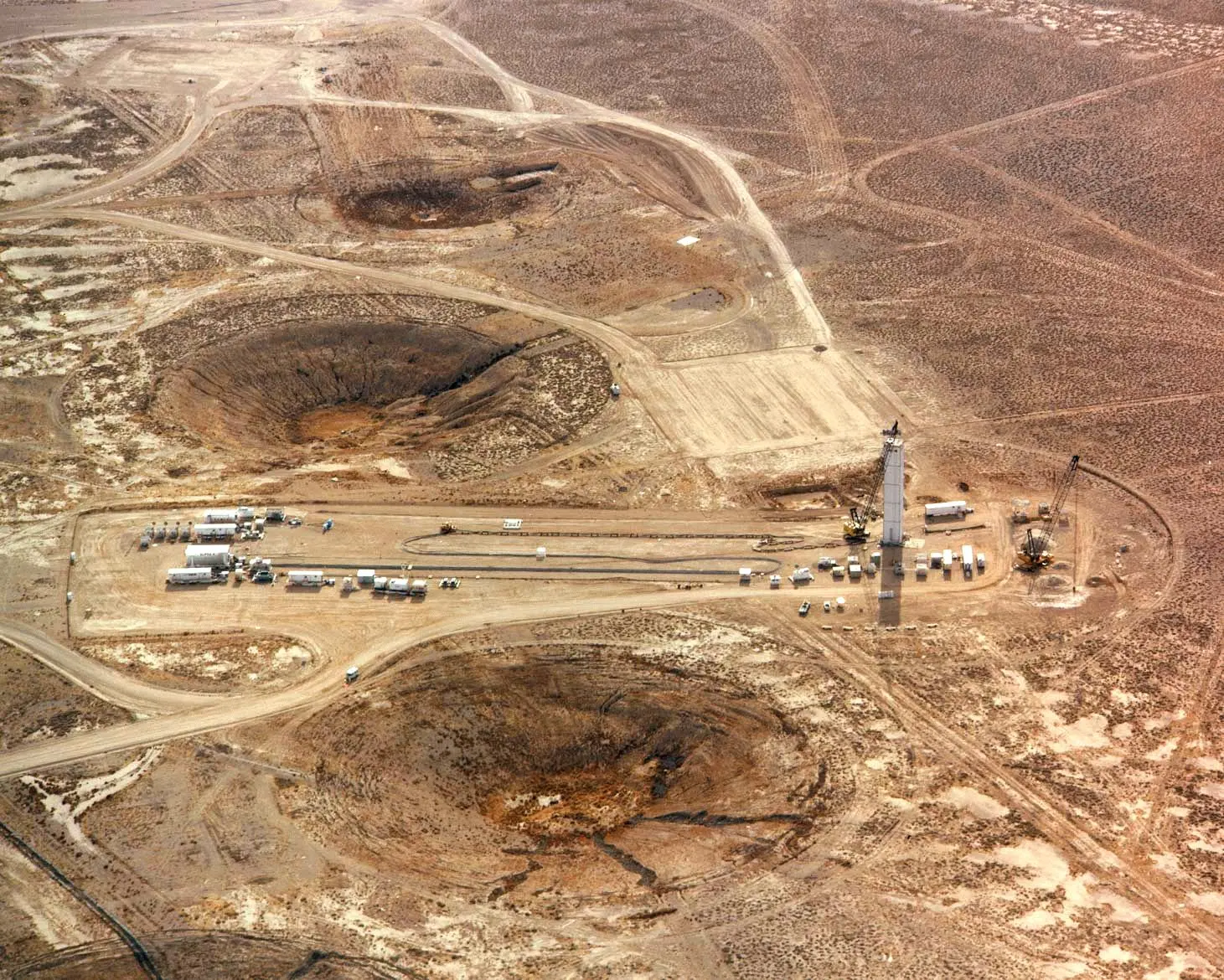
The Soviet Union also used the Polygon to test whether nuclear explosions could be used for engineering. On 15 January 1965 it fired Chagan, an underground cratering shot with a yield of 140 kilotons, designed to dig a crater for a lake and to dam the spring flow of the Chagan river with the rim. It was the first and largest of 124 detonations in a programme called Nuclear Explosions for the National Economy, inspired by the American Project Plowshare, whose Sedan shot of July 1962 was the first such explosion.
The result is the Atomic Lake, also called Lake Shagan or Balapan, about 408 metres across and 100 metres deep, with a volume of about 10 million cubic metres. The explosion threw steam, pulverised rock and about 20 per cent of the fission products into the air. A radioactive plume was detected over Japan, which led the United States to complain that the test violated the 1963 Limited Test Ban Treaty. The lake is still radioactive.
The movement that closed the Polygon
Public protest began in the late 1980s, when Chernobyl had made nuclear issues a topic of open argument in the Soviet Union. The Swarthmore Global Nonviolent Action Database records that the poet Olzhas Suleimenov made a television appeal on 26 February 1989, and that about 5,000 Kazakhs gathered at the headquarters of the National Writers’ Union on 28 February. That meeting founded the Nevada-Semipalatinsk movement, named to link the Kazakh site with the American test site in Nevada, and it adopted a declaration called “High Time”. Its demands were the closure of the Semipalatinsk site and a clean-up of the area, an end to nuclear weapons production, citizen control over nuclear waste, a map of the radiation damage across the Soviet Union, and clarity about the position of radiological victims.
It grew quickly. The movement’s petition reportedly gathered over a million signatures within days, and other accounts give two million. On 6 August 1989 about 50,000 people gathered at Karaul, near Semipalatinsk, the largest documented demonstration. The protesters used the methods available to them: speeches, petitions, banners, and the throwing of stones at the test site, which followed a Kazakh tradition of tossing stones at evil. In 1989 a plan to expand the site into the Taldy-Kurgan Region was dropped after a telegram from Keshirim Boztaev and a KGB warning of unrest. In November 1989 the Soviet government announced pauses in testing, and in December 1989, during a visit by Suleimenov to the United States, it admitted that it had cancelled 11 of 18 planned tests. Early in 1990 it offered 27 more tests and closure by 1993, and the activists rejected the offer. In the summer of 1990 Kazakh miners threatened a strike with an end to testing as their chief demand. In December 1990 the Kazakh parliament passed a bill banning nuclear testing in the republic. President Nursultan Nazarbayev signed the decree closing the site on 29 August 1991, the 42nd anniversary of the first test, and the Swarthmore database notes that he had quietly supported the campaign.
The decision had a consequence for the world’s nuclear map. Kazakhstan inherited an arsenal of 1,410 warheads, the fourth largest in the world, and the country later gave it up. On 8 September 2006 the five Central Asian states signed the treaty creating a nuclear-weapon-free zone in Central Asia at Semipalatinsk. It entered into force on 21 March 2009.
Plutonium on the steppe
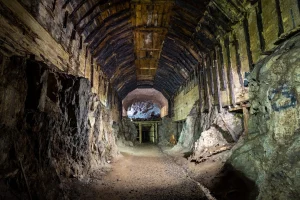
The closure left a problem. The Soviet Union’s armed forces had withdrawn, and Kazakhstan was left with a vast site and limited resources. Weapons-usable material was left unguarded in more than 186 tunnels and boreholes, and scavengers who were after copper cable came, in the words of the Nonproliferation Policy Education Center, within yards of unguarded fissile material, and in some cases broke into areas that held plutonium.
The first response was to seal the openings. Under the American Nunn-Lugar Cooperative Threat Reduction programme, Kazakhstan and the United States sealed 181 test tunnels and 13 test shafts by 2000. It was not enough, because the plutonium was still inside, and scavengers drilled around the barriers. In January 1998 a Kazakh scientist alerted Siegfried Hecker, the retiring director of the Los Alamos National Laboratory, who visited and found no guards or fencing, only a lone guard gate. A series of operations followed, codenamed Groundhog, Matchbox, Nomad and Golden Eagle.
The negotiations took years. Russia feared American intelligence gathering and favoured a step-by-step approach, while Kazakhstan was eager to start because of environmental concerns. The scientist-to-scientist relationships built in the late Cold War eventually led to agreement at political level. The cost and the length of the effort are reported differently: the Nonproliferation Policy Education Center describes a $100 million, 17-year effort to secure hundreds of pounds of plutonium, enough for several bombs, while Wikipedia gives about $150 million and describes a joint Kazakh, Russian and American operation from 1996 to 2012 that used concrete and sealed mine tunnels. Presidents Obama, Nazarbayev and Medvedev announced its completion at the Nuclear Security Summit in Seoul in 2012, and a monument was dedicated at the site later that year. Concerns continue. Cameras, sensors and drones are largely funded through the American programme, and licensed mining near secured areas poses a risk of breach.
Kurchatov today
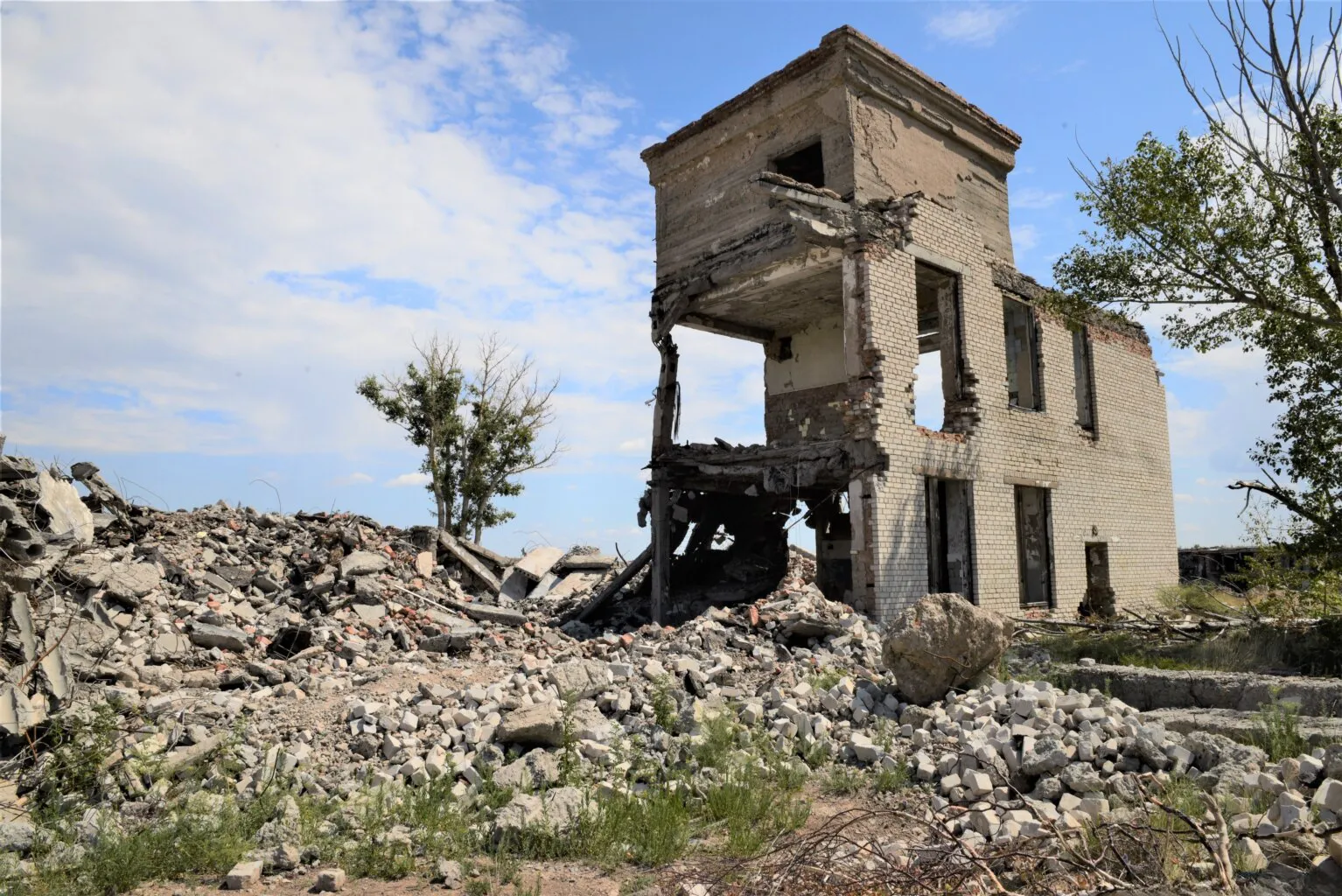
Kurchatov sits on the south bank of the Irtysh, 130 kilometres from Semey, and covers about 16 square kilometres. After testing ended its population fell from more than 20,000 to about 8,000. Its nuclear facilities are managed by the Kazakhstan Institute of Atomic Energy, a division of the National Nuclear Center. The travel guide Against the Compass describes it as semi-abandoned, with a former KGB office, a statue of Kurchatov, the former director’s house, now an Orthodox church, and a Nuclear Peace monument.
The town has a museum of the test site, which opened in 1972, and the Dark Tourism website describes its exhibits in detail: preserved animals in jars showing the effects of blasts, a rock turned to pumice by an underground test, models of a borehole and a tunnel, and the original RDS-1 control console. The same page states in a 2025 update that the museum has not been accessible to foreign tourists for several years.
The site today
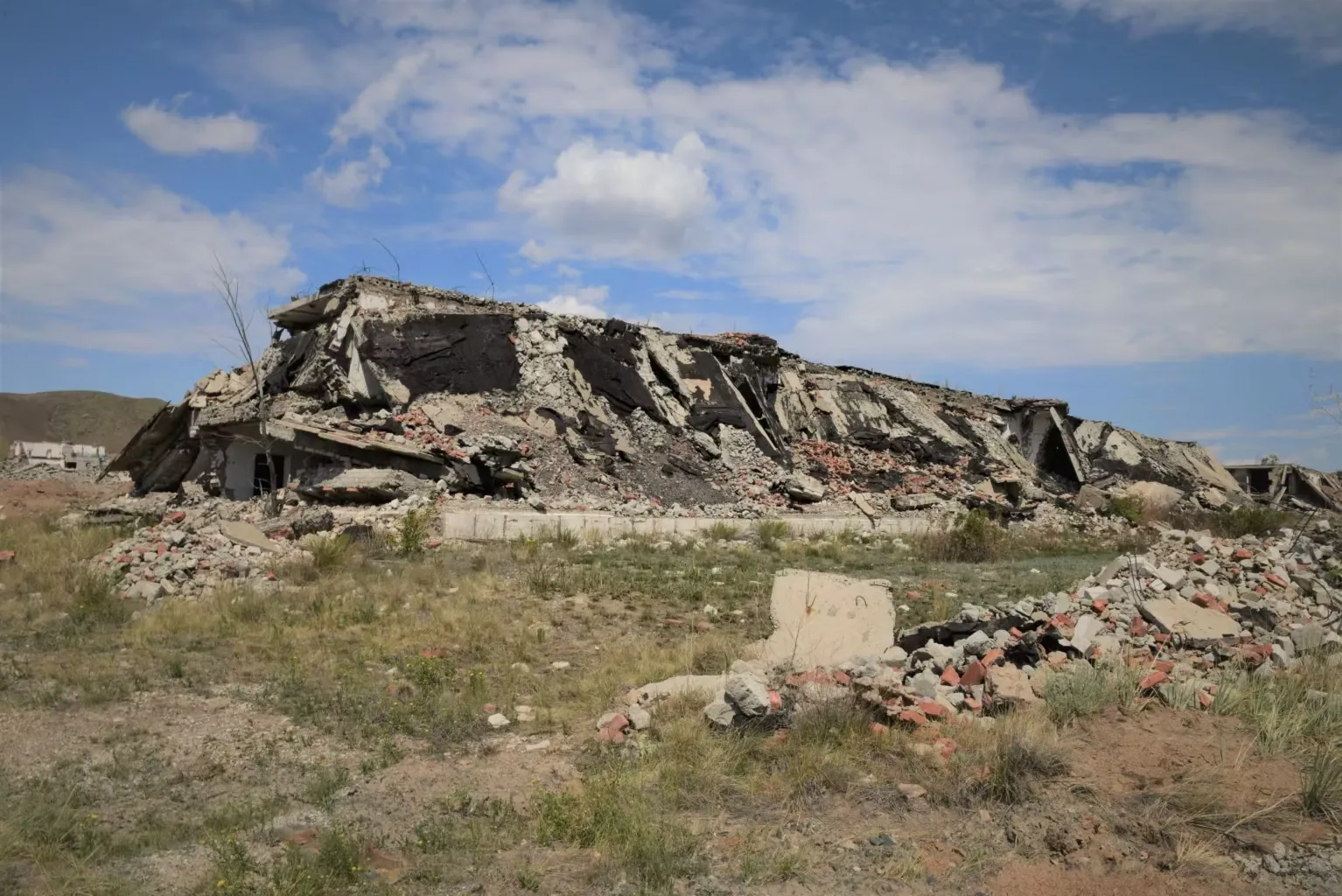
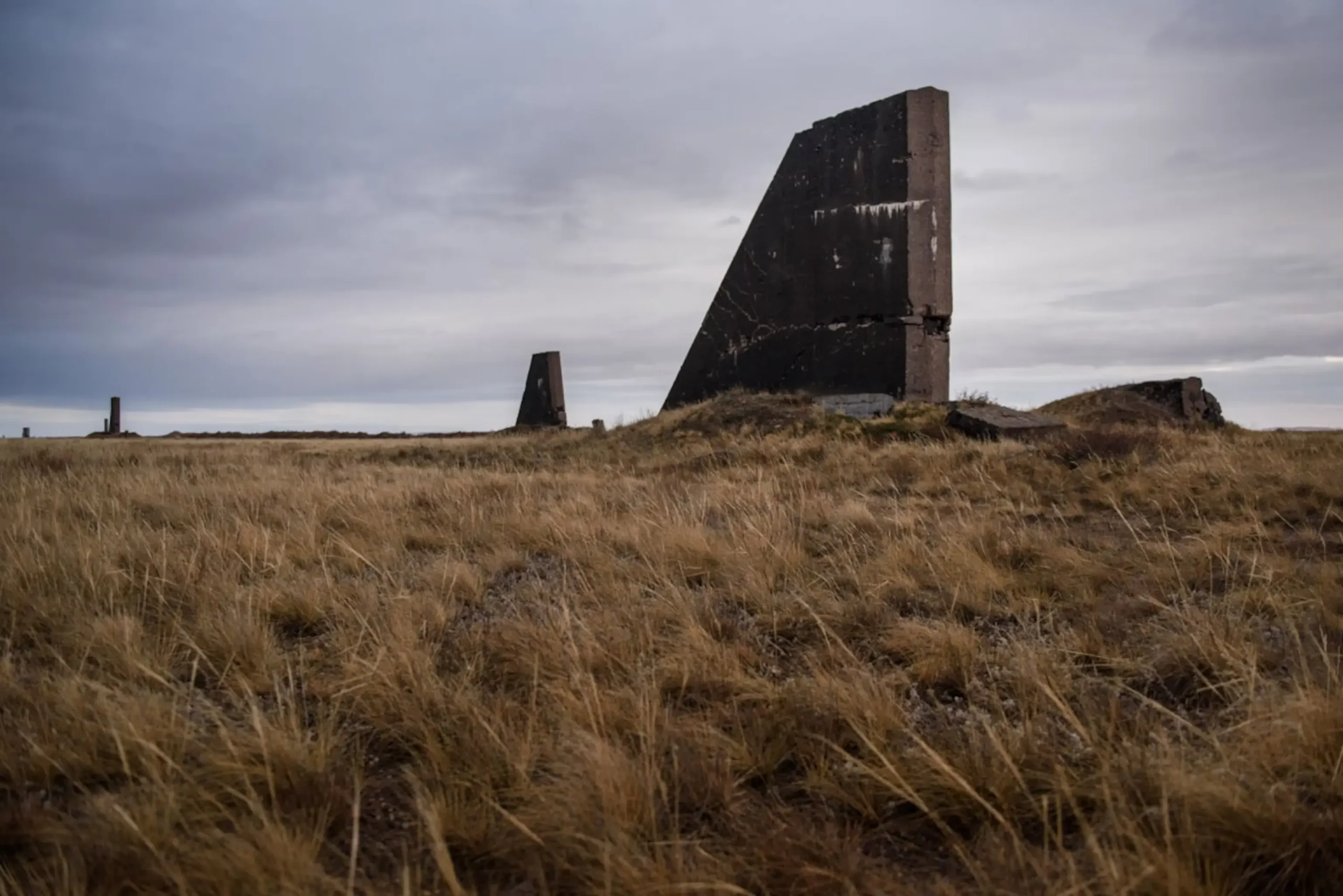
Since 2014 large parts of the site have reopened for mining, agriculture and tourism, and it is the only former nuclear test site open to the public year-round. It has also become a haven for wildlife. The reopening has risks. In 2006 The Tyee quoted the National Nuclear Center as saying that about 17 per cent of the site remained highly radioactive, in places whose exact location was not known, and it reported that shepherds grazed flocks on the site and sold wool and meat in local markets.
The United Nations passed a resolution in 2003 calling for funds for the region, and The Tyee noted that Russia compensates its own citizens but has not publicly acknowledged effects in Kazakhstan. Compensation for the people affected has been modest. In 2006 average civilian payments were about 60 US dollars a month, and the sum was the same regardless of how severe a person’s condition was. Residents of one village within the radius of three underground test craters were classed as at “minimal risk” and receive a one-time payment of about $50. One of the best-known faces of the effects on later generations is Karipbek Kuyukov, born without arms, who paints with his feet and mouth and is an ambassador for the anti-nuclear group ATOM.
Visiting
Visiting needs planning. Against the Compass says that a permit is required, that it is obtained only through a well-connected local Kazakh and takes at least two weeks, and that there is no public transport to the site. Semey is about 760 kilometres east of Astana, near the Russian border, and the start of the Polygon is about 200 kilometres from Semey, a two to three hour drive across the steppe, so the driver must know the area. A daily train runs from Astana to Semey overnight, and FlyArystan flies from Almaty to Semey. The same source recommends two to three days in total.
The sites it describes include the flooded crater of Chagan, an underground command base, the remains of missile silos, and the town of Kurchatov. The central test site where the largest bomb was exploded is off-limits because of very high gamma radiation levels. The flooded crater also has high gamma readings, though lower than the central site. Beta particles from radioactive dust can be present near craters, and a protective suit, which the local guide should provide, is required. Brief visits to areas with high readings are described as acceptable, although the author notes that some of the casualty figures are disputed. Do not go without a guide who has a dosimeter and a permit.
Conclusion
The Semipalatinsk Test Site is where the Soviet Union became a nuclear power, and it is where much of the cost was paid. The first bomb, the first thermonuclear tests and four decades of underground shots were fired in a place that the man who chose it called uninhabited.
The numbers are disputed, from the number of explosions to the number of people affected, and they are likely to stay that way, because the original records are held in Moscow and the Soviet authorities kept the exposure secret. What is not in dispute is the sequence that ended it. A poet’s television appeal, 5,000 people in a writers’ hall, and 50,000 in the steppe six months later led to a decree in August 1991. The next job, securing the plutonium that was left behind, took 17 years. The Polygon is open today, partly. The lake is still radioactive, the central site is still closed, and the people who live near it are still counting the cost.
Did you know?
- The first Soviet atomic bomb was fired on 29 August 1949, and the Americans named it Joe-1 after Joseph Stalin.
- For the 1949 test, the Soviets built a model town with houses, a bridge and a simulated metro railway, and placed more than 1,500 animals around the tower.
- The 1955 test RDS-37 was dropped from a Tu-16 at 1,550 metres and had a measured yield of 1.6 megatons.
- The Atomic Lake, formed by a 140-kiloton blast on 15 January 1965, is about 408 metres across and 100 metres deep.
- Residents of villages near the site were reportedly told by radio to go outside because of an "earthquake" before blasts.
- About 5,000 people met on 28 February 1989 to found the Nevada-Semipalatinsk movement, and about 50,000 gathered at Karaul on 6 August 1989.
- Kazakhstan inherited 1,410 warheads in 1991, the fourth largest arsenal in the world, and later gave them up.
- Kazakhstan and the United States sealed 181 test tunnels and 13 shafts by 2000, but scavengers still drilled around the barriers.
- The treaty creating a nuclear-weapon-free zone in Central Asia was signed at Semipalatinsk on 8 September 2006.