A morning on the steppe
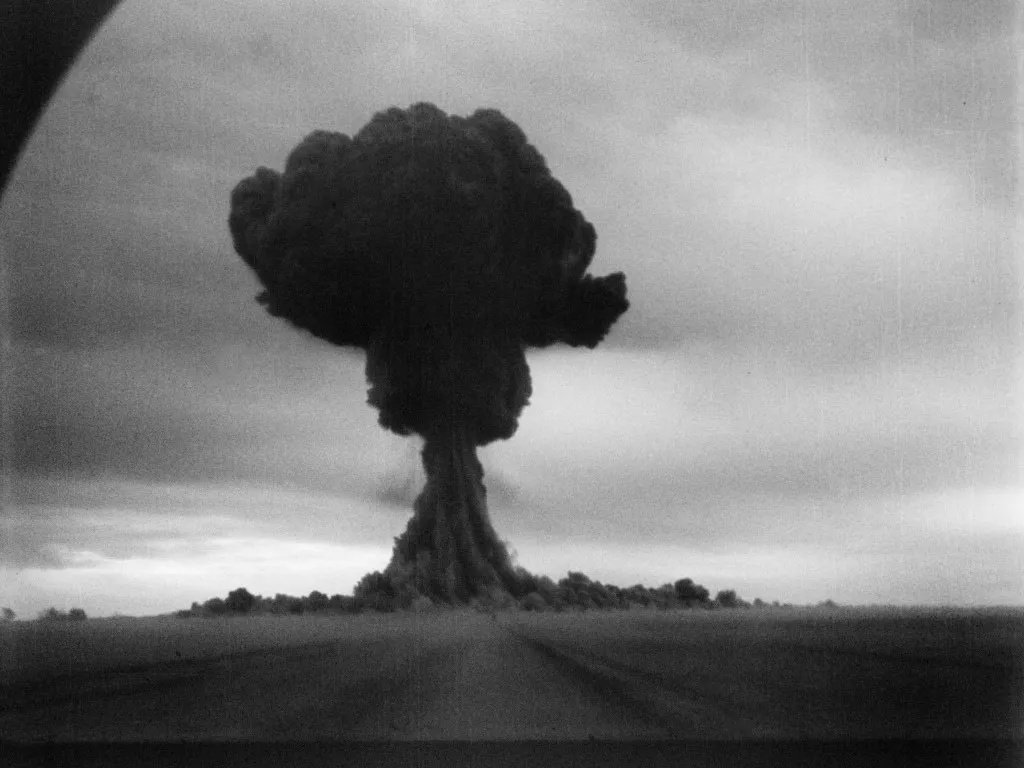
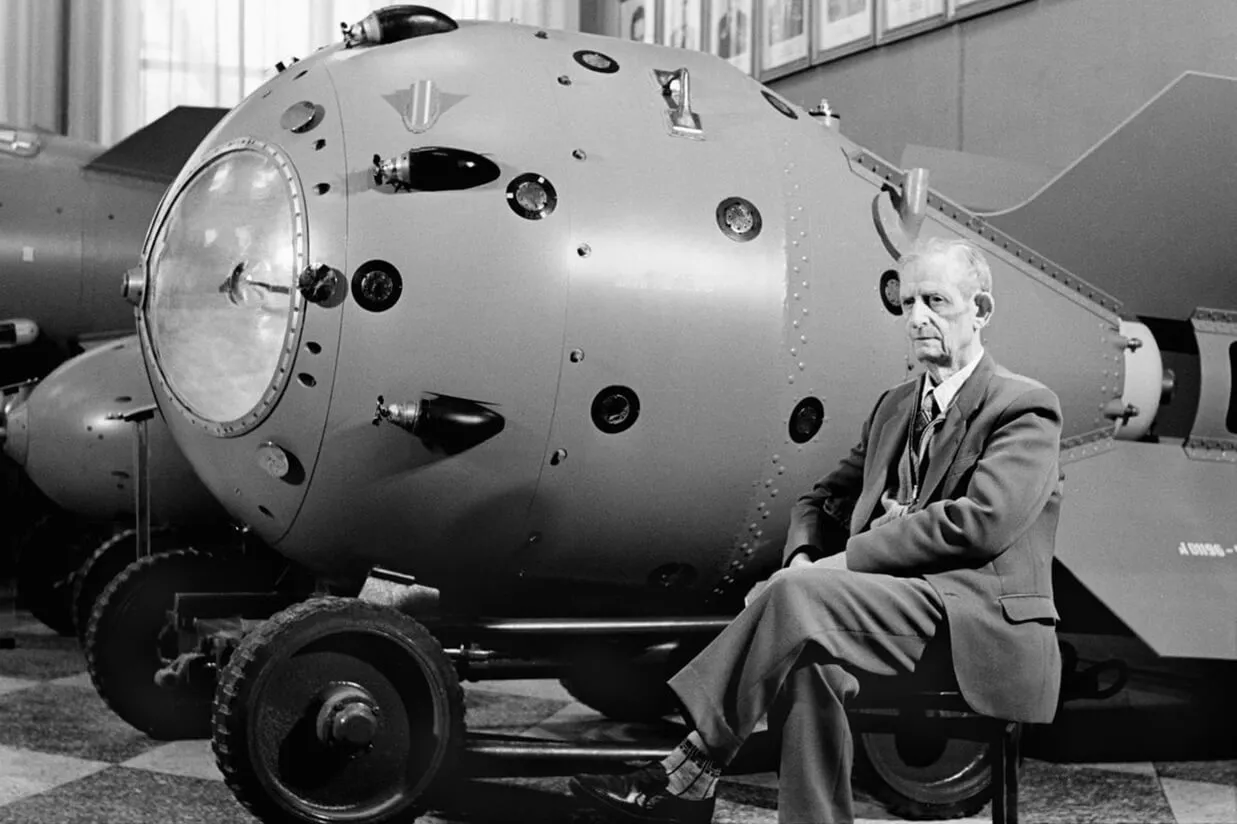
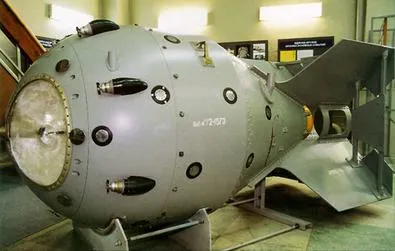
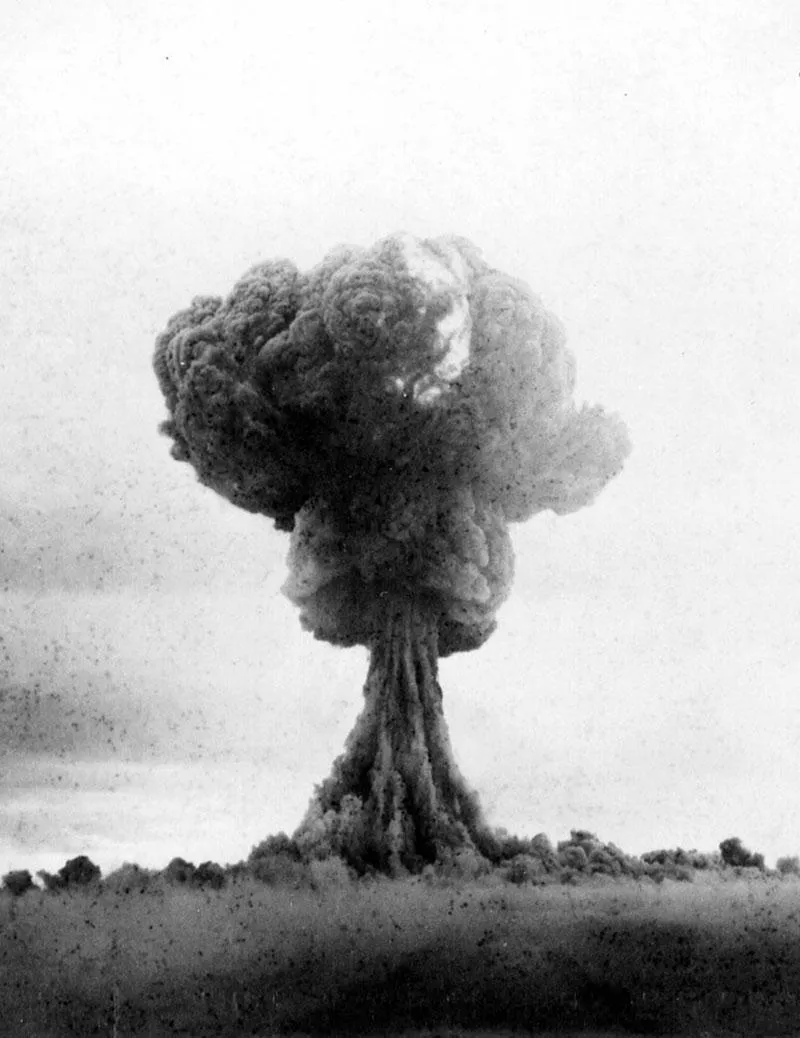
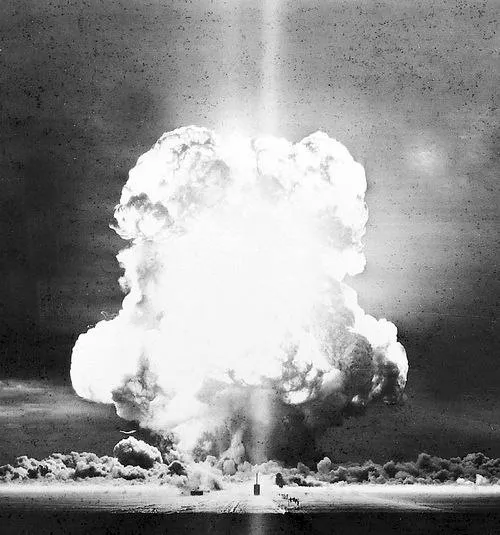
At 7:00 a.m. local time on 29 August 1949, a steel lattice tower 37.5 metres tall stood alone on a flat plain in north-eastern Kazakhstan, about 170 kilometres west of the city of Semipalatinsk. On top of it sat a 4.6-tonne bomb, roughly 3.7 metres long and 1.5 metres across. Shortly before, the last people had been pulled back from the test field. Then a countdown was called through a megaphone, the ground shook, and the Soviet Union became the second country to explode a nuclear weapon.
The device was called RDS-1. Soviet planners knew it as Izdeliye 501, and the Americans, who detected it a few days later, nicknamed it Joe-1 after Stalin. It was a plutonium implosion bomb with a yield of about 22 kilotons, similar to the weapon dropped on Nagasaki, and it went off exactly where its makers wanted it to. The test is also called First Lightning, from the Russian name for the event.
The test took four years to prepare, and it drew on uranium dug by prisoners, a reactor built in secret in the southern Urals, a spy network in the United States and Britain, and the nerve of a small group of physicists who had been told that failure had a price. This article follows the whole chain, from the first letter to Stalin to the day the Kazakh steppe lit up.
The first letters to Stalin
Soviet physicists were working on fission before the war. After Otto Hahn’s report of 1939, researchers in Leningrad and elsewhere began to study it, at first with an eye on power generation. Yakov Frenkel led some of the early work, and Georgy Flyorov and Lev Rusinov showed that fission released more than one neutron per event, which meant that a chain reaction was possible. A state commission on the uranium problem existed but achieved little, and the German invasion of 1941 pulled many physicists into the war.
In April 1942 Flyorov, by then serving in the military, and Konstantin Petrzhak wrote to Stalin warning that a uranium bomb ought to be built without delay. Stalin responded by pulling physicists out of the army and authorising a project under Anatoly Alexandrov and Igor Kurchatov. Kurchatov became the technical director of the work in late 1942 and set up Laboratory No. 2 near Moscow, an institution that later became the Kurchatov Institute.
Kurchatov already had a reputation inside the scientific world. A Russian profile records that in 1942 he vowed not to shave until the first Soviet atomic bomb was built, and that he never shaved again, which earned him the nickname Beard. For the next seven years he led the effort.
The early targets were ambitious. One Russian account lists Kurchatov’s goals for 1943 as 100 tonnes of uranium by 1945, 200 to 300 kilograms of uranium-235 by 1945, and 2 to 3 tonnes of heavy water by 1946. They were missed by about one to two years.
Hiroshima changes the pace
The wartime programme had been overseen at various times by Molotov, who was later judged a weak administrator, and the project moved to Lavrentiy Beria, the head of the NKVD, in December 1944. The bombing of Hiroshima and Nagasaki changed everything. After the bombs fell, the Politburo took direct control and set up a special committee. Beria was appointed to lead the atomic project on 22 August 1945, and his committee kept Georgii Malenkov and added Nikolai Voznesensky and Boris Vannikov.
The programme now shifted toward a plutonium bomb modelled on Fat Man. The weapons design bureau, KB-11, was created on 9 April 1946, and the dates given for its founding differ slightly between accounts. It was based at Arzamas-16, the closed town of Sarov, under Yulii Khariton as scientific director, with Yakov Zeldovich among the leading theorists. A decree of 21 June 1946 called the project Reactive Engine S, or RDS in Russian. The abbreviation was later given many readings, including Special Jet Engine, Stalin’s Jet Engine and Russia Does It Itself.
The new arms race had a strategic edge. A Russian account of the period points to American war plans of the time. It names Pincher in 1946 with 50 bombs on 20 cities, Sizzle in 1948 with 133 bombs on 70 cities, and Dropshot in 1949 with 300 bombs on 200 cities. Whether Soviet leaders knew those plans in detail is unclear, but the pressure to catch up was real.
Finding uranium
The Soviet Union needed uranium in quantity, and it had little. The first Soviet uranium mine was at Taboshar in Tajikistan, which was producing a few tonnes of concentrate by May 1943. A processing plant followed at Chkalovsk, and a vast mining combine in Tajikistan later grew to seven mines and five plants. Other supplies came from mines in Czechoslovakia, Bulgaria, Romania and Poland, and increasingly from the German company Wismut in the Soviet occupation zone of East Germany. The first Soviet research reactor was fed in part with ore seized from the German programme, which had originally been mined in the Belgian Congo.
The output figures show how quickly the supply grew. Domestic Soviet production is given as 14.6 tonnes in 1945, 129.3 tonnes in 1947 and 278.6 tonnes in 1949, while East Germany supplied 15 tonnes in 1946 and 767.8 tonnes in 1949.
The work depended on forced labour. A Russian account says prisoners made up 37.2 percent of the nuclear industry’s construction workforce in 1955, some 118,500 people out of about 318,000. Wikipedia’s article on the Mayak plant says more than 40,000 prisoners and prisoners of war built the plant and the closed city beside it. The numbers refer to different periods and sites, and the 1955 figure comes after the test, but they give a sense of scale.
The first reactors
The Soviet Union’s first reactor, F-1, was the first reactor outside North America to reach a chain reaction. Sources date its start-up to October 1946 or December 1946.
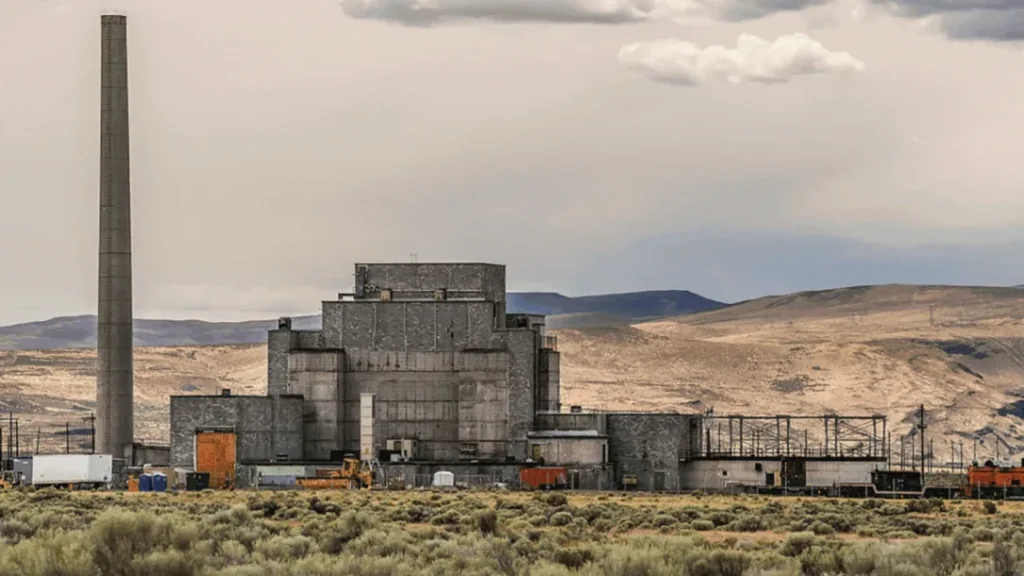
The plutonium for the bomb came from a very different place. The site was near Kyshtym, in the Chelyabinsk region of the southern Urals, about 15 miles east of the town. It was chosen partly for its closeness to the Chelyabinsk Tractor Plant and a new power station, and because the region was dotted with gulag camps. The complex became known as Chelyabinsk-40 and is now called Mayak, and the nearby closed city is Ozyorsk. Kurchatov supervised Combine No. 817, the plant’s formal name in the accounts of the period.
The first production reactor there, known as Reactor A or A-1, began operating on 19 June 1948. The first plutonium metal was separated in mid-1949, in time for the test. The reactor that supplied the fuel for RDS-1 was thus about 14 months old when the bomb went off.
The complex would later become infamous. Waste from the early reactors was dumped into the Techa River, with about 3.2 million curies released between 1949 and 1951, and into Lake Karachay from about 1951. In September 1957 a waste tank exploded, in what became known as the Kyshtym disaster. That is a later story, but its roots lie in the rush to make the plutonium for this first bomb.
Borrowed knowledge
The Soviet decision to copy a proven design was deliberate. Wikipedia describes RDS-1 as roughly based on the American Fat Man, with Soviet-developed systems including the ballistic casing and the electronics. Beria insisted on the implosion design that the Americans had already tested. Soviet designers had a more sophisticated concept, which was later tested as RDS-2, but it was set aside because the Fat Man type was known to work.
The reason the Soviets knew a plutonium implosion bomb would work was espionage. Intelligence officers gathered technical information from several people in the Manhattan Project. Klaus Fuchs, Theodore Hall, David Greenglass and Harry Gold are among those named in Wikipedia’s article on the programme. Molotov shared NKVD intelligence with Kurchatov as early as 1943, and Kurchatov said it supplied what the programme had been missing. According to the same article, the information reportedly let Khariton avoid dangerous critical-mass experiments.
The espionage did not do everything. Soviet physicists still had to make the bomb with Soviet materials, in Soviet factories, and the information they had been given needed checking. One detail is telling. Russian translators of the American Smyth Report noticed a deleted note on poisoning of plutonium-239, which showed that reactor-bred plutonium was unsuitable for a simple gun-type bomb. German scientists also worked on the programme in the Soviet Union, although Soviet authorities later played down their contribution.
The ground
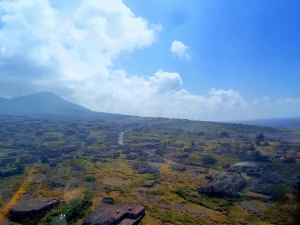
The test site was chosen in 1947. Beria selected an area of steppe south of the Irtysh River in Kazakhstan, which he described as uninhabited. That description was misleading, because people lived in the area. The site eventually covered about 18,000 square kilometres, an area comparable to Wales, and the Soviet Union would conduct 468 tests there between 1949 and 1989.
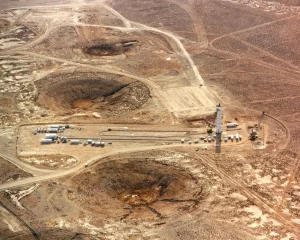
The first bomb was not set off in the main body of the polygon but in a prepared area known as the experimental field, or Opytnoye Pole, which was about 20 kilometres across. A Russian source describes a circle of 10 kilometres radius divided into 14 sectors. Some were for physical measurement, some held civilian buildings, some held military equipment in the open and in shelters, and one was a biological sector with animals. The site was officially called Moscow-400 in one account.
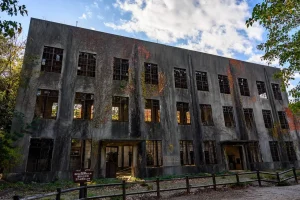
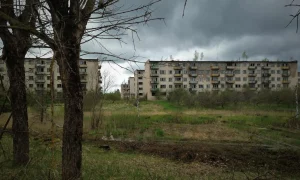
The planners put real objects in the field. They built simulated houses of wood and brick, including two three-storey residential buildings placed about 800 metres from the tower and 20 metres apart. They put up a railway bridge at about 1,000 metres and a road bridge at about 1,500 metres. They added a simulated metro railway, tunnels, water towers, roughly 50 aircraft, tanks, about 100 guns and mortars set between 250 and 1,800 metres out, and ten Pobeda cars at intervals starting from one kilometre. The biological sector held 1,538 animals according to the Russian Wikipedia, which lists dogs, sheep, goats, pigs, rabbits and rats, some placed to resemble soldiers in trenches. The English Wikipedia gives a figure of more than 1,500.
The last weeks
The parts of the bomb were made at Arzamas-16 and shipped by train, a journey of about 2,000 miles to the test site. At the site the team assembled the device in a concrete hall near the tower. The hall had a bridge crane for lifting the charge, and it stood about 25 metres from the tower.
Kurchatov arrived at the site in May 1949 and organised two rehearsals before the day. Khariton was responsible for organising all the test preparations, and a state commission directed the tests. A Russian account names Pervukhin and Zavenyagin as the project supervisors and Shchelkin as the man who led the secret operation. Beria arrived in mid-August, watched the assembly and reported to Stalin. One account says Beria looked exhausted, in a worn suit and an unwashed shirt.
Tension ran high. A Russian account says the leaders looked visibly anxious, and that the head of the secretariat of the special committee had lost his appetite. The stakes were personal. Accounts repeated by PBS say the scientists later learned that those who would have been shot had the test failed became Heroes of Socialist Labour, and those who would have been sent to prison received the Order of Lenin.
The countdown
The timetable is told in Russian sources in some detail. By 4:30 a.m. the bomb was on the tower. At 5:40 charge assembly was finished and the feeder block was connected to the initiation block. Everyone then left the tower, with Shchelkin the last to leave. By 6:20 all personnel and guards had withdrawn, and Kurchatov was told that everything was ready. Beria went to a bunker with armed guards.
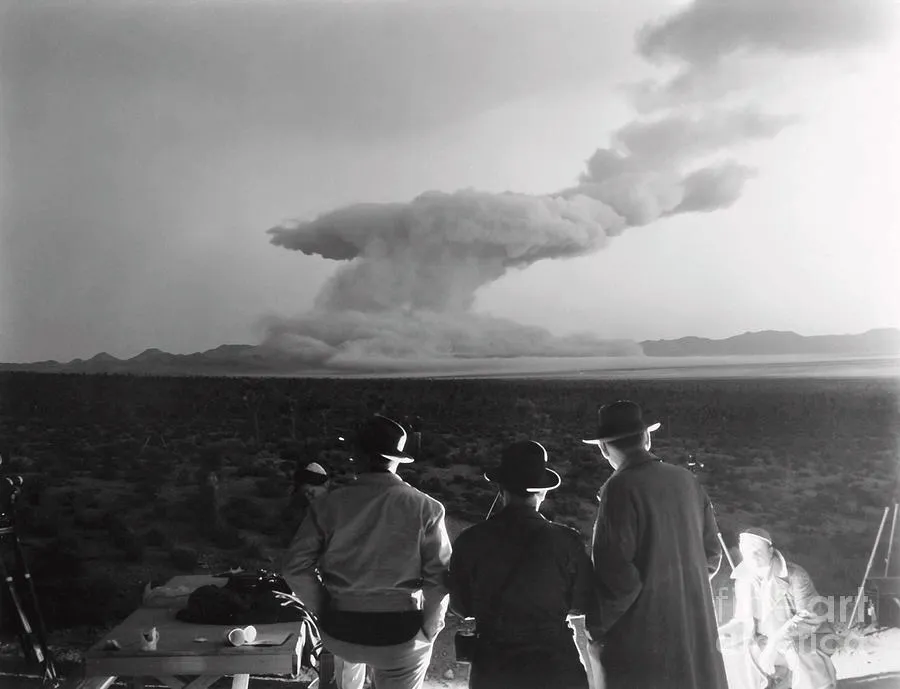
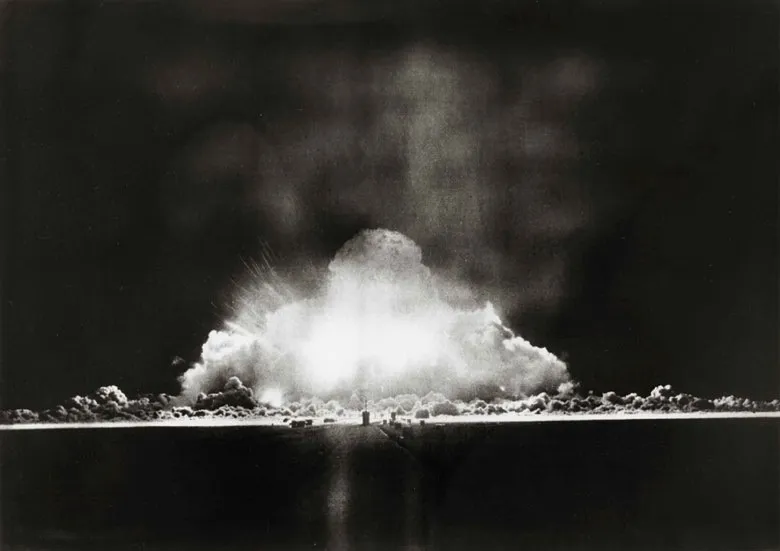
Aleksandr Malsky, who had armed the charge with detonator caps, counted down from ten through a megaphone. Accounts describe a short silence in which many present feared a failure. Then the ground shook, a flash lit the plain, and a deafening blast followed. Viktor Zhuchikhin, a deputy head of department at KB-11, remembered rushing out to see a column of dust and gas rising into the sky. The blast had cleared the clouds, letting the sunlight in.
It works! It works!
Igor Kurchatov, scientific director of the Soviet atomic project, as recalled by Yulii Khariton
Khariton later recalled that Beria hugged him. After the blast, Beria also telephoned the observer who had seen the American test of 1946 and asked whether the results matched. He was told they did. A Russian account adds that Beria then raised the question of a name, and that Kurchatov replied that Shchelkin had already called it RDS-1. The same account says Beria remarked that the Boss would be pleased. It also says that Stalin signed no official paper about the test, so that if it had failed it would be as if nothing had happened. That claim is told in one source only.
What the blast did
The yield is quoted as 22 kilotons in Wikipedia’s infobox and as more than 20 kilotons in its text. That is close to Trinity, and Fat Man’s yield is usually given as about 21 kilotons. The tower was destroyed. The reinforced concrete building 25 metres away partly collapsed but its structure held.
The test field had been built to measure exactly this kind of damage. The two three-storey houses at 800 metres were completely destroyed, and wooden and panel houses were levelled within five kilometres. The railway bridge and the road bridge were twisted and shifted by 20 to 30 metres, and vehicles on them were thrown 50 to 80 metres. The ten Pobeda cars all burned. A T-34 tank and field guns at 500 to 550 metres took light damage, and aircraft within 1,500 metres were badly damaged. Of the 1,538 animals, 345 died.
The damage on that scale was enough to show that the weapon had worked as intended.
The rewards
The honours came about two months later, in late October 1949, and they were lavish. Participants received Hero of Socialist Labour stars and other orders, Stalin Prizes, and, according to a Russian account, cars, dachas and free travel for their families. The ones who had braced for the worst had good reason to be relieved.
The first bomb was in effect the entire Soviet arsenal. A Russian account says the USSR had one bomb in 1949 and that it was used in the test. It was a crude design, not suitable to be carried by aircraft, and the first drop tests from the Tu-4 bomber were scheduled for 1952. The small series that followed, called Izdeliye 501, is counted differently in different sources: Wikipedia says five units were finished by March 1950, the Russian Wikipedia quotes figures of 29 bombs by the end of 1951, and a Russian account gives a count of 50 by 1952. They were kept in storage at Arzamas-16, not issued to air force units.
The people downwind
The bomb went off on a tower in the open air, so its fallout was never contained. It scattered fallout on the nearby villages. Russian reporting says that radiation from the test covered 11 districts of Altai Krai and that residents of the area were made to sign non-disclosure agreements. The public would learn about the test sites only during perestroika.
Kazakh experts estimate that 1.5 million people were exposed to fallout over the life of the site, and health studies cite a direct impact on about 200,000 residents. Researchers have linked exposure to higher rates of several cancers, thyroid abnormalities and inherited DNA changes. Many people in the area identify as resilient survivors of the tests, although Wikipedia notes that this view is largely anecdotal.
America finds out
American intelligence had expected nothing of the kind so soon. The CIA’s Office of Research and Estimates projected mid-1953 as the most probable date of a Soviet bomb, with mid-1950 possible, and repeated the 1953 estimate three days before President Truman announced the test.
The detection came from a system built because officials such as AEC commissioner Lewis Strauss feared an atomic Pearl Harbor. In September 1947 Army Chief of Staff Dwight Eisenhower assigned the Army Air Force responsibility for the Atomic Energy Detection System, and the Air Force created a special unit, AFOAT-1, for the job. A WB-29 weather reconnaissance aircraft flew from Misawa in Japan to Eielson in Alaska with special filters designed to catch radioactive fallout. Sources date this flight to 1 September or 3 September 1949. When the aircraft landed, a Geiger counter found radioactive traces on the filters. It was the 112th alert of the system. The previous 111 had natural causes such as earthquakes.
Government laboratories, contractors and, in secret, British scientists analysed the samples. For some days the cause was uncertain. On 9 September the CIA director, Admiral Roscoe Hillenkoetter, sent President Truman a confidential report on abnormal radioactive contamination in the North Pacific. He listed several possible explanations, including a nuclear explosion in Asia, a volcano that had erupted on 2 September on a northern Japanese island, radioactive gas from Hanford in Washington, and waste or an explosion at a Soviet atomic plant. He wrote that there was no confirmation of any man-made atomic explosion at that time. About 12 days later, on 21 September, intelligence officials confirmed to Truman that the Soviets had tested an atomic bomb.
Truman made the announcement on 23 September. His statement said the government had evidence that an atomic explosion had recently taken place in the Soviet Union, argued that the spread of atomic technology had long been expected, and used it to make the case for effective international control of atomic energy. The Soviet reply came two days later. TASS, in a statement printed in Pravda on 25 September, did not admit a test. It said the USSR had known the secret of the atomic bomb since 1947, citing a remark by Molotov in November 1947 that the secret no longer existed. At first, the Soviets had suggested that Western instruments might have picked up blasting from hydroelectric construction.
The mood in Moscow was probably not triumphant. William Burr of the National Security Archive writes that Stalin and the Politburo were likely stunned to learn that Washington could detect a test, since they had wanted secrecy to avoid pushing the Americans into faster nuclear work. He adds that Stalin’s confidence grew and that he backed Kim Il-sung’s plan to invade South Korea.
What it set off
The American response was quick. Truman was briefed on the hydrogen bomb possibility on 6 October 1949, and the United States began a crash programme toward the “Super”. On 14 April 1950 the National Security Council issued NSC 68, which was partly a response to the loss of the American nuclear monopoly.
The Soviet programme gathered speed. RDS-2 was tested on 24 September 1951 with a yield of 38.3 kilotons, and RDS-3 followed on 18 October 1951 with a yield estimated at 41.2 kilotons, the first Soviet test of a bomb dropped from an aircraft. On 12 August 1953 the “layer cake” design, called Joe-4 in the West, produced about 400 kilotons. RDS-37 followed on 22 November 1955 at 1.6 megatons, and the Tsar Bomba was set off on 30 October 1961 over Novaya Zemlya at about 50 megatons.
By 1991 Soviet records showed 969 nuclear tests between 1949 and 1990, of which 214 were atmospheric tests carried out between 1949 and 1963, mostly at Semipalatinsk. After the Partial Test Ban Treaty of 1963, testing moved underground.
The anti-testing movement in Kazakhstan, known as Nevada-Semipalatinsk and founded in 1989, forced the issue. The last explosion at the site took place on 19 October 1989. On 29 August 1991, exactly 42 years after the first test, Nursultan Nazarbayev, then president of the Kazakh SSR, signed a decree closing the polygon without the consent of Soviet leadership. Kazakhstan went on to renounce the nuclear arsenal it had inherited. The laboratory complex on the Irtysh was renamed Kurchatov City after the man who had led the first test.
Conclusion
RDS-1 was a copy of a proven idea, built by people who were under enormous pressure, from uranium dug by the unfree and plutonium made at a plant that would spoil the Urals for decades. It worked on the first attempt. The Soviet Union had one bomb, and it spent it on the test.
The real effect arrived within weeks. The American monopoly was over, the hydrogen bomb race began, and the steppe villages around the site began to carry the cost. The site was closed 42 years to the day after the first blast, by the leader of a republic whose land had been used for the tests, and Kazakhstan later gave up the arsenal it inherited.
Did you know?
- Igor Kurchatov vowed in 1942 not to shave until the first Soviet atomic bomb was built, and the nickname Beard stuck.
- The initials RDS were later read as Special Jet Engine, Stalin's Jet Engine and Russia Does It Itself.
- Soviet designers rejected a more advanced bomb design for the first test because the Fat Man type was known to work.
- The test field held two three-storey houses, bridges, a metro railway, about 50 aircraft and 1,538 animals.
- Ten Pobeda cars were placed at intervals from one kilometre away, and all ten burned.
- Beria is reported to have telephoned an observer of the 1946 American Bikini test after the blast to ask whether the results matched.
- The WB-29 filter flight that detected the test was the 112th alert of the US detection system; the first 111 had natural causes.
- The Soviet statement of 25 September 1949 did not admit a test, only that the USSR had known the atomic secret since 1947.
- Kazakhstan closed the Semipalatinsk site on 29 August 1991, exactly 42 years after the first test.