
A giant on the mountainside
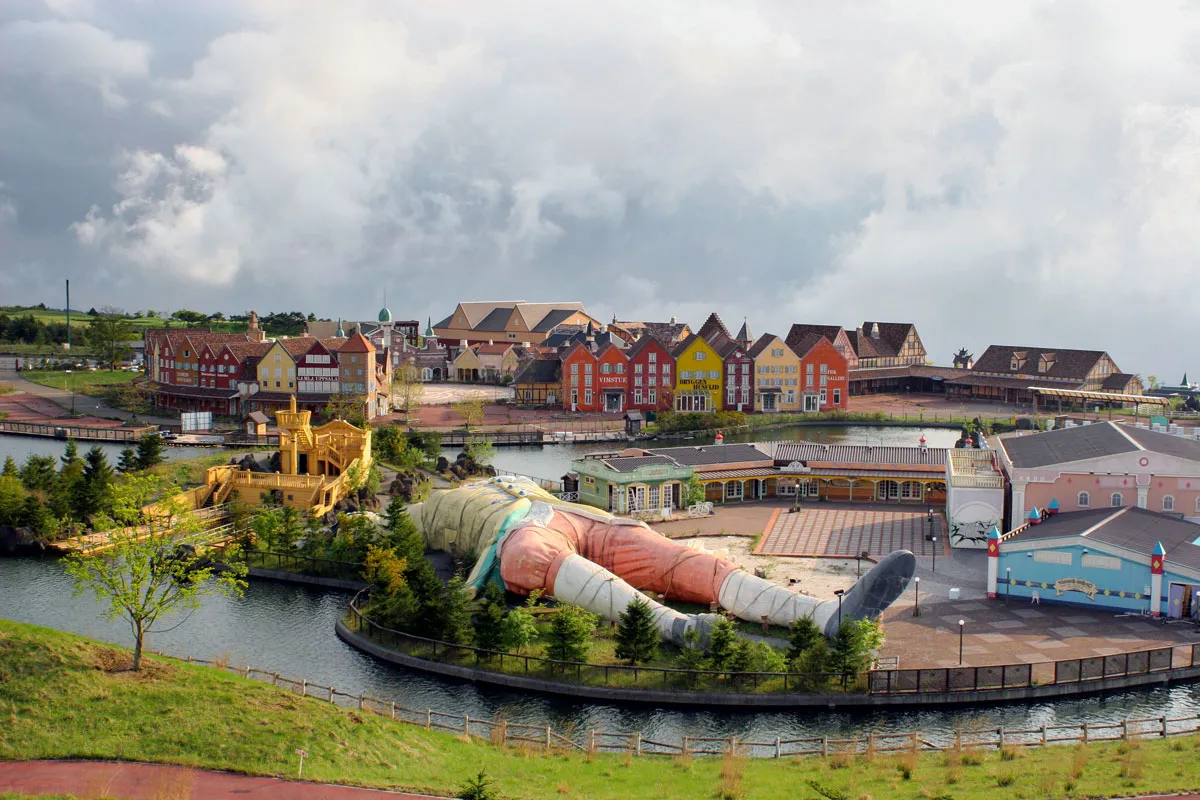
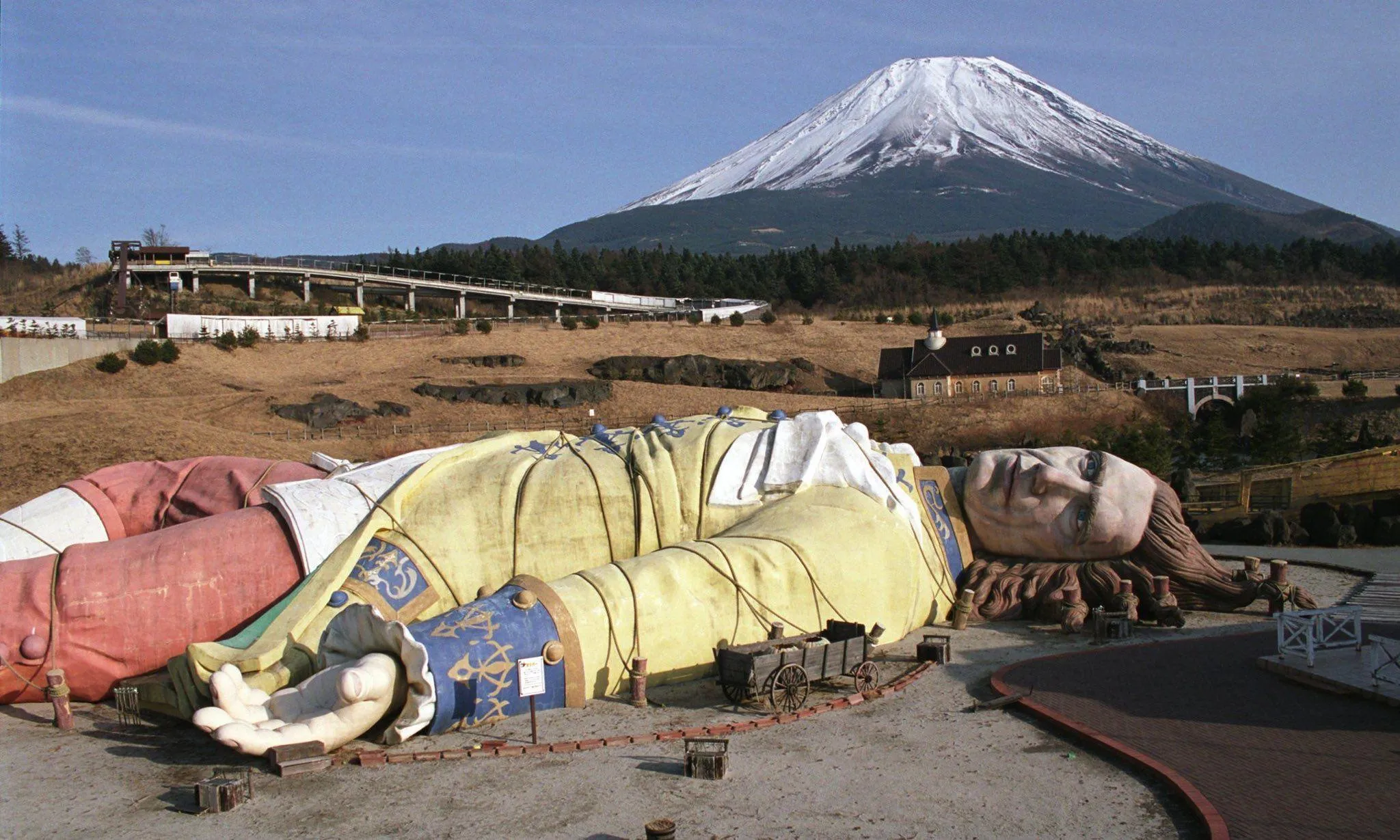
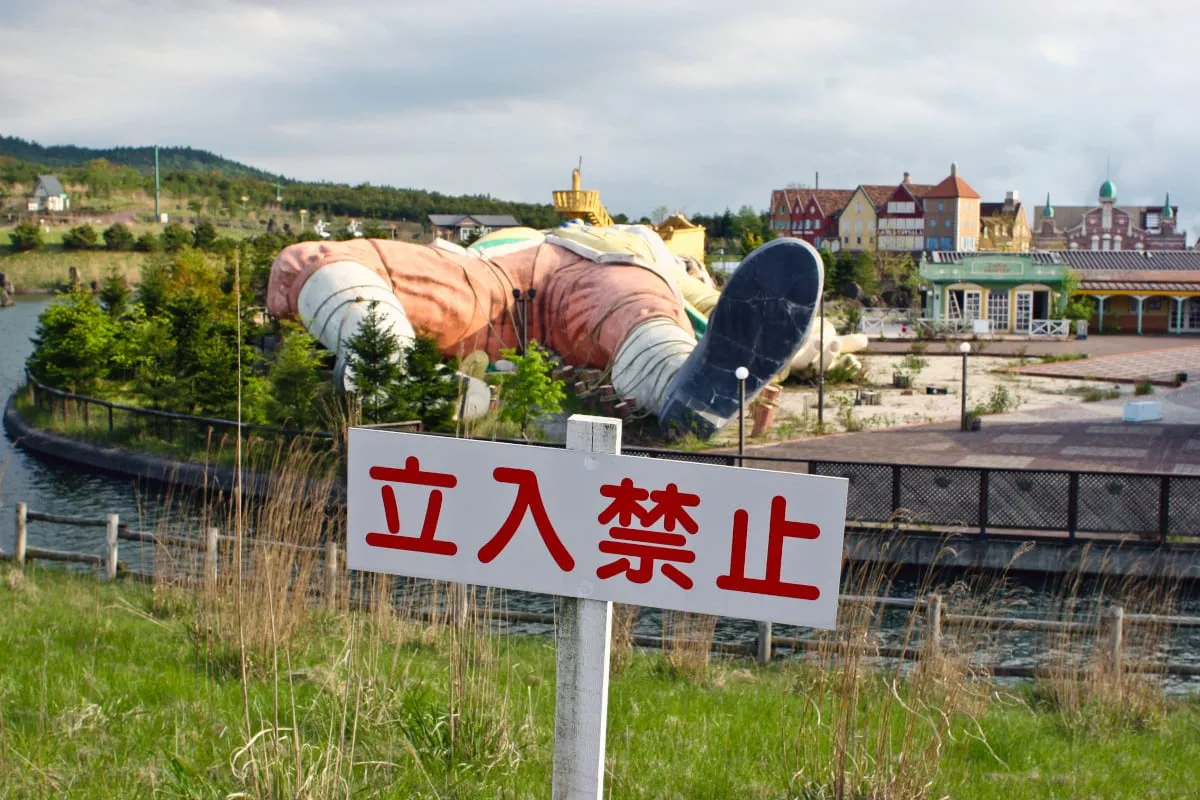
Take the road from Kawaguchiko through the forest at the foot of Mount Fuji, and about half an hour later you would have reached one of the strangest tourist attractions in Japan. In a clearing, tied to the ground by Lilliputians, lay Lemuel Gulliver, the hero of Jonathan Swift’s novel, who had been washed ashore in Lilliput and pinned down by its inhabitants. He was 45 metres long, which is about 147 feet, and he gave his name to the park around him.
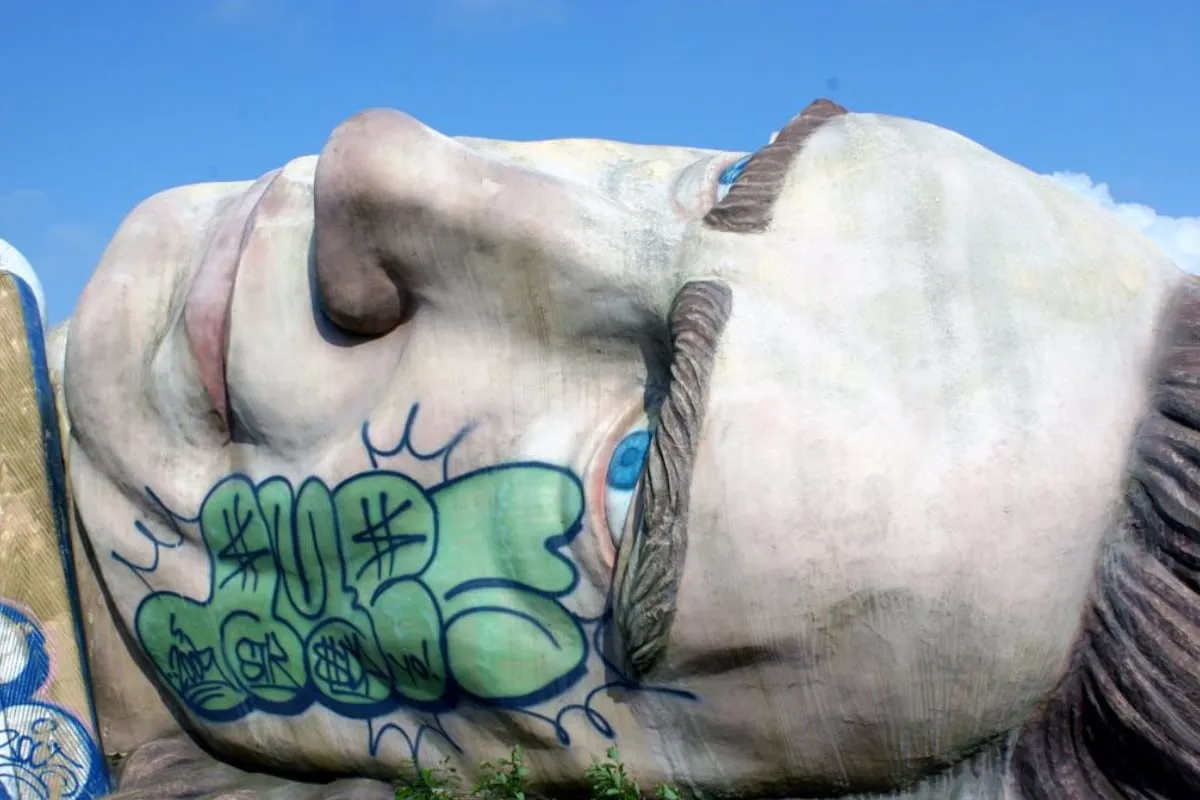
Fuji Gulliver’s Kingdom was an amusement and eco theme park built on an area of about 370,000 square metres. It opened on 26 July 1997. Four years later it was closed, and the giant became one of the best-known images of Japanese urban exploration, a huge figure lying in an empty field, covered in graffiti, long before the rest of the park was cleared.
The Golden Ring
To understand the park you have to start with a bank. The late 1980s were the peak of Japan’s asset bubble, and money was easy to borrow. Niigata Chuo Bank, a regional lender, backed a series of resort ventures that its president, Ryutaro Omori, was said to have planned as a “Golden Ring”. Three theme parks came out of it: Niigata Russian Village, Kashiwazaki Turkish Culture Village and Fuji Gulliver’s Kingdom.
The land at the foot of Mount Fuji was a former national property, partly abandoned by settlers. The park was joined by a golf course that opened in 1995, the Fuji Chuo Golf Club, and a hotel, both run by companies linked to the bank. The group became the bank’s largest borrower. The Japan Times reported that the bank had lent the Fuji Chuo group 36 billion yen.
A hard place to build a happy park
The site had one more problem that no one could ignore. Kamikuishiki was the village where the Aum Shinrikyo cult had built its compounds, including the buildings it called Satian, where it made sarin. After the Tokyo subway attack in March 1995, police raided the village two days later, and the name of the place was associated with the cult for years. Villagers hoped a cheerful theme park would help to change that.
It is often written that Gulliver’s Kingdom was built on the cult’s own land. That is a common mistake. According to the Japanese Wikipedia article, the park stood about 3.5 kilometres from the cluster of Satian buildings and about 1.5 kilometres from the nearest one, Satian No. 6. It was in the same part of the mountain, which was enough to damage its image, but it was not the cult’s site.
Inside the park
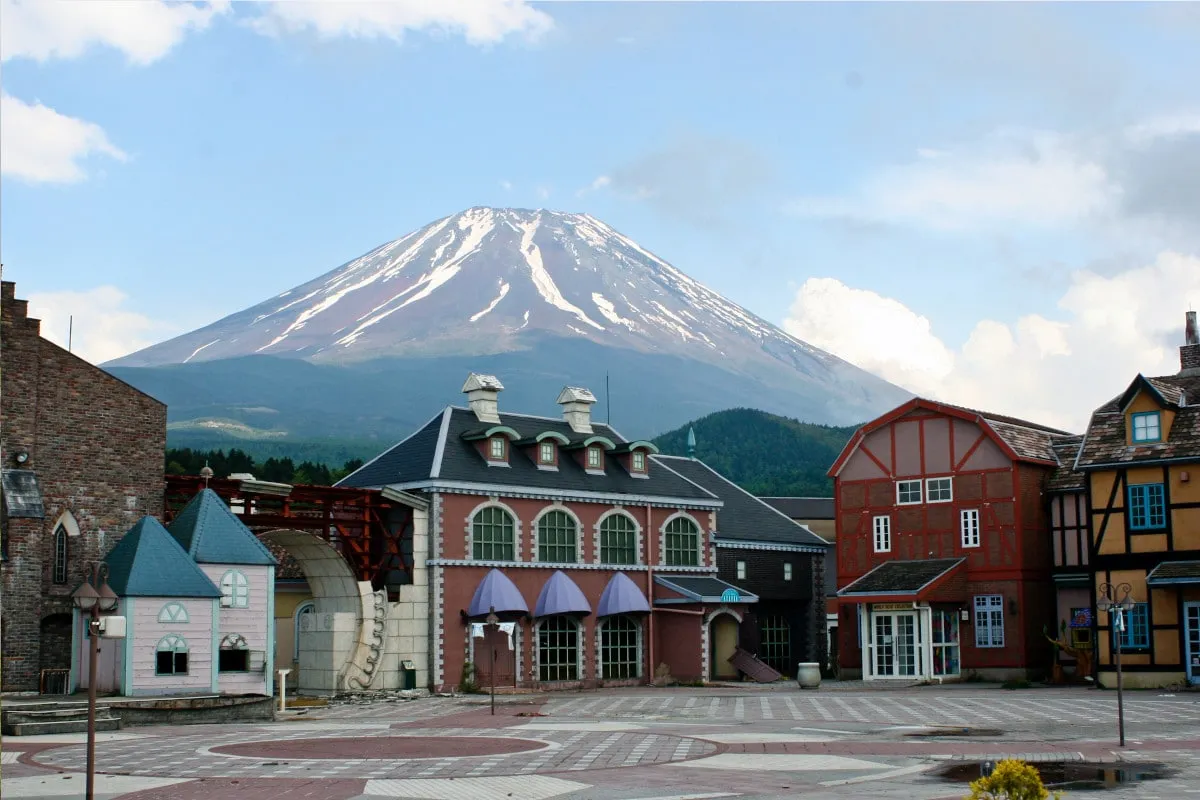
The centre of the park was Gulliver Island, where the giant lay beside an artificial lake. Around it were a puppet theatre, a crystal maze and a three-dimensional sound attraction. There was a petting farm with wallabies, reindeer, rabbits and sheep, and a Scandinavian-style village with a theatre and shops. The park’s biggest rides were a bobsleigh and luge course of about 900 metres, with an outdoor and an indoor track, and from April 1998 a large sightseeing balloon, known as the Giant Balloon, that flew over Balloon World. A Japanese blog gives admission as 1,500 yen for adults and 800 yen for children.
The attractions were not enough. Public transport to the park was poor, and the drive from Tokyo was long. A competitor, Fuji-Q Highland, drew families to the same side of the mountain with far more thrilling rides. Visitor numbers stagnated.
The opening year brought about 230,000 visitors, according to one Japanese history of the park, many of them curious about building a family attraction in the shadow of the cult. The curiosity did not last. Guests complained that tickets were expensive and that there was little to do besides shop, and the Japanese phrase that sums up the complaint is “nothing but shops”. The statue itself was fixed to the ground and, according to one account, had doors cut into its body so that people could go inside. A hidden ride called the Giant’s Tea-cups appeared on the park’s 1998 map, a small touch of fun in a place that was short of it.
The bank falls
In October 1999 Niigata Chuo Bank failed under the weight of bad loans. The Deposit Insurance Corporation took over as financial administrator, new lending stopped, and the park began to operate on borrowed time. In January 2001 the Kofu District Court began foreclosure auctions on the property. The first auction in March 2001 had a minimum bid of 3.1 billion yen and no one bid. In April 2001 the Deposit Insurance Corporation filed a complaint with the Niigata Prefectural Police, alleging that former bank executives had committed special breach of trust by financing the park’s land through loans to affiliated companies.
The park closed in late October 2001, and the Japan Times reported that the operator blamed falling visitor numbers during the long economic slump. Employees declined to comment. The company, Fuji Gulliver Kingdom Co., Ltd., is still said to exist on paper.
The ruin years
The land changed hands several times. A third auction in November 2002 had a minimum bid of about 1.25 billion yen, and the buyer, an Osaka company, paid about 1.4 billion yen. The golf club and hotel reopened in April 2003. In August 2004 the former park was opened as a dog run on 12,000 square metres, but it was suspended in 2005 and effectively closed.
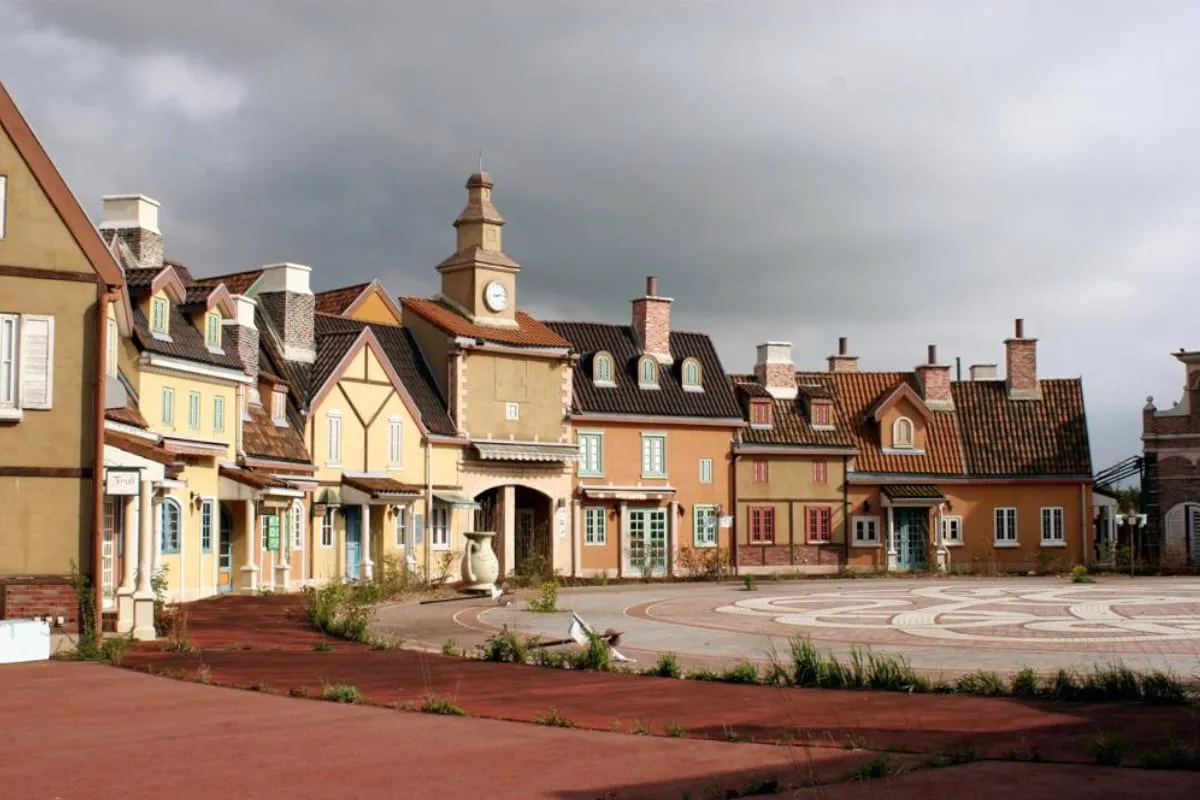
By then the empty park had become a favourite of urban explorers, who photographed the giant, the mirror house and the broken theme-park buildings. The site was also used in 2005 to film an episode of a Japanese horror video series. A Japanese blog says that the whole townscape came to be known as a ghost spot, though that story belongs more to the internet than to the history.
In 2006 a real estate developer, Urban Corporation, bought the three properties. It cleared the Gulliver buildings in 2007 and reportedly considered a large resort hotel. Urban Corporation went bankrupt in August 2008, and the plan went with it. The statue was removed during the clearance.
What is left
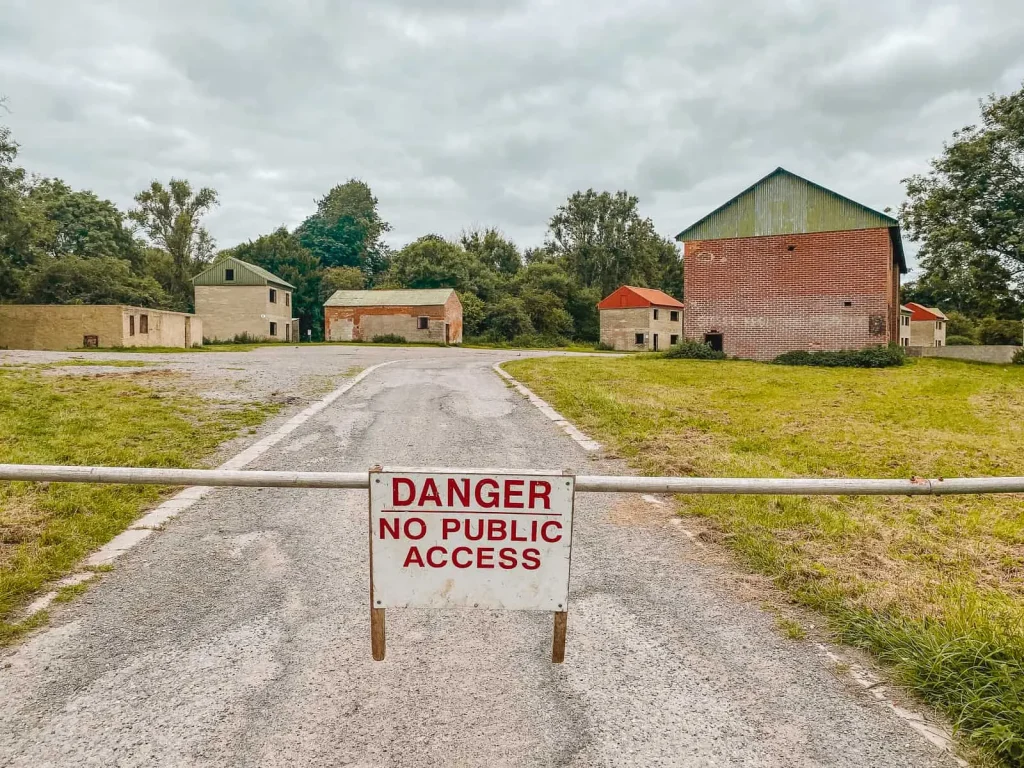
Not much. A Japanese ruins site reported that, as of 2019, only a few shop buildings, foundations and the bobsleigh course remained, and by 2022 there was little beyond building remnants and concrete bases. The land is private and trespassing is forbidden. The golf club and hotel next door continue to operate as Fuji Classic, now under new owners. No redevelopment plan has been announced for the park site, and local writers have speculated about campsites or a stop on a future maglev line.
The name Kamikuishiki itself has gone. In the mergers of the early 2000s the village was split, with the northern part joining Kofu and the southern part Fujikawaguchiko, so the place that once appeared on every news bulletin about the cult has disappeared from the map.
Visiting
There is no official access, and the sources are clear that visitors should use aerial imagery or street view instead of going. A golf course and hotel operate on the land next door. If you are travelling in the region, the safer way to see this story is online, through aerial imagery.
Conclusion
Gulliver’s Kingdom is remembered as a spooky curiosity, but the real story is simpler and sadder. It was a product of a bank that lent too much, a mountain side with a bad reputation, and a rival that offered more rides. The giant lay in the grass for six years after the last visitors left, and then he was gone. The lesson of the place, like Swift’s, is about how easy it is for small things to tie down something very large.
Did you know?
- The Gulliver statue was 45 metres long, about 147 feet.
- Fuji Gulliver's Kingdom opened on 26 July 1997.
- It covered about 370,000 square metres.
- It was one of three parks planned by Niigata Chuo Bank, along with Niigata Russian Village and Kashiwazaki Turkish Culture Village.
- The bank failed in October 1999.
- The first foreclosure auction in March 2001 had a minimum bid of 3.1 billion yen and drew no bids.
- The park closed in late October 2001, after about four years.
- It stood about 3.5 km from the Aum Shinrikyo Satian compounds, not on them.
- Most of the park was cleared in 2007.
- In 2005 the empty park was used to film an episode of a Japanese horror video series.