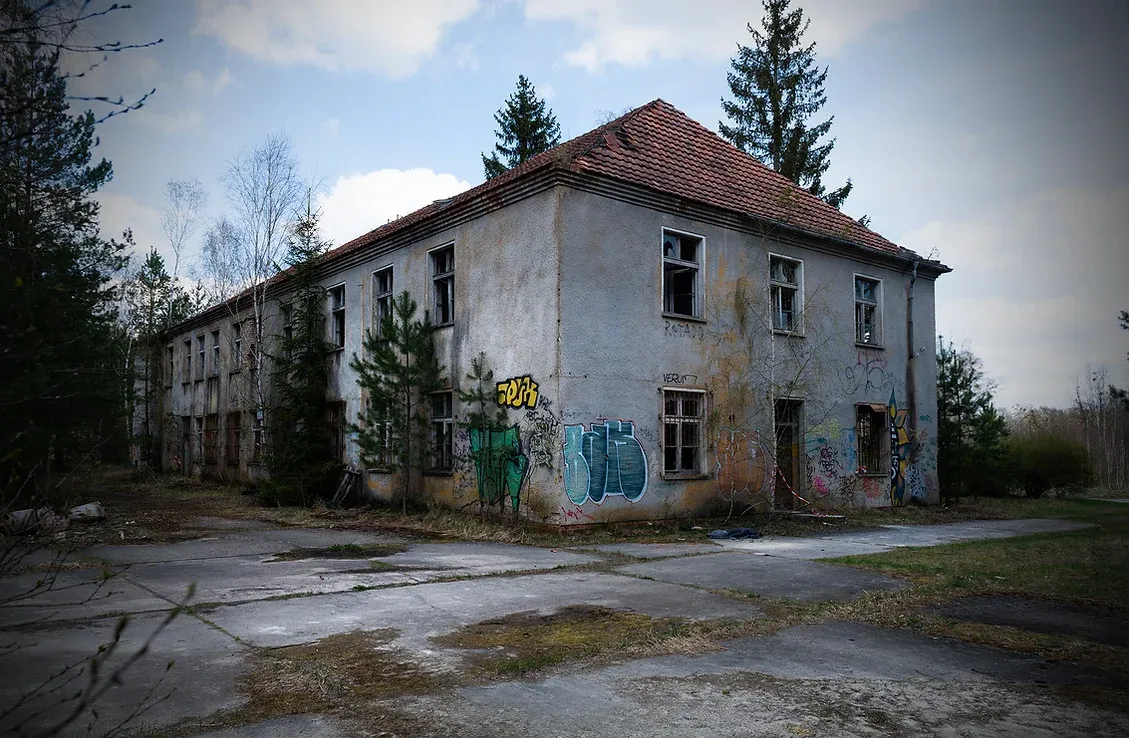
A town in the woods
Vogelsang is a small village in the pine forest of Brandenburg, in the district of Oberhavel, with fewer than a hundred residents today. A railway station opened there in 1888 on the line from Löwenberg to Prenzlau, and for most of its life it was a place where people worked in forestry and timber. In 2001 it became part of the town of Zehdenick.
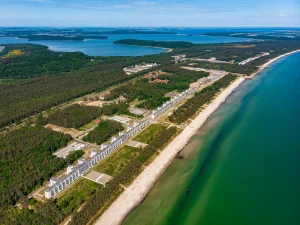
Next to the village, hidden in the trees, there once stood a town of several thousand people that did not appear on any public map. Soviet soldiers called it a garrison. The Germans nearby knew it as the Militärstadt, the military town. After Wunsdorf, south of Berlin, it was the biggest and most heavily built-up Soviet military area in East Germany, and for decades it was one of the least known.
From firing range to garrison
The story begins in 1949. The Soviet military administration ordered a firing range to be cleared in the former Forst Tangersdorf, a forest reserve, and about 800 forestry workers are said to have cleared the land in about three months. Soviet units began to train on the cleared ground before the buildings were finished. In 1954 an area of about 68 square kilometres was closed to the public, and the ban lasted until the troops left.
The garrison itself was built from the early 1950s. Sources give 1951 or 1952 as the start, and one gives the main building work as 1953 to 1957. The plans were not Soviet, in the sense that the East German state designed, built and paid for the whole complex as part of its obligations to the occupying power. One writer believes the plans were taken from German originals, while the German Wikipedia article calls that unfounded. By the late 1950s the site had about 500 to 550 buildings, grouped in twelve military towns, though only about 3 square kilometres of the 68 were built up. The rest was training ground.
Life inside the town
At its peak between 10,000 and 15,000 people lived at Vogelsang, among them soldiers, officers’ families and civilian staff. Its centre was the headquarters of the 25th Tank Division of the 20th Guards Army, supported by the 162nd Tank Regiment, the 803rd Motor Rifle Regiment, the 1702nd Anti-Aircraft Missile Regiment, and a tactical missile detachment. The site also held a relay communications centre for the wider Group of Soviet Forces in Germany.
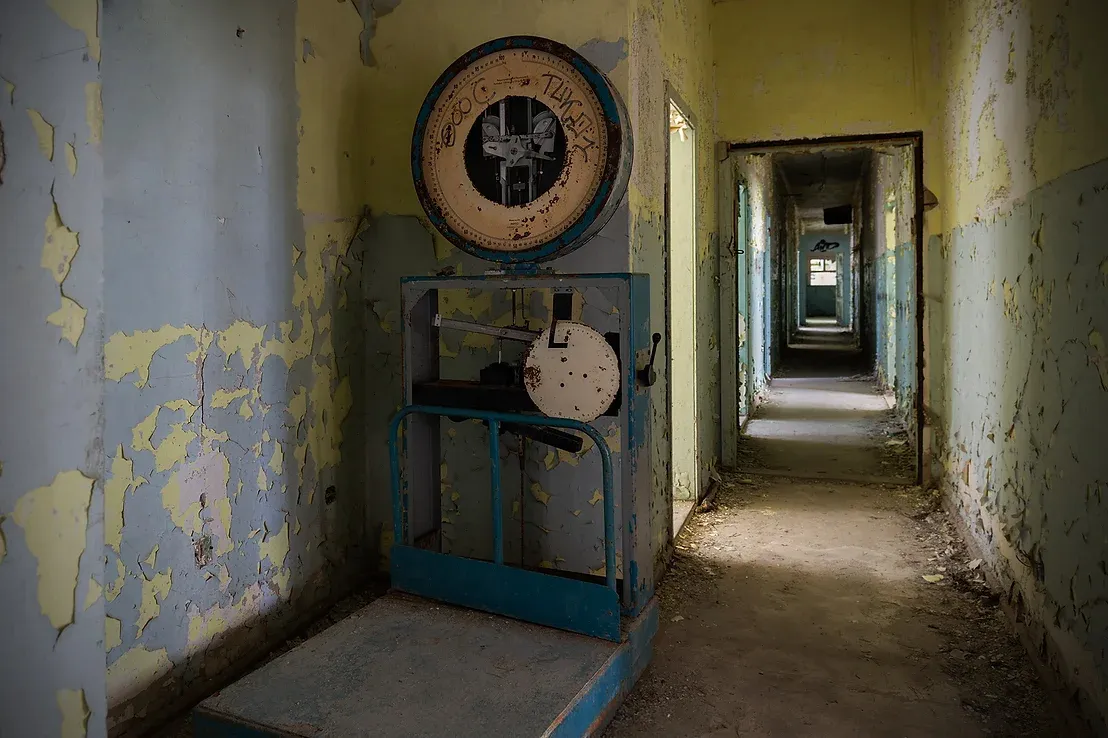
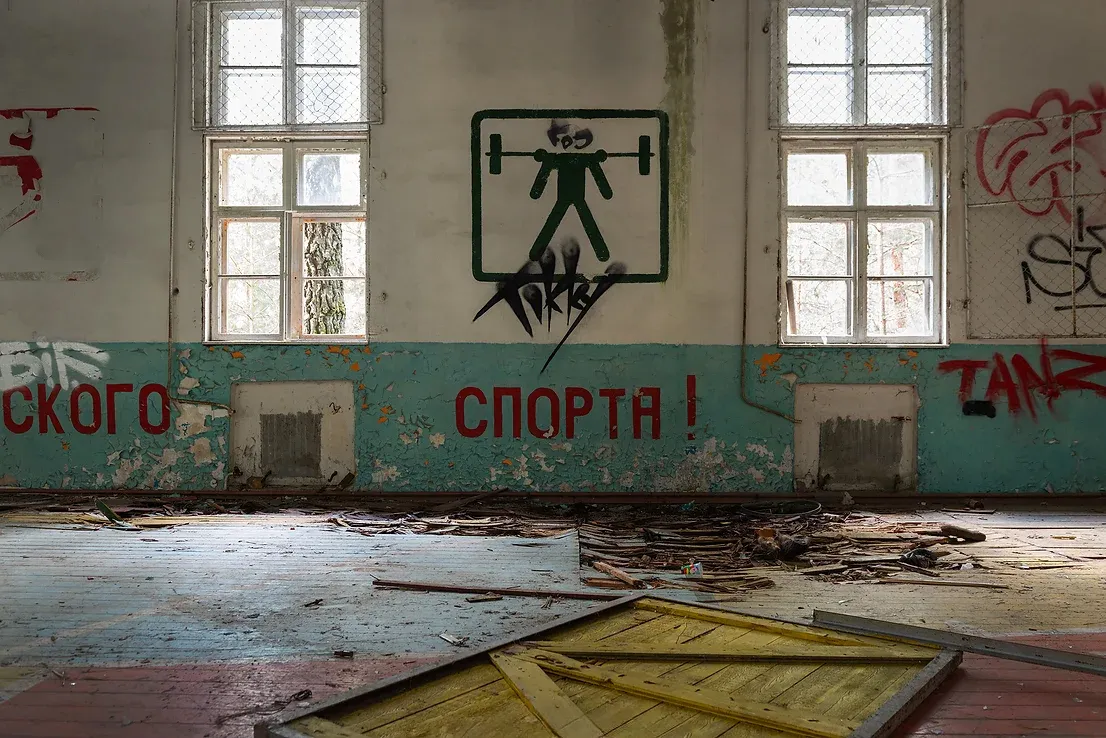
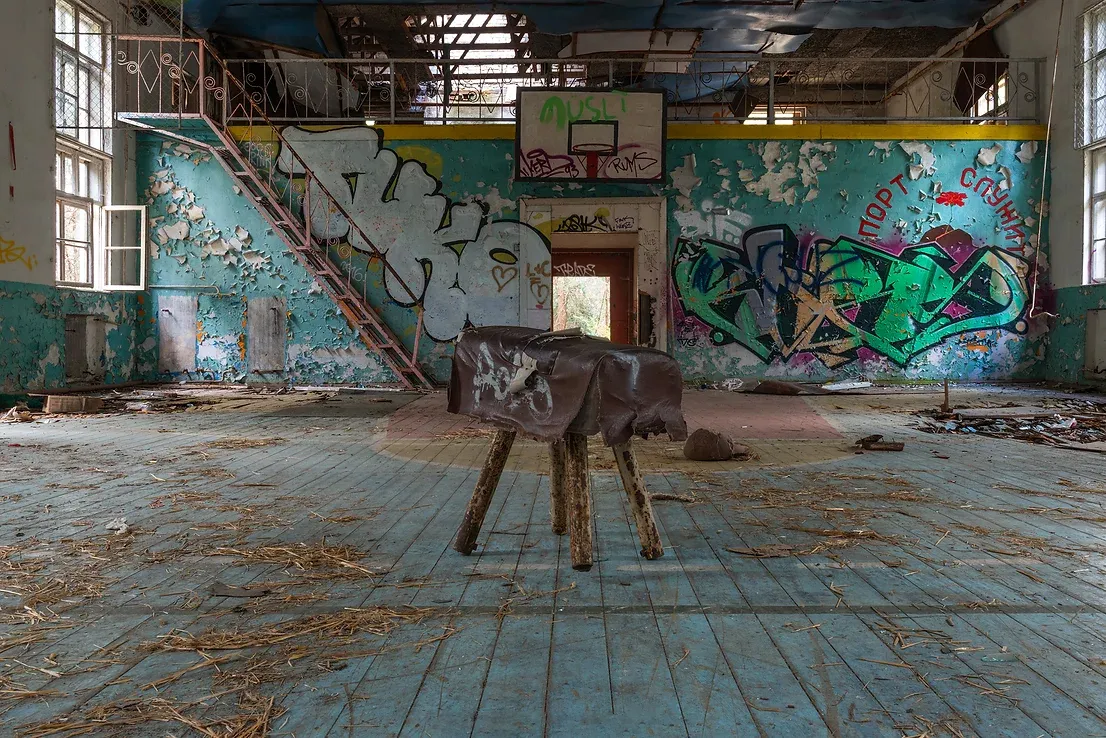
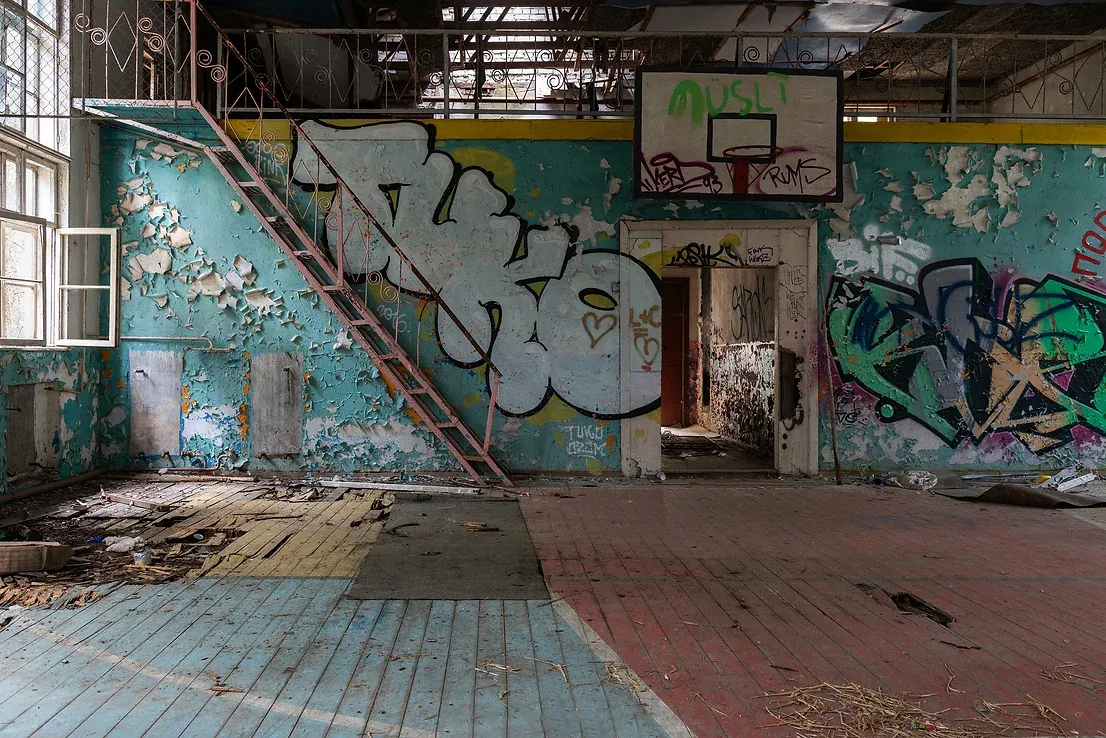
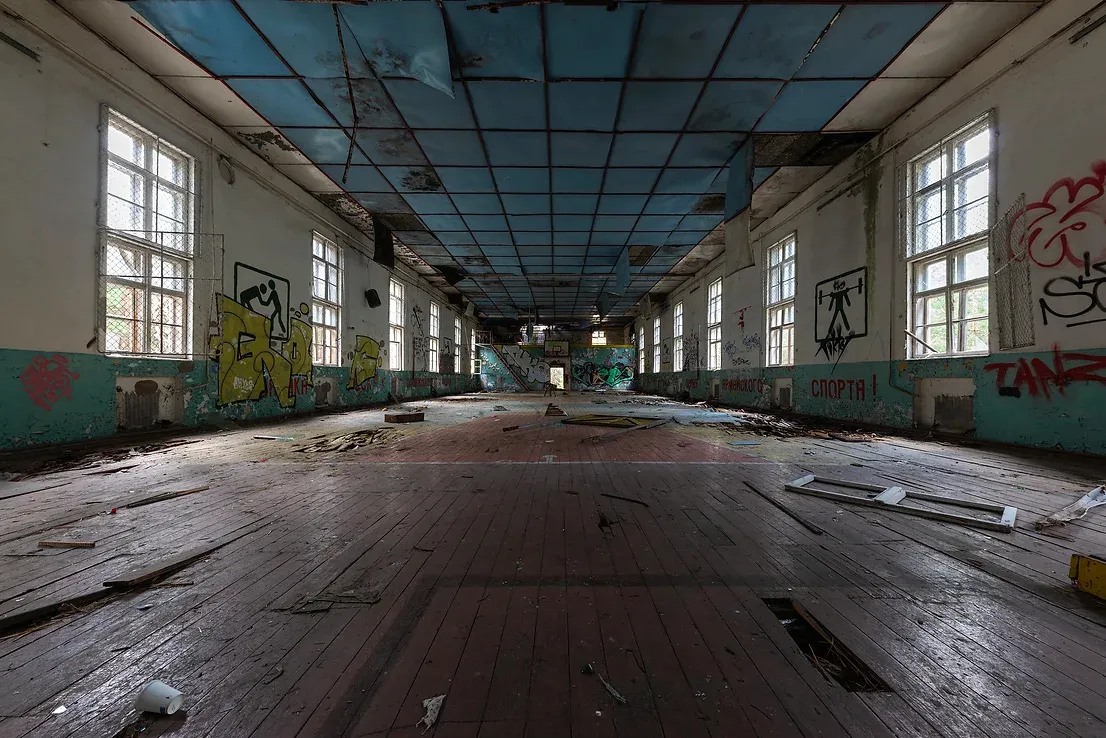
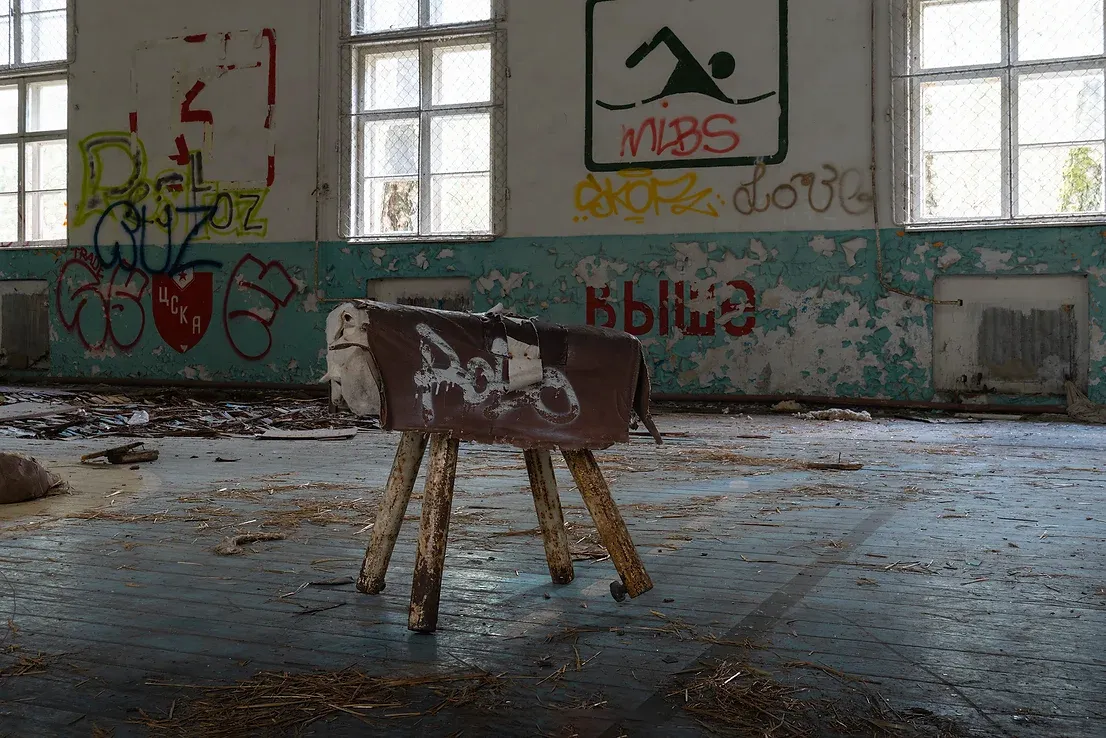
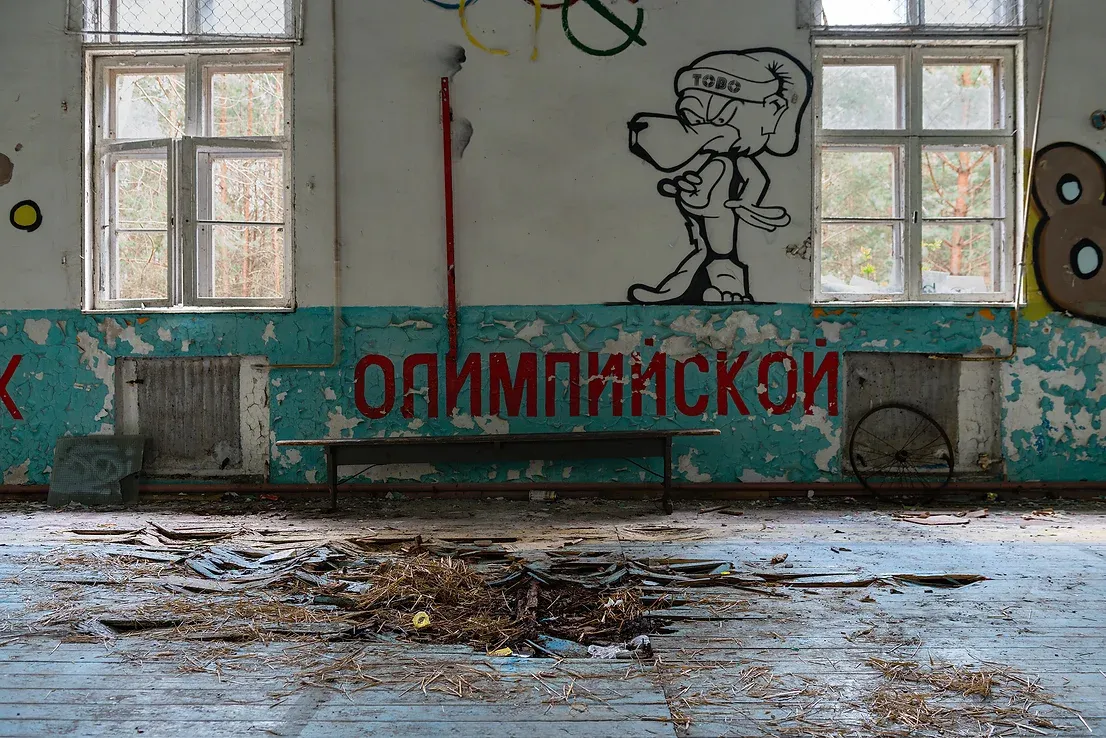
The town was meant to run by itself. It had a cinema, five clubs, two sports halls, seven saunas, a school, a hospital, a laundry, shops and a theatre, and a large store that served the soldiers much as a supermarket does today. Some barracks still have dormitories for more than fifty men. The East German workers who built it left traces in the details, including light switches, sockets and labels that show 220 and 380 volts instead of Soviet standards.
Operation Atom, 1959
The base’s most dangerous moment came in 1959. During the second Berlin Crisis, the Soviet Union brought nuclear-armed R-5M missiles, known in the West as the SS-3 Shyster, to East Germany. It was the first time it had stationed such weapons outside its own territory. According to a detailed account, the 72nd Engineer Brigade of the Reserve of the High Command brought the missiles to Vogelsang and to a second base at Neuthymen, near Fürstenberg, in January 1959, and the warheads arrived in mid-April. The accounts give the number as about twelve missiles across the two bases, or six at each.
Each R-5M was about 20 metres long, carried a single warhead and had a range of up to 1,200 kilometres, enough to reach Britain and France. The missiles were moved at night along back roads, and the East German authorities were not told. In 1999 the former head of the East German air force, Heinz Kessler, said that he had known nothing of any such action.
The first Soviet nuclear missiles in Germany were stationed here.
Stefan Senß, local resident, 2023
The weapons were withdrawn after only a few months, in August 1959. Historians suggest political reasons, such as Khrushchev’s visit to the United States in September, and one account says the Neuthymen site had been discovered in August. Soviet records say the R-5s left that summer, while later Western records suggest some may have stayed until about 1967, when the missile was retired.
A second deployment that never came
A second deployment was planned for 1961 to 1962 under the secret name Operatsiya Tuman, which means fog. It would have used the longer-range R-12 missile, known in the West as the SS-4 Sandal, with a range of about 2,000 kilometres. An advance team under Colonel Vladimir Aleksandrov arrived in Berlin on 17 September 1961 and stayed until 11 October. It built launch sites, storage and command facilities, roads and camouflage, and a new regiment was trained in Belarus through November and December. The order to deploy never came. The R-14 missile, with a longer range still, made basing in Germany unnecessary, and Aleksandrov’s unit was disbanded on 12 July 1962. A nuclear warhead bunker built for the R-12 is said to stand near the site.
The later Cold War
In the 1970s and 1980s Vogelsang stayed in the front line. A protected communications node of about 790 square metres, known as STNZ 721, was built between 1971 and 1975 by a military construction brigade, and it supported the Group of Soviet Forces in Germany’s main communications network. Between 1983 and 1988, according to German sources, SS-12 Scaleboard missiles were stored at the site by a mobile missile technical base, thought to serve a missile brigade, as the arms race over intermediate-range weapons intensified. One source describes a base for the TR-1 Temp, a different missile system, dismantled under the 1987 INF Treaty, which is reported by that source alone.
The division itself is said to have left in the summer of 1989, though Soviet troops remained at the site until March 1994.
After the Soviets
When the last units left in 1994, the site passed to the federal administration and the state of Brandenburg. Plans for its future came and went. A European village called Eurodorf was reported in 1993 and was abandoned within a few years. Others included a leisure and tourist park, an artists’ town, and an ideas competition in the late 1990s. Investors withdrew because of the size, the scattered layout and the cost of the clean-up, which the local environment office estimated in the late 1990s at 18 million Deutschmarks for soil and groundwater alone.
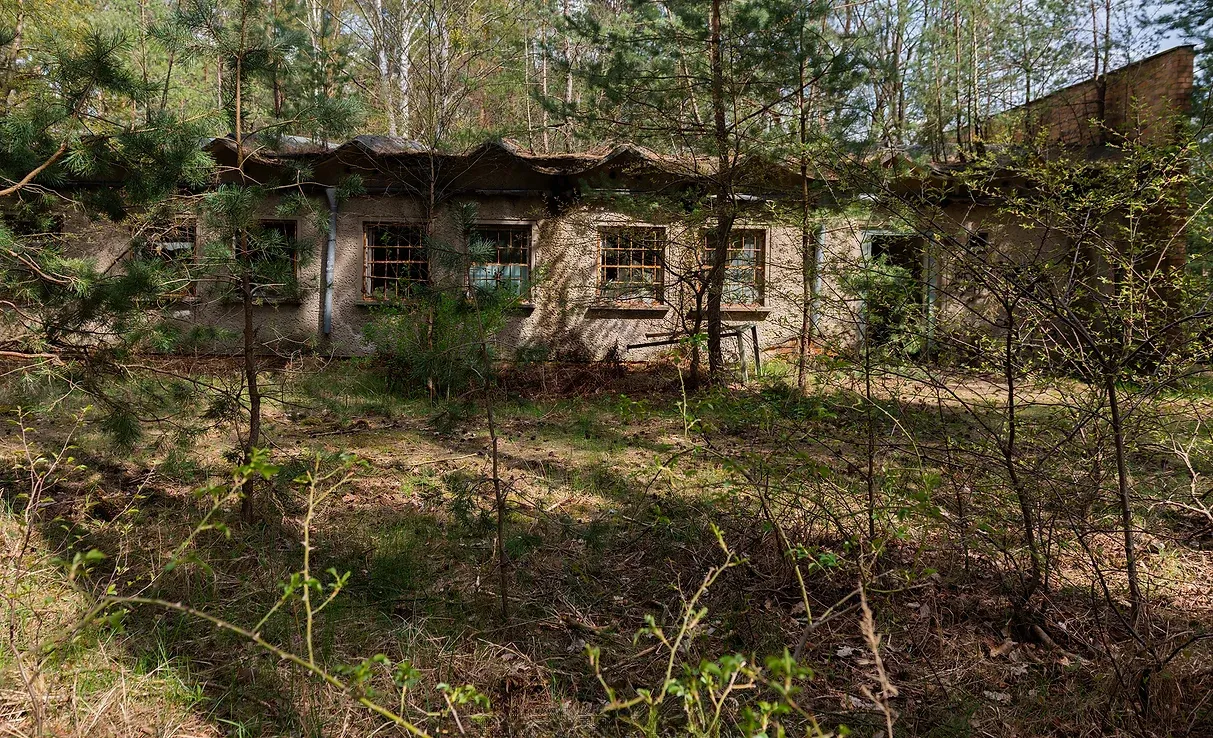
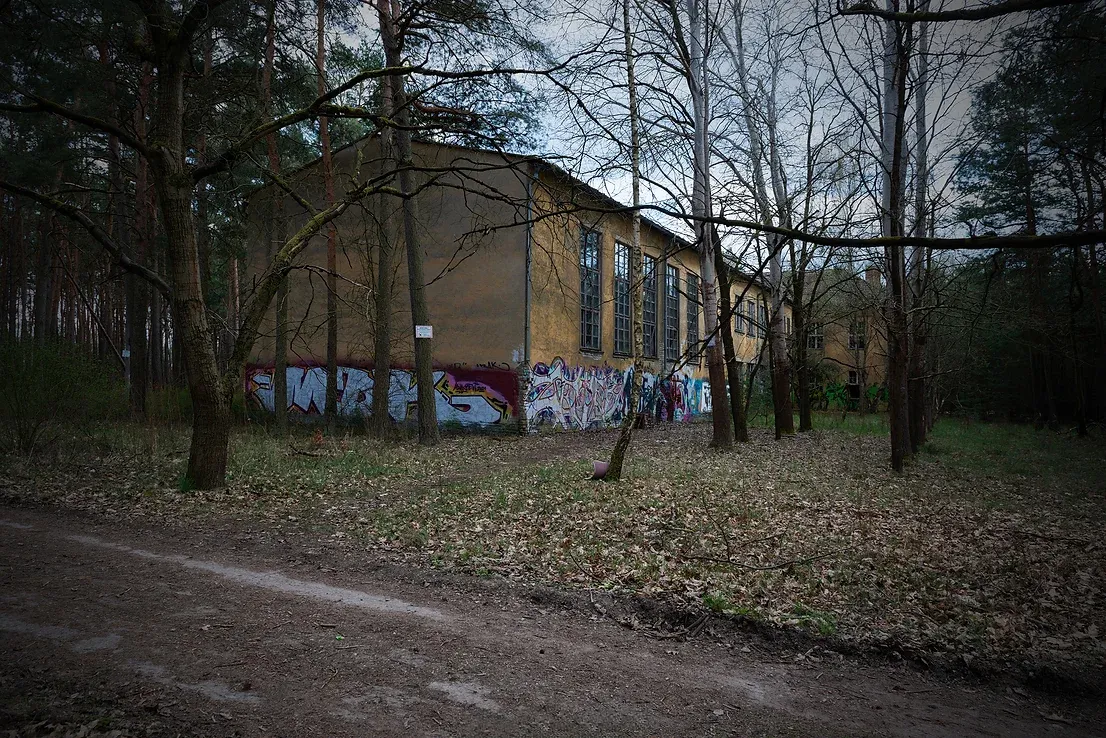
In the end the buildings were taken down in stages. At the end of 2003 the site was offered for tender as a compensation project, in which developers elsewhere pay for land to be unsealed, and demolition and replanting followed under the Brandenburg land company. The result is a forest that is slowly taking back a town. Much of the ground contains ammunition, and a warning sign at the site says that the property poses considerable danger to life and health.
What remains
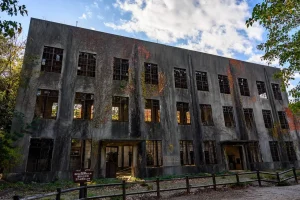
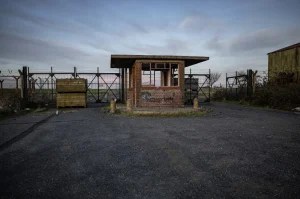
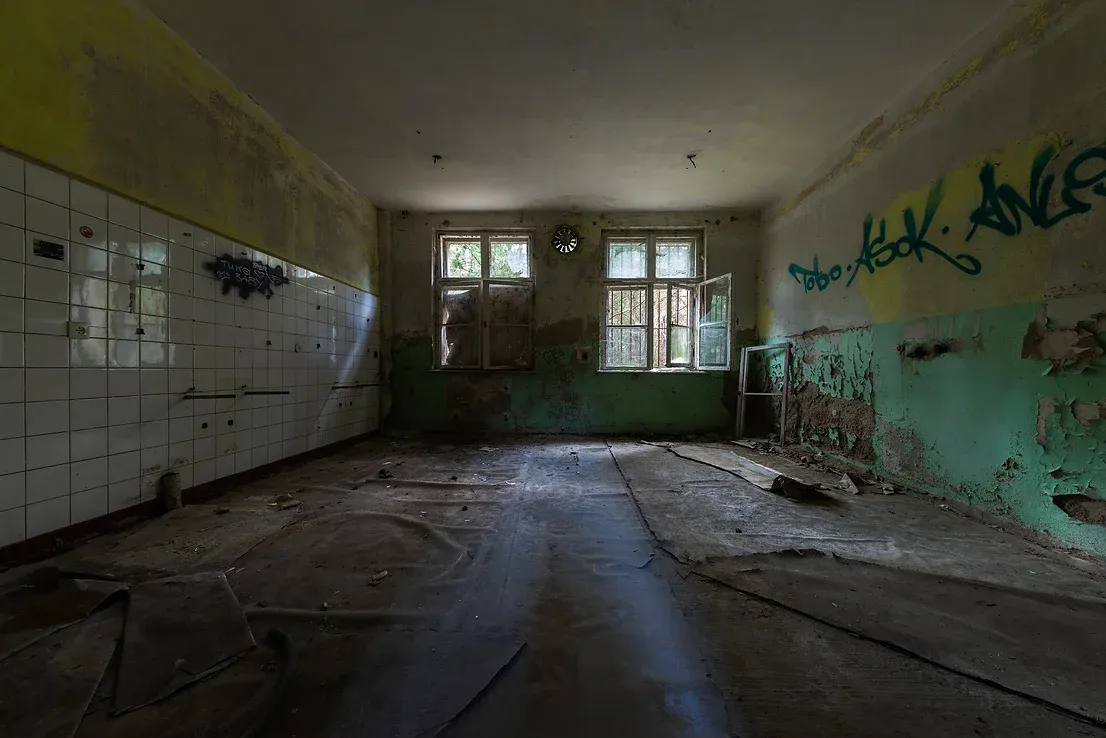
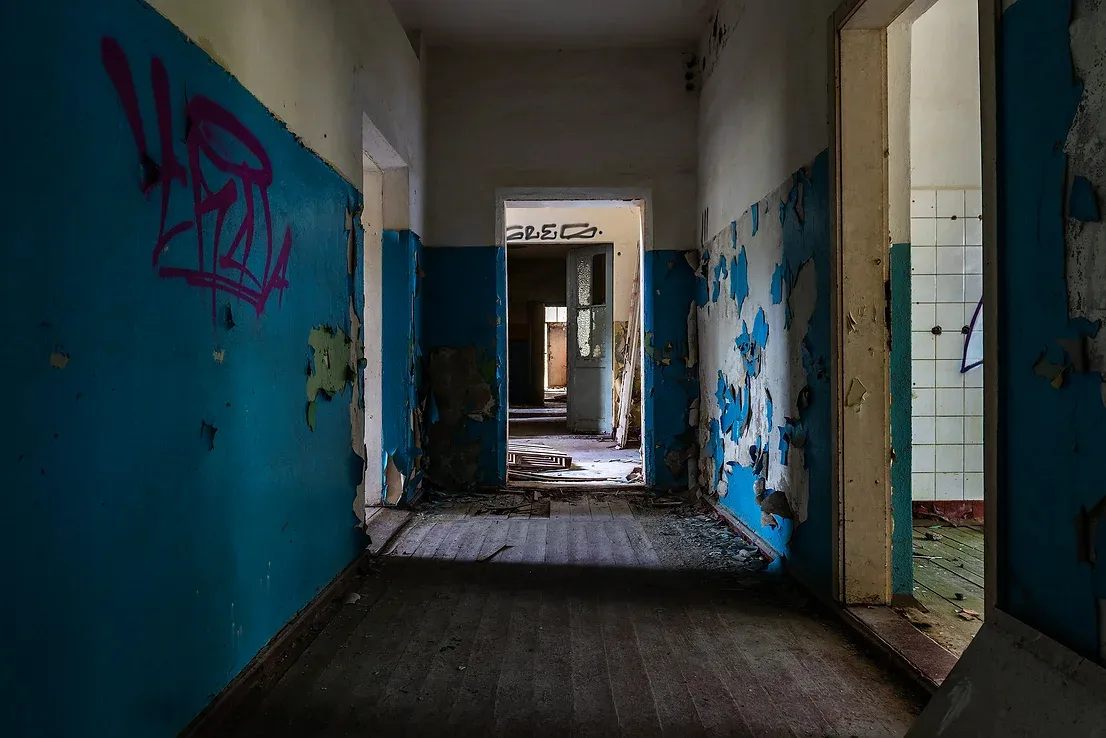
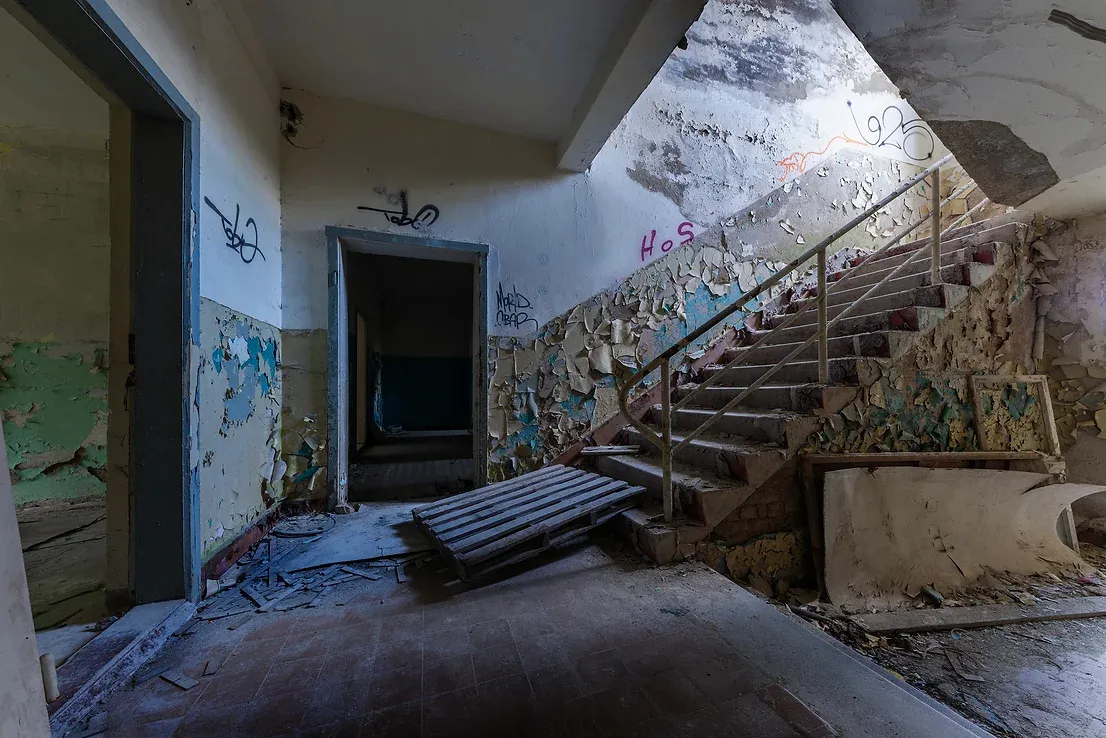
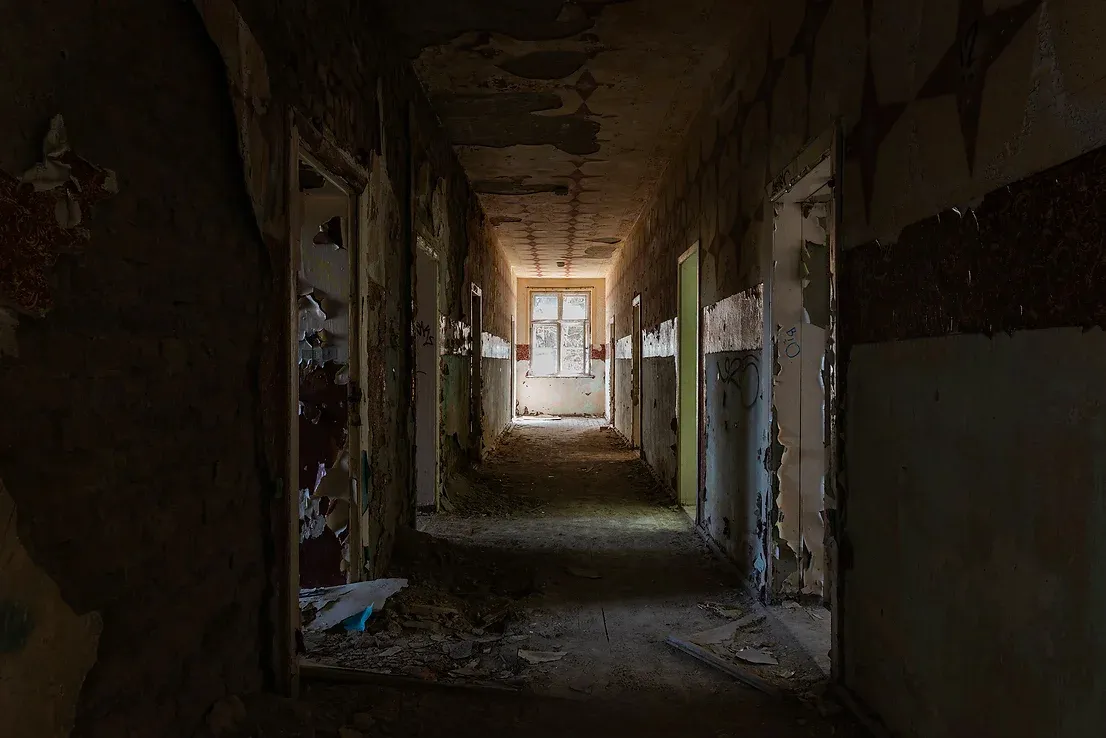
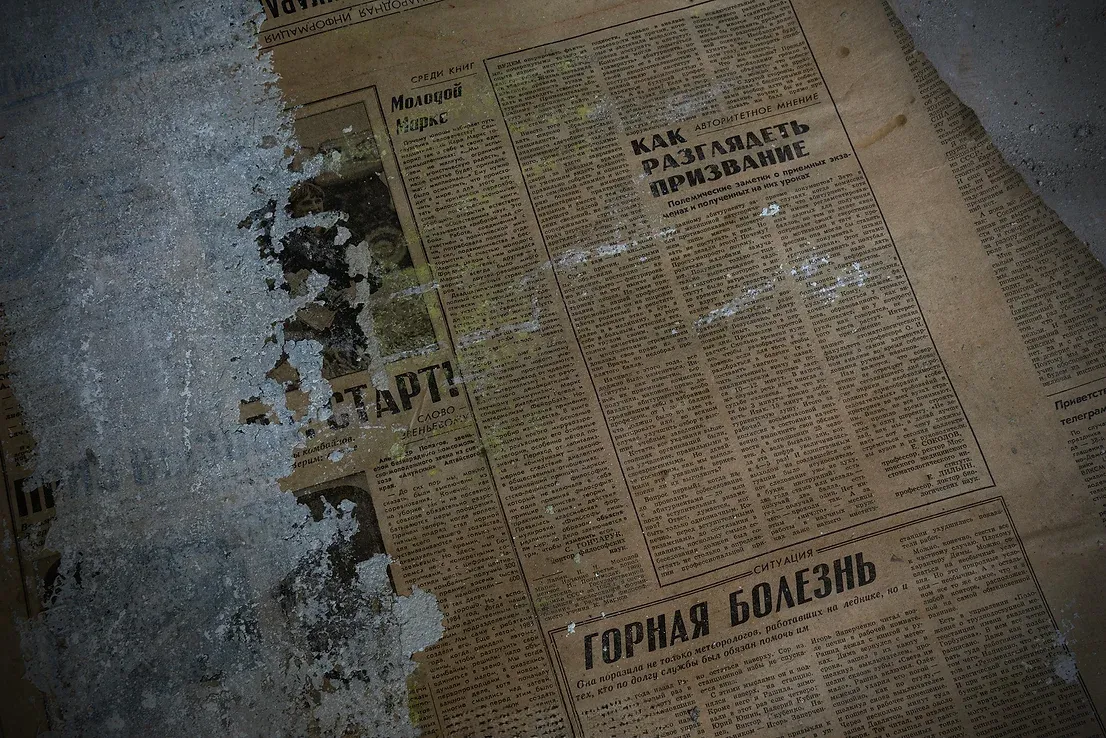
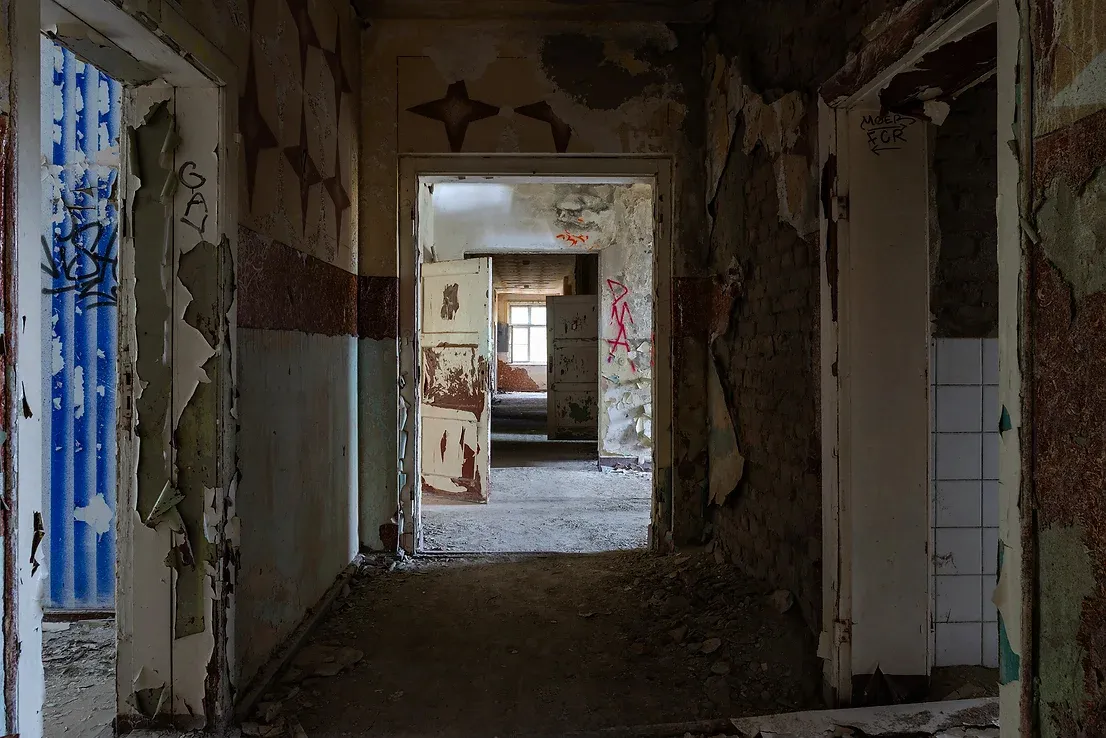
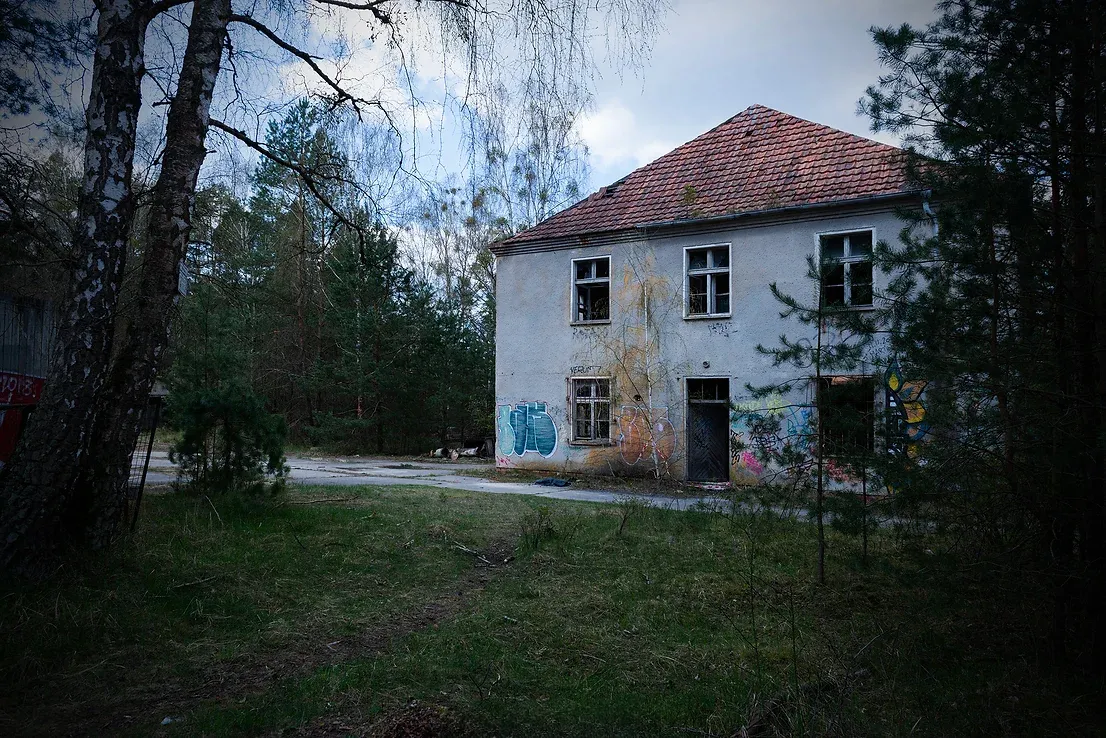
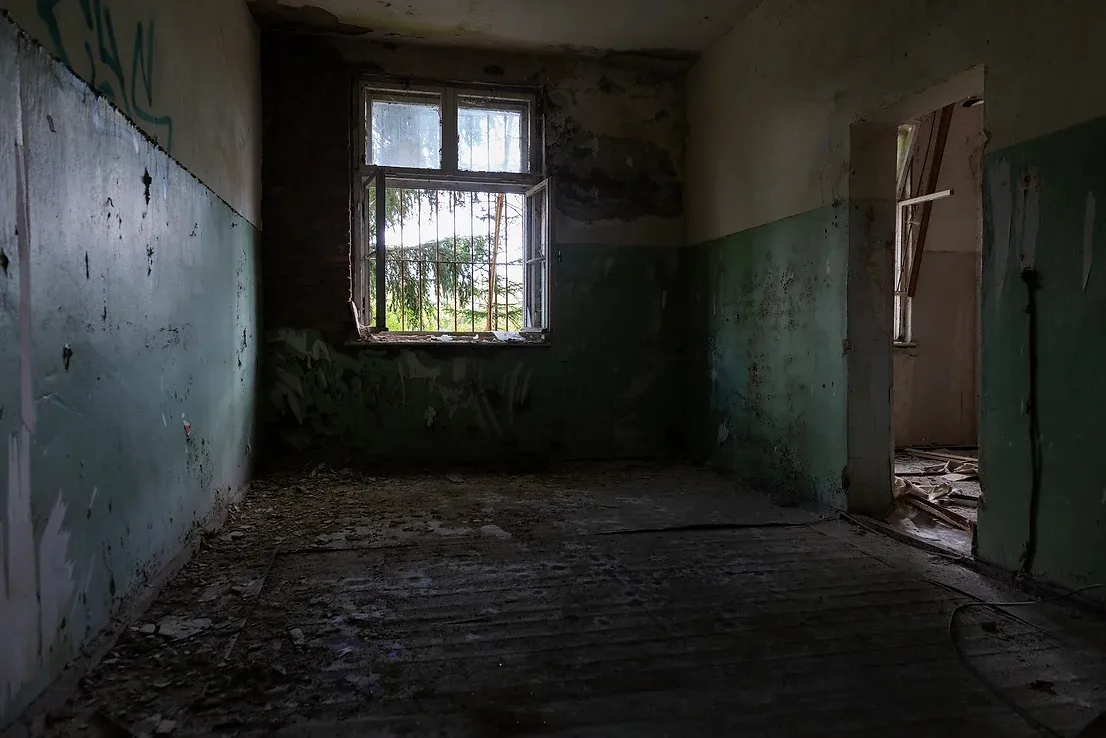
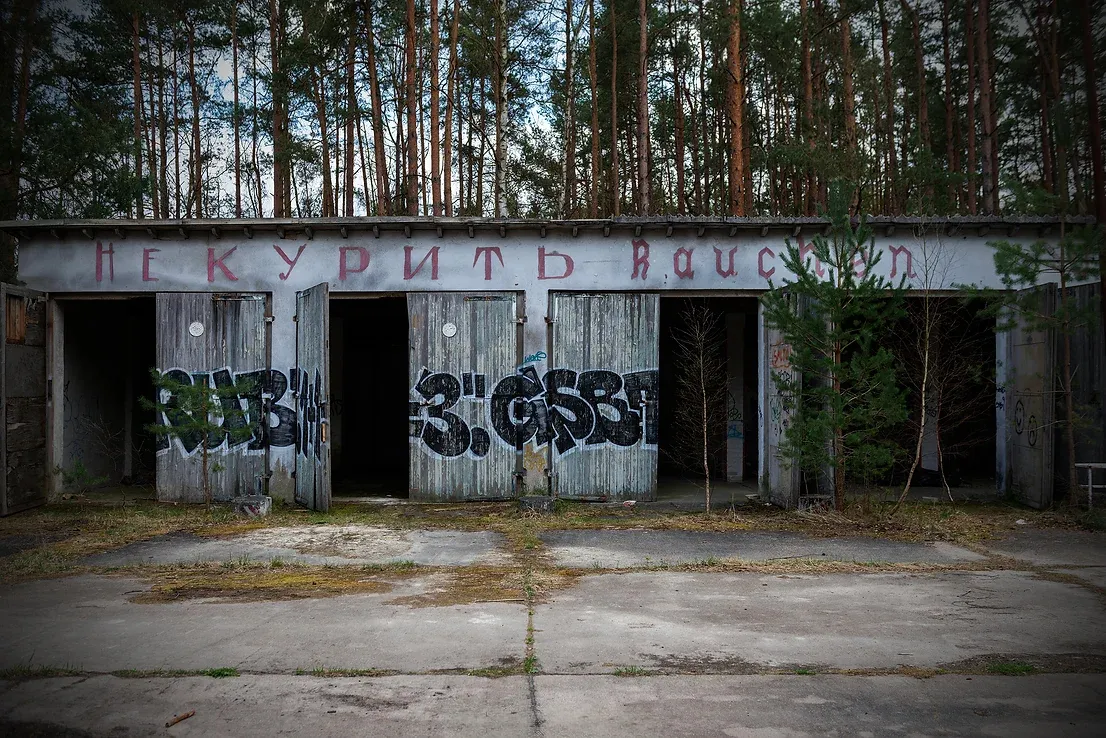
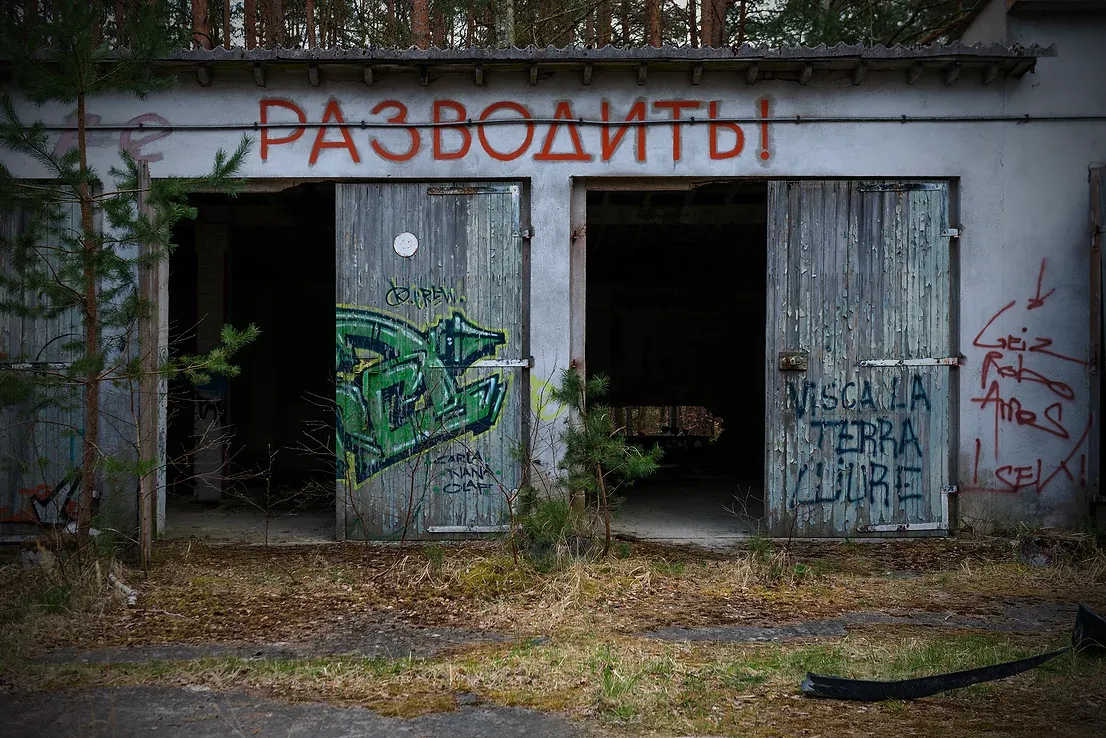
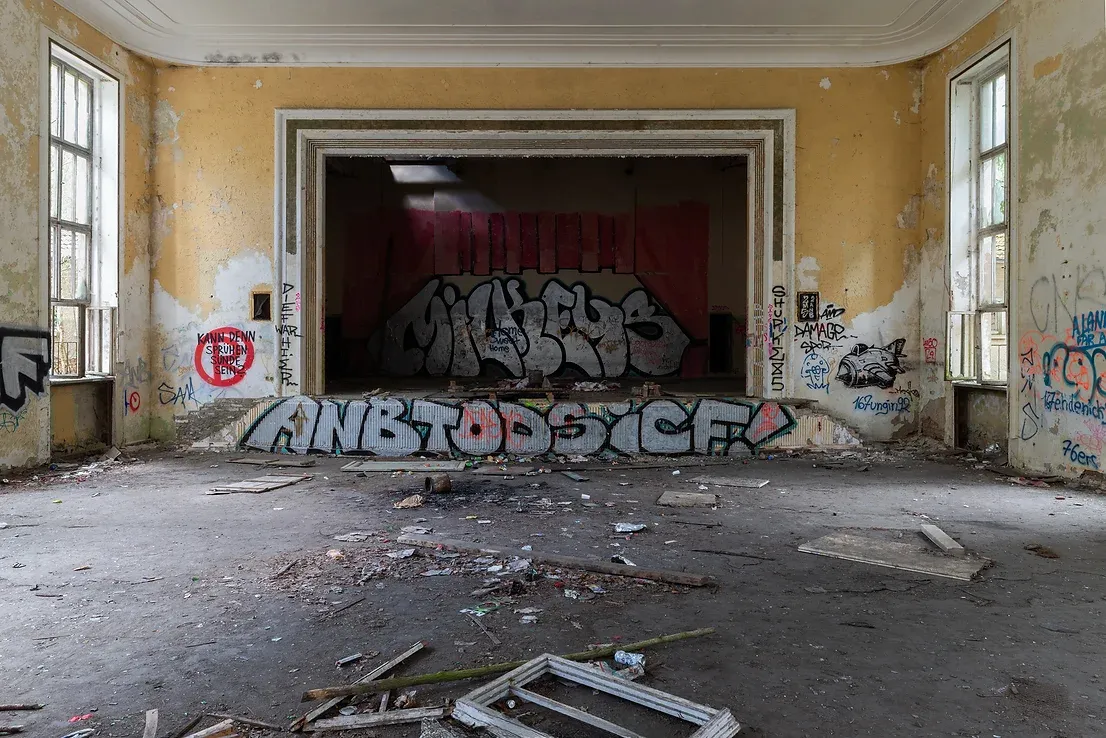
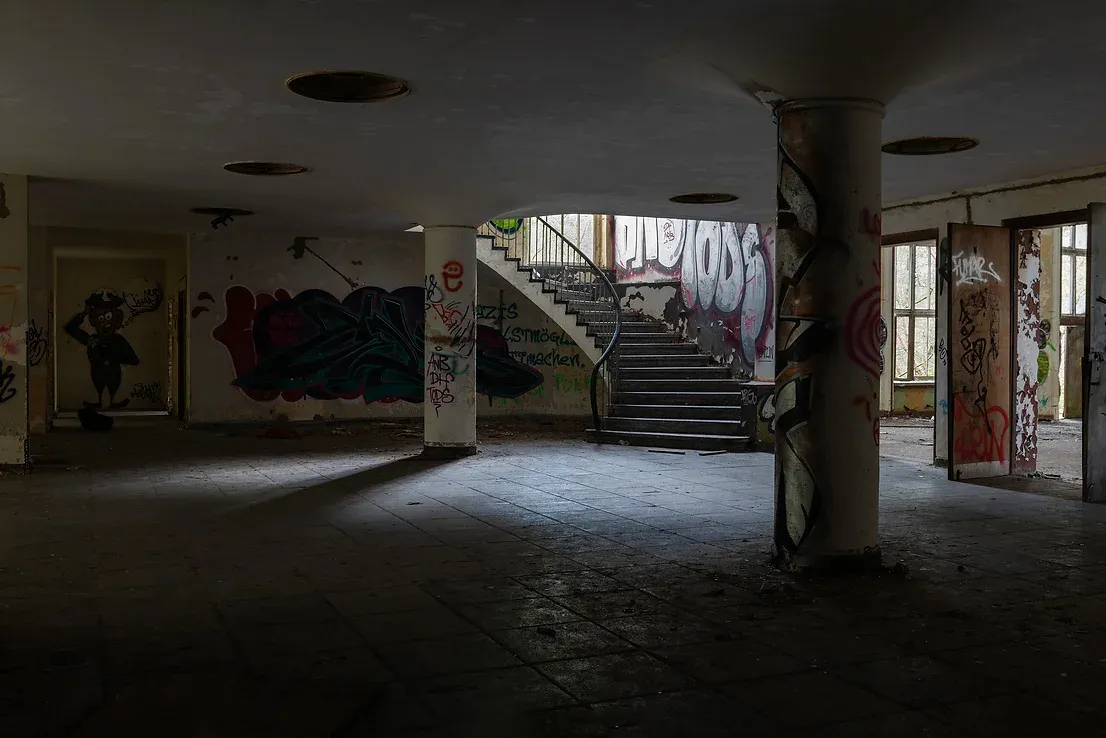
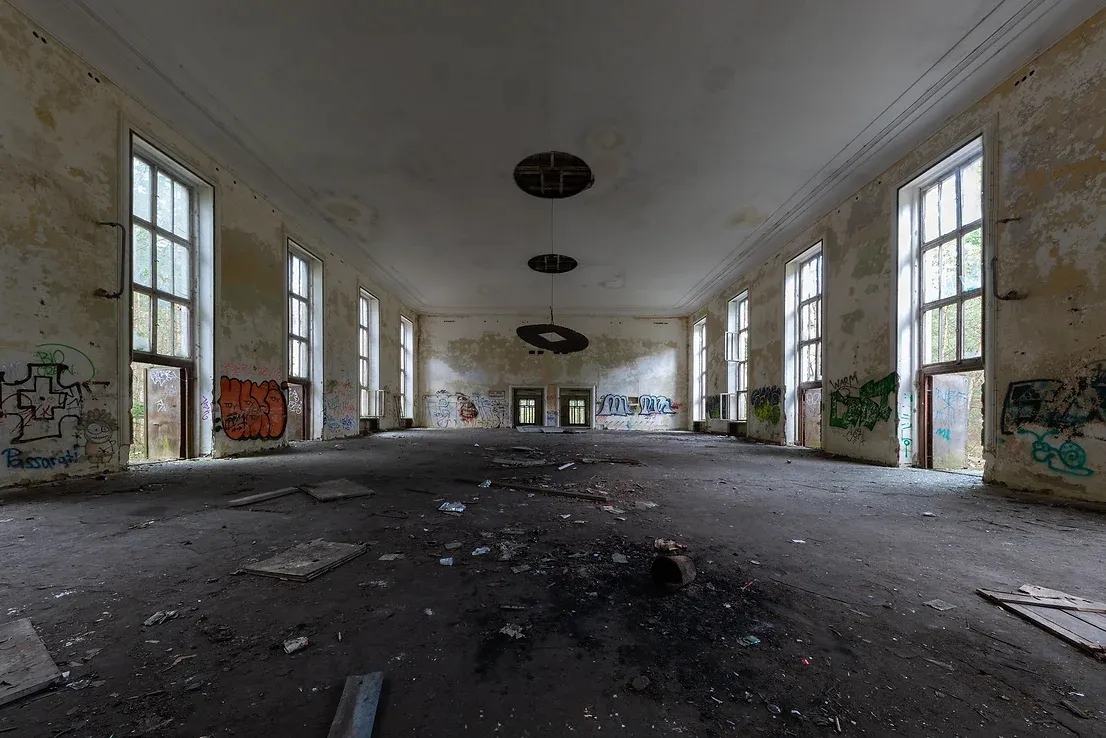
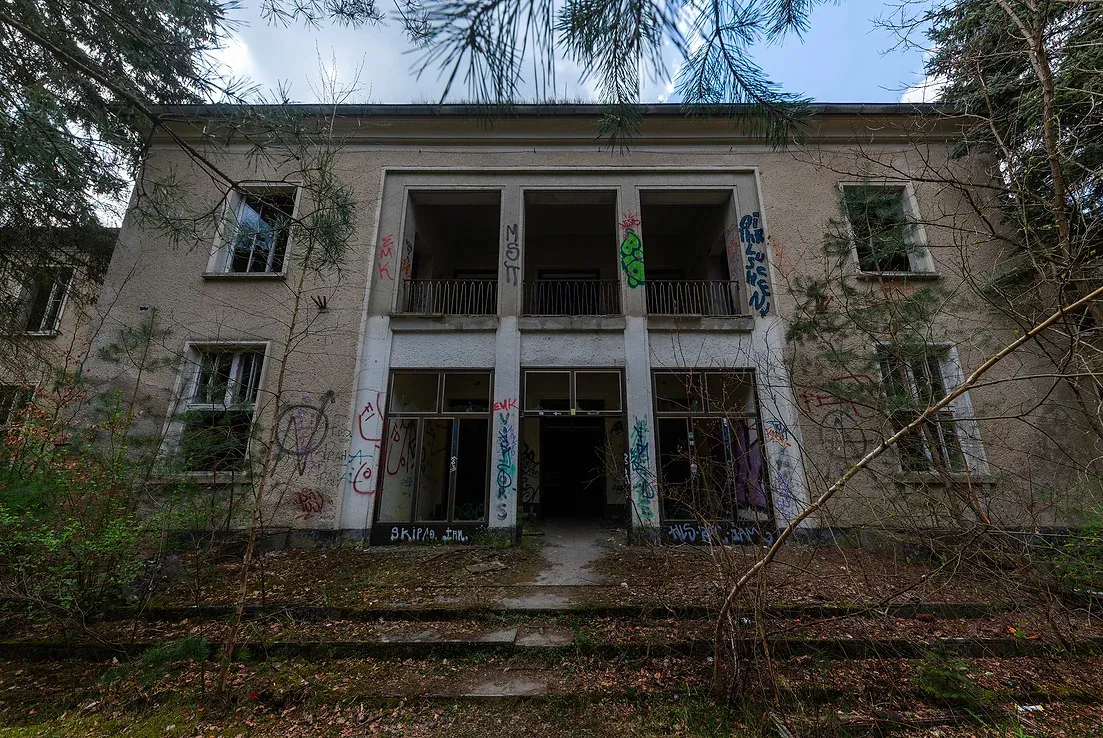
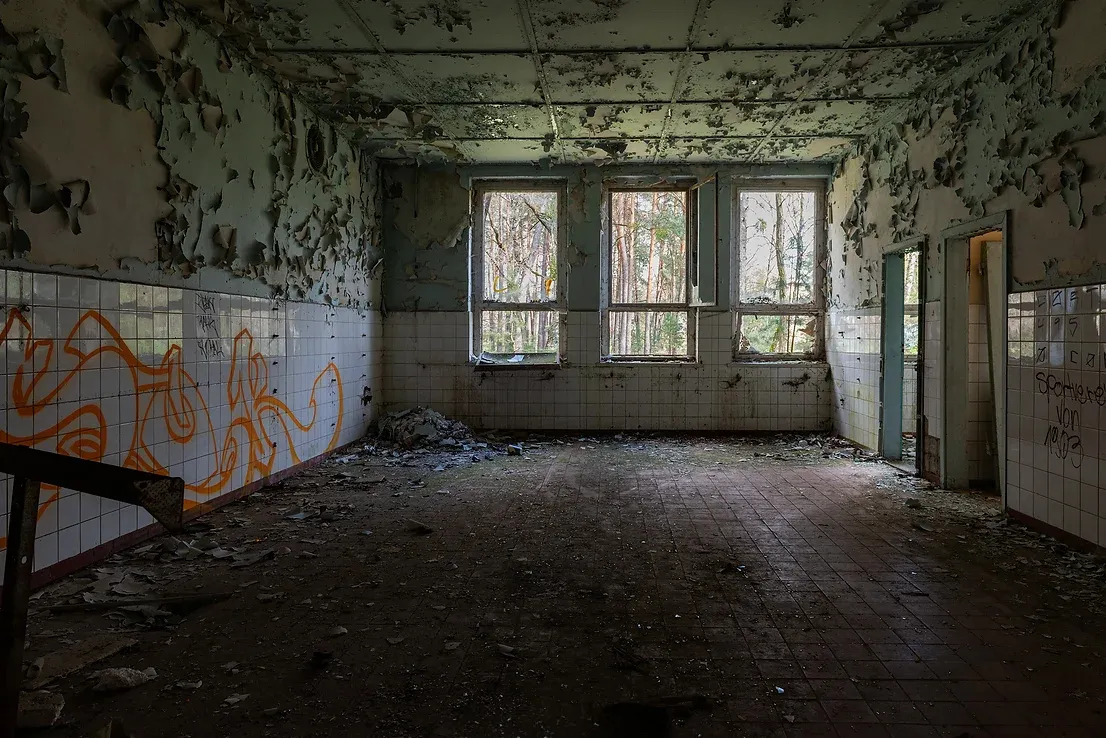
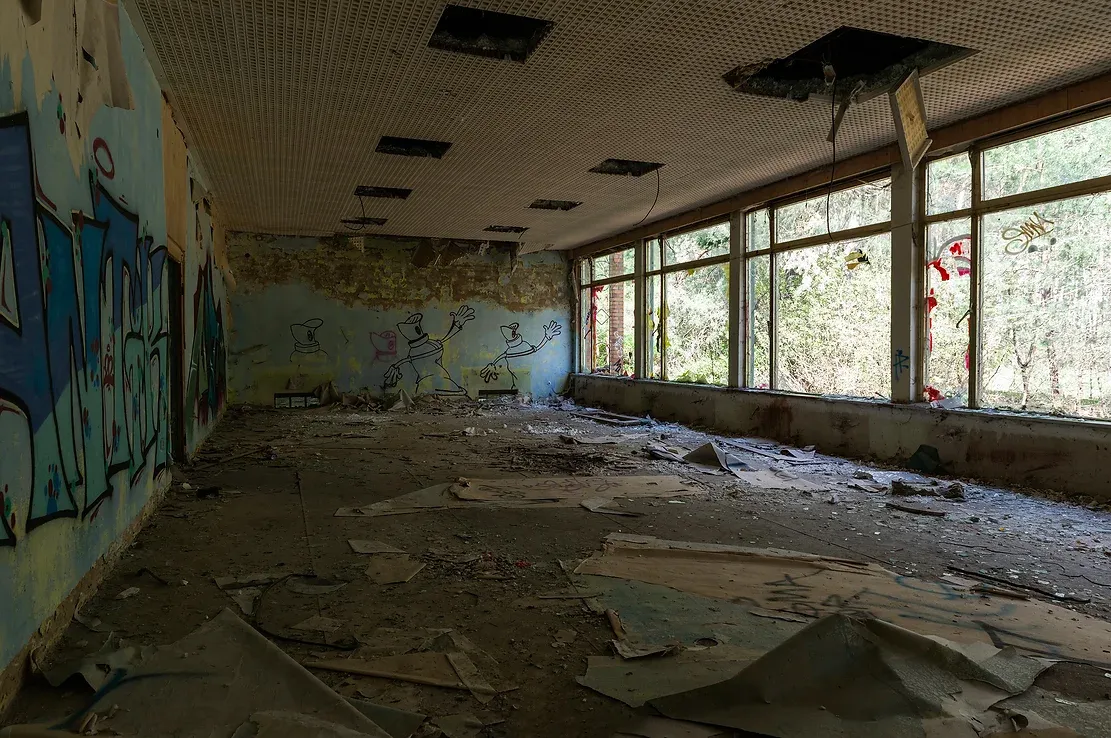
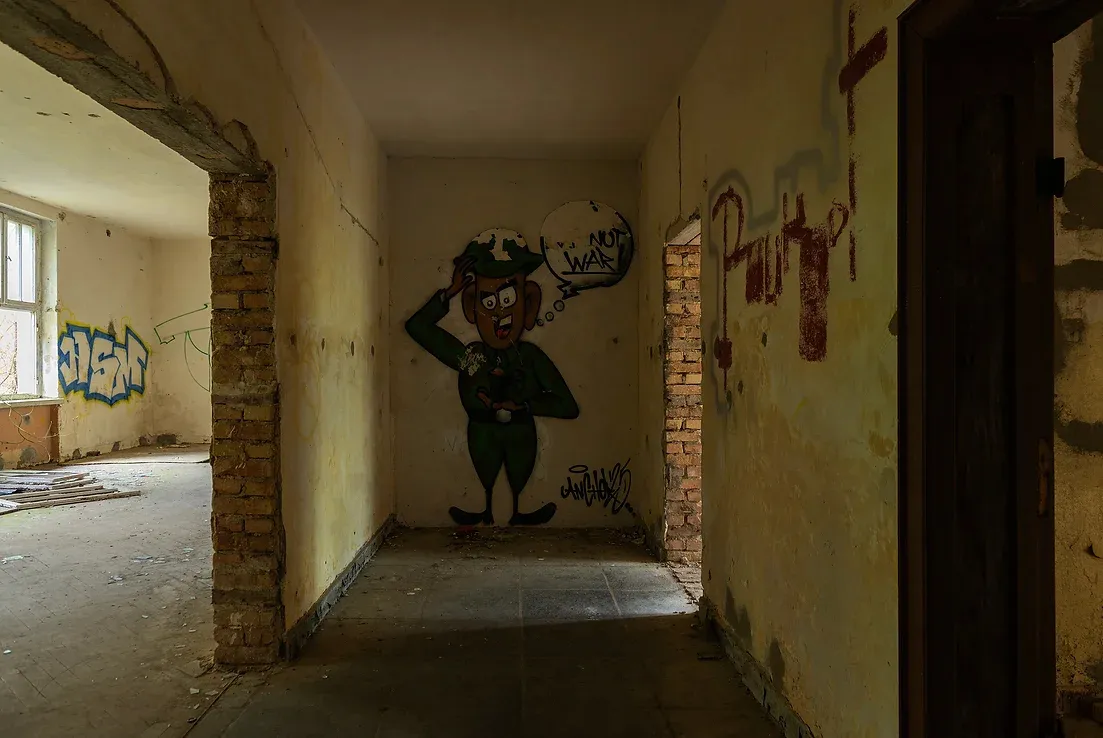
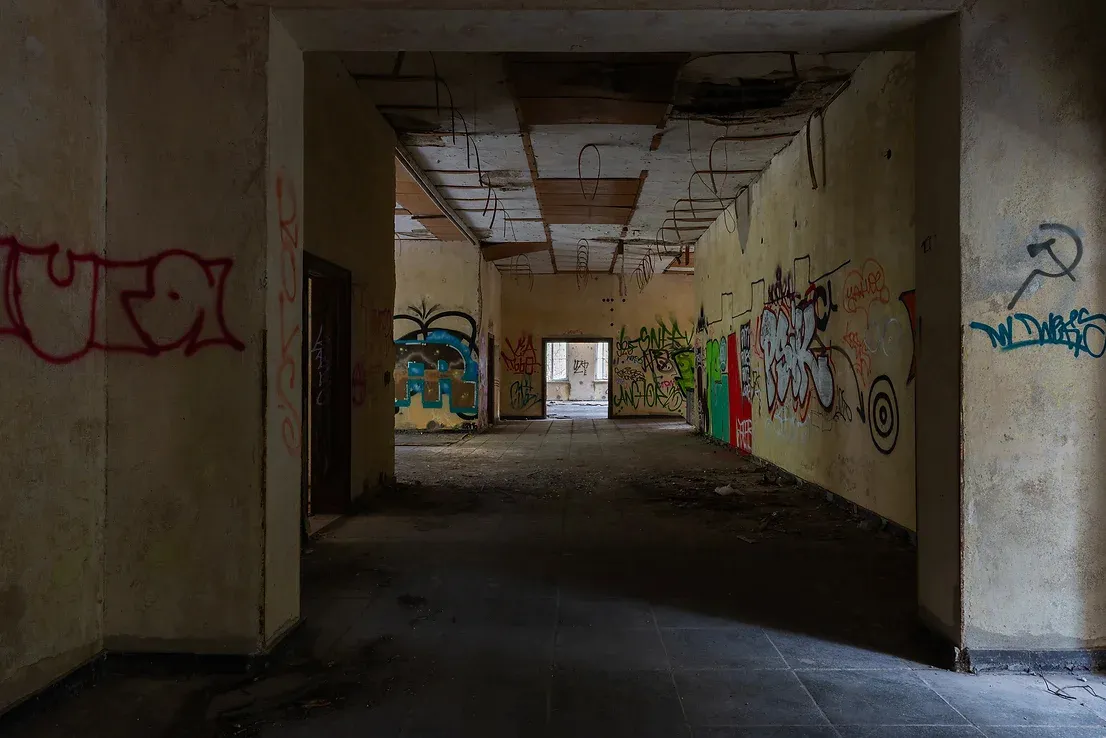
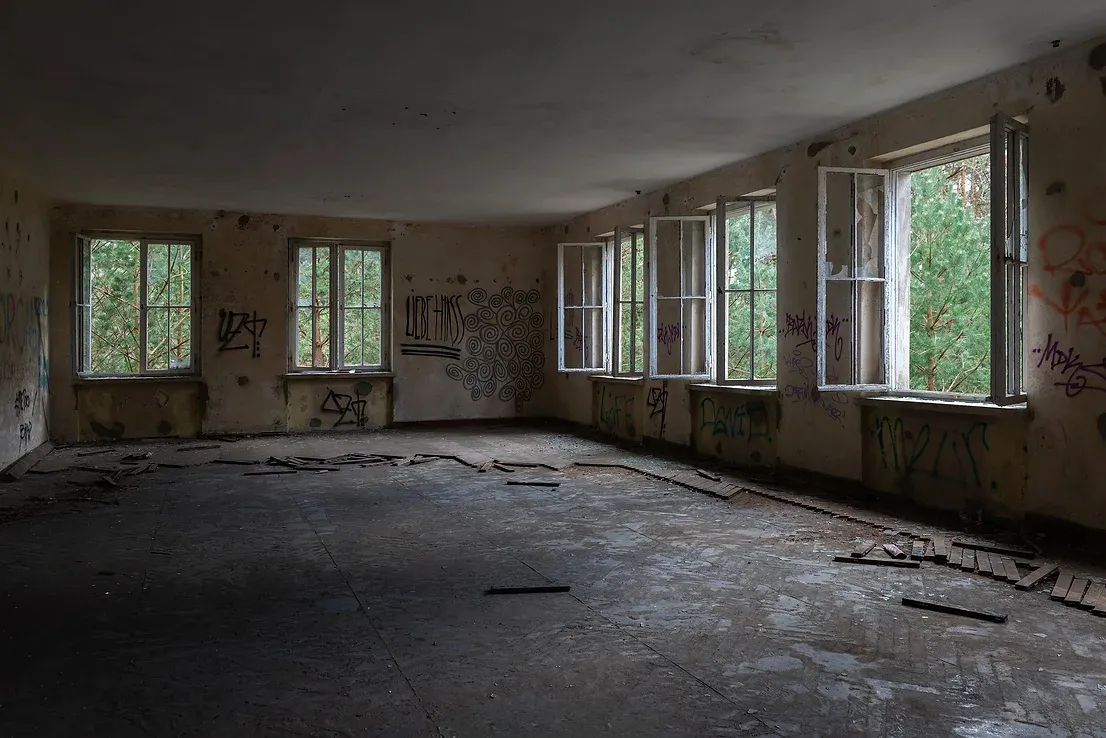
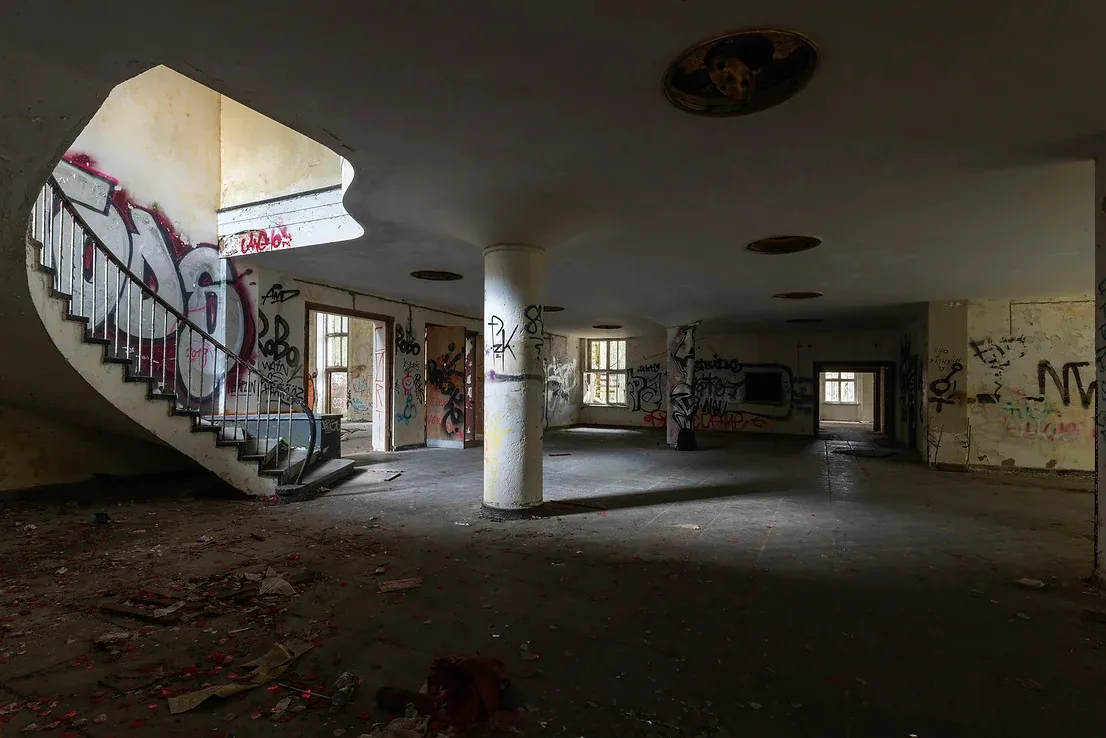
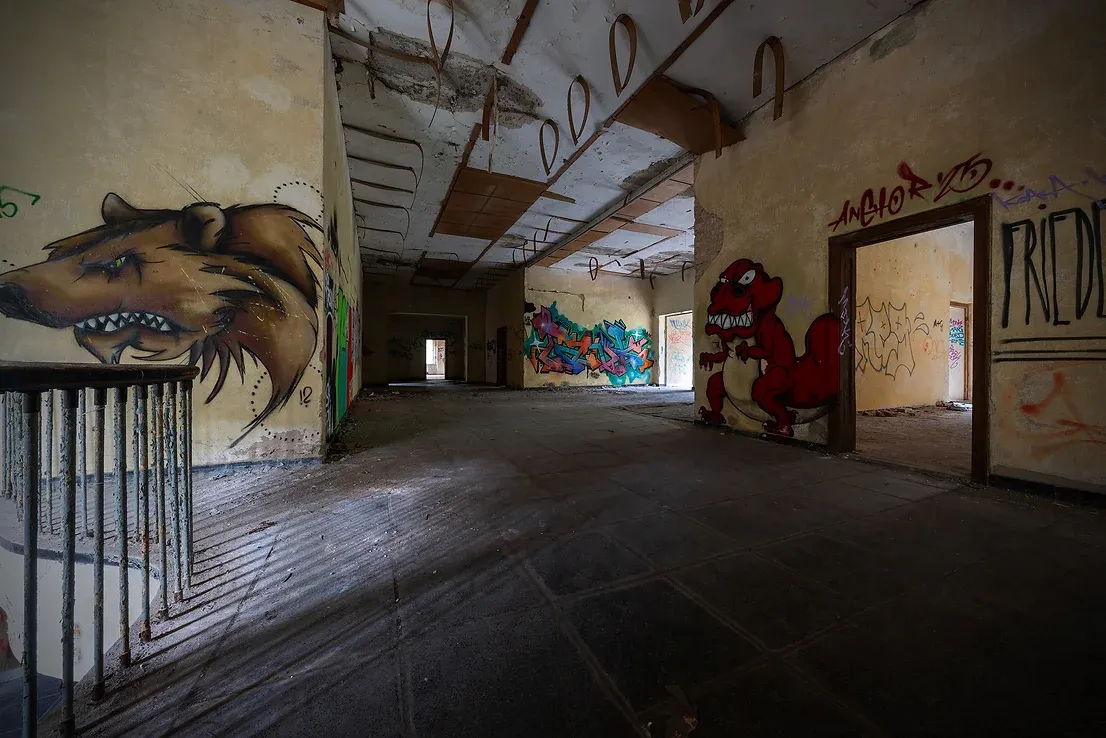
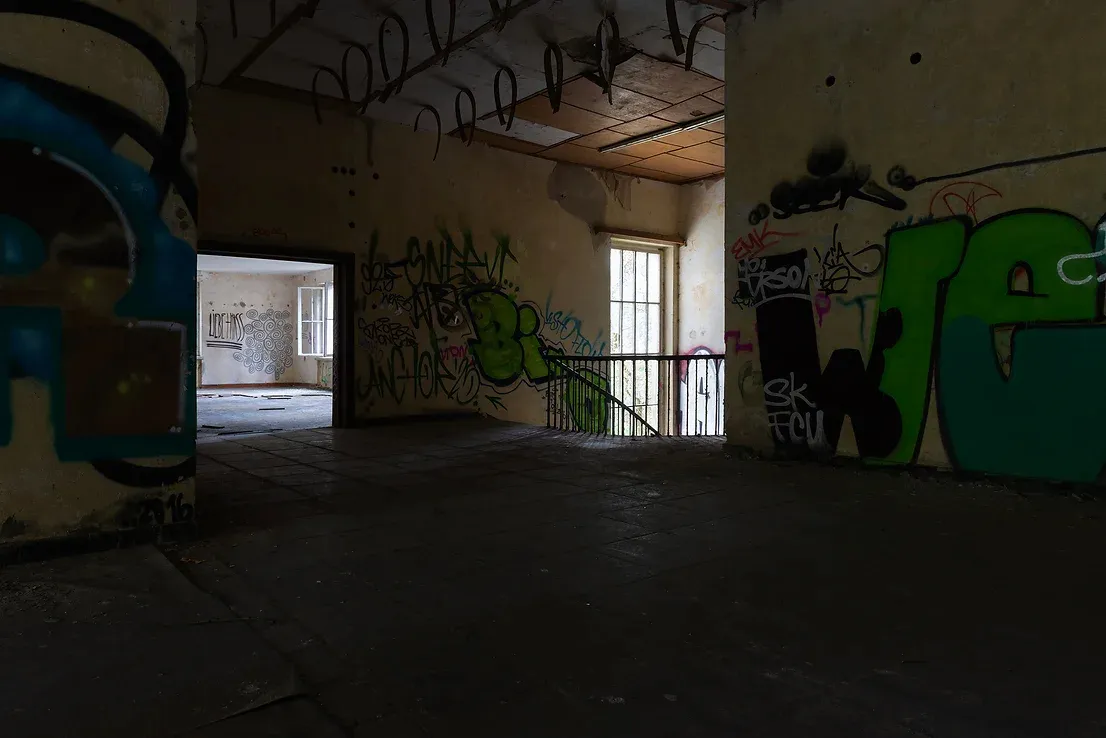
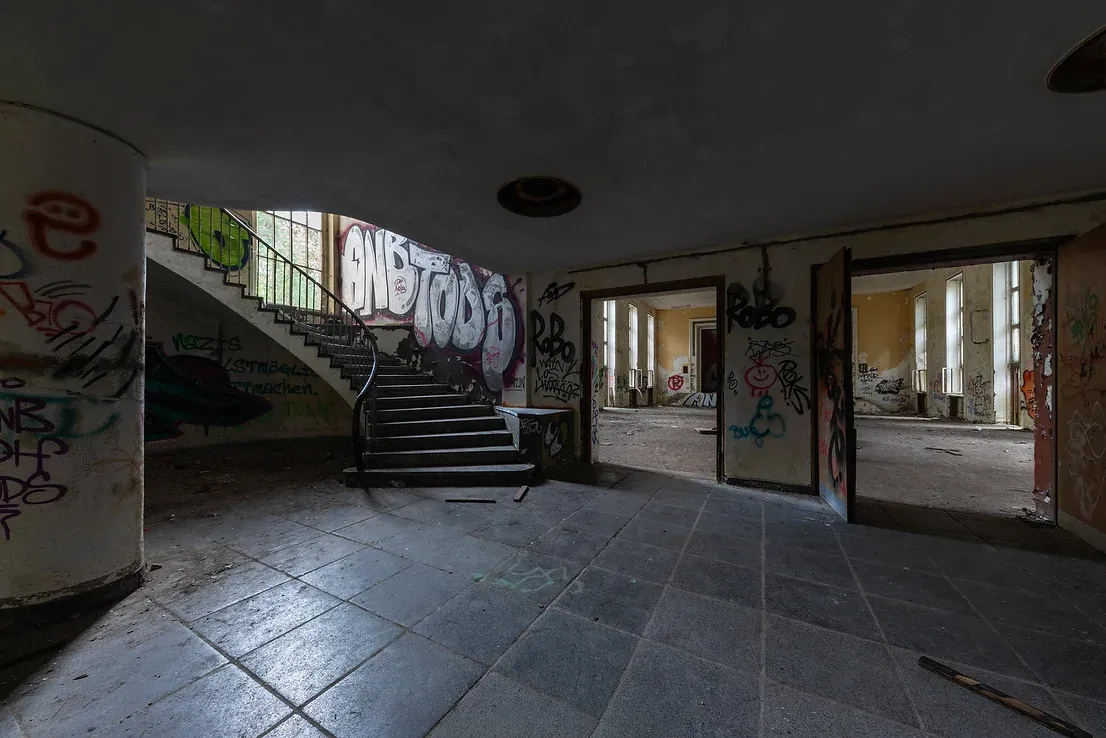
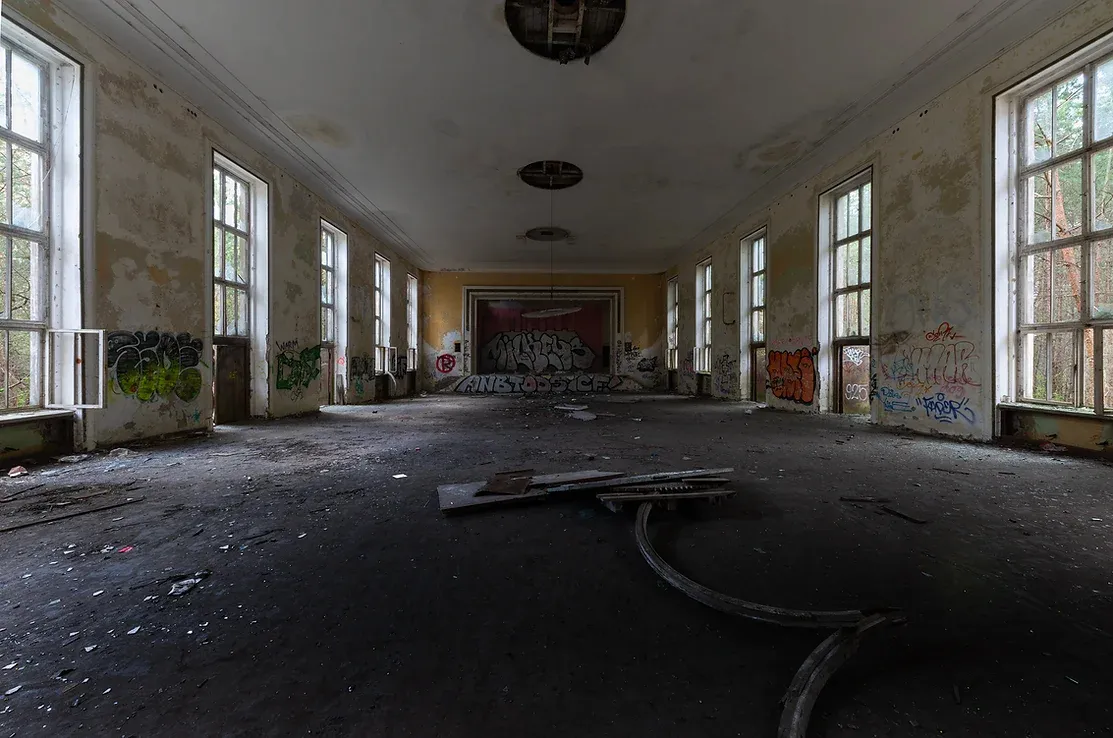
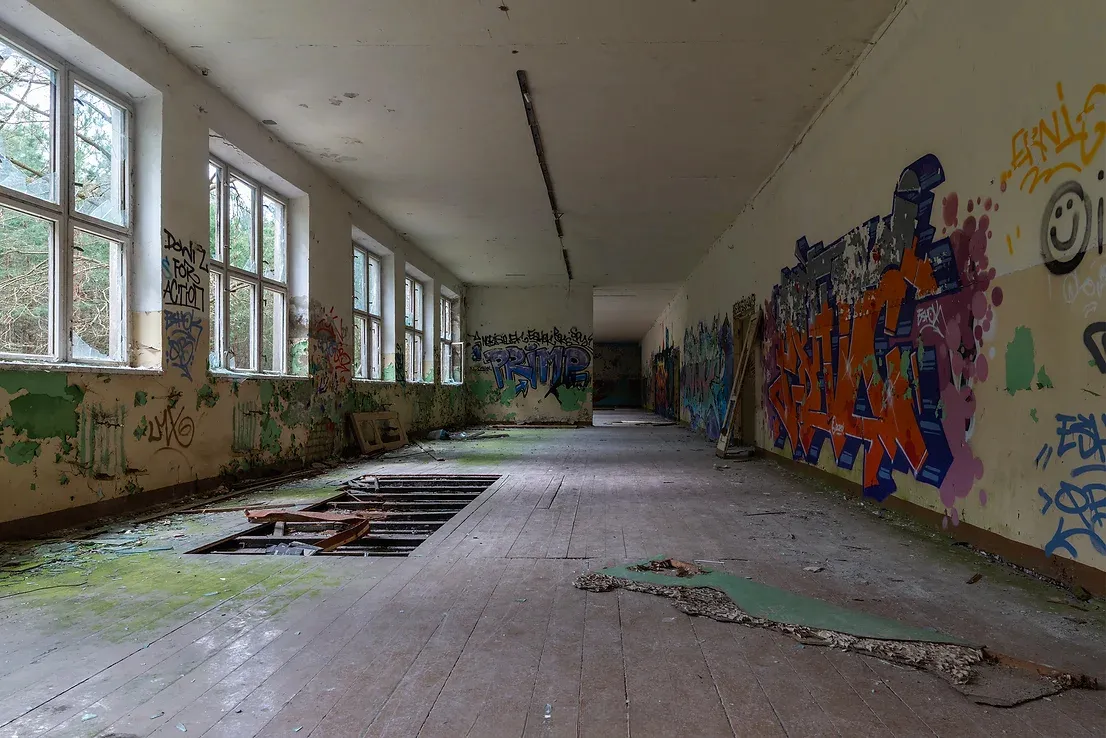
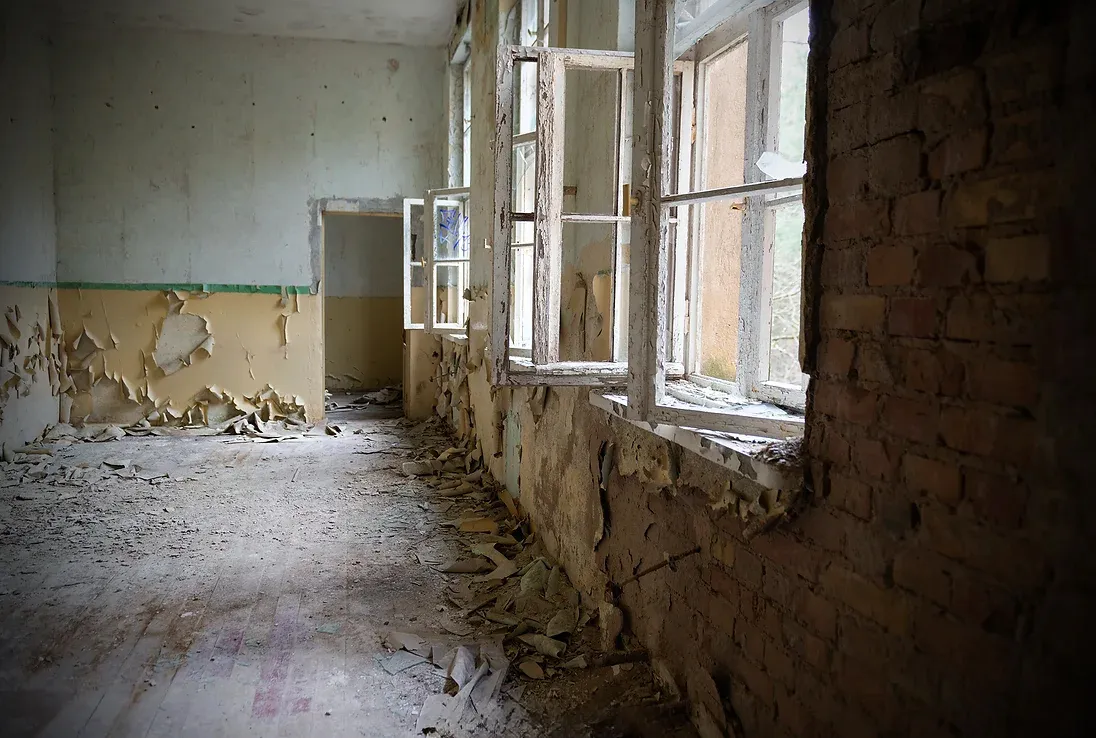
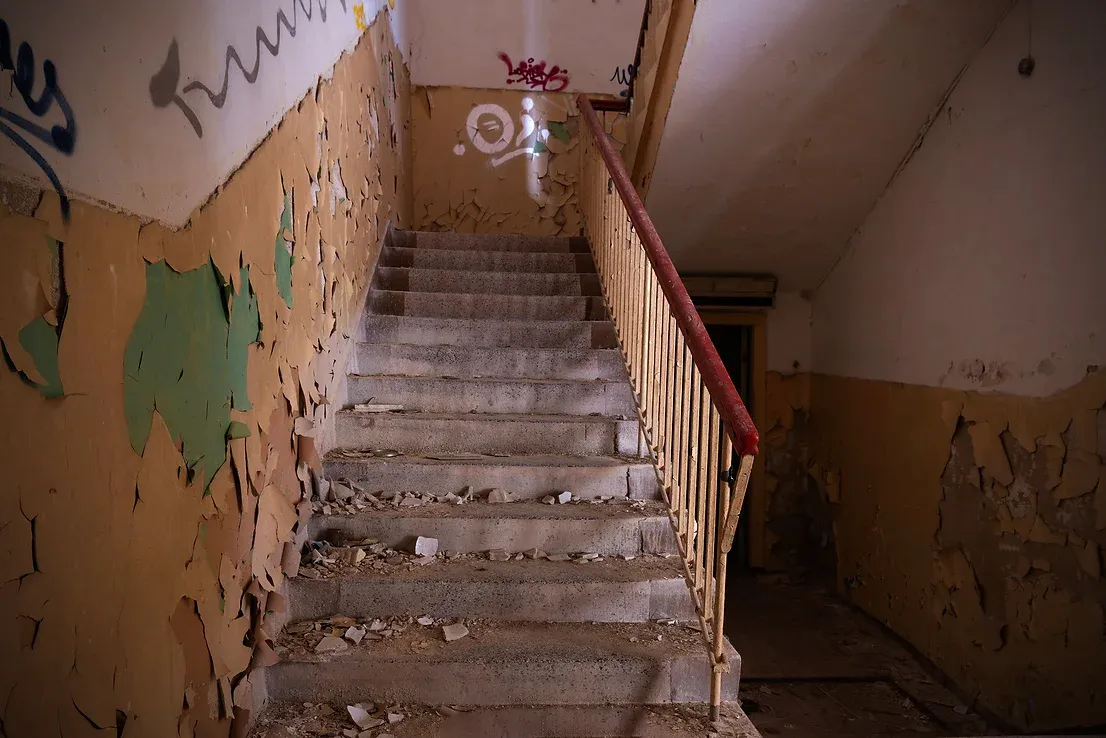
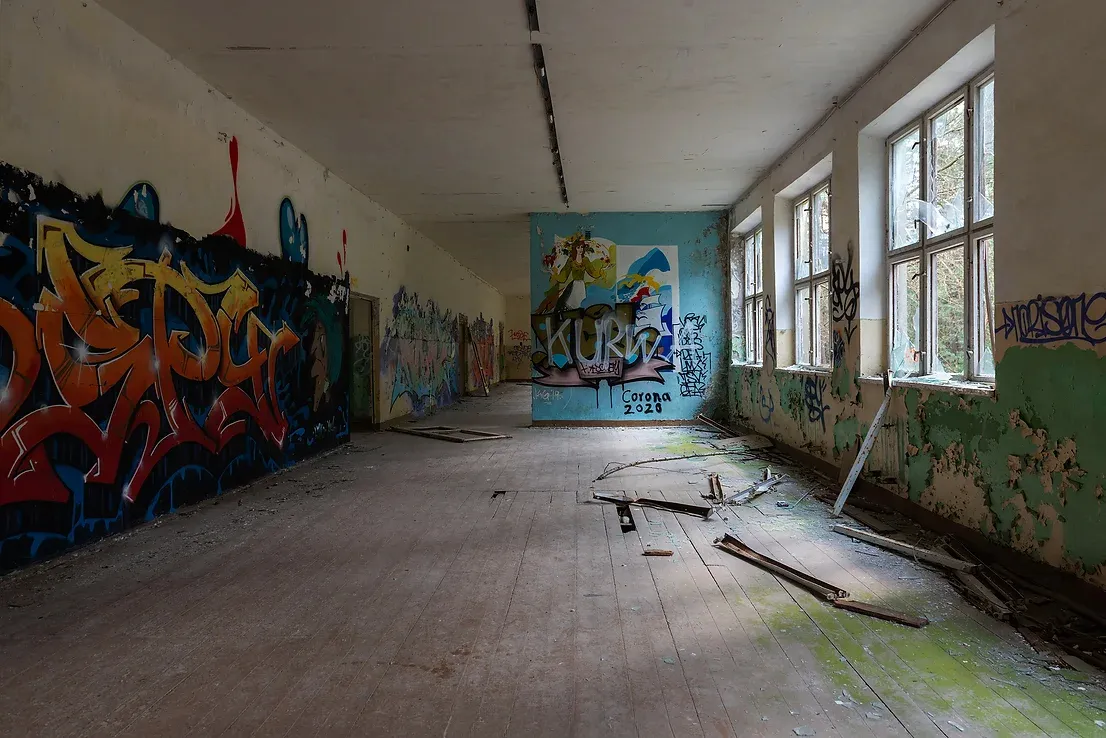
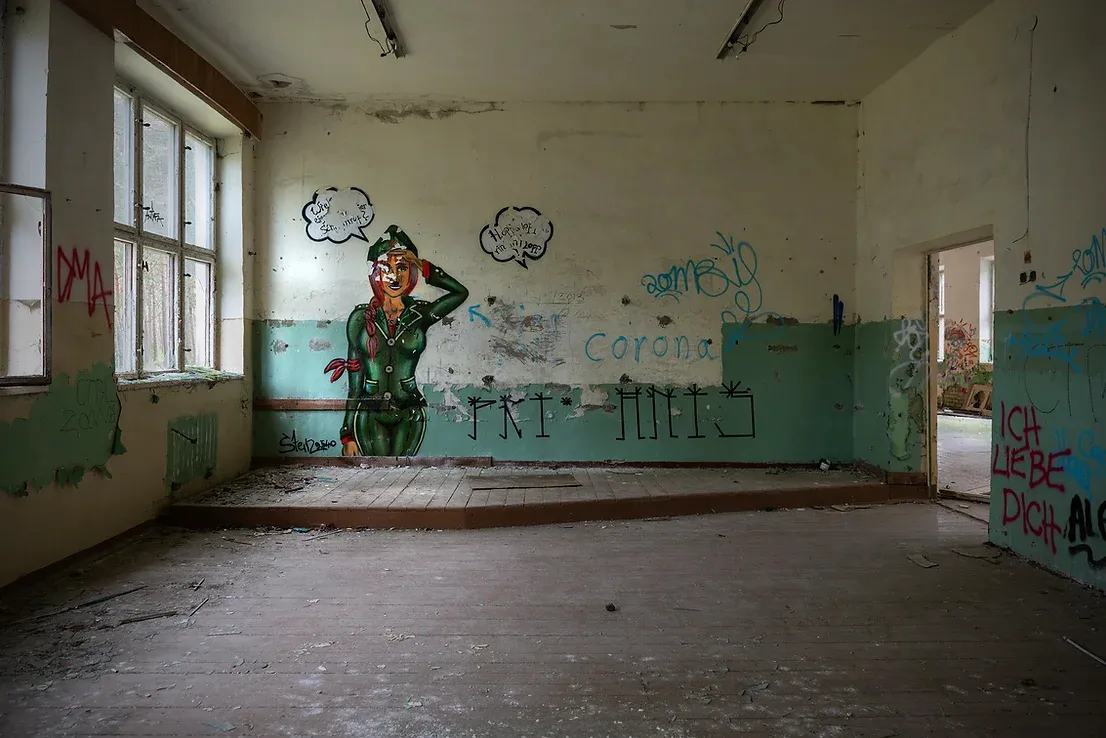
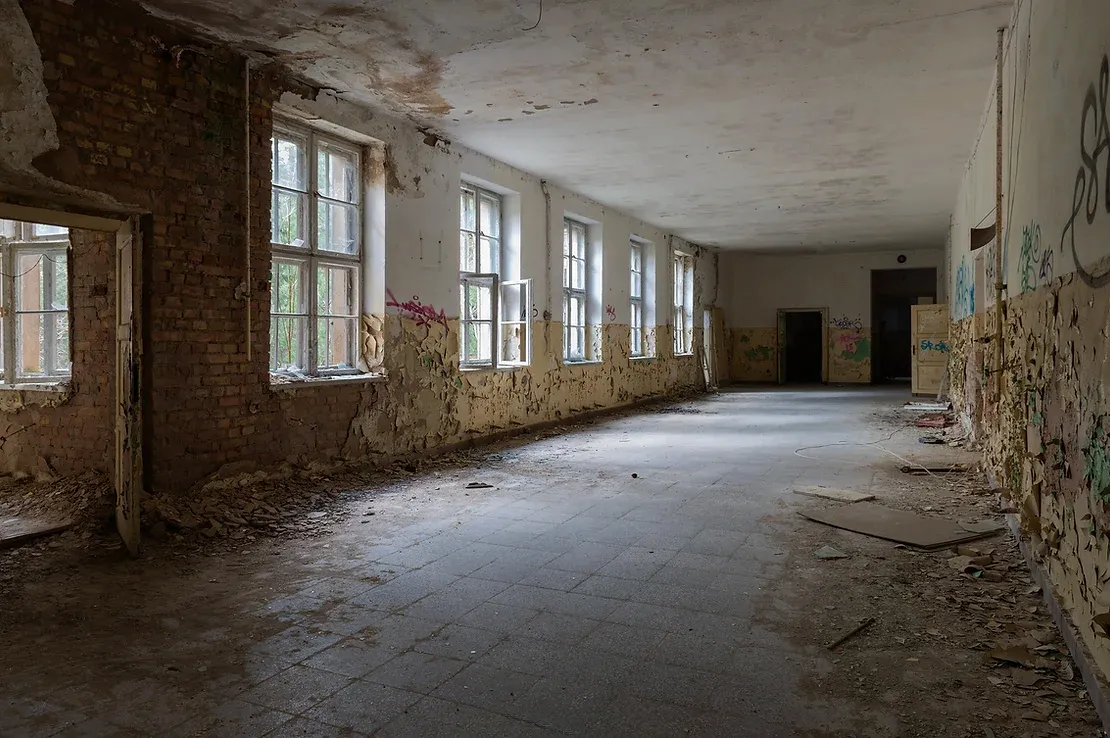
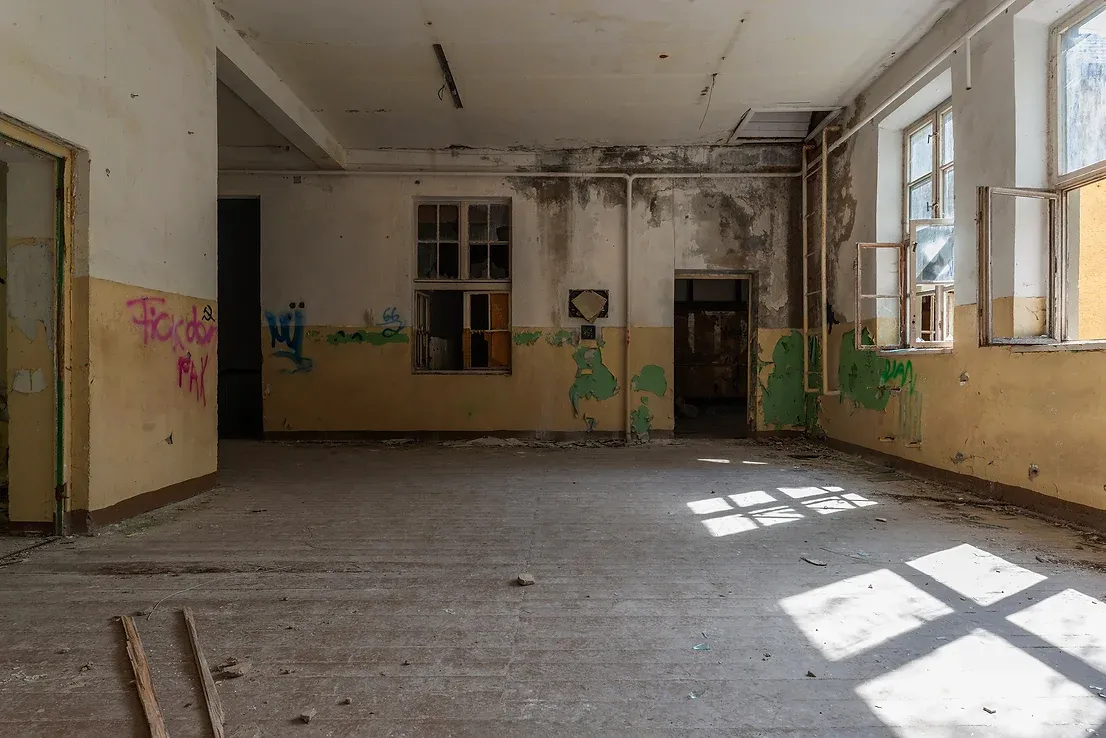
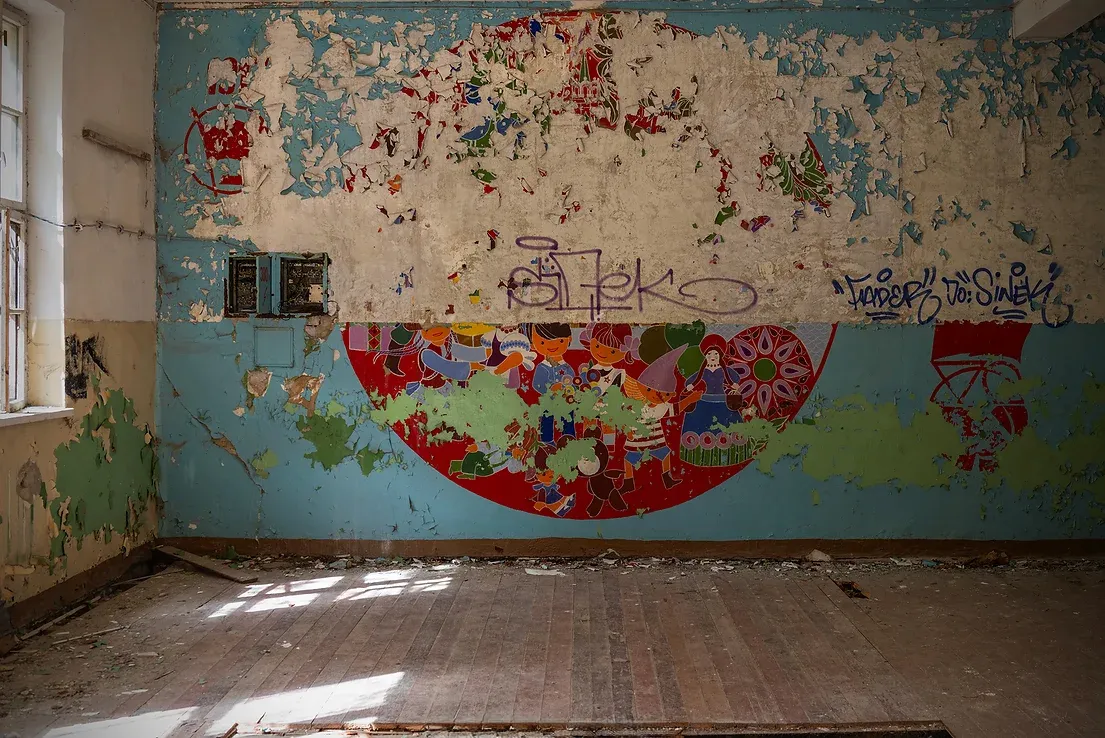
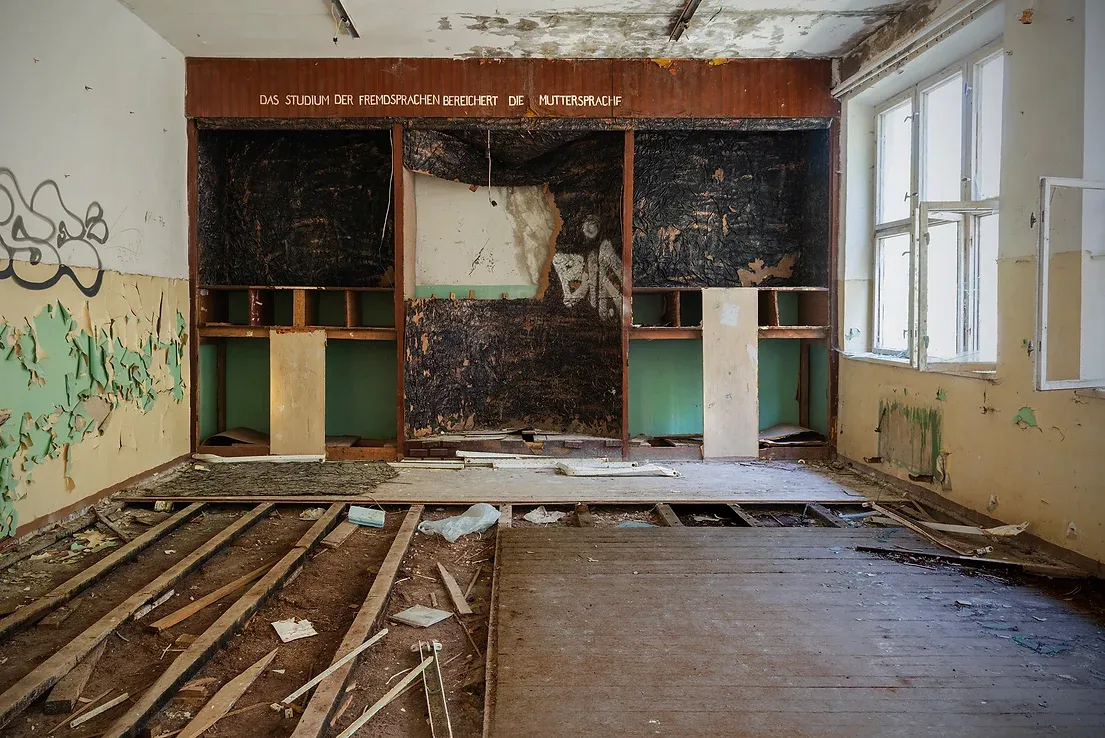
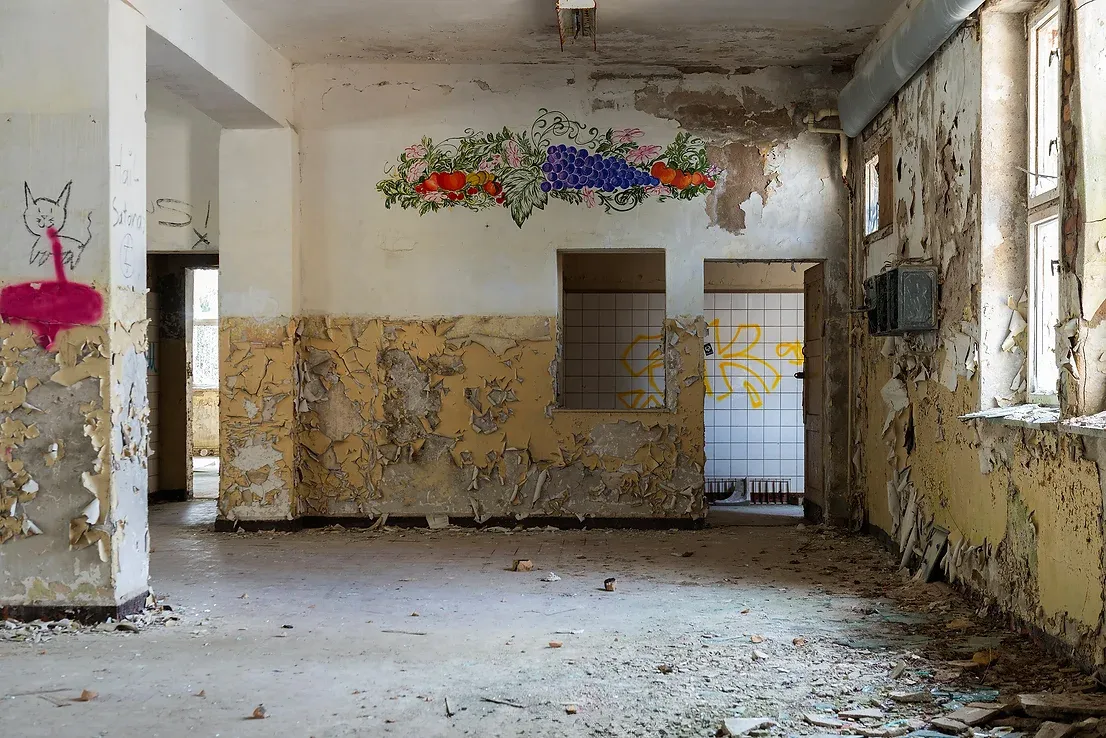
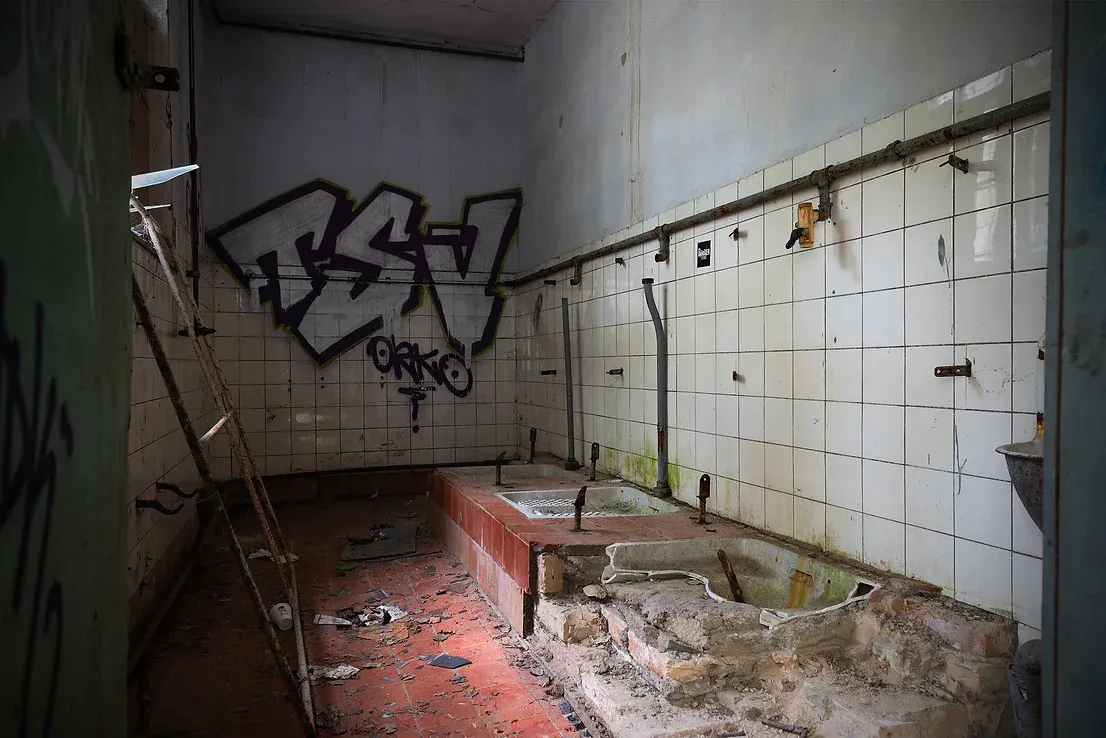
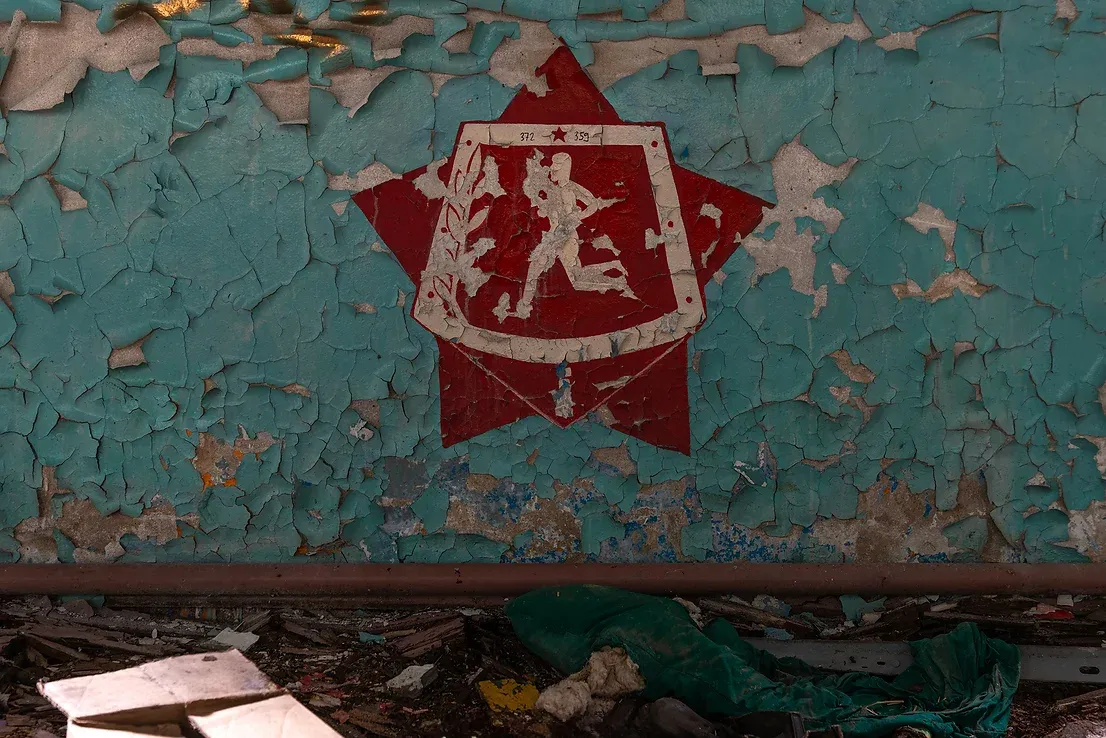
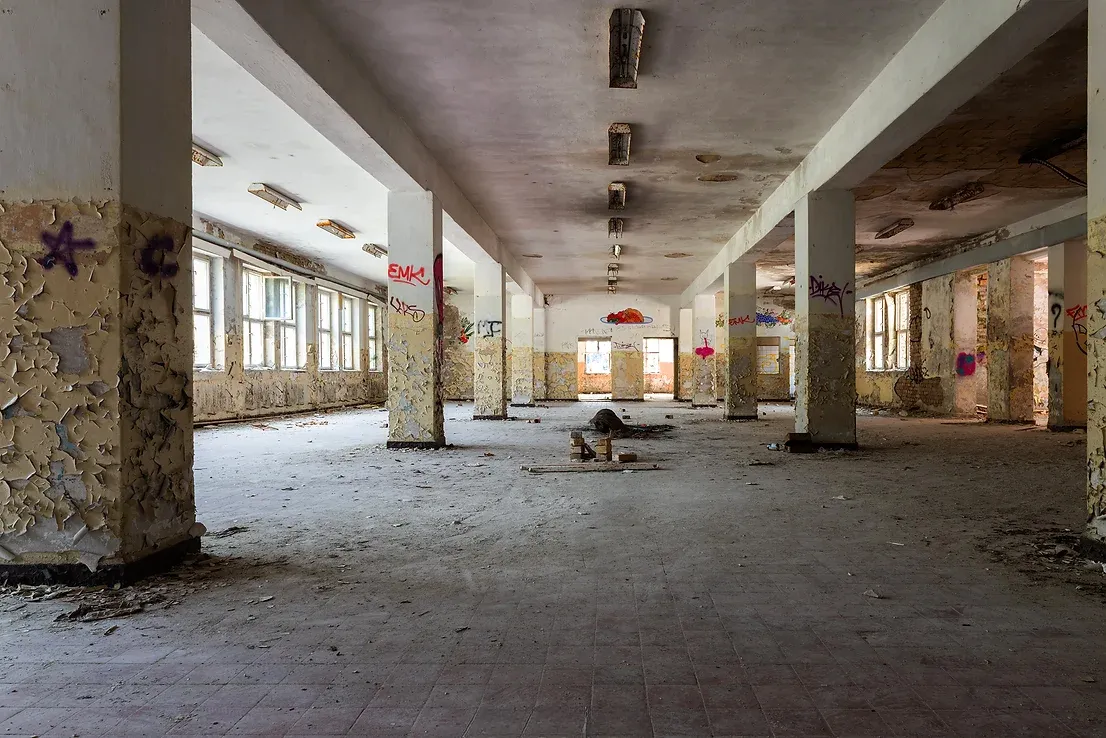
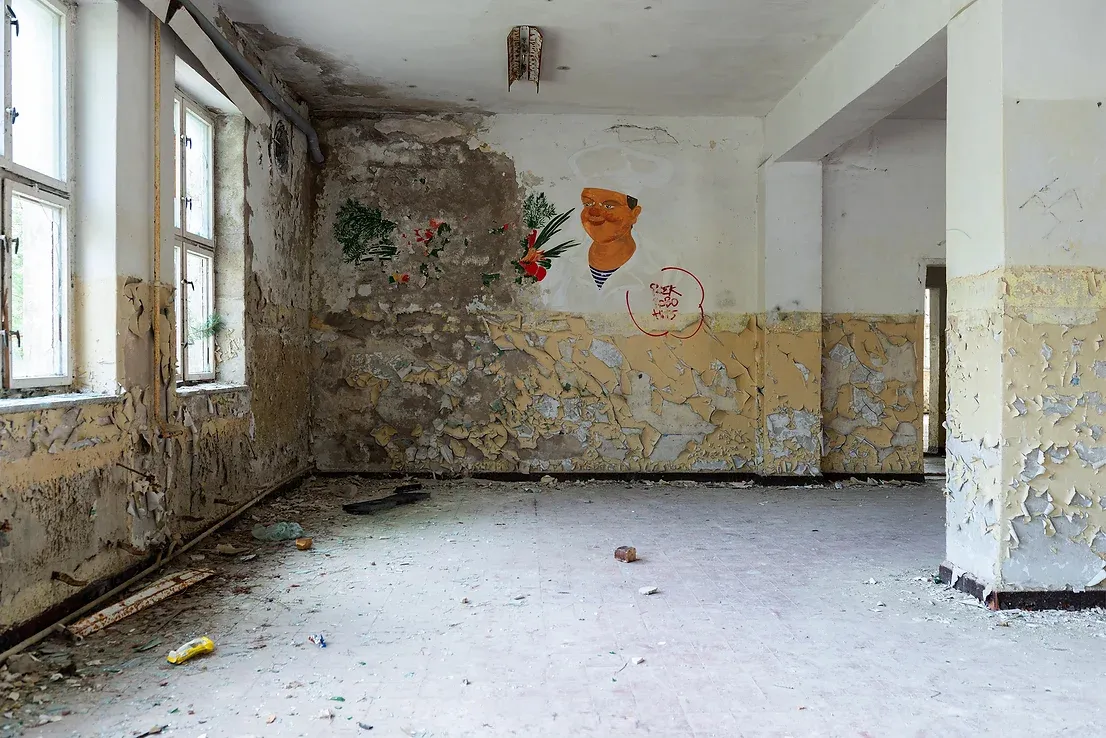
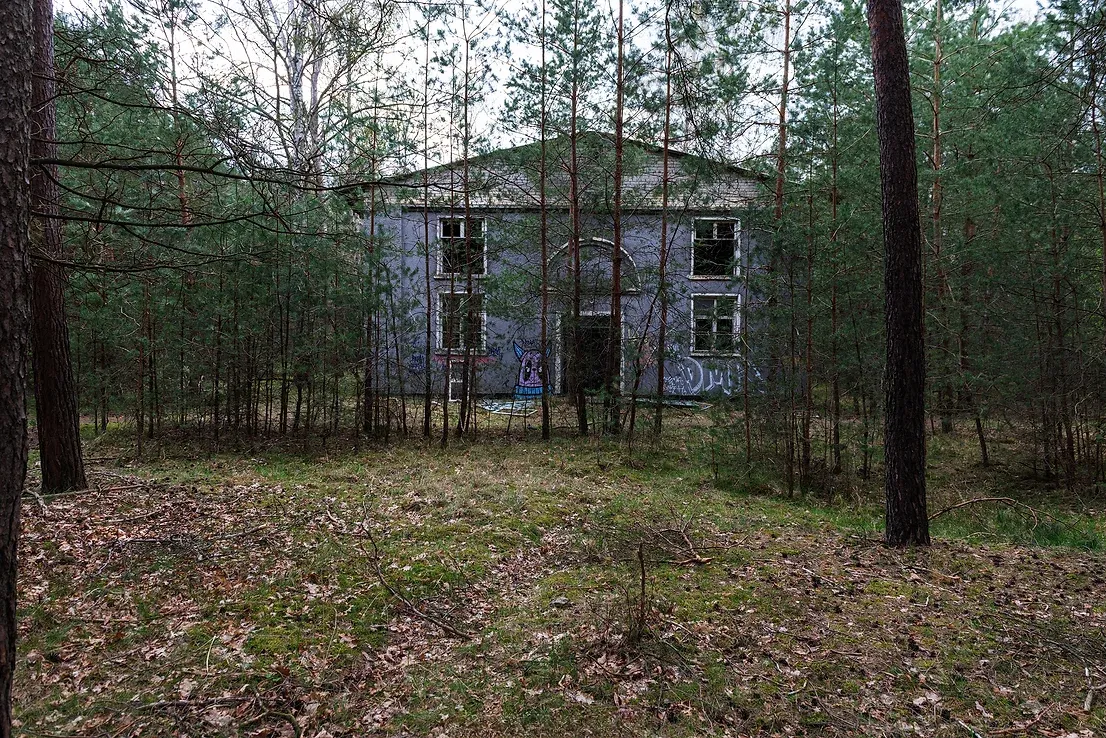
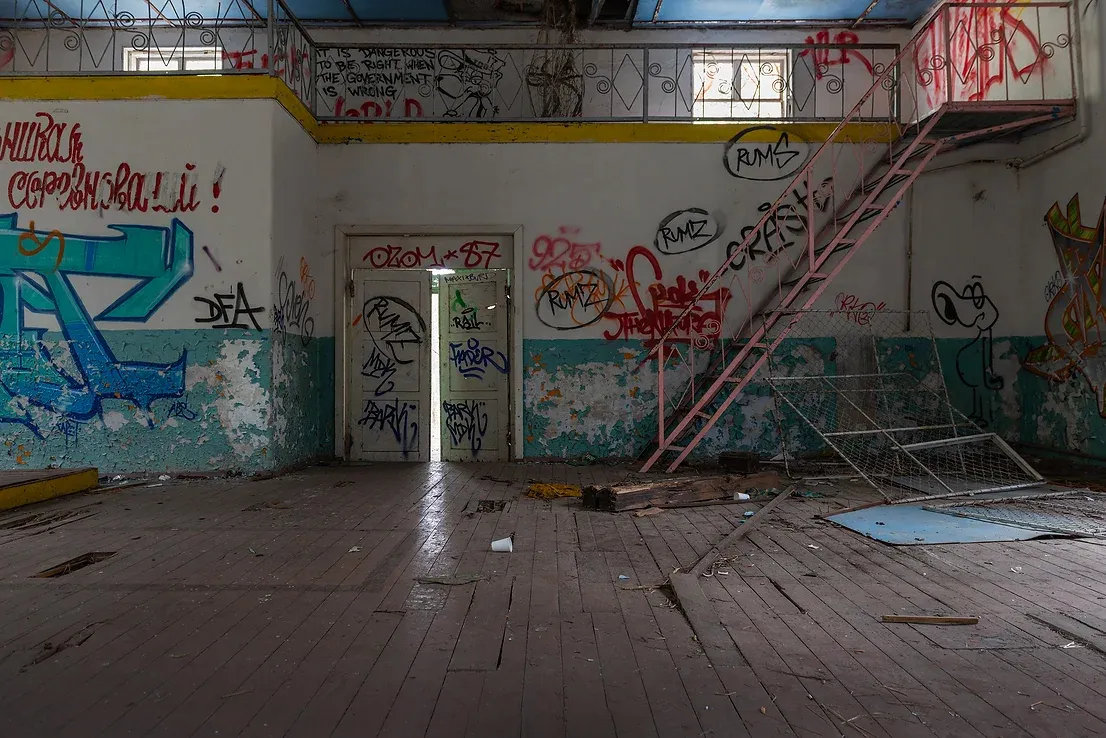
Most of the barracks are gone, and what is left is overgrown. Some larger buildings still stand, among them a sports hall, the theatre and a culture house, with graffiti on the walls. Murals survive in places, showing tank drivers praising the Soviet army, and workers, farmers and families greeting the rising sun. A concrete pillar by a main road still shows the shadow of a Lenin figure that once stood on it. A copy of Roter Stern, the Soviet defence ministry’s newspaper, dated 23 July 1987, was found scattered on a floor.
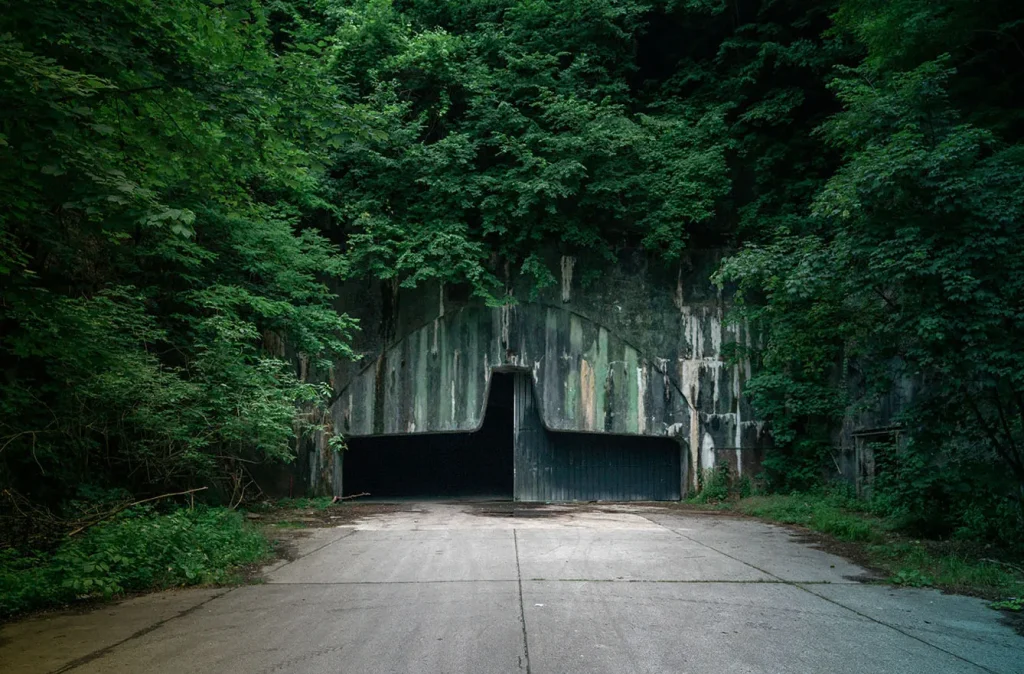
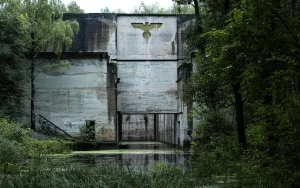
The nuclear bunkers are still there, but they have been sealed, and a visitor reports that one has no entrance and is closed with steel. Missile launch pads survive as metal plates set into the ground that are hard to find, especially under snow. In May 2017 a local historian, Mario Hoffmann, secured a Lenin relief from the garrison, and it is now in Wunsdorf. Hoffmann, who runs the online archive Heimatgalerie and has led tours since 2012, says the murals and monuments are vanishing, because the site has little or no protection. A 2013 documentary, Lenin in Vogelsang, features Russian and German people who served or lived there.
Not the other Vogelsang
There is a second, better-known Vogelsang, about 550 kilometres away on the other side of the old Iron Curtain, in the Eifel in North Rhine-Westphalia. It was a Nazi training castle, an Ordensburg, built from 1934 and later used by British, Belgian and NATO forces until 2005. It is now a museum and part of the Eifel National Park. The two places are unrelated, and this article is about the Soviet garrison in Brandenburg.
Visiting
The garrison lies in a protected forest and former military area, and a warning sign tells people that the property is dangerous. Old ammunition remains in the ground, many buildings are unstable, and holes are hidden in the undergrowth. Parts of the site are fenced off, and demolition is still going on in the north. There is no phone signal in the woods. Some people walk in from the station at Vogelsang, a few kilometres through the forest, but the sources advise against going alone, and the fenced areas can be life-threatening. If you want to know more without the risk, local tours led by historians have been run, and the Heimatgalerie archive documents the site in German.
Conclusion
Vogelsang was built to be invisible, and it was. For forty years a town of thousands lived behind a forest fence, and for a few months in 1959 it held weapons that could have changed the history of Europe. Today the buildings are almost gone and the missiles have been gone for decades, but the forest still keeps the evidence, in the murals, the bunkers and the metal in the ground.
Did you know?
- Vogelsang was the third-largest Soviet military site in East Germany, after Wunsdorf and Jüterbog.
- The East German government designed, built and paid for the garrison.
- The restricted area covered about 68 square kilometres, of which only about 3 square kilometres were built up.
- Up to 15,000 people lived in the garrison at its peak.
- The base held the headquarters of the 25th Tank Division.
- In 1959 it received R-5M nuclear missiles, withdrawn after a few months.
- SS-12 missiles were stored there from 1983 to 1988, according to German sources.
- A planned R-12 deployment in 1961 to 1962, called Operatsiya Tuman, never happened.
- The last Soviet troops left in March 1994.
- A Lenin relief from the garrison was saved in 2017 and is now in Wunsdorf.