A forest by a lake
The base lies in the forest near the village of Plokščiai, about 13 kilometres north of the town of Plungė in Samogitia, or Žemaitija, in the north-west of Lithuania. Lake Plateliai is close by, and the whole area is now Žemaitija National Park. The Baltic coast is about 30 miles away. On a map it is an unremarkable stretch of woodland with a few small villages, and nothing on the surface suggests that it was once among the most closely guarded places in the Soviet Union.
It is described as one of the top military secrets of the USSR and as the first Soviet nuclear missile base built to house underground R-12 Dvina missiles. The park says the underground launch complex, code-named Dvina, was built here in 1962. This was the early Cold War, when both sides were learning that a missile standing in the open could be destroyed before it was launched. The United States had begun to build underground military bases in the late 1950s, and the Soviet Union followed with bases like this one.
Building in secret
Construction began in September 1960. The soil here was easy to dig and few people lived nearby, which is why the place was chosen. Those who did live in isolated houses in the forest were paid 4,500 roubles each to leave. More than 10,000 Soviet soldiers are reported to have worked in secret in the forest for over two years, and the cost was said to be comparable to building a district of a city or a small town.
One story from a local man shows how far the secrecy went. He hauled gravel for the hangar, and drivers like him were allowed only as far as a “technical zone” about two kilometres away. Officers then took over the truck, drove it the rest of the way and brought it back empty.
The end of construction is dated slightly differently. One account says the work was completed on 31 December 1962 and that the crews took up their duty that night. A Lithuanian military heritage website also says the complex began operating on 31 December 1962, the park says the missiles were deployed from 1963, and Wikipedia says the launch site began operating about three years after it was established, which would put it later, around 1963. Put together, the base seems to have been handed over at the very end of 1962 and the missiles were in place in 1963.
The R-12 Dvina
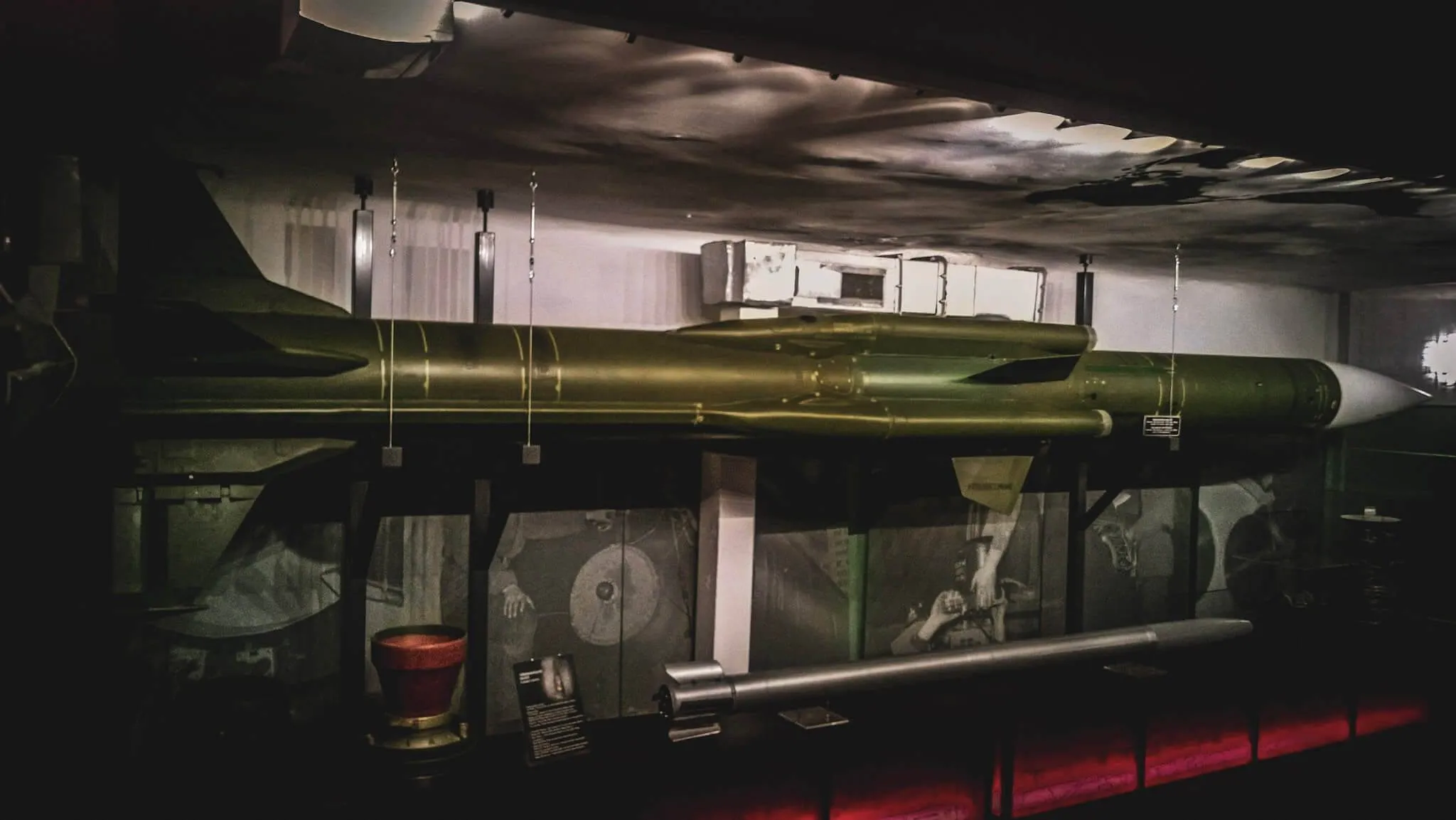
The missile was the R-12, called Dvina in the Soviet Union and SS-4 Sandal by NATO. By Russian accounts it entered service on 4 March 1959, though Western intelligence had expected it to become operational in late 1958. It was a liquid-fuelled rocket, about 22.1 metres long, with a launch mass of 41.7 tonnes. Its range is given as 2,000 to 2,500 kilometres, and its standard warhead had a yield of 2.3 megatonnes, about a hundred times the power of the bomb dropped on Hiroshima. Its accuracy is given as a circular error of 2.4 to 5.16 kilometres, which means it was a weapon for destroying cities and large installations, not a precise one.
The version made for silos was the R-12U. In all, 2,335 R-12 missiles were built. After the INF Treaty of December 1987 the last of 149 Soviet R-12 missiles was eliminated in May 1990.
The figures for the warheads at Plokštinė differ. The park says each of the four missiles carried a 2-megatonne thermonuclear warhead, while the heritage website says 2.3 megatonnes, which is the standard figure for the missile. From Lithuania the missiles could reach every European member of NATO, and Turkey. The heritage website says all four were aimed at Western Europe, and other accounts add that the targets were allegedly changed at regular intervals and that the real list is unknown.
Four silos
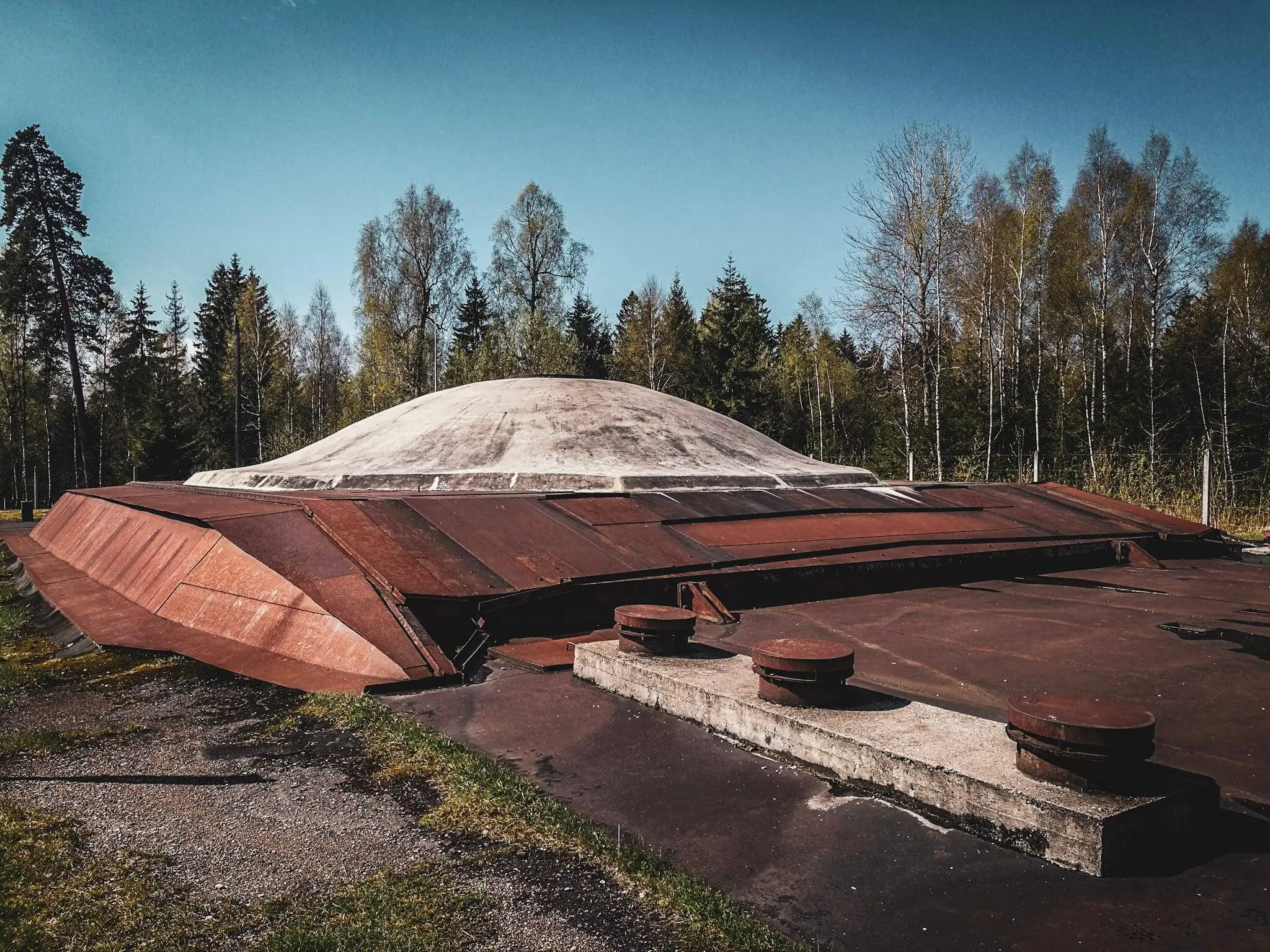
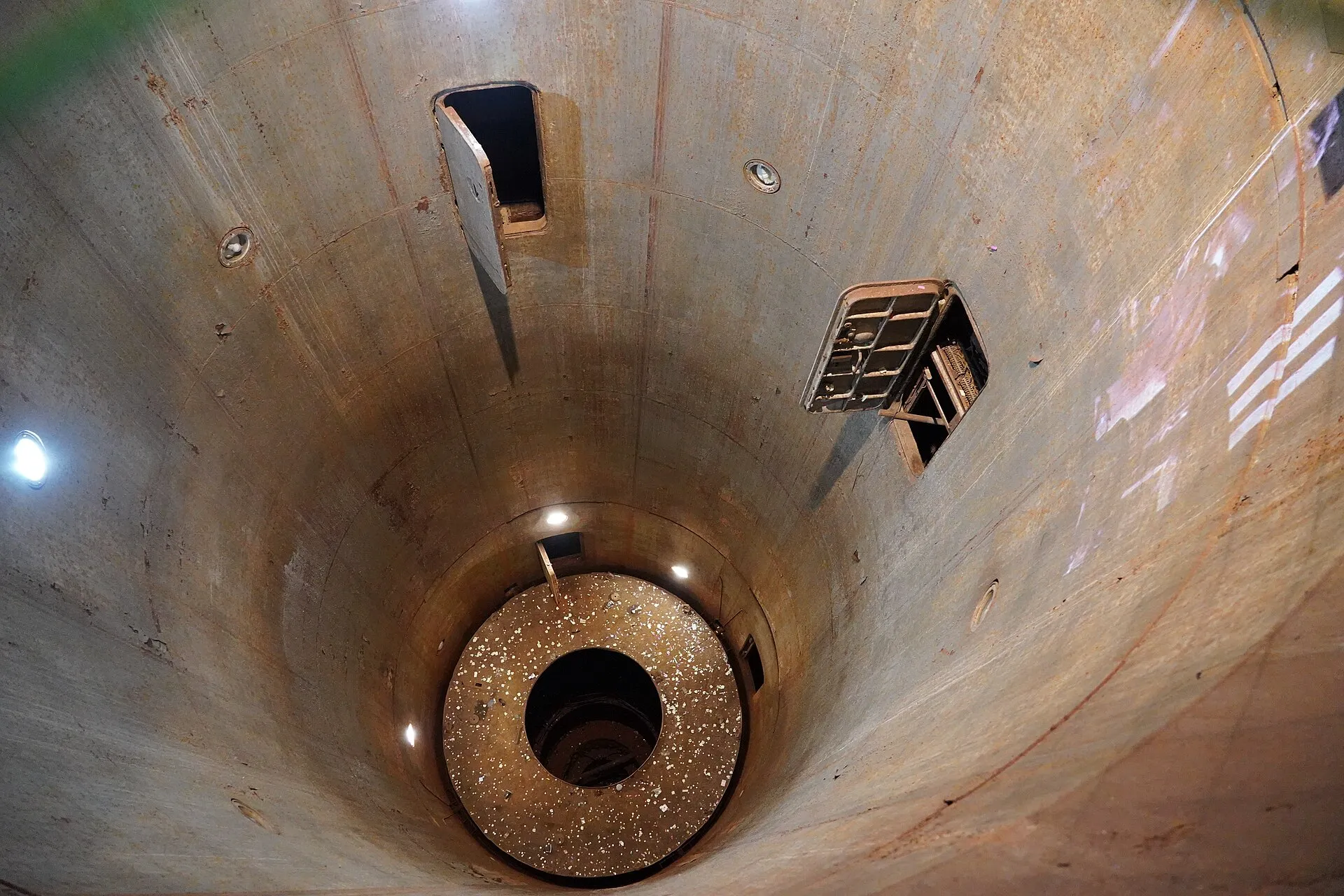
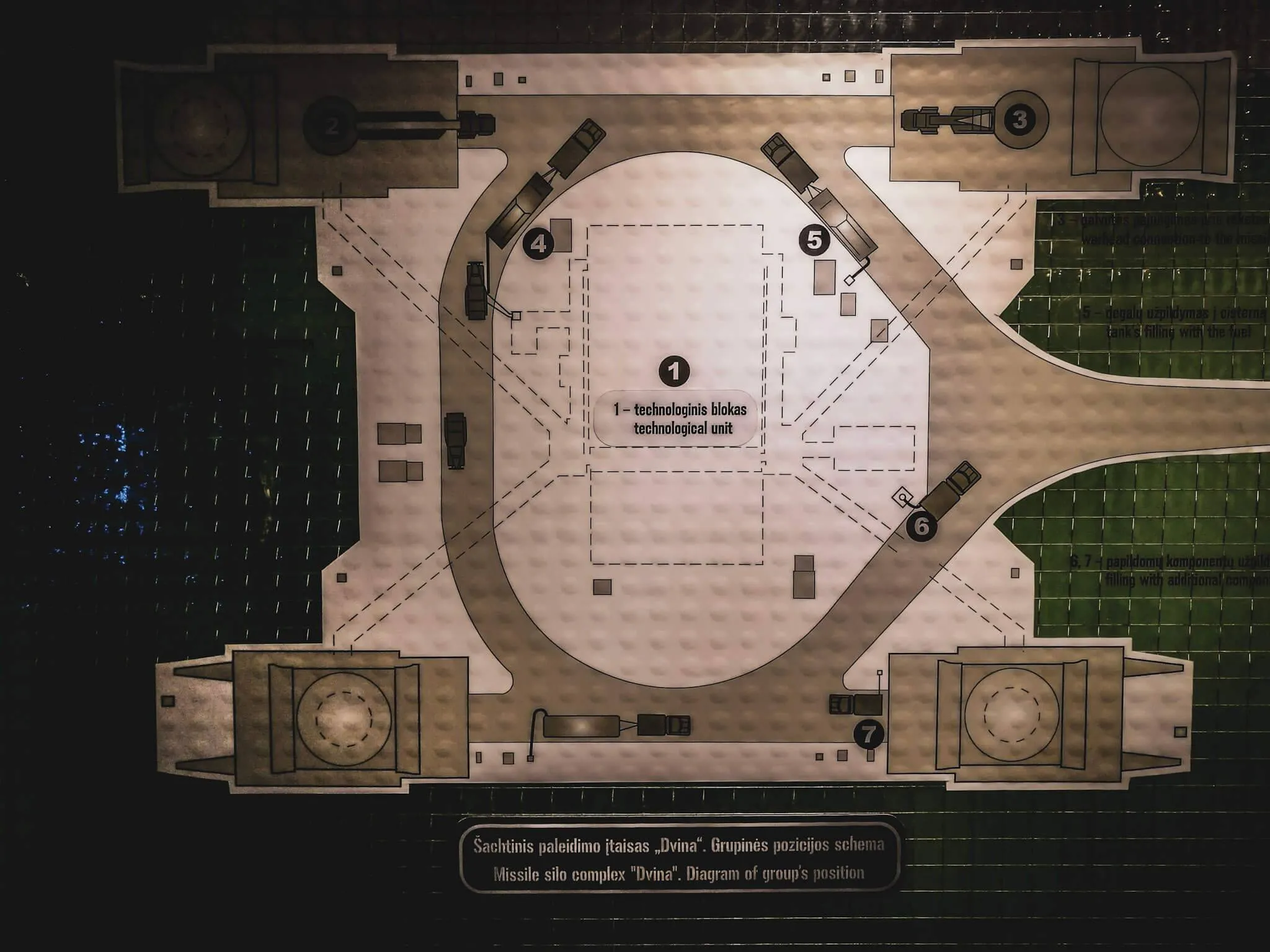
The heart of the base was four silos set at the corners of the compound, joined by underground tunnels to a central command centre. Depth figures vary. The park says the silo is almost 30 metres deep, other accounts give the four shafts as 27 to 34 metres, a journalist’s account says about 100 feet, and one visitor’s blog gives 25 metres. They are close enough to tell us the silos were very deep. The park says the steel lids that covered them weighed about a hundred tonnes each and were designed to withstand a nuclear explosion, while Wikipedia describes concrete domes that could be moved aside on rails in 30 minutes. That is another disagreement we cannot settle from here.
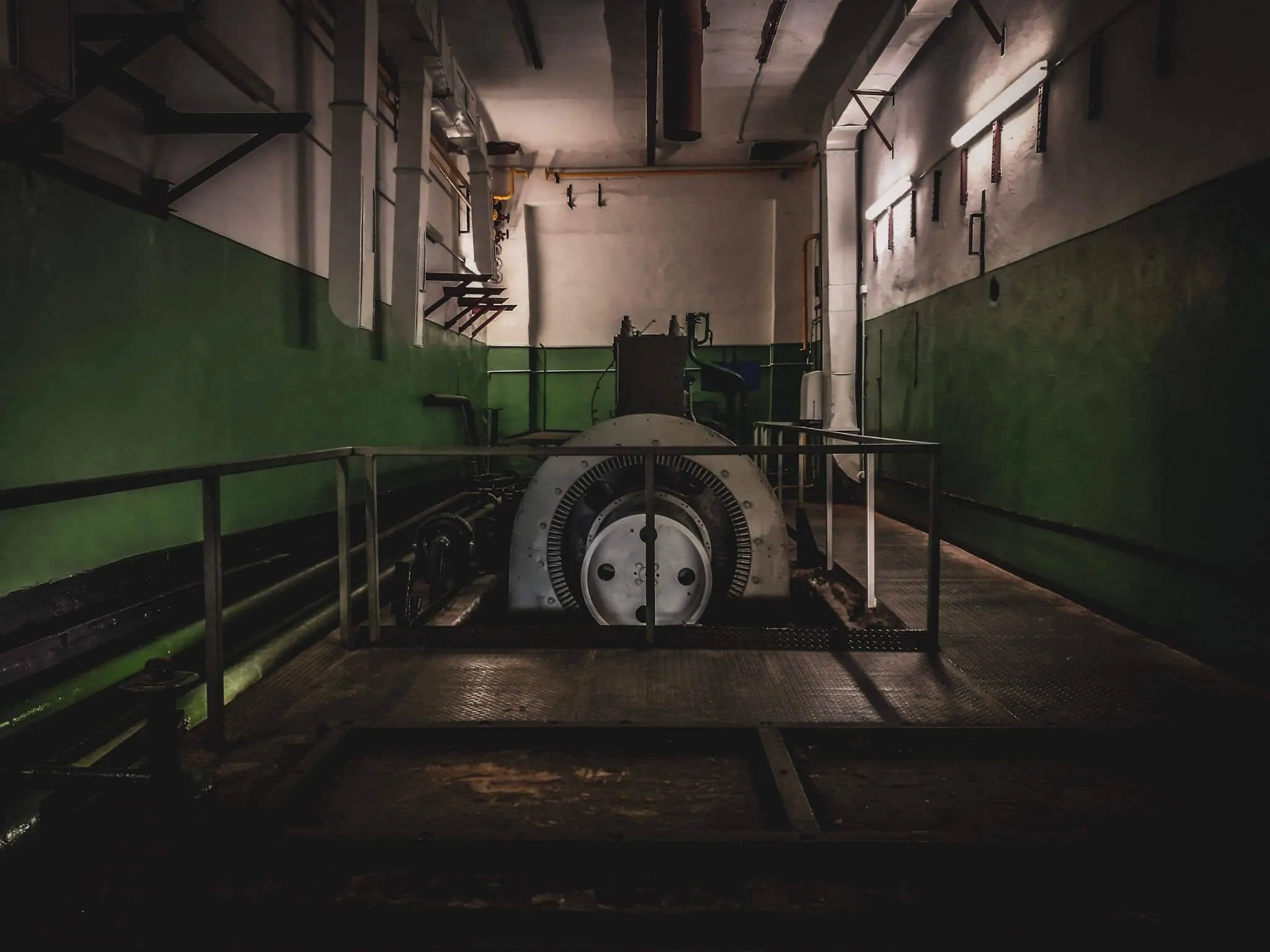
The base was meant to live on its own. The people underground could stay autonomous for 15 days under normal conditions, or for three hours if the base was sealed hermetically. A water trench about 2.5 kilometres long ran to Lake Plateliai, and a diesel power plant supplied electricity in an emergency. A fence surrounded the site. It normally carried 220 volts and could be raised to 1,700 volts in an alert, and the heritage website says there were up to six protective fences.
A launch needed two people. Two operators had to turn two different keys at nearly the same time.
Living at the base
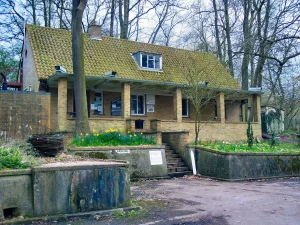
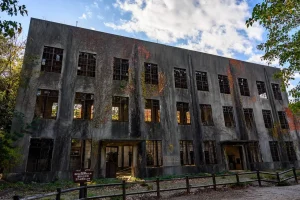
The men who worked at the base did not live in the silos. A military town of about 12 hectares stood about half a kilometre from the launch site, with some 30 buildings including barracks, officers’ headquarters, two canteens, a boiler house, a power station, a medical post, a club, a pig farm, warehouses and garages. The active team is put at about 300 people, mostly military guards, and around 300 soldiers and officers are said to have lived in the town.
It is not clear which unit ran the base. Wikipedia says the 29th Guards Rocket Division, part of the 50th Rocket Army from 1960 to 1986, included the Plokštinė base, and that it was operated by the 79th Guards Missile Regiment. The Lithuanian sources, and Cold War Sites, speak instead of a 179th rocket regiment headquartered at Šateikiai, a second site nearby. Wikipedia’s page on the army does not mention a 179th regiment and does not say whether the two numbers are the same unit, so we leave the question open.
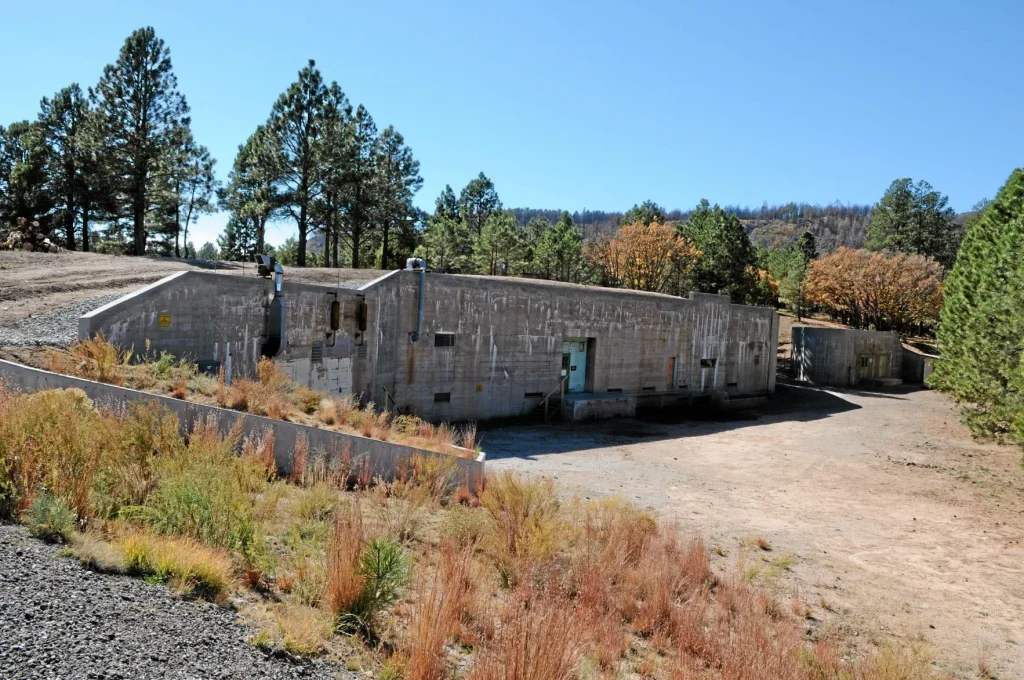
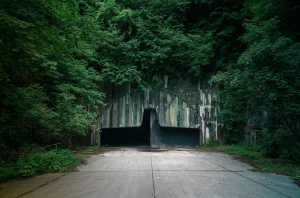
The weapons were stored a short distance away in a hangar about 60 metres long, covered first with a layer of gravel and then with earth and hidden in the forest. The park says its purpose is largely unknown and that it probably held R-12 warhead storage, repair shops and a cargo yard. A local resident, Stanislovas Puidokas, told the heritage website that nobody knows what was inside. Today the building is overgrown with bushes. It belongs to the national park directorate and is closed to visitors, but it can be seen from outside.
The Cuban question
In October 1962 the Soviet Union put R-12 missiles into Cuba, and the weeks that followed were the nearest the Cold War came to a nuclear exchange. The Plokštinė base was finished in those same weeks, which has led to a great deal of speculation. What the sources say is thin and in places contradictory.
The heritage website ties the movement of missiles to Cuba to the Šateikiai base and not to Plokštinė, and Cold War Sites says rockets were transported from Šateikiai in September 1962. The website Dark Tourism says that missiles from this base were secretly sent to Cuba by train and that base staff prepared sites there, but it describes these as allegations. Wikipedia’s page on the 50th Rocket Army lists a 79th Guards Rocket Regiment among the forces sent to Cuba in Operation Anadyr, under Lieutenant Colonel I. S. Sidorov, and says it was the first missile regiment to arrive, on 20 October 1962. The same page names a 79th Guards Missile Regiment as the operator of Plokštinė, but it does not say that they were the same unit, and the Wikipedia page on Plokštinė itself does not mention Cuba at all.
The honest summary is that a link between this forest and the crisis in the Caribbean is plausible and is told in several accounts, but the sources we used do not establish it.
Sixteen years without a launch
For the Lithuanian sources the base was on duty from 1963 to 1978, which is 16 years. Wikipedia says only that it was shut down after twelve years of operation. In all that time no missile was launched, not even for a test. Military readiness was declared in 1968, during the Prague Spring, and the crews stood ready for a launch that never came.
The base was not safe for the people who worked in it. Two soldiers are said to have died in a nitric acid spill while refuelling a missile, and a third when a safety belt broke during a routine check.
Leaving in 1978
The missiles were removed and the soldiers left on 18 June 1978. The heritage website says they took only their weapons. Wikipedia says the base was revealed by American reconnaissance in 1978, and another account says the US discovered it by satellite that year and that by then the Soviets had already decommissioned it under rocket disarmament agreements. None of the sources gives a reason for the closure. Land-based intermediate-range missiles were banned altogether by the INF Treaty of 1987.
The site itself was left poorly guarded. It was vandalised and looted soon afterwards, and after Lithuania declared its independence in 1990 the base was abandoned and stripped of its metal.
A children’s camp and a park
The buildings did not stand empty. In 1979 the management of the site passed to the agricultural recreation association of Plungė district, and the pioneer camp Žuvėdra, which means “Tern”, ran in the military town until 1990. Some of the former administrative buildings housed the children’s summer camp. It closed after Lithuania regained its independence.
In 1993 the site was handed to the Žemaitija National Park Directorate, which began restoring the complex with European Union structural funds. The park opened the Cold War exposition in 2012, though Wikipedia places the extensive reconstruction in 2012 and Dark Tourism says the museum first opened in 2011, so the sources differ by a year. In 2017 many of the buildings of the old military town were pulled down because they were in poor condition, and about ten remain.
What visitors see
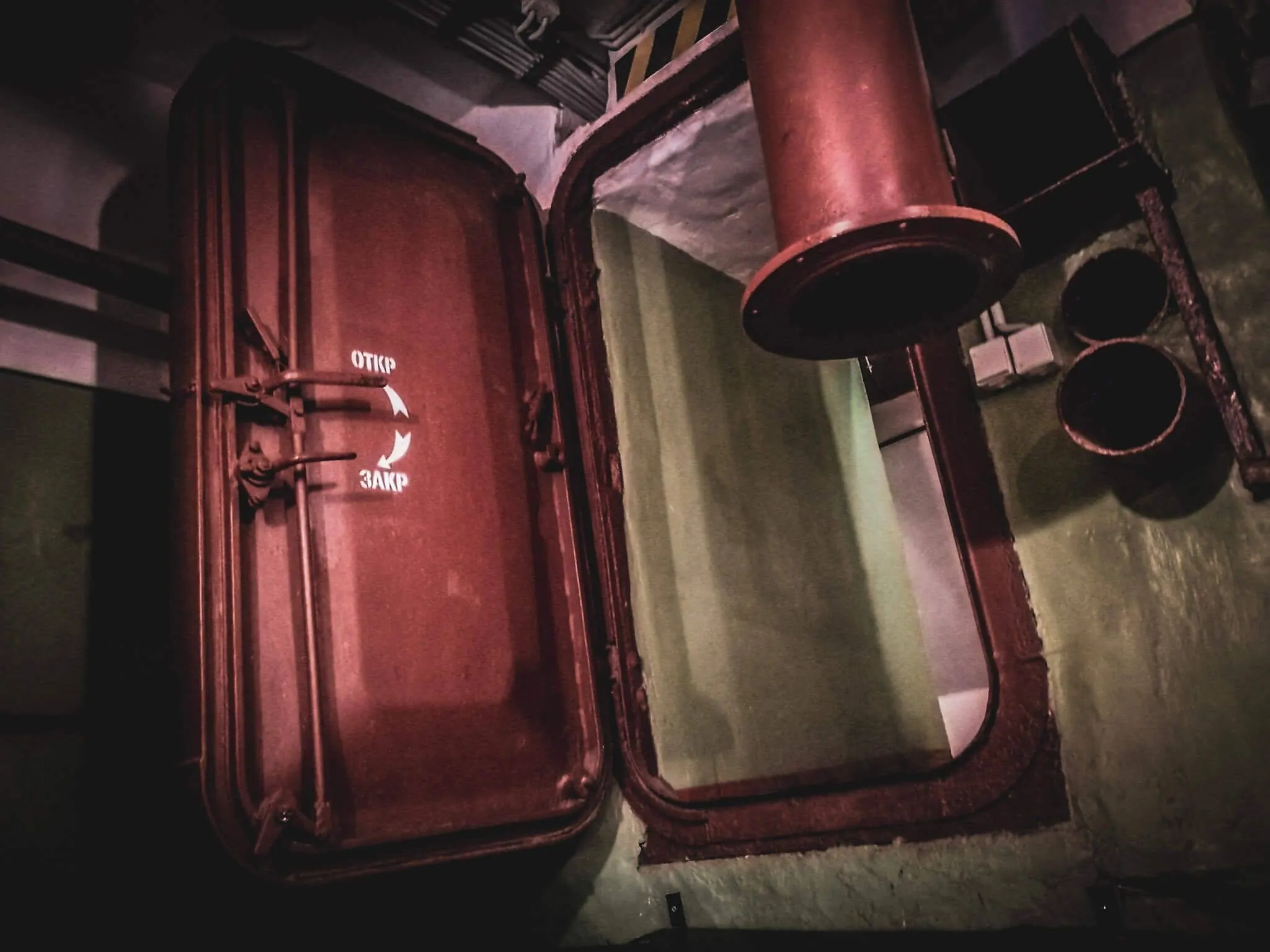
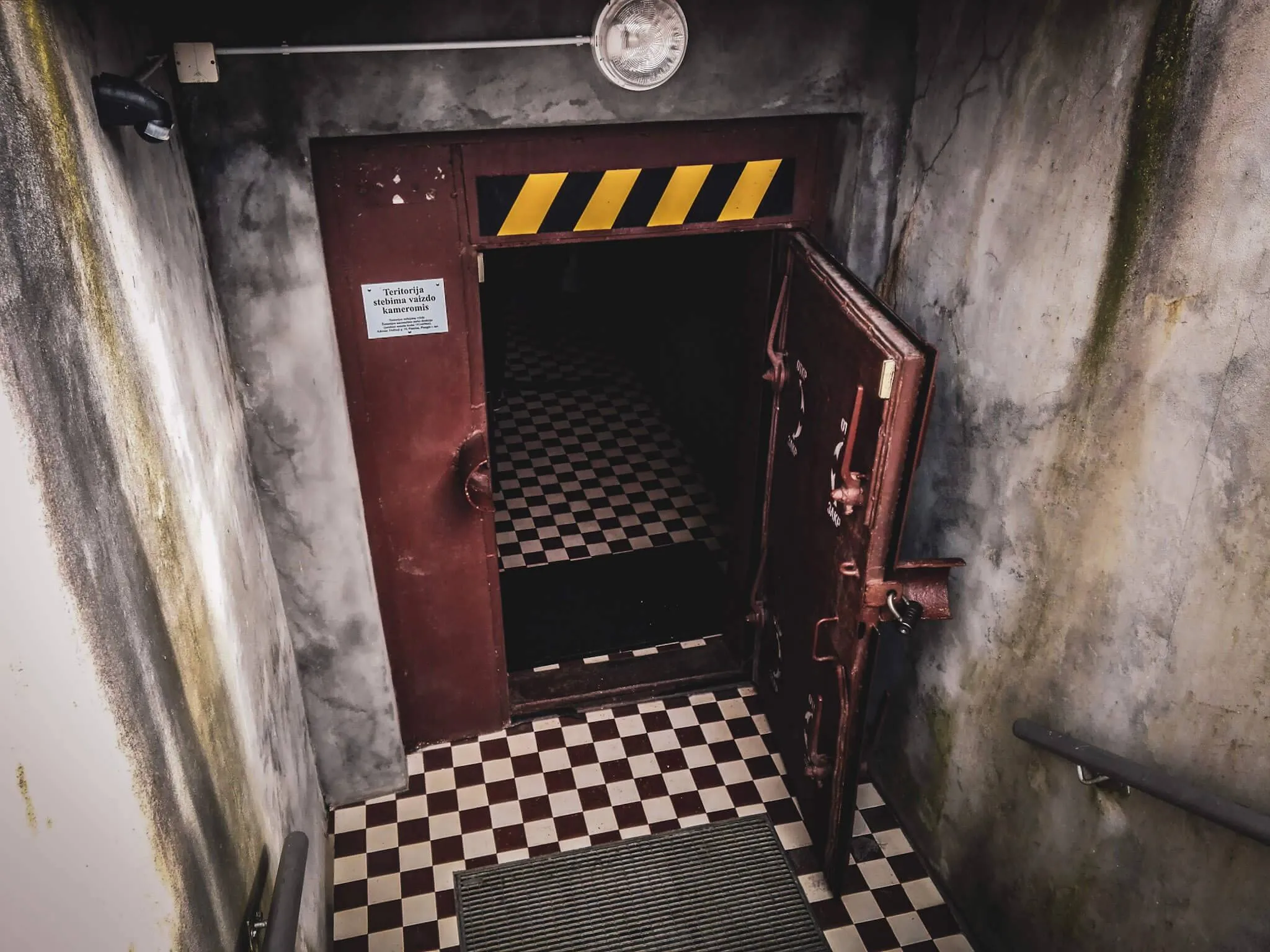
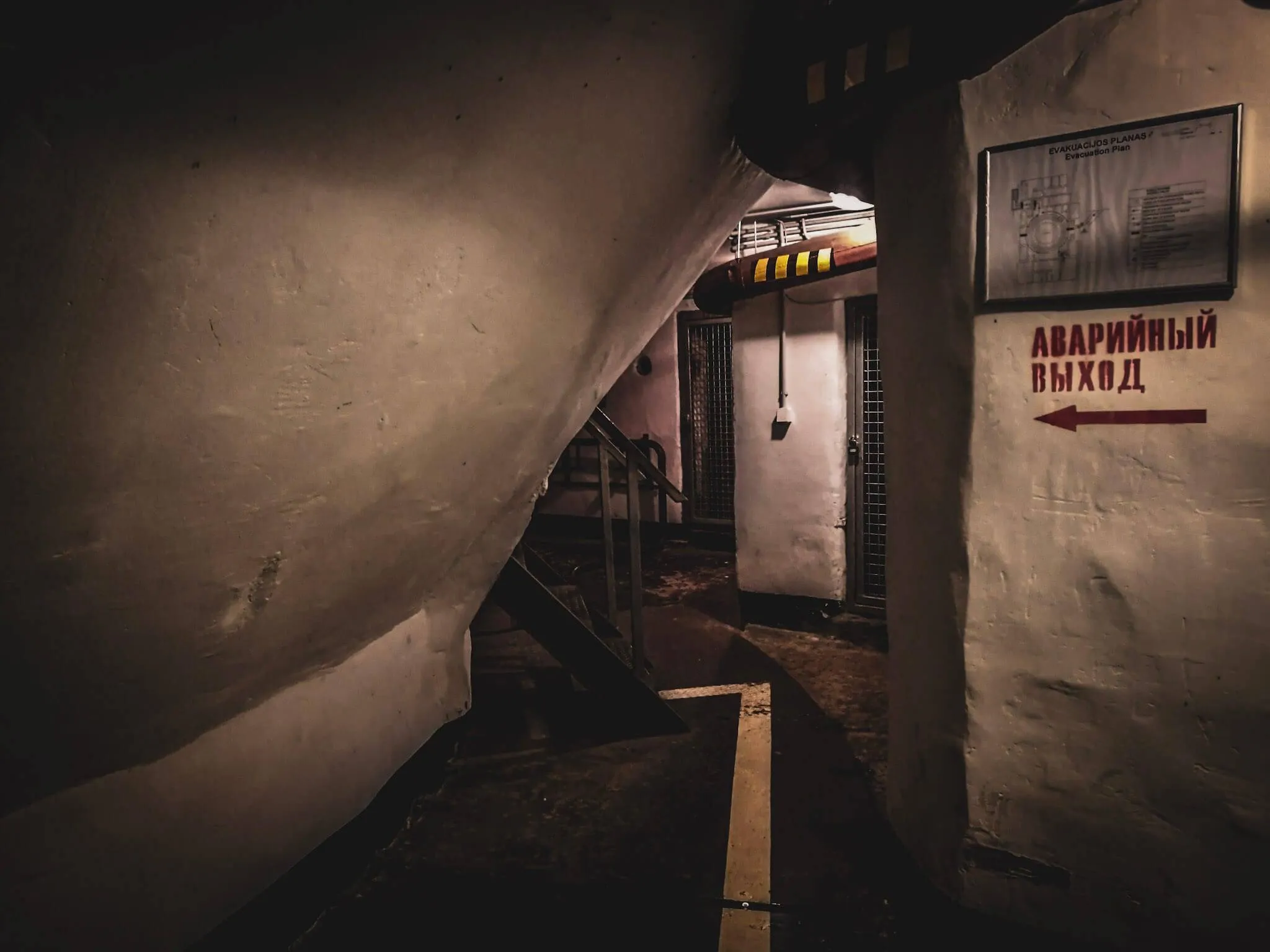
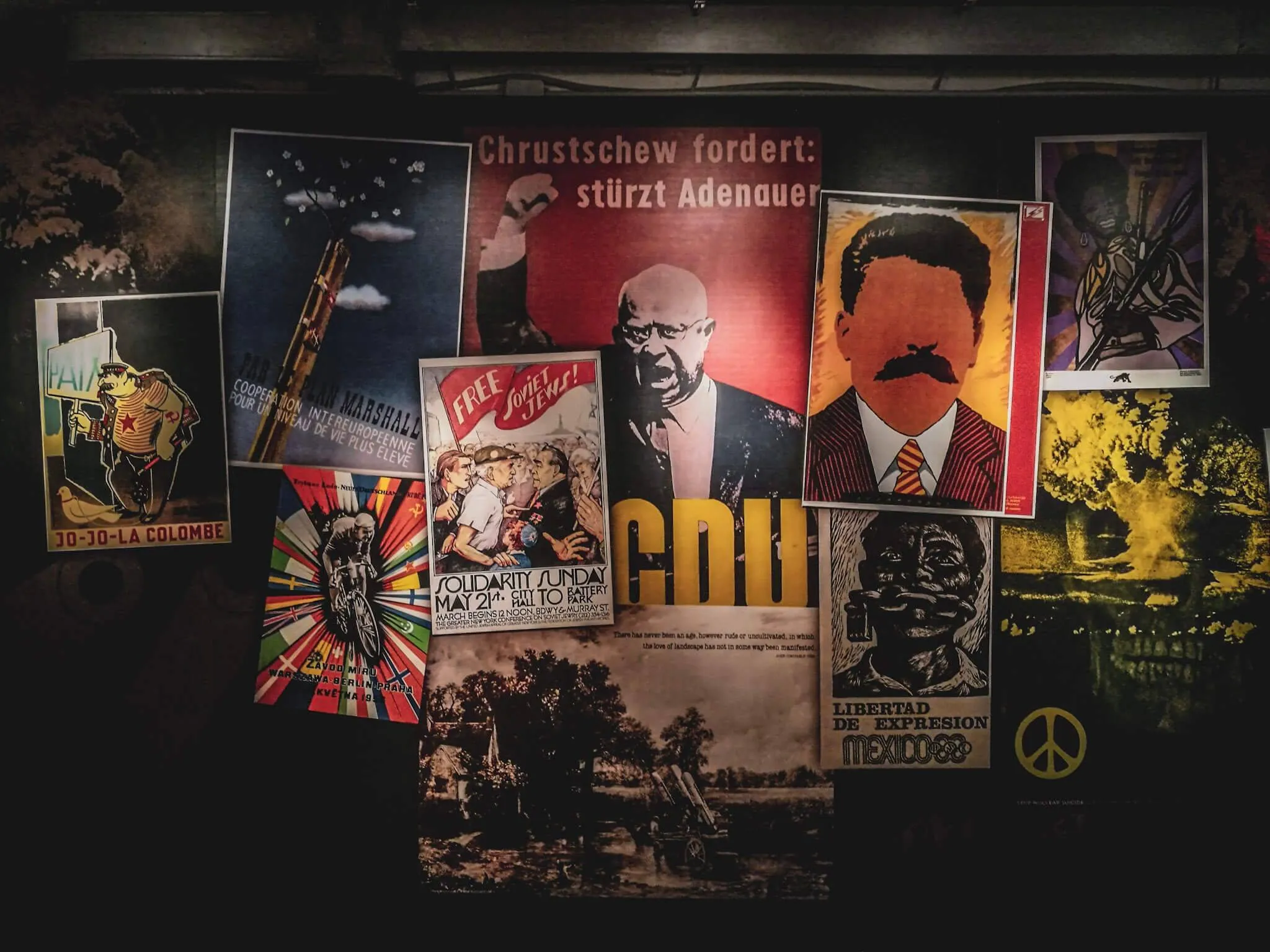
The museum is in the former command centre and in one of the four silos. The park lists a restored central control room, an armament hall, a missile technology hall, a commander’s office, a communications area, a propaganda display and a civil defence display. Visitors walk down corridors lined with missile fuel conduits and see a restored multi-level electronic security system. At the entrance there is barbed wire, four white domes stand above the silos, and over the sealed door a sign in Russian tells people to wipe their feet. Inside are Soviet artefacts such as statues of Lenin and Stalin, military awards and soldier mannequins. The silo itself is the centrepiece of the visit.
Outside there is more to see. The warhead hangar and the guard posts along the old fence can be seen from the outside, and so can the ten or so remaining buildings of the military town, which have information boards explaining what they were. The museum is now the most visited attraction in Žemaitija National Park, with about 35,000 visitors in 2024. The site has also been used as a location in television and appears in the fifth season of the series Person of Interest.
Visiting
The museum is run by the Žemaitija National Park, and its page, last updated in March 2025, is the best guide to what is on offer. It says the exhibition is open every day, from 10:00 to 19:00 from May to September and from 10:00 to 17:00 from October to April, and that it is closed on 1 and 2 November, on 24, 25 and 26 December, on 1 January and on the first two days of Easter. Tickets for adults are listed at 12 euros, with 6 euros for children, students, pensioners and disabled visitors, and an audio guide costs 4 euros. No tickets are sold in the last 30 minutes before closing.
Guided tours must be booked in advance by phone. Prices and times differ between sources, and some blogs and tour sites list figures from earlier years, so check the park’s own page or phone the visitor centre before you go.
The steps into the bunker and silo make the visit unsuitable for wheelchair users. The hangar in the forest is not open to visitors.

Conclusion
The Plokštinė base was built to survive a war and was never used in one. Four missiles stood in the forest for years, ready for a launch order that did not come, and the crews who guarded them lived half a kilometre away in a town that did not appear on any map. When the soldiers left in 1978 they took their weapons and left everything else.
The sources disagree about how long the base ran, how deep the silos are, how powerful the warheads were, which regiment manned it and whether any of its missiles reached Cuba, and we have tried to show those gaps and not hide them. What is not disputed is the outline. The Soviet Union built an underground base in a Lithuanian forest in about two years, using about 10,000 soldiers, and left it after sixteen years or fewer. Children’s holidays followed, then a national park, then a museum, and one of the silos is now open to anyone with a ticket.
Did you know?
- Residents of isolated houses in the forest were reportedly paid 4,500 roubles each to leave before construction began.
- More than 10,000 Soviet soldiers reportedly built the base in secret over more than two years.
- A local man who hauled gravel for the warhead hangar said drivers were allowed only as far as a technical zone about two kilometres away, where officers took over the truck.
- A launch needed two operators to turn two different keys at nearly the same time.
- The base fence normally carried 220 volts and could be raised to 1,700 volts during an alert.
- The R-12 missile was about 22.1 metres long, weighed 41.7 tonnes and had a standard warhead of 2.3 megatonnes.
- Military readiness was declared at the base in 1968 during the Prague Spring, but no missile was ever launched.
- The Soviet soldiers left on 18 June 1978, taking only their weapons, and the site was later looted.
- A children's summer camp called Žuvėdra used the buildings of the military town from 1979 to 1990.
- The base appears in season five of the television series Person of Interest.