A pyramid in the wheat fields
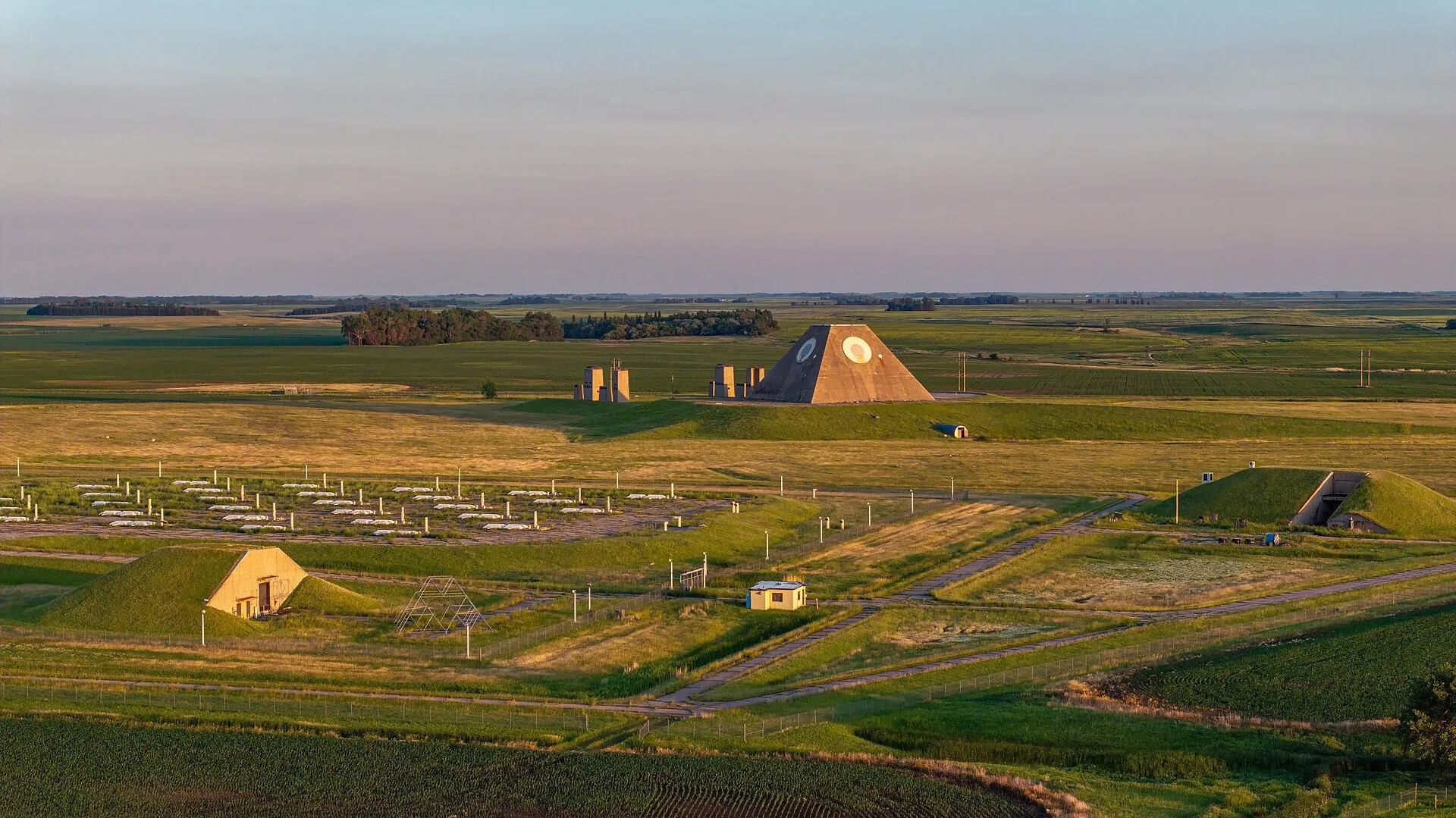
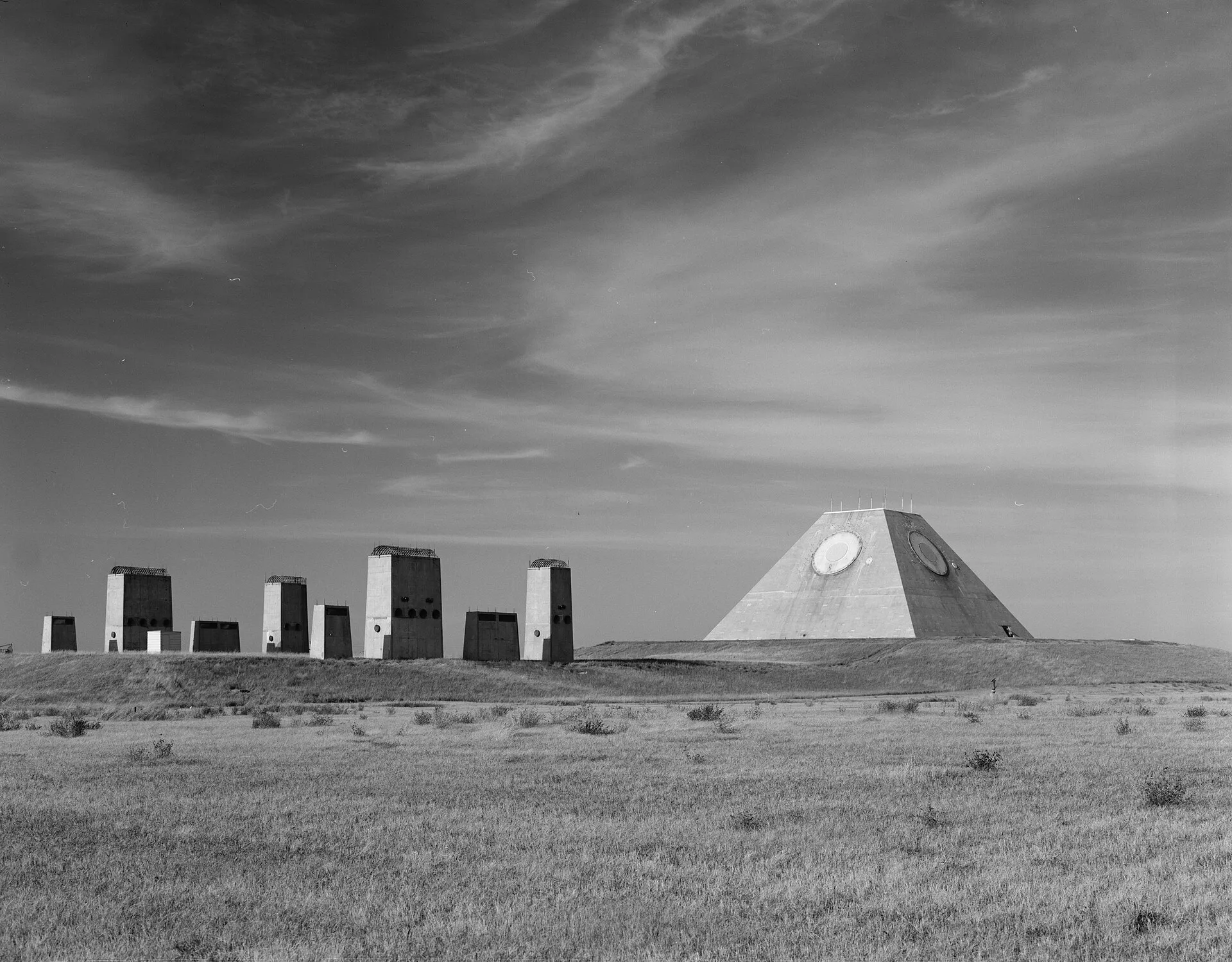
Drive south out of Langdon, North Dakota, on the long straight roads of the northern Plains, and for a while there is nothing but wheat and sky. Then, to the south, a grey shape rises above the fields. It is a four-sided pyramid with its top cut off, with large shallow circles on each face. It looks like something built by a forgotten kingdom. It was built by the United States Army, and it was supposed to help win a nuclear war.
Locals call it the Pyramid. Officially it was the Missile Site Control Building of the Stanley R. Mickelsen Safeguard Complex, named for a lieutenant general who had spent his career in coastal artillery and anti-aircraft defence. The complex lies near Nekoma, a village with a few dozen residents. In the middle of the 1970s it held one of the most advanced and expensive weapons systems on Earth, and it was shut down almost before it started.
A widely shared line says it operated for one day. That isn’t quite true, and the truth is odder. It was fully ready on 1 October 1975. The next day the House of Representatives voted to close it. Then the argument over when to turn it off went on into the following year. It was finally put in inactive status on 10 February 1976, which means that after reaching full strength it ran for roughly four months.
The man on the sign
Stanley R. Mickelsen (1895 to 1966) was born in Minnesota, graduated from the University of Minnesota in 1917 and joined the Army the same year. He served mostly with coastal artillery and anti-aircraft units. In 1943 he became commandant of the Anti-Aircraft Training Center at Fort Bliss, Texas, and between 1952 and 1957 he commanded the Army’s air defence command, retiring in 1957 as a lieutenant general. The Army named the complex for him on 21 June 1974, eight years after his death, which fits a career spent on the problem of shooting things out of the sky.
The idea: shield the missiles, not the cities
Missile defence began in the 1950s, when the Army and Bell Laboratories developed the Nike Zeus interceptor. Its successor, Nike-X, could in theory handle hundreds of warheads and thousands of decoys, but it was ruinously expensive. Defence Secretary Robert McNamara was sceptical. A heavy defence of cities would have needed something like 7,000 Sprint missiles, and the Soviets could overwhelm it for a fraction of the price.
In September 1967 McNamara announced a thinner system, called Sentinel, with 17 bases and just under 700 missiles. The stated target was the small Chinese nuclear force that was just emerging after China’s first hydrogen bomb test. The reaction was unexpected. Sentinel bases were to be built near cities, and suburban residents revolted, with a big protest outside Boston.
When Richard Nixon took office he ordered a review, finished in March 1969. His answer was to turn the system around. Instead of defending cities, it would protect the missiles. Nixon announced that the system would shift to defending the country’s Minuteman silos, so that enough of the American deterrent would survive an attack to guarantee a devastating reply. On 25 March 1969 the Army renamed the programme Safeguard. The protection did not need to be perfect, only good enough to make an attack unattractive. Three sites were planned at first: Grand Forks in North Dakota, Malmstrom in Montana and Whiteman in Missouri.
It was still bitterly contested. A 1970 budget fight in Congress saw Defense Secretary Melvin Laird and his deputy David Packard ask for a larger network, up to 12 bases, while critics such as the former Pentagon research chief Herbert York warned that building defences would destabilise the arms talks. The Senate trimmed the request. Meanwhile, the talks themselves, begun by Lyndon Johnson and continued by Nixon, were heading toward a treaty.
The treaty that fixed the size
On 26 May 1972 Nixon and the Soviet leader Leonid Brezhnev signed the Anti-Ballistic Missile Treaty in Moscow. It allowed each country two ABM sites, one around the capital and one around an ICBM field, with a limit of 100 launchers and 100 missiles at each. For Safeguard that meant cutting the plan to two sites, North Dakota and Montana. The Missouri work was abandoned. A protocol agreed in 1974 reduced each side to a single site.
North Dakota went ahead because the contracts were signed and the work was far advanced. The Montana site was delayed by labour disputes and left unfinished, its main radar partly built. The Nekoma complex was the only Safeguard base ever finished. A 1994 National Park Service report says the plans for it were believed to have helped win Soviet agreement to the treaty, which is a claim that is hard to prove but is often repeated. It makes a certain sense. A defence you may build is a useful thing to bargain away.
Building it
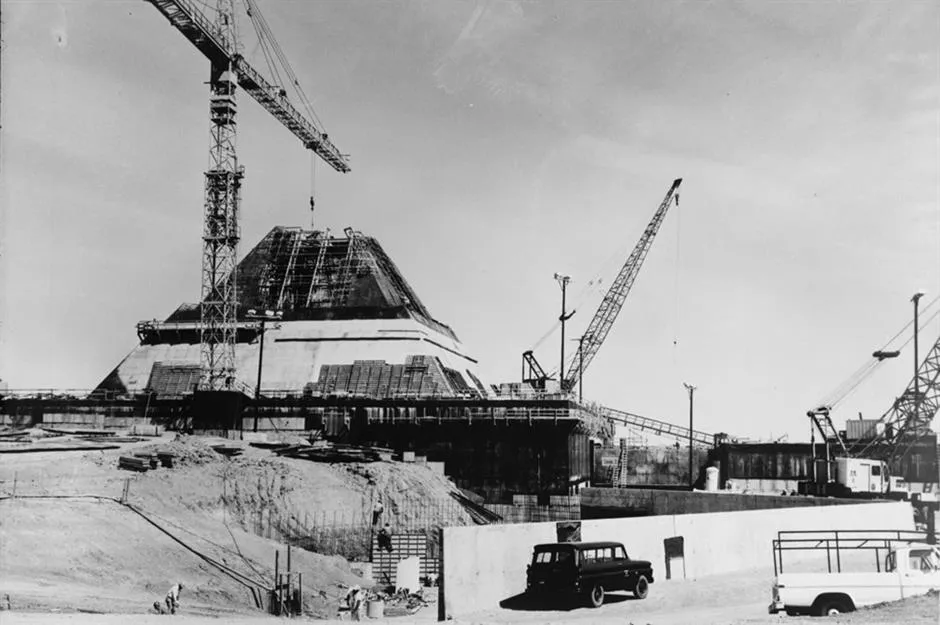
Excavation for the control building began on 6 April 1970, with the first structural concrete poured that June. More than a thousand workers came to the area at the start, and the numbers grew. One regional history puts the peak at over 3,200. A 1972 letter from the mayor of Nekoma, quoted in a local history, said that “virtually every citizen in the area” had been affected by higher prices and wages, strained schools, utilities and roads.
Work continued through the North Dakota winter. In the autumn of 1970, crews moved to two 10-hour shifts, six days a week, to meet winter deadlines, and on 7 December 1970 workers were pouring concrete in temperatures of about minus 25 degrees Fahrenheit. By the end of September 1971 the fourth level was complete and the roof capped. The contractor, Morrison Knudsen and Associates, had a contract worth about 137.9 million dollars. The Ralph M. Parsons Company designed the buildings, Raytheon designed the radar, and Western Electric installed the tactical equipment. The Army Corps of Engineers handed the site over to the programme’s own command on 3 January 1973.
A smaller crowd of protesters turned up too. A local history of the site reports a “Festival of Live and Love” in the early 1970s, attended by anti-war activists and clergy, where a peace tree was planted on the pyramid site. The Army Corps of Engineers removed it the next day. It fits the mood of the time.
In September 1974 the Army’s Safeguard Command and a Ballistic Missile Defense Operations Agency took over operations. The system declared initial capability on 1 April 1975.
Why North Dakota
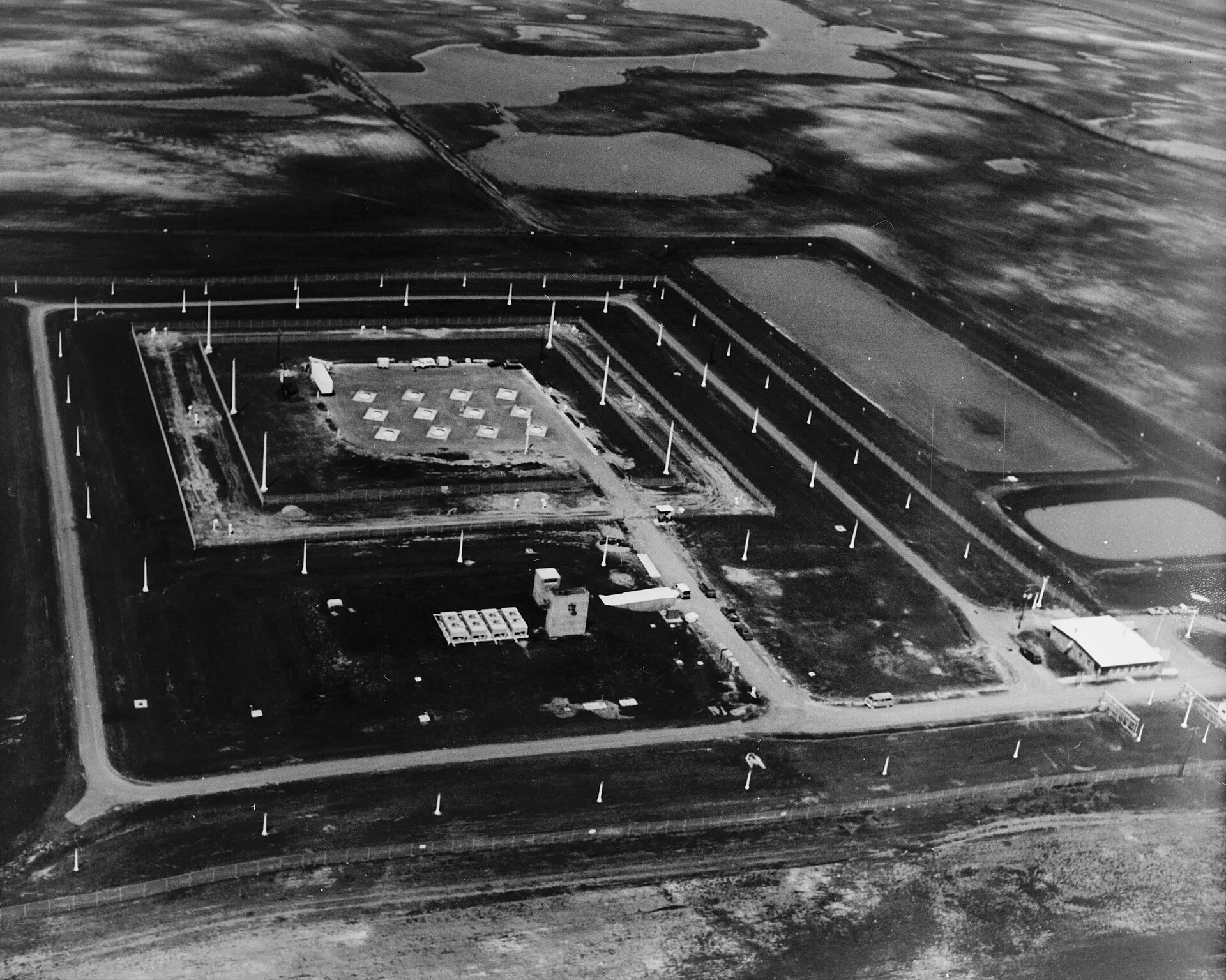
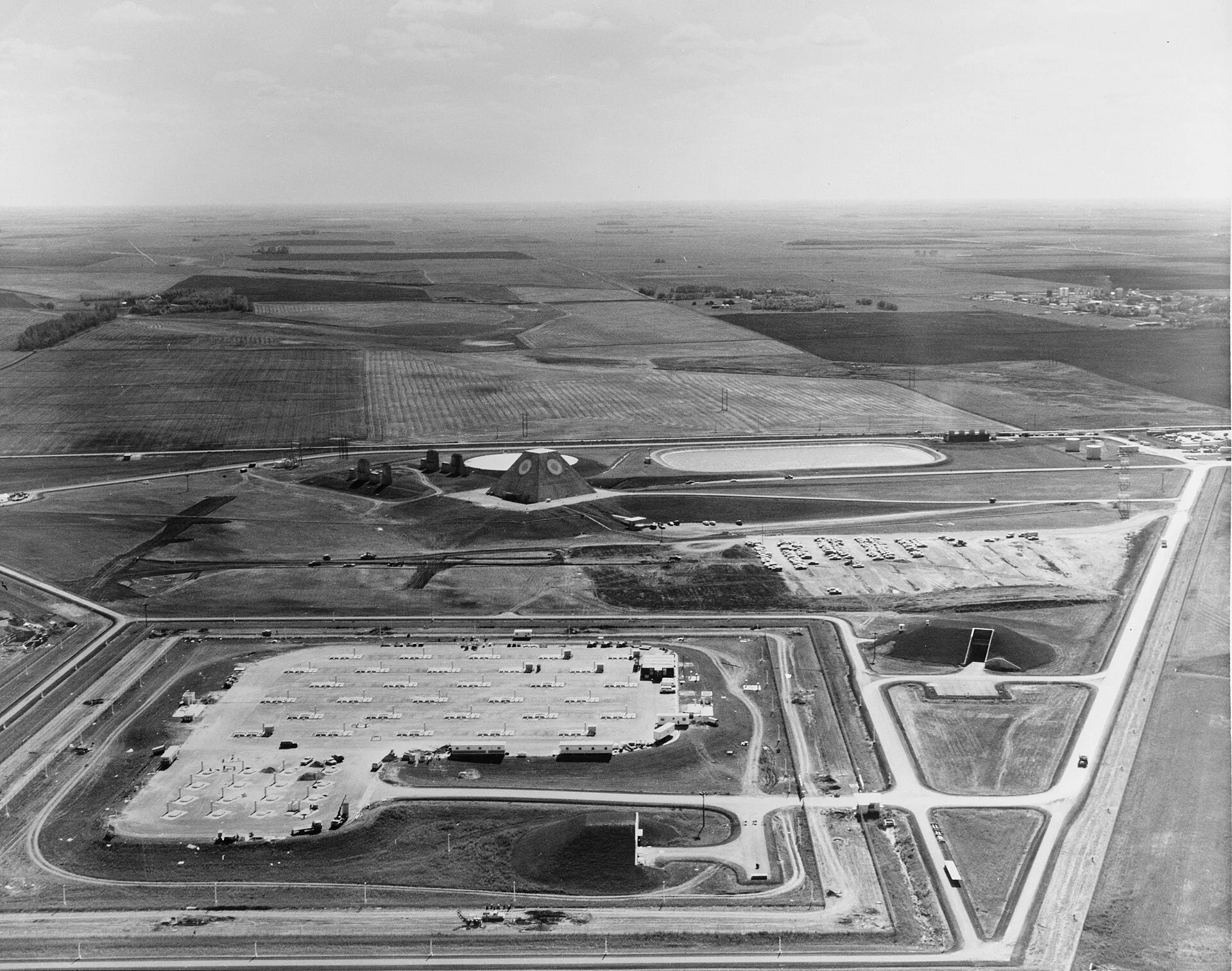
The site was chosen to protect the Minuteman missiles around Grand Forks Air Force Base, the 321st Strategic Missile Wing. The National Park Service record describes the setting as flat farmland: land within a mile and a bit of the pyramid was 83 percent agricultural, with less than 5 percent tree cover, at about 1,600 feet above sea level. The site covered roughly 432 acres. The Perimeter Acquisition Radar stood about 25 air miles away, and the four Remote Sprint Launch sites lay between 17 and 31 miles from the pyramid. Together they were meant to defend an area of about 600 by 900 miles.
The pyramid
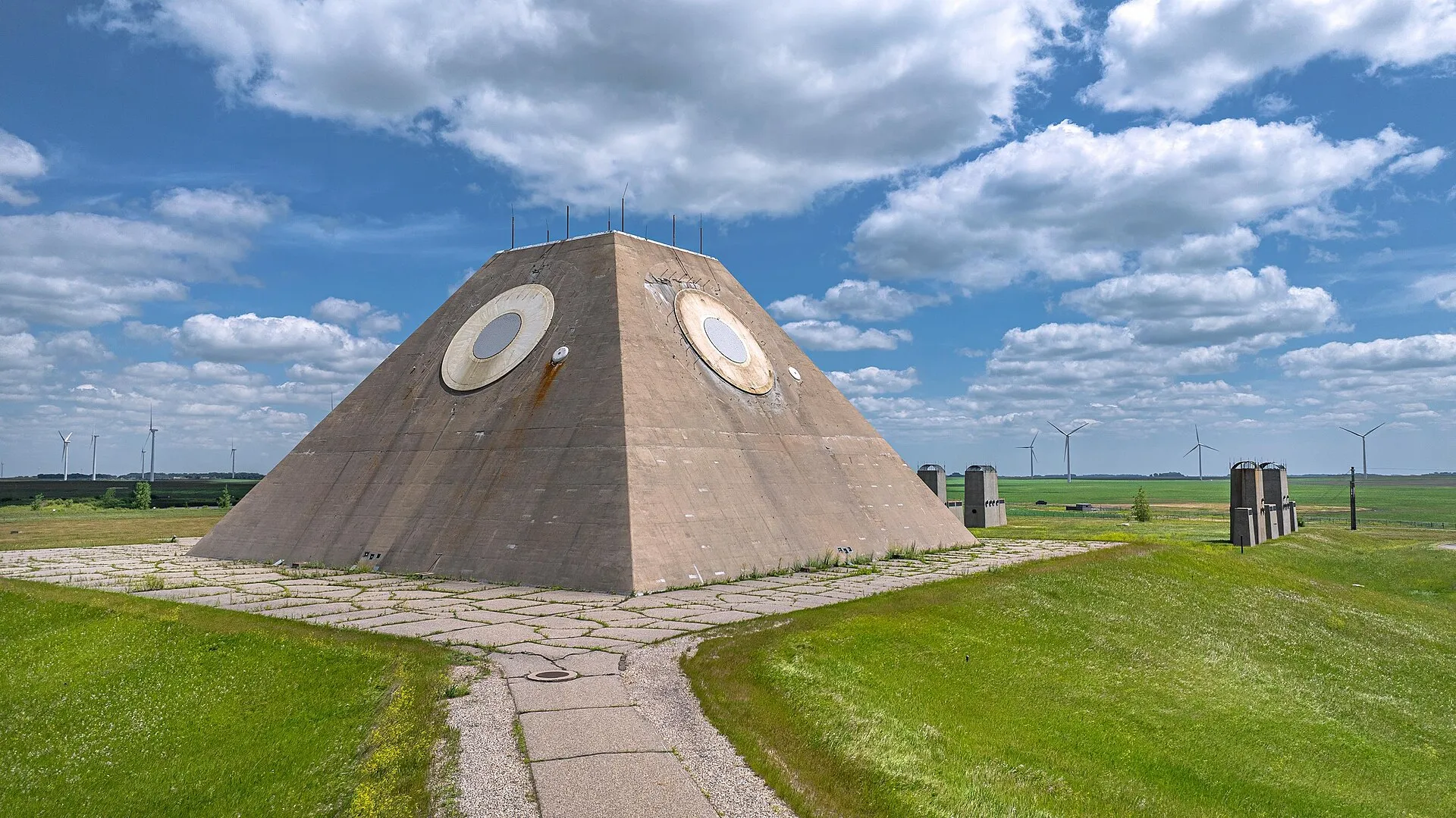
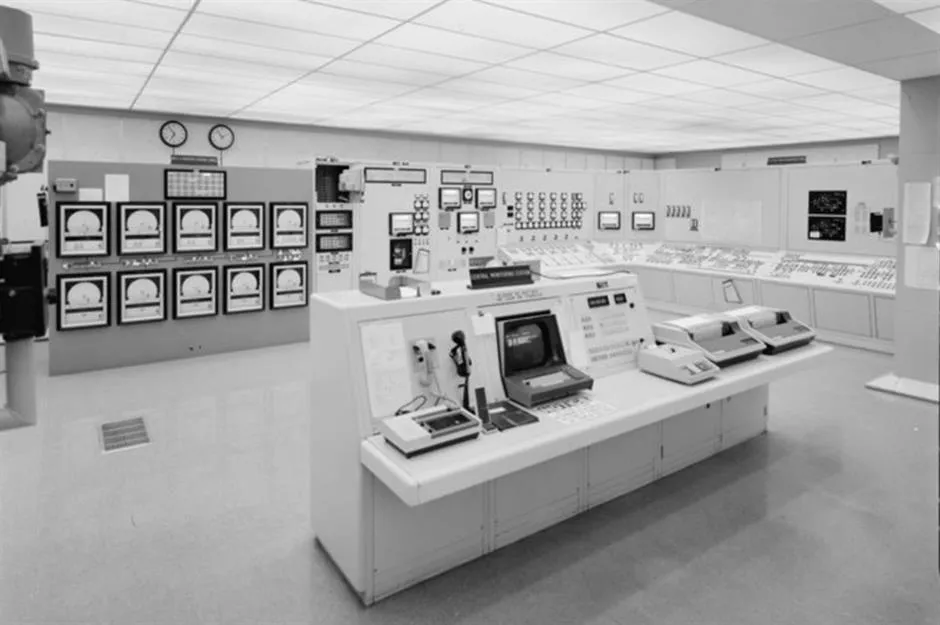
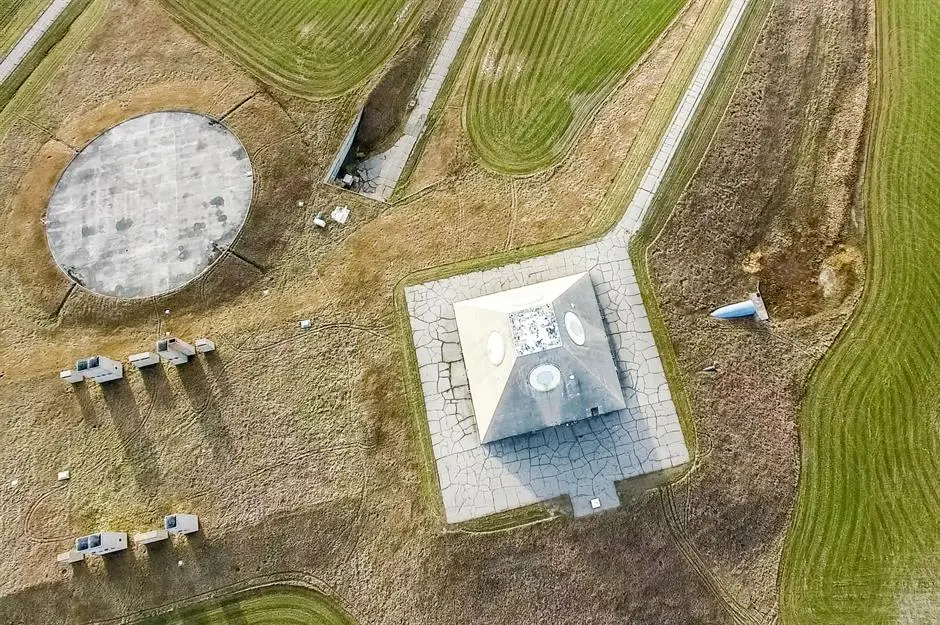
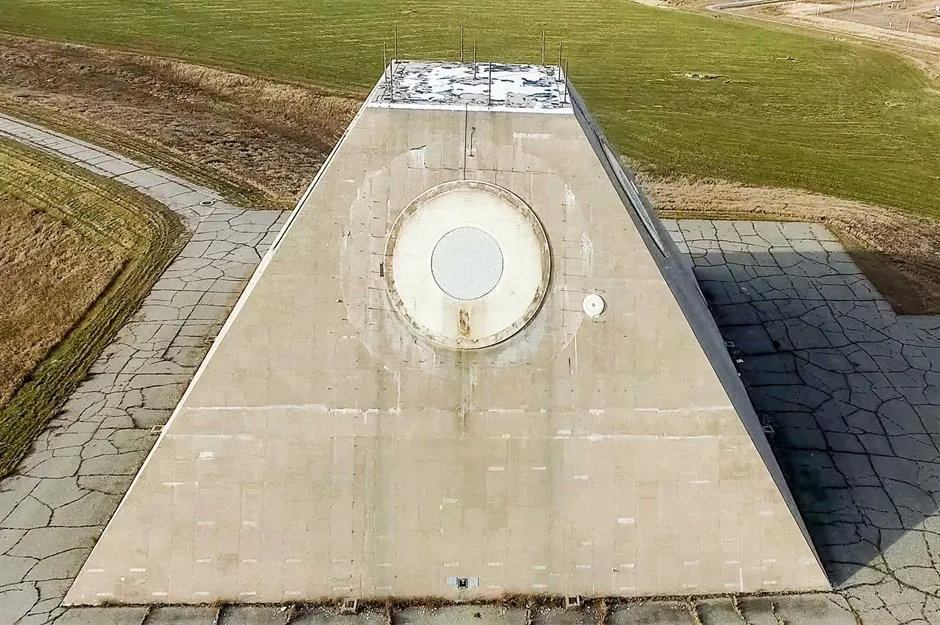
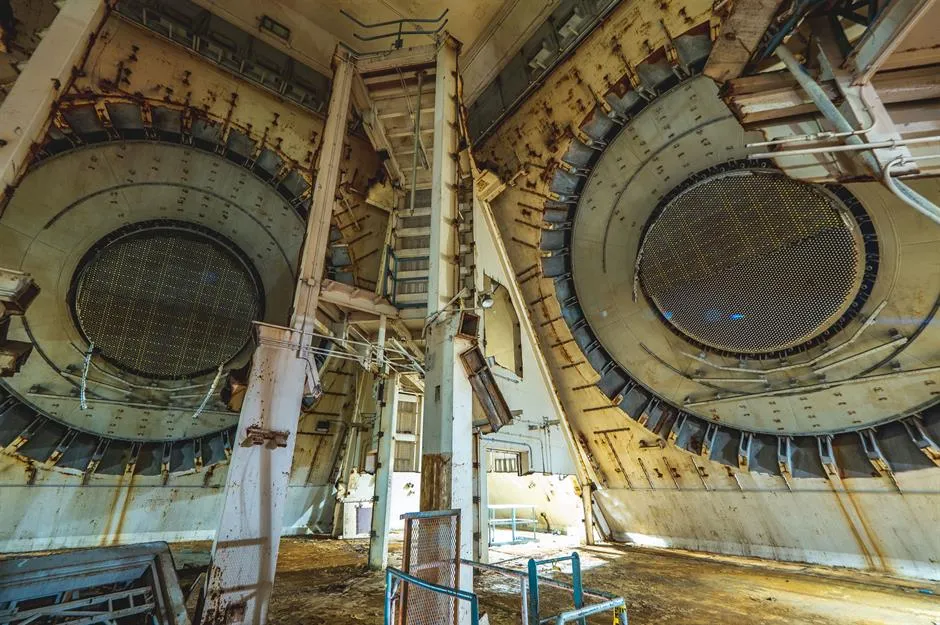
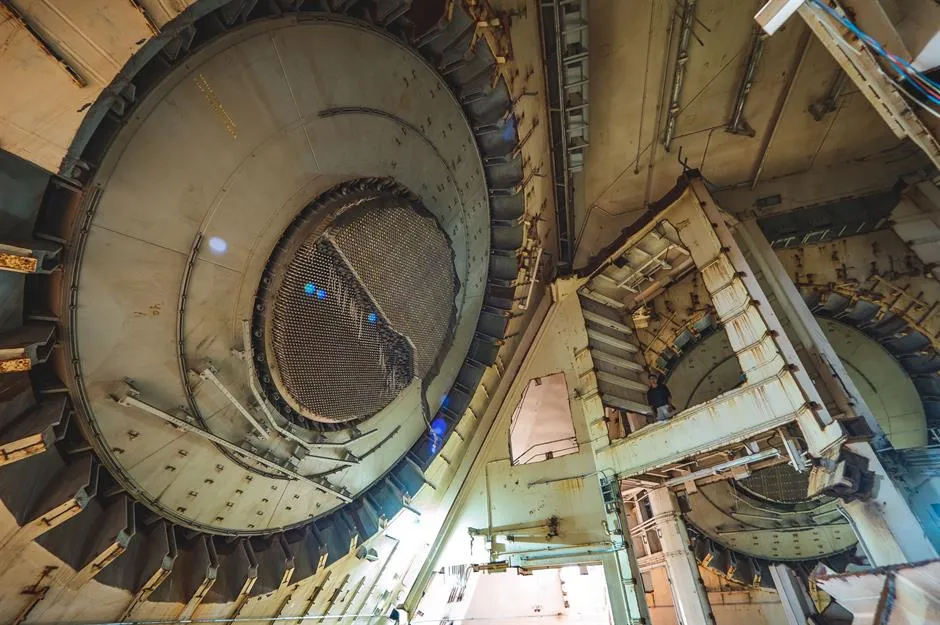
The central building was designed to survive a nuclear blast nearby and keep working. The National Park Service record, written in 1994, gives the details. It had five levels, two of them below ground, and about 162,500 square feet of floor area. The sloping walls rose at about 56 degrees, and the exposed turret stood roughly 75 feet high on a base of 136 by 136 feet. The exterior walls were three feet thick, the foundation slab four feet, and the interior was lined with steel plate. The report estimates the structure at some 160 million pounds. It could seal itself, including its air supply, and operate through an attack.
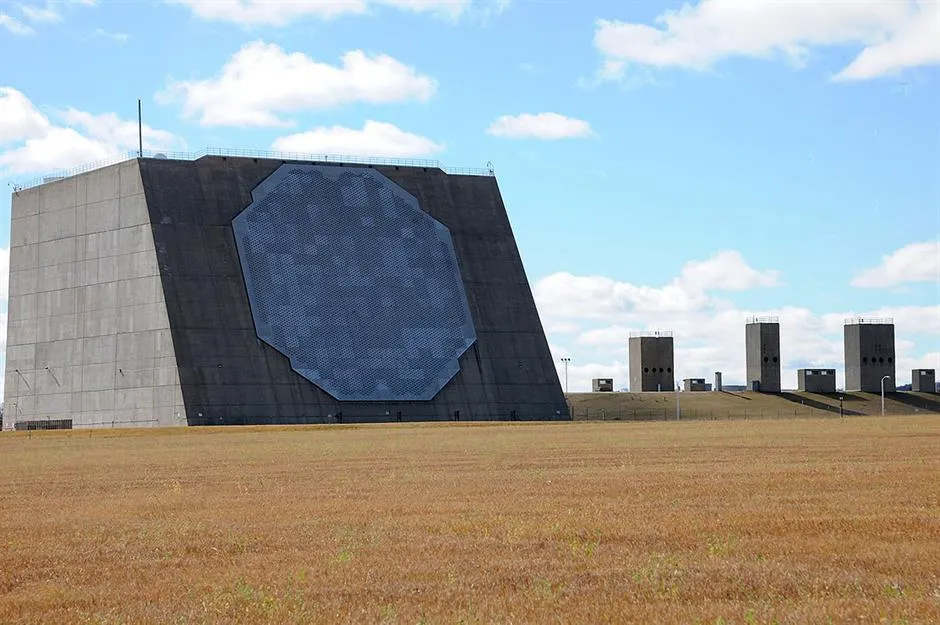
The pyramid shape was not for show. The upper part was a turret holding four radar faces, each with a huge circular antenna on a support ring 30 feet across. This was the Missile Site Radar, a phased-array system that steered its beam electronically and could track incoming warheads and guide interceptors toward them. It could see several hundred miles. Only two of the four faces, the northeast and northwest, were completed and activated before the shutdown. A research version of the radar was built in the Marshall Islands at Kwajalein, but it was not partly underground like the North Dakota one.
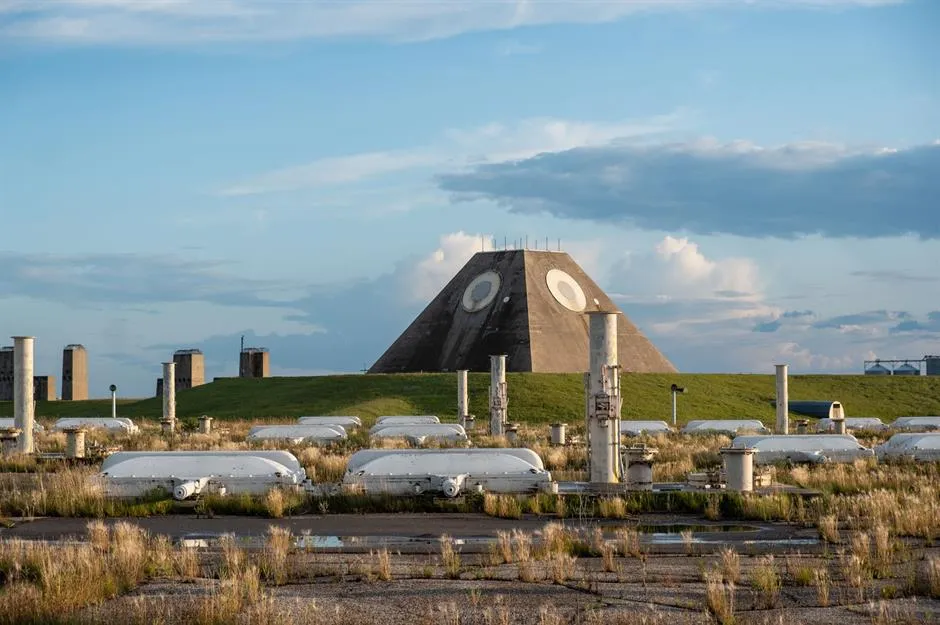
Around the pyramid sat the rest of the complex: a power plant with six multi-fuel generators, a missile assembly building, a warhead handling building, and the missile fields themselves. At Nekoma there were silos for 30 Spartan long-range interceptors and 16 Sprints. Four Remote Sprint Launch sites, 10 to 20 miles away by the Army’s figures, held about 54 more Sprints, giving 30 Spartans and 70 Sprints in all, which matched the treaty limit.
The missiles
The two interceptors were layers in a defence. The Spartan was big: about 55 feet long and 29,000 pounds, with a range of roughly 460 miles. It was designed to destroy incoming warheads in space, well above the atmosphere, with a 5-megaton W71 nuclear warhead. At that altitude the blast would not break a warhead apart. It would flood it with radiation.
On paper, the whole system was supposed to go from detecting a threat to launching in about six seconds, and the Sprint silos were covered with fiberglass lids. The Sprint was the opposite: short, fast and violent. About 27 feet long, it accelerated at roughly 100 times the force of gravity and reached around Mach 10 in a few seconds. It was meant to catch whatever survived, in the last seconds before impact, after the atmosphere had stripped away decoys, with a smaller W66 enhanced-radiation warhead. Interception took at most about 15 seconds. Even the Sprint’s skin heated to thousands of degrees.
The engagement chain started far away. Early-warning satellites would detect a launch, and radars in the far north would pick up the incoming warheads. The Perimeter Acquisition Radar, a separate site near Cavalier, would then find them in space and pass the data to the pyramid. There the computers worked out intercept paths and launch times. The idea was that the warheads aimed at the Minuteman silos around Grand Forks would be met over North Dakota.
One oddity of the design is mentioned in a local history: if Soviet missiles were aimed at Nekoma, the interceptors would destroy them, but everything nearby would be destroyed too. It was a defence that worked by exploding nuclear weapons over your own territory.
Town life, and then not
At its peak the complex was a small town. A 2022 article quotes a count of 430 military personnel, 109 civil servants and 513 defence contractors, while a fact-checking site gives 500 military and 1,200 civilians. The figures don’t agree, and neither is from a payroll record. There was family housing, a community centre, a chapel, an officers’ club, a bowling alley, a bank, a gas station and a clinic. Contractors included Western Electric, IBM, Bell Laboratories, Raytheon, General Electric, Martin Marietta and McDonnell Douglas.
Clinton Esckilsen, a retired Army warrant officer, trained personnel at Fort Bliss in Texas and served at Nekoma from 1974 until the programme ended in 1976. He spoke years later about the military life.
Being in the military, you just accept the things.
Clinton Esckilsen, retired Army warrant officer who served at Nekoma, 1974 to 1976
His wife, Joyce, described the closure as a blow after so many years of effort and spending, and asked whether it had been worth it. That article was labelled sponsored content, so it should be read with care, but the question was an obvious one.
One day, or four months
The facts are straightforward. Initial capability was declared on 1 April 1975. Full capability, with enough missiles installed to count as fully combat ready, came on 1 October. On 2 October the House voted to decommission the project, judging it ineffective and too expensive. It was a strange thing to do the day after the system came alive, but the vote was the result of a long fight. Senate critics called the programme “a system in search of a mission”. By then the treaty had cut the number of sites, and a 1974 protocol allowed only one.
The reasons given are cost, limited effectiveness and a changed strategic picture. One account, the Atlas Obscura entry for a Remote Sprint site, adds that the arrival of Soviet warheads carrying multiple independent re-entry vehicles made the system obsolete. The National Park Service record does not give a single cause. Congress took months to decide exactly how to turn it off. The National Park Service record says activity at the control building ended in February 1976, and that on 10 February 1976 the facility was “abandoned in place”.
The programme as a whole cost about 6 billion dollars by most accounts, with other sources giving 5.7 billion, and nearly half went to research and development. The pyramid’s construction contract was a small part of that, about 137.9 million dollars. It was the first of 12 planned Safeguard sites, and the last.
After the shutdown
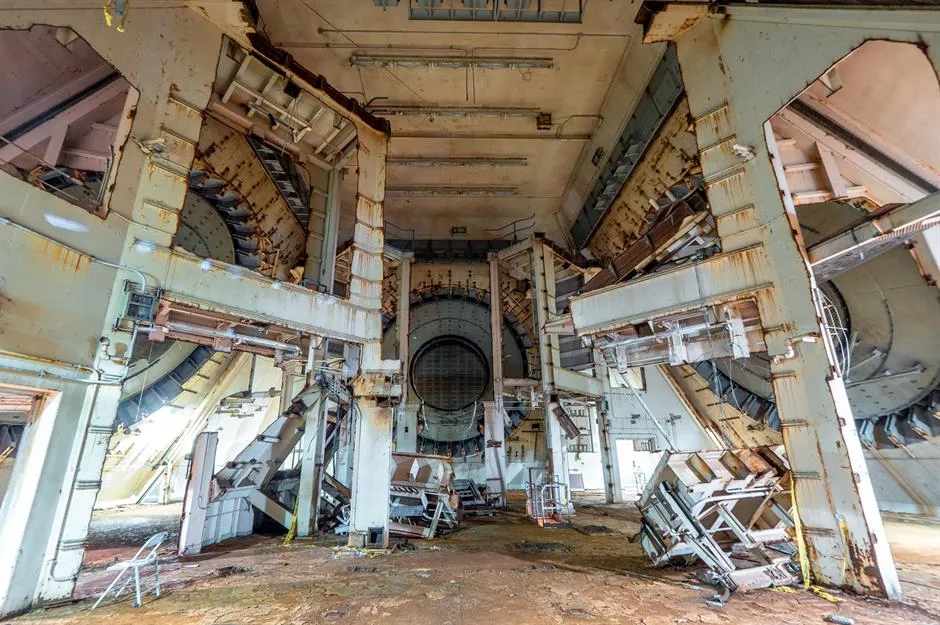
The Army removed the missiles and sealed the silos. In 1977 the radar facilities were stripped for salvage, and final closure came on 16 September 1977. In the following years the site served as a testing ground: in late 1976 the programme office asked to keep certain items so that the Defense Nuclear Agency could run explosive tests for the Federal Aviation Administration. Every staircase in the pyramid, sixteen sets, was removed during salvage, to keep people off the upper floors. One local history says the doors were welded shut in 1979, and that in 1991 a Senate defence budget included money to reactivate the site as part of the Strategic Defense Initiative, though nothing came of it.
The salvage openings let rain and snowmelt into the building, and the lower two levels flooded. In December 1989 an environmental inspection found PCBs, and the Environmental Protection Agency issued a notice of noncompliance. By January 1992 all structures had been dewatered. Cleanup removed about 150 tons of contaminated material from the lower level and power plant. There were more costly cleanups later, with millions of gallons of contaminated water pumped out of basement structures.
The nearby towns felt the loss right away. A history of the site reports that unemployment in Cavalier County rose to 7.5 percent, and that Nekoma and nearby places lost large shares of their population. The picture was clear: thousands of people had arrived for a project and were leaving.
The Perimeter Acquisition Radar survived. The Air Force took over the site near Cavalier, and it still operates as a radar that watches for missile launches and tracks objects in space, now as part of Cavalier Space Force Station. The pyramid was not so lucky.
The outposts
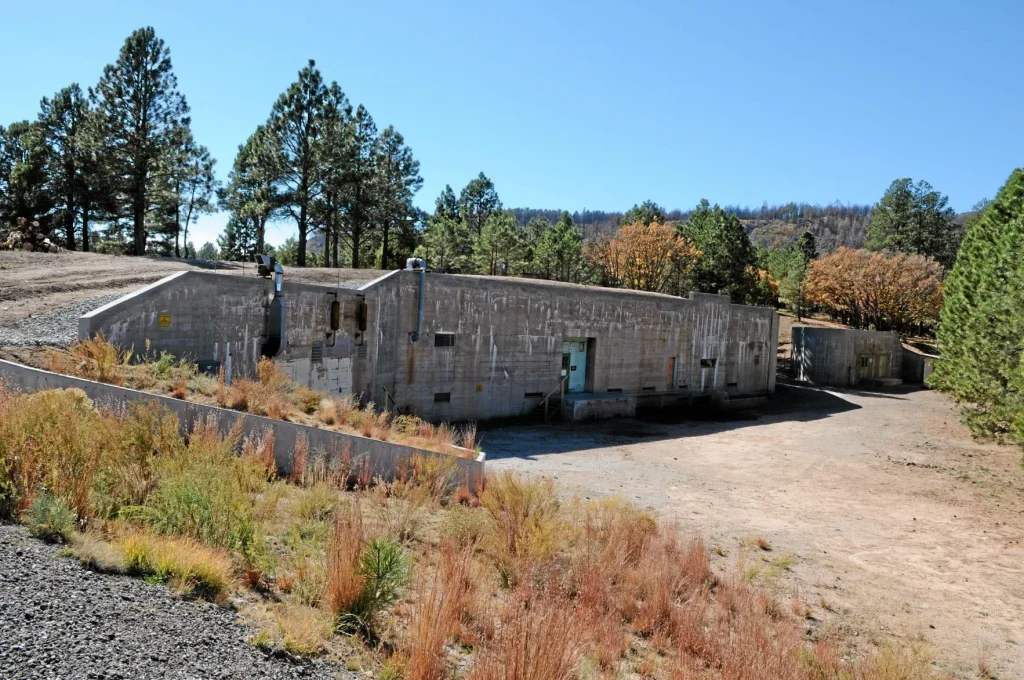
The four Remote Sprint Launch sites were smaller, hidden and designed to run with little attention. Construction contracts for all four were awarded in 1971, and they were nearly identical, differing in the number of launch stations and the length of the tunnels to the hardened buildings. Site 3, near the village of Concrete, covers 43 acres inside four fences, with underground launch operations and two concrete ventilation towers above ground. It was added to the National Register of Historic Places on 23 October 2018 and is open for public tours in the summer, according to Wikipedia. It is the easiest part of the system to see from the inside.
The paper trail
Unusually for a Cold War secret, the complex is well documented. Local newspapers reported on its construction and on visitors touring the site. After it closed, the National Park Service recorded the control building and the radar site in detail for the Historic American Engineering Record, which is where many of the measurements above come from. The Library of Congress holds the drawings and photographs, so the building’s design is on record even if its interior is out of reach.
Who owns a pyramid?
The federal government sold off the property in pieces. In December 2012 the Spring Creek Hutterite Colony of Forbes, North Dakota, bought it at a government auction for 530,000 dollars. In June 2017 the Cavalier County Job Development Authority bought part of it, including the pyramid, for 462,900 dollars, using a 600,000 dollar state grant. It wanted a developer who could bring jobs and an interpretive centre. The Hutterite colony kept the rest of the land.
In July 2022 North Dakota’s governor, Doug Burgum, announced that a company called Bitzero Blockchain would take over the pyramid and turn it into a secure data centre for high-performance computing, with a greenhouse heated by waste heat from the servers and a museum. The company talked of 500 million dollars of investment and the Associated Press reported a sale price of 250,000 dollars.
The reality has been slower. By late 2024 reporters found little sign of progress, and the company’s management and ownership had drawn questions from journalists. The development authority was discussing unpaid bills in January 2024, and the contract set benchmark dates at the end of 2025 and in mid-2027. No construction has been reported. The pyramid sits as it has for decades, with a bold plan hanging over it.
It has also gained a little official recognition. In October 2022 the National Park Service published a study called “Protecting America: Cold War Defensive Sites” that picked 24 properties worth considering for National Historic Landmark status, and the Mickelsen complex was one of them. Inclusion does not guarantee designation. The director said the study was meant to identify Cold War properties that are rapidly disappearing.
Seeing it today
The pyramid is on private land and the interior is closed. It can be seen from public gravel roads near Nekoma, and people photograph it from there. Please do not trespass. The building has a long record of flooding and PCB contamination, and its upper floors have no stairs. For a look at the real thing from the inside, the summer tours at Remote Sprint Launch site 3, near Concrete, are the better choice. There is a Sprint replica at the entrance, according to one visitor, and the tour covers the underground launch area.
Conclusion
The Safeguard Complex is a monument to a weapon system that mattered more as an idea than as a machine. It was a defence that had to explode nuclear weapons over the country to protect its own missiles. The treaty that limited it took away its reason to exist, and Congress shut it down within a day of its completion, though it took months to switch it off.
What is not in dispute is the engineering. A concrete pyramid weighing around 160 million pounds was dug into the prairie in less than three years, through winters of minus 25. It survived a salvage, a flood and a toxic cleanup, and it still stands. The part that is disputed is whether it mattered. Some have credited it with helping to bring the Soviets to the negotiating table. Others point out that the money bought a few months of operation. Both can be partly true.
The next chapter remains open. A data centre, a museum and a landmark designation have all been proposed for the pyramid, and none has arrived. In the meantime it waits in the wheat fields, listening for a launch that never came.
Did you know?
- The Nekoma complex was the only anti-ballistic missile site the United States finished and operated.
- It was named for Lt. Gen. Stanley R. Mickelsen, an Army anti-aircraft and air defence commander.
- Excavation for the pyramid began on 6 April 1970, and its roof was capped in September 1971.
- The pyramid's walls are about 3 feet thick, and the structure weighs an estimated 160 million pounds.
- Only two of its four radar faces were completed and activated.
- The Spartan missile carried a 5-megaton warhead and could intercept targets in space.
- The Sprint accelerated at about 100 g and reached around Mach 10 within seconds.
- It reached full operation on 1 October 1975, and the House voted to close it the next day.
- It was placed in inactive status on 10 February 1976.
- Remote Sprint Launch site 3 was added to the National Register of Historic Places on 23 October 2018.