
A mountain with a runway at its feet
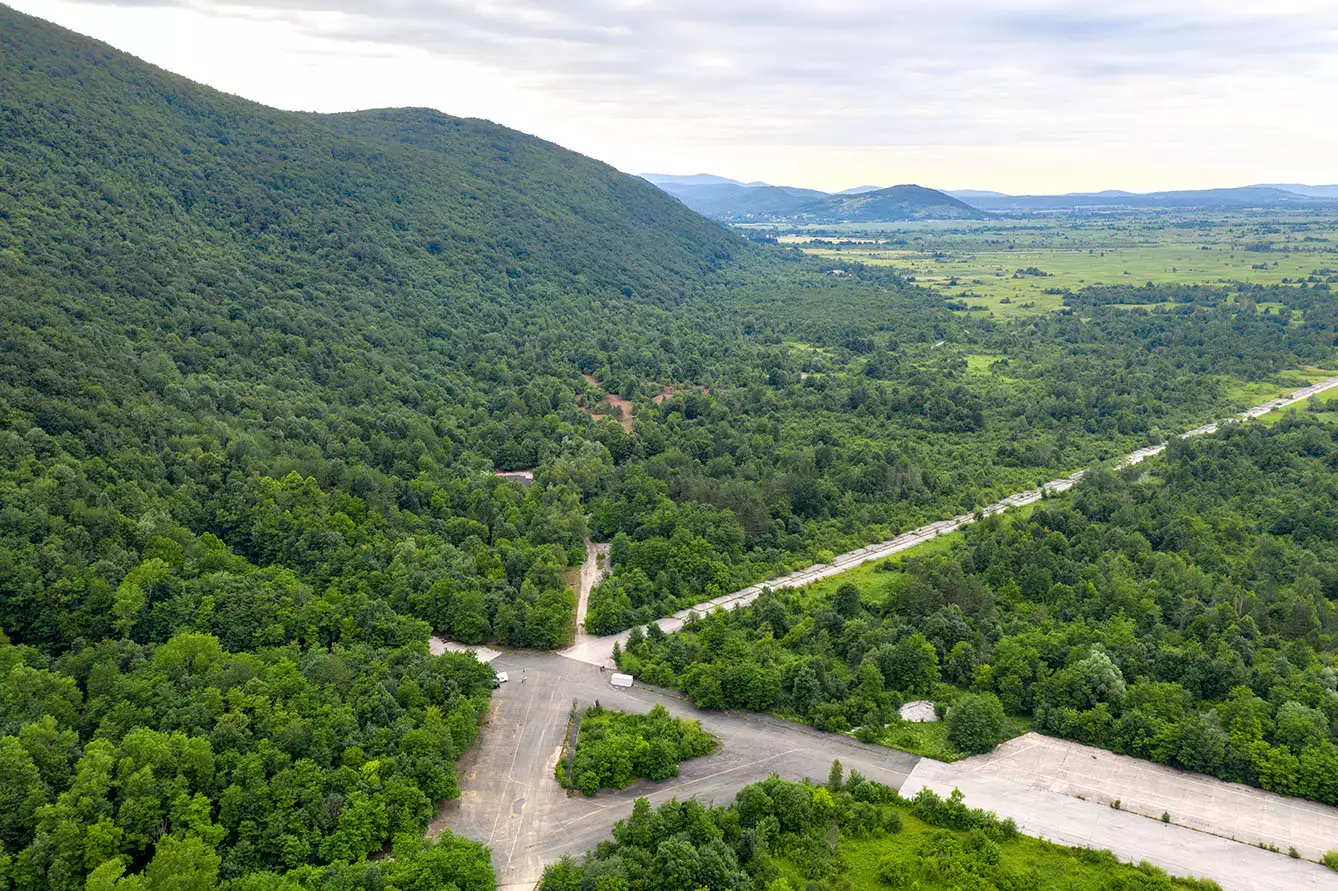
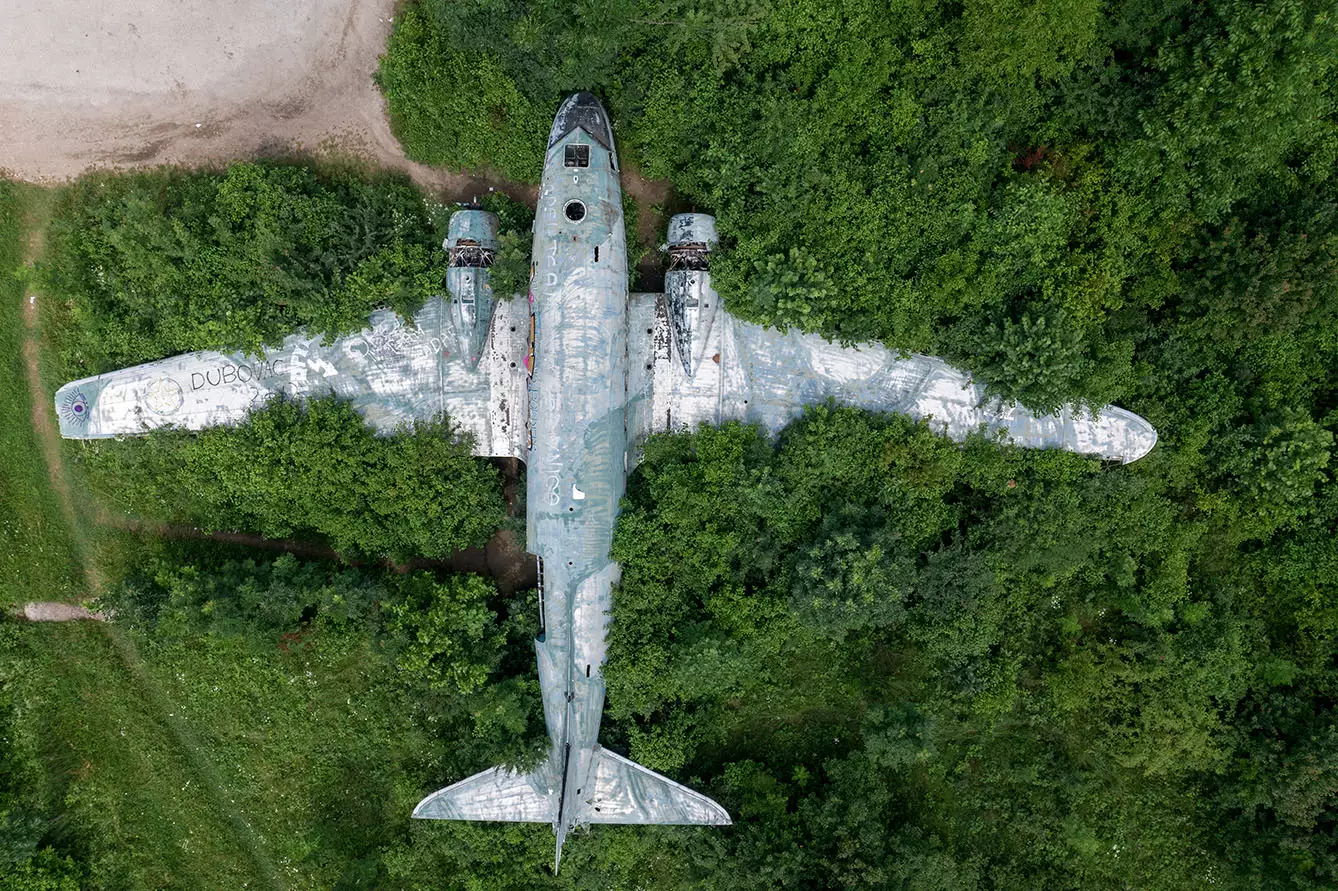
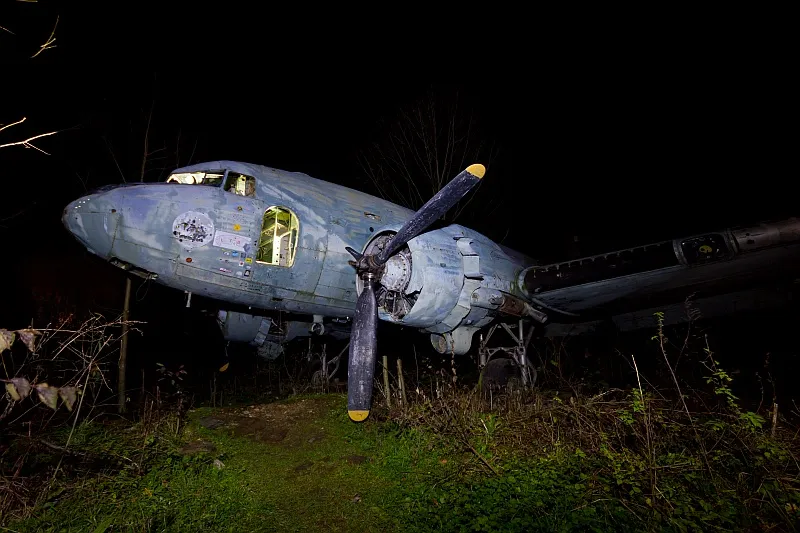
Drive south from the Plitvice Lakes towards the Bosnian border and the land gets quieter. The villages thin out, the forest closes in, and the long grey ridge of Lička Plješivica rises ahead. Where the ground levels out at its foot, a concrete strip runs through the grass. Trees have pushed through the cracks. A Douglas C-47 transport with Yugoslav markings sits rusting in the village of Željava, and a short way beyond it a road bends up towards four enormous openings in the mountainside.
This was one of the most important military sites in Socialist Yugoslavia. Its official name was Bihać Air Base, because the Bosnian town of Bihać lies only a few kilometres away across the border. Its insiders called it Objekt 505, or Objekat in the Serbian spelling, and its underground part carried the code name Klek. Everyone today calls it Željava, after the village. Local people have another name for it: Rupe, meaning “the holes”.
The border matters to the story. When the base was built there was no international line running through it. Yugoslavia had internal republic boundaries, and the airfield sat across the one between Croatia and Bosnia and Herzegovina without anyone caring. Most of the complex, including the tunnel entrances, is now in Croatia. Parts of the airfield and some of the support sites ended up in Bosnia. That single fact explains much of why nothing has been done with the place since.
Why Yugoslavia dug into a mountain
In the 1950s Yugoslavia was a country with no good options. Josip Broz Tito had broken with Stalin in 1948, so the Soviet Union and its allies were a threat. He was also not a member of NATO, so the Western bloc was not a protector. The country would later become a founder of the Non-Aligned Movement. Its army had to plan for an attack from either direction, and by the end of the decade the planners were thinking about nuclear war.
One travel account of the base describes a 1958 JNA (Yugoslav People’s Army) plan that put nuclear conflict at the centre of defence thinking and led to the decision to build underground. Whatever the exact date of the decision, the logic is easy to follow. An airfield on open ground is the first thing an enemy hits, and aircraft parked on a runway die in minutes. Yugoslavia’s mountains offered a different answer: hide the planes inside rock and bring them out only when needed.
The model was Swedish. Yugoslavia was reportedly allowed to examine similar Swedish plans and then drew up its own. The Croatian speleology paper on the site and the researchers behind the zeljava-lybi website both name the underground airfield at Säve near Gothenburg, now an aviation museum, as the inspiration. The Yugoslav version was bigger.
The Bihać area was chosen for its position and its room to build. The base was meant to guard the airspace west of the line between Sarajevo and Osijek, against attack from east or west. A former JNA aviation officer, Lieutenant Colonel Ivan Prša, told Radio Free Europe in 2012 that serving there was considered an honour and that only selected people were allowed into the underground part.
Building Objekt 505
Nobody agrees on when the work started. The zeljava-lybi researchers, English Wikipedia and Prša all say 1948, and Prša adds that construction lasted more than twenty years. Other accounts say the main work started in 1957 and ran to 1965 or 1968. One travel dispatch says the underground work was finished in 1964, with the installations nearly complete a year later and the whole base operating in 1968. The fair reading is that building went on for the best part of two decades, and that it was handed to the army in 1968.
That handover was rushed. In August 1968 the Soviet Union and Warsaw Pact armies invaded Czechoslovakia, and Yugoslavia, which had split with Moscow twenty years earlier, feared it might be next. The Croatian Speleolog paper by Hrvoje Grgić says the partly unfinished facility was given to the military in a hurry during the Czech crisis. Satellite imagery gave outsiders a look at the work: the English Wikipedia article says US CORONA satellite pictures documented the base in 1968, and the zeljava-lybi researchers say declassified American satellite records show foreign agencies were watching from orbit.
The cost is a mess. Prša told Radio Free Europe that about 4.5 billion dollars of the time had been spent. The Serbian paper Kurir gives a range of 4 to 8 billion. Wikipedia and a writer for 3 Seas Europe say 6 billion, a figure that another visitor to the site calls questionable. N1 quotes figures of 5 to 11 million dollars, which looks like a slip of a unit. All that can safely be said is that it was the most expensive single military construction in Yugoslavia, and that nobody can prove an exact bill.
The base was not as secret as the legend says. Yugoslavia published selected pictures and film to show off its engineering, and the same travel dispatch says it offered its plans for sale to non-aligned countries. Delegations from Algeria, Iraq and Kuwait are said to have visited, along with NATO observers and journalists. Staff were vetted carefully. The Soviets, according to that account, had been invited to see it earlier in 1968.
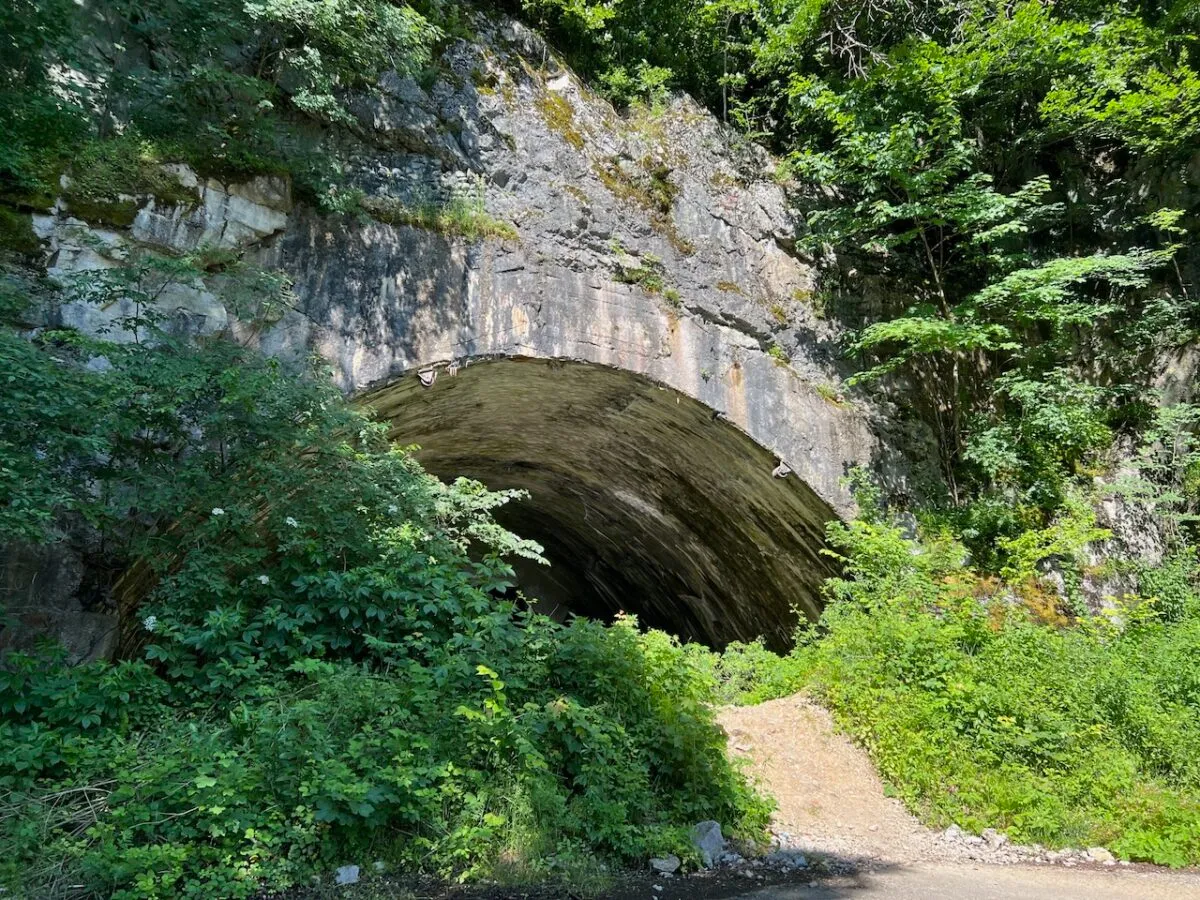
Inside the mountain
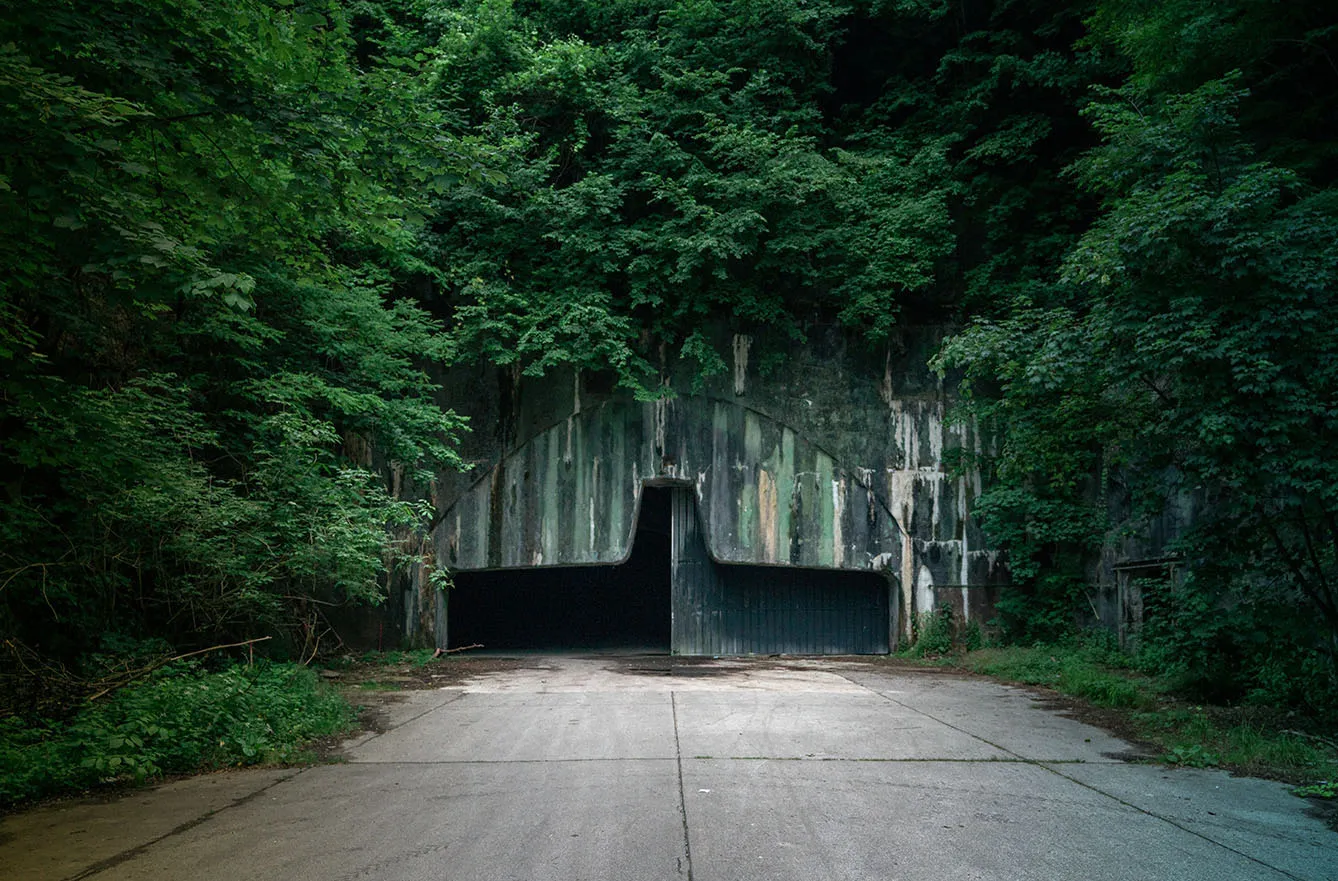
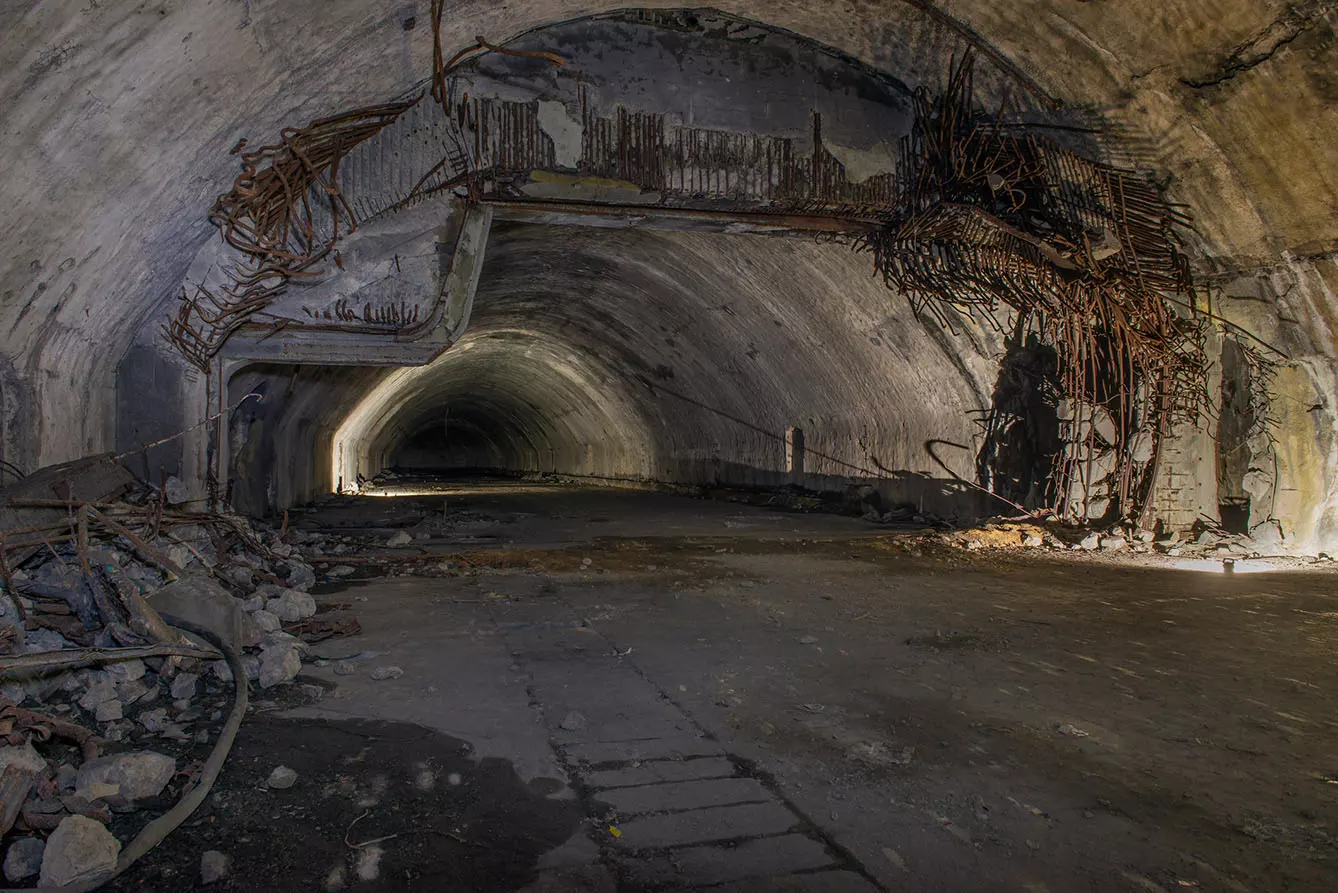
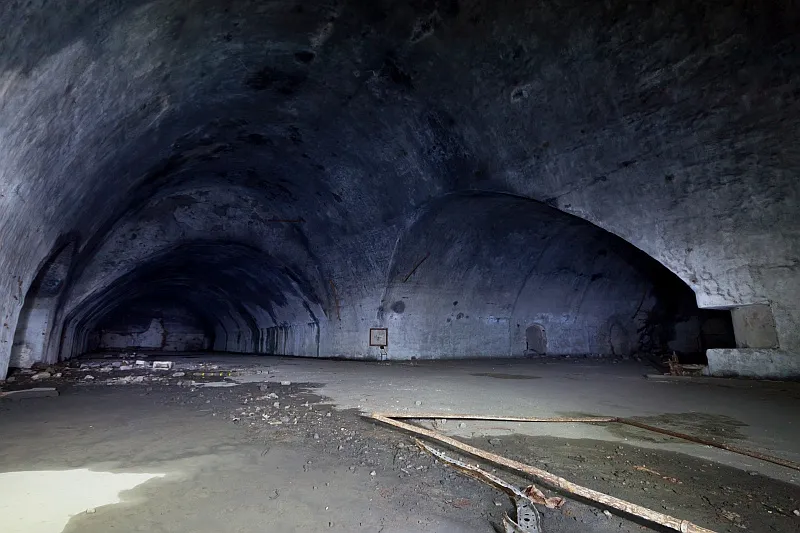
The underground part, Klek, was built into the granite of Plješivica. At its heart were four main galleries joined in an M shape, labelled A, B, C and D and reached by entrances 1 to 4. The zeljava-lybi researchers give them as 15 to 16 metres wide and 8 to 12 metres high, with a total length of about 3.5 km. Entrances 1, 2 and 3 are close together. Entrance 4 is farther south-east, near the Bosnian border.
The entrances were closed by sliding concrete blast doors. According to the researchers, the doors on galleries A, B and C were electrically driven, about 60 cm thick, 20 m wide and 4 m high, and weighed around 100 tonnes each. The door on gallery D was hydraulic, thicker at 80 cm, and covered the full profile of the tunnel. With the four doors shut, the whole complex could be sealed against blast and fallout.
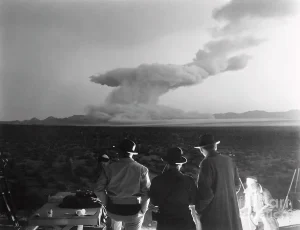
The approaches were curved on purpose. A blast wave from outside would lose its force as it bent through the corridors and into expansion chambers. Grgić’s paper describes the same arrangement. The designers claimed the core could survive a hit of up to 20 kilotons on the airfield, about the size of the bomb dropped on Nagasaki. That figure is repeated everywhere, but it is a design claim, and it was never put to the test.
The mountain was meant to function as a small, closed town. The researchers list 13 air-conditioning stations that filtered and cooled the air through vertical shafts, some reaching up to 200 metres, and two diesel power stations, DIT-1 at entrance 1 and DIT-2 at entrance 3. A fuel depot with five large tanks at entrance 3 was piped to the aircraft parking areas, so planes could be refuelled underground. A buried pipeline ran to a larger fuel store on Pokoj hill above Bihać; Grgić says about 15 km, while Wikipedia says 20. Sources mention supplies for 30 days and a mess hall that could serve about 1,000 people at once. A water station supplied the tunnels.
Other parts of the complex handled the aircraft themselves. There were workshops, a station for testing missiles and preparing weapons, a boiler room, battery charging, the regiment command and technical operations centre, and a fire brigade. The 125th Fighter Squadron, according to the researchers, was housed in gallery A, the 124th in gallery C and the 352nd Reconnaissance Squadron in gallery D.
The nerve centre was a command section called Zvijezda (“Star”), entered from gallery D. It held the operations centre, communications with teleprinters and cryptography, a photo laboratory, a parachute store, squadron offices, pilot classrooms, a kitchen and a medical room. Some writers compare it to NORAD in the United States, but a visitor who studied the site calls that an exaggeration, and so it seems.
The control tower was another piece of ingenuity. Instead of standing on the airfield where it could be bombed, it was a bunker in the slope, reached from the tunnels by a lift. The researchers say the lift rises about 60 metres from gallery C to a window set in the rock, overlooking the runways.
The airfield outside
A mountain full of aircraft is no use without a way to get them into the air. The runways lay on the Baljevac plateau at the foot of the mountain. The base had five, two proper runways and three narrower strips. The zeljava-lybi researchers list them as follows.
The main runway, TOL1, ran on a heading of 141 to 321 degrees and measured 2,500 by 45 metres. Next to it ran TOL2, also 2,500 metres long but 24 metres wide. The other three were shorter and narrower: about 2,050, 2,000 and 2,061 metres in length, and 15 to 24 metres wide. Wikipedia gives slightly different lengths, so treat the numbers as close, not exact. A visitor in 2018 reached much the same conclusion, that there are two real runways and three narrower connecting strips, probably used for fast take-offs and not for landings.
The main runway had an approach lighting system extending 900 metres before the threshold and a visual glide-slope indicator set for a 3.5 degree descent, which the researchers say was intended for supersonic jets.
The rest of the system spread around the district. Radar and radio relay stations stood on Gola Plješivica and on the hill called Čalopek. A barracks about 3 km away housed the command and support staff. Ordnance was stored at Vedro Polje, and the big fuel depot sat above Bihać. For missile defence, Wikipedia mentions SA-6 Kub sites around the airfield. The base was a whole district of roads, bunkers and sentry posts, with the tunnels at the middle.
The people and the jets
The base’s resident unit was the 117th Fighter Aviation Regiment, which had been founded in December 1944 and flown everything from Yak fighters to American-built F-84 Thunderjets and F-86 Sabres. It moved to Željava from the Zagreb area in 1967 or 1968, depending on whether you follow Radio Free Europe or the regiment’s Wikipedia history. It brought MiG-21s: first the F-13 version, then the PMF, the MiG-21R reconnaissance variant, and later the MiG-21bis.
The regiment was made up of the 124th and 125th Fighter Aviation Squadrons and the 352nd Reconnaissance Squadron. The base’s capacity is given as 50, 52, 60 and even 80 aircraft, depending on the author. A reasonable summary is somewhere between fifty and sixty. Prša compared it to an American aircraft carrier. N1 puts the number of people who served there at nearly 1,000, while Kurir claims about 2,000 pilots, mechanics, technicians and soldiers worked or lived at the site. Both are claims, not figures from a record.
Tito came to see it. A travel dispatch says his first visit was in May 1969, and the zeljava-lybi researchers use photographs from the Croatian State Archives dated to a visit on 3 May 1969. The same dispatch says a lieutenant named Sluganović crash-landed during the visit and died in hospital an hour later, although Tito was told he was still conscious. That detail comes from only one source, so take it as reported. Tito is said to have returned a year later with the Sudanese president Jaafar Muhammad an-Nimeiry.
Life there was a mix of the ordinary and the extraordinary. Pilots went through classrooms in the mountain. Aircraft were serviced in the tunnels. In 2018 a former JNA pilot, Sanudin Jašarević, went back for the first time since 1991, and he recalled the pride of belonging to an army that Yugoslavs liked to call the fourth strongest in Europe. The base was meant to reassure and to deter. For almost twenty years it was never needed.
1991: the base goes to war
Yugoslavia came apart in 1991. Slovenia and Croatia declared independence in June, and the federal army, increasingly under Serbian control, fought both. The 117th Regiment’s history lists what its aircraft did over the following months. On 30 August 1991, MiGs forced a Ugandan-registered Boeing 707 that was smuggling arms for Croatian forces to land. In mid-September jets flew over Zagreb and attacked Croatian positions and a television repeater tower. On 21 December the regiment is believed to have carried out the raid on Vrsar airport in Istria.
The same war also hollowed the regiment from inside. Many of its pilots were Croats, Bosnians and Slovenes serving in a mostly Serb-led force, and each of them had to choose.
The pilot who flew away
Rudolf Perešin was born in 1958 in the village of Jakšinac near Gornja Stubica, in the hills north of Zagreb. He trained at the aviation school in Mostar and the military academy in Zadar, and in 1981 he was chosen for supersonic training and posted to Željava, where he flew the reconnaissance version of the MiG-21.
By 1991 Croats in the Yugoslav Air Force were closely watched. According to the AvioRadar account, a telecommunications engineer named Ljubomir Topić put a plan to Perešin’s wife, Ljerka, in Bihać. The aim was to make the conflict visible to the world, so the international community would be forced to react. Croatian President Franjo Tuđman had declared that defectors who joined Croatian forces before 10 November 1991 would be accepted, and a coded message relayed by a neighbour in Germany gave the go-ahead.
On 25 October 1991 Perešin was ordered to lead a flight scouting the army’s withdrawal from Slovenia. Over Karlovac he sent the other pilots home and carried on alone, towards Ljubljana and Koper, before turning north. He crossed the Alps low and fast, reportedly at about 1,000 km/h and 50 to 100 metres above the ground, passed near Bleiburg and landed at Klagenfurt in Austria. An air alert was sounded in Zagreb during the flight. In Austria he was questioned and put up in a guesthouse at Feldkirchen. He said simply that he was a Croat and could not fire on his own country.
I am a Croat and I cannot and will not fire upon my Croatia.
Rudolf Perešin, MiG-21R pilot, October 1991
He was the first pilot to desert the Yugoslav Air Force for the Croatian side, and the effect on morale in Croatia was large. His aircraft, a MiG-21R numbered 26112, stayed in Austria. It was shown in Vienna, was disputed for years, and was handed back to Croatia in 2019. Perešin joined the new Croatian Air Force and became a squadron commander. On 2 May 1995, during Operation Flash, he was giving close air support when Serb anti-aircraft fire brought his plane down near Stara Gradiška. He was 37. His remains were recovered in August 1997 and he was buried at Mirogoj Cemetery in Zagreb that September. The Croatian Air Force flying school at Zadar is named after him, and a memorial to the pilots of the 352nd Squadron stands in the ruins of Željava.
Others followed. On 4 February 1992 Danijel Borović flew a MiG-21bis from Željava to Zagreb and became the first MiG of the new Croatian Air Force. Further pilots, among them Ivan Selak and Ivica Ivandić, flew their jets across in February and May 1992, according to AvioRadar. Borović told journalists that the pilot who had shot down a European Community monitors’ helicopter on 7 January 1992 was Emir Šišić, a member of the regiment. According to the regiment’s history, a lieutenant general was suspended afterwards.
May 1992: blowing up a mountain
By spring 1992 the war had moved on to Bosnia, and the army was ordered to withdraw from the republic. The 117th left Željava on 22 to 24 April 1992. The base was used to evacuate the remaining personnel and families from Bihać. The squadrons moved to Ponikve airfield in Serbia. The 125th Squadron was disbanded, the 124th was attached to the 83rd Aviation Brigade and the 352nd to the 204th.
What could not be moved had to be destroyed. The Serbian paper Kurir, which reconstructs the morning, says that on Saturday 16 May 1992 the first explosion was heard at 5:20. At about 5:55 a series of blasts hit the runways, and at 6:47 a huge explosion inside the mountain brought down all four entrances. A special JNA engineering unit is said to have done the work, using charges placed in chambers dug beneath each runway and other vital points. By most accounts the charges came to about 56 tonnes of explosive. Residents of Bihać reportedly felt a blast around 7:47, and a column of fire and smoke rose from Plješivica. Some say the smoke lasted days, others months. English Wikipedia and another writer credit the Army of the Republic of Serbian Krajina rather than the JNA, so the sources are not unanimous.
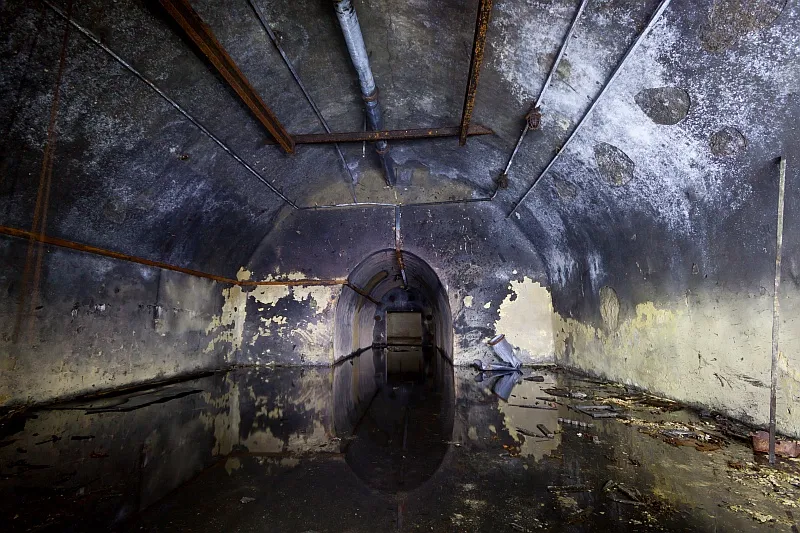
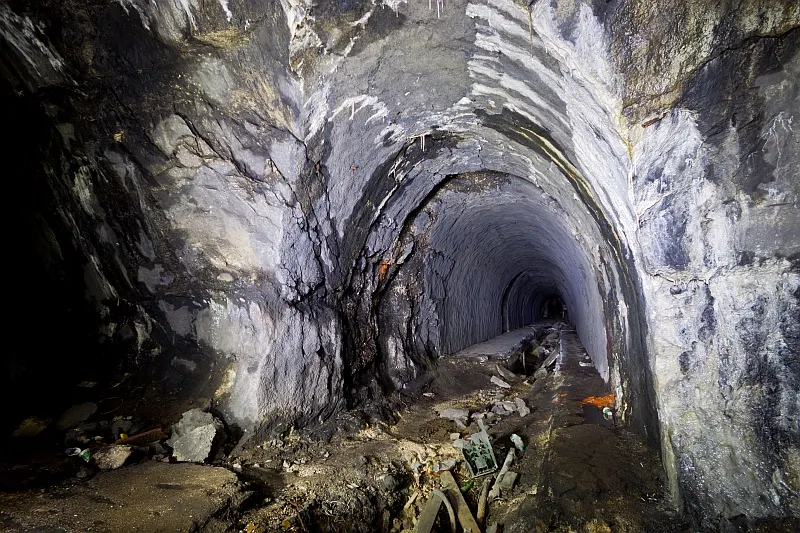
The tunnels took the damage but did not collapse. The zeljava-lybi researchers say that all the big doors were destroyed except the one at entrance 3, whose remains still show how strong the structure was. Grgić found that the explosions had cracked the concrete lining in places and exposed natural cavities that the builders had met during construction. The radar station on the summit of Plješivica was not destroyed.
It was a final act of the same logic that had built the base. A secret asset that could not be taken away was to be made useless to whoever came next. The mountain was no longer a base, but it remained a very large hole.
Rupe: what the war left behind
After the JNA left, the site became a contested piece of front line. Grgić writes that it was fought over by Krajina Serb forces on one side and the Bosnian Army and the HVO, the Bosnian Croat forces, on the other. The surrounding forest was heavily mined, and the mines remain. A Radio Free Europe report from 2012 says the area was mined during the war and that border police still watch the Bosnian side.
The mines have killed. English Wikipedia reports that in November 2000 a major of the Bosnian Air Force, searching for mushrooms near the base, was killed by a PROM-2 mine. Visitor guides repeat the same warning: stay on the tarmac, and do not walk into the trees.
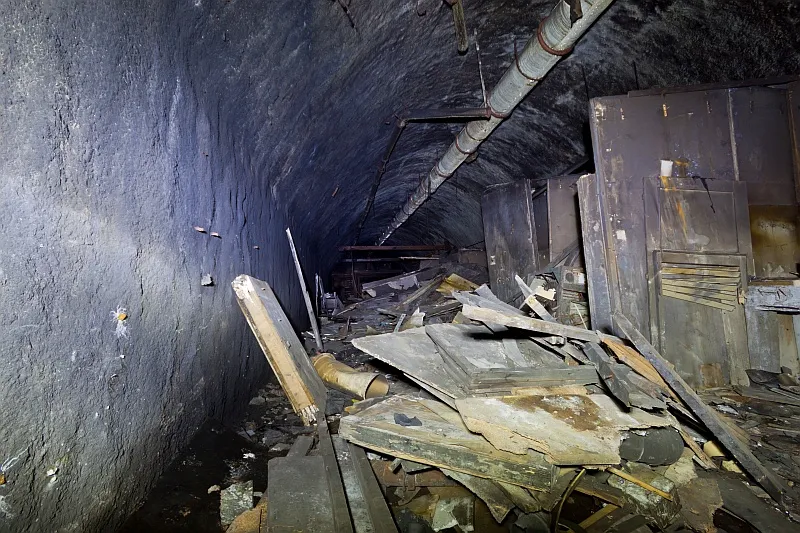
Looters came for the metal. Kurir says parts of the infrastructure were stripped for scrap. Local people started calling the place “the holes”. Meanwhile the oils that had kept a fighter base running were left to seep: Grgić’s 2008 paper says hydraulic, brake, transformer and preservative oils were still evaporating and had contaminated soil, and that samples were sent to the Institute for Medical Research in Zagreb. Researchers suspected an underground water flow beneath the site might connect to the Klokot spring that supplies drinking water to Bihać. That is a suspicion, not a finding, but it explains why the place has been a worry for more than the military historians.
Today’s visitors add their own list of hazards. One writer who explored the tunnels in March 2018 describes cracks in the ceiling of entrance 4’s tunnel, concrete blocks hanging from metal threads near entrance 1, holes in the floor in deeper parts and a Star command centre that is unsafe. Visibility inside is often only a few dozen yards even with torches. He found graffiti, a candle shrine, an office chair and a wheel, but no paperwork and no aircraft. Outside entrance 3 stands a concrete dummy bomb, probably used for training pilots, and entrance 2 still has traces of camouflage paint. PCB pollution is also mentioned as a concern for anyone breathing the dust. A reported detail, from 3 Seas Europe and the same visitor, is that police use the site to train dogs to detect explosives.
Futures that never came
Ever since the war, people have suggested uses for the base. Radio Free Europe’s 2012 report lists a karting or bicycle track, a free customs zone and a civilian airport. A revitalisation plan was drawn up and dropped because of the cost. The presidents of Croatia, Stipe Mesić and Ivo Josipović, raised the subject when visiting Bihać. The head of the Una-Sana Canton government, Hamdija Lipovača, said a cargo airport with five logistics centres, costing about 2.7 billion euros, was realistic. Prša said a commercial use was plausible if the money and the will existed. They did not.
The location is what stops it. A peace settlement is said to forbid military installations close to the border, which rules out a military future, and the airfield is split between two countries. Civil flights from Bihać use a smaller airport at Golubić instead.
The most recent argument is about migration. A report published in 2026 says the Croatian Interior Ministry is weighing a reception centre for migrants at Željava as part of the new EU asylum framework, along with other border sites. As described, the first phase would be a fenced camp of about 450 containers on the old runway area, followed by a permanent centre of modular buildings on the former barracks grounds, for up to 1,500 people and 150 to 200 staff. Several hundred residents, about 500 according to the mayor of Plitvička Jezera, Hrvoje Matejčić, marched in Korenica in protest. Their banners played on the contrast between MiGs and migrants. Local people see the base as part of a future tourism offer next to the lakes, with estimates of 50,000 to 200,000 visitors a year, and complain that they learned of the plan from the media. The report says no final decision had been announced. Whatever happens, the plan shows how a Cold War airbase has become part of a different border story: the Plješivica mountains and the forests around Bihać are one of the routes used by migrants trying to reach the European Union, and one travel dispatch describes Željava itself as a transit point for people trying to enter the European Union.
Visiting today
Željava is not a monument. There is no ticket office, no museum and no staff. Reaching it is easy enough: the usual route from the north follows the Plitvice road, turns off through Ličko Petrovo Selo and Novo Selo Koreničko, passes through Željava village and the C-47 wreck, and continues on a small road to the tunnel entrances. Plitvice is less than half an hour away. A guided tour from Zagreb or Plitvice is the safest way to see the tunnels, and the most thorough writers say bluntly that going with an experienced guide is best.
The rules are plain. Stay on the paved areas because the mines are real. Do not stray across the border, since you could end up on the Bosnian side without having passed a crossing. Notify the border police if you plan to explore. Wear boots and gloves, and take more than one torch. Do not stand under hanging concrete, and do not go deep into side tunnels. Anyone who is claustrophobic or afraid of the dark should skip the interior.
It is a hard place to feel neutral about. It was built by a state that no longer exists, for a war that never came in the form it expected, and destroyed by its own army when a different war did arrive. It was also a workplace for hundreds of people, perhaps more, who flew its aircraft and slept in its barracks, and a few of them decided on one October morning that they would not fly where they were told.
Conclusion
Željava was meant to be a base that could take a nuclear hit and fly the next morning. It never faced that test. It faced instead a civil war, in which its best feature, concealment, offered nothing, and its most expensive feature, the mountain itself, had to be sacrificed to stop anyone else using it. The doors that could not be moved were blasted open, the planes went to Serbia, a few pilots went to Croatia, and the tunnels stayed.
What remains is a set of facts that are hard to hold together: billions of dollars spent on a base that was used in anger for only a few months, a design that boasted of surviving the unthinkable and was undone in one May morning by 56 tonnes of its own army’s explosive, a border that did not exist when it was built and now runs through it. For the people who live nearby, it is also a question about the future, whether the mountain is a ruin to be left alone, a tourist draw, or a camp. Until someone answers it, Željava lies where it was cut, with grass in the runway cracks and the Klek entrances open to the forest.
Did you know?
- Željava was also called Bihać Air Base, Klek and Objekt 505.
- Locals call it Rupe, which means "the holes".
- The tunnels run for about 3.5 km through Lička Plješivica.
- The main blast doors weighed around 100 tonnes each.
- It was designed to survive a 20-kiloton nuclear hit, about the size of the Nagasaki bomb.
- The control tower was a bunker in the rock, reached from the tunnels by a lift of about 60 metres.
- The inspiration was an underground Swedish airbase at Säve near Gothenburg.
- Rudolf Perešin flew a MiG-21R from Željava to Klagenfurt in Austria on 25 October 1991.
- The base was blown up on 16 May 1992 with about 56 tonnes of explosives, by most accounts.
- Perešin's MiG-21R was returned to Croatia from Austria in 2019.