





The problem Germany had in 1939
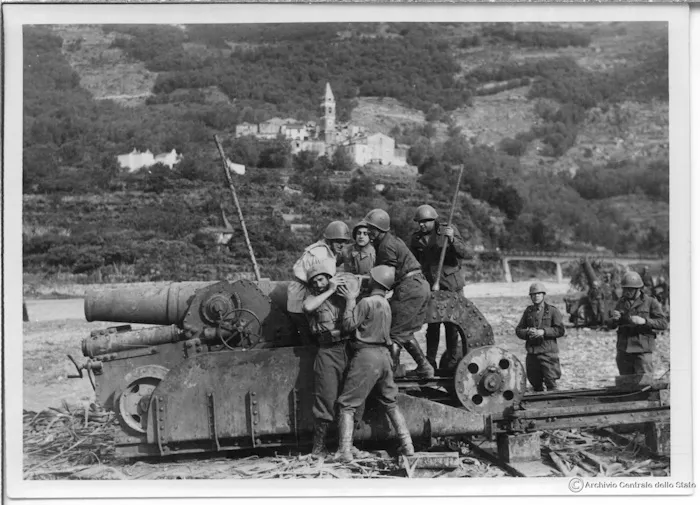
When Germany invaded Poland in September 1939, Britain and France declared war but did little else. For months the two sides faced each other across the French border in what became known as the Phoney War. Hitler, however, wanted an offensive in the west, and he wanted it soon. His generals were not so sure. The German army had won in Poland, but it was not fully motorised, and most of its divisions still marched on foot and relied on horses for transport. France had a large army, a long fortified frontier on the Maginot Line and, on paper, more tanks and more guns than Germany.
The question was how to attack. A direct assault on the Maginot Line was out of the question. That left Belgium and the Netherlands, which had both declared neutrality and which, in 1914, had been the route of the German invasion. Everyone knew that. The French and British expected the next attack to come the same way, and had planned accordingly.
The first plan
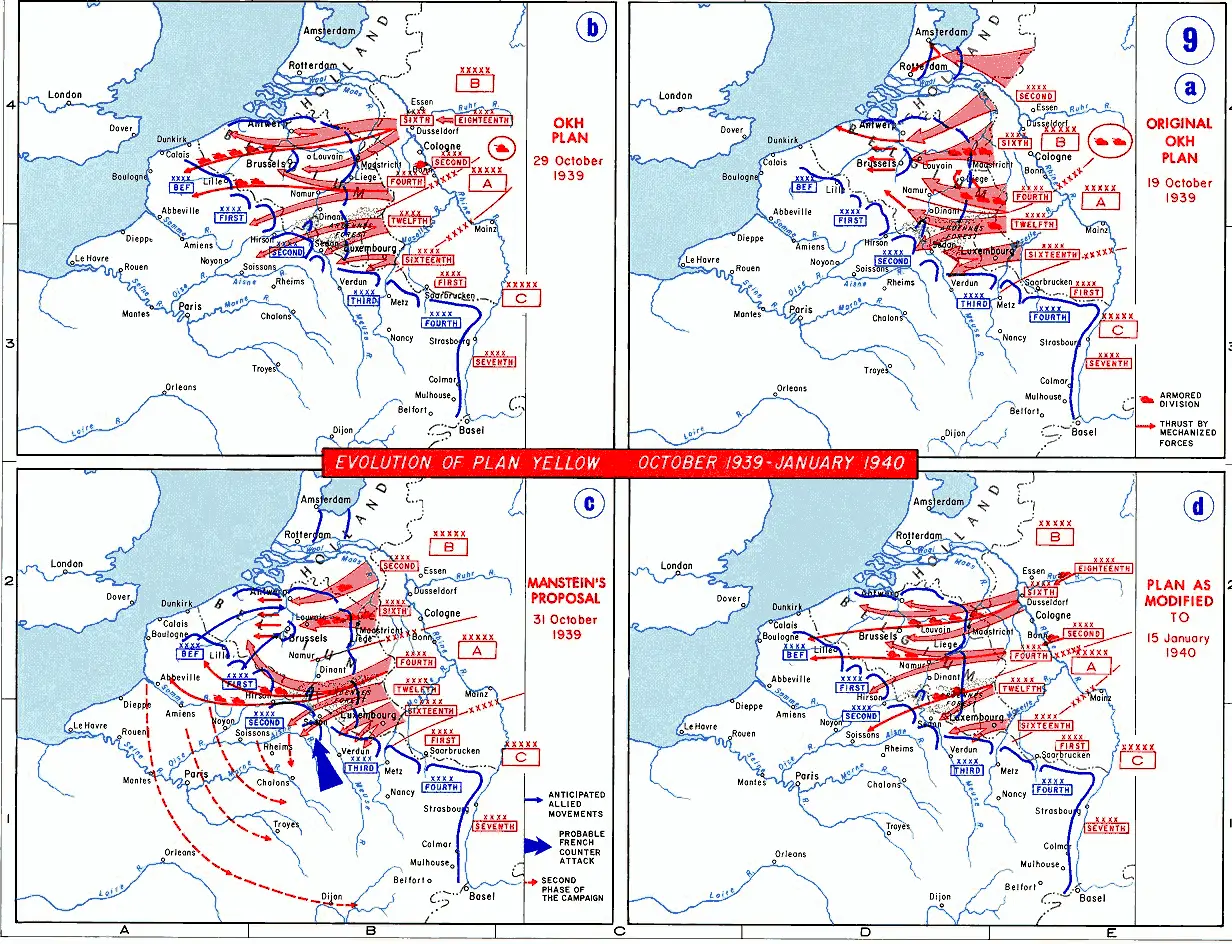
The first version of Fall Gelb was prepared by the army high command, under Franz Halder as Chief of the General Staff, and issued in the autumn of 1939 as a deployment directive. It was a cautious plan. The main effort was to go through central Belgium, with the aim of pushing the Allied armies back to the Somme and securing the Channel coast and the Low Countries as a base for air and naval operations against Britain. It did not aim at a decisive victory over France. It looked, to those who knew the history, rather like the Schlieffen Plan of 1914.
One of those who disliked it was Erich von Manstein, then chief of staff of Army Group A under Gerd von Rundstedt. Manstein thought that a plan which met the Allies head-on in Belgium would only produce another stalemate. He argued instead for a very different idea: move the main weight south, through the Ardennes, a wooded and hilly region that most military men believed was poor country for armour, cross the Meuse, and drive to the Channel behind the Allied armies in Belgium. He pressed the idea in a series of memoranda written at Rundstedt’s request in the autumn and winter of 1939.
A second influence was Heinz Guderian, who commanded XIX Panzer Corps. Guderian had written about the use of armoured formations for years, and he told Manstein that a panzer force could cross the Ardennes in a few days and force the Meuse. Manstein accepted the idea, with the addition of a secondary offensive toward Reims to cover the southern flank.
The Mechelen incident
On 10 January 1940, a German aircraft carrying a staff officer with documents about the plan made a forced landing in Belgium, at Mechelen. The papers were not completely burned. The incident forced a rewrite of the plan, and Halder issued a new directive, Aufmarschanweisung No. 3. The Belgians, and through them the Allies, learned something of the German intentions, though not enough to change their own plans. If anything, it confirmed that the Germans were coming through Belgium.
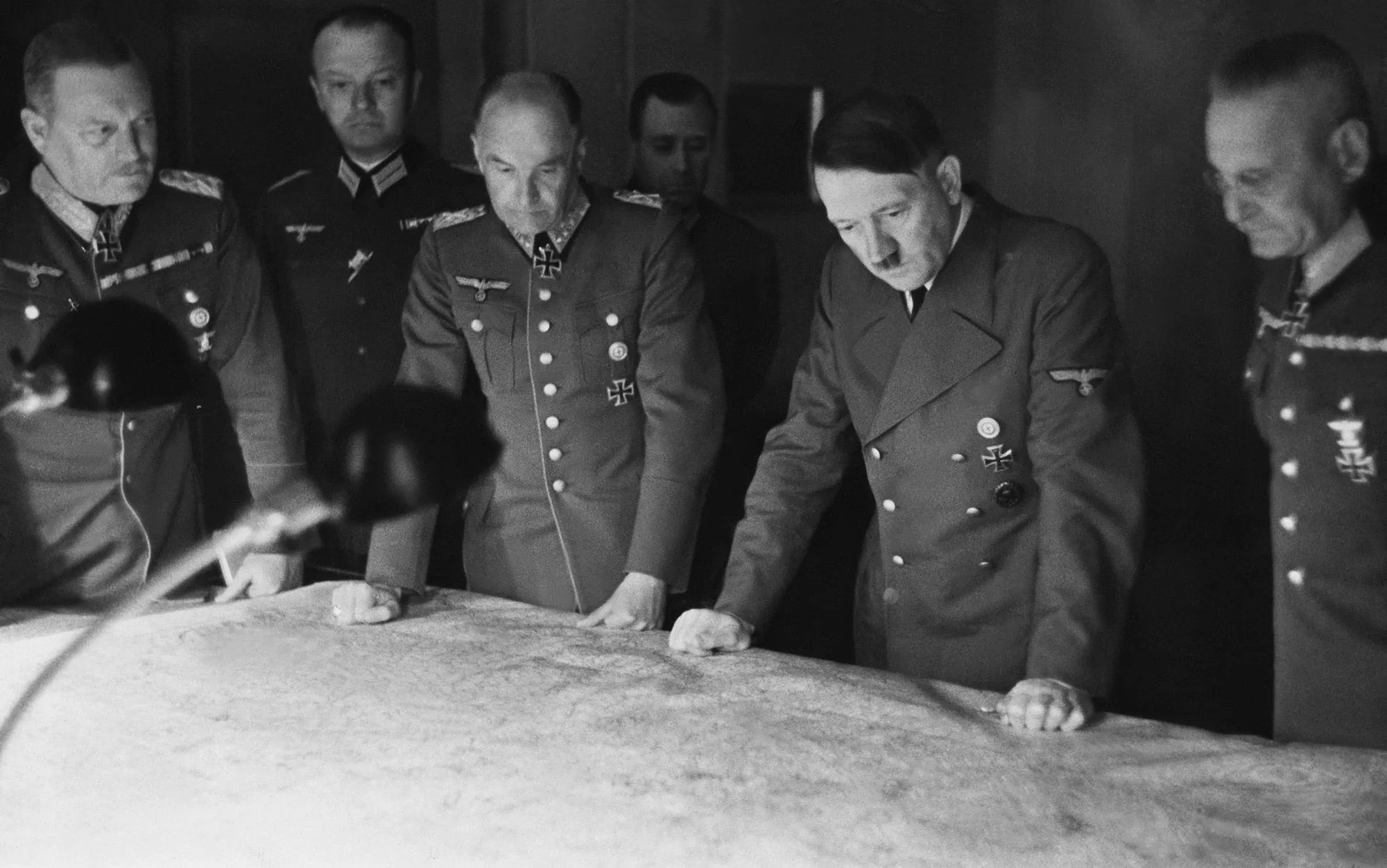
The incident also changed attitudes in Berlin. It showed that the original plan was no longer a secret, and it gave a reason to look for a better one. Manstein was reassigned to command XXXVIII Corps in late January, which took him away from the planning staff, but his ideas were by then known to Hitler’s circle. Hitler himself had floated a proposal on 25 October 1939 which came close to the Manstein idea. On 13 February Hitler ordered a change of strategy, and on 17 February Manstein explained his plan to him at the Reich Chancellery, with Jodl and Rommel present. Hitler was impressed, though he is reported to have distrusted Manstein.
The final plan, Aufmarschanweisung No. 4, was issued on 24 February 1940. It made the thrust of Army Group A through the Ardennes the main effort, the Schwerpunkt. Army Group B, in the north, would play a supporting and diversionary part.
The German order of battle
The Germans had about 3.6 million troops by one count, with 141 divisions, around 7,400 guns, about 2,440 tanks and about 5,600 aircraft. The numbers differ between sources, and the Italians are included in some totals and not in others. What matters is how the forces were divided.
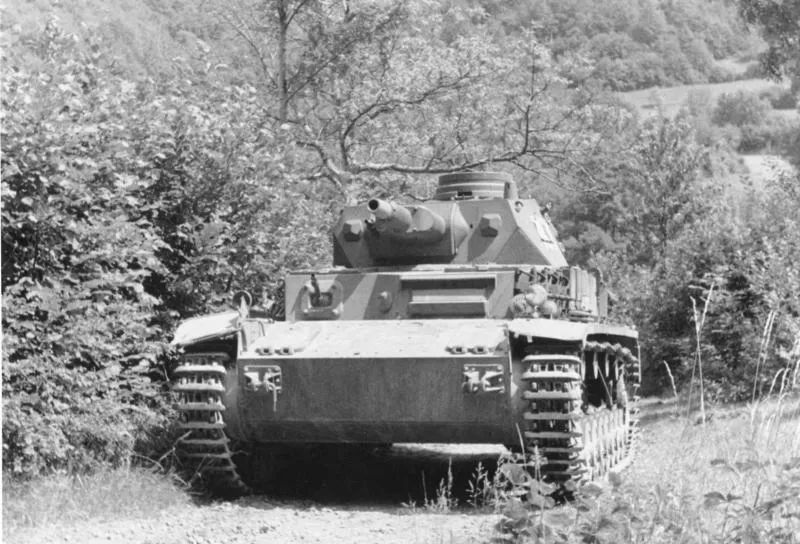
Army Group A, under Rundstedt, had about 45 divisions and was the main striking force. Its armour was grouped in Panzer Group Kleist, which had five panzer divisions and was organised in three corps: XIX Panzer Corps under Guderian, aimed at Sedan; XLI Panzer Corps, aimed at Monthermé; and XV Corps, with two panzer divisions on the flank toward Dinant. Army Group B, under Fedor von Bock, had about 29 divisions, including three panzer divisions, and faced the Netherlands and northern Belgium. Army Group C, under Wilhelm Ritter von Leeb, had about 18 divisions and sat opposite the Maginot Line.
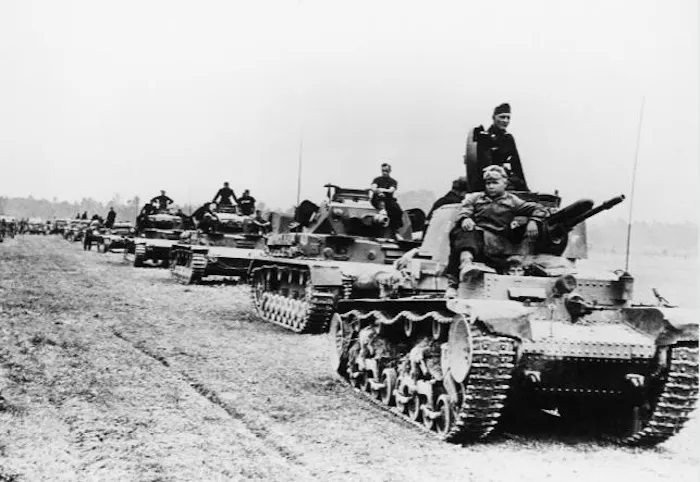
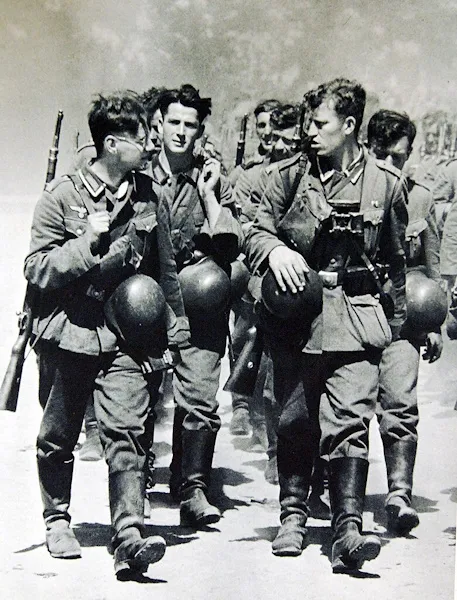
It is worth stressing that most of the German army was not mechanised. The 12 or so armoured and motorised divisions of Army Group A were the exception, and behind them marched the infantry. This was a cutting edge, not a whole army of tanks.
The Allied plan
The Allies had about 3.45 million men and 135 divisions, with more guns and more tanks than the Germans, and fewer aircraft. The French tank force was large and in many ways good, but the tanks were spread among infantry formations and many lacked radios. The French command system, under General Maurice Gamelin, was designed for a slow, methodical war.
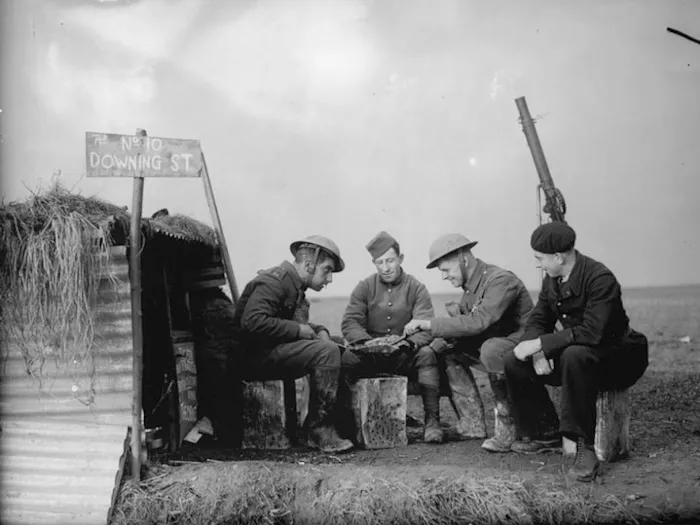
The Allied plan was the Dyle Plan. If Germany invaded Belgium, the best French and British forces would advance into Belgium and take up a line along the River Dyle, to meet the Germans in the central plain. On the far left, the French Seventh Army was to go as far as Breda in the Netherlands. The plan relied on the Belgians holding long enough, and it left the Ardennes sector to weaker forces, since the Ardennes were thought to be almost impassable to a large army. The sector around Sedan, where the Meuse could be crossed, was held by second-rate reserve divisions.
In other words, the Allies prepared to advance to the place where the Germans wanted them, and to leave open the place where the Germans meant to break through.
10 May
The offensive began on 10 May 1940. Germany attacked the Netherlands, Belgium, Luxembourg and, in the Ardennes, the frontier of France. At first, to the Allied commanders, it looked like what they had expected: an attack on Belgium and Holland. The Dyle Plan was put into effect, and the best French and British forces moved north.
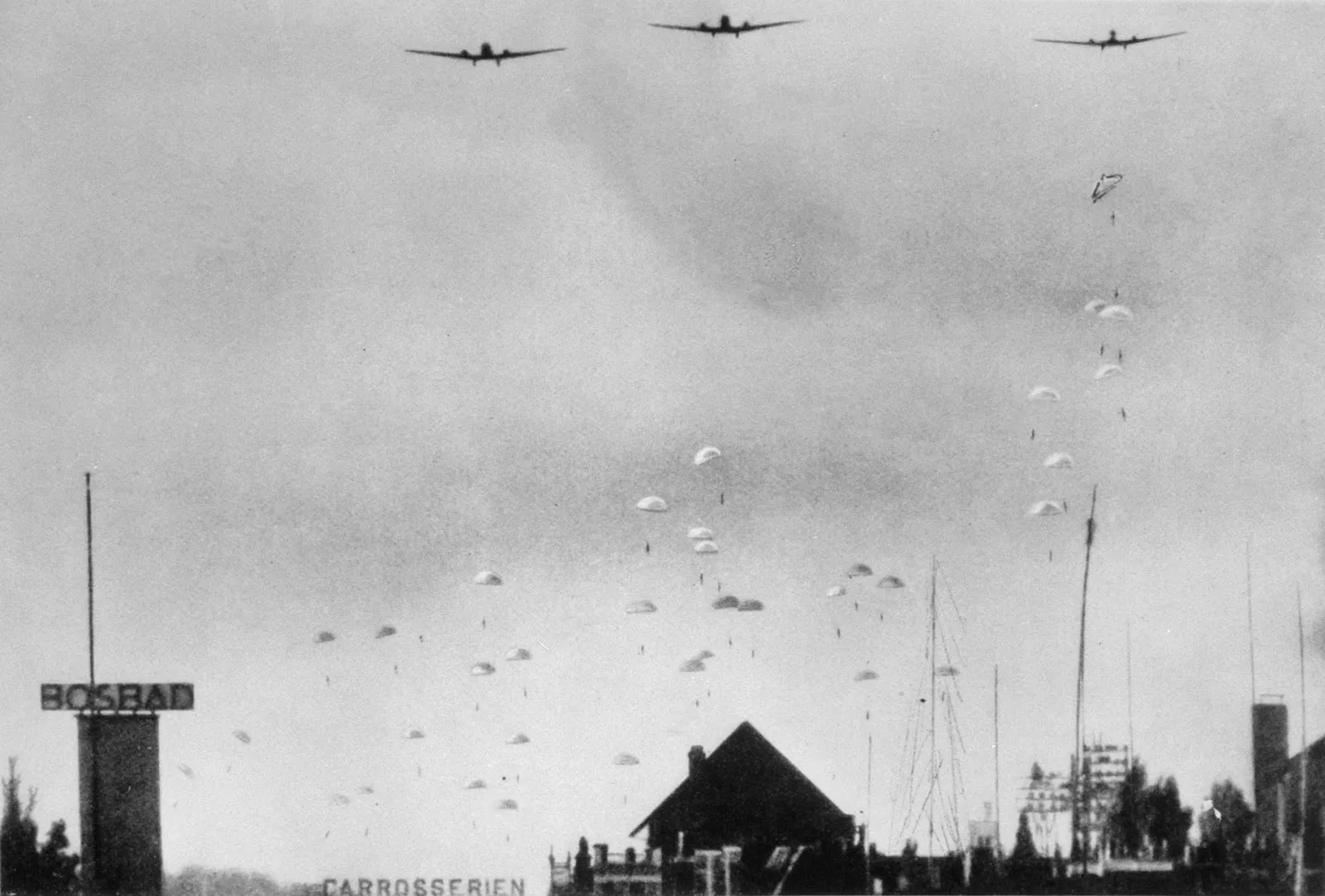
The first hours were marked by airborne operations in both countries. They were meant to seize key points before the defenders could react, and the effect was to make the invasion look like a repeat of 1914 with new tools.
The Netherlands
In the Netherlands, German paratroopers and air-landing troops were dropped around The Hague and Rotterdam at about 04:30 to 05:00. The attack on The Hague was a failure. The troops took the airfield at Ypenburg but could not advance into the city, and the Dutch drove the Germans from the other fields. At Rotterdam the results were better for the Germans. Twelve Heinkel He 59 seaplanes landed troops on the river, and they captured the Willemsbrug. The airfield at Waalhaven fell, and German troops reached the bridges at Dordrecht and Moerdijk.
The cost in transport aircraft was heavy. The Germans lost 224 Junkers Ju 52s over the course of the battle, out of 430 used by the airborne troops. The Dutch air force had 155 aircraft on 10 May and was down to about 70 by the end of the day.
Fortress Holland held, but German armour was coming. The 9th Panzer Division advanced from the south, and on 12 May it captured the Dutch commander in North Brabant, Colonel Leonard Johannes Schmidt, near Loon op Zand. On 13 May Queen Wilhelmina left the Hook of Holland aboard HMS Hereward and went to England. Her daughter, Princess Juliana, and her family had left the previous evening aboard HMS Codrington. The cabinet followed, to set up a government in exile in London.
Rotterdam
On 14 May General Rudolf Schmidt, commanding the German XXXIX Corps, gave the Dutch commander in Rotterdam, Colonel Scharroo, an ultimatum at about 10:30, with two hours to surrender or face the complete destruction of the city. Scharroo asked for the letter to be signed and for a name and rank. The delay mattered, because Schmidt ordered the air strike postponed while the talks went on.
Two groups of Heinkel He 111 bombers approached, 36 from the south and 54 from the north-east. The southern group saw the red flares fired to recall the raid and mostly turned back. The north-eastern group did not, and bombed the city. The cancellation message was recorded as received at Luftflotte 2 at 12:42, about 40 minutes before the bombs fell. The bombers dropped 1,150 bombs of 50 kg and 158 of 250 kg.
The damage was severe. About 642 acres of the city centre were destroyed, along with around 25,000 homes, 24 churches and over 2,000 shops. About 85,000 people were left homeless. The first reports gave about 900 dead. Early claims in Dutch and British media of 30,000 dead were far too high. A list published in 2022 gave at least 1,150 killed over the whole bombing period, including 711 on 14 May.
It is generally believed that Hermann Göring ordered the heavy bombing to force a Dutch national surrender. Albert Kesselring, who commanded Luftflotte 2, later defended it at Nuremberg. The Germans threatened to bomb Utrecht next. In the late afternoon of 14 May the Dutch command decided to stop fighting, and the capitulation was signed early the next morning. General Henri Winkelman, the Dutch commander, had the government’s mandate to surrender when he saw fit. Dutch troops in Zeeland, under French command, held out until 17 May.
Eben-Emael and the bridges
In Belgium, the first blow was struck against the Albert Canal. Early on 10 May, German gliders landed on the roof of Fort Eben-Emael, the strongest fort in the Belgian system, and troops of Sturmabteilung Koch disabled its guns with hollow-charge explosives. The fort surrendered about 24 hours later. Other groups seized bridges over the canal, two of which, at Veldwezelt and Vroenhoven, were taken intact. The Belgian 4th and 7th Divisions withdrew after about 36 hours on the west bank, before British units arrived, around 48 hours after the attack began.
The effect was to open the way for Army Group B to cross the canal and enter the plain of central Belgium. It also had a moral effect on the Belgians, who had trusted the fort.
Hannut and Gembloux
The fighting in central Belgium was real, and it was not all one-sided. On 12 to 14 May, at Hannut, the German XVI Panzer Corps under Erich Hoepner met the French Cavalry Corps under René Prioux. It is often called the first tank battle of the war and the biggest in history up to that time. The figures usually quoted are 623 German and 415 French tanks, but they are disputed, and the source I used says the Germans did not outnumber the French.
The French lost heavily in tanks on 12 and 13 May, including 30 SOMUAs and 75 Hotchkiss H35s, and claimed 160 German tanks disabled. The Germans reported 49 destroyed and 111 repaired. On the 13th the French put their armour into a thin line with no reserves, and the Germans broke through. At Gembloux, a few days later, the French stopped a German frontal attack. The northern front held for a time, and that was what mattered to the Allied commanders, who were still thinking about the Dyle Plan. The real blow was falling elsewhere.
Through the Ardennes
While the Allies looked north, Army Group A moved through the Ardennes. The Belgian and French cavalry units sent forward were light, and they could delay the Germans but could not stop them. The roads were narrow, and the German columns were long, with tanks, trucks and horse-drawn wagons jammed together. The traffic was a real danger. A determined air attack on the columns would have been costly. It did not come, in part because the Allied commanders did not think the main thrust was coming that way.
On 12 May the French Ninth Army withdrew its cavalry divisions before meeting any German troops, and German units reached the Meuse that afternoon. Sedan itself was taken without resistance.
Sedan
The crossing of the Meuse at Sedan was the decisive action of the campaign. The Germans had about 60,000 men, around 770 tanks (the source gives both 771 and 788) and about 1,470 aircraft in support. Three of Panzer Group Kleist’s panzer divisions were there: the 1st, 2nd and 10th. The French had about 20,000 men, 300 tanks and 174 guns in the sector, mostly from the French Second Army under General Charles Huntziger, and they were largely reserve and second-line troops.
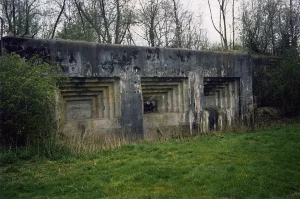
On 13 May, German bombers and Stukas flew about 3,940 sorties over the sector. Sturzkampfgeschwader 77 alone flew some 500 Ju 87 sorties. The bombing was about two hours late. Few of the French bunkers were hit directly. The effect was on the men inside, who were cut off from each other by broken telephone lines and shaken by the noise.
The infantry went across in rubber boats. The 1st Panzer Division and the Großdeutschland Regiment took Hill 247 and crossed near Gaulier and Pont Neuf. The 2nd Panzer Division crossed at Donchery, where the last bunker surrendered at 22:40. The 10th Panzer Division had it hardest. It lost 81 of 96 boats to artillery fire, and the crossing at Wadelincourt was achieved by a small team of 11 men under Feldwebel Walter Rubarth, who breached the defences.
At about 19:00 the same day, a false report of German tanks near Bulson led the French 55th Division to abandon its positions and much of its heavy equipment. It is known as the Panic of Bulson. On 14 May, French armour counterattacked at Bulson, but it came late, and the 7th Tank Battalion lost 10 of its 13 tanks. The divisional commander ordered a retreat at 10:45.
The Allies tried to destroy the bridges that the Germans built. On 14 May, RAF and French bombers attacked, and 47 of 109 RAF bombers were shot down. The bridges were damaged, and at most one was destroyed.
Stonne
The German breakthrough was secured, but the fight for the heights around it went on. The village of Stonne, south of Sedan, changed hands 17 times between 15 and 17 May. One French Char B1-bis tank, commanded by Pierre Billotte, is credited with taking 140 hits and destroying 13 German tanks in a single action. The Germans took the village for the last time at 17:45 on 17 May. That ended French hopes of wiping out the bridgeheads.
German casualties at Sedan between 12 and 17 May were about 5,000 killed or wounded. The Allies lost more than 5,000 killed, wounded or captured, as well as 167 aircraft.
The drive to the sea
With the bridgehead secure, the panzers turned west. Guderian and Rommel, who commanded the 7th Panzer Division, advanced at a speed that surprised their own superiors. Rommel’s division covered about 48 km in 24 hours. The French Ninth Army collapsed on 15 May, and the same day the French prime minister, Paul Reynaud, telephoned Churchill, a sign of how quickly the French government was losing confidence.
The high command in Berlin was alarmed. Hitler and the army staff feared that the armour was getting too far ahead of the infantry and exposing its flanks. Guderian resigned on 17 May after a dispute with Kleist, and a halt order was issued that day, then again on 22 and 24 May. Many commanders ignored or stretched the first orders, and the advance continued. The panzers reached the Channel coast near Abbeville on 20 May, and the Allied armies in Belgium and northern France were cut off.
On 21 May the British tried a counterattack at Arras, which failed to cut through the German spearhead. It did, however, alarm some German commanders. By 24 May the Germans had taken Boulogne and surrounded Calais, which held out until 26 May.
The halt order and Dunkirk
The best-known halt order was issued by Rundstedt late on 23 May and approved by Hitler on 24 May. It stopped the armour at the canal line short of Dunkirk, and it was rescinded on 26 May. Historians argue about why it was given. The tanks needed rest and repair, the infantry had to catch up, and there was a feeling that the Luftwaffe could finish the job. The pause gave the Allies a few days to organise a defence of the perimeter and an evacuation.
Operation Dynamo ran from 26 May to 4 June. Over 800 vessels took part, and the total evacuated was 338,226 Allied soldiers, of whom 98,671 left from the beaches and 239,555 from the harbour. The numbers on the first day, 27 May, were only 7,669. On the last day, 4 June, they were 26,175. Many were French. More than 100,000 French soldiers were evacuated, and about 40,000 were captured when the perimeter fell on 4 June. Nearly 400 small boats were involved by 31 May.
The cost was high. The Royal Navy lost 226 British ships of 693 engaged. The BEF lost 2,472 guns, almost 65,000 vehicles and nearly all of the 445 tanks it had sent to France. The RAF flew more than 3,500 sorties and lost 145 aircraft, against 156 for the Luftwaffe. On 27 May the German bombing is estimated to have killed about 1,000 civilians in Dunkirk. On 4 June Churchill told the House of Commons that the evacuation was a “miracle of deliverance”, but that wars are not won by evacuations.
Belgium surrenders
The Belgian Army, which had about 600,000 men in the field at the start, was driven back and finally surrendered on 28 May 1940. That left the northern flank of the British and French forces uncovered. Belgian merchant ships and fishing boats had been placed under British control or used to help the evacuation.
Fall Rot
With the Allied armies in the north gone, Germany turned south. Fall Rot (Case Red) began on 5 June against the French forces that remained behind the Somme and the Aisne. Italy entered the war on 10 June. On 14 June German forces occupied Paris unopposed. On 18 June German commanders met French officials to negotiate, and on 22 June the second armistice was signed at Compiègne. Under its terms Marshal Pétain’s government at Vichy replaced the Third Republic, and Germany occupied the north and the Atlantic coast. French forces ceased fighting on 25 June.
The cost
The figures for the whole Battle of France, which includes Fall Rot, are as follows. Germany lost 27,074 killed, 111,034 wounded and 18,384 missing, a total of 156,547, with a further 6,029 to 6,040 Italian casualties. The German forces lost about 1,236 to 1,428 aircraft and 795 to 822 tanks. Allied losses were about 73,000 killed, 240,000 wounded and 15,000 missing, with about 1.75 million captured, a total of about 2.08 million. They included 1,274 French and 931 British aircraft, and 1,749 French and 689 British tanks.
The Luftwaffe also paid a price. It lost 347 aircraft on 10 May alone, and by the end of May about 30 percent of its aircraft had been written off and 13 percent badly damaged. That mattered for what came next.
Why it worked
Historians have long argued about why Germany won so quickly. An older view holds that it was a triumph of a new form of war, Blitzkrieg, with tanks and aircraft working together, as set out by writers such as J. F. C. Fuller and Basil Liddell Hart. A more recent view, associated with Robert Doughty and Karl-Heinz Frieser, holds that the plan was a return to older ideas of manoeuvre and encirclement, using new tools. The economic historian Adam Tooze described the victory as a risky improvisation, resting on a concentration of force and on German economic mobilisation, not on strategic genius.
There is wide agreement about the French side. The French intelligence was poor, the command was slow and rigid, and the best Allied divisions were in the wrong place. The tanks were as good as the German ones in many respects, and there were more of them, but they were not used in concentrated formations. The German army was not as modern as its reputation. The Manstein plan worked because the Allies cooperated with it by moving north, and because the Germans accepted a very large risk.
What is uncertain
Many numbers vary by source. The size of the German forces is given as about 3.6 million with 141 divisions, but totals differ depending on whether Italy is included. The tank numbers at Hannut are disputed. The number of German tanks at Sedan is given as 771 or 788. The death toll at Rotterdam has been given as about 900 and at least 1,150 over the whole period, with 711 on the day, and early claims of 30,000 were wrong. The reasons for the halt order are still argued. And the dates of Fall Gelb itself depend on where one draws the line between it and Fall Rot.
Conclusion
Fall Gelb was a gamble that worked. The first plan was a cautious copy of 1914, and it was replaced because a handful of officers argued that the Allies could be tempted north and cut off from behind. The risk was large. The panzer divisions had to cross a wooded region in narrow columns and force a river against an army that was supposed to be among the best in the world. If the Allies had read the plan correctly, or if the French bunkers had held for a day or two longer at Sedan, the result could have been very different.
It is also worth remembering what the victory did not do. It did not end the war. Britain survived, the Luftwaffe was weaker than it had been, and Germany had won a campaign without solving the strategic problem of what to do next. In six weeks France was out of the war. The consequences of that ran for years, and for the people of the Netherlands, Belgium and France they began on the morning of 10 May.
Did you know?
- The original Fall Gelb plan was rewritten after a German aircraft carrying plan documents made a forced landing at Mechelen in Belgium on 10 January 1940.
- The final plan was issued on 24 February 1940, after Manstein explained it to Hitler at the Reich Chancellery on 17 February.
- Most of the German army in 1940 was not mechanised. It marched on foot and relied on horses.
- On 13 May 1940 German aircraft flew about 3,940 sorties over Sedan, but few French bunkers were hit directly.
- A false report of German tanks led the French 55th Division to abandon its positions at Bulson on the evening of 13 May.
- The village of Stonne changed hands 17 times in three days.
- The bombing of Rotterdam on 14 May was first reported as killing 30,000 people. The real toll was about 900 at first count.
- Operation Dynamo evacuated 338,226 Allied soldiers from Dunkirk between 26 May and 4 June 1940.