Why France
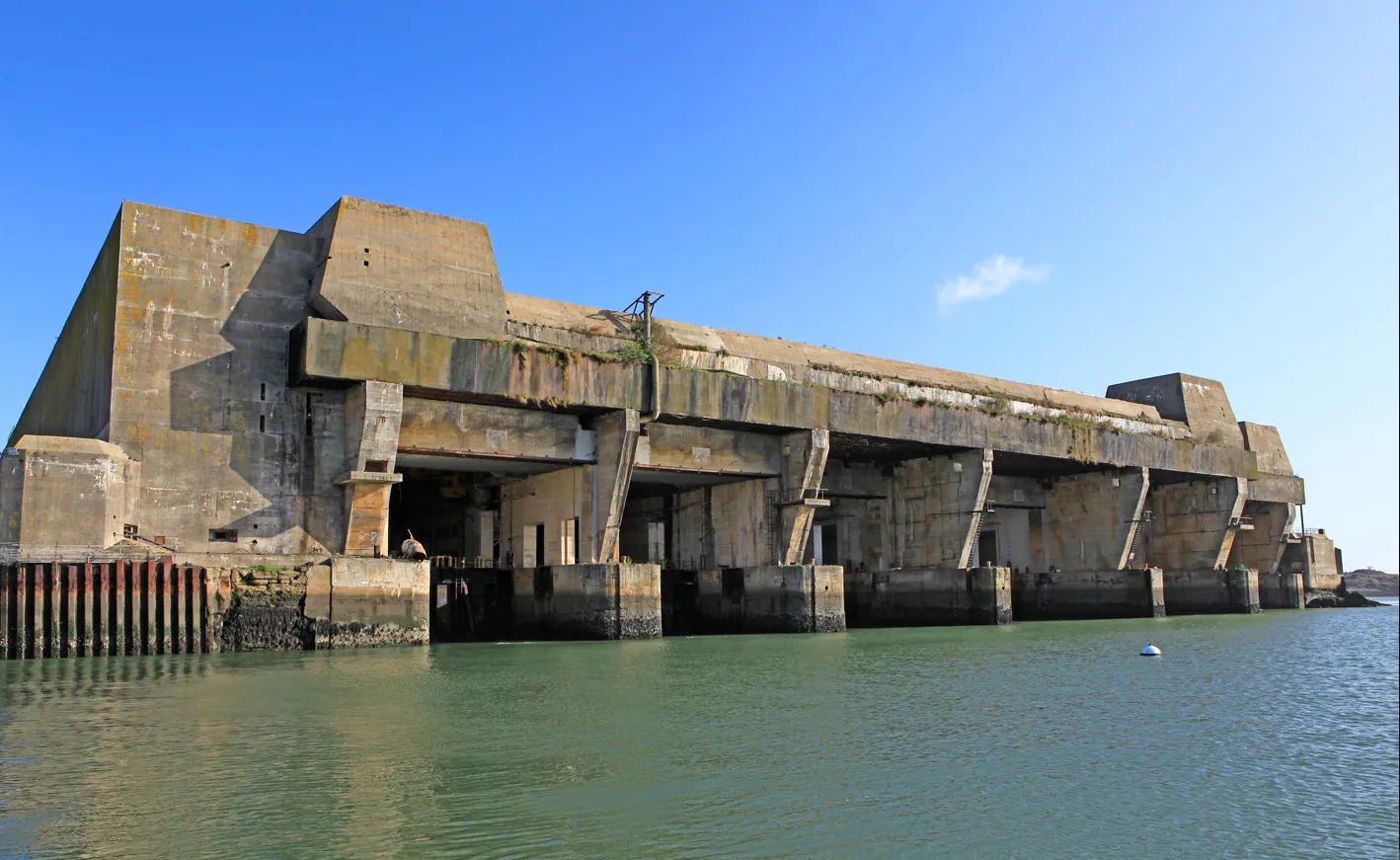
When France fell in 1940, Germany gained ports on the Atlantic coast. For the U-boat fleet it was a huge gain: boats no longer had to sail the long way round Britain from Germany before reaching the shipping lanes. Admiral Karl Donitz, head of the U-boat arm, wanted bases as close to the convoy routes as possible, and the French harbours of Brest, Lorient, Saint-Nazaire, La Rochelle and Bordeaux fitted the plan.
The submarines needed protection while in port, where they were most exposed. The answer was concrete: bomb-proof pens big enough to refit and repair boats under a roof too thick for bombers to penetrate. Building began in 1940 and 1941 and was overseen by the Organisation Todt, with forced labour widely used, including concentration camp inmates.
Lorient: the biggest base
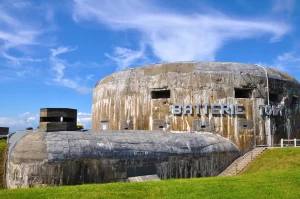
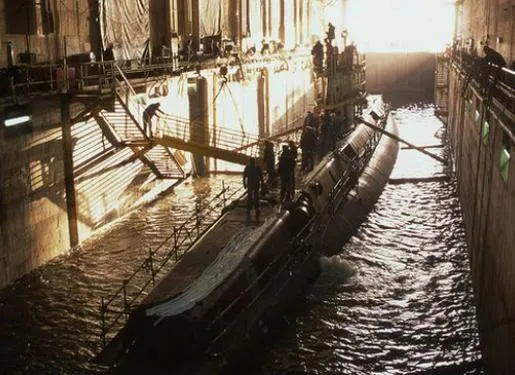
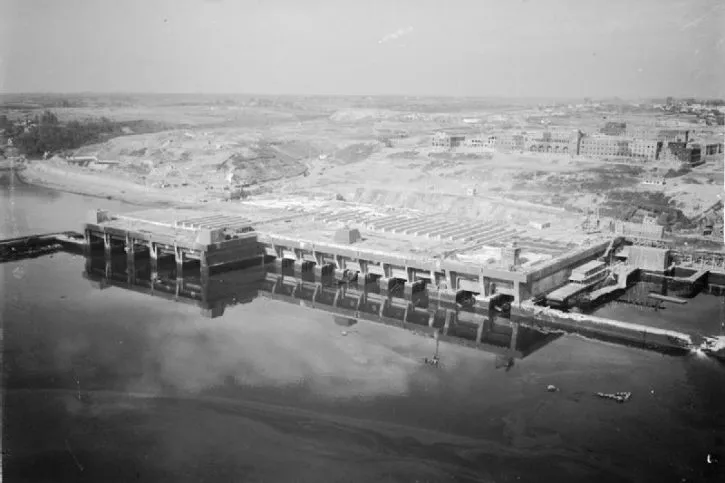
Lorient, on the coast of Brittany, held the largest of the bases. The Scorff pens were started in late 1940, and the main Keroman blocks followed in 1941. Keroman I was built between February and September 1941. It used a boat lift and rails to carry submarines from the water into five enclosed bays. Keroman II followed in December 1941. Keroman III, with seven double wet pens that boats could enter directly from the sea, had a roof between about 3.4 and 7 metres of reinforced concrete. A fourth block was started in 1943 but only its foundations were ever finished. In all, around 30 submarines could be sheltered at once. Donitz had his headquarters at a villa near Larmor-Plage.
The Allies bombed Lorient hard. Between mid-January and mid-February 1943 aircraft dropped many thousands of bombs on the town, and nearly 90% of the city was destroyed. The pens themselves survived. The last U-boat sailed for Norway on 27 August 1944, but the German garrison held out in the pocket until May 1945.
After the war the French Navy took over the base and named it after Jacques Stosskopf, a naval engineer and member of the Resistance who was executed in September 1944. At its peak it served up to ten submarines and about 2,000 people. The navy left in the mid-1990s. Today parts of the site are industrial units and racing yacht workshops, and it includes the Cite de la Voile Eric Tabarly, a sailing exhibition. The Keroman Submarine Museum offers tours of Keroman III and the preserved submarine Flore, built in 1961.
Saint-Nazaire: fourteen pens and a raid
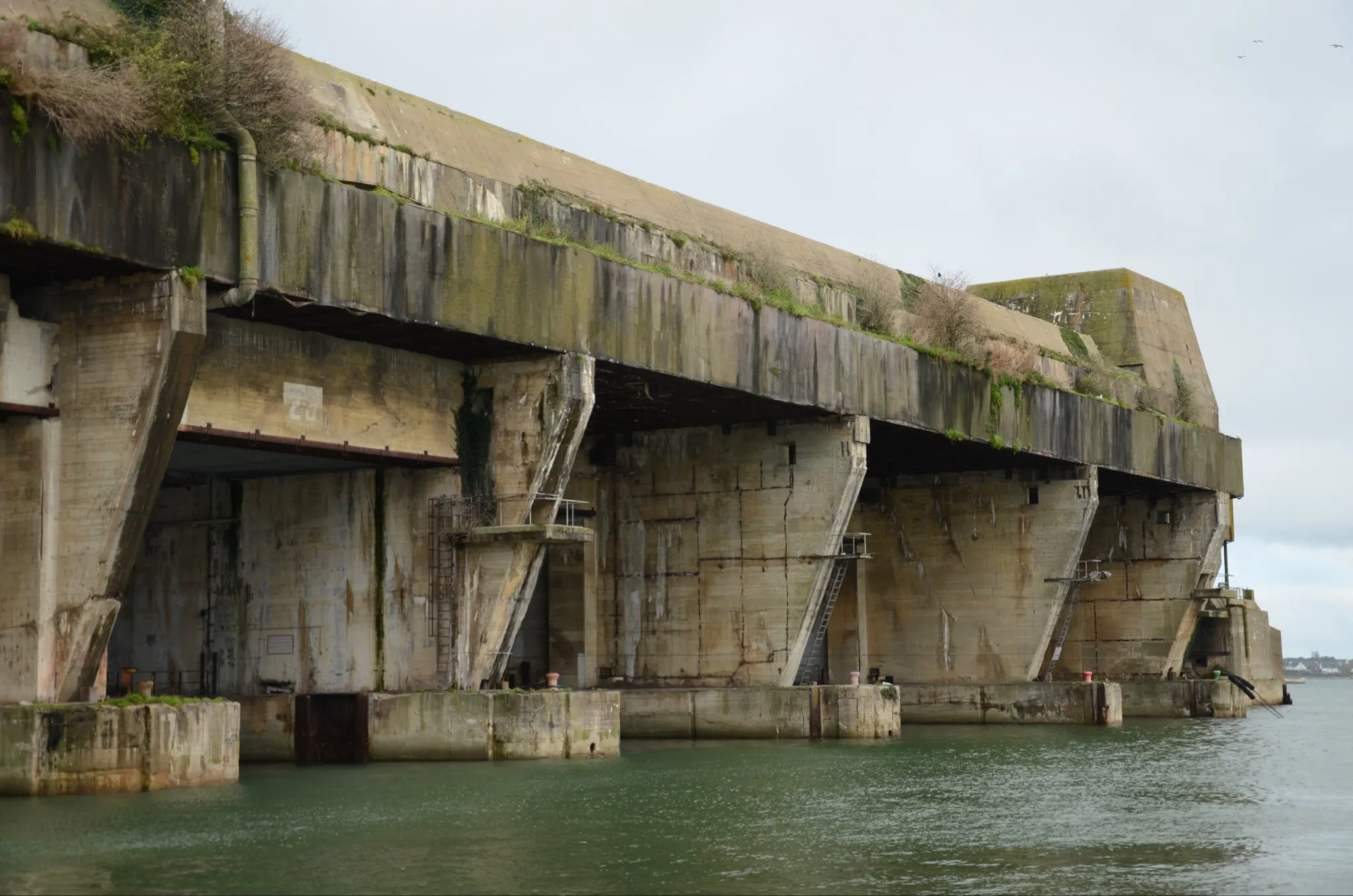
Saint-Nazaire’s base was built from February 1941 on the site of the old transatlantic docks. Admiral Donitz opened it on 30 June 1941, and U-203 was the first boat to use a pen. In all there were 14 pens, around 300 metres long and 130 metres wide, with a roof about 8 metres thick built in four layers of concrete, granite and steel beams. One source puts the concrete at about 480,000 cubic metres. A fortified lock, dug from late 1942, was completed in early 1944.
The pens were not the main target of the British commando raid on Saint-Nazaire in March 1942. That operation went for the dry dock gates, and the bunkers were left standing. The site was abandoned for many years after the war until the town redeveloped it from 1994. It now holds the Escal’Atlantic museum, built like a transatlantic liner, and the French submarine Espadon, launched in 1960.
La Rochelle-La Pallice: the one you cannot visit
At La Pallice, the harbour for La Rochelle, work began in April 1941 and boats began to arrive in autumn 1941. The bunker has 10 pens and measures roughly 192 by 159 metres. It had a double roof about 7.3 metres thick over the first five pens and nearly 6.5 metres over the rest. The 3rd U-boat Flotilla was based here until August 1944.
That August, six Tallboy bombs hit the bunker. According to one source they badly damaged the upper roof but did not break through the lower one, and no boats were hit. The Germans were besieged here for months, with U-boats still bringing in supplies, and the last one, U-255, arrived on 3 May 1945. The base surrendered on 8 May.
The bunker was used as a location for the 1981 films Das Boot and Raiders of the Lost Ark. It is described as largely unused today, though another source says the French Navy partly uses it for storage. It is not open to the public.
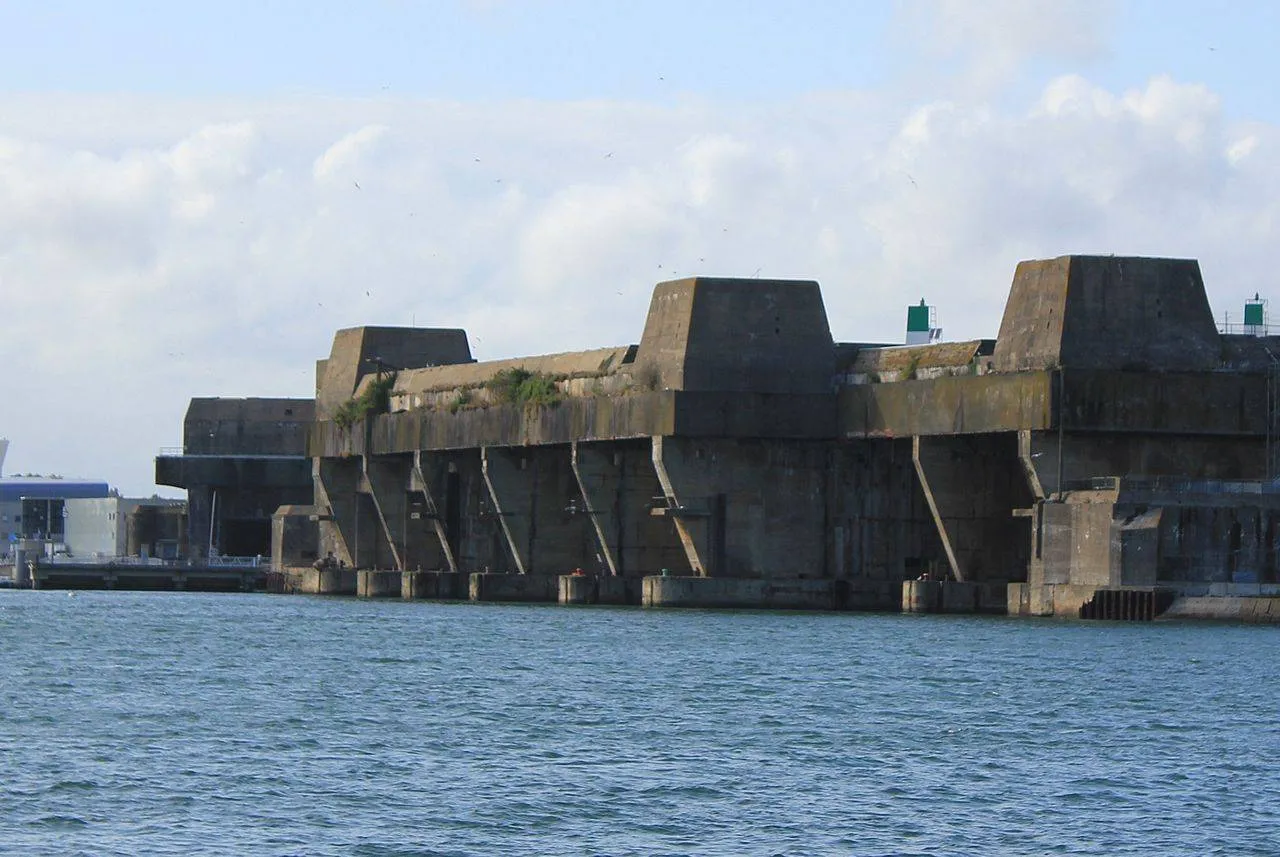
Bordeaux: from Italian base to art centre
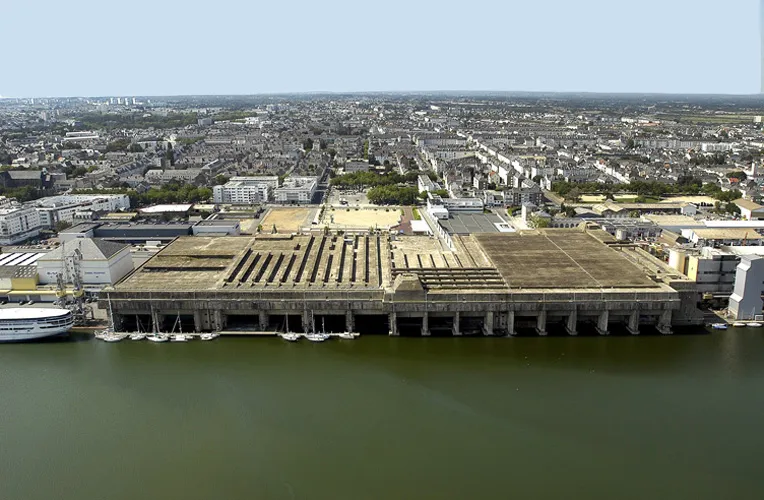
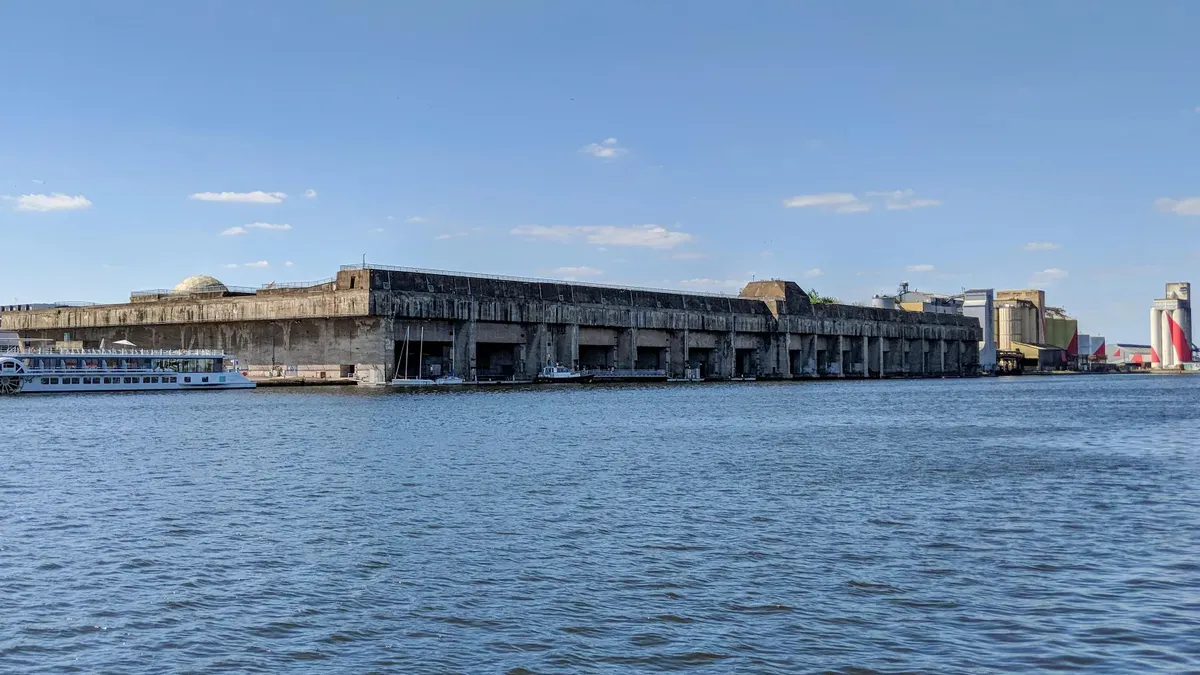
Bordeaux was first home to Betasom, the Italian submarine base that opened in August 1940 and ran until September 1943. About 30 Italian boats operated from there at its peak, with some 1,600 men based on shore. The German bunker followed, begun in September 1941. It measures about 245 by 162 metres and 19 metres high, with a roof around 5.6 metres thick. The 12th U-boat Flotilla was formed here on 15 October 1942, and the first U-boat to use the bunker was U-178 in January 1943. The British commando raid Operation Frankton also targeted the port.
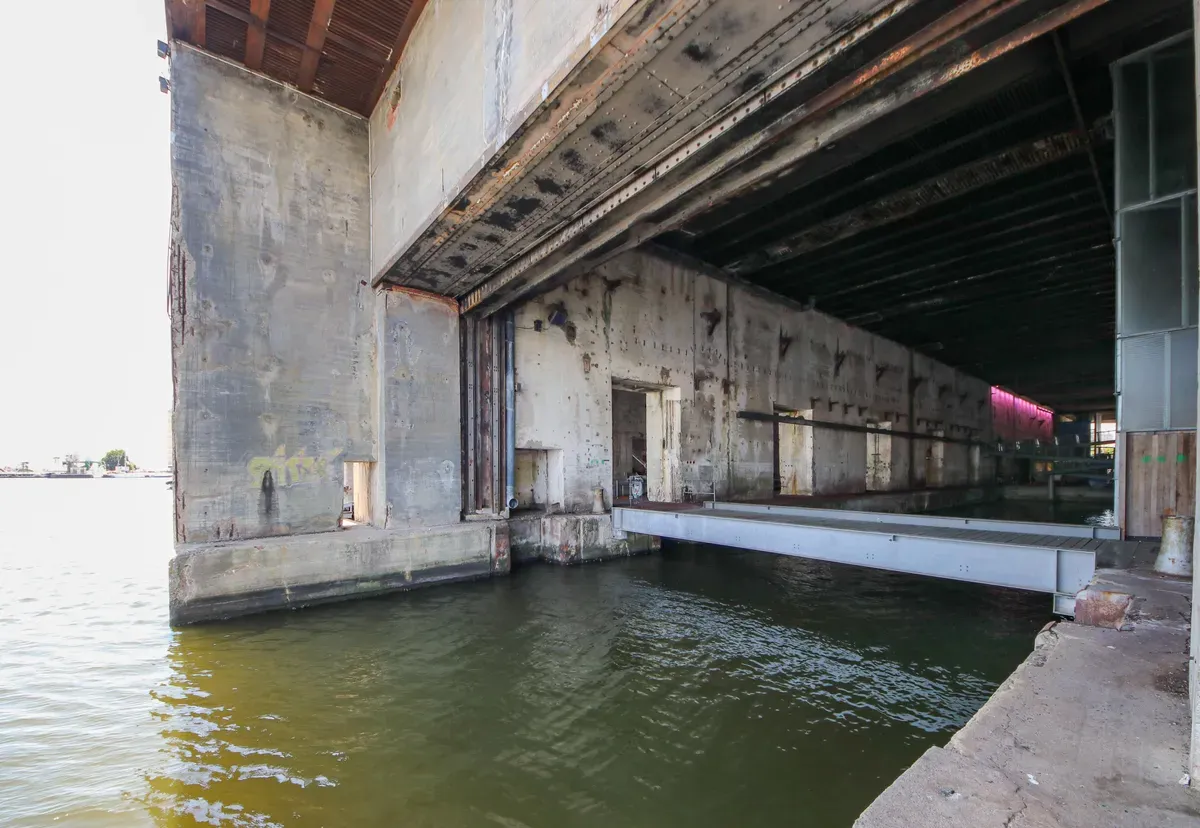
The bunker proved impossible to demolish. Since 2020 the site, around 42,000 square metres, has been the Bassins de Lumieres, a digital art centre. Visitors walk through projections on footbridges and quays above four water basins, each about 100 metres long and 22 metres wide.
Brest
Brest’s single bunker was started in 1941 and was the largest in the port. When the German garrison surrendered to American forces in September 1944 it had enough explosives to cripple the bunker, but did not use them because of a nearby hospital. Brest is still a French naval base, and the bunker remains in use.
Bombs and concrete
Allied bombing of the pens began in 1941 and intensified in 1942 and 1943, but the results were poor. According to one count, around 27,000 tonnes of bombs were dropped on the bases, with the biggest share, about 35%, on Brest and about 25% on Lorient. Tallboy bombs, first used against the bunkers in August 1944, did more damage than earlier weapons, but the thickest roofs held. Cities suffered instead: the ports were flattened while the concrete stood.
Visiting
The easiest way in is Lorient, where the museum offers tours of Keroman III and the submarine Flore. Saint-Nazaire has Escal’Atlantic and the Espadon, and Bordeaux has the Bassins de Lumieres, which charges for entry. La Pallice is not open to visitors, and Brest is an active naval base. Opening hours and prices change, so check them before you go.
Conclusion
The submarine pens of France were built to be indestructible, and in that they s쳮ded. The U-boat war moved on and the cities around them burned, but the concrete remained. Some bunkers now hold boats, some hold paintings, and some hold nothing at all.
Did you know?
- About 4.4 million cubic metres of concrete went into the French U-boat bases.
- Lorient lost nearly 90% of its city to bombing in early 1943, yet the pens survived.
- The Saint-Nazaire pens had a roof about 8 metres thick, built in four layers.
- Admiral Donitz opened the Saint-Nazaire base on 30 June 1941.
- The Bordeaux base was first an Italian submarine base called Betasom.
- Scenes for Das Boot and Raiders of the Lost Ark were filmed at La Pallice.
- Bordeaux's pens are now home to a digital art centre of about 42,000 square metres.
- The Lorient base was named after Jacques Stosskopf, a Resistance member executed in 1944.
- Brest's bunker was left unharmed in 1944 because of a nearby hospital.