A desert with a bad name
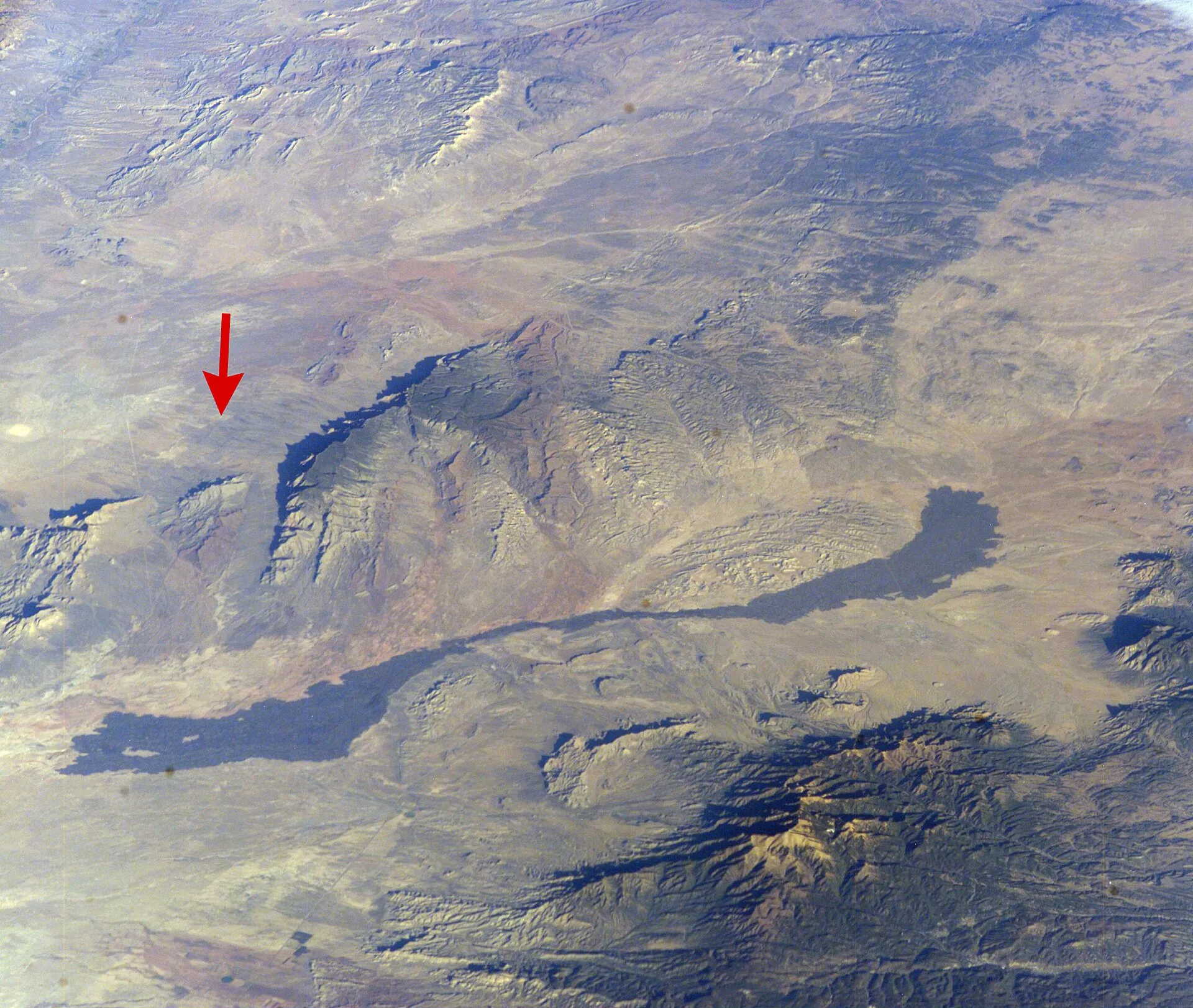
Drive south from Socorro, New Mexico, and the Rio Grande bends away to the west while the land on the other side of the mountains flattens into a long, pale basin of grass, yucca and sand. Spanish travellers called it the Jornada del Muerto, the Dead Man’s Journey. The basin is roughly 160 miles from north to south and about 20 miles wide, and the old trail across it was around 90 miles of nearly waterless going. Wikipedia ties the name to the bones of a German found along the route in 1670, though like most place-name stories that one is hard to pin down.
The reason travellers took the shortcut at all was simple. In 1598 Juan de Oñate left the river and crossed the Jornada because the way was shorter and easier for ox-drawn carts and livestock than following the winding Rio Grande. The crossing took about five days with little to drink, and early travellers later named the pueblo of Socorro, a Spanish word for “help.” The trail was part of the Camino Real de Tierra Adentro, the great road north from Mexico.
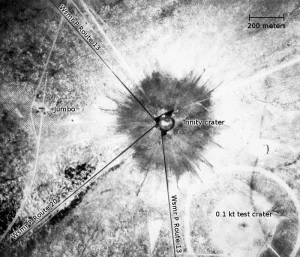
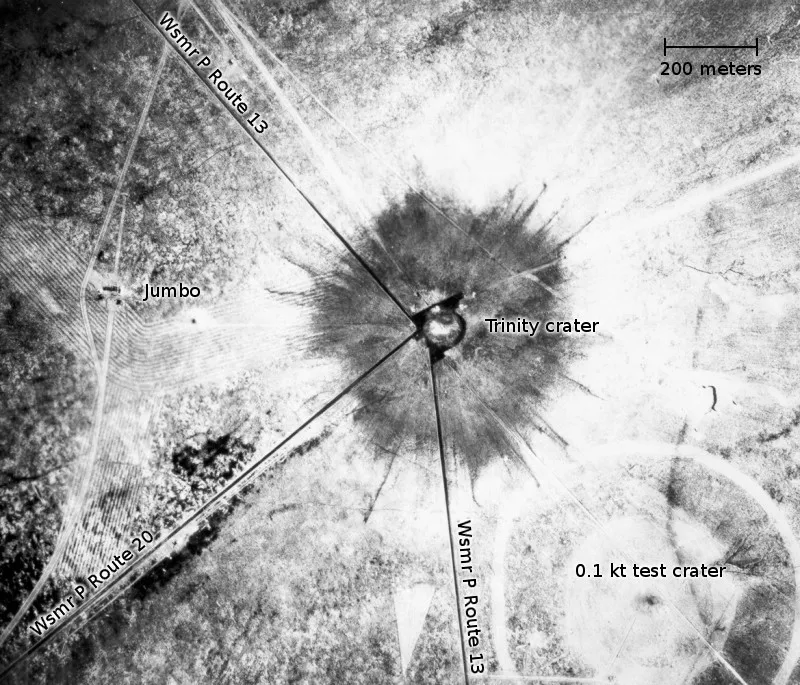
It is a strange fact that the emptiest, hungriest stretch of that road became the place where humanity first set off a nuclear explosion. What it holds is a shallow dip in the ground, a black obelisk, a restored adobe ranch house, a giant steel vessel and a lot of sky. This is Trinity Site. The explosion itself, the weapon and the people in the bunkers have their own post, Trinity Test. This one is about the ground: why this basin was picked, what stands on it, what happened to the people who lived around it, and what you can still see.
Choosing the ground
Why the project wanted a full-scale test at all is covered in our Trinity test post. This post is about the ground. Kenneth Bainbridge led the site study and its committee, which included Oppenheimer, and the requirements were flat terrain, little haze, light winds, a dry climate that would not bring rain and fallout, and enough isolation to evacuate people if things went wrong. Los Alamos was ruled out at once. The mesa was too small for an explosion in the kiloton range, and security needed some distance between the laboratory and the blast. Eight places were considered, among them the Tularosa Valley, the Jornada del Muerto, the lava flats of El Malpais, the San Luis Valley in Colorado, a desert training area and San Nicolas Island in California, and Padre Island in Texas. By summer 1944 the list was down to two: a military area in southern California and the Jornada.
Groves took the New Mexico site in the end, and the accounts of why make a nice little story. According to the National Atomic Museum’s history of the site, hosted on Project Gutenberg, the California option meant getting permission from General George Patton, whom Groves reportedly called the most disagreeable man he had ever met. Another telling says only that Patton was using the area. Either way, the committee settled on the Jornada in early September 1944. Wikipedia gives 7 September.
The land was already in military hands. The Alamogordo Bombing and Gunnery Range had taken over the area in early 1942 to train bomber crews, and its ranchers had been removed. In September 1944 a remote section of about 18 by 24 miles was set aside for the test, at the northern end of the range, about 35 miles south-east of Socorro. Nearly half a million people lived within 150 miles. The range was renamed the White Sands Proving Ground on 9 July 1945, a week before the test, and it is now White Sands Missile Range.
The ranch house
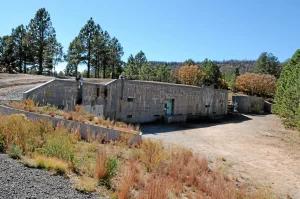
There was one building of any size near the chosen ground, about two miles from where the tower would stand: the McDonald Ranch House. A German immigrant named Franz Schmidt built it in 1913, after an earlier house a mile away burned down, and in the 1920s he sold it to George McDonald and moved to Florida. The one-storey adobe house covers about 1,750 square feet. It has a cistern, an ice house, a windmill, a stone wing added in the 1930s and the remains of a barn and corrals, all inside a low stone wall.
The McDonalds left early in 1942 under protest. They chose to go to court rather than accept the Army’s settlement and were awarded about $60,000 for their land. They hoped to get the ranch back after the war. They did not, and in the 1970s the Army announced it would keep the land permanently. The house sat empty until Manhattan Project people arrived in 1945.
In July 1945 the northeast bedroom became the assembly room, with its windows covered in plastic to keep out dust and sand. Brigadier General Thomas Farrell signed for the plutonium hemispheres on 11 July and handed them to Louis Slotin, and the core was put together there on 13 July. That story belongs to our Trinity test post.
Jumbo, the vessel that wasn’t needed
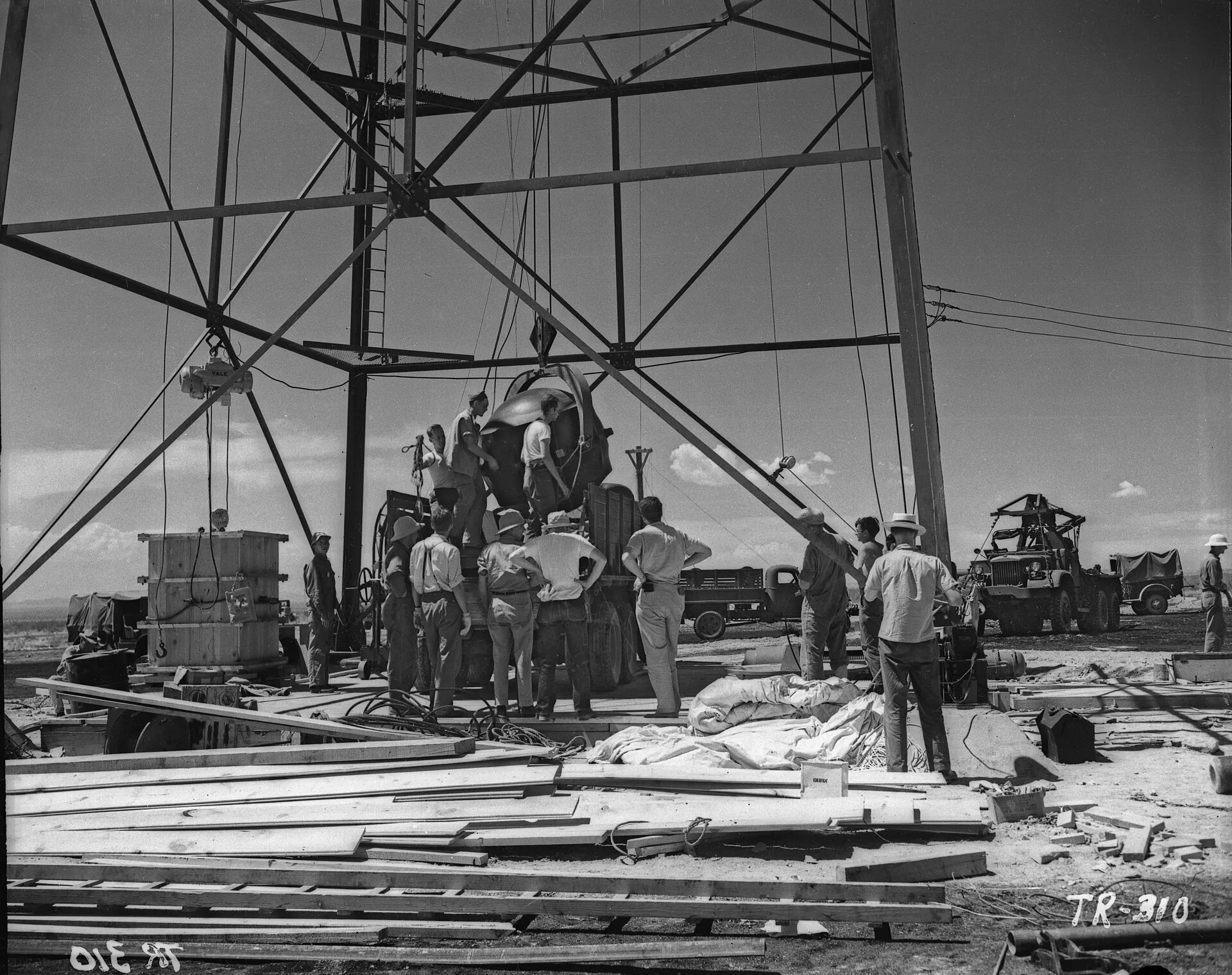
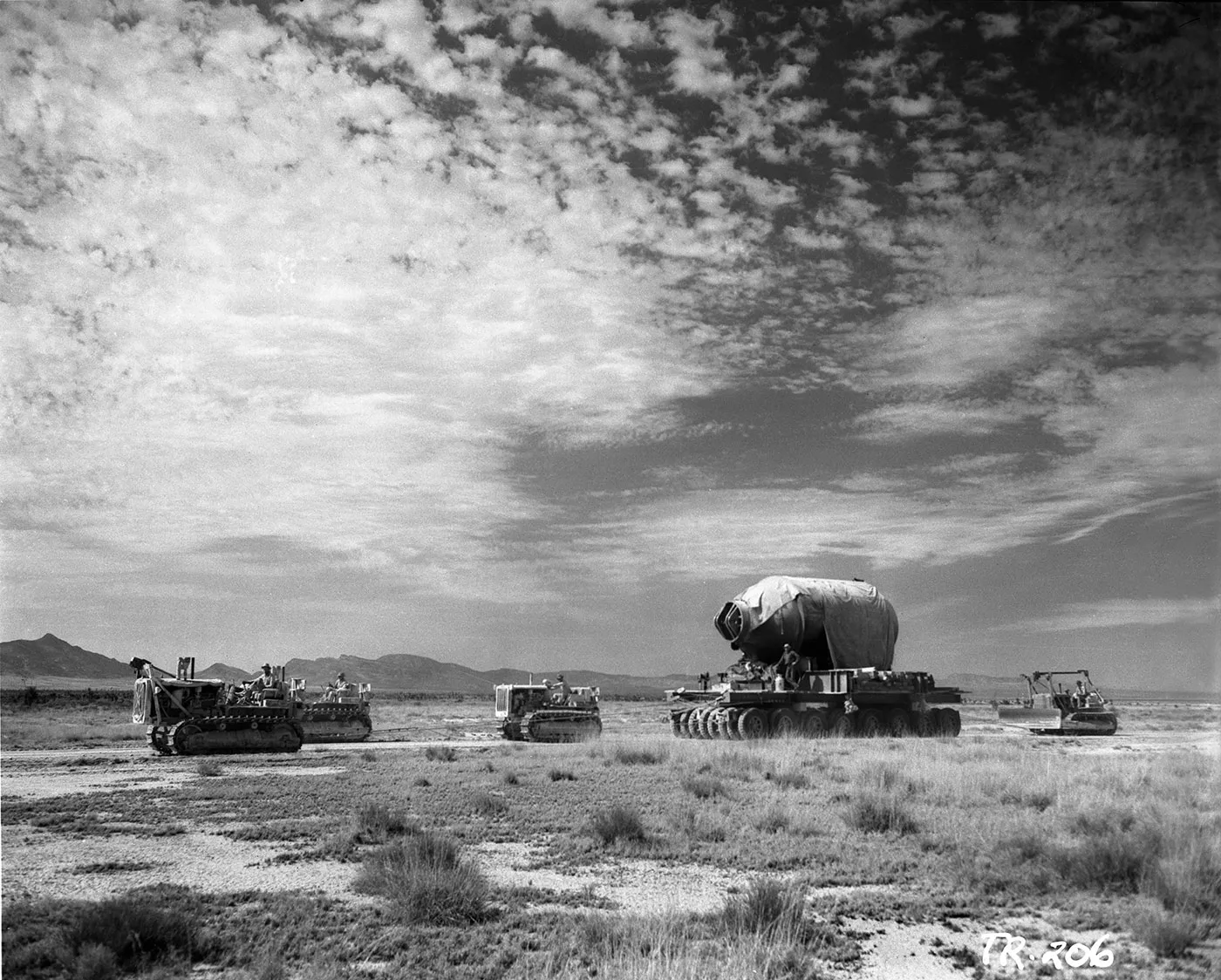
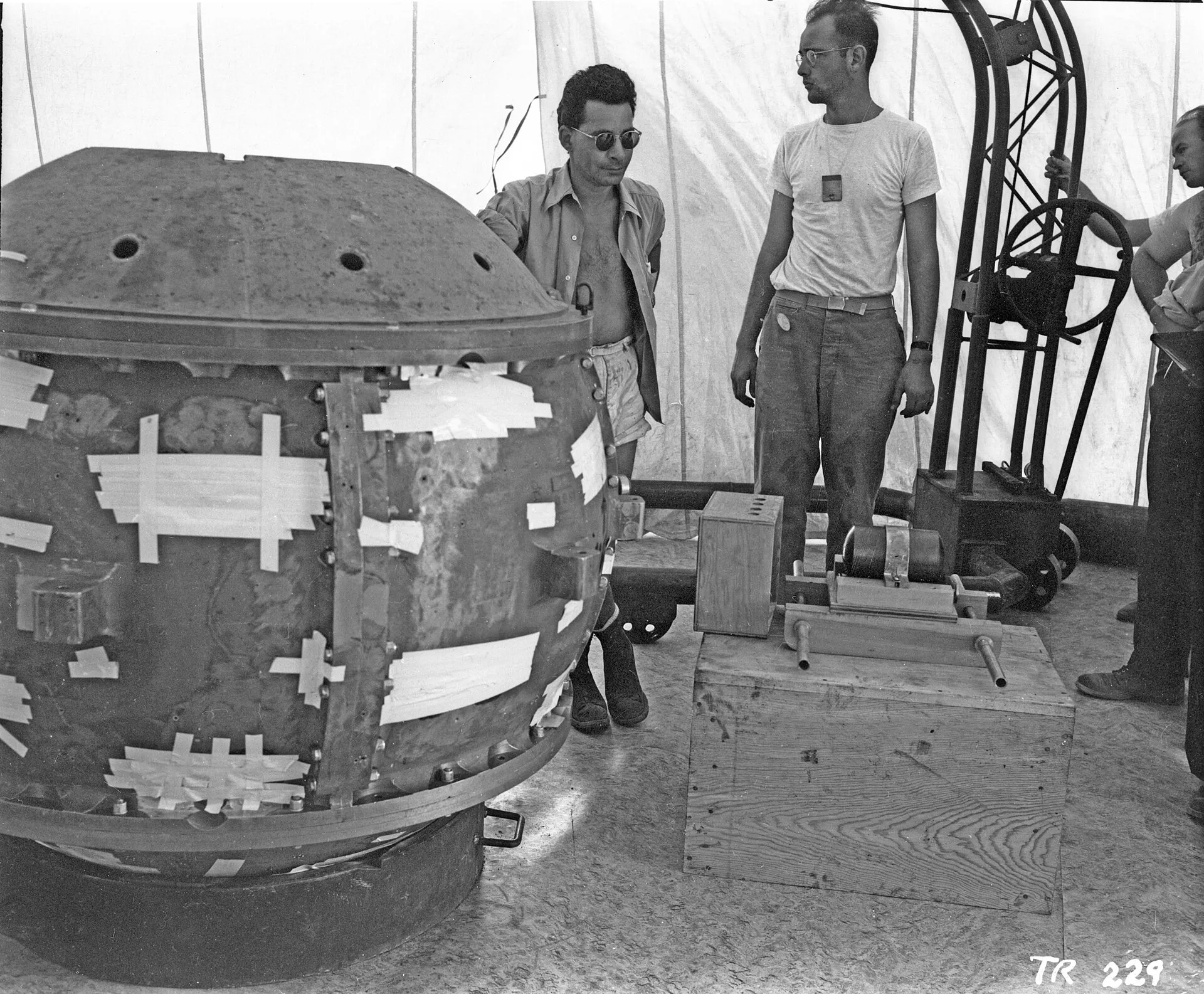
The strangest object on the site is a vessel called Jumbo. It was built by Babcock and Wilcox in Barberton, Ohio, and its purpose was to contain the plutonium if the explosive charge went off without a nuclear explosion. Wikipedia gives the delivered dimensions as about 10 feet in diameter, 25 feet long, with 14-inch walls and a weight of 214 short tons. The museum history says about 28 feet long and 12 feet 8 inches wide, with walls up to 16 inches, so the dimensions depend on which document you trust. The 214-ton figure is steady across sources.
By spring 1945 the decision had been made not to use it, for reasons set out in our Trinity test post. Instead it was hung from a tower about 800 yards from the shot tower. Jumbo survived the blast. The tower holding it did not.
It had a final act. In April 1946 an Army team put eight 500-pound bombs inside it. The museum history says the bombs were placed at the bottom rather than the centre and blew both ends off, and Wikipedia adds that who authorised the attempt remains controversial. What is left of it now stands outside the fenced ground zero area.
Reading the ground
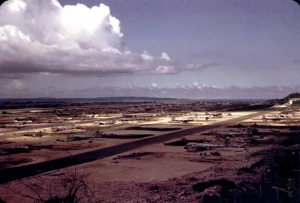
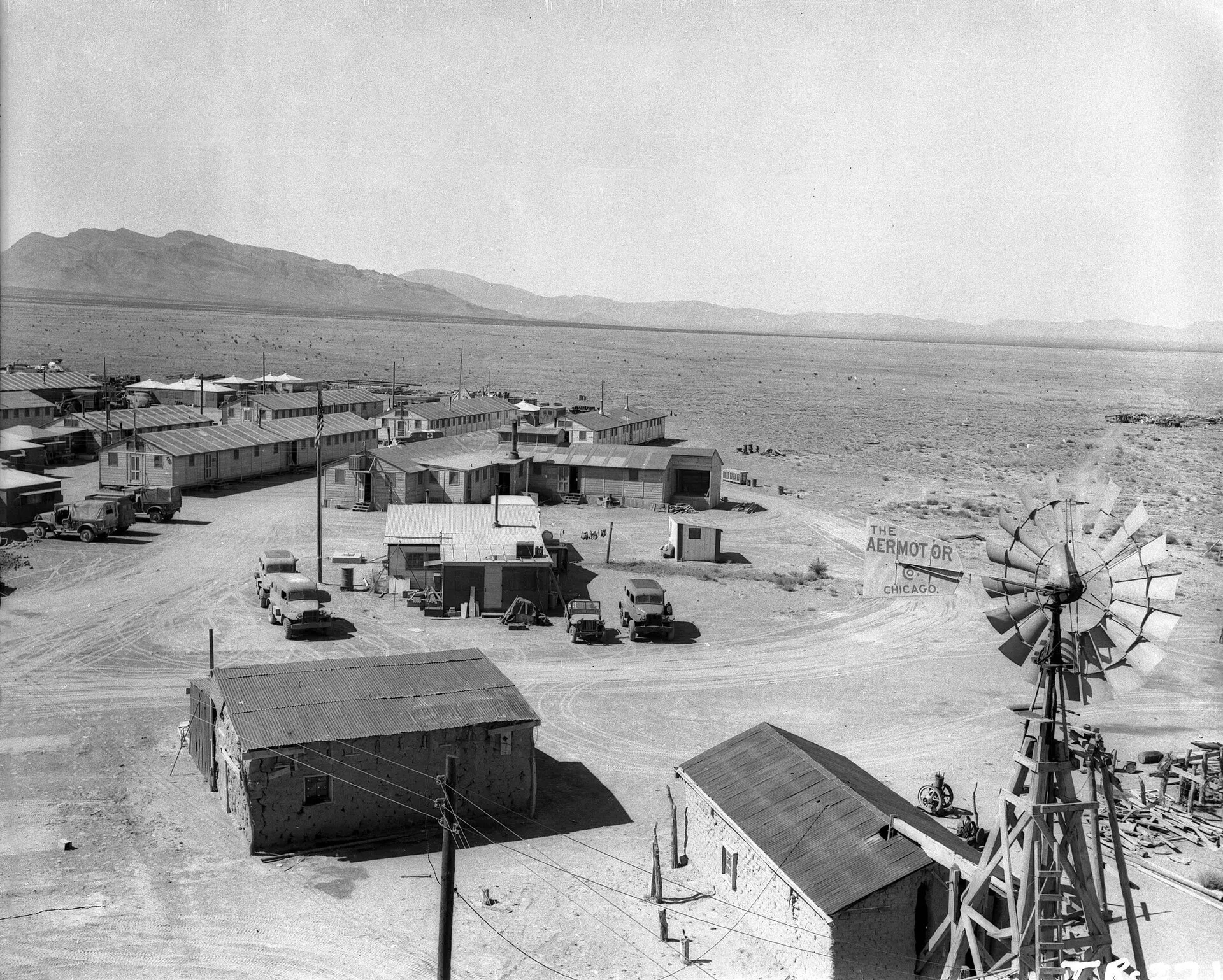
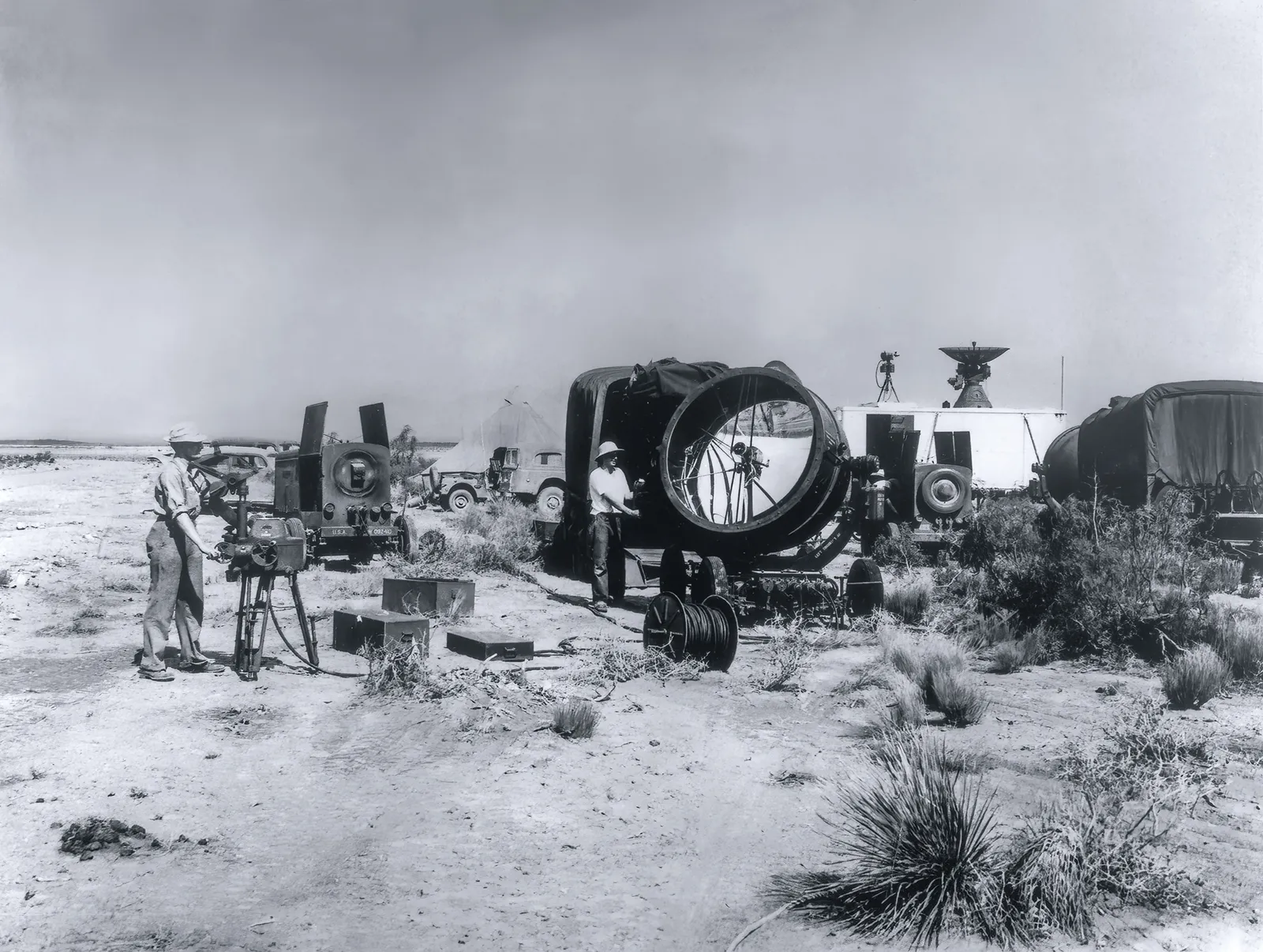
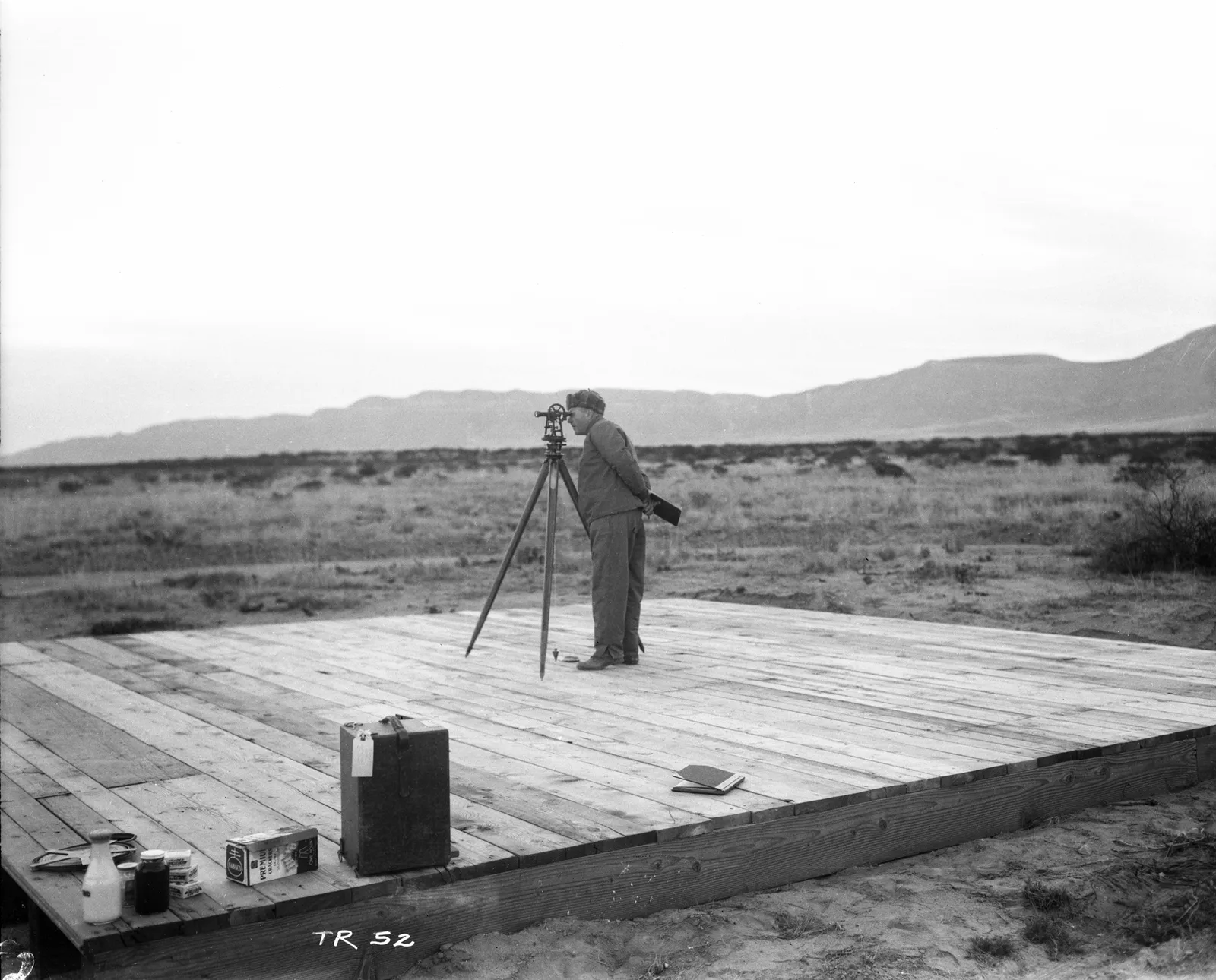
The site was built up through autumn 1944 and the first half of 1945. The OSTI history says supplies arrived at a railroad siding at Pope, about 25 miles to the west, and base camp construction started in autumn 1944 and sped up early in 1945. Base camp itself stood about ten miles south-west of ground zero, at an abandoned ranch that the Gutenberg history calls the Dave McDonald ranch, and the Department of Energy says about 200 scientists, soldiers and technicians lived there in summer 1945.
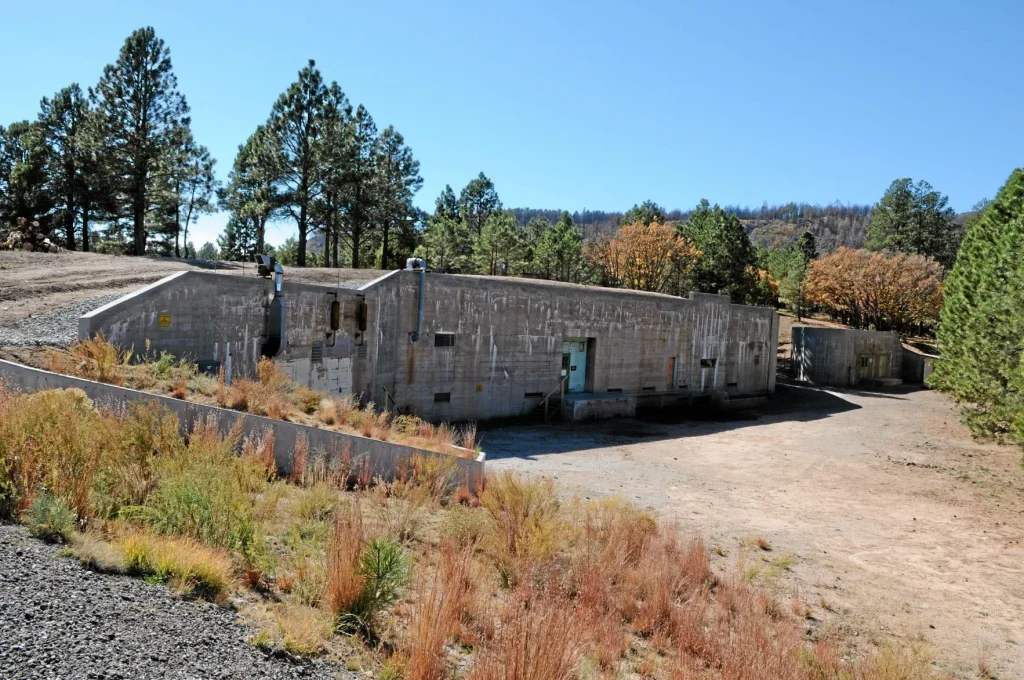
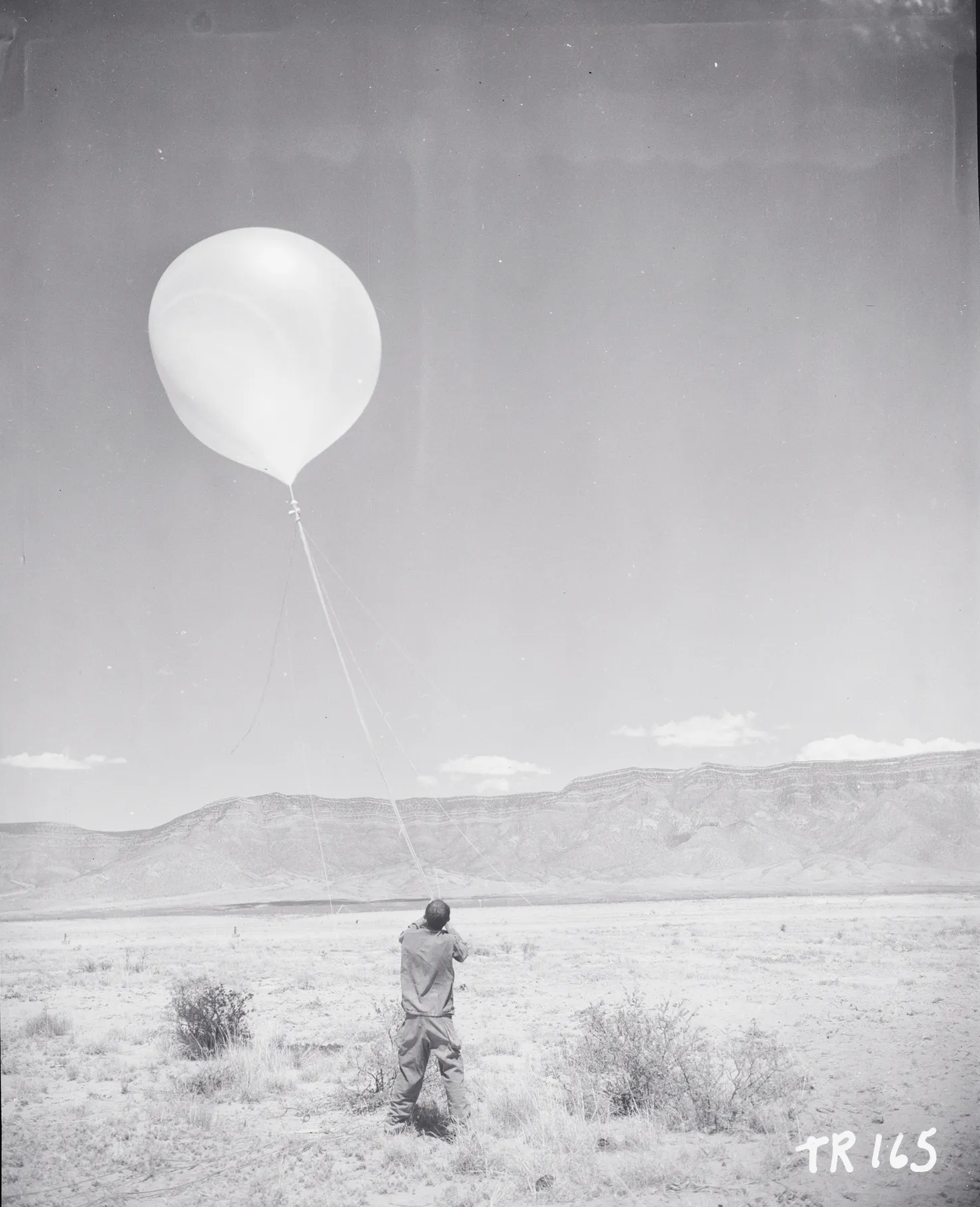
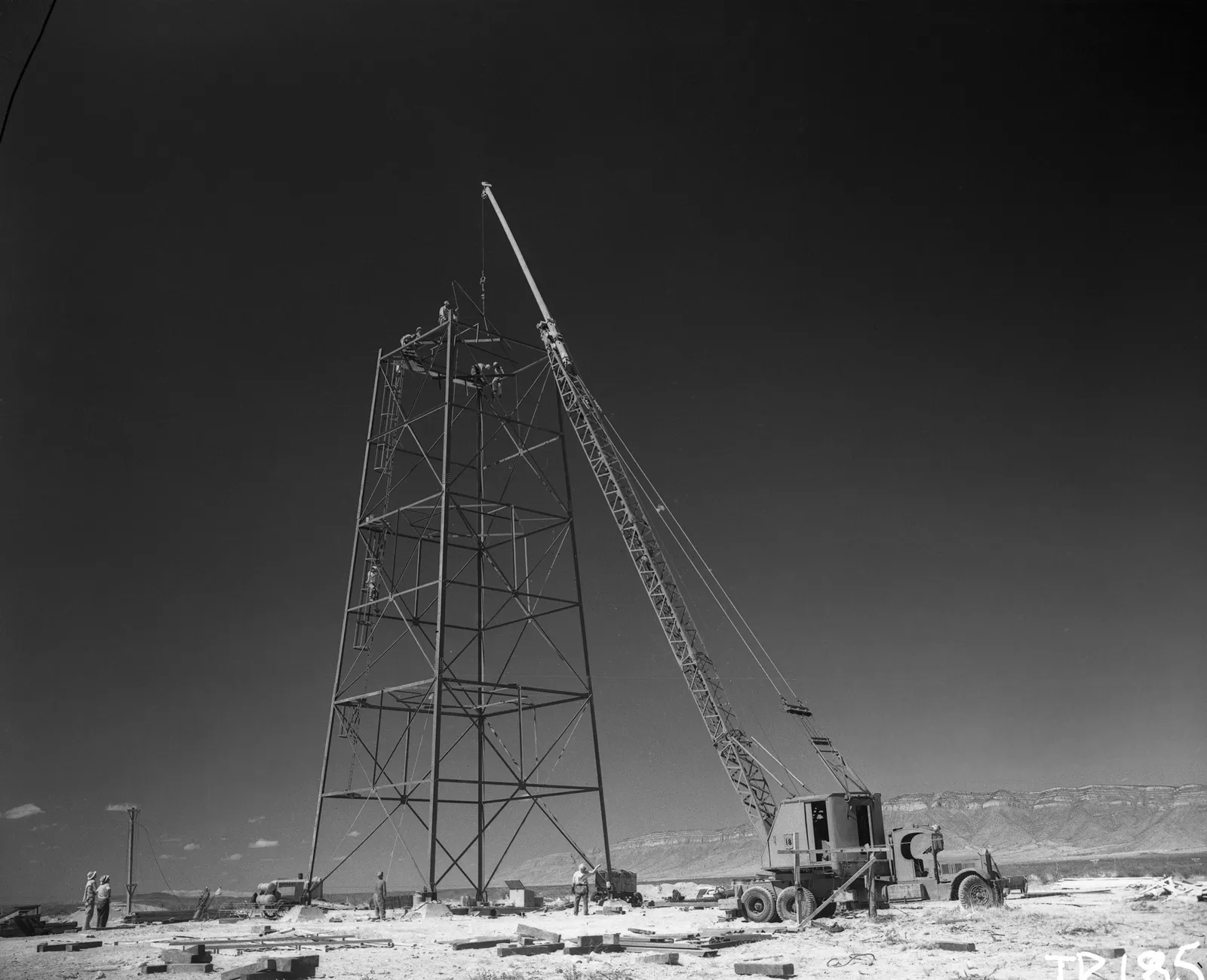
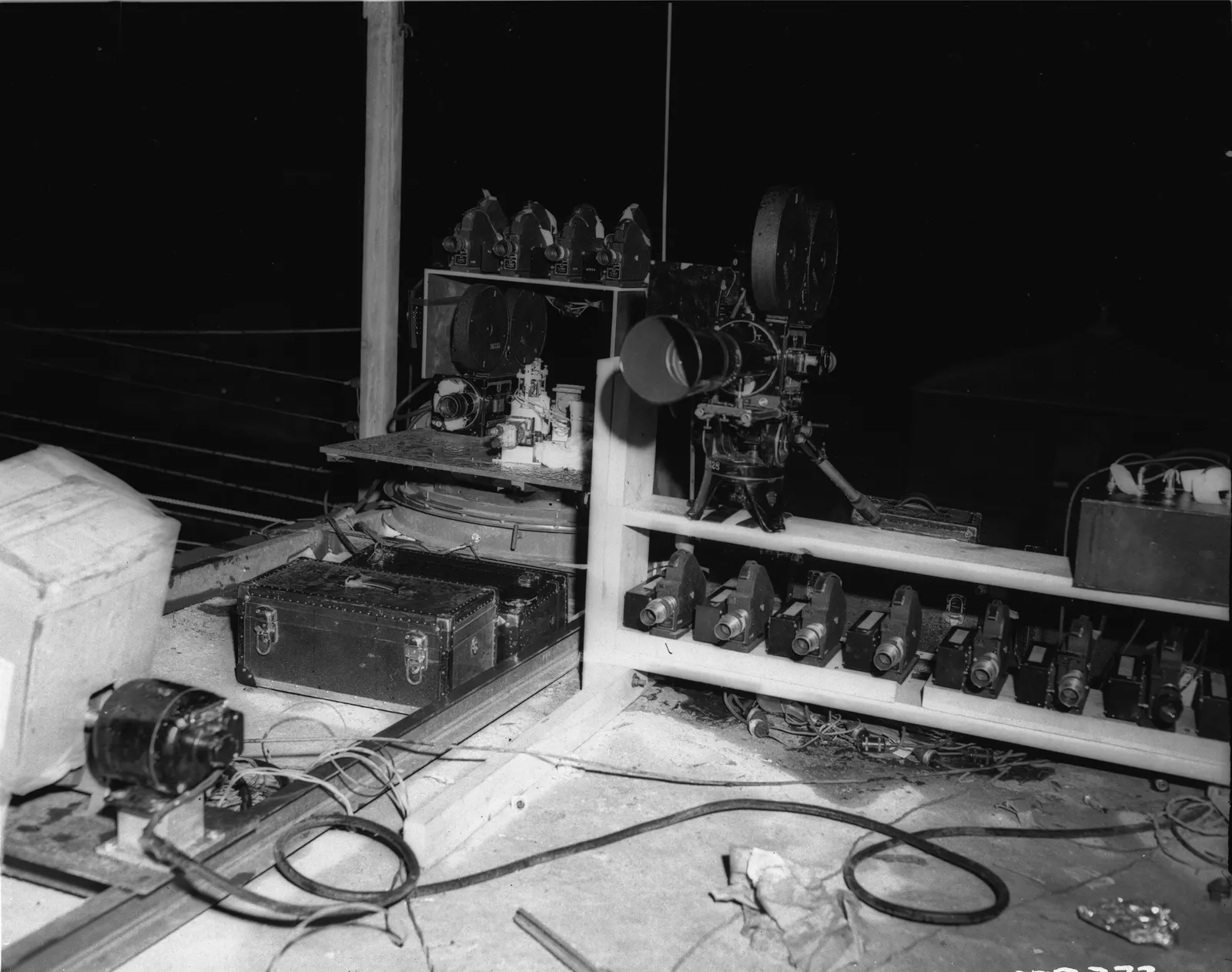
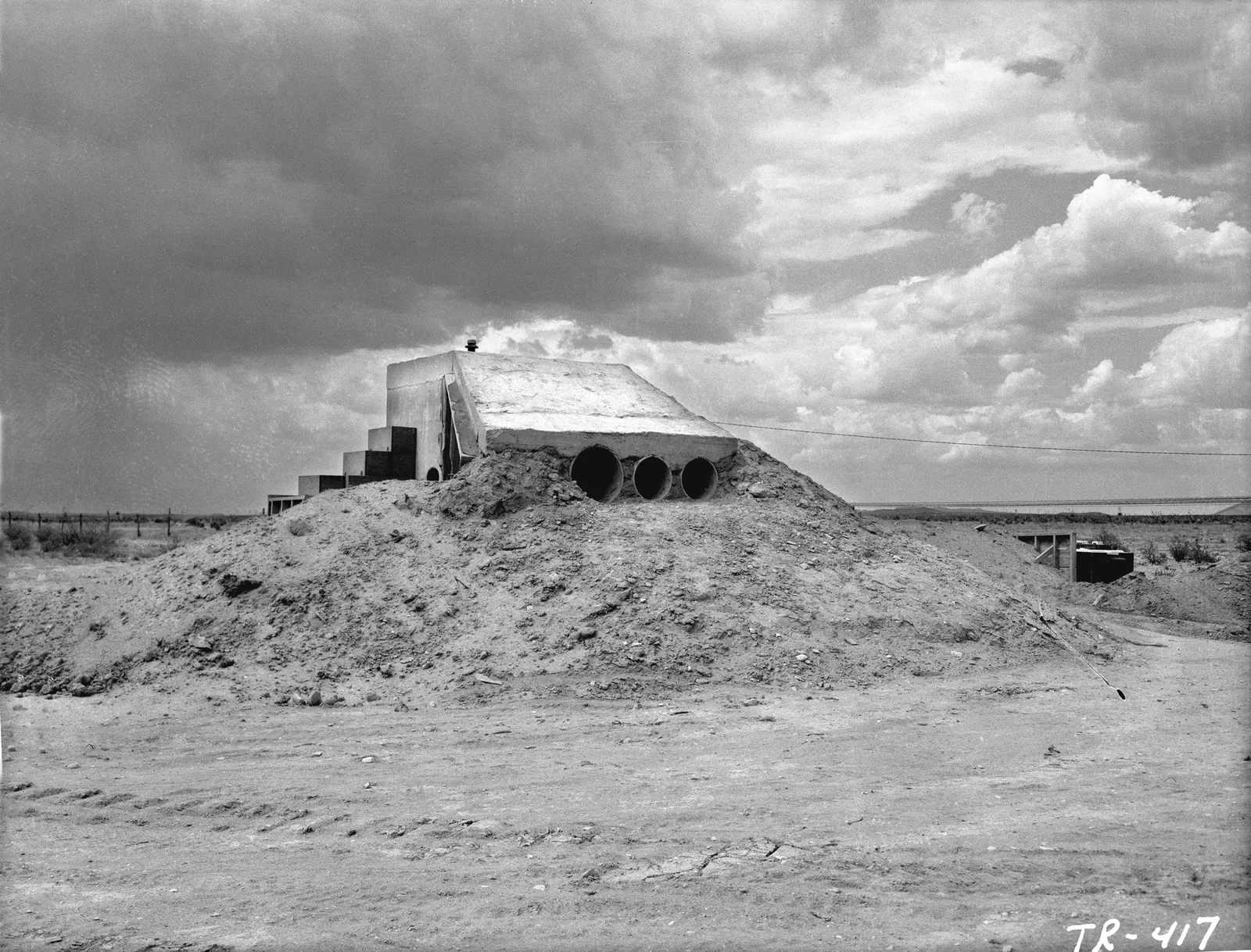
Ground zero was a 100-foot steel tower that had once been a Forest Service fire-watch tower, according to the Gutenberg history. Three instrument and control bunkers were dug about 10,000 yards, nearly six miles, away: Able to the north, Baker or South 10,000 to the south and Pittsburgh to the west. The south bunker was the control centre. Compania Hill, about 20 miles to the north-west, served as the main viewing point for visiting guests. None of the manned bunkers survive today, according to Atomic Archive.
The neighbours nobody warned
The Gadget fired at about 5:29 a.m. on 16 July 1945, and what happened to the land and people downwind is the part of the Trinity story that stayed hidden longest. Here the story stops being a triumph. Trinity was a giant experiment in an area that was not empty. Ranches, villages and small towns lay all around the basin, and the people who lived in them were never told.
The cloud rose and drifted, and the Army’s own monitors followed it. Wikipedia’s article on the fallout describes how the cloud split into parts, with the largest moving north-east across an area about 100 miles long and 30 miles wide. The Manhattan Project’s chief medical officer, Stafford Warren, reported that dust formed a band nearly 30 miles wide and almost 90 miles long to the north-east. Little fell within 1,200 yards of ground zero, but a good deal fell elsewhere.
Several ranch families received heavy exposures over the following two weeks with little visible injury at first. The heaviest fallout measured outside the test area was at a place called Hot Canyon, about 20 miles to the north-east, where about 139 rad was recorded over two weeks. Cattle suffered skin burns, bleeding and hair loss. The Army bought 88 cattle for observation, kept the 17 worst affected at Los Alamos and sent the rest to Oak Ridge. At Carrizozo, 35 miles away, a monitoring team reported radiation too high for its survey meter that afternoon, and evacuation was discussed but dropped because the cloud passed quickly.
The people who lived there had few defences. The Tularosa Basin Downwinders Consortium points out that many villages had no running water and relied on cisterns, ponds and irrigation ditches, and that the meat, dairy and vegetables people ate were local. Ash was said to have fallen for days. Residents were woken by a flash that lit the sky and then the white flakes began falling. One unnamed resident said it felt like the end of the world.
The official response in 1945 was driven more by liability than by concern. Wikipedia says that a fallout-tracking team had been assembled at Warren’s urging in the weeks before the test, mostly out of worry about legal claims, and that although exposure limits were exceeded nobody called for evacuations or protective measures. Warren’s own conclusion was that the site was too small for another test of that size, and he recommended one with at least 150 miles of empty ground in every direction. That is what Groves came to conclude too, and part of why later American tests moved to Nevada and the Pacific.
How many people were harmed is a question that cannot be answered neatly. A 2020 National Cancer Institute study attributed several hundred cancers, mostly thyroid, to the blast, while noting how poor the data were. Wikipedia says that the five most affected counties were Socorro, Lincoln, Guadalupe, San Miguel and Torrance, with about 65,000 residents in the mid-1940s. It also records that New Mexico’s infant mortality rate rose to about 100.8 per 1,000 live births in 1945, up from 89.1 the year before. A 2023 study led by Sébastien Philippe argued that fallout travelled much further than the official maps suggested, but that is a modelling result and not an official finding.
Eighty years of waiting
The Tularosa Basin Downwinders Consortium was founded in Albuquerque in 2005, and Tina Cordova, whose family lived in Tularosa, is one of its co-founders. She is a thyroid cancer survivor and has described cancers in her grandparents, parents and siblings. The consortium collected health surveys, held commemorations and testified to Congress. Cordova testified to the Senate Judiciary Committee in June 2018 and to a House subcommittee in March 2021.
We were kept in the dark, lied to, and intentionally ignored.
Tina Cordova, co-founder of the Tularosa Basin Downwinders Consortium
The cause had a plain legal grievance. The Radiation Exposure Compensation Act of 1990 paid compensation to people exposed to fallout from the Nevada tests, and to uranium miners, but it did not cover New Mexico. Trinity was the first atomic explosion of all, and the people near it had never been counted. The Act expired in 2024, and Wikipedia reports that the House Speaker declined to take up an extension.
The picture changed in summer 2025, in a place few expected. The broad budget bill that President Trump signed in early July included the largest expansion of RECA so far. New Mexico downwinders became eligible for compensation for the first time. The detail varies a little between reports. KUNM says applicants must show they lived in New Mexico for at least one year between 1942 and 1962, while the Santa Fe New Mexican gives the period as 1944 to 1962. Payment is a one-time $100,000, which can also be claimed on behalf of a deceased relative, and it applies to listed cancers. The length of the extension is also reported in different ways: a December 2028 end date in one report, June 2030 in another, and a two-year extension in a third. If you need to know, check the Department of Justice’s page and not this one.
Cordova called it historic and long overdue, and she also called it bittersweet. Medical coverage was dropped from the final text, she said, and many of the sick rely on Medicaid, which the same bill cuts. Proving a year of residence from 80 years ago will be hard for many families. She described the expansion as a crack in a dam, and said the group would keep going back until the programme delivers justice. A New Mexico House memorial sponsored by Rep. Joanne Ferrary calls for a permanent marker at the Stallion Gate entrance, and a sign installation was scheduled there for 16 July 2025.
What was left behind
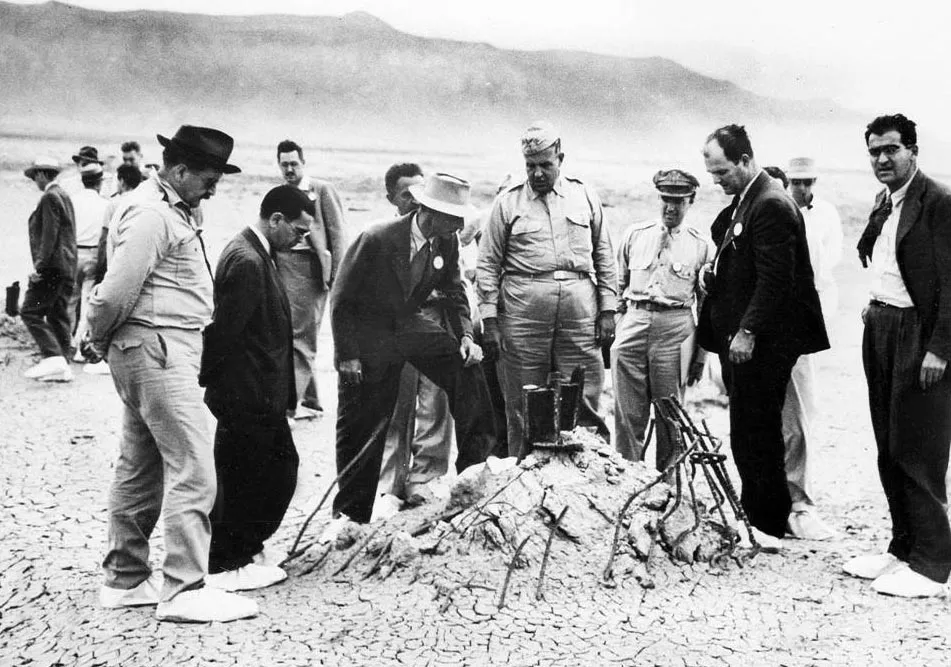
The blast turned the sand beneath the tower to green glass, trinitite, and the ground was cleaned up slowly afterwards. Much of the trinitite was bulldozed into a concrete bunker in the early 1950s and the crater was backfilled, according to the museum history. In 1963 the rest was removed, packed into 55-gallon drums and carried away by Atomic Energy Commission trucks. A few pieces remain today in a protected enclosure at ground zero. The Army has noted that the fenced area is still radioactive, though only mildly, at roughly ten times natural background.
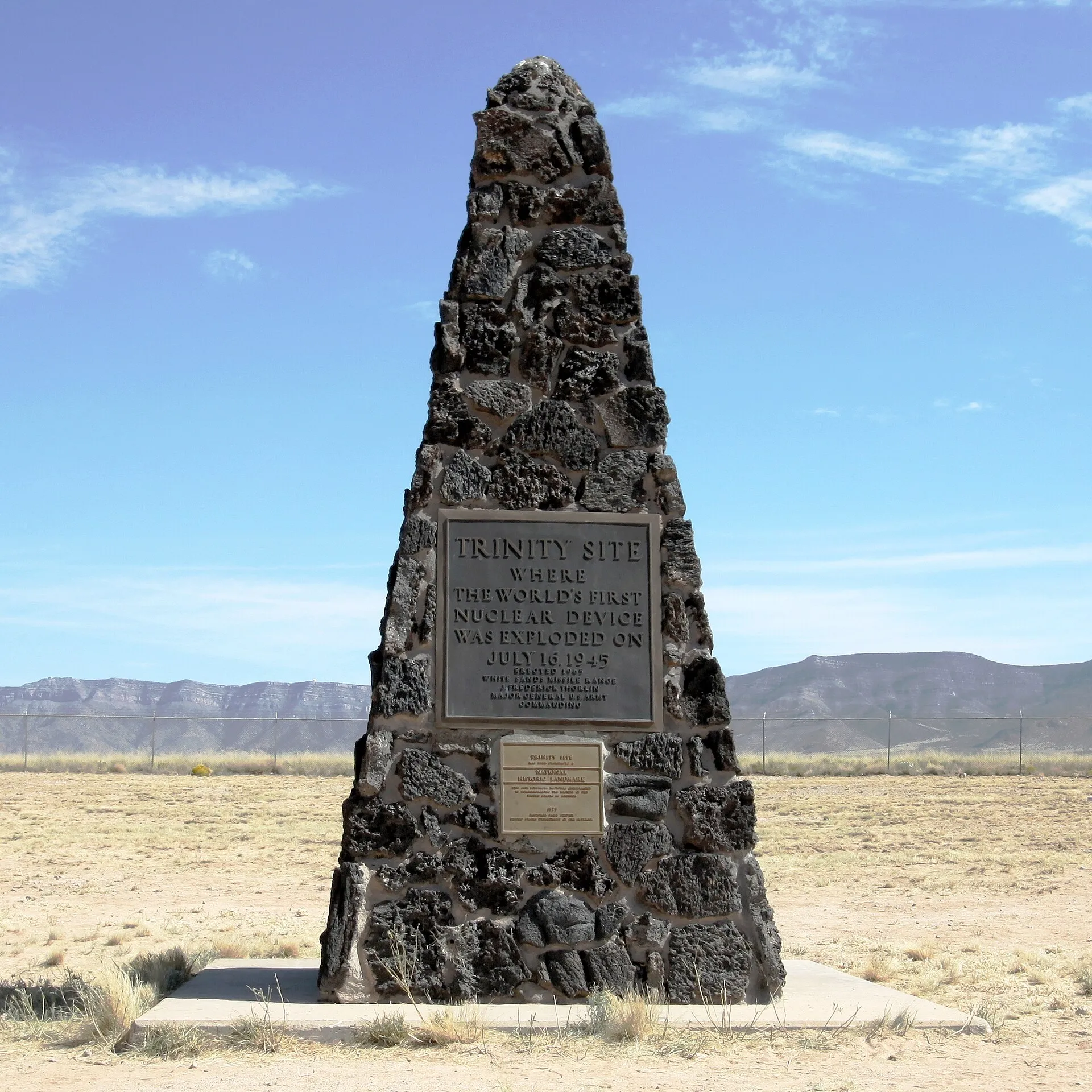
The first open house was held in 1953, and Wikipedia gives about 650 people, while the museum history says about 700. In 1955 a small group from Tularosa held a prayer service on the tenth anniversary. In 1965 the Army put up a black lava-rock obelisk at ground zero. Trinity Site was declared a National Historic Landmark district on 21 December 1965 and was listed on the National Register of Historic Places on 15 October 1966, according to Wikipedia, while the National Park Service’s own page says the designation dates from 1975. The 1975 date may refer to the Park Service plaque, which the museum history says was added that year, but we could not confirm that.
The ranch house had a rougher time. The blast broke most of its windows and knocked over the chimney, but the building itself survived, and rain leaking through the roof did far more damage over the following decades than the bomb. In 1982 Dave McDonald and his niece Mary McDonald staged an armed reoccupation of the ranch to protest the Army’s retention of the land. The same year, the commander of White Sands, Major General Niles Fulwyler, ordered the house stabilised, and funding from the Department of Energy and the Army paid for the National Park Service to restore it. The restoration, completed in 1984, returned it to how it looked on 12 July 1945. A time capsule buried then was opened at an open house in October 2009, and its contents are displayed inside.
About ten miles south-west of ground zero you can still find the remains of the base camp, where about 200 scientists, soldiers and technicians lived in the summer of 1945. Remains of the observation points 10,000 yards out can also be seen. None of the manned bunkers survive, according to Atomic Archive.
Visiting Trinity
This is not a place you can drive up to. Trinity sits on White Sands Missile Range and is closed to the public except on open days. The Army has held an open house once a year in recent years, and the National Park Service page says the same. Wikipedia’s ranch house article says it has been twice a year at times, in April and October, and was cut to once a year for a spell around 2014 before being restored in 2015, so the pattern has changed over the years. Check the White Sands Missile Range public affairs page before planning anything.
The details below come from the Army’s page for the most recent open house. Entry is free and no registration is needed. Stallion Gate is open from 8:00 a.m. to 2:00 p.m. and the site closes at 3:30. Everyone over 18 needs a government photo ID, and drivers need proof of insurance and registration or a rental agreement. Foreign visitors need a passport. Weapons are not allowed. Photography is allowed only at ground zero and the ranch house. Food and souvenirs are sold for cash, and portable toilets are provided. The paths are unpaved and sandy, and there is no petrol on the range, so fill up in Socorro, Carrizozo or Truth or Consequences. Socorro has the nearest hotels and they fill up months ahead.
The Army warns against using satellite navigation, because the signal is unreliable on the approach. The directions are to take Interstate 25 to exit 139 at San Antonio and head east for 12 miles, or come from Carrizozo on US 380 and head west for about 53 miles, then turn south on NM 525 and drive five miles to Stallion Gate.
On the question of radiation, the Army states that a one-hour visit to the fenced ground-zero area gives a whole-body dose of roughly 0.5 to 1 millirem, set against about 240 millirem a year from natural sources. Take that as the Army’s figure and not a medical opinion. The site is large, hot and exposed, and the open house draws thousands of people, so bring water and a hat.
If you go, give the ranch house a few quiet minutes. It is a plain adobe building, restored to how it looked on 12 July 1945, and the northeast room is where the core was assembled.
Conclusion
Trinity Site is easy to reduce to a single morning, but the ground has a longer record. It is a desert that Spanish travellers named for its dead, a ranch taken from a family that went to court for it, a tower and a bunker line that have gone, a steel vessel built for a failure that never came, and a long strip of land to the north-east where ordinary families were not told what had fallen on them.
The Army built an obelisk and paid to restore a house. The people who lived downwind waited 80 years for the first legal recognition that they existed. Both things are real, and the site is better understood with the two of them in the same frame. If you get the chance to go on an open day, go.
Did you know?
- The Jornada del Muerto basin is about 160 miles long and 20 miles wide, and its Spanish name means Dead Man's Journey.
- Juan de Oñate crossed the Jornada in 1598 because it was shorter and easier for ox-drawn carts than the river route.
- The test tower was a former Forest Service fire-watch tower, 100 feet high.
- Supplies for the site arrived at a railroad siding at Pope, about 25 miles to the west.
- The McDonald Ranch House was built in 1913 by a German immigrant, Franz Schmidt.
- The McDonald family went to court rather than accept the Army's settlement and were awarded about $60,000.
- Jumbo, a steel containment vessel built in Ohio, weighed 214 short tons and was never used for its purpose.
- The Army bought 88 cattle for observation after fallout burned their skin and hair.
- In 1982 Dave McDonald and his niece Mary staged an armed reoccupation of the ranch to protest the Army keeping the land.
- The McDonald Ranch House was restored in 1984 to how it looked on 12 July 1945.
- A one-hour visit to the fenced ground-zero area gives about 0.5 to 1 millirem, according to the Army.