
A different kind of dam
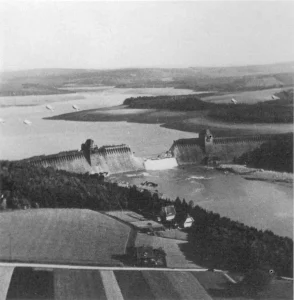
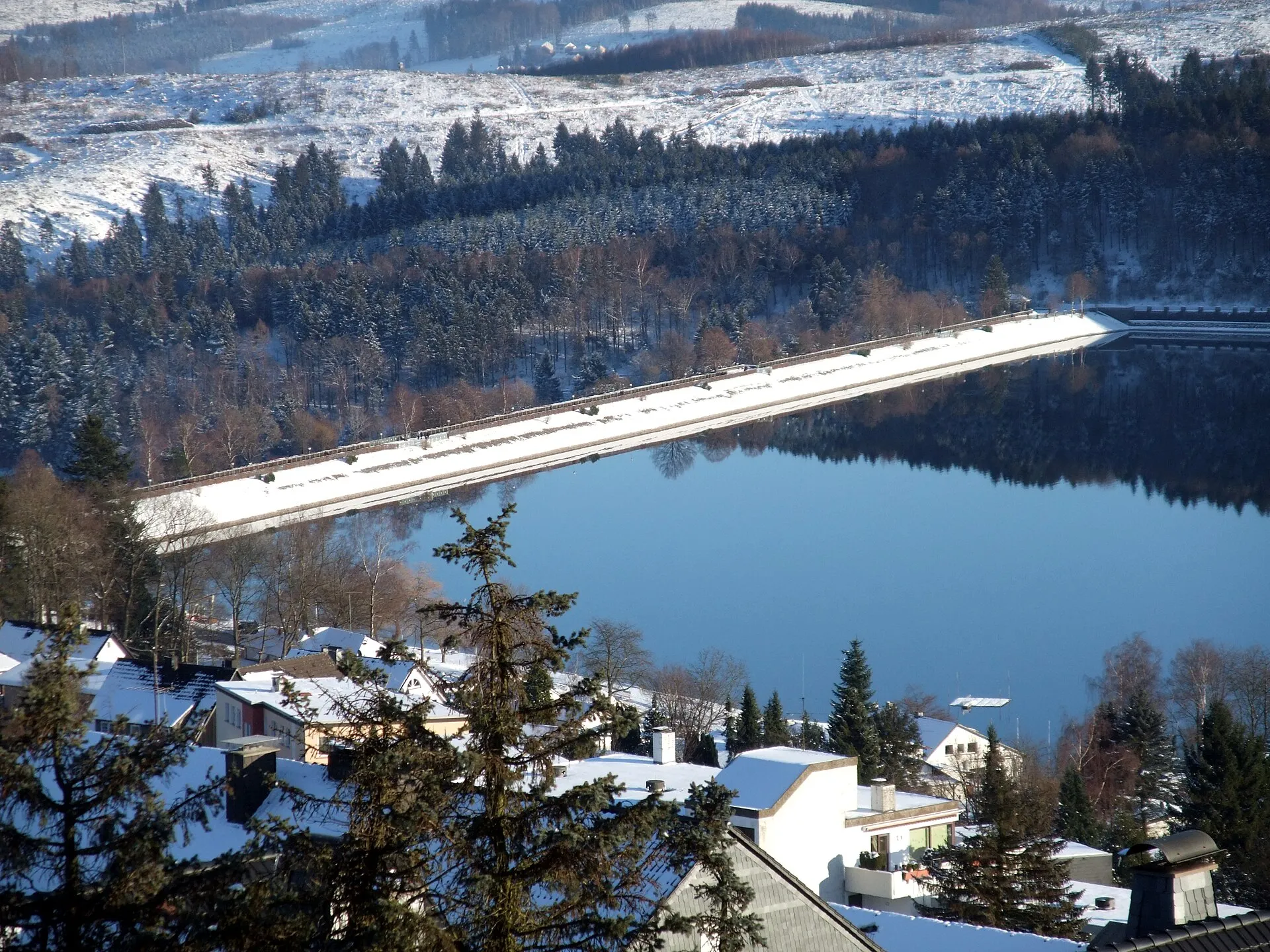
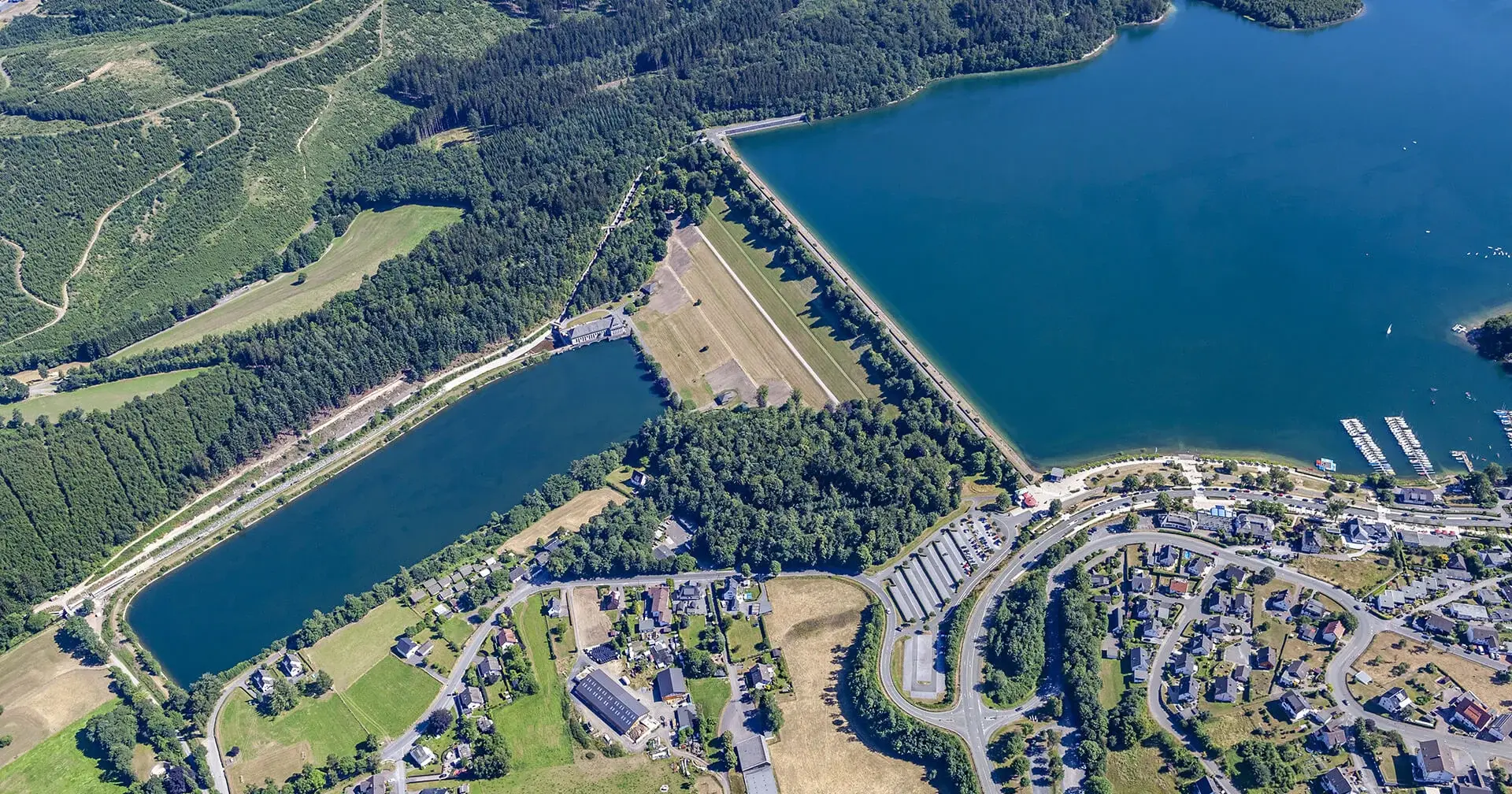
Of the three great dams of the Dambusters raid, the Sorpe is the odd one out. The Möhne and the Eder are walls of masonry, and their strength comes from their weight. The Sorpe is a mountain of earth. It dams the Sorpe river, which is also known as the Röhr, near the town of Sundern in the Hochsauerland district of North Rhine-Westphalia, and it was built between 1926 and 1935.
The Sorpe Dam is an embankment dam with a concrete core. Inside is a wall of concrete, and around it is a massive covering of soil and rock. The dam stands about 69 metres high and 700 metres long, and it contains about 3.4 million cubic metres of material. For nine years it was described as the largest construction site in Europe. Steam trains carried more than 300,000 tonnes of material to the site.
Building the Sorpe
The scale of the work was unusual even by the standards of the time. Construction began in 1926 and went on for nine years, and the site was described as the largest construction site in Europe over that period. The dam opened in 1935, only eight years before the Dambusters came for it. That made the Sorpe a much newer structure than the Möhne and the Eder, which both date from the Kaiser’s reign.
The size of the finished dam sets it apart. At about 69 metres high and 700 metres long, it is taller than the Möhne, which stands about 40 metres, and the Eder, which stands 48. It is also the longest of the three, with the Möhne measuring about 650 metres and the Eder 400. Its lake is smaller than either of theirs, holding about 70 million cubic metres against 134 million at the Möhne and 199 million at the Eder, but the dam itself is the biggest structure of the three.
What the lake is for
The reservoir behind the dam holds about 70 million cubic metres of water over an area of 3.3 square kilometres. Its purposes are water supply for the Ruhr area and the generation of hydroelectric power, with a small power station of 7.44 megawatts. Today it also has a third role as a leisure lake. The work of damming the Sorpe was part of the same effort as the Möhne, to give the industrial Ruhr a reliable supply of water, but the engineers chose a different method here, and that choice mattered in 1943.
An embankment dam works differently from a gravity dam. A wall of masonry resists the water by its sheer weight, but it is rigid. An earth dam is wider and more forgiving. It can absorb damage, and the water has to cut through a large mass of soil before it can pass. For the planners of the raid, that was a serious problem.
A harder target
Barnes Wallis had designed Upkeep to work against masonry walls. The mine was dropped short of the dam, bounced over the torpedo nets and sank against the face of the wall, where the pressure of the water amplified the blast. The Sorpe offered less to work with. The wall’s slopes were covered in earth, and the planners estimated that about five correctly placed mines would be needed to break it. They also had to be dropped differently. Instead of approaching the face of the dam, the aircraft had to fly along the line of the crest, so that the mine could be released parallel to the dam.
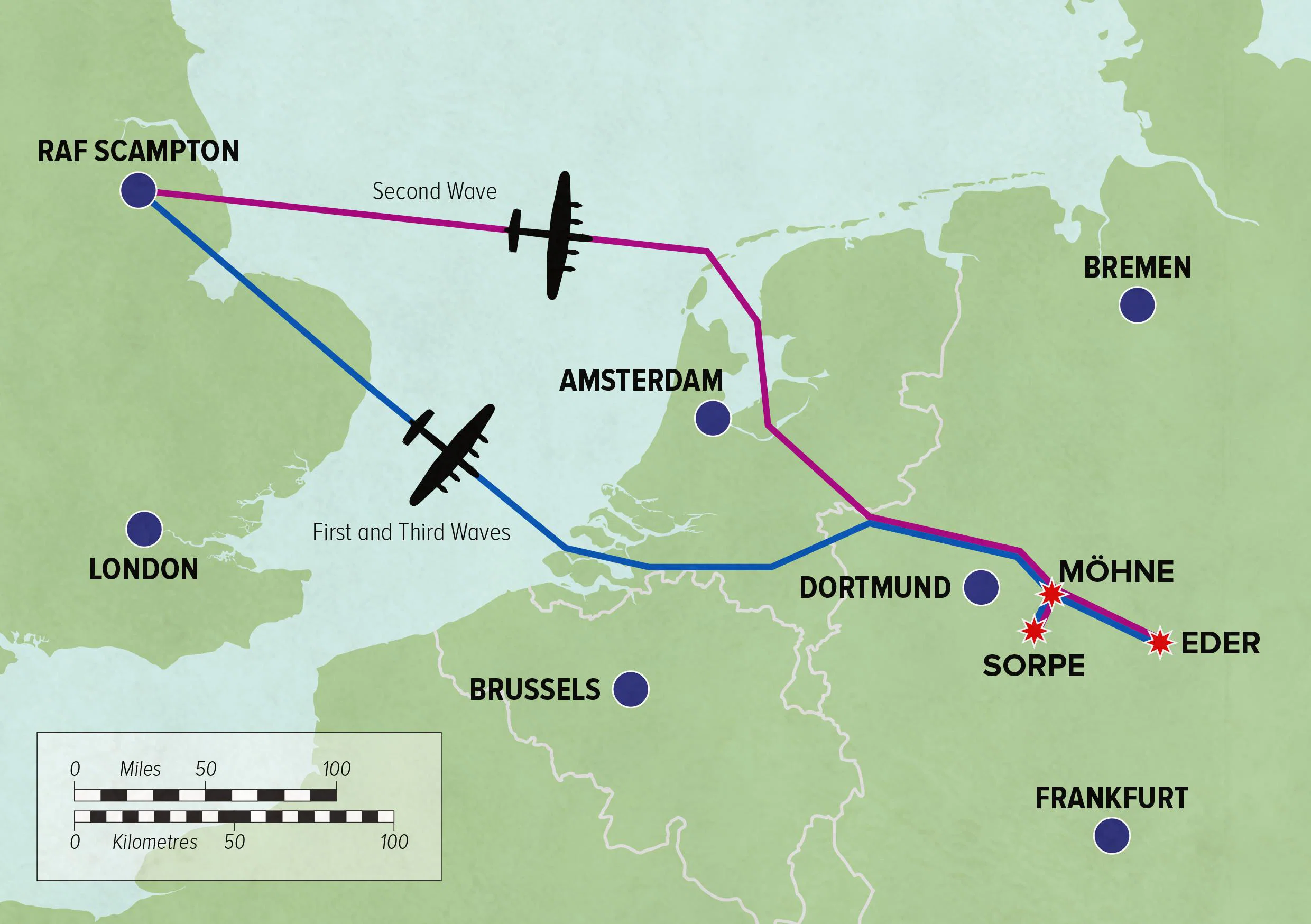
The Sorpe was therefore always considered the harder of the three targets. In the plan for Operation Chastise it was assigned to the second formation of five aircraft, which took off ahead of the others.
16 to 17 May 1943
The attack on the Sorpe did not go as planned. The valley was misty, and the crews had to fly along the dam, rather than towards it. Flight Lieutenant Joe McCarthy made repeated runs, nine in all, before dropping his mine on the tenth attempt. It exploded against the dam and took off a section of the crest, but the wall held.
A second aircraft arrived later. Ken Brown dropped incendiary devices to clear the mist, and then attacked, scoring a direct hit that cracked the wall. It still did not breach.
One account, from the BBC documentary Dambusters Declassified, adds an interesting detail. The mine at the Sorpe was not spinning, because it was dropped directly onto the dam rather than onto the water, so it had no need to bounce. This is reported as the documentary’s version of events and has not been settled beyond dispute.
Why it survived
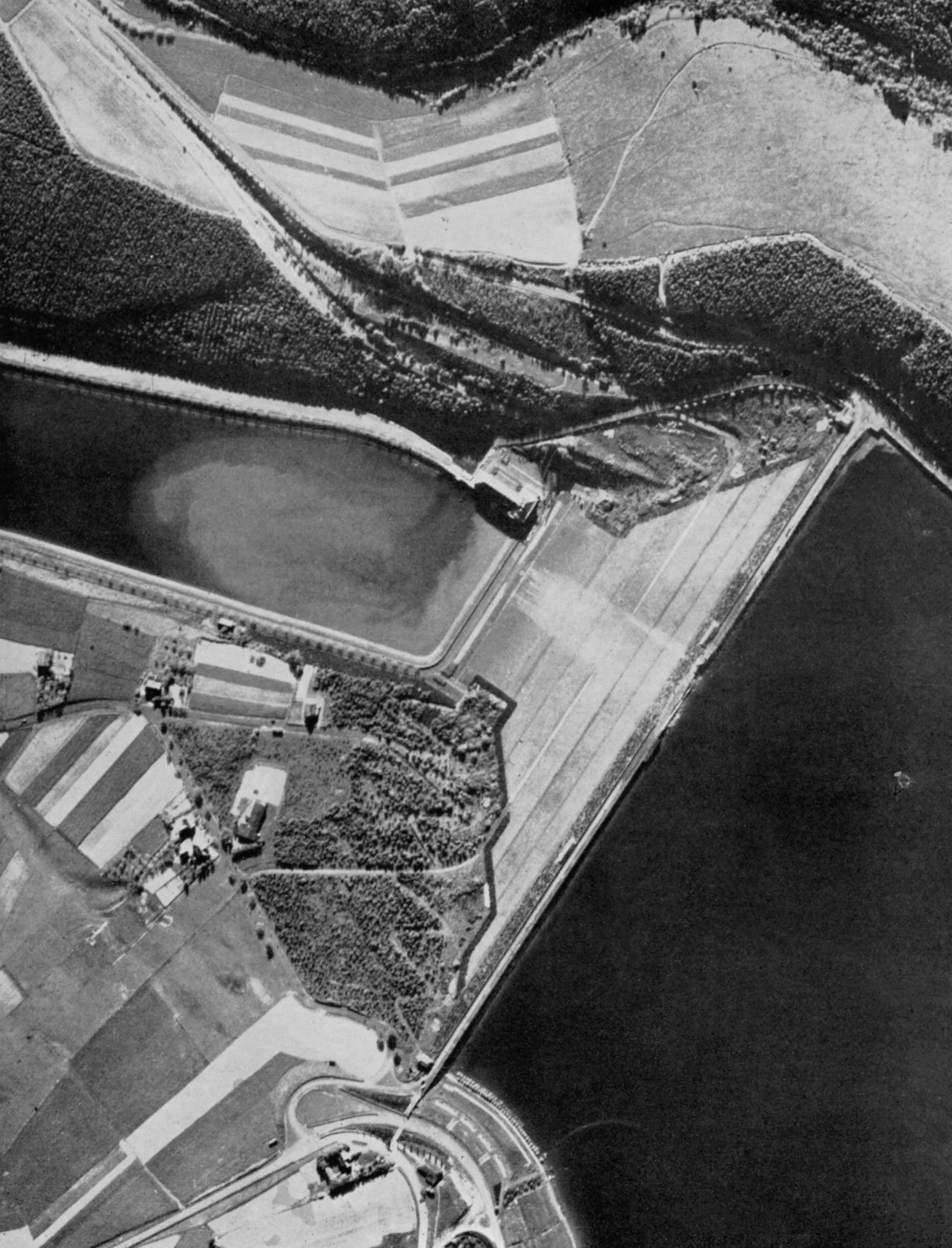
The Sorpe survived because of the way it was built. A mine exploding against a masonry wall can open a crack, and the pressure of the water then does the rest. An embankment is a different structure: its concrete core is covered by a huge mass of soil, and the attack left it with only minor damage, a cracked wall and a lost section of the crest, while the dam went on holding the water.
Had it failed, a lake of about 70 million cubic metres would have emptied into the valley below. The raid broke the two walls that could be broken, and left the one that could not.
The other targets
The three great dams were not the only targets. The plan also named three secondary dams, the Lister, the Ennepe and the Diemel, which were to be attacked by the reserve formation if mines remained. Little came of this. One aircraft, flown by Flight Lieutenant Ottley, was shot down on its way to the Lister. Another pilot, Townsend, reported attacking the Ennepe, although later evidence suggests that he may in fact have attacked the Bever Dam, about eight kilometres away, in fog. The Diemel is not recorded as having been attacked at all.
The Sorpe was therefore the last of the main dams to be attacked, and the least successful. By the time the surviving aircraft turned for home, two walls had been broken, one had held, and the secondary dams were untouched.
The Tallboy raid of 1944
The Sorpe was not forgotten. In 1944, the RAF returned with a new weapon, the Tallboy, a bomb of about five tonnes that Barnes Wallis had developed. On 15 October 1944 the dam was attacked with Tallboys. The raid left several large craters in the embankment and caused a small spill of water over the crest, but it did not breach the dam. The Sorpe, once again, had not given way.
By that point the war had moved on. Allied bombers could reach the Ruhr in great numbers, and the dams had long ceased to be the main target. Nevertheless, the 1944 attack is a reminder of how much explosive was thrown at this one earth bank over the course of the war.
The bomb in the lake
The Sorpe’s strangest chapter came after the war. In late 1958 the reservoir was drained so that repairs could be made to the damage caused by the bombing. Shortly before Christmas, the workers found an unexploded Tallboy lying in the mud. It was 3.6 metres long and contained about 2.5 tonnes of high explosive, with three tail fuzes that were judged to be unstable.
On 6 January 1959 the nearby village of Langscheid was evacuated. Walter Mietzke and a British officer, Lieutenant James M. Waters, defused the bomb. It was a delicate job, and it was carried out successfully. Fourteen years after the war had ended, the last of the bombs dropped on the Sorpe was finally made safe.
The Sorpe today
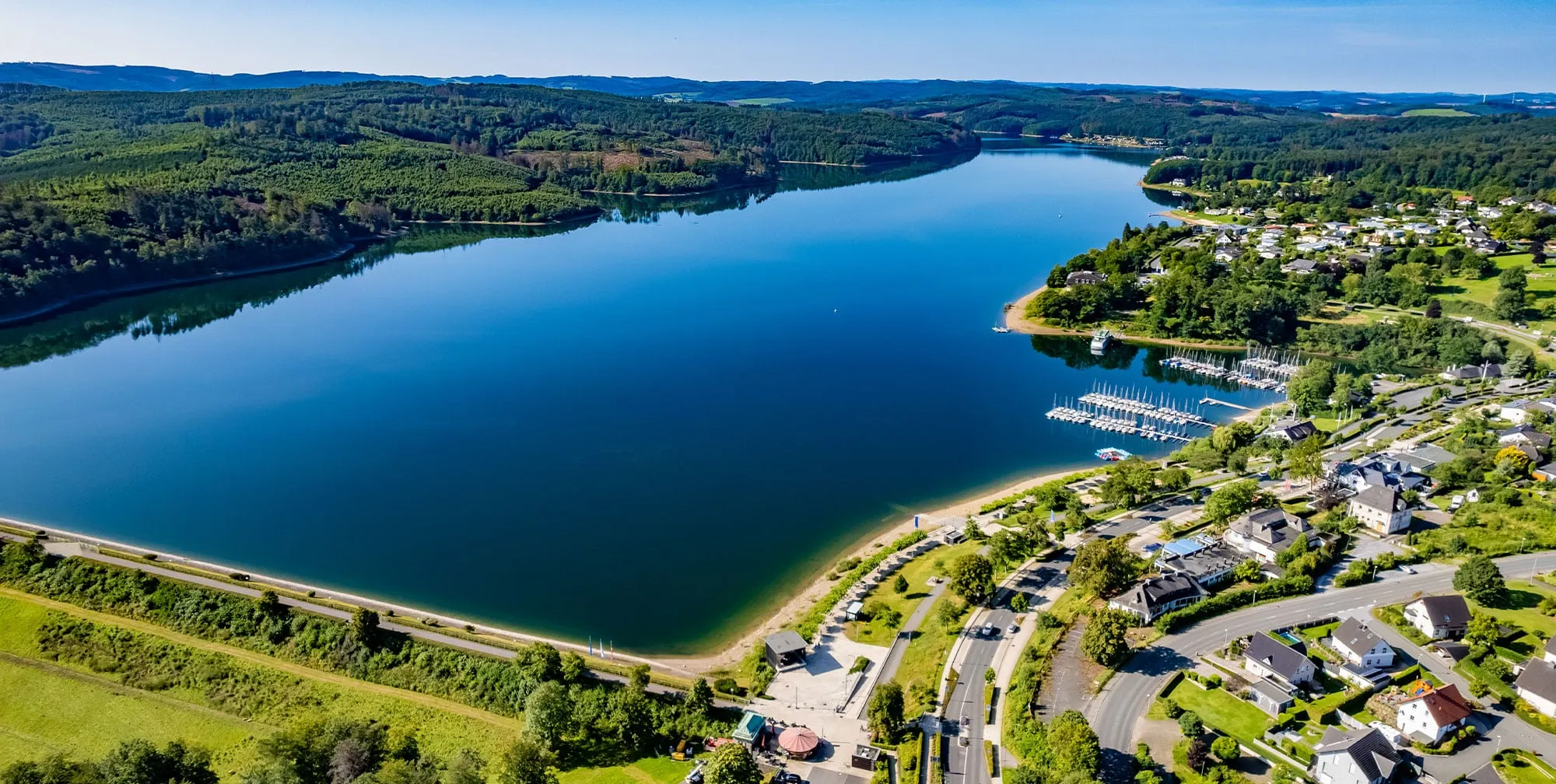
The Sorpe is now a quiet place. The lake is used for diving, rowing, sailing and windsurfing, and its shores have beach volleyball, a golf course, hiking trails, rock climbing and four campsites on the western bank. Lifeguards from the DLRG and the Red Cross have bases at the lake. The passenger ship MS Sorpesee runs trips on the water in summer, and since 2006 there has been a path for walkers and cyclists. Private motorboats are not allowed, in order to protect the water quality.
The lake overflows about once a year in spring, when the spillway cascades draw crowds of visitors. Anyone planning a visit should remember that this is a working dam and keep to the public paths. For the other dams of the same raid, see the Möhne Dam and the Eder Dam.
Conclusion
The Sorpe is the dam that proves how much the raid depended on luck and engineering. The Möhne and the Eder were built in a way that allowed Wallis’s mine to break them. The Sorpe was built differently, and it held, not once but twice. Its later history, with a live Tallboy in the bed of the lake and a village emptied for the day, adds a postscript that the planners of 1943 could not have imagined. It is a place where the story of the raid did not end with the bombers going home.
Did you know?
- The Sorpe is an earth embankment dam with a concrete core, unlike the masonry Möhne and Eder.
- Planners estimated that about five correctly placed mines would be needed to break it.
- A Tallboy raid on 15 October 1944 left craters but did not breach it.
- In late 1958 an unexploded Tallboy was found when the lake was drained.
- The village of Langscheid was evacuated on 6 January 1959 while the bomb was defused.
- Private motorboats are banned on the lake to protect the water.