A broad bay on the Isfjorden
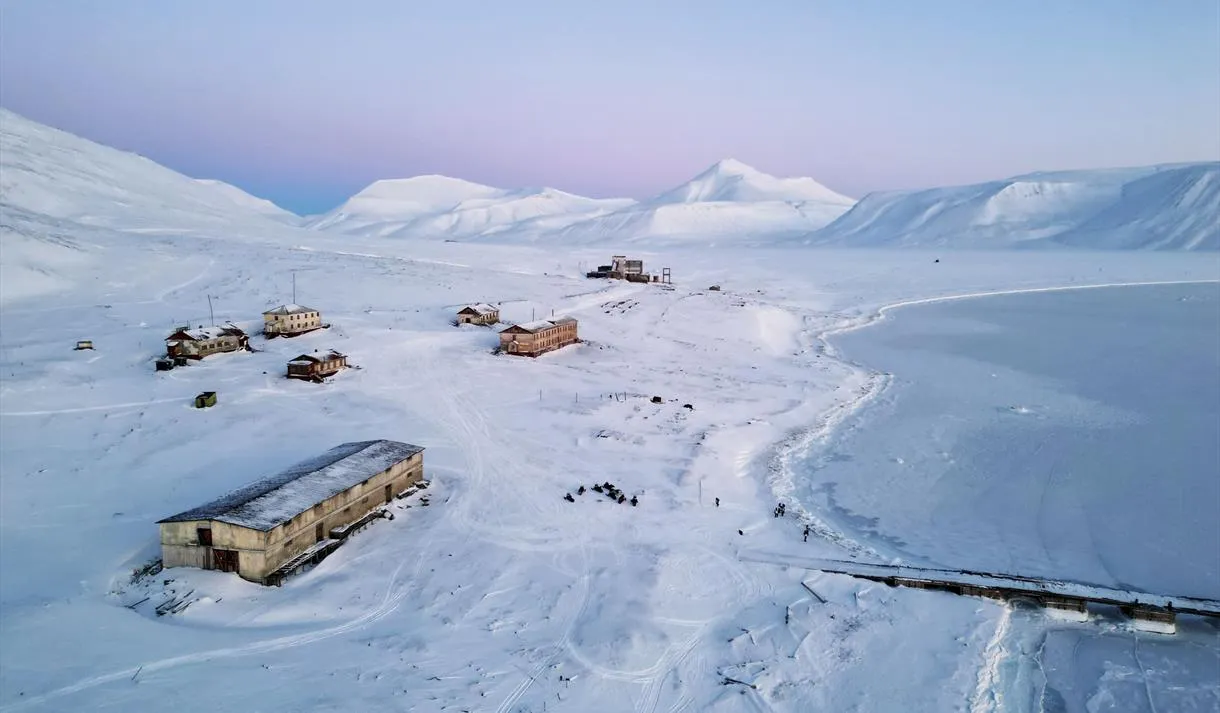
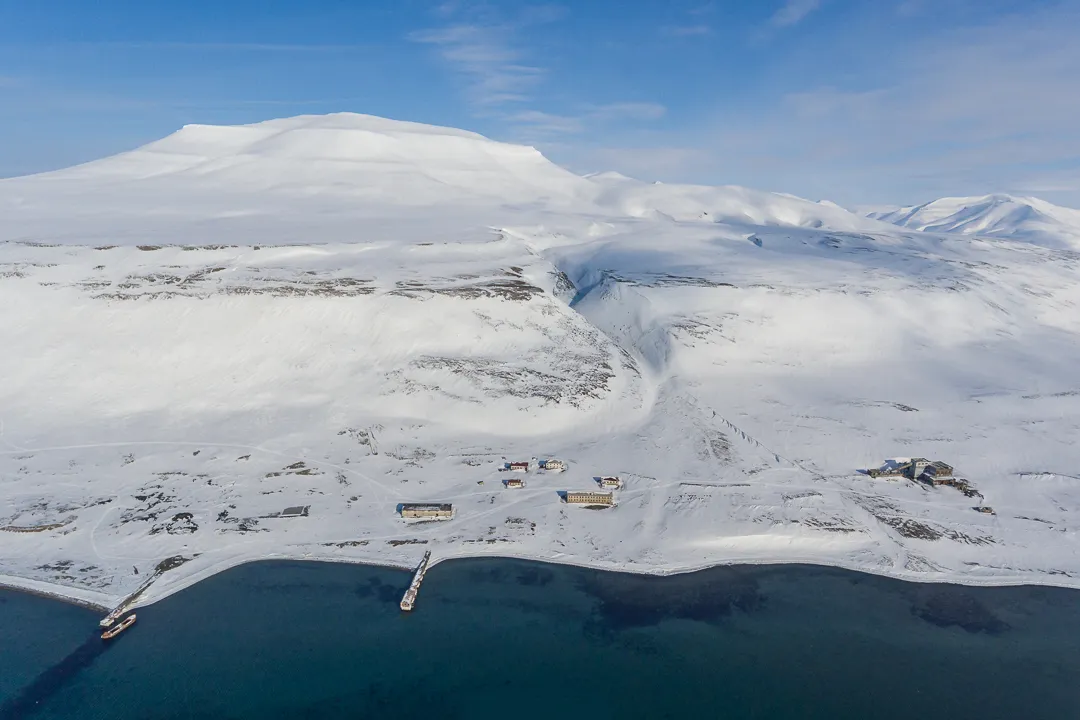
Colesbukta lies on the southern shore of Isfjorden, one of the biggest fjords in Svalbard, on the island of Spitsbergen. It is a gently curving bay about 4.5 kilometres wide, and the valley of Colesdalen, with the river Coleselva, opens into it. The valley lies just north of Nordenskiöld Land National Park but outside it, reportedly because of mining interests. The fjord has deep water and a route towards the Barents Sea, which made the bay useful as a harbour. The climate brings months of polar darkness, winter temperatures well below freezing and frequent storms.
The name has a muddled history. The valley was recorded in 1630 as Coles Park, a good place to hunt reindeer, and the name was later misread as Coal Bay, which is how it appears on the banknotes of the Anglo-Russian company. Locally it is Coles Bay.
Claimed in 1912
The story of the settlement starts with the Russian geologist Vladimir Rusanov. In summer 1912 he led a government expedition to Svalbard to assess its coal, sailing from Aleksandrovsk on the schooner Hercules under Captain Alexander Kuchin. He covered about a thousand kilometres of West Spitsbergen, and on 7 August 1912 his expedition claimed the Colesbukta area. A mining engineer in the party, Rudolf Samoilowitsch, staked claims on four coal areas. The expedition built a small cabin at the entrance to the bay. It still stands as a small self-guided museum, and the point it stands on is known as Rusanovodden.
Rusanov never came home. After the summer’s work most of the party carried on, without approval from St Petersburg, towards the Pacific by the Northern Sea Route. The last message was a telegram from Novaya Zemlya on 27 September 1912, and Rusanov and his companions vanished in the Kara Sea. Otto Sverdrup searched for them in 1914 and 1915 without success, and relics were found in 1937 on a remote island in the Kara Sea.
In March 1913 Arkhangelsk merchants founded a company, Grumant – A.G. Agafeloff & Co, to use the claims, and a party of 25 built a base on the east side of Colesbukta. A coal seam below sea level there proved unworkable, so they turned to a seam about 60 metres up in Grumantdalen. Two men who wintered at the bay suffered scurvy and severe frostbite. The First World War and the revolution then ended Russian activity for a while.
The port for Grumant
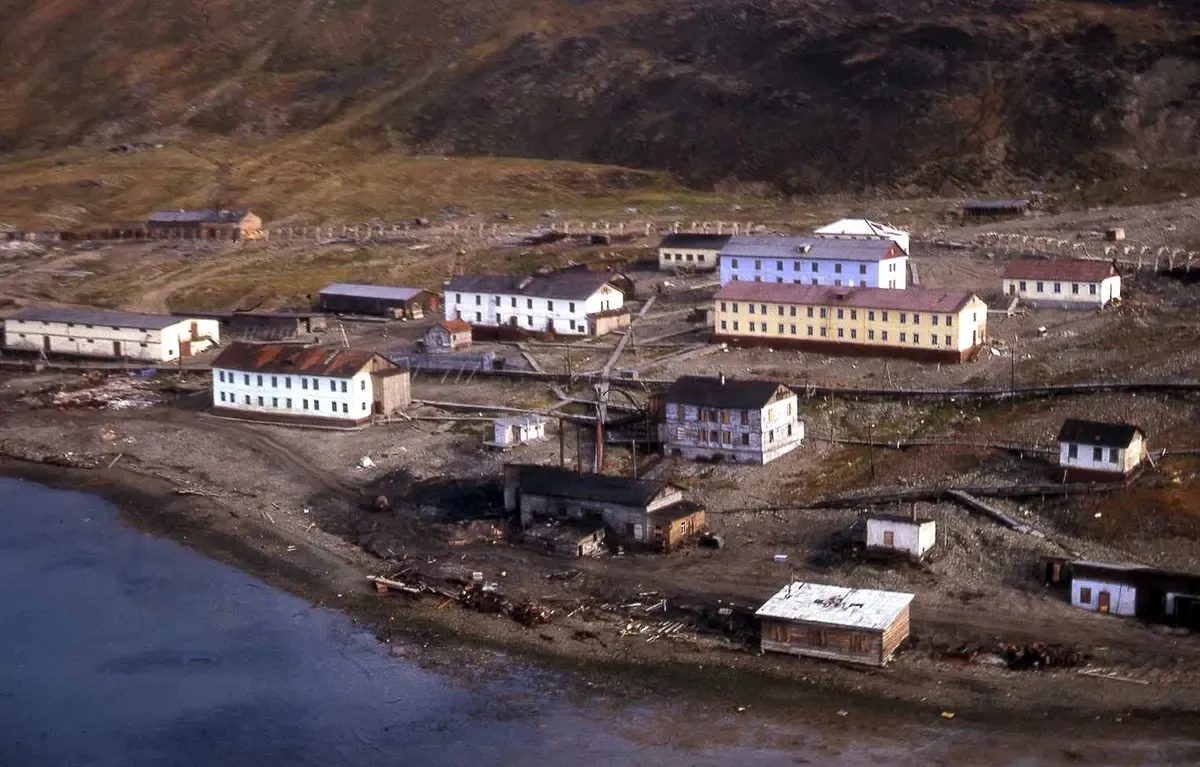
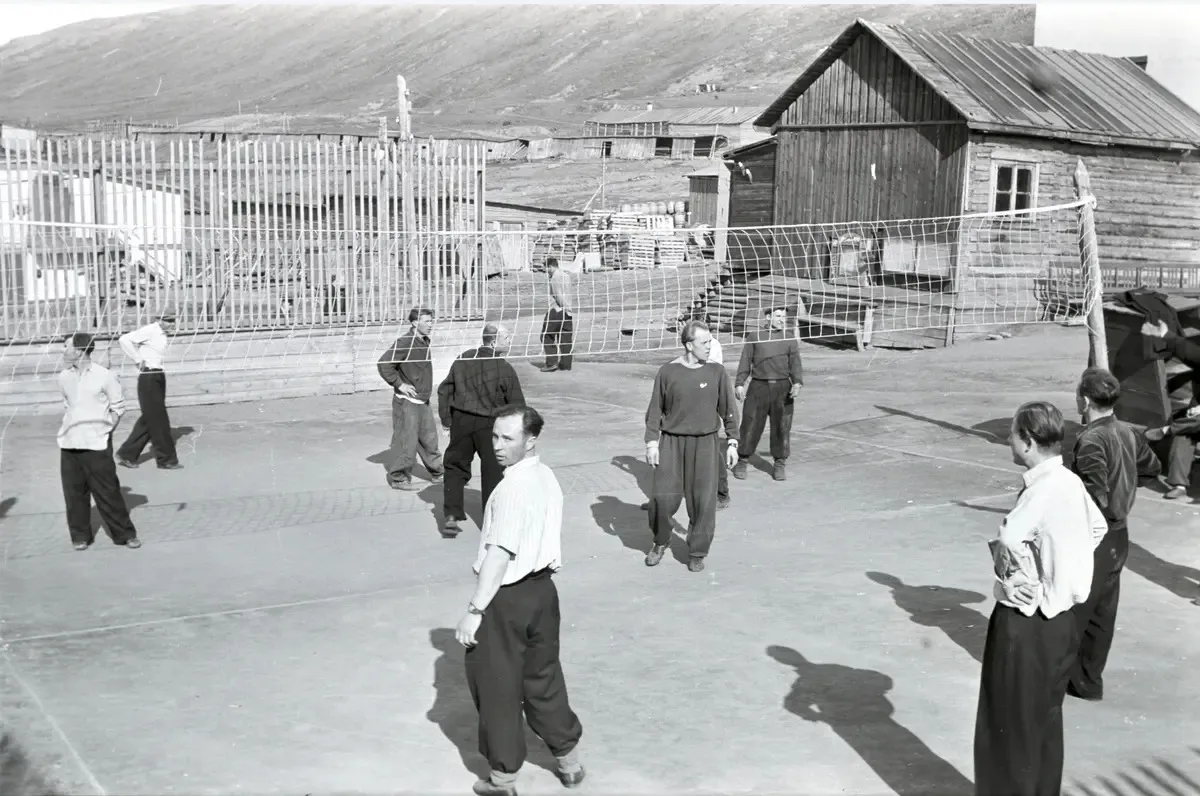
The Anglo-Russian Grumant Company began mining at Grumant, a hillside town a few kilometres along the coast, in 1920. After the Svalbard Treaty of 1925 gave Norway sovereignty while allowing other signatory states to work commercially, the Soviet state took over, and in November 1931 the claims passed to the state trust Arktikugol, which means Arctic Coal. It resumed mining at Grumant in 1931, and ran the harbour at Colesbukta as well as the Soviet towns of Barentsburg and Pyramiden.
Grumant had poor harbour conditions. The town sits among rocky headlands, the approaches are difficult and the shallow fjord kept large coal carriers from the shore. So the Soviets planned a port at Colesbukta in 1931, with a coal warehouse, sorting facility and a loading berth, and a small village for the people who worked there. A narrow-gauge railway carried the coal between the mines and the harbour. It is given as about 8 to 9 kilometres. Most of it ran in the open along the coast, protected from snowdrifts by a wooden gallery, and just under a kilometre of it ran through a mountain tunnel, which let it work all year.
Destroyed in 1943, rebuilt after the war
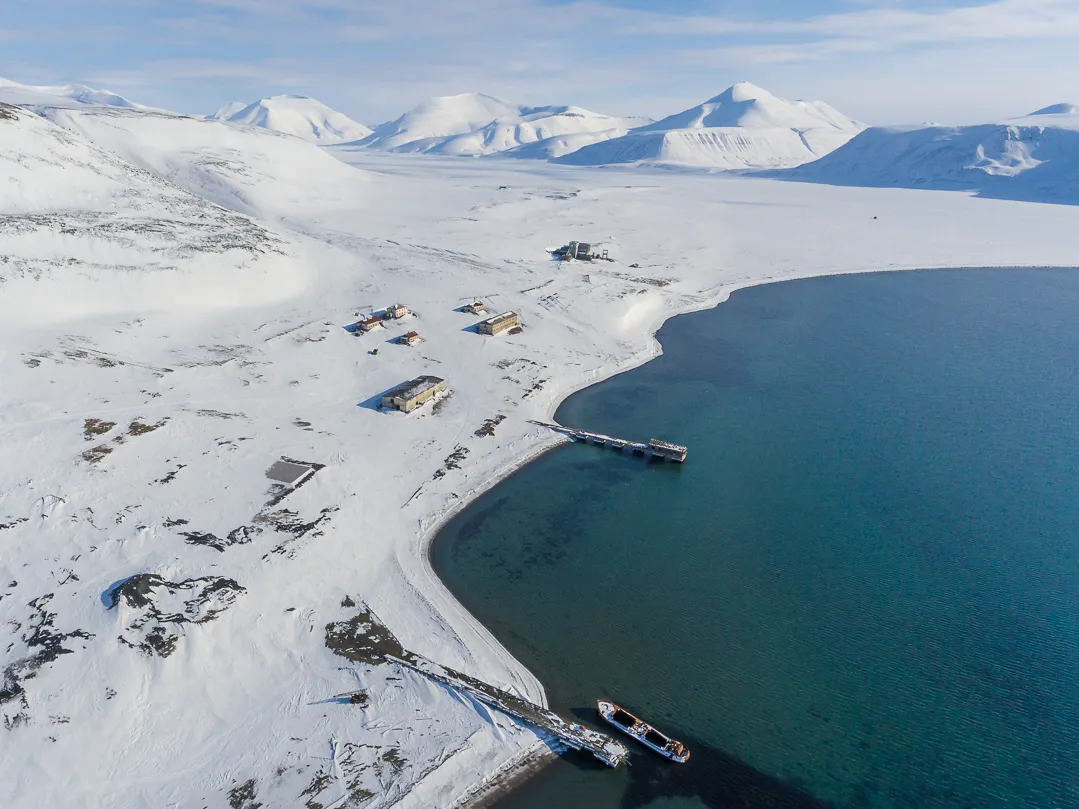
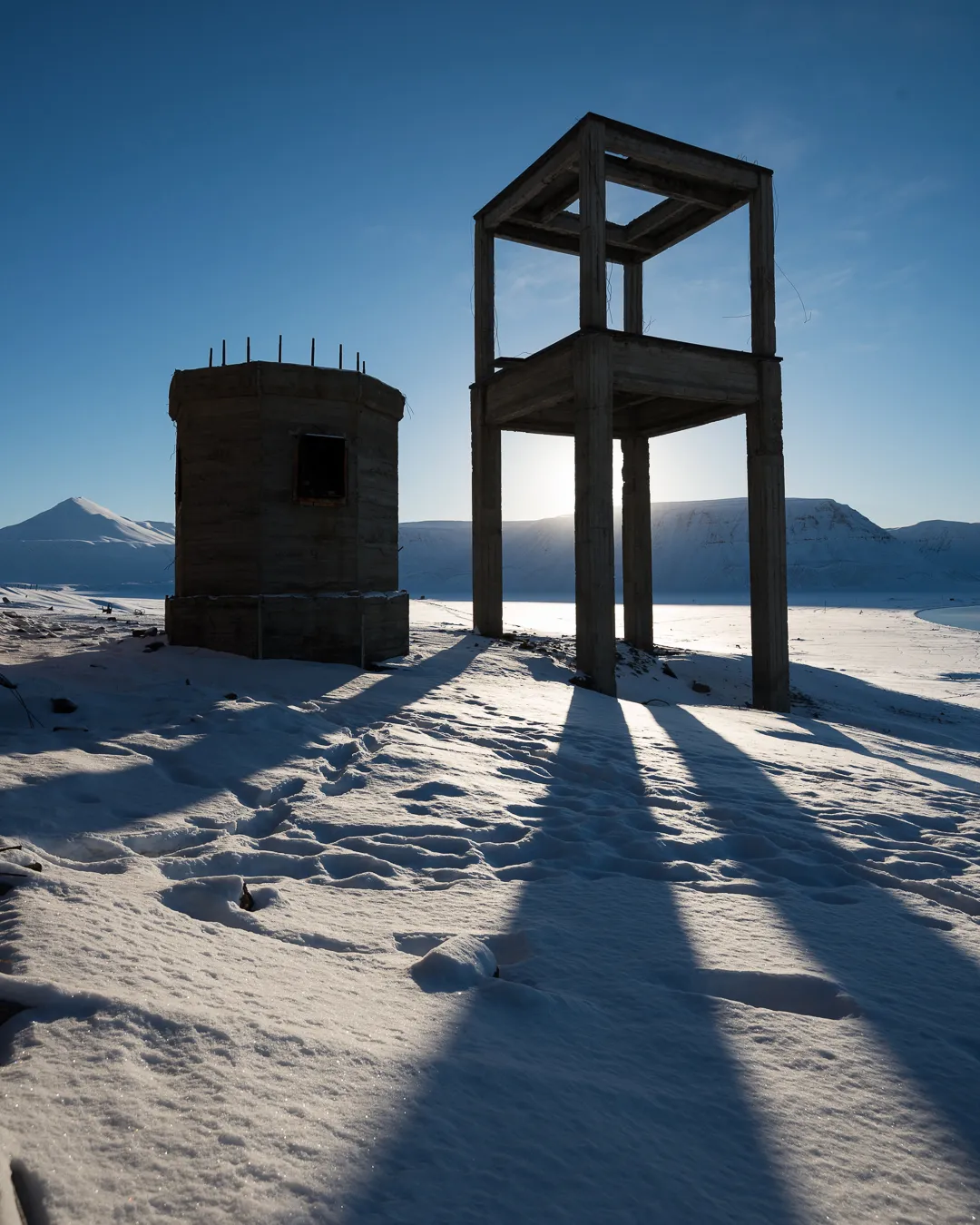
The Soviet settlements on Svalbard were evacuated in 1941. On 8 September 1943 German naval forces shelled the Grumant and Colesbukta area, and a water tower is said to have been the only usable structure left. The Soviets came back in November 1946 and rebuilt. The port got a new dock for ships of 10,000 tonnes, a pier of about 305 metres is said to date from 1950, a railway linked the harbour to Grumant again, and a power station was built at Colesbukta in the 1950s.
Life at the port
Coles Bay was mainly a working port, with warehouses, loading equipment, workshops, power supply and harbour accommodation, and small service buildings. The settlement had several dozen houses and two piers. Most of the clubs and communal life were in Grumant. In 1951 Grumant and Colesbukta together had a population of 1,106, including 32 children. Life followed the shipping season, the arrival of supply ships and the constant movement of coal.
Decline and abandonment
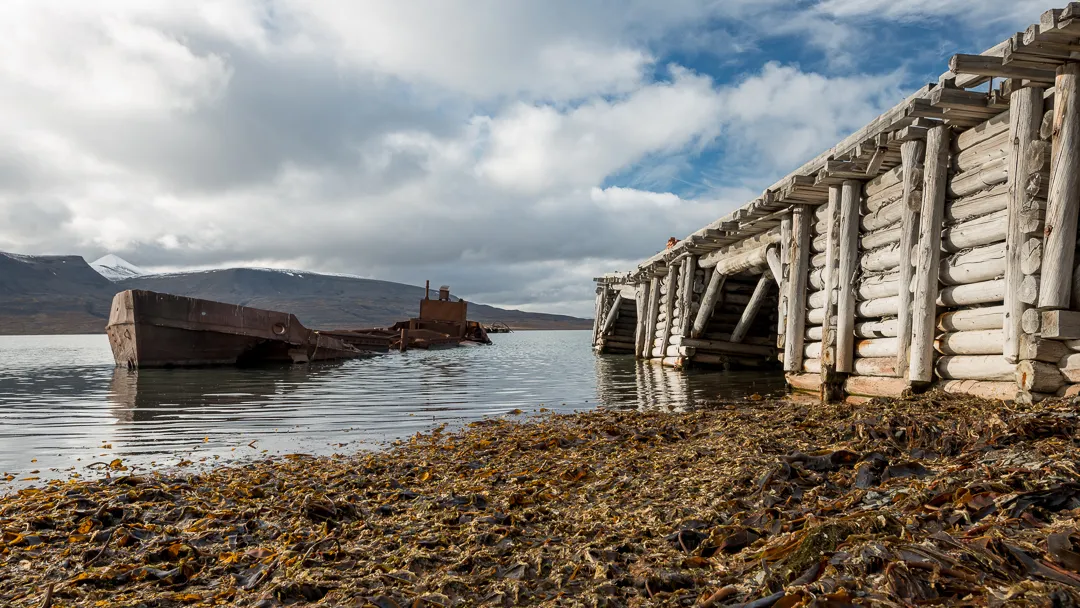
By the late 1950s and early 1960s the coal near Grumant was harder and costlier to mine, and geological faults made the work difficult. Mining was stopped in autumn 1961, after the last coal was shipped on 15 July of that year, and Grumant was fully abandoned between 1962 and 1967 depending on the source. Industrial activity at Coles Bay ended at the same time. Some houses and equipment were dismantled and moved to Pyramiden and Barentsburg. A writer who visited says that when the Soviets left, Grumant’s mine entrances, bridges and industrial buildings were burned or blown up, and most of the industrial buildings at Colesbukta are destroyed too.
The site was used again later. Oil and gas exploration took place there in the 1970s, and from 1981 to 1988 a geology team from Arktikugol reused the buildings, with between 40 and more than 60 people in summer. New finds in the 1990s encouraged plans to expand at Colesbukta, and together with Barentsburg’s better port they helped persuade the company to keep Barentsburg running when Pyramiden closed in 1998. Planned coal mining at Colesbukta never went ahead, and the site was abandoned again in 1988.
What remains
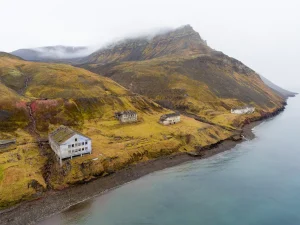
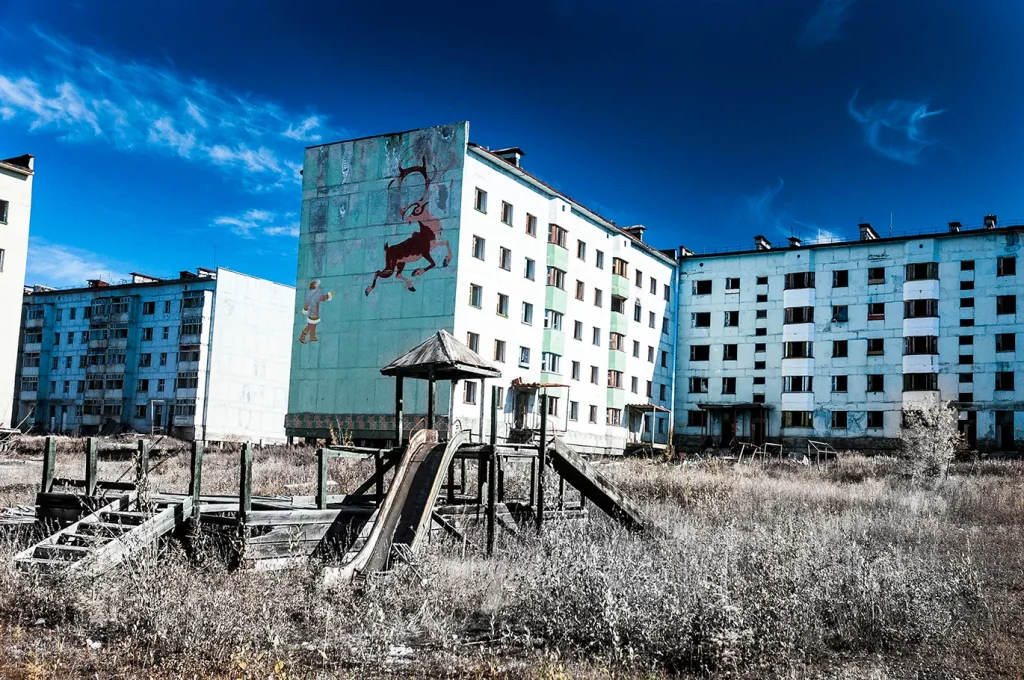
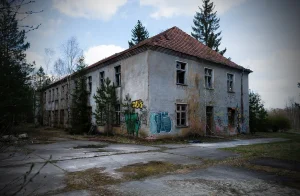
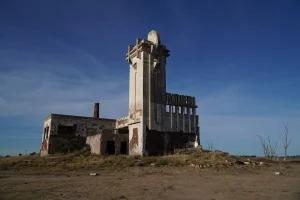
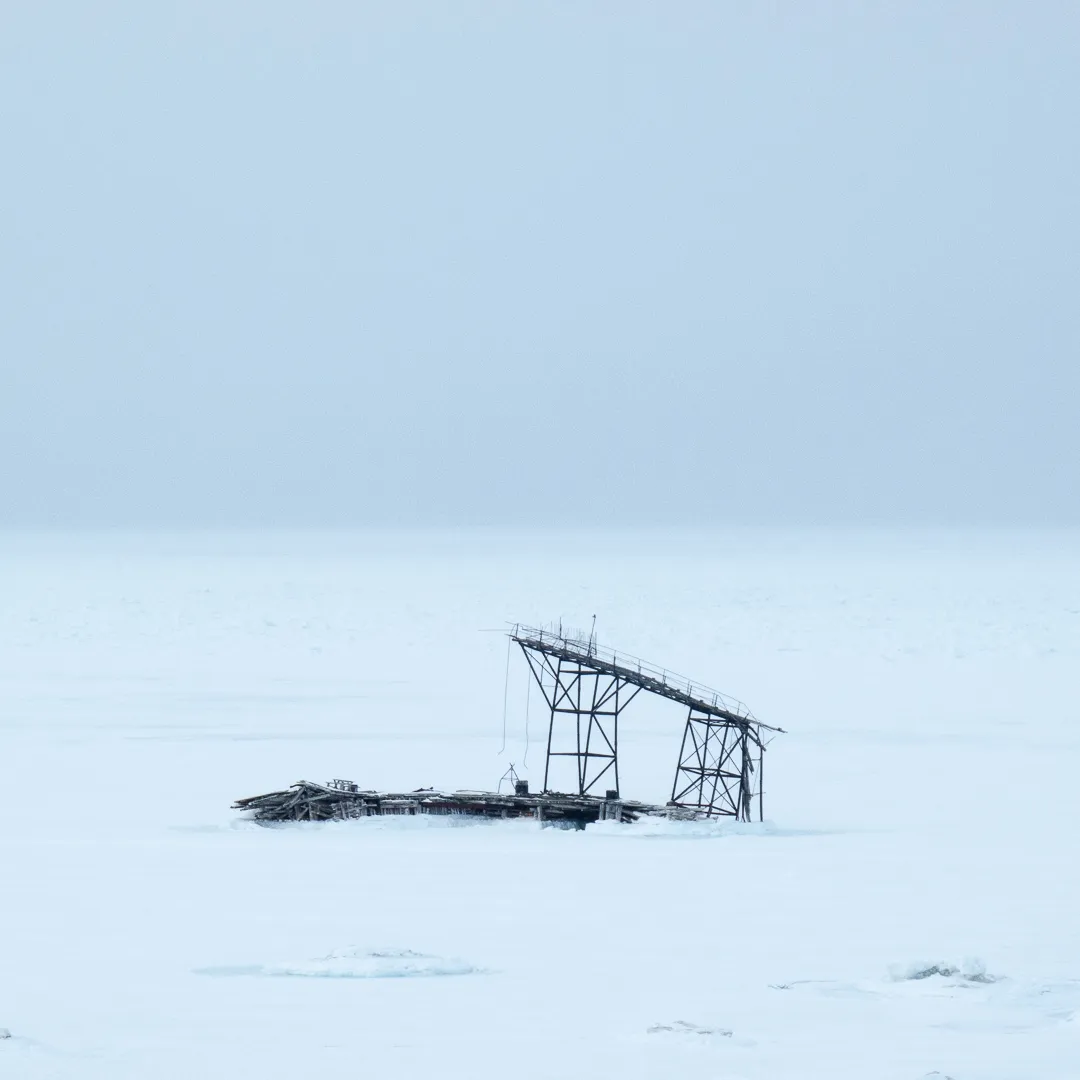
A writer who walked there from the Rusanov cabin, about ten minutes along the old railway path, found a crater at the centre of the industrial area, twisted steel and broken concrete scattered over a hundred metres, and a power plant that was an empty shell. The houses were in better condition than the plant, with some rooms looking as if they were still lived in, and a half-sunken ship lay at the dock. The old pier is no longer safe for boats. On the outskirts is a small cemetery of about 20 young coal miners, with photographs on some of the gravestones.
Scrap metal, after all, is worth more than memories.
Jonathan Danko Kielkowski, writer
The railway track still links Colesbukta and Grumant in places, although part of it has been taken up, and some of the wooden gallery survives. One house on the western side of the bay, kept up by Norwegians, is said to be well preserved, with food, kitchenware and fuel inside. Reindeer graze among the buildings.
Who owns it now
Arktikugol is still a Russian state-owned company and still owns Grumant. Around 2010 it planned to revive coal mining at Colesbukta, but nothing came of it, and the company has run at a deficit since the 1990s. Any development would have to follow the Svalbard Treaty and Norwegian heritage and environmental rules. Buildings and artefacts from before 1946 are protected, camping and fires are forbidden near them, and a 100-metre safety zone applies, because protected remains may lie hidden in the ground.
Visiting
Visitors usually arrive by boat, often on a guided day trip from Longyearbyen or Barentsburg, or by expedition ship, and land on the beach. Coles Bay is also popular with people from Longyearbyen and is a stopover on organised snowmobile tours to Grønnfjorden. There are no tables, toilets or cafes, and winter visits need specialist equipment. Svalbard is polar bear country and the weather is changeable, so go with a local operator who knows the rules and carries safety gear. Look at the ruins from a distance, since the buildings are unstable.
Conclusion
Colesbukta was the working end of a Soviet mining chain, a harbour where coal arrived by rail and left by ship. The mine has gone and the port has gone with it, but the shore still shows how it worked, from the railway embankment to the Rusanov cabin that came before it all.
Did you know?
- Colesbukta is a bay about 4.5 kilometres wide on Isfjorden.
- The valley behind it was recorded in 1630 as Coles Park, a place to hunt reindeer.
- Vladimir Rusanov's expedition claimed the area on 7 August 1912 and built a cabin that is now a small museum.
- Rusanov and his companions vanished in the Kara Sea soon afterwards.
- Coal from Grumant went to Colesbukta on an electric narrow-gauge railway of about 8 to 9 kilometres.
- Part of the railway ran through a tunnel just under a kilometre long.
- German naval gunfire destroyed the settlement on 8 September 1943.
- Grumant and Colesbukta together had 1,106 residents in 1951, including 32 children.
- A geology team used the buildings from 1981 to 1988.
- Buildings and artefacts on Svalbard that date from before 1946 are protected.