


The sound that broke into shortwave radio
In July 1976, shortwave listeners and radio amateurs around the world began hearing something that did not belong on the dial: a harsh, repetitive tapping, loud enough to drown out broadcasts and impossible to ignore. Most often it arrived at ten pulses a second, and the sound gave its source a nickname that stuck: the Russian Woodpecker. It would be heard on and off for more than a decade.
The Soviet Union never explained it. A 1988 study by the US Federal Communications Commission placed the signal between 7 and 19 MHz, with a typical transmission lasting about seven minutes, and reported transmitter power above 10 megawatts. That is an enormous amount of energy to push into the upper atmosphere, and with no official explanation, listeners filled the silence with theories. Mind control, weather manipulation and submarine communications were all suggested. The truth was more conventional, and in its way more unsettling.

An early-warning radar that looked over the horizon
Duga, a Russian word meaning an arc, was an over-the-horizon radar. Ordinary radars see in a straight line, so anything below the curve of the Earth is invisible to them. A missile launched from the other side of the world would be well on its way before a conventional radar could detect it. Duga tried to solve that by sending shortwave pulses up into the ionosphere, the electrically charged upper layer of the atmosphere, which reflects radio waves of those frequencies back down to the ground thousands of kilometres away. The system then listened for echoes coming back from anything it had lit up, a missile plume among them. The aim was to detect a launch within minutes of lift-off, which in a Cold War standoff could mean the difference between a warning and a surprise.
The Soviet designation was 5Н32-West. NATO knew it as Steel Yard, and the name Steel Work also appears in the earliest open-source references. An experimental version had been built near Mykolaiv before the operational systems came into use. The operational system that included Chernobyl-2 began service in July 1976.
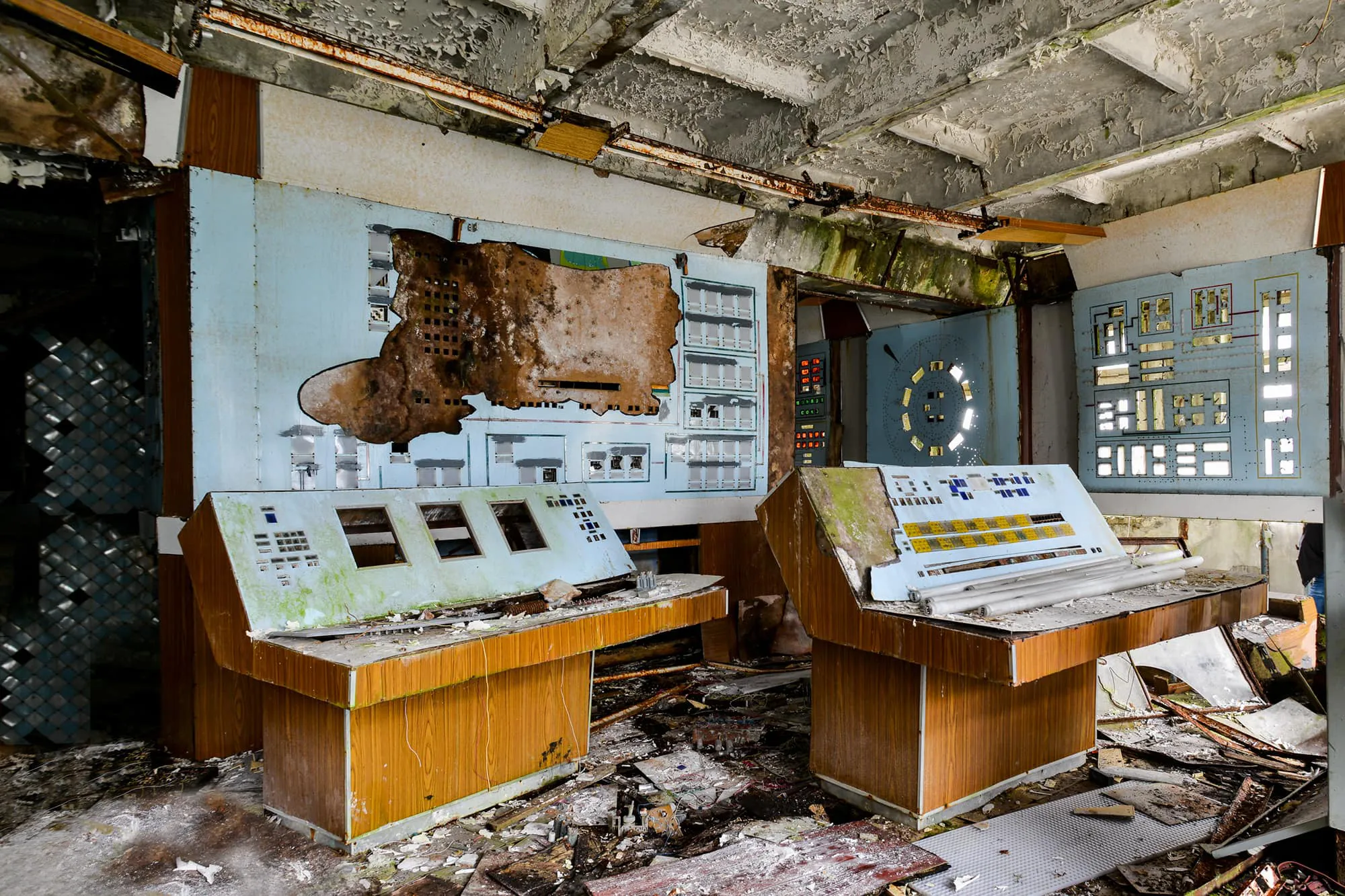
The system worked as a pair of sites. The powerful transmitter stood at Liubech-1, and the receiving array stood at Chernobyl-2, roughly 50 to 60 km apart depending on which source you read. Separating the two keeps the transmitter’s blast from drowning out the faint returns. The receiver, at Chernobyl-2, is the structure that visitors came to see.
The array
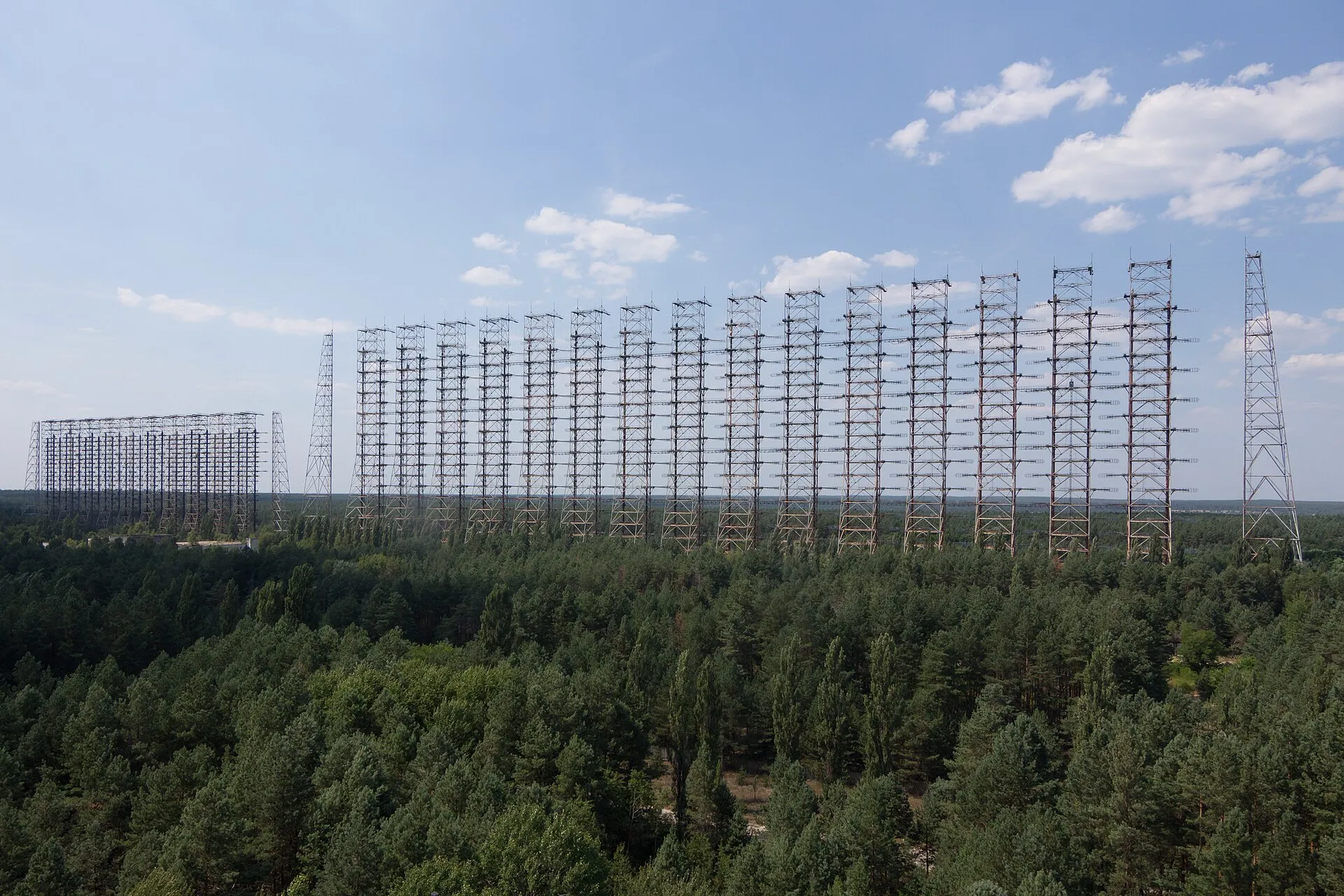
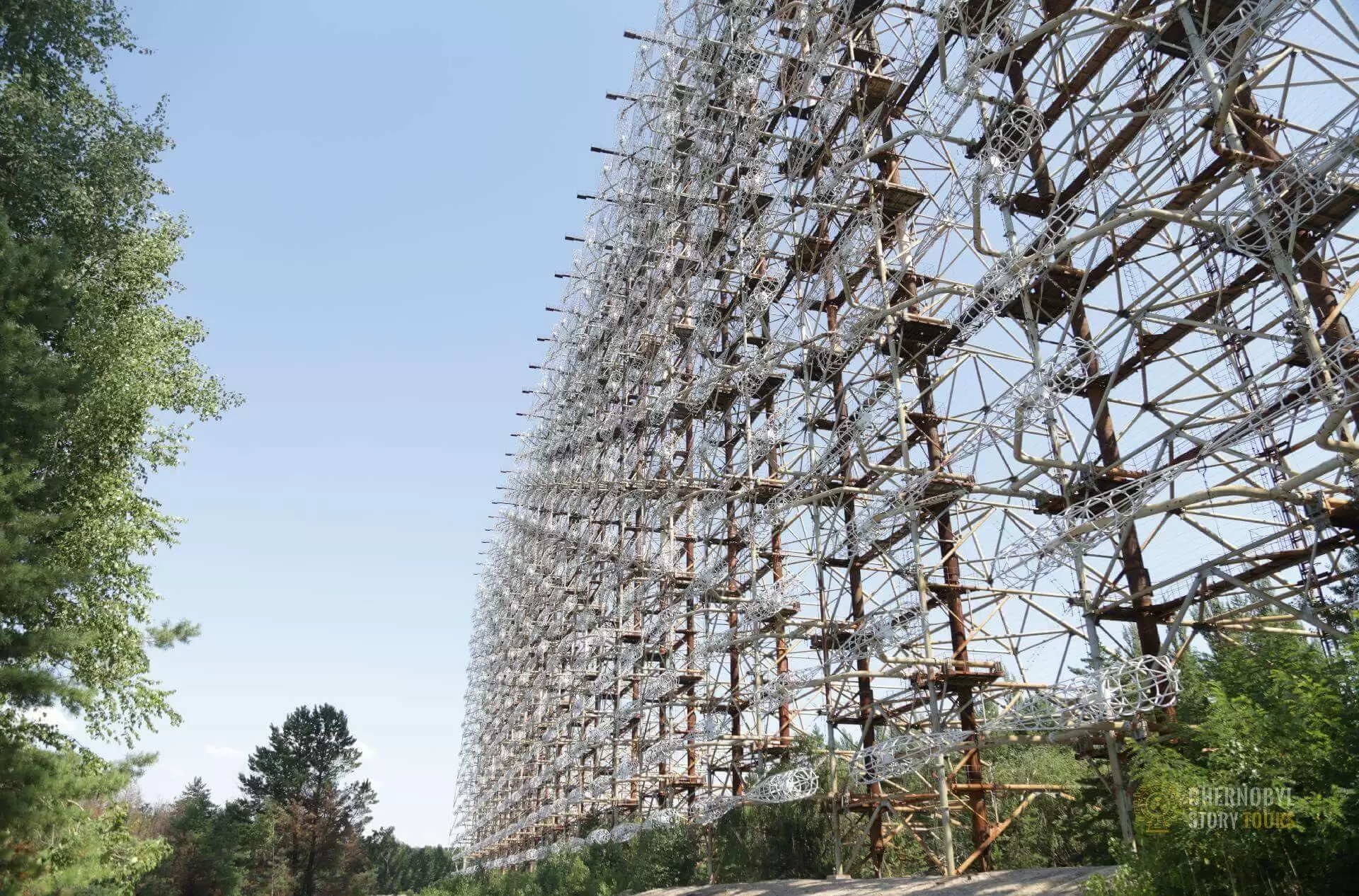
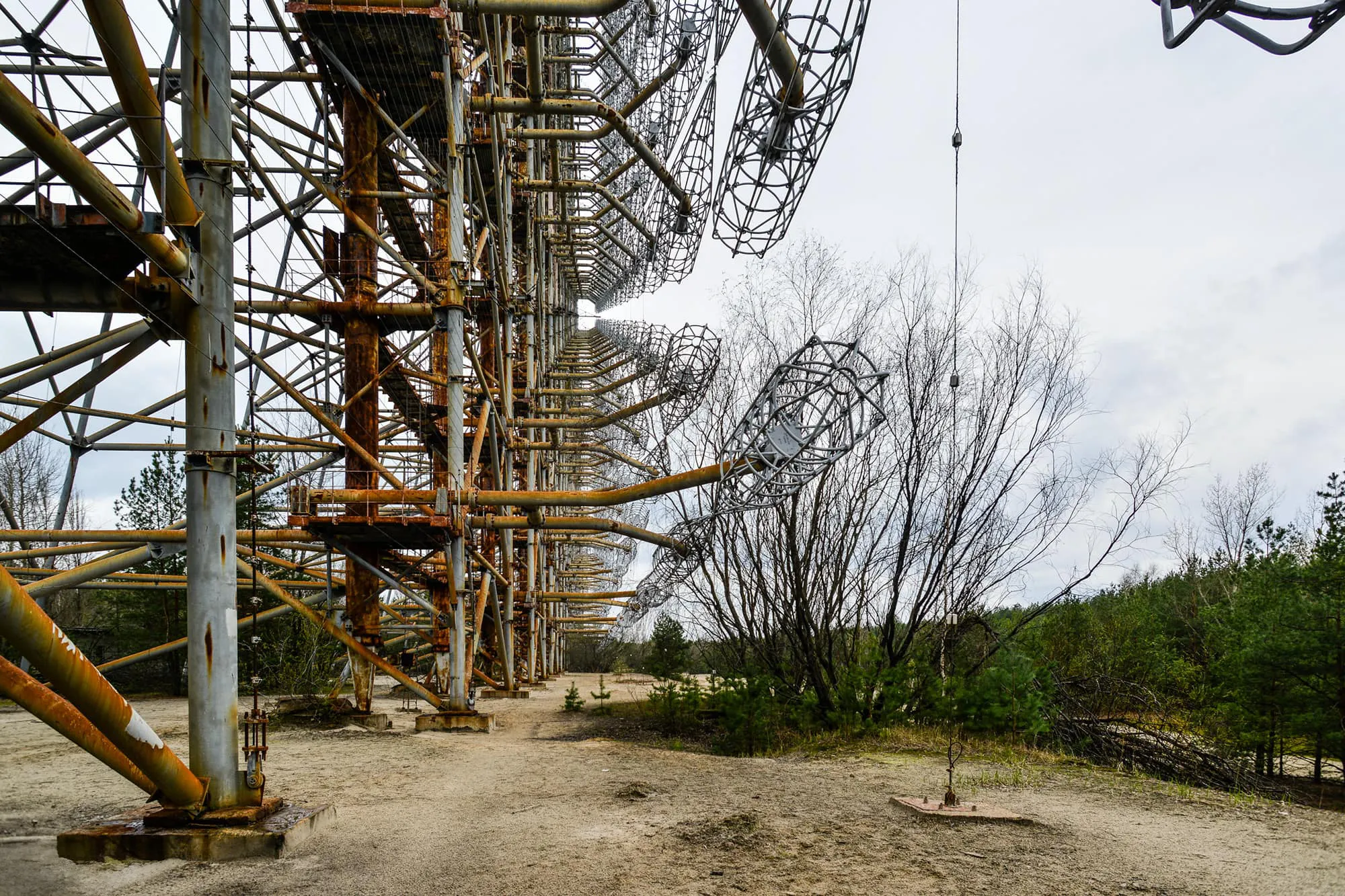
The main receiving array is roughly 150 metres tall. Its length is quoted as anything from about 500 metres to almost 700 metres, and the sources do not agree on a single figure. A second, smaller array of about 110 metres by 250 metres stands beside it. Sources also differ on what to call the Chernobyl-2 site: it is often described as Duga-3, although the wider system is also referred to as Duga-1.
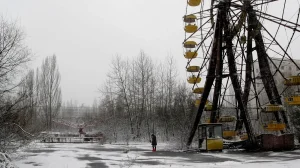
What nobody argues about is the scale. A steel lattice frame the height of a 40-storey building stands in the forest, and even derelict it dominates the skyline of the Zone. Around its base, visitors have described abandoned vehicles, steel barrels, broken electronics and metal debris left behind when the site was cleared.
A town that was not on the map
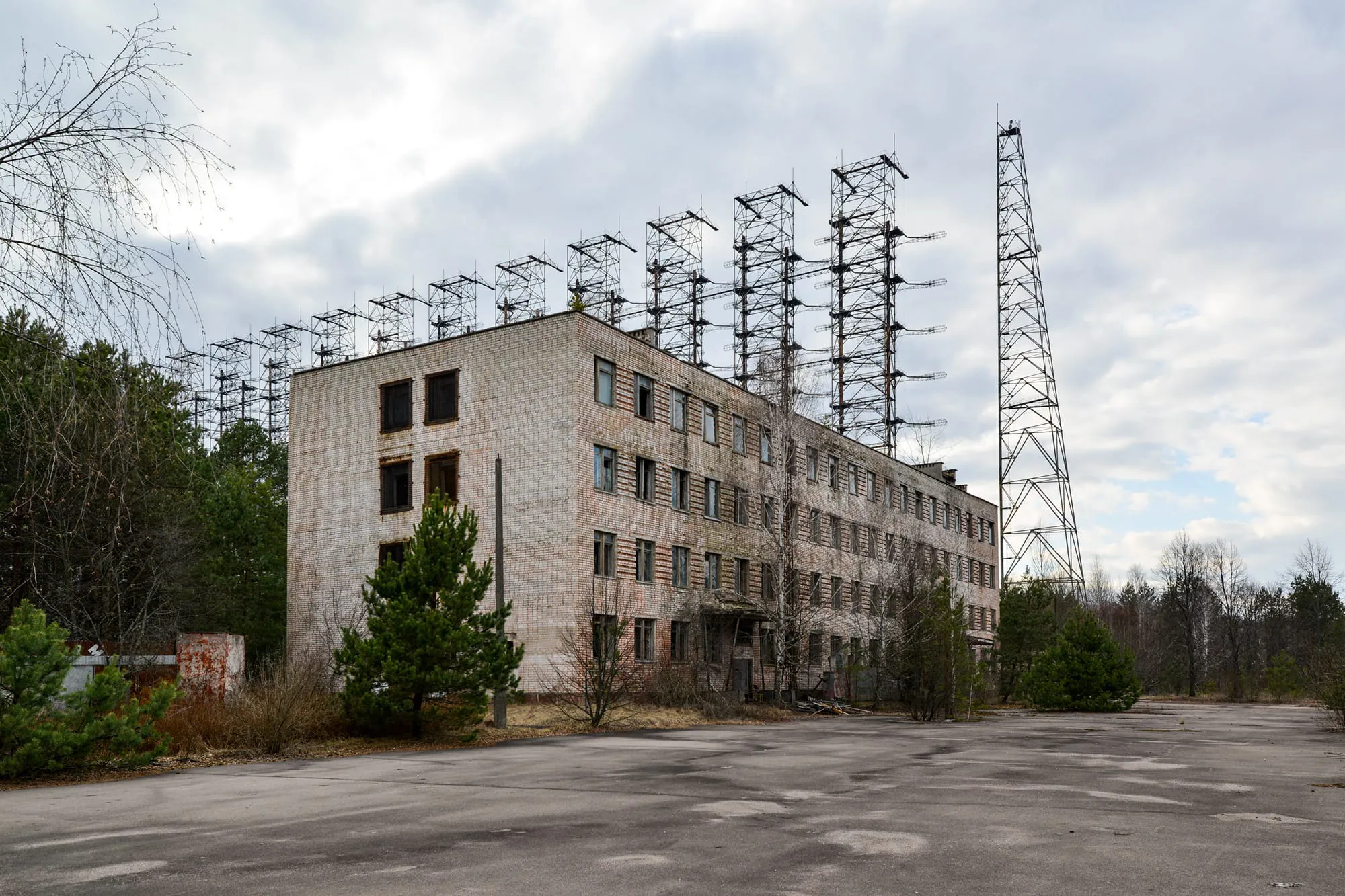
A radar like this needed people to run it, and those people needed somewhere to live. Chernobyl-2 was the closed garrison town that served the receiving site, and Liubech-1 played the same role at the transmitter. Neither appeared on public Soviet maps. According to one account, the Soviet Union denied the radar existed at all and labelled the site on maps as a children’s camp.
The secrecy matters because it explains why Duga became such a puzzle. A signal that could be heard worldwide came from a place the state insisted was not there. The same Chernobyl district that housed the secret garrison also housed the power plant and the model town of Pripyat, and for a few years all three coexisted within a few kilometres of each other.
Did the Chernobyl disaster end it?
The popular version of the Duga story is simple: the reactor exploded in April 1986, the area was evacuated, and the radar was abandoned in a hurry. It is a tidy story, but the record is less clear.
One account says the disaster closed the complex and forced its workers out. Another argues that Duga did not stop because of the accident: the other reactors at the Chernobyl Nuclear Power Plant carried on into the 1990s, and the radar’s own signal only disappeared in December 1989, for reasons that have never been made public. The range of accounts shows how little hard evidence there is.
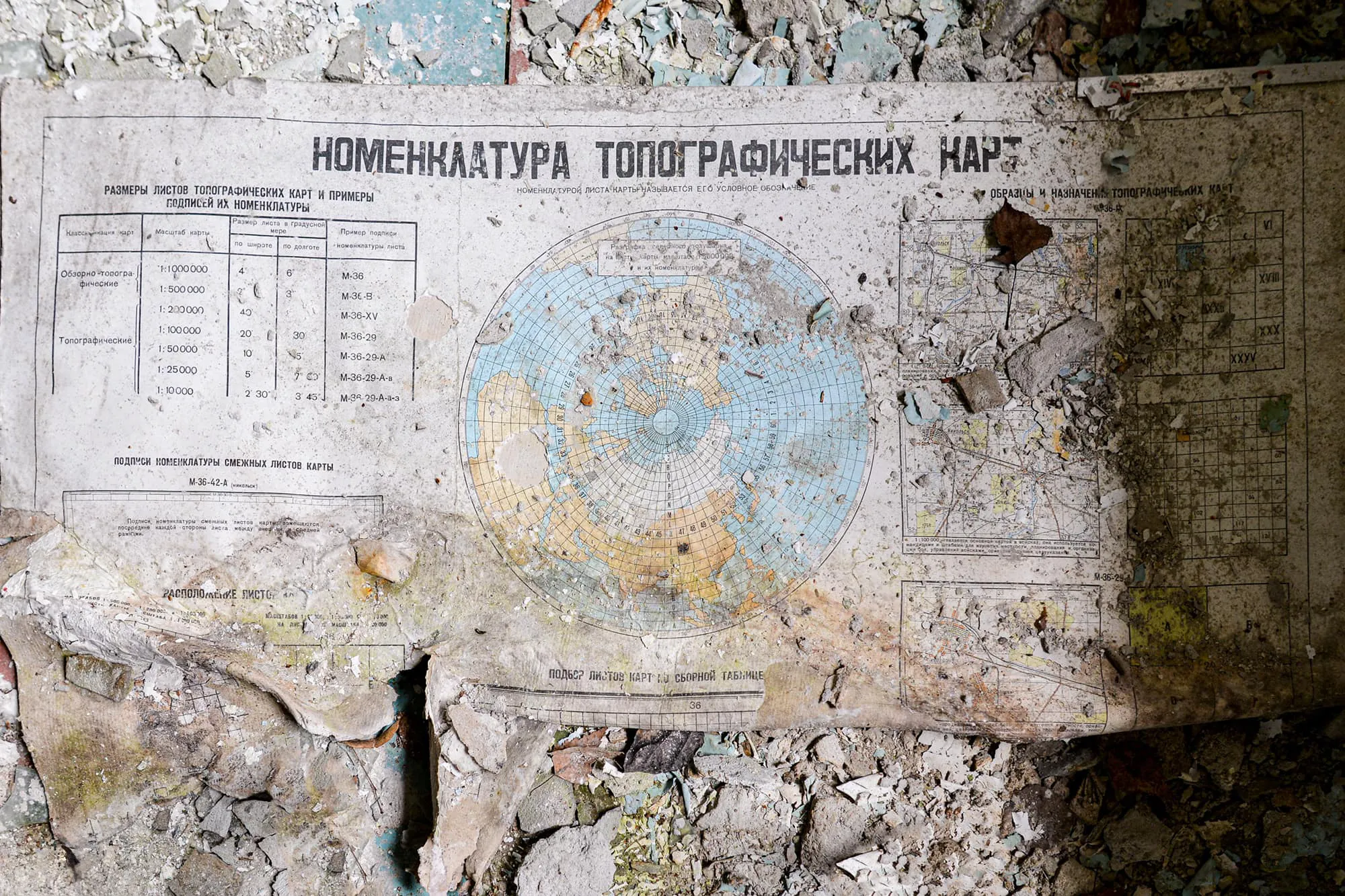
What is not in dispute is what happened afterwards. The site sits inside the Exclusion Zone, which kept it sealed for decades. Records were reportedly destroyed or sent to Moscow, and equipment was removed or looted. One account suggests the project was flawed from the start because Soviet scientists did not fully understand how the ionosphere behaves, but that is a claim rather than an established finding.
A 2015 documentary, The Russian Woodpecker, goes further and argues that the Chernobyl disaster was engineered to cover up failures in Duga’s design. That is the film’s claim. It is not an established fact, and the mainstream investigations of the accident place the cause in the reactor’s design and the way it was operated.
What is left
Today Duga is a rusting, half-ruined monument to a project that only a handful of people ever fully understood. The structure is listed as an Immovable Monument of National Significance of Ukraine, reference 100030-Н, which gives it a measure of formal protection. That protection cannot stop corrosion. The steel frames are decaying, and some accounts describe the complex as at risk of eventual collapse.
Climbing the structure was never officially encouraged, and the service lifts that once carried technicians up the frame no longer work. Visitors who made the climb before 2022 used the ladders, and the ascent could take 25 minutes or more. The structure is old, corroded and unmaintained, and the Zone around it adds its own risks, including radiation hotspots.
Visiting Duga
Guided group visits to Duga began around 2013, run by licensed operators from Chernobyl town. A standalone tour took about six hours, and the drive from Chernobyl town runs on a rutted road of concrete slabs. Most visitors were reportedly Americans aged between 30 and 60, and many called Duga the highlight of their trip. Ukrainian tourism groups had even been seeking UNESCO World Heritage status for the Exclusion Zone.
All of that has changed. Since the Russian invasion in 2022, the Zone has been closed to tourists. Before planning any trip, check the current position with the State Agency of Ukraine on the Exclusion Zone Management or a licensed operator. Do not attempt to enter the Zone independently: it is dangerous, and unauthorised entry is illegal.
Duga in books, film and games
For a structure that most people will never see, Duga has a surprisingly rich cultural afterlife. It is the subject of the 2015 documentary The Russian Woodpecker. It features in Markiyan Kamysh’s book Stalking the Atomic City, which describes illegal trips into the Exclusion Zone. And it appears as an explorable location in the video games Chernobylite (2021) and S.T.A.L.K.E.R. 2: Heart of Chornobyl (2024). For many people, a screen is where they first met it.
Conclusion
Duga is one of the clearest physical records of Cold War fear: a machine built to see missiles coming, hidden from public maps, and left to rust beside the most famous nuclear accident in history. It also shows how little ordinary people were told. For years, a loud signal sat on the radio dial with no official explanation at all, and the state that made it insisted the place that sent it was a children’s camp. When you see it today, remember what it was built to do: to buy a few extra minutes in a war that, thankfully, never came.
Did you know?
- NATO called it Steel Yard; the Soviets called it 5Н32-West.
- The "Woodpecker" name came from shortwave listeners, not the Soviets.
- Soviet maps reportedly labelled the site as a children's camp.
- Transmitter power was reported above 10 megawatts.
- The ionosphere bounce let it watch for launches well beyond the horizon.