

A farmhouse in the Catskills
Grossinger’s began small. Asher Selig Grossinger and his wife Malka were immigrants from Galicia, from the village of Baligrod, in what is now Poland. One source describes the family simply as Austrian. They moved to Ferndale, in Sullivan County, around 1913, and by 1914 they were taking in boarders at a farmhouse with no plumbing or electricity.
This was how the Catskills hotel trade started. Before the large resorts, many families in the area ran a farm that took in summer guests, and the Grossingers were one of them. In 1919 they sold their first home, which they had called Longbrook House, and bought a 100-acre property. They named it Grossinger’s Terrace Hill House.
The setting mattered. The region was known as the Borscht Belt, a name for the Jewish resort area in the Catskill Mountains, which was popular with families from New York City well into the 1960s. Grossinger’s was kosher, and it catered mainly to Jewish guests. It sat about two hours’ drive from the city.
Jennie Grossinger
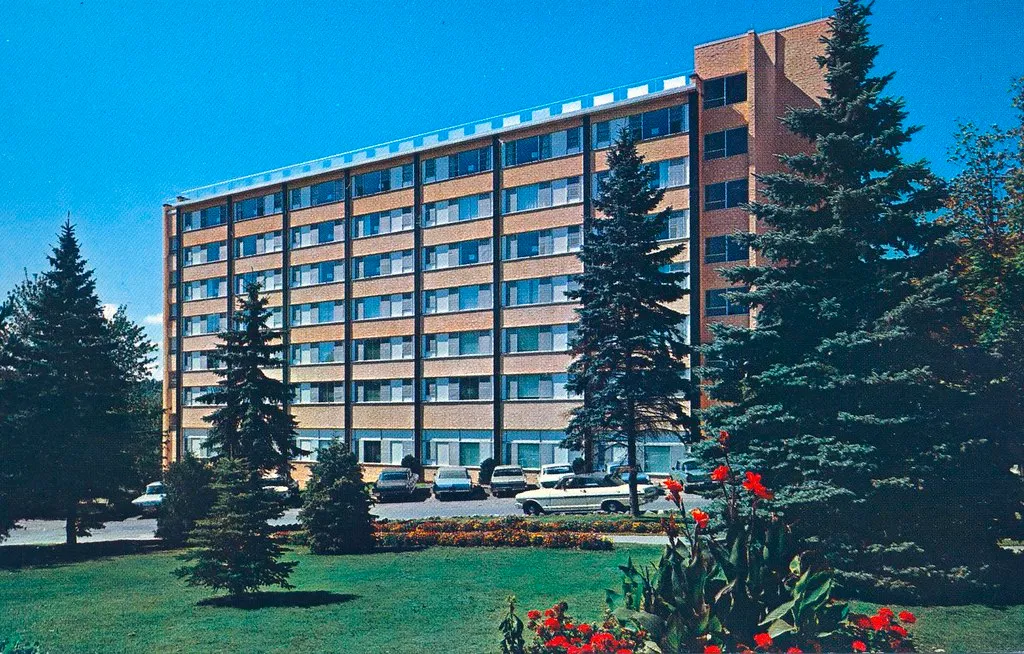
The person most associated with the resort is Jennie Grossinger (1891-1972), the couple’s daughter. She started as a hostess and went on to lead the business, and her name became the name of the resort in the public mind. The hilltop lodge was called the Jennie G. Hotel.
Under her, the resort grew far beyond a boarding house. Over the decades it expanded to more than 35 buildings. The main dining room seated 1,300 people, and below it was the Terrace Room, a nightclub. A source describing the resort in 1972 gives it 1,200 acres and 150,000 guests a year, while another says it could accommodate nearly 1,500 guests at a time. These figures describe different things, a yearly total against a capacity at one moment, and they are not in conflict as such, but they cannot be checked against each other.
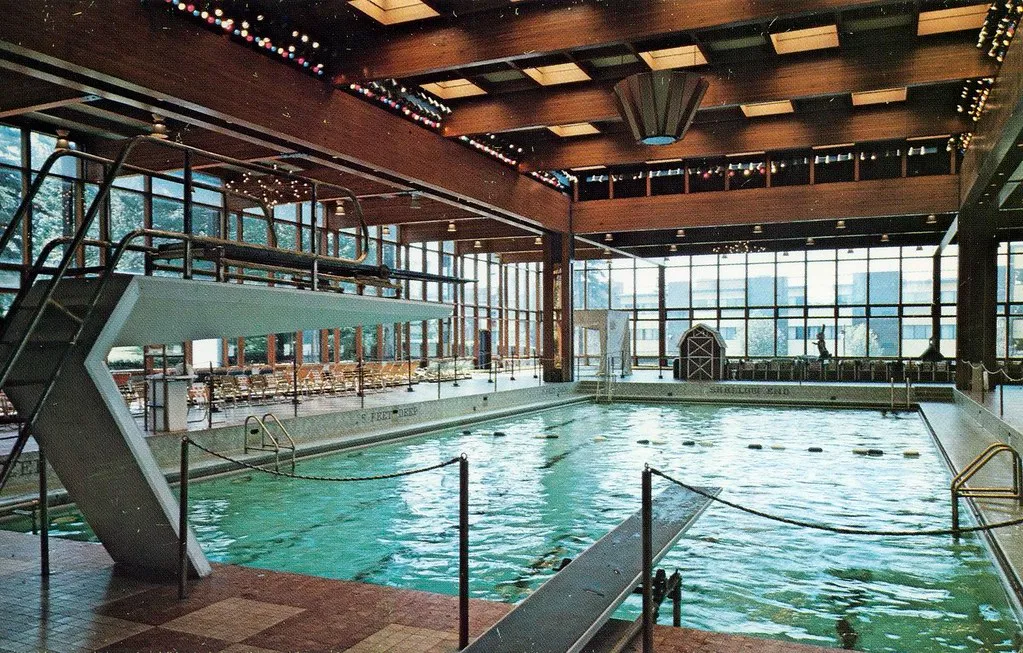
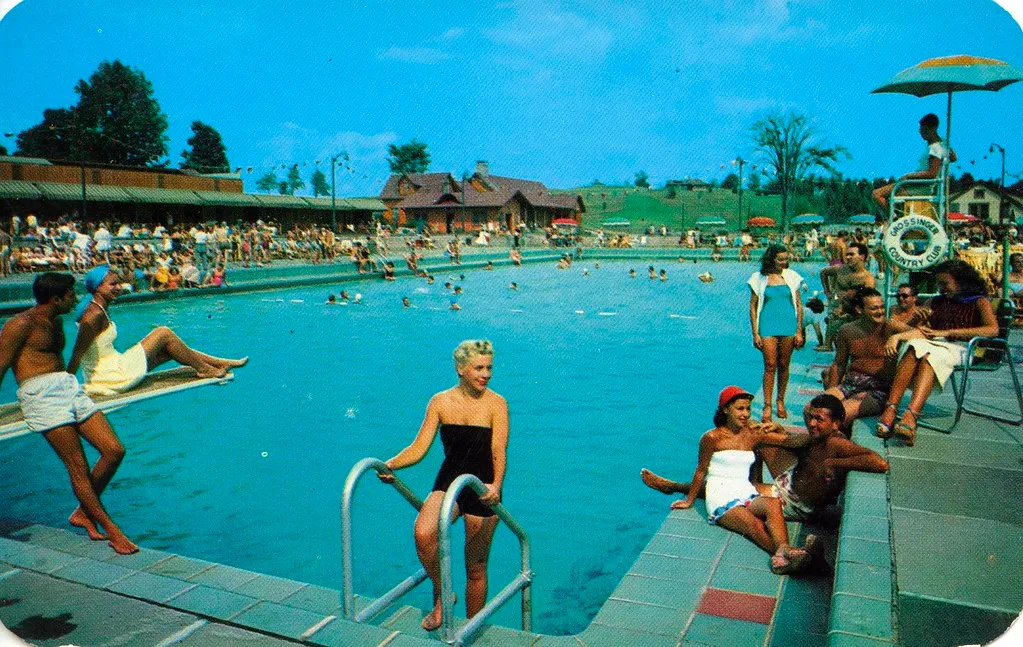
It had two kosher kitchens, a ski slope, a golf course, a swimming pool, an ice rink and an indoor pool. An airstrip allowed guests to fly in. Remarkably, it also had its own post office, and, according to one source, its own ZIP code. A local writer who grew up in Liberty remembers that the village’s population more than doubled each summer in the 1950s and early 1960s, that tourism kept three ladies’ dress stores in business, and that a second movie theatre opened each Memorial Day for the season.
It was nicknamed the Waldorf of the Catskills, and it drew well-known guests. Rocky Marciano trained there, and sources say world champion boxers had a training camp on the grounds, while Elizabeth Taylor married there and Jackie Robinson vacationed there. One source says the resort’s stages launched many singers and comedians, and another says it was famous for launching the careers of countless stand-up comedians.
Building a resort: architecture
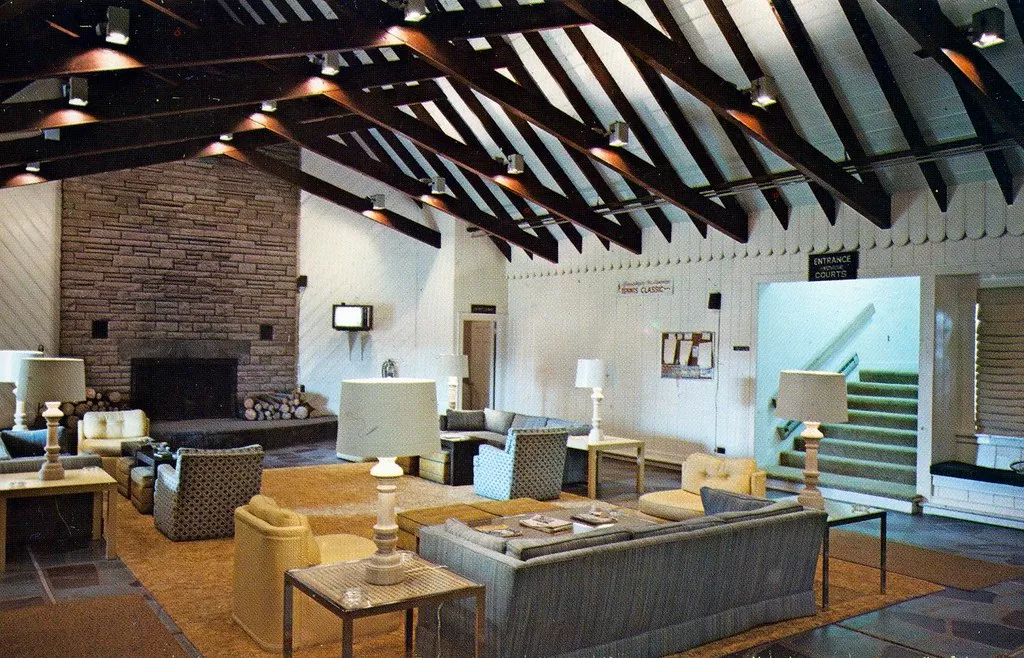
The original hotel building was the former Nichols House, designed by the local architect Frank Cottle. From there the style changed with the decades. The earliest buildings were Victorian, with Mission-style touches added later. In the 1940s came a Tudor-style expansion, when the dining room was enlarged and the Terrace Room nightclub and the Pink Elephant bar were created. In the 1950s and 1960s, the resort added modernist buildings.
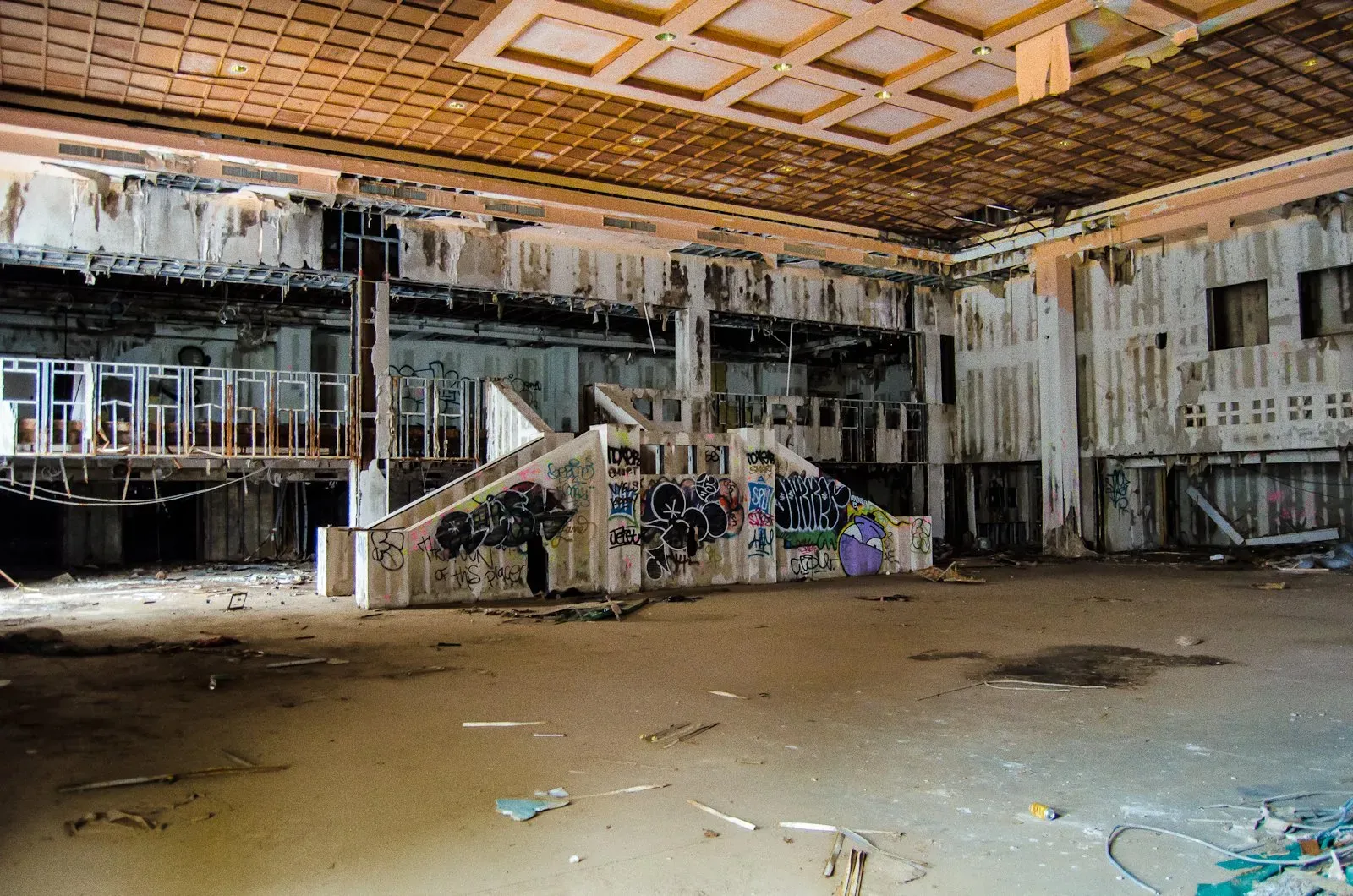
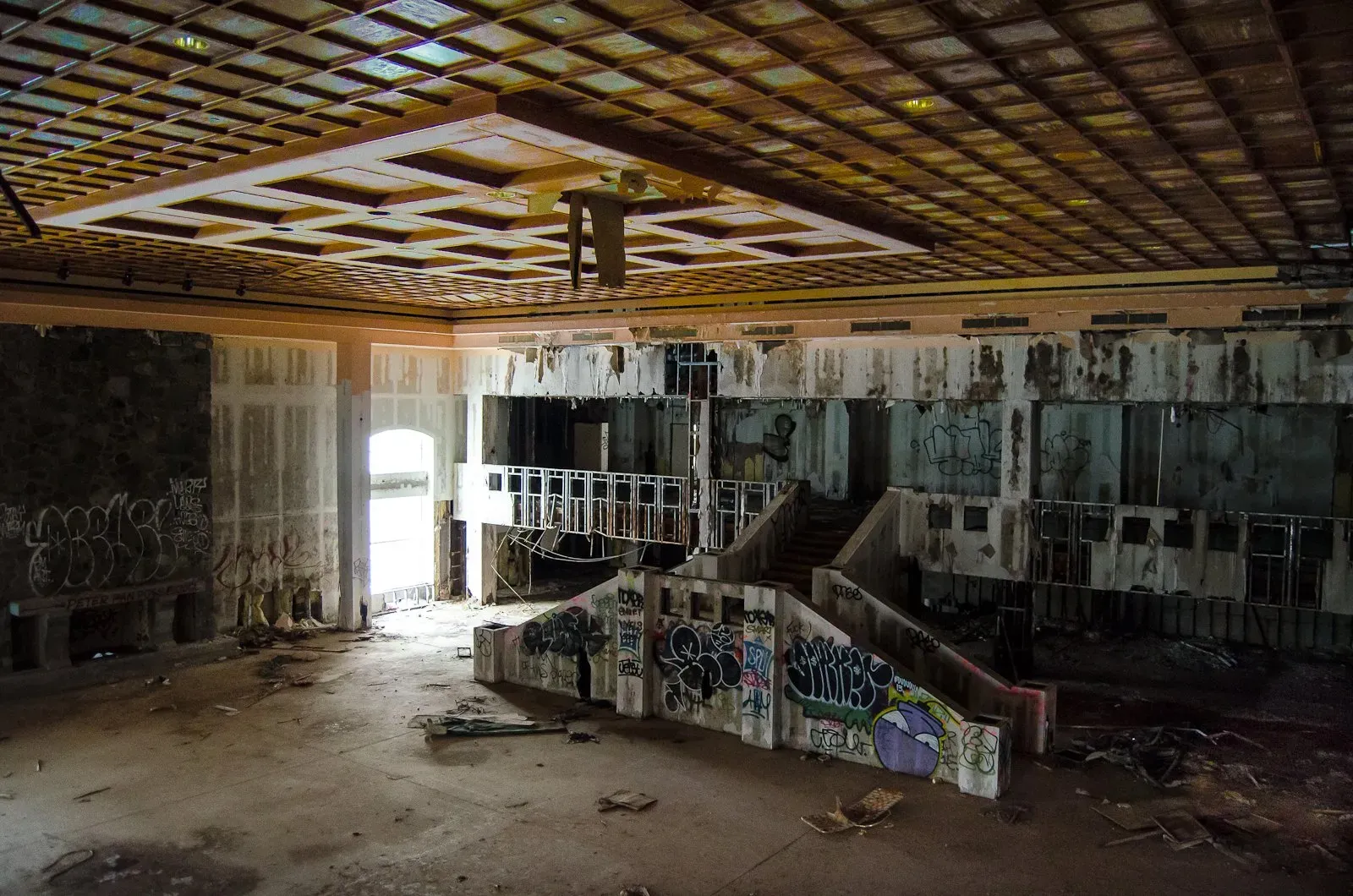
The architect Morris Lapidus renovated the Terrace Room in 1949. It was one of his first hotel commissions.
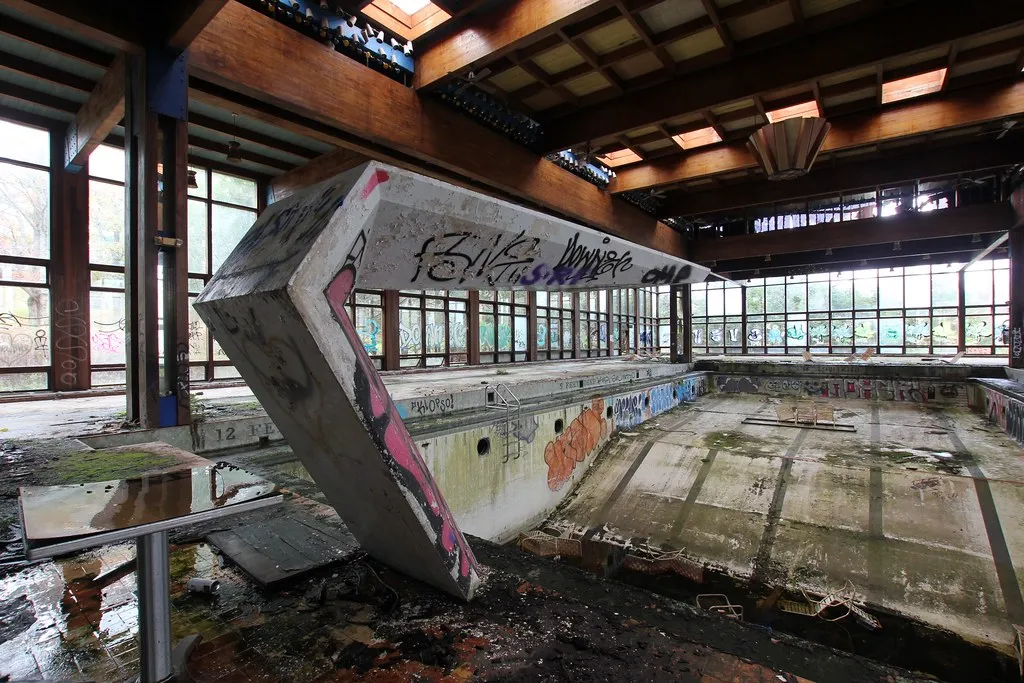
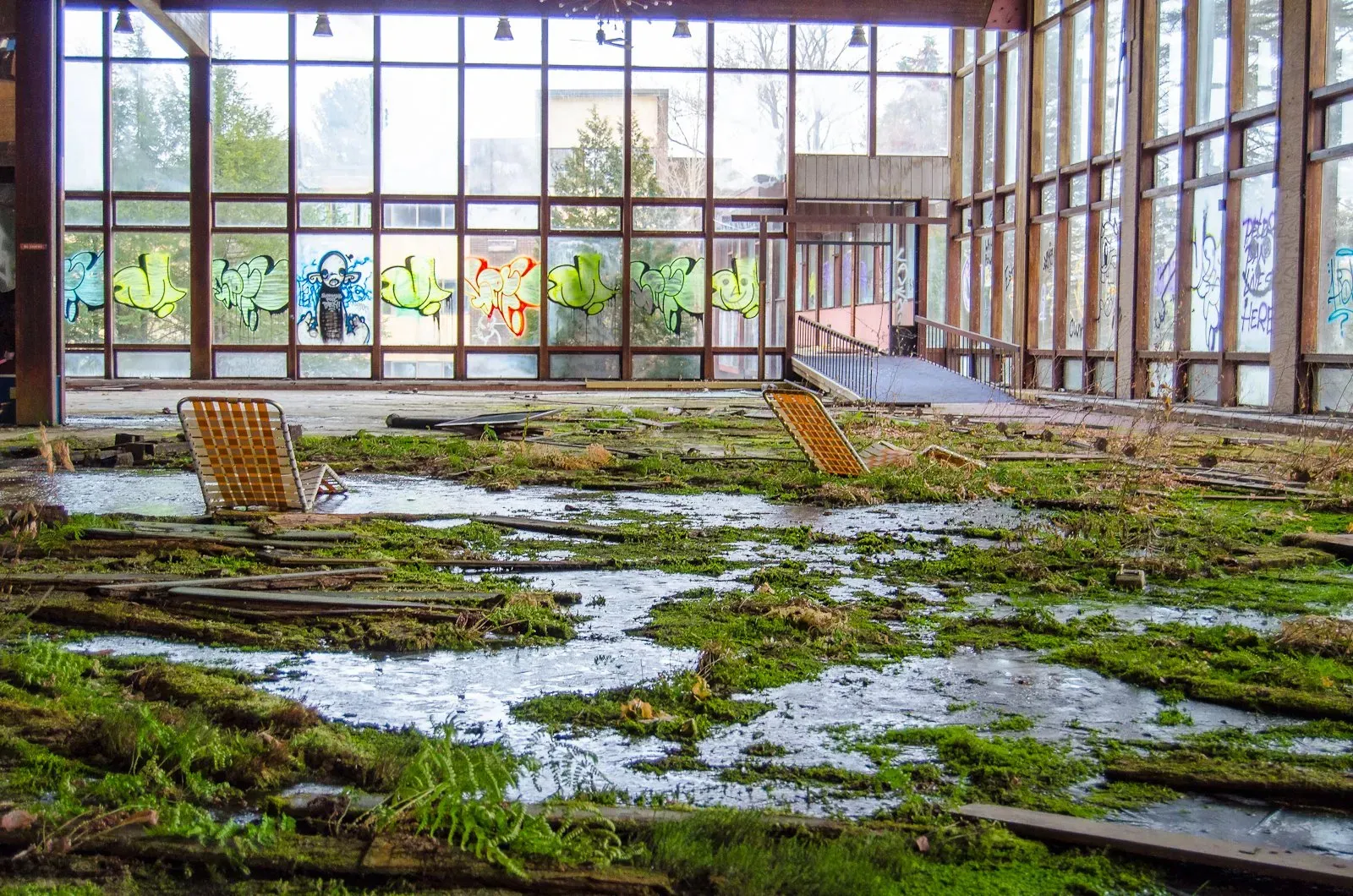
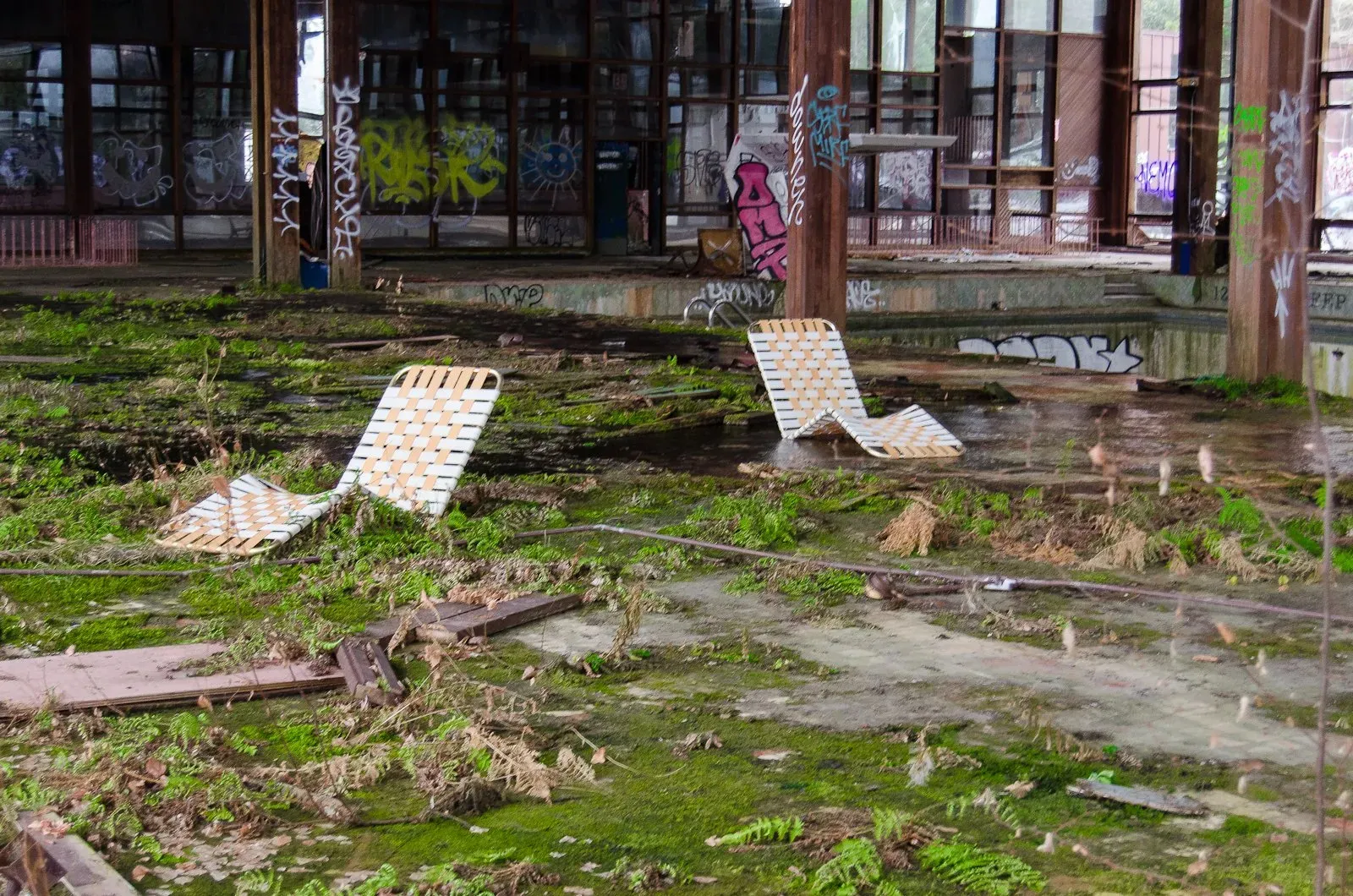
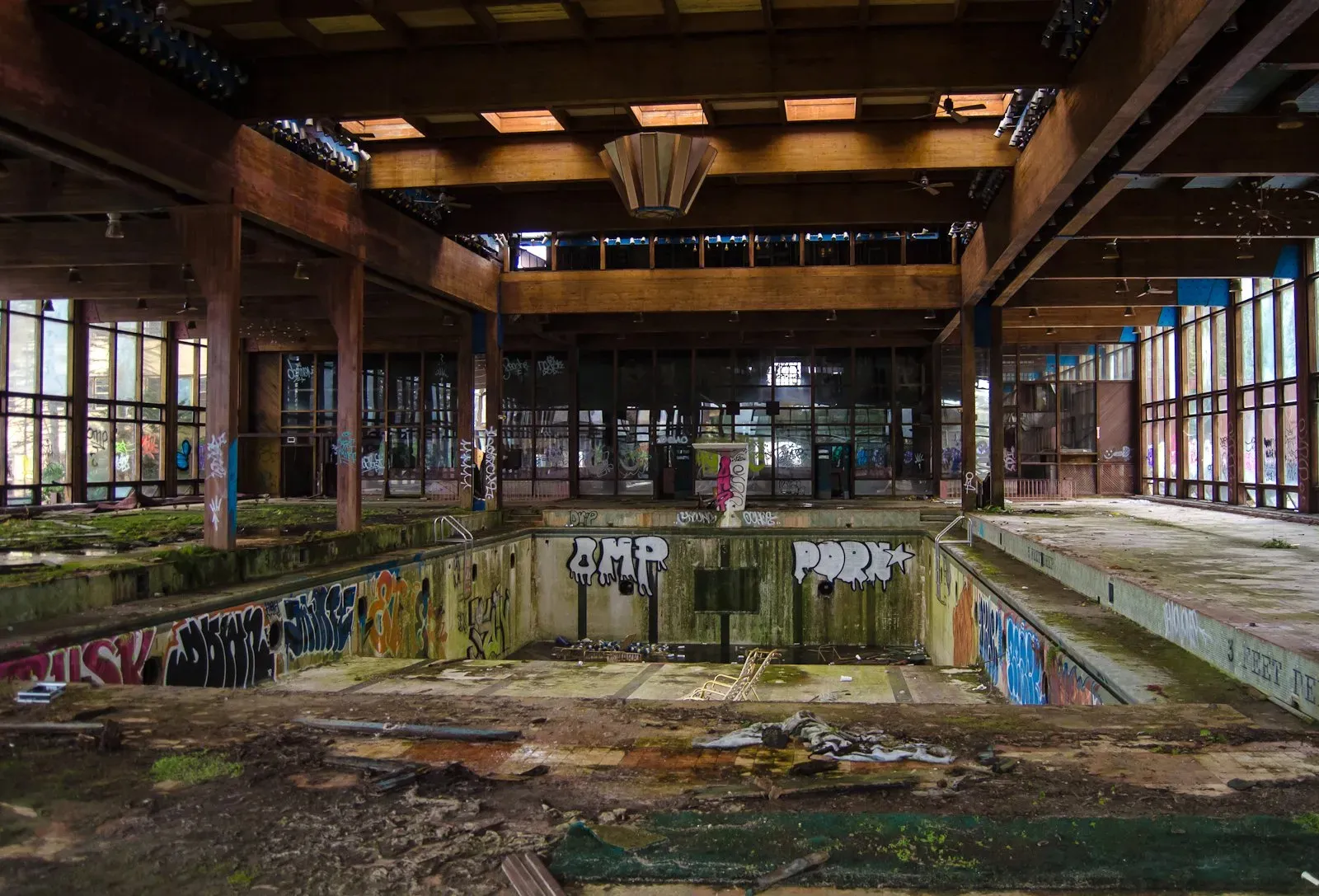
Not all of this survived. When the site was photographed in 2013, there were terra-cotta tiles and space-age light fittings in the indoor pool, and the glass walls were still in place. A year-round catwalk had once linked the suites to the spa.
Snow, sport and the show
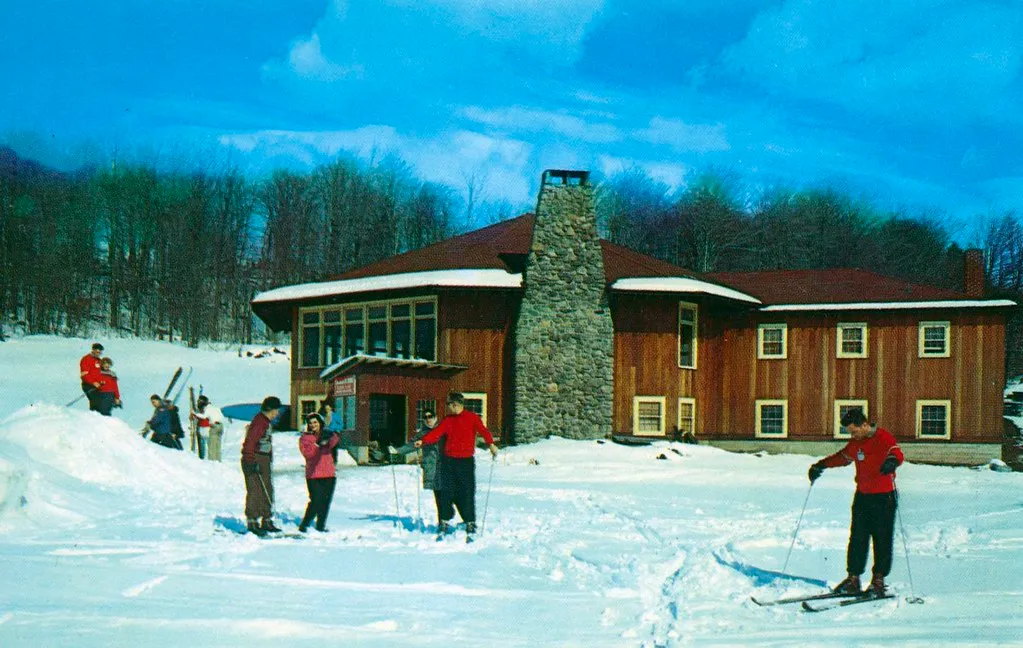
Grossinger’s offered a long list of activities: handball, tennis, skiing, ice skating, tobogganing and a championship golf course, with spas, beauty salons, ballrooms and auditoriums. Winter sport mattered to the business. In 1952, Grossinger’s became the first resort in the world to use artificial snow, a milestone in the history of skiing.
The entertainment was as important as the sport. In August 1984, near the end of the resort’s life, it marked the 15th anniversary of Woodstock with a tie-dye workshop, a performance by David Clayton-Thomas, a midnight screening of the film Woodstock and an appearance by John Sebastian. The activist Abbie Hoffman was also brought in.
Decline
The decline began before the end. After the death of Jennie Grossinger in 1972, her daughter Elaine took over with her brother Paul. By then the model was under pressure. By the late 1960s, cheap air travel had reduced demand for the all-in resort holiday, and in the 1970s and 1980s these resorts struggled to attract younger guests. Across Sullivan County, resorts declined as other destinations became easier to reach.
In 1986 the descendants of the Grossingers sold the property. The buyer was Servico, and one source gives the price as 9 million US dollars. The main hotel and the main resort areas closed that year, after a run of about 70 years. The golf course stayed open until 2017, and its clubhouse was demolished in July 2018.
For Liberty the effect was lasting. One local writer describes the village’s boarded-up storefronts as evidence of the lost business.
Dirty Dancing
The resort closed a year before the 1987 film Dirty Dancing came out, and it is the resort most often cited as the model for the film’s Kellerman’s Mountain Resort. The screenwriter Eleanor Bergstein vacationed there as a child. A 2019 report adds that she took dance lessons from a local instructor, Jackie Horner, who later consulted on the film and inspired one of its characters.
This is a link to the film, not a claim that the film was set at Grossinger’s. The sources use words such as inspired and widely cited, and that is how this article treats it. A feature documentary about the resort and a scripted series have also been announced, according to separate sources.
Years of ruin
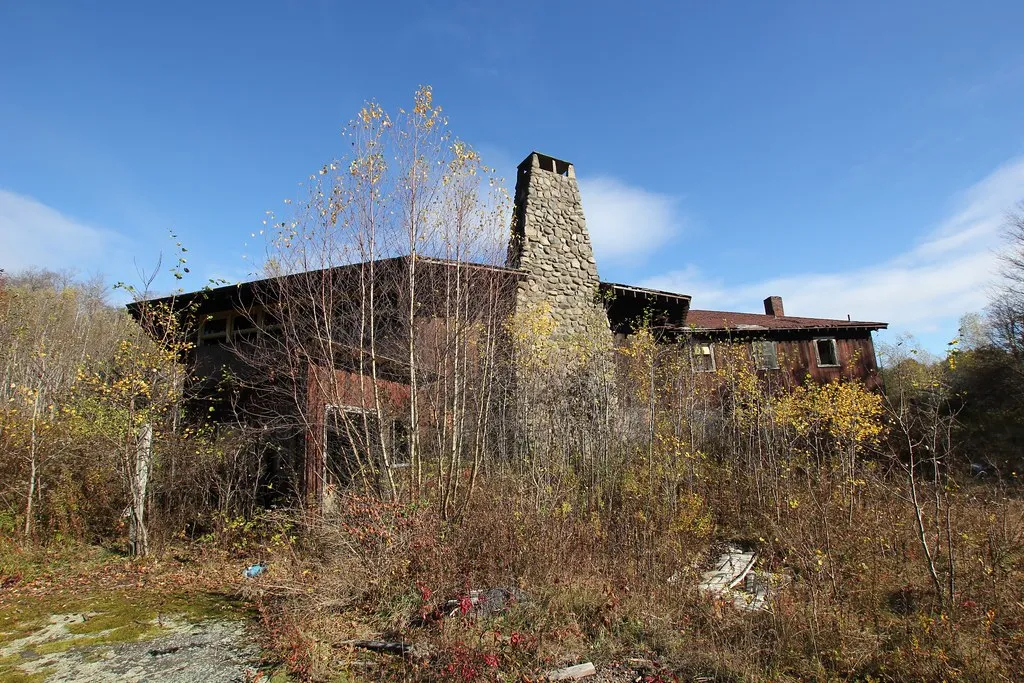
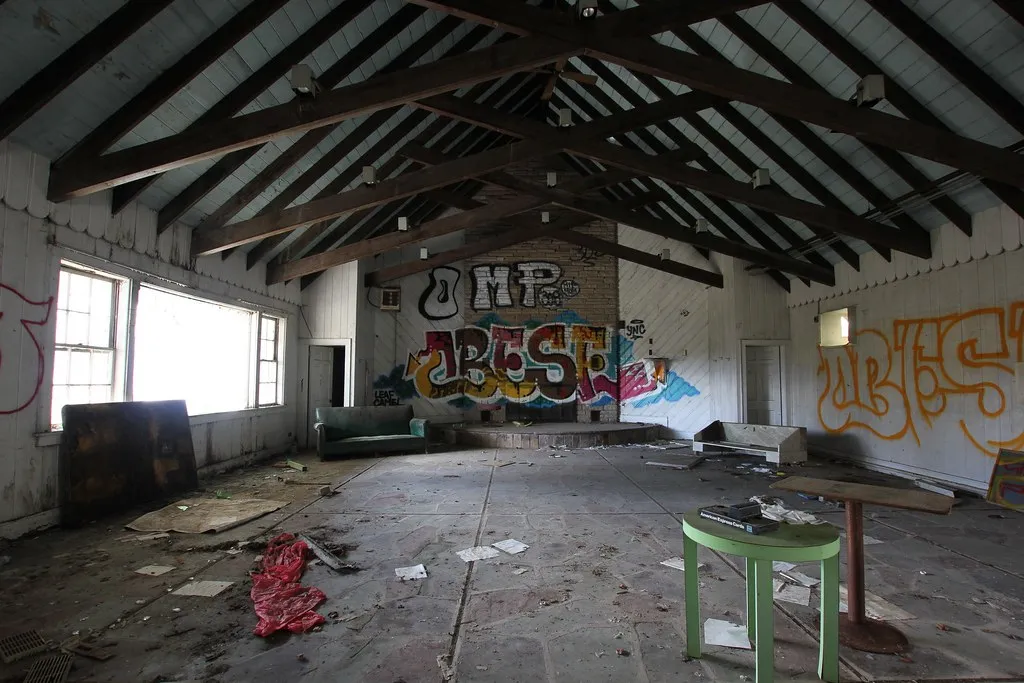
After the sale, the hotel was never reopened. Several attempts at renovation by investors were abandoned. Louis Cappelli owned the property as of September 2013, and the buildings stood empty for decades.
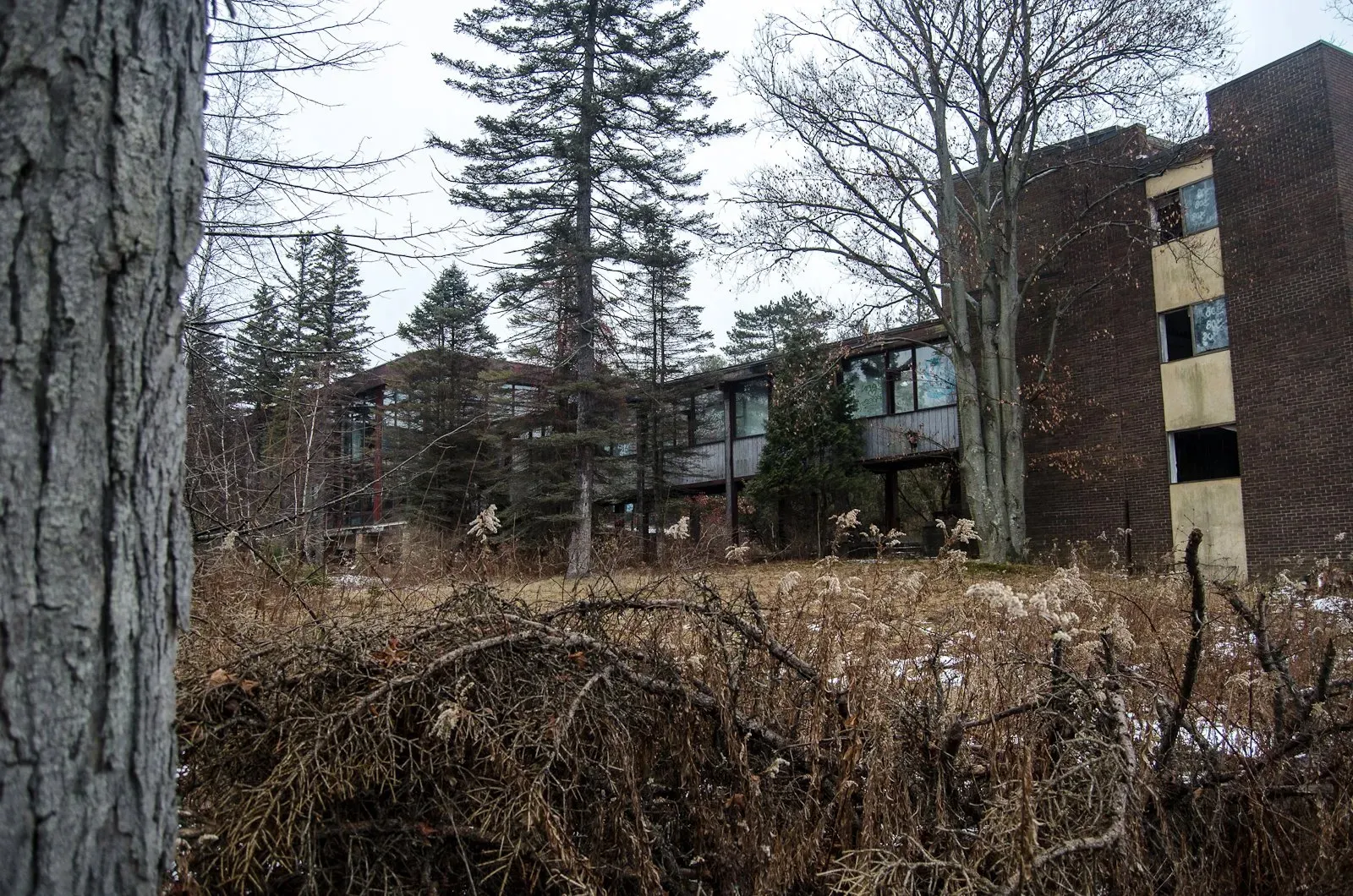
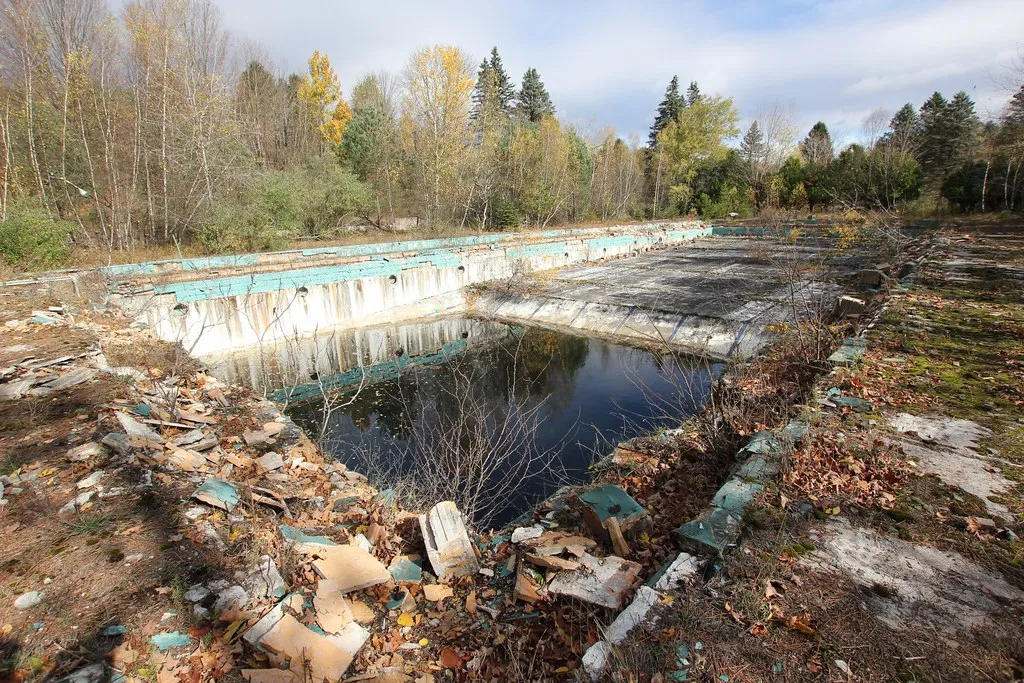
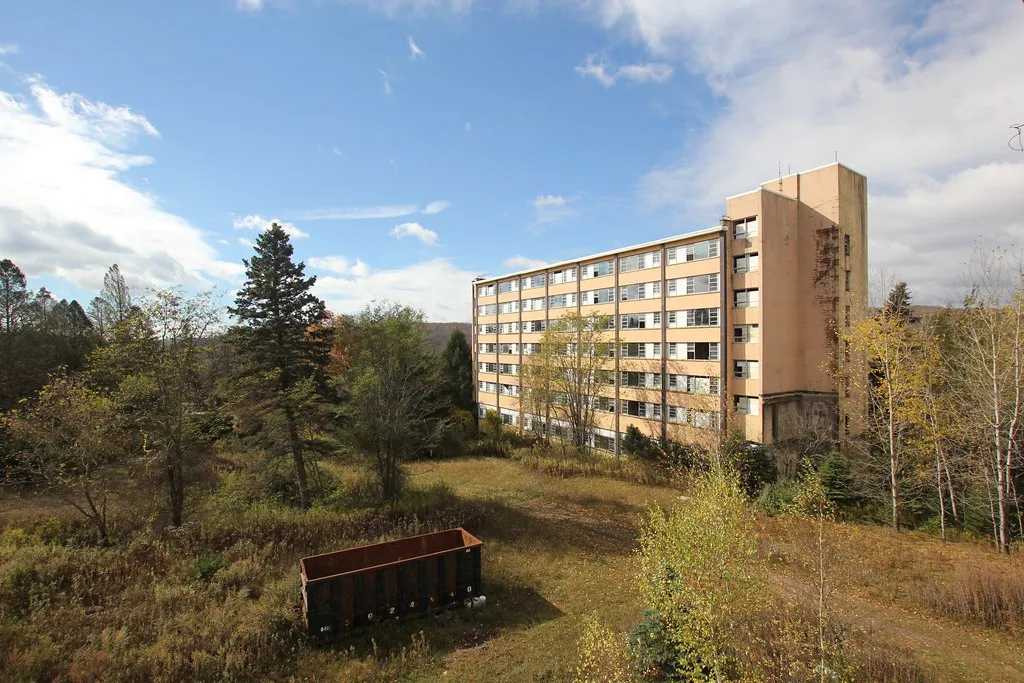
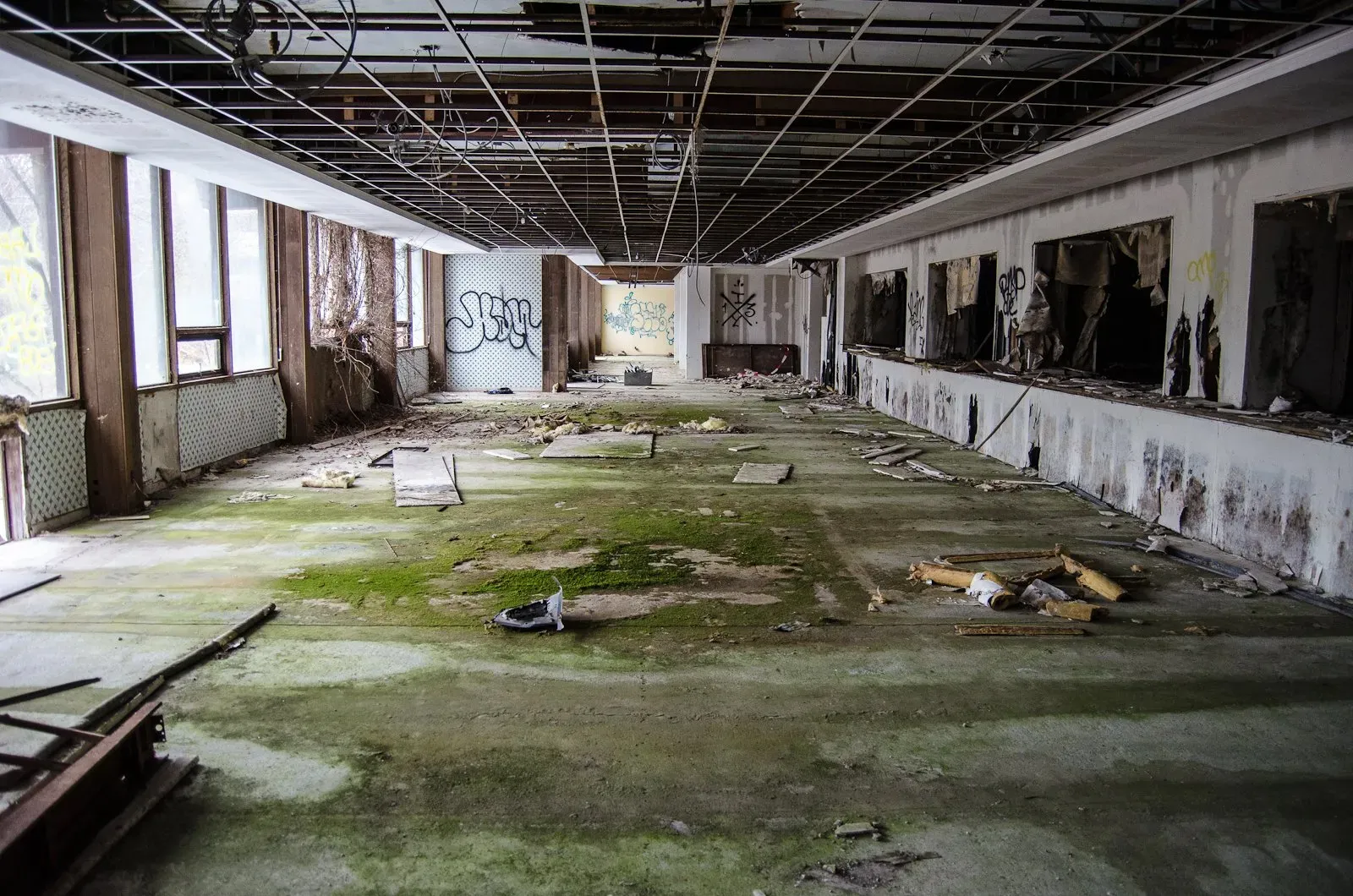
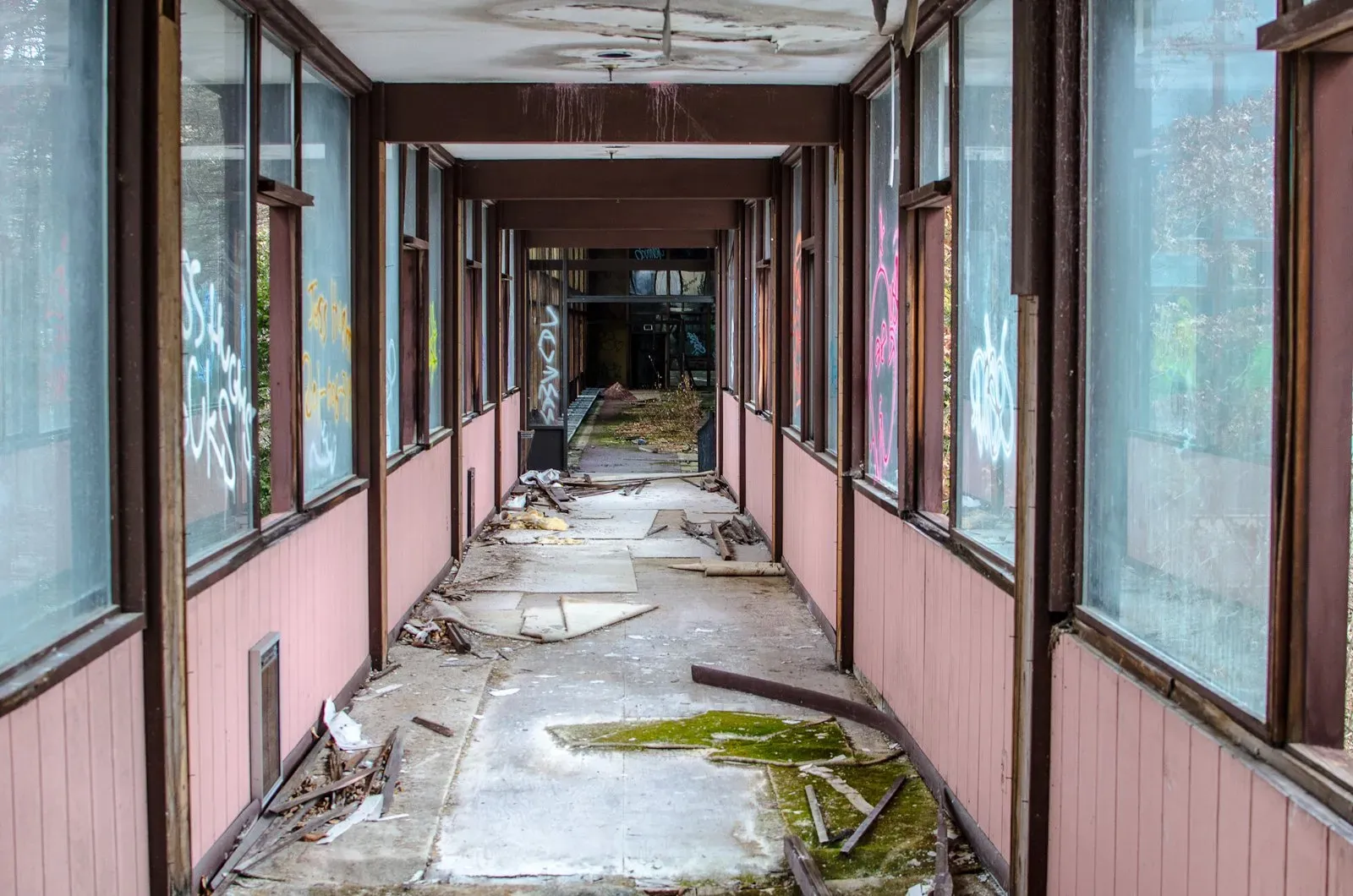
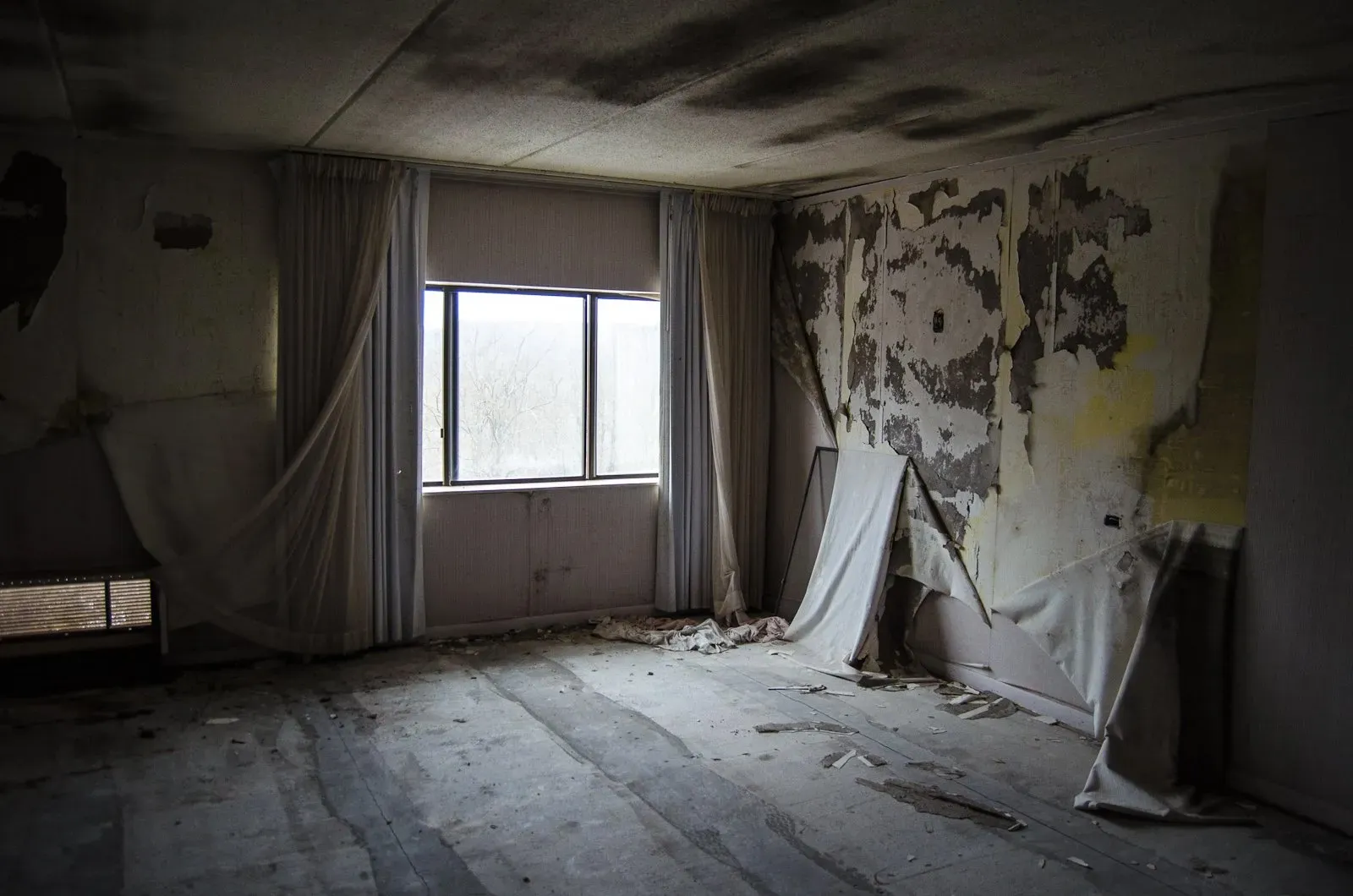
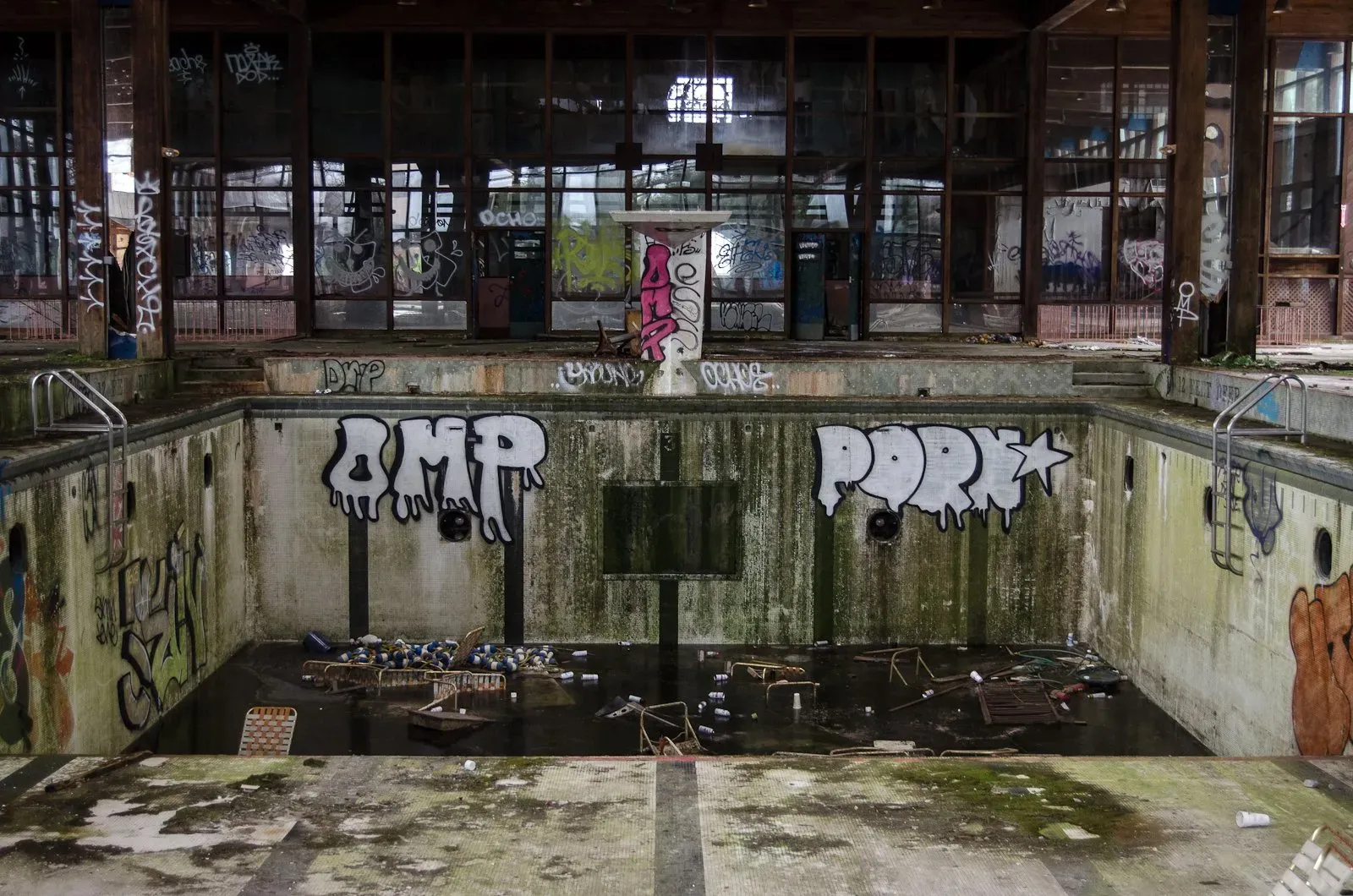
A photographer who visited in February 2013 found waist-high grass at the entrances and a fallen fence. Some of the largest buildings remained, but most had lost their luxury finishes. Moss and ferns had filled the indoor pool, and the ceiling dripped. Hotel records lay on a mattress, an 1980s telephone sat in the pool, and the former Joy Cottage was so weak that its floors might not hold a small animal. In September 2016, another visitor found most of the surviving buildings unsafe to enter, with the interior stripped and the grounds overgrown, although the golf course was still open. The buildings he surveyed included the Lyman Building, the main house, the power plant, the Paul G. wing, the conference center, the Jennie G. wing, the Natatorium and the Joy cottage.
In spring 2017 Cappelli asked the state Department of Environmental Conservation to designate part of the site as a brownfield, which unlocks state funds for soil contamination left from the resort years.
Demolition, 2018
Demolition began in summer 2018. A local report puts the cost at over 6.5 million US dollars. The Jennie G. building came down in August 2018; one source gives the date as 12 August. The last building was demolished on 19 October 2018, according to Wikipedia.
It was not quite the end. A building on the former site, three and a half storeys tall, burned on the night of 16 August 2022. Its use was unclear at the time. Comments on Facebook suggested it had been the home of Elaine Grossinger-Etess, Jennie’s daughter, although this was not confirmed. The cause was under investigation, and police received reports of a teenager running into nearby woods.
Plans for the land
In February 2019, a report in the Sullivan County Democrat described the site as owned by Sullivan Resorts LLC, led by the developer Louis Cappelli, with about 582 acres that could be developed. Proposals in a June 2018 application included a 250-room hotel, a renovated Big G golf course, a convention center with a live music venue, a nightclub and restaurant, pools, tennis and paddle courts, trails and housing. A tax agreement set a flat 200,000 US dollars a year from 2020 to 2022. The town supervisor, Brian Rourke, called the property one of the town’s best opportunities.
That plan did not go ahead. In June 2025 the Florida developer PPG Development bought the land from Cappelli Enterprises, together with an adjacent site from Muss Development, for 14.75 million US dollars. The property covers 1,029 acres near State Route 52 and Sullivan Avenue.
The new plan is a year-round luxury resort and residential community with about 100 hotel rooms, about 175 private residences, two golf courses, a polo and equestrian centre, a farm, a sports complex, restaurants and spa facilities. It would be built in four phases, and it is under review by the Liberty Planning Board, with an environmental review required. The company’s chief executive described the place as follows.
one of the most iconic and storied properties in the region
Ari Pearl, CEO and founder of PPG Development
Mark Baez, president and CEO of the Sullivan County Partnership for Economic Development, called the project transformative for the county. Nothing in these sources says that construction has begun.
Visiting
There is nothing to visit. The buildings are gone, the land is private, and it is subject to a planning process. Visitors in earlier years described unsafe floors and collapsing structures, but those buildings no longer exist. The best record of the resort is in photographs, and in the memories of the people who worked and stayed there. If you want to see the area, treat it as a drive through Sullivan County, not an exploration, and do not enter the land.
Conclusion
Grossinger’s grew out of a farmhouse with no plumbing and became a world of its own, with an airstrip, a post office and a dining room for 1,300. It followed a pattern that the whole Borscht Belt shared: a boom when families holidayed close to home, and a decline when they could go elsewhere. The sale in 1986 closed the hotel, and the years after that were a slow decay that ended with the bulldozers in 2018.
What remains is a name, a film that borrowed its atmosphere, and a site that may soon host a different kind of resort. How that plan turns out is still to be seen.
Did you know?
- In 1952 Grossinger's became the first resort in the world to use artificial snow.
- At its peak the resort had 35 buildings and its own airstrip and post office.
- The main dining room seated 1,300 people, with the Terrace Room nightclub below it.
- Morris Lapidus renovated the Terrace Room in 1949, one of his first hotel commissions.
- Rocky Marciano trained at Grossinger's.
- The resort closed in 1986, a year before Dirty Dancing came out.
- In 1984 it marked Woodstock's 15th anniversary with a tie-dye workshop and a midnight screening of the film.
- The last building was demolished on 19 October 2018.
- The 2018 demolition reportedly cost over 6.5 million US dollars.
- In June 2025 PPG Development bought the land for 14.75 million US dollars.