
A race to the bottom
By the early 1960s humans had crossed the Atlantic by jet and put a man in space, but nobody knew what lay more than a few kilometres under their feet. Everything known about the deep Earth came from earthquake waves, which bend and bounce as they pass through different layers. Seismologists had built a picture of a crust, a mantle and a core from those signals. Nobody had been able to check it.
The Soviet Union set up an Interdepartmental Scientific Council to study the Earth’s interior and ultra-deep drilling, and its stated aim, according to one account, was to reach the Mohorovičić discontinuity, the boundary between the crust and the mantle. The Americans had tried something similar with Project Mohole, which drilled in the Pacific and reached only 183 metres of seabed before Congress ended its funding in 1966. The Soviet project would be on land, and it would be much more stubborn.
A survey completed in 1965 chose the Kola Peninsula. The reason was geology. The site lies in the Pechenga trough of the Baltic Shield, where the rock is some of the oldest on the planet, more than 3 billion years old by some descriptions. If you wanted to look into the oldest crust, this was a sensible place to try.
The drilling
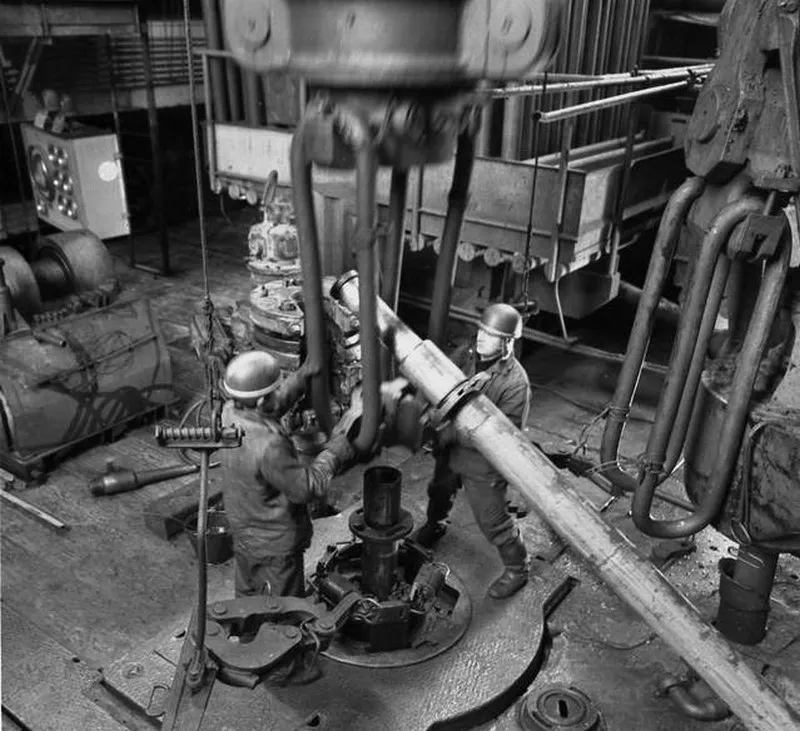
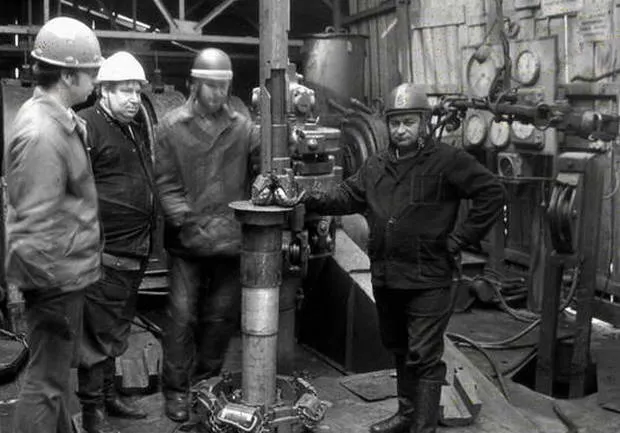
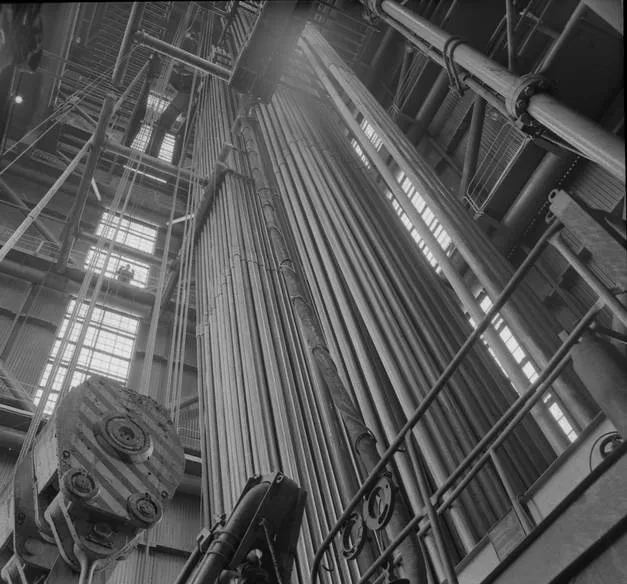
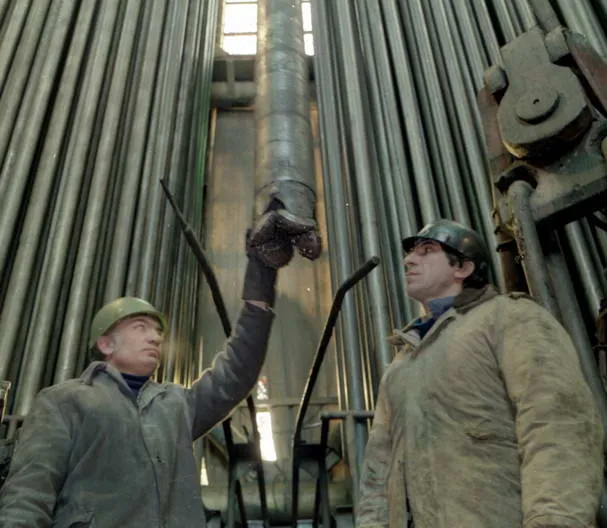
Drilling began on 24 May 1970 with an Uralmash-4E rig, a standard oil-field machine modified to reach about 7,000 metres. In 1974 a purpose-built rig, the Uralmash-15000, took over. The target was first set at 7,000 metres and later raised to 15,000.
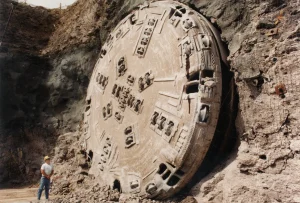
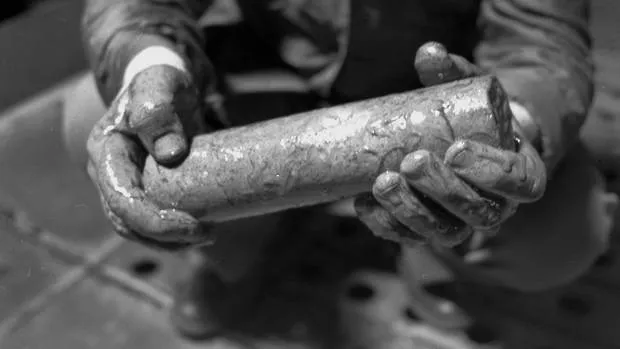
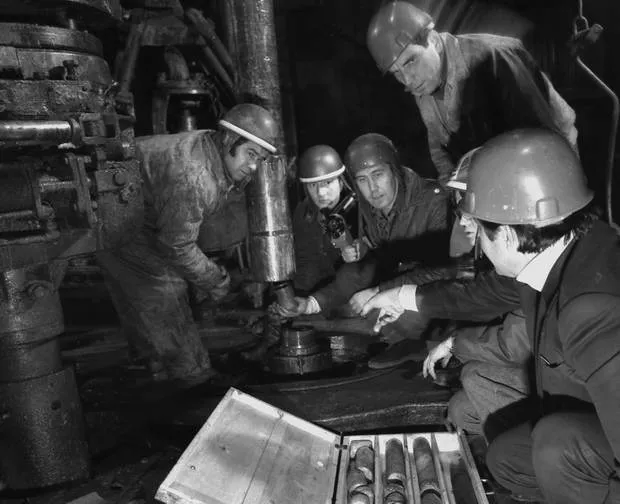
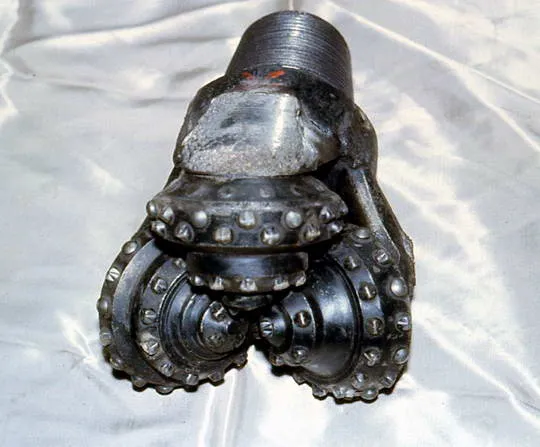
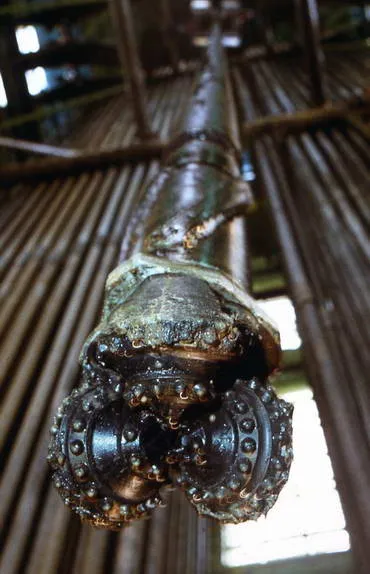
The method was unusual. Instead of turning the whole drill string from the surface, which at these depths would be like twisting a kilometre of spaghetti, the crew pumped pressurised mud down the pipe to spin a motor and bit at the bottom. The string itself did not rotate. Cores were brought up for analysis, giving geologists a continuous record of rock from the deep crust.
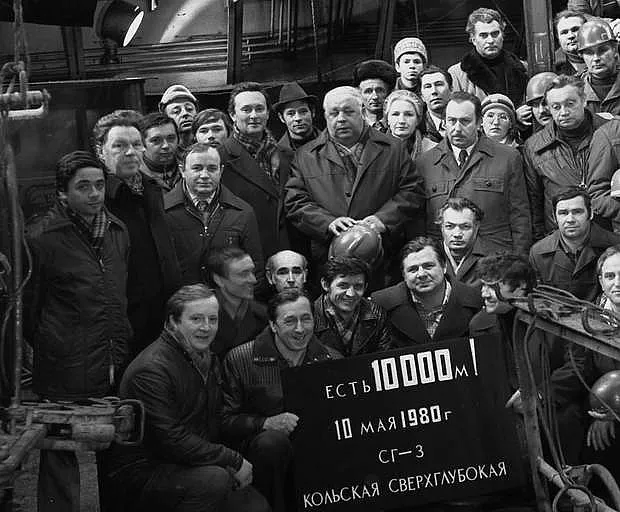
The project was not a single hole. In total five boreholes were drilled, two of them branching from a central shaft and two more from one of those branches. When one hole failed, the crew went back up and started a new branch from a point higher in the old one. This is the reason that “depth” needs careful wording: the most famous figure belongs to one branch, the third.
| Date | What happened |
|---|---|
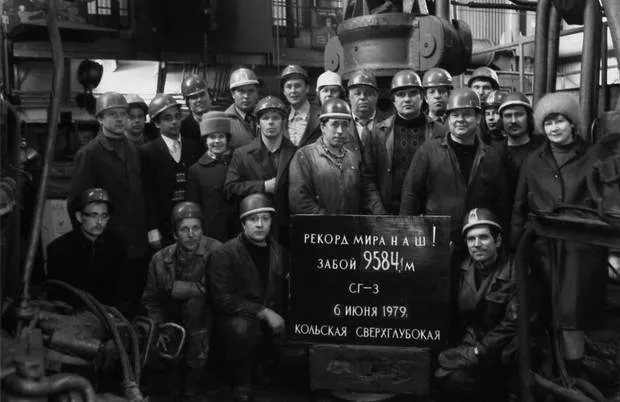
| 6 June 1979 | Passed the Bertha Rogers well in Oklahoma (9,583 m) to become the deepest hole in the world. |
| October 1982 | The first hole reached 11,662 m. |
| 1983 | A second hole, started from 9,300 m in the first, passed 12,000 m. Drilling then paused for about a year. |
| 27 September 1984 | At 12,066 m, about 5 km of drill string twisted off and was left in the hole. |
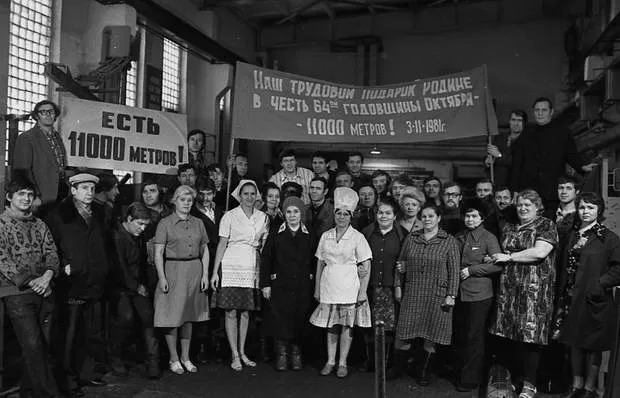
| 1989 | The third hole reached 12,262 m, the maximum vertical depth. |
| 1992 | The fourth hole stopped at 11,882 m as temperatures reached about 180 °C. |
| 1994 | A fifth hole was drilled from 8,278 m to 8,578 m, then halted for lack of funds. |
Sources differ on the details. Some give 12,261 metres for the final figure, and some date the end of drilling to 1992 and others to 1994 or 1995, depending on whether they count the last short hole and the mothballing that followed. The 1984 accident cost the crew years: everything below about 7 km was lost, and the team had to drill a bypass.
What they found
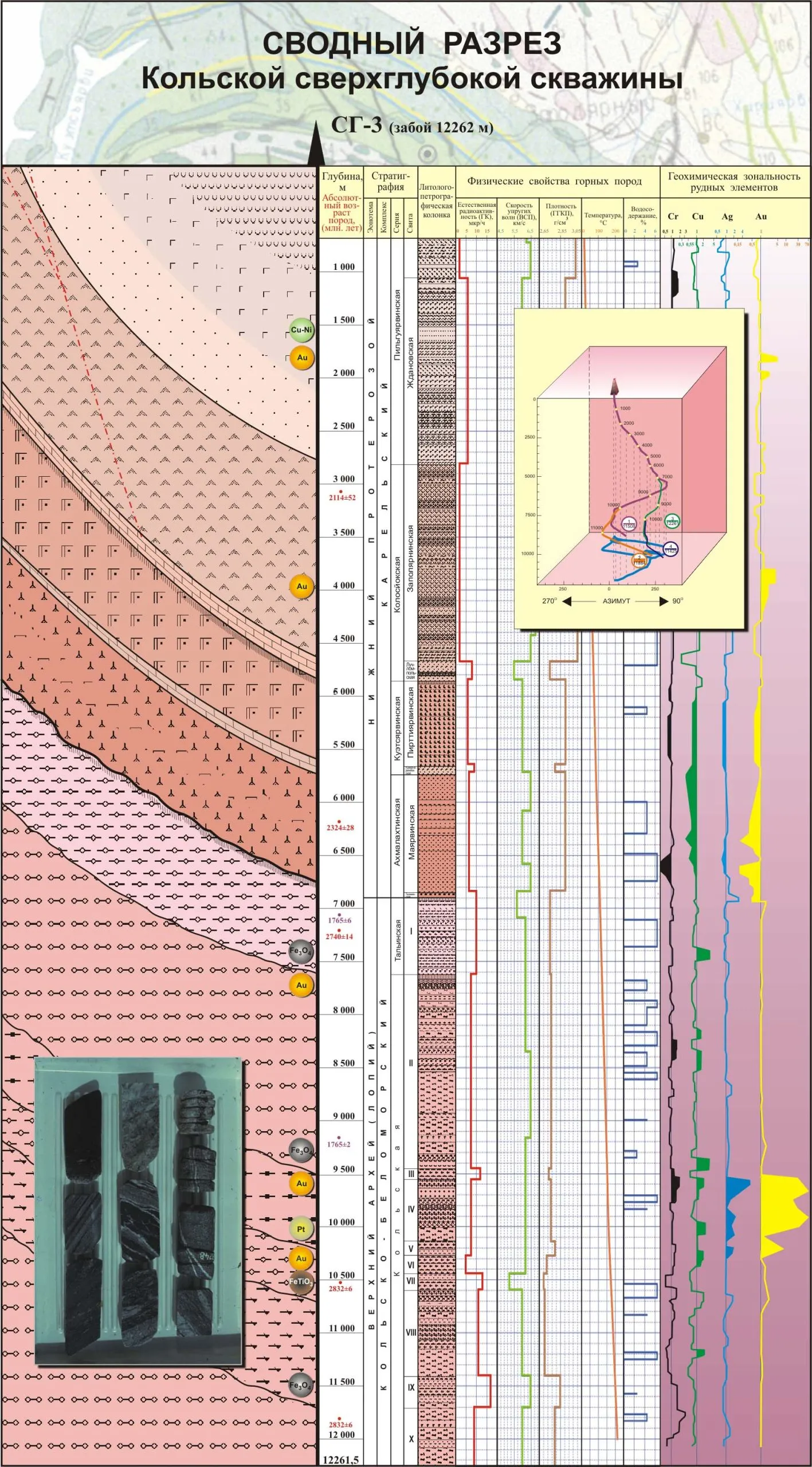
The point of the project was science, and the results were awkward for the textbooks. Geologists had expected to meet a change from granite to basalt at around 7 kilometres, the boundary known as the Conrad discontinuity. It did not appear. The seismic signal that had been read as a change in rock type turned out to come from metamorphism, where the same kinds of rock are transformed by heat and pressure. The granite went on much deeper than anyone predicted.
The crew also found water. Geologists believed that the pressure at depth would squeeze all free water out of the rock. Instead they found water trapped in cracks at between about 3 and 6 km, held down by an impermeable layer, and it did not vaporise at any depth. One explanation, which is still only a theory, is that it was made of hydrogen and oxygen squeezed out of the surrounding minerals. Drilling mud coming out of the hole was described as “boiling” with an unexpectedly large amount of hydrogen gas.
Perhaps the most surprising reports concern life. At about 6 km the cores held microscopic fossils of single-celled marine organisms, often called plankton, preserved in rock more than 2 billion years old. One summary counts 24 species in layers as deep as 6.7 km, covered in carbon and nitrogen compounds. These are the kinds of finds that are often repeated without a citation, so treat the exact numbers with caution.
Temperature was the real enemy. Geologists had expected about 100 °C at the bottom. They found about 180 °C at 11,882 metres, and a Russian account gives rock temperatures of about 75 °C at 5 km, 120 °C at 7 km, and 220 °C at 12 km, though that account gives no sources. Under that heat and pressure the rock behaved less like a solid and more like a plastic: it deformed, and the walls of the hole tended to close when the bit was pulled out. At the planned depth of 15,000 metres the temperature was projected to be around 300 °C. That was beyond what the equipment could stand.
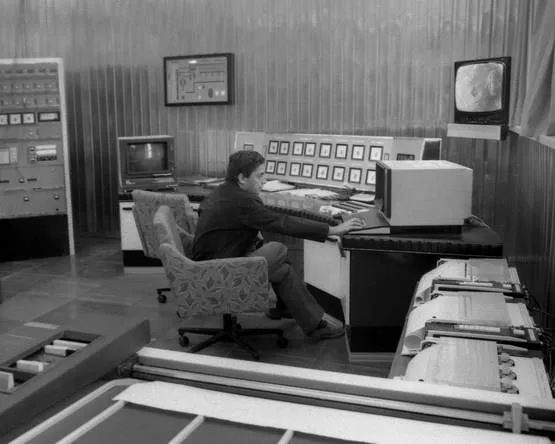
In 1992 the Kola-92 experiment brought in international teams from the UK, the US, Norway and Russia to run a reflection seismic survey around the hole and produce a cross-section of the crust.
The end of the project
The hole had never been a profit-making project. When the Soviet Union ended, the funding went with it. Drilling stopped in the first half of the 1990s, and the team and equipment were later moved to a state-owned subsidiary named Kola Superdeep, whose job was to study what had already been recovered. In 2007 the scientific team was dissolved and the equipment went to a private company, which was liquidated in 2008 for being unprofitable. The site was abandoned in that year. A Russian news report from 2020 says the borehole was conserved in 2008.
The title of “deepest” has had to be qualified since. In May 2008 a well in Qatar, BD-04A, passed Kola in measured length at 12,289 metres. It is a long, nearly horizontal extended-reach well that is only about 1,387 metres deep vertically. Kola remains the deepest point reached below the surface, and the most important thing it holds is not a number but the cores.
The site today
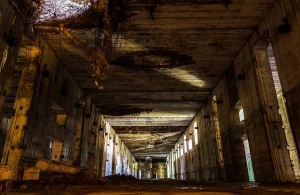
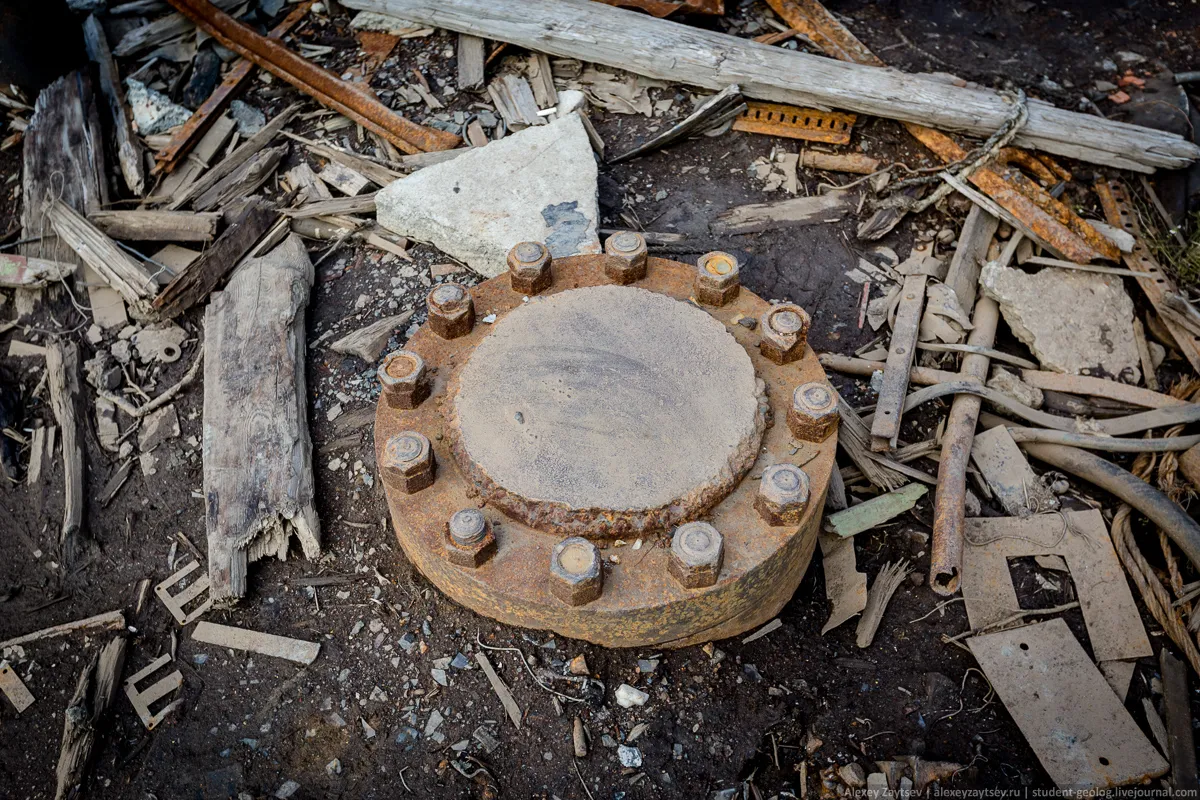
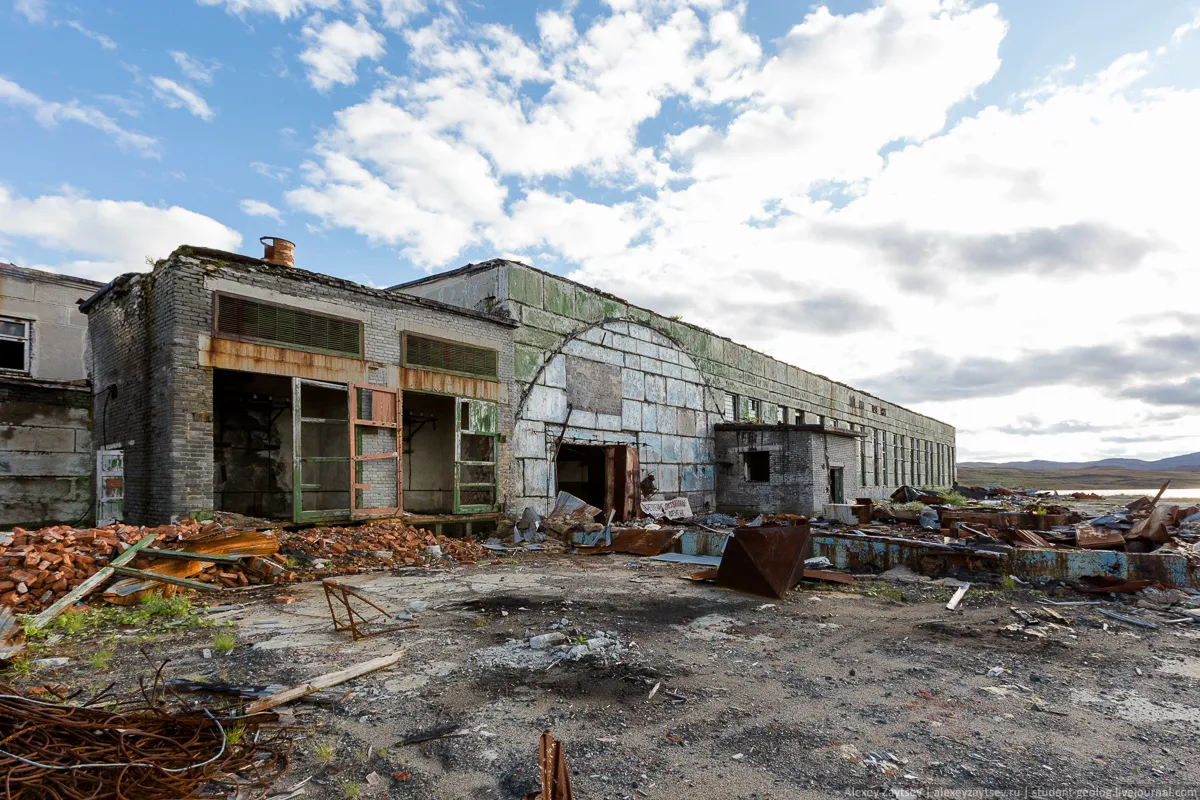
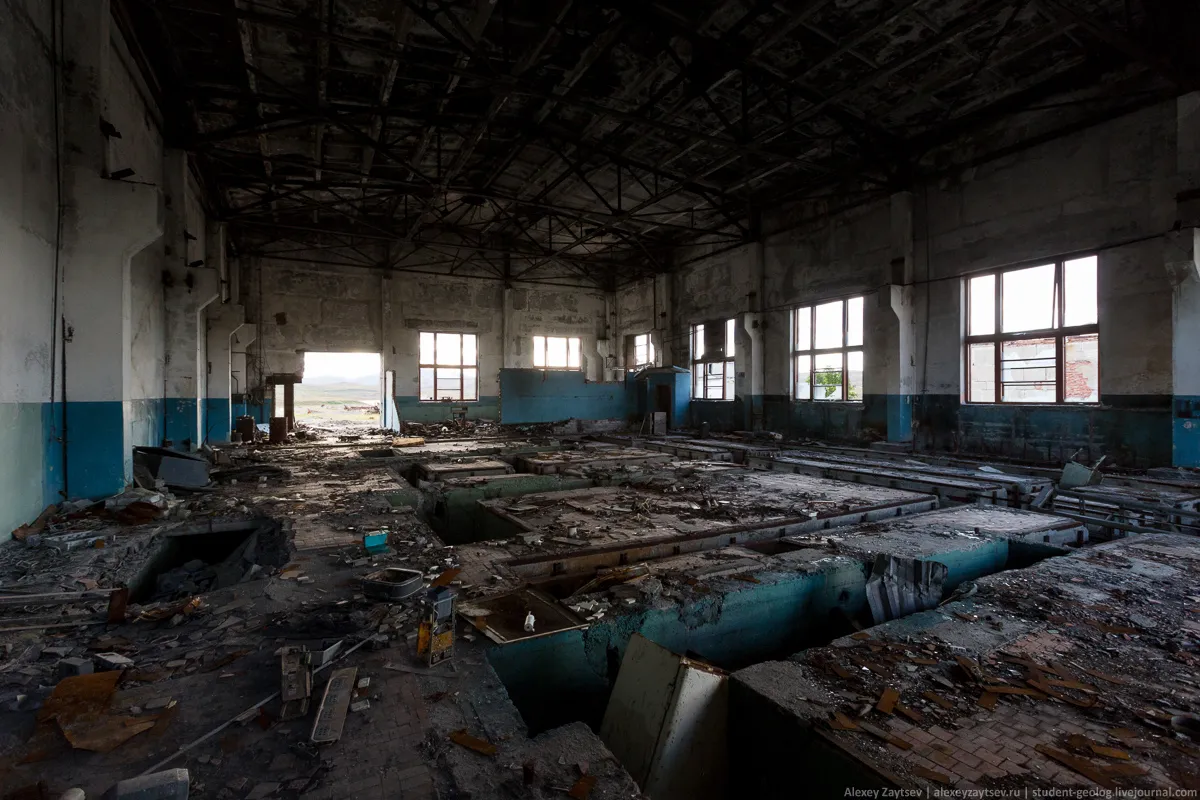
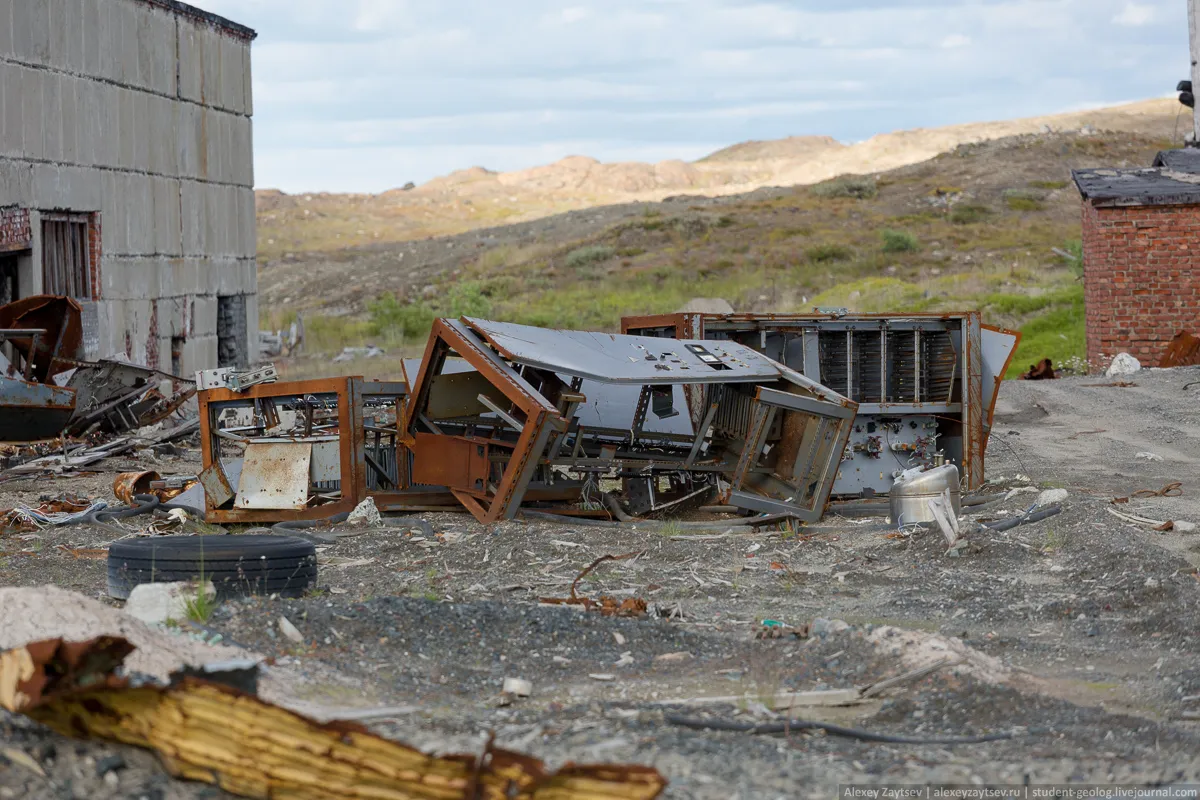
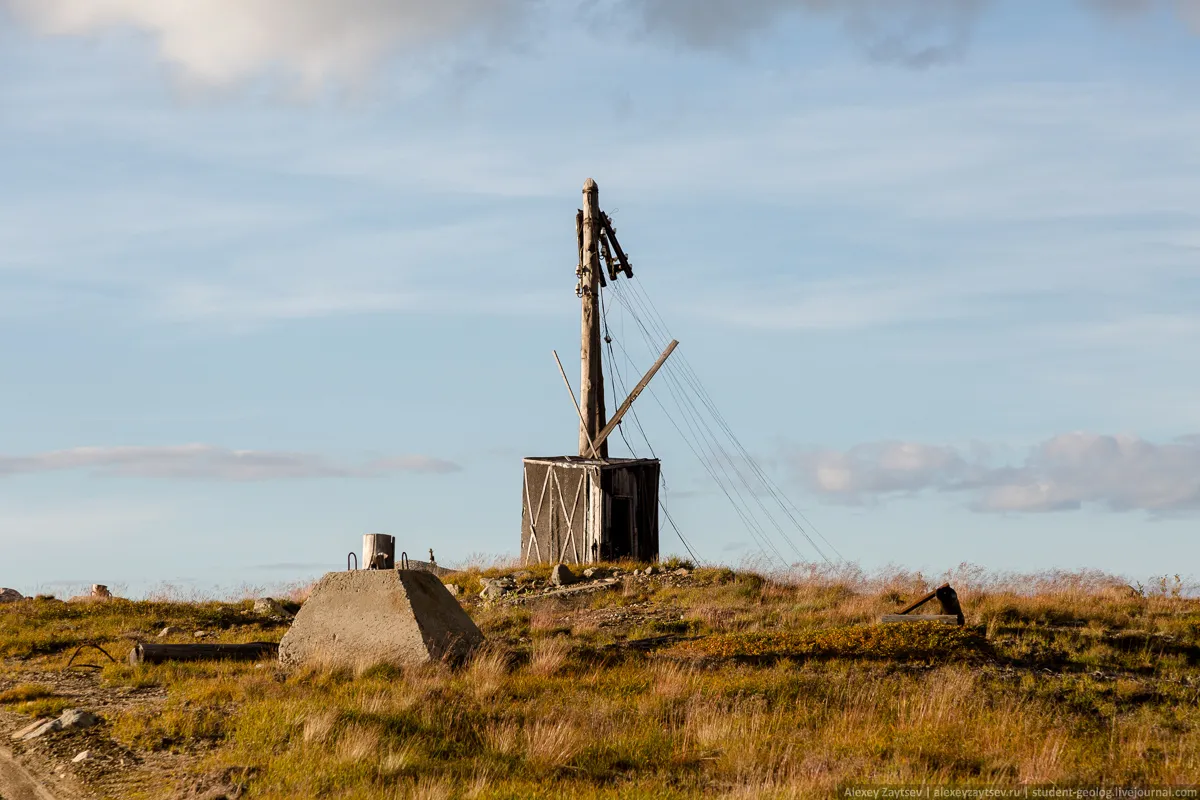
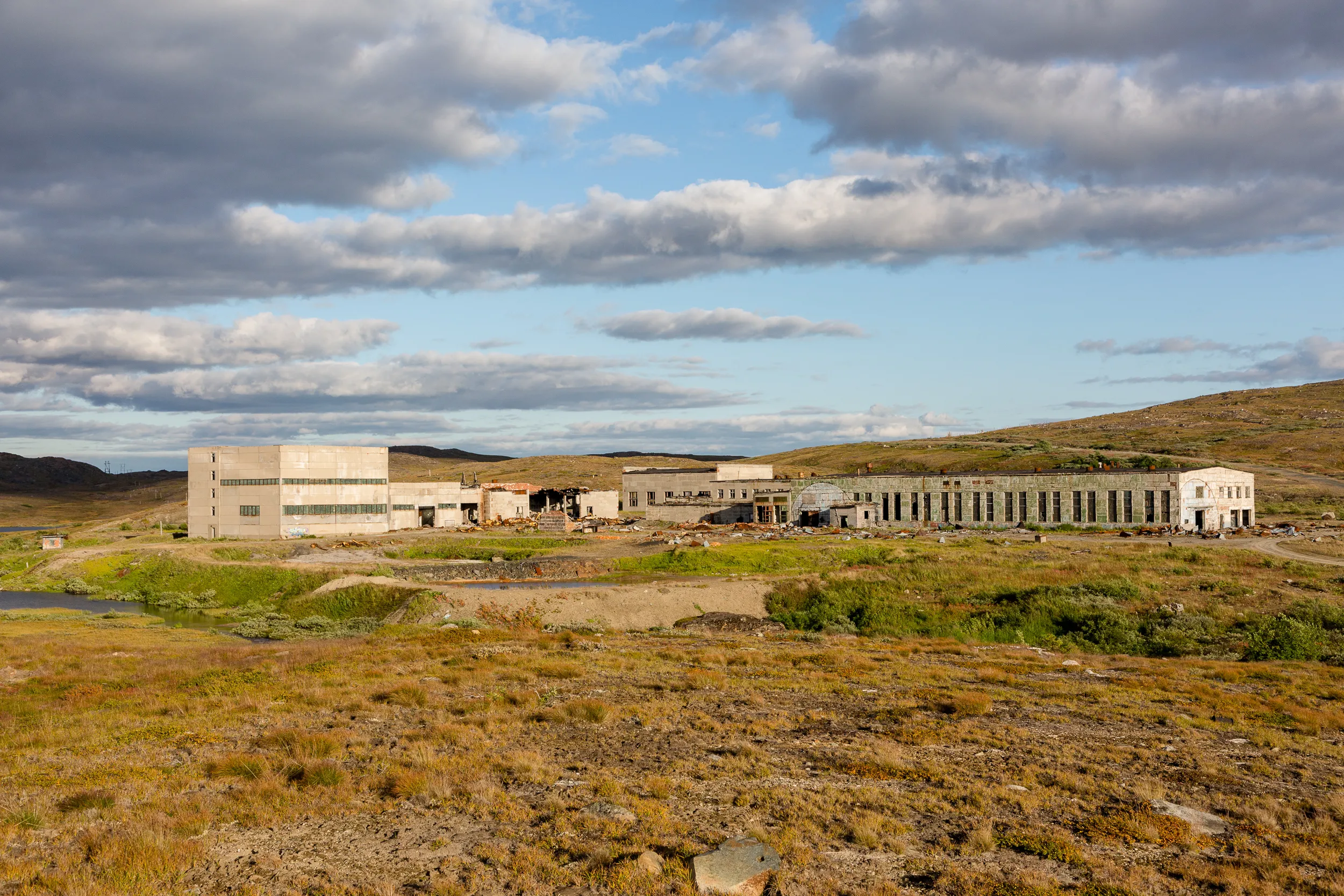
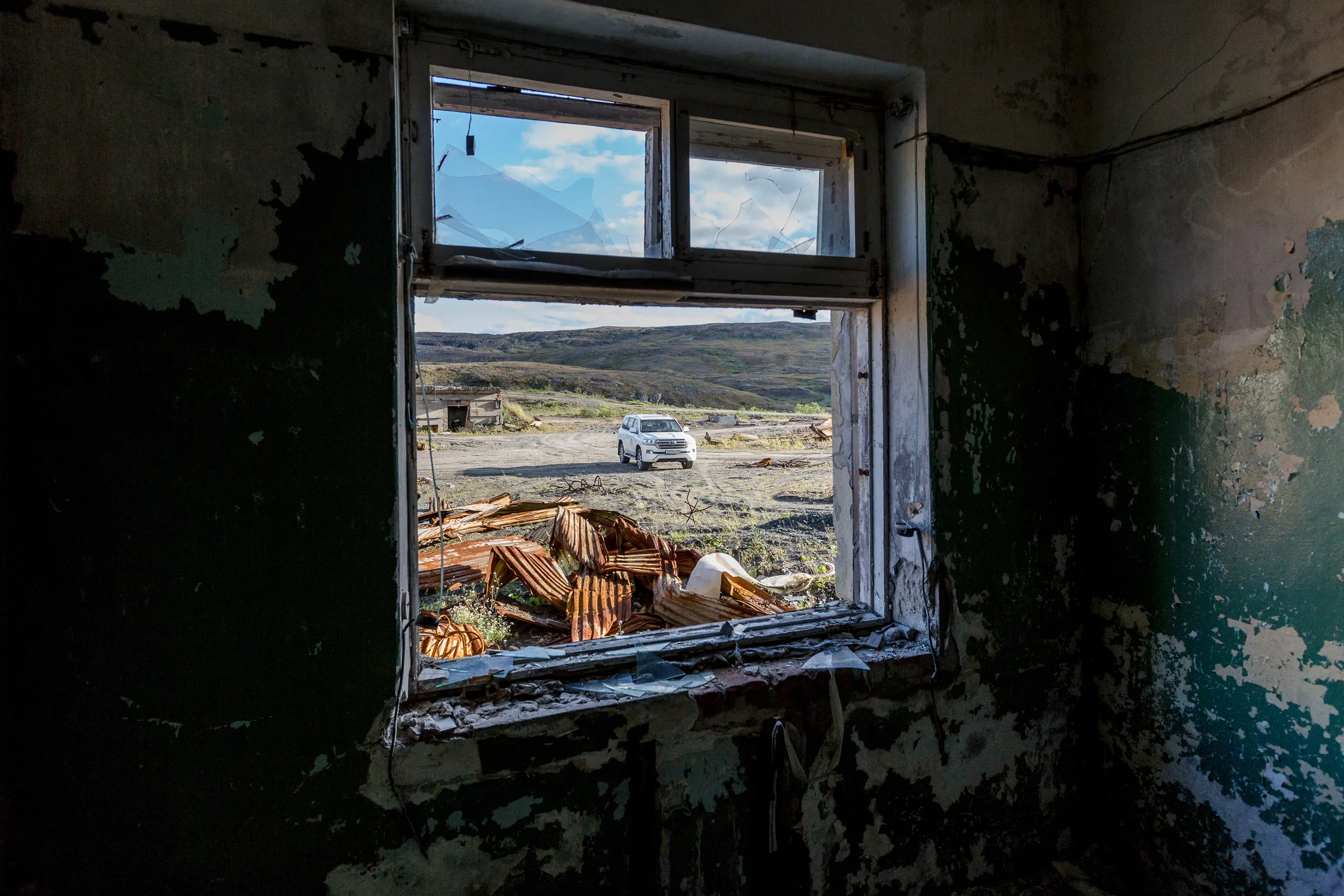
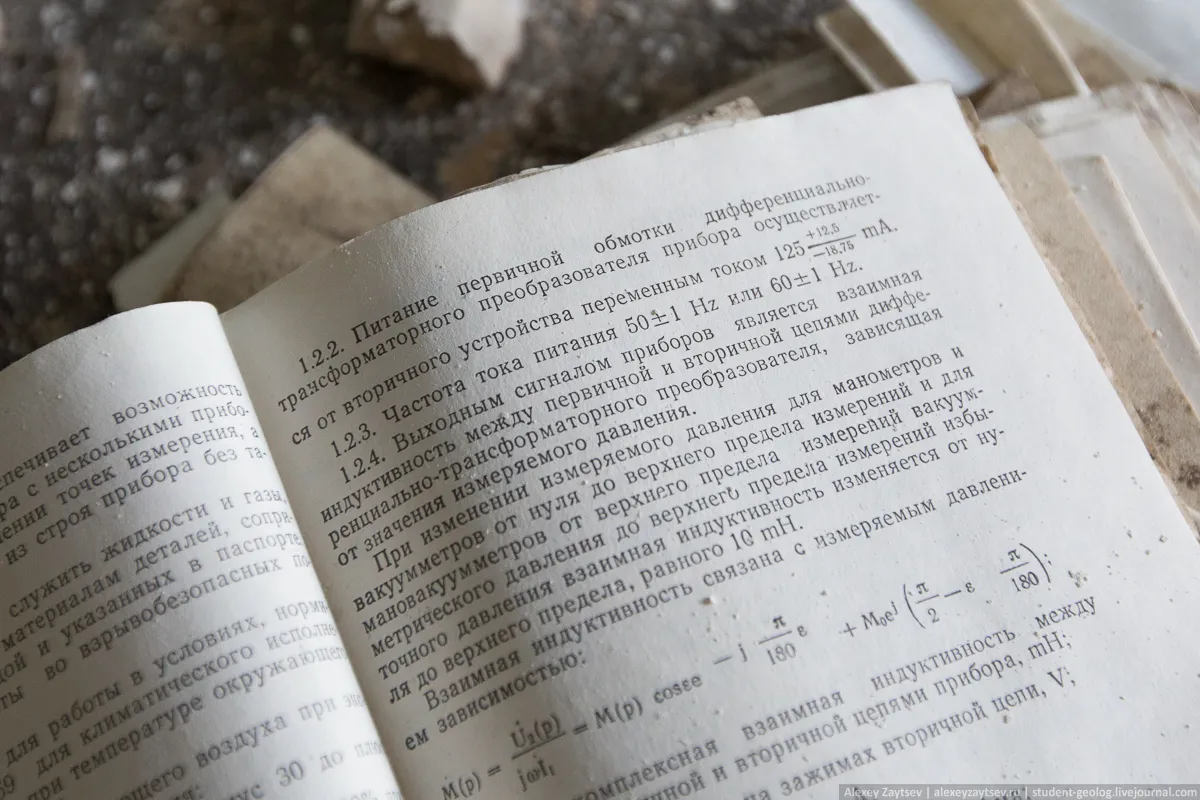
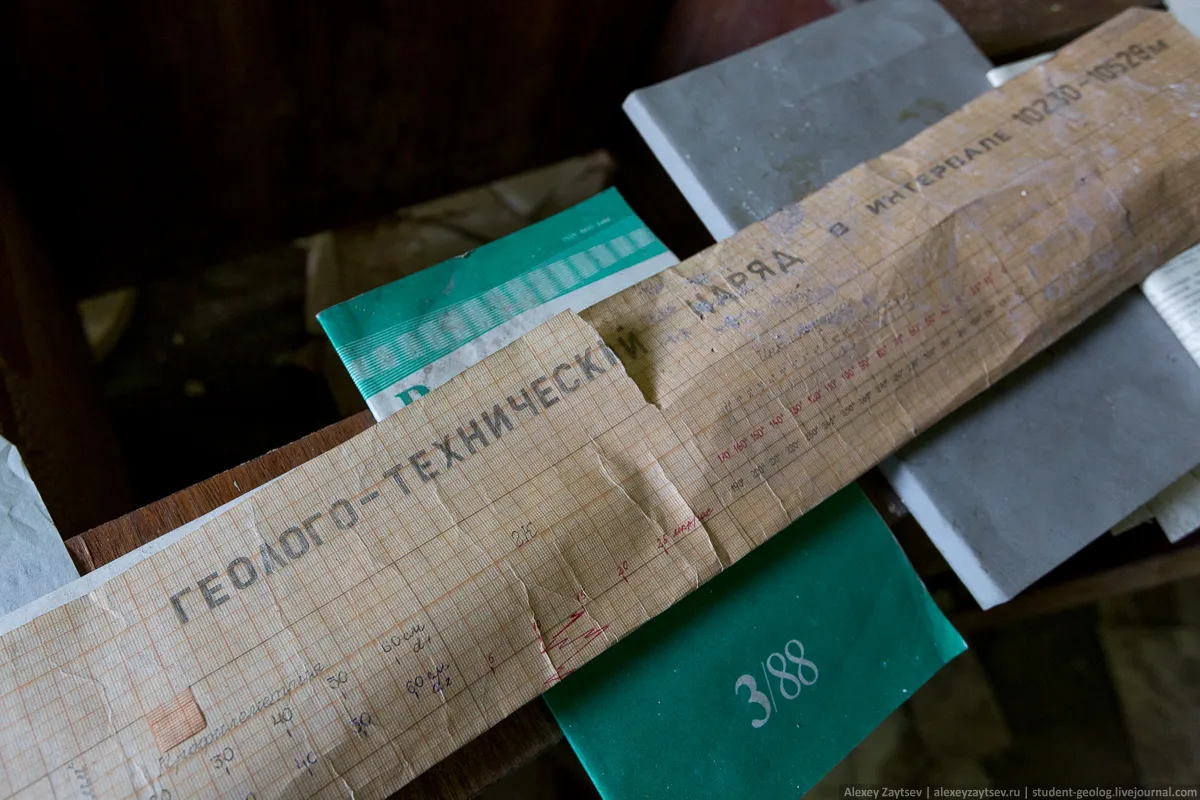
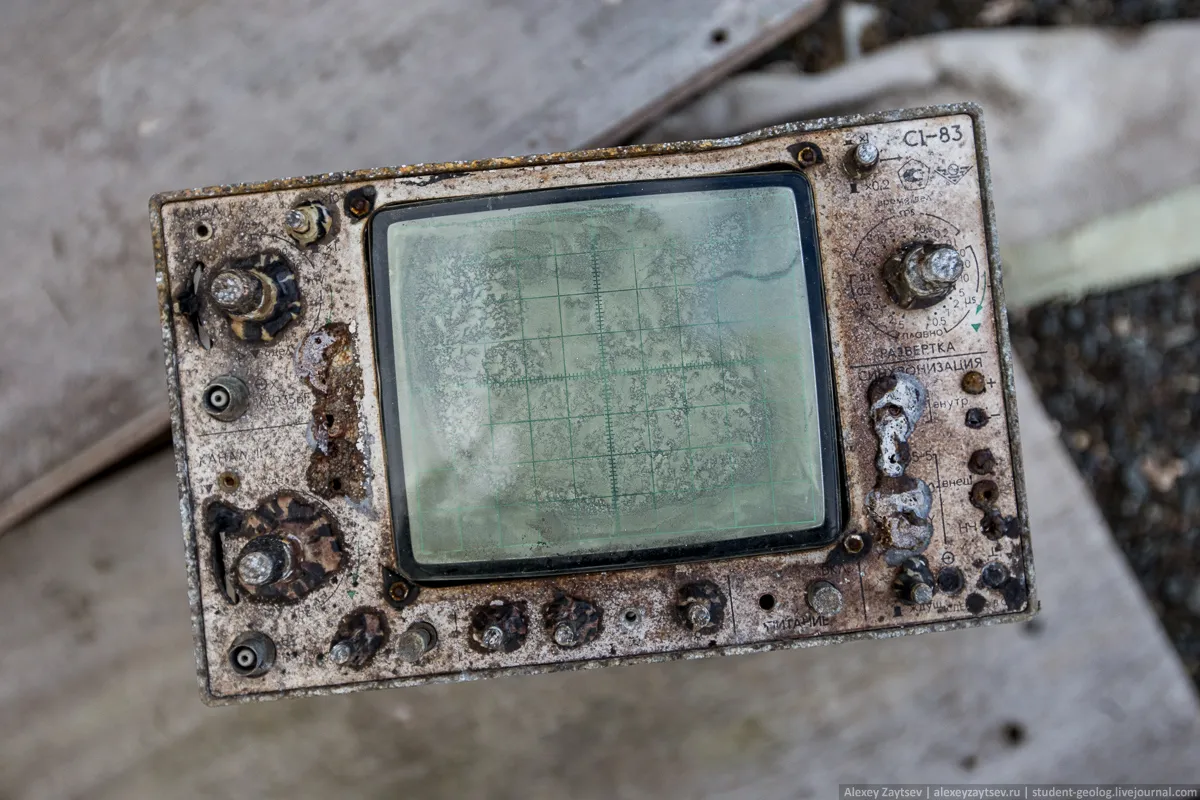
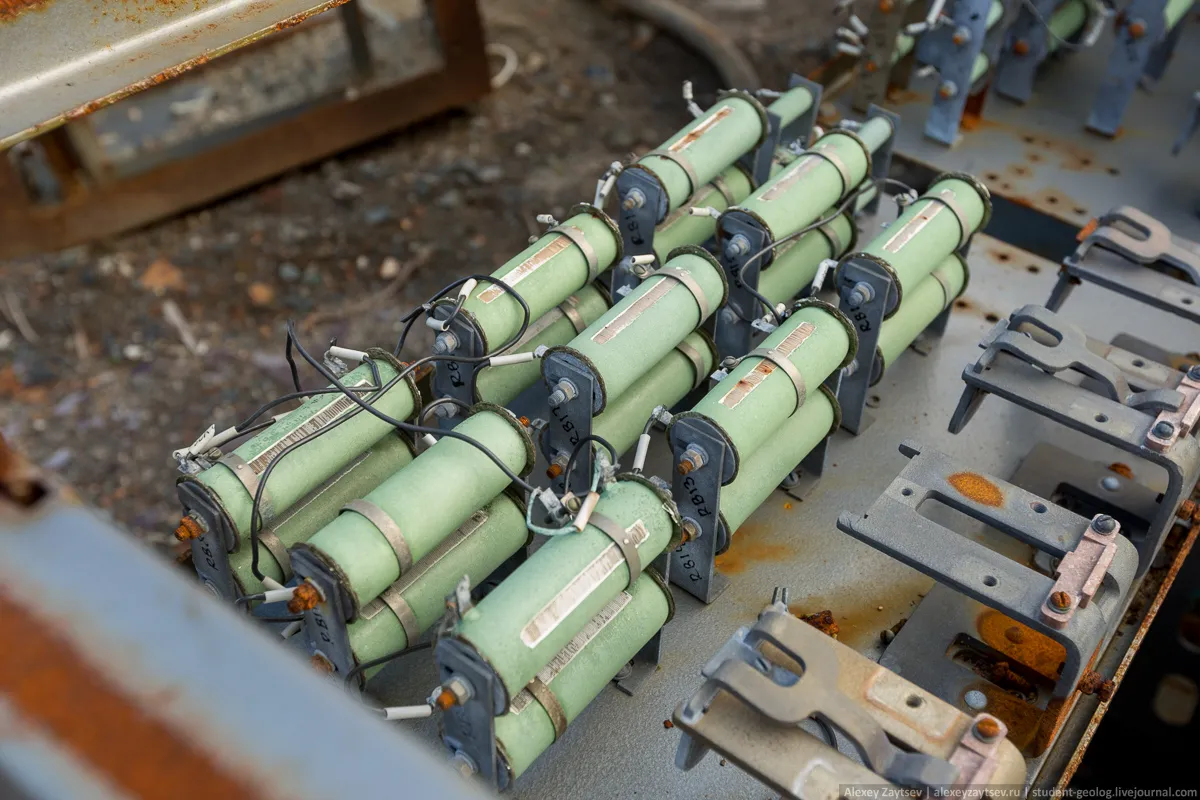
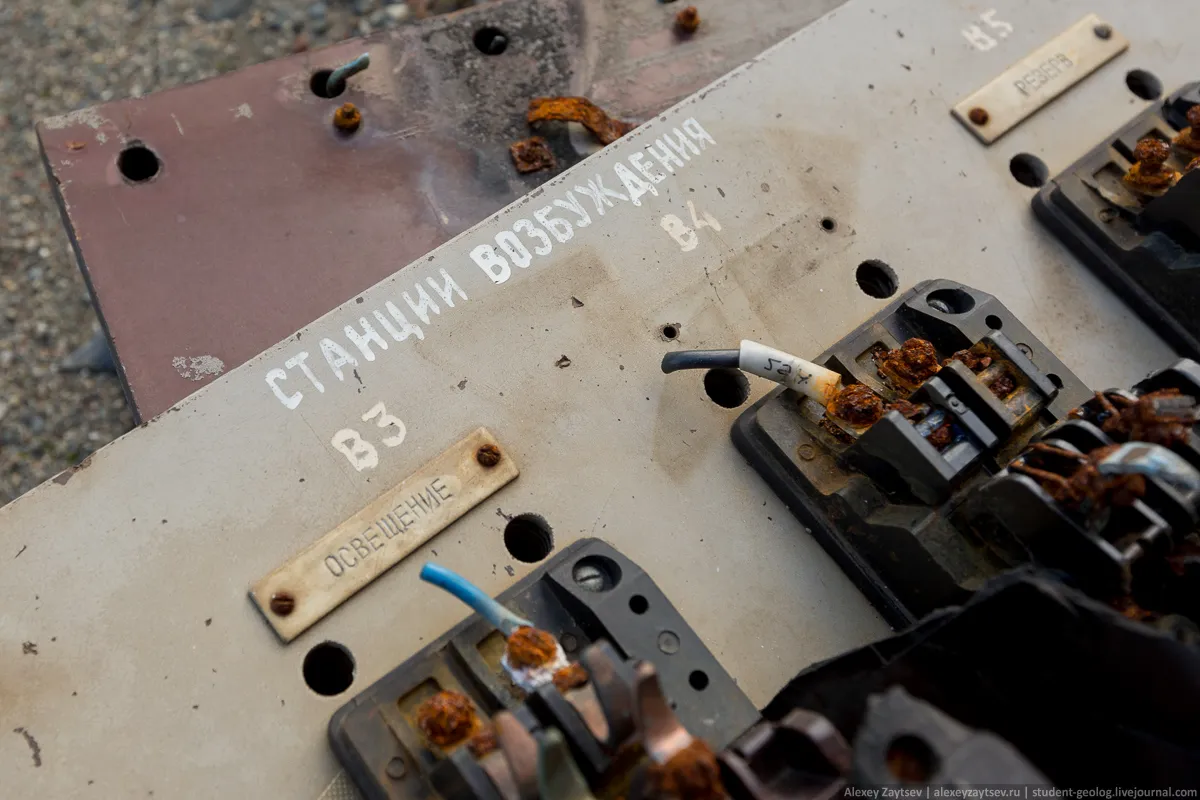
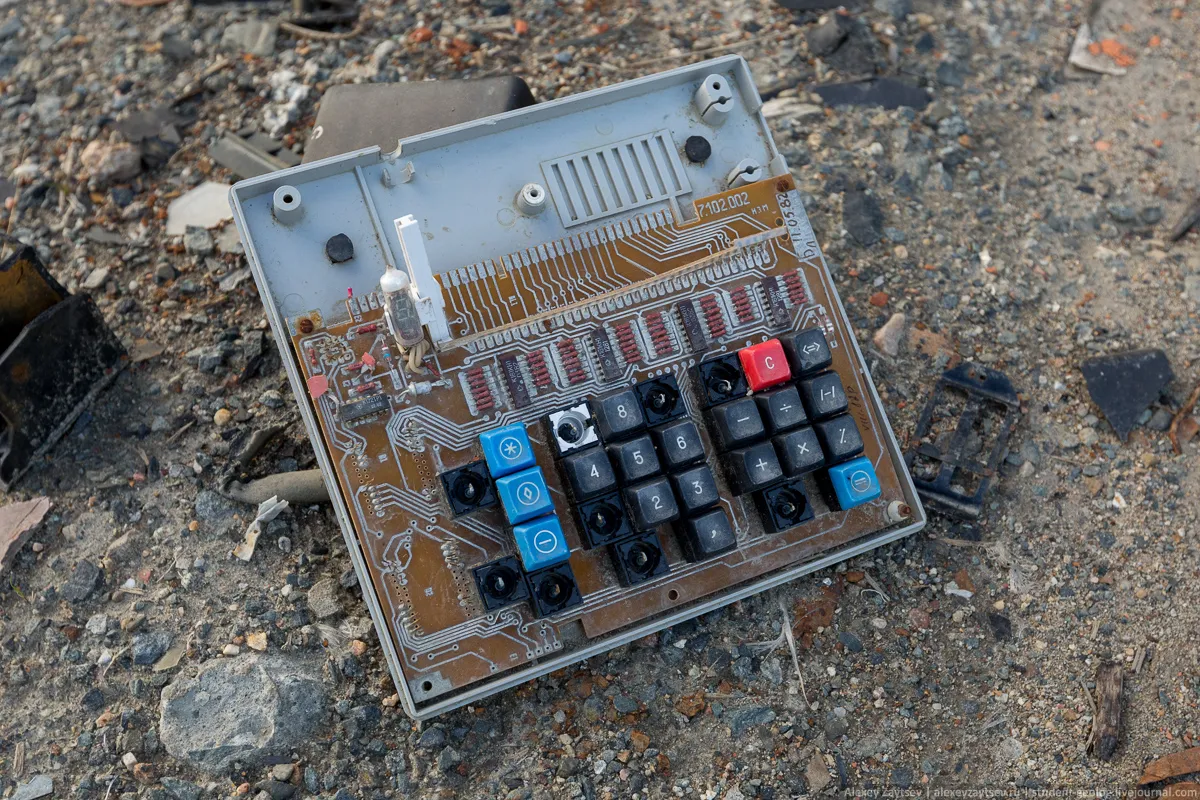
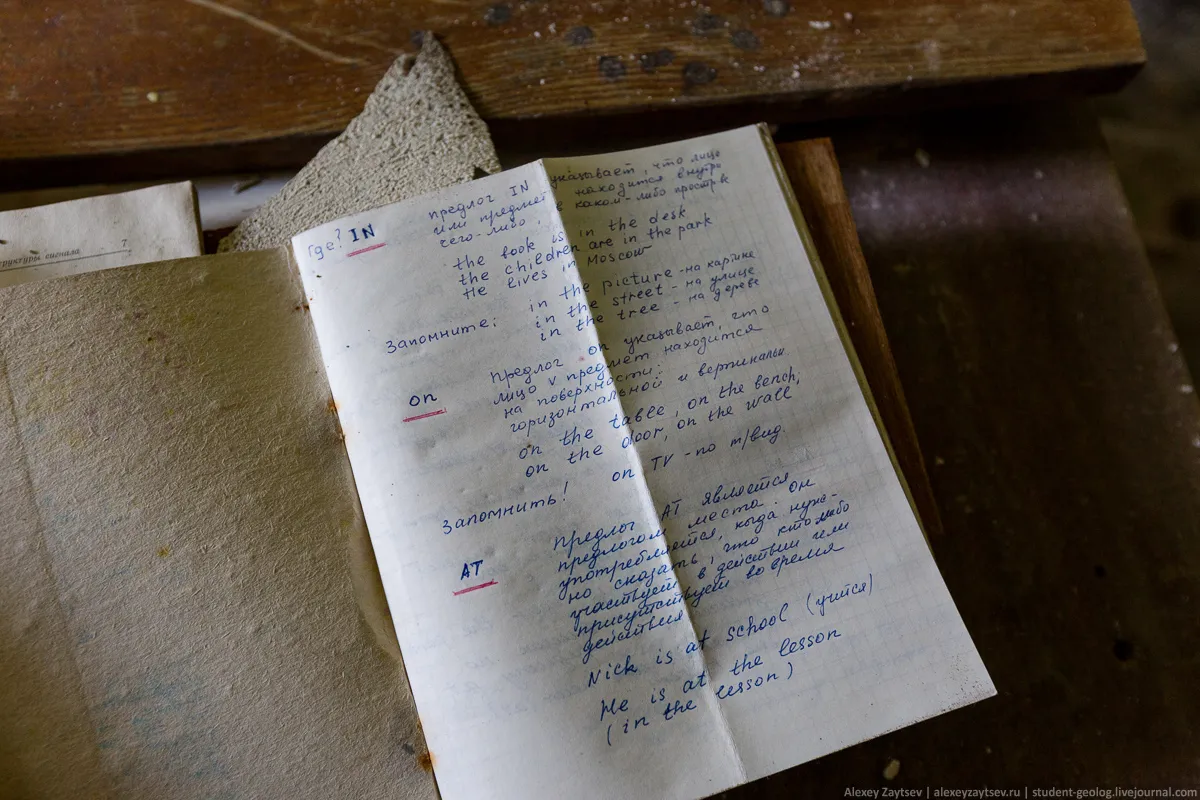
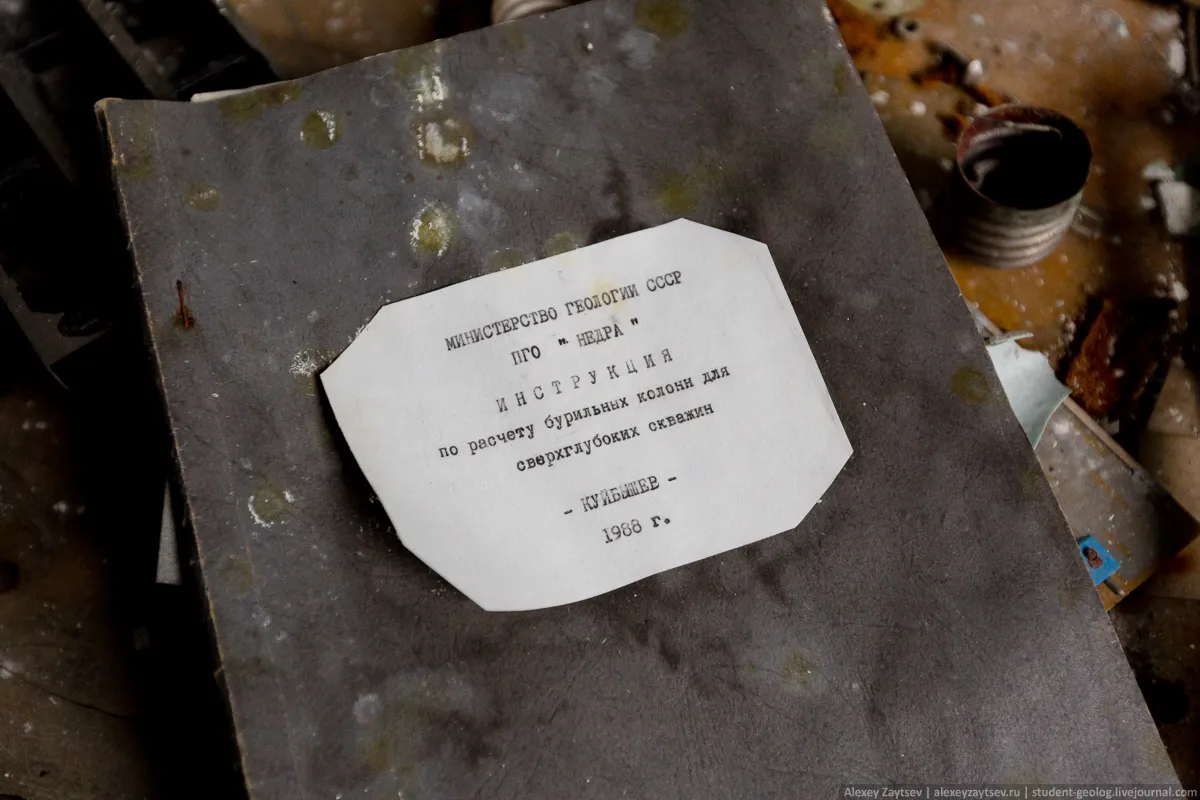
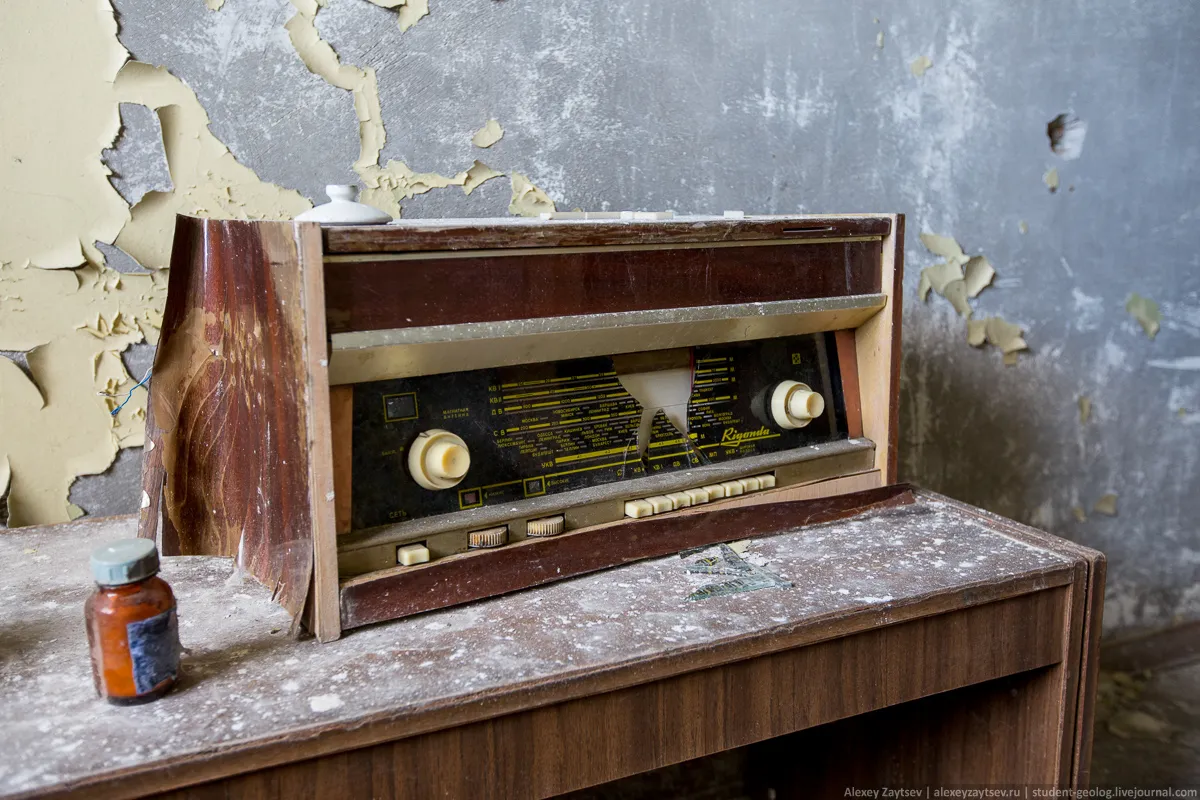
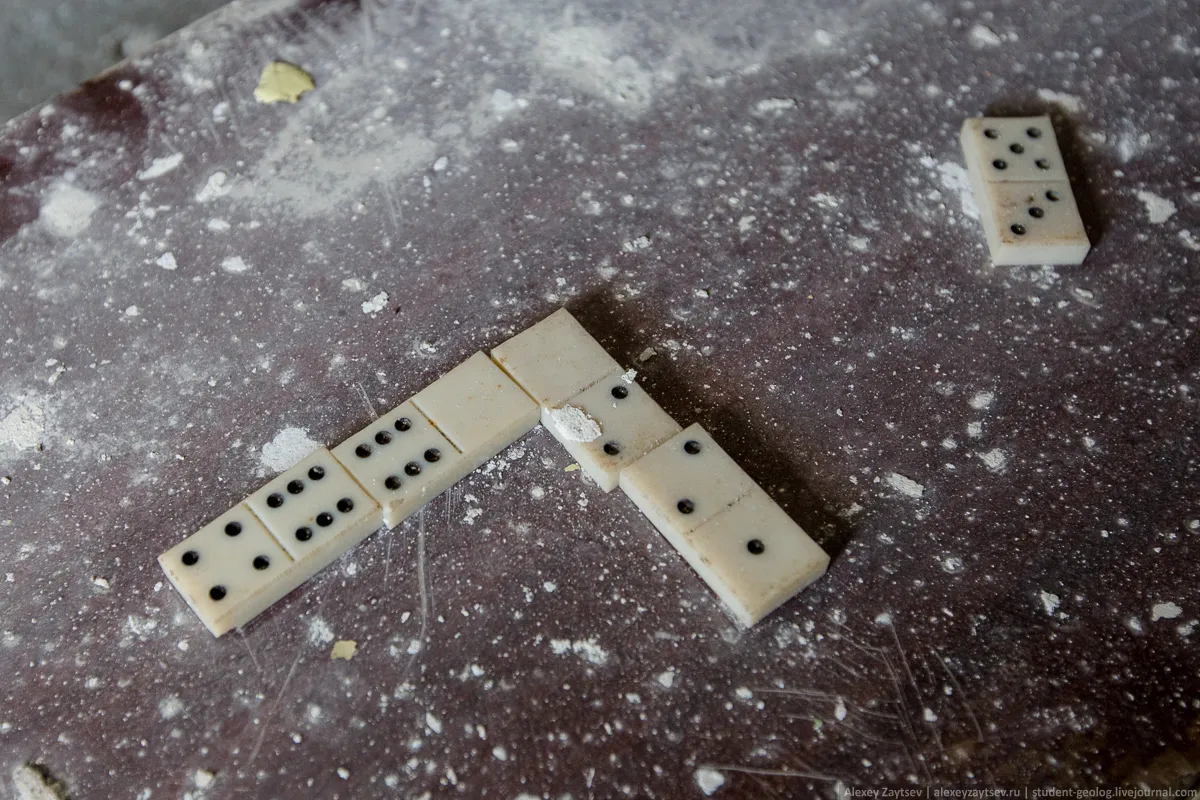
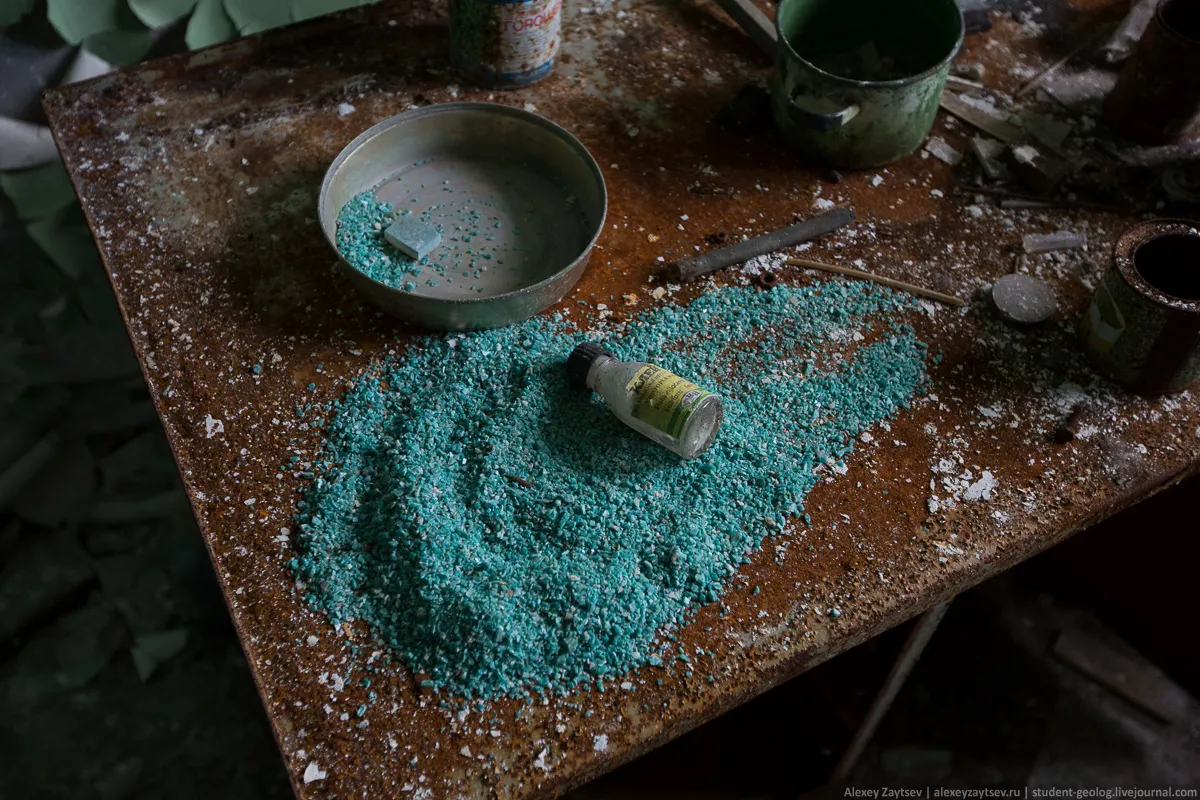
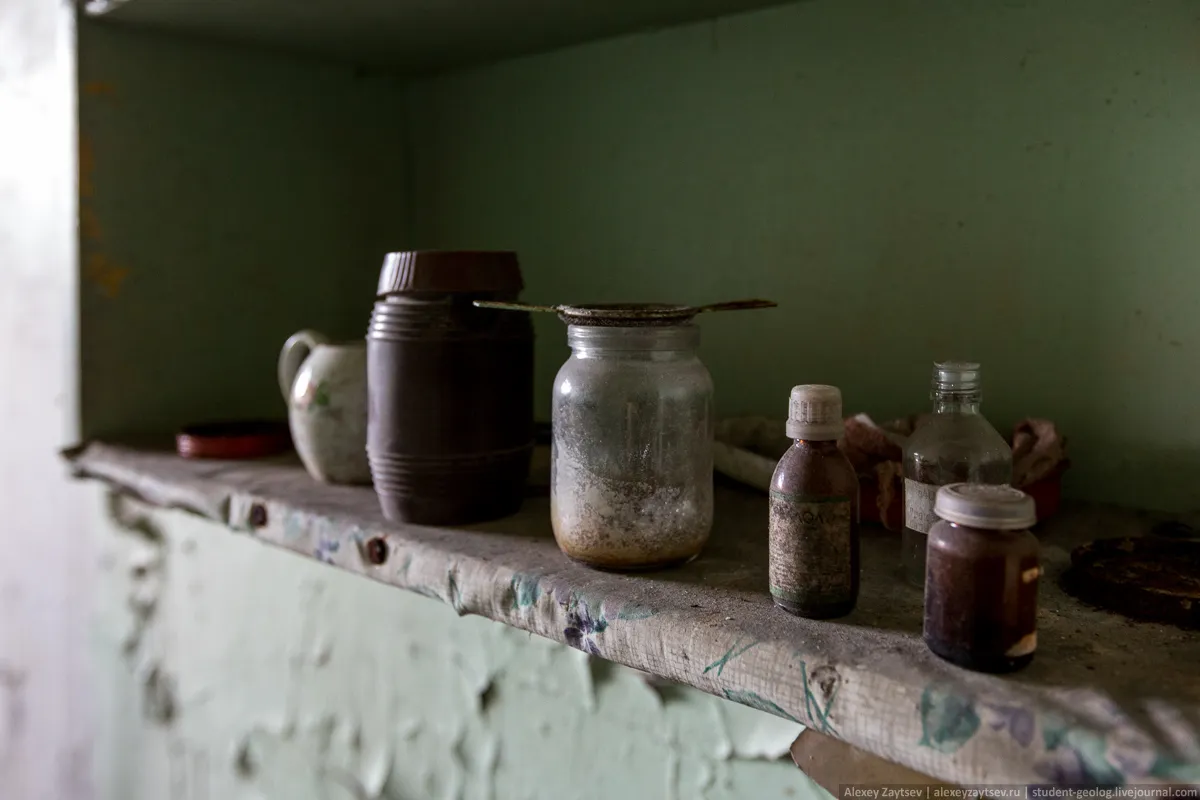
The borehole sits in the Pechenga district, roughly 10 kilometres from Zapolyarny, where the cores are stored. Photographs from visitors show abandoned offices with punched tape scattered on the floor, the remains of the derrick and the housing around the borehole, and the capped borehole, where a photo caption warns visitors never to open it. One description calls the cap welded shut, but I could not find a clear statement of how or when it was sealed.
The state of the building varies from one account to another. One Russian account says the abandoned rig was largely looted, and sightseers report that the structure over the hole has been partly destroyed or removed. In May 2020 the regional government of Murmansk proposed to transfer the borehole to federal ownership and to reopen it for tourists, as part of a plan to attract visitors to the Pechenga district. The same report says the site was closed to visitors. I did not find an update on whether anything came of the proposal.
The Well to Hell
No story has done more to spread the name of Kola than one that has nothing to do with it. In the late 1980s a legend began to circulate that a Soviet team led by a “Mr. Azakov” had drilled a hole in Siberia some 14.4 kilometres deep and broken into a cavity. A heat-resistant microphone lowered into the cavity was said to have recorded the screams of the damned, and the team concluded they had opened Hell.
The story is a hoax, and its history can be traced. It seems to have first appeared in a Finnish Christian journal, and the researcher Rich Buhler followed it back through a Finnish newspaper letter and a Christian newsletter from July 1989, which in turn credited a Messianic Jewish newsletter in California. It was then picked up by the Trinity Broadcasting Network in the United States, which presented it as proof that Hell exists. A Norwegian teacher, Åge Rendalen, sent the network a deliberately mistranslated article about a local building inspector, and TBN aired it without checking. The “screams” are sound effects, sometimes traced to the soundtrack of the 1972 film Baron Blood. A later tabloid version moved the story to Alaska.
The legend was attached to Kola because it was the deepest hole anyone knew of, but the real borehole is on the Kola Peninsula, not in Siberia, and it reached 12.3 kilometres, not 14.4. Its scientists reported geological surprises, not demons.
Visiting
Do not plan on getting in. The site is not a tourist attraction, the borehole is capped, and the area is a remote one reached along rough roads. The 2020 report says it was closed to visitors. If you want to see a trace of the project, the more realistic route is the core repository in Zapolyarny, but check whether it can be visited at all. The area is close to the Norwegian border and to sensitive military sites, so be careful about where you take photographs, and check your government’s travel advice for Russia before making any plans.
Conclusion
The Kola Superdeep Borehole is the answer to a very simple question that nobody could answer: what is down there? It took twenty-four years, five attempts and a team of Soviet engineers to learn that the crust is hotter, wetter and stranger than the models predicted. They never reached the mantle. They stopped about 2.7 kilometres short of the planned 15, in a hole barely wider than a dinner plate. That is a tiny distance compared with the roughly 6,371 kilometres to the centre of the Earth, but it is still the furthest anyone has gone.
What remains is a rusting site, a sealed shaft and a shelf of cores in a nearby town. The hole is also a reminder of how quickly an extraordinary project can lose its backers. The science did not fail; the money ended, and the legend of Hell filled the silence that the funding left behind.
Did you know?
- The hole is only about 23 cm wide at the bottom.
- Drilling began on 24 May 1970 and the maximum depth of 12,262 m was reached in 1989.
- Geologists expected about 100 °C at the bottom and found about 180 °C.
- Scientists expected a basalt layer around 7 km down and never found one.
- The "screams from Hell" recording used in the legend has been traced to a 1972 horror film soundtrack.
- A Qatari well passed Kola in length in 2008, but only reaches about 1,387 m vertically.