A ridge at the edge of the test site
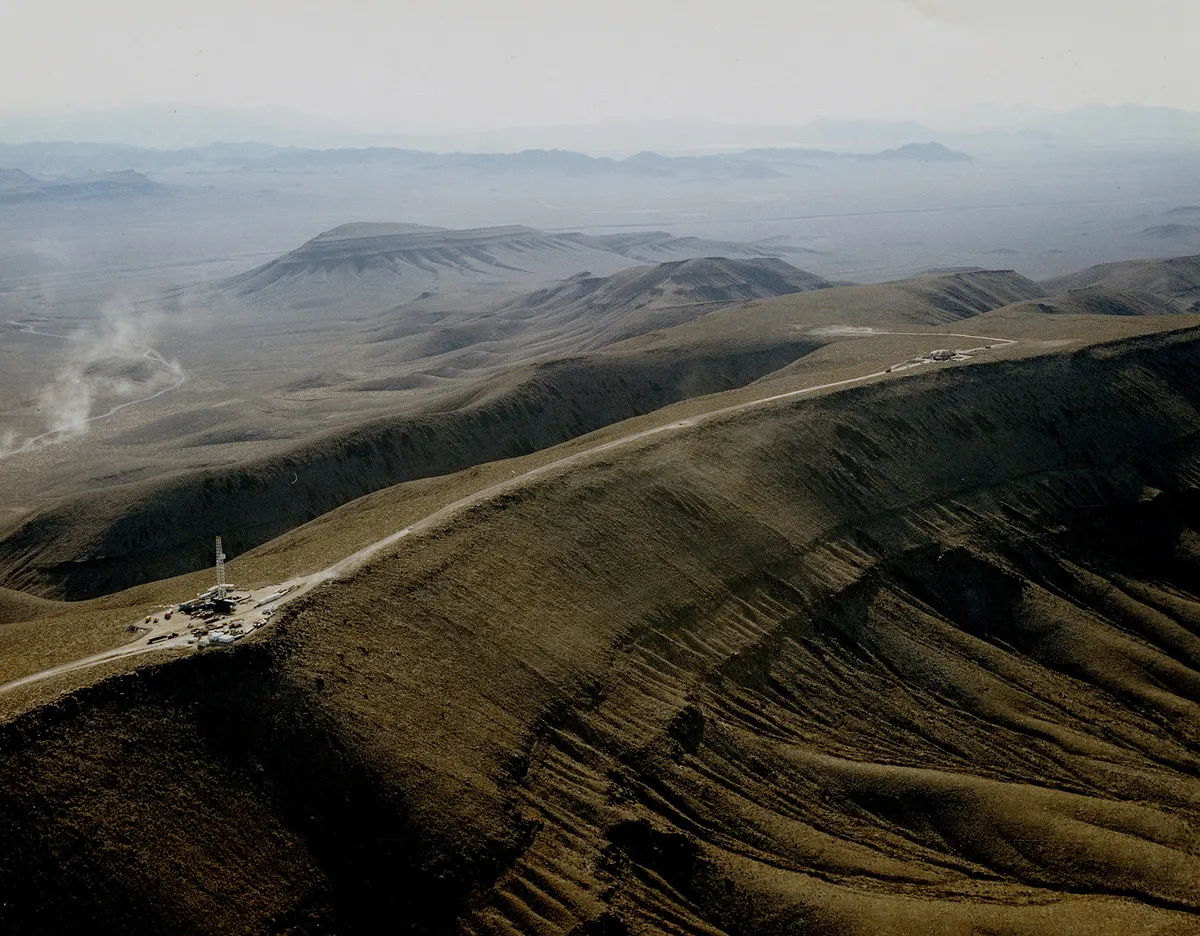
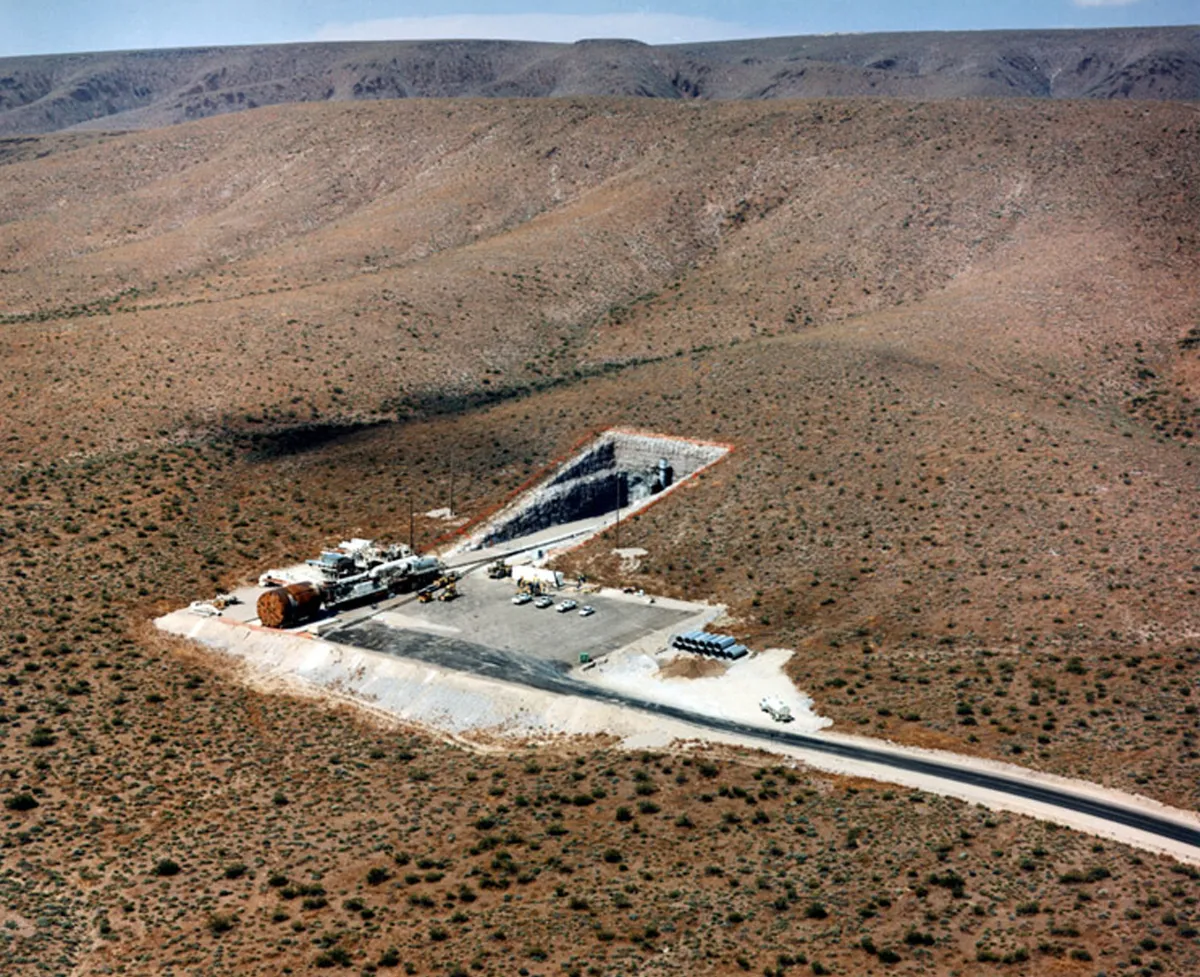
Drive north-west out of Las Vegas on US 95 and the city disappears quickly. The road crosses the Mojave Desert and runs past the edge of the Nevada Test Site, where the United States detonated hundreds of nuclear devices. Some 80 to 100 miles from the city, depending on how you measure, a low ridge rises from the desert floor. It is called Yucca Mountain, although it is more of a long volcanic ridge than a mountain, running about six miles and climbing from roughly 4,000 to 6,000 feet.
The rock is tuff, a hardened volcanic ash laid down by huge eruptions from an ancient caldera. It is cracked and layered, and it sits on land that belongs to the federal government. To the south lies the Amargosa Valley, a farming community of about 1,400 people. Water drains that way. Under the ridge there is a deep water table, reported at anything from 600 to 1,500 feet down depending on where you measure.
It was this combination of dry climate, remote federal ground and thick rock that made the ridge attractive. In the 1950s the National Academy of Sciences had recommended burying the most dangerous nuclear waste deep underground in stable rock. Sixty years later nobody has done it in the United States. Yucca Mountain is the closest anyone came.
Why the country needed a place to put the waste
Every nuclear power plant makes spent fuel, and it stays radioactive for a very long time. In the early decades of nuclear power it was assumed that a permanent disposal site would be found. It wasn’t. By the early 1980s the used fuel was piling up in cooling pools beside the reactors that made it.
In 1982 Congress passed the Nuclear Waste Policy Act. It made the Department of Energy responsible for finding, building and operating a deep underground repository, and it set up the Nuclear Waste Fund, paid for by a charge on nuclear electricity. Utilities would hand over their spent fuel and the government would dispose of it. The government promised to start taking fuel by 31 January 1998. It missed that date, and every date since.
The idea of putting a repository in Nevada pre-dates the Act. A Nevada account of the 1970s says that in 1975 the state legislature even passed a resolution urging that the Nevada Test Site be chosen as the national disposal site, at a time when southern Nevada’s economy was struggling. That is the version told by a nuclear-industry author and I would treat it with care, but it fits with the fact that federal scientists began collecting data on possible repository sites in 1976 and that DOE was formally studying Yucca Mountain by 1978.
“Screw Nevada”
Under the 1982 law, DOE was supposed to compare several candidate sites in different parts of the country. In 1983 it listed nine of them in six states; Wikipedia says ten. Under political pressure the search for a second, eastern site was deferred in 1986, and the president approved three western sites for detailed study: Hanford in Washington State, Deaf Smith County in Texas and Yucca Mountain in Nevada.
In late December 1987 Congress changed the law. The Nuclear Waste Policy Amendments Act told DOE to study Yucca Mountain only, and to stop if it proved unsuitable. The official reason was cost: studying three sites was expensive. People in Nevada saw it differently. The state had one member of the House when Texas had 32 and Washington had 12, and the Speaker and the Majority Leader came from the other two states. They called the new law the “Screw Nevada” bill, and the nickname stuck for decades.
The reaction was fast. Richard Bryan, who had been elected governor in 1982 as a critic of waste disposal in the state, kept up the fight, and so did his successors. Nye County, where the site lies, created its own monitoring office as early as 1983, and in time the county became one of the project’s few local supporters. Polling quoted on Wikipedia found most Nevadans opposed to the repository, 58 percent in the survey cited, with roughly a third in favour.
The land has other claims on it. The Western Shoshone consider the area sacred, and so do other Native peoples, including Southern Paiute and Owens Valley Paiute communities who used it for ceremonies. In 1987 the Western Shoshone National Council issued land use permits to anti-nuclear protesters at the Nevada Test Site, as a challenge to federal authority. Western Shoshone leaders such as the spiritual leader Corbin Harney argued that the land was theirs under an 1863 treaty.
Is the rock safe?
The science was argued over from the start. In 1984 a DOE scientist, Jerry Szymanski, found calcium carbonate deposits in trenches around the mountain and argued they showed water had risen from below in the past, which under DOE’s own guidelines should have disqualified the site. A National Research Council study later rejected his claims in 1992. The earthquake risk was also real: on 29 June 1992 a magnitude 5.6 quake hit beneath Little Skull Mountain, about 12 miles from the ridge. Scientists treated it as useful data, but it renewed worries.
The central question was water. The repository would sit in dry rock about 1,000 feet above the water table, so the main risk was that rainfall would seep through cracks, corrode the containers and carry radioactive material down to the aquifer that feeds the Amargosa Valley. Wikipedia reports that faults reach from the planned storage area to the water table, and that surface water reached the exploratory tunnel in under 50 years. In 2007 a fault that had been mapped in the wrong place was found beneath a planned storage pad, and structures were moved. DOE argued that its models showed very low radiation doses and that earthquakes would raise the water table by tens of metres at most.
Volcanoes were part of the argument too. The ridge sits in the Basin and Range country, where the crust is being pulled apart and more than thirty faults are mapped nearby. A small volcano at Lathrop Wells erupted about 80,000 years ago, and researchers debated how likely it was that magma could ever reach tunnels dug below the surface. Another dispute blew up in 2005, when emails among US Geological Survey hydrologists suggested that quality assurance records for some of the water modelling had been falsified. DOE later said, in February 2006, that the underlying modelling work was technically sound. It was the kind of episode that made critics ask whether the project could be trusted to check itself.
Because the rock could not be relied on alone, the design leaned on engineering. The waste would go into canisters made of a corrosion-resistant nickel-chromium alloy called Alloy 22, with titanium drip shields over them, and laid end to end in side tunnels. The heat from the fuel would be managed by how many canisters went into each tunnel.
The standard it had to meet changed in court. The Environmental Protection Agency first set a 15 millirem-a-year limit for 10,000 years. In 2004 a federal appeals court struck down the 10,000-year period as too short compared with National Academy of Sciences advice. The rule that followed in 2009 kept 15 millirem for the first 10,000 years and allowed 100 millirem a year from then out to a million years. For comparison, the sources put natural background radiation at about 350 millirem a year.
Five miles under the ridge
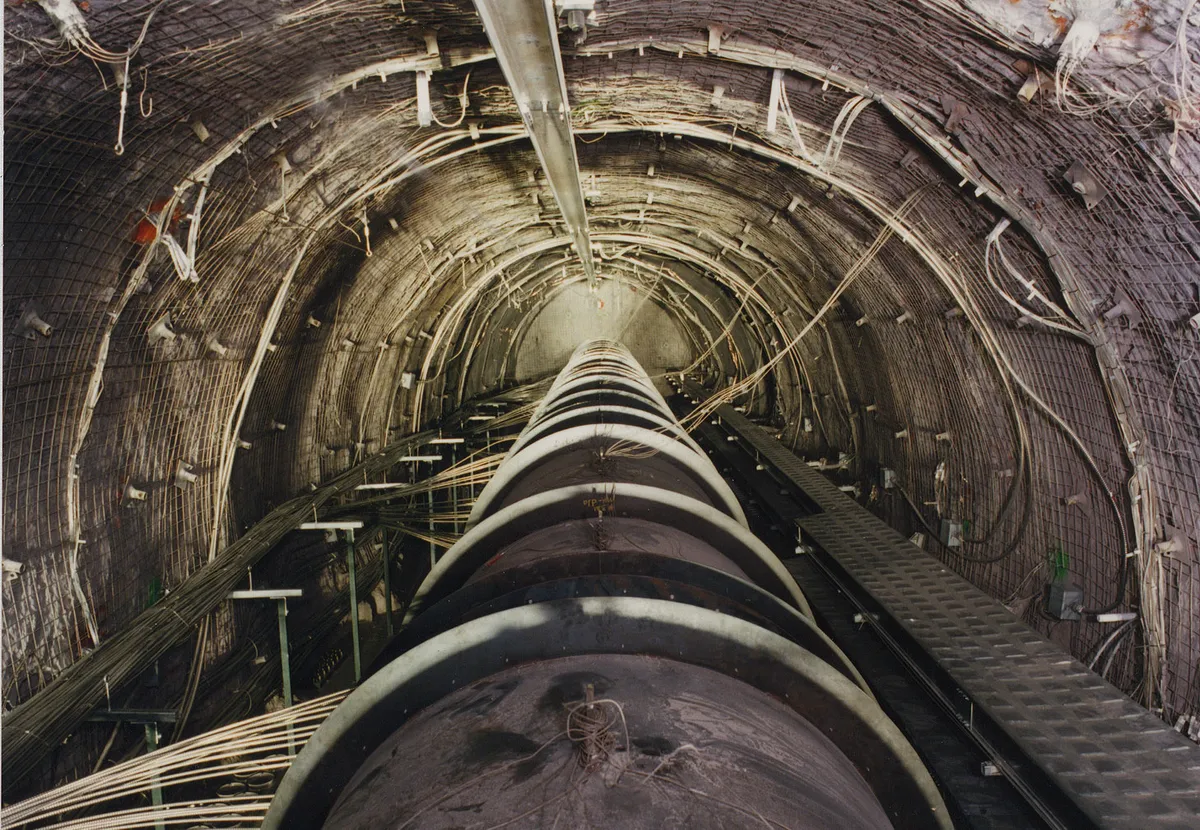
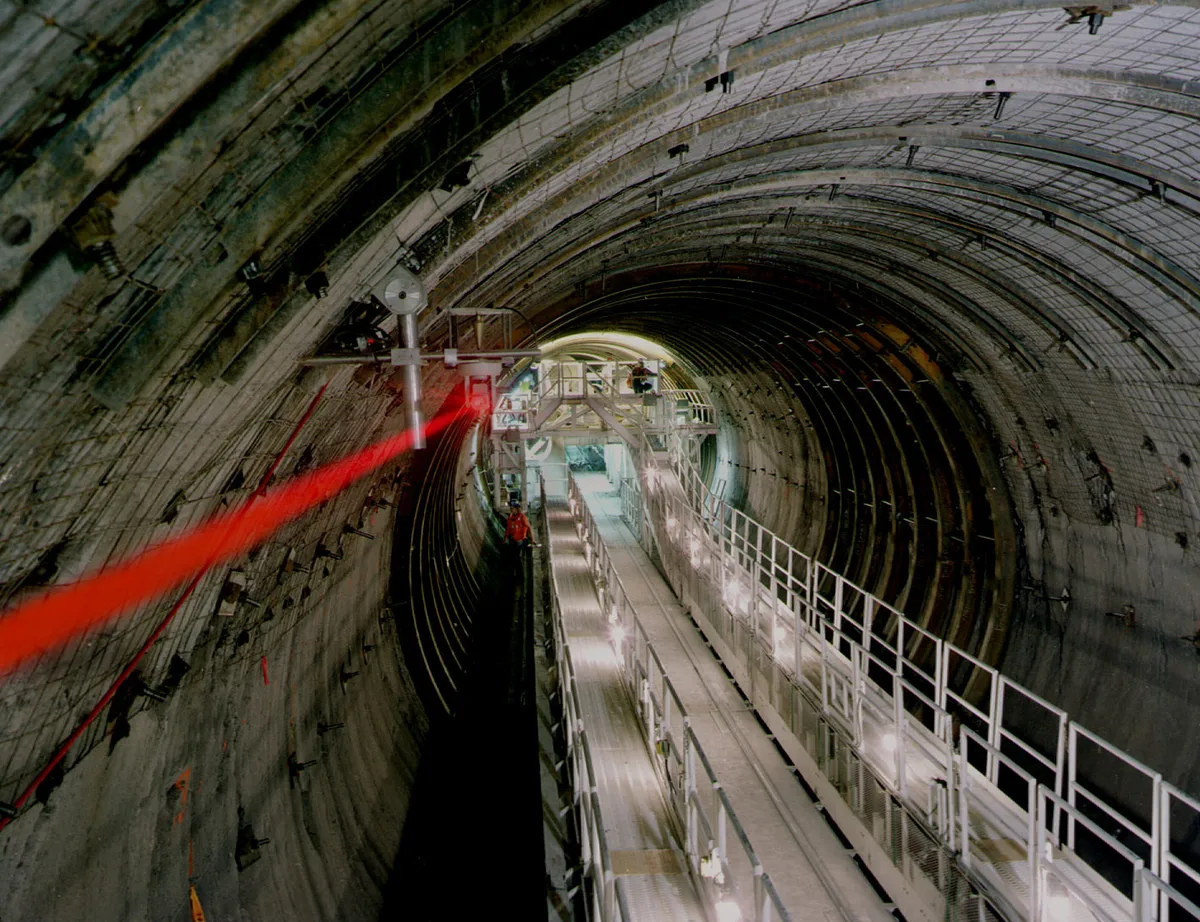
Surface studies at Yucca Mountain resumed in 1991 after the state of Nevada issued permits for trenching, and construction of the Exploratory Studies Facility began in November 1992. The plan was for an underground laboratory, not a repository. Scientists would dig into the ridge, run experiments and find out whether the rock could hold waste safely for 10,000 years. Heaters were used in the experiments to simulate the temperatures that waste would produce.
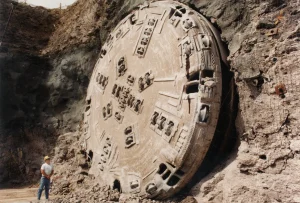
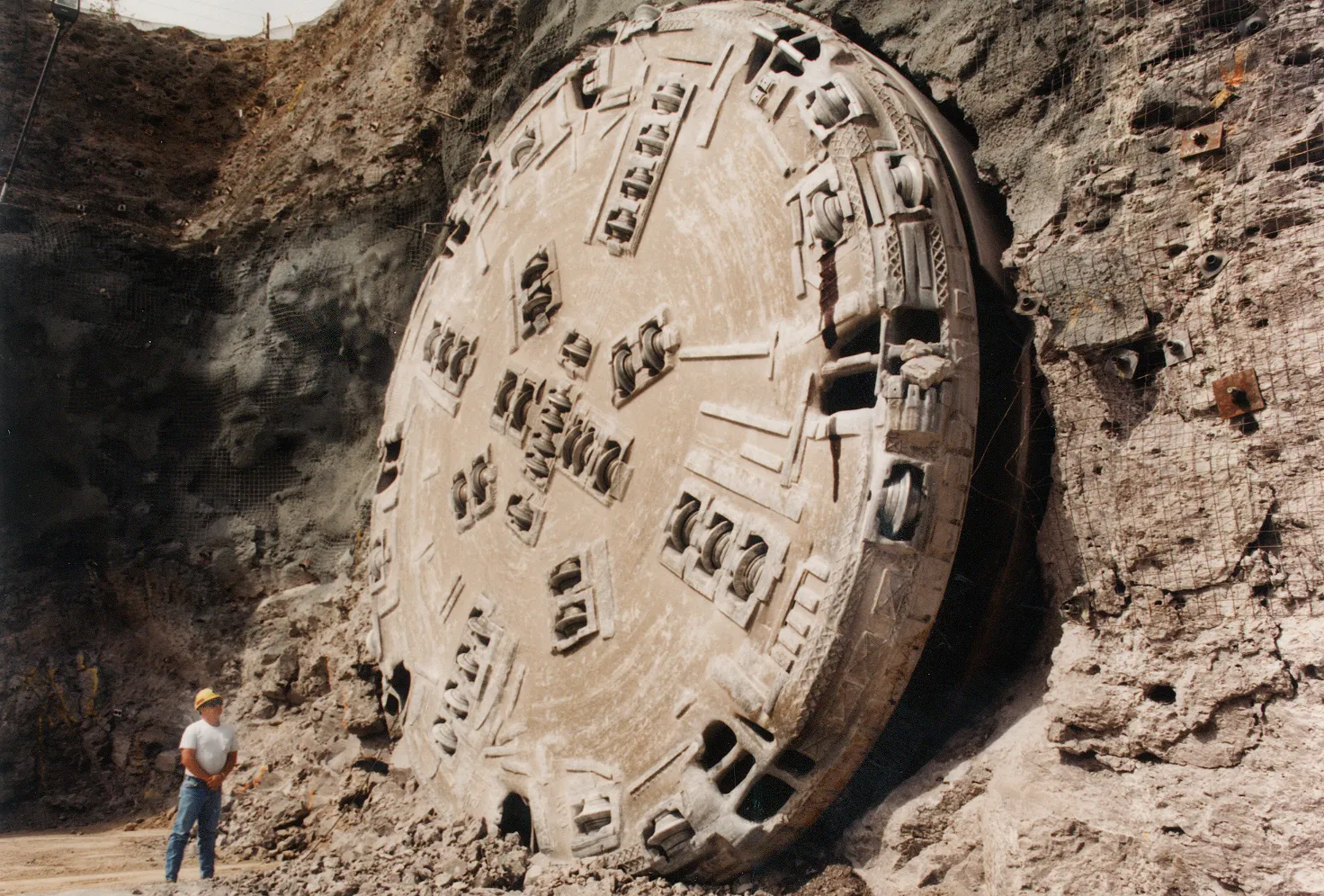
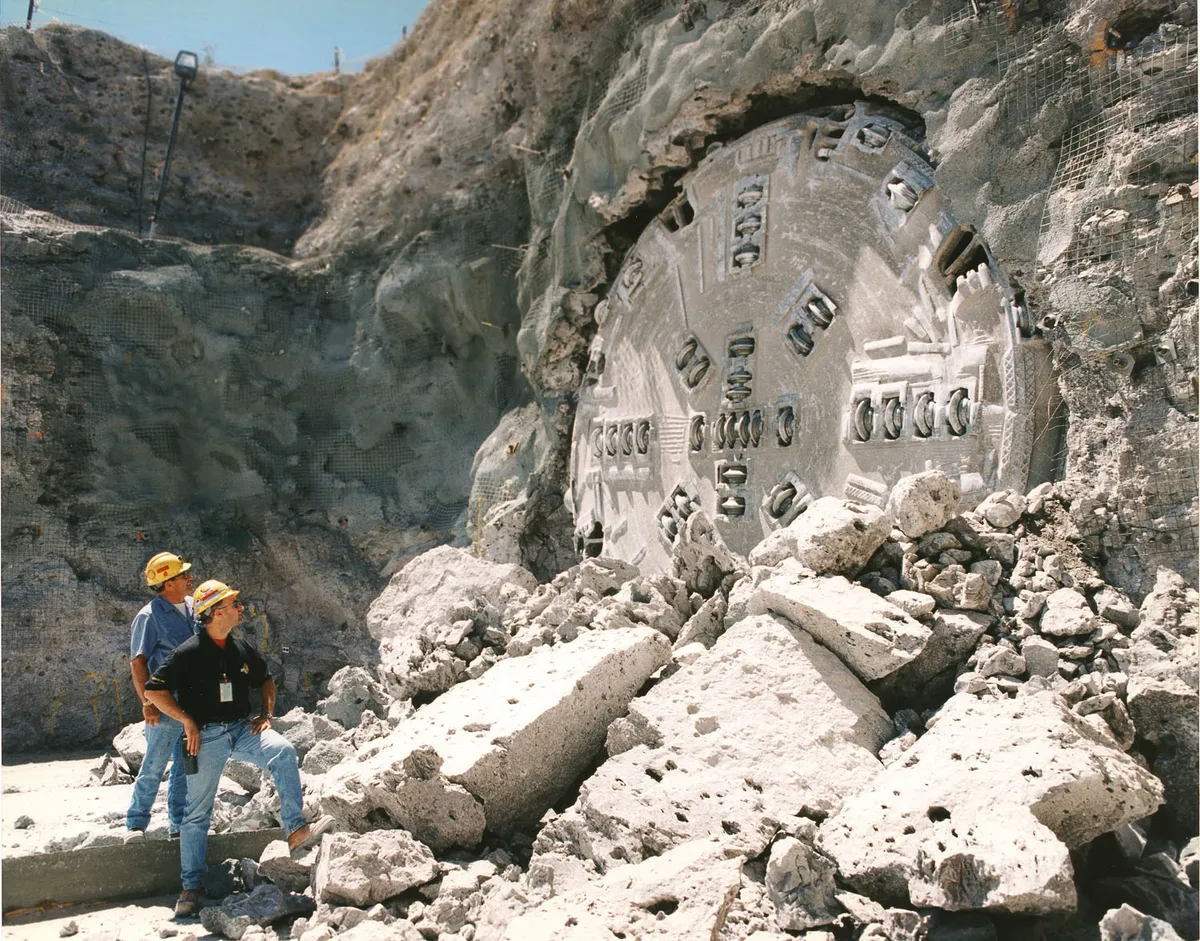
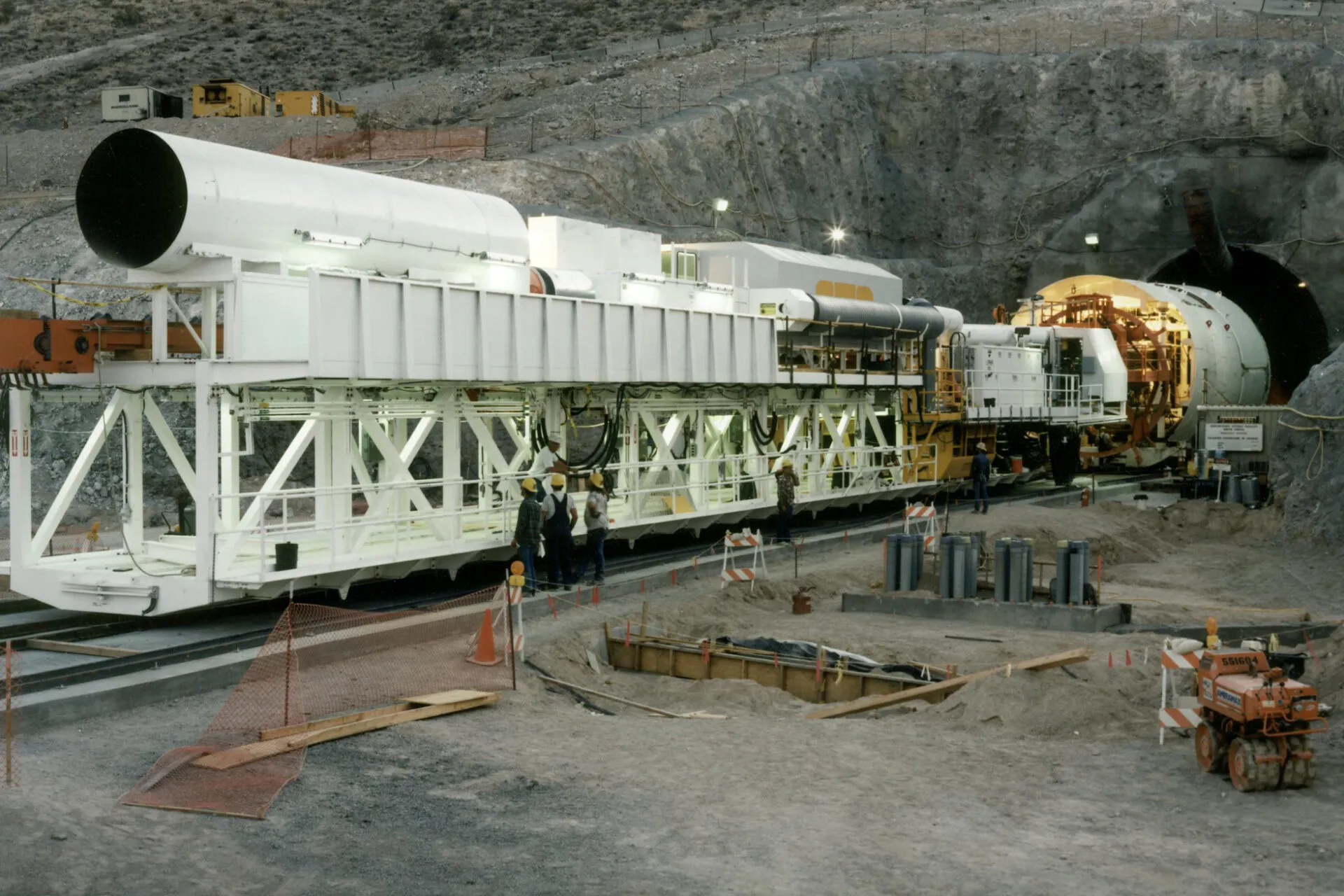
The digging was done by a single huge machine, remembered as “The Machine”. It weighed about 860 tons, had a cutting head 25 feet across fitted with 48 cutter wheels, and was driven by 12 motors totalling 3,800 horsepower. It was built for DOE by a company in Kent, Washington, and arrived at the foot of the mountain in pieces on 50 trucks. The boring machine alone cost about 13 million dollars, and the tunnelling job around 130 million.
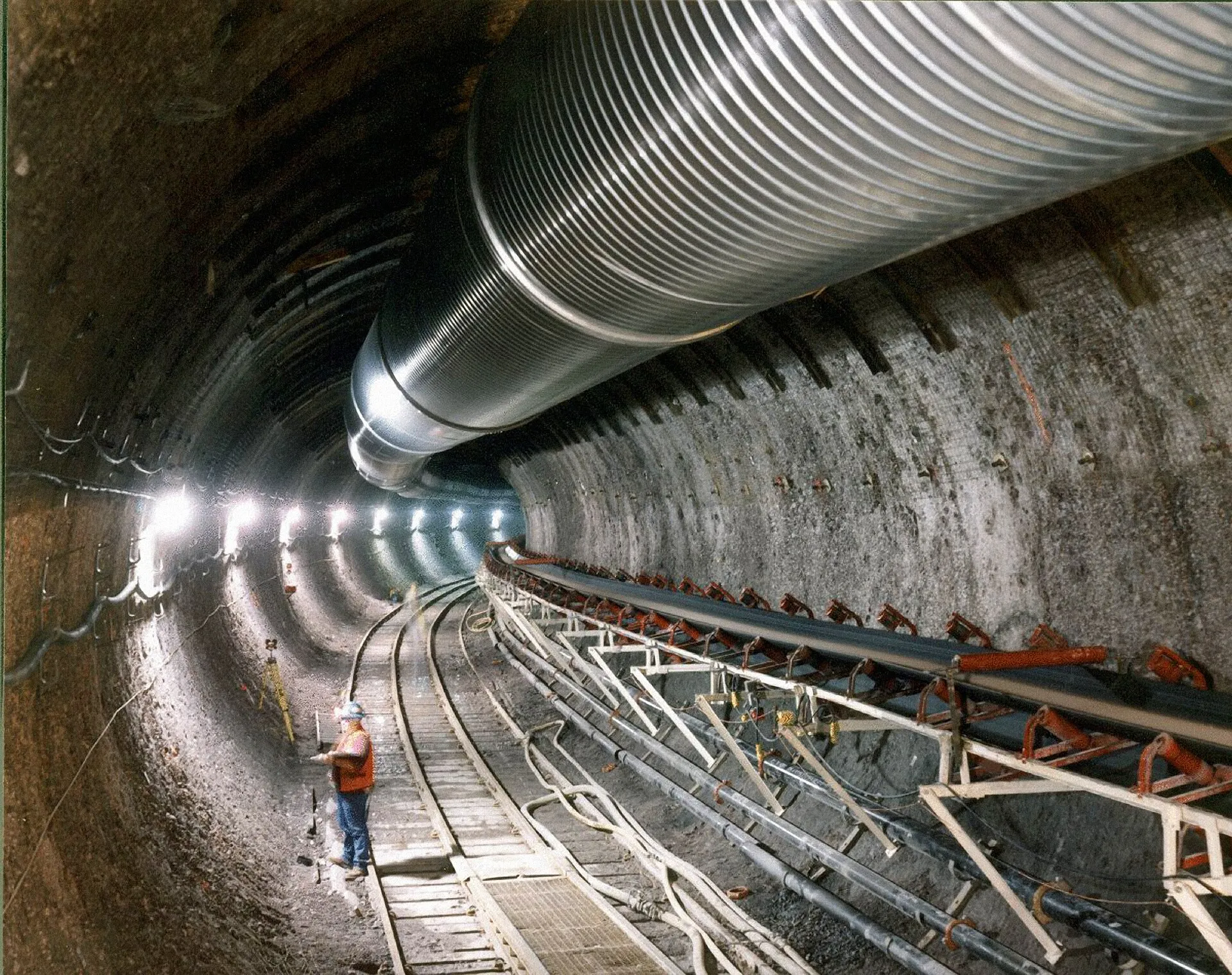
It began cutting in September 1994 and worked three shifts a day, five days a week, at a top speed of 18 feet an hour through the welded tuff. It took about two and a half years to cut a horseshoe-shaped tunnel of roughly five miles, about 300 metres (roughly 1,000 feet) below the surface. In April 1997 it broke out into daylight at the south portal, an event the crews called the “Daylighting”. The project manager, Wesley Barnes, pumped his fist in the air as workers cheered. A second, straight cross-drift of about 1.7 miles was cut by a smaller machine later that year, and several alcoves were blasted off the main tunnel for experiments.
The excavation was run by contractors, with Kiewit and Parsons Brinckerhoff named as the excavation team and TRW Environmental Safety Systems as the designer. The main tunnel had seven testing alcoves and four test niches, and it crossed the Bow Ridge Fault. More than 20,000 expanding steel rock bolts hold up about 70 percent of it, with steel sets for the rest. The repository level sits more than 100 metres above the water table.
The tunnel was never meant to hold waste. The emplacement tunnels, where the canisters would go, were never dug, because that needed approval from the Nuclear Regulatory Commission. Storing the full amount would have required dozens of miles more tunnel.
After the breakthrough the machine was repainted white and parked outside the south portal. DOE tried to sell it for 13 million dollars. Other agencies didn’t want it, and the one commercial offer, a few hundred thousand dollars, was turned down; a department spokesman, Allen Benson, said in 2006 that the scrap alone was probably worth that. It is still there, a photo stop on past visits and an odd monument. Most of its trailers and gantries were sold for scrap. A state official has even said barn owls have moved into the tunnel, which is the kind of detail that is hard to verify but sounds right.
Approval, and then a licence that never came
By the end of the 1990s the project was running late and over budget. In February 2002 Energy Secretary Spencer Abraham recommended the site to President Bush, and Bush sent the recommendation to Congress. Nevada’s governor, Kenny Guinn, formally objected, which under the law was a veto. Congress could override it, and did. Bush signed the resolution on 23 July 2002.
That made Yucca Mountain legally the nation’s repository site, but a licence was still needed. DOE sent its application to the Nuclear Regulatory Commission on 3 June 2008, a document of more than 8,000 pages. Its own estimate of the total life-cycle cost had risen to about 96 billion dollars. Nevada and others raised hundreds of objections, and by 2011 nearly 300 contested issues had been admitted.
Politics then changed the picture. In the 2006 elections Harry Reid, a Nevada Democrat and the project’s most powerful opponent, became Senate Majority Leader. He put it bluntly.
Yucca Mountain is dead. It’ll never happen.
Harry Reid, Senate Majority Leader, 2006
Barack Obama campaigned on abandoning the repository. In 2009 his Energy Secretary, Steven Chu, told senators that Yucca was no longer an option, and in March 2010 DOE moved to withdraw the licence application. About 800 employees were laid off in 2009. Washington State and South Carolina sued, arguing that the government could not simply walk away from a statute. Congress ended federal funding in April 2011, and the Nuclear Regulatory Commission suspended hearings that autumn with no money to hear the contested issues.
The courts pushed back. In 2013 a federal appeals court ordered the NRC to finish its review with the money it still had, saying a president cannot ignore a law because of policy objections. In January 2015 the NRC published its safety evaluation in five volumes. It found the site could meet the applicable standards, but said no construction should start until land and water rights and a supplemental environmental study were settled. There was no money to finish those. In 2014 the fee that utilities had paid into the Nuclear Waste Fund ended after a court decided it could no longer be justified.
The bill
The financial story is a grim one. The government’s own auditors put spending since 1983 at nearly 15 billion dollars, about 65 percent of it from the Nuclear Waste Fund. Wikipedia reports that the fund held 52.4 billion dollars in September 2021. Meanwhile the government failed to start taking fuel, so it has had to pay utilities for storing it themselves: about 5.3 billion dollars between 1998 and 2015 by one count, and billions more projected. One recent congressional estimate put total taxpayer liability at 56.5 billion dollars, though that comes from a politician and the Energy Department’s own accounting is lower. Whatever the right figure, a country that spent a fortune on a tunnel is also paying to keep spent fuel in 76 reactor sites.
The amount of waste is not small. Sources put it at somewhere between 90,000 and 100,000 metric tonnes of spent fuel at reactor sites, growing by about 2,000 tonnes a year. The law capped Yucca Mountain at about 70,000 tonnes, with another figure of 77,000 in Wikipedia, and in 2007 DOE had asked to double it. About 10,000 tonnes were to come from military programmes.
Getting the waste there was a project in its own right. The favoured plan was a new rail line in Nevada, the Caliente Corridor of about 200 miles, running along the Nevada Test Site. Critics warned of thousands of shipments passing through major cities. Supporters pointed out that spent fuel has been moved across the country since the 1960s without a harmful release.
While Yucca sat idle
With the repository stalled, other ideas appeared. The Blue Ribbon Commission set up in 2010 reported in January 2012 and urged a new independent organisation to run the waste programme and a search for consolidated storage sites for consolidated storage sites. In 2015 Senator Lamar Alexander introduced a bill to create a Nuclear Waste Administration. It died in committee. In 2018 the House passed a bill to restart Yucca licensing by 340 votes to 72; it did not become law. President Trump said in 2018 that he agreed with the people of Nevada, and in 2021 Jennifer Granholm, Biden’s Energy Secretary, said Yucca would not be part of the administration’s plans.
Elsewhere, private companies tried to build interim storage. The best known were a Texas facility licensed to Interim Storage Partners and a New Mexico one licensed to Holtec International, each able to hold thousands of tonnes for 40 years. The governors of both states, from different parties, opposed them. The Fifth Circuit court ruled that the NRC had exceeded its authority, and the case went to the Supreme Court. On 18 June 2025 the Court reversed the Fifth Circuit by 6 votes to 3 and held that the state and a landowner could not challenge the licence. The ruling turned on who was entitled to sue, not on whether the NRC could license such sites in the first place. A few days later, the Western Governors’ Association, which includes 22 governors, approved a resolution saying no consolidated nuclear waste facility could be placed in a western state without the written consent of its governor.
2026: looking elsewhere
The biggest change came in 2026. On 28 January the Department of Energy put out a request for information asking state governments to work with it on “Nuclear Lifecycle Innovation Campuses”, sites that could handle waste disposal, recycling, fuel fabrication and power generation together. Politico reported that federal support was being offered in return for hosting waste storage, and that the aim was a long-term solution to the waste deadlock. The department said it reviewed 28 applications from 26 states.
At the end of July 2026 it named five initial contenders: Utah, Tennessee, Oklahoma, Louisiana and Idaho. Energy Secretary Chris Wright signed non-binding agreements with the five, and states that go ahead will sign separate hosting agreements later. The department’s figures promise up to 50 billion dollars of capital investment and nearly 25,000 jobs. Nevada was not on the list.
Nevada’s politicians, who agree on almost nothing else, celebrated. Republican Governor Joe Lombardo welcomed what he called a willingness to move beyond the failed Yucca Mountain Project. Democratic Senator Catherine Cortez Masto said Yucca was dead but promised to keep fighting until Nevada had a seat at the table, and Senator Jacky Rosen pledged not to let waste go to Yucca. Representative Dina Titus called it a monumental victory and pointed to her bill to require written consent from the governor, local governments and tribes, which has not advanced. Representative Steven Horsford said Nevada had never been, and never would be, the nation’s nuclear dumping ground. Some of the dates differ between outlets, with one report placing the announcement a week later than another, so the exact day should be checked.
Yucca Mountain has not yet been removed from the statute. Reporting based on a leaked White House document says the administration wants to end its status as the sole site and restart the waste fee. Congress has not acted. Until it does, the ridge in Nye County remains, in law, the only place the United States may dispose of its high-level waste, and in practice a place where nobody expects it to happen.
What is there now
There is nothing to visit in the ordinary sense. The site is federal land, closed to the public. Official tours were run in the past, and a few visitors, such as members of Congress, were taken in on a small open shuttle train, but I found nothing that says the public can go in now. The south portal still holds the white boring machine. The tunnel is idle.
It is easy to read Yucca Mountain as a failure of engineering. It wasn’t, at least not yet. The tunnel was dug, the rock was studied for decades and the NRC’s own staff concluded that the repository could meet its standards. What failed was permission. A site chosen by a vote that one state called unfair never gained the consent of the people who lived there, and a project built to last a hundred thousand years could not survive a few election cycles.
Conclusion
Yucca Mountain is a rare thing: a monument to a decision that was never carried out. It holds a very expensive tunnel, a record of the science of burying radioactive material, and the story of how the United States tried to solve a national problem by putting it in one state’s backyard.
The facts are not in dispute. Congress named the ridge in 1987, the exploratory tunnel was dug in the 1990s, the project was approved in 2002, and the licence was never granted. About 15 billion dollars were spent, and the spent fuel still sits at reactor sites around the country. What is disputed is why it failed: bad science, bad politics or both. The safety evaluation in 2015 suggests the rock was not the main obstacle.
The next chapter has barely begun. If five other states take on the task, the answer to the waste problem will depend on something Yucca Mountain never had, the agreement of the place that receives it. In the meantime, a machine sits white and silent at the end of a tunnel in the Nevada desert, with its job done and the real work still to do.
Did you know?
- Yucca Mountain is a volcanic tuff ridge about 80 to 100 miles north-west of Las Vegas.
- In late December 1987 Congress made it the only site to study, which Nevadans called the "Screw Nevada" bill.
- A tunnel boring machine weighing about 860 tons dug the five-mile exploratory tunnel between 1994 and 1997.
- The machine's cutting head was 25 feet across and carried 48 cutter wheels.
- DOE tried to sell the machine for 13 million dollars; one offer of a few hundred thousand dollars was turned down.
- The government promised to start taking spent fuel by 31 January 1998 and missed the date.
- President Bush signed the approval on 23 July 2002 after Congress overrode Nevada's objection.
- The licence application filed in June 2008 ran to more than 8,000 pages.
- The government's own count puts spending at nearly 15 billion dollars, with no waste ever stored.
- In July 2026 DOE shortlisted Utah, Tennessee, Oklahoma, Louisiana and Idaho for new nuclear fuel and waste campuses.