
A town that was not on the map
Skrunda-1 stands in the forest of Courland, in western Latvia. It lies in Raņķi Parish, in Kuldīga Municipality, a few miles west of the small town of Skrunda and close to the A9 road to Liepāja, roughly 150 kilometres from Riga. The place has gone by several names: Skrunda-1, Skrunda-2, Lokators and Līdumnieki. It is now part of a military training area called Mežaine.
It was a closed town. Two US Army intelligence officers who visited in December 2015 and wrote about it for War on the Rocks describe it as one of more than a hundred Soviet closed administrative territorial entities, places that were fenced off, heavily guarded and often left off official maps. It was built for a single purpose: to look west.
The radars
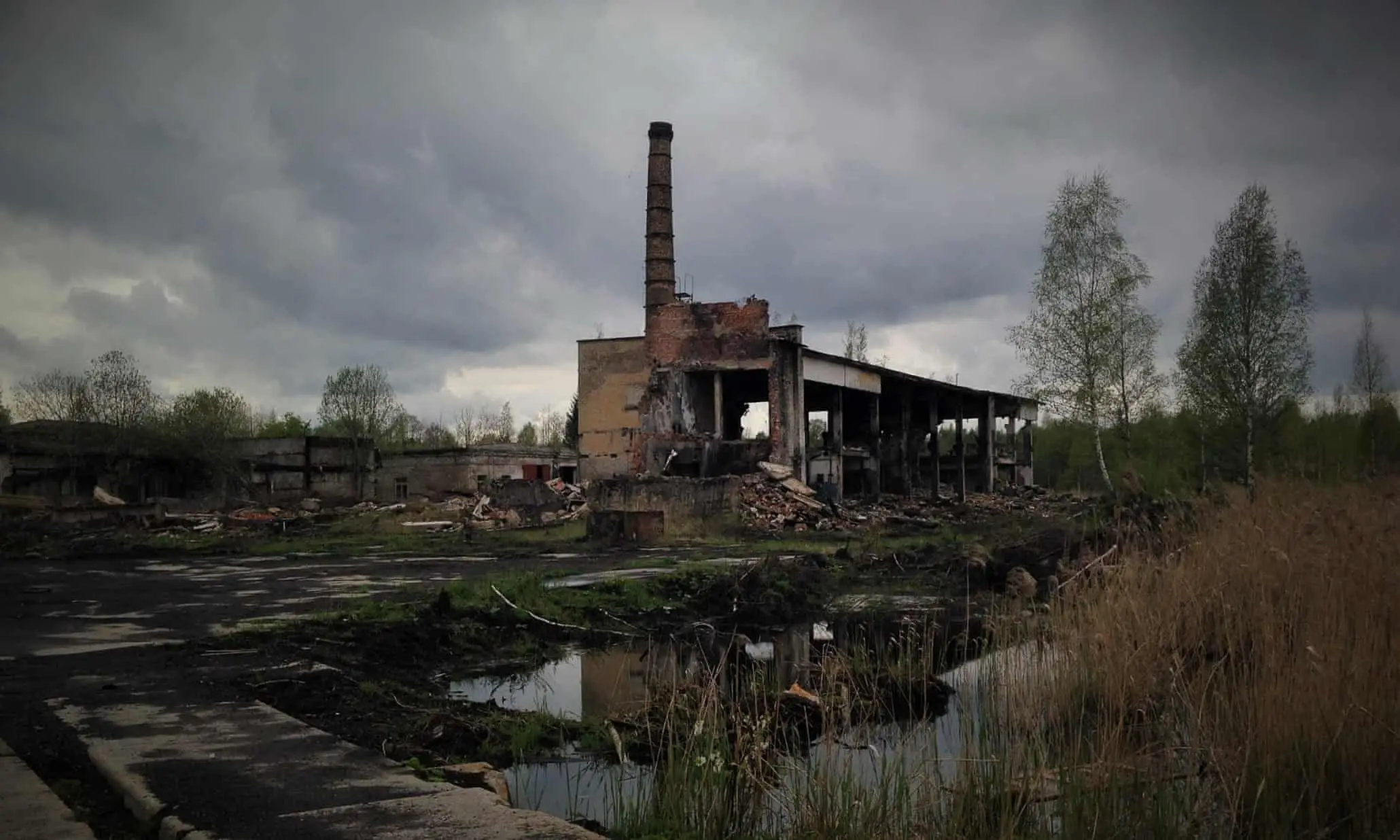
The reason for the town was a pair of radars. Two Soviet Dnepr radars, which NATO called Hen House, were built here in the 1960s, and the town was built to house the people who served them. The Dnepr was an early-warning radar, and from Skrunda it looked towards Western Europe, scanning for incoming nuclear warheads during the Cold War. The Soviet unit that garrisoned the site was the 129th independent Radio-Technical Unit, and a separate receiving station, called Daugava, stood nearby.
The dates are not settled. The first Dnepr was set up near Skrunda in 1963 according to War on the Rocks and Deep Baltic, while GlobalSecurity says construction of a Dnestr-M radar began in 1963 to 1964. The names are confused too: GlobalSecurity uses both Dnepr and Dnestr-M for the radar at Skrunda, and notes that Western intelligence used the term Hen House for several different types of Soviet early-warning radar. It is not clear which designation applies to which building, so we use Dnepr.
The radars were not discreet. Their signals jammed local Latvian radio and television, so Latvians and Western intelligence soon knew what stood in the forest.
The giant that was never finished
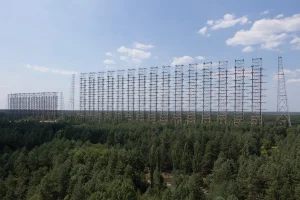
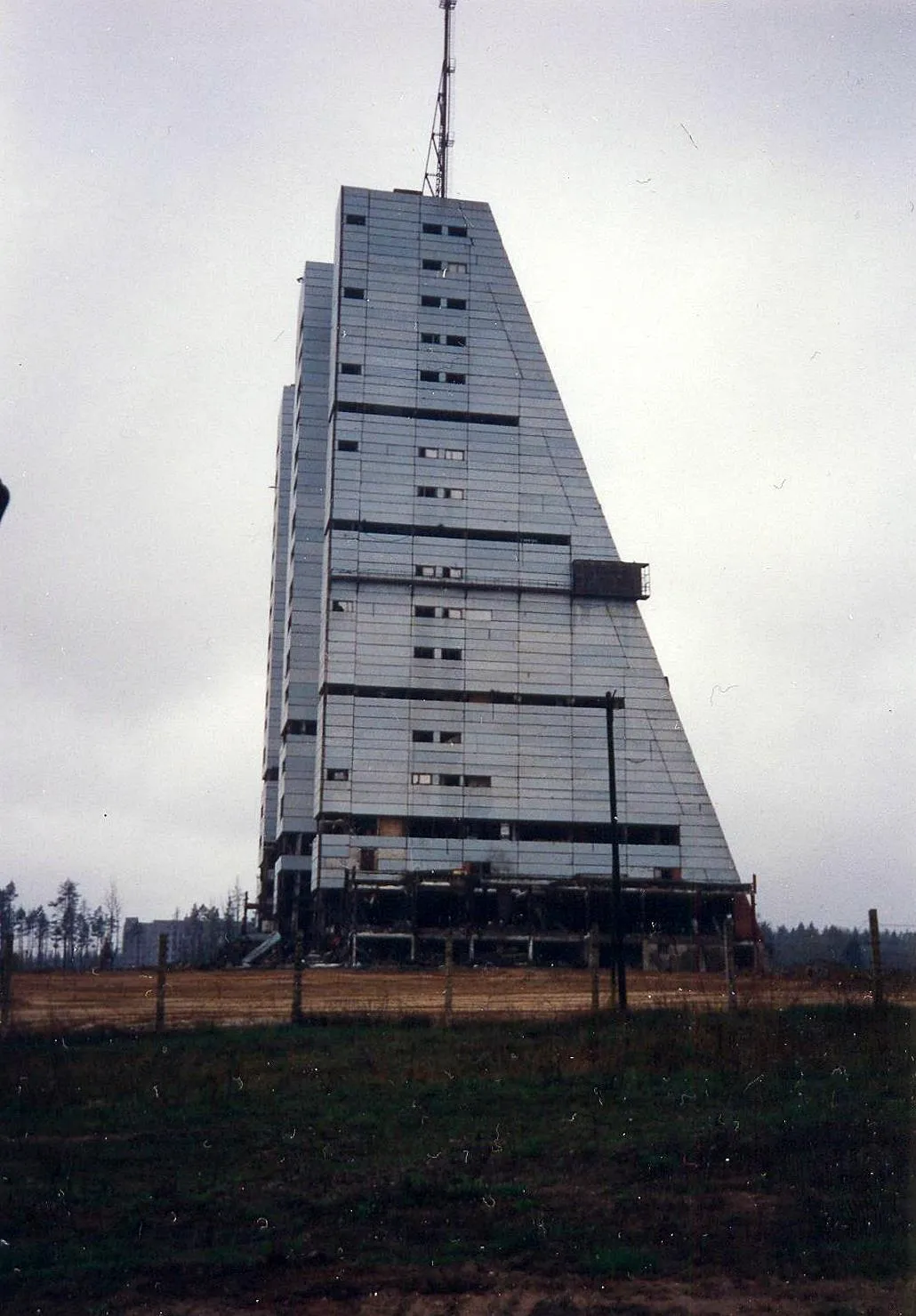
In the 1980s the Soviet Union began a much larger radar here. This was the Daryal, a big phased-array radar that NATO called Pechora. Sources date the start of work on the tower to 1984 (Wikipedia, GlobalSecurity), 1985 (Baltic Times, Deep Baltic) or 1986 (Past Remnants), and it was halted in August 1991. Western intelligence detected the construction in 1986, and a Washington Times report of 18 August 1986 described it as one of three such radars. It was considered one of the most important Soviet stations for listening to objects in space.
The height is also given differently. Wikipedia calls it a 19-storey tower, Deep Baltic says that by 1991 it was about as tall as a 20-floor apartment block, and GlobalSecurity says 60 metres. Past Remnants, a hobbyist site, says the building measured 80 metres by 80 metres with a planned range of 6,000 kilometres, but that figure appears on a single page and nowhere else.
The Soviet Union collapsed before the Daryal worked, and it never became operational. Deep Baltic adds that work stopped because of the pressure on the Russian Army to complete its withdrawal from Latvia.
The closed town
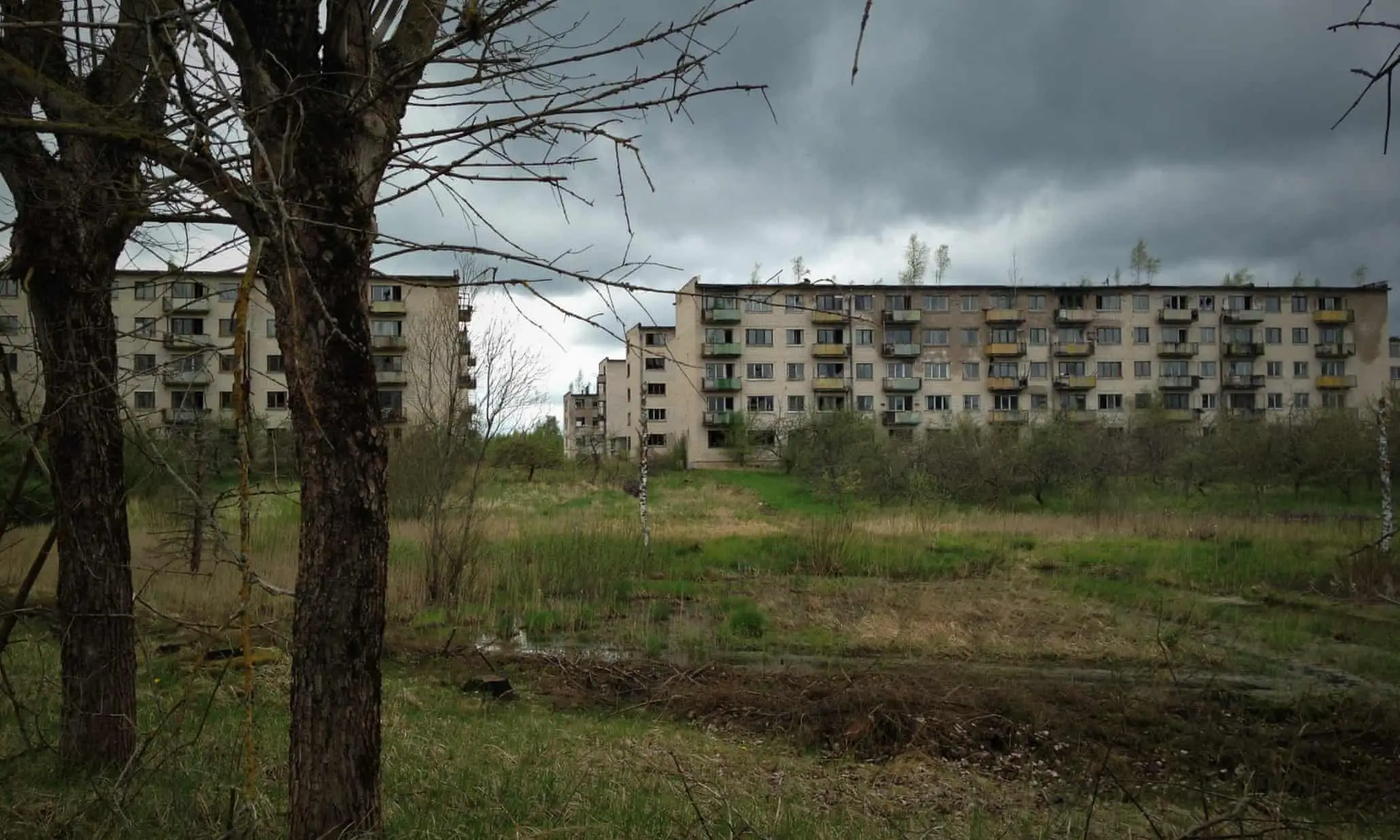
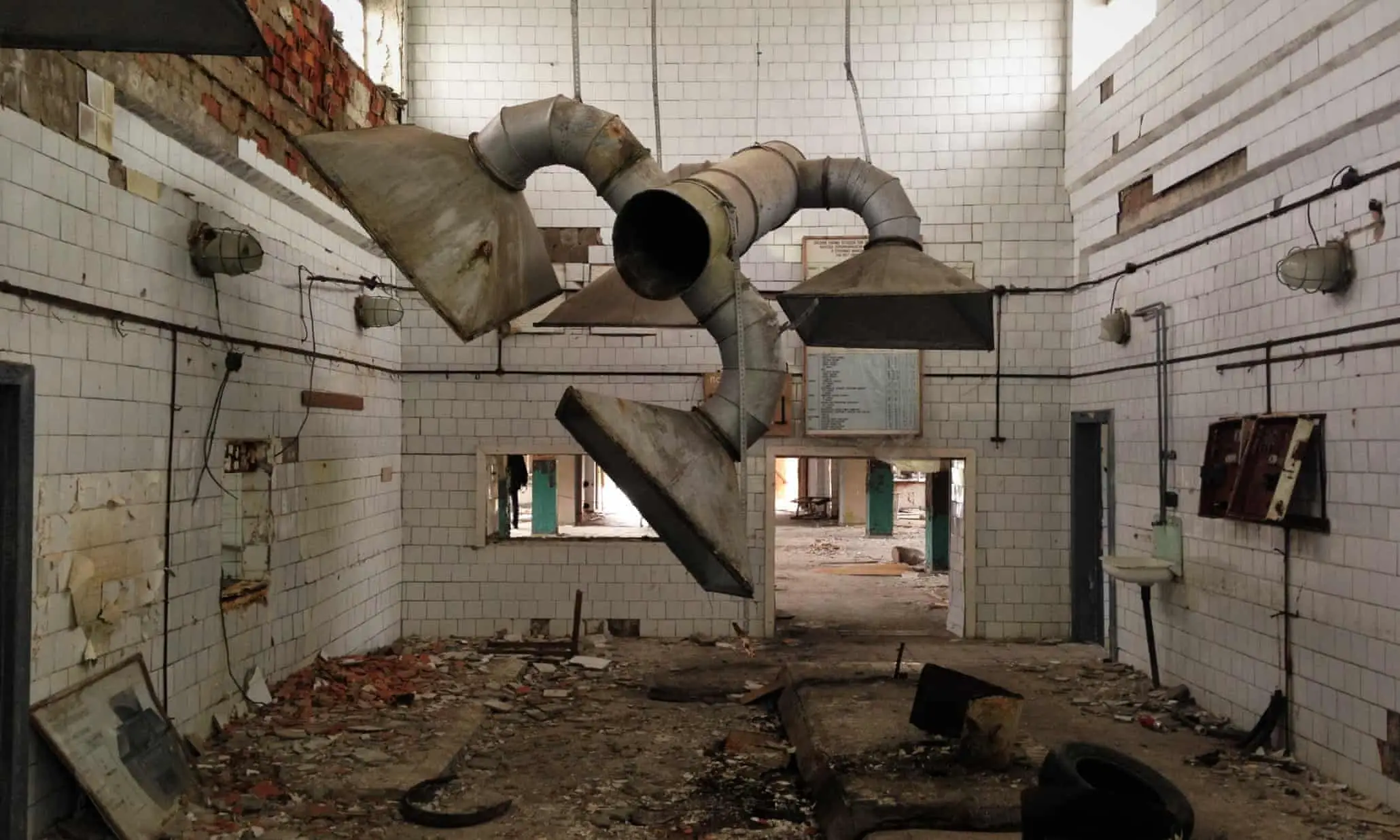
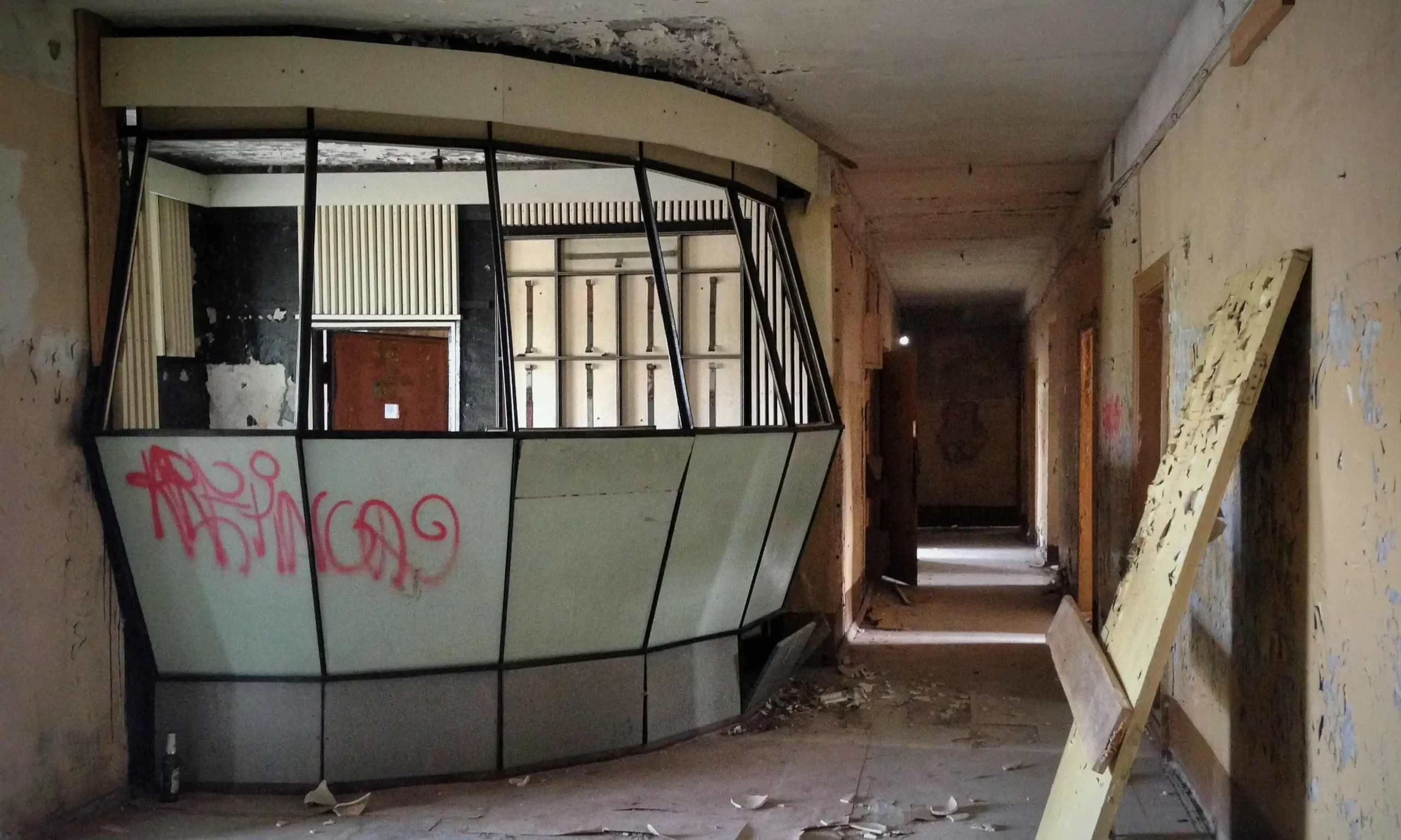
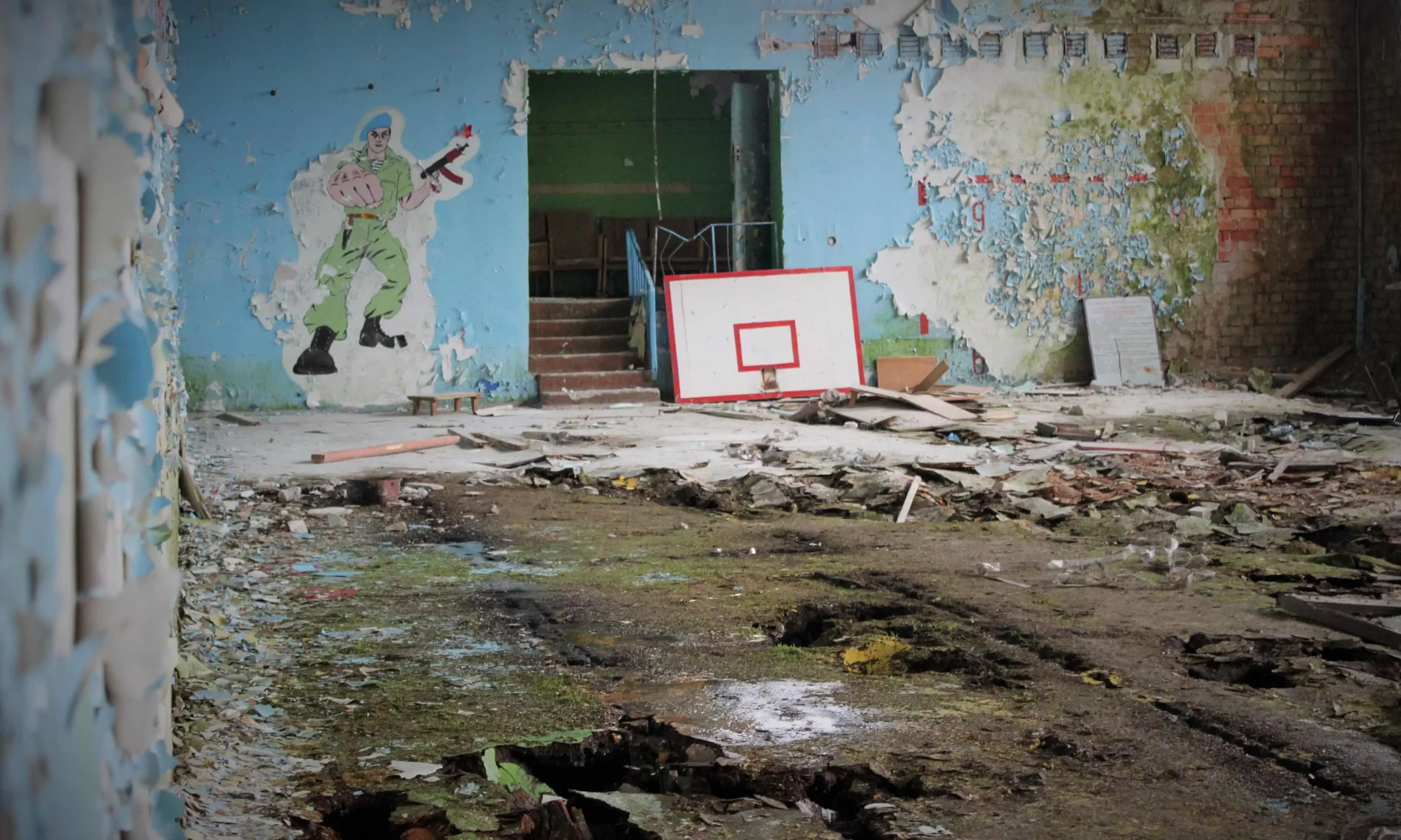
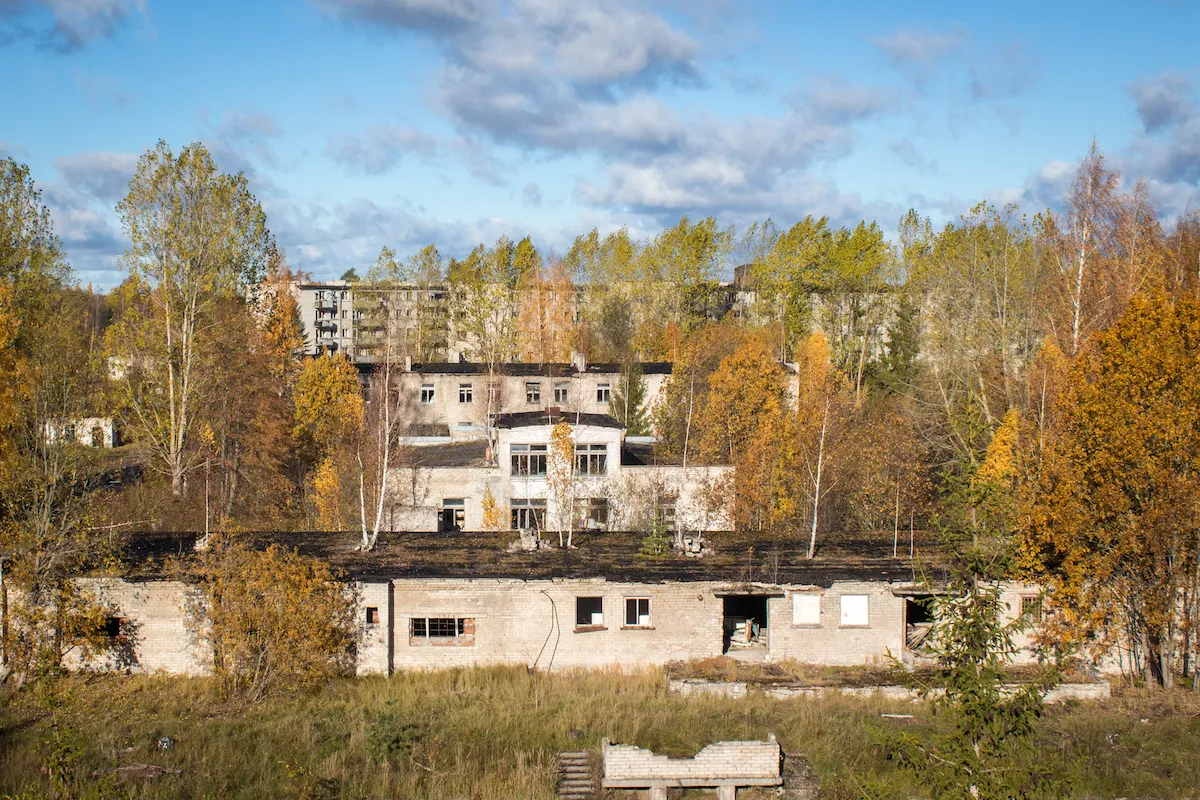
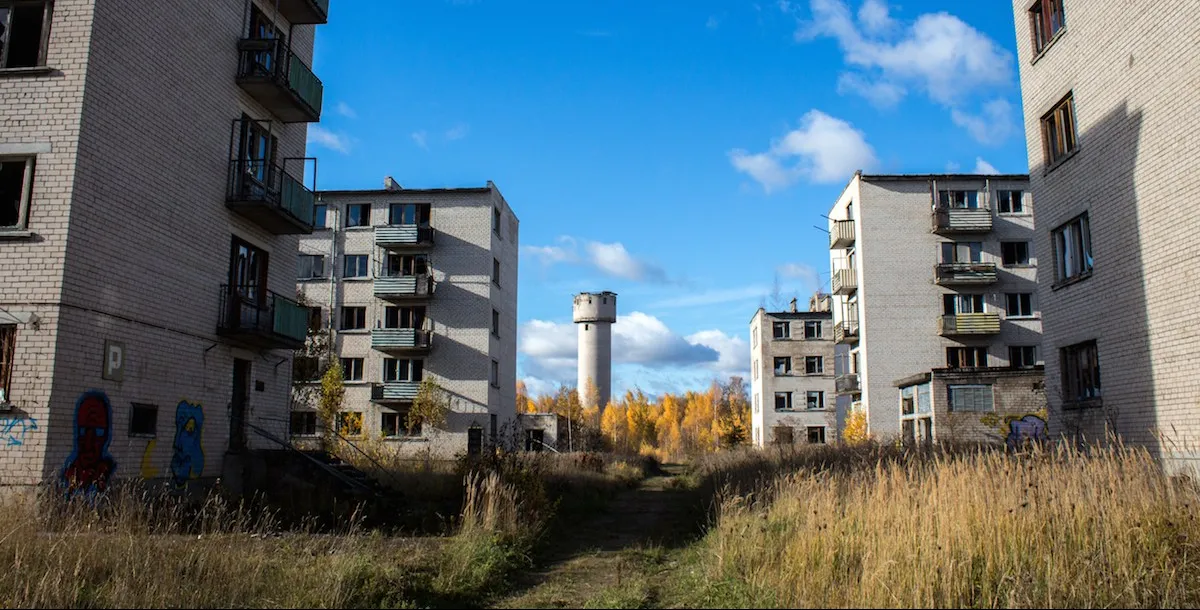
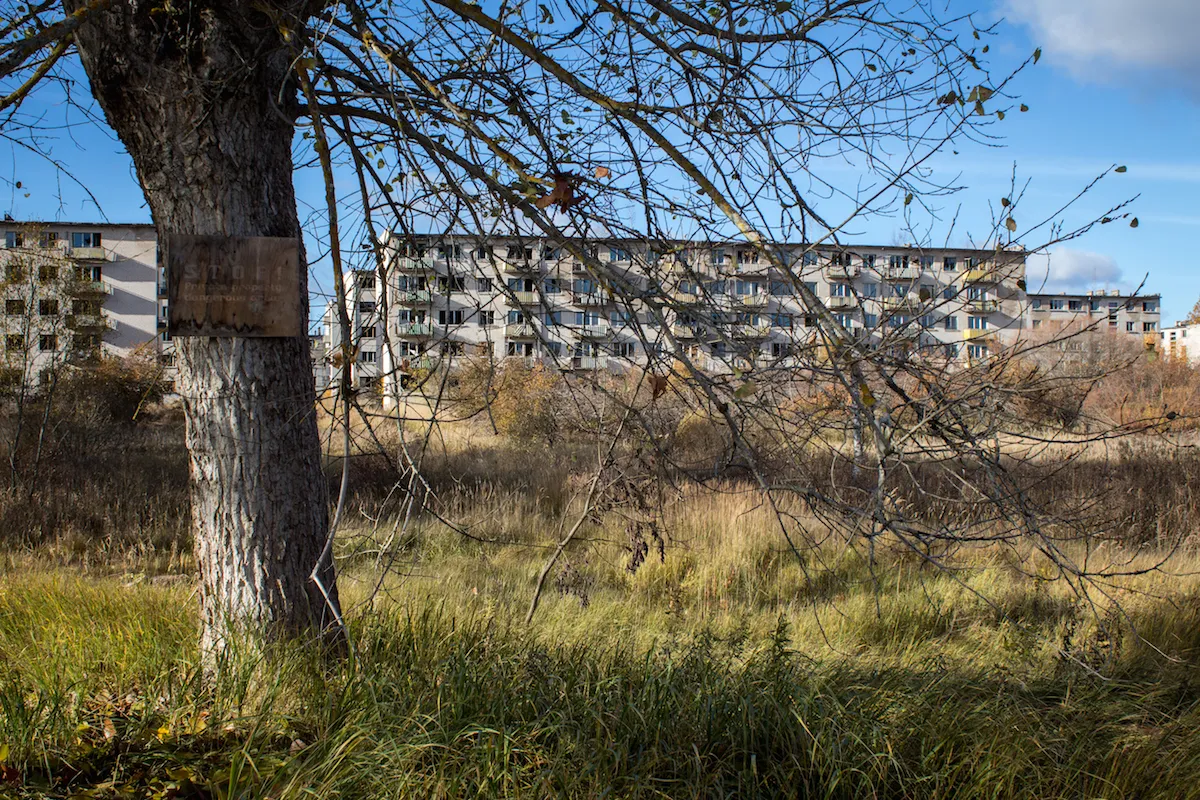
Around the radars grew a town. At its peak it held more than 5,000 people, a figure on which most sources agree; one hobby site, Past Remnants, claims up to 50,000, ten times higher than anyone else, and we do not use it. The town covered about 100 acres, or 40 hectares with 60 buildings. It had ten apartment blocks, three administration offices, a supermarket, a nightclub, a gymnasium, a nursery and a school, two bathhouses, two canteens, a water tower, a hotel and three barracks, as well as warehouses, substations, boiler houses and more than thirty garages, plus a theatre and an officers’ club.
When the town was built is another point on which accounts differ. War on the Rocks says the closed city was built in the 1980s to support the modernised Daryal radar, while Wikipedia says it was built in the 1960s with the first radars. Nothing explains the gap, though the town may simply have grown in stages.
Latvia asks Russia to leave
When Latvia became independent, a Russian radar station was still working on its soil. The argument over what to do with it ran through 1994. At a meeting in Moscow on 7 February 1994, the Latvian delegate Martins Virsis and the Russian delegate Sergei Zotov agreed that Russia would leave, on condition that it could keep using Skrunda for four more years and then take 18 months to dismantle it. On 12 March 1994 the nationalist Latvian Popular Front held a rally, arguing that the site would become a Russian base that undermined Latvian sovereignty.
The agreement itself was signed on 30 April 1994, together with three other accords and a protocol, by the Latvian prime minister Valdis Birkavs and the Russian deputy premier Oleg Soskovets. Russia could run the station for four years, then had 18 months to dismantle it, to a deadline of 29 February 2000. The details were fought over. Russia had proposed five years, and Latvia had indicated willingness to consider three. Latvia rejected a Russian offer of 2 million dollars a year in rent, and an accord later set the rate at 5 million dollars a year. A draft in March 1994 allowed 500 military and 200 civilian personnel, and the ratification stage cited 699.
Not everything was calm. A power line supplying the station was damaged by an explosion on 28 February 1994, which Russia protested. On 4 May 1994 Latvia took control of 42.2 hectares of unfinished buildings, while Russia kept 164.5 hectares with the working radar. Latvia repeatedly said it would never host Russian military bases, and it protested a Russian presidential decree of 5 April 1994 that listed 30 bases, which the Russian ambassador called a technical error.
Blowing up the tower
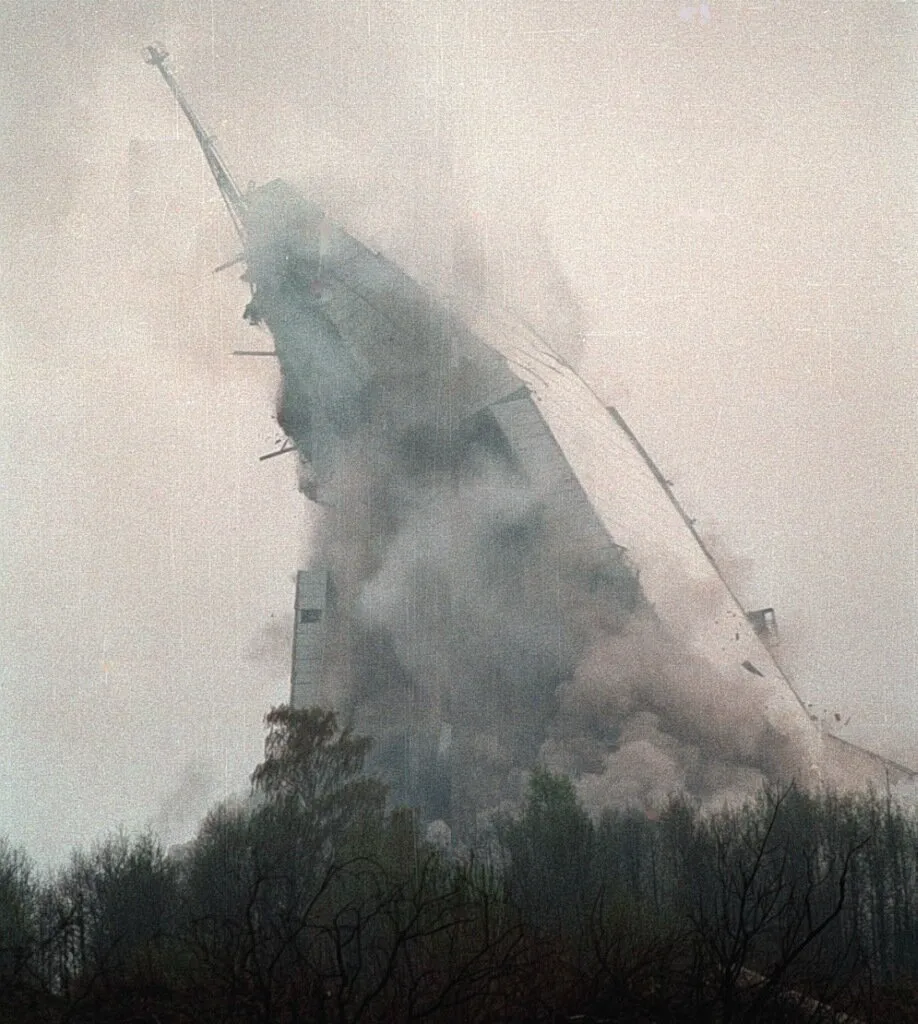
The unfinished Daryal tower was the first thing to go. US demolition experts razed the 19-storey tower on 4 May 1995, using about 1.5 tons of dynamite and a second attempt after a first one failed, and the rubble was cleared by November 1995. The firm was Controlled Demolition, Inc., and the United States paid 7 million dollars, an amount said to have been agreed on 16 August 1994 as assistance for dismantling an unfinished building. Two other sources give a higher cost of 8 million dollars, and describe a symbolic demolition staged by the Latvian government, with an original musical score, which the public criticised. Birkavs said the Second World War in Latvia had finally ended.
The accounts also differ on who paid and who hired. Wikipedia and GlobalSecurity credit the United States with the money, while the Baltic Times and Deep Baltic say the Latvian government hired the American firm.
The last years of the working radar
The working radar kept running under watch. The agreement set up a joint committee with an international organisation in it, and the OSCE carried out periodic and challenge inspections: terms were finalised in February 1995, the first periodic inspection took place in late August 1995, and about two inspections a year followed. The station could not be modernised, change its function, or change its frequencies or communication channels.
Russia argued that the radars mattered. In June 1998 Colonel General Vladimir Yakovlev said that closure would lose some important monitoring parameters in the north-east, but that other radars and the station at Baranovichi in Belarus would make up for it. Russia had asked for a two-year extension until Baranovichi was ready, and Riga refused. Past Remnants says an attempt to extend the deadline to 2002 failed. The work moved to Baranovichi, with Balkhash in Kazakhstan and Gabala in Azerbaijan covering some functions, and Deep Baltic calls the planned replacement in Belarus the Volga station.
The end of the station
The lease ended on 31 August 1998. The Dnepr radar was verified closed on 4 September 1998, and an OSCE inspection team confirmed the closure that month. Russia handed the territory over in October 1999, and the last inhabitant left in 1999. That was well before the 2000 deadline in the 1994 agreement.
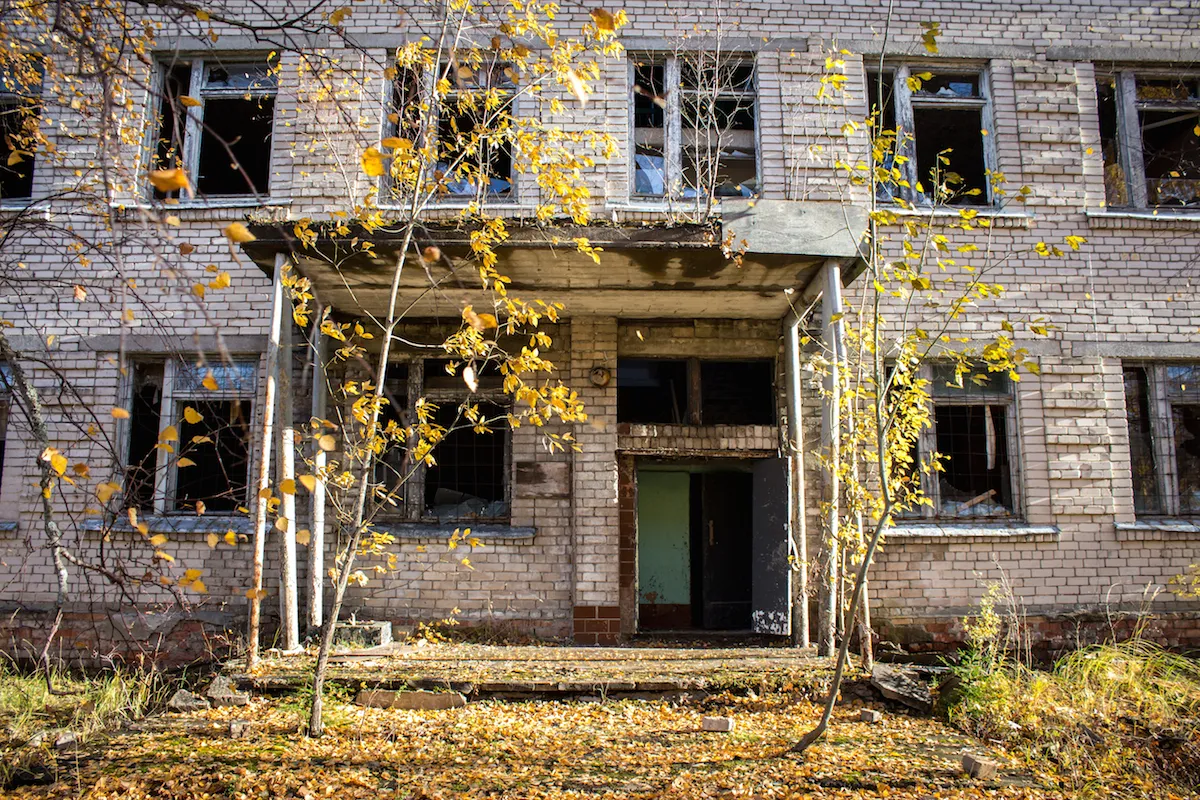
Valuables were removed and the buildings left standing. About 60 buildings remained, and Latvia did not have the money to demolish them. In January 2001 a Latvian company planned to convert the site into a recreation centre, with more than 60 buildings remaining.
What was left
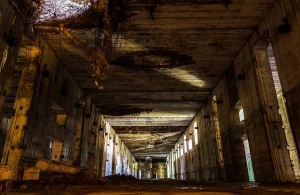
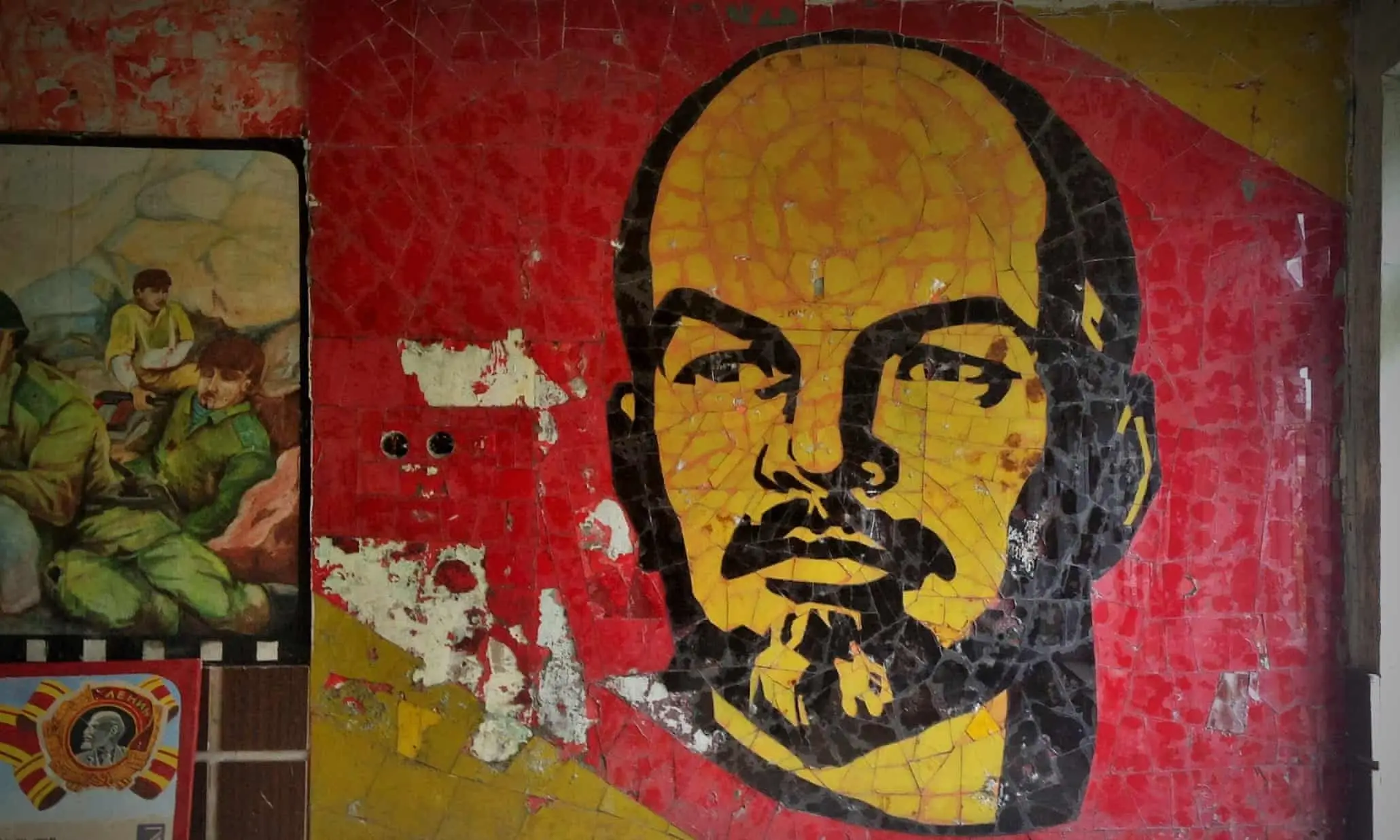
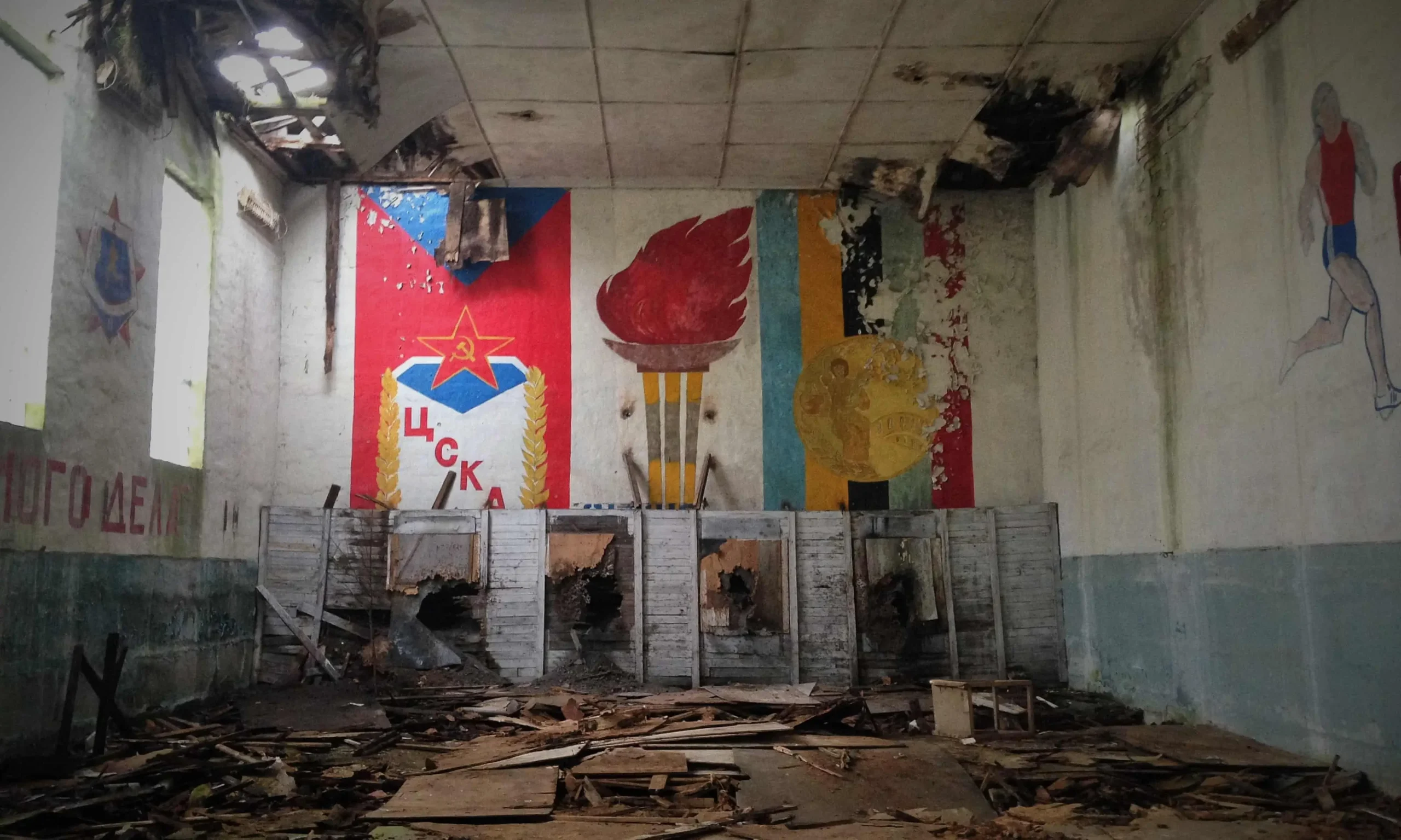
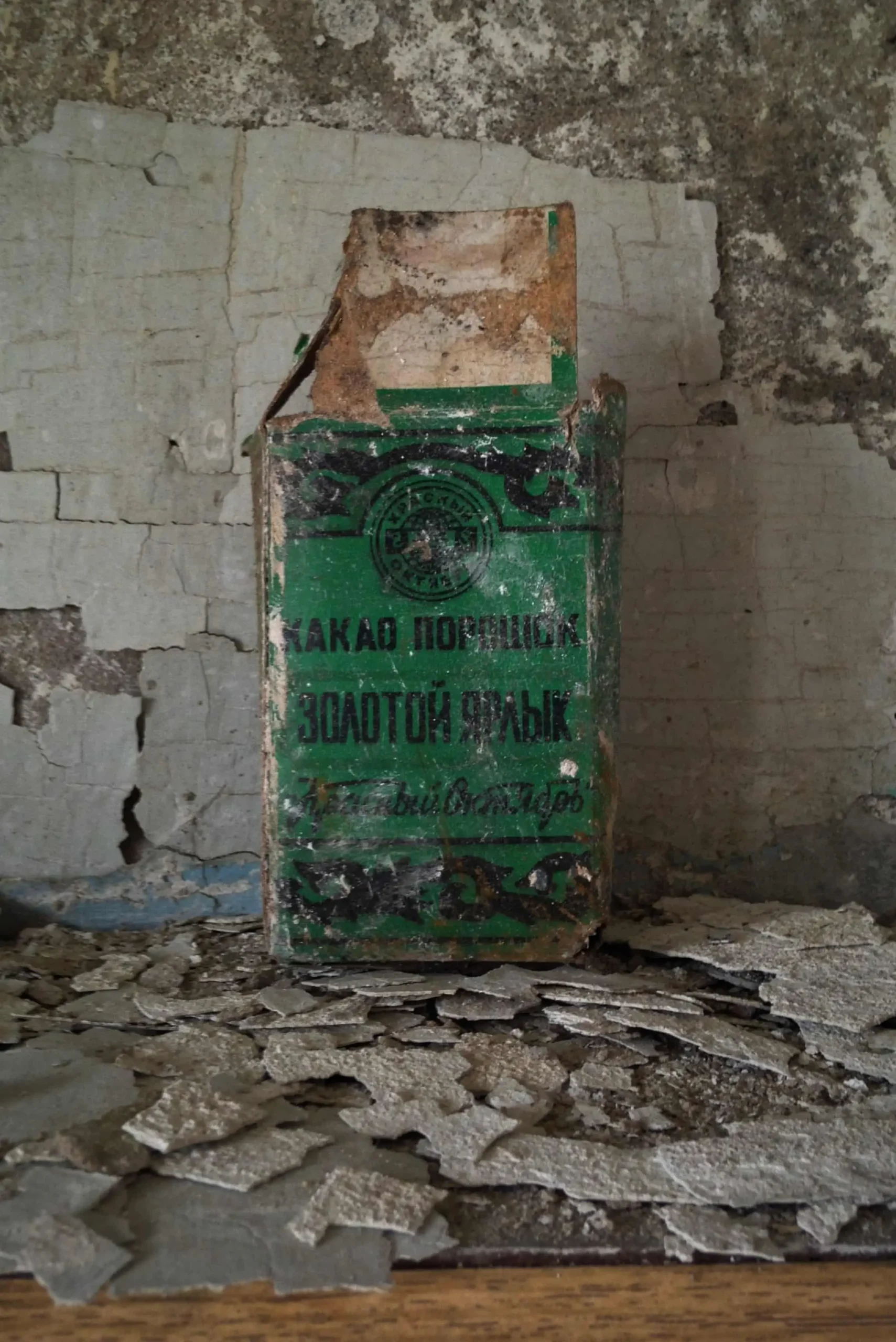
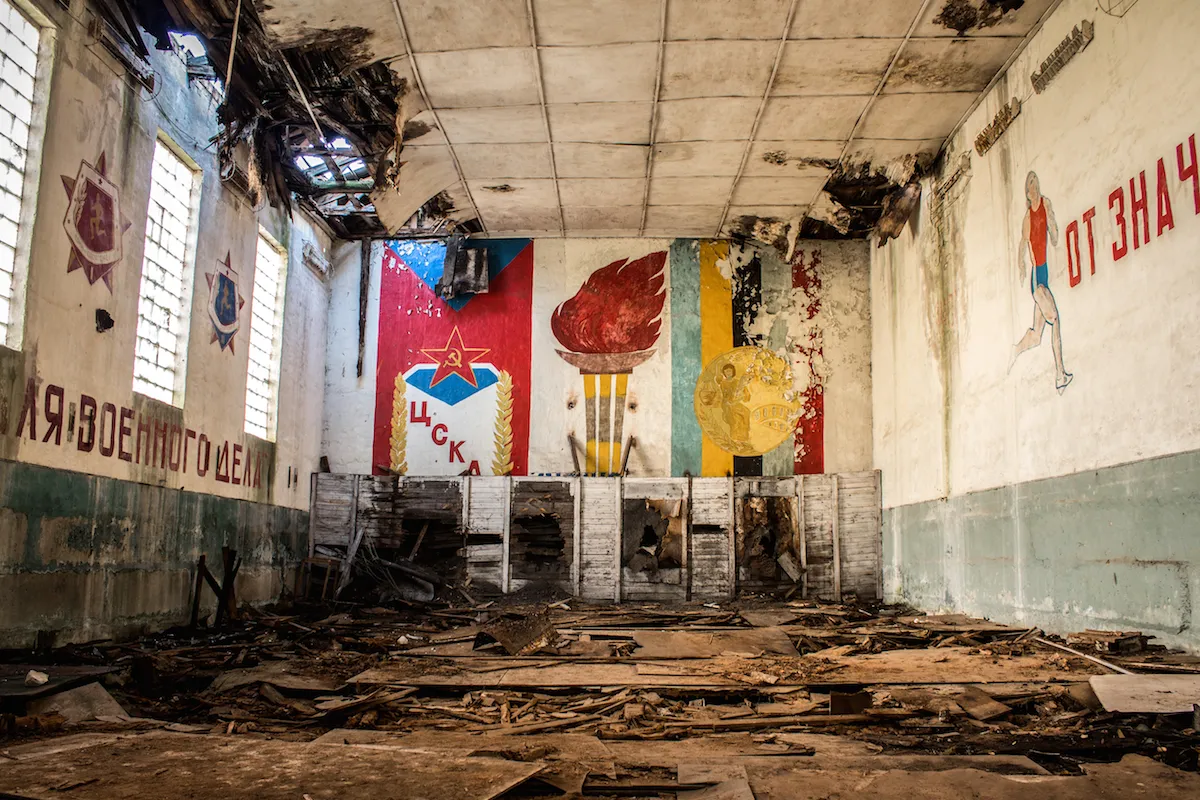
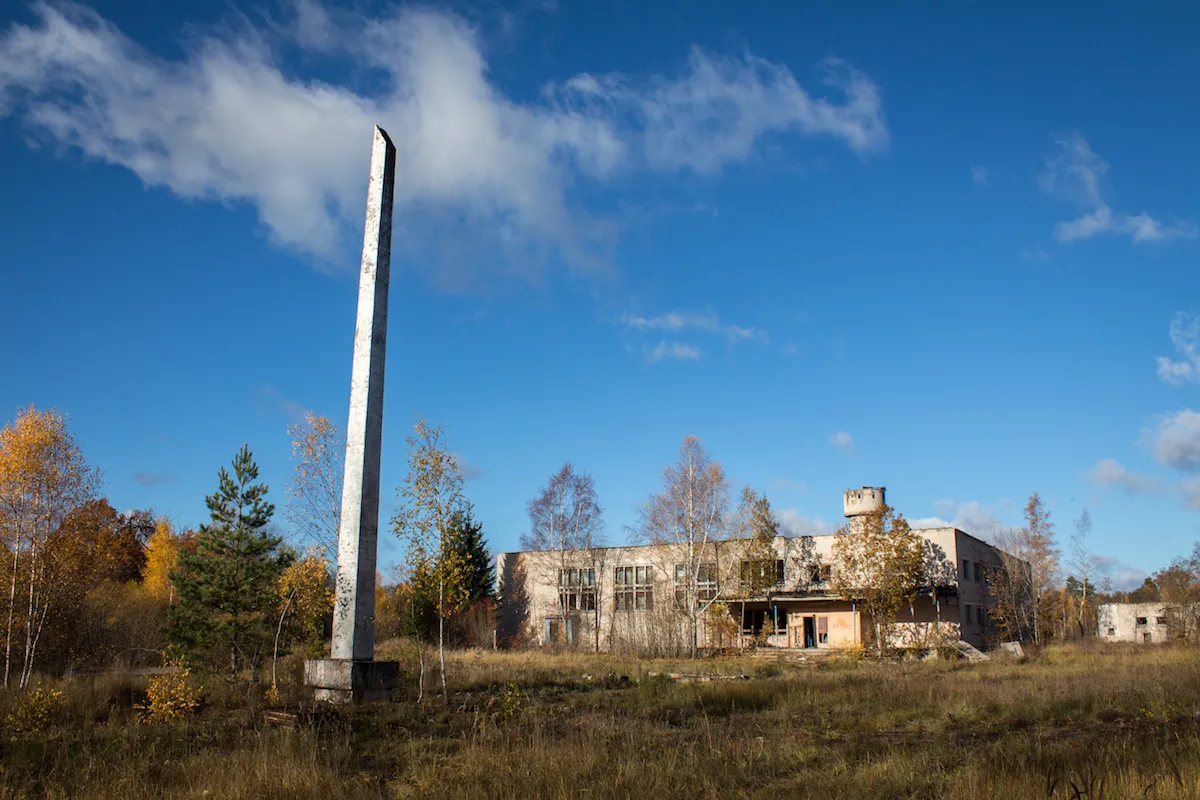
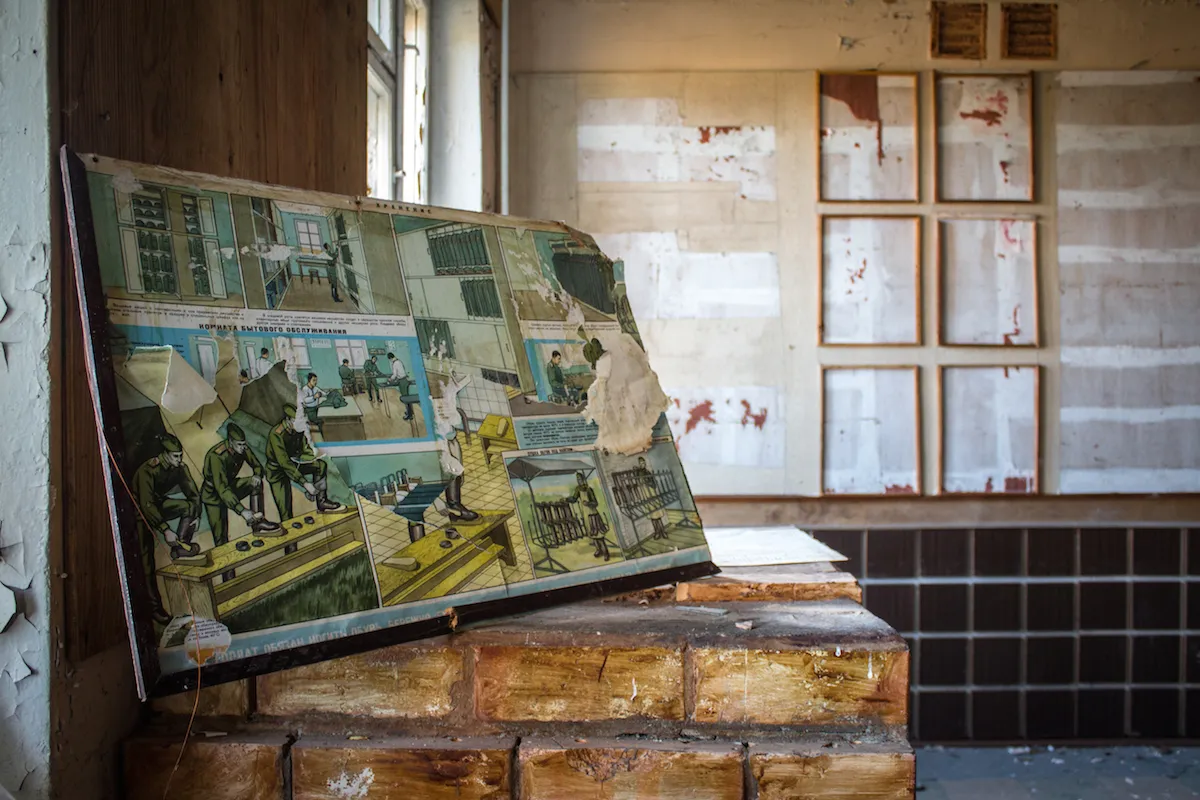
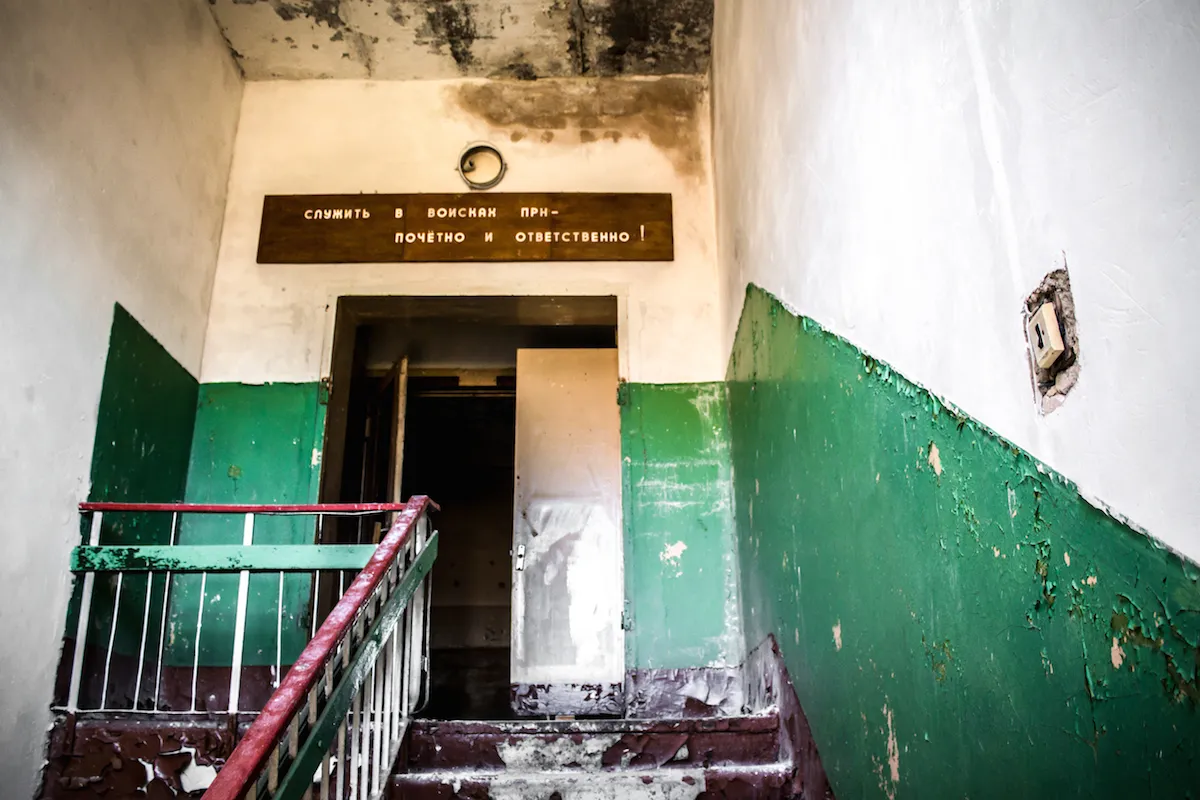
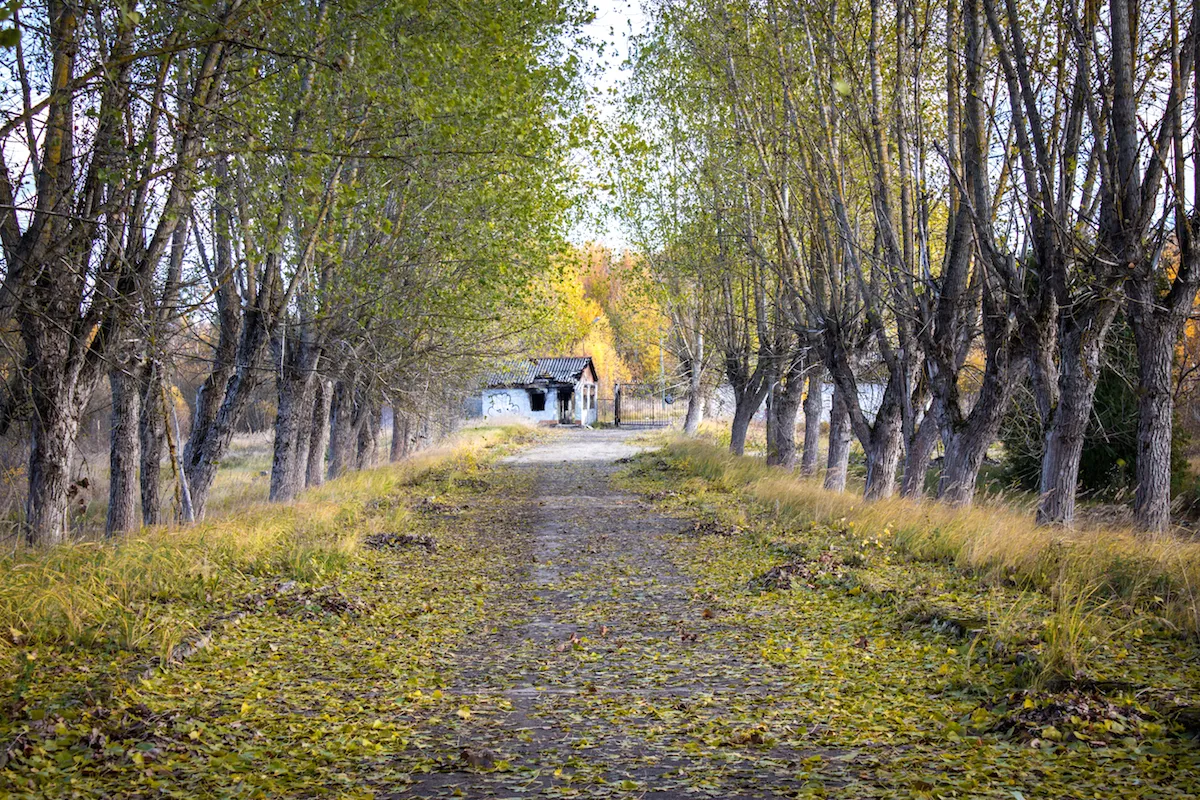
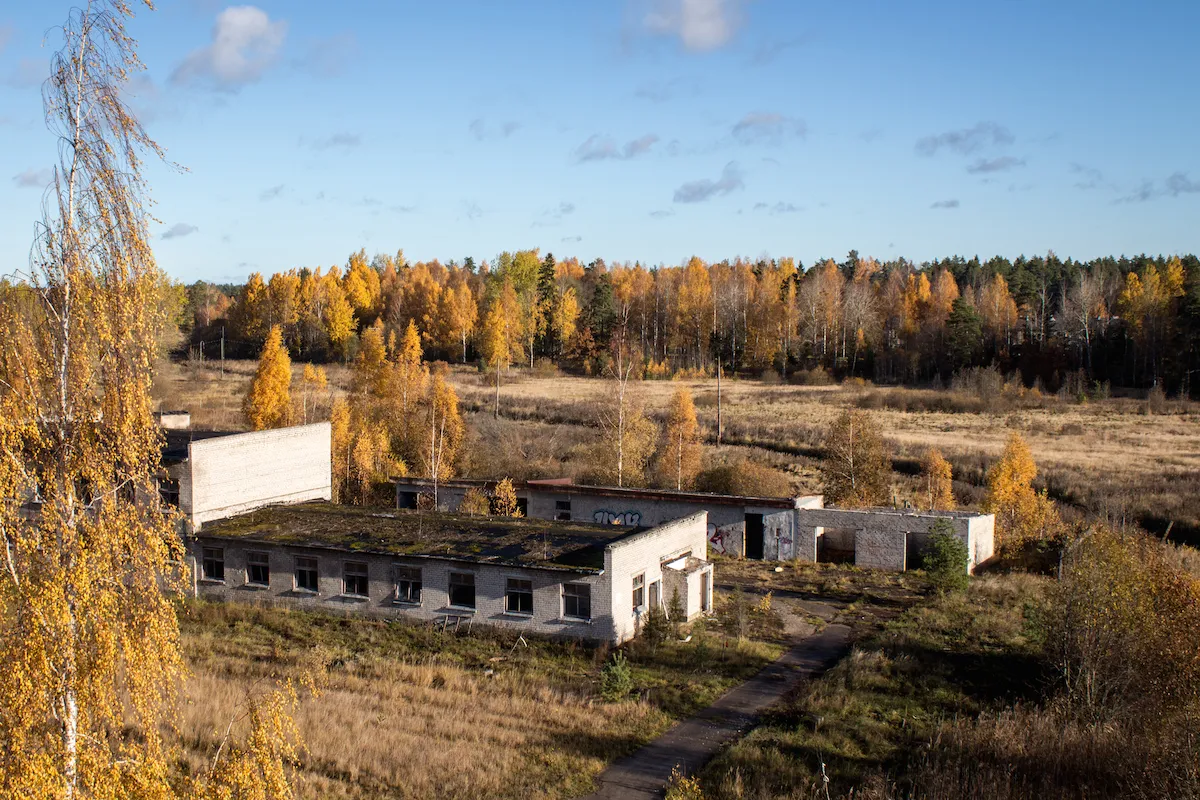
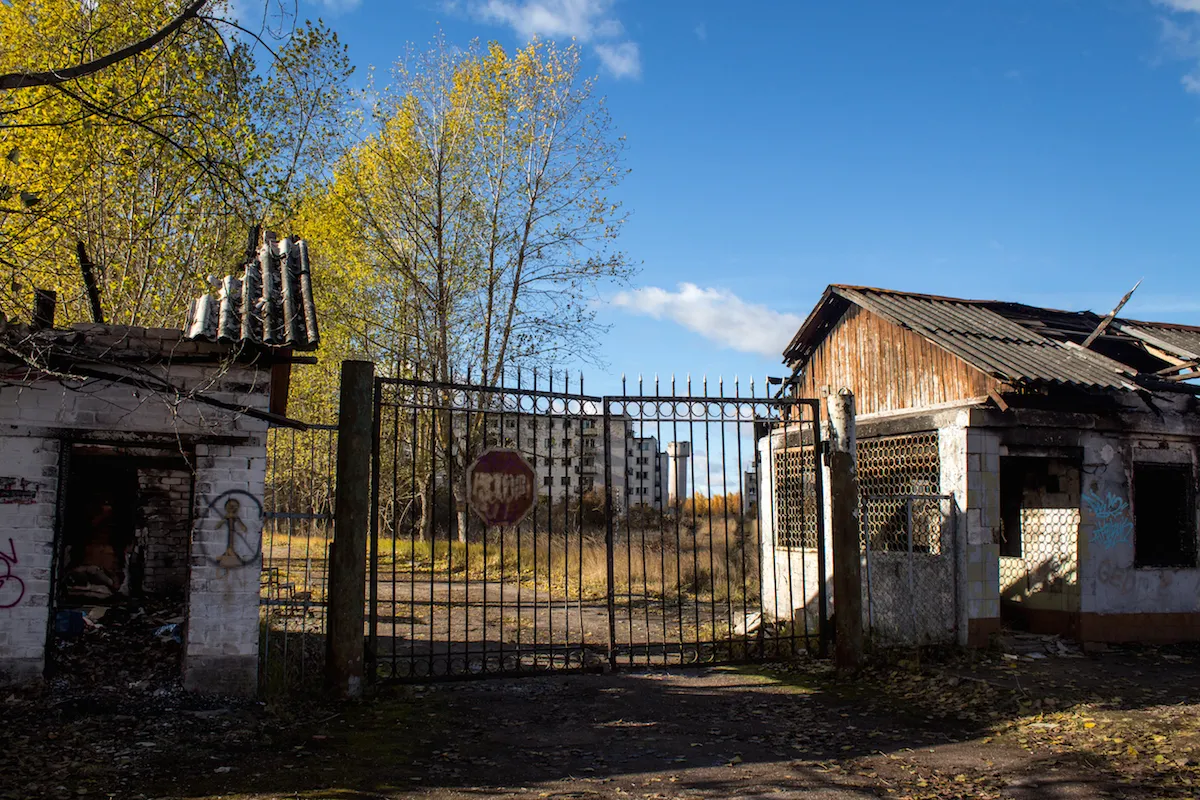
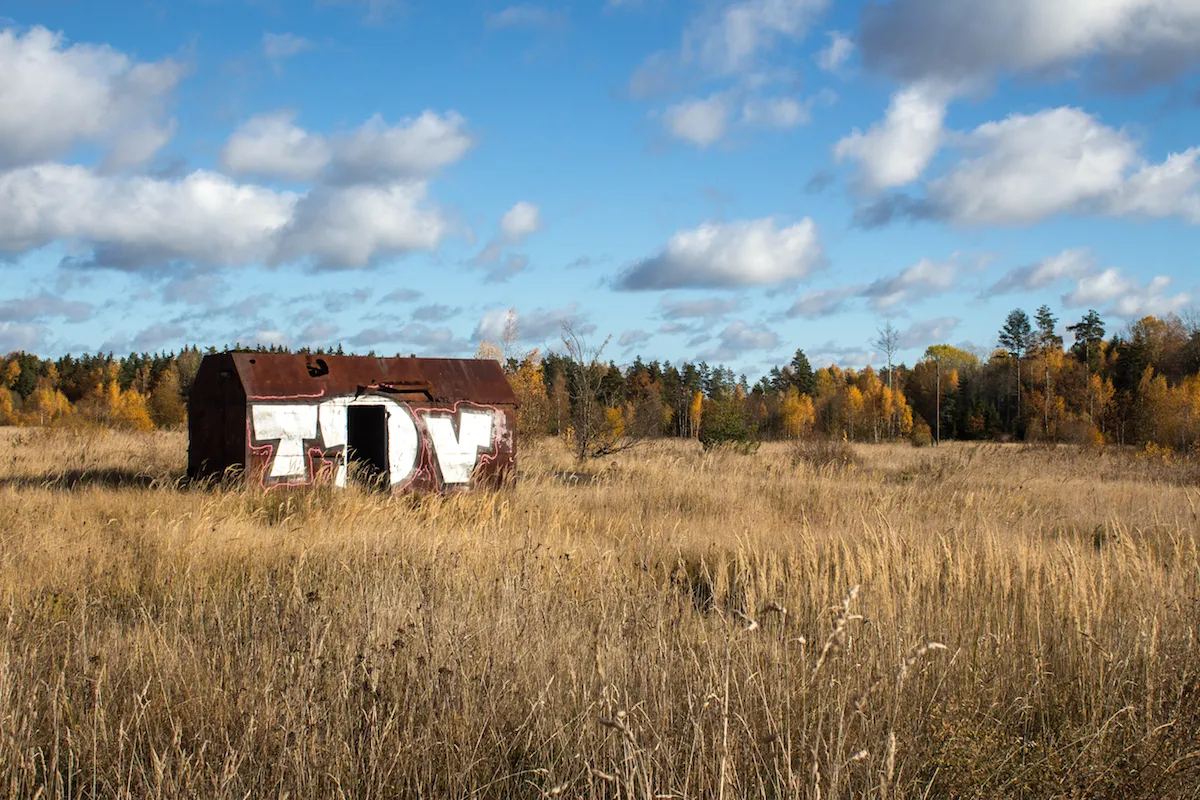
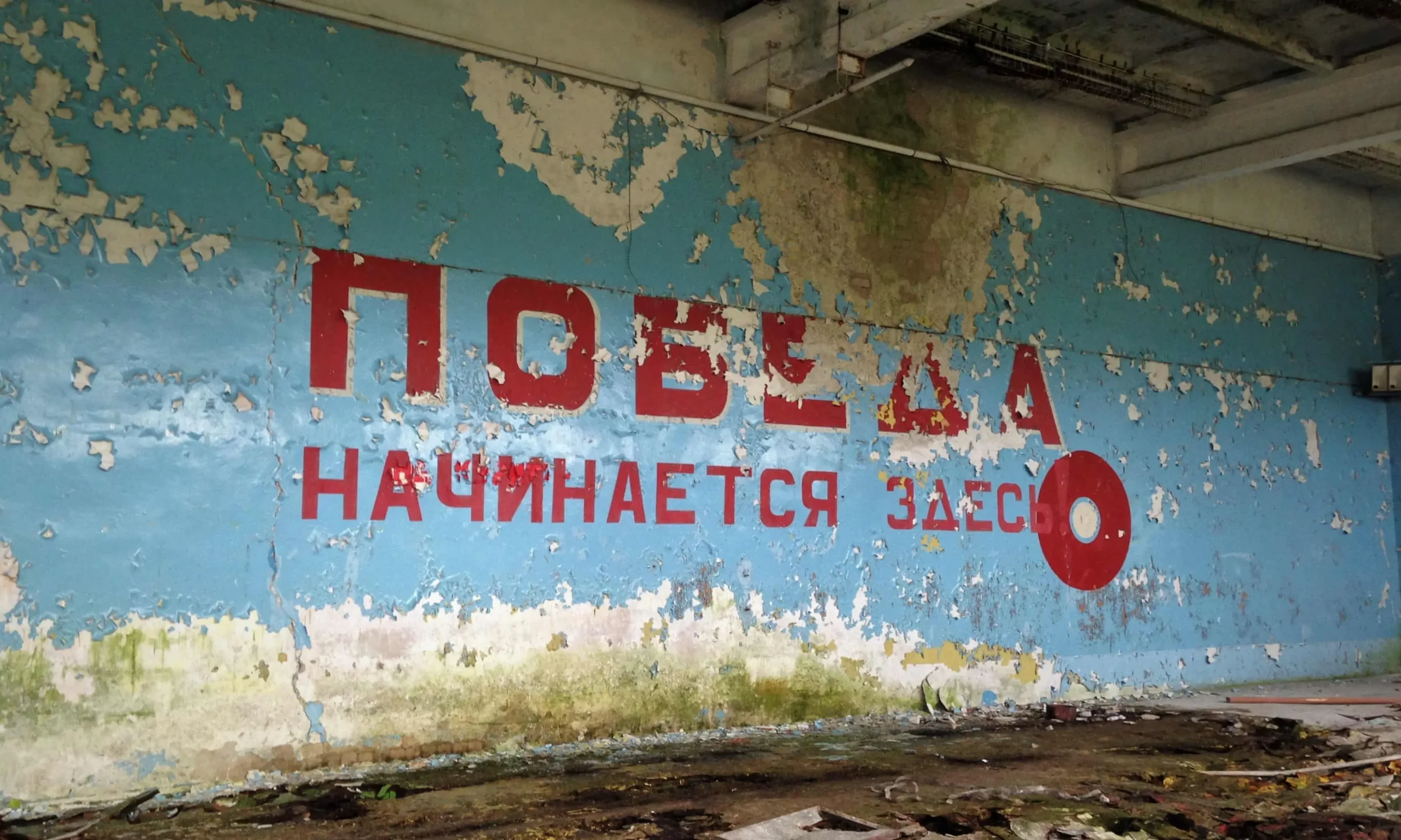
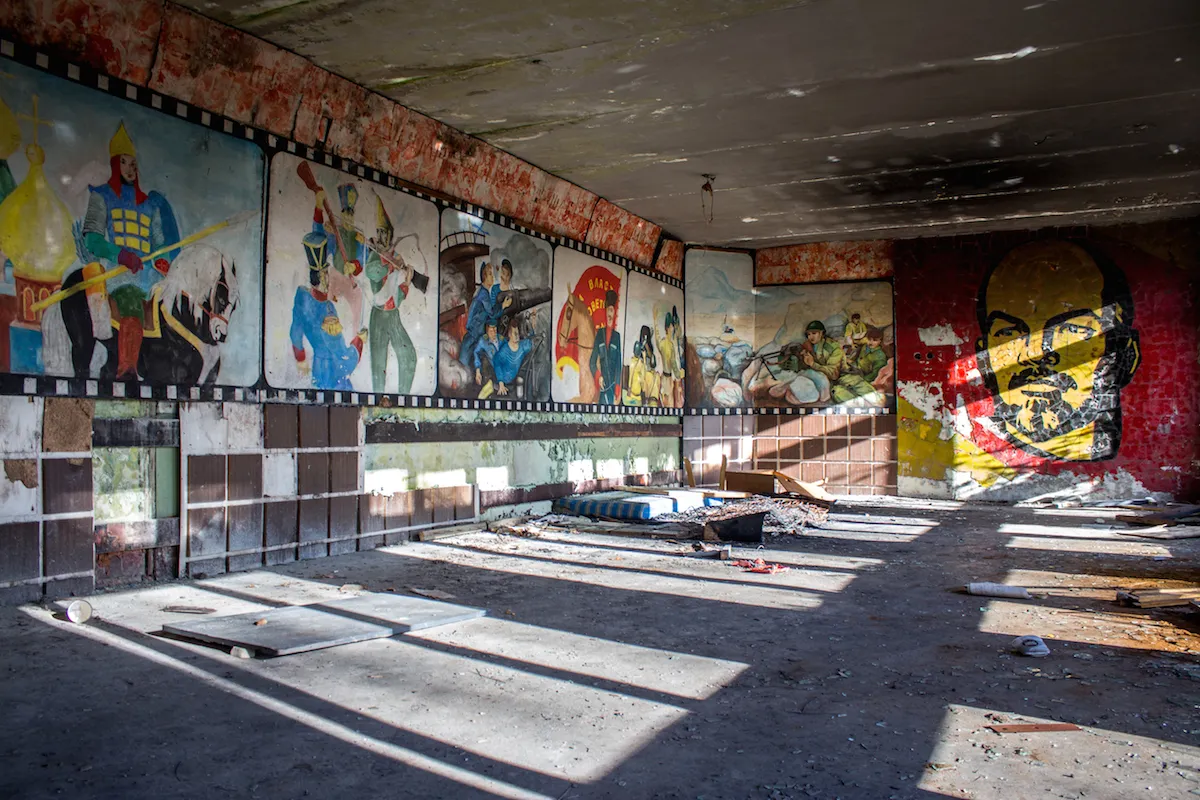
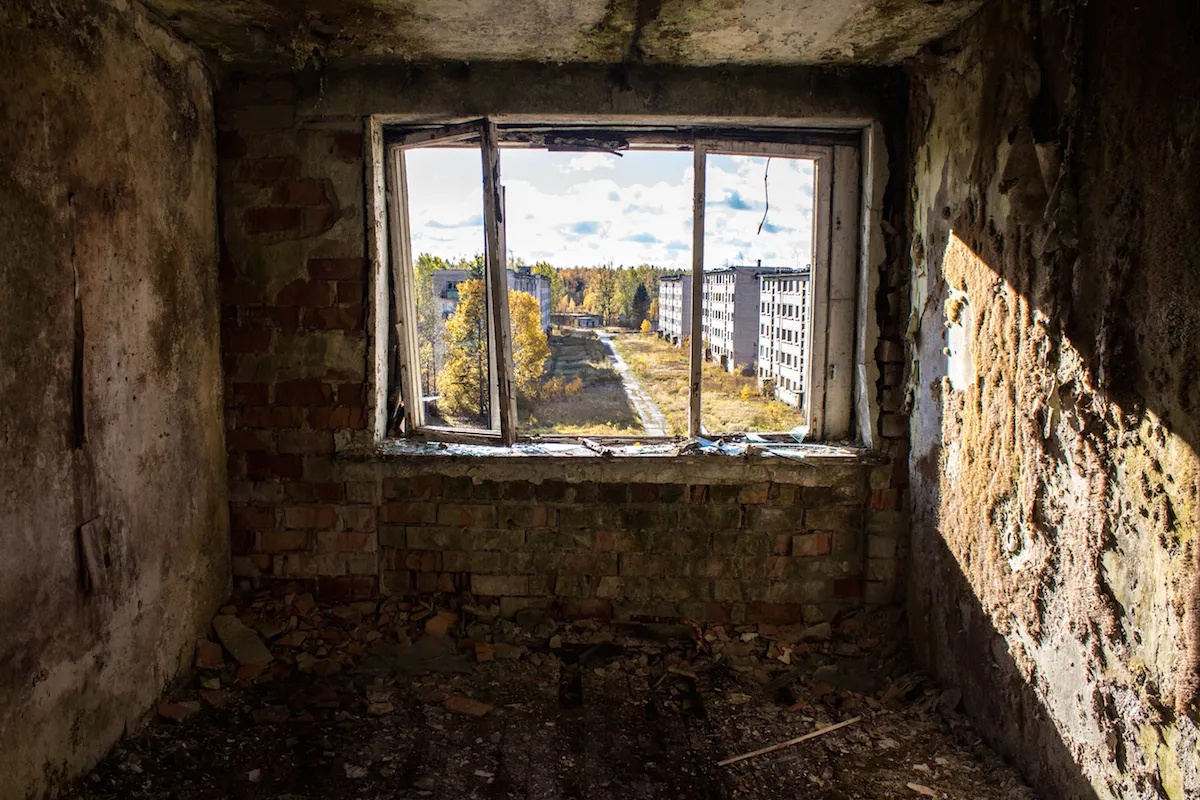
For years the empty town stood unguarded. Local people and Russian interests were reported to have stripped it of valuables, and scavengers took most of the metal. What remained was a shell with the traces of daily life: discarded photographs, furniture, newspapers, medicine bottles, toys and clothing, and a bus stop with a timetable reading Complex. The December 2015 visitors from War on the Rocks found a derelict substation, vehicle garages, a boiler plant and a factory’s skeletal remains, crates of overalls with rusted hammer-and-sickle buttons, apartments with medicine cabinets and posters in the bedrooms, a gymnasium with military exercise posters, and a school with glass mosaics and a memorial obelisk. A visit in October 2015 found a charred guardhouse, a gymnasium with CSKA Moscow insignia that had recently been used as a firing range, a school with a slogan urging service in the armed forces, and a newspaper used as lining paper that was dated 10 December 1988.
The hobby site Past Remnants, whose author visited twice, lists single accommodation, family flats, a hospital, a kindergarten, a command centre, a water tower, two bunkers, officer accommodation, two theatre halls, a gym that had burnt and a cell block, and says that in May 2012 the site had reportedly been sold and security was increasing.
Sold, sold again, and bought back
The Latvian government decided in 2008 to sell. On 5 February 2010 the town was auctioned in Riga as a single lot, with a starting bid of 150,000 lats. The winning bid was 1.55 million lats (1.5 million, about 3.1 million dollars, in another account, and about 2.2 million euros in a third) from a Russian firm, Alekseevskoye-Serviss, described by the Baltic Times as a pig-farming and agricultural firm from Samara. The winner and the runner-up both withdrew, and the money was never paid.
The town was auctioned again in June 2010 and sold for 170,000 lats, or 240,000 euros by another account. The planned development never happened.
In 2015 the Latvian side bought the town back. Skrunda Municipality paid 12,000 euros, and the purchase had unanimous local government support. By June or July 2015, half of the territory went to the Latvian Army for training, and the other half was offered for cheap lease to an investor who would have to create jobs and infrastructure. Earlier ideas had included tourism and manufacturing, and a possible EU funding bid for restructuring military facilities. Demolition of some derelict buildings then began.
A training ground, and a closed one
Today Skrunda-1 is part of Mežaine, a training area used by the 4th Brigade of the Latvian National Guard. Since 21 October 2018 the former town has been closed to visitors and used only by Latvian and NATO armed forces. Before that, visits had been allowed for a fee: an entrance fee of 4 euros for individuals began in February 2016. Atlas Obscura’s listing says the site is permanently closed, and its September 2018 update says it is under military control and civilian access is forbidden.
The October 2015 account describes a visit without permission: three men in raincoats questioned the group at the entrance, and from a rooftop the group saw two uniformed figures patrolling the perimeter. By December 2015 a friend of the author found the place crawling with military.
Visiting
Do not go in. The town has been closed to visitors since October 2018 and is used only by the Latvian and NATO armed forces. The site is a live military training area, and there are no tours or visitor facilities. If the rules change, Skrunda Municipality, which owns the land, is the body to ask.
Conclusion
Skrunda-1 was built to watch the horizon. For more than three decades a closed town in the Latvian forest listened for missiles from the West, while its signals interfered with local radio and television. When the Soviet Union ended, the giant new radar was never completed, and the question of what to do with a working Russian station on Latvian soil took until 1998 to settle.
The sources disagree on many figures, including when the town was built, how tall the Daryal tower was, what the demolition cost, and what the buildings fetched at auction, and we have tried to show the differences and not hide them. The outline is not in doubt. A radar town grew up in the 1960s, an unfinished tower was blown up in 1995, the working radar closed in 1998, and the people were gone by 1999. What is left is a set of empty buildings in a forest that soldiers now use for practice, and a site that the public may no longer enter.
Did you know?
- The radars at Skrunda were strong enough to jam local Latvian radio and television, which is how locals and Western intelligence learned what was there.
- The unfinished Daryal radar was about as tall as a 19 or 20-storey apartment block when work stopped in 1991.
- The 1994 agreement gave Russia four more years to run the station and 18 months to dismantle it, with a deadline of 29 February 2000.
- Latvia rejected a Russian offer of 2 million dollars a year in rent for the station, and an accord later set the rate at 5 million dollars a year.
- The Daryal tower was demolished on 4 May 1995 after a first attempt failed, using about 1.5 tons of dynamite, according to GlobalSecurity.
- The US paid 7 million dollars for the demolition, though two other sources say 8 million.
- A bus stop in the empty town still carries a timetable that reads Complex.
- In 2010 the town was auctioned as a single lot, and the winning bid of 1.55 million lats was never paid.
- Skrunda Municipality bought the whole town for 12,000 euros in 2015.
- Since 21 October 2018 the former town has been closed to visitors and used only by Latvian and NATO forces.