Why a forest in East Prussia
The Wolf’s Lair was born out of the plan to invade the Soviet Union, Operation Barbarossa. In late August 1940, Colonel Rudolf Schmundt, the engineer Fritz Todt and Major Gerhard Engel spent three days, from 27 to 29 August, looking at forests in East Prussia as a possible site for a new headquarters. They chose the Gierłoż forest, a stretch of old mixed woodland east of Rastenburg.
The reasons were practical. East Prussia was already heavily fortified, with fortresses and anti-tank trenches. The forest was remote from the main routes and offered year-round natural cover from the air. The Great Masurian Lakes to the east formed a barrier against ground forces, and the thin road network made movement easy to monitor. The site was also close to the Soviet border, which mattered psychologically for a plan that called for an attack on the Soviet Union. The result was the base from which Hitler would direct the war in the east.
A secret town in the trees
Construction began in 1940, and the main works were largely complete by June 1941. The builders were the contractor Hochtief and the Organisation Todt, the Nazi state’s construction body. Local people were told that a cement factory was being built. The number of workers is uncertain. Guidebooks often say 3,000 to 5,000, but one researcher who has studied the site considers that an understatement, noting that a planning document for the Todt programme assumed 50,000 workers. Another historian, Peter Hoffmann, wrote that about 5,000 people were working on the construction sites around July 1944. Some accounts say that prisoners of war and forced labourers were used, but the same researcher found no source documents that confirm this.
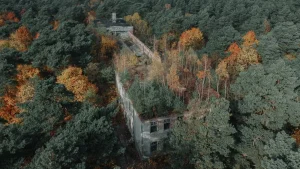
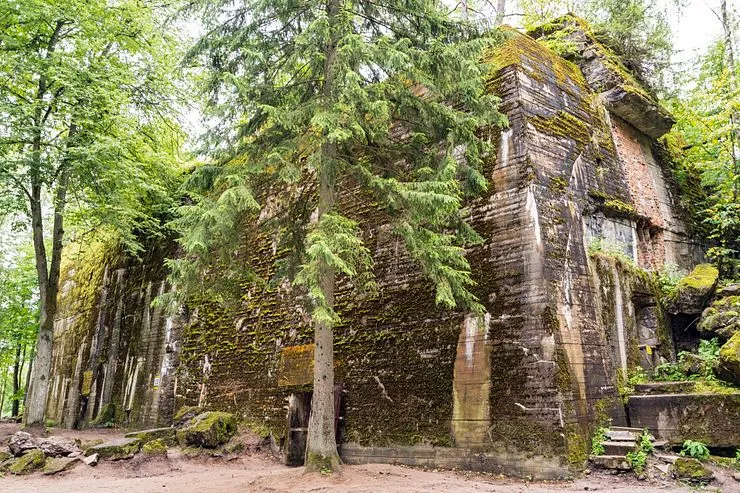
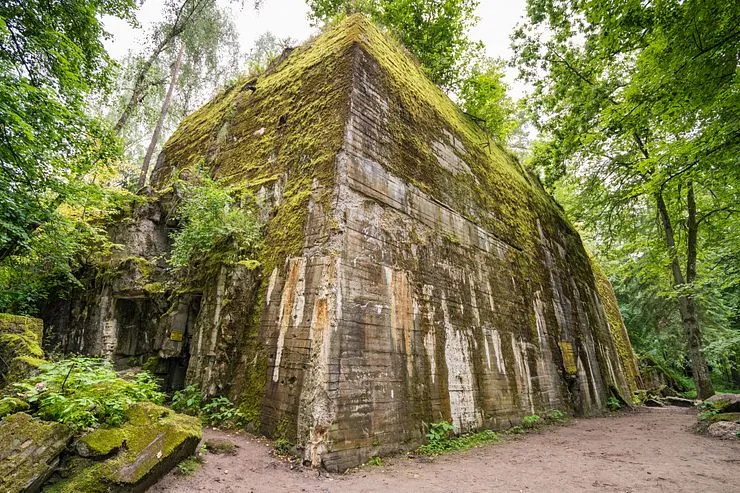
The aim was concealment. Roofs were planted with grass and bushes, and some flat roofs carried artificial trees. Netting was stretched between buildings and the forest so that, from the air, the headquarters looked like unbroken woodland. The bunkers themselves were made of steel-reinforced concrete walls about two metres thick at first. Hitler’s own bunker was enlarged in 1944.
Figures for the size of the complex vary. Polish press reports give it as roughly 250 hectares, while Wikipedia gives the whole complex as 6.5 square kilometres. Counts of the buildings range from just over 80 to about 200, depending on the source and on what is counted. Some of the structures were heavy bunkers, while many others were barracks, huts and service buildings.
Three zones and a minefield
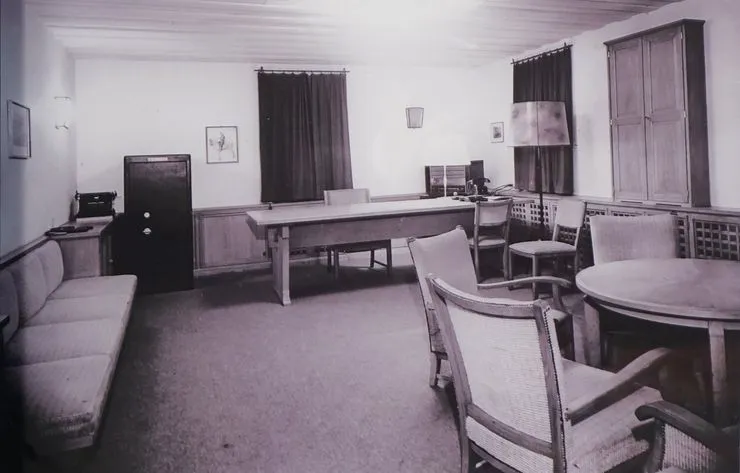
The Wolf’s Lair was not one camp but a set of layers, with each layer guarded more tightly than the one outside it. Zone I (Sperrkreis I) was the innermost, where Hitler and his closest staff lived and worked. It held his bunker and ten or so other camouflaged bunkers, and it was guarded by Hitler’s personal security and escort units. Zone II held quarters for ministers and staff, as well as barracks for the security service. Zone III, the outer ring, was defended by an armoured unit, the Führer escort brigade, with guard posts, watchtowers, flak batteries and checkpoints. Around the whole area ran a minefield of about 50,000 mines.
At the centre was Hitler’s own bunker, the largest building in the complex. In its final form it had walls about five metres thick and a roof about eight metres thick, with a flak gun on the top. It was built in stages. It started with walls two to three metres thick, and a second layer of the same thickness was added later, with a layer of gravel and rubble between the two.
Life in the Lair
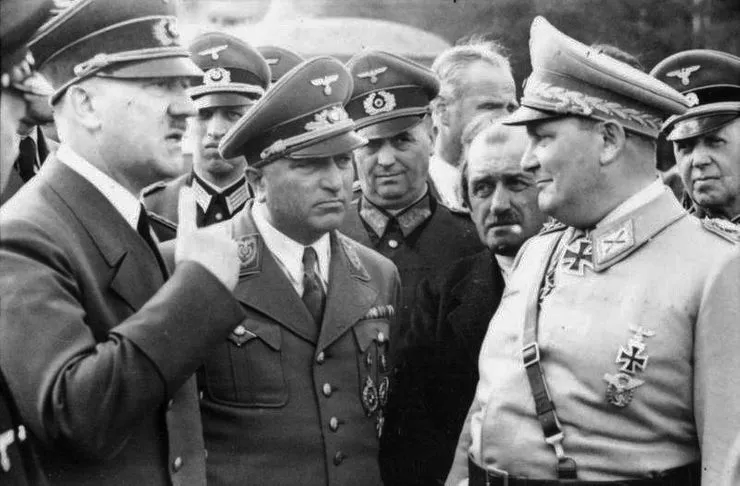
Hitler arrived on 24 June 1941, two days after the attack on the Soviet Union began. The complex became the headquarters of the armed forces high command, and a long list of Nazi leaders lived or worked there at different times, including Göring, Goebbels, Bormann, Keitel, Jodl, Speer and Ribbentrop. At its peak, more than 2,000 people lived and worked in the compound, including staff whose job was to taste Hitler’s food. Foreign leaders also came to the site, among them Mussolini, the Hungarian leader Horthy, the Finnish commander Mannerheim, and the Croatian leader Pavelić.
Hitler did not stay there continuously. Between 28 July 1941 and 20 March 1942, according to Speer, he left only four times, for a total of 57 days. He returned to the Lair from the Berghof in July 1944, and by the time he left it for the last time on 20 November 1944, he had spent more than 800 days there in total.
Conditions in the bunkers were uncomfortable, and in the hot summer of 1944 Hitler complained about the heat in them. That complaint would matter a great deal on 20 July.
20 July 1944
By the summer of 1944, a group of army officers and civilians had decided that the war was lost and that Hitler had to be removed in order to negotiate an end to it. The man who was to carry out the attack was Colonel Claus von Stauffenberg, a staff officer who had access to Hitler’s briefings. He flew to the Wolf’s Lair with a bomb in his briefcase.
The daily military conference was held that day in a lighter, above-ground briefing hut in Zone I (sources describe it as wooden or brick), instead of the concrete bunker, because Hitler had complained about the heat. The meeting also began earlier than planned. Stauffenberg put his briefcase under the large oak map table, close to Hitler, and then left the room on the pretext of a telephone call. At 12:42 p.m., the bomb went off.
Hitler and around twenty officers were in the room. An officer, believed to be Colonel Heinz Brandt, had moved the briefcase to the far side of a thick table leg, and the heavy table absorbed part of the blast. Four people died as a result of the explosion. Brandt was killed, as was a stenographer, and General Rudolf Schmundt later died of his wounds. Hitler’s trousers were torn and singed, he had a perforated eardrum and conjunctivitis in one eye, and he was otherwise unhurt. Some accounts of the day give three dead, because one man died later.
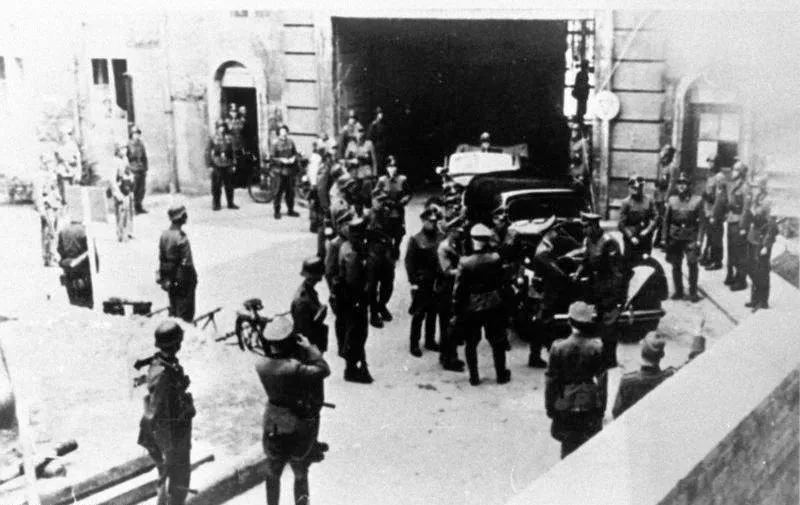
Stauffenberg, who saw the explosion from outside, believed Hitler to be dead. He and his adjutant Werner von Haeften left the site, and Haeften threw an unused second bomb from the car. The two men flew to Berlin, where the conspirators’ plan began to unravel as it became clear that Hitler was alive. Stauffenberg and several others were shot by firing squad that night outside the Bendlerblock.
The reprisals
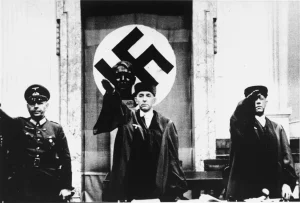
The consequences were far wider than the conspiracy. Roland Freisler’s People’s Court tried the accused, and most were executed, many at Plötzensee prison in Berlin. Wikipedia gives a figure of more than 7,000 arrested and 4,980 executed, with the note that not all of those executed were connected to the plot. About 200 are counted as actual conspirators. In the weeks after the attack, Hitler distributed a “20 July 1944 Wound Badge” to survivors of the blast. Afterwards, military conferences were reportedly attended by armed SS guards. By then the Red Army was approaching East Prussia.
Leaving and destroying
The Soviet armies reached the borders of East Prussia in October 1944. Hitler left the Wolf’s Lair for the last time on 20 November 1944, when Soviet troops were about 15 kilometres away at Angerburg. The order to destroy the complex was given two days later.
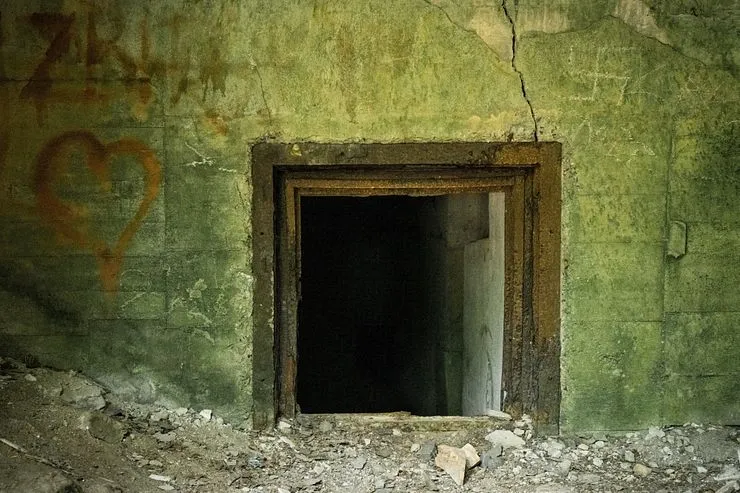
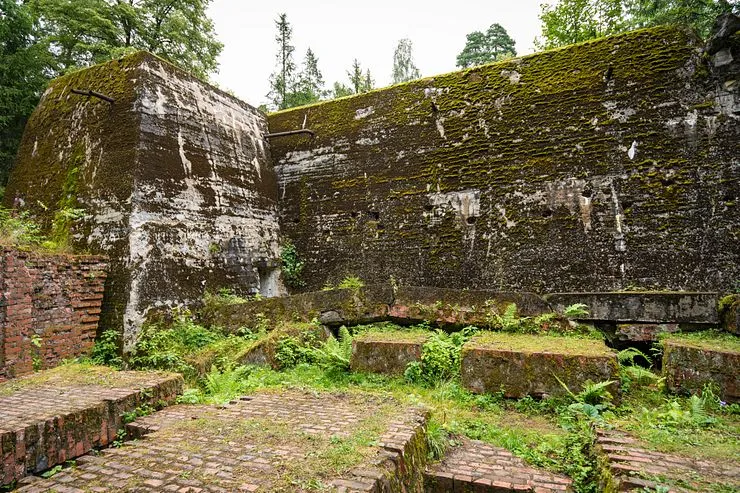
The demolition took place on the night of 24 to 25 January 1945. The charges were large: one bunker is said to have needed some 8,000 kilograms of TNT. They cracked the western wall of Hitler’s bunker completely through and blew apart most of the other walls and the roof. Bormann’s bunker lost most of its walls and roof, and the flak tower beside Hitler’s bunker was completely destroyed. But the bunkers were so thick that most were only partly destroyed, and the Red Army captured the site on 27 January 1945, without a shot being fired.
Decay, mines and a memorial
For decades afterwards, the Wolf’s Lair was left to rot. The minefields remained, and clearing them was dangerous work. Polish military engineers died during the clearance in the 1950s, and a memorial to them stands near the ruins of the briefing hut. By the time the work was complete, tens of thousands of mines and other pieces of ordnance had been removed. The communist government did not promote the site, and the forest gradually took over the ruins.
After the early 1990s, tourism began to develop, and the site is today run on behalf of the State Treasury by the Srokowo Forest District. A hotel and restaurant occupy a rebuilt former garage building. A renovation announced in 2023 included a larger hotel and conference space, a new exhibition titled “Czas terroru 1939 to 1945”, a roof terrace and a viewing platform over the bunker ruins. Reports say that the hotel and restaurant reopened at the end of 2024, although one recent visitor guide said they were still closed, so check before you go. In 2023, Polish Radio also reported that work to recreate the interior of the wooden barrack where the bomb went off had been completed.
The site has also drawn criticism. Historians and commentators have raised concerns about developing a Nazi headquarters as a visitor attraction, a hotel and conference venue, particularly at a time when far-right groups are growing in Europe. The forest district reports around 300,000 visitors a year, although that figure comes from the operator and has not been independently checked.
What survives
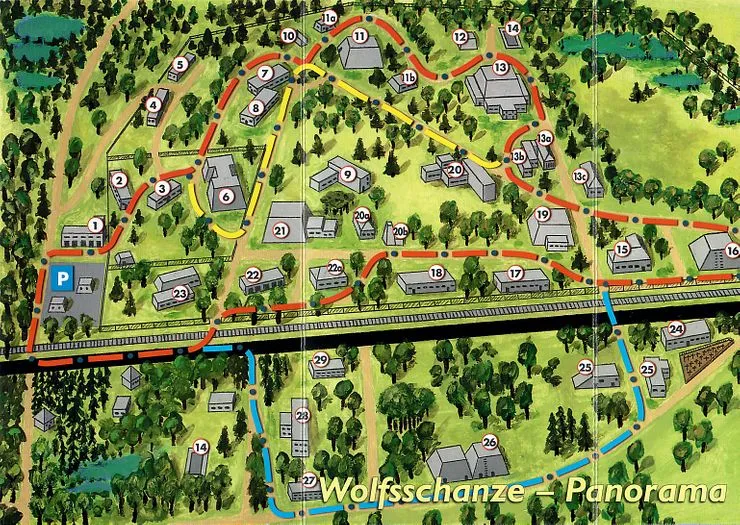
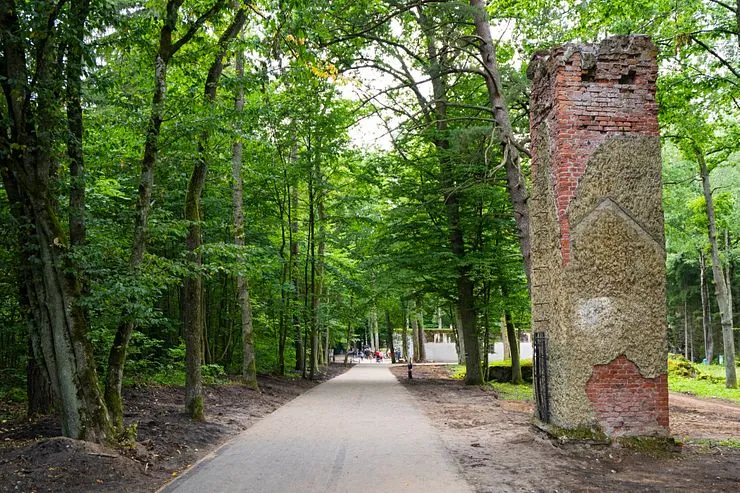
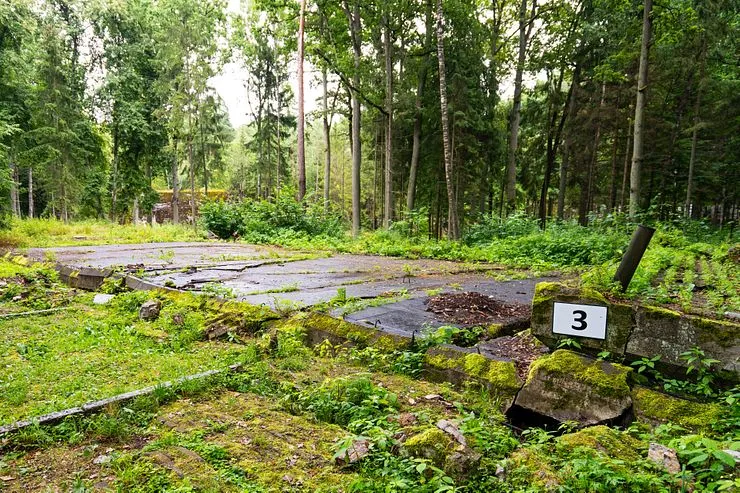
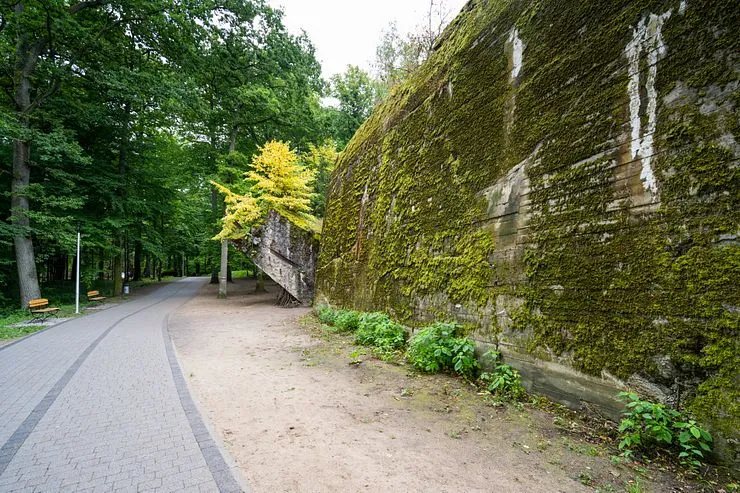
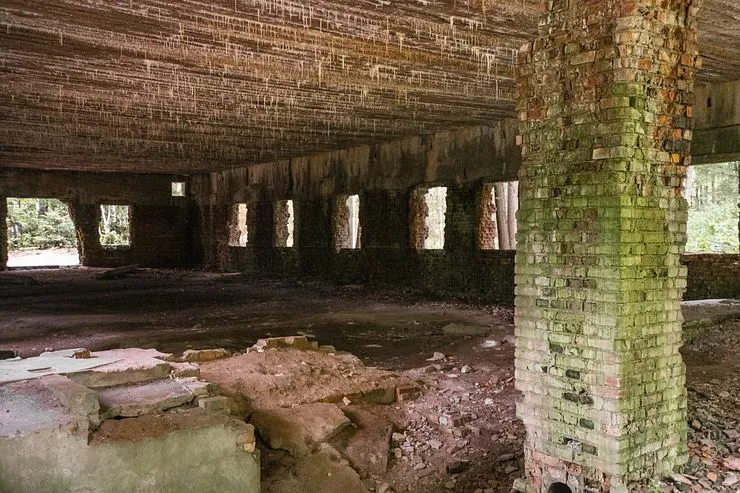
Most of the structures are ruins. Hitler’s bunker, object 13, still stands in broken form, with its western face split by the explosion of 1945. Göring’s bunker, object 16, is one of the more intact, with accessible corridors and a roof that cracked but did not collapse. The briefing hut, object 3, is almost gone, with only the foundations, the collapsed roof and fragments of walls remaining, although memorials to Stauffenberg and the other conspirators stand there. Parts of the casino walls and the old tea house can still be made out. Many of the bunkers are closed because they are structurally unsafe, and the forest is slowly covering the rest.
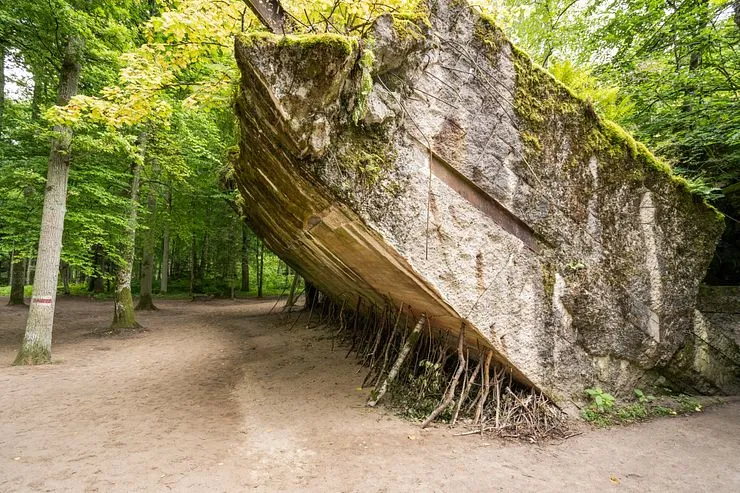
Some features are a product of tourism rather than history. The large car park inside the entrance was built after the war, and the wooden sticks that seem to prop up the bunker walls do not really support them. One of the bunkers now holds a shooting range for visitors.
Visiting
The Wolf’s Lair is open to the public. About 20 km to the north-east, the army’s own headquarters at Mamerki was not blown up in 1945, and its bunkers and a small museum can be visited on the same trip. The Wolf’s Lair itself lies about 8 kilometres east of Kętrzyn, and about four hours by road from Warsaw, so day trips run from Warsaw and Gdańsk. A visitor guide gives opening hours of 8 a.m. to 8 p.m. daily, but check the official site for current hours and ticket prices before travelling. Information boards stand at the numbered buildings, and audio guides and local guides are available. Wear sturdy shoes and bring a torch if you plan to go into the larger bunkers, and stay out of any structure that is closed or fenced off. Some roofs and walls are not safe.
Conclusion
The Wolf’s Lair was designed to be invisible, a headquarters that could not be found from the air and could not be reached on the ground. It failed on both counts: the war moved to its door, and a man with a briefcase walked into its heart. What survives is not a monument to the regime but a collection of broken concrete in a quiet forest, in a Poland that was the victim of the war that was planned there.
That is what makes it a difficult place. It tells a story of how power was organised and protected, of the people who tried to end it, and of the millions of lives that the orders issued here affected. It deserves to be visited with that in mind, as a place to understand rather than admire.
Did you know?
- Local people were told that the construction was for a new cement factory.
- Hitler's bunker had walls about 5 metres thick and a roof about 8 metres thick.
- A minefield of some 50,000 mines surrounded the complex.
- On 20 July 1944 the briefing was held in a lighter hut rather than a bunker, because Hitler had complained about the heat.
- Polish military engineers died clearing the mines in the 1950s, and a memorial to them stands near the briefing hut.
- The Red Army captured the ruins on 27 January 1945 without firing a shot.