


A plot that took six years
The attempt of 20 July 1944 was the last of many. Plotting against Hitler began in 1938 among officers of the army and of the Abwehr, the military intelligence service. Early leaders included Hans Oster, Ludwig Beck and Erwin von Witzleben. They had civilian contacts as well, among them Carl Goerdeler, a former mayor of Leipzig, and Helmuth James von Moltke, whose Kreisau Circle discussed what Germany should become when the regime fell.
Beck is the clearest example of how early the doubts began. As Chief of the General Staff he opposed Hitler’s plan to invade Czechoslovakia, arguing that Germany was not ready for a major war and would probably lose it. He urged senior officers to resign together to force Hitler to drop the plan. When that failed, he resigned alone on 18 August 1938, and at Hitler’s request he kept the resignation secret, which removed its value as a protest. The plans of 1938 and 1939 were abandoned, largely because Franz Halder and Walther von Brauchitsch hesitated.
The Kreisau Circle was not a group of assassins. It met at the Moltke family estate at Kreisau in Silesia, today Krzyzowa in Poland, and in 1943 Moltke drafted a constitution for postwar Germany, dated 9 August 1943. It pictured a federal state with a weak centre, self-governing regions and communities, restored basic freedoms and guaranteed religious freedom. Moltke himself opposed killing Hitler and preferred to see him put on trial. He was arrested on 19 January 1944 and executed on 23 January 1945. He took no part in the 20 July plot, but his close association with Peter Yorck von Wartenburg, a co-founder of the circle and Stauffenberg’s cousin, proved fatal to him. Yorck was arrested after the plot and executed on 8 August 1944, and the arrests ended the circle’s activities.
Who the plotters were
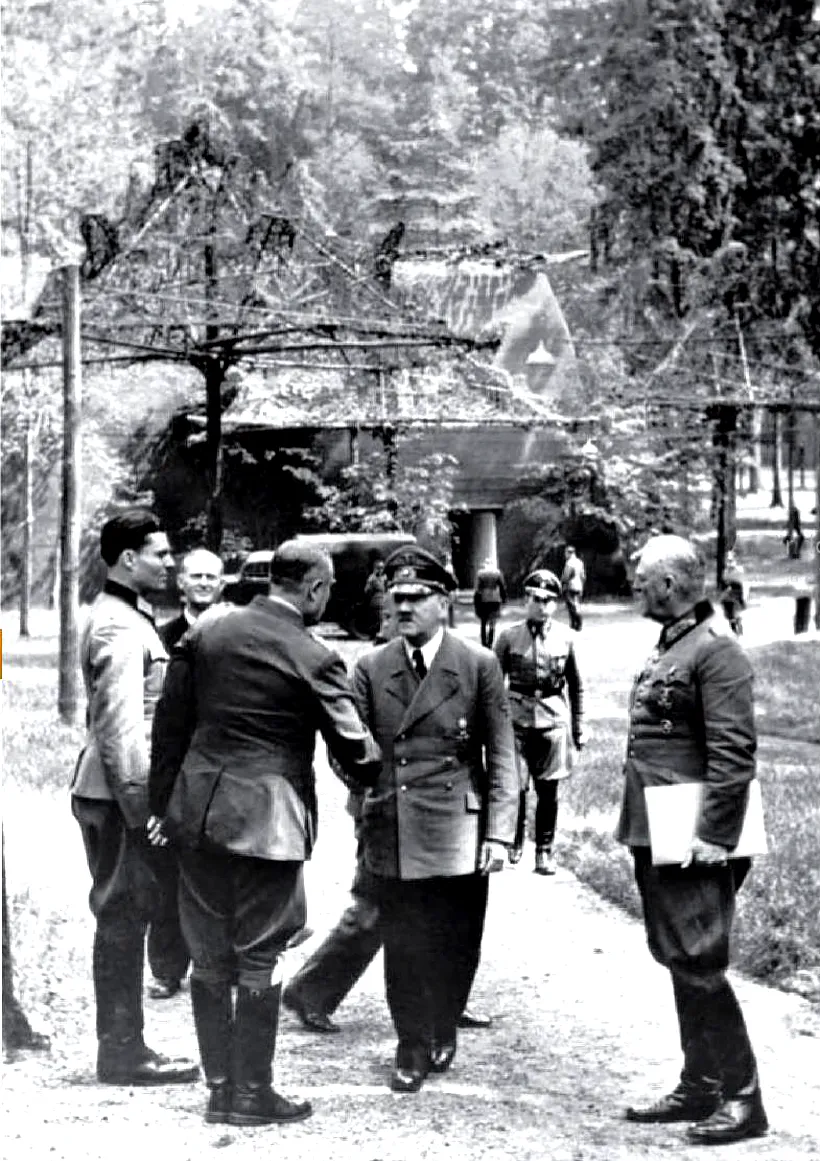
The conspirators were mostly conservative nationalists, and they were not a uniform group. Some came from different social and political backgrounds, and some had communist contacts. Many had earlier supported Nazi aims. What brought them together was the conviction that Hitler had to go.
The plot rested on two groups. One was Tresckow’s network in the field army. The other was the apparatus in Berlin that Olbricht controlled, which could use the Replacement Army’s communications to take over the capital.
Tresckow and Army Group Centre
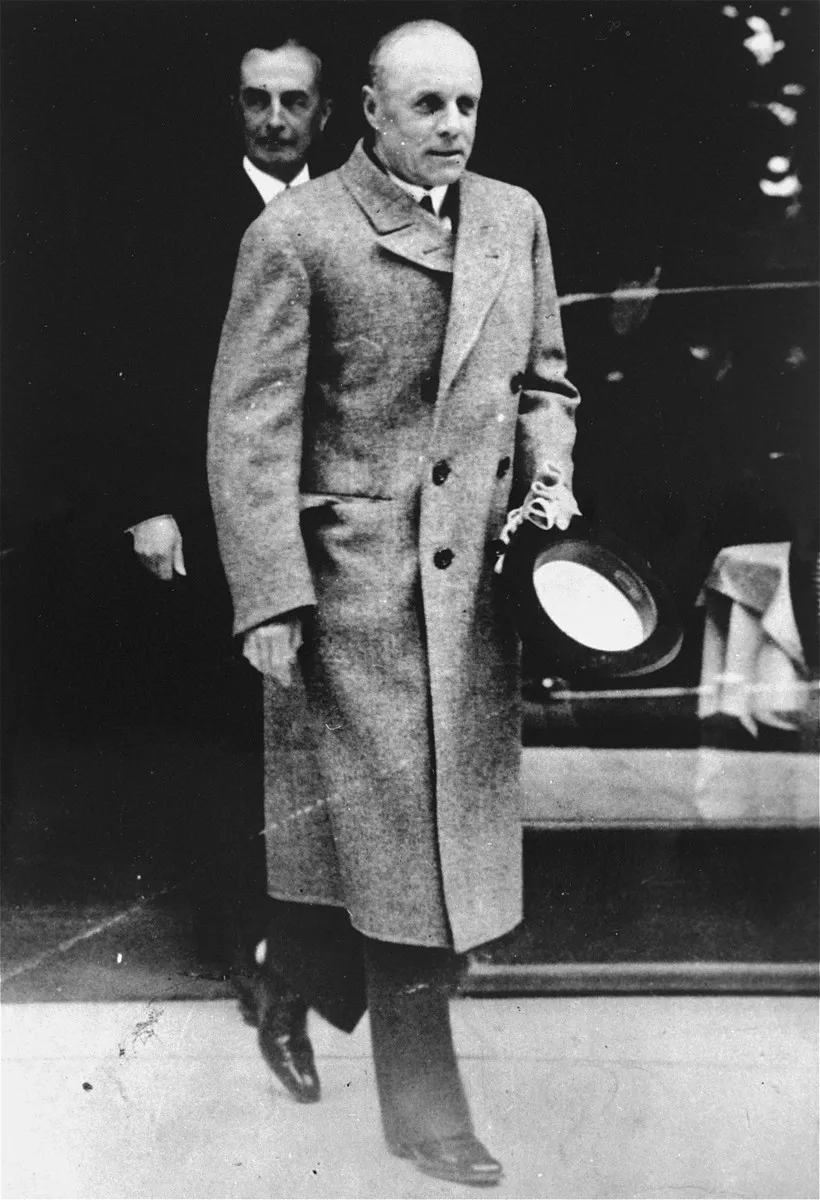
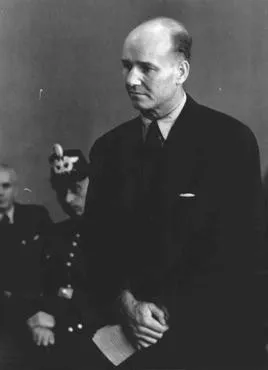
In 1942 Henning von Tresckow built a network of like-minded officers within Army Group Centre on the Eastern Front. Born in 1901 into a Brandenburg-Prussian military family, he had graduated first in his General Staff class in 1936 and served as chief operations officer of Army Group Centre during Operation Barbarossa. Friedrich Olbricht, who controlled reserve communications in Berlin, linked Tresckow’s circle to a workable coup apparatus.
The first serious attempt came on 13 March 1943, at Smolensk. Tresckow arranged for a bomb disguised as a bottle of Cointreau to be carried onto Hitler’s aircraft. It failed to detonate, probably because of the cold in the luggage compartment. A few days later, on 21 March 1943, Rudolf-Christoph von Gersdorff tried to kill Hitler in Berlin during a visit to the Zeughaus armory on Heroes’ Memorial Day. He carried two explosive devices with ten-minute fuses in his coat and intended to embrace Hitler to set them off. Hitler moved through the museum faster than expected and left before the fuses ran down. Gersdorff defused the devices in a public bathroom at the last second.
The attempts did not stop. Late in November 1943 Axel von dem Bussche-Streithorst had a plan, and his meeting with Hitler was cancelled. Ewald-Heinrich von Kleist-Schmenzin had a plan in February 1944, and on 11 March 1944 Eberhard von Breitenbuch had one. None of them was carried out. By then, Tresckow had left the centre of the plot. After drafting the revised Valkyrie plan with detailed timetables in late 1943, he took command of a battalion, and in December 1943 became Chief of Staff of the 2nd Army.
Valkyrie, the plan inside the plan
Operation Valkyrie was a German emergency plan for the Replacement Army, the reserve force at home. It covered a breakdown of civil order caused by Allied bombing or an uprising by forced labourers. General Friedrich Olbricht’s staff at the General Army Office developed it, and Hitler approved it. Only Hitler or Colonel-General Friedrich Fromm, the Replacement Army commander, could set it in motion.
That was what made it useful to the plotters. Olbricht added a Valkyrie II, which provided for gathering Reserve Army units into battle groups. In August and September 1943 Tresckow greatly expanded the plan. His additions included orders that falsely blamed a clique within the Nazi Party for Hitler’s death, and detailed instructions for seizing ministries, radio stations, telephone exchanges and concentration camps. A document release in 2007 suggests that Tresckow, not Stauffenberg, drafted the detailed plan.
The weak point was Fromm. If Hitler died, Valkyrie could be launched by Fromm, but Fromm had to be won over or neutralised. That problem did not go away, and it contributed to the outcome on 20 July.
Claus von Stauffenberg
Claus Schenk Graf von Stauffenberg was born on 15 November 1907 at Stauffenberg Castle in Jettingen, in the Kingdom of Bavaria, the third of four sons. He joined the Reiterregiment 17 cavalry regiment in Bamberg in 1926 and married Nina von Lerchenfeld on 26 September 1933. They had five children: Berthold, Heimeran, Franz-Ludwig, Valerie and Konstanze. He took part in the invasion of Poland, served on the General Staff of the 6th Panzer Division in the Battle of France, and in 1940 and 1941 worked in the organisational department of the Army High Command.
In the summer of 1942 he is reported to have voiced outrage at the killing of Jews to fellow officers at Vinnytsia. After Stalingrad he had concluded that killing Hitler was necessary. On 7 April 1943, in Tunisia, a Desert Air Force fighter strafed his vehicle near Mezzouna. He lost his left eye, his right hand and two fingers of his left hand. He was awarded the Wound Badge in Gold on 14 April and the German Cross in Gold on 8 May 1943.
In early September 1943 he was assigned to the Replacement Army headquarters on the Bendlerstrasse in Berlin, and from that point he became the driving force of the plot. Tresckow was by then on the Eastern Front, which left Stauffenberg in control of the resistance. On 1 July 1944 he became Chief of Staff to General Fromm, which gave him direct access to Hitler’s conferences. That was the one thing the plot had lacked.
The chances that did not come
Stauffenberg did not at first plan to do the deed himself. On 7 July 1944 General Helmuth Stieff was to kill Hitler at Klessheim castle but could not. After that, Stauffenberg decided to do it himself. Wikipedia records that on 14 July he held back because Himmler was absent, and on 15 July he again did not act because Hitler left the room at the last moment.
20 July: the bomb
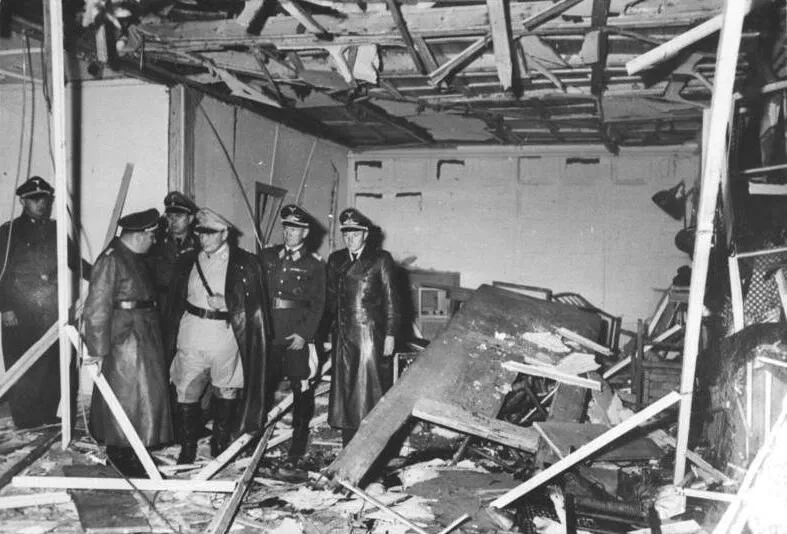
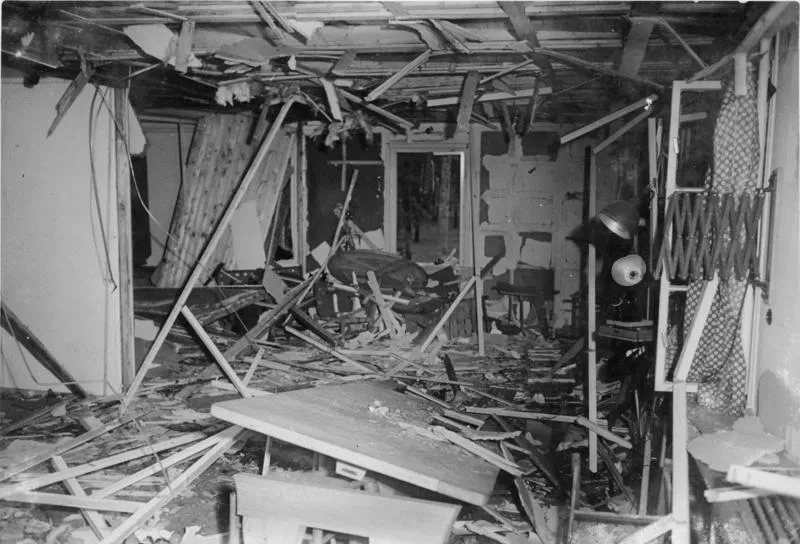
The story of the day at the headquarters is told in more detail in the post on the Wolf’s Lair, and only the essentials are given here.
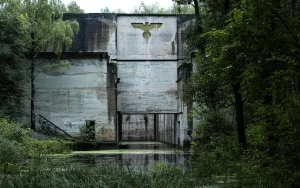
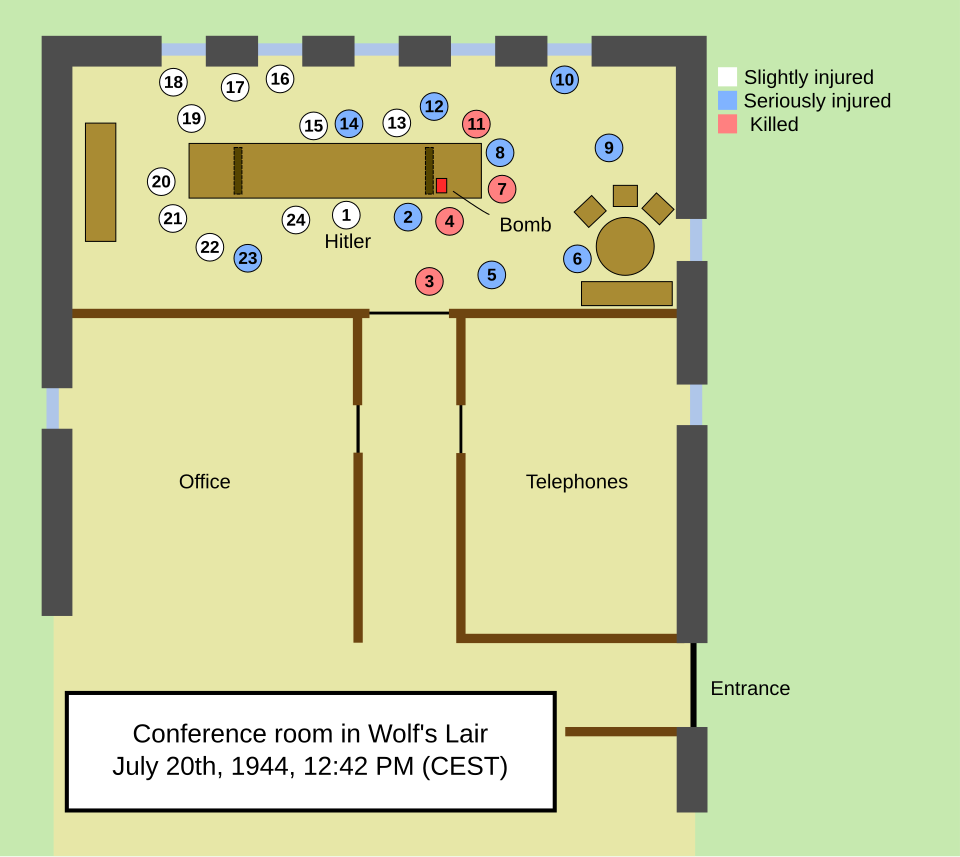
Stauffenberg arrived for a conference at about 12:30 p.m. In his briefcase he carried two bombs. He primed one, a 1 kg block of plastic explosive with a pencil detonator, but a guard interrupted him before he could prime the second. He gave the second, unprimed bomb to his adjutant, Werner von Haeften. The meeting had been moved from the concrete bunker to a lighter hut because of the heat, which was to matter. One source calls it a wooden hut and another a light brick hut, and one describes it as Speer’s hut.
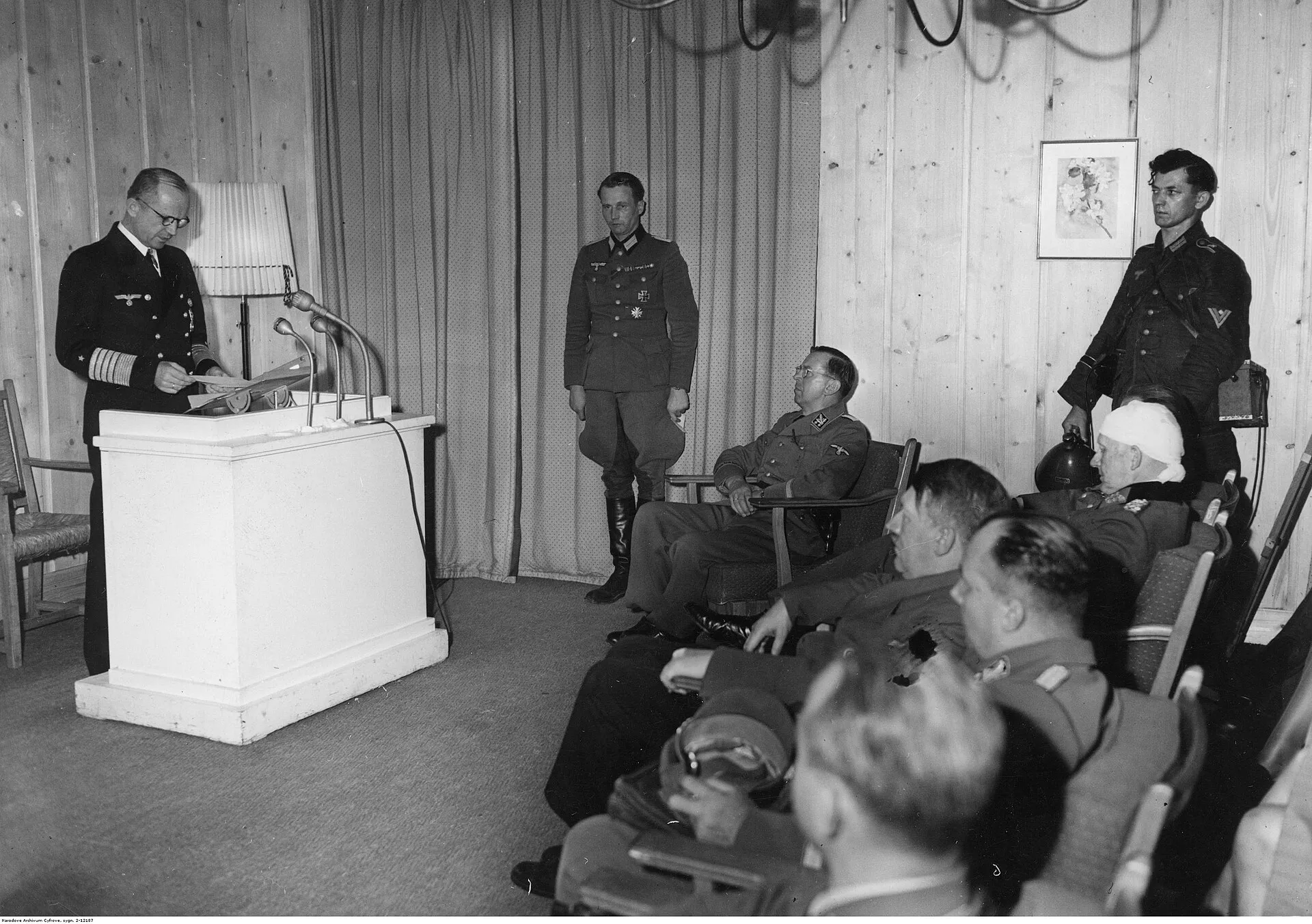
Stauffenberg placed the briefcase under the heavy table near Hitler and left on the pretext of a telephone call. Colonel Heinz Brandt then moved the briefcase behind a heavy table leg, which shielded Hitler from the blast. The bomb went off at 12:42. Brandt and others were killed. Accounts differ on the numbers: Wikipedia’s infobox gives four killed and twenty injured, while its text says more than twenty were injured. Rudolf Schmundt died later. Hitler suffered singed trousers, a perforated eardrum and conjunctivitis, and Theodor Morell treated him with penicillin.
Stauffenberg and Haeften saw the explosion from outside and believed Hitler was dead. They bl■ past three checkpoints and flew from Rastenburg airfield by 13:00. Haeften discarded the unprimed bomb in the forest.
20 July: the coup that wavered
The plot depended on speed and on a clear message. Neither came. General Erich Fellgiebel, the army’s chief signals officer, had been placed at the Wolf’s Lair to cut the headquarters off from the outside world. He only partly s쳮ded, because news still reached Joseph Goebbels in Berlin over separate SS links, and when the attempt was clearly failing he had to lift the blackout. After learning that Hitler was alive, he telephoned General Fritz Thiele at the Bendlerblock and said, in German, that something awful had happened and that the Fuhrer lived. Stauffenberg then reportedly claimed that Hitler was dead, and the plotters in Berlin were left confused.
At 16:00 Olbricht ordered Valkyrie mobilised. Fromm, however, telephoned Field Marshal Wilhelm Keitel, learned that Hitler was alive and switched sides. Stauffenberg reached the Bendlerblock at 16:40. Fromm was held at gunpoint and replaced by General Erich Hoepner. At about 18:10 General Joachim von Kortzfleisch refused to obey orders and was arrested.
The plotters’ hold on the city depended on a single guard battalion. General Paul von Hase ordered Major Otto Ernst Remer, who commanded the Wachbataillon Grossdeutschland, to arrest Goebbels. At Goebbels’s office, Goebbels told Remer that Hitler was alive, and when Remer asked for proof, Goebbels put Hitler on the telephone. Wikipedia places the call at around 19:00. Remer was ordered to put down the plot, and to take the conspirators alive if he could. The account of the call is marked as needing a citation on Remer’s own Wikipedia page, so it is best read as the usual version of events, not as established in detail.
Elsewhere the plot began to come apart in the same way. In Paris, Carl-Heinrich von Stulpnagel set his part in motion, and the SS and Gestapo officers in the city were rounded up and imprisoned. When he could not persuade Field Marshal Gunther von Kluge to back the uprising, he had to release them. Himmler countermanded Olbricht’s mobilisation orders, and most commanders cancelled their operations.
By then the Valkyrie telexes had gone out. The first declared Hitler dead and transferred executive power to the Replacement Army commander. It placed the Waffen-SS under army control and ordered the neutralisation of the SD. A second telex, signed by Fromm and Stauffenberg, ordered the occupation of Gestapo and SD offices, the arrest of Nazi officials and the occupation of concentration camps.
The night in the Bendlerblock
Olbricht was arrested at his headquarters in the Bendlerblock at 21:00 by soldiers of the Berlin garrison. By 23:00 Fromm and Remer had retaken the building after a shootout in which Stauffenberg was wounded in the shoulder.
Fromm then held an impromptu court-martial. It sentenced Olbricht, Stauffenberg, Haeften and Colonel Albrecht Mertz von Quirnheim to death. They were shot in the courtyard, lit by the headlights of trucks, at 00:10 on 21 July. Olbricht was the first. Stauffenberg was third. Haeften placed himself between the firing squad and Stauffenberg and was killed in his place. Stauffenberg’s last words are reported as “Es lebe das heilige Deutschland”, though another account gives “Es lebe das geheime Deutschland”, a reference to a secret Germany. The SS exhumed his body the next day and cremated it.
Beck, the intended head of state, had been arrested too. He asked to keep his pistol so that he could avoid torture by the Gestapo and shot himself in the head. The wound was severe but not fatal, and one of Fromm’s men finished him off with a shot in the back of the neck. At 00:30 Otto Skorzeny’s SS unit arrived and halted further executions. Fromm himself was later shot at Brandenburg, after Hitler commuted his sentence of hanging.
Tresckow learned of the plot’s failure at Krolowy Most, near Bialystok, in German-occupied Poland. On 21 July he took his own life, and he staged the scene to look like a partisan attack, to protect his fellow conspirators and his family. Shortly before, he is reported to have said that in all likelihood everything would go wrong. Kluge, too, died by suicide. Stulpnagel was recalled from Paris and shot himself in the head on the banks of the Meuse at Verdun, an attempt that only blinded him.
The reprisals
The hunt that followed was far wider than the group that had acted. Wikipedia’s figures are more than 7,000 arrests and 4,980 executions, of which roughly 200 were conspirators, and the article notes that not all of those executed were connected with the plot. Himmler’s Gestapo widened the arrests, and the principle of Sippenhaft, or kin liability, extended punishment to relatives. Himmler told a meeting of Gauleiters at Posen that he would introduce absolute responsibility of kin, which he called a very old custom of the forefathers, and that the Stauffenberg family would be wiped out down to the last member.
The consequences for families were severe. Nina von Stauffenberg was sent to Ravensbruck concentration camp. Her husband’s brother Alexander, who had no knowledge of the plot and was serving in Greece, was also sent to a concentration camp. The younger children of arrested plotters were sent to orphanages under new names, and the Stauffenberg children were renamed Meister. Tresckow’s wife was arrested on 15 August 1944 and released in October. Stauffenberg’s brother Berthold was executed at Plotzensee on 10 August 1944 after a trial before the People’s Court. Nina survived the war, and Konstanze, the youngest child, was born in Frankfurt (Oder) seven months after the execution. Nina died in 2006, aged 92.
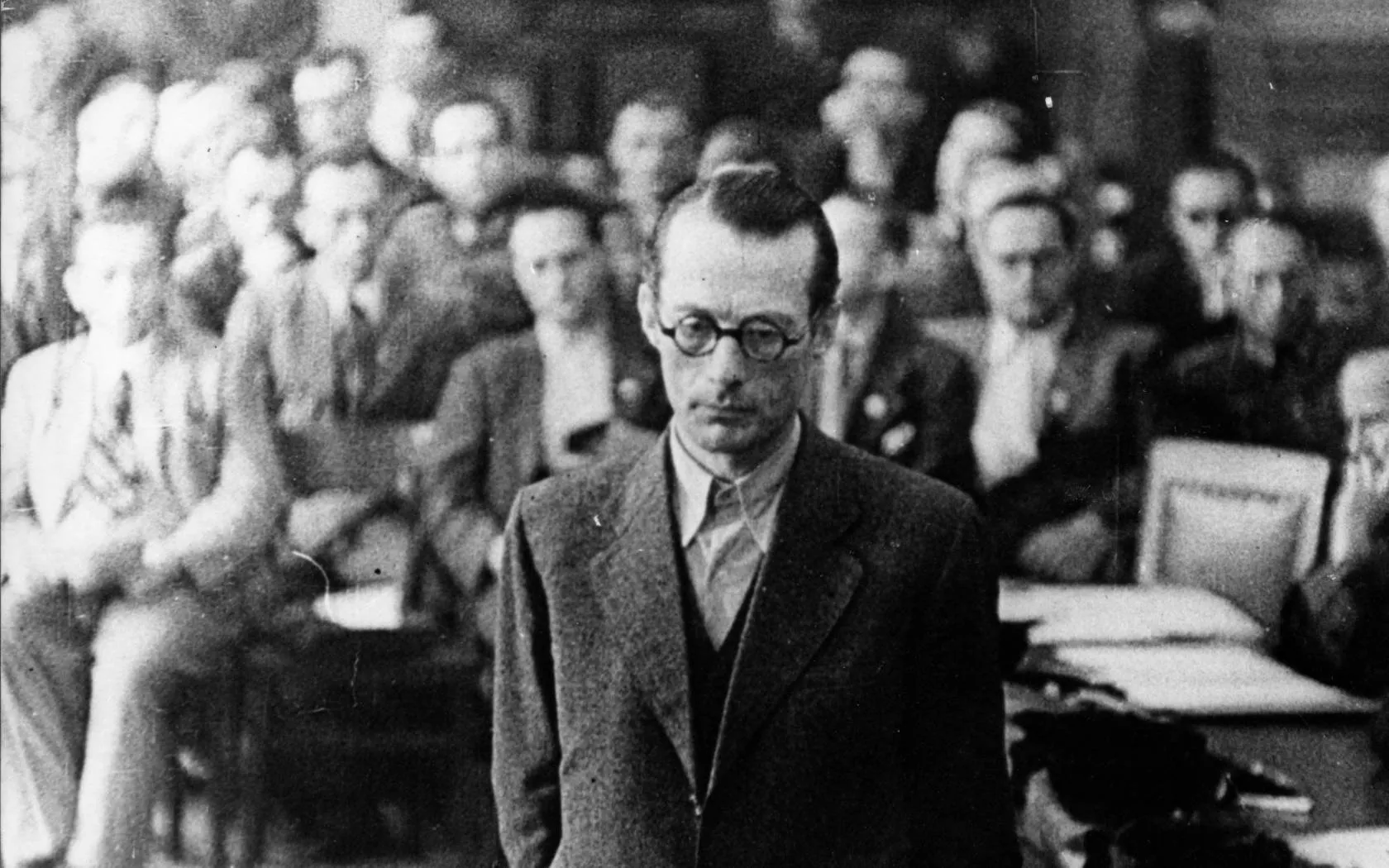
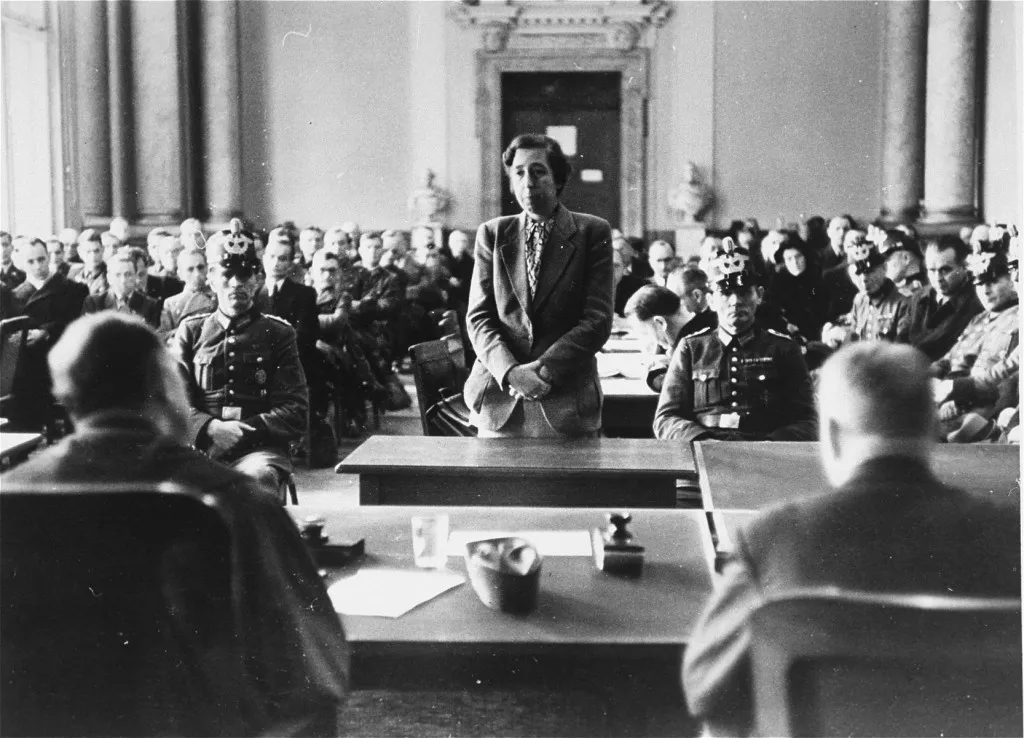
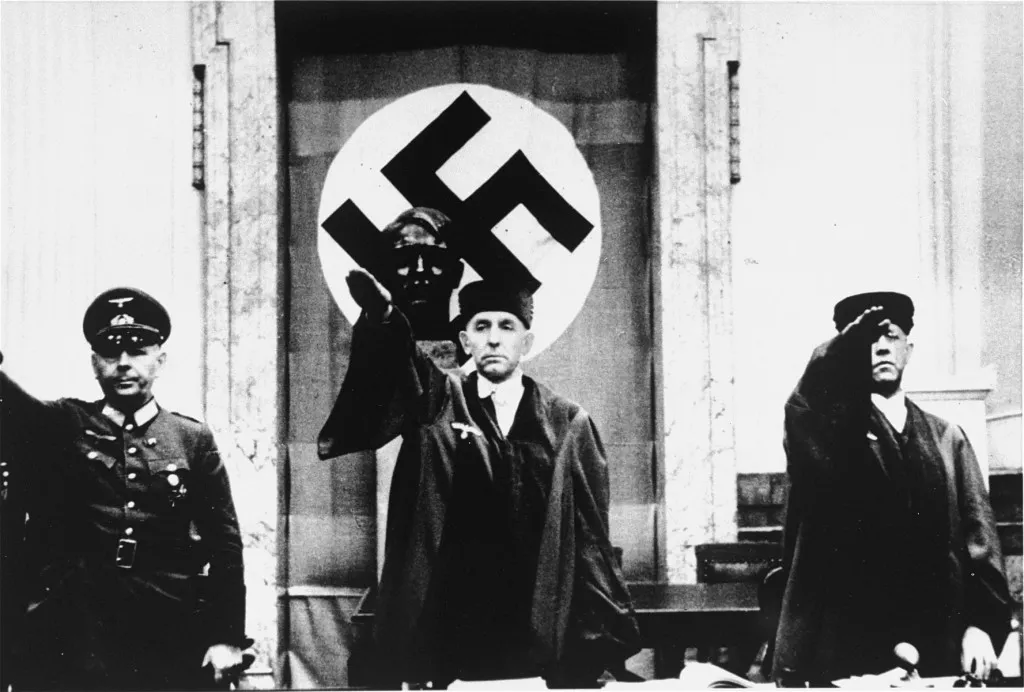
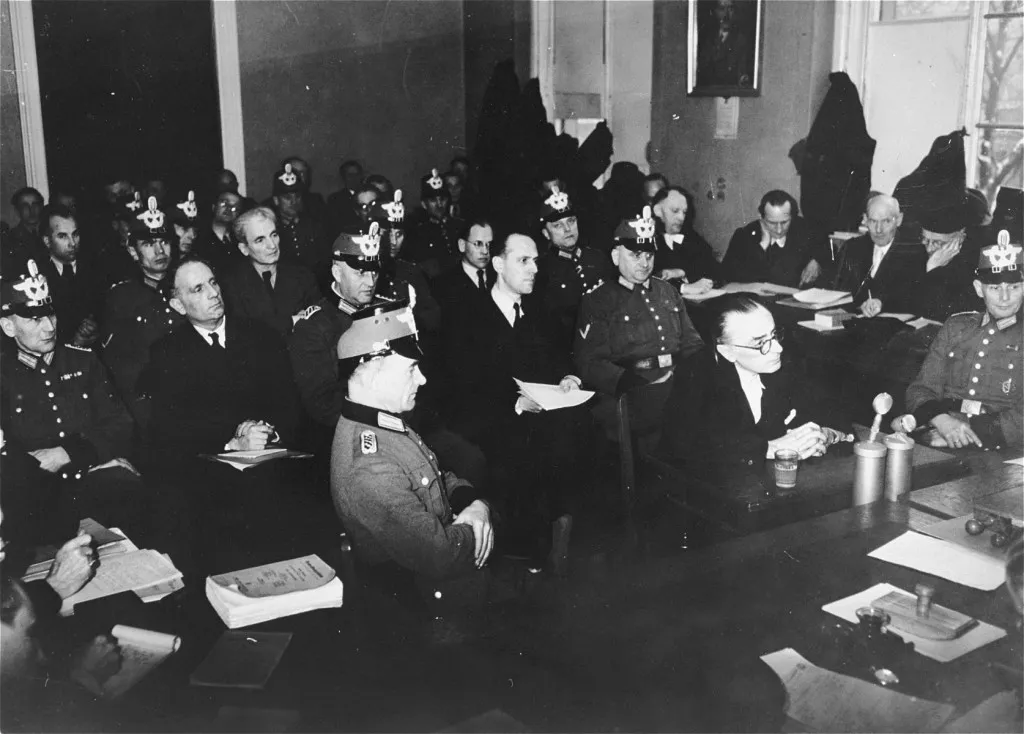
The trials began on 7 and 8 August 1944 before the People’s Court, under its president Roland Freisler. Freisler had headed the court since 20 August 1942 and personally chaired the First Senate, which handed down over 2,600 of the more than 5,000 death sentences issued during his tenure. He alternated cold questioning with sudden outbursts of rage and aimed to humiliate the defendants. Field Marshal Erwin von Witzleben, who had been given oversized clothing without a belt, was mocked for holding up his trousers. Nearly all the accused were sentenced to death by hanging, and some sentences were carried out within two hours of the verdict. Hitler reportedly wanted the guilty hanged like cattle. The proceedings were filmed for German newsreels.
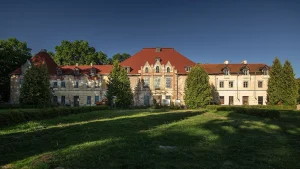
The deaths were spread over months. Fellgiebel, who was tortured for three weeks but named none of his fellow conspirators, was sentenced on 10 August and hanged at Plotzensee on 4 September. Stulpnagel was tried on 30 August 1944 and hanged the same day. On 4 September the People’s Court also sentenced Heinrich Graf von Lehndorff-Steinort, whose family estate is described in the post on Sztynort Palace. He was hanged at Plotzensee the same day, aged 35. Goerdeler, who would have been chancellor, was hanged there on 2 February 1945. Hans von Dohnanyi was executed on 6 April 1945 and Dietrich Bonhoeffer on 9 April 1945.
Field Marshal Erwin Rommel was given the choice of suicide or trial and died by suicide on 14 October 1944. Freisler outlived most of those he had condemned by only a few months. On 3 February 1945 American bombers struck Berlin during a Saturday session. He adjourned the court and sent the prisoners to a shelter but stayed behind to gather files, and a masonry column fell on him and killed him instantly. He was found still holding the files, among them that of Fabian von Schlabrendorff, one of the bomb plotters, who was due to be sentenced that day. Schlabrendorff survived the war and later became a judge on the Federal Constitutional Court.
Gersdorff, who had tried to carry out the attack in March 1943 and had hidden explosives for the plot of 1944, escaped arrest because his imprisoned and tortured co-conspirators did not betray him. He was one of the few German military resistance members to survive the war. He died in Munich on 27 January 1980.
What changed in the army
On 24 July 1944 the military salute was replaced by the Hitler salute, and all Wehrmacht members had to swear a personal oath to Hitler. Hitler also created the Wound Badge of 20 July 1944, of which about 100 were made and 47 are believed to have been awarded.
How the plot was remembered
Memory of the plot was slow to settle. A 1951 Allensbach survey found that only a third of respondents viewed the plotters positively. Theodor Heuss’s speech of 1954 marked a shift in opinion, and the first all-German commemoration took place in 1990. The memorial in the Bendlerblock was established in 1980, when the street was renamed Stauffenbergstrasse.
Remer, the officer ordered to arrest Goebbels that evening, had a very different later life. After the war he founded the Socialist Reich Party in 1950, which was banned in 1952. In 1992 he was sentenced to 22 months in prison for incitement of racial hatred, fled to Spain in 1994 and died in Marbella in 1997.
Where to see it
The Bendlerblock, Berlin. The German Resistance Memorial Center occupies part of the former Army headquarters at Stauffenbergstrasse 13-14. It opened in 1980. Its permanent exhibition, Resistance against National Socialism, covers three floors and more than 5,000 items, with particular attention to the military leaders of the 20 July plot. Admission is free. It is open Monday to Friday from 9 a.m. to 6 p.m., and on Saturdays, Sundays and holidays from 10 a.m. to 6 p.m. A statue in the courtyard marks the spot where the conspirators were executed, with a wall plaque nearby. Each 20 July the German government and armed forces hold a memorial ceremony there, and a wreath is laid at the execution site.
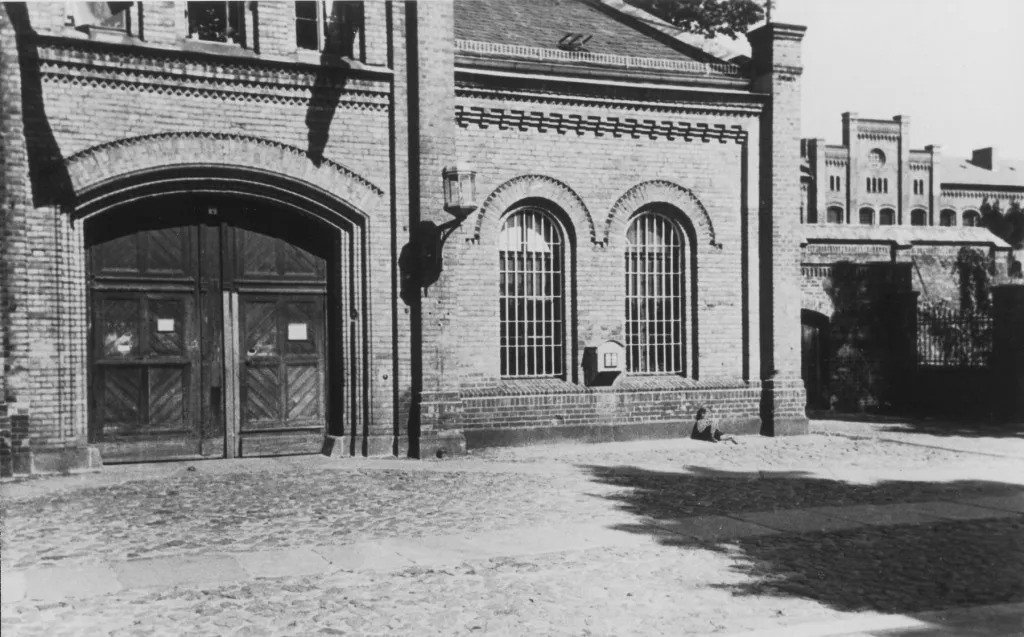
Plotzensee, Berlin. About 3,000 people were executed at Plotzensee prison in the Nazi era. The execution shed, a brick building near the prison walls, was dedicated as a memorial by the Senate of Berlin on 14 September 1952. A beam installed in 1942 served as gallows for up to eight victims at a time. Goerdeler, Ulrich von Hassell, Paul von Hase and Fritz-Dietlof von der Schulenburg were among those hanged there.
The Wolf’s Lair, Poland. The ruins at Gierloz, near Ketrzyn, are open to the public as a museum. The briefing hut is almost gone, with foundations and fragments of walls remaining, and memorials to Stauffenberg and the other conspirators stand there. Details of the site are in the Wolf’s Lair post.
Conclusion
The 20 July plot failed on the day. A bomb moved a few inches behind a table leg, a hut chosen because of the heat, a telephone call to a guard commander, and a general who changed sides on hearing that Hitler was alive were enough to undo years of planning. The reprisals cost thousands of lives, many of them among people who had nothing to do with the plot. The plotters themselves were a mixed group, mostly conservative nationalists, and some had once supported Nazi aims. What they have in common in the record is the outcome: Stauffenberg shot in a courtyard in Berlin, Tresckow dead by his own hand, and Beck, who had resigned in 1938, finished off by a soldier of Fromm’s.
Did you know?
- Henning von Tresckow's bomb of March 1943 was disguised as a bottle of Cointreau and probably failed because of the cold in the aircraft's luggage compartment.
- Stauffenberg lost his left eye, his right hand and two fingers of his left hand when his vehicle was strafed in Tunisia on 7 April 1943.
- The meeting of 20 July 1944 was held in a light hut instead of the bunker because of the heat.
- Colonel Heinz Brandt moved Stauffenberg's briefcase behind a table leg, which shielded Hitler from the blast.
- Werner von Haeften placed himself between the firing squad and Stauffenberg on the night of 20 July and was killed in his place.
- After the plot, the Stauffenberg children were renamed Meister and placed in a foster home.
- Roland Freisler was killed on 3 February 1945 by a falling column while holding the file of a 20 July defendant.
- On 24 July 1944 the military salute in the Wehrmacht was replaced by the Hitler salute.
- Hitler created a Wound Badge of 20 July 1944, of which about 100 were made and 47 are believed to have been awarded.