A town the sand is taking back
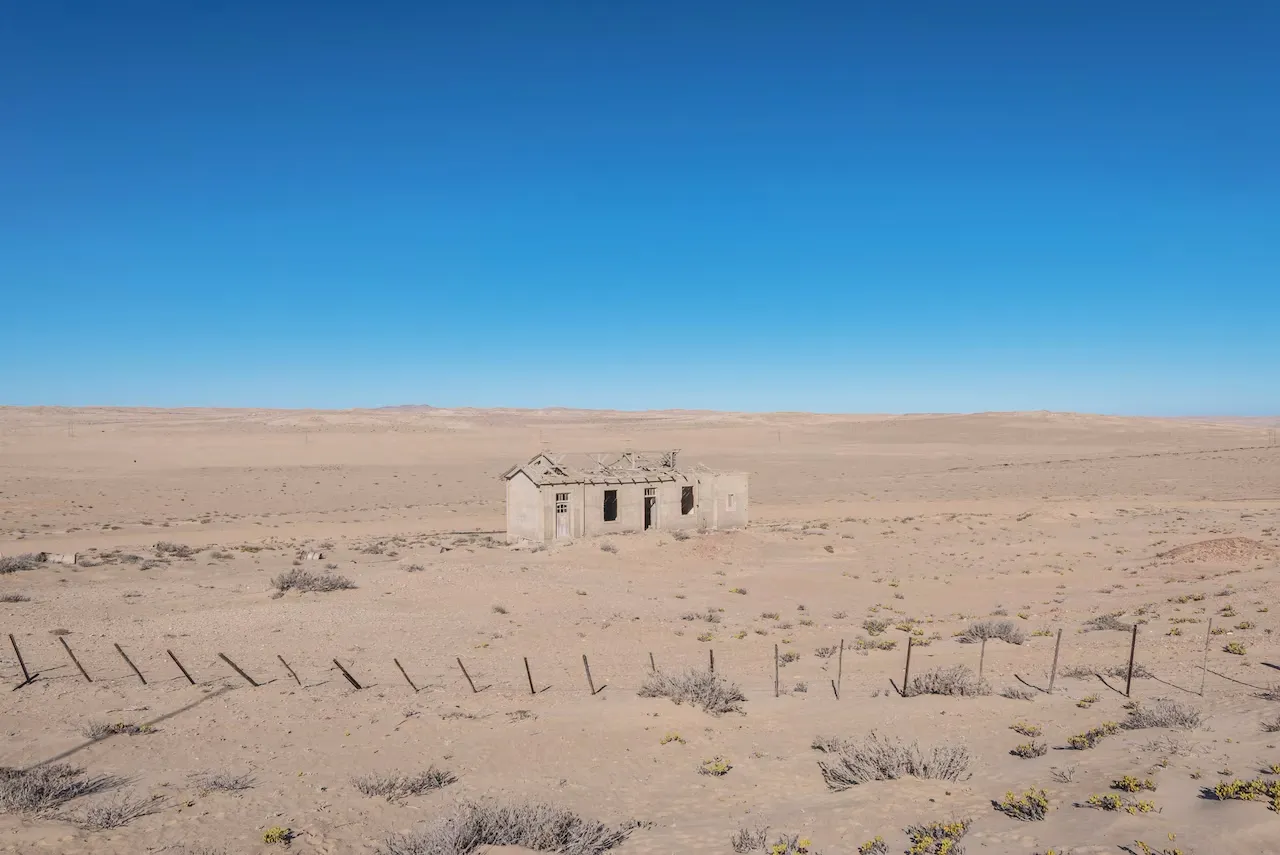
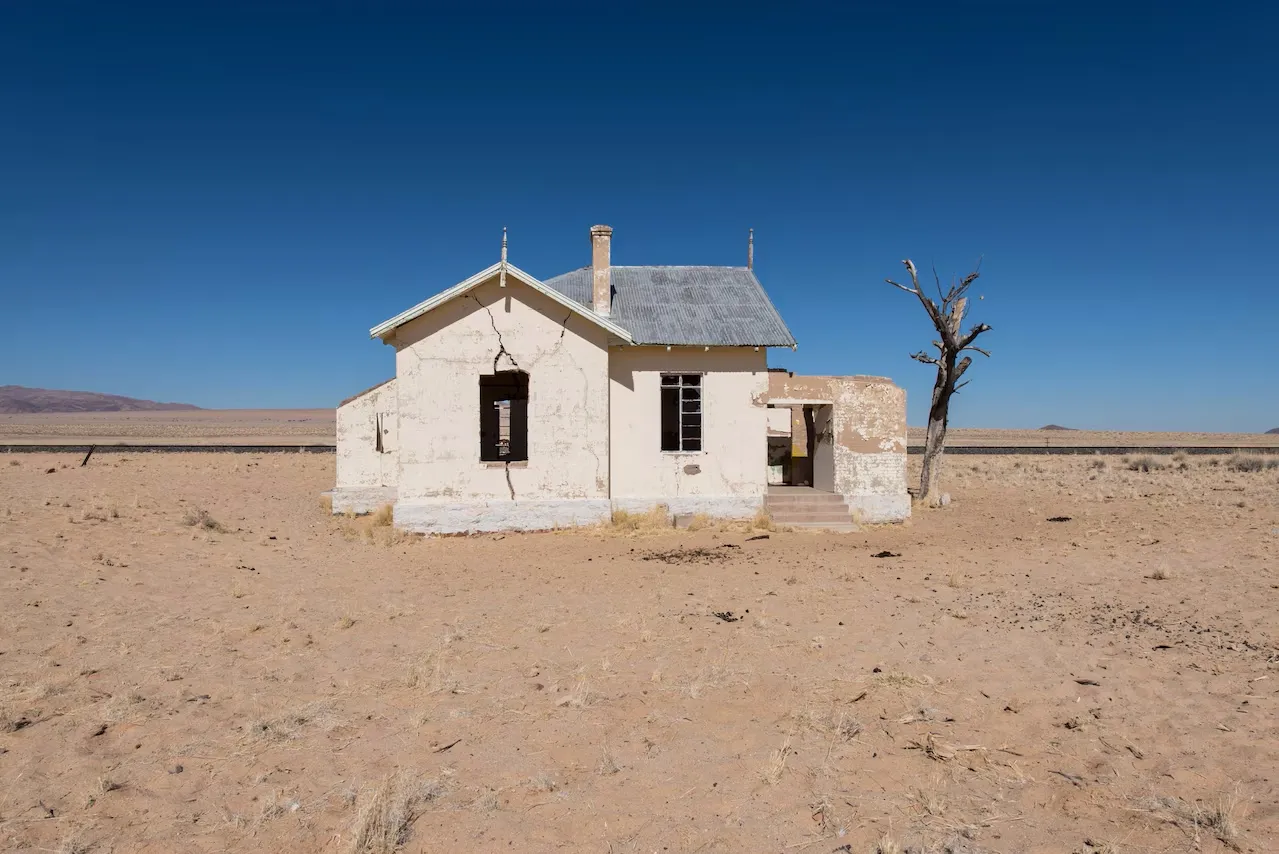
Kolmanskop sits in the Namib Desert in the south of Namibia, a short drive inland from the port town of Lüderitz. The distance depends on who you ask: 10 kilometres in some accounts, 12 in others, 15 in a few. Whichever figure you trust, you are driving along a flat, sandy plain with the Atlantic just beyond the dunes, and then a row of pale houses appears with the desert up to their windowsills.
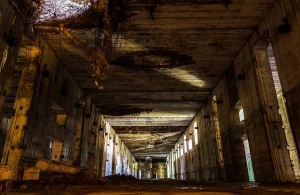
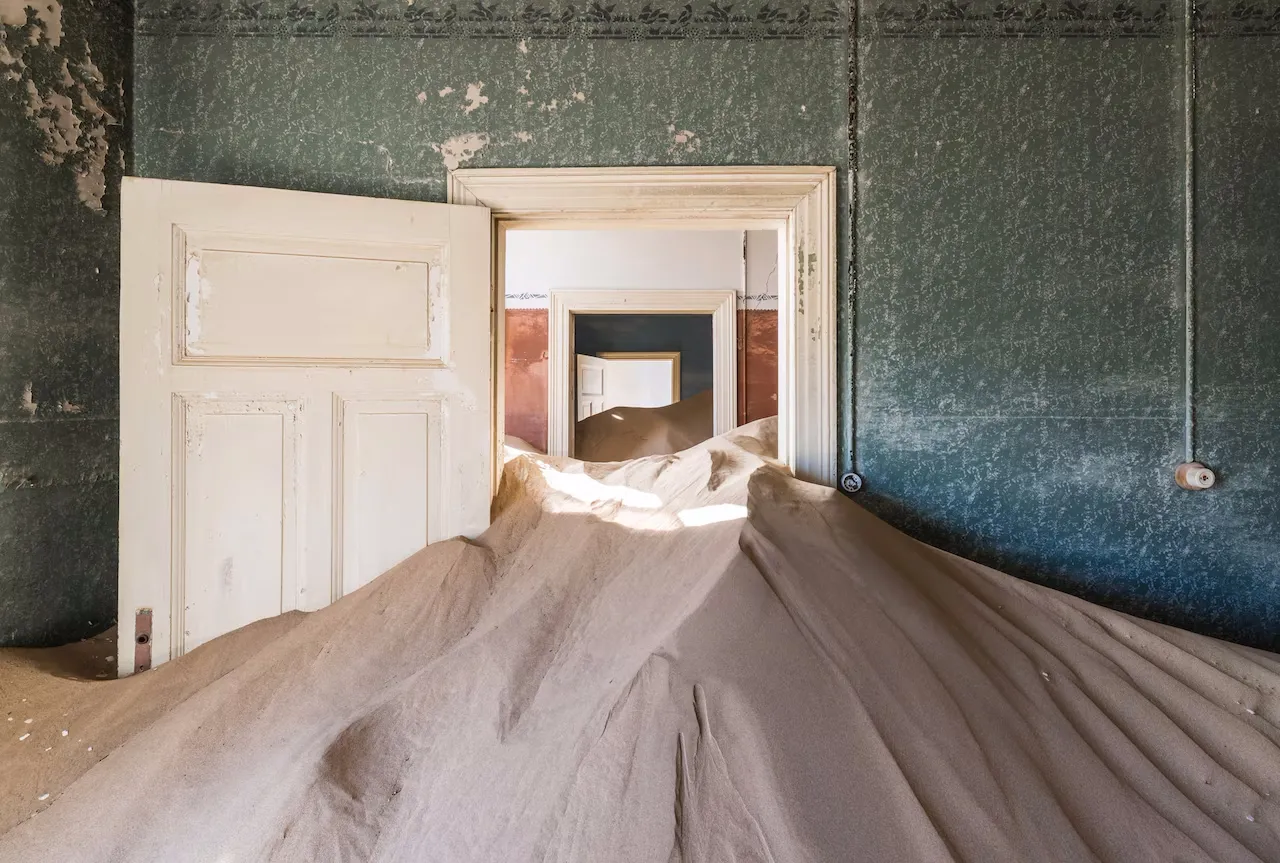
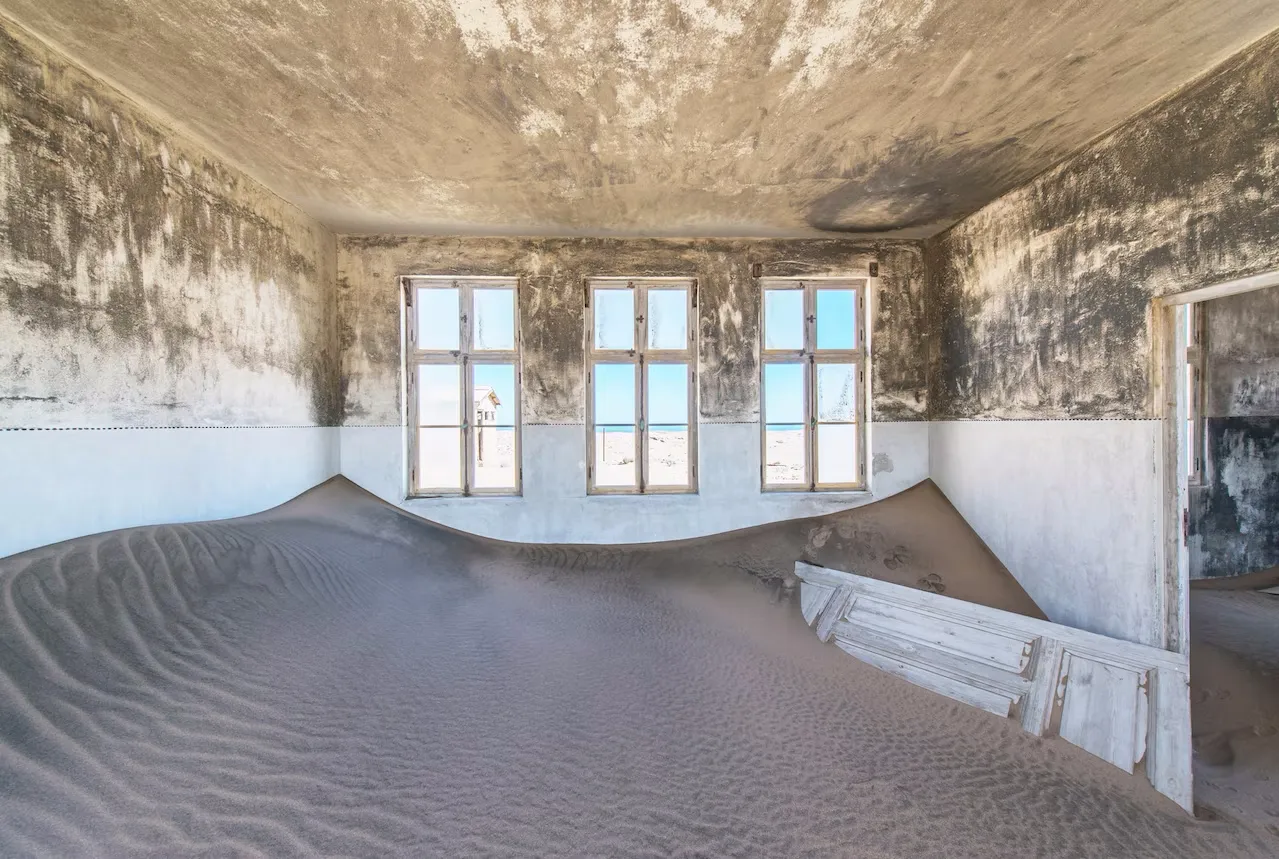
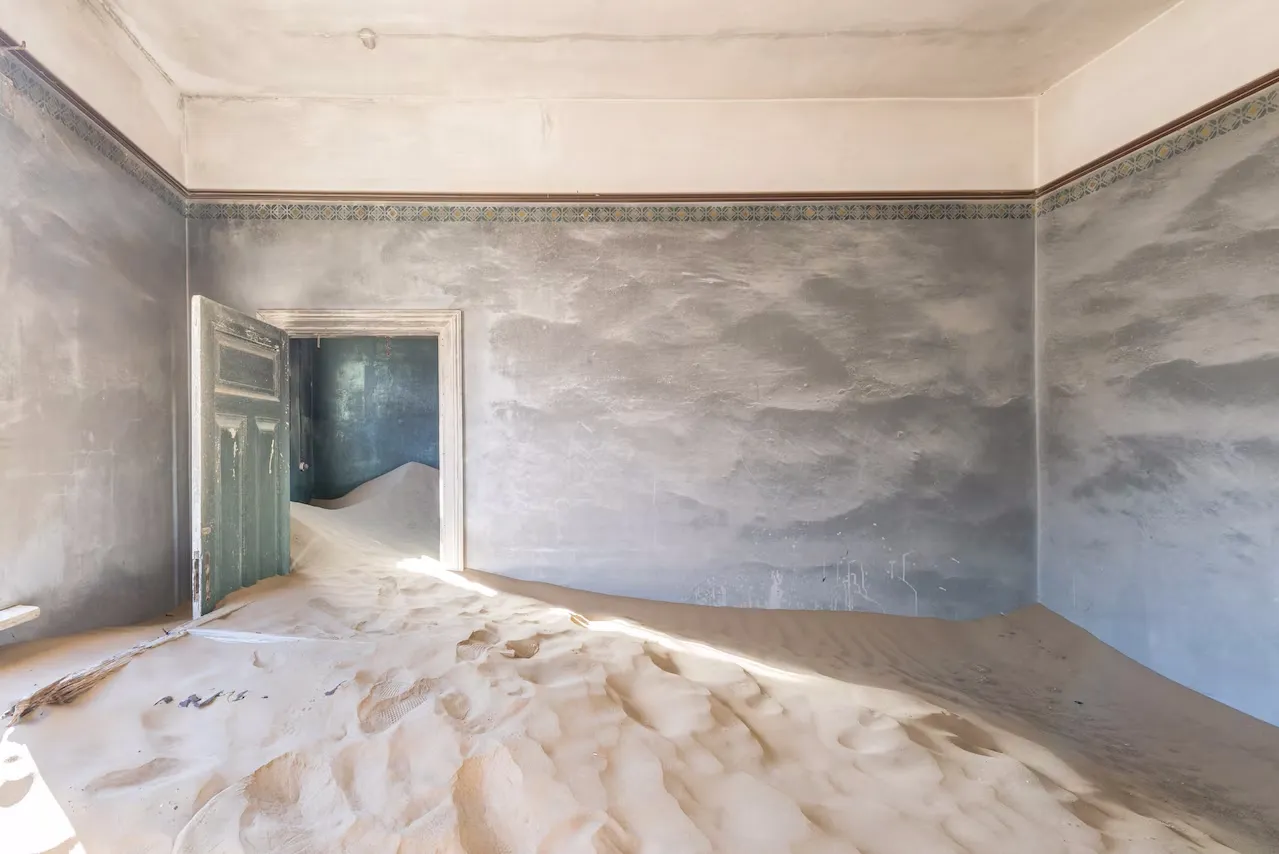
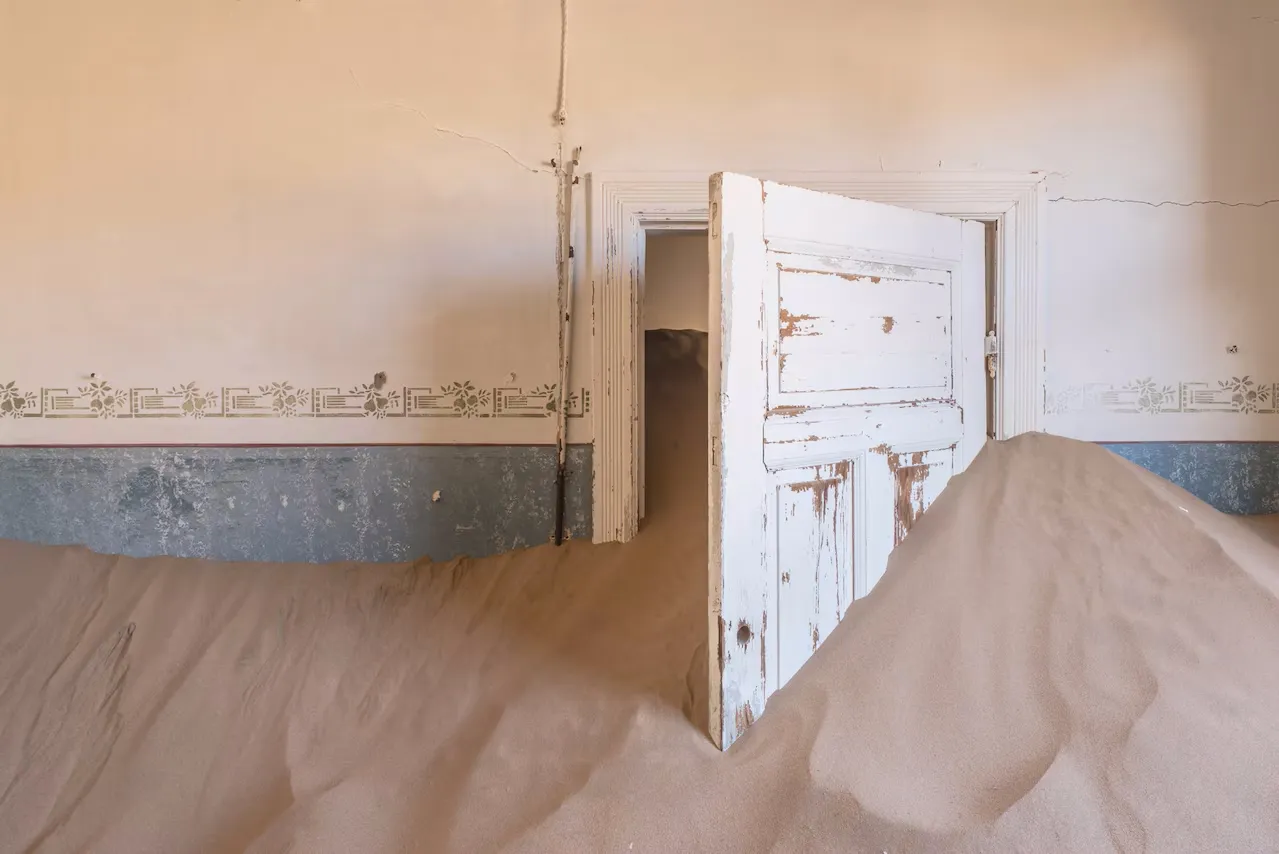
What makes the place unusual is how ordinary it was meant to look. The houses were built in a German style, with bright colours, stencilled walls and wallpaper, and they were designed for people who intended to stay. Now the sand has come in through doors and broken windows, and in some rooms it lies knee-deep or higher. Wooden stairs creak, roofs are stripped, glass hangs from window frames, and a rusting bathtub sits in a room that is hip-deep in sand.
It is easy to treat it as a curiosity, a photogenic ruin where the desert has beaten the Europeans. The real story is about diamonds, a colonial government, and who was and was not allowed to benefit from them. We will try to keep all of that in view.
Where the name comes from
The Afrikaans name Kolmanskop means “Coleman’s hill”, and the German spelling is Kolmannskuppe. The usual story is that a transport driver called Johnny Coleman, or perhaps Jani Kolman, left his ox wagon on a small rise opposite the future settlement during a sandstorm. One version has him dying of thirst; another says only that he abandoned the wagon. A German-language guide calls it a legend and describes a Nama man named Coleman whose ox cart got stuck in 1905. We cannot confirm any of it, and it is probably best read as a story the town told about itself.
Before 1908 there was nothing here to name. The place was a small stop on a railway that was being driven east from Lüderitz towards Keetmanshoop, and the track was a constant battle against drifting sand.
A colony, a railway and a war
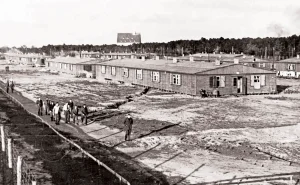
To understand why anyone was here at all, you need the colonial setting. In the early twentieth century this was German South West Africa, and Lüderitz was a German port town. Only a few years earlier, German troops had crushed an uprising by the Herero people, and tens of thousands were killed in the reprisals. National Geographic says more than 60,000 Herero died. A concentration camp on Shark Island, at Lüderitz, held Nama and Herero prisoners, and one account says between 1,000 and 3,000 people died there before the camp closed in about 1908. That is the world into which the first diamond was carried.
The railway mattered because it needed men to keep the line clear. The tracks between Lüderitz and Aus were covered by moving sand, and gangs shovelled it away. One of the men in charge of a stretch of line was a railway foreman, August Stauch, a Thuringian who had come to the coast in 1907 after doctors suggested the dry climate might help his asthma. He kept about 20 kilometres of track clear and followed an interest in minerals in his spare time.
April 1908: the stone at Grasplatz
One of Stauch’s workers was Zacharias Lewala, who had previously worked in the diamond mines at Kimberley in South Africa and so knew what a rough diamond looks like. While clearing sand near the station at Grasplatz, he noticed a few bright stones and brought them to Stauch. The story goes that Lewala presented the stones in a mixture of languages, calling them beautiful stones, and that Stauch tested one by scratching his watch glass. It scratched. Stauch had a diamond.
Even the date is in dispute. One account gives 10 April 1908 and another 14 April, and both are given for the same event. What is more certain is what happened next. Stauch resigned from the railway, and together with a mining engineer, Sönke Nissen, he had the stones confirmed as diamonds in June. The two kept the discovery quiet until they had secured a claim at Kolmanskop. The claim is described as 75 acres in one source and as 75 square kilometres in another, which are very different things, and we have not seen a way to settle it. Either way, both men were soon very rich.
Lewala received nothing. National Geographic says so plainly, and Der Spiegel, in a piece quoted on his Wikipedia page, notes that his name entered history while others profited. Little is known about his life before or after the discovery, and his story is far less documented than Stauch’s.
Diamonds on the surface
Word spread quickly, and the rush began in May 1908. What drew people was how easy the diamonds were to find. The stones lay loose on the desert floor, and men crawled across the sand on their stomachs with cloths over their mouths to keep out the dust, picking them up by hand. People later said that under a full moon the ground seemed to glitter, like a whole city lit up under your feet.
Geology explains it. The diamonds had been carried to the surface in volcanic pipes in the interior, then washed down rivers such as the Orange and dumped along the coast, where wind and sea left them in the sand. They were hard to spot, which is probably why nobody had collected them before, and the area was thinly populated. Mining was soon industrialised, with large plants sieving and washing gravel. One guide says that ten tonnes of sand gave only one or two carats of rough stone, so the surface harvest was a short-lived windfall.
The output figures are uneven. One account says the mines had produced over 1,000 kilograms of diamonds before the First World War. Another says five million carats in the first six years of mining. A third says 5.5 million carats in four years, which it puts at 20 per cent of the world total. Two others say the town was producing a million carats a year by 1912, about 11.7 per cent of global output. A carat is 0.2 grams, so five million carats is about a tonne, which squares with the first figure. The shares of world output differ, though, and these are estimates repeated from source to source. The safest summary is that Kolmanskop produced roughly a tonne of diamonds in its first few years and that for a short time it was one of the biggest sources in the world.
The forbidden zone
The German authorities moved fast. In September 1908 they stopped issuing prospecting licences and declared the southern coastal strip a Sperrgebiet, a forbidden or prohibited area. Entry was closed to ordinary people, and prospecting rights went to a single Berlin-based company. The zone is described as about 26,000 square kilometres in one source and as running roughly 200 miles from the Orange River to 45 miles north of Lüderitz, and 62 miles inland, in another.
The Sperrgebiet outlived the Germans. In 1920 Ernest Oppenheimer formed Consolidated Diamond Mines of South West Africa by combining the colonial-era companies, and in 1923 the company signed the Halbscheid Agreement with the South West African Administration, which gave it mining rights in the zone. In 1994 the company was reorganised as Namdeb, a partnership between the Namibian government and De Beers, which still holds the licences. Most of the area is closed to the public, and parts of it are now protected as Tsau //Khaeb National Park, formerly Sperrgebiet National Park.
The people who did the work were mostly not Europeans. Local people displaced by the zone were often forced to take jobs in the mines and live in cramped, barracks-like compounds for months at a time, according to National Geographic.
Building a German town in the dunes
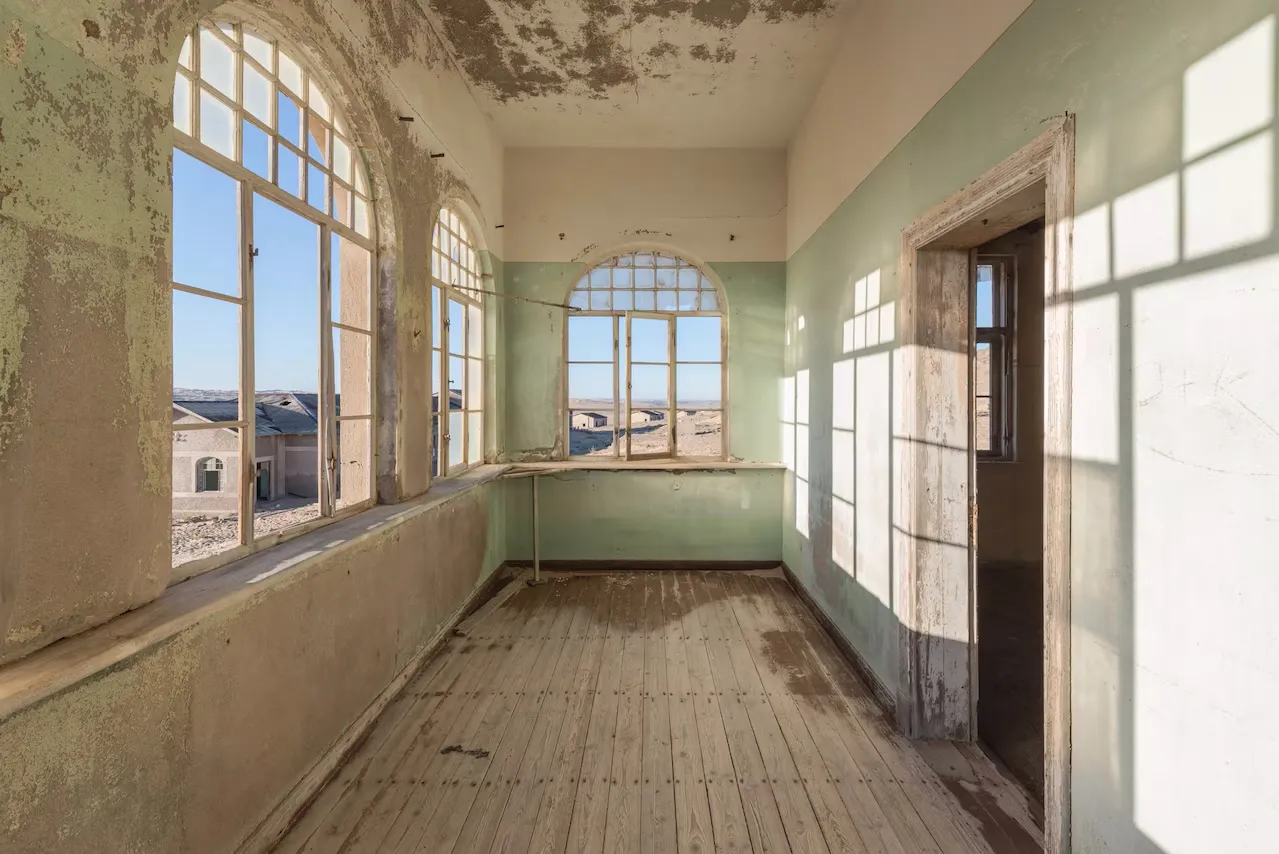
The new wealth showed in the buildings. German architects designed many of the houses, and the result was a mix of German colonial style and local adaptation, with art nouveau decoration inside the grander rooms. The materials came from far away: coal from Wales and Ireland, doors, windows and floors from Italy, and fresh water from Cape Town by sea and by rail. One guide says even the sand for building was brought from Germany, because the local sand was too salty, and that houses made with local sand turned out extra crumbly. We have only seen that in one account, so treat it as a local story.
The town had electricity from about 1911, supplied through a substation connected to a power station in Lüderitz. Water was always the problem. Different accounts describe it arriving by rail from 120 kilometres away, being shipped from Cape Town and carried by mule, and later coming from a pipeline from Elizabeth Bay and a small desalination plant. The solution for cooling was ingenious. An ice factory made blocks, and an early form of air conditioning blew air across them into ducts.
The list of facilities reads like one from a much larger town. There was a hospital, a school, a casino, a theatre and ballroom, a sports hall and gymnasium, a skittle or bowling alley, a saltwater swimming pool, a post office, a butcher, a baker and a lemonade maker. European opera groups performed. Church services, circus acts and opera all took place in the same large entertainment hall, according to one guide. Every morning a donkey cart delivered buns, lemonade, water and ice to each house. The shopkeeper was said to be the wealthiest man in town because customers sometimes paid in diamonds, and shopping lists included caviar, champagne and sauerkraut.
One boast is repeated everywhere: that Kolmanskop had the first tram in Africa. We have seen it on several websites, and Wikipedia itself marks the claim as lacking a citation, so we would be careful. The claim of the first X-ray machine in the southern hemisphere is better supported, and it leads into one of the stranger parts of the story.
Who lived there
How many people lived in Kolmanskop depends on whom you count. One source gives a peak population of 1,300. Another says more than 1,200 very wealthy residents. A German guide says no more than 400 people lived there at any one time, and a blog says about 700 families, which cannot be right alongside the others. Wikipedia gives no figure. The most likely explanation is that the smaller numbers count only the European residents and the larger ones include workers, but none of the sources says so, so it remains a guess.
The town was divided in two. The workers’ quarters were on one side of a fence, and the management and settler housing on the other. Workers were on two-year contracts, and the town provided what they needed, including cooks, a clinic and a police station. By one account they were not allowed to leave during their contract, because nobody knew what they might take with them. The people on the wealthy side lived very differently. There was a champagne room for the ladies and a cigar lounge for the men, and in the single men’s dining room a pull of a cord brought cold beer and ice from the kitchen.
Kolmanskop did not belong to the miners. Most of the businesses belonged to Stauch, whom one local guide jokingly calls the original Monopoly man, and his company built the power plant in Lüderitz, which is now a maritime museum.
The X-ray, the laxatives and the pigeons
Diamonds are small, and the temptation to smuggle them was constant. At the end of a contract, workers were scanned on an X-ray machine, which arrived around 1911 and is usually described as the first in the southern hemisphere. If the scan showed a stone inside the body, the worker is said to have been given a bottle of laxatives. A German-language guide jokes that the hospital X-ray was used to check workers for swallowed stones, and a museum on the site covers the ways workers tried to smuggle diamonds out.
The most memorable story is about pigeons. Oranjemund, the later mining town to the south, reportedly has no pigeons, because workers there are said to have trained them to carry stones out and the company banned the birds. It is a guide’s anecdote and we have not seen it confirmed, but it fits the atmosphere.
War, a new owner and a new currency
The First World War changed everything. When war broke out in 1914, diamond production dropped to almost nothing. In 1915 South African forces attacked the German colony, which surrendered that July, and in 1919 the League of Nations mandated South West Africa to South Africa. Mining resumed under new ownership. The shopkeepers’ ledgers show the change from Reichsmarks to pounds, shillings and pence by 1924. For the German residents, much of daily life continued, because they had the skills to run the operation.
For Kolmanskop itself, though, the most important change was still to come.
Why the diamonds moved south
The accounts do not agree about when and why the town began to decline. One says the decline began during the First World War as the field slowly depleted, another that diamond prices dropped, another that it began after the Second World War, and another that intensive mining had used up the area by the 1930s. The best-supported turning point is 1928. That year the richest diamond-bearing deposits ever known were found on beach terraces about 270 kilometres to the south, near the mouth of the Orange River. Beach scouting was easier than mining, and many people left.
The end of mining at Kolmanskop is dated variously. The De Beers marine company’s own timeline says diamond mining ceased at Kolmanskop in 1930. One guide says production ended in 1938 and that machinery and workers moved to Elizabeth Bay, and a German account says machinery was moved south by 1938. The company headquarters moved to Oranjemund in 1943, and Oranjemund itself was founded in 1936. The two might be reconciled by reading 1930 as the end of the main workings and 1938 as the removal of the equipment, but no source says so.
The residents did not all leave at once. Many stayed because they had everything they needed. Then the town started to shrink. By 1956 most families had gone. The doctors closed the hospital, the water deliveries stopped, and the last two or three families left.
The last residents
When was Kolmanskop abandoned? Most sources say 1956, which is the date National Geographic gives. One guide says the town was officially abandoned by 1954, and a German account says the last resident left between 1956 and 1960. A fair reading is that the town was emptied across the early and mid-1950s and that 1956 is the commonly used date. One writer summarised the whole life of the place as fewer than fifty years from birth to death.
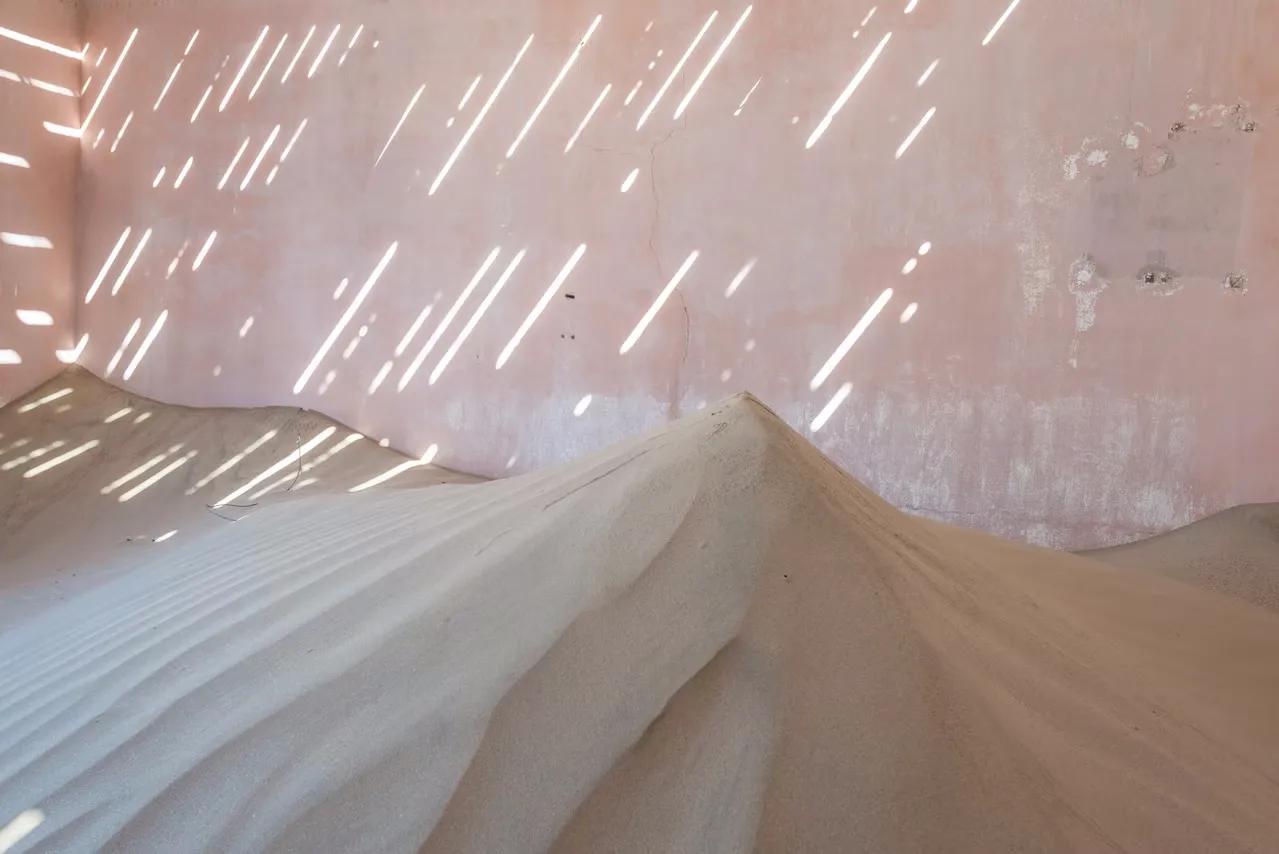
The families went to Lüderitz and to Europe. They left their homes and belongings behind, and the desert did the rest. Wind blew sand through gaps, and it piled up against doors until it broke through. Some rooms have formed small pyramid-shaped dunes below narrow windows.
Sand, hyenas and film crews
The desert has made the place its own. Brown hyenas shelter in the deteriorating buildings, and visitors who arrive early often find them alone apart from the animals. There are also snakes. The sand has erased the footprints of earlier visitors, and after a strong storm interiors can be smooth and unmarked.
The look of the place has made it a film location. Wikipedia lists productions including Dust Devil (1993), The King Is Alive (2000), Samsara (2011) and, in part, Fallout (2024), and the town has appeared on an album cover and in several documentaries. Paranormal tourists also report footsteps and voices, and the haunted reputation helps draw visitors, though that is folklore and not history.
Rediscovery and tourism
For a time the town was left alone. A German source says its tourism potential was rediscovered in 1980, when Lüderitz was also seeing an upswing, and that individual houses began to be excavated and restored. In 2002 a local private company, Ghost Town Tours, received the concession to manage Kolmanskop as a tourist site, according to National Geographic, and up to 35,000 visitors a year come. That benefits Lüderitz, the nearest town.
The site is not safe from its own popularity. National Geographic reports a yearly visitor cap and conservation work, but also studies from around 2010 that documented a marked deterioration of several structures, with the warning that the town could eventually vanish into the desert. The sources agree that only a few buildings, including the ballroom, theatre, bowling alley and ice factory, have had real preservation work.
Walking through it
A visit is a walk through a handful of restored buildings and a larger number left to the sand. The mine manager’s house has been lightly renovated and is in far better condition than most. The doctor’s house stands near the middle of the town. The architect’s house is a favourite with visitors. The hospital is a more dangerous place, with wooden planks laid to guide visitors around a room where the ceiling is collapsing.
In the grander houses you can still find stencilled walls and wallpaper, even though the wind sandblasts them daily. You find a rusting bathtub, an electric pole connected to nothing, and sunlight coming through wooden slats.
There is a small museum with exhibits on the diamond years and the smuggling stories, a gift shop and a café. One writer mentions apple strudel on the menu.
Reading it honestly
It is tempting to see Kolmanskop as a lost European luxury town reclaimed by sand. One desk-research guide to the area warns against that reading and asks visitors to think about labour, control of the mineral wealth, and what a restricted extraction economy did to the people it excluded. We think that is right. A good place to start is with the questions it suggests asking a guide or museum: whose lives are named, which workers are missing from the record, who controlled access and profit, and why the activity moved elsewhere.
The story of Zacharias Lewala is a good test. Without him there is no diamond rush, and the sources know almost nothing about him except that he found the stone, worked at Kimberley before, and was paid nothing for it. The other names in the story are the men who got rich.
Visiting
You need a permit to enter, because Kolmanskop sits inside the Sperrgebiet. Wikipedia says it is run by Namdeb, and National Geographic says a private company, Ghost Town Tours, holds the concession. The operator’s own information is the one to check before you go. Prices and times in the sources come from different years and do not all match.
The reported opening hours are from 08:00 to 13:00 daily, and several sources say that if you arrive after 13:00 you must wait until the next day. Guided tours run at 09:30 and 11:00 Monday to Saturday, and at 10:00 on Sundays and public holidays. The tour lasts about an hour, and is given in English and German, with Afrikaans also listed. It takes in the main buildings, including the ballroom, theatre, bowling alley and ice factory, and afterwards you can explore on your own.
Prices have varied. In November 2018 a travel blog paid 90 Namibian dollars per person for an entry permit that included the tour. Another source gives N$85 for adults and N$50 for children aged 6 to 14, with children under six free, and a third lists N$75 per person. A further visitor reported paying N$260 for two people and a car, which does not fit the others. Treat all of these as past prices. Bring cash, because one visitor found the card machine not working. Photography needs a separate pass if you want to enter outside normal hours: one source gives N$230 per person, valid for that day, from sunrise to sunset, including a guided tour, and says commercial photographers need a different permit at about US$500 a day. The same source suggests buying a photo permit the day before, because no one is at the gate before 08:00.
Some practical points from the sources. Drones and night access are prohibited. A pass covers only the marked Kolmanskop area, not the wider mining zone or the national park. Do not remove objects or enter closed rooms. Wear closed shoes because of broken glass, nails and metal, and take water, a hat and a scarf for the wind. Floors, walls and ceilings can collapse at any time. The town faces east, so photographers recommend the first hours after sunrise, and say that afternoon wind can make a sunset visit unpleasant because of blown sand.
There is no accommodation at Kolmanskop itself. Most people stay in Lüderitz, which is a short drive away, and reach it by the B4 highway from Aus, about an hour, or by one of the few weekly flights from Windhoek. One guide advises a 4WD for Namibian self-drive trips and a spare tyre, since many roads are gravel.
Conclusion
Kolmanskop lasted less than fifty years. It began with a stone that a railway worker picked up in the sand, and it ended when the stones were found in richer places and the people with the money moved on. In between, a German-style town grew up in a desert, supplied by ship and rail, supported by a forbidden zone that kept almost everyone else out, and built on the labour of people who were not allowed to enjoy what they dug.
The sources disagree on a great many details: the distance from Lüderitz, the date of the first find, the size of the claim, the number of residents, the tonnes or carats mined, the year mining stopped and the year the last family left. We have tried to show the range and not choose arbitrarily. What they agree on is the outline, and the outline is enough. Diamonds, a colony, a forbidden zone, a boom, a depletion, a move south, and the sand. A few buildings are being kept alive for visitors, and the rest are slowly filling up, one grain at a time.
Did you know?
- The name Kolmanskop means "Coleman's hill" in Afrikaans, after a transport driver who is said to have abandoned his ox wagon in a sandstorm.
- Zacharias Lewala had worked in the Kimberley diamond mines before he found the first stone near Grasplatz in April 1908.
- August Stauch is said to have tested the first stone by scratching his watch glass with it.
- The German authorities declared the southern coastal strip a Sperrgebiet, or forbidden zone, in September 1908.
- Fresh water, ice and buns were delivered to every house each morning by a donkey cart.
- The town's X-ray machine, installed around 1911, is described as the first in the southern hemisphere and was used to catch workers smuggling diamonds.
- By one account, workers found carrying diamonds were given laxatives and kept under watch.
- Houses were said to be built with sand imported from Germany because the local sand was too salty.
- In 1928 richer diamond deposits were found about 270 km to the south, near the Orange River.
- Brown hyenas shelter in the ruined buildings.
- The town has appeared in films including Dust Devil (1993) and The King Is Alive (2000).
- Up to about 35,000 visitors a year come to Kolmanskop, according to National Geographic.