A hill that did not exist in 1945
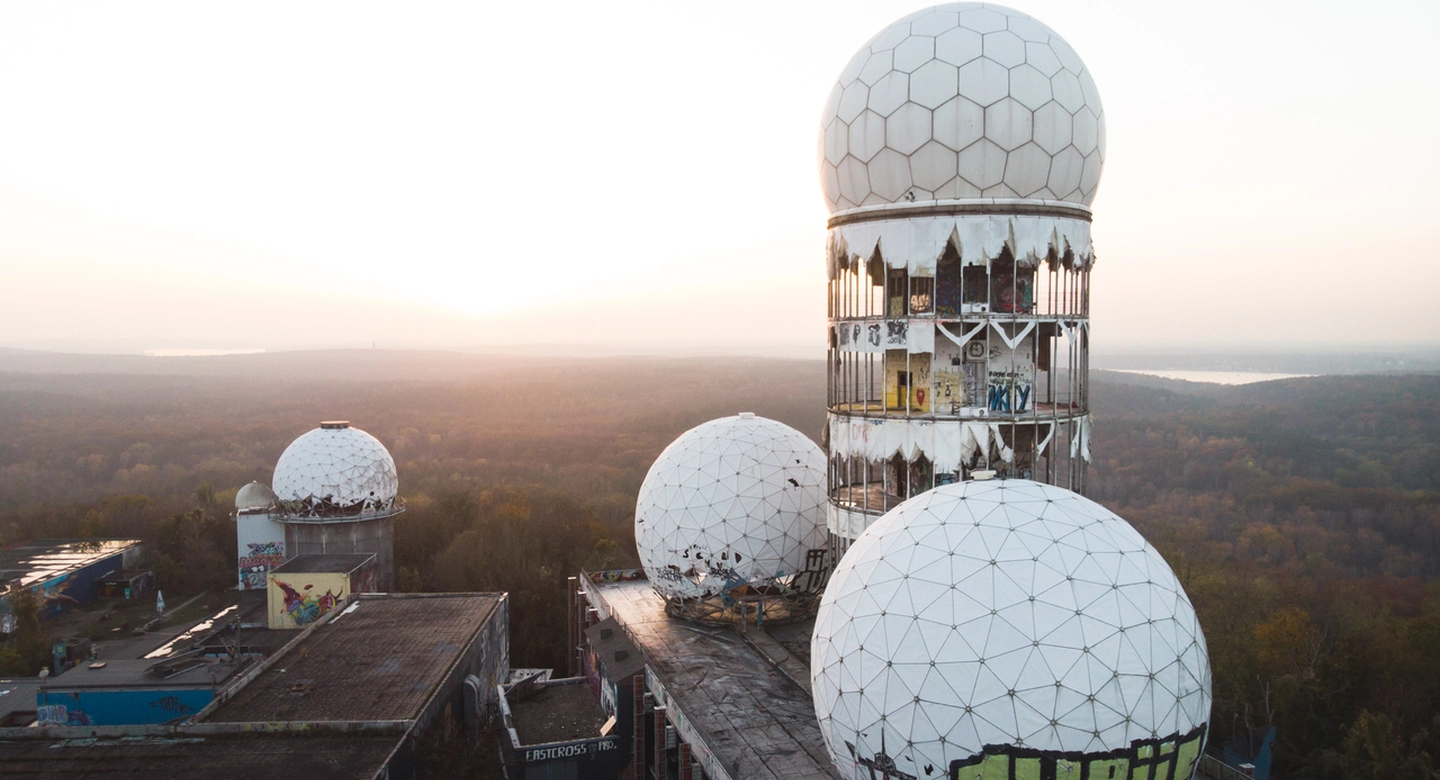
The highest point in West Berlin was not a hill in 1945. It was a marshy patch of the Grunewald forest with a half-built Nazi university on it. Within a generation it had become a wooded summit, with a ski jump, a toboggan run and, on the plateau at the top, a ring of white radar domes that listened to the other side of the Iron Curtain.
That hill is Teufelsberg, the Devil’s Mountain, named after the Teufelssee, a small lake nearby. It is a man-made landscape: a mountain of broken buildings from the city below, planted over with trees and then crowned with a spy station. The station has been empty for decades, and the domes are now famous for their graffiti, their echo and their view of Berlin.
This article follows the hill from its start as a Nazi building site to its rise on the rubble, then to the station and the years of arguments about what to do with it afterwards, and ends with what a visitor can see now.
The Nazi college under the hill
In 1937, according to one source, Adolf Hitler chose this area for a planned university town that would mark the western entrance to Germania, the monumental capital he wanted to build on the ruins of Berlin. The centrepiece was a military-technical college, the Wehrtechnische Fakultät, designed by Albert Speer. It was never completed, and what was built was damaged in the war.
After 1945 the Allies tried to get rid of it. They tried to demolish the buildings with explosives, but the structure was too solid. Covering it with rubble turned out to be easier, and it solved a second problem at the same time: the city was full of rubble.
Building a mountain of rubble
Berlin had been heavily bombed, and after the war there was a huge amount of debris to remove. The West Berlin authorities approved a new dumping site in June 1950, and it was planned at around 12 million cubic metres. During the Berlin Blockade, deliveries of rubble stopped because of a fuel shortage. After it ended, the dumping averaged 600 trucks a day, carrying about 6,800 cubic metres. The ten millionth cubic metre arrived on 14 November 1957, and dumping ended in 1972.
The sources do not agree on the total. One says the hill was built from about 26 million cubic metres of rubble, another gives 75 million, and a third article mentions both in different places, with 75 million moved in 20 years and about 26 million left when dumping closed. Height is also uncertain. The older estimates were 114 or 115 metres. Newer measurements gave 120.1 metres above sea level, which is about 80 metres above the surrounding plateau, higher than the Großer Müggelberg and the highest point in West Berlin.
After dumping stopped, the Senate had the hill planted with greenery. The hill was also used for sport. A 24-metre ski jump designed by Heini Klopfer opened in February 1955, and a larger one, with space for 5,000 spectators, followed on 4 March 1962. Ski jumping ended in 1969, and the jumps were removed in 1999.
The Hill: Field Station Berlin
The sources date the beginning of the station differently, as the late 1950s, July 1961 or October 1963. A reasonable reading is that mobile Allied listening units started working on the hill in July 1961 and that construction of the permanent facility began in October 1963. One guide says the US and British installed the radomes in 1961.
The hill lay in the British Sector, but the station was run mainly by the Americans. The sources variously call it a US Army or NSA station, and one names the US Army Security Agency. It was known as Field Station Berlin, and American soldiers called it The Hill. It is reported to have been one of the National Security Agency’s largest stations, and it is said to have been part of ECHELON, the network of signals intelligence stations, though that is stated as a report rather than a fact. British involvement is also mentioned in several sources.
What did they listen to? The sources say military traffic from the Soviet Union, East Germany and other Warsaw Pact states. A former listener, Chris McLarren, who worked there for the US Army from 1973 to 1975, described the work as tedious but essential, like putting together a puzzle. He summed up the reach of the equipment with a joke the staff used to make.
We used to say you could hear Brezhnev cleaning his teeth.
Chris McLarren, former US Army listener at Teufelsberg
The sources give no staff numbers. The station worked round the clock, with personnel stationed there at all times.
Strange side effects
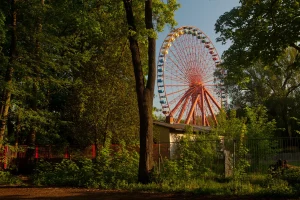
The listening station had a few effects on the hill’s other uses. At the request of the Americans, the ski lifts were removed because they were said to disturb the signals. A Ferris wheel from a fair in the nearby district of Zehlendorf was found to affect reception, so it was left standing after the fair had gone. Rumours of a shaft, a tunnel or a submarine base under the hill have never been proven.
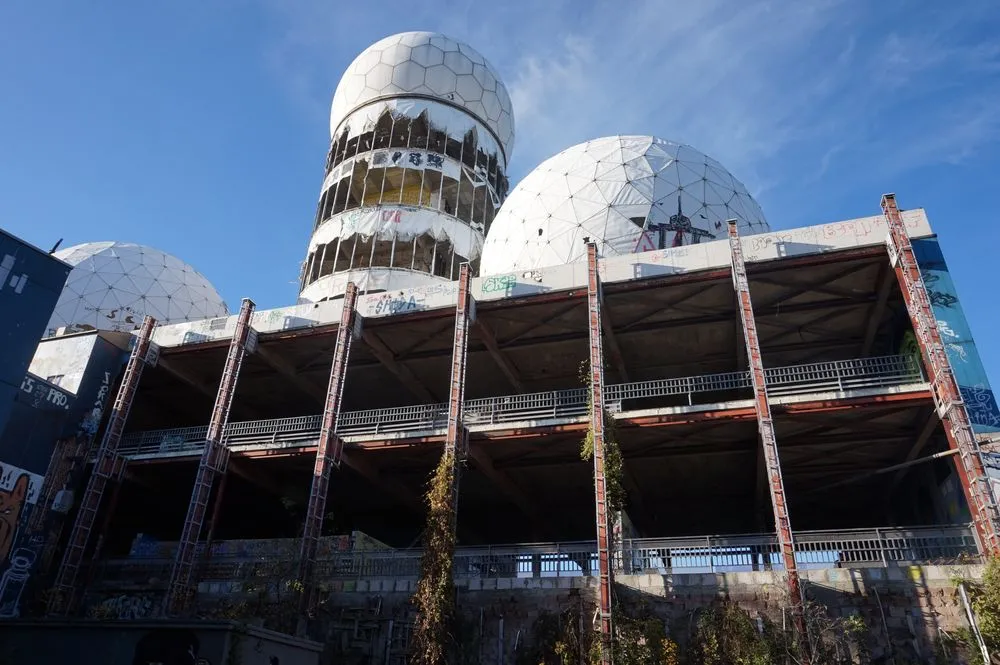
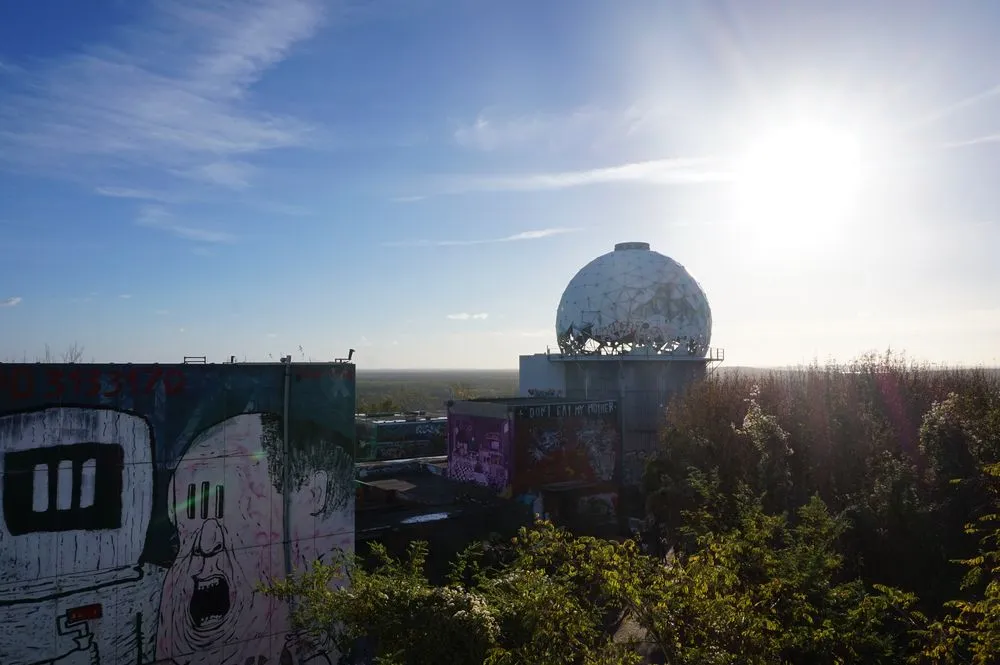
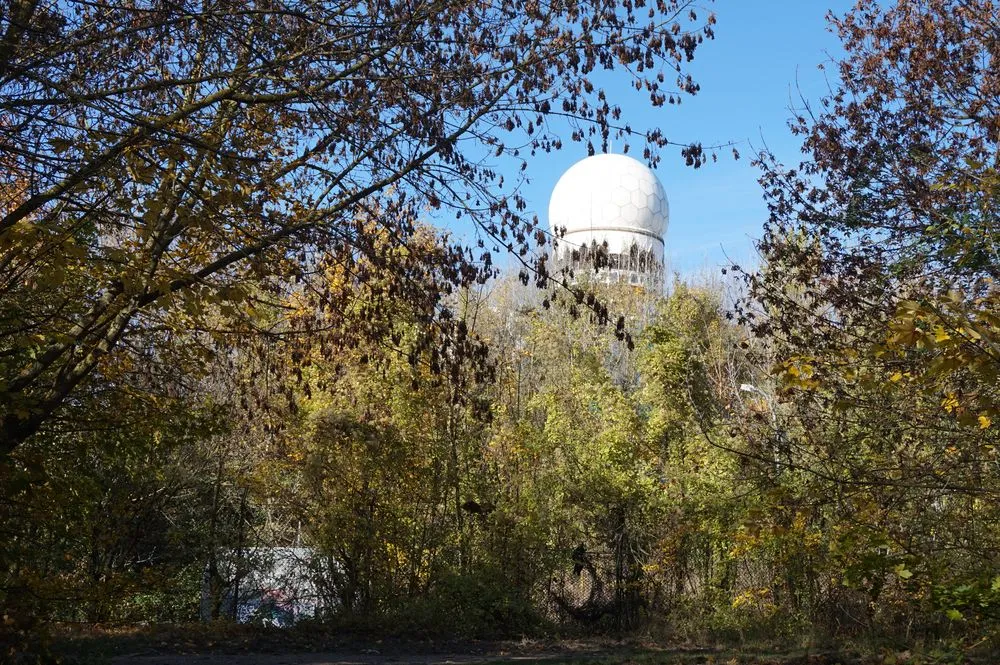
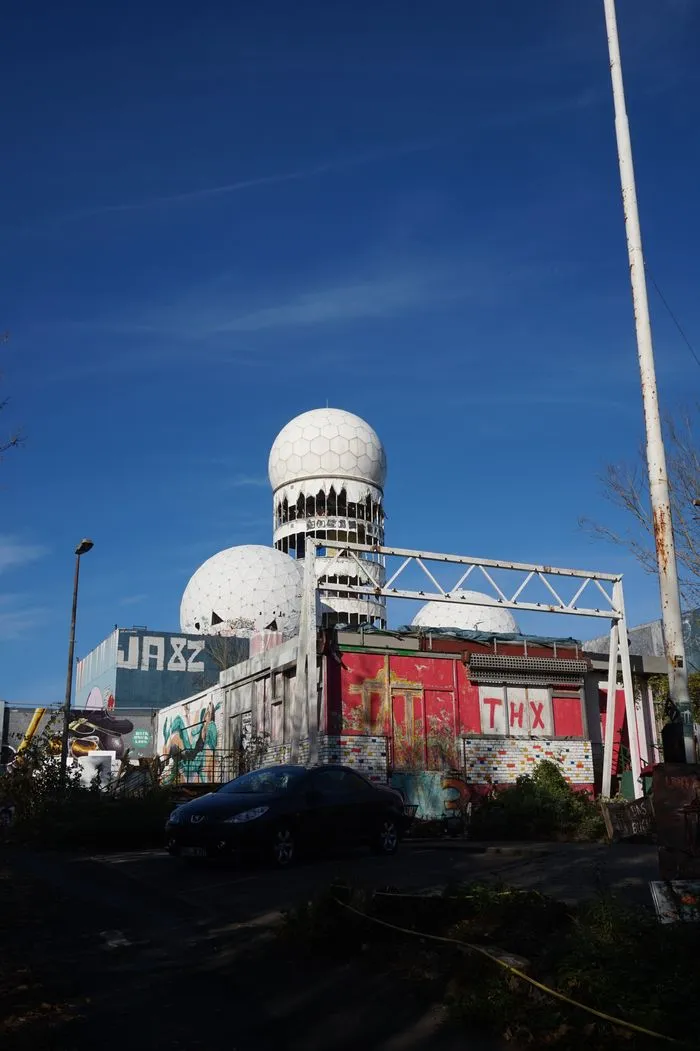
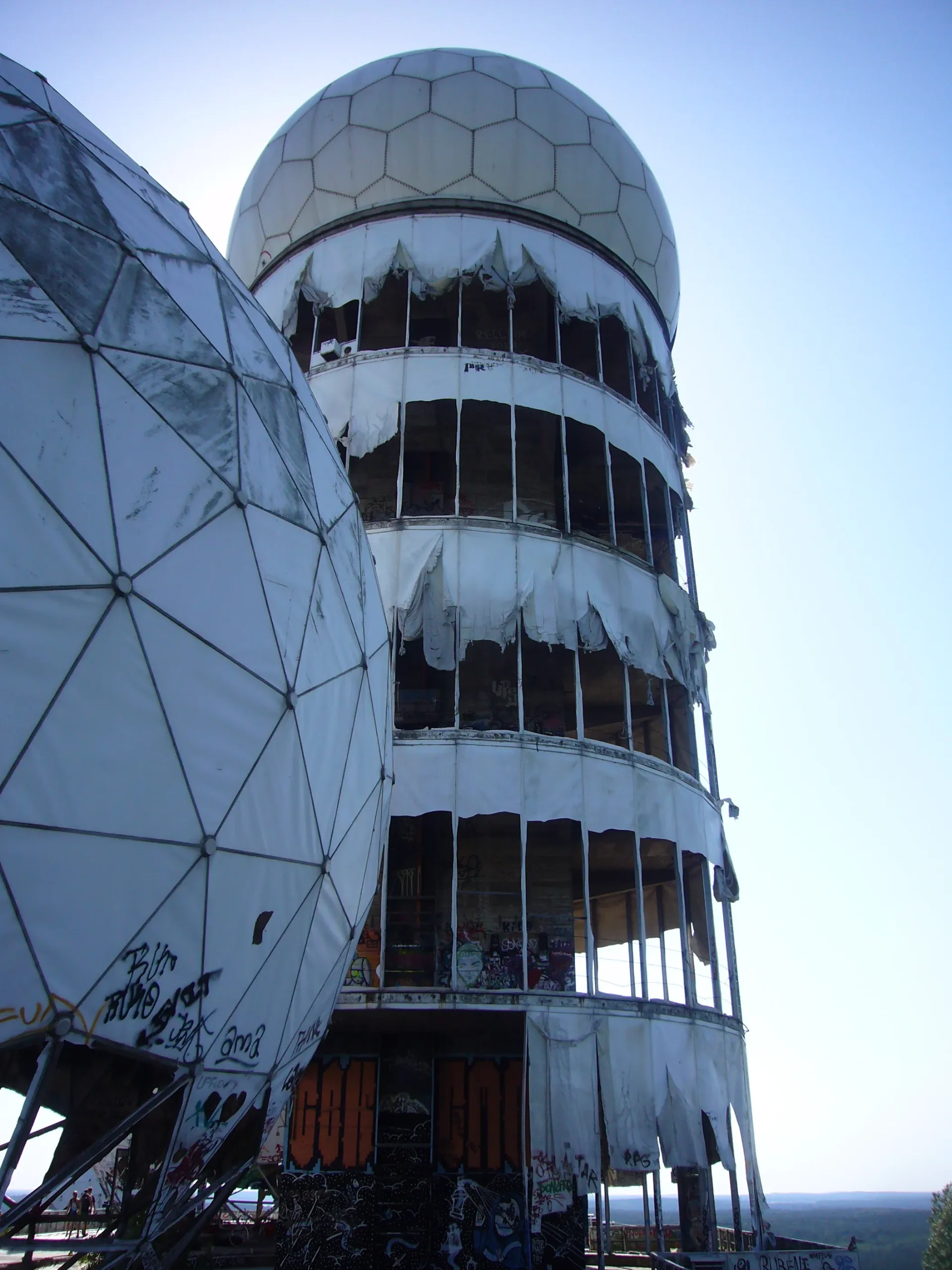
The radomes are the part that everyone remembers. Radomes are the white covers that protect the antennas inside, and from a distance they look like golf balls on a hill. One guide counts four and another three, and the sources do not settle the number.
The end of the station
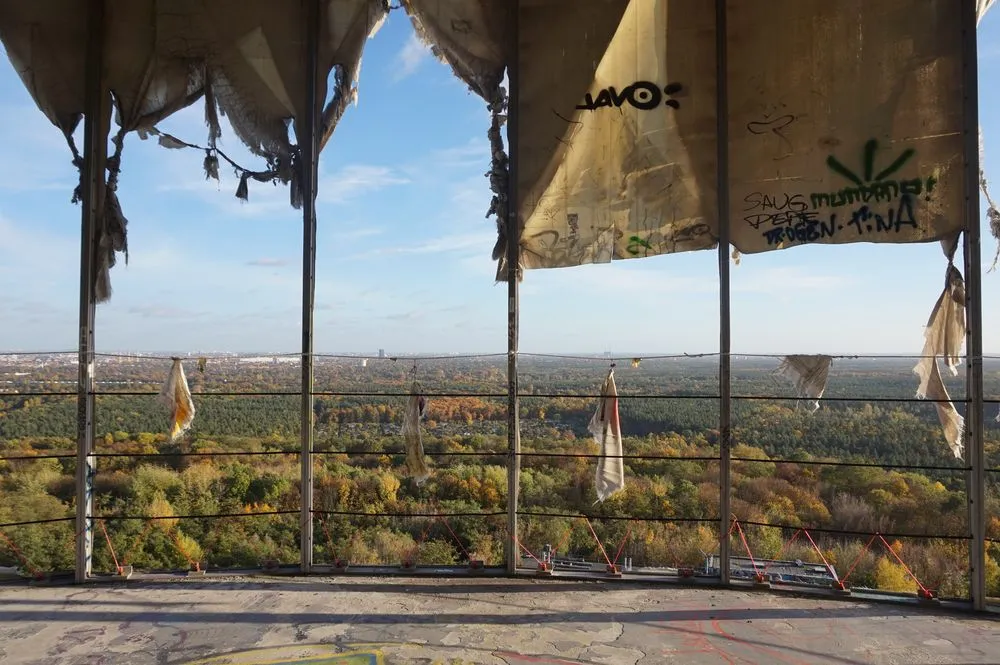
The station worked until the end of the Cold War. The sources give the closing date as 1989 in one article, which describes it as a year after the Wall fell and so does not quite fit, and as 1991 in another, which also says “early 1990s”. Wikipedia says only that it operated until the fall of East Germany and the Wall, after which it was closed and its equipment removed. One tourism page adds that the hill was used for air traffic control until 1999, when the city sold it.
The buildings and radomes stayed. Squatters moved in during the early years, and DJs held all-night parties. Visitors who went in without permission risked a trespassing fine.
Plans that never happened
After reunification the city sold the site to private investors. The year is 1996 in two sources and 1999 in another. Proposals over the years included a five-star hotel, loft apartments, a gated community, a car park and a spy museum. A mortgage of nearly 50 million dollars is mentioned. Berlin was in a building glut, the venture became unprofitable and it was abandoned, leaving, according to one report, only an unwanted showroom flat.
In 2006, the hilltop was classed as forest in Berlin’s land use plan, which rules out building. One article calls it a nature reserve. Demolition would be far too costly. In 2007, the film director David Lynch reportedly wanted to buy the site for a Vedic Peace University run with the Maharishi Foundation. That also came to nothing.
In 2009 a group of veterans, the Field Station Berlin Veterans Group, campaigned to preserve the site and name it after Major Arthur D. Nicholson, who was shot by a Soviet sentry near Ludwigslust on 24 March 1985. In September 2013 the veterans marked the 50th anniversary of the station with commemorative stamps and a plaque.
Opening to the public
For years the site was fenced off and visited illegally. How it opened depends on the source. One article from 2014 says that in 2012 the Cologne investment company that owns the site handed it to a tenant, Shalmon Abraham, who opened it legally and ran paid tours and rented it out for photo shoots, filming and events. Another says the landlord, Marvin Schütte, opened it to visitors in the summer of 2016. They may describe different stages of the same change, and the sources do not say.
The attention grew. After the revelations about the NSA’s spying, visitor numbers rose by 30 to 40 per cent in a year, according to Chris McLarren, who by then gave tours. An article from the mid-2010s says about 10,000 people visited each year, most of them from the former West Germany and many from abroad. A group was also formed to study turning the site into a memorial and a venue for art and culture. No agreement had been reached, and the city of Berlin was reported to be considering a purchase, though the asking price could be hard for it to meet.
What the site is like now
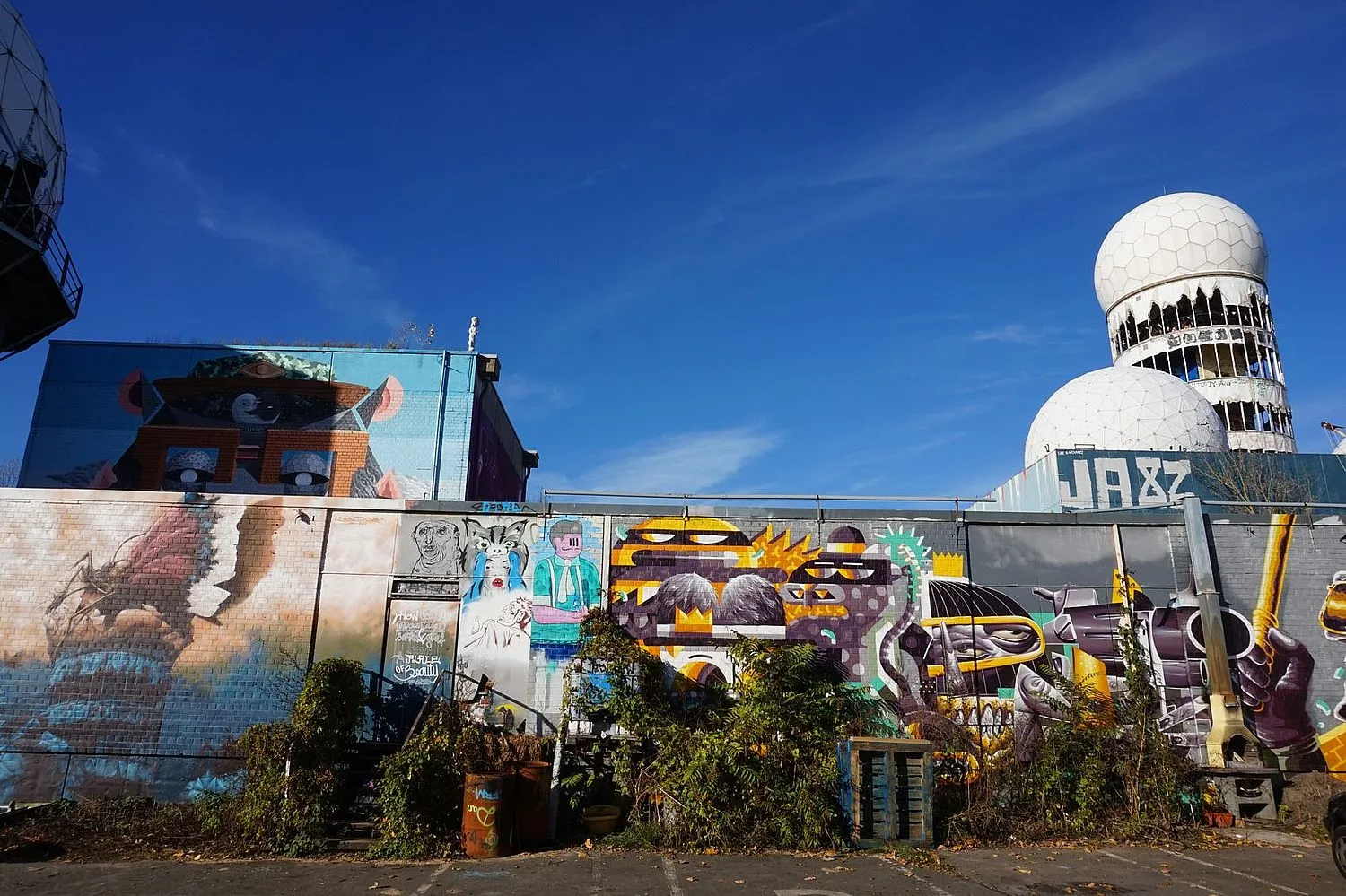
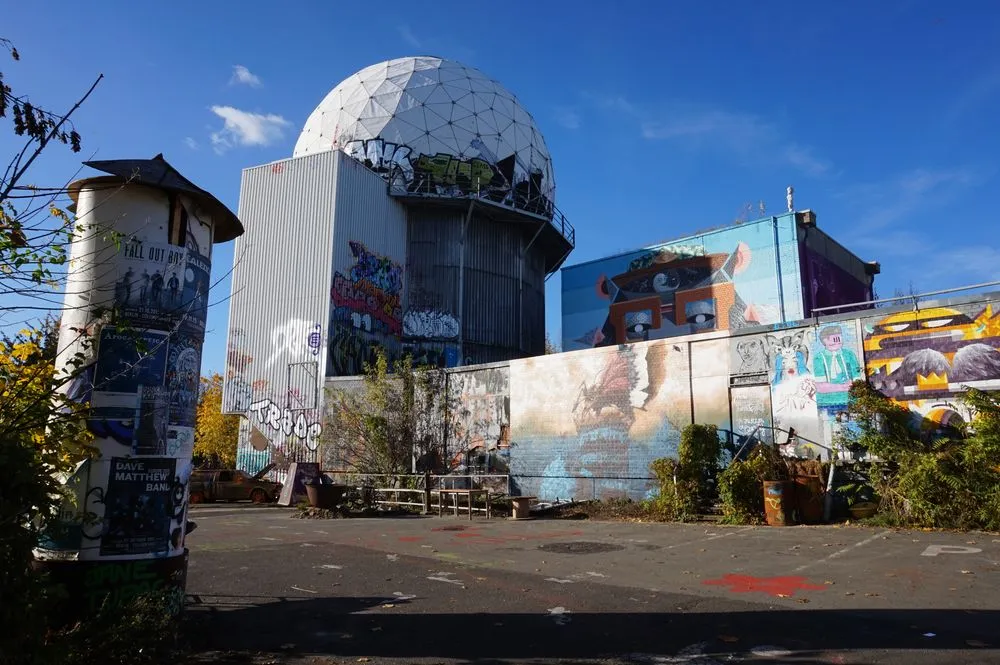
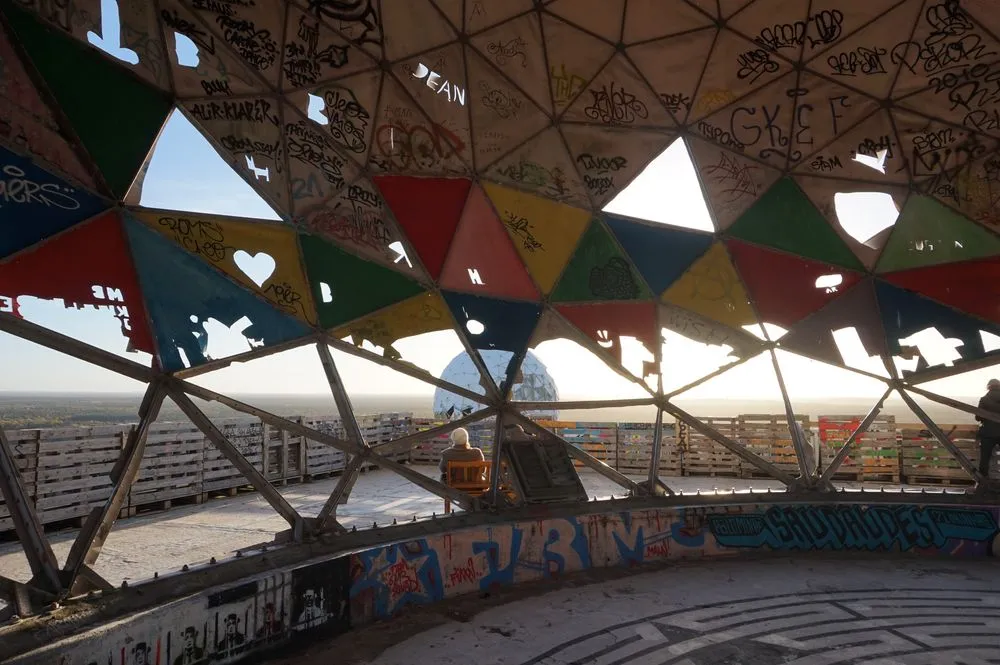
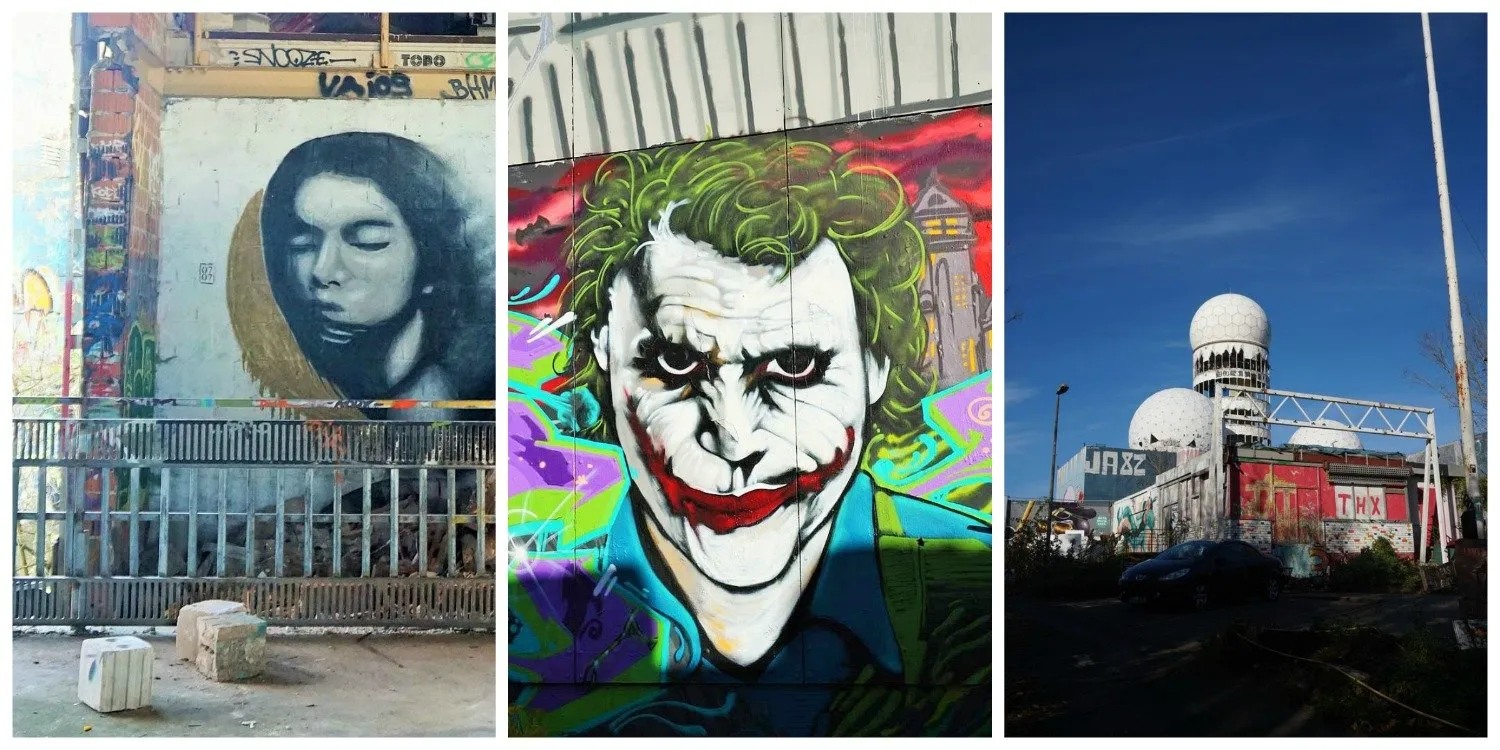
The buildings are a multi-level, warehouse-like structure, with a main tower and several radomes on the top level. Graffiti and street art cover most of the walls. The site has invited artists to paint, and there is said to be a street-art exhibition of more than 400 works, with new pieces added each month. Some radomes are painted, one pink, and others have tattered panels. The largest dome still has intact panels, and its acoustics are known for amplifying even small sounds. An urban gardening project has also started on the grounds.
The view is a major part of the visit. From the top of the main tower, after hundreds of steps, there is a 360-degree view over Berlin and as far as Potsdam, and the hill can be seen from the city centre on a clear day. The highest dome is reached by climbing more than five flights of stairs in the dark.
Exhibitions have been added. A temporary exhibition called Declassified: The Secret of the Teufelsberg uses multimedia stations and witness interviews to tell the story of the site. The Allied Museum, run by the association Alliierte in Berlin, covers the years from 1945 to 1994, with a historical exhibition since October 2024, and admission is included in the ticket. Tours include a historical tour of about 90 minutes, a flashlight hike and a quiet ascent.
Teufelsberg in culture
The station has been used as a location and a subject. It appears in the finale of the film We Are the Night, in the television series Berlin Station and Covert Affairs, and in the films The Gamblers, The Same Sky and Manifesto. The artist Hito Steyerl used it in Factory of the Sun and The Identity Factory. It features in music videos by Ilanois, Bob Mould and The Faim, and a multiplayer map in the video game Call of Duty: Black Ops Cold War is called Echelon. Books include Voices Under Berlin by T.H.E. Hill, The Wall by John Marks and William Boyd’s novel The Predicament.
Visiting Teufelsberg
The address is Teufelsseechaussee 10, in the Grunewald. The site is open daily from 11 am until sunset, with last admission an hour before sunset, though private events and filming can change the hours. Entry is paid. Sources give different prices in different years: 8 euros in 2017, 10 euros in 2024, 12 euros in another guide and 15 euros for a tour in 2014. Check the official website before you go.
The nearest station is Grunewald on the S-Bahn, and the walk from there takes about 30 minutes, mostly uphill through forest paths. A road also leads to the main entrance, and parking on site is reported at 5 euros. A full visit takes about 45 minutes if you explore on your own.
Take a torch for the dark stairwells, and wear sturdy shoes, since there is broken glass, debris and uneven ground. Signs warn visitors not to climb the fence, and many people try to get in for free. Wild boar are reported on the hill, and mountain bikers use the trails, so watch for both. Nearby, there is the Teufelssee, which is popular for picnics, and the Olympiastadion, which can be reached by walking downhill.
Conclusion
Teufelsberg is a mountain made out of a city’s destruction, with a spy station on top. Its layers are easy to read: a Nazi university that was never finished, the rubble of the war that covered it, a Cold War listening post that made use of the height, and then thirty years of arguments about what to do with the empty shell.
No plan for the site ever s쳮ded, and the one thing that did work was the least planned: artists painted on the walls and people came to look. The listening station stopped listening a long time ago, but the domes are still there, with the echo, the graffiti and the view, which is what visitors come for.
Did you know?
- Teufelsberg is named after the nearby Teufelssee, which means Devil's Lake.
- The hill covers the unfinished Wehrtechnische Fakultät, a Nazi military-technical college designed by Albert Speer.
- The Allies tried to demolish the college with explosives, but it was too solid, so they buried it under rubble.
- The ten millionth cubic metre of rubble arrived on 14 November 1957, and dumping ended in 1972.
- Sources give the hill's height as anywhere from 114 to 120.1 metres.
- A ski jump designed by Heini Klopfer opened on the hill in February 1955.
- US soldiers called the station The Hill.
- The ski lifts were reportedly removed at American request because they disturbed signals.
- A Ferris wheel from a fair in Zehlendorf was found to affect reception, so it was left standing.
- In 2007, the film director David Lynch reportedly wanted to buy the site for a Vedic Peace University.
- The hilltop was classed as forest in Berlin's land use plan in 2006, which rules out building.
- The site has more than 400 street-art works, according to a Berlin tourism page.
- The Allied Museum has had a historical exhibition at Teufelsberg since October 2024.