
A village stopped on one afternoon
Oradour-sur-Glane is two villages standing side by side. The new one is a living commune of about 2,500 people, with a town hall, shops and a school. The old one stands beside it, and it has been kept as it was left in the summer of 1944.
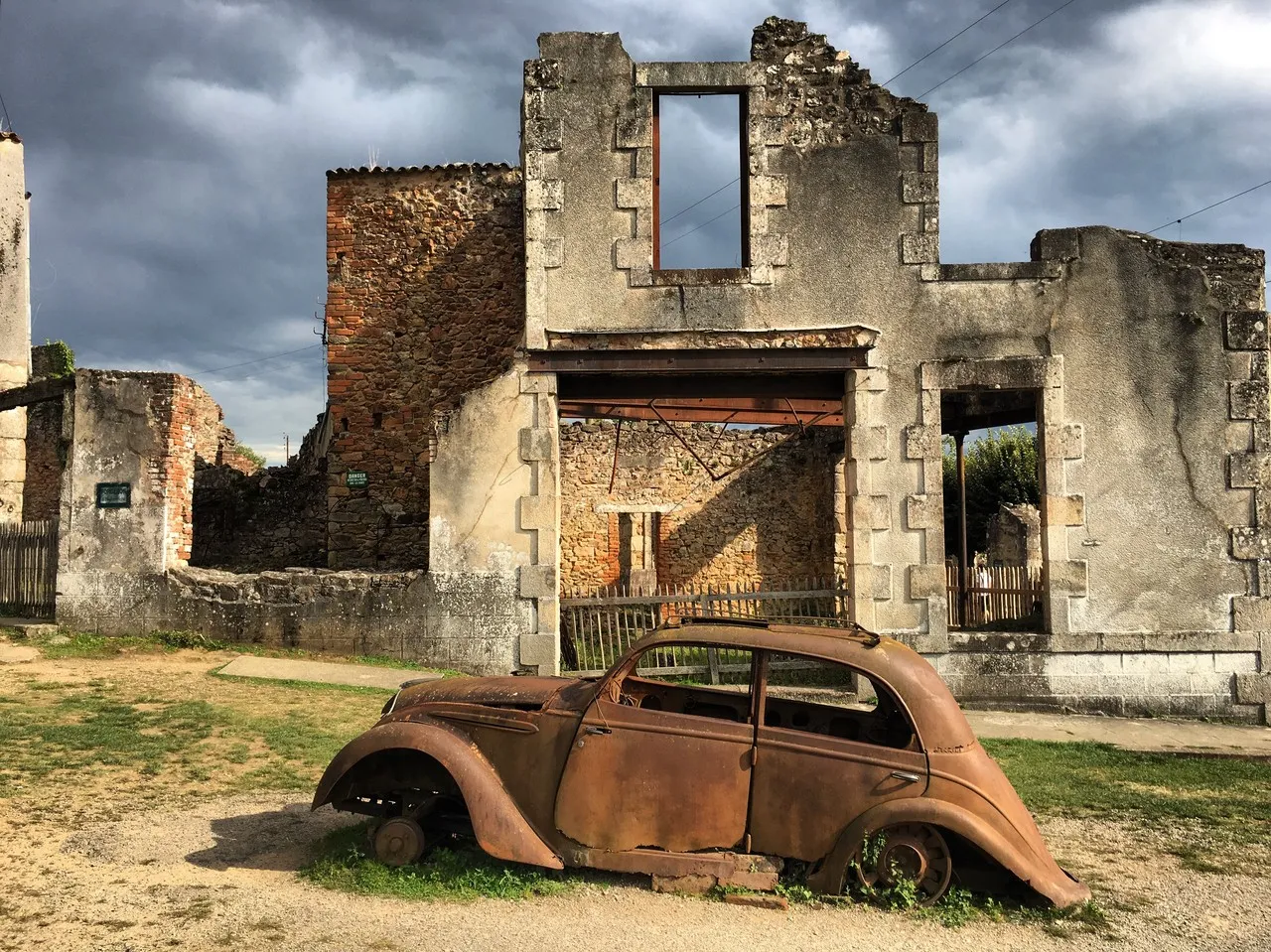
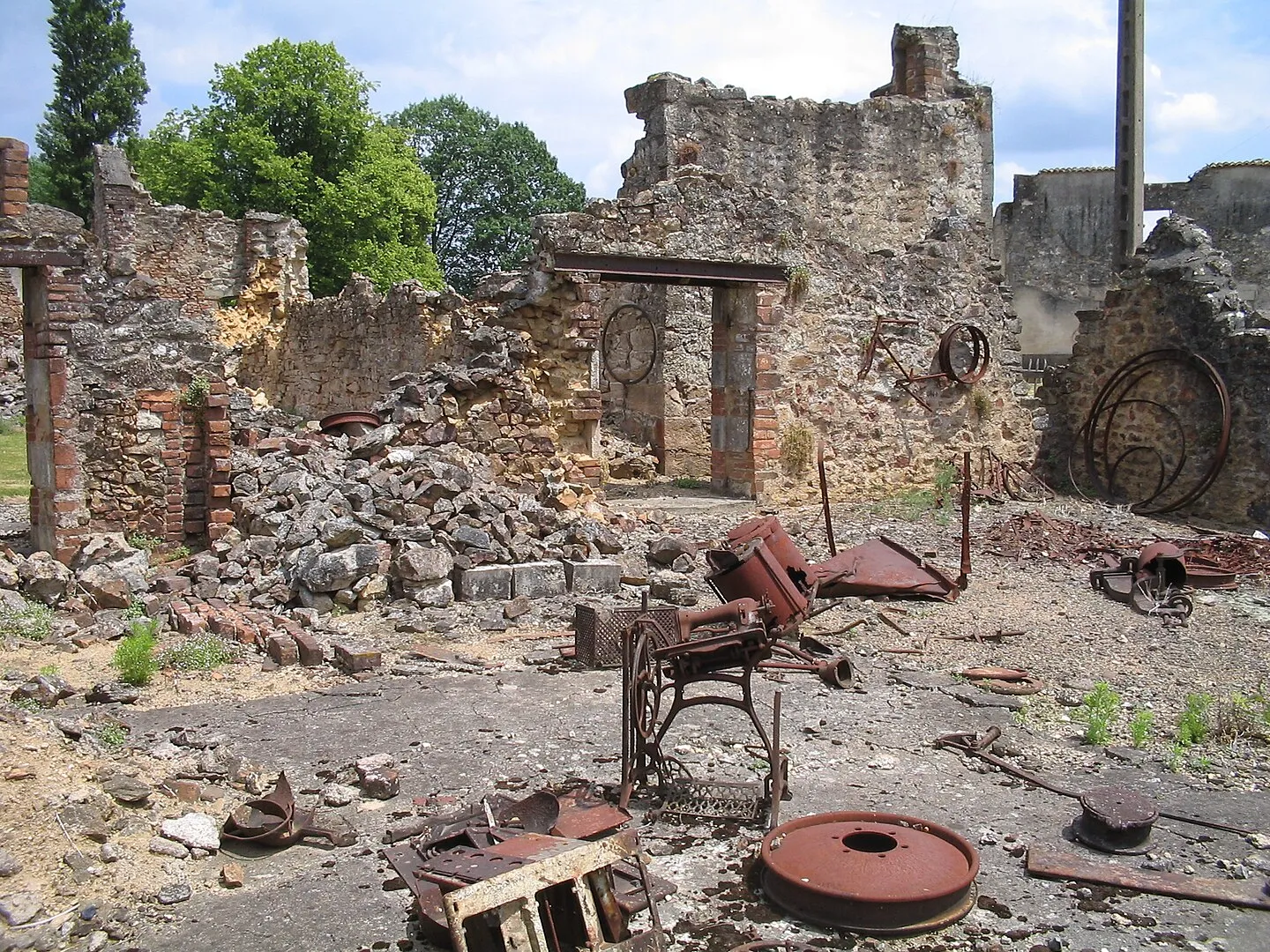
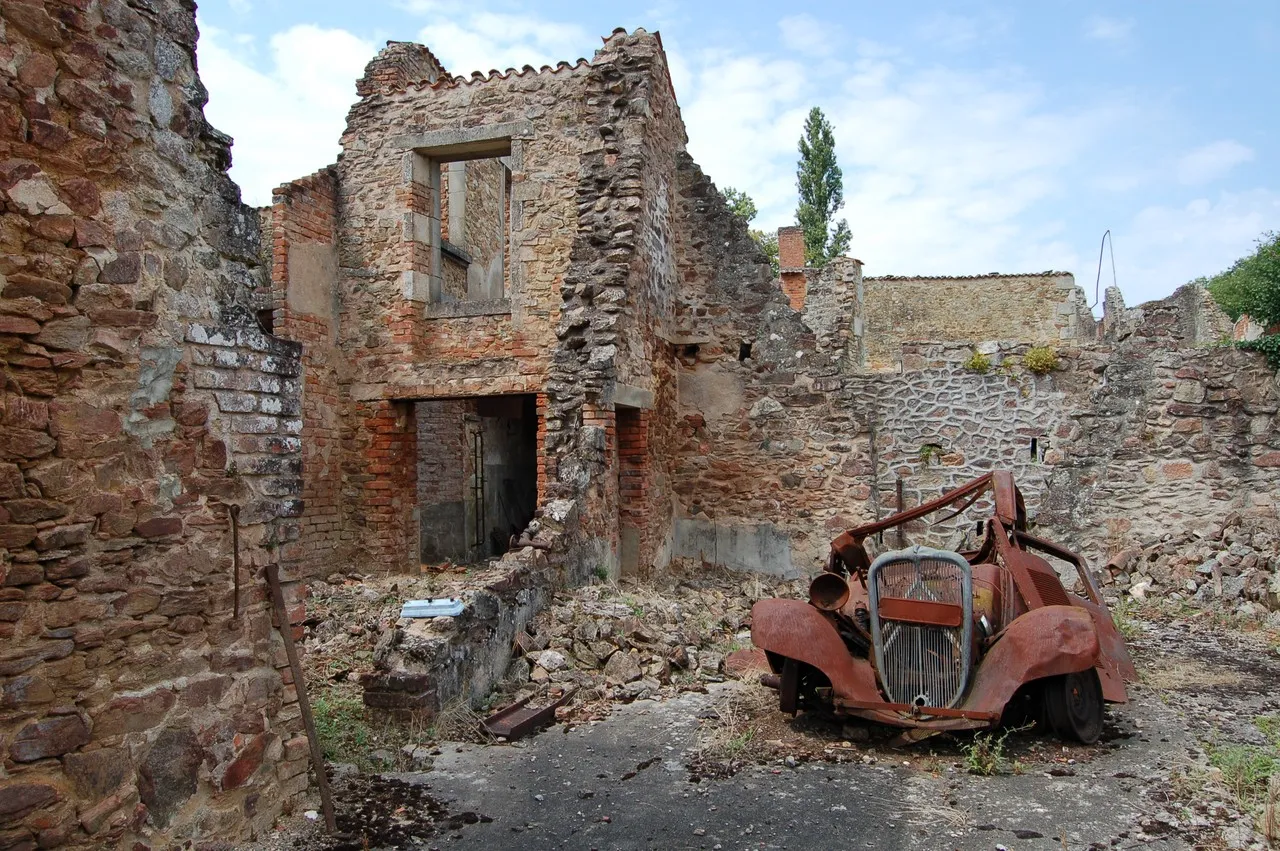
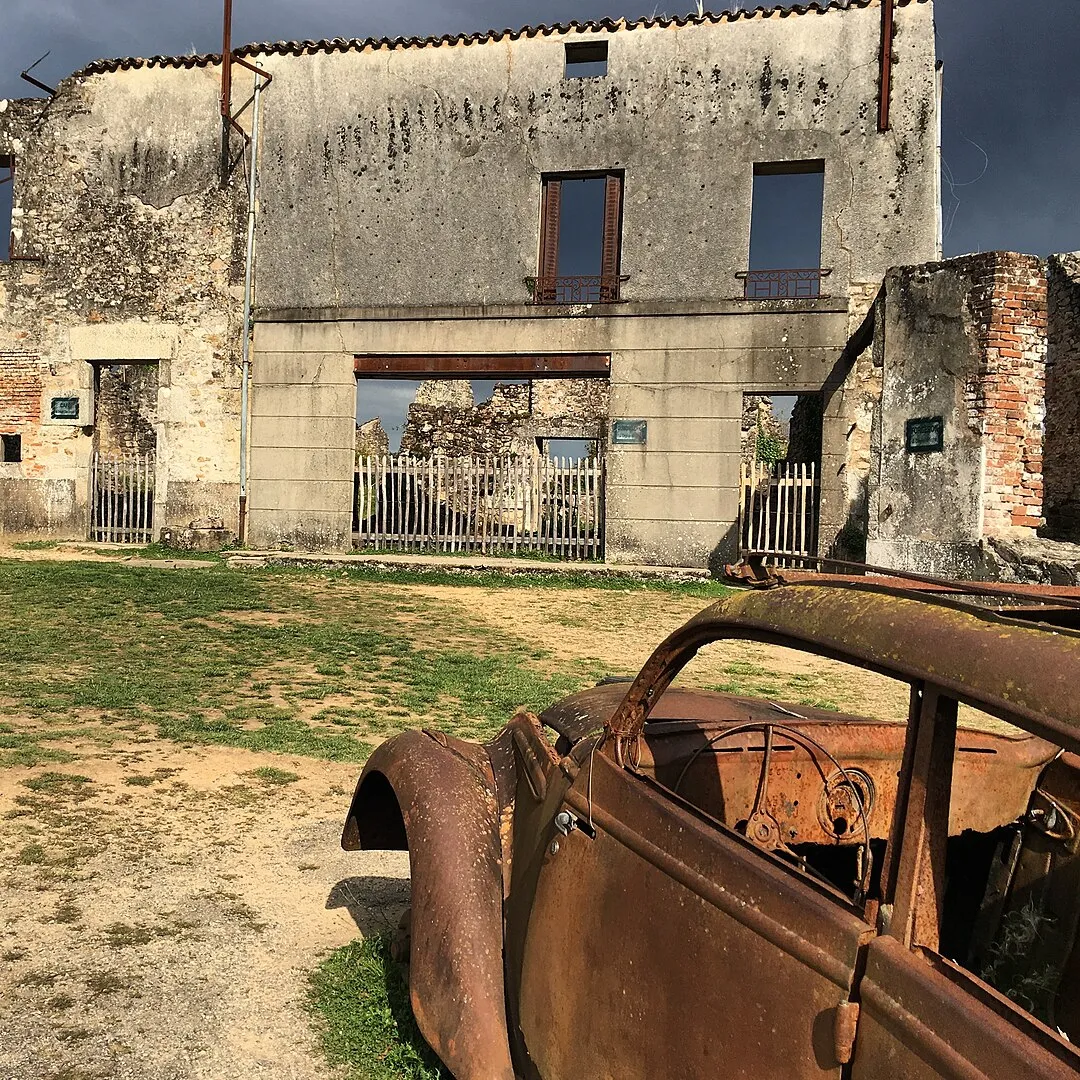
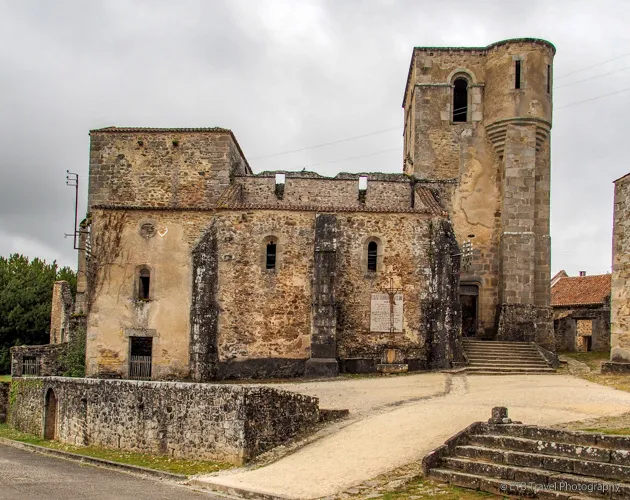
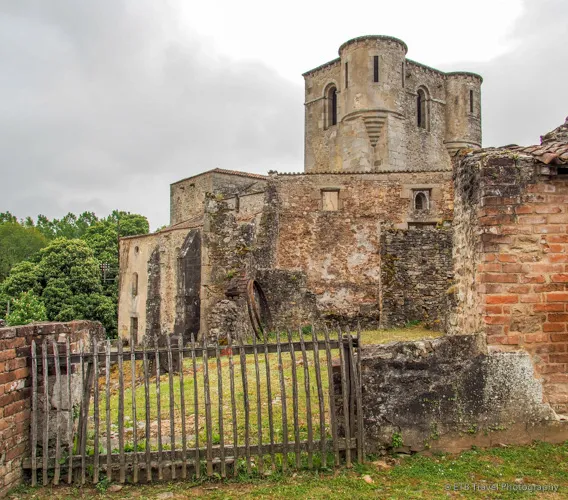
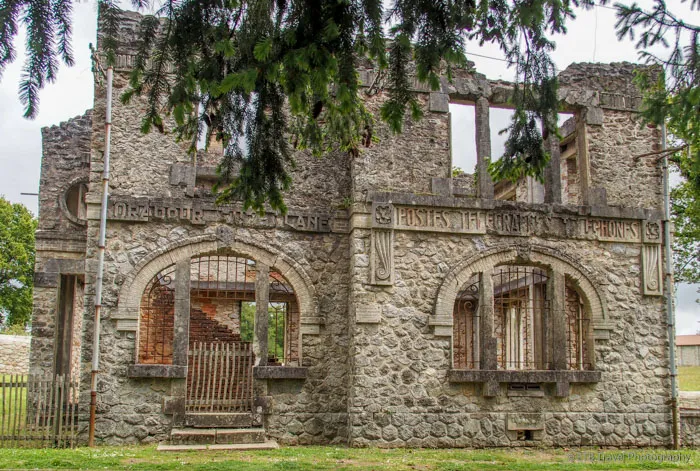
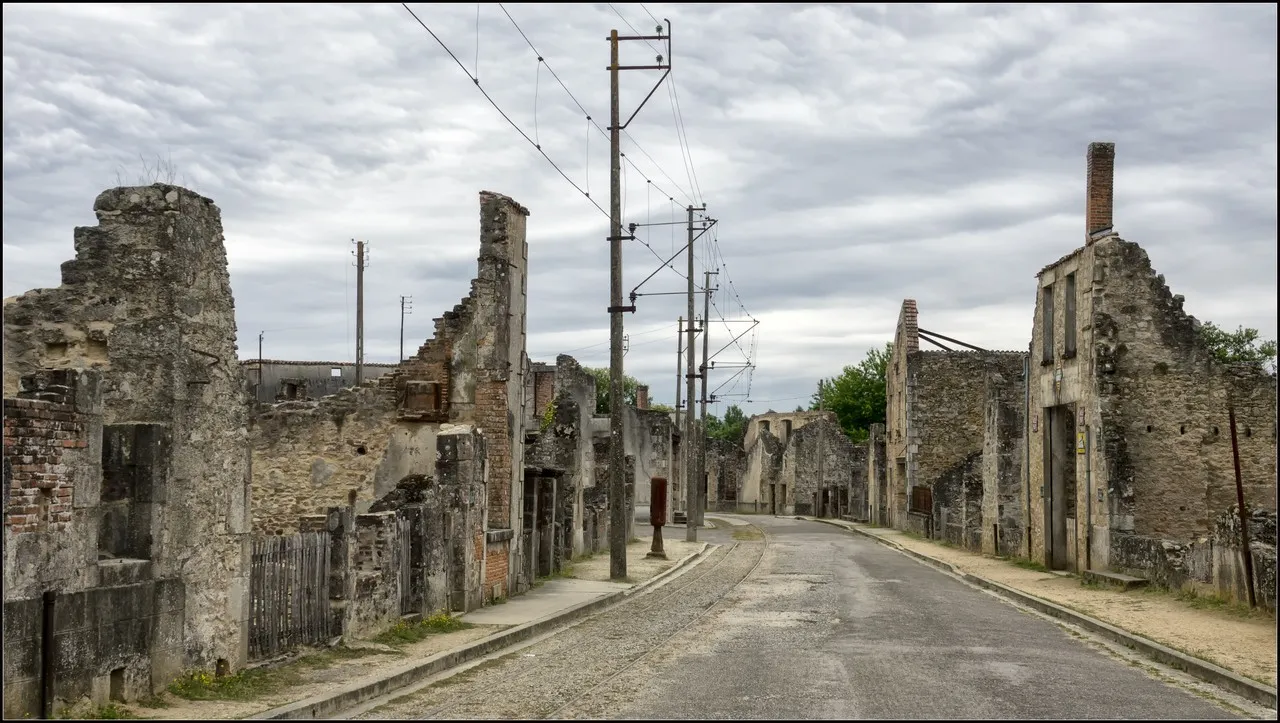
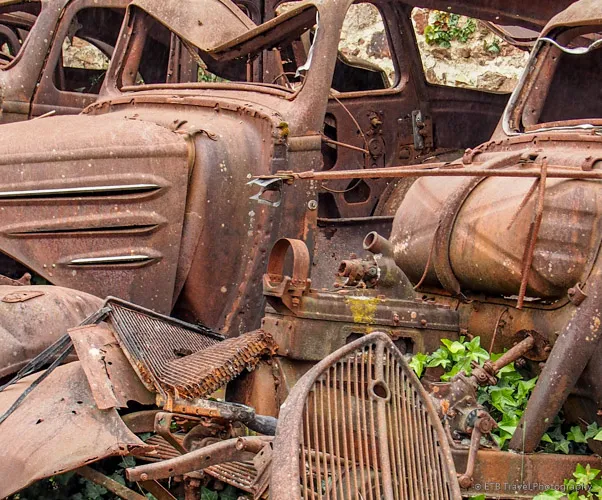
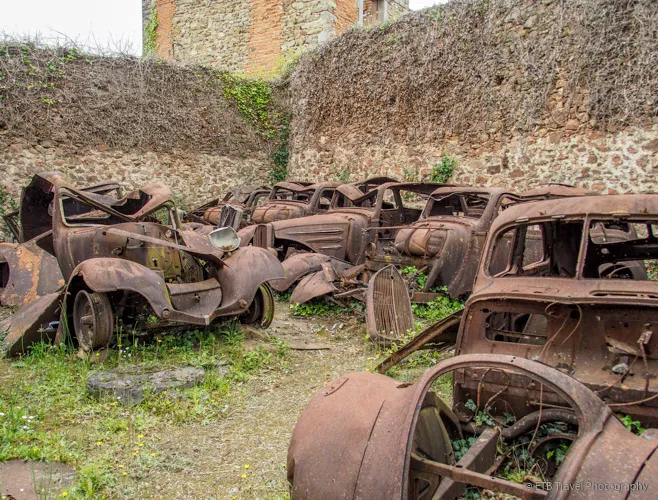
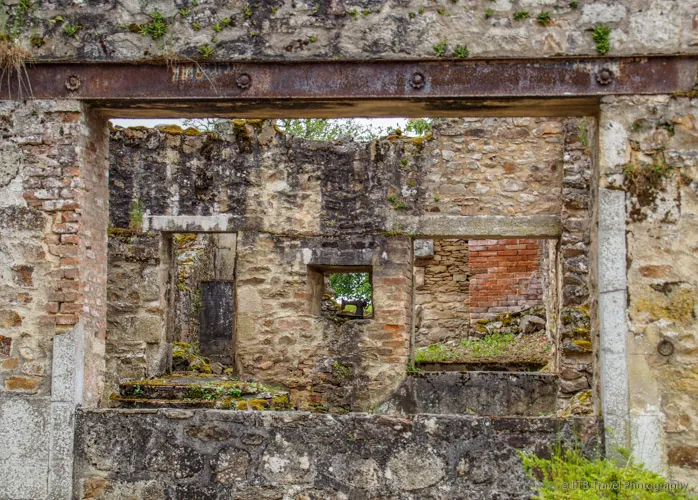
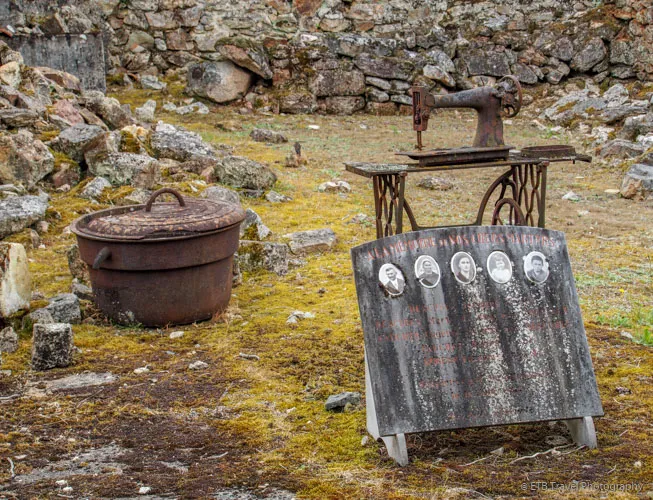
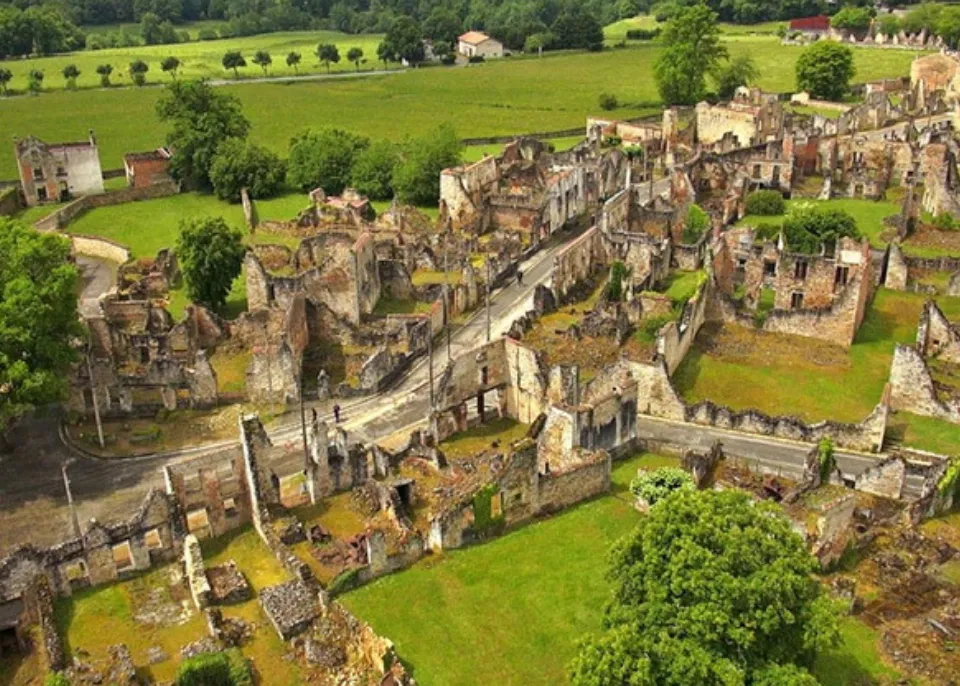
Walking through it, you pass the shell of the church, the walls of houses with their roofs gone, the open doorways of the houses. Tram rails still run down the main street, with the overhead cables above. Small signs mark the places where people were killed. The inscription on plaques around the village is two words: Souviens-toi, which is French for Remember.
On 10 June 1944, a single afternoon, soldiers of the Waffen-SS killed 642 of the people who lived in or were passing through this village. It is one of the best-known massacres of civilians by German forces in the Second World War. The French government chose to leave the ruins as they were. This article follows the village from before the war, through the events of 10 June, to the trials, the memorial and what visitors find there today.
The village before the war
Oradour-sur-Glane lies in the Haute-Vienne, in the old Limousin region of west-central France, at an average height of about 285 metres. It is near Limoges and was connected to the city by a tram line. In the 1940s, it had the things a rural centre needs: shops, a bakery, a garage, a café, a school and two hotels.
The sources disagree on how many people lived there. One gives 1,574 inhabitants in 1936, and another says a little over 650. The gap probably reflects the village itself against the wider commune, but the sources do not say. On the day of the massacre there were also people who did not live there, including Spanish, Italian and Polish residents and six passers-by who had come through on bicycles.
The village was not known as a centre of the Resistance. That is one of the facts that most strongly shapes the way the massacre is remembered, and it comes up again below.
June 1944: after D-Day
The Normandy landings began on 6 June 1944. The 2nd SS Panzer Division Das Reich was operating in the Limousin, where there had been partisan activity, including at Tulle.
On 9 June, an SS officer, Sturmbannführer Helmut Kämpfe, was captured near Saint-Léonard-de-Noblat, east of Limoges, by a Resistance group. According to the official account he was killed the next day. There is some dispute over the details. His role in the division is given differently in different places, and one account of his death says he was burned alive in front of an audience, while the officer who later claimed to have found his body described it as handc■ in a burned ambulance.
The capture of Kämpfe is the link most often drawn to Oradour. The officer who led the troops, Adolf Diekmann, said he acted after seeing the fate of a friend. The units involved belonged to the 4th SS Panzergrenadier Regiment Der Führer. The sources name Sylvester Stadler as regimental commander and Heinz Lammerding as the division’s commander. They also disagree on whether Diekmann commanded the regiment or the first battalion, so he is described here simply as the officer who led the troops at Oradour.
10 June 1944: the assembly
On the afternoon of Saturday 10 June, the SS arrived. One guide gives the time as about 14:00. The troops surrounded the village and ordered everyone to assemble for an identity check, in the village square or fairground.
At about 15:30, according to the same guide, the men were separated from the women and children. The women and children were taken to the church. The men were led away in groups to six barns and sheds, where machine guns had been set up. The village was being looted at the same time.
The barns
At about 16:00, an explosion was heard, which seems to have been the signal. The men in the barns were shot. According to the sources they were shot in the legs first, then covered with fuel, and the buildings were set on fire. The bodies were burned.
Five men survived the barns. One of them was a young man called Robert Hébras, who was 18 or 19 at the time, depending on the source. His life after that day is the story of the memorial, and it is told below.
The church
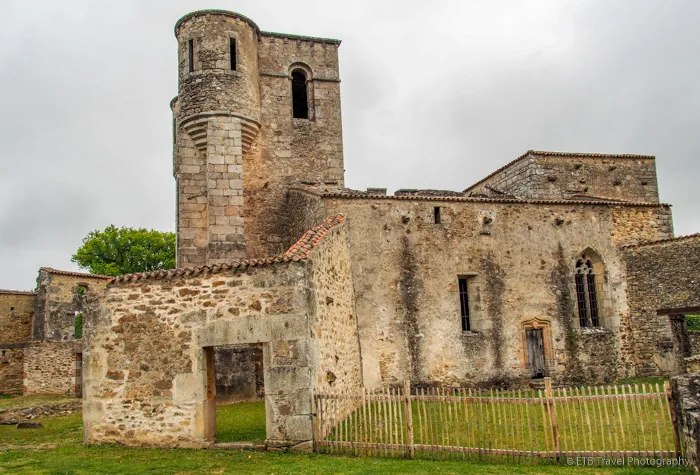
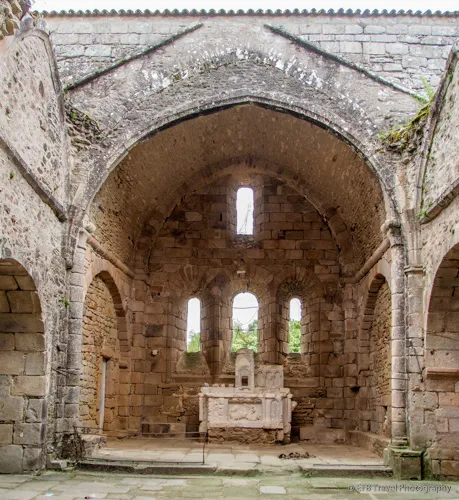
The women and children had been taken to the church. Inside, soldiers placed a device that produced smoke. Those who tried to escape through the doors and windows were machine-gunned, and those who stayed inside died in the fire.
One woman survived. Marguerite Rouffanche, who was 47, escaped through a window of the sacristy with a young woman and a child. The other two were shot, and Rouffanche hid in a row of pea plants through the night. A seventh person who had survived at first was shot dead on a road later. Rouffanche is the only survivor from the church.
The sources are not all in agreement on the survivors. The most common count is six: five men and the woman. One encyclopedia gives ten, and one travel guide says only one person survived, which conflicts with its own text. The best-supported figure is six.
Night and morning
That night the village was partly razed. On the morning of 11 June, witnesses found smouldering ruins and the remains of the dead. The streets were cleared, but the insides of the buildings were left as they were.
Speaking about the loss of his friends, Robert Hébras said:
My best friends who were standing next to me, died.
Robert Hébras, survivor of the Oradour-sur-Glane massacre
The dead
The usual figure for the death toll is 642: 190 men, 247 women and 205 children. Some sources give 207 children. A reference note cites a woman named Ramona Domínguez Gil as a 643rd victim, reported in 2020, so you will see both 642 and 643. A 1944 report by an American airman gave “some 500”.
The dead were not all from Oradour. They include 17 Spanish people, eight Italians, among them a woman with seven of her nine children, and three Poles. Three parish priests were among the men.
Why Oradour?
The question has been asked from the first week, and the sources give more than one answer.
The first explanation is reprisal. The SS had lost an officer, and the Resistance had been active in the Limousin. One account says Diekmann meant to destroy Oradour-sur-Vayres, whose people were said to help the Maquis, took a wrong turn and reached Oradour-sur-Glane, whose people had never supported them. Another says two members of the Milice told him early on 10 June that Kämpfe was being held at Oradour-sur-Vayres. The sources do not say how these fit together.
One guide says the unit was not ordered to carry out the massacre. Protests came afterwards from, among others, Field Marshal Erwin Rommel and the Vichy government. Diekmann himself never faced the trial that was planned for him: he was killed in Normandy on 29 June 1944, and the charges were dropped.
The sources agree that Oradour-sur-Glane was not known as a Resistance centre.
The decision to keep the ruins
After the war, the French state faced a question: rebuild or preserve. The answer, given on the orders of Charles de Gaulle, was to preserve. The old village was to be kept as a permanent memorial to the people who died, and a new village would be built on a nearby site, to the west of the ruins, for the survivors and the people who came afterwards. A population of 2,375 is given for the new village in 2012.
The ruins have been kept with as little intervention as possible. Some work has been done to stabilise the walls. Recently, money has been allocated to repair the church so that it does not collapse. Robert Hébras himself had a different view, as he said to a reporter in 2019.
I believe that we should wait for the ruins to disappear themselves.
Robert Hébras, survivor, speaking in 2019
Justice, partly
Very few of the men who carried out the massacre were punished. Diekmann was dead by the end of June 1944. The division commander, Heinz Lammerding, was never extradited from West Germany and died in 1971 after a business career.
A trial was held in Bordeaux in 1953. It began on 12 January. The sources say 21 defendants were present, of whom seven were German and 14 were Alsatians. Alsace had been annexed by Germany, and many Alsatians had been forced into the SS, the so-called malgré-nous, meaning against their will. On 11 February the court convicted 19 of the defendants, with sentences that included prison terms and two death penalties. On 19 February, an amnesty law freed the Alsatians, and there were protests in the Limousin. The remaining Germans were released by 1958.
In 1983 a former SS officer, Heinz Barth, was found in East Germany. He was tried in Berlin and sentenced to life imprisonment. He was released in 1997 and died in August 2007.
In 2014, prosecutors in Cologne charged Werner Christukat, then 88, with 25 counts of murder and hundreds of counts of accessory to murder. He had been 19 at the time of the massacre. The court dropped the case on 9 December 2014 for insufficient evidence. He died in 2020.
The Centre de la Mémoire
In 1989, the association of victims’ families and local authorities proposed a memorial centre to President François Mitterrand. It opened to the public on 12 May 1999, and President Jacques Chirac dedicated it. The French politician Jean-Claude Peyronnet, who was born in 1940, is credited with creating the Centre.
The museum stands next to the ruins and serves as the entrance. It contains a permanent display, a short film and a section on the aftermath. Among the objects shown are personal items recovered from the ruins, including watches that stopped at the hour of their owners’ deaths. A guide suggests allowing one to one and a half hours for a visit.
Presidents have come to the village. Chirac dedicated the Centre in 1999, Gerhard Schröder mentioned Oradour in 2004 when he was German Chancellor, and the German president Joachim Gauck and the French president François Hollande visited together on 4 September 2013. Emmanuel Macron met Robert Hébras on 28 April 2017.
Robert Hébras
Robert Hébras (29 June 1925 to 11 February 2023) was the last survivor to die. He spent almost his entire adult life telling the story, including by giving tours of the ruins. He was 93 at the time of the 75th anniversary, in June 2019, when he spoke to students in a video made for a French news channel. His last visit to the village, with President Macron and schoolchildren, was in 2017, according to that report. He was 97 when he died.
The massacre appears at the start and end of the documentary series The World at War, and the singer Didier Barbelivien wrote a song about it, Les amants d’Oradour. It is often compared with Lidice, the Czech village destroyed by Nazi forces in 1942.
What the ruins look like
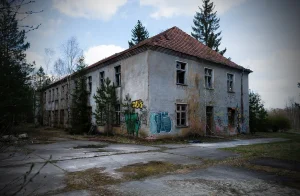
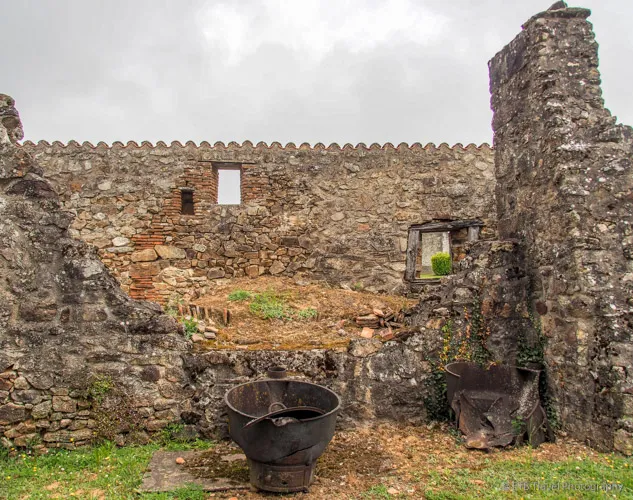
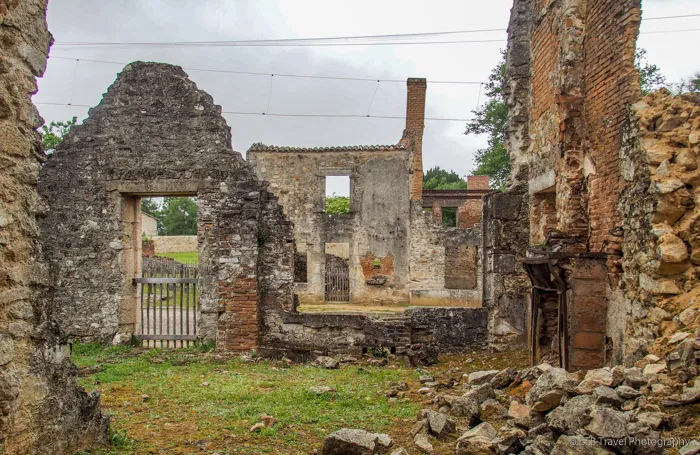
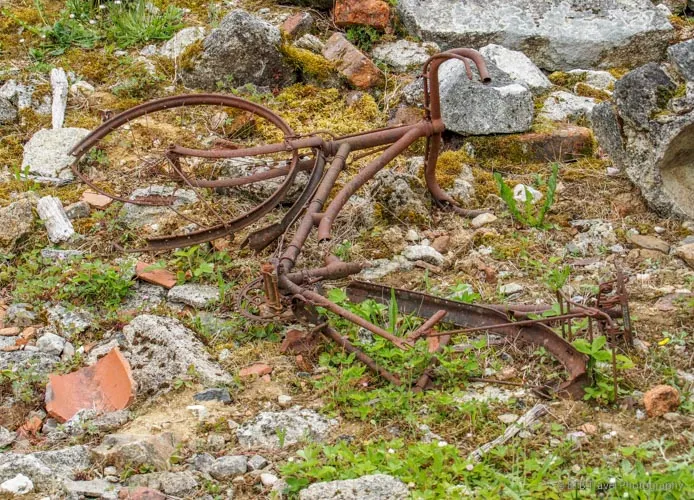
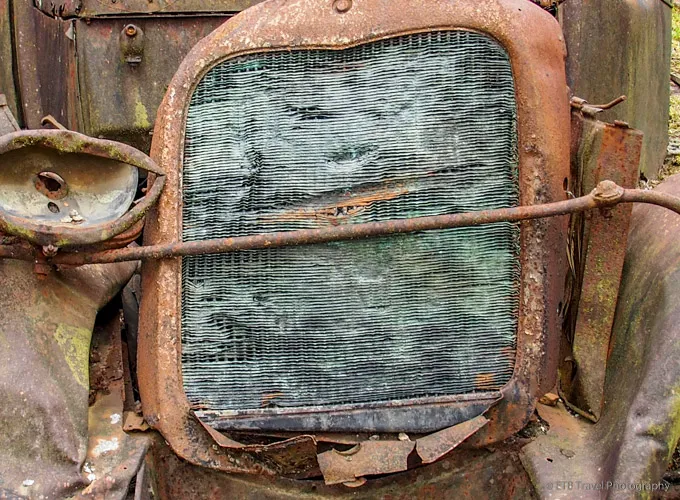
Visitors enter the ruined village through the museum or through one of two gates. Inside, the main street is lined with roofless houses. There are tram tracks and overhead cables. Signs mark the barns and the places where people were killed. Many of the interiors were left undisturbed after the war.
The church is the central place. It is the building to which funds have been directed to prevent collapse. The plaques around the village carry the same message: Souviens-toi.
Visiting Oradour-sur-Glane
The ruined village is open all year and entry is free. When the Centre de la Mémoire is closed, which a recent guide gives as after hours and from 16 December to 31 January, there are two gates for access. The Centre is open seven days a week from 1 February to 15 December, with hours that change by season: from 09:00 to 16:00 in February, up to 18:00 in the summer, and back to 16:00 from November. Its ticket was 7.80 euros in the guide’s most recent update, with reduced and free categories. Check the official site before you go, because hours and prices change.
The guide notes that photography is not allowed in the Centre. It does not say whether the rule applies to the ruins, so ask on site.
This is a memorial for people who were killed, and visitors are expected to behave accordingly. Keep to the paths, stay out of the ruins that are fenced, do not climb on walls and do not touch the objects. Some walls are unstable. The nearby new village is a living community, so be considerate in the streets around it.
Conclusion
Oradour-sur-Glane was an ordinary village, with a tram line, a bakery, a café and a school, and it is remembered because of what was done to it in a few hours on a Saturday in June 1944. The sources do not agree on every detail, such as 642 or 643 dead, six or more survivors or the officer’s rank, but they agree on the main facts. The village was surrounded, the men were shot, the women and children died in the church, and the place was burned.
The decision to leave it in ruins has shaped how the massacre is remembered. A ruin that is kept still is also a ruin that decays, and the last survivor himself thought the walls should be left to fall in time. For now they stand, with the tram rails in the road and the word remember on the plaques, next to a new village where people live.
Did you know?
- The massacre took place on 10 June 1944, four days after D-Day.
- The soldiers belonged to the Der Führer regiment of the 2nd SS Panzer Division Das Reich.
- Most sources give 642 dead, but some give 643, because a woman named Ramona Domínguez Gil was reported as a 643rd victim in 2020.
- The dead included 17 Spanish people, eight Italians and three Poles.
- Marguerite Rouffanche, aged 47, escaped from the church through a sacristy window.
- Tram rails and overhead cables are still visible on the main street of the ruins.
- The plaques around the village carry the words Souviens-toi, which means Remember.
- The Centre de la Mémoire opened to the public on 12 May 1999.
- The 1953 Bordeaux trial began on 12 January, and an amnesty law freed the Alsatian defendants on 19 February.
- Heinz Barth was sentenced to life in East Germany in 1983 and released in 1997.
- Robert Hébras, the last survivor, died on 11 February 2023, aged 97.
- The ruined village is free to enter and open year-round, according to a recent guide.