A sky the colour of a bruise
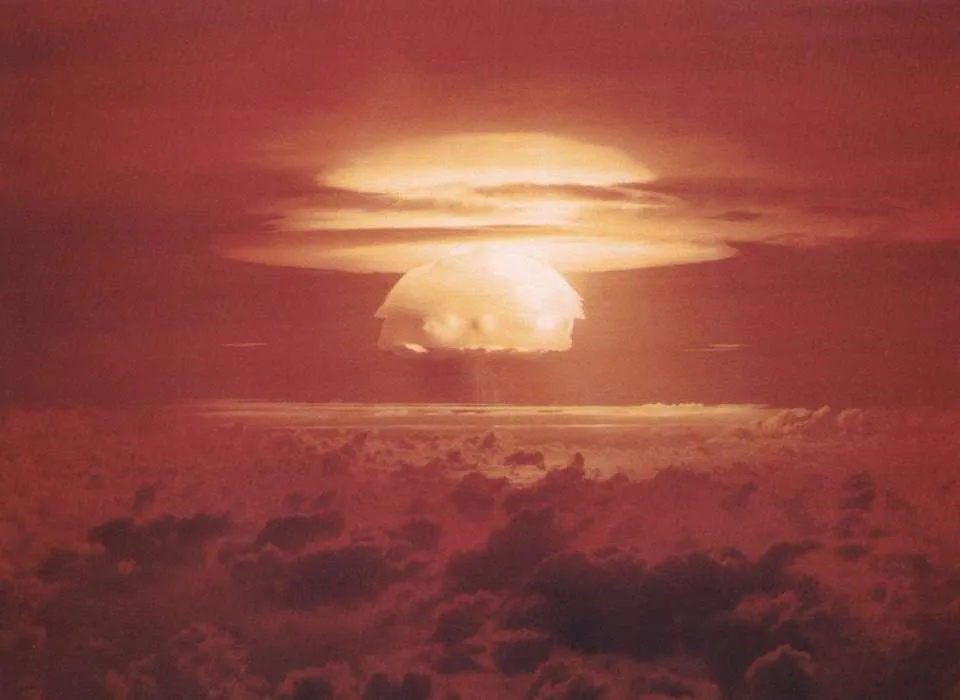
On the evening of 29 September 1957, people across the Chelyabinsk region looked up and saw colours that had no business being there: bluish-violet, orange, red and blue, smeared across the sky. The next morning the regional newspapers explained it. Polar lights. Rare so far south, but not impossible, and nobody was in a position to argue.
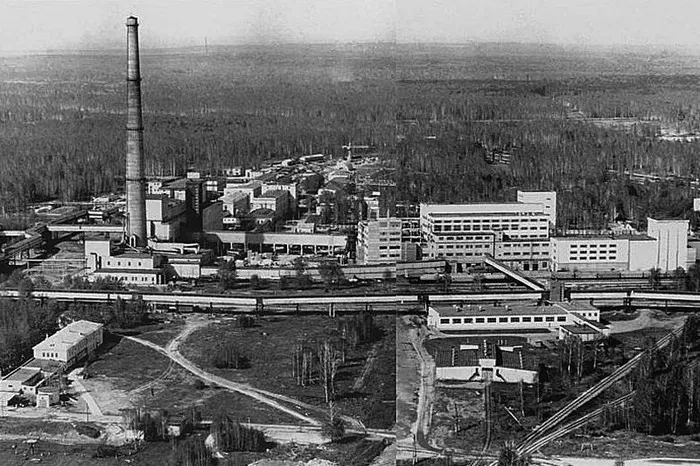
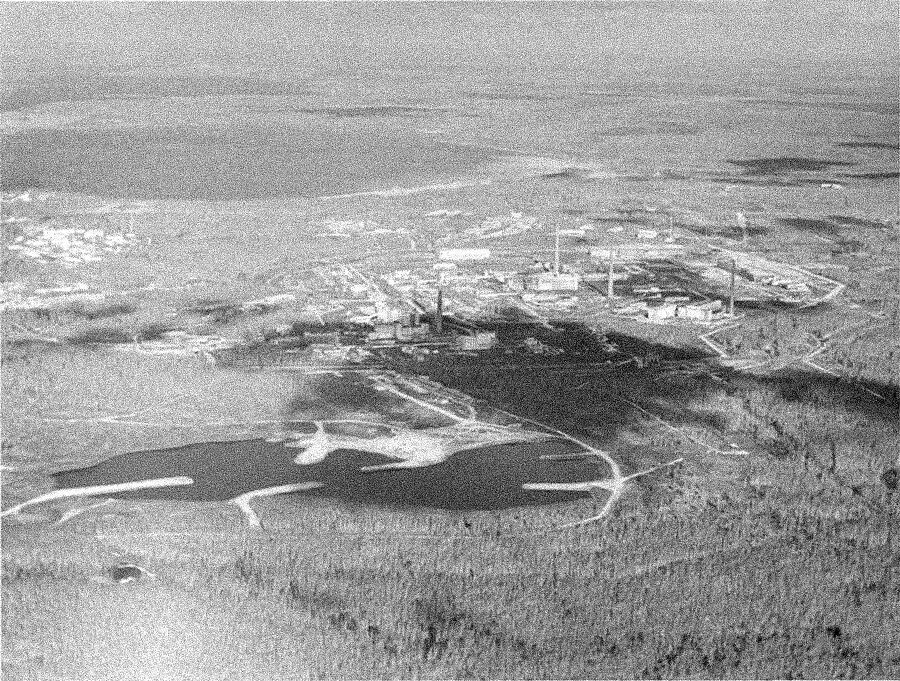
The glow was the visible edge of a nuclear accident. A buried waste tank at the Mayak plutonium plant, some tens of kilometres from many of those watching, had just blown apart. It was the worst accident at a Soviet nuclear facility before Chernobyl, and the Soviet press said nothing about it for around thirty years. What follows is the story of the explosion itself, of the people who were moved out of its path, and of the odd way the news reached the world: in fragments, and in the West long before it did in the Soviet Union.
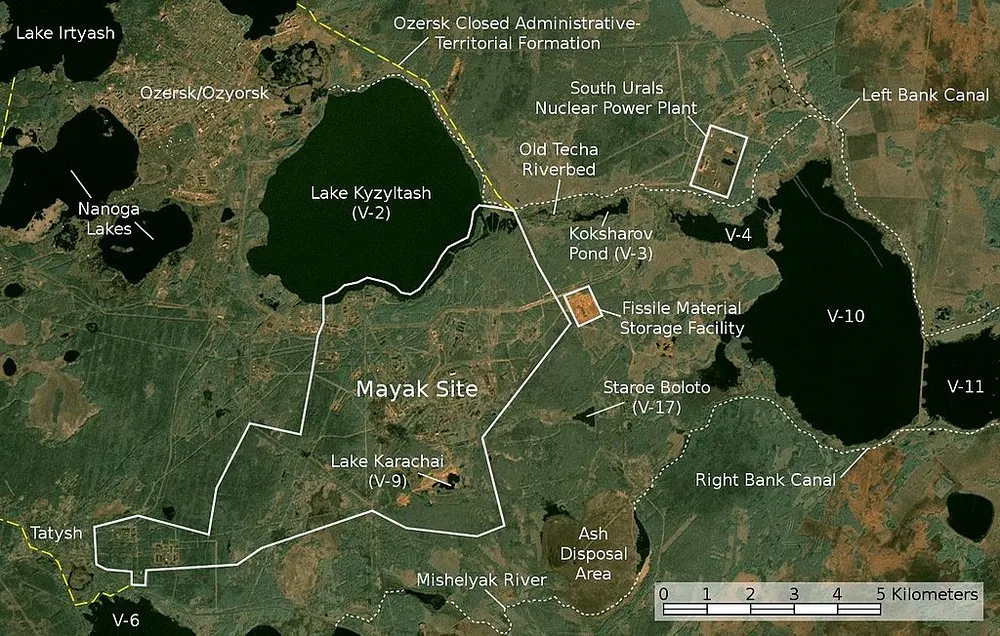
Our post on Mayak and Lake Karachay covers the plant, the Techa River and the wider history of the site. This one stays with a single afternoon and the long aftermath.
The tank
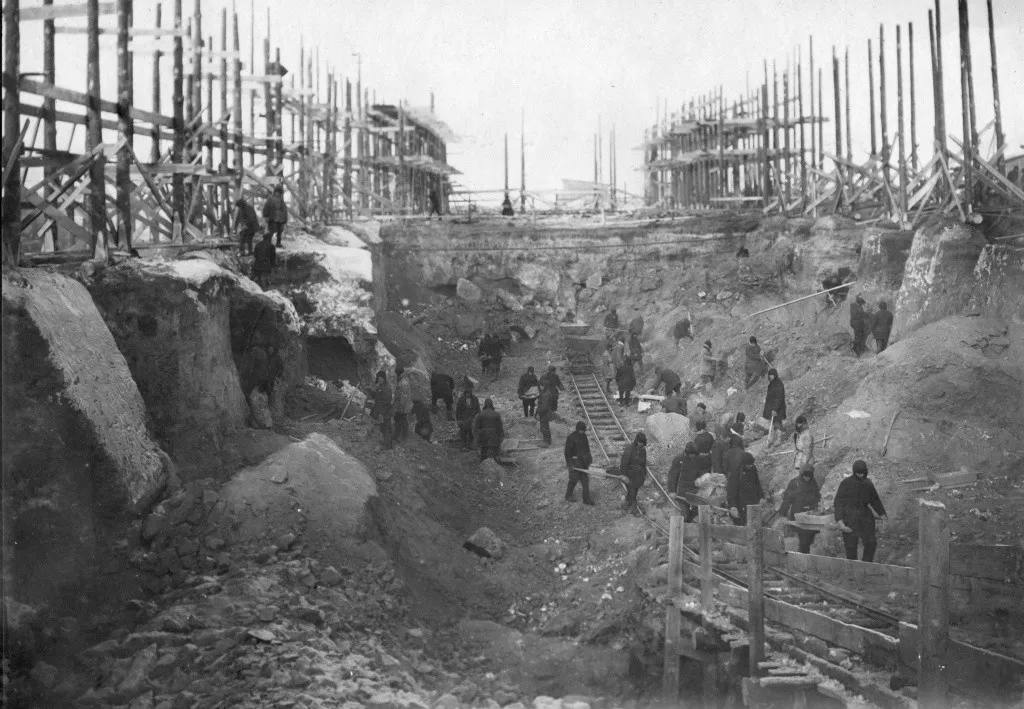
By 1957 Mayak had stopped pouring its most dangerous liquid waste into the river and the lake. Instead it went underground, into a tank farm of steel containers, known as cans, set in concrete in a deep trench. The details of that farm are surprisingly hard to pin down. One account has the explosion destroying can number 14 of 14 in the storage canyon. Another describes 20 concrete containers in a canyon about 8 metres deep. The tank held somewhere between 70 and 80 tonnes of waste in two accounts, and about 200 tonnes in a third. We would rather give the range than pretend to a precision nobody has.
What is not in doubt is the principle. High-level waste gives off heat, so it has to be cooled. The cooling system on one tank failed, and because nobody noticed or repaired it, the temperature climbed. The liquid boiled away and left a dry residue, mainly ammonium nitrate and acetates, which kept heating. Estimates of the final temperature run from about 330 to about 350 degrees Celsius. At that point a spark or a thermal runaway was all it took: the standard explanation is drying nitrates and acetates igniting. One Russian article offers an alternative, an overheated evaporator holding a solution of plutonium oxalate, but the cooling failure is the version most accounts share.
There is also a haunting detail, from a single article built on one professor’s recollection. About half an hour before the blast, the duty crew went down into the gallery and saw yellow smoke, and at first took it for a short circuit. No documents back it up, so we hold it as a memory and not a fact, but it fits the picture of a plant where something had already gone wrong and nobody had understood how badly.
The explosion
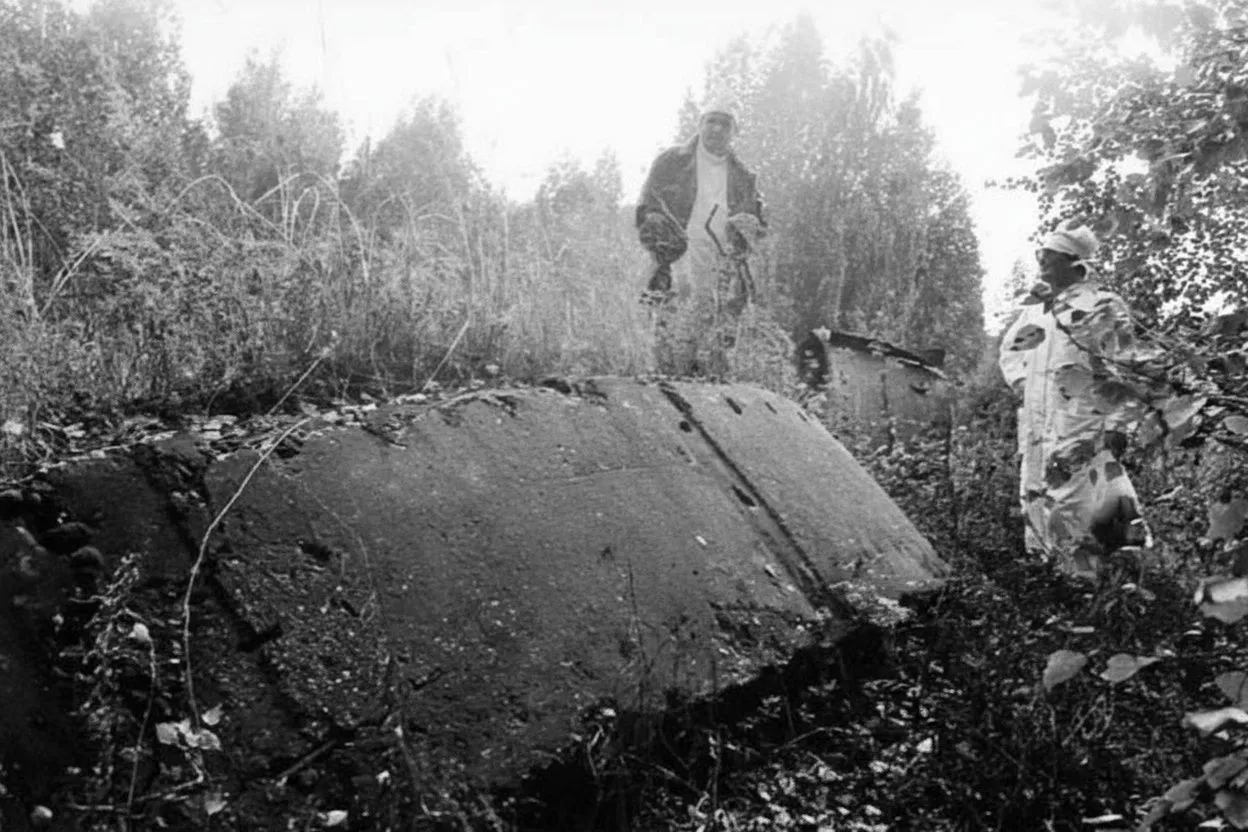
At about 4:22 in the afternoon the tank exploded. The force is usually put at 70 tonnes of TNT equivalent or more, and Russian accounts give 80 or even 100. A concrete slab of about 160 tonnes was thrown off the top. One account has it landing 25 metres away, and another says windows and doors were blown out within 200 metres.
The people nearest were the plant’s own staff. Nobody died in the explosion itself. The damage was of the slower kind, and it came with the wind. Inside the plant the picture was different: more than 5,000 employees are reported to have been heavily exposed in the first hours. Mayak’s own later version of events is that about 18 million curies stayed on the site and about 2 million went into the air, which is the same split the other estimates describe.
The plume
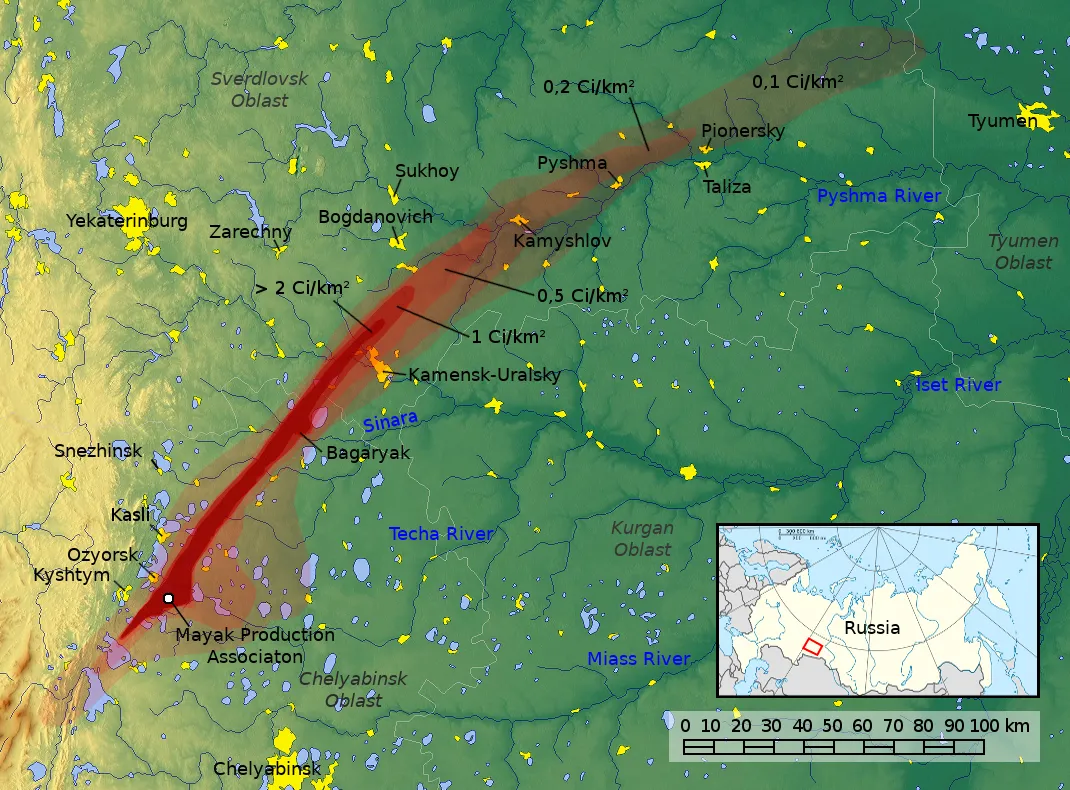
About 20 million curies, or 740 petabecquerels, of fission products went up. Roughly nine-tenths of that settled as particles within 5 kilometres of the tank, which means on the plant’s own ground. The remaining 2 million curies, or 74 petabecquerels, were carried off as dry fallout in a strip 30 to 50 kilometres wide and about 300 kilometres long, running north-north-east from the site. Over the long term the worst of it was strontium-90, with caesium-137 not far behind. Because the plume travelled in a narrow band, the result on the ground was a long, thin scar across farmland and forest, and whether a given village sat inside it or just beside it could decide everything that followed.
How big the “affected area” is depends entirely on where you draw the line. Count every square metre carrying more than 3.7 kilobecquerels of strontium-90, which is a low threshold, and you get 15,000 to 20,000 square kilometres. The area formally designated as the East Urals Radioactive Trace, defined by a higher level, is about 1,000. Other estimates range from 800 to 23,000. What we do know is who was living there. Before the accident the land was 63 per cent farmland and 20 per cent forest, with 23 rural communities, and some 270,000 people lived in the wider contaminated region.
The accident is rated level 6 on the International Nuclear Event Scale, the only event ever to receive that rating, sitting between the level 7 of Chernobyl and Fukushima and the level 5 of the Windscale fire. Ranked by radioactivity released it comes second after Chernobyl in some lists and third, behind Fukushima Daiichi and Chernobyl, in others. The difference lies in what each list counts.
Evacuation
The people in the path of the plume were not warned. A commission started work on 2 October, and the evacuation began on 6 October, eight days after the blast. Counts of how many were moved vary: about 10,000 from at least 22 villages in one, 10,700 over 22 months in another, 23 villages and about 12,000 people in a third, and more than 11,000 from over 20 villages in a fourth. They are almost certainly describing the same operation counted in slightly different ways, and the fair summary is around 10,000 to 12,000 people from 22 or 23 villages.
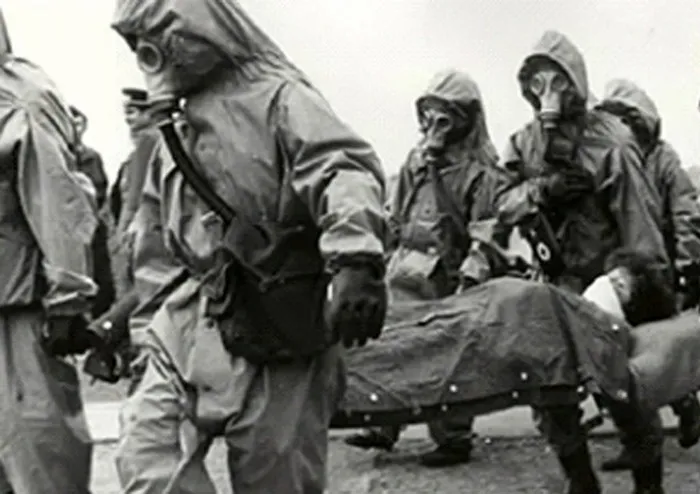
It was not quick. Some people left within about a week, while others waited nearly two years. No official statement was ever made. Peasants were ordered to slaughter their livestock, bury their crops and plough their fields, and the emptied villages were pulled down, partly to stop radiation spreading and partly so that nobody could slip back.
The clearing of the site fell to soldiers and plant workers. The cleanup ran for about two years and involved up to 30,000 soldiers. One account adds that men were recruited with a promise of early demobilisation, that platoons hung back from contaminated ground until their officers walked in first, and that everyone involved signed a non-disclosure agreement for 25 years. We cannot check those details, and there are no reliable dose figures or counts of liquidators to set beside them.
The land itself was put out of bounds. Use of the contaminated fields was banned until 1961, and only then did reclamation begin. The effect on farming is better documented. Between 1957 and 1959 more than 10,000 tonnes of agricultural produce were destroyed, and in 1958 and 1959 over 20,000 hectares of the trace were ploughed to bury contamination. Across the Chelyabinsk region 59,000 hectares were taken out of use, and by 1990 most of it was back in production. The longer-term exposure came mostly through food, above all bread made from local grain, and traces of the isotopes turned up in milk and water.
The reserve
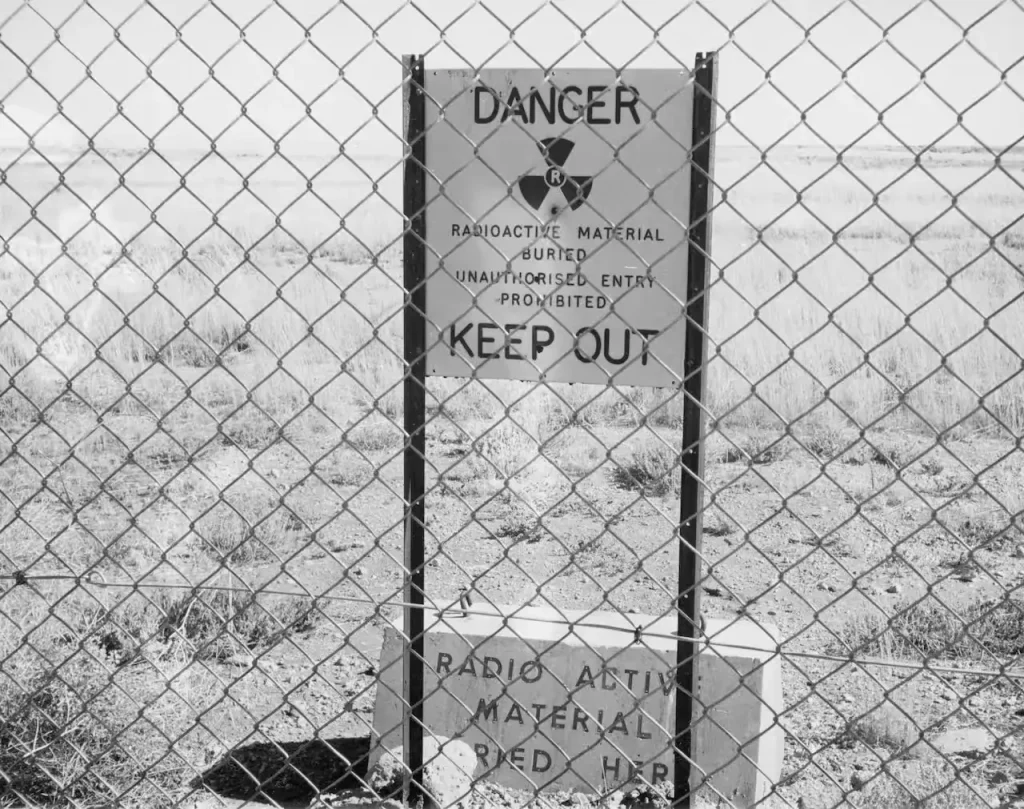
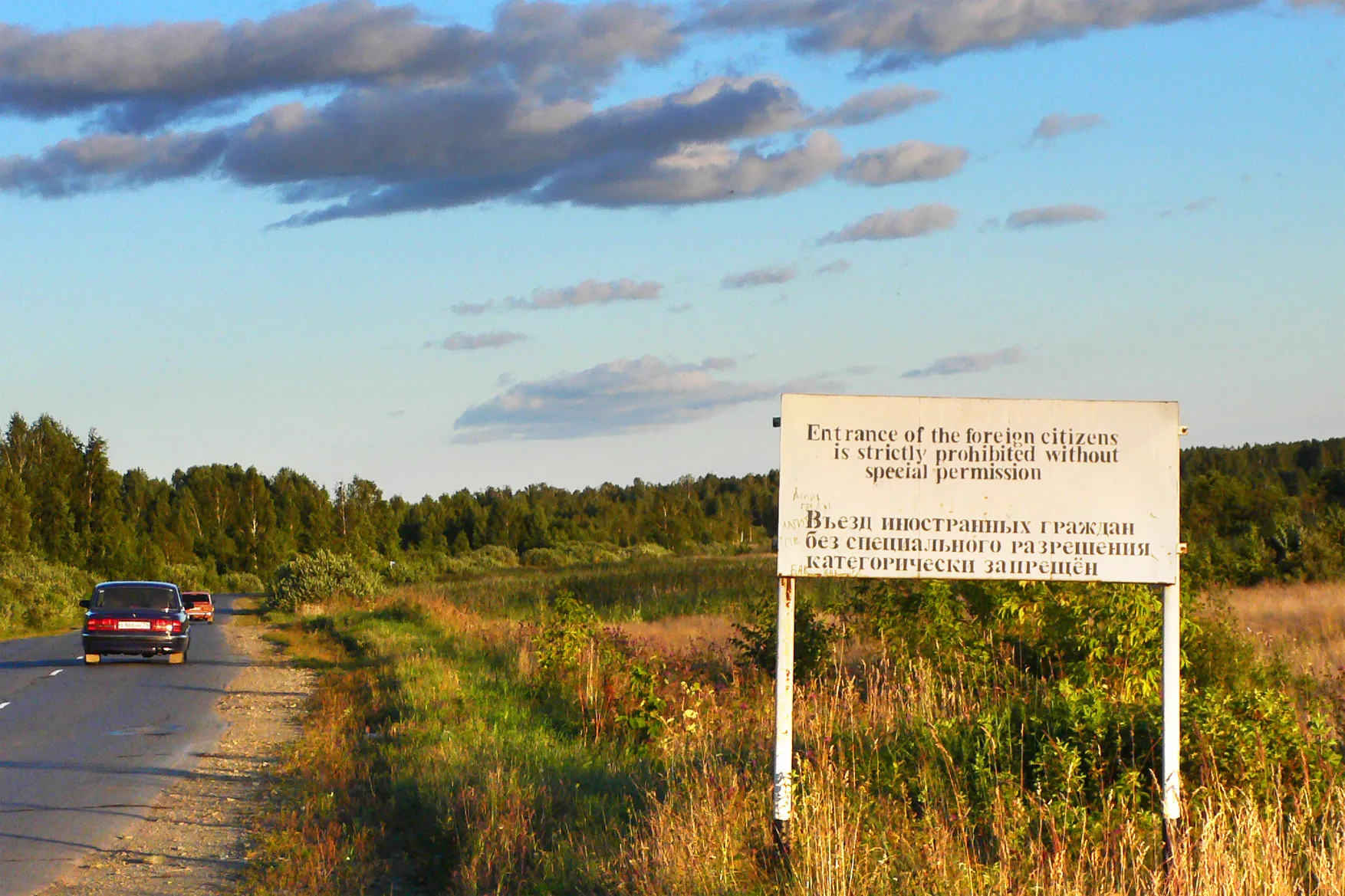
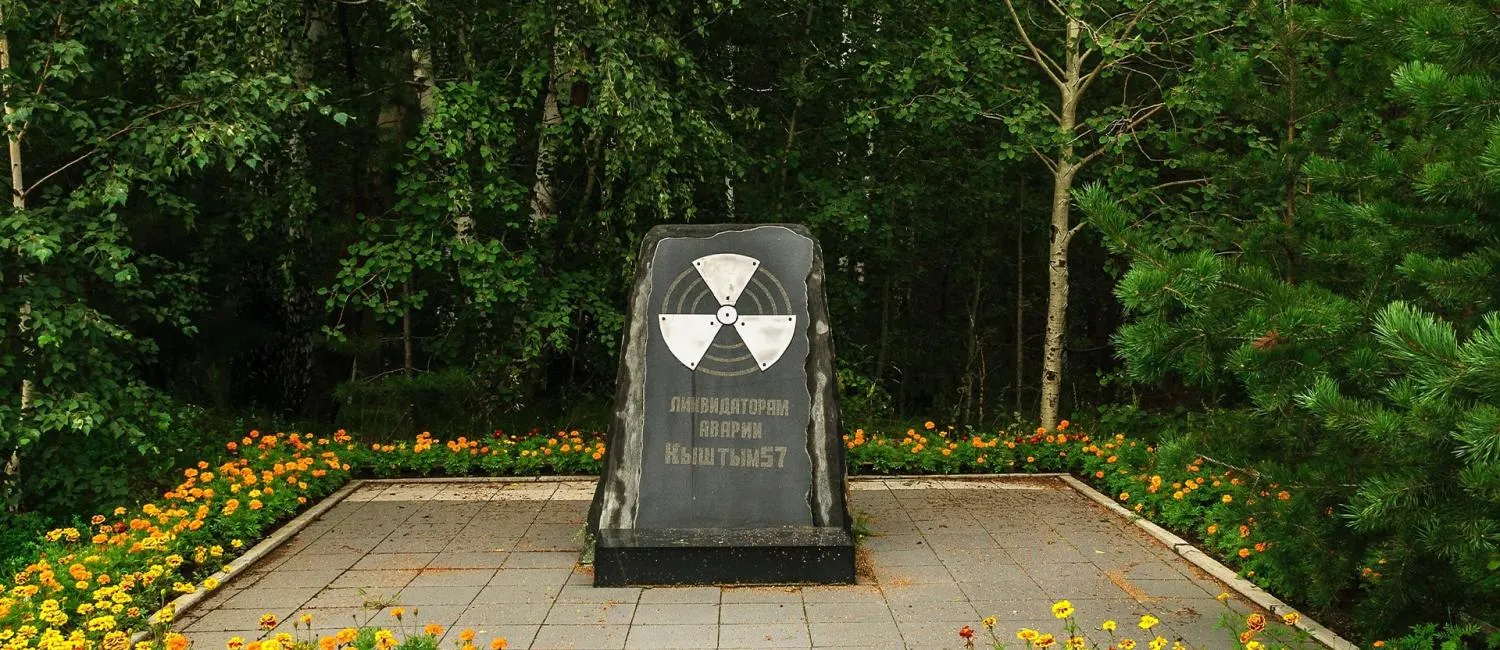
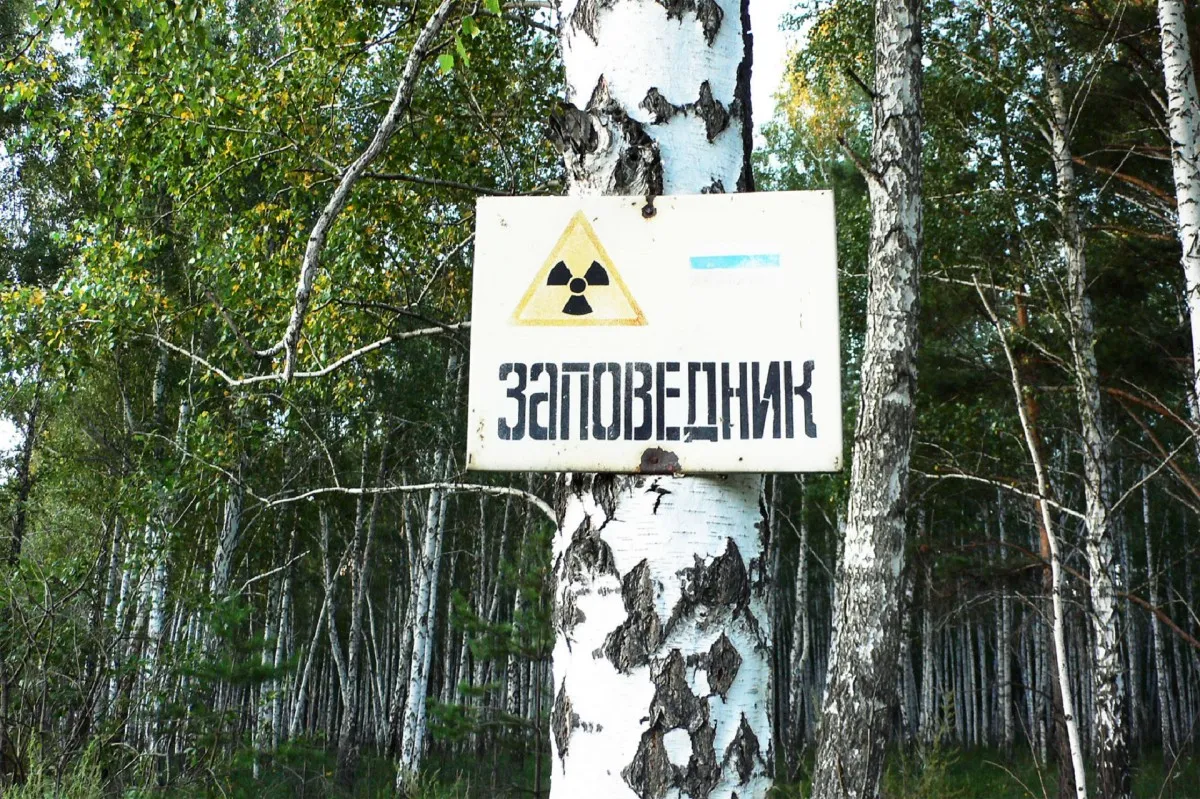
The ground nearest the site was simply closed. In 1968 the Soviet Union created the East Ural Nature Reserve, which barred unauthorised access to the affected land. It covers 16,600 hectares, or 166 square kilometres, and works as a state radiation reserve for monitoring and study, under Rosatom since 2007. About 180 square kilometres near the site are also said to remain off-limits and are marked with warning signs. The two figures measure different things, and we have not found anything that reconciles them.
Who was blamed
The Soviet response was an internal investigation led by the Industry Minister, Yefim Slavsky. It laid the blame on the plant’s head of radiochemistry and its chief engineer for breaking operating rules, and the director, Mikhail Demyanovich, was relieved of his post. The chief engineer was dismissed, and one account says Demyanovich was quietly moved to a closed zone near Tomsk. We have found no public statement from any of them, which fits a system that preferred reassignment to explanation.
The failure had deeper roots. A plant built in a hurry, with plutonium as its overriding aim, had a habit of ignoring basic safety. Between 1948 and 1958, 17,245 workers received radiation overdoses, and the dumping of waste into the river from 1949 to 1952 caused radiation sickness in villages downstream. The tank explosion belongs to the same pattern as those earlier releases.
The first leaks
The first public hint came within months. In April 1958 a Copenhagen newspaper reported a catastrophic accident in the Soviet Union and linked it to a pause in Soviet weapons tests that March. In 1959 an Austrian paper mentioned a serious accident at a Soviet atomic plant, and in 1962 a publication called Review of Nuclear Incidents referred to an unconfirmed major reactor accident. Moscow denied the lot. It is worth pausing on how little that amounts to. Three vague mentions in four years, none of them naming a place, none of them confirmed. For the people of the Urals the official line was a sky full of polar lights, and for the outside world there was a rumour that nobody could pin to a map.
Washington knew far more. The CIA appears to have known of the accident from 1959 or 1960, through informants and aerial spy photographs, and said nothing. The likely reasons were awkward ones: protecting the young American nuclear industry and avoiding questions about safety at the US plutonium site at Hanford. That is a historian’s argument about motives, not something a document spells out, but the silence itself is well attested, and the result was that two rival powers kept the same secret for different reasons.
the CIA actually helped the Soviet Union keep its first nuclear catastrophe a secret
Thomas Rabl, historian
The man who put it together
The world learned of the accident because of one scientist. Zhores Medvedev, a Soviet biologist forced into exile in Britain, published an article in New Scientist in 1976 working out what must have happened from clues buried in Soviet scientific papers. Western nuclear experts doubted him at first. Another Soviet scientist, Lev Tumerman, later confirmed the core of his account. Medvedev expanded it into a book, Nuclear Disaster in the Urals, published in the US in 1979 or 1980 and never circulated in the Soviet Union.
American government laboratories downplayed his claims, which suited Moscow very well. Researchers at Oak Ridge National Laboratory eventually backed him up, noting that 30 villages and towns had vanished from Soviet maps and that a canal had been built to carry water around some 15 miles of river valley below the site.
The cause itself stayed contested, and that matters, because the debate shows how thin the evidence was. Medvedev was working from the outside in, assembling a disaster from absences: papers that stopped mentioning certain places, studies that implied a contaminated strip of land, villages that disappeared. His critics were working from the same scraps and drawing different lines through them.
The Los Alamos report of January 1982 was exactly that kind of counter-reading. Titled An Analysis of the Alleged Kyshtym Disaster by Diane Soran and Danny Stillman, accepted that a contaminated area existed east of Kyshtym, but disagreed with Medvedev about why. It blamed Soviet carelessness and a run of smaller incidents, amplified by rumour, rather than a single waste explosion, and said a weapons-test explanation for the 1958 newspaper report remained unconfirmed. Later Soviet disclosures supported Medvedev’s picture of a tank explosion, although the exact mechanism is still debated.
The admission
Soviet photographs of the aftermath came out in 1988, and in 1989 the government acknowledged the explosion and the evacuations. One Russian account places the announcement at a session of the Supreme Soviet that year; one other page gives 1992. We take 1989 as the first admission, with the documents declassified gradually afterwards.
Even the name carries the secrecy. Kyshtym was simply the nearest town that appeared on a map. The plant itself, known only as Chelyabinsk-40, did not exist as far as the public was concerned. Kyshtym’s own residents, as it happens, were not affected.
What residents say
For people who lived on the trace, the accident had a long afterlife. Tatar Karabolka, a village 30 to 40 kilometres from the plant, had about 4,000 people in 1957 and 423 at the 2010 census. Residents say it was not evacuated in 1957, that children were used to bury crops, and that they learned what had happened to them from newspapers in the early 1990s. A decision of the regional executive committee in September 1959 formally resettled the village, but on paper only, which may be why it shows as gone on some maps.
These are the villagers’ own accounts, and they sit against a different official picture. A Greenpeace report in 2007 found strontium-90 at the village below 3 curies per square kilometre, the legal threshold for resettlement, and regional authorities say the radiation load is within limits. Yet a court found in 2005 that Mayak threatens the health of people and the environment, and the plant’s director at the time, Vitaly Sadovnikov, was prosecuted over the discharge of tens of millions of cubic metres of liquid waste into the Techa and amnestied in 2006. One resident puts the local cancer rate at five or six times the national average, but with no source to check it against we have left that figure out.
How many died?
There is no agreed figure. Nobody is known to have died in the explosion itself. Studies link about 49 to 55 cancer deaths among riverside residents to radiation, but that concerns exposure from the Techa, not the plume, and 66 cases of chronic radiation syndrome were diagnosed in the area nearest the accident. Some summaries quote at least 200 deaths from radiation sickness, but the figure is not supported by anything we could trace.
The honest conclusion is that the health effects of the 1957 plume are far less well documented than those of the river releases. The river residents have been followed for decades, as we describe in our Mayak post. For the plume there is no comparable study, and the secrecy of the early years makes it unlikely one could now be done reliably.
What we cannot pin down
Almost every number in this story comes with a range. The blast: 70 to 100 tonnes of TNT. The tank: one of 14 cans or one of 20 containers, holding 70 to 80 tonnes of waste or about 200. The evacuees: 10,000 to 12,000. The contaminated area: 1,000 square kilometres or 23,000, depending on the threshold.
Some of the gaps are matters of definition. Others come from the secrecy itself: the first outside estimates were reconstructions, and the later Russian ones lean on documents declassified in stages. The yellow smoke before the blast and the promises made to the soldiers come from one man’s recollection. Even the date of the Soviet admission, 1989 in most accounts, and the year of Medvedev’s book, 1979 or 1980, depend on which source you pick up. The sensible way to read the accident is to trust the outline and treat each individual figure as one estimate among several.
Why it stayed hidden so long
Three things kept the story quiet. The first was the plant: Chelyabinsk-40 was a closed city that did not appear on maps, and everyone inside was bound to silence. The second was geography. The villages on the trace were rural, their people had no way to learn what had happened beyond what the newspapers told them, and the newspapers talked about an aurora. The third was the other side. If American officials had said what they knew, they would have invited uncomfortable questions about Hanford and the young civil nuclear industry.
The result was that the first account anyone outside the Soviet Union could trust came from a biologist in exile, piecing together Soviet scientific papers to reconstruct something his government would never confirm. Later, Oak Ridge’s observation that villages had disappeared from the maps fit the same pattern of evidence.
Visiting
This is not a place anyone can visit freely. The Mayak site and Ozyorsk are closed, and the East Ural Nature Reserve was set up to keep people out. We have found nothing describing public access to the trace. Some of the villages along it are still inhabited, but we would not advise anyone to go without checking current restrictions first.
Conclusion
The Kyshtym explosion is remembered as a Soviet secret, but it was just as much a Cold War one. The people of the Urals did not know what had happened to them, the American government did, and neither side said so. For nearly twenty years the main account in the West was one scientist’s reconstruction from published papers, doubted by some of the experts who later confirmed it.
The outline is solid: a cooling failure, a dry-salt explosion, about 20 million curies, an evacuation of around 10,000 people, and a trace that is still marked on maps. The details (the size of the blast, the tank, the area, the number moved, the date of the admission) remain stubbornly uncertain, and that uncertainty is the lasting legacy of the secrecy, because the story had to be assembled in pieces over decades.
What stays with us is the aurora. A glow in the sky was explained away as weather, and for the people who saw it, that explanation stood for many years.
Did you know?
- The explosion at Mayak happened at about 4:22 pm on 29 September 1957.
- The accident is called Kyshtym after the nearest town on maps, because the plant itself was secret.
- A concrete slab of about 160 tonnes was lifted by the blast.
- About 20 million curies were released, and about 2 million curies travelled beyond the plant.
- Local newspapers explained the glow in the sky as polar lights.
- The evacuation began on 6 October 1957 and took about 22 months to complete.
- The East Ural Nature Reserve was created in 1968 and covers about 166 square kilometres.
- The Soviet scientist Zhores Medvedev published the first Western account in New Scientist in 1976.
- A Los Alamos report of 1982 disagreed with Medvedev about the cause.
- The Soviet Union acknowledged the accident in 1989.