A city on no map
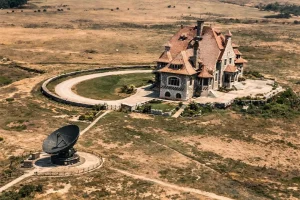
Ozyorsk is a town of roughly 75,000 people on the shores of lakes in the Southern Urals. By most measures it looks like a normal Russian city, with 16 secondary schools, a physics and mathematics lyceum, an engineering institute and a coat of arms that shows a salamander on a reactor block. What is unusual is the reason it exists and the secrecy that surrounded it for decades. It was first known as Chelyabinsk-40, then Chelyabinsk-65, names that followed the practice for closed towns of using the nearest big city’s name and a postal code, and it received its present name only in 1994.
The town was built to serve a single plant. That plant, which later became known as the Mayak Production Association, was created to make plutonium for the first Soviet atomic bomb. It was the Soviet counterpart to the Hanford site in Washington State, and Ozyorsk and Richland, which served Hanford, are described as the first two cities to make plutonium for Cold War bombs. Here we follow Mayak from its secret beginning to the present day, with particular attention to two places where its waste ended up: the Techa River and a small lake called Karachay.
Nearly everything about Mayak’s early history was classified until the late 1980s, and some of it still is. The figures that follow come from a mixture of Russian and Western research, scientific studies and, in a few cases, residents’ and campaigners’ testimony. Where they conflict, we say so.
Plant 817
The Soviet atomic project got going in earnest after Hiroshima. In August 1945 a Special Committee under Lavrentiy Beria was set up under the State Defence Committee, and a site was chosen in Chelyabinsk Oblast. A decree of the Council of Ministers of 9 April 1946 created Combine No. 817, giving it the tasks of making nuclear weapons material and reprocessing waste. The site lay close to the Techa River and a chain of lakes.
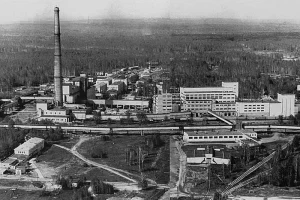
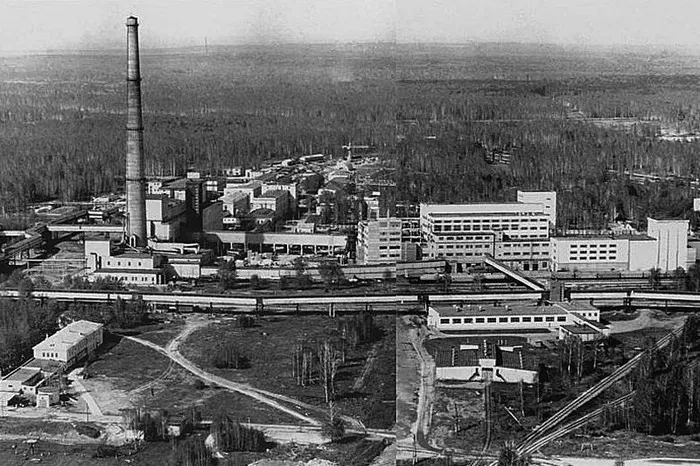
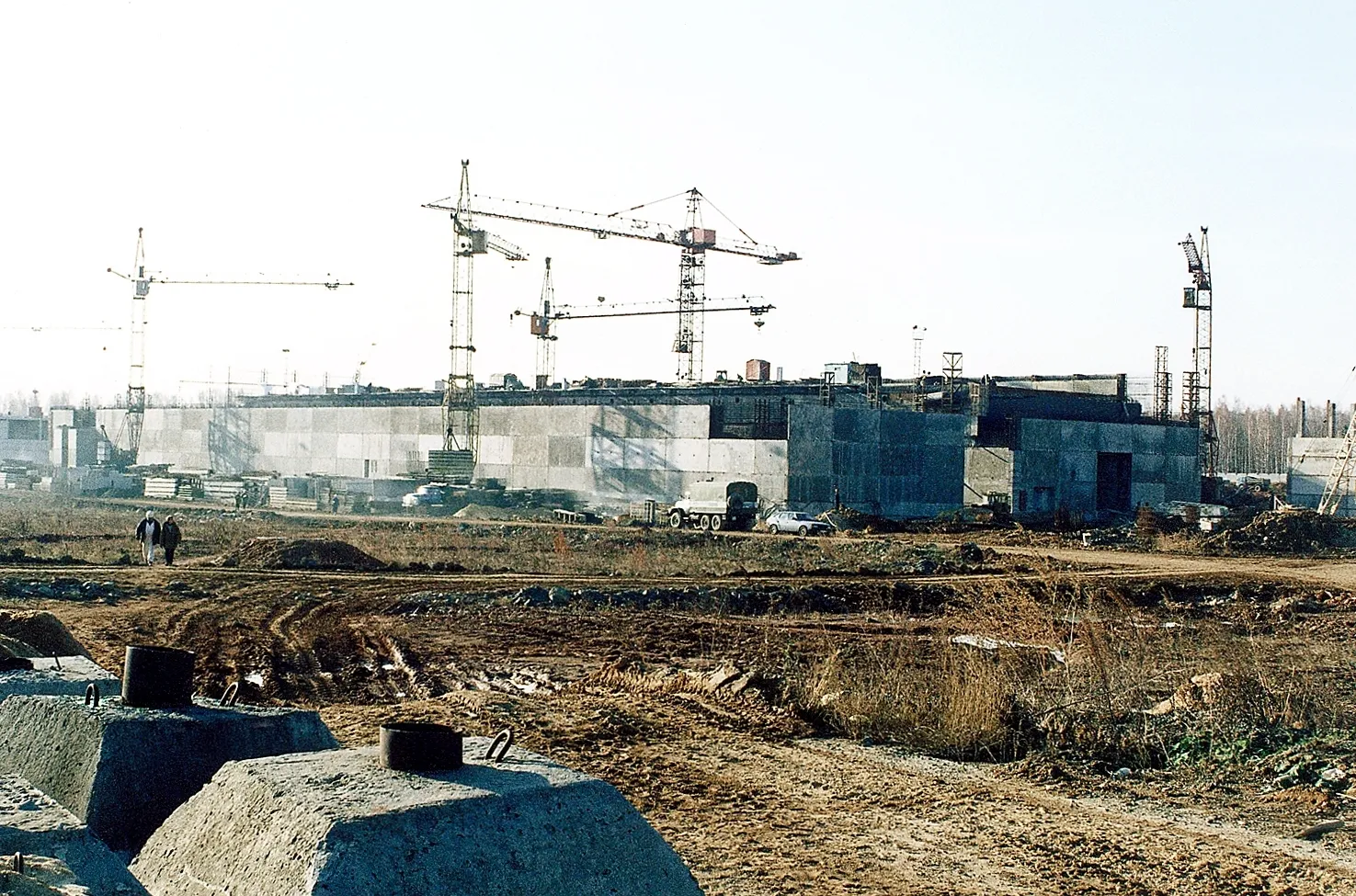
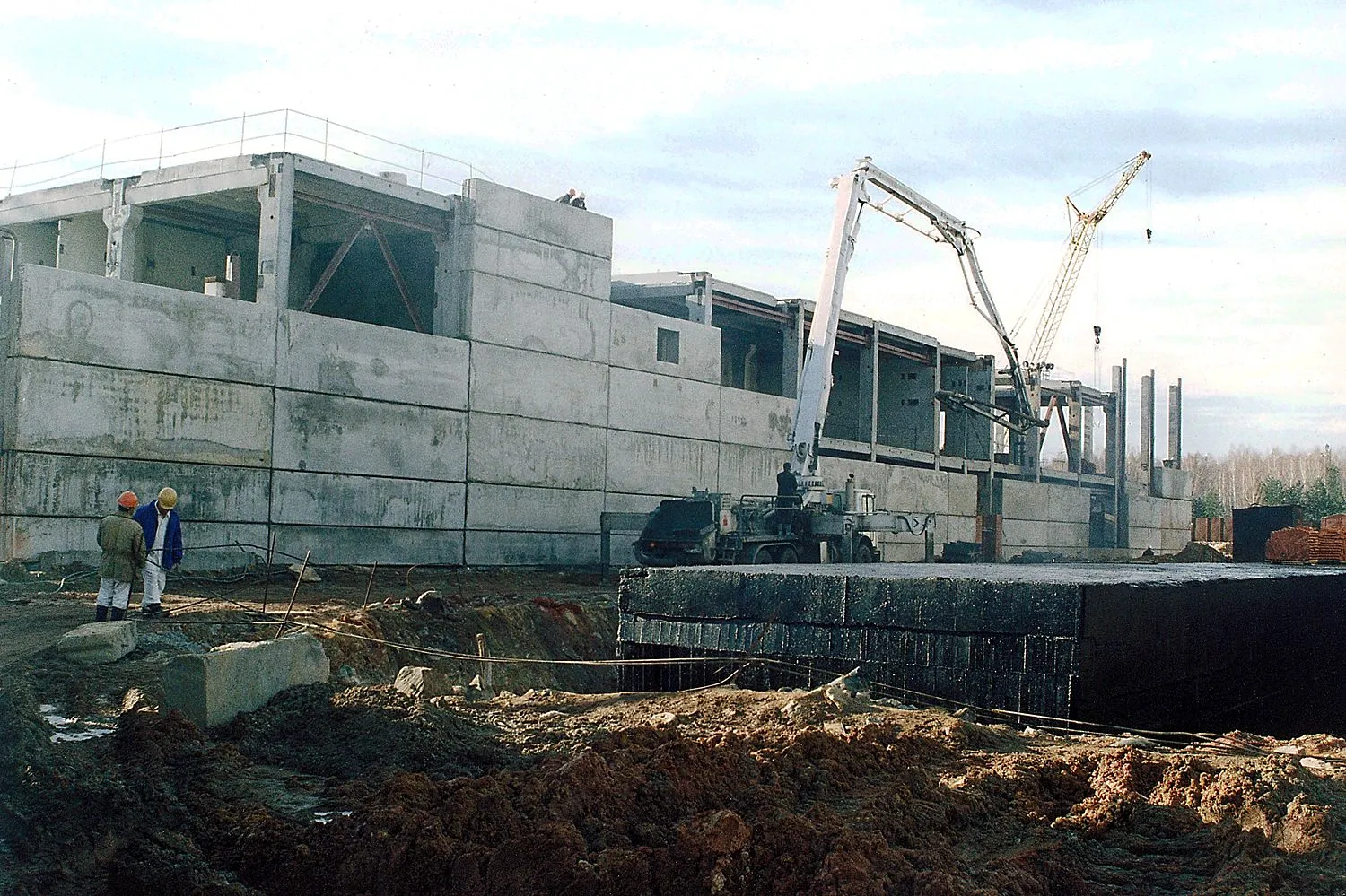
The scientific leader of the project, Igor Kurchatov, judged that the fastest route to a bomb was to produce plutonium in uranium-graphite reactors, and he pushed for an experimental reactor and then the first industrial reactor, called Reactor A. Reactor A started on 19 June 1948 and stayed in service until 1987. A 150-metre chimney was built to release gaseous fission products, the tallest in the Urals.
The workforce was large and partly unfree. Over 40,000 prisoners and prisoners of war are said to have built the plant and the closed city, while another account says about 70,000 workers and prisoners began building in November 1945. Either way, the numbers were large, and the work was done in secrecy and in a hurry. In August 1949 the plant produced the first plutonium hemispheres, and on 29 August 1949 the Soviet Union tested its first atomic bomb at Semipalatinsk, the test we describe in our post on RDS-1.
The people running the reactors paid a price too. In 1948 about 5 per cent of the staff received more than 1 sievert, and the average dose in 1949 was 0.94 sievert. Between 1948 and 1958, more than 2,000 workers were diagnosed with occupational radiation sickness, and more than 6,000 received a cumulative dose of over 1 sievert. These figures come from a single historical account and are hard to check.
Over the Cold War, Mayak built ten reactors with a combined thermal power of about 7,333 megawatts. Four were for plutonium and produced about 31 tonnes of weapons-grade plutonium, and six mainly produced tritium for thermonuclear weapons, though one count has five of each. Plutonium production ended in 1990, and by 1991 all of the production reactors had been halted.
The river
The earliest waste practice was the simplest. From 1949, the plant discharged radioactive liquid waste into the Techa River, which flows past the site and on to the Iset, the Tobol and eventually the Ob. The Techa is about 243 kilometres long. Between 1949 and 1956 the Mayak complex discharged an estimated 76 million cubic metres of radioactive wastewater into it, with a cumulative activity of about 2.75 million curies, or 102 petabecquerels. About 95 per cent of the releases occurred between September 1950 and November 1951.
Nobody told the people who lived on it. Up to 40 villages with about 28,000 residents lined the river, and for 24 of them the Techa was a major source of water. Villagers drank from it, washed in it, watered their gardens and fed their cattle on its meadows. Discharges were barely monitored until July 1951, and a release of high-level waste on 3 March 1949 is said to have exposed about 124,000 people in 41 settlements, of whom more than 28,000 received the largest doses. That comes from a single historical account, so the numbers are approximate.
The first alarm came from measurements. A 1951 survey near the village of Metlino, a few kilometres downstream, found radiation far above normal, and surveys of villages further down found tens of thousands of people at risk. About 7,500 residents of the most contaminated villages were moved by a high-level decision, and 23 of the villages along the river were eventually evacuated. In 1951 the plant also changed its practice: very radioactive waste was to be kept in underground tanks, medium-level liquid went to a lake, Karachay, and low-level waste continued into the river. Even then, according to a human-rights lawyer who has worked on the case, local people carried on using the river, and guards patrolled by day while villagers watered their gardens by night. That is a single account, and it cannot be confirmed.
What did it do to their health? The best evidence comes from the Techa River Cohort, a long-term study of 29,730 people born before 1950 who lived in 41 riverside villages between 1950 and 1960. A paper in Radiation Research in 2013, by Schonfeld and colleagues, followed them to the end of 2007, which gave 927,743 person-years of observation, and counted 17,307 deaths, of which 2,303 were from solid cancers. The authors estimated an excess relative risk of 0.61 per gray, and concluded that about 2 per cent of solid cancer deaths, or about 50, were associated with the radiation. More than 90 per cent of the person-years were at stomach doses below 0.1 gray. The confidence interval is wide, and the authors list caveats including loss to follow-up when people moved away. The 1957 explosion also affected about 16 per cent of the cohort, but its dose was a small fraction of the total.
In other words, the best-supported finding is a measurable but modest excess of cancers, concentrated in the people with the highest doses. Much larger claims circulate, with very high figures for illness and death in village communities appearing on advocacy pages and in interviews, but no study we know of backs them.
The lake
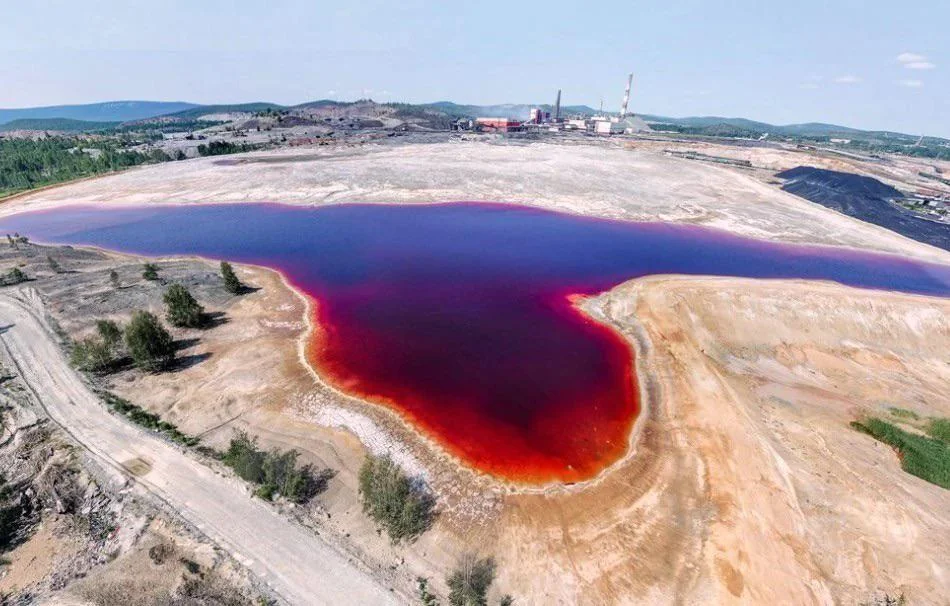
By 1951 the plant needed somewhere to put its most dangerous liquid waste, and the place it chose was a small lake called Karachay, also known by the reservoir number V-9. It was chosen because it was close to the plant and too small to supply cooling water. The lake measured about half a square kilometre in 1951. For the next several years it received high-level waste, and the radioactivity in its bed built up in a layer of sediment about 3.4 metres deep, composed almost entirely of waste.
The numbers are hard to picture. The accumulated radioactivity is about 4.44 exabecquerels, including 3.6 exabecquerels of caesium-137 and 0.74 of strontium-90, in a lake of less than a square kilometre. Another estimate gives roughly 120 million curies, which is about the same amount. For comparison, the caesium-137 release at Chernobyl was about 0.085 exabecquerels, though the two are not like for like, since Chernobyl’s was spread over a very large area. The Worldwatch Institute is quoted as calling the lake the most polluted spot on Earth, and a shore reading of about 600 roentgens an hour in 1990, attributed to environmental groups, is repeated widely. That reading cannot be verified, though it would be a lethal dose within an hour.
The lake had a second phase of notoriety. In a drought, the water level dropped and the shoreline sediment dried out. Wind then carried radioactive dust from the lakebed across the area. The year is usually given as 1967, though some sources say 1968. The scale is also disputed. One account says about 185 petabecquerels, or 5 million curies, were carried and about half a million people were irradiated, another says over 400,000 people, a Russian history says nearly 2,000 square kilometres were contaminated and about 40,000 people lived there, and another account puts it at over 1,000 square kilometres. The numbers differ by a large factor, but they all describe the same event, and what changed afterwards was the practice at the lake: the bed was stabilised.
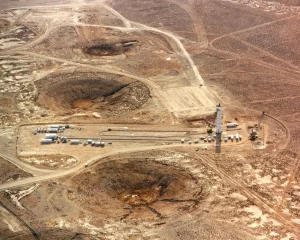
From 1978 to 1986, almost 10,000 hollow concrete blocks were placed in the lake to hold the sediment in place. Covering with stones and concrete continued under a federal programme, and the filling halved the lake’s area. In November 2015 the rest of the lake was backfilled, and in December 2016 the final layer of rock and soil was added. The site is now a near-surface permanent storage facility for dry nuclear waste, and monitoring showed a clear reduction in surface deposition within ten months. A long-term groundwater monitoring programme was expected after the infilling, and published results are hard to find, so how far the contamination has spread underground is unclear.
Karachay was not the only reservoir. A smaller one, V-17, known as Staroye Boloto or the Old Swamp, covers about 13 hectares, roughly five times smaller than Karachay. A plan announced in 2022 would convert it from a disposal site into a conserved one by backfilling it with about 500,000 cubic metres of basalt, with the conservation due to be completed by the end of 2025. Whether it was completed is not confirmed.
29 September 1957
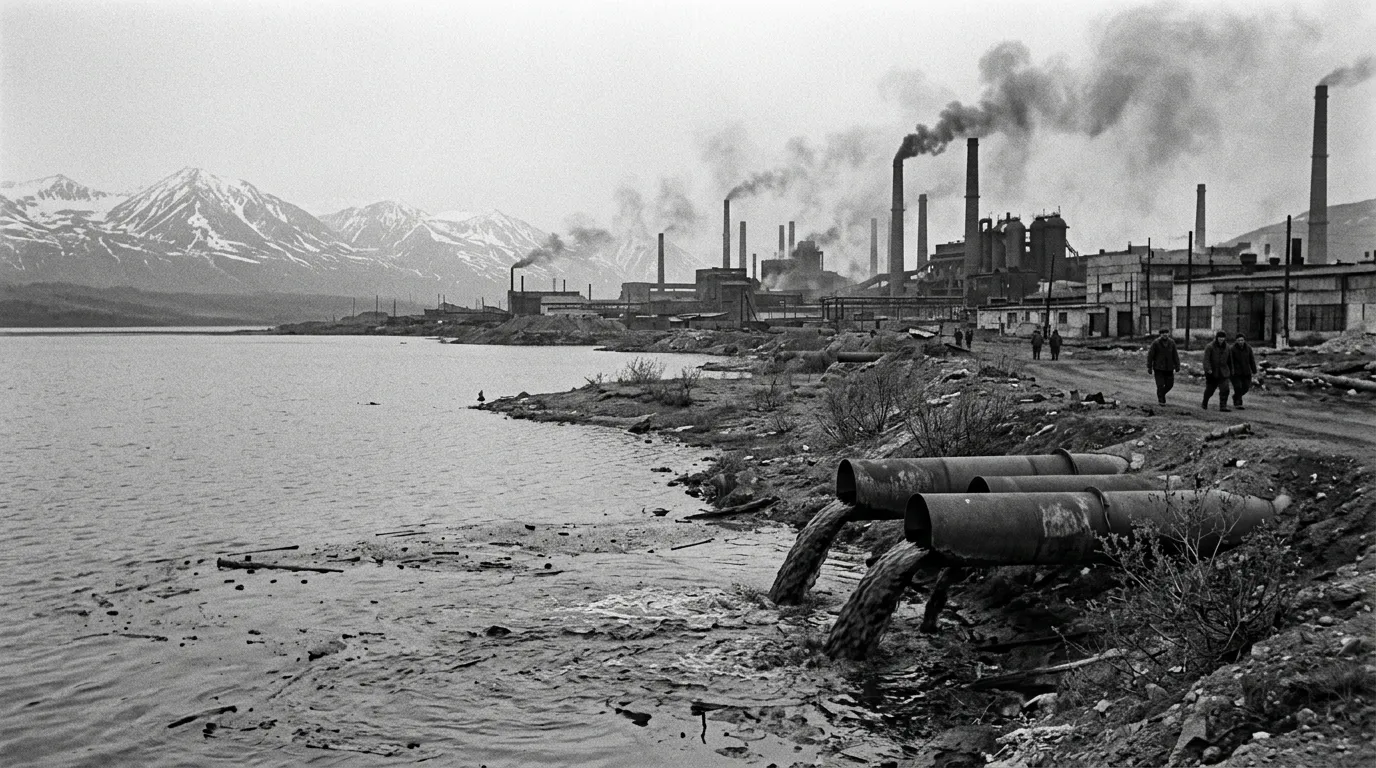
By the autumn of 1957, the most radioactive waste was no longer in the lake. It was kept in large steel tanks buried in concrete in a storage area, and each tank needed constant cooling because the waste gave off heat. On 29 September, at about 4:22 in the afternoon, one of them exploded.
A cooling system in a tank holding about 70 to 80 tonnes of high-level waste had failed and was never repaired. The temperature rose, the liquid evaporated, and the dried residue, mainly ammonium nitrate and acetates, exploded. The explosion is estimated at 70 tonnes of TNT equivalent at least, and Russian sources give figures up to 80 or 100 tonnes. It lifted a 160-tonne concrete slab, and a plume of dust and smoke rose to about a kilometre. The official Soviet investigation blamed the plant’s radiochemical head and chief engineer for breaking operating rules, and the plant’s director, Mikhail Demyanovich, was relieved of his post.
The explosion released about 20 million curies, or 740 petabecquerels, of radioactivity, but most of it fell close to the site. About 2 million curies, or 74 petabecquerels, spread beyond the plant and travelled to the north-east, forming what is called the East Urals Radioactive Trace. The area it covered is given as anything from 800 to 20,000 square kilometres in one account, 15,000 to 20,000 in another, and about 23,000 in an interview. A Russian history describes the trace as about 300 kilometres long and 5 to 10 kilometres wide. About 270,000 people lived in the affected area. The accident is rated level 6 on the International Nuclear Event Scale, the only event with that rating, and it is second to Chernobyl in the amount of radioactivity released.
The evacuation was slow and was not explained. It began on 6 October, eight days after the accident. About 10,000 people from at least 22 villages were moved, and another count gives 23 villages and about 12,000 people. Some left within a week but others took nearly two years. Fields were ploughed under, cattle destroyed and houses demolished, to stop the spread of radiation and to prevent people secretly returning. Cleanup took about two years and involved up to 30,000 soldiers. A decade later, in 1968, the Soviet Union turned the contaminated area into the East Ural Nature Reserve, which barred unauthorised access.
No one died in the explosion itself. The health effects came later. Recent studies attribute about 49 to 55 cancer deaths among riverside residents to the radiation, though that figure comes from the river exposure, and 66 cases of chronic radiation syndrome were diagnosed in the area nearest the accident. Some summaries quote at least 200 deaths from radiation sickness, but nothing we could trace supports it, and we leave it out.
Accounts from the villages are sometimes stronger. A lawyer whose father was among the people sent to deal with the accident has described how, in the village of Berdyaush, livestock that could not be decontaminated was shot in front of its owners and buried, and the houses were demolished. He also says that Tatar Karabolka, about 30 kilometres from the centre, was not evacuated in 1957, and that residents there were used to harvest and bury crops without radiation protection. These are single-source accounts and there is no official response on record, so they are best read as testimony.
The silence
The accident was classified. Local people were not told the reason for the evacuation, and Soviet newspapers are said to have explained the strange orange and blue glow that residents saw in the sky as an unusual aurora. In April 1958 a Danish newspaper reported high radiation levels in the Soviet Union.
The outside world learned of the accident through the Soviet scientist Zhores Medvedev, who published an account in New Scientist in 1976. Western nuclear experts at first doubted it. A study using the US Freedom of Information Act, by Gyorgy, found that the CIA had known about the accident from 1959 but kept it secret, an attempt, it is argued, to protect the young American nuclear industry. The Soviet government began declassifying documents in 1989, and the official announcement is dated to July 1989 by one account, while another says the accident was officially acknowledged in 1992. These are probably two stages of one process.
It is called the Kyshtym disaster after the nearest town, although Kyshtym’s residents were not affected. Many of the people who were affected did not learn what had happened for years.
Residents downstream
Parts of the contaminated territory are still lived in. The village of Muslyumovo, about 50 kilometres from Ozyorsk on the Techa, was the subject of a resettlement programme from 2005 to 2010 in which Rosatom provided 600 million roubles for voluntary relocation. The money ran out before everyone was moved, a criminal fraud case was brought against the leaders of the resettlement foundation, and Rosatom declared the resettlement complete in December 2011. Only about half of the residents moved.
The residents who have spoken say that they receive 129 roubles a month in compensation for living on contaminated land, that the housing grant required them to demolish their old house first, and that many families with children and elderly parents were left out. A campaigner says that radiation by the river in summer is about ten times the norm. These are the claims of residents, activists and a lawyer, and no response from Rosatom, Mayak or the authorities is on record, so how far they hold is unclear. Other residents in Ozyorsk and downstream areas say that they have no health problems, though that is likewise unverified. The overall picture is a community where some people think they were left behind and others say they are fine, and where the scientific evidence points to a modest but real rise in cancer.
The cloud over Europe
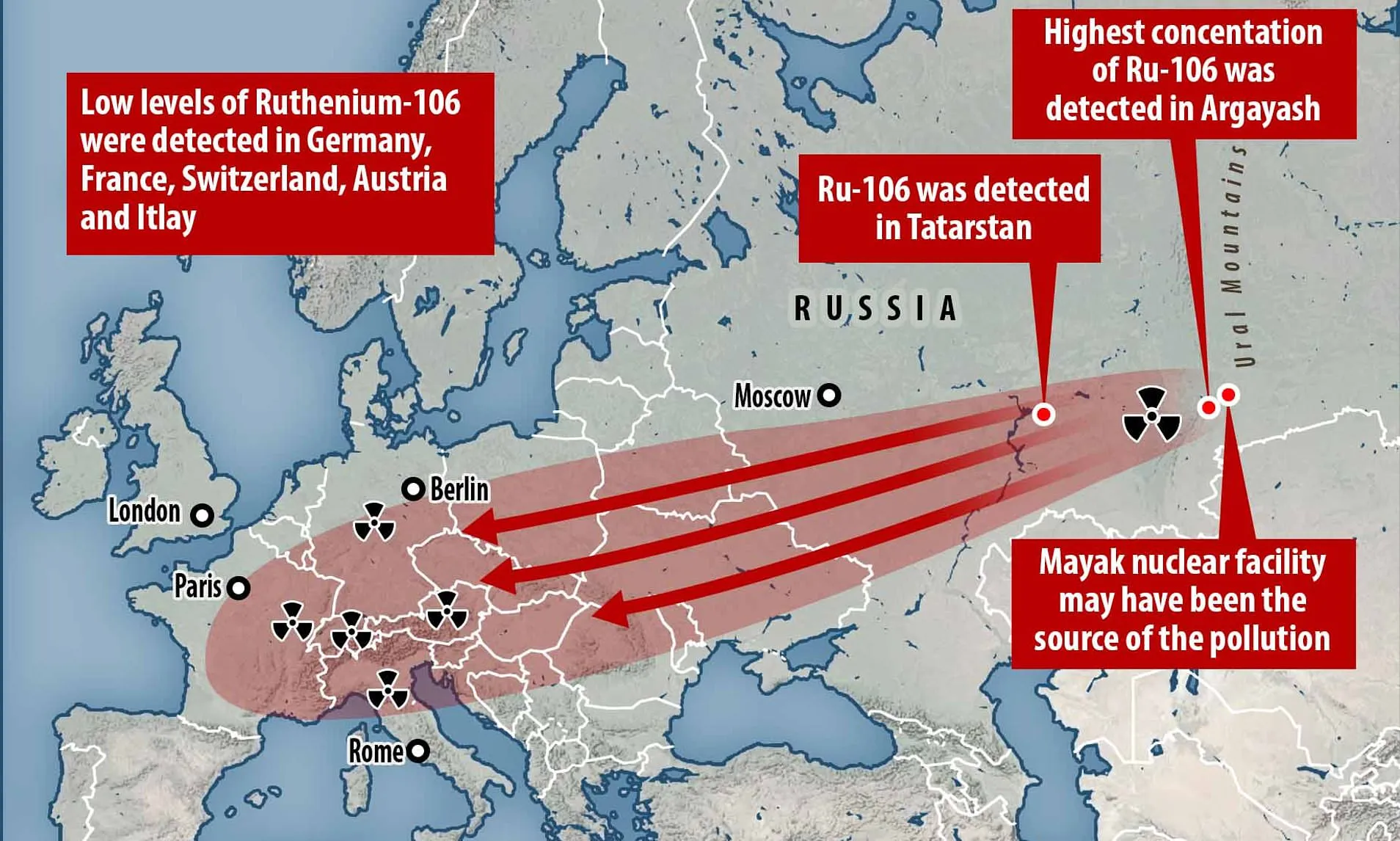
Mayak returned to the news in 2017. From late September, monitoring stations in Switzerland, Greece, Finland, Germany and other countries detected ruthenium-106 in the air, at levels from microbecquerels to a few millibecquerels per cubic metre, which were not a significant health risk far from the source. The French institute IRSN concluded that the source was probably a spent-fuel treatment facility between the Volga and the Ural rivers, and estimated the release at 100 to 300 terabecquerels, roughly 1 to 3 grams of ruthenium-106. That amount would have required evacuating people within several kilometres of the source.
The Russian response changed over time. Rosatom first said it had not done any relevant work for many years. On 21 November 2017, Russia confirmed spikes at two monitoring stations within 100 kilometres of Mayak but said that the data were not enough to identify the source. In December a Mayak executive acknowledged routine ruthenium-106 releases and called them insignificant. Later studies pointed to the Southern Urals and, in a paper in 2020, to fuel from a VVER reactor that had been delivered to Mayak about six weeks earlier, and one suggested explanation was a failed attempt to produce cerium-144 for a neutrino experiment called Borexino. That explanation is a hypothesis, and Mayak and Rosatom have denied that there was an accident at the site.
Mayak today
Mayak is still working. Two reactors, called Ruslan and Lyudmila, produce isotopes and keep a tritium capability, and they are powered by highly enriched uranium. The site produces plutonium-238 for space power sources and a range of radioisotopes, and reprocesses spent fuel at a plant called RT-1 with a design capacity of 400 tonnes a year. Reprocessing totalled 993 tonnes between 2016 and 2024, according to the International Panel on Fissile Materials, and historical throughput was around 110 to 130 tonnes a year. The site also has a small experimental plant making mixed-oxide fuel, and has vitrified waste since the 1980s. It is the only facility still involved in making fissile components for Russia’s nuclear weapons, and a US and Russian programme built a secure fissile material storage facility there that began taking material in 2006.
The clean-up of old waste is a long programme. Legacy decommissioning at Mayak under a federal programme to 2030 has a budget of 30 billion roubles, about 400 million US dollars. The town has about 75,000 people, down from 82,164 in the 2010 census. A 2016 documentary called City 40 was made about it, and the town is still closed to outsiders.
Visiting
Mayak and Ozyorsk are not open to visitors. Ozyorsk is a closed city, and the Mayak site, the Karachay area and the contaminated parts of the East Urals trace are restricted zones. The nature reserve created in 1968 was designed to keep people out. We would not suggest trying to go, and no public access is described anywhere. Anyone who wants to see the place can watch the 2016 documentary City 40.
Conclusion
Mayak is a story about how a single decision, to make plutonium as fast as possible, shaped a landscape and the lives of the people in it. The first reactor started in 1948 and the first bomb followed in 1949. In the years between, the plant began putting its waste into the Techa River, and afterwards into a lake that was small enough to be forgotten. When a tank exploded in 1957, there was no public explanation. Many of those who lived along the river and on the trace did not learn the reason for years.
The numbers disagree in many places: the amount released into the river, the year and scale of the 1967 or 1968 dust storm, the size of the 1957 explosion, the area of the contaminated trace and the number of people evacuated. Most of the differences come from the secrecy, and from the fact that different pieces of the picture were put together in different decades. The most solid result is the Techa River study, which found a real but modest excess of cancer deaths. The weakest are the claims on advocacy pages and in interviews that have no study behind them.
The site has changed less than might be expected. Lake Karachay is now a covered field of rock and concrete. The plant that created it still reprocesses fuel, and in 2017 it was again the suspected source of a radioactive cloud. What stays with us is how long the consequences of the first years of the bomb programme have lasted, and how recently some of the basic facts became public.
Did you know?
- Ozyorsk was known as Chelyabinsk-40 and later Chelyabinsk-65, and was given its present name only in 1994.
- Reactor A at Mayak started on 19 June 1948, and the first Soviet atomic test followed on 29 August 1949.
- Between 1949 and 1956, Mayak discharged an estimated 76 million cubic metres of radioactive wastewater into the Techa River.
- The Techa River Cohort study follows 29,730 people and found about 2 per cent of solid cancer deaths linked to radiation.
- Lake Karachay measured about half a square kilometre in 1951, and held an estimated 4.44 exabecquerels of radioactivity in its sediment.
- On 29 September 1957 a waste tank exploded at Mayak, and the accident is rated level 6 on the INES scale.
- About 10,000 people were evacuated from at least 22 villages after the 1957 explosion, with some leaving a week later and others two years later.
- The Soviet scientist Zhores Medvedev made the accident public in the West in 1976.
- Lake Karachay was backfilled with rock and concrete, with the final layer added in December 2016.
- In 2017 a ruthenium-106 cloud was detected over Europe and was traced to the Southern Urals.