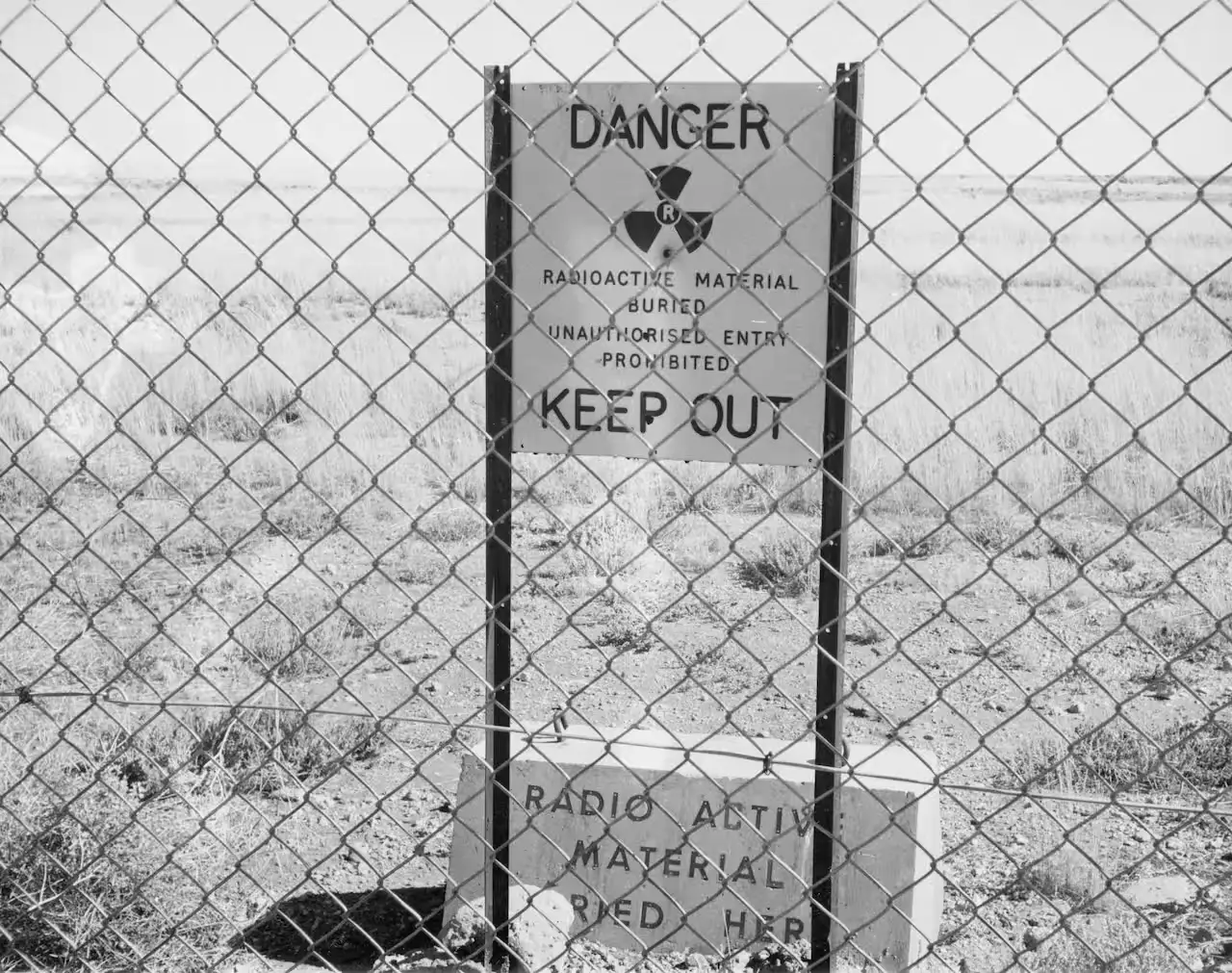
A desert chosen for its emptiness
Maralinga is easy to find on a map and difficult to reach. It lies on the southern edge of the Great Victoria Desert, about 800 kilometres north-west of Adelaide, in a country that gets between 75 and 125 millimetres of rain a year. Winters are cold, with overnight temperatures that can fall below freezing, and summer days can pass 44 degrees Celsius. In the 1950s the nearest railway was the Trans-Australian line to the south.
It was exactly that remoteness that attracted the people who chose it. In 1950 the British prime minister, Clement Attlee, asked the Australian prime minister, Robert Menzies, whether Britain could test an atomic weapon on Australian territory, and Menzies agreed, keen to keep close ties with Britain. Britain wanted its own nuclear weapons. Churchill’s scientific adviser, Lord Cherwell, had warned that relying on the United States would reduce Britain to a second-class nation. Australia’s remoteness and sparse population made it an attractive option, and Menzies was reportedly “only too pleased to assist the motherland”.
It is important to say at the outset that the assumption behind all this was wrong. The desert was not empty. It was the home of Pitjantjatjara and Yankunytjatjara people, the Anangu, who had lived there for a very long time and for whom the land held great spiritual significance. The story of Maralinga is partly a story about nuclear weapons, and partly a story about who was counted and who was not. It is also a story about how long it can take for a government to admit what it knew, and how much of the truth reached the public only because a handful of people refused to stay quiet.
From Monte Bello to Emu Field to Maralinga
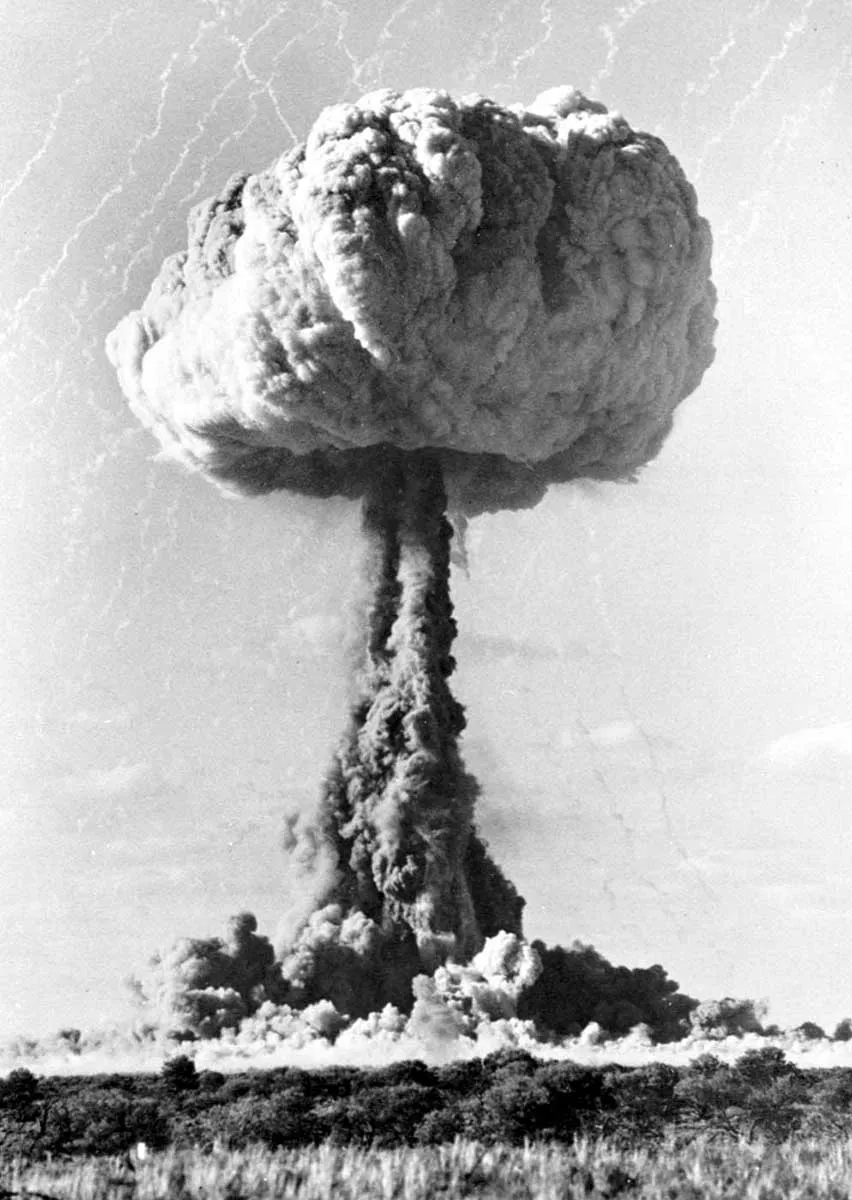
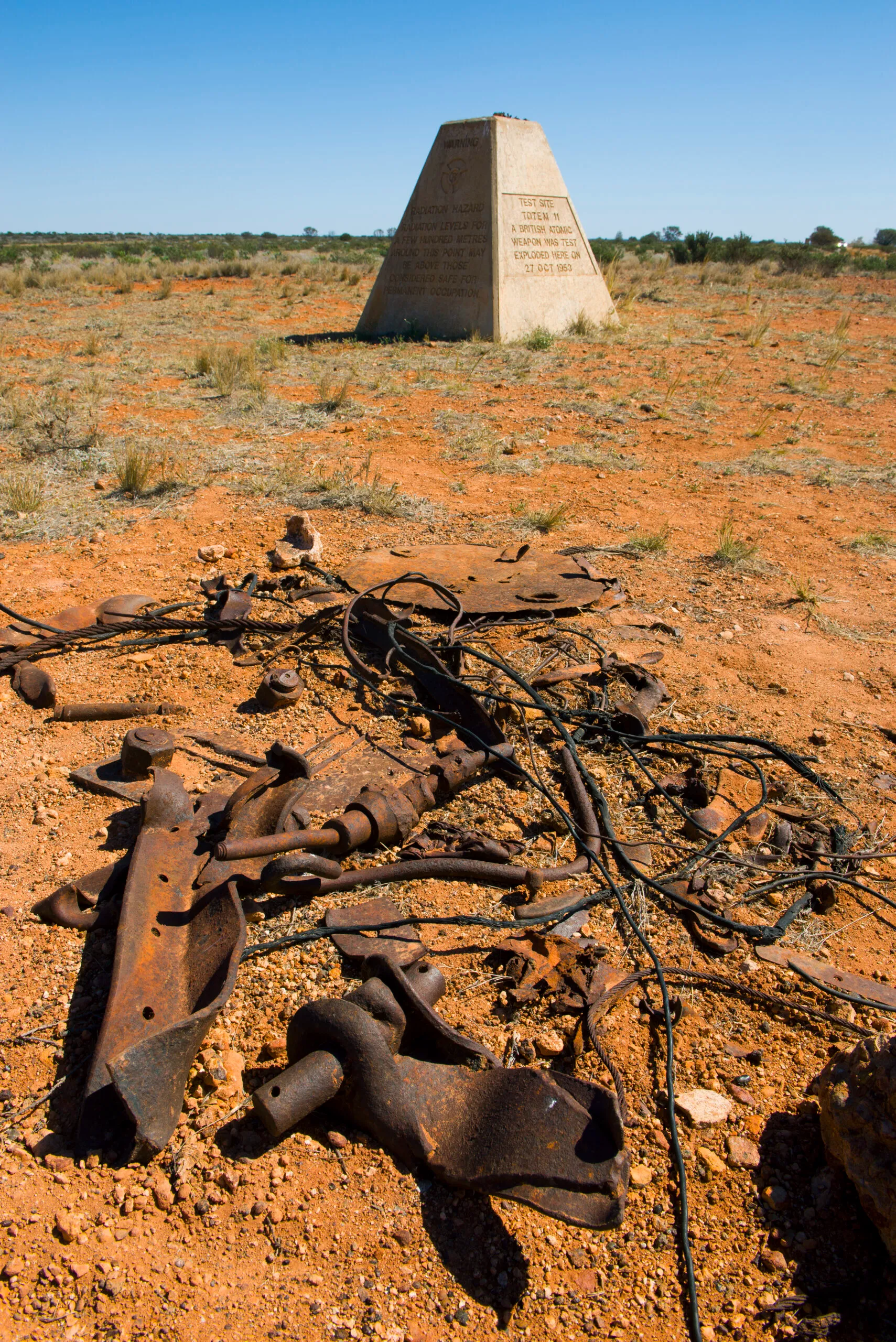
The first British test took place on 3 October 1952 on the Monte Bello Islands, off the north-west coast of Western Australia. For the second series, in October 1953, Britain went inland. The site was Emu Field, in the South Australian desert, surveyed the previous year by Len Beadell. Two tests, together called Operation Totem, were fired from towers: Totem I on 15 October and Totem II on 27 October, with reported yields of about 9 and 7 kilotons.
Emu Field was a short-lived site. The cloud from the first detonation did not disperse as expected and travelled north-east across the continent. Aboriginal people and white pastoralists were exposed to fallout from the Totem tests which they called the “black mist”, and a scientist is reported to have told the Royal Commission that the first test should not have been fired, because the fallout was about three times the forecast. The details come from summaries rather than the full record, but the black mist became one of the most widely remembered parts of the whole story.
The site was also, by the standards of the British planners, “excessively remote”. The search for a replacement led to Maralinga, closer to the railway. Beadell surveyed it in the early 1950s, and Maralinga became a permanent test site in about May 1955. The area set aside was roughly 3,200 square kilometres, within the larger Woomera Prohibited Area.
A village in the desert
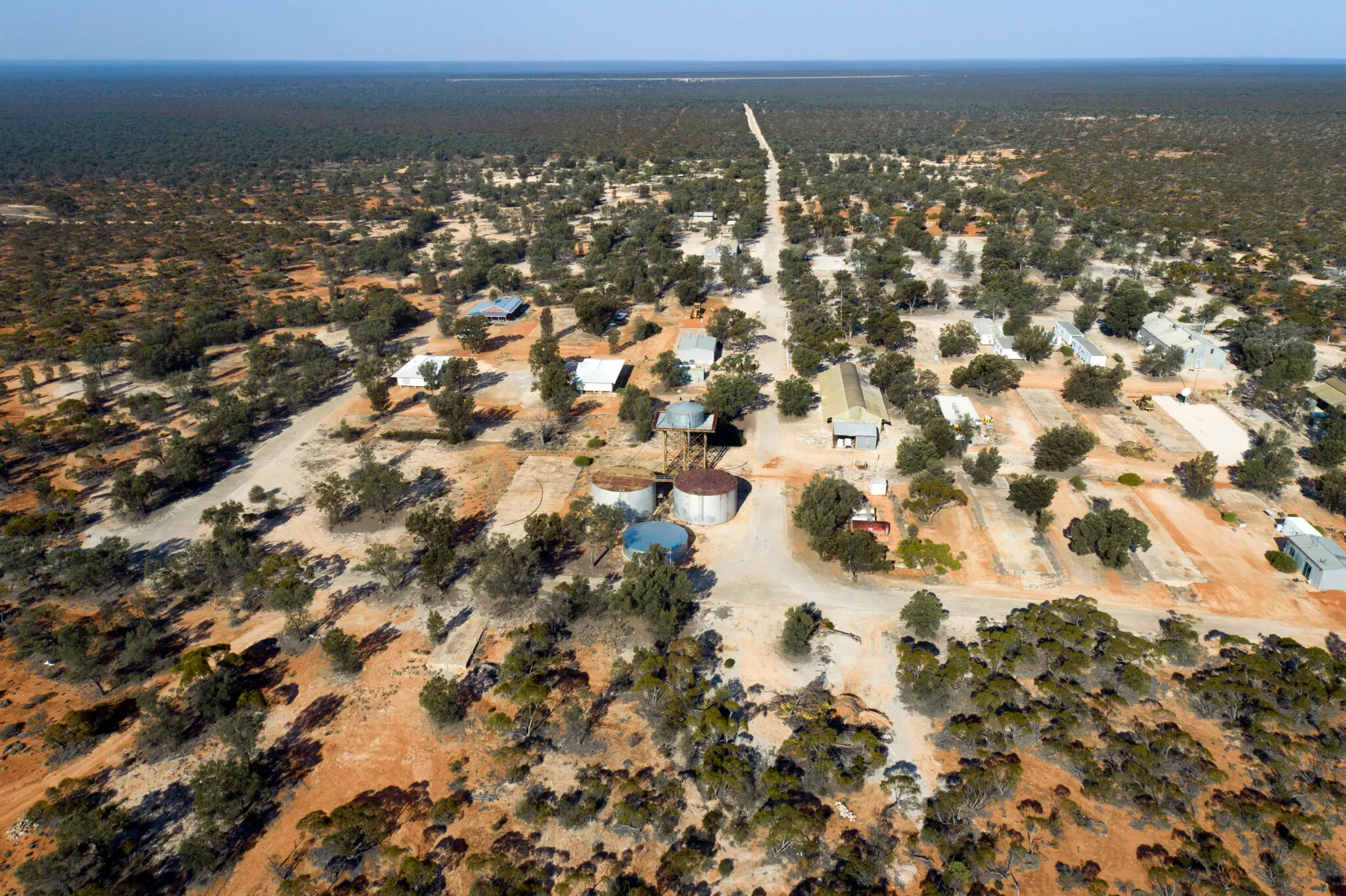
To support the tests, Britain and Australia built a small town. At its height in the late 1950s Maralinga village is said to have housed some 2,000 people, and it was a well-appointed settlement. The runway is 2.4 kilometres long, with a reinforced concrete slab at each end that is said to be five metres deep, and the site manager jokes that it could land the space shuttle. Six of the original buildings still stand, including the former hospital, although most of the village is now concrete slabs where buildings used to be, and the old swimming pool has become a rubbish tip.
Participants in the tests were barred from disclosing details. For years the village was a place where thousands of people worked, ate, slept and went about their business in an environment most of them were not allowed to describe to their own families. We know a lot about what happened because some of them eventually spoke up, as we will see.
Operation Buffalo, 1956
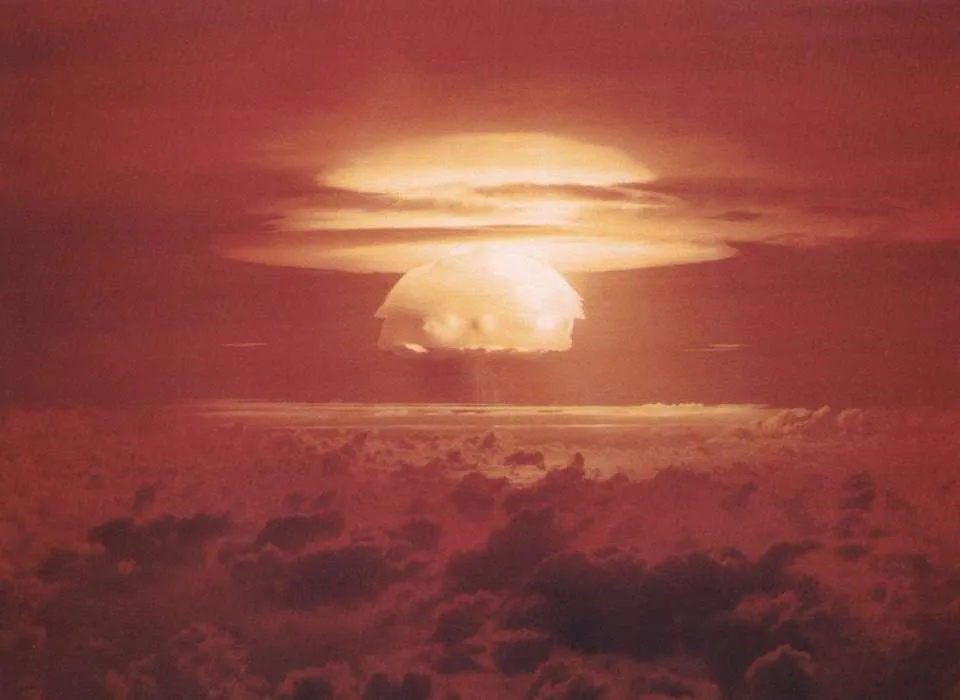
The first Maralinga tests were fired in September and October 1956, as Operation Buffalo. There were four. One Tree, on 27 September, was a device on a tower, with a yield of about 13 to 16 kilotons. Marcoo, on 4 October, was fired at ground level and was much smaller, about 1.4 to 1.5 kilotons; its fallout crossed the east coast 25 to 30 hours later. Kite, on 11 October, was the first British atomic weapon dropped from an aircraft, a Vickers Valiant of the Royal Air Force flying at about 9,100 to 11,000 metres (the records disagree), with a yield of about 3 kilotons. Its crew, Flight Lieutenants Edwin Flavell and Eric Stacey, received the Air Force Cross. The fourth, Breakaway, was a boosted weapon fired from a tower on 21 or 22 October with a yield of about 10 to 11 kilotons.
The clouds from the larger tests rose very high, and the wind carried what they held far beyond the fence. Some mushroom clouds reached up to 47,000 feet, about 14,000 metres, and fallout was detected as far away as Townsville.
Operation Antler, 1957
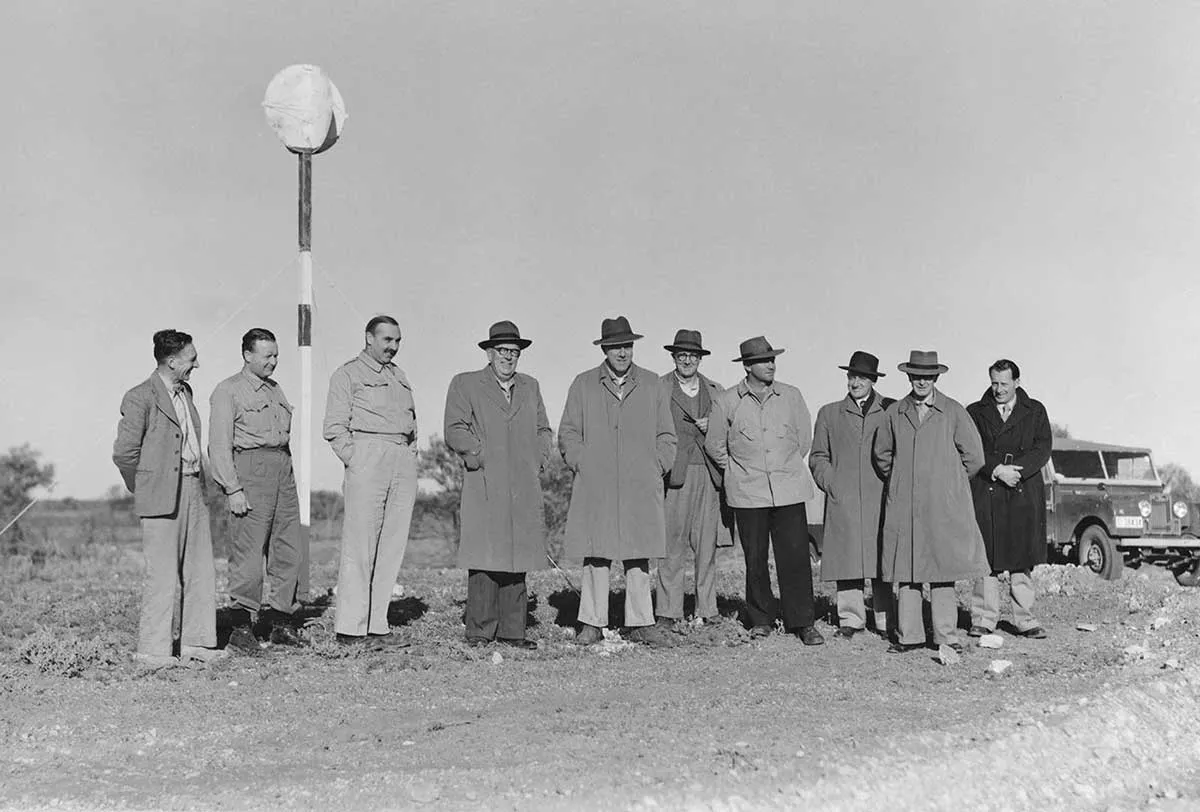
Operation Antler, between 14 September and 9 October 1957, consisted of three tests designed mainly to examine how weapon triggering mechanisms worked. The first, Tadje, was a small tower test of about 1 kiloton (estimates run from 0.9 to 1.5). It used cobalt-60 pellets as a tracer for the yield, which fuelled rumours of a “cobalt bomb”. Staff later found the pellets scattered and were exposed to the active cobalt. The second, Biak, was a tower test of 6 kilotons or thereabouts; the cloud rose higher than forecast, and fallout was deposited at the Taranaki site. The third, Taranaki, was suspended from balloons and was the largest, with a yield in the range of 25 to 27 kilotons. Because the fireball did not touch the ground, its fallout was more limited. It was, nonetheless, larger than the Hiroshima bomb.
The seven major tests of Buffalo and Antler are what most people mean by “the Maralinga tests”. They are the ones with the mushroom clouds, the newsreel names and the dates in the history books. They are not what caused most of the lasting contamination.
The trials that did the damage
Alongside the big explosions, the British ran a long programme of what they called minor trials. Their number depends on how they are counted: about 200 is one figure, about 550 another, and about 700 a third. Their names were changed over time, from “Minor Trials” to “Assessment Tests” in 1958 and to the “Maralinga Experimental Programme” in 1959, partly to avoid the word “test”.
They were given names such as Kittens (trials of neutron initiators), Tims (measurements of shock waves in compressed material), Rats (shock-wave measurements using internal X-ray detection) and Vixens (safety tests simulating fires and crashes). They were not full nuclear explosions, but many of them dispersed radioactive material, including uranium, polonium and, above all, plutonium. The minor trials generated far more contamination than the major tests.
The worst of it was at Taranaki. Twelve “Vixen B” trials in 1960 to 1963, which tested the effects of accidents such as fires and crashes, spread about 22 kilograms of plutonium across the ground. Plutonium has a half-life of about 24,000 years, and it is a carcinogen if inhaled, swallowed or absorbed through broken skin. The last of the Vixen B trials was in 1963, the year Britain and Australia signed the Partial Test Ban Treaty, after which Britain moved its testing to the United States.
The Royal Commission later concluded that the plutonium Vixen tests should not have been conducted, given the known hazards.
The people who were already there
The Ooldea mission, on the Trans-Australian railway, closed in June 1952, and the reserve was revoked in February 1954. Residents were moved to Yalata on the coast, although many later returned to their traditional lands.
The authorities knew there were people in the area. The job of finding them fell largely to Walter MacDougall, a native patrol officer, who had to cover hundreds of thousands of square kilometres by car. A letter of 1956 from the chief scientist, Alan Butement, criticised MacDougall’s concern for a “handful of natives” and said his outlook showed a “lamentable lack of balance”. In 1957 a family, the Milpuddies, is reported to have been found camping beside a crater from a Maralinga detonation. These two details rest on a single account, and we include them because they illustrate the pattern: the people responsible knew Anangu were nearby and treated their safety as a secondary problem.
“I was only a little kid.”
Yami Lester, Yankunytjatjara Elder, speaking about the 1950s tests
Yami Lester became the best-known voice among the affected. As a boy, he has said, a black mist rolled in from the desert and enveloped his family’s camp. He says he lost the sight of his right eye immediately and kept only partial sight in the left. His family group became seriously ill, with vomiting, diarrhoea, skin rashes and vision loss, and some relatives died. The mist is variously placed as fallout from the tests at Maralinga and “Emu Junction”, while other accounts tie the black mist specifically to the Totem tests at Emu Field in 1953. In either case the account is his own and his family’s, and the link between the mist and the illness has been argued about ever since. His advocacy is widely credited with helping to bring about the Royal Commission.
The Commission also heard evidence that about 100 Aboriginal people had walked barefoot over contaminated ground, because their boots did not fit, and that remote Aboriginal communities downwind showed higher rates of radiation-related disease. For more than 30 years the Anangu near Maralinga were also denied access to food and water resources on their own land, which caused severe hardship.
The servicemen
Australian and British servicemen also took part, and many were exposed. Australian personnel were involved in every major test. Early on, RAAF airmen flew through mushroom clouds to collect samples, often without adequate instructions, radiation monitoring or protective clothing, and Air Force and Army staff who handled decontamination and transport were also exposed.
The secrecy lasted a long time. A former serviceman, Avon Hudson, became a whistle-blower in the 1970s, and his disclosures helped to lead to a public inquiry. In the 1980s, concern about premature deaths and birth defects among former staff, together with media reports, led the Hawke government to set up a Royal Commission. Veterans later obtained compensation through continued campaigning, although a class action in the United Kingdom by veterans and civilians was blocked when the UK Supreme Court ruled that the claims had been brought too late. Veterans and nearby Aboriginal people have higher cancer rates than the general population, and in 2017 the Australian Government agreed to improve health care for both groups.
The Royal Commission
The Royal Commission into British Nuclear Tests in Australia sat from 16 July 1984 to 20 November 1985. It was chaired by Jim McClelland, with William Jonas and Jill Fitch as commissioners and Peter McClellan as counsel assisting, and its findings were harsh. It found that Menzies had approved the tests without first obtaining independent Australian scientific advice on the hazards, that Australia had accepted British safety and fallout assurances without independent assessment, and that Sir Ernest Titterton, the Briton who oversaw safety on Australia’s behalf, had withheld key information. Radiation safeguards for participants were, it said, totally inadequate even by the standards of the 1950s; it was “probable” that some cancers would not have occurred without the test fallout; and the failure to protect air crews who flew through the clouds was “clearly negligent”. The Commission also said that little had been done to protect the welfare of Aboriginal people.
The Commission recommended that the sites be rehabilitated so that the traditional owners could have unrestricted access, that they be compensated, and that Britain should pay for the clean-up and compensation. Britain’s official historian of the tests, Lorna Arnold, took a different view in a 1987 report, which emphasised partnership and said that safety approaches met the international standards of the time. Critics have pointed out that she was a former employee of the UK Atomic Energy Authority and had never visited the test sites or interviewed Australian participants.
Cleaning up, twice
The first clean-up, Operation Brumby, was carried out ahead of the site’s closure in 1967. Contaminated debris was buried in concrete-topped trenches, and plutonium-contaminated soil was ploughed into the ground. A British report of 1968, since regarded as flawed, led the Australian Government to accept that Britain had met its obligations. In May 1984, Australian scientists preparing to hand the land to its traditional owners found major, widespread plutonium contamination.
In December 1993 Britain agreed to pay £20 million, as an ex gratia payment, towards a clean-up estimated at about A$101 million. In 1994 the Australian Government paid the Maralinga Tjarutja A$13.5 million in compensation. The second clean-up ran from about 1996 to 2000 (dates from 1993 to 2001 are also given) and cost around A$108 million. About 350,000 cubic metres of topsoil was removed and buried in trenches. Some of the worst pits were first to be treated by in-situ vitrification, a process that melts the soil into glass, but the method was abandoned in favour of deeper burial.
The site was declared clean and habitable in March 2000, except for an area at Taranaki. That exception is put at about 120 square kilometres in one account, while another says 412 square kilometres of the range remain unavailable for permanent habitation. In 2001 the head of the Australian radiation protection agency, ARPANSA, advised that the clean-up had met the standards set for the main test sites. Is the land clean? The honest answer is “yes, to an extent”.
Handback
The legal return of the land began before the clean-up. Under the Maralinga Tjarutja Land Rights Act 1984 the traditional owners received freehold title in 1985, and the community moved that March to Oak Valley, about 128 kilometres north-north-west of the old Maralinga township. In November 2009 (some sources say December) Maralinga itself was formally returned to the Maralinga Tjarutja, and on 5 November 2014 the remaining 1,782 square kilometres of the old weapons range were handed over. The Emu Field site, which was found to have no significant contamination beyond residual radioactivity near the detonation points, was returned in 1996.
Questions about safety have not gone away. A study from Monash University in 2021, led by Megan Cook, examined the radioactive “hot particles” that remain in the soil at Maralinga. It found that they were less stable than had been assumed, and the authors think they are likely to release plutonium and uranium slowly in dust and water, which could be taken up by plants and wildlife. They stress that the release is an inference from the structure of the particles, not a measured finding. Concerns were also raised as late as 2011 that some areas remained contaminated, years after being declared clean.
What a visitor sees now
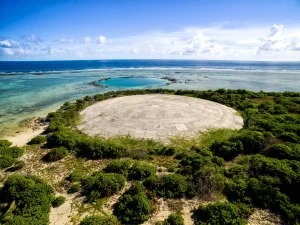
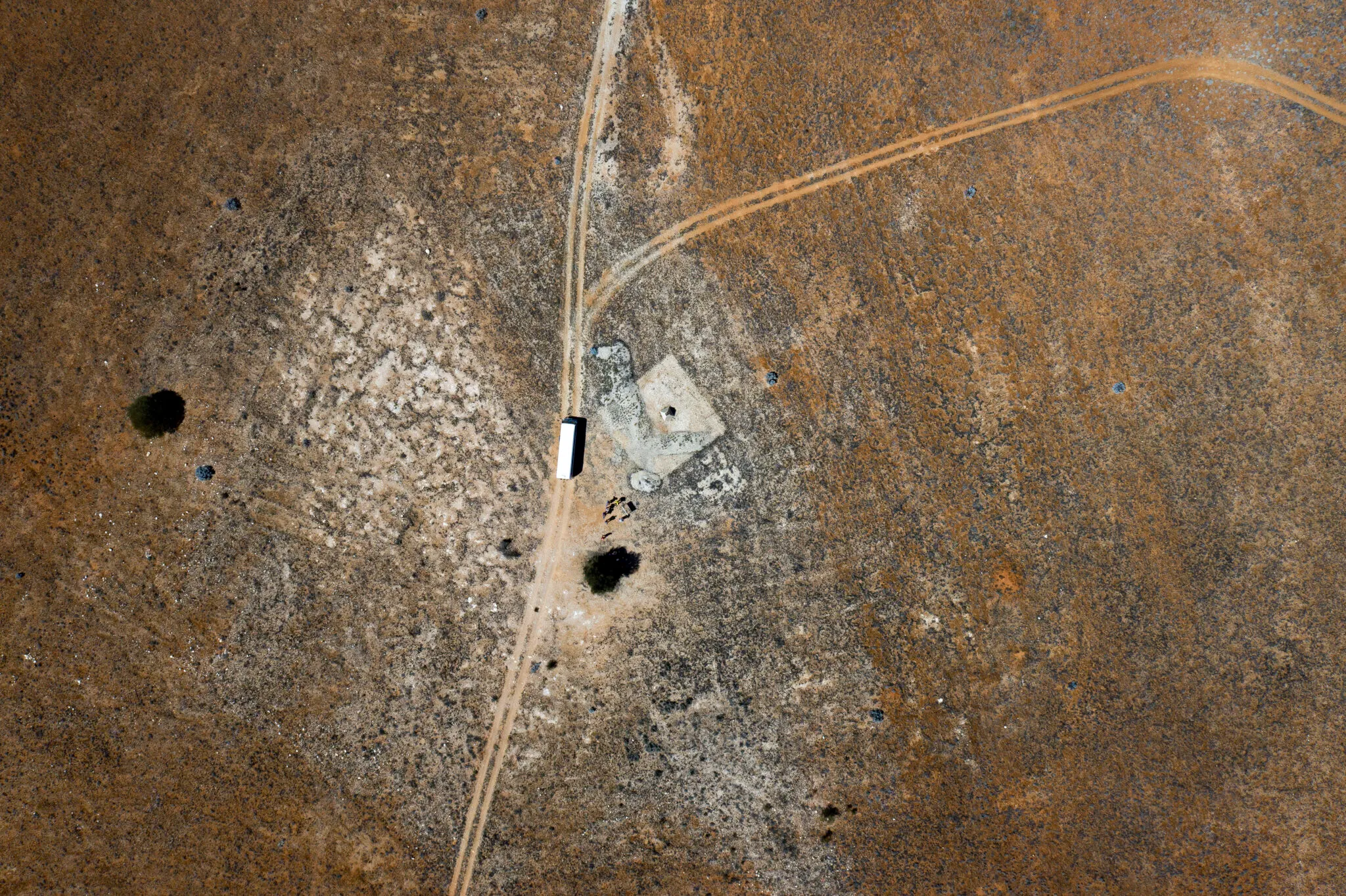
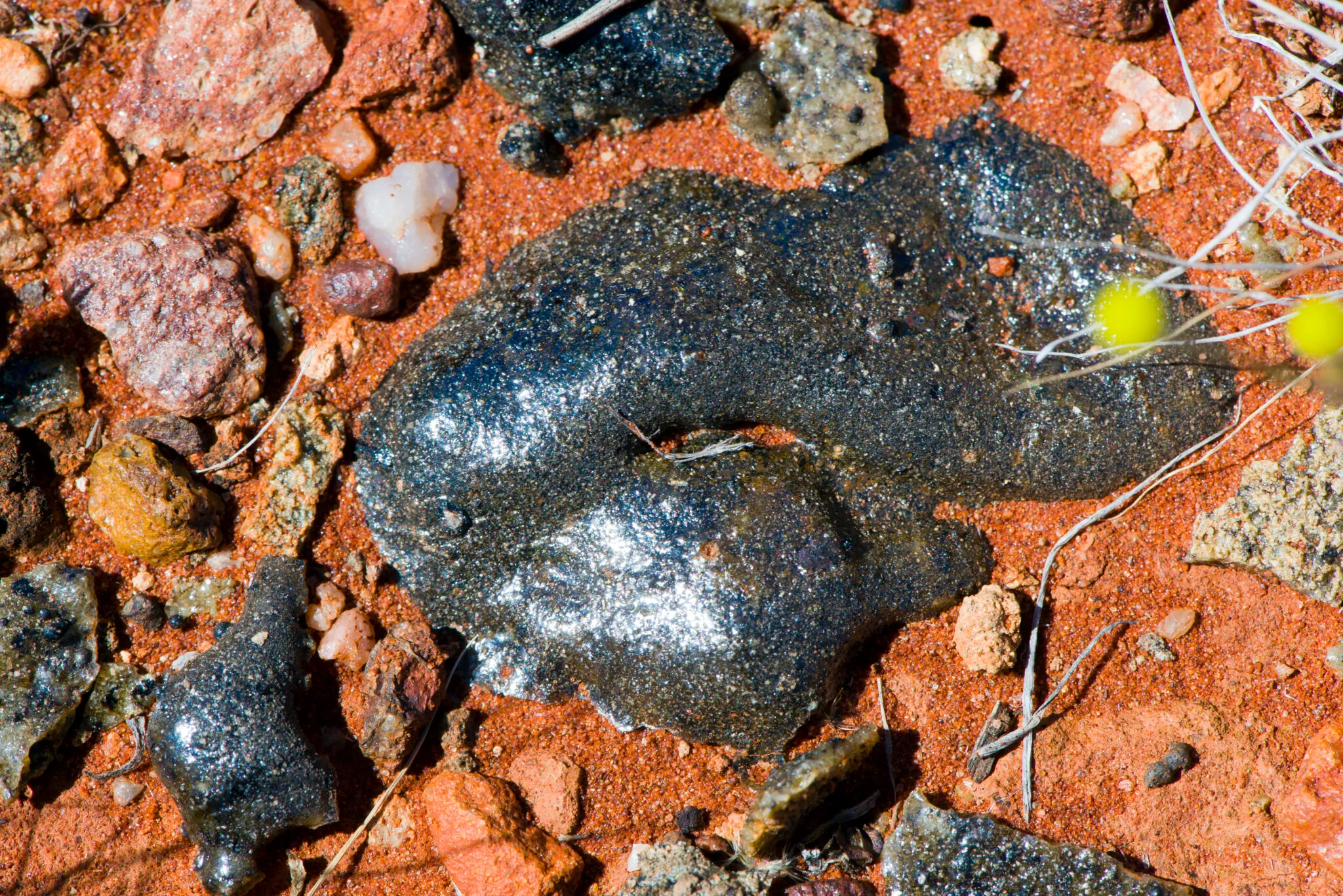
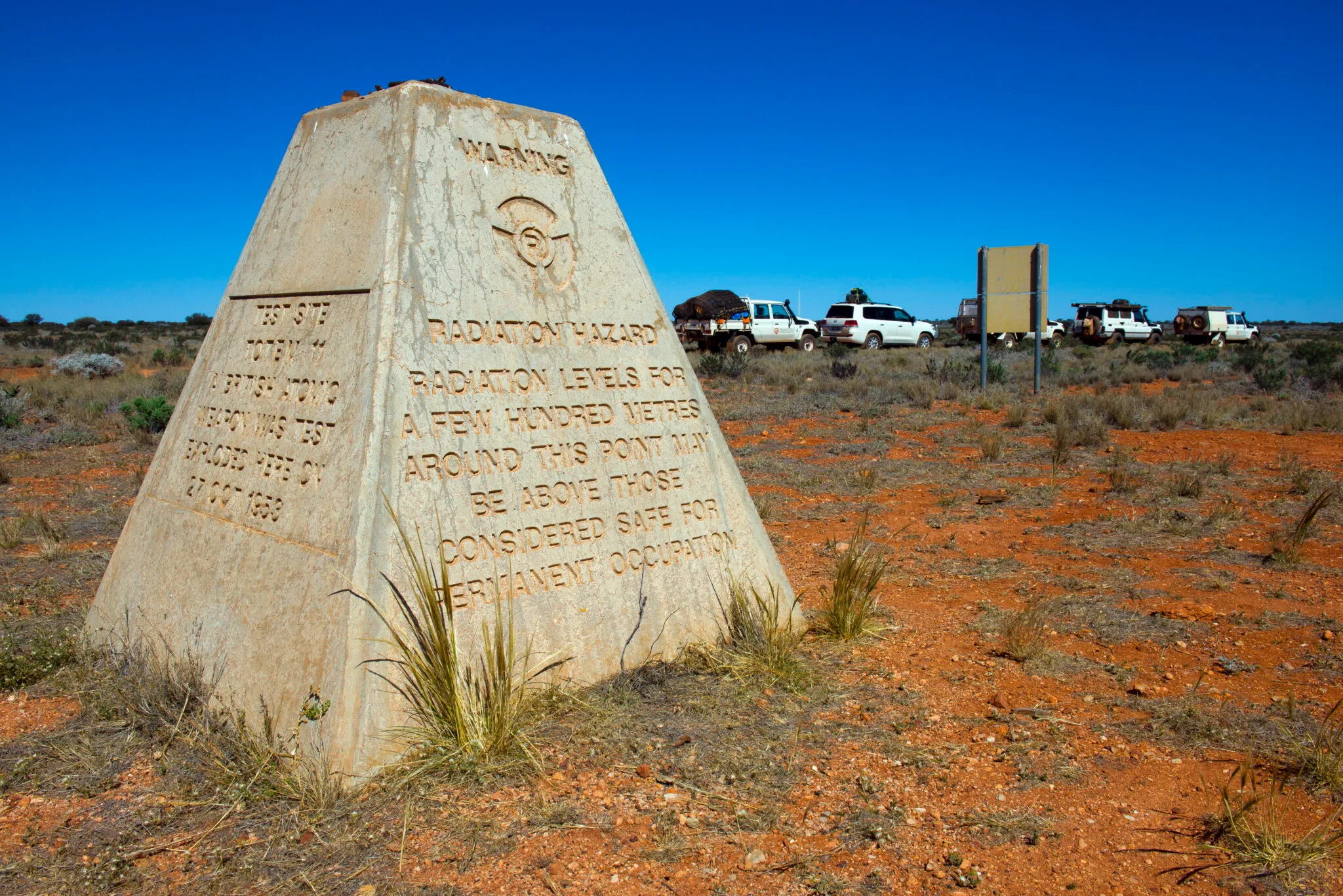
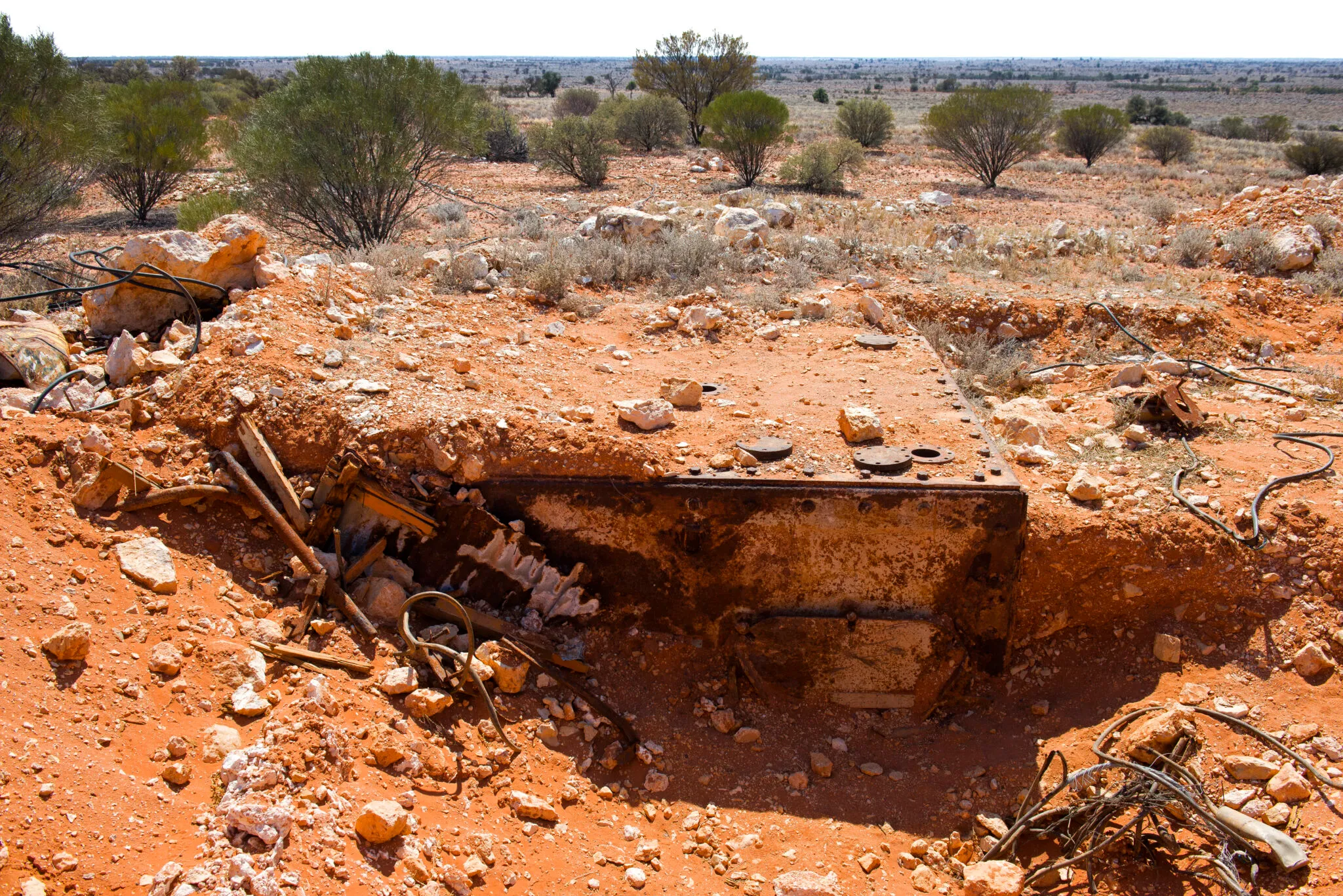
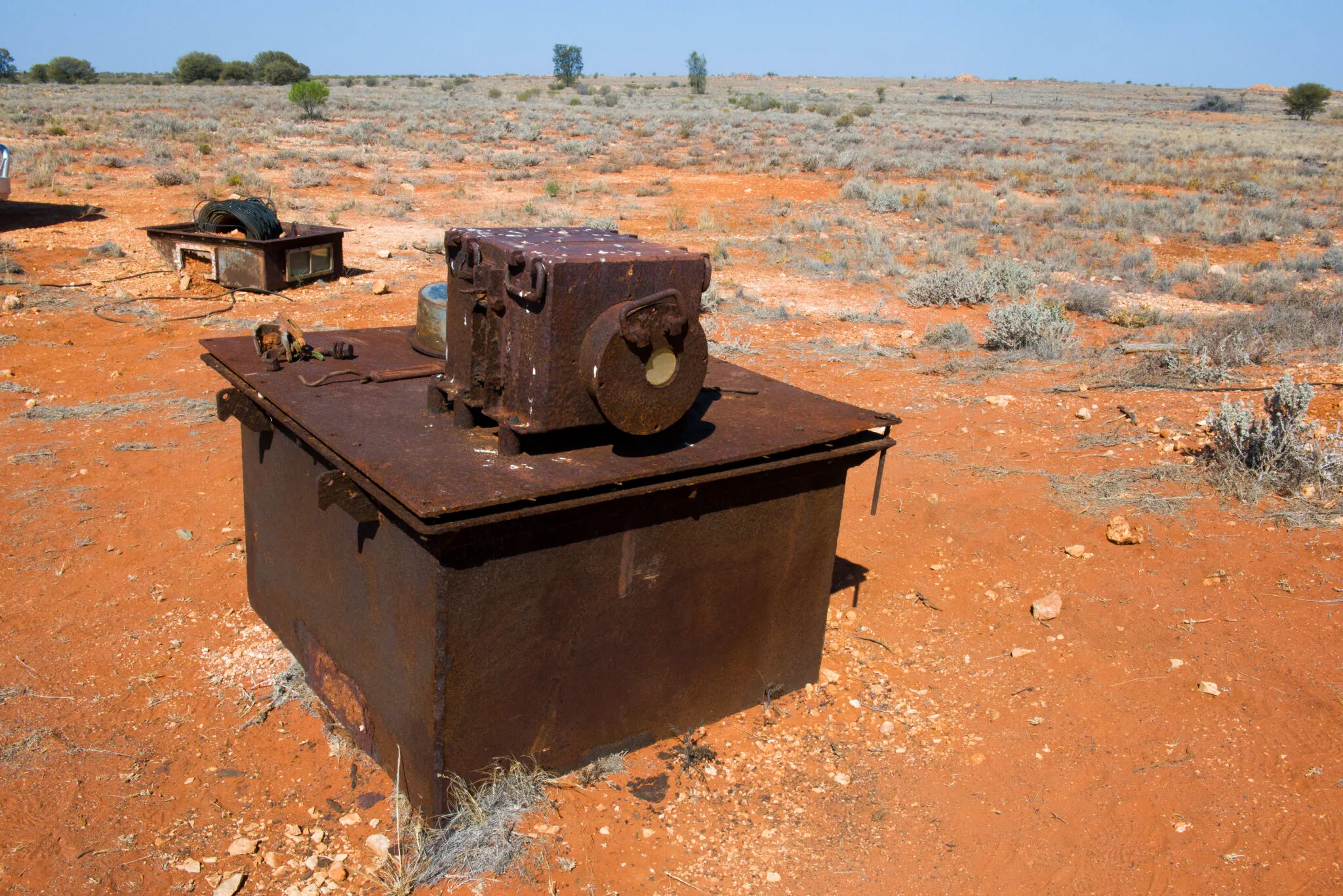
Since the handback, the land has been run by the Maralinga Tjarutja, and it can be visited on arrangement. Most visitors drive good dirt roads from the south, turning off the Eyre Highway on the Nullarbor Plain, and a tour is led by the site manager. It has three parts, the village, the old airport and the test sites. The bitumen road north to the test sites is in good condition. Ground zero is open and barren, with few plants or animals, and concrete cairns mark the Buffalo and Antler operations. At Breakaway, sand melted into glass by the heat can still be seen. At Marcoo there is tangled wire, steel tower stubs, anchor mounds and a concrete filming tower. Taranaki has been heavily cleaned.
Figures from ARPANSA say that a full-time resident would receive no more than 5 millisieverts a year even in the most contaminated areas around Taranaki, and a casual visitor who did not disturb the soil or raise dust would receive less than 1 millisievert, compared with a natural background of about 1.5 to 2 millisieverts a year. A nuclear engineer, Alan Parkinson, disputes the figures, and says a traditional lifestyle on the land could involve a dose up to 13 times higher. The site manager’s practical advice is not to eat the dirt. This is Aboriginal land, permission matters, and arrangements change, so anyone planning a trip should contact the Maralinga Tjarutja before travelling. We have no reliable detail on permits and fees.
Conclusion
Maralinga is a place where secrecy shaped almost everything. Participants were barred from speaking, the trials were renamed so they would not sound like tests, the plutonium was ploughed into the soil, and a flawed report led Australia to accept in 1968 that the clean-up was done. What brought the story into the open were people who refused to let it go: a patrol officer who worried about the people in the desert, an airman who spoke up, Elders such as Yami Lester who described what they had seen, and a Royal Commission that was prepared to put its findings in plain language.
It would be wrong to say the story has an ending, and wrong to treat the handback as the last page. The land has been returned, but it has been returned to people who have lived with the consequences for seventy years, and part of it is still not fit for permanent habitation. The plutonium at Taranaki has a half-life of about 24,000 years. What Maralinga leaves us with, more than the cairns and the glass, is a question that is easy to ask and hard to answer: who decides which places are empty?
Did you know?
- Seven major nuclear tests were fired at Maralinga, four in 1956 and three in 1957.
- The Kite test of 11 October 1956 was the first British atomic bomb dropped from an aircraft.
- About 22 kilograms of plutonium was scattered at Maralinga, mostly in the Vixen B trials at Taranaki between 1960 and 1963.
- The British called some of the trials "Assessment Tests" and later the "Maralinga Experimental Programme", partly to avoid the word "test".
- The McClelland Royal Commission described the failure to protect air crews who flew through the mushroom clouds as "clearly negligent".
- In 1994 the Australian Government paid the Maralinga Tjarutja A$13.5 million in compensation.
- At its height in the late 1950s the village at Maralinga is said to have held about 2,000 people.
- Maralinga was formally returned to the Maralinga Tjarutja in 2009, and the rest of the range in 2014.
- The Maralinga runway is 2.4 kilometres long and has reinforced concrete slabs at each end.
- A 2021 study found that plutonium "hot particles" at Maralinga may be slowly releasing plutonium into the environment.