A fortress for a war that went elsewhere
There is a particular kind of building that is made for one war and meets another. The Maginot Line is the best known example in Europe. France built it along its eastern border in the 1930s because the memory of 1914 to 1918 was still fresh: the invasion, the trenches, the million and a half dead. The idea was that a string of deep concrete fortresses would hold the line with few men, give time for the army to mobilise, and spare the country another occupation. The fortress at Hackenberg, in the Moselle region of Lorraine, was the largest of them. It was also the one that most completely shows what the idea looked like when it was done well.
The story of how the Line failed has been told many times, and our post on the German campaign in the West in 1940 covers the wider picture. The shorthand is that the Germans went through the Ardennes and around the end of the fortifications. That is true, but it can make the fortresses seem like a joke. They were not. They were formidable, expensive, carefully engineered and, in the places where they were tested, they mostly did what they were designed to do. What happened at Hackenberg is stranger and in some ways more interesting: the fortress was never tested in 1940 at all. It sat inside its ridge, firing in support of its neighbours, until the war was over, and then walked out. It was then used by the Germans, fought over by the Americans, kept by the French army through the early Cold War, and finally rescued by villagers who thought it was worth showing to people.
We want to tell the story of the place: what it is, how it was built and how it worked, who was inside it, what happened to it in 1940 and 1944, and what is left today.
Why here
The Maginot Line grew out of the debates that followed the First World War. French politicians and generals argued about how to defend the border with Germany. The idea of fortifying the eastern frontier is traced to Marshal Joffre after Verdun, with Marshal Pétain supporting it and younger officers, including Paul Reynaud and Charles de Gaulle, wanting money spent instead on armour and aircraft. The line is named after André Maginot, the Minister of War who presented the project to parliament in 1929 and died in 1932. A commission, the CORF, drew up the plans and the sites, and parliament voted the money in stages.
The frontier was divided into sectors, and the ones facing Germany and Luxembourg were the most heavily fortified. Hackenberg is in the Fortified Sector of Boulay, on a wooded ridge about 343 metres high, facing the German border, a few kilometres from the village of Veckring. It sits between its neighbours, the ouvrages of Billig and Michelsberg and Mont des Welches, in a chain of works meant to cover the approaches to Metz. The thinking was simple. Each big fortress, called a gros ouvrage, would be able to fire on the ground in front of its neighbours, so that an attacker who got near one would be under fire from several.
The records do not agree on exactly when it was built. Work is said to have begun in 1929 or 1930, with the site approved in stages between 1929 and 1932. Completion is variously given as 1933, 1935 or 1936, and the fortress is said to have been handed to the military command in 1936. The cost is given as 172 million francs in some records and just over 200 million in others. About 1,800 workers with limited machinery spent six years on it. Hackenberg is described in several places as a prototype for the other large artillery fortresses, and American accounts place it in the sixth phase of the programme.
Ten kilometres of tunnel
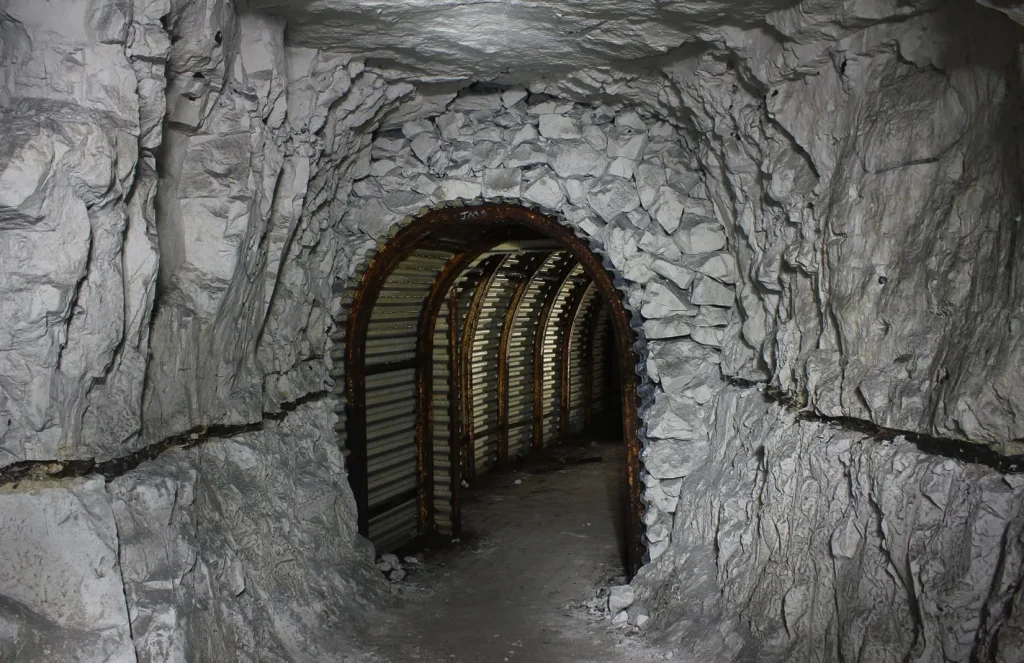
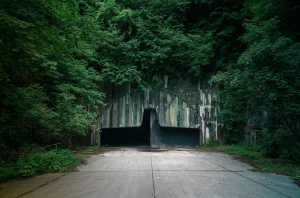
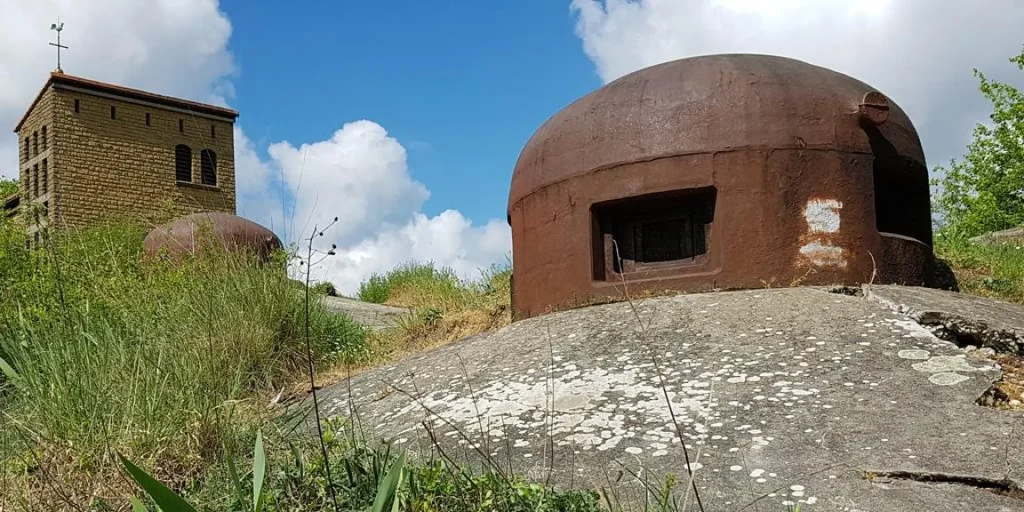
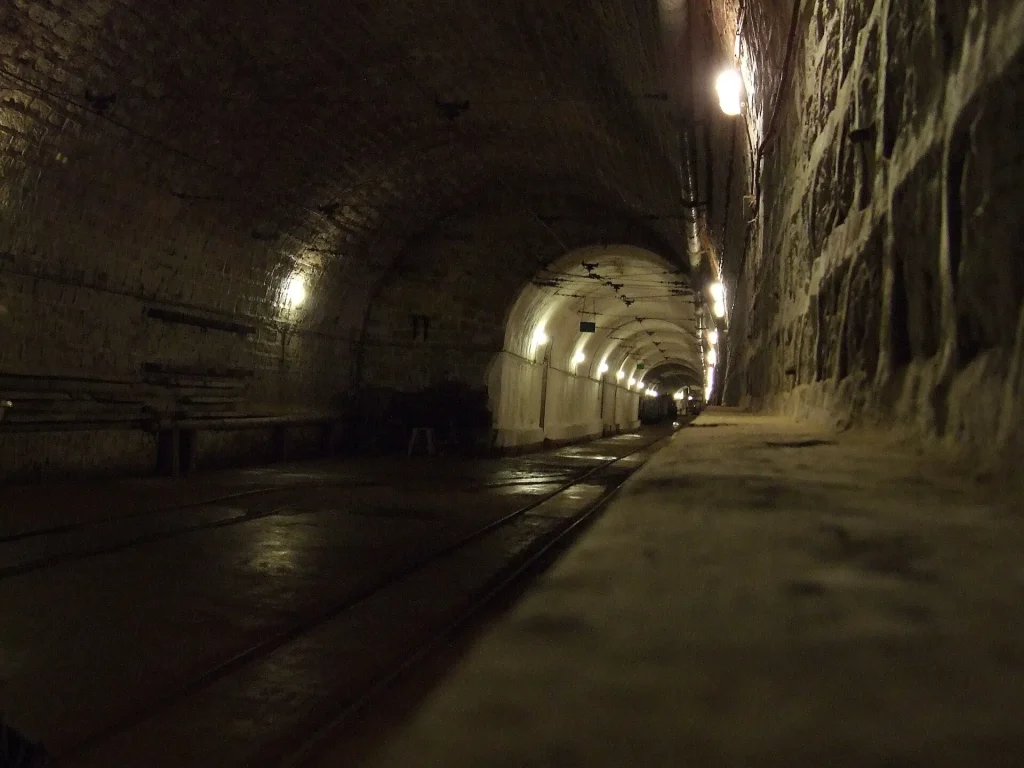
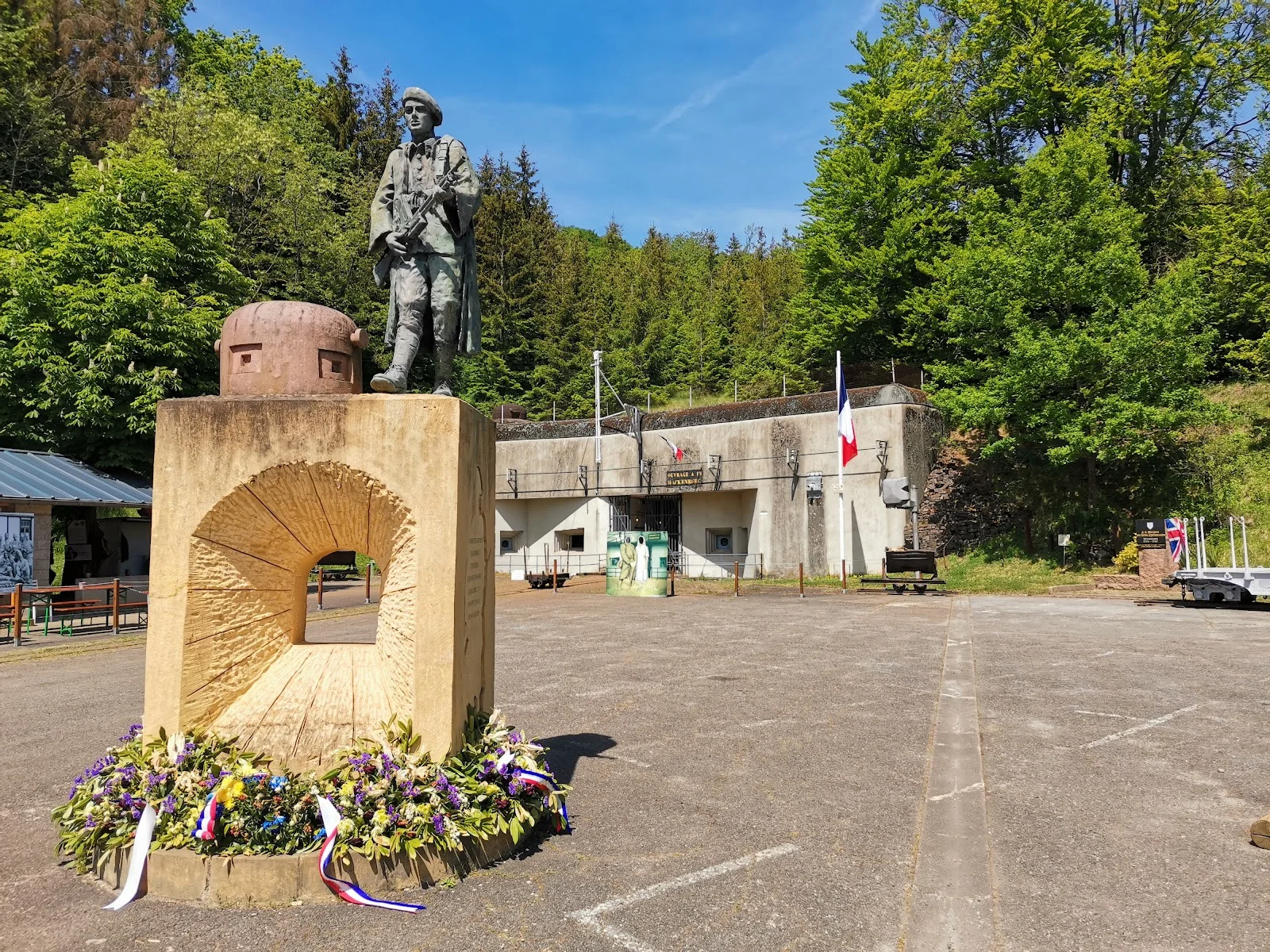
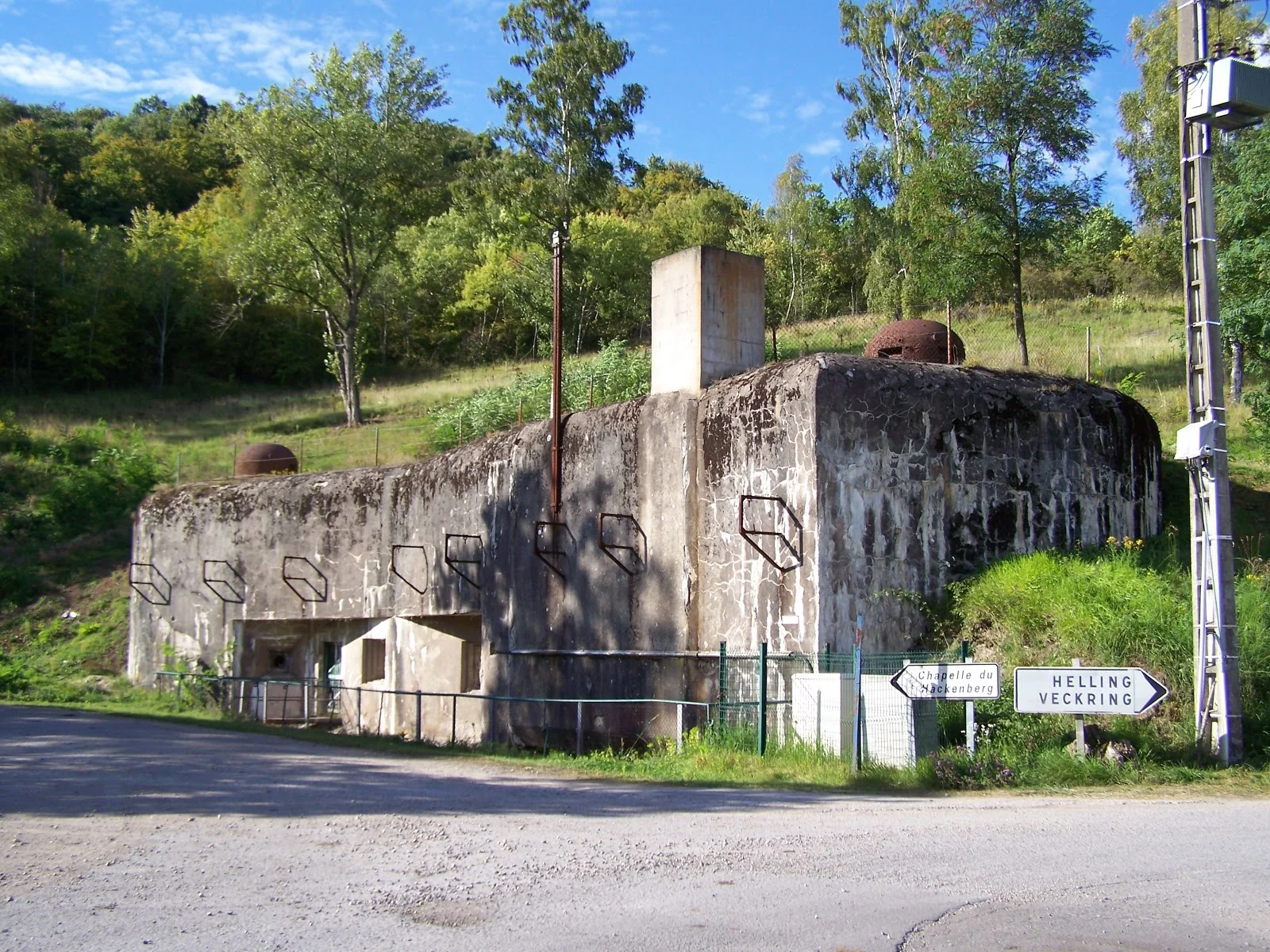
The first thing to understand is that nearly all of Hackenberg is underground. From the surface you see a wooded hill, a few low concrete blocks, steel domes and the stump of a big turret. Beneath it is a city in miniature. The main galleries run for about ten kilometres in total, about 25 to 30 metres below the ground. The tunnels are cut through rock and lined with concrete, and the plan is shaped roughly like a letter Y. The main gallery, almost 1,900 metres long, splits into two wings after about a kilometre, one leading to the western combat blocks and the other to the eastern ones. The two halves of the fortress are joined underground and also on the surface by a ditch and an anti-tank wall, which makes Hackenberg and its sister fortress Hochwald the only works on the Line with such a ditch.
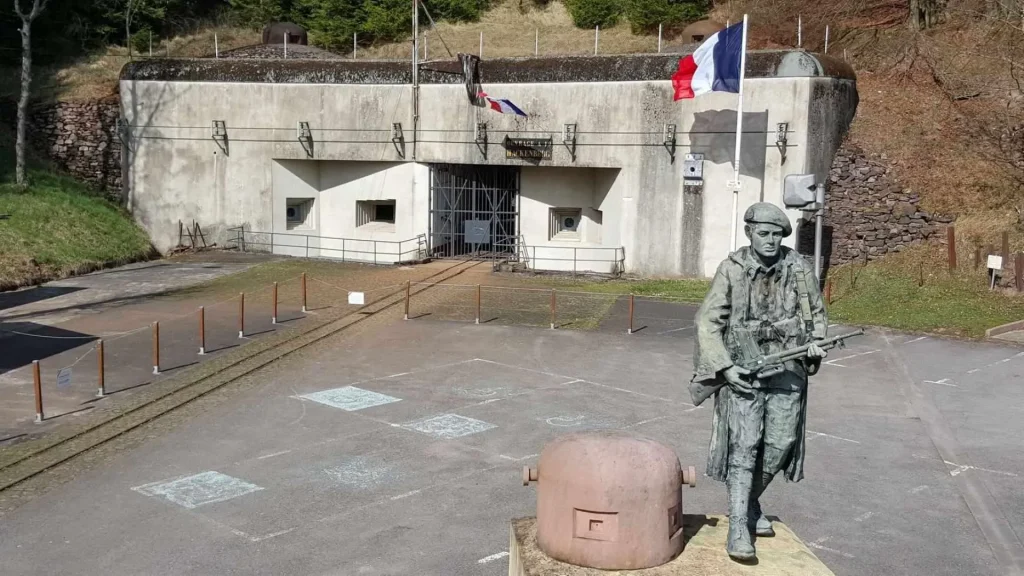
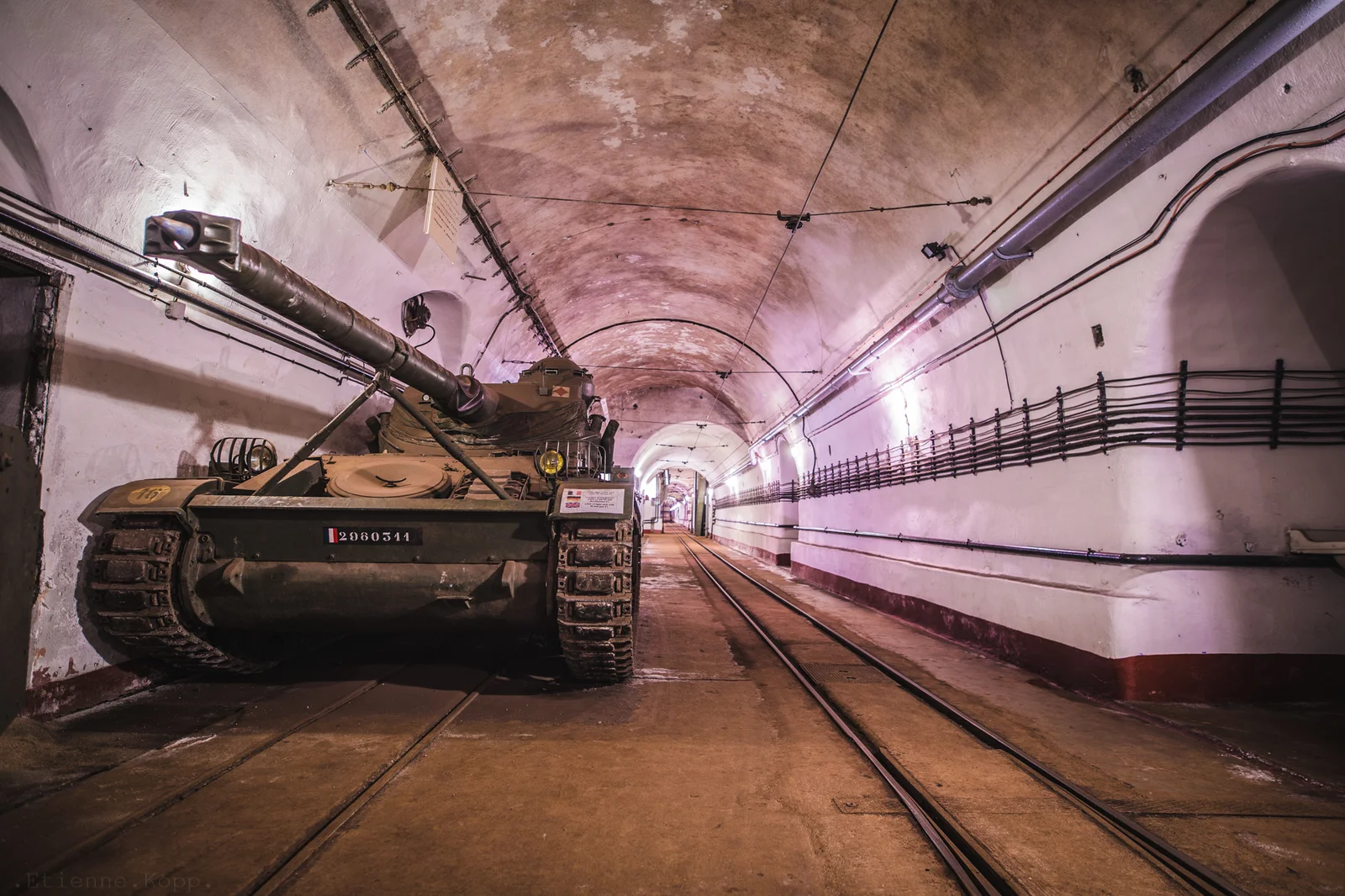
The fortress had two entrances at ground level, one for men and one for ammunition, and the second was linked to the outside world by a railway. Inside, a narrow-gauge electric line ran through the galleries. It was 60 centimetres wide, and the overhead wires that fed the electric locomotives are still in place. Outside, it joined a military railway a few kilometres to the rear. A marshalling yard near the munitions entrance let a diesel locomotive from outside be swapped for an electric engine for the trip inside, and the system is said to have been able to handle up to 240 tonnes of ammunition a day. The line runs about 1.5 kilometres from the central area to the western fighting blocks, with another kilometre or so to the eastern ones.
The infrastructure is what makes the place feel less like a bunker and more like a town. A large central kitchen fed the garrison, and there was a hospital with an operating room and an X-ray unit. Barracks, a telephone exchange, command posts, fuel and food stores and an air-filtration system for gas attack were all inside the hill. A power station had four diesel generators, each made by SGCM and rated at 350 horsepower, enough to supply a town of 10,000. Each one burned about 60 litres of diesel an hour, which explains the large fuel tanks. The local groundwater was contaminated, so drinking water was brought in by tank wagon on the same railway.
The main ammunition store, called M1, held 34,000 artillery shells, and with the smaller magazines the capacity is given as about 79,700 shells and 3.5 million rounds of rifle ammunition, together about 850 tonnes. The magazine was separated from the living area by heavy blast doors, one of which weighed about eight tonnes.
Blocks and turrets
The fortress’s guns were in separate combat blocks on the ridge, each one an independent concrete fortress of its own, joined to the rest by the galleries. The count differs slightly, with 17 combat blocks and two entrance blocks in most accounts, and 19 in total in others. The ones that matter to the story are these.
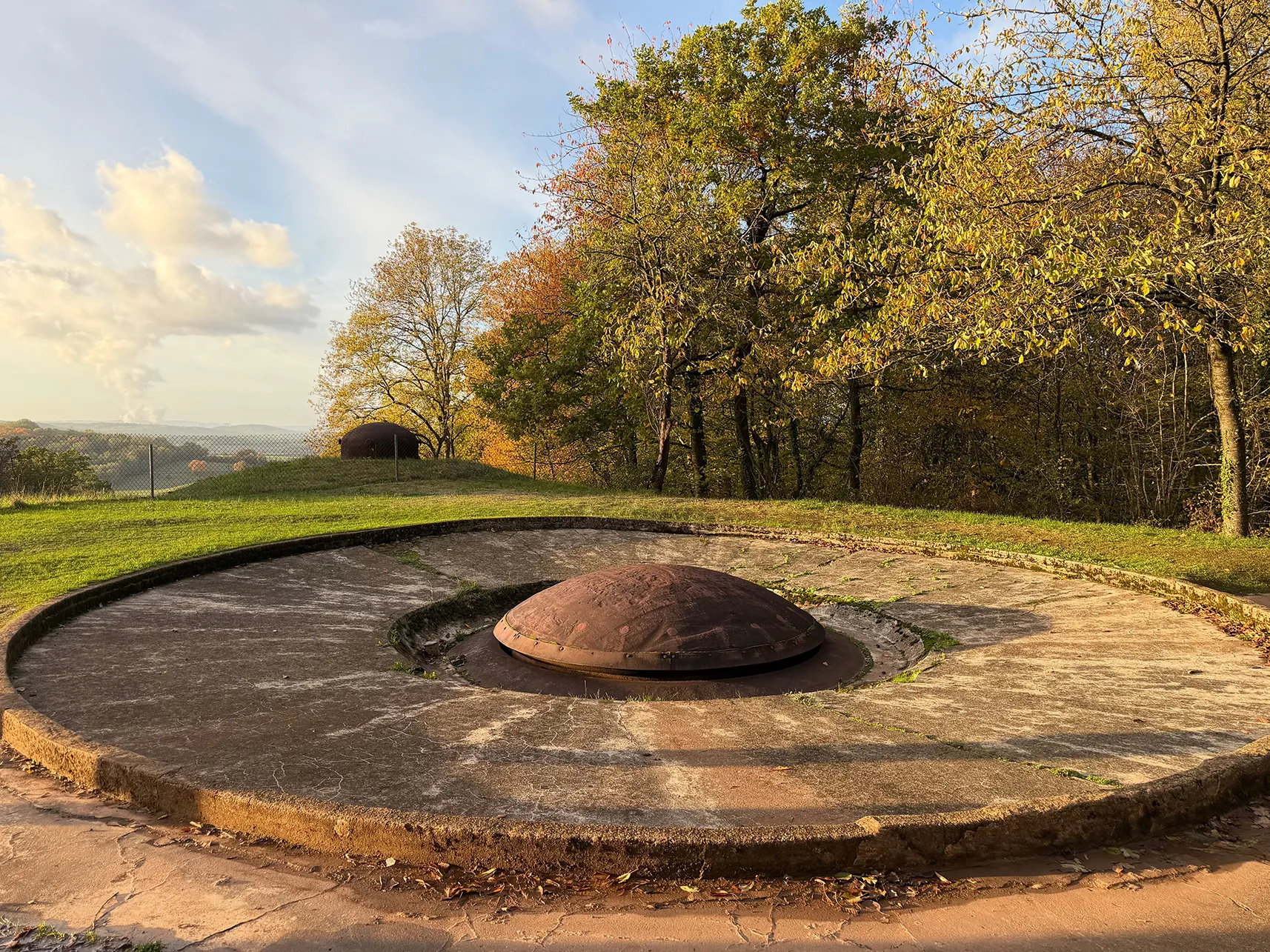
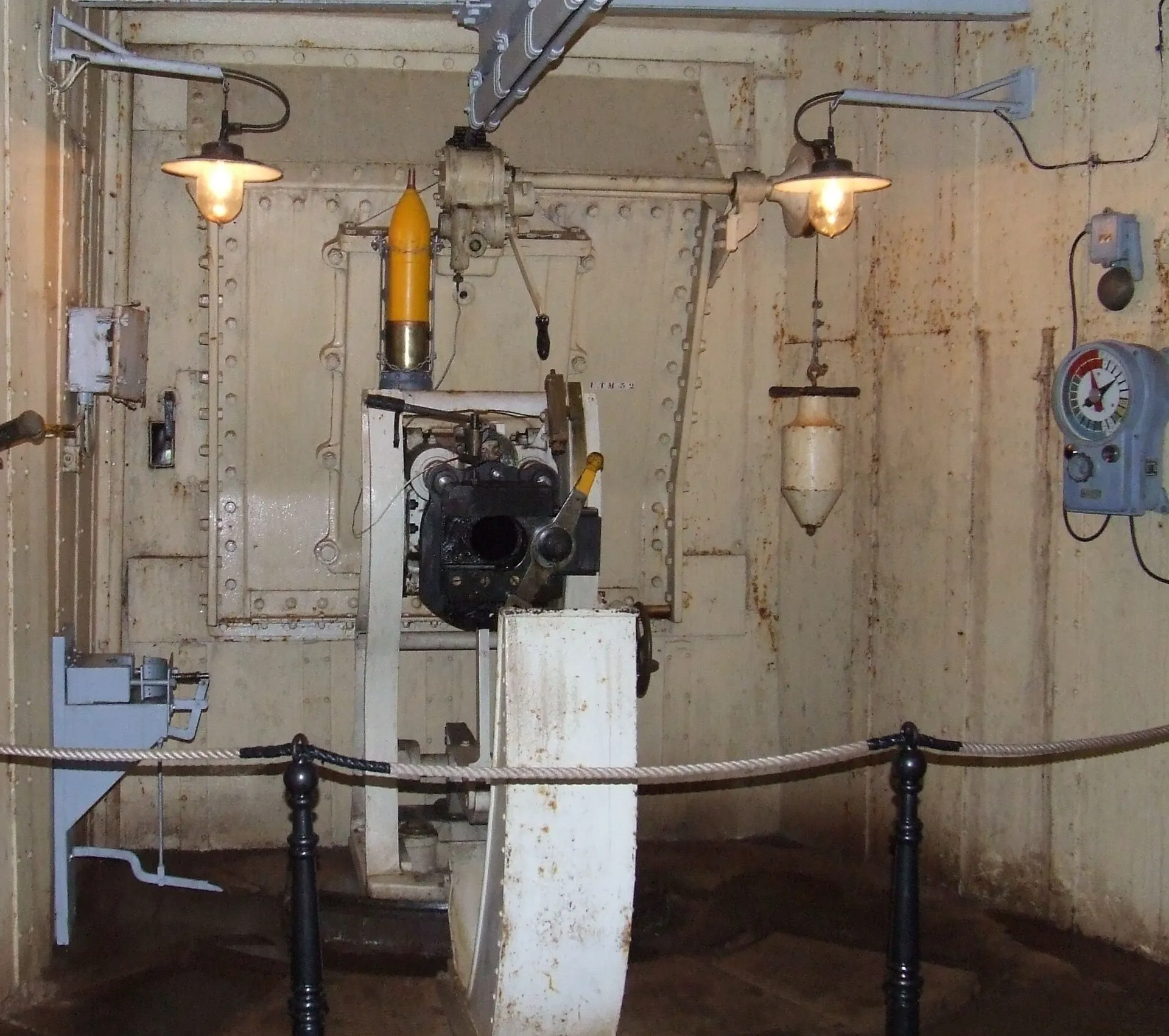
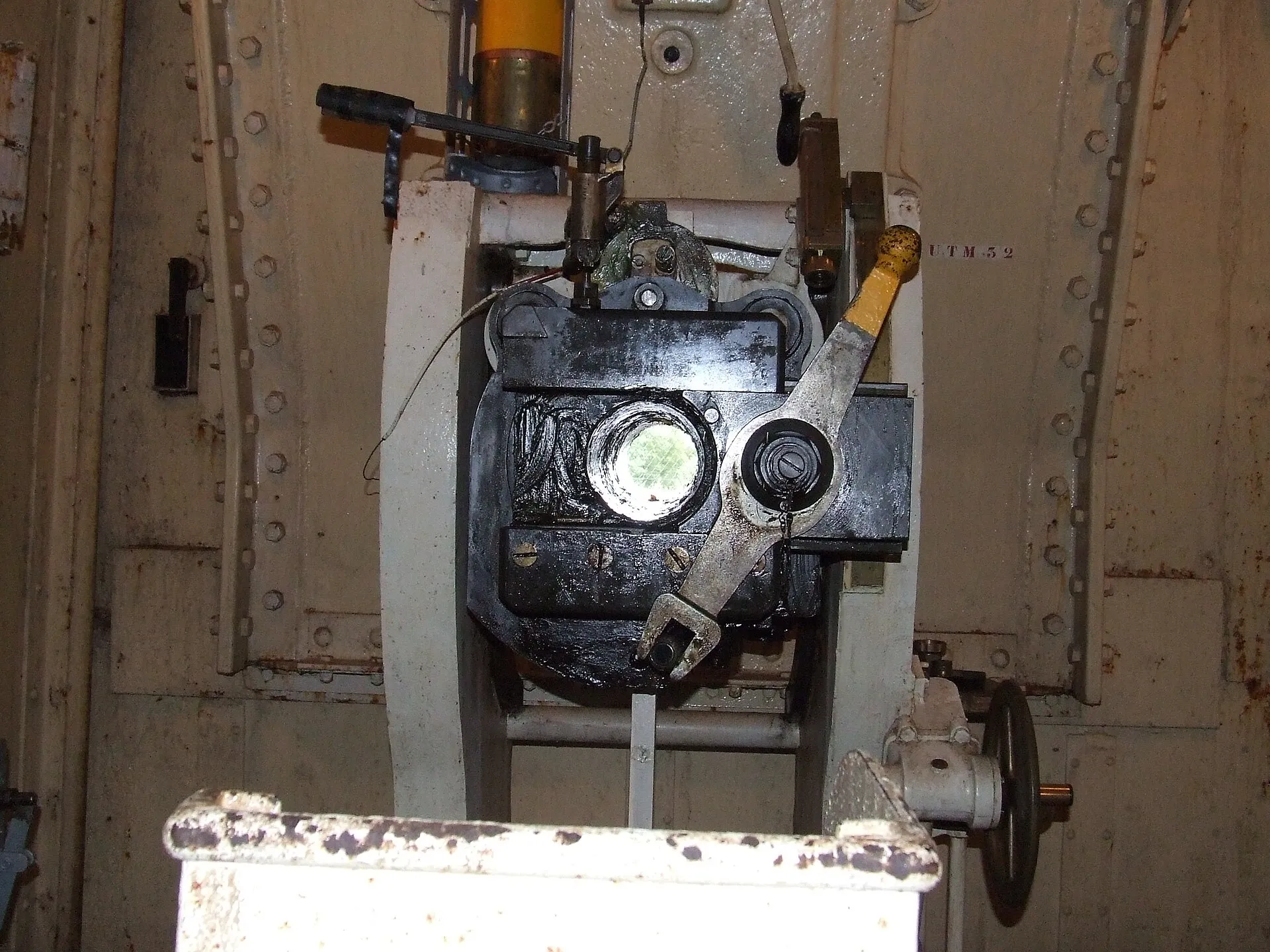
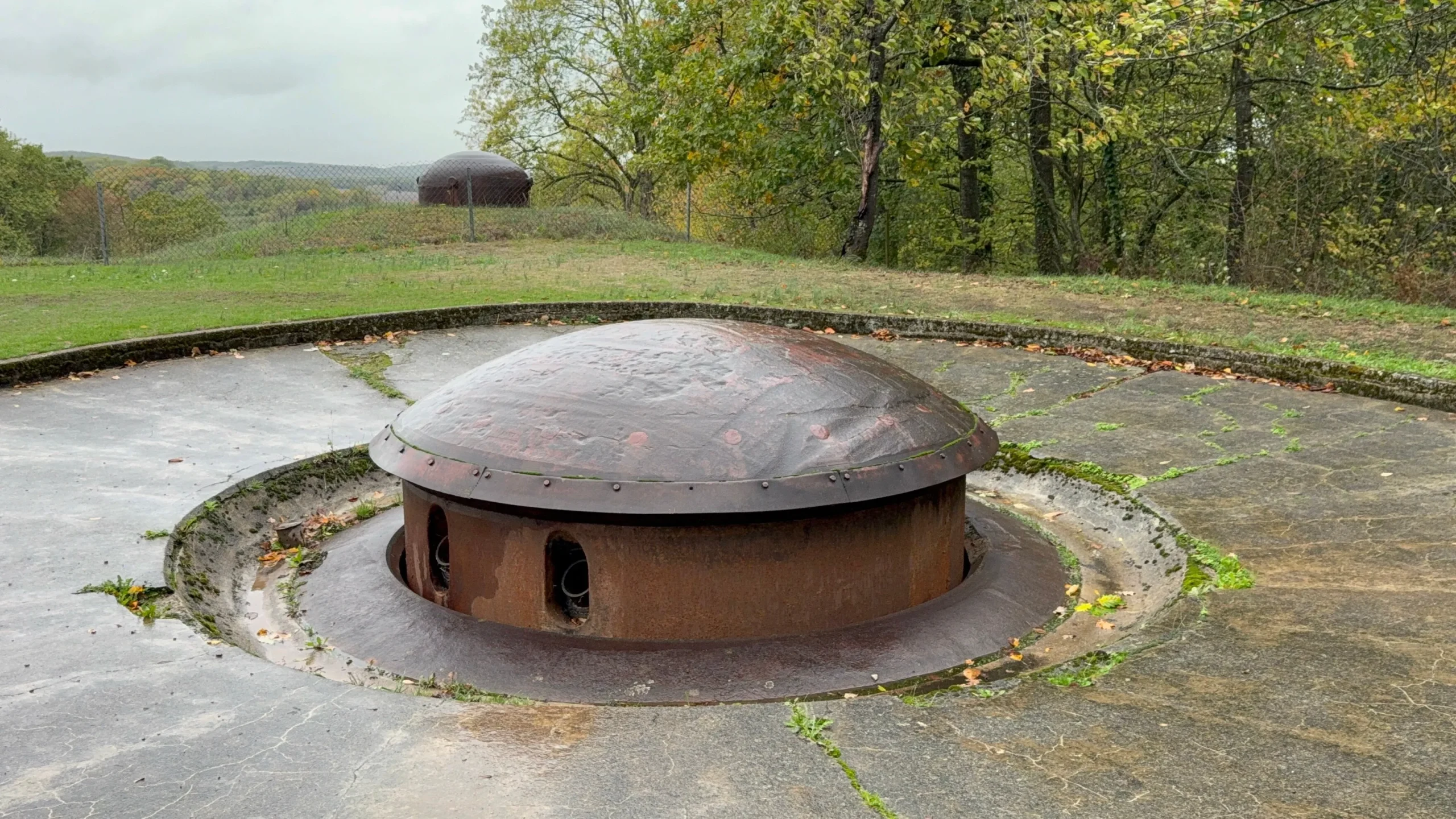
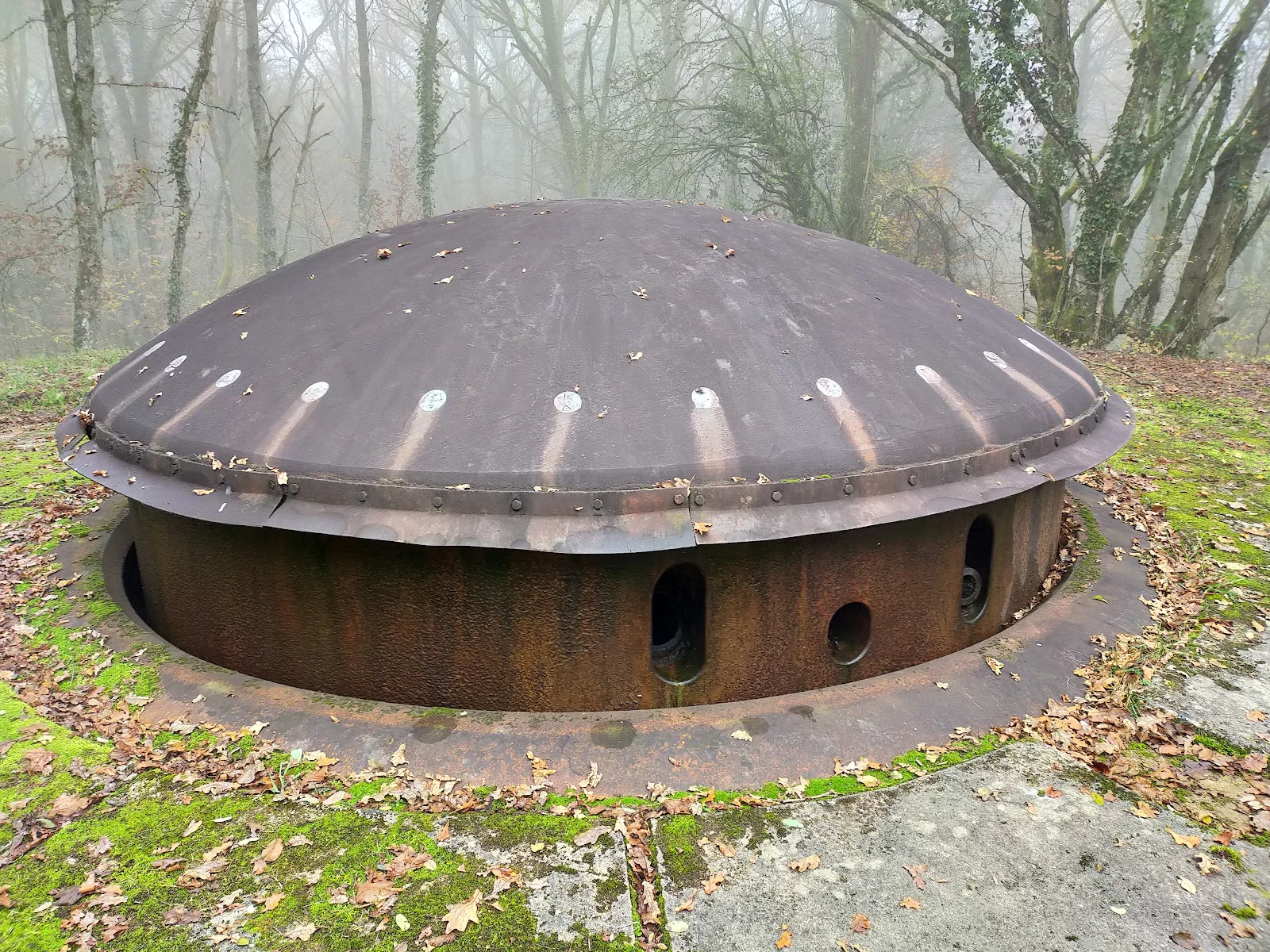
Block 9 holds the best known weapon, a retractable turret with two 135 mm guns, described in French records as trench mortars. The turret is a three-level machine. Its steel armour is more than 35 centimetres thick, and the whole mechanism rises, falls and rotates 360 degrees. It needed a crew of 21 to load and fire. Its weight is quoted anywhere from about 100 to 163 tonnes, and the figure is not settled. Block 6 also has a retractable 135 mm turret, and Block 9 has a 135 mm weapon firing through an embrasure.
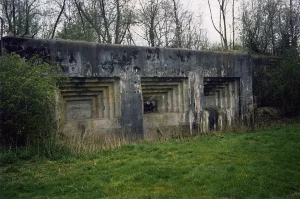
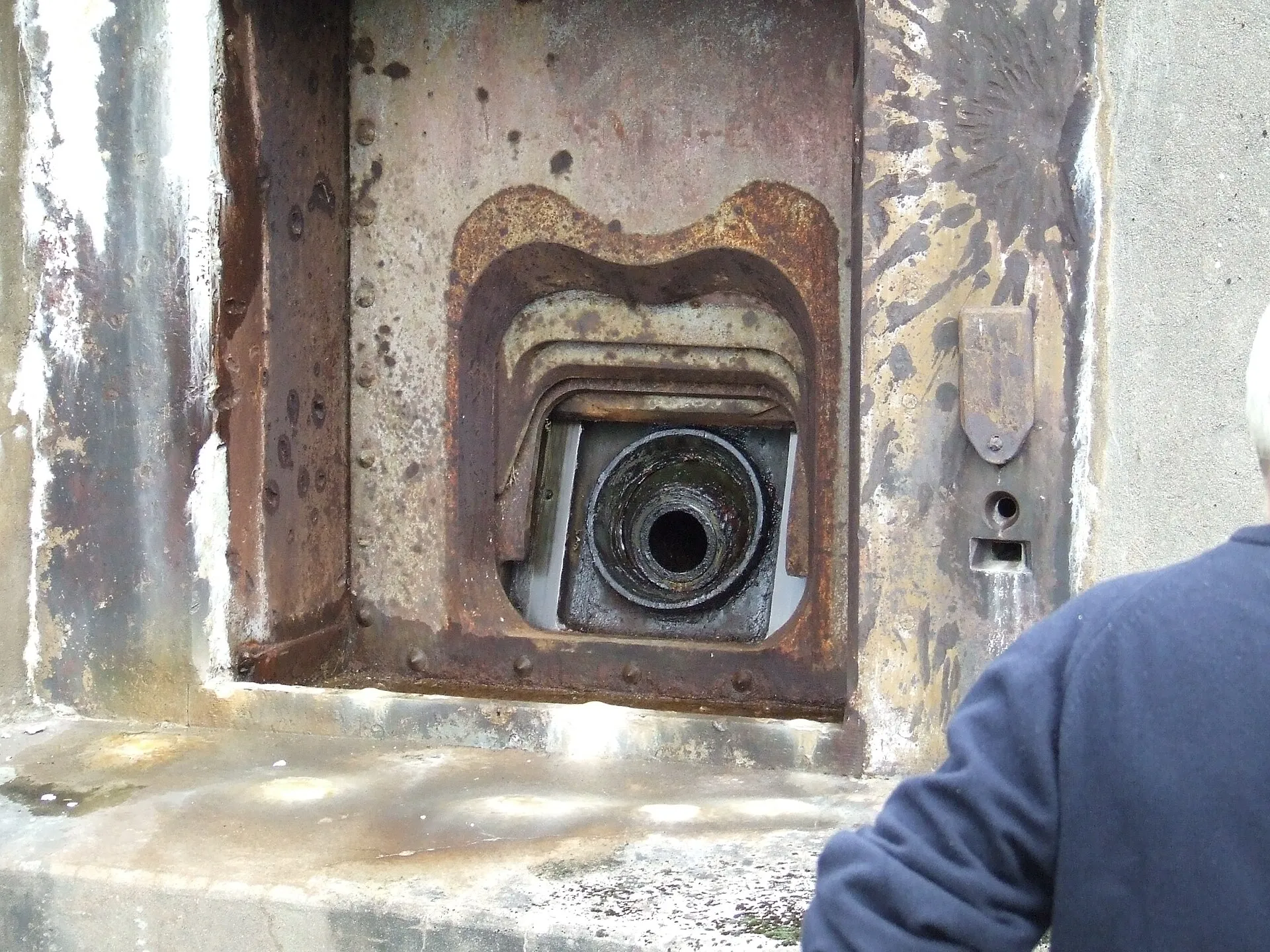
Block 2 has a turret with two 75 mm guns. Blocks 3 and 10 each have a turret for two 81 mm mortars. Blocks 5 and 8 are artillery casemates, built into the hillside, with three 75 mm guns firing through openings. Blocks 4 and 7 are infantry blocks with machine guns and small anti-tank guns, and Block 1 is another infantry block with a machine-gun turret. Blocks 11 and 12 are observation posts with periscopes on the highest ground. At the ditch, blocks 21 to 25 are small works that defend the anti-tank wall with machine guns, mortars and a 75 mm gun. In total the fortress had 25 guns, seven of them anti-tank guns, 32 heavy machine guns and 59 light machine guns.
The protection was designed to last. Exposed walls and roofs were 3.5 metres thick, which the designers believed would resist two direct hits from 420 mm shells. Walls that were not exposed to fire were 1.75 metres. The inside of the exposed walls was lined with 5 mm steel plate to stop bits of concrete flying off in an impact. There is a nice detail in the design: the walls on the French side of the blocks were made thinner, around 1.5 metres compared with about 3 metres facing Germany, so that if the Germans ever took the fortress, the French could blast their way back in.
The garrison was about 1,000 men and 42 or 43 officers, with some accounts going as high as 1,200. They came mainly from an artillery regiment and a fortress infantry regiment. Each soldier is said to have been entitled to half a litre of wine a day, and beer was available on tap for off-duty men. It is easy to believe, and it gives a human sense of what a posting here was like: you were underground for weeks at a time in a tunnel kept at about 12 degrees all year.
The phoney war
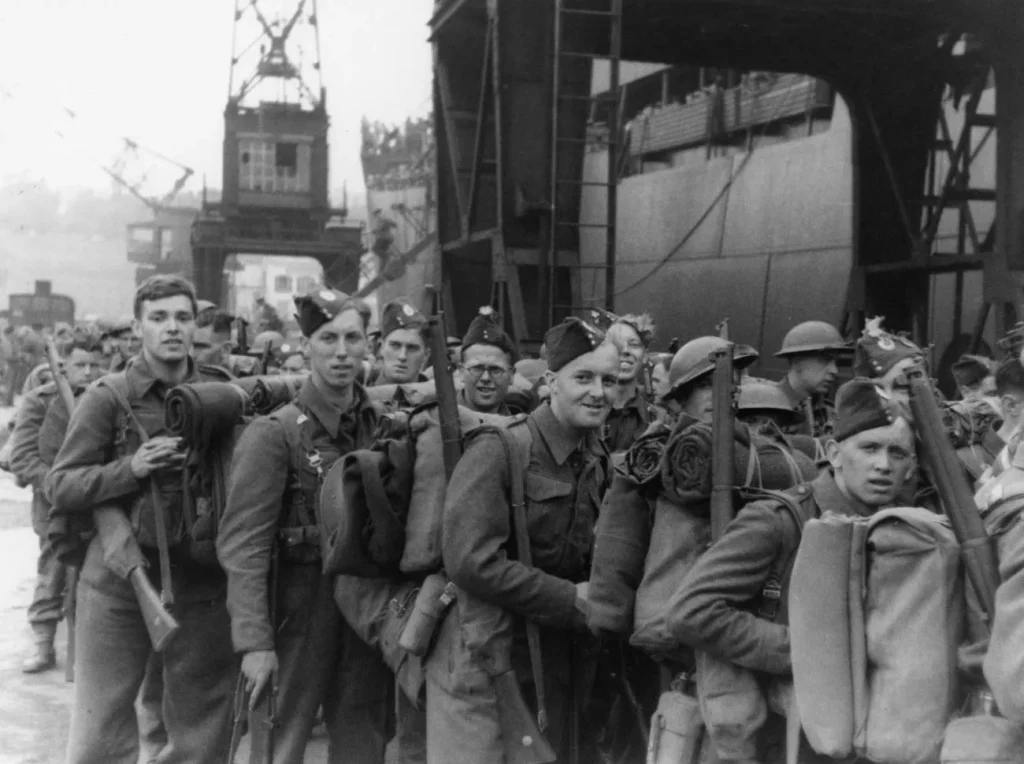
When war began in September 1939, Hackenberg was ready. The weeks that followed, the months of the Phoney War, were quiet on this front, and the garrison drilled, maintained their equipment and waited. In November 1939 the British 51st (Highland) Division was attached to the sector, and the beer consumption is said to have peaked then.
In these months the fortress became a showpiece. King George VI visited on 9 December 1939 and was shown the 135 mm turret. Winston Churchill is also said to have visited, though no date is recorded, and Sultan Muhammad V of Morocco appears on the list of notable visitors. It is easy to see why. For the Allies in 1939 the Maginot Line was a symbol of confidence, and the largest and newest fortress was where one took important guests.
1940: bypassed
The Germans attacked in May 1940. The main thrust came through the Ardennes, north of the Line, and when it s쳮ded the fortified front in Lorraine became a sideshow. Many Line works were later attacked from behind. The German First Army broke through at the Saar on 15 June and pushed along the Line from behind, and over the following week a number of works found themselves surrounded.
Hackenberg was never directly attacked. The Germans left it alone and aimed for the weaker points. What the garrison did was give fire support to its neighbours. On 22 June a German attack on the next-door fortress at Michelsberg was beaten off with help from Mont des Welches and Hackenberg, and Hackenberg’s Block 5 is also credited with firing on targets near Dalstein. The detail is sparse and there is no full record of Hackenberg’s own rounds, but the picture is clear enough: the fortress did what its designers intended, covering the ground between its neighbours with fire.
The commanders in these weeks are recorded as Chef d’Escadron Ebrard until 13 June and then Chef de Bataillon Ismeur. Little more is known of either man.
The armistice of 22 June took effect on the 25th, and then came an awkward interval. The fortress was undefeated, the garrison was still inside it, and the army had lost the war. The garrison left on 4 July 1940, among the last French units to give up their positions. Fifty-four men are said to have stayed behind to maintain the works for the Germans. Most of the crew became prisoners.
Under German control
For the next four years Hackenberg was in German hands, and what happened to it in that time is told in different ways. French prisoners of war are said to have been used to clear the mines around the works, with many casualties. The Cologne firm Klöckner-Humboldt-Deutz moved in, using the barracks and part of the magazine to make transmissions and gears. French accounts say that in 1943 the Germans set up an underground factory using deportees and Soviet prisoners of war, and that two explosions in this period damaged the main magazine and the personnel entrance, while German accounts say the tunnels were used for industrial production, not weapons. Most of the barracks were destroyed during the conversion, and the generators were taken out, probably for use elsewhere on the Atlantic Wall. Much of the armament was also removed, but some heavy guns stayed.
Block 8
By the autumn of 1944 the German army was retreating across France. In November the American Third Army, under General George Patton, attacked towards Metz and the Moselle, and the 90th Infantry Division, part of XX Corps, advanced along the Maginot Line. The plan was to move fast, bypass strong points that could not be taken quickly and leave them to follow-up forces. The division took the fortresses at Metrich and Billig and the older Fort Koenigsmacker by the end of the second day. Hackenberg was harder.
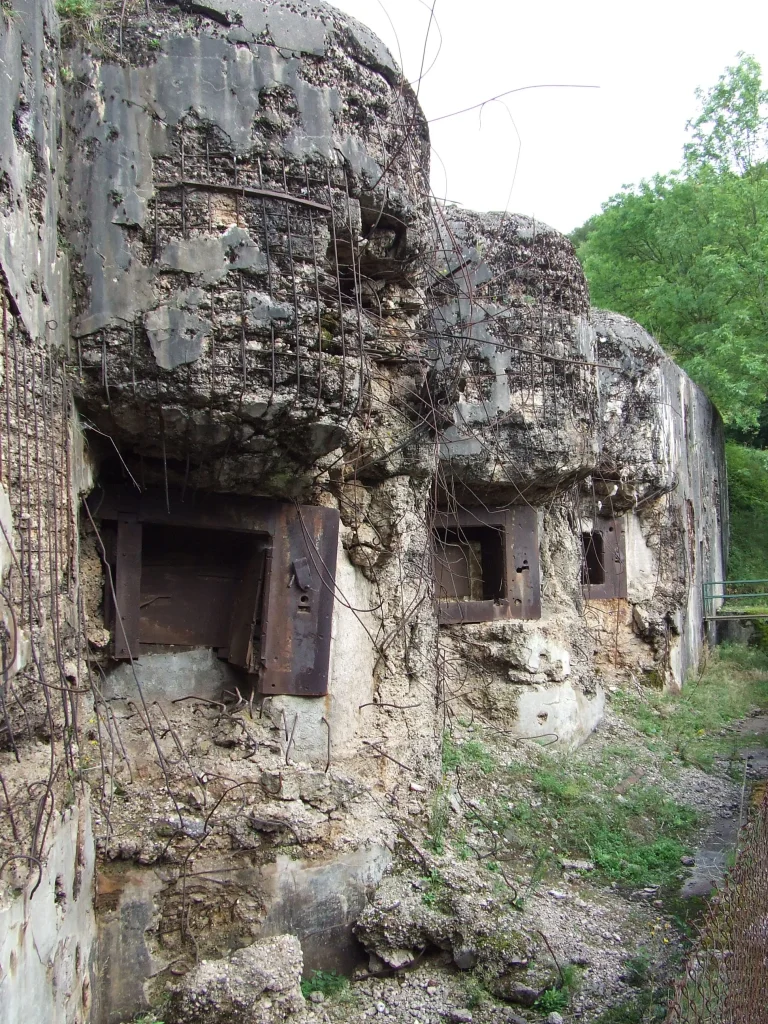
A German force held Block 8, the artillery casemate on the west side of the fortress with three 75 mm guns, which covered the Moselle valley. The German defenders were from the 19th Volksgrenadier Division, which was badly under strength. The block fired on the Americans in mid-November, with 99 shells in 90 seconds on 15 November by one reckoning, though 14 November is also given as the date. It pinned down the 357th Infantry Regiment and held up the advance for nearly a day.
The Americans tried the obvious things. Tank destroyers fired at the block and bounced off. Heavy artillery, including 240 mm howitzers and 8-inch guns, made no impression. Then, that night, several M12 155 mm self-propelled guns were brought to within about 2,000 yards. At dawn on 16 November they fired directly at the block, and the wall gave way. The advance resumed. A US Army history draws the general lesson: no single weapon could destroy a fort on its own, and the best result came from combining artillery, armour, infantry and engineers, with heavy direct fire the thing that finally broke the concrete.
German accounts add a detail that is hard to check elsewhere. The German unit was only about 30 men, mostly decorated veterans of the Westwall, and after four days of bombardment they fled through an emergency exit, setting off the explosives in ammunition store number 3 as they went. The blast bent an eight-tonne door of reinforced concrete, 30 centimetres thick, and a damaged blast door can still be seen. The Americans reportedly found only one German body in the block. Around the year 2000, the story goes, a man from Berlin who had been the youngest member of the unit contacted the museum association. If true, it is a remarkable link across 55 years.
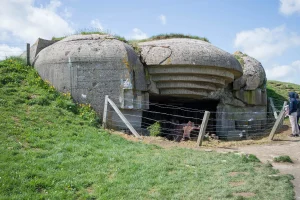
Block 8 still shows damage from the 1944 fighting, and a postwar plan to restore it was cancelled.
The Cold War years
After the war the French army took Hackenberg back. The four generators were replaced with new sets identical to the old ones, and they are still in place. The fortress was one of a group of works in the northeast, known as the Môle de Boulay, that were kept in the planning for defence against a possible Soviet advance. The US Army is said to have partly restored the work, and NATO to have occupied it for a time. Plans were drawn up to give Block 8 new 105 mm artillery, but the money never came. The work was limited to restoring systems and improving existing armament, and the restoration of Block 8 was cancelled.
By the late 1950s, as France developed its own nuclear deterrent, interest in fixed fortifications faded and maintenance money went elsewhere. The army kept the fortress until 1968, put it in reserve, and abandoned it in 1970.
Rescued by the neighbours
Nobody had a plan for a ten-kilometre underground fortress on a hill, and it might have been left to rot or be stripped of its metal. What saved it was the villagers. In the mid-1970s residents of the surrounding villages began giving sightseeing tours, and in 1975 this became a volunteer association, AMIFORT Veckring. It has run the site ever since. The association now has about 30 volunteers who guide the tours, train new staff and do the restoration, and in 2025 it celebrated 50 years. It was recognised as being of public interest by a prefectoral decree in April 2022, and it has been raising money to restore a 1935 ALSTHOM locomotive that carries visitors through the galleries, a job estimated at more than 40,000 euros. The fortress itself is owned by the French state defence heritage authority.
Visitor numbers are given as 31,047 in 2012, 32,040 in 2013 and 35,989 in 2014, with other estimates of 40,000 to 50,000 a year. It belongs to a network of heritage sites called the Grands Sites de Moselle.
The ground, however, is not on the volunteers’ side. The east wing of the fortress is closed. Gypsum in the rock swells when it takes up water, and the pressure has cracked floors and thinner walls, and distorted the gallery. The neighbouring work at Metrich is reported to have the same problem. So the visit is limited to the western half, which is as much as the volunteers can keep safe.
Visiting
Hackenberg is open to visitors through guided tours only, run by the volunteers, and online booking is strongly recommended for individuals. Tours last about two hours, sometimes two and a half. They start in the afternoon, usually at 14:00 or 14:30, with extra departures in the busy season. A 2023 listing gave prices of 15 euros for adults, 11 for students and 6 for children from 0 to 15, but prices and times change, and the association’s own site shows them only at the box office, so check before you go. English-language tours run at set times, and an English booklet is available if there is no English guide. Dogs are not allowed.
The temperature inside is about 12 degrees Celsius, summer and winter, and you will want a jacket. Some listings say photography is not allowed, which we could not confirm with the association, so ask when you book. The tour is not suitable for visitors with limited mobility, as there are long stairs and uneven floors.
What you see is a good cross-section. An electric train takes you through the galleries to the western blocks. You pass the ammunition store, the generator hall with its diesel engines, a reconstructed barracks, the kitchen and the infirmary, and a small museum of uniforms and weapons. At Block 9, you can climb to the turret, a climb of 146 steep steps by one count, and the guides demonstrate how it rises, falls and turns. The tour also includes a walk across the top of the block and a visit to Block 8 to see the damage from 1944. A smaller fortress nearby, Immerhof near Thionville, is also open if you want to compare.
Conclusion
Hackenberg tells a different story from the one most people know about the Maginot Line. In the popular version, the Line was a waste of money that the Germans simply walked around. That is not wrong, but it leaves out the fact that the fortress did exactly what it was built to do and was then made irrelevant by what happened elsewhere. It held. It supported its neighbours. Nobody beat it in 1940, because nobody tried.
It also shows what happens to enormous military structures after their war is over. The Germans put factories in the tunnels. The Americans knocked out one block with direct fire from heavy guns. The French army kept it for a generation as a Cold War reserve, and then let it go. And in the end it survived because a few local people thought it should be shown to visitors. The volunteers who run it now are, in a way, the last garrison, doing in their spare time what the engineers of the 1930s did in theirs: keeping the machinery working, and keeping the damp out.
It is also a fortress that makes you think about confidence. The men who designed it were not fools. They built something that worked, in the war they expected. What they did not account for, or could not, was the war that actually came. The galleries at Hackenberg, with their rails and their lamps and their still-working turret, are a very complete picture of a plan that was good and still failed. You can ride into it on a train, and come out knowing a little more about how that happens.
Did you know?
- Hackenberg has about 10 km of underground galleries, 25 to 30 metres below the surface.
- It and Hochwald are the only Maginot Line works with a deep anti-tank ditch and wall.
- A 60 cm gauge electric railway ran through the galleries and out to a military line.
- The Block 9 turret has three levels, more than 35 cm of armour, and needed 21 men to fire its two 135 mm guns.
- Exposed walls and roofs were 3.5 metres thick, and walls facing France were thinner on purpose.
- King George VI visited on 9 December 1939 and was shown the 135 mm turret.
- The fortress was never attacked in 1940; the garrison left on 4 July.
- In November 1944 German troops held Block 8 until American M12 155 mm self-propelled guns fired on it at close range.
- A retreating German unit blew up ammunition store 3 and bent an eight-tonne concrete door that is still there.
- The French army kept the fortress until 1968 and abandoned it in 1970.
- Local villagers began giving tours in the mid-1970s and the AMIFORT volunteer association has run it since 1975.
- The east half of the fortress is closed because swelling gypsum in the rock has cracked its floors.
- Visitors ride an electric train through the tunnels, where it stays about 12 degrees Celsius all year.