A hilltop above the shipyards
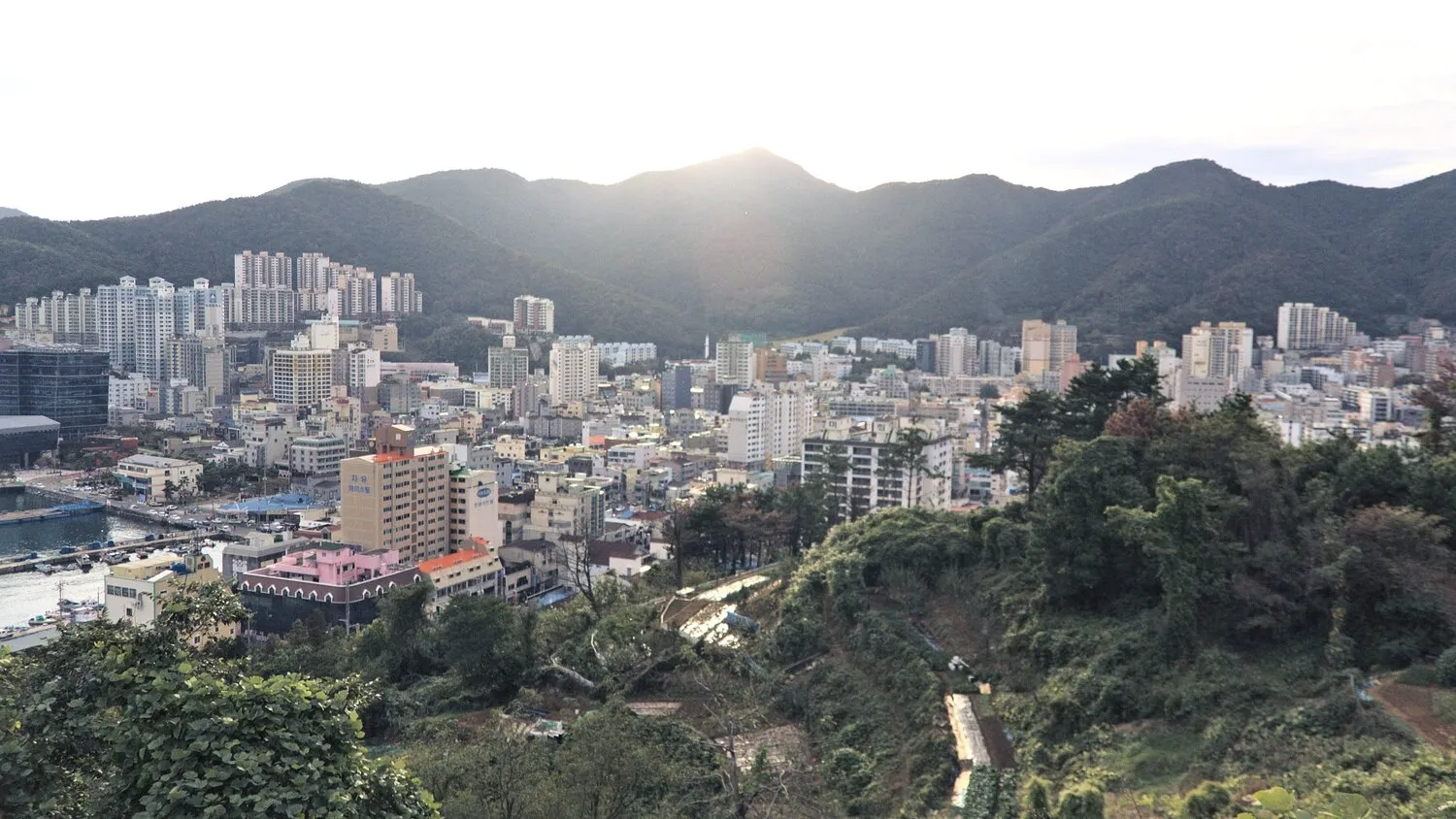
Geoje is a large island off the south coast of South Korea, south-west of Busan, and for a long time it was known for two things: a naval battle in the sixteenth century and a major shipyard. Okpo-dong, the district on its eastern side, has both. The shipyard stands close to the town, many of its workers live in the tower blocks that fill the hills, and the bay below was the setting of a famous victory. On the ridge above the town, for a few short years in the 1990s, there was also an amusement park.
It was a small park. It had one roller coaster, a handful of other rides, a pool building and an arcade. But it had one thing that set it apart from most places of its kind: people kept writing about it long after it stopped working. In the years after it closed, Okpo Land became one of the best-known abandoned amusement parks in the world, a place that urban explorers listed again and again, mostly on the strength of its photographs and of a story about its end.
The story is the reason we wanted to write about it. When we looked into the park, we found that the version told online and the version in the documents differ in important ways, and the difference says something about how places like this become famous. The real history is quieter than the legend, and in some ways more interesting. A park built in a boom was caught by a crash. The land passed through the hands of banks and buyers. A shipbuilder bought it, and then it was cleared. That is a very ordinary fate, and ordinary is not what the photographs suggest.
Okpo and Geoje
The setting explains a lot. Okpo-dong is on the eastern coast of Geoje Island, in the city of Geoje, and it is one of the island’s centres. The Battle of Okpo took place on 16 June 1592, during the Japanese invasions of Korea, when Admiral Yi Sun-sin led the Joseon navy to what is described as its first victory of the war. The shipyard that now dominates the town is the other part of the local identity. It is now the Hanwha Ocean yard, which was Daewoo Shipbuilding and Marine Engineering in earlier years and in the older records we have used, and many of its employees live in the district. Okpo also has a large transient foreign population because of the yards.
The island was harder to reach in the park’s time than it is now. The photographer Ron Bandun, who visited the park three times and wrote about it in 2019, notes that before 2011 visitors had to take a ferry from Busan or make a long bus journey round through Tongyeong. The Busan-Geoje Fixed Link, a chain of bridges and tunnels about 8.2 kilometres long, made the trip easier by June 2011. Another photographer describes the island as around 50 kilometres from Busan and connected by bridges and causeways. This matters because a small park on a remote island depends on local families and on the workers at the shipyard. It cannot easily draw a crowd from a distant city, and urban explorers attribute the closure of many remote Korean amusement parks partly to improved transport links to larger parks elsewhere. Whether that applied to Okpo Land we cannot say, but it is part of the wider picture of why small regional parks struggled.
The park opens
The dates of the opening are not certain. Most accounts give February 1996, though some give May 1997. A local newspaper says it opened in 1996 at high cost, with rides including a roller coaster, and a photographer who wrote about it in 2020 also says it reportedly opened in 1996. We lean towards 1996, with the caution that a later date is possible. The operator is listed as Okpo Resort Co., Ltd.
The area was large for a park of its size. It covered 13.2 hectares, which is about 32.6 acres, and the local paper gives about 40,000 pyeong, the traditional Korean unit of area, which converts to roughly the same number. The address is given as Okpo-dong 116 and 19 other lots, which suggests that the park was made up of many parcels.
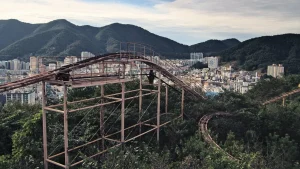
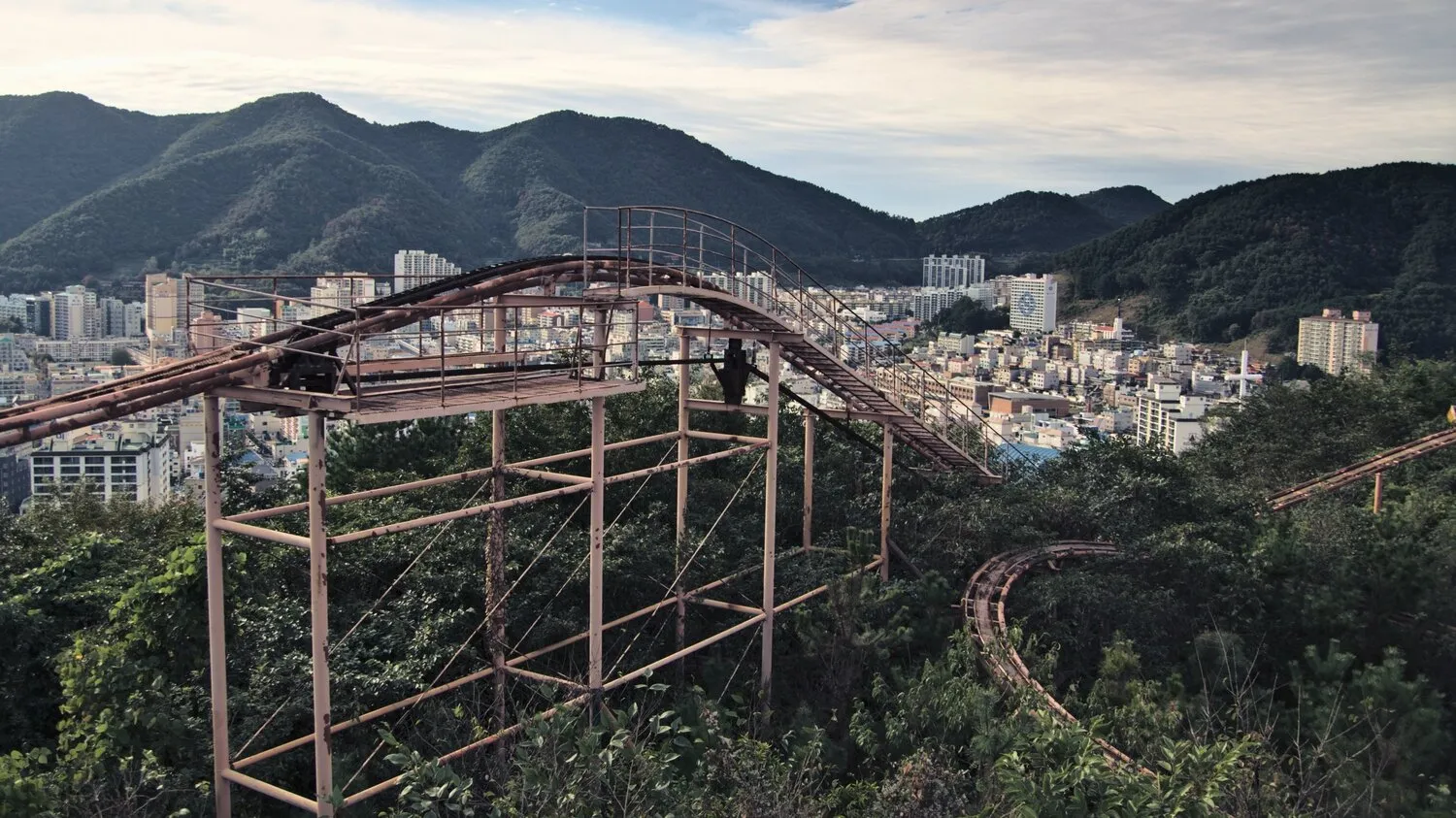
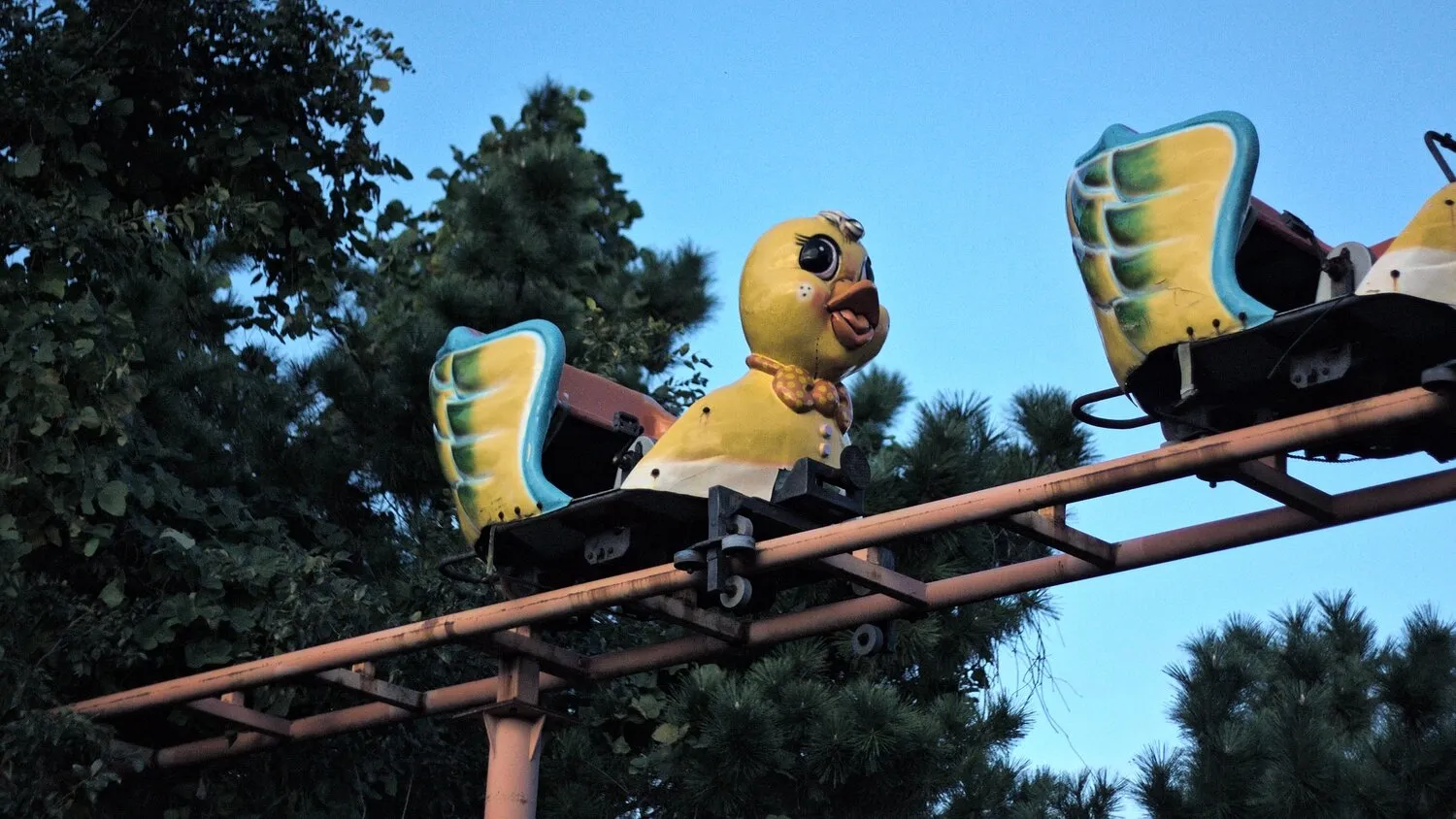
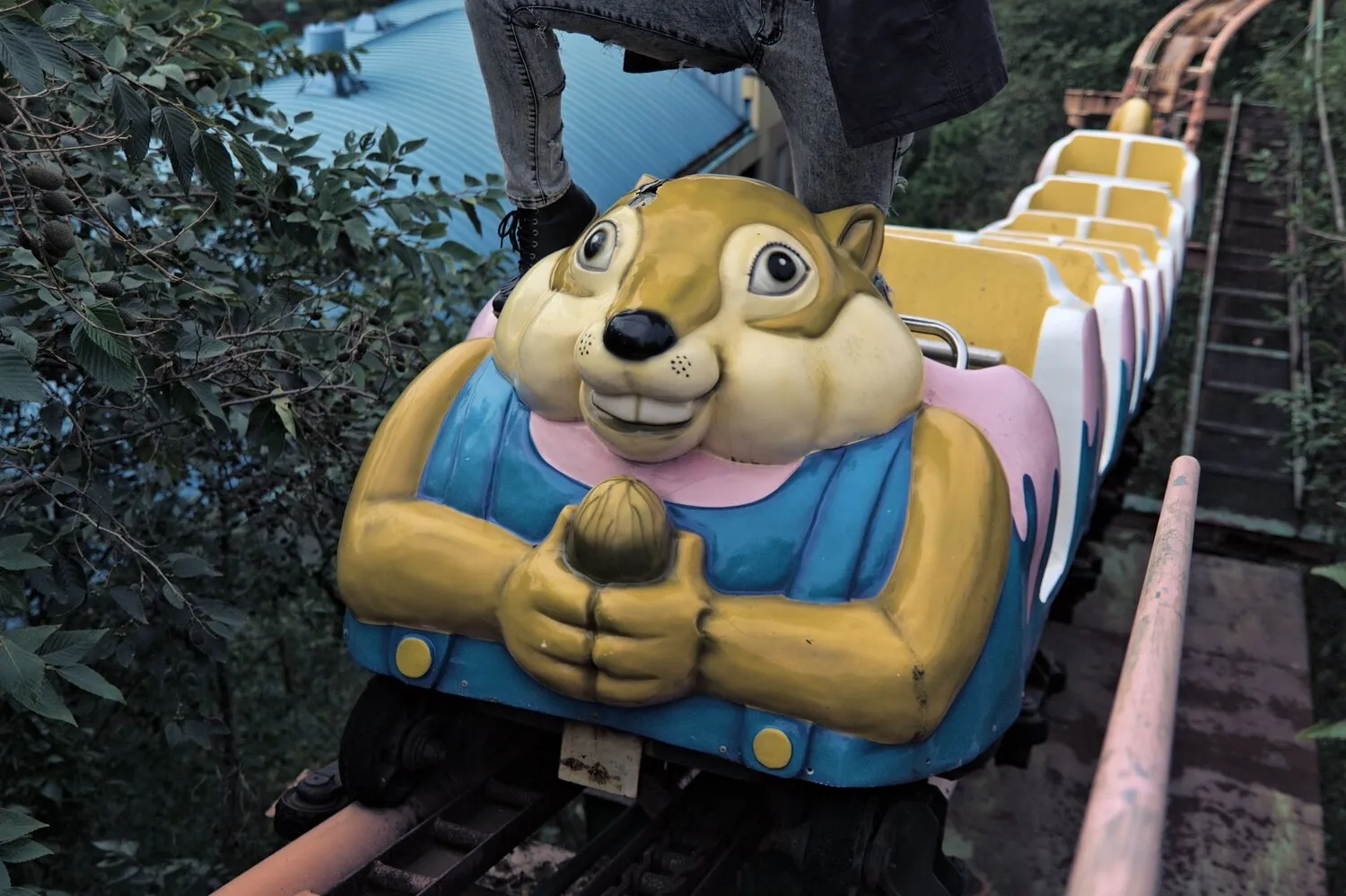
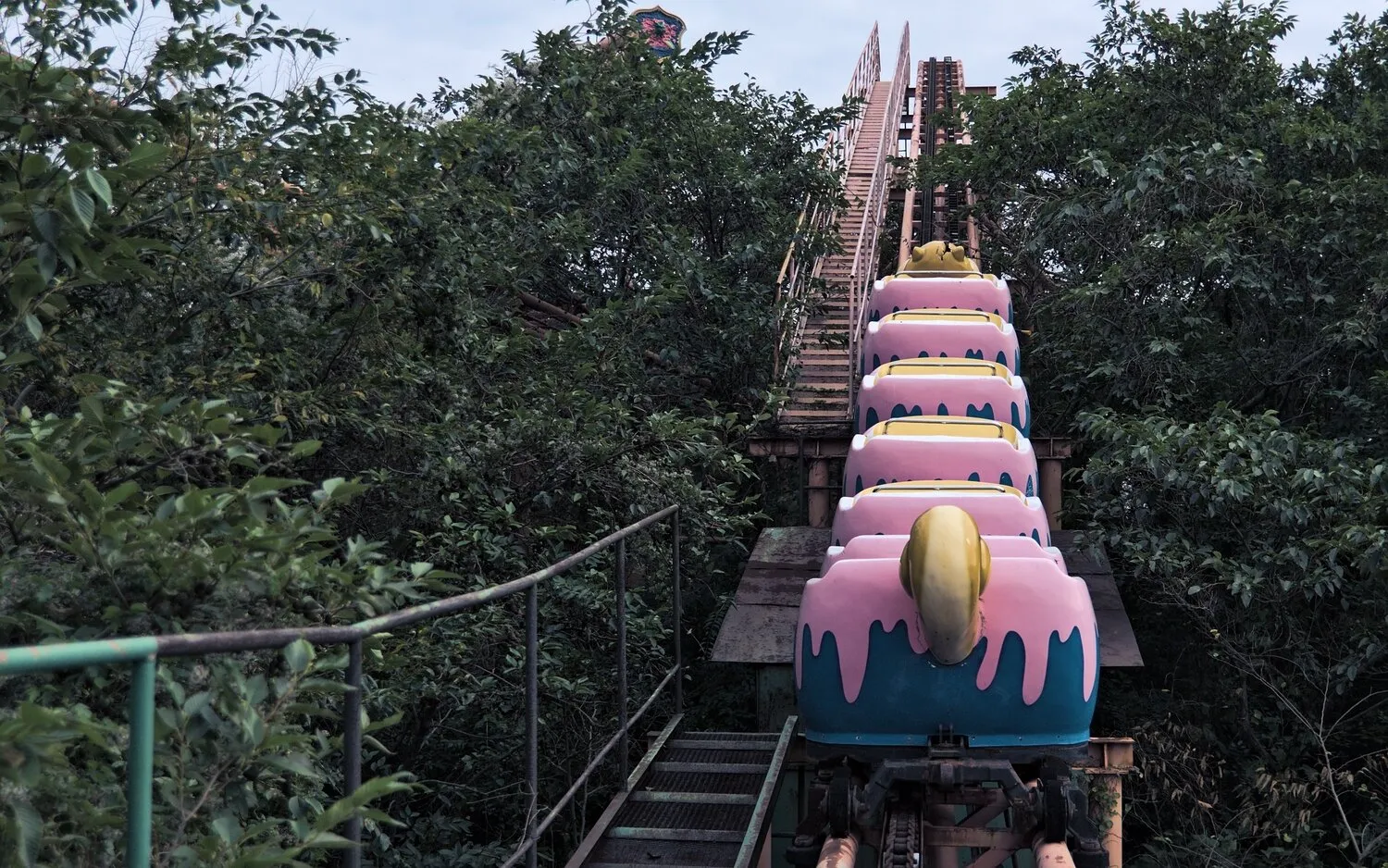
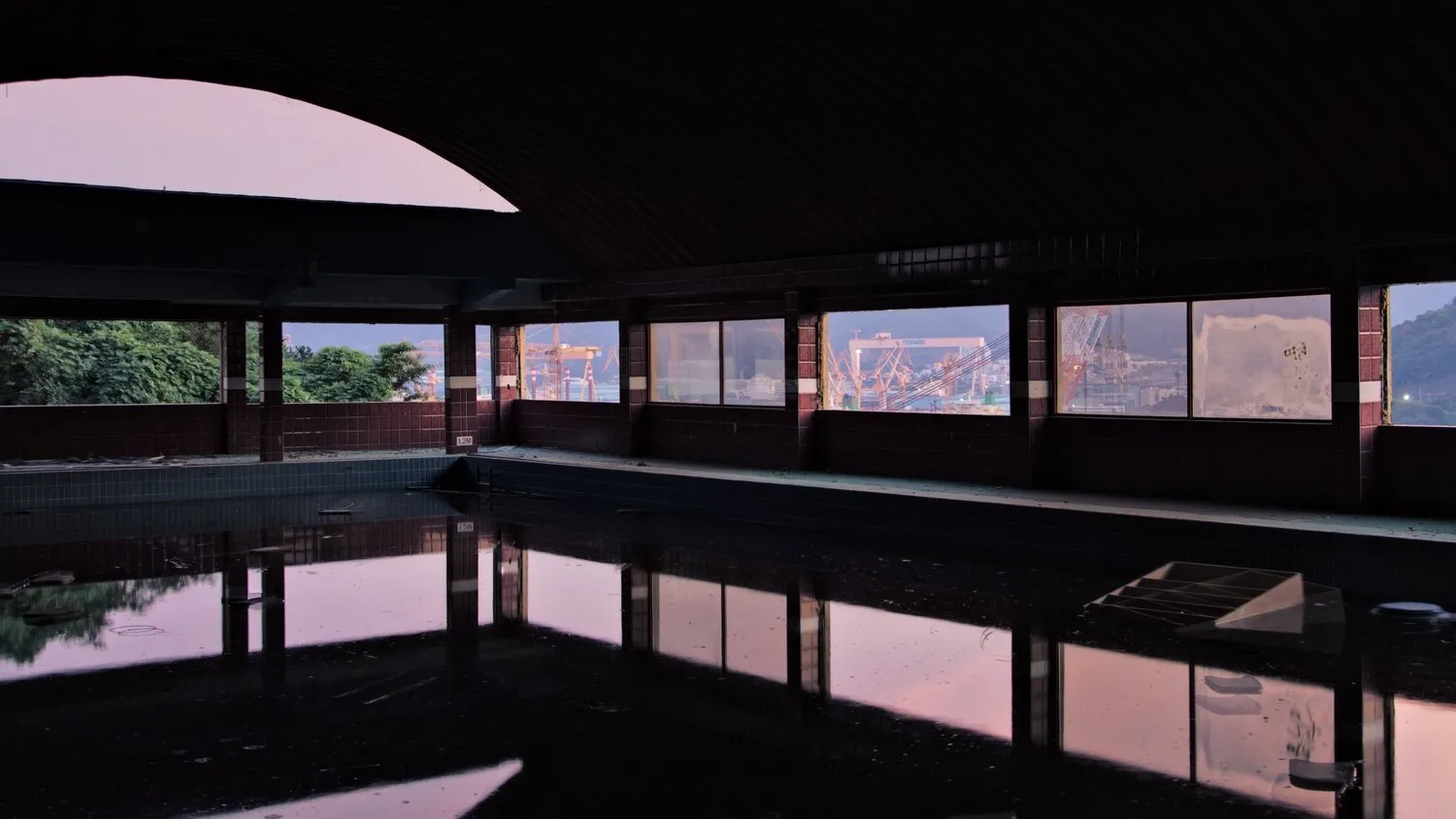
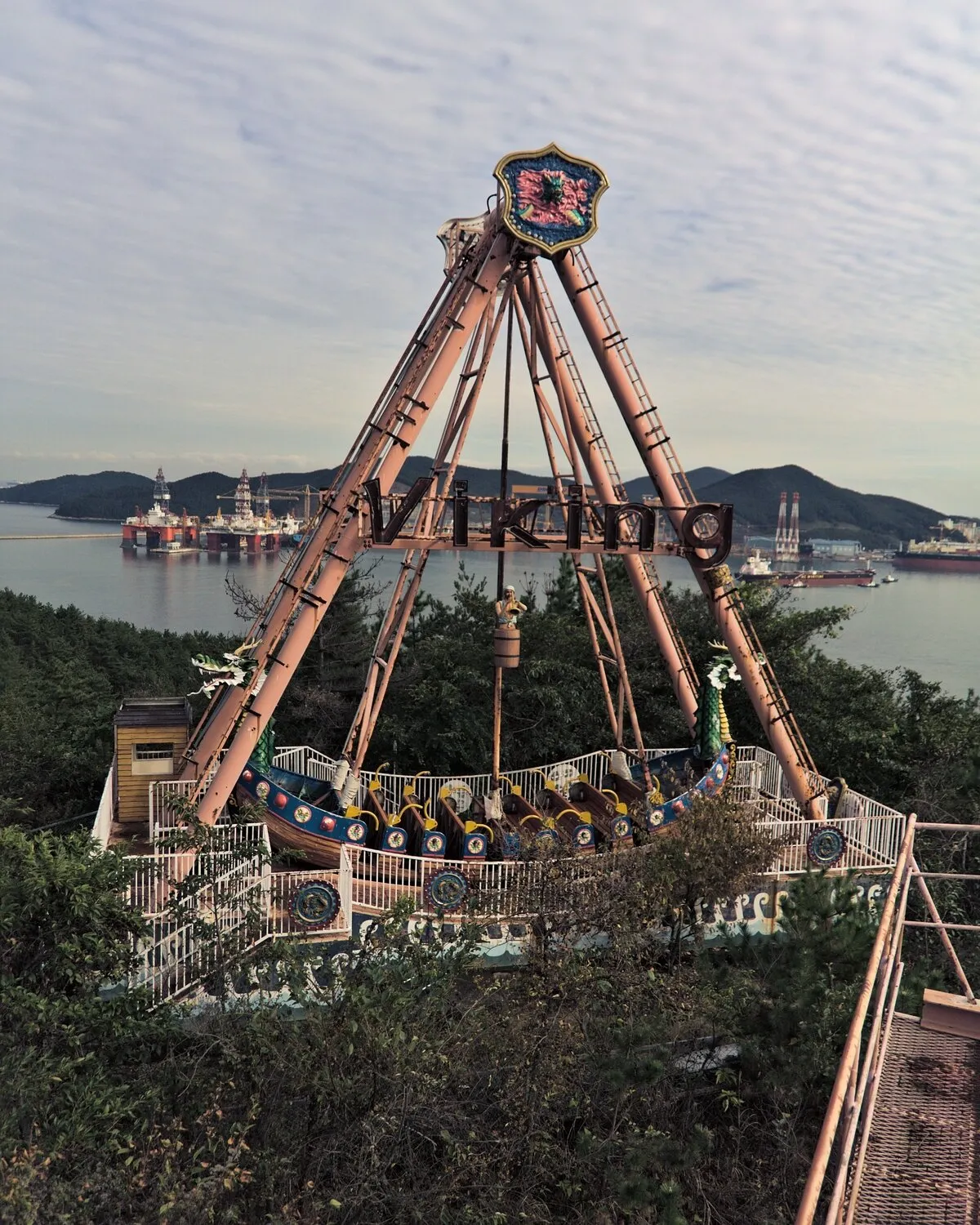
Eleven attractions are recorded. There was a pirate ship called Viking, bumper cars called Bambi Cars, a roller coaster called Fantasy Express, which was made in the shape of a squirrel, and a rocking ride called Squirrel Buckets. There was a carousel, a roller-skating rink, a sledding slope described as four-season, a ride called Sky Cycles in the shape of a duck, children’s battery cars, a mini train, and a circular ride called Space Fighters. The park also had an arcade, a swimming pool, a sauna and hot tubs. Photographers who visited later describe the pool building, the squirrel coaster and the duck sky cycle as its most memorable features, and one says that the coaster was the most sophisticated ride, with views from its hilltop that he calls exceptional.
The entrance sign is said to have carried images of cartoon characters, and the park had two bear mascots, a father and a little one. These details come from a single account and we cannot check them against a photograph. We include them because they are the kind of small, ordinary thing that tells you the park was meant to be a family place, and not the gloomy site that the later pictures imply.
There is almost no record of the park in operation. No known photographs exist from the years it was open, and the earliest published photographs and exploration reports date from around 2007 or 2008. Another account says that in its early years the park was popular and profitable, but it gives no source. We therefore know the rides and the layout and very little about what it was like to visit, how many people came, or what a ticket cost.
The closing
Okpo Land closed in 1999. May 1999 is the most precise date given, a local newspaper says mid-1999, and other sources just say 1999. The reason is where the accounts start to differ in how sure they sound.
The least dramatic explanation is the most likely. South Korea went through a severe financial crisis in 1997 and 1998, and a park that had been built at great expense in the mid-1990s was badly placed to survive it. The economic crisis is the likely cause, and the local newspaper says the park closed as its attendance fell. A podcast host named Ashley, who looked into the park for an episode of The Abandoned Carousel, concluded that it closed for lack of money against the background of the poor economy of the late 1990s. The photographer who wrote in 2020 reached the same conclusion, though he describes it as his own inference.
Money problems also left a paper trail. After the closure three individuals held mortgages on the land, and in November 2000 it was sold to a man the local paper calls Mr Park. Two seizures and a provisional registration of a claim to transfer ownership were later cancelled. We do not know who the earlier creditors were or how the sale price compared with the park’s cost. What the record shows is a business that failed and a property that went to its creditors, which is the usual end of an overbuilt venture in a crisis.
Two incidents after the closure are also recorded. In January 2000 a primary-school pupil fell while playing on the rails of one of the rides and was seriously injured, and the owner is reported to have paid about 7 million won in damages. A man’s death on the abandoned site in September 2001 is also noted. We mention both only briefly because they rest on a single account, because they are sad, and because they are not the same thing as the legend. They happened after the park had shut, and they involved people who had gone into an abandoned site.
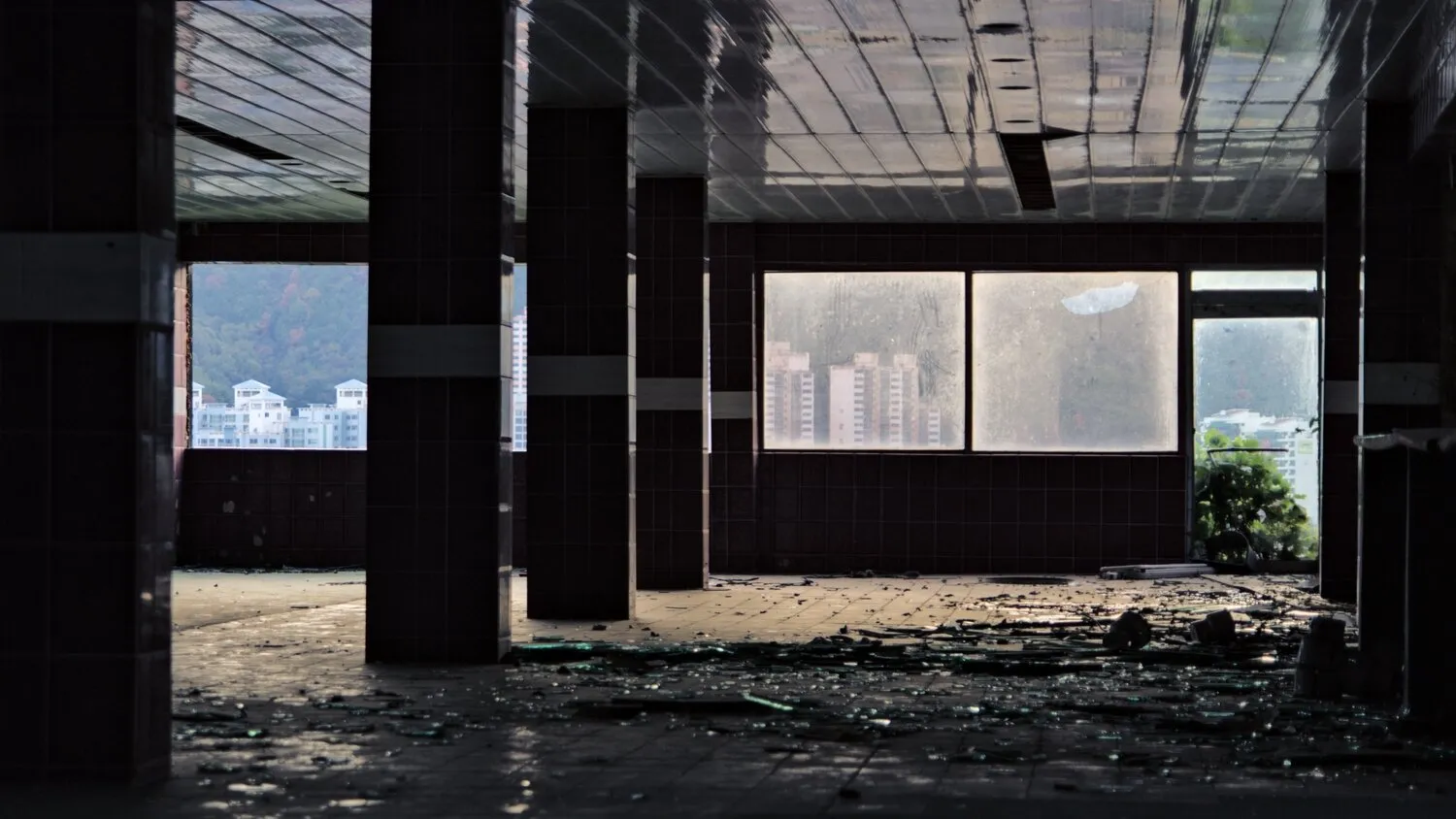
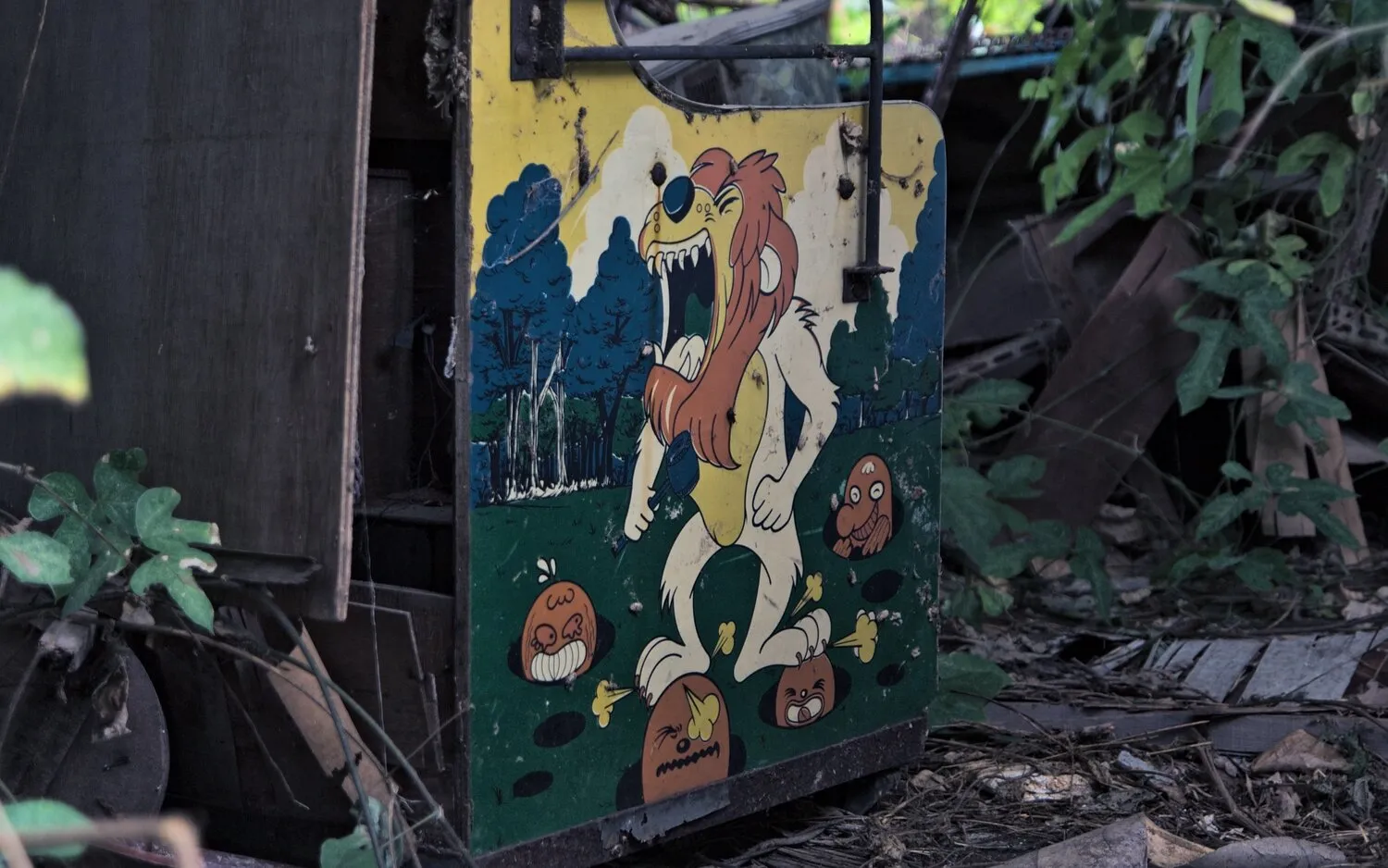
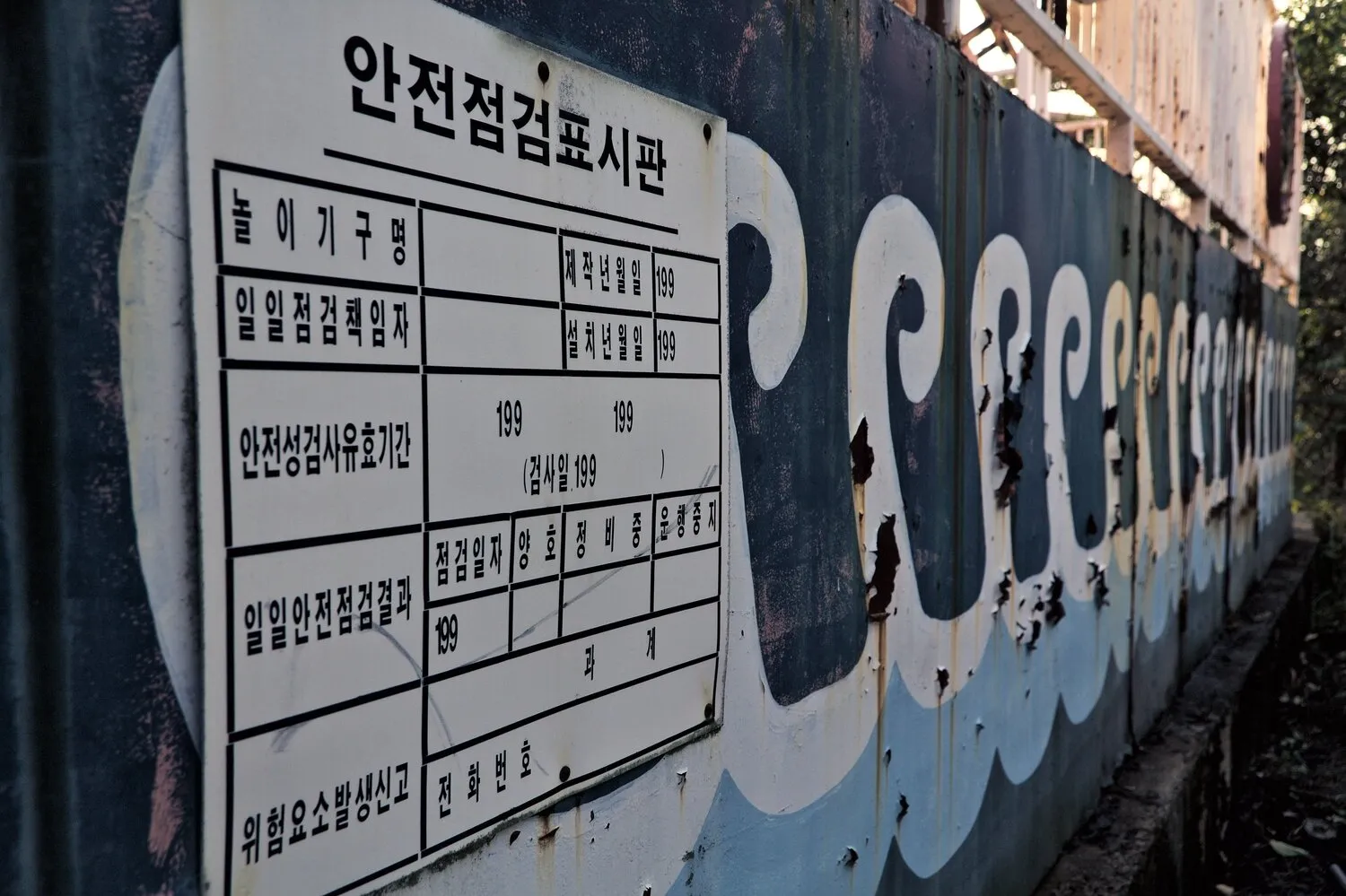
It is worth saying what a visitor of those years would have found. A rollercoaster in the shape of a squirrel, a duck on a track, a pirate ship: these are the furniture of a children’s holiday, built for families. The mood of the place was meant to be cheerful, even silly. That is what makes the later photographs so strong, and what makes the legend so hard to shake off. A cheerful thing left to rust looks like a story that needs telling.
The legend
The story that spread online is easy to summarise. It says that in the 1990s a little girl died on the duck ride and the owner offered no compensation, no apology and no explanation. It then says that in 1999 a car on the ride left the track and a girl was thrown to the ground and killed, that the park shut at once, and that the owner fled in the night and was never heard from again. Many websites repeat versions of it. One says the owner did not have time to sell the rides, which is why they were left as they were on the last day. Another says a car was left hanging over the edge of the track.
The most useful account of where the story came from is the one given by Ron Bandun, the photographer and writer who has been listing and visiting abandoned places for years. He says that the legend traces back to a ranked list of ten abandoned amusement parks, published in the Netherlands in August 2005, which put Okpo Land first and cited no sources. The claims in that list were that a girl died in an accident on the duck ride in the 1990s, that a girl died in 1999 when a coaster derailed, and that the owner then vanished. A different photographer, writing in 2020, says the story reportedly began on a German photographer’s blog that is no longer archived. The two accounts cannot be reconciled, and neither source can be checked.
What makes Bandun’s account valuable is that he is frank about his own part. He says he repeated and amplified the claims online without fact-checking them. He now doubts the derailment story, and he describes a photograph he took in which a model lay under the overturned duck car as if she had fallen, which he says drew a death threat in reply. He also notes that a database he helps maintain had described the owner in insulting terms and presented the deaths as fact. In other words, a person who had helped spread the legend went back and tried to check it.
His main source for the doubt is the podcast. The host argued from photographs that the duck cars were sitting on the tracks backwards, and suggested that vandals had put them there after the park closed. In her words, the final, ominous positions of the broken duck cars were most certainly done after the fact. She was unsure about whether a girl had fallen from the ride, noting that it is very high, and concluded that the truth was rather dull.
The truth, of course, is kind of boring.
Ashley, host of The Abandoned Carousel podcast, quoted by Ron Bandun in The Korea Times, 2019
Bandun’s answer to that is that his own three visits, in December 2007, April 2008 and June 2011, were never boring, and we understand what he means. But the podcast host is right about the evidence. The claims of a child’s death have been disputed for years and may stem from a later accident, and the only documented child incident is a non-fatal injury in January 2000, after the park had closed. We have found no contemporary Korean news report, court record or official statement that describes a death on any ride, and a local newspaper article of 2011 about the site’s blight does not mention one either. That is not proof that no one was ever hurt in the park’s few years of operation. It does mean that we cannot repeat the legend as fact, and we have chosen not to.
It is worth pausing on why such a story takes hold. A closed amusement park is already an unsettling thing, and a rusted ride is easy to read as evidence of something. The duck cars in odd positions look like the aftermath of an accident. A closure that is really a quiet bankruptcy does not make a good caption. A tragedy and a vanished owner do. In this case the story came first, the photographs were fitted to it, and each new article quoted the one before. The same pattern turns up in other places, and it is a good reason to read the dull sources as well.
Years of vines
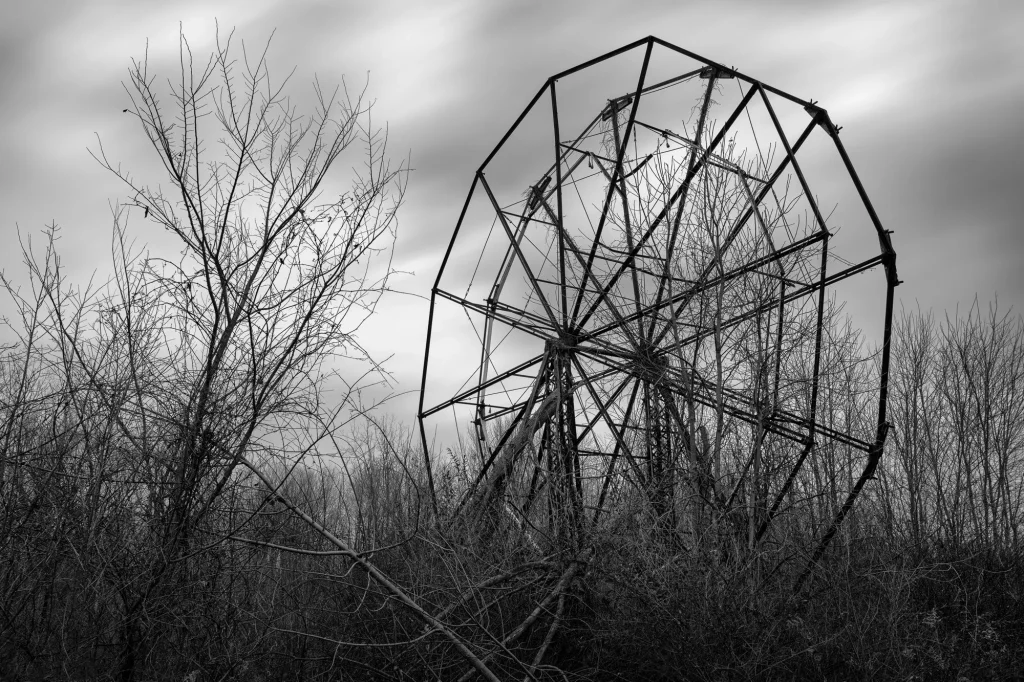
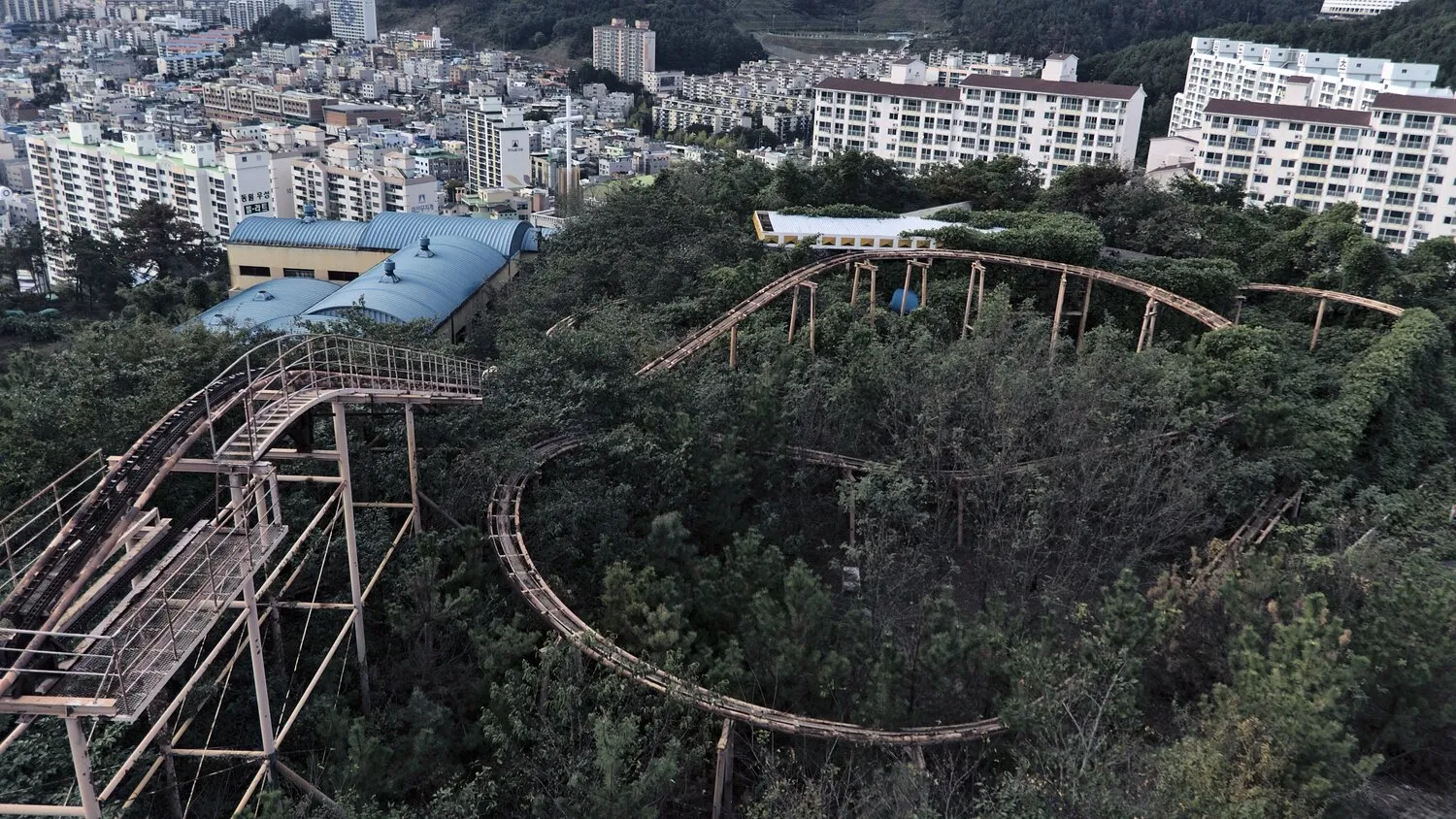
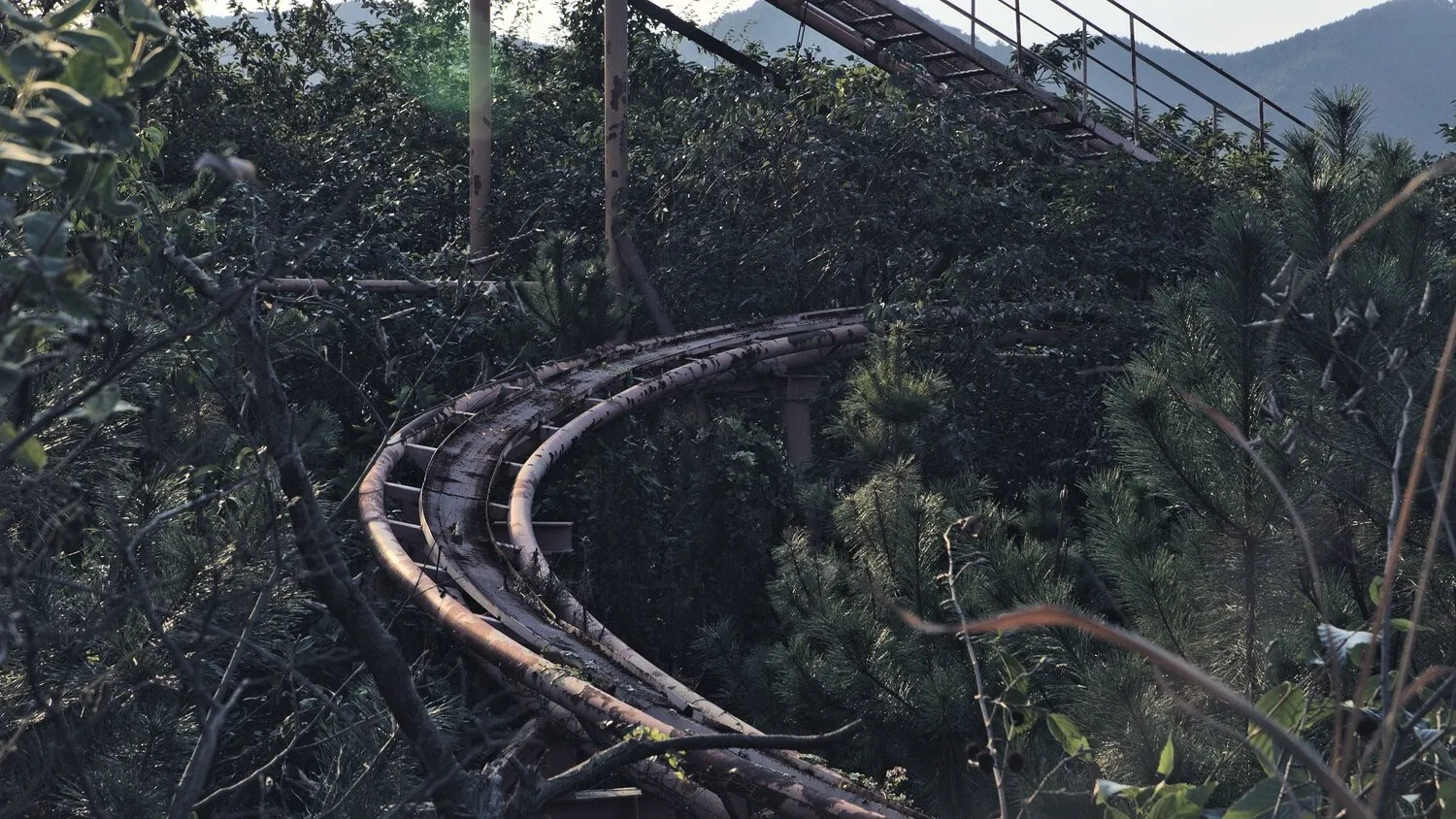
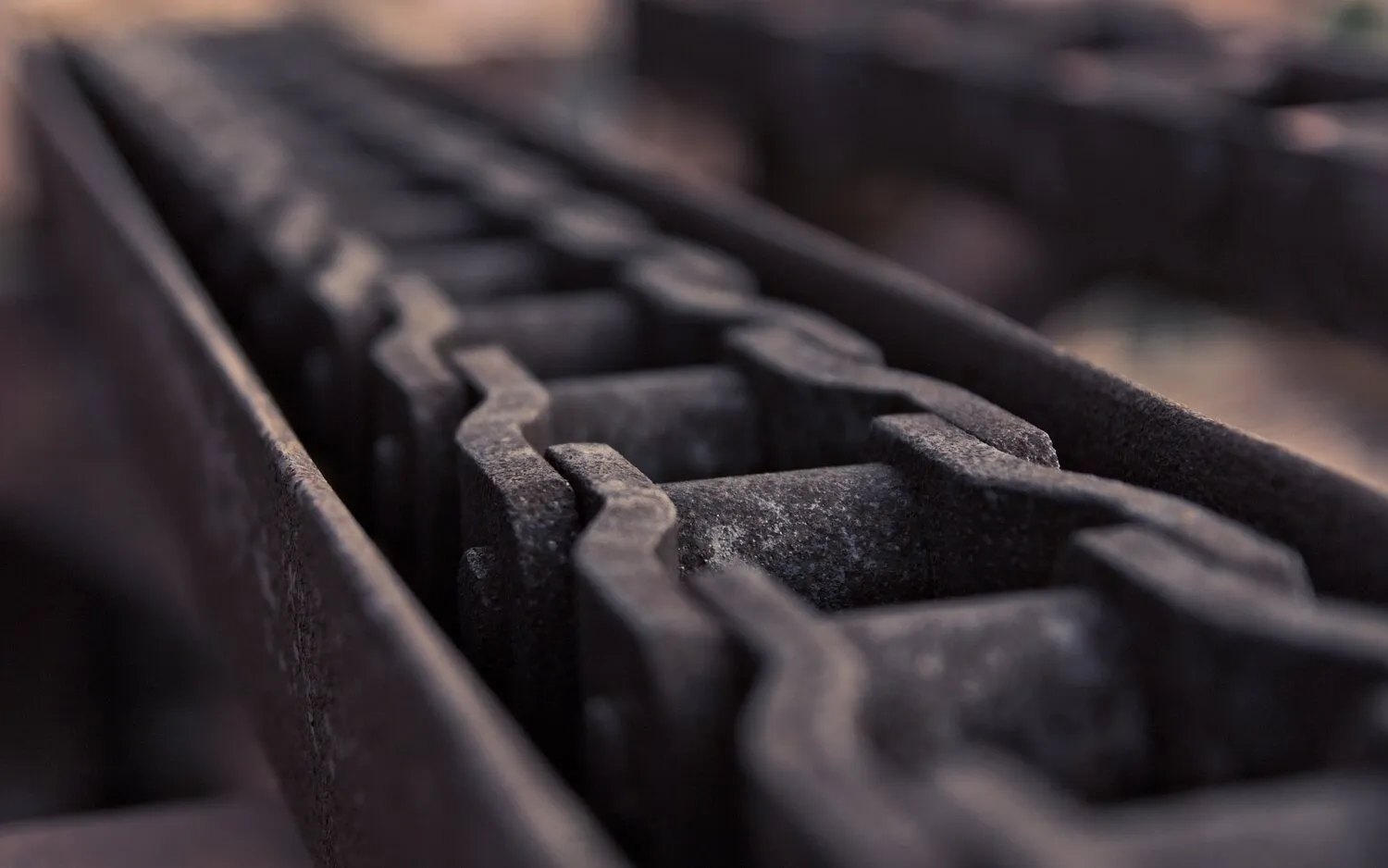
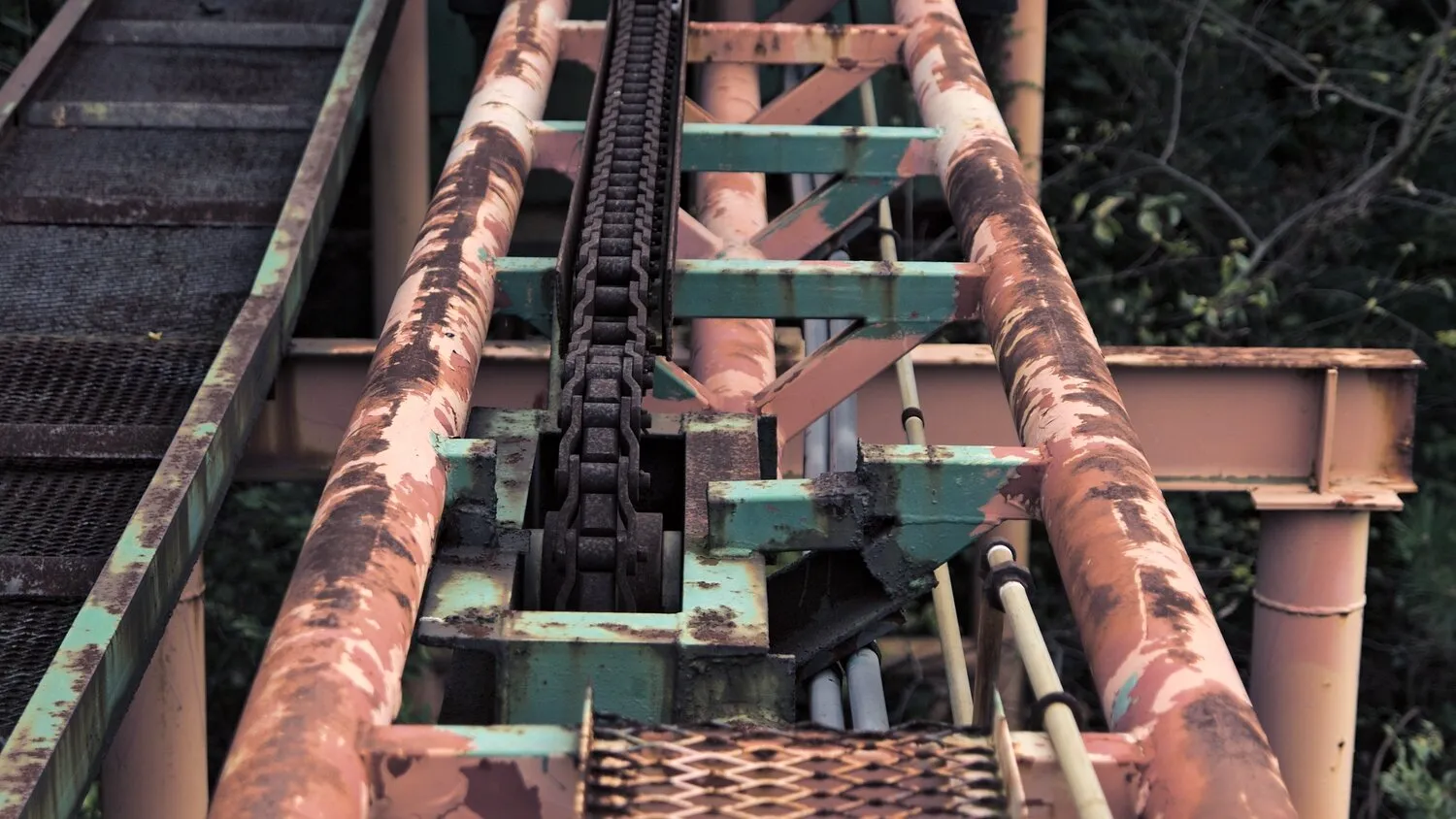
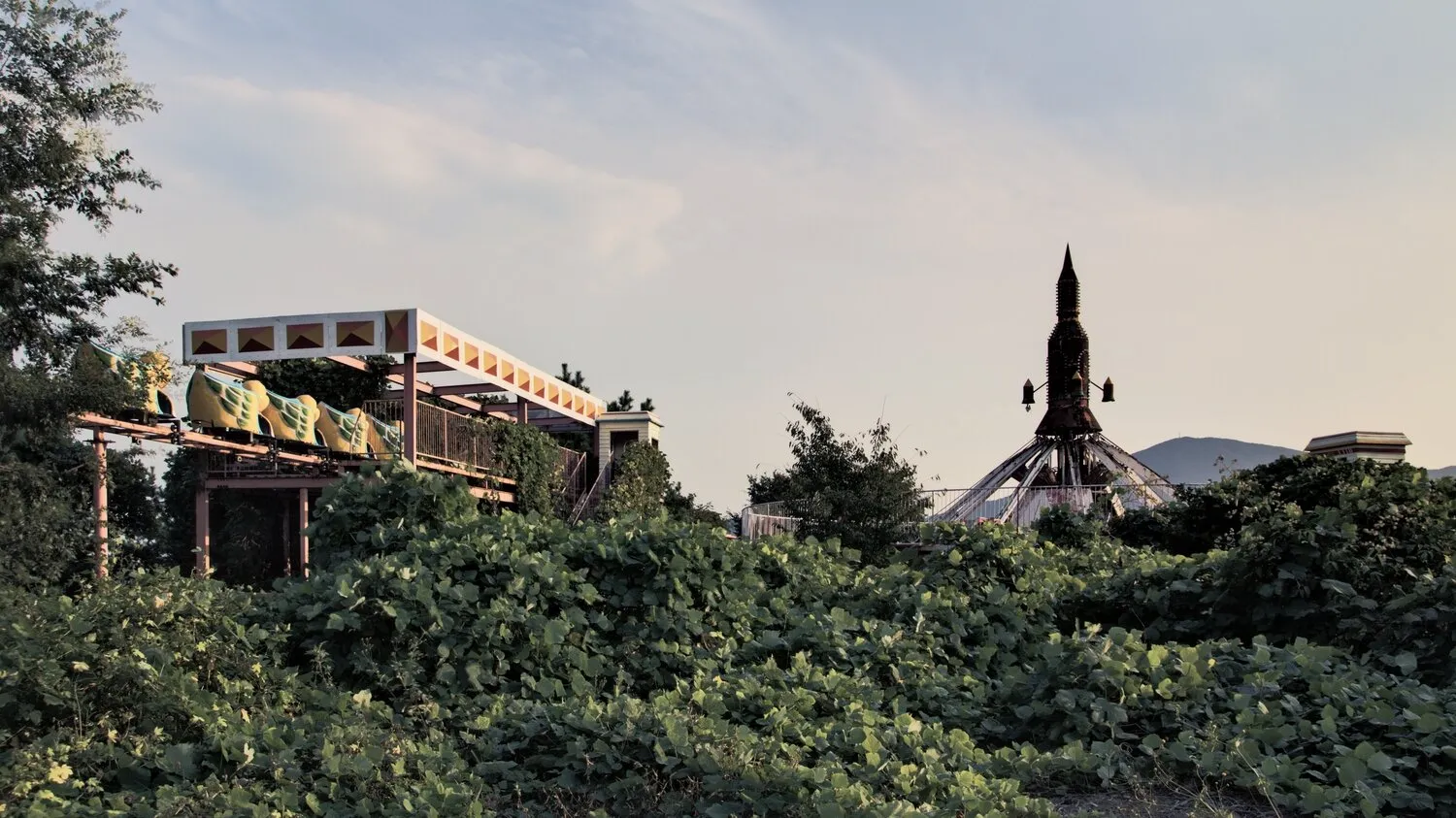
After 1999 the park was left to itself. By April 2008 it was partly overgrown with vines, and some rides, including the duck sky cycle, were no longer in use. The faces of the cartoon animals on the rides were described by one visitor as both comical and eerie, and in autumn 2011 the train of the squirrel coaster was stuck on the chain lift near the top of the track, apparently rusted in place, with no explanation of how it got there. Another visitor writing in October 2011 says that the gate was open, that razor wire surrounded the site, and that the structures were rusting and dangerous with minimal precautions.
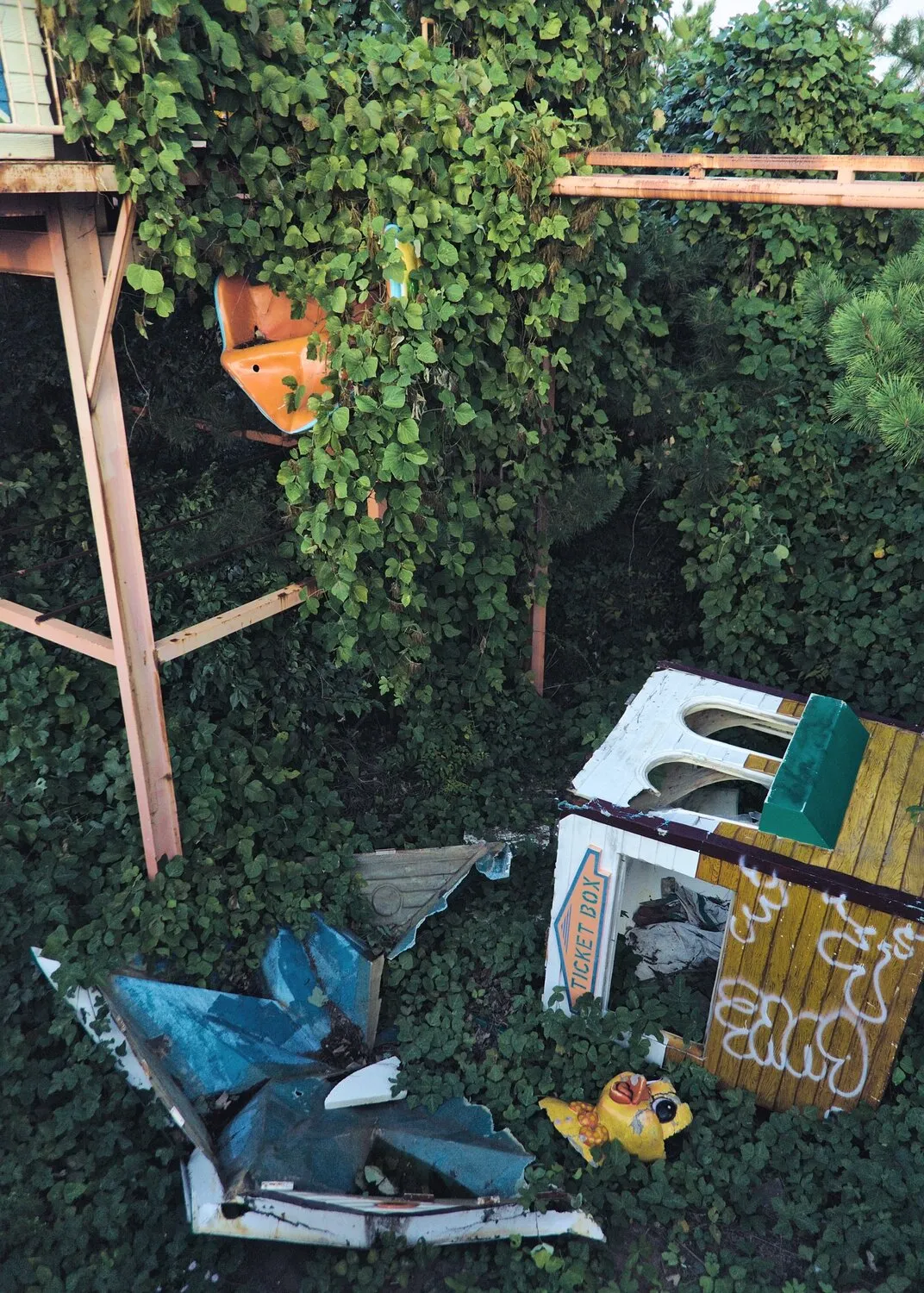
The local newspaper of May 2011 is the least romantic account and perhaps the most reliable on the state of the place. It says that, unlike a neighbouring abandoned hotel in Okpo, the park had no effective access control. The gate was open, rubbish was being illegally burned nearby, the abandoned rides were overgrown with weeds and litter, and obscene graffiti and insults covered the structures. Residents were worried about the blight and about possible crime. Visitors vandalised the rides, drew graffiti and committed arson. These accounts are consistent. By the end the site was neither a beautiful ruin nor a haunted one, but a poorly managed lot that people used for dumping and for drawing on the walls.
It also served other uses. The 2002 Korean film Jungle Juice is said to have been shot at the abandoned park, though a newspaper report of the filming is dated January 2001, which does not match the film’s year, so the film date is uncertain. The site also became a gathering place for survival-game clubs, including one from the shipyard called Pirates. Both details rest on a single account.
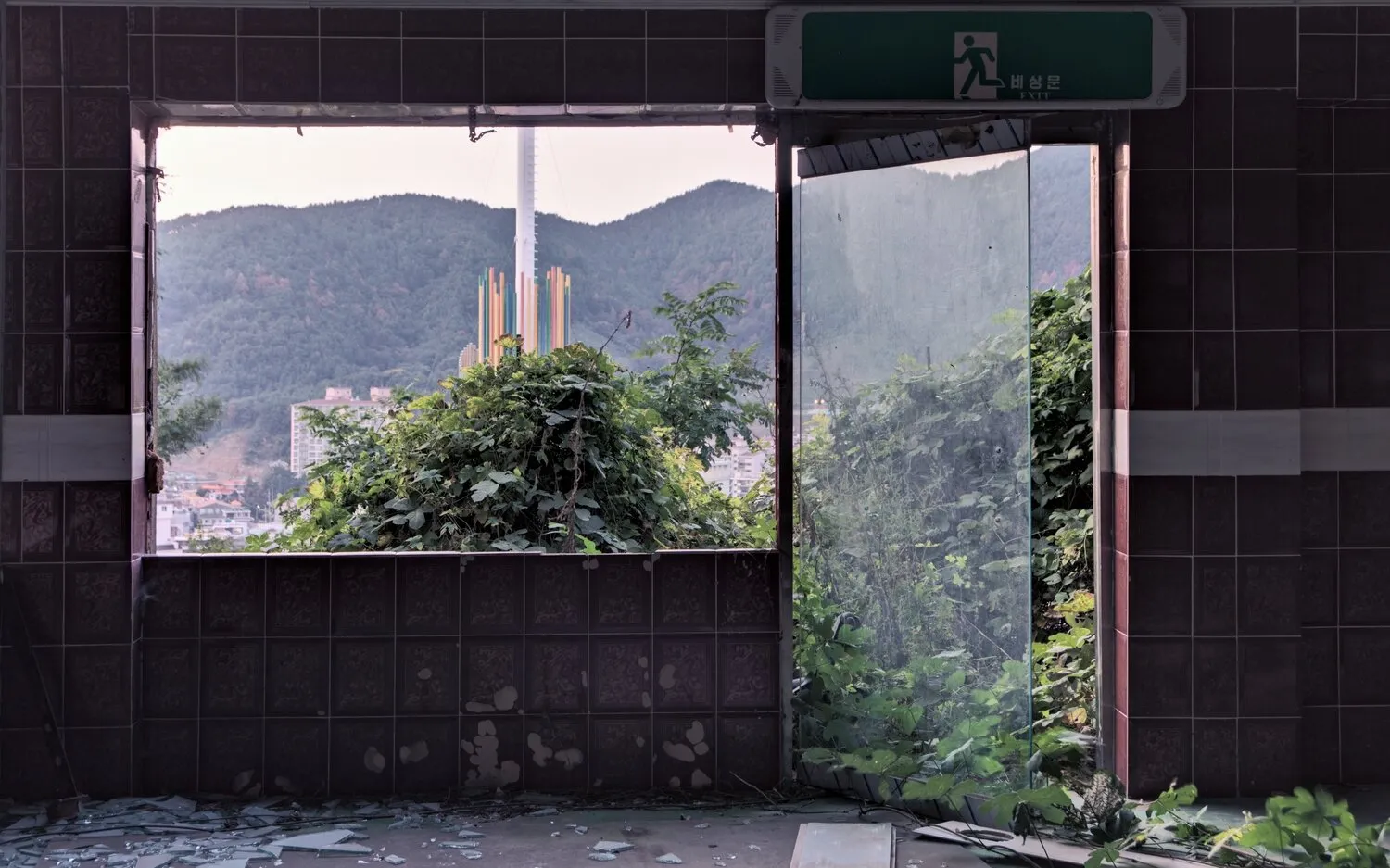
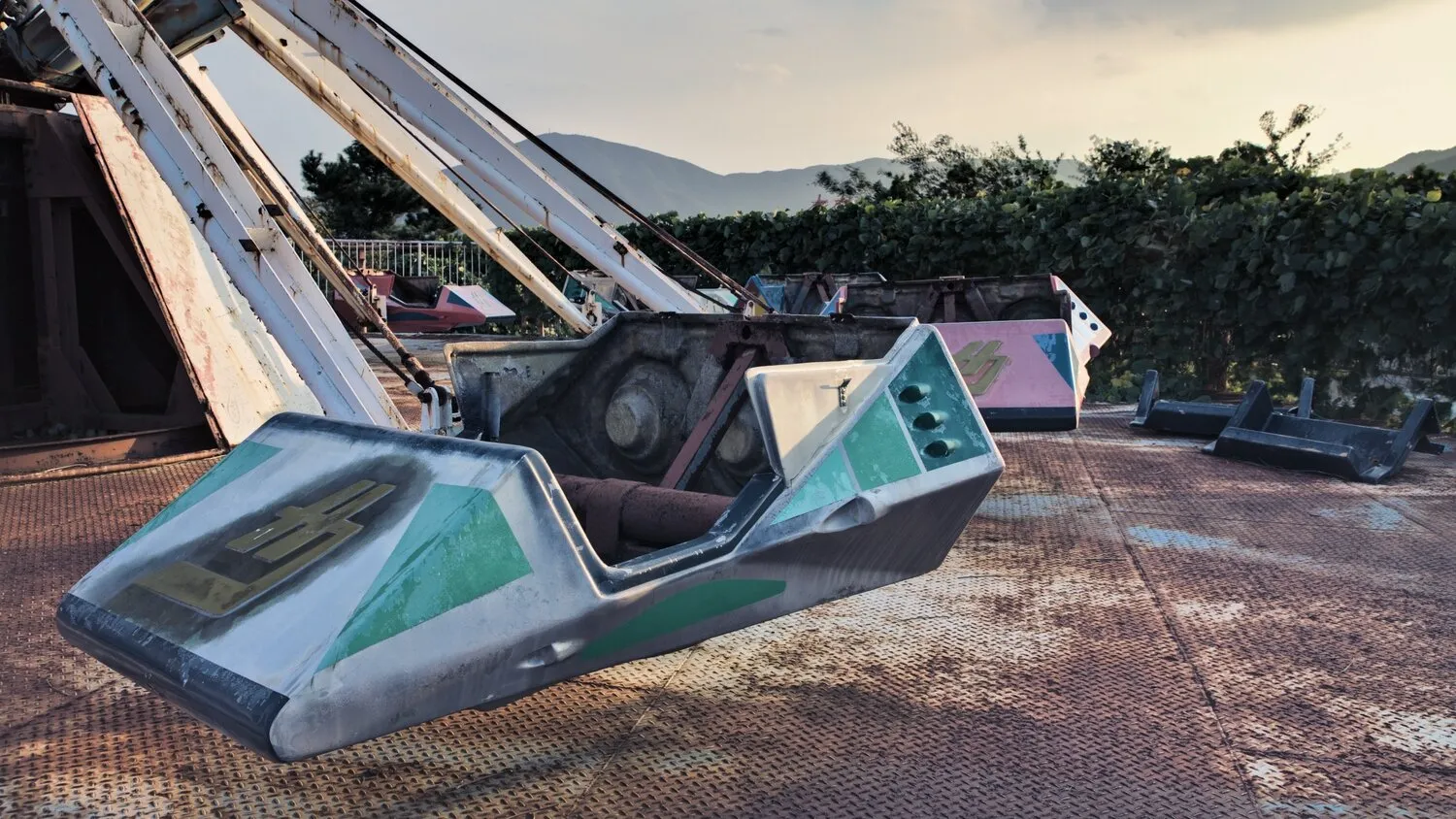
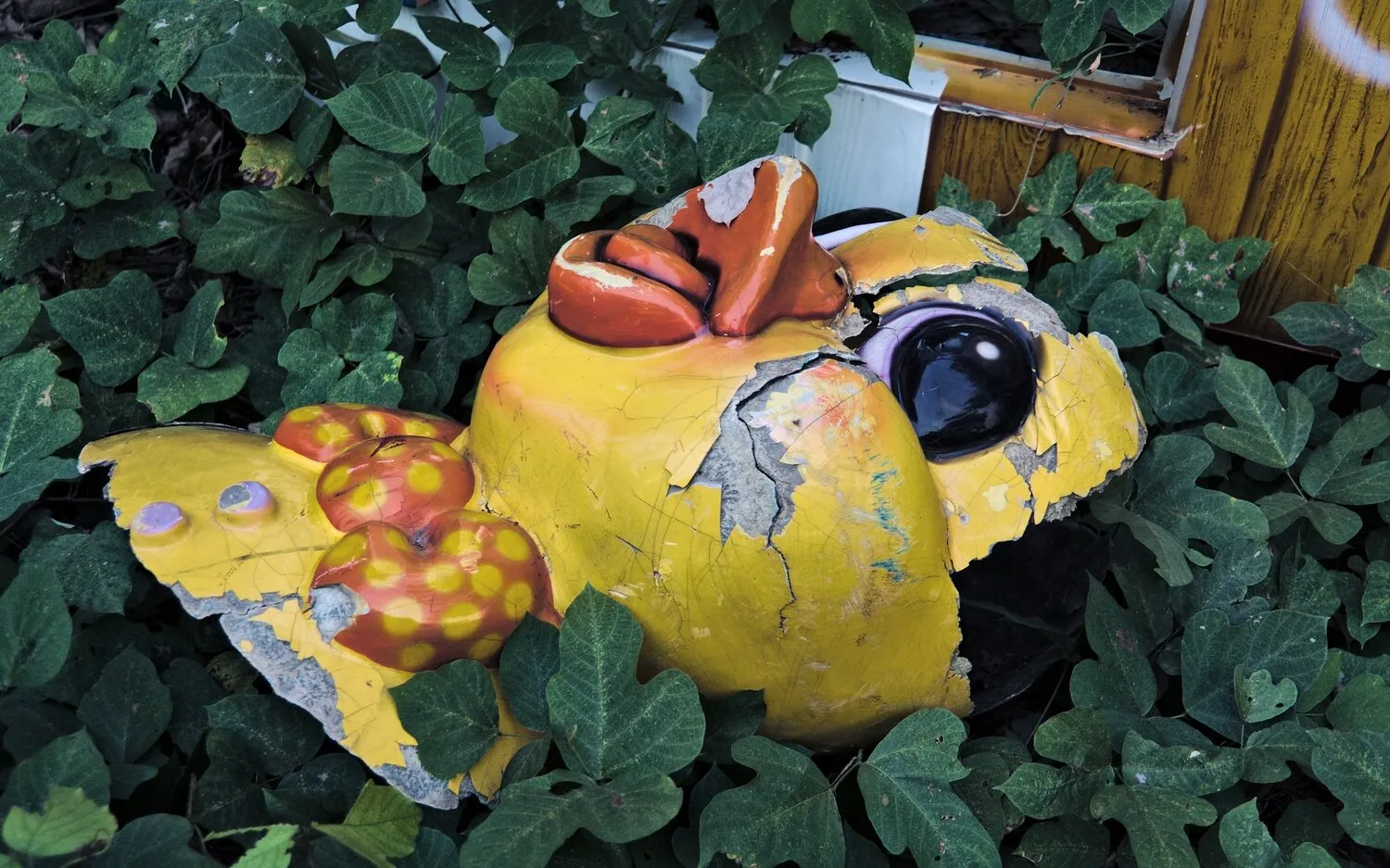
By the late 2000s, then, the hill had settled into a long, undignified middle age. It was too well known to be forgotten and too neglected to be used, and the reports of it from those years read less like accounts of a haunted ruin than of a nuisance that the neighbours wanted dealt with.
Daewoo buys the land
In November 2006 the shipyard bought the park. Daewoo Shipbuilding and Marine Engineering paid about 5 billion won for the property, which the local newspaper confirms in late November 2006. The paper notes that the registry showed a much smaller recreation-zoned parcel of 555 square metres, owned by Daewoo alone, with a registered price of 3.1 billion won, which is a reminder that registry figures and reported prices are not always the same thing.
Daewoo’s reasons were not published. The local newspaper reports that Daewoo planned a hotel on the site but that the timing was unclear. It adds that a subsidiary, Daewoo Shipbuilding E&C, planned a mixed residential and commercial building and a broader redevelopment of Okpo and neighbouring districts through 2019, under a scheme it calls the Geoje Marine City Project. A city planning official told the paper that the site had been removed from the urban park zone in the general master plan but that the change had not been carried into the urban management plan, so the necessary steps would take time.
The paper’s conclusion was that Okpo Land could only change once the wider redevelopment of the area moved forward. It also repeats speculation that the new hotel might replace an existing one, the Okpo Admiral Hotel, which would be relocated and rebuilt on the park’s site. That is presented as speculation, and we treat it that way.
Another photographer, writing in 2011, says that the park remained abandoned because the land was zoned for environmentally low-impact projects, and an older website says that the land was for sale with no bidders. These do not fit easily with Daewoo’s ownership, and they probably come from different dates or from loose reading. They are part of the confusion over the land’s status.
2011: demolition and fire
The rides were demolished in 2011. The remains were cleared to make way for a hotel, and a fire broke out in the arcade area, which locals believed to be arson. Whether the fire came before or after the demolition is unclear. The photographers’ accounts disagree about timing within the year. Bandun says it was demolished months after his June 2011 visit, while the 2020 account says it came within a month or two of visits in autumn 2011, and a blog post of 5 October 2011 is already written as if the ruins were still standing. The safest statement is that clearing happened in the second half of 2011.
Plans for a hotel were announced, but nothing we have found shows it being built. Bandun writes that the hilltop was still barren when he wrote in 2019, and the 2020 account says that the lot was empty and overgrown. Nothing further has come forward, and headlines have described the site as an eyesore and a trash-filled lot. We have found nothing more recent than 2020, so we cannot say what is on the hill today. A recent local source or a satellite image is the right place to look.
What the ruin looked like
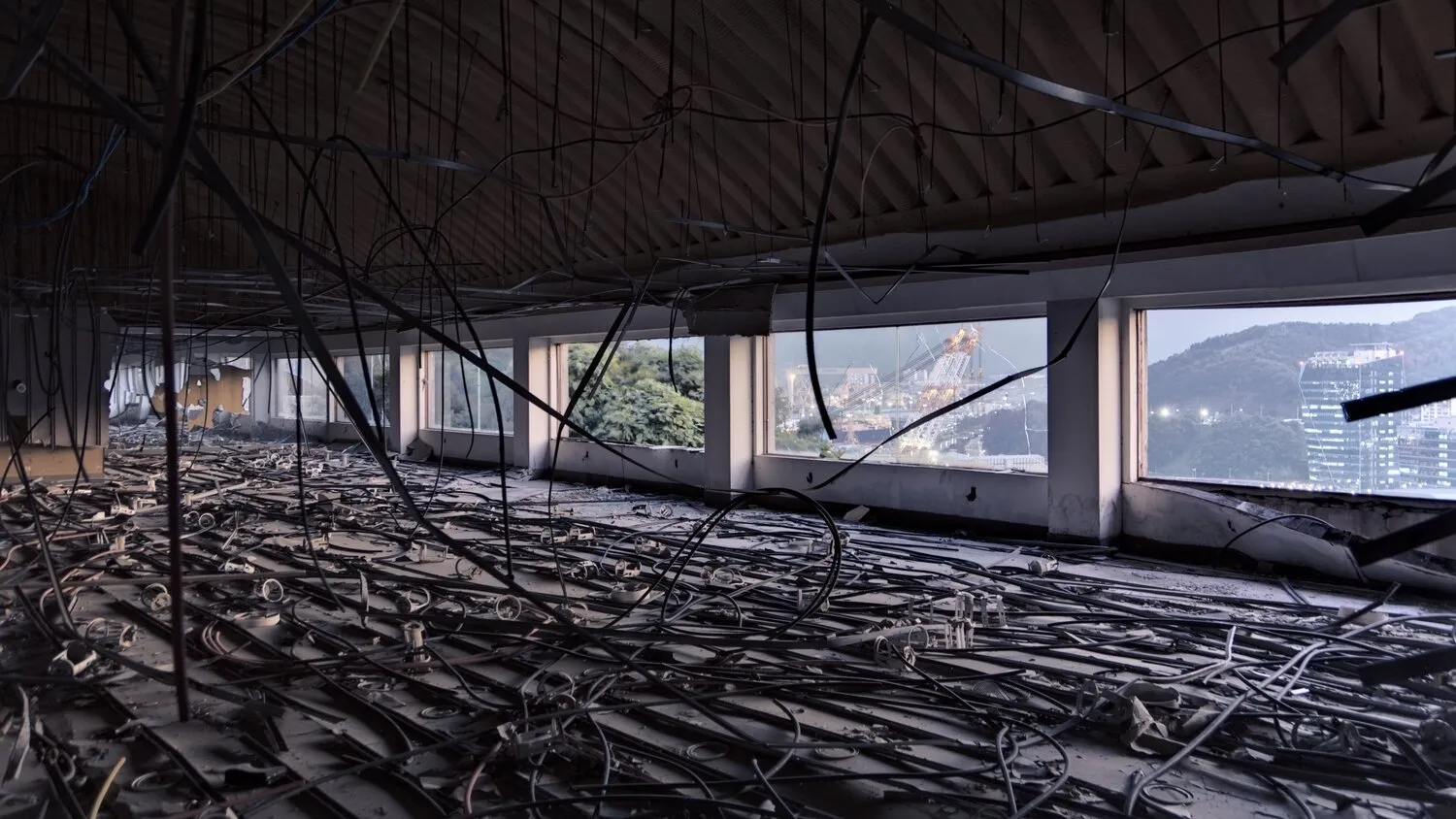
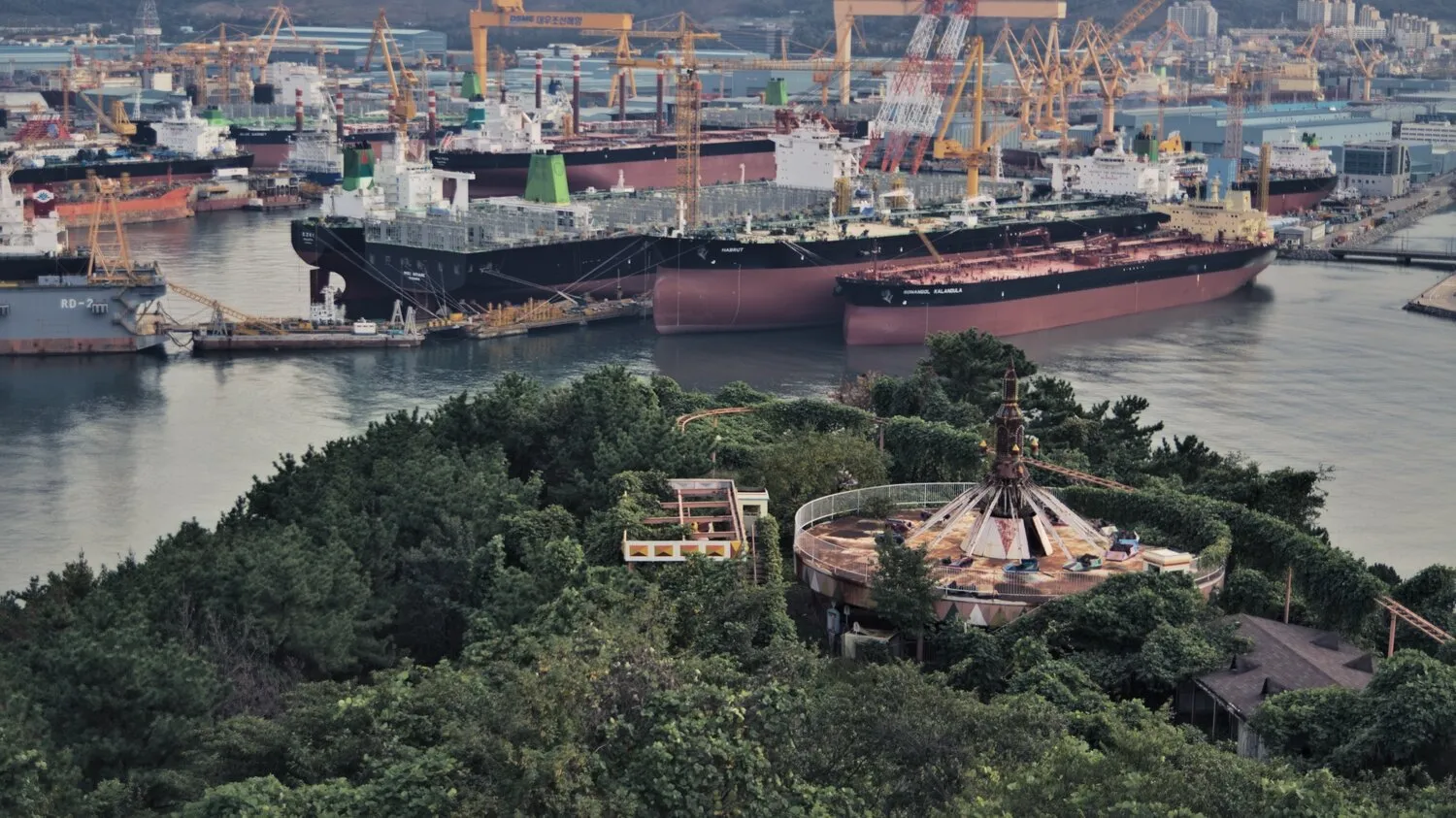
For those who saw it before 2011, the accounts give a consistent picture. The park sat on a hilltop overlooking the harbour. The squirrel coaster was the most sophisticated ride, with a chain lift, and the cartoon-animal faces on the rides looked both comical and eerie. The duck sky cycle ran on an elevated track, and peeling paint and rusting metal appear throughout. The Viking ship, the carousel, the bumper cars and the Space Fighters ride stood among weeds, alongside a pool house with a sauna and hot tubs, and an arcade.
What made it striking was less the individual ride than the scale of the decay against a working industrial town. Above a working shipyard, there was a playground that had been left to rust. We understand why photographers liked the contrast. It also helps to explain why the story of tragedy caught on, because a place that is both cheerful and abandoned seems to need an explanation.
The 2020 account makes a fair point about the park’s fame. Okpo Land became arguably more famous as a ruin than it had ever been as a working park, and there are no known photographs from the years it was open. That seems right to us. Almost everything the world knows about the place comes from the period between about 2007 and 2011, when it was already closed.
A ruin in the international press
There is one more thing worth noting about the way Okpo Land has been covered, which is that it has sometimes been confused with another park. In 2017 the Korea Times reported on a different amusement park, Gaya Land in Gimhae, whose photographs taken between 2011 and 2016 had gone viral abroad as an abandoned park, even though it had reopened under new management on 2 April 2016 and was operating again. The Dutch photographer Bob Thissen, who had visited it in 2014, said at the time that Okpo Land was still covered a lot in the media, long after its demolition. The point is that images of closed Korean parks travel on their own, without dates or place names attached, and a ruin that is no longer there can still be described in the present tense.
The same is true of Okpo Land itself. Several of the online pages that describe it were written when it was standing and have never been updated, so they say it is still there. Some describe it as abandoned today. We have tried to say what was true when each account was written.
The cleared hill leaves one more question that we cannot answer, which is what the park meant to the people of Okpo who actually used it. The photographers who made it famous came as outsiders, and almost none of their accounts record a local memory of a birthday, a first date or an afternoon on the coaster. Those memories must exist. They simply did not travel the way the photographs did.
Visiting
There is little to visit. The rides were cleared in 2011, and nothing we have found describes any surviving structure. The land belonged to Daewoo Shipbuilding and Marine Engineering from 2006, and Okpo-dong’s shipyard is now Hanwha Ocean, so the ownership today may be different from what the 2011 reports say. We have not found anything that confirms who owns it now.
We would not recommend trying to explore it. The old accounts describe a dangerous site, with razor wire, rusting structures and poor security, and a site that is cleared may still contain debris or be fenced for development. It is private land. If you are in Okpo for other reasons, the area is easy to reach, and the view over the bay and the shipyard from the ridge road is worth seeing from public ground.
From Busan, the journey is now straightforward. A taxi from Busan airport takes under an hour by the Geoje-Busan bridge, and heavy weekend traffic can make it up to 90 minutes. Before the fixed link opened it was a ferry or a long bus ride, which is a useful reminder of how far the island was from the mainland when the park was built.
Conclusion
Okpo Land is best understood as two stories that happened to share a hill. The first is a small park that opened in the mid-1990s, closed in 1999 in the middle of an economic crisis, and passed through creditors and a private buyer to a shipbuilder who bought it in 2006 and cleared it in 2011. That story is documented, ordinary and a little sad. The second is a legend of deaths and a vanished owner, which spread through the early internet on the strength of a few photographs and has never, as far as we can find, been supported by a record.
We have tried to keep the two apart. Where a source states something as fact, we have weighed how much it can carry, and we have left out claims that we could not trace to anything. There are real uncertainties: the opening year, the exact month of closure, the timing of the demolition and fire, and what stands on the hill now. There are also real gaps, since almost nothing survives from the park’s open years. The most honest summary is that Okpo Land is a place whose reputation is far larger than its documented history.
That is the lesson of the place. A ruin attracts explanations, and the more photogenic the ruin, the more explanations it attracts. The duck cars did not need a tragedy to look strange. What they show, if you look at the record with some patience, is a small business that did not survive a crash, and a town that has gone on building ships around its empty hill.
Did you know?
- Okpo Land stood on a hilltop in Okpo-dong, Geoje, overlooking a large shipyard.
- It covered about 13.2 hectares and had 11 listed attractions, including one small roller coaster shaped like a squirrel.
- It opened in 1996 or 1997, according to different sources, and closed in 1999.
- Most reporting points to the late-1990s economic crisis as the likely reason for closure.
- The land was sold in November 2000, and Daewoo Shipbuilding and Marine Engineering bought it in November 2006 for about 5 billion won.
- The story of children dying on the rides traces back to online lists in the mid-2000s and has not been verified.
- The Korean film Jungle Juice is reported to have been shot at the abandoned park.
- The rides were demolished in 2011, and a planned hotel has not been confirmed.
- Okpo Bay was the site of the Battle of Okpo on 16 June 1592, led by Admiral Yi Sun-sin.