Manchuria and the army’s laboratory
To understand Pingfang you have to begin with the Japanese occupation of northeast China. Japan took Manchuria in 1931 and set up a puppet state there. Its Kwantung Army ran the region, and a doctor named Ishii Shiro saw an opportunity. Ishii was born in 1892 and trained at Kyoto Imperial University, and he had commissioned into the army in 1921. He had also spent time visiting research institutions in America and Europe, and he came home convinced that germs could be made into weapons. The 1925 Geneva Protocol, which banned the use of biological weapons, struck him as proof that they must work, and occupied Manchuria offered something no laboratory at home could: a supply of human beings who could be held and who would not be missed.
A research body he set up in Tokyo in 1932 was followed by a unit in Manchuria, and in 1936 an imperial decree is reported to have authorised its expansion and its integration into the Kwantung Army. Ishii was given formal control of what became Unit 731 on 1 August 1936.
The earliest facility was a fortress at Zhongma, in the Beiyinhe district about 100 kilometres south of Harbin. It was a prison as well as a laboratory, and its detainees included criminals, partisans, political prisoners and people arrested on false charges. A prison break in 1934 and an explosion in 1935, believed to be sabotage, led Ishii to close it, and the unit moved to a new site at Pingfang, about 24 kilometres south of Harbin.
The new complex was built on a very large scale, and it was disguised. The official name of the unit was the Epidemic Prevention and Water Purification Department of the Kwantung Army, a title that sounded like public health. The number 731 did not come into use until 1941. Local authorities, at least in some tellings, were told that the site was a lumber mill, a story that fits the secrecy surrounding the whole enterprise.
The complex
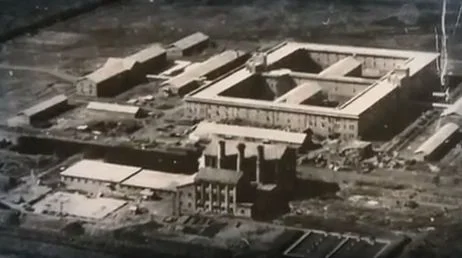
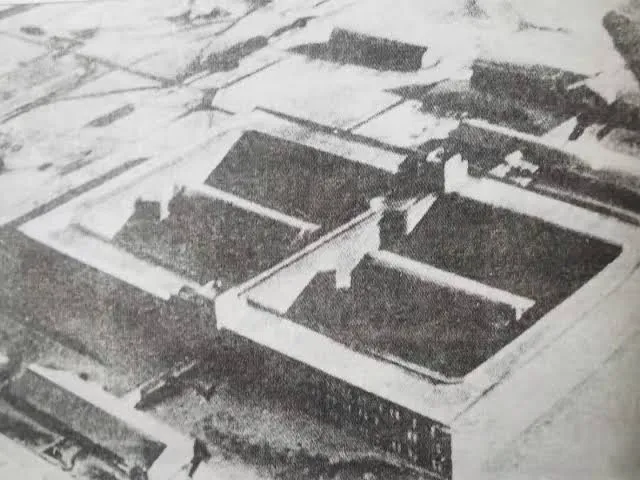
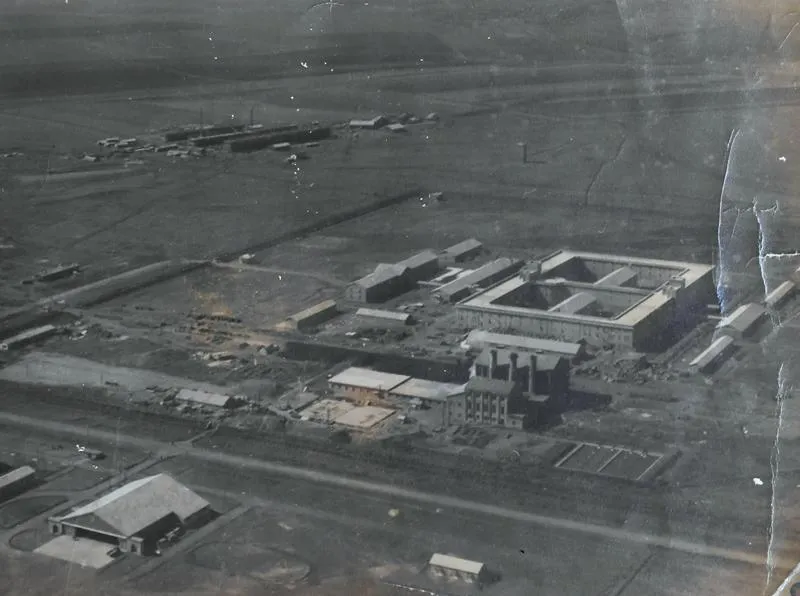
The scale is part of the story. The usual figure for the wartime complex is about six square kilometres, with more than 150 buildings, which housed laboratories, operating rooms, barracks, a prison and several crematoria. It was designed to be hard to destroy by bombing. Production equipment included about 4,500 containers for rearing fleas, six large cauldrons for preparing chemicals and some 1,800 containers for growing biological agents, enough, it has been calculated, to produce roughly 30 kilograms of plague bacteria in a few days.
There were several thousand people on the staff. About 3,000 are usually counted at the Harbin complex at its peak, and Ishii’s wider network of units and branches across Asia was far larger, reaching more than 10,000 personnel by 1939. Branches operated at other sites in Manchuria, among them Linkou, Mudanjiang, Hailin, Sunwu and Hailar, and sister units operated in Beijing, Nanjing, Guangzhou and Singapore.
The organisation was divided into eight divisions. The first handled bacteriological research on living subjects, with diseases such as plague and cholera. The second studied how disease could be spread on a battlefield, with devices for delivering it. A third produced the bombs and shells, and a fourth handled mass production and storage. A fifth trained personnel, and the rest looked after administration, supply and clinical work. By 1939 Ishii had narrowed his attention to six agents: anthrax, typhoid, paratyphoid, glanders, dysentery and plague-infected fleas.
A near-complete personnel list of 3,607 names was released by the National Archives of Japan in 2018, after a request from a group led by Nishiyama Katsuo, a professor emeritus at Shiga University of Medical Science. It is dated 1 January 1945 and gives ranks, names and personal details. It is one of the few documents in the public record that names the staff, and for the families of the victims it matters that the people responsible can be identified. A more detailed listing was found in 2023.
The site could hold up to 600 prisoners at once, in a prison at its centre, with the research rooms built around it. The staff called them maruta, a word meaning logs, which is both a grim joke and a clear statement of how they were regarded. The military police supplied them in great numbers, at least 600 detainees a year. The victims were mostly Chinese, with many Russians, Koreans and Mongolians among them. Rumours of Western prisoners of war exist, but they have not been established, and we leave them out.
What was done, and how many died
Unit 731 conducted research on human beings who had not agreed to it and who were killed in the process. Historians group the work into categories: studies of infectious disease, of cold and frostbite, of pressure, dehydration and starvation, and of poisons and chemical agents, together with the dissection of living people. Researchers published some of their findings in journals, describing their human subjects as “monkeys”. Survivors of an experiment were usually killed afterwards. No detainee is known to have survived the facility.
A second strand of work was the development of biological weapons, which were tested in the field on civilian populations and then used in attacks on Chinese towns and cities. Researchers tried many delivery methods: bombs designed to scatter infected fleas, contaminated food, wells poisoned with typhoid and paratyphoid, and aerial spraying, which by 1943 they had found more effective than bacterial bombs. At least a dozen large trials and attacks on at least eleven Chinese cities are documented. A Tokyo court found in 2002 that attacks at Quzhou, Ningbo and Changde between 1940 and 1942 had been carried out on the orders of army headquarters. At the Khabarovsk trial in 1949, defendants testified that around 40 Unit 731 members took part in an attack on Changde in 1941.
The question of how many people died has no single answer, and it matters to be clear about why. There are two separate groups. The first is the people killed inside the facility. The museum and most histories give a figure of at least 3,000. That is a minimum, and some estimates are much higher. A former member, Okawa Fukumatsu, claimed at least 10,000, and some accounts give 14,000, though they do not reconcile that with the lower number.
The second group is the people who died in epidemics that followed the unit’s field attacks and tests, and here the range is enormous. Estimates run from about 30,000 to more than 500,000. Many studies settle on figures of around 200,000 to 300,000, others on at least 400,000. The museum says more than 300,000. A symposium held in Changde in 2002 estimated about 580,000 deaths from germ warfare and human experimentation combined. The reason for the range is simple: the deaths were spread across many places and years, and nobody counted them at the time. The honest summary is that the deaths in the facility were at least 3,000 and the deaths from field attacks were in the tens of thousands at the lowest estimate and probably in the hundreds of thousands at the highest.
The deaths did not stop with the war. The historian Sheldon Harris estimated at least 30,000 plague deaths in the Harbin area between 1946 and 1948, after the unit’s collapse, from infected animals that had been released as the unit broke up. The figure shows that the aftermath had victims too.
August 1945
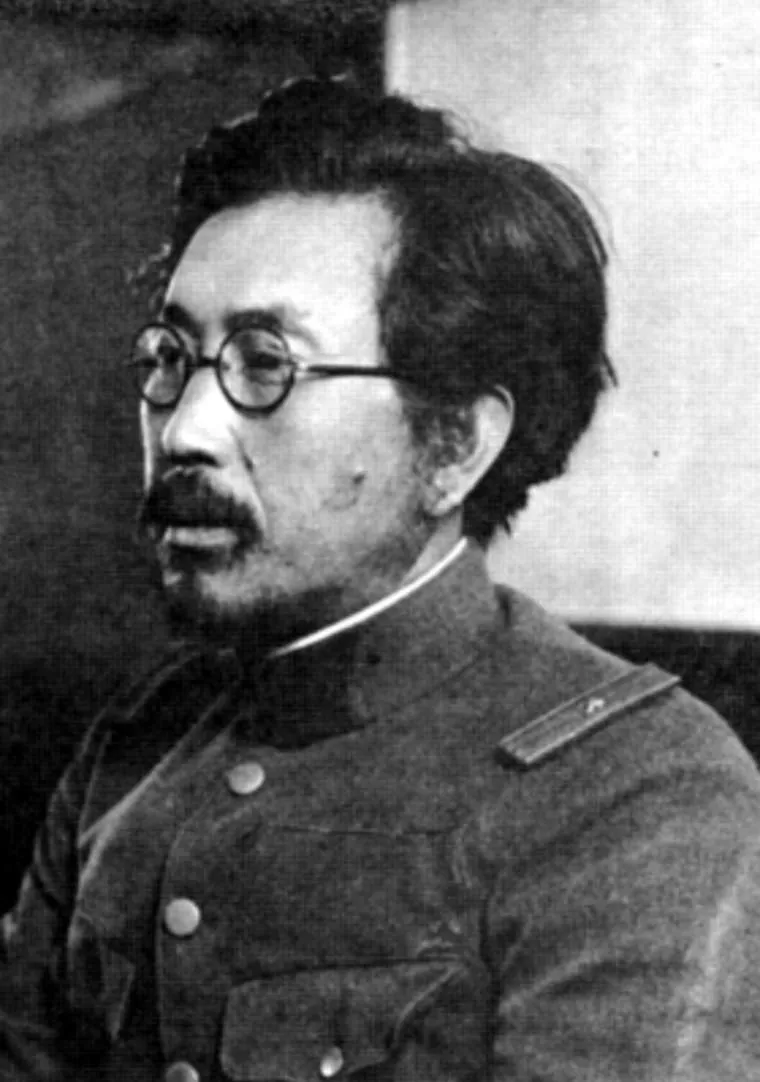
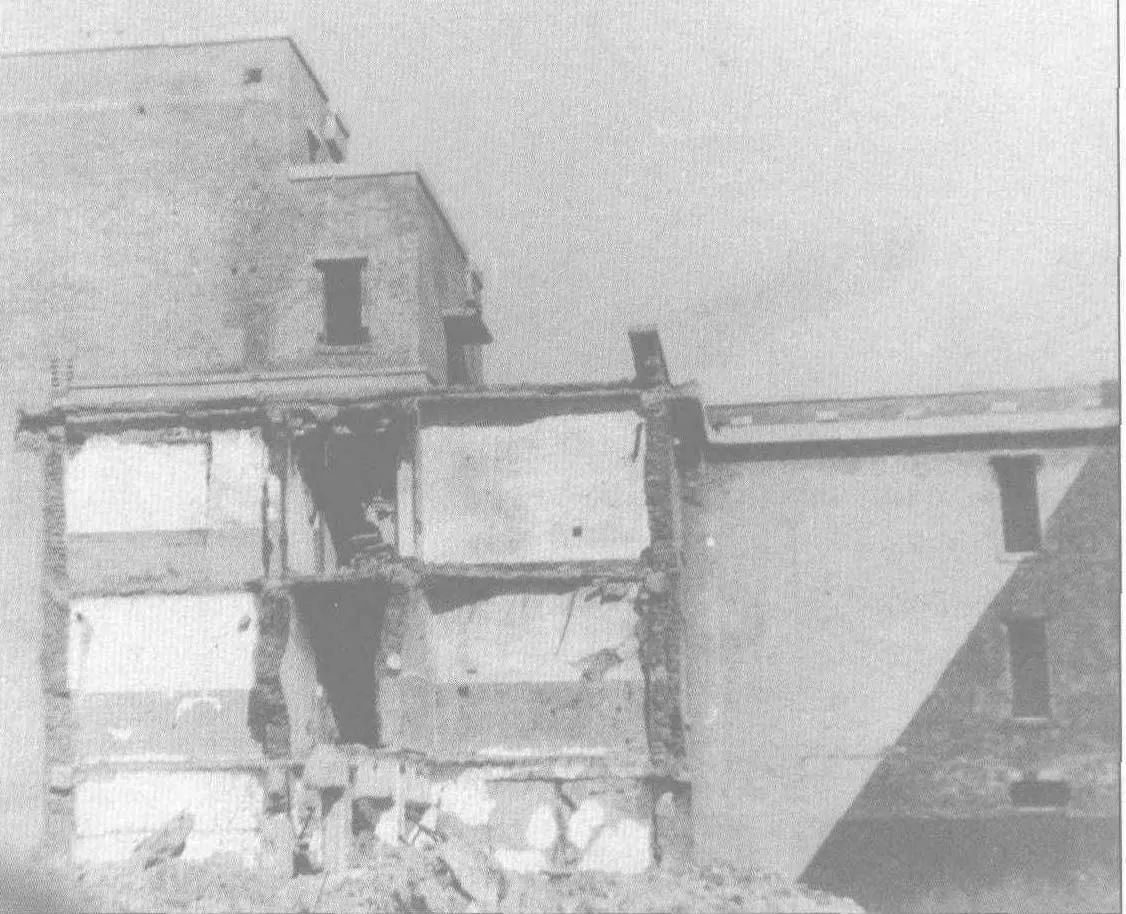
When the Soviet Union entered the war against Japan in August 1945, the unit’s leaders knew the secret was at risk. Ishii ordered the destruction of the facilities and left Harbin by plane on 12 August, three days before the Japanese surrender. Staff were told to take the secret to the grave. Most of the prisoners still held were killed, with figures of about 300 prisoners and 600 labourers given in some accounts, and we treat those numbers as approximate. Staff were issued with cyanide, and skeleton crews blew up parts of the compound. Some buildings survived.
Take the secret to the grave.
Ishii Shiro, order to Unit 731 members, August 1945
The unit’s staff returned to Japan, where most went on with their lives. Several rose to positions in medicine and the pharmaceutical industry. A stele at the Harbin museum lists about 60 former members and their later careers. In 1950, former members including Masaji Kitano and Ryoichi Naito founded Green Cross, a blood bank and drug company that became, decades later, the centre of a scandal over HIV-contaminated blood products. The main exception to this easy return was a small group who were captured by the Soviet Union and put on trial.
Two trials, and one deal
The first trial of Unit 731 personnel took place in Khabarovsk in the Soviet Union, from 25 December 1949, for about a week. Twelve Japanese officers and medical staff were charged with manufacturing and using biological weapons and with human experimentation. They included General Yamada Otozo, the former Kwantung Army commander-in-chief, and Major General Kawashima Kiyoshi, a former chief of Unit 731. Sentences ranged from two years to 25 years in labour camps. Most were released by 1956, one died in prison in 1951 and one took his own life in 1956. The Soviet Union published the trial documents in English in 1950. The West largely dismissed them as communist propaganda, in the words of the bioethicist Jing-Bao Nie, and ignored them until the 1980s. China held its own trial of 36 Japanese at Shenyang in 1956.
The second story is the one that most troubles historians. The Americans, who occupied Japan, did not prosecute Ishii. The Japanese professor Tsuneishi Keiichi, an authority on biological and chemical weapons disarmament, found declassified American intelligence records in 2005 showing that the occupation authorities gave Japanese scientists immunity in exchange for their data, and that they were paid from a secret army fund. The immunity covered Ishii and his colleagues, and the arrangement is usually dated to 1947 or 1948. The Americans, meanwhile, did hold a separate trial at Yokohama in 1948, over the vivisection of captured American airmen.
What the Americans got is debated. The expert who assessed the material, Dr Norbert Fell of Fort Detrick, judged the human experiment data to be limited and fragmentary, because no experiment used enough subjects to give statistically valid results. Another American scientist who examined the work, Murray Sanders, described the experiments as crude. Tsuneishi suggests that American military intelligence may have overstated the value of the data to protect its secret funding. The historian Mark Selden has called the arrangement a deal for the rehabilitation of the unit’s members, and notes that the contrast with Nuremberg, where many Nazi doctors were prosecuted, is stark. Nie argues that the cover-up amounts, morally and legally, to complicity after the fact. Racism, others say, contributed to a double standard. Whatever the right words, the outcome is not in dispute: the commander of Unit 731 was never tried.
Ishii died on 9 October 1959, aged 67, in Tokyo. He had opened a clinic that offered free examinations, lost his voice after surgery for laryngeal cancer, and been baptised a Catholic shortly before his death. His daughter said she felt he had been unjustly condemned. The contrast with the scale of what he directed is hard to hold in the mind.
Japan, and the long argument
The legal and political aftermath in Japan has been slow. Japanese scholars and journalists, including Tsuneishi, did much of the pioneering work, often against official reluctance. In 1983 the Education Ministry asked the historian Ienaga Saburo to remove references to Unit 731 from a school textbook, and it was not until 1997 that the Supreme Court ruled that restriction unlawful. A class action brought by Chinese victims and their families in 1997 failed at every level. In 2002 the Tokyo District Court ruled that Japan had conducted biological warfare, but refused compensation.
How far the Japanese government has gone in acknowledging the programme is the contested part. Some summaries say Japan acknowledged human biological warfare experiments in the 1980s, while others note that the government has never officially acknowledged either the biological warfare or the atrocities. The facts are accepted by the courts and by historians, and a formal government statement is what is missing.
Smaller moments mark the progress. In 2018 the National Archives of Japan released the names of the 3,607 members. In August 2025, a former member, Hideo Shimizu, apologised at the Harbin exhibition hall. He had joined the unit as a teenager and later described the specimen rooms he saw. The same month, a delegation of about 20 Japanese retired teachers, documentary makers and peace activists visited the museum, led by Masataka Mori, a former professor of peace studies who has spent more than 40 years researching the unit and filming testimony from former members. Mori has received death threats for his work. He often quotes the Chinese writer Lu Xun:
The lies written in ink can never cover up the facts written in blood.
Lu Xun, quoted by Masataka Mori
First-hand testimony has also surfaced late. Yoshio Shinozuka, who joined the Kwantung Army’s epidemic prevention department as a teenager in 1939 and later returned from detention in China in 1956, gave a speech in 2008 describing his part in the unit’s work. The text was published in Japan in early 2026. Because it has been circulated mainly through Chinese state media, its details are difficult to check independently, but it fits the larger pattern: a significant body of testimony, documents and court evidence exists, in several languages and from several countries, and more of it keeps appearing.
Scientists have also asked for something else. Researchers have called on the American and Japanese governments to release the unit’s remaining data, arguing it could be useful in studying epidemics, and both governments have so far withheld it. The request raises uncomfortable questions about whether knowledge gained through such crimes should ever be used.
The museum
The museum at Pingfang opened in 1985. A new building opened on 15 August 2015, the 70th anniversary of Japan’s surrender, replacing an older museum next door that had too little space. Its architect was a team led by He Jingtang of the South China University of Technology, and the building is a black, split-box shape meant to suggest the black box of an aircraft recorder, with the ground appearing to open up to reveal it. A large metal canopy covers the excavated remains of the prison cells. In its first weeks it averaged 7,000 to 10,000 visitors a day, and the site had received about 400,000 visitors a year before the expansion, and more than three million by 2010.
The exhibition covers the history of the unit, its research and the biological and chemical weapons Japan used in China. It includes medical instruments, documents on the army’s biological bomb, and a wall of 3,000 black stone plaques commemorating the dead. A reopening in December 2024 came with a special exhibition of cultural relics and historical materials, including a wall listing victims’ names. The museum has been preparing an application for UNESCO World Heritage status, and Harbin’s officials first spoke about a bid around 2013. We have not been able to confirm that the site is on any UNESCO list today.
The museum’s account is not uncontroversial, and a fair article has to say so. Tsuneishi told a reporter in 2015 that he had not met a Chinese researcher who had studied Unit 731 seriously, and that the most reliable sources are in Japanese, American and other archives. Mark Selden said that the Chinese state exercises a high degree of control over history but that the historical data must be respected whatever its use. The museum’s head of research, Gao Yubao, said the museum aims to present historical truth and does not shape history for political ends. The same reporter noted that the visitor book contained mostly stock patriotic phrases, that the shop sold nationalistic merchandise, and that the exhibit on postwar careers did not credit the Japanese scholars who had pioneered research on the unit. All of that can be true at once. The core facts of what Unit 731 did are well supported outside China. What the museum does with them is a separate question.
What survives
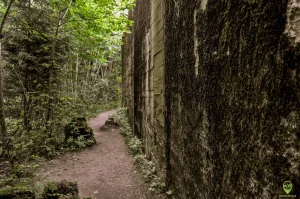
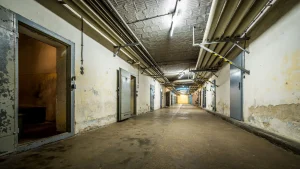
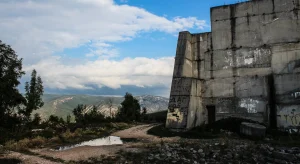
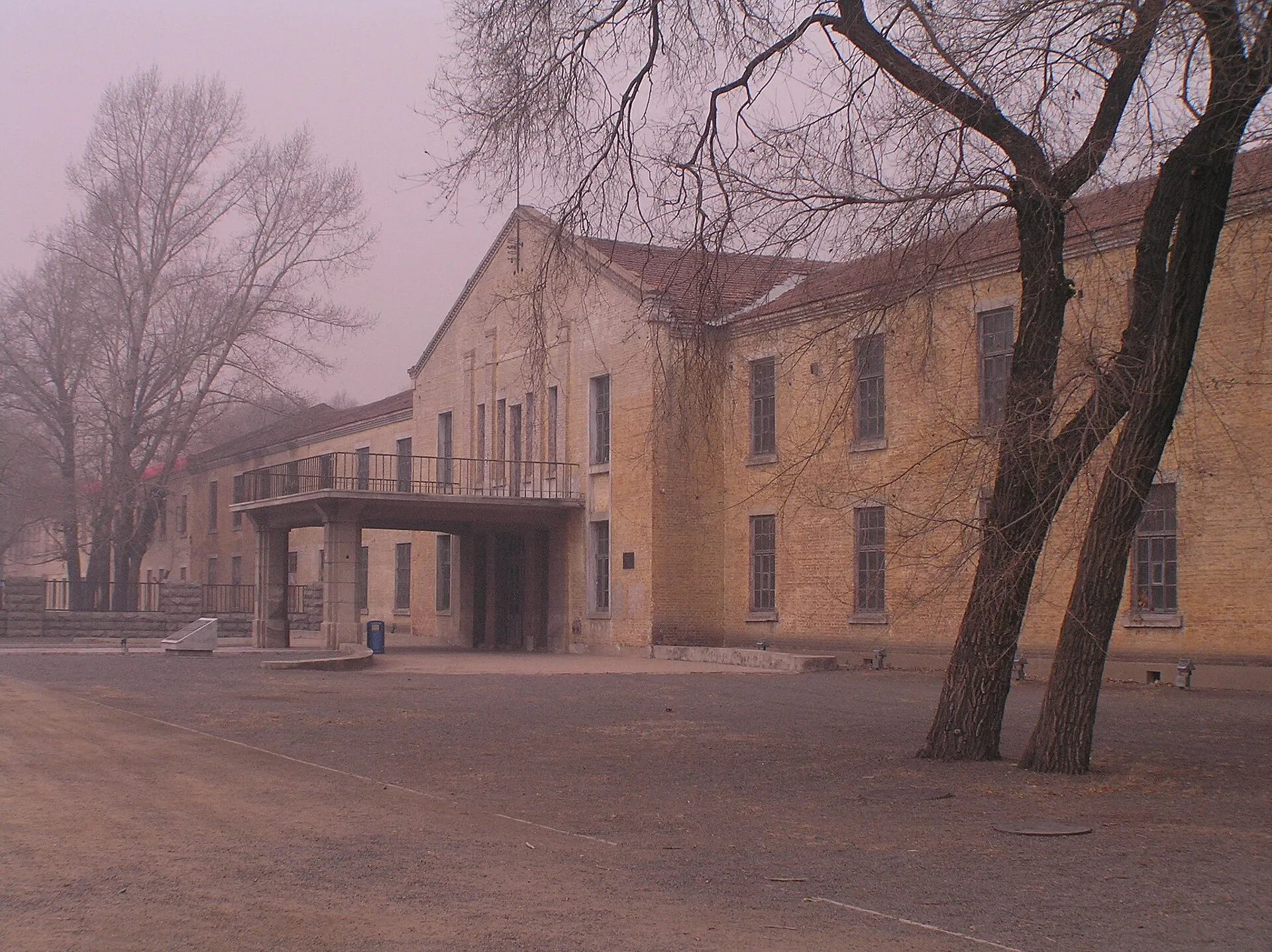
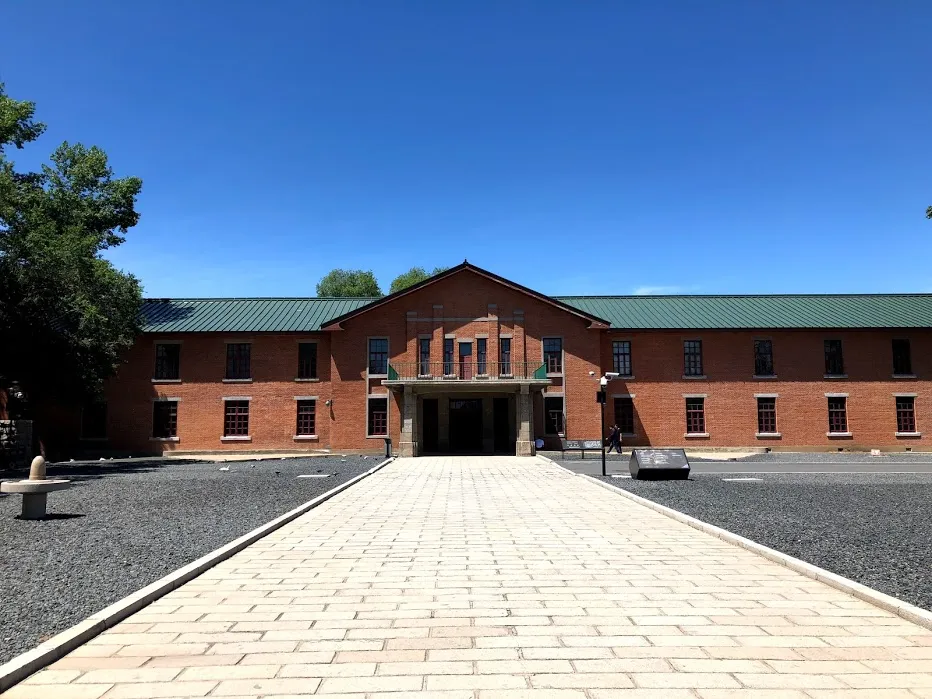
The most valuable part of the site is the part that has not been rebuilt. The former headquarters building still stands, and behind it are the remnants of the square-shaped experimental complex. The museum’s own page lists the old headquarters ruins, laboratories, the special prison remains, underground animal-breeding rooms, boiler rooms, and the remains of a gas chamber. A report from 2010 said the museum covers 23 sites, mostly in Pingfang, including an incinerator, and that its protected area was 104,000 square metres, which is much smaller than the original six square kilometres. Parts of other branch sites are now used by Chinese industry.
New discoveries continue. In 2023 archaeologists from the Heilongjiang Provincial Institute of Cultural Relics and Archaeology announced the discovery of an underground structure near the city of Anda, about 33 metres long and 21 metres wide, built in 1941 and believed to be Unit 731’s largest test site. Initial reports said that the archaeologists had not yet entered it and that the function of its rooms was unconfirmed. It is a reminder that the physical record is incomplete.
Visiting
The museum is in Pingfang District, on Xinjiang Dajie, at No. 23 in most listings and No. 25 in some. It is roughly an hour from central Harbin by public transport, and visitors recommend buses 338 or 343 from the west side of the railway station. Admission is free. Opening hours are reported inconsistently: one official page gives 8:30 to 18:00 and closed Mondays except on national holidays, with last entry at 17:00 for the new exhibition hall and 17:30 for the old headquarters site, while a visitor’s account gives Tuesday to Sunday with a midday break and a last entry of 15:30. Please check before you travel, and check whether you need to book or bring a passport, which we have not been able to confirm.
A word about the experience. The museum is serious, and it is graphic. Visitors describe a route through the prison cells, guard buildings and laboratories, with photographs and original instruments, and hundreds of portraits and testimonies. It is not suitable for young children, and it deserves time and quiet. An English audio guide is reported to be available. Treat the site as what it is: a place where thousands of people were killed, and where their descendants and the descendants of the perpetrators can both come to remember it.
Conclusion
Pingfang is hard to write about because it resists the usual shapes of a place story. There is no ruin to admire and no tale of decline. There is a laboratory that was built to kill and a cover-up that kept it from being punished. The people who ran it went on to long careers, and the people it killed were, for decades, hardly counted.
What we take from the record is that three things are true together. The unit’s crimes are well documented, in Japanese archives, Soviet and Chinese trials, American intelligence files and the testimony of former members. The justice that followed was partial and compromised, and the Allied powers who could have prosecuted chose not to. And the way the site is remembered today is shaped by present-day politics, in China and in Japan, as well as by history. The honest way to visit, or to read, is to hold all three in mind.
The museum’s wall holds 3,000 black plaques, and we know that the number is a minimum. It is the least anyone can say with certainty. Everything above it is an estimate, and every estimate is a reason not to look away.
Did you know?
- The Unit 731 complex at Pingfang covered about six square kilometres and had more than 150 buildings.
- Its official name was the Epidemic Prevention and Water Purification Department of the Kwantung Army.
- Ishii Shiro was given formal control of the unit on 1 August 1936.
- At least 3,000 people are recorded as having died in the facility itself, and the museum cites more than 300,000 deaths from field attacks.
- Ishii left Harbin by plane on 12 August 1945, three days before Japan surrendered.
- The Soviet Union tried twelve members of the Kwantung Army at Khabarovsk in December 1949.
- Ishii received immunity from the American occupation and was never tried.
- The National Archives of Japan released the names of 3,607 Unit 731 members in 2018.
- In 2002 a Tokyo court ruled that Japan had conducted biological warfare, but refused compensation.
- The museum opened in 1985, and a new building opened on 15 August 2015, the 70th anniversary of Japan's surrender.
- A wall of 3,000 black plaques at the museum honours the dead.
- Archaeologists reported an underground Unit 731 test site near Anda in 2023.