A city the size of a few football pitches
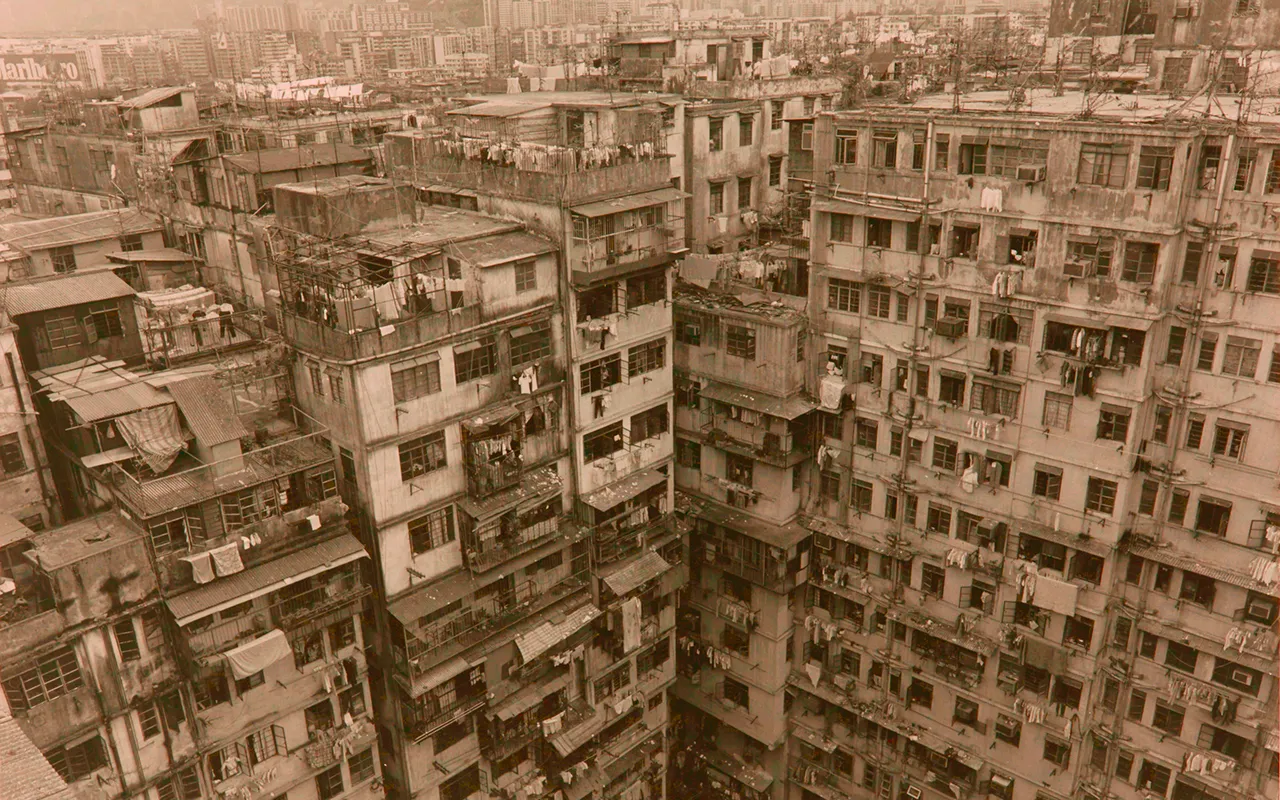
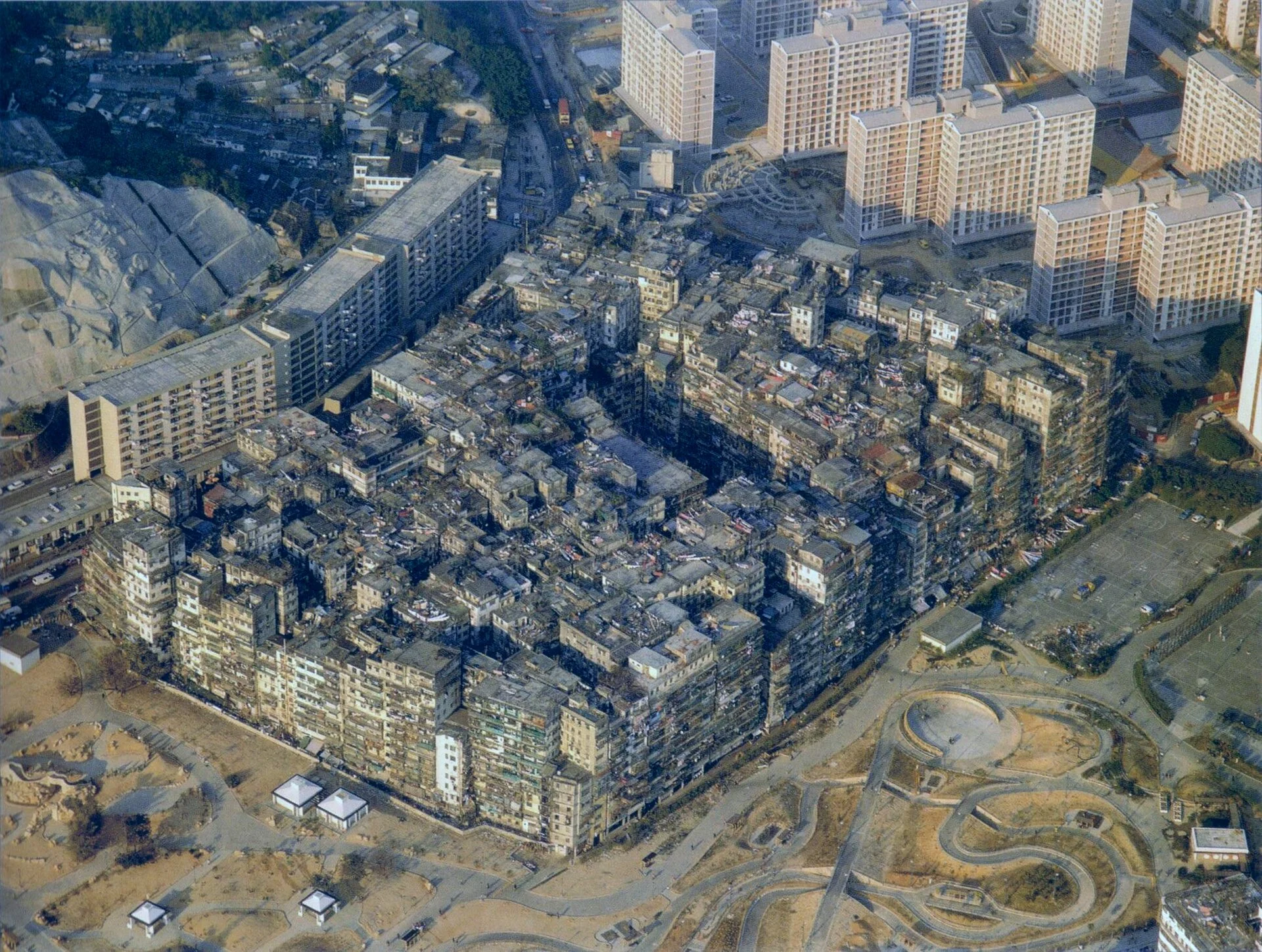
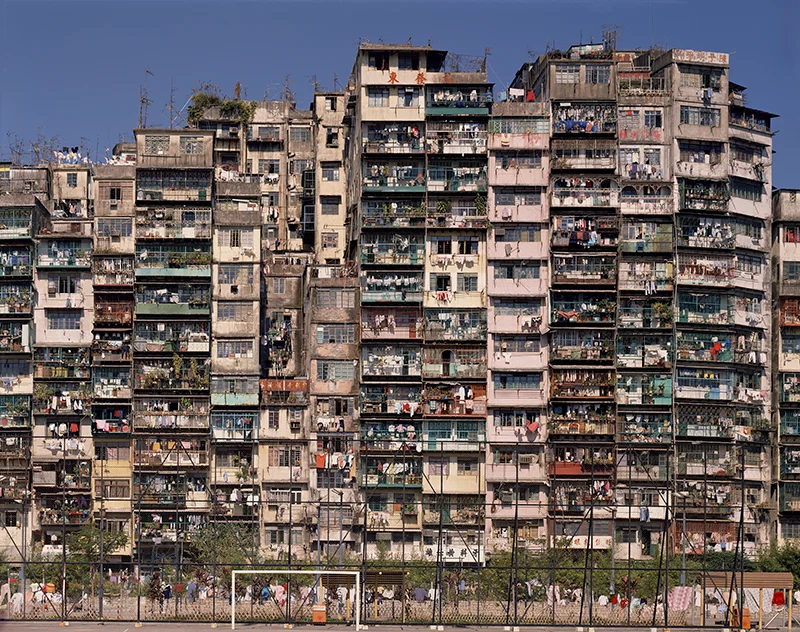
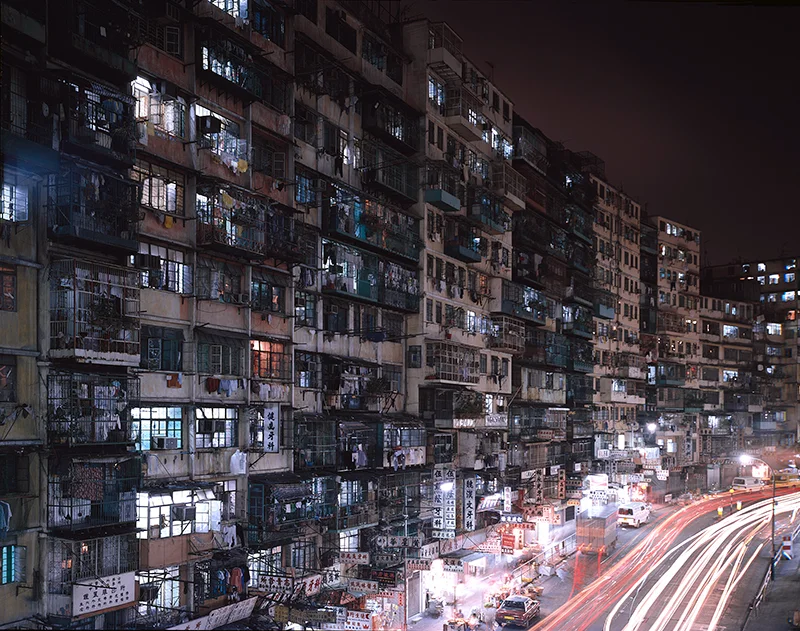
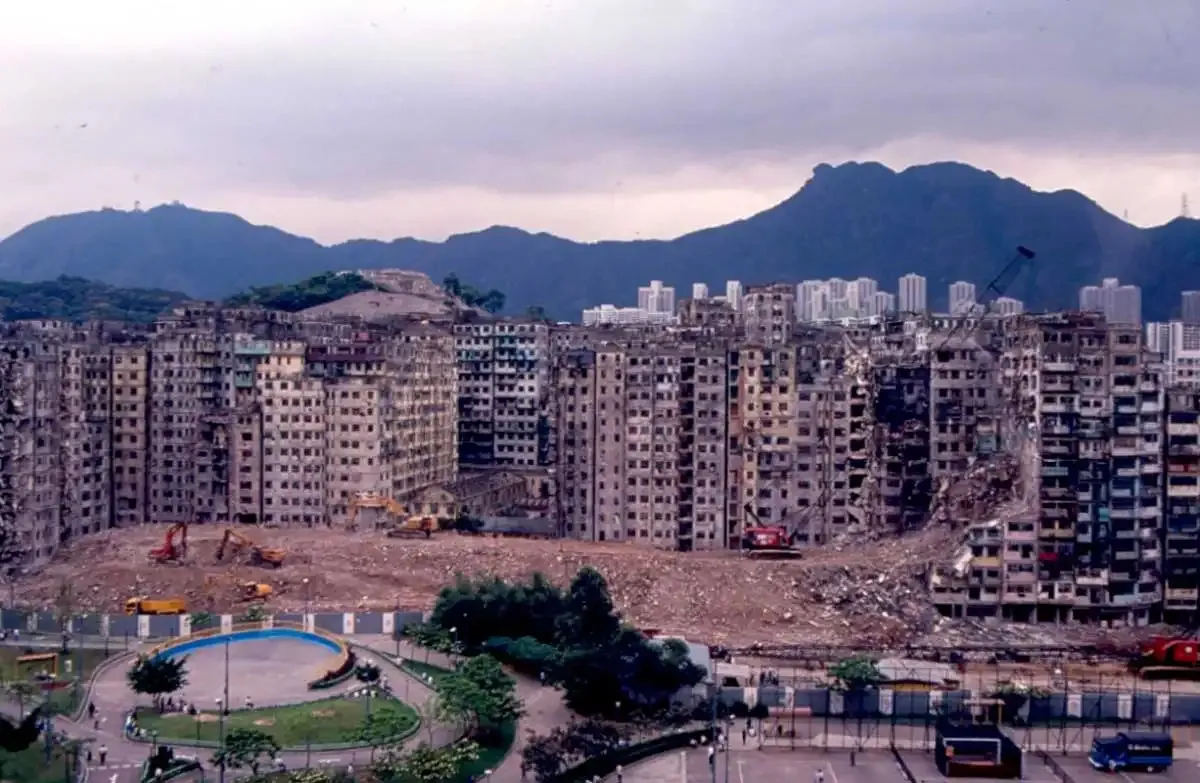
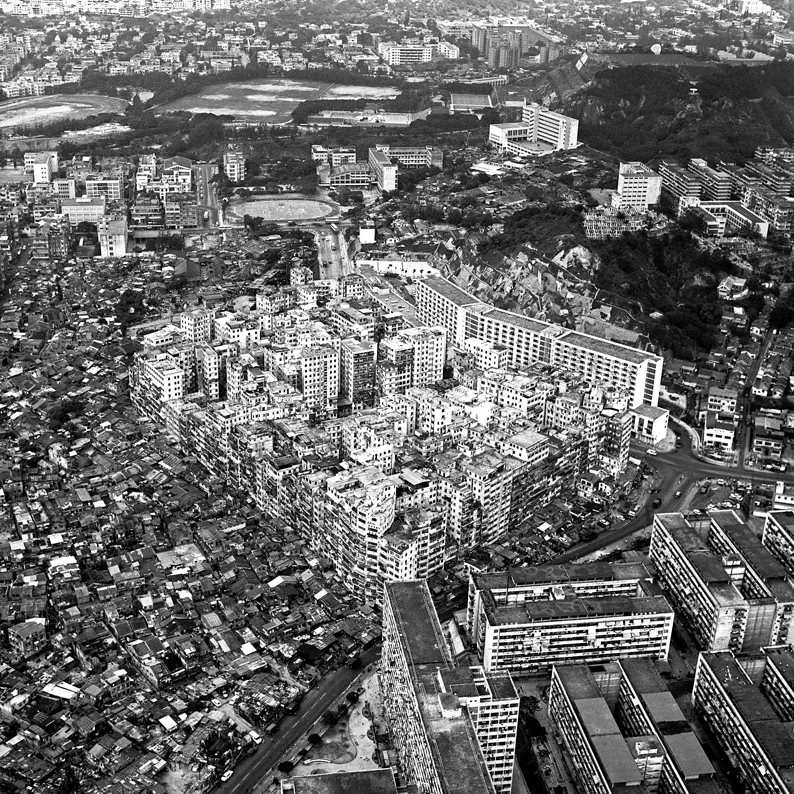
By the late 1980s, Kowloon Walled City had become one of the best-known places in Hong Kong without being a place that most people ever visited. From outside it looked like a single enormous concrete cliff: a block of some 300 to 350 buildings fused together, rising almost within touching distance of the runway at Kai Tak Airport. A government survey in 1987 counted about 33,000 people living inside. The plot they shared measured only about 210 by 120 metres, or roughly 2.6 hectares, a little over six acres. Do the sum and you get a density well beyond a million people per square kilometre, the figure that every popular account of the place repeats, and one of the most extreme concentrations of human beings ever recorded.
The numbers shift depending on who is counting. The area is given as 2.6 hectares, as 2.7, and as 2.8 hectares or about seven acres, depending on whether the surrounding strip is included. The peak population appears as about 33,000 for 1987, as 35,000 in some summaries of 1990, and as 50,000 in popular retellings. Estimates were generally too high and official censuses too low, which is a fair description of the problem. A place with no formal registry could not be counted exactly, and the figure a writer picks often says more about the writer than about the place.
What interests us is less the density than the way it came about. Kowloon Walled City was never built as a slum. It began as a fort, became a diplomatic oversight, turned into a squatter settlement, and ended as a legal and political puzzle that took two governments years to solve. The history makes sense in that order, because each step explains the next.
A salt post and a fort
The site had a long career as a military and administrative post before anyone thought of it as a city. A military outpost is said to have stood there as far back as the Song dynasty, which ran from 960 to 1279, set up to manage the salt trade. Chinese histories call it the Guanfu salt post. A small coastal fort followed in or around 1810, built to deter pirates after Chinese forces left Tung Lung Fort, and a garrison of thirty guards is recorded for 1668.
The wall came later, and it came because of a loss. Hong Kong Island was ceded to Britain under the Treaty of Nanking in 1842, and the Qing government responded by strengthening its position across the harbour. In 1847 the Qing built the walled city and stationed several hundred troops there to bolster coastal defence. It had granite walls, six watchtowers and four gates, of which the south gate was the main one. The Dapeng Garrison was moved in from Dapeng Bay. Outpost, small fort and walled garrison town were successive phases of one site, and the records do not always make clear which phase they are describing.
One more nineteenth-century episode rests on a single record: in 1854 the city was captured by Taiping rebels, and retaken within weeks.
The gap in the lease
The turning point came in 1898. Under the Convention for the Extension of Hong Kong Territory, China leased the New Territories to Britain for 99 years. The walled city was deliberately left out of the deal. China was allowed to keep officials there, on condition that the city remain neutral. At the time its population was about 700.
The arrangement did not last the year. In 1899 British forces entered the city, and the accounts of what happened differ. One version gives 14 April and says the British found the viceroy’s soldiers already gone, leaving only the mandarin and about 150 residents. Another says British forces entered in May, expelled the Qing officials, and left the city largely abandoned for a time. What is clear is that the Qing garrison did not survive 1899 and that the city was nearly empty afterwards. The exact day is not.
What the British did not do was administer the place. After the fall of the Qing in 1912, one account has the city passing under British control, but the weight of evidence says Britain never effectively governed it, and the pattern of later events bears that out. A map of 1915 calls it Chinese Town. In 1933 the Hong Kong authorities planned to demolish it and offered new homes to 436 squatters; the Nationalist Chinese government protested and claimed jurisdiction. The claims were still being made in mid-1937. By 1940 only the yamen, a school and one house remained of the old city.
The war and its aftermath
During the Japanese occupation of Hong Kong, from 1941 to 1945, the walls were pulled down. Most accounts say the stone was used to extend Kai Tak Airport, though one says the walls came down to widen the Kai Tak drainage channel, then called the Lung Tsun River. Either way, they were completely demolished, and by 1945 the city had lost the feature that defined it.
The years after the war settled its character. In 1946 Nationalist officials drafted a plan to reinstate Chinese administration, and by 1947 about 2,000 squatters had settled inside the old footprint. In 1948 an attempted eviction went badly, after which the British adopted what came to be called a hands-off policy. China formally asserted jurisdiction on 8 January 1948, and the British Foreign Office advised accepting the principle of Chinese jurisdiction so long as China did not exercise it. The result is easy to state and hard to overstate: a place with two governments laying claim to it, and neither one in charge.
Squatters arrived in numbers after 1949, among them refugees from the south of China. In January 1950 a fire destroyed more than 2,500 huts, affecting about 3,500 families and some 17,000 people. Arson was suspected. The settlement was rebuilt, and then rebuilt upwards.
The jurisdiction question was tested in 1959, when a murder trial established that Hong Kong had jurisdiction, and the British and Chinese governments disputed who should handle the case. How much changed on the ground is unclear. The most reliable reading is that the courts accepted jurisdiction in principle while the police and administration stayed largely absent in practice.
Building upwards
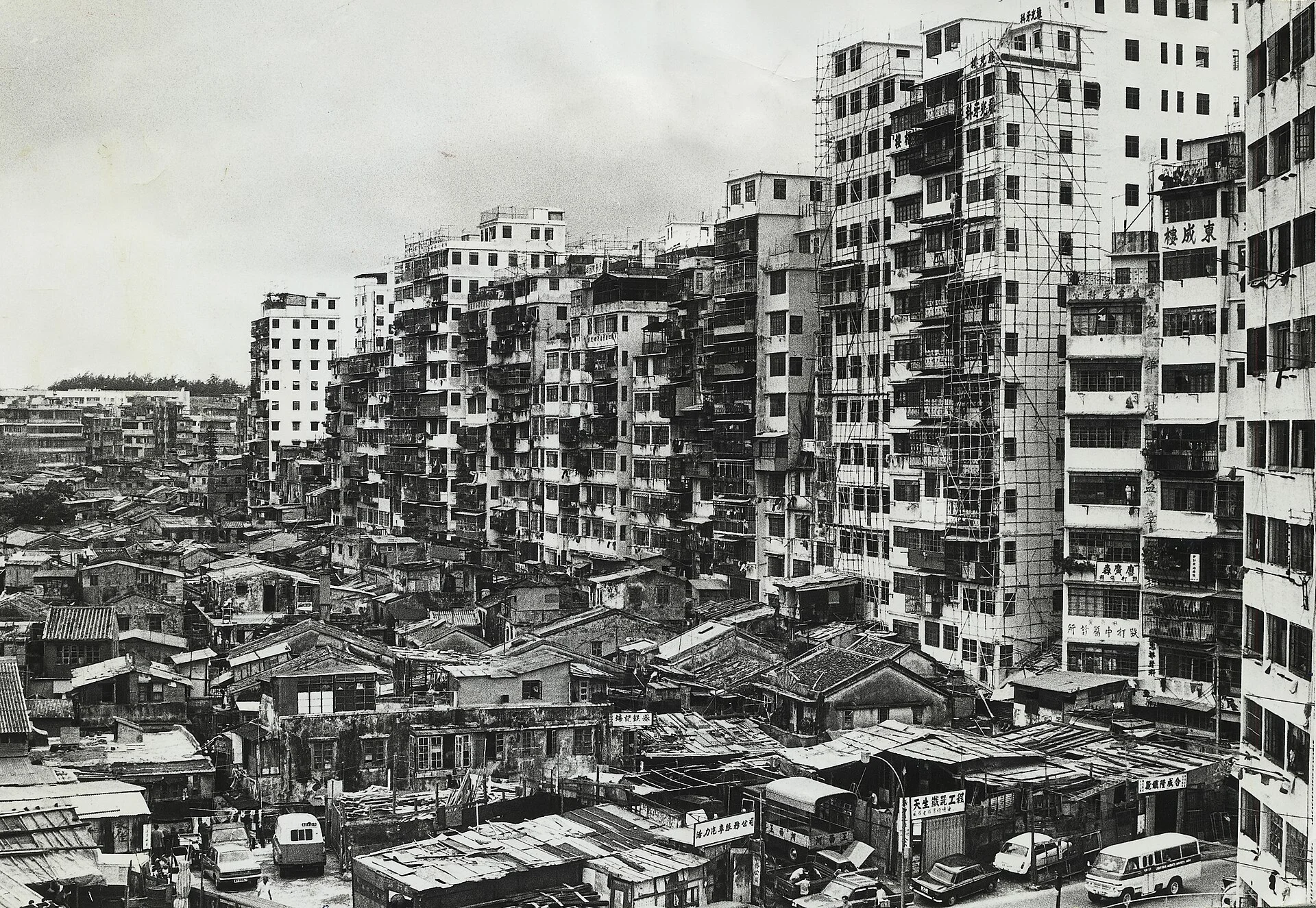
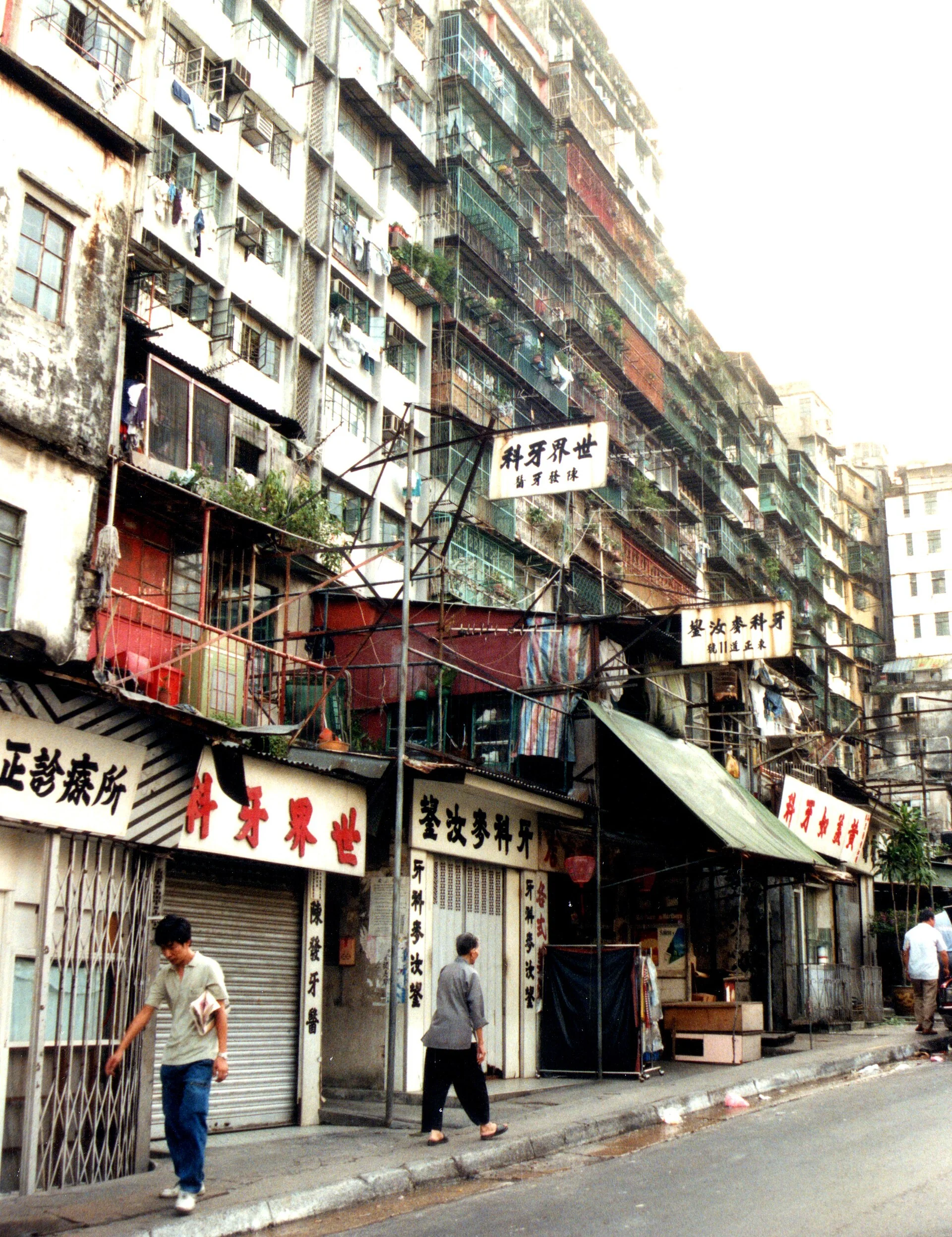
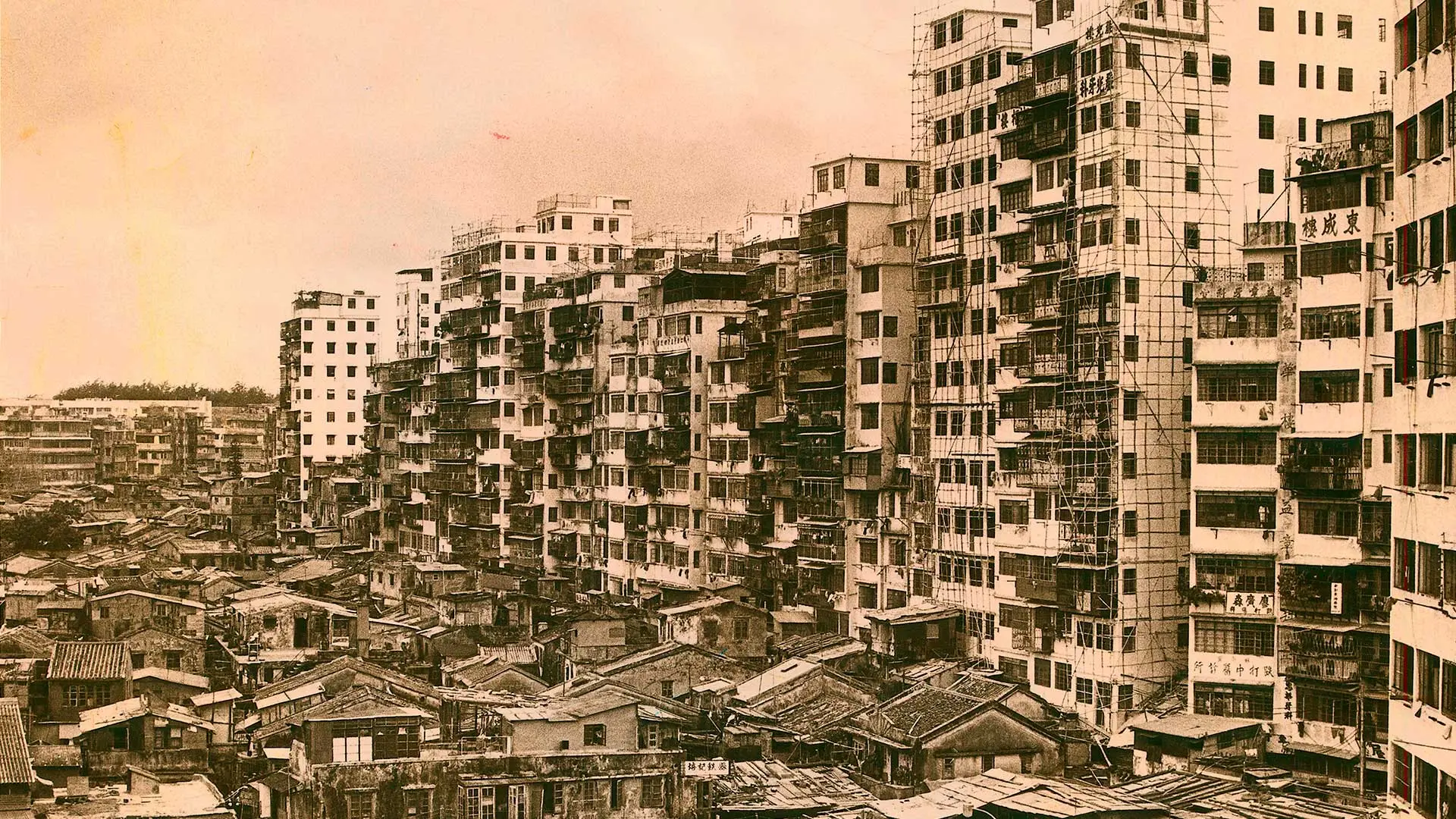
The construction boom came in the 1960s and 1970s, when the squatter huts gave way to concrete buildings. They went up without regulation, on poor foundations and with few utilities. Height was capped at around 13 or 14 storeys by the flight path into Kai Tak, which lay about 800 metres to the south, and most buildings of the period reached ten storeys or more. Only the yamen stayed low.
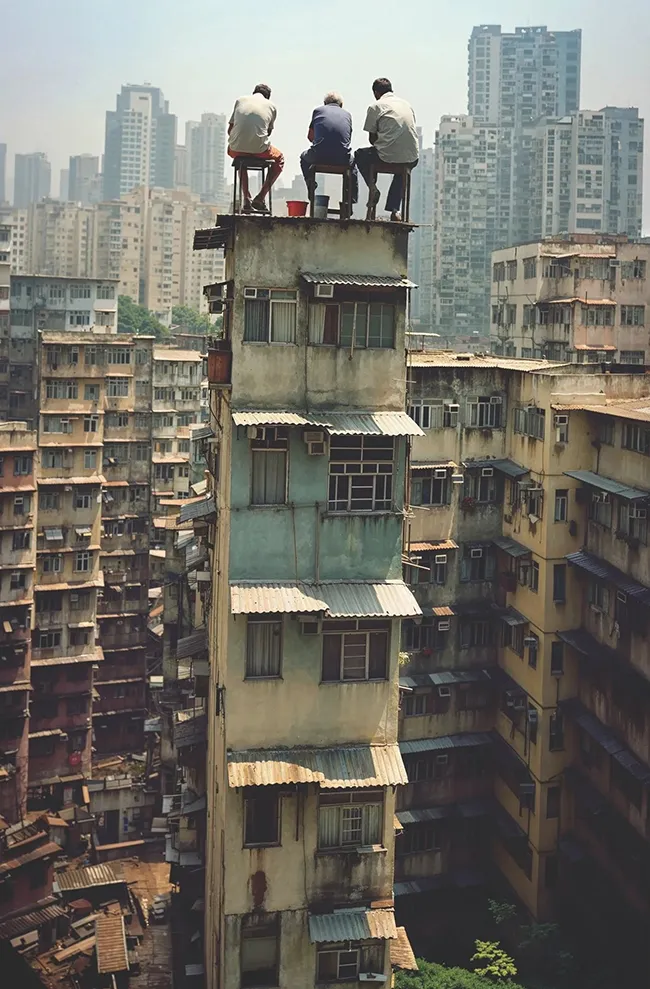
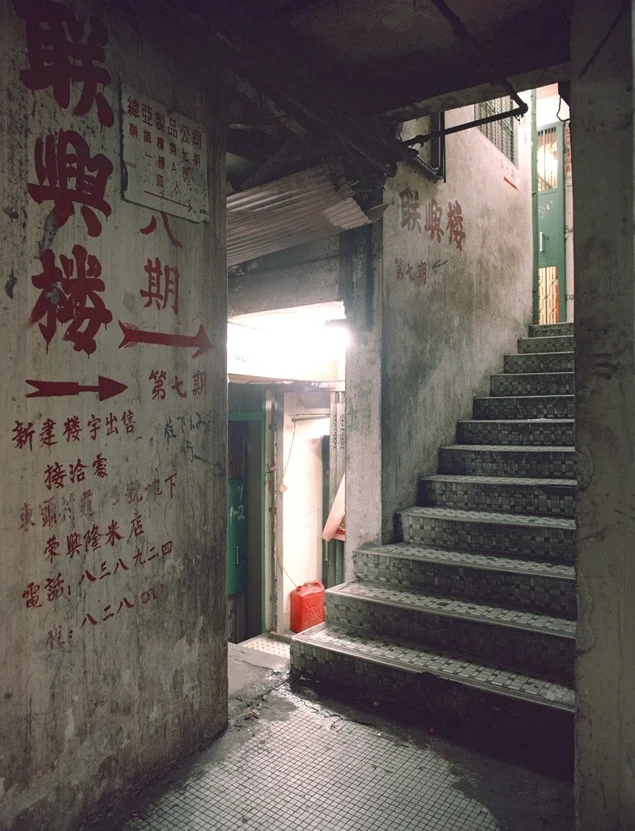
Picture the arrangement from above. Where the old fort had been a tidy rectangle behind granite walls, the new city was a solid block with no courtyards worth the name, no streets in the ordinary sense, and almost no gap between one roofline and the next. Each building leaned on its neighbour, and each new storey was added on top of whatever was already there. No architect drew the whole, and no authority approved it. The skyline, such as it was, simply accumulated.
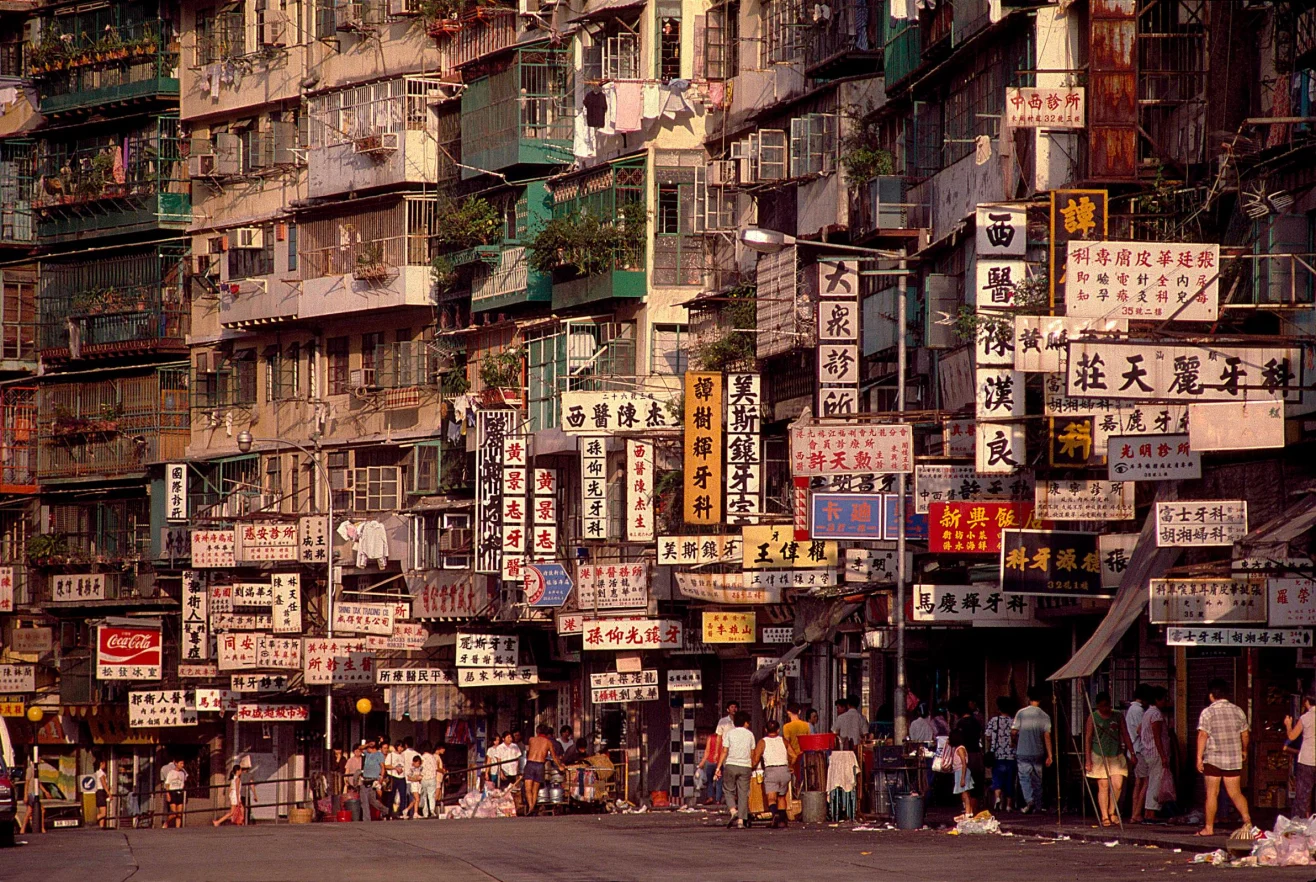
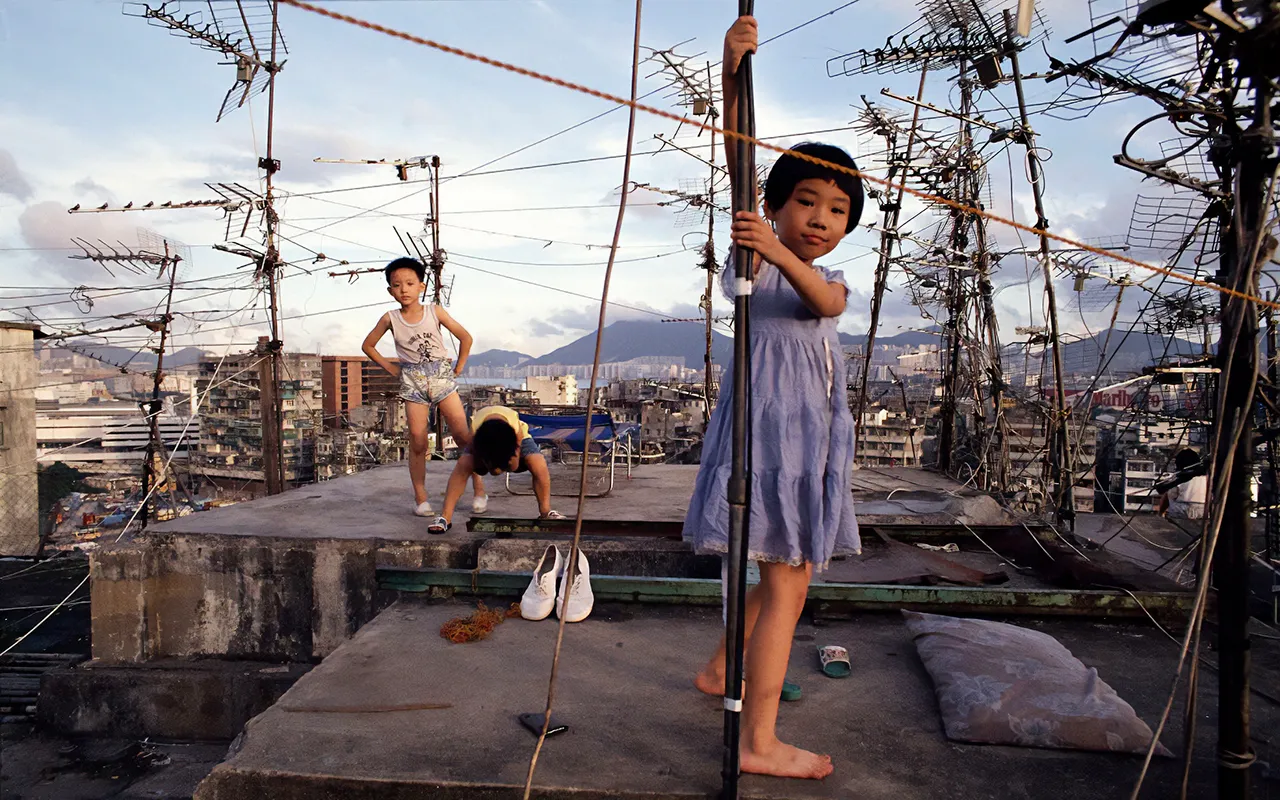
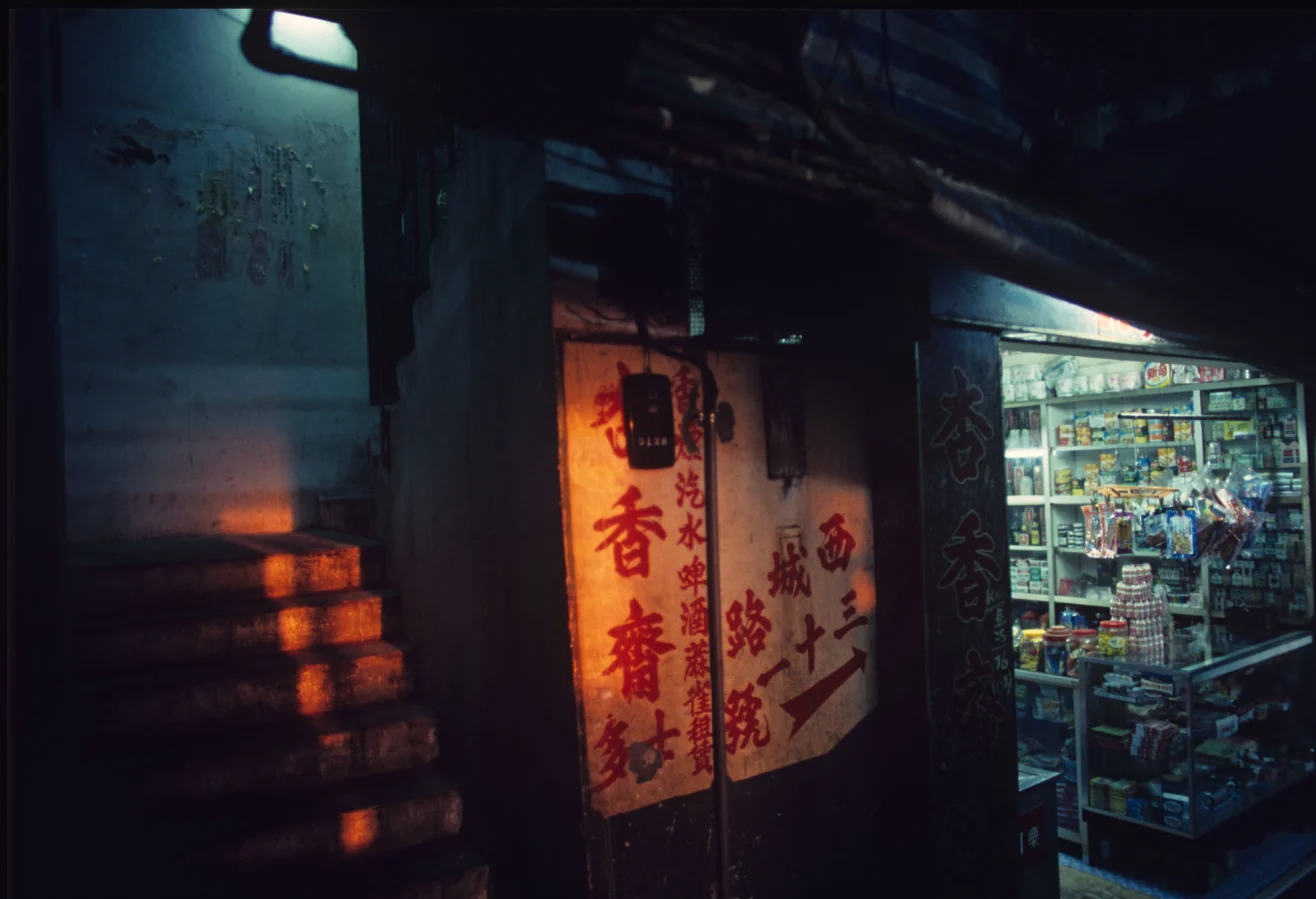
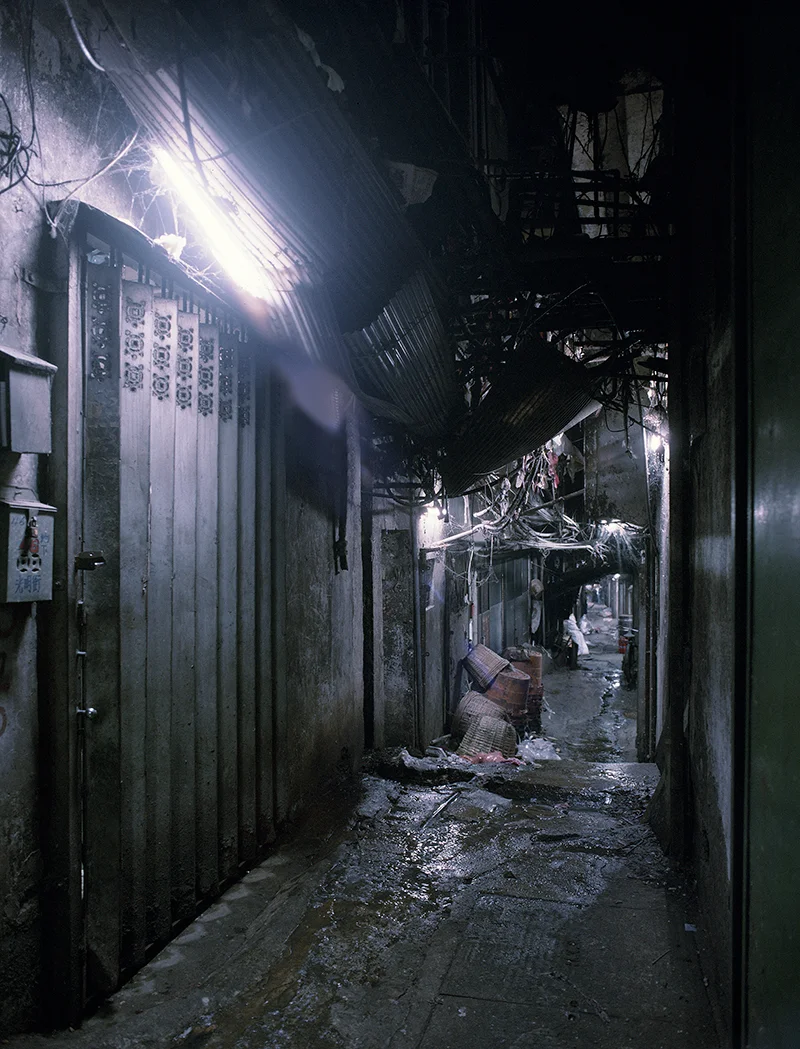
The result was a single mass of linked buildings. Alleys were often one or two metres wide, with poor lighting and drainage. Upper-level walkways were so extensive that a person could cross the city from north to south without touching the ground. The roofs carried antennas, washing lines, water tanks and rubbish, and ladders joined one rooftop to the next. Fluorescent tubes lit some of the streets, because sunlight rarely reached the lower levels. The Cantonese nickname Hak Nam, which translates as City of Darkness, comes from this.
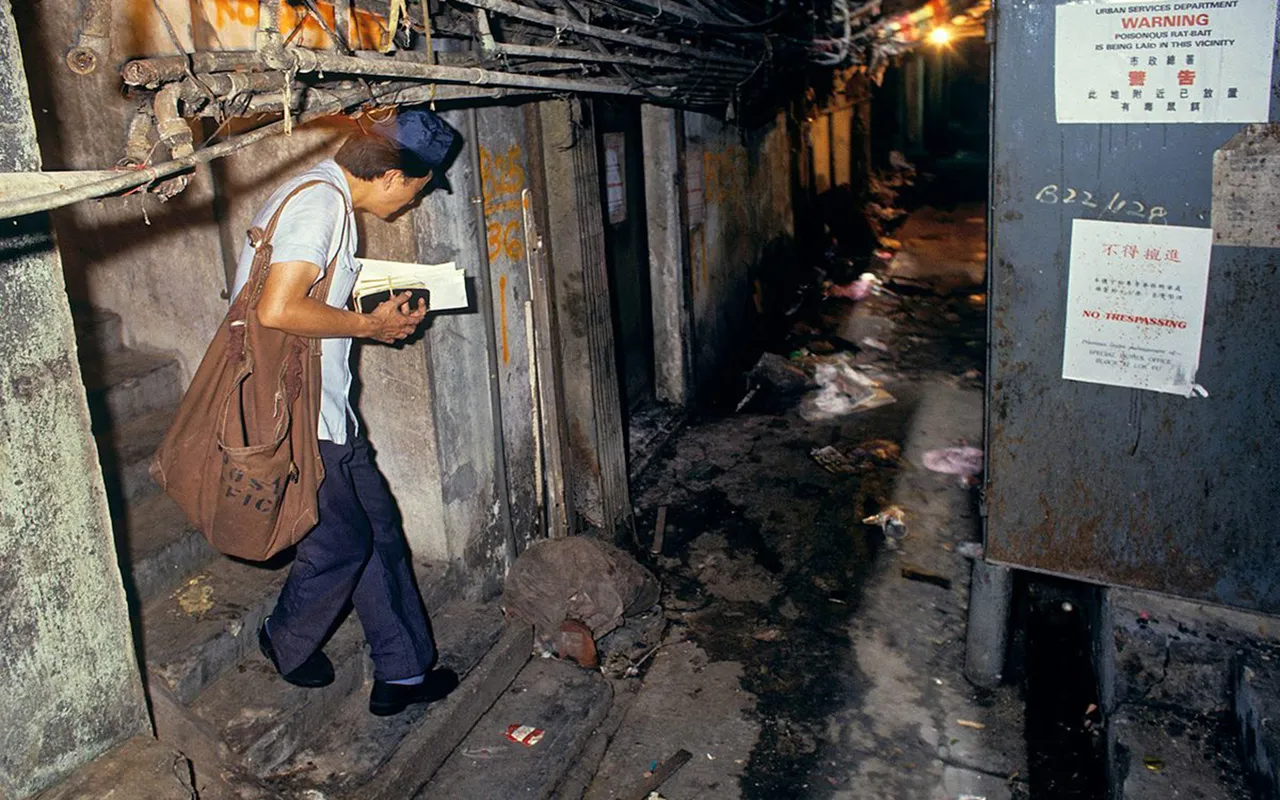
The photographers who worked there describe it differently from the legend. Greg Girard, a Canadian photojournalist, and Ian Lambot, a British architectural photographer, spent about five years from 1987 photographing it, and spoke about the experience at an Asia Society Hong Kong event in 2013. Girard said it never felt crowded: the alleys were busy but not packed. Many apartments had no window onto light or air, so residents often had to walk down several floors and through a series of alleys to reach daylight. Lambot said he saw little evidence of the triad and drug activity that was so often reported, and that most residents seemed happy despite poor conditions. The place, he said, had a particular quality.
Shabby, almost squalid dignity.
Ian Lambot, photographer, speaking at Asia Society Hong Kong, 2013
It took time to earn that view. Early media coverage had been sensationalist, and residents often shut their doors on people carrying cameras. Attitudes eased after the demolition was announced. Girard gained access by giving prints to people he had photographed earlier, which led to introductions to neighbours and businesses. Doors were often open, Lambot recalls, and he could walk into shops, clinics, schools and factories; only one place refused him. Their book City of Darkness: Life in Kowloon Walled City appeared in 1993. It drew on interviews with and photographs of more than thirty people who lived or worked in the city, and lets residents tell their stories in their own words. A later edition, City of Darkness Revisited, followed in 2014, with unused images and essays on the city’s history and myths.
What went on inside
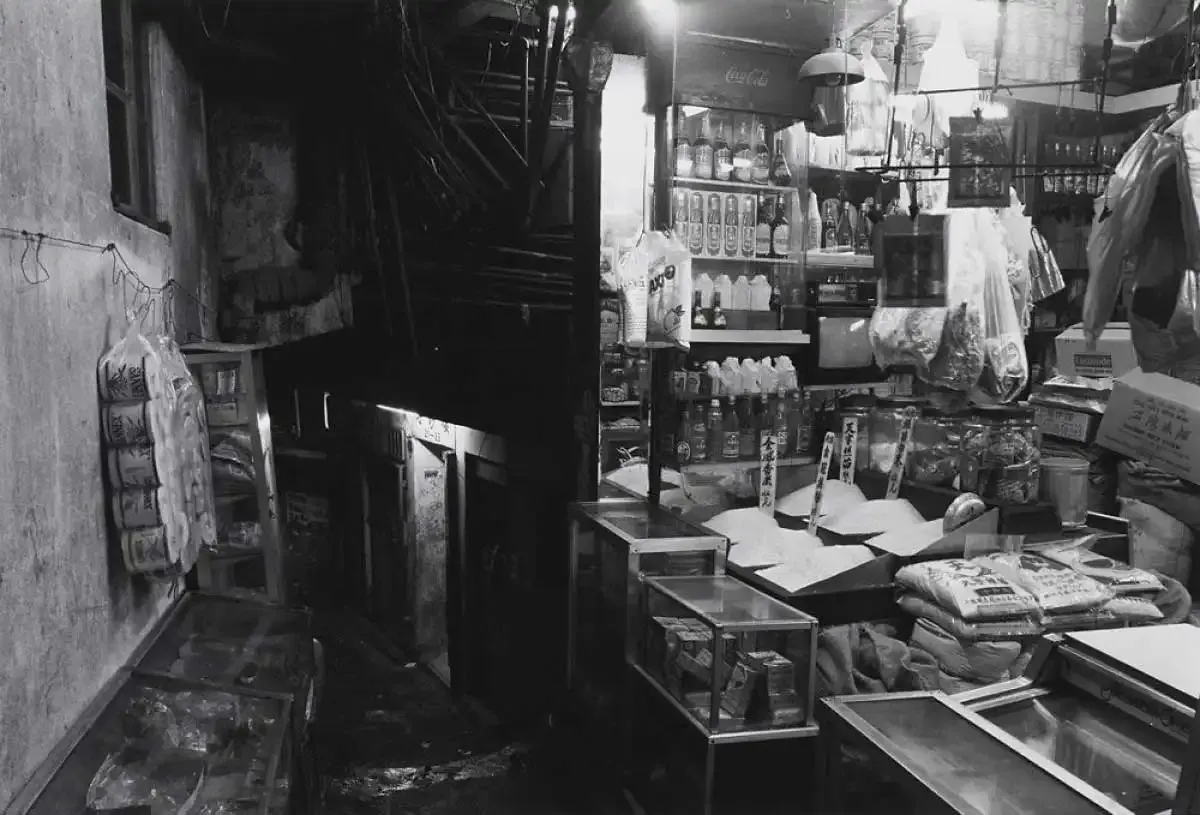
The city was a place of work as well as housing. Small factories made fish balls, roast meat, parts for plastic dolls and golf balls, with some of the goods sold across Hong Kong and exported. Charities, religious groups and welfare organisations operated inside, and the yamen served as a social centre for tea, television and calligraphy classes. There were two temples, the Fuk Tak and Tin Hau temples, which combined Buddhist, Taoist and animist practices.
The medical trade was unusual. Hong Kong did not recognise Chinese medical qualifications, and so the city became home to many unlicensed dentists and traditional Chinese medicine clinics. Unlicensed doctors and dentists worked without prosecution. Low-cost food stalls drew customers from outside the walls.
Services were improvised. Eight municipal pipes supplied the whole structure, and the Hong Kong government provided water and mail delivery. Water was pumped up to rooftop tanks, which needed electricity, and residents took turns conserving power so that everyone could have water. One postman who worked there for more than a decade remembered being shocked by the exposed wires and by rats the size of cats, but also recalled the friendships fondly.
It is easy to forget, with so much attention on the wiring and the damp, how ordinary much of this was. People went to work, cooked, argued, raised children and kept their neighbours’ keys. The oddity lay in the setting and not in the routine: a normal life carried out in a place that official Hong Kong could not quite see, and that rarely troubled to look.
Family life went on above the alleys.
Families were tight-knit, wives ran households, grandmothers looked after children, and rooftops became meeting and play spaces. Children played up there, and invitation-only pigeon races were held on the roofs.
Triads and the police
None of that removes the other half of the reputation. From the 1950s to the 1970s, triad societies such as the 14K and Sun Yee On controlled brothels, gambling and opium dens in the city. Police entered only in large groups, and were reportedly known to cooperate with the triads. A US newspaper in 1967 called it a tiny enclave of sin and filth. The record on specific crimes is general and mostly undocumented, so we leave it there.
The police operations of the 1970s are better recorded. More than 3,500 raids were carried out in 1973 and 1974, with over 2,500 arrests and over 1,800 kilograms of drugs seized, and more than 3,000 police entered the city to break triad influence. Crime then fell, with public support, especially from younger residents, and by 1983 the district police commander said it was under control. Conditions improved after the raids and some renovations.
The photographers’ accounts and the police figures can both be true. A place can hold tens of thousands of ordinary households and a criminal economy side by side, and the balance between them can change over time. There is simply no way to measure it.
The decision to clear it
By the 1980s the place was a problem for both governments. The Sino-British Joint Declaration of 1984 laid the groundwork for the handover of Hong Kong, and in a joint decision announced on 14 January 1987, Hong Kong and China agreed to demolish the city and turn the site into a park. On 10 March 1987 the site was formally handed to the Urban Council. About 400 Hong Kong Housing Department officials cordoned it off and surveyed households, followed by six months of surveillance to obtain an accurate census. Compensation terms were kept secret to deter people from moving in to claim payments.
The money was substantial. Compensation came to roughly HK$2.7 billion, about US$350 million, shared among about 33,000 residents and businesses, which works out at around HK$82,000 per person. Reactions were mixed. Some residents saw an escape from squalor; others lost a close community.
Forced evictions of holdouts ran from November 1991 to July 1992, when riot police cleared the remaining residents, by which time about 33,000 had moved out. Demolition began on 23 March 1993, and by April 1994 the buildings were gone. The city was used as a filming location for Jackie Chan’s Crime Story in 1993, with scenes of real building explosions during the demolition. A group of Japanese explorers had been given a week to draw a map of the city before it came down.
The park
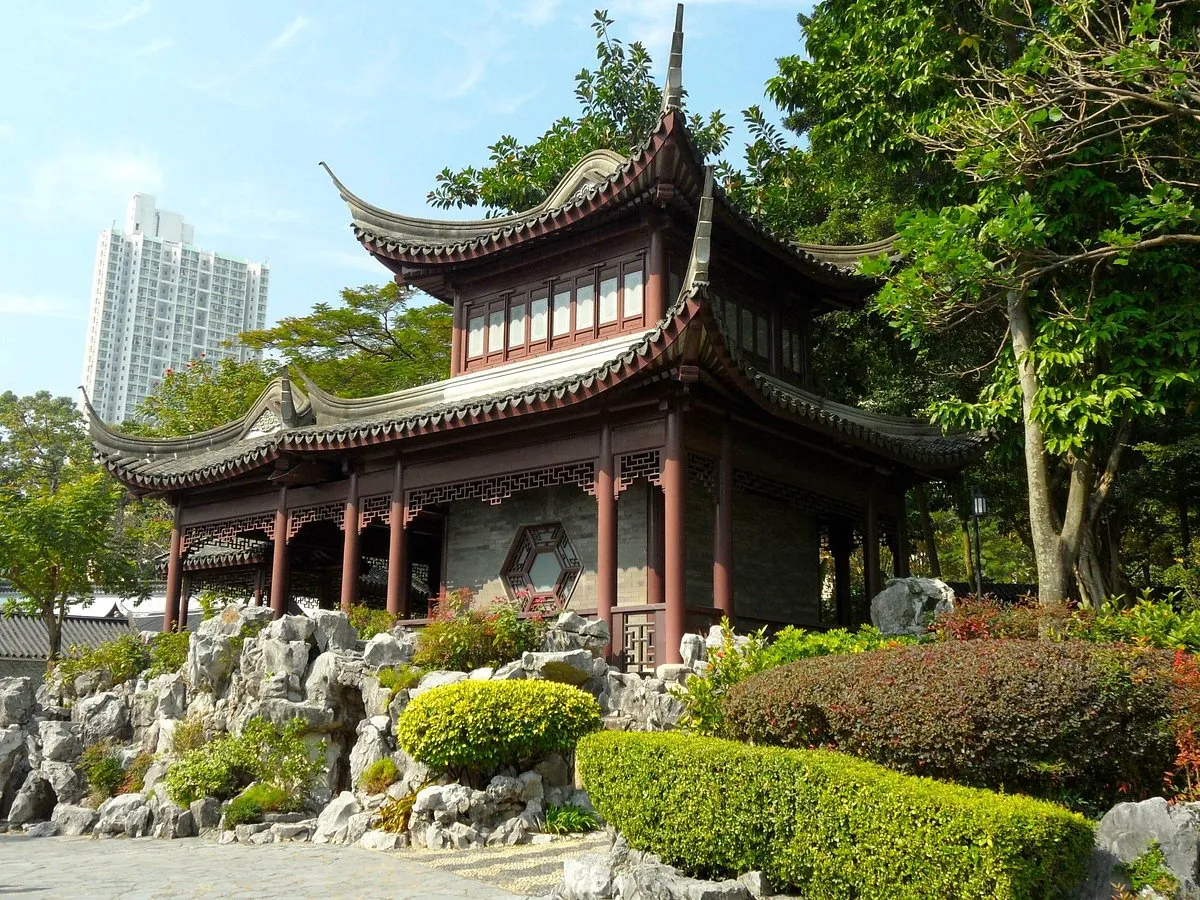
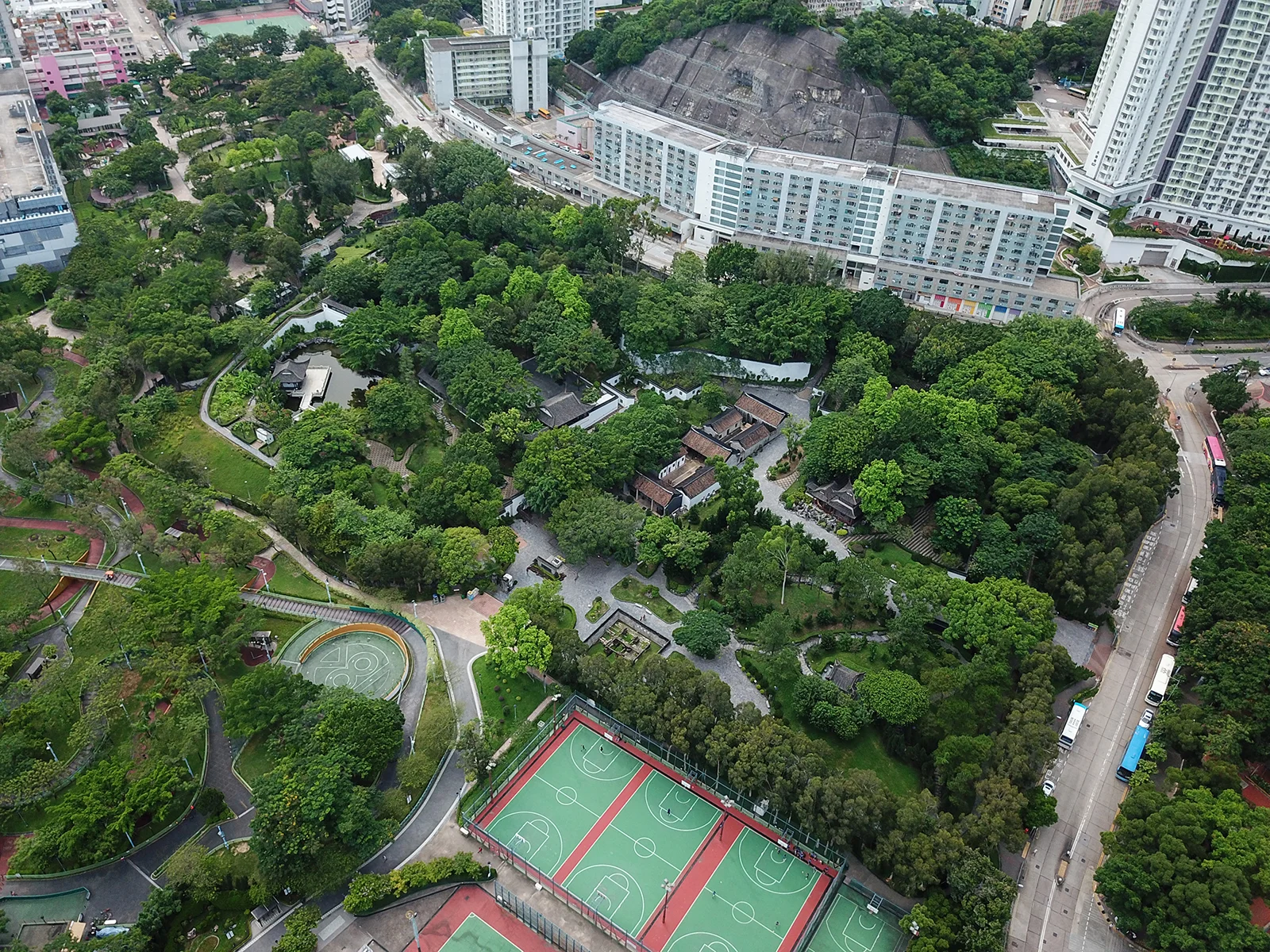
Kowloon Walled City Park was built on the cleared site. It covers about 31,000 square metres, cost HK$76 million, and was completed in August 1995. Governor Chris Patten opened it on 22 December 1995. Its design follows the gardens of early Qing Jiangnan, with eight landscape features, and the restored yamen is its centrepiece. Paths in the park are named after former streets of the city. The design won an award from the Central Society of Horticulture of Germany.
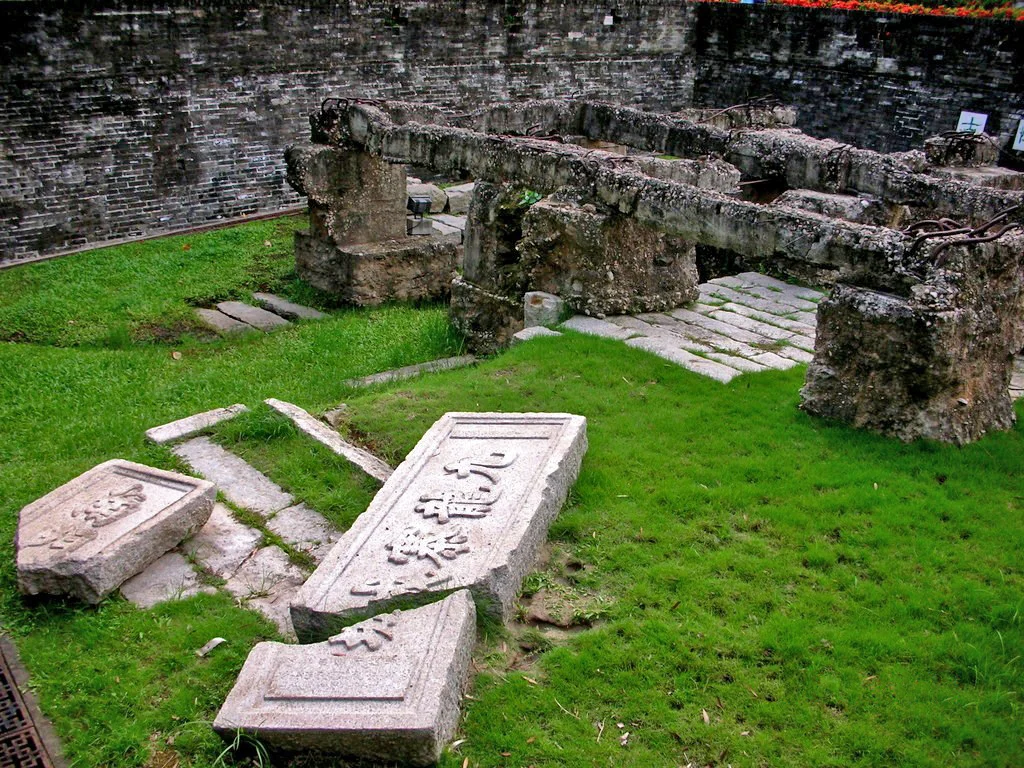
The clearance revealed more of the old fort. Archaeologists found the foundations of the east and south gates and their stone-slab passageways in good condition, along with two granite tablets at the south gate’s original site, one inscribed South Gate and the other Kowloon Walled City. Residents had buried the plaques in the soil during the Second World War to stop the Japanese destroying them, and old residents guided the excavation. The finds also included wall foundations, a drainage ditch, a stone-slab street and three cannons. The excavation took place in 1994, and the south gate remains were declared a monument on 4 October 1996, at the same time as the yamen.
The former yamen, the old Kowloon Patrol Office, houses exhibition halls, six in all. An exhibition called Thousand Faces of a Small City opened there on 19 April 2009, using models, images and sound. A bronze model of the city as it stood before demolition faces the yamen. Exhibitions change, so anyone planning a visit should check the current opening information.
The yamen has its own history. In the 1920s a Christian group used it as an old people’s home, and by 1940 it stood among the few survivors of the old city, alongside a school and one house.
The afterlife
The city’s reputation has outlived it. Robert Ludlum’s novel The Bourne Supremacy, published in 1986, uses it, and William Gibson depicted it in his Bridge trilogy. On film it appears in Brothers from the Walled City from 1982 and Bloodsport from 1988, and Long Arm of the Law from 1984 was filmed inside. Batman Begins is often said to have been inspired by the city, though the claim comes from commentators and not from the filmmakers. Twilight of the Warriors: Walled In, a film adapted from the comic City of Darkness, won Best Film in a recent year’s awards.
The memoirs are better documentation. Jackie Pullinger’s Crack in the Wall, from 1989, describes drug addicts among the residents, and Martin Booth’s Gweilo, from 2004, recalls Hong Kong childhood nearby. The photographic books by Girard and Lambot are probably the closest thing to a record from the residents’ side.
Architects and urban historians have taken an interest too. The city is studied as an example of organic urbanism, in which necessity and not regulation shaped the built environment. Ian Lambot has argued that the close proximity of living, work and leisure builds community, in contrast to the separation favoured by many planners. Another speaker at the same Asia Society event described the city as an inorganic object that had grown organically. These are arguments and not findings, but they explain why a demolished slum is still discussed in planning circles.
Visiting
Kowloon Walled City Park is a public park in Kowloon City, and it is the place to go. The south gate relics are open for public viewing in their original location in the park. The yamen is there, and so is the bronze model. The garden follows the Jiangnan style. Opening hours change, so check a recent official source before you travel.
The old district around the park is changing, with the Urban Renewal Authority running projects in Kowloon City for buildings more than 55 years old. Those plans concern the neighbourhood and not the walled city itself, and they may have moved on since.
Nothing remains of the residential buildings. If you want to see the city as it was, the best resources are the photographs by Girard and Lambot and the interviews in their books. The park cannot show it, but it does show the fort and the yamen that were there before the squatters came.
Conclusion
Kowloon Walled City is best understood as the result of a gap. A fort was left out of a lease in 1898, neither Britain nor China chose to govern it, and a settlement grew into the space between them. At its peak, tens of thousands of people lived in a place the law reached only partly. Some of them were criminals and some were refugees, and most, by the testimony of the photographers who knew it, were ordinary families, workers and shopkeepers.
Numbers and some dates remain loose: the area, the peak population, the exact events of 1899, the reason the Japanese removed the stone, the compensation total. The main outline is not in doubt. The two governments agreed to demolish the city in 1987, it was cleared between 1991 and 1994, and a park opened in 1995.
There is a pleasing irony in the ending. The fort that gave the place its name was levelled in a war, the settlement that replaced it was levelled by agreement, and the garden that now fills the space turns out to rest on the older foundations, which the diggers uncovered in good order beneath the rubble of everything built since.
What survives is small: a gate, a yamen, two granite tablets and a model. The surrounding garden is quiet, and visitors who walk through it are standing where, a few decades ago, a canyon of concrete stood. That contrast is why the place still draws interest, and why it rewards a reading of the plain historical record alongside the more dramatic stories.
Did you know?
- Kowloon Walled City was left out of the 1898 lease of the New Territories, and neither Britain nor China governed it in practice.
- A 1987 government survey counted about 33,000 residents in a plot of roughly 210 by 120 metres.
- Buildings were limited to about 13 or 14 storeys by the flight path to Kai Tak Airport, about 800 metres to the south.
- Police carried out more than 3,500 raids in 1973 and 1974, according to Wikipedia.
- Hong Kong and China announced the decision to demolish the city on 14 January 1987.
- About HK$2.7 billion in compensation was paid to roughly 33,000 residents and businesses.
- Demolition began on 23 March 1993 and ended in April 1994.
- Kowloon Walled City Park opened on 22 December 1995 and cost HK$76 million.
- Two granite tablets reading South Gate and Kowloon Walled City were found at the south gate site.
- The photographers Greg Girard and Ian Lambot worked in the city for about five years from 1987.