
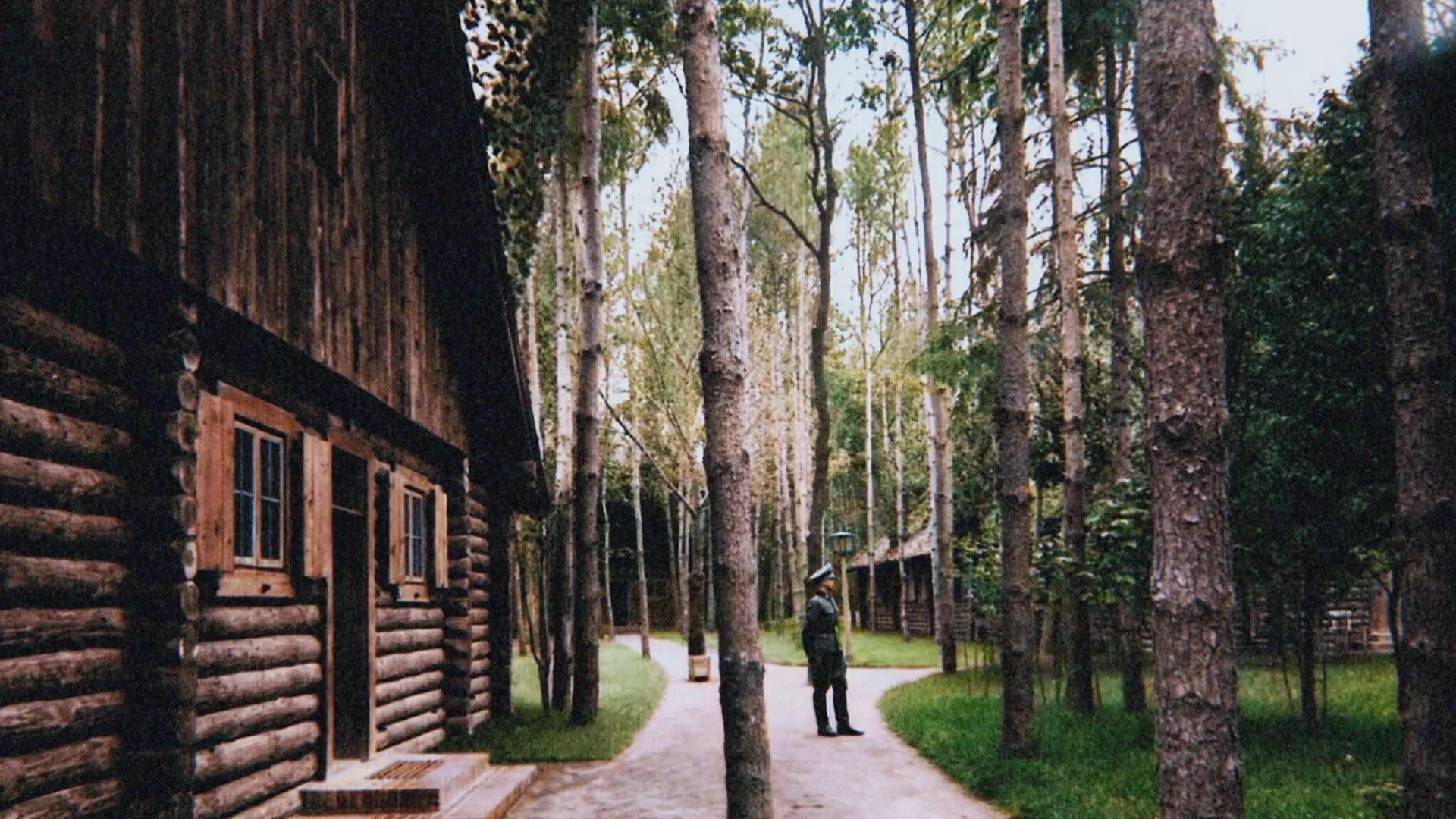
The headquarters nobody remembers
When people think of Hitler’s field headquarters, they usually think of the Wolf’s Lair in East Prussia, the place of the bomb plot of July 1944. It is the one that became famous, partly because of the plot and partly because its ruins in Poland are easy to reach and have been open to visitors for decades. Yet in the summer of 1942, when Germany’s offensive on the Eastern Front reached its greatest extent, Hitler did not direct it from East Prussia. He moved roughly nine hundred kilometres to the south-east, into a forest in Ukraine, and he stayed there for months.
That headquarters was called Werwolf. It was the easternmost headquarters Hitler used in person, and he lived and worked there at one of the decisive moments of the war. It is also set in a region that suffered some of the worst of the German occupation, and the story of the site cannot honestly be separated from that. The generals, secretaries and cooks who passed through the forest were living a short drive from places where tens of thousands of civilians were being killed.
A note on the name. Sources spell it both “Werwolf” and “Wehrwolf”, and the two are used interchangeably in English and Ukrainian writing. The word means “werewolf”. It echoes the Wolf’s Lair, and several of Hitler’s headquarters had wolf-themed names, a nod to his private nickname “Wolf”. The names were chosen to sound hard and secret, and neither tells you anything about where the site was.
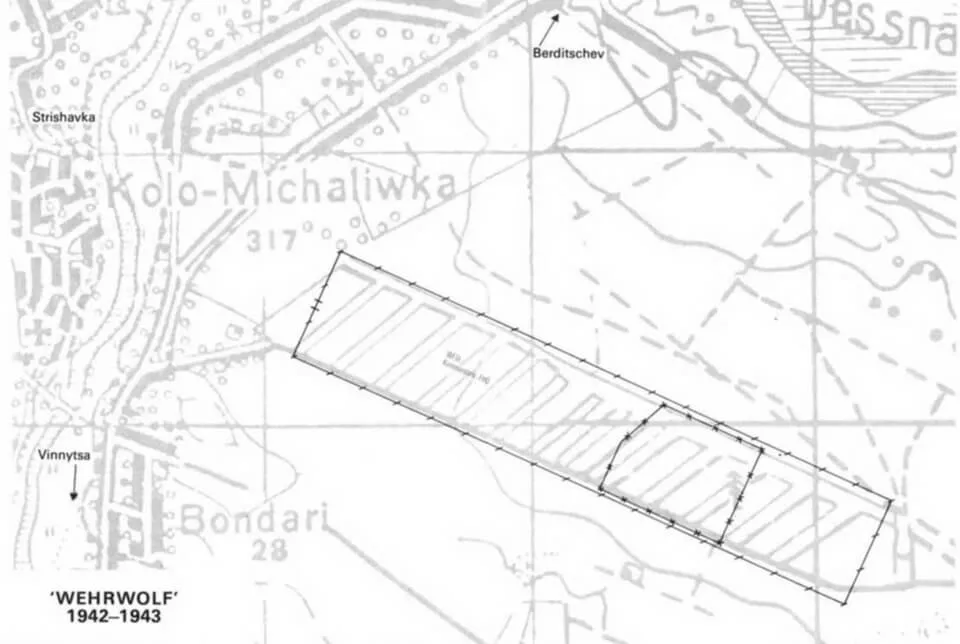
Why Vinnytsia?
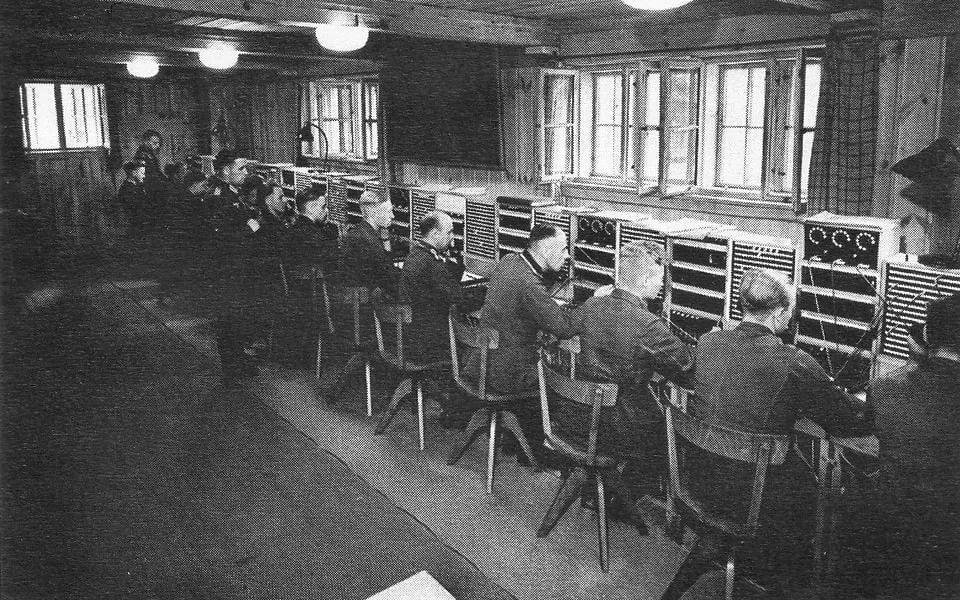
The reason for the move was simple geography. The invasion launched in Operation Barbarossa in June 1941 had carried German armies deep into the Soviet Union, and by early 1942 the front stood hundreds of kilometres east of the old border. East Prussia was a long way from the fighting. A headquarters in central Ukraine would put Hitler, his operations staff and his communications within reach of the southern armies, which were about to be given the main role in the summer offensive of 1942.
Vinnytsia itself offered what a headquarters needs. It sat on a highway to Kyiv, it had a rail connection, and it was far enough behind the front to be considered safe in 1942. There was also an airfield at Kalinovka, about 20 kilometres away, which allowed a regular air link with Berlin. One account describes a daily three-hour flight, and another describes a train from Berlin-Charlottenburg that took about 34 hours to reach a station at the site, reportedly named “Eichenbein”. The forest itself provided cover. Pine woods are good at hiding low buildings from the air, and the Germans used the same trick at every one of their field headquarters.
Building Oak Grove
The site lies in a pine forest on the highway to Kyiv, about 12 kilometres north of Vinnytsia by one count and 8 kilometres by another, between the villages of Stryzhavka and Kolo-Mikhailovka. Organisation Todt, the state construction agency, built it under the secret name Anlage Eichenhain. The start date is uncertain. One source gives 1 November 1941, and another says the main work took place between December 1941 and June 1942.
Most of the labour came from Soviet prisoners of war, with some local workers. This is linked to one of the most disturbing claims about the site: that the roughly 4,000 workers who built it were shot when the work was done and buried in a mass grave. The museum’s own panels are reported to say that records support this, and the Wikipedia entry traces it to a 2018 documentary. I could not find the underlying records, so it is best read as a widely repeated account rather than as an established fact. Whatever the exact number, the use of prisoners of war as forced labour in this region is well documented. The Harvard commentary on the museum notes that the Germans ran 18 camps for Soviet prisoners in the oblast, and the conditions in such camps were lethal.
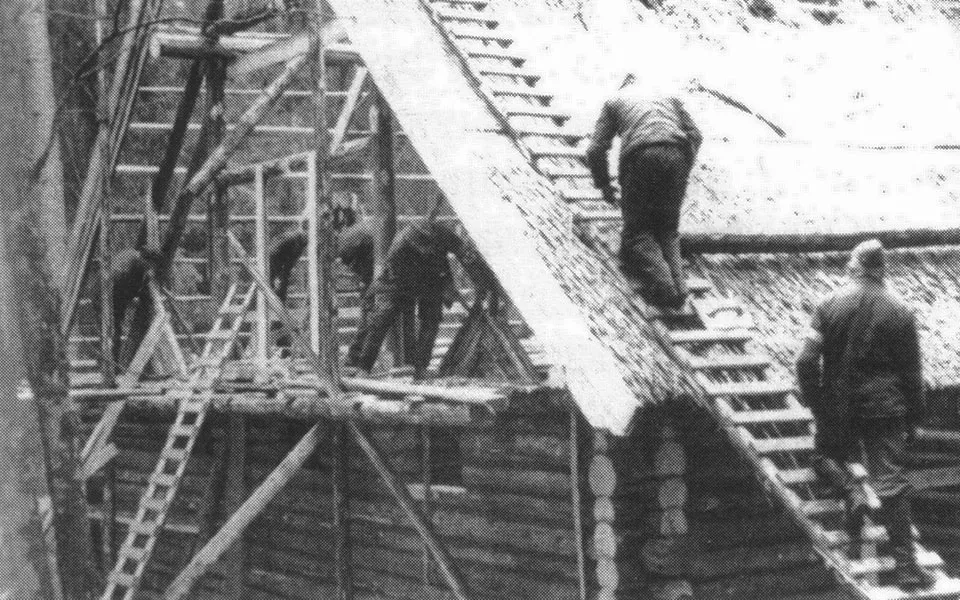
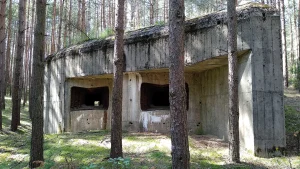
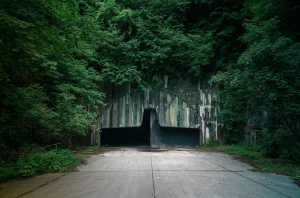
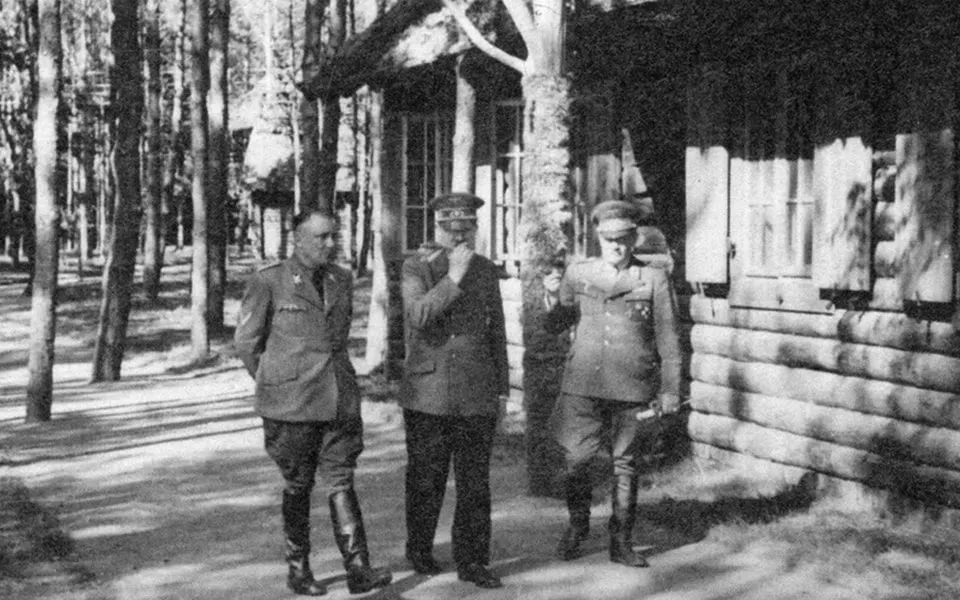
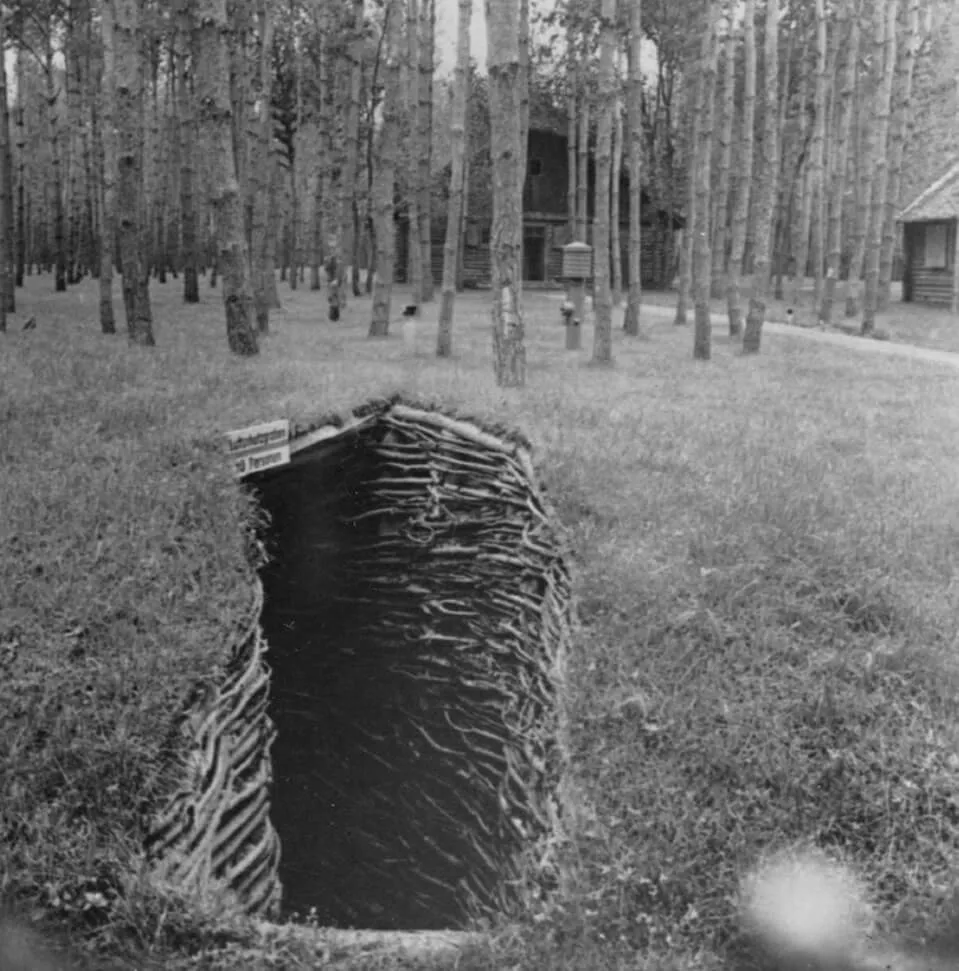
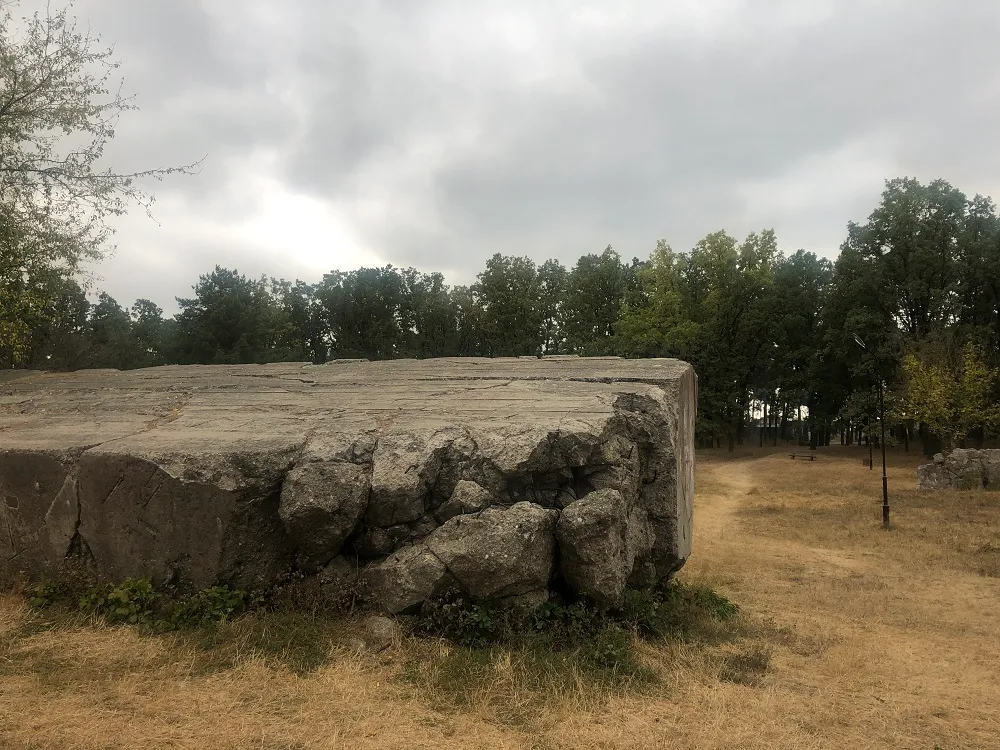
The layout was designed for security and comfort in equal parts. Hitler’s own quarters were a modest log cabin around a private courtyard, with a concrete bunker of its own. Around it stood wooden cottages and barracks, and the sources disagree on how many. One describes about 20 wooden cottages and barracks, while the museum figure quoted by Harvard is 81 wooden buildings, and the same source lists a hotel, casino, church and bathing area among them. Both agree there were three concrete bunkers. They are reported to have had ceilings about 4.5 metres thick and walls about 2.5 metres thick, with iron reinforcement. Some writers claim the bunkers went down as many as seven floors and were linked by tunnels, but that claim is disputed, as the section on the ruins below explains.
The perimeter was built to match. The camp was enclosed in barbed wire and ringed with machine-gun pillboxes, anti-tank ditches, minefields and anti-aircraft guns, and observation points were built on platforms in the oak trees. A fire-fighting water reservoir, two artesian wells and a small power plant meant the camp could run without outside supplies.
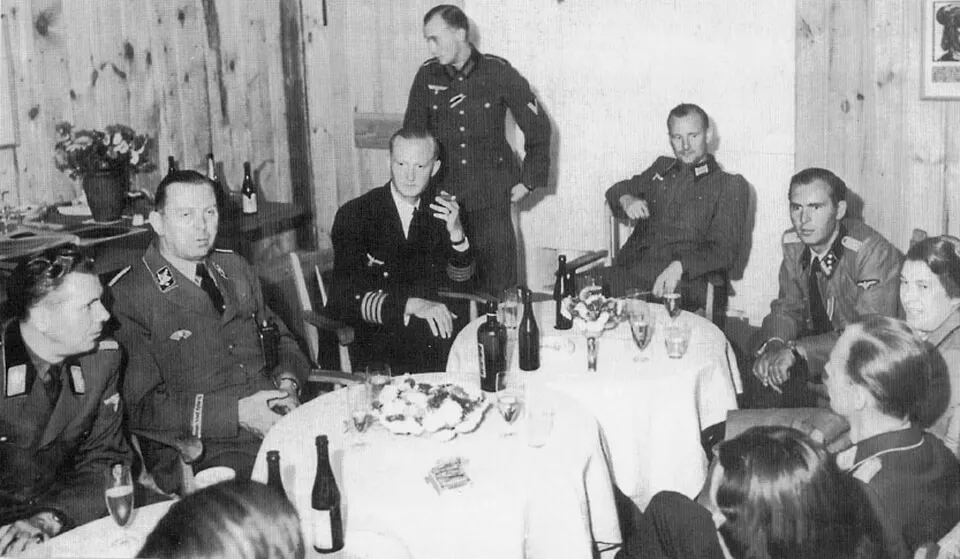
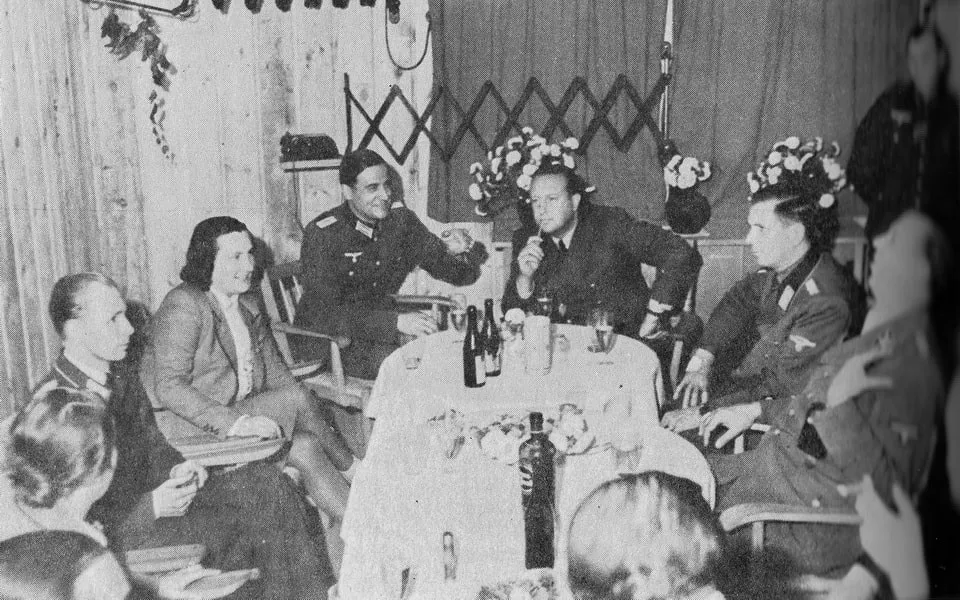
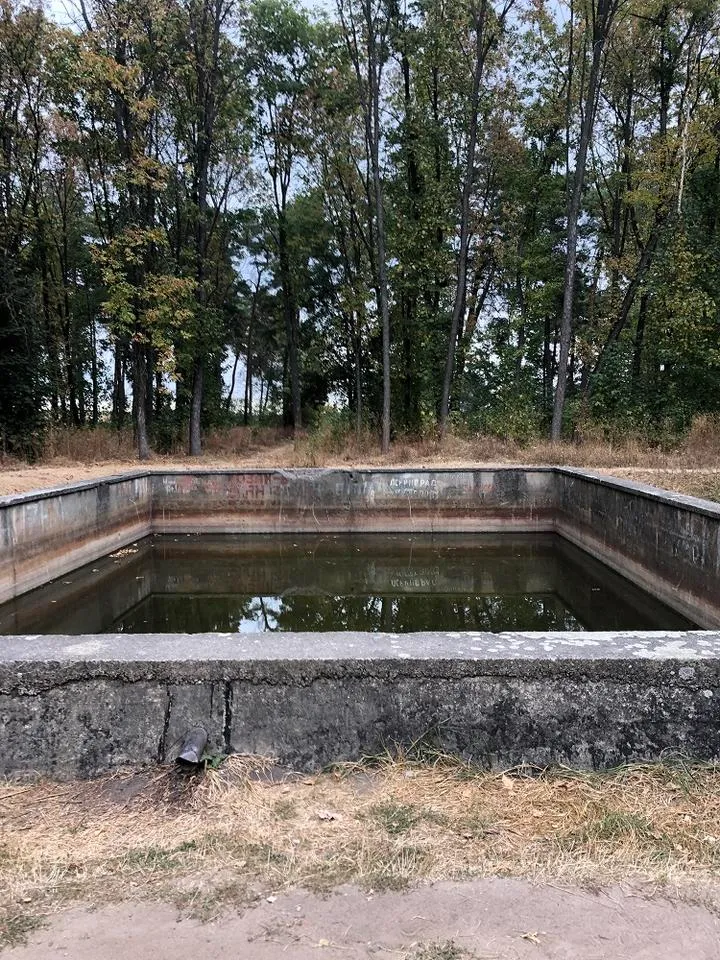
The comforts were a long way from the frontline. The camp had a tea house, a barber shop, a bathhouse and sauna, a cinema and a swimming pool, which Hitler is said never to have used. A large vegetable garden run by a German horticultural firm supplied the kitchen. Hitler’s fear of poisoning shaped the daily routine: his chef selected the vegetables, the food was reportedly tested chemically, and a taster sampled it first. One report says drinking water was tested several times a day and that mineral water was bottled in front of couriers. Oxygen tanks were supplied at his insistence, because he feared the air inside the concrete, and security officers checked that they were full. Security was in the hands of the headquarters commander, Colonel Thomas, and Hitler’s security chief Johann Rattenhuber, who ran a special group for the purpose.
Hitler at Werwolf
Hitler visited three times, and the dates vary slightly between sources. The first and longest stay began in July 1942, with sources giving the arrival as 6, 16 or 17 July, and lasted until the end of October. A Hungarian count puts the total time spent at the site at 119 days across all three visits. It was a hot summer, with temperatures reported close to 40 degrees Celsius, and Hitler is reported to have been ill with influenza and a fever for part of it. A Hungarian defence minister who visited later recalled that Hitler’s doctors wanted him moved to a sunnier location in East Prussia.
The second stay ran from about 19 February to 13 March 1943. It coincided with Field Marshal Erich von Manstein’s counteroffensive, which recaptured Kharkov, and Hitler followed it from the forest. The third, in late August and early September 1943, coincided with the failed German defence of Kharkov. Sources differ on its length. Wikipedia gives 27 August to 15 September, while the Harvard commentary says he came for just a few hours on 27 August. One account has Hitler handing the camp over to Manstein in September 1943, and the headquarters was evacuated in January 1944.
Case Blue and Directive 45
The first stay is the one that matters most. In the summer of 1942 the German army was in the middle of Case Blue, the offensive towards the Caucasus oil fields and the Volga. Hitler had issued the directive for it on 5 April 1942, and the offensive began on 28 June. It looked successful at first, but the Red Army adopted an elastic defence, falling back rather than allowing itself to be encircled, and the German advance began to chase an enemy that had already withdrawn.
During his time at Werwolf, Hitler issued Führer Directive 45, which split Army Group South into two groups, one directed towards the Caucasus and the other towards Stalingrad. Pursuing both goals at once is generally seen as having overstretched the German forces and contributed to the destruction of the Sixth Army at Stalingrad. Some of the sources used for this article state that causal link as fact. It is better described as an interpretation, since historians weigh many factors in the German defeat, but the directive itself is one of the few documented orders that can be tied directly to the place.
The strains showed in Hitler’s relations with his generals. The army chief of staff, Franz Halder, who had helped plan Case Blue, saw himself increasingly sidelined, and his diary grew sarcastic. By late August 1942 his relationship with Hitler was essentially over. On 24 September 1942, during the span of the Werwolf stay, Hitler replaced him with Kurt Zeitzler after a midday briefing. The Hungarian account of the headquarters says Halder had criticised the constant underestimation of the enemy. It is a reminder that the forest in Ukraine was not a retreat from the war but the place where its direction was being argued over.
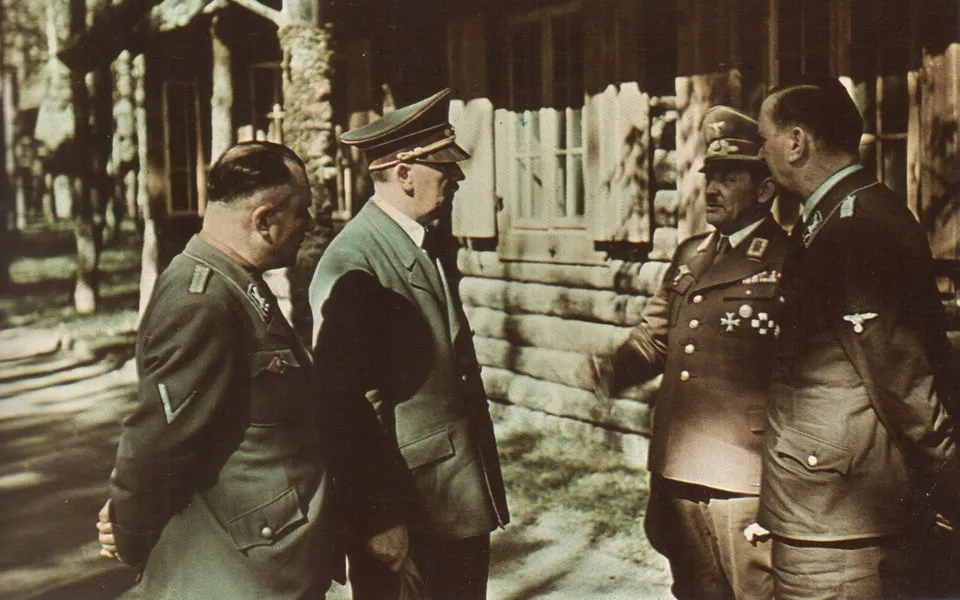
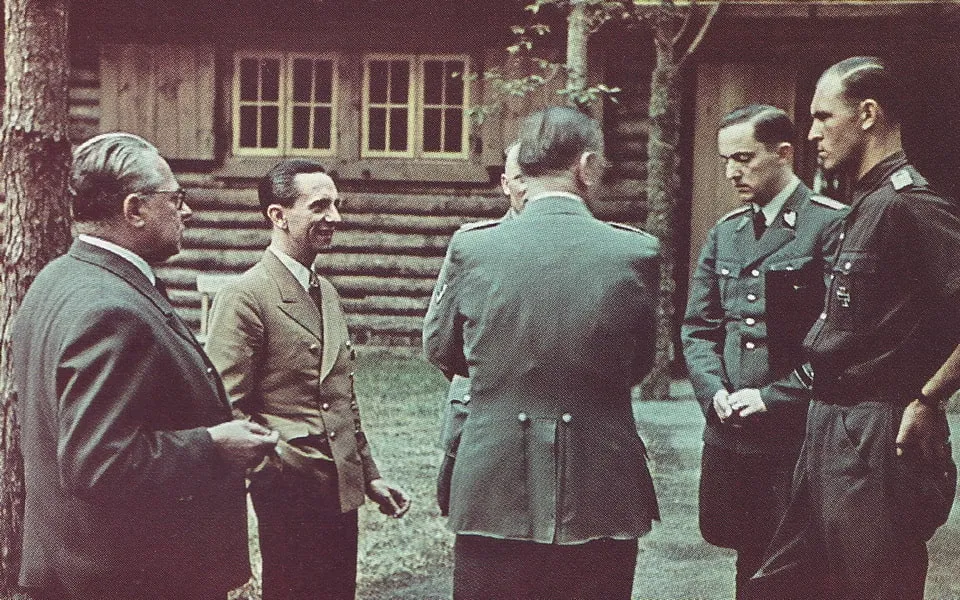
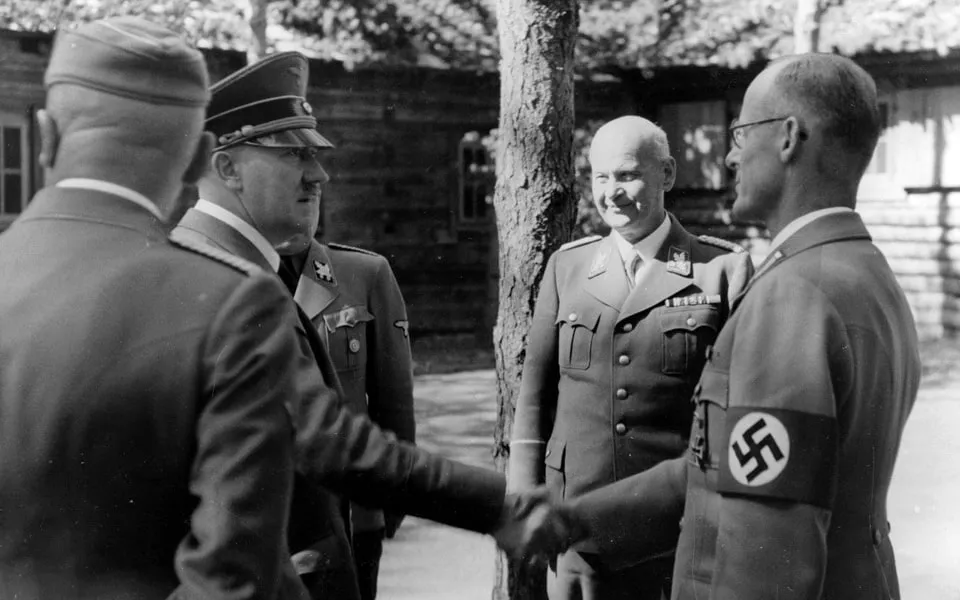
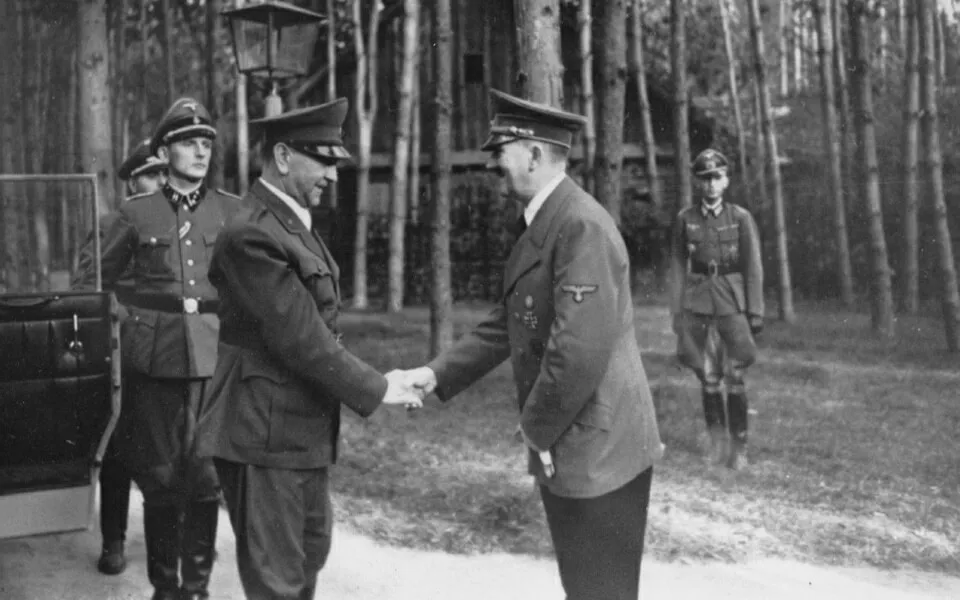
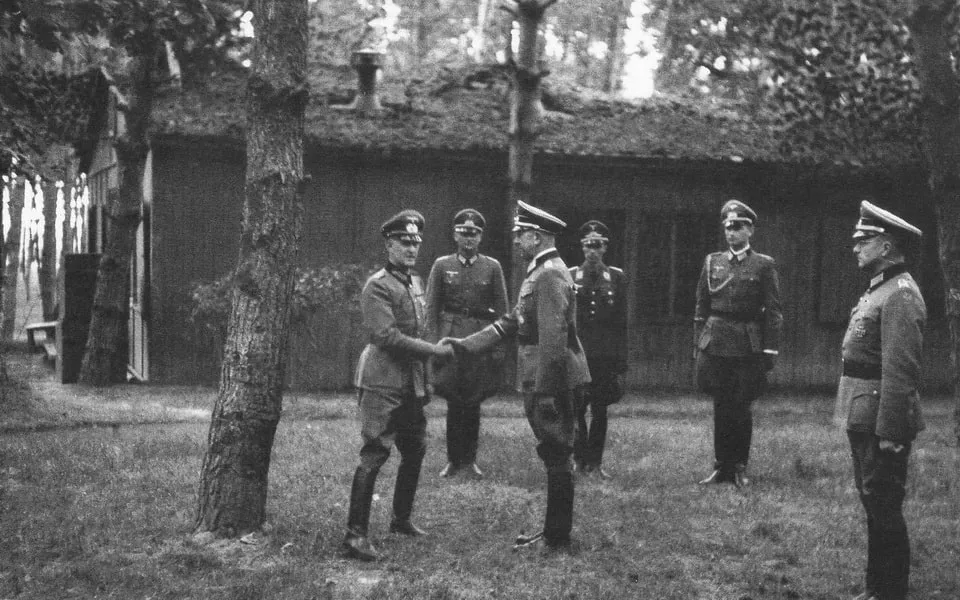
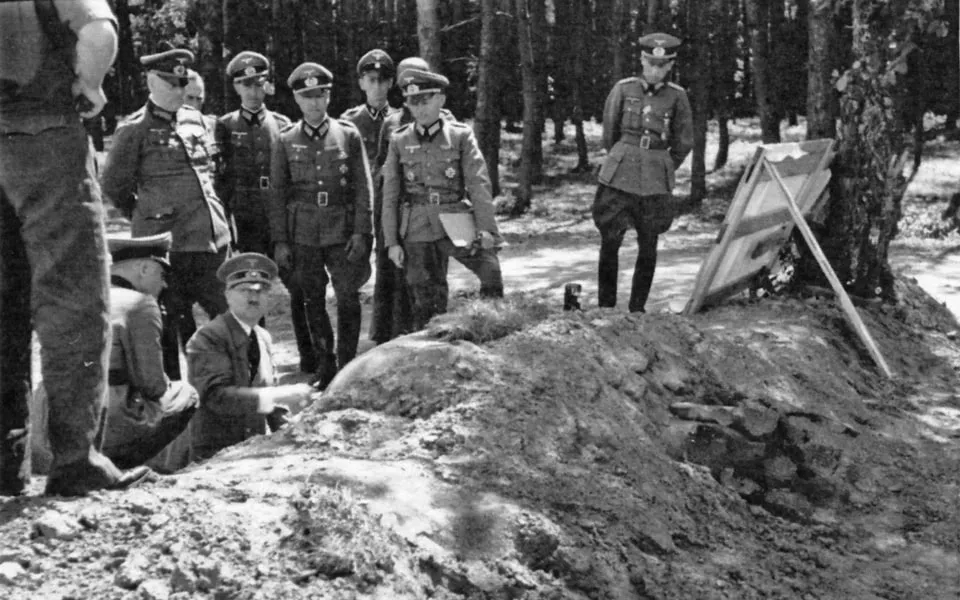
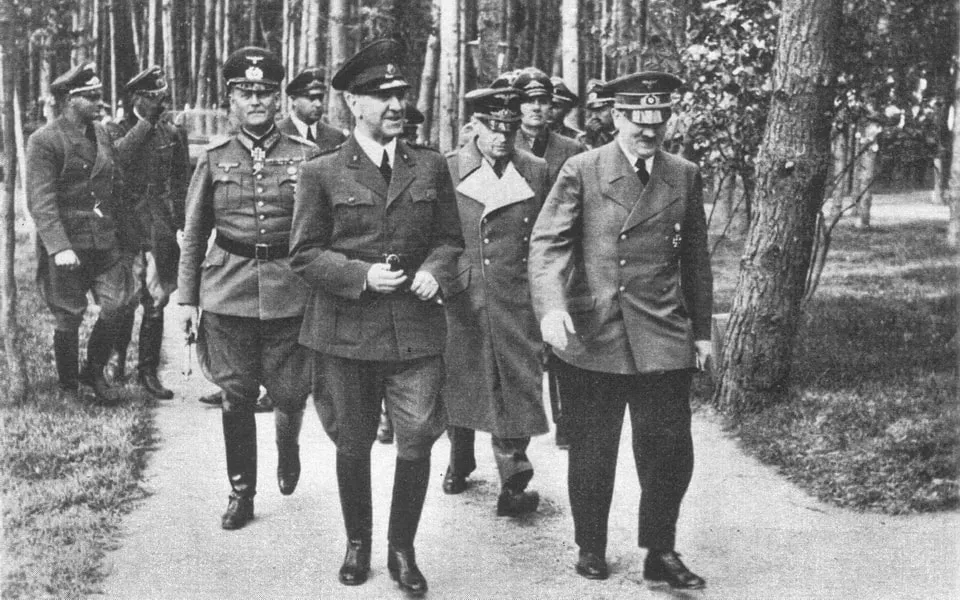
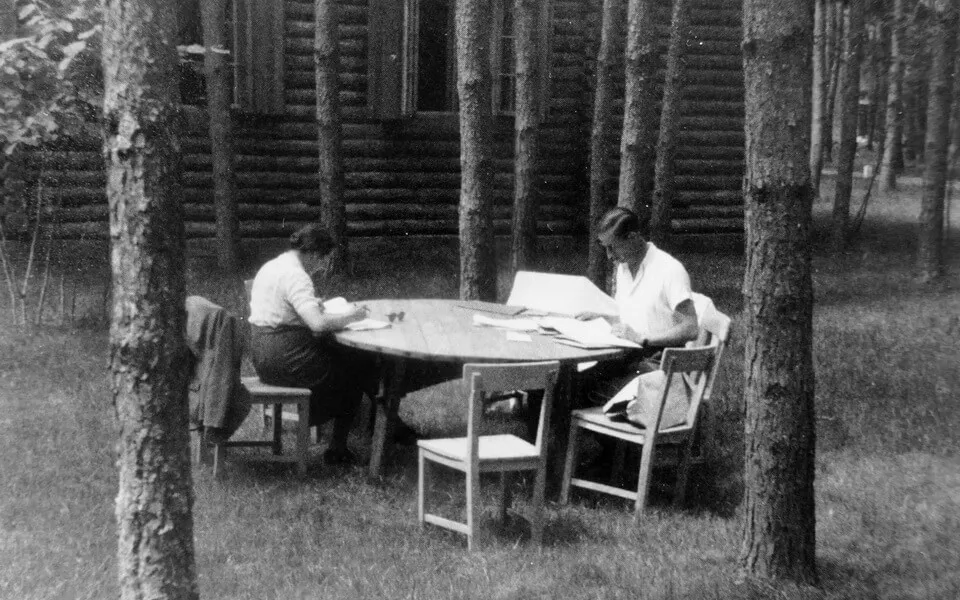
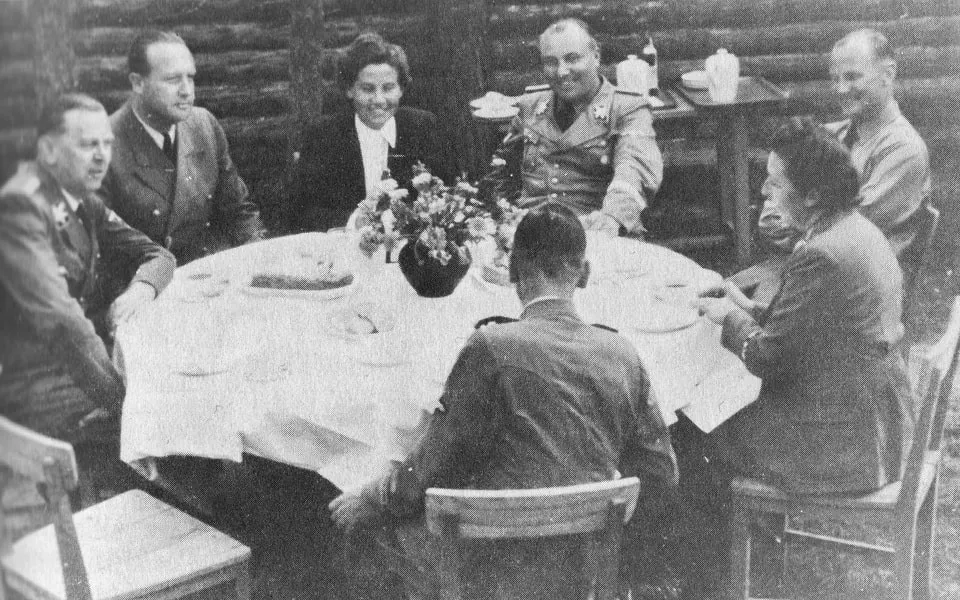
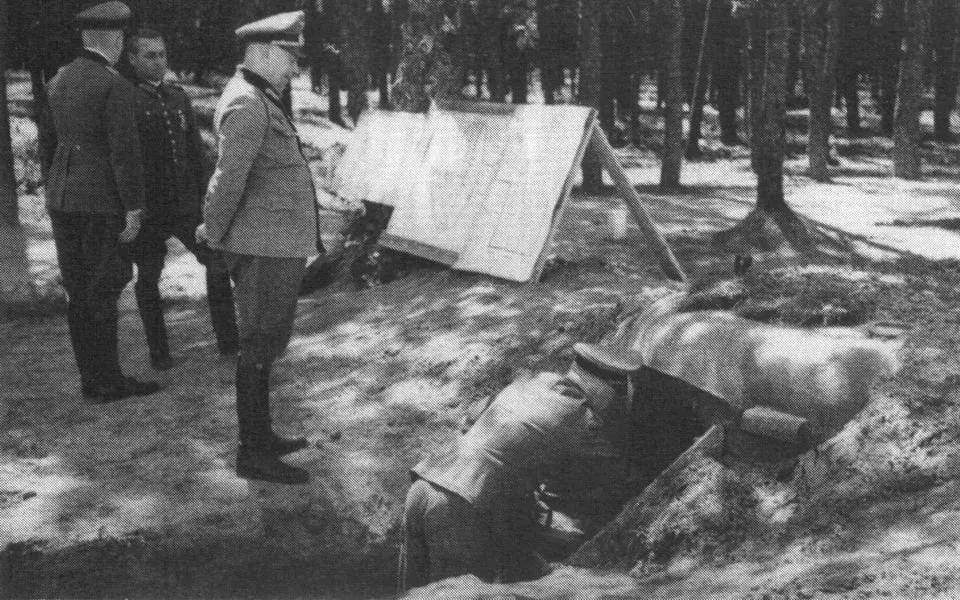
Visitors came and went. Photographs show Hitler meeting senior legal officials there in August 1942, and a Hungarian report says he received the Romanian leader Ion Antonescu and the Hungarian defence minister, who later recalled that Hitler dismissed Soviet strength and talked at length about his plans. Each of those meetings belonged to the wider question of how long Germany’s allies would keep supplying soldiers for a front that was becoming harder to hold.
The bomb on the plane
Werwolf also has a connection to the resistance inside the German army. After the March 1943 stay, Hitler flew from the nearby airfield at Kalinovka to the headquarters of Army Group Centre near Smolensk. A group of officers around Major General Henning von Tresckow, the group’s chief operations officer, had arranged for a bomb to be placed on his aircraft. It was a British plastic explosive, seized by German counter-intelligence from captured agents, and it was disguised as a package of two bottles of Cointreau. Lieutenant Colonel Heinz Brandt, an officer on Hitler’s staff, was asked to carry the package aboard as a favour.
The detonator worked, but the bomb did not go off. The usual explanation is that the percussion cap became too cold in the unheated cargo hold. Tresckow’s aide, Fabian von Schlabrendorff, took the next plane to retrieve the package before anyone found it. The attempt remained secret, and the conspirators tried again, this time more famously, at the Wolf’s Lair in July 1944. For a few hours in March 1943, though, the flight from Werwolf was the closest anyone came to ending the war early by killing Hitler.
The region around it
It is hard to describe the site without describing what was happening around it. Vinnytsia oblast was under German occupation from July 1941 for about two years and eight months. The official figures cited at the museum give more than 200,000 civilian deaths in the region, including 25,000 in Vinnytsia city in mass shootings in September 1941 and April 1942. The same panels say that about 1,800 patients at the city’s psychiatric hospital were shot, starved or poisoned by early 1942, and that about 61,000 people were removed from the region for forced labour in Germany. One Hungarian report adds that the city’s Jewish quarter, known as Jerusalimka, was destroyed before Hitler arrived. These are the figures that the museum and official sources use, and the Harvard commentary notes that they are not always sourced in detail.
A memorial near Stryzhavka marks the graves of labourers and others killed by the Germans in the area. One American report from 2011 says the mass grave holds more than 10,000 prisoners of war and locals who were forced to build the headquarters, a figure much higher than the 4,000 builders mentioned above, which shows how far the numbers still differ.
Vinnytsia has another, older layer of history that the Germans themselves exploited. In 1943, while Hitler’s headquarters was still in use, German investigators began excavating mass graves in a fruit orchard, the central cemetery and People’s Park in the city. They exhumed 9,432 bodies from 91 mass graves. The victims had been killed by the Soviet NKVD in 1937 and 1938 during the Great Purge, mostly shot twice in the back of the head. An international commission of experts, mostly from Germany’s allies and occupied states, visited the graves in July 1943, and Nazi propaganda used the findings across Europe. The Soviets later rededicated the memorial to the victims of fascism. The city therefore holds the victims of two regimes, and the way each is remembered has been contested ever since.
The end of the headquarters
The Red Army’s liberation of the oblast began on 28 December 1943. The headquarters was evacuated in January 1944. On 10 March 1944, according to one account, the wooden houses and barracks were set on fire and the three bunkers were blown apart. Vinnytsia itself was retaken on 20 March, and the oblast was cleared by 26 March. German officers reportedly nicknamed the site the “cursed bunker” as the Soviet forces approached.
Soviet investigators examined the ruins on Stalin’s orders but, according to the accounts I found, discovered no documents. The underground parts were then sealed, and the site was kept classified. After the war the forest closed over it, and the Soviets may have removed some of the remaining concrete for building material.
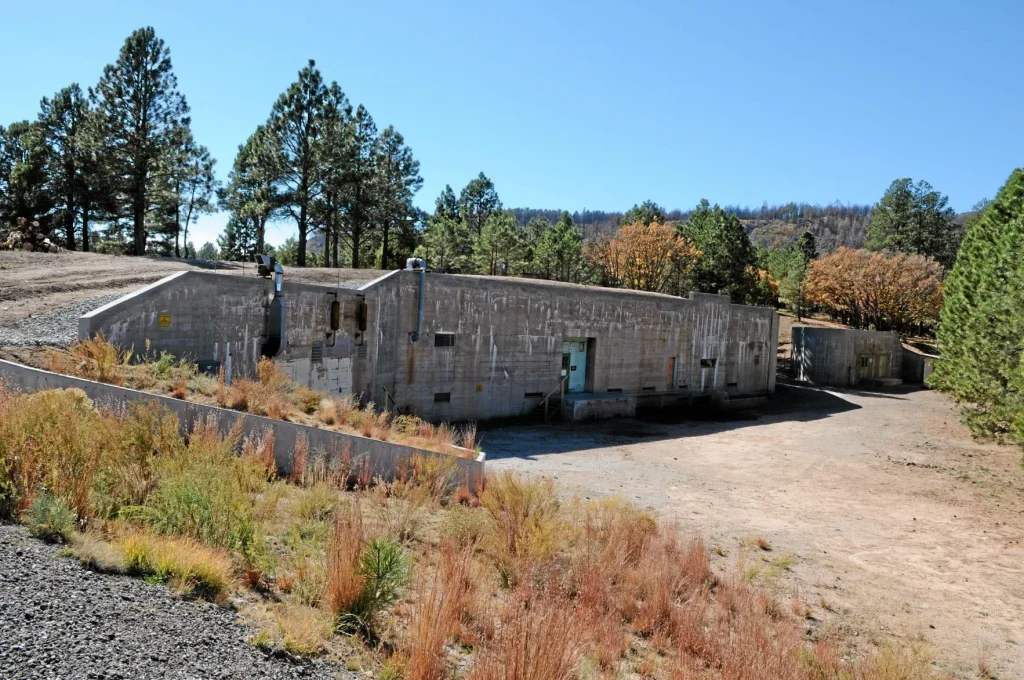
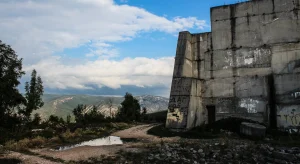
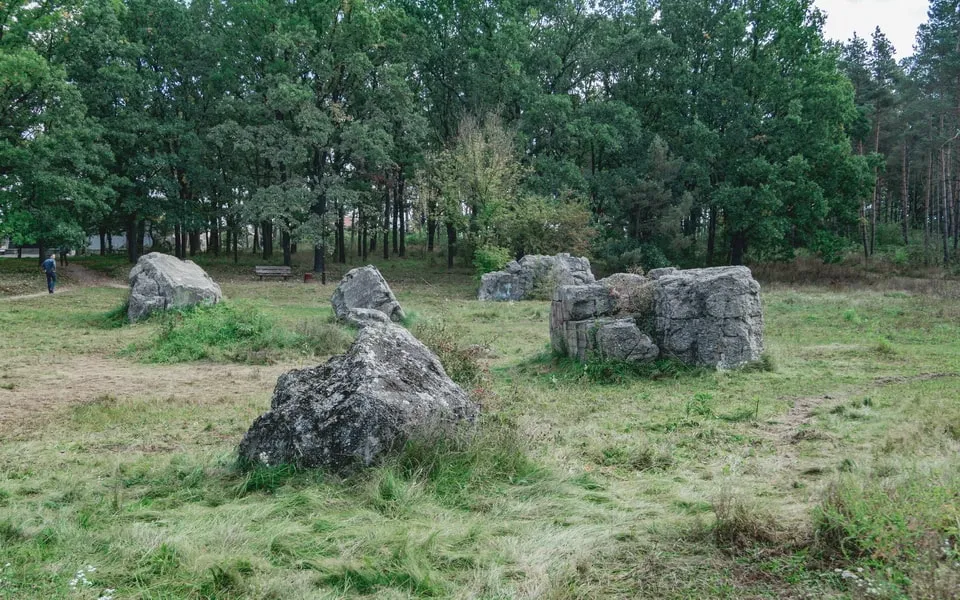
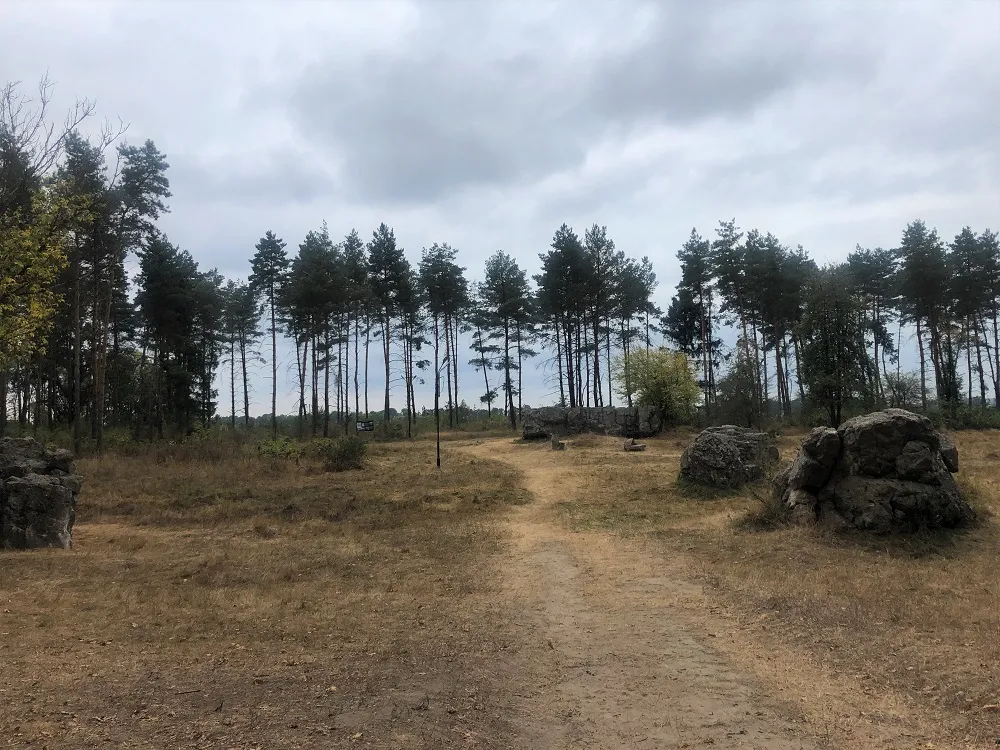
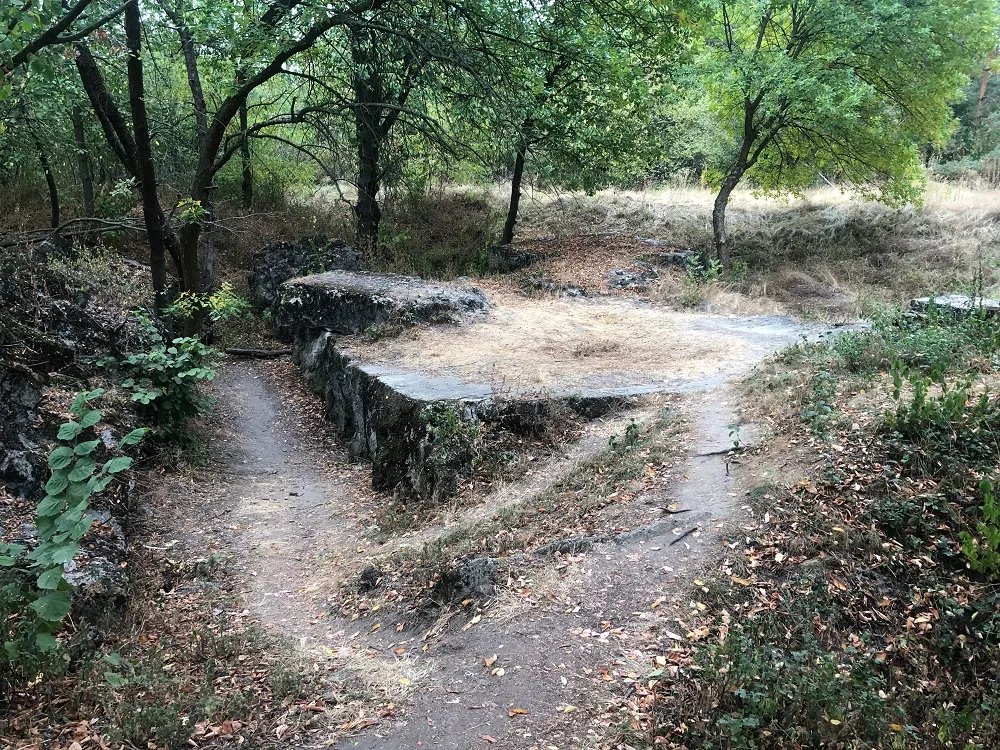
What survives is disputed. One account says only the swimming pool and fragments of concrete remain. The Harvard commentary says three ruined bunkers and the pool survive. A Hungarian report describes concrete blocks scattered up to five metres across over an area about 100 metres wide. A Kyiv Post article from 2011 describes concrete and steel ruins in a forest, some covered in neo-Nazi graffiti, and notes that few signs of an underground bunker are visible. A researcher quoted there, Martin Bogaert, says there were no underground bunkers or tunnels at all, and that he planned a book and a 3D model to show it. Historians therefore do not agree on how much of the site was ever below ground or how much is still there. In an address on 8 May 2022, Ukraine’s president Volodymyr Zelensky is reported to have said that only stones and ruins remain.
Neo-Nazis, tourists and a failed plan
For decades the site was a forest with ruins in it. A plan in the 1990s to turn it into a tourist attraction reportedly failed for lack of money, with the sum needed put at around 50,000 to 60,000 dollars, and local opposition over fears that it would attract neo-Nazis. In 2009, according to one report, a special police unit of several hundred officers was sent to Vinnytsia to prevent neo-Nazi marches around the anniversary of Hitler’s birth.
In 2011 the Vinnytsia regional government announced a new plan to develop the site, with information stands, guided tours and a memorial complex to be called “Victims of Fascism”. The plan drew criticism from some local politicians and support from veterans’ groups. Local Communist Party leaders were particularly concerned by reports that operators planned to let visitors dress in Nazi uniforms and pose with swastika flags, which the BBC reported at the time. The city was caught between wanting the money that tourism could bring and fearing what kind of tourism it would attract.
The museum and the argument about it
The Harvard commentary says the site opened as a museum in 2018. It is an open-air site with information panels, plus an indoor section. The panels cover the region’s wartime history and the chronology of occupation and liberation. They include a 1943 issue of the Red Partisan newspaper, photographs of forced labourers and a photograph of generals in front of a wooden building. Wikipedia’s entry says plans for a fuller museum had been realised by May 2026, but I could not verify that from other sources.
The museum has been criticised from inside Ukraine. The commentary’s author, Emily Channell-Justice of Harvard’s Ukrainian Research Institute, argues that its account of the war portrays the Red Army and partisans as heroes without addressing Soviet repression, even though Ukrainian law now condemns the glorification of the Soviet regime. She also points out that captions describe the victims as “peaceful civilians” rather than saying that the Germans specifically targeted the local Jewish population, and that the exhibition ends at Nuremberg without raising the unpunished crimes of Soviet officials. This is one author’s view, based on the museum’s own panels, but it shows how the site sits in the middle of an ongoing argument about how Ukraine remembers the war.
Visiting
Ukraine is at war, and conditions in the Vinnytsia region, which has been struck by missiles, can change quickly. Do not plan a visit without checking your government’s current travel advice and confirming locally that the museum is open. Earlier travel reports describe an open forest site that could be reached by road from Vinnytsia, but they predate the full-scale invasion and should not be relied on. The site is in a forest, so keep to marked paths. Do not climb on or enter any ruined structure, since the concrete is unstable and some of it was demolished with explosives. Remember also that the area includes graves, and treat it accordingly.
Conclusion
Werwolf is a place where two scales of history meet. At one end are the decisions of one man in a log cabin, including a directive that helped set the course towards Stalingrad, an argument that ended a general’s career and a flight on which a bomb failed to explode. At the other are the thousands of ordinary people in a single region who were killed, deported or put to work while the headquarters was in use. Both are part of the same story, and a visit that sees only the first would miss most of what happened.
The Germans tried to erase the site when they left, and for the most part they s쳮ded. Little of the complex is left, and even that is argued over. What remains is a forest with a pool, some concrete, a museum and a debate about how to tell the story. In a country now fighting another invasion, that debate has become more pointed, and it is an apt description of how Ukraine’s wartime past is still being worked out.
Did you know?
- The code name for the headquarters was Anlage Eichenhain, "Oak Grove".
- It was the easternmost headquarters of the Wehrmacht.
- Hitler's complex had a cinema, a sauna and a swimming pool he is said never to have used.
- Food was reportedly tested chemically before it reached Hitler.
- The Germans mined and blew up the site when they withdrew in 1944.
- Soviet investigators who examined the ruins reportedly found no documents.