A laboratory scattered across the plateau
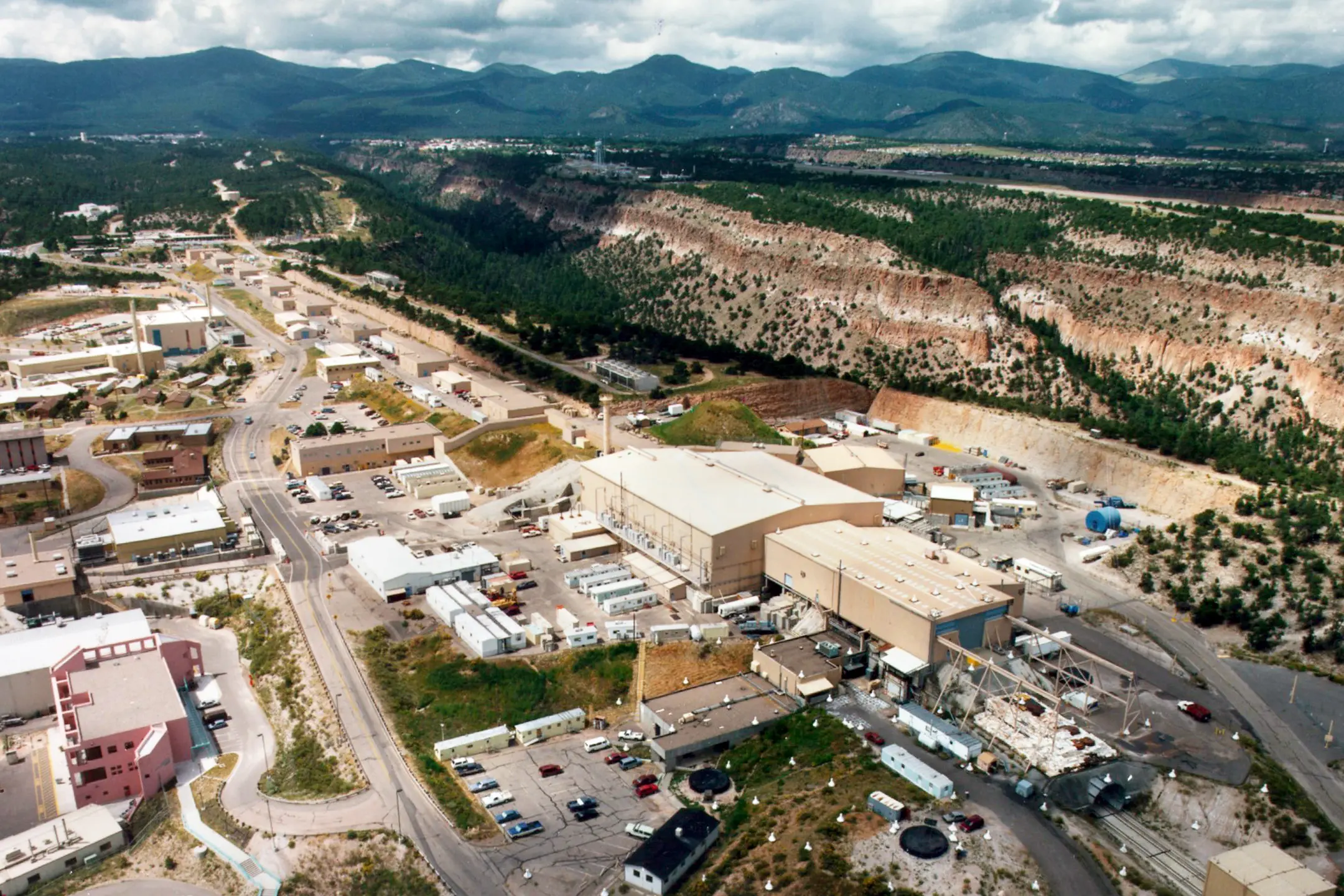
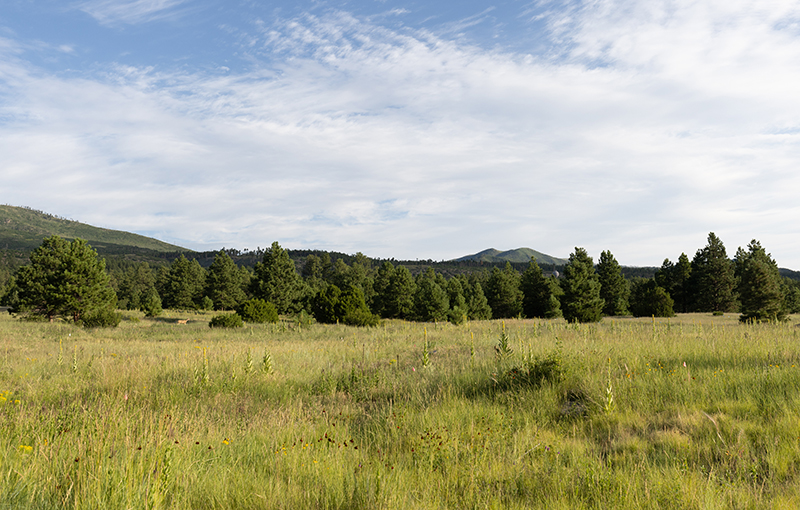
When people picture Los Alamos in the war, they usually picture the mesa: the log buildings of the old Ranch School, the hastily built laboratory, the fence and the gate. That is only part of it. The Manhattan Project’s weapons laboratory was spread over a plateau cut by deep canyons, and a surprising amount of its real work happened well away from town, in outlying sites with numbers instead of names. We look here at two of them, the Gun Site and the Pajarito Site, both now inside the Manhattan Project National Historical Park and both still behind a security fence.
The place itself was chosen late in 1942. Major John Dudley surveyed possible locations that October and recommended one near Jemez Springs. On 16 November 1942 Oppenheimer, General Groves and Dudley toured the candidates, and Oppenheimer preferred the Otowi site beside the Los Alamos Ranch School, citing its beauty and its views, while the engineers worried about road access and water. Under Secretary of War Robert Patterson approved the acquisition on 25 November. The laboratory became an official military establishment on 1 April 1943, run by the University of California, with Oppenheimer as director. The population, family members included, grew from about 3,500 at the end of 1943 to about 8,200 in 1945.
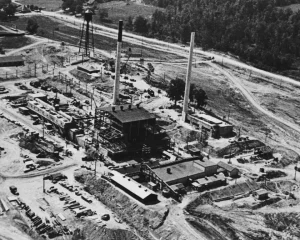
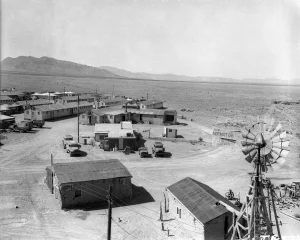
Not everything could sit on the mesa. About 25 satellite areas were built away from the main site and the town, mainly for safety, and by June 1945 about 40 percent of the laboratory’s buildings stood at these outlying sites. Some tested explosives, some tested detonators, some ran a reactor, and some handled the most hazardous work. Most of them were demolished in the late 1940s and early 1950s. A few were kept because of what had happened in them.
The land before the laboratory
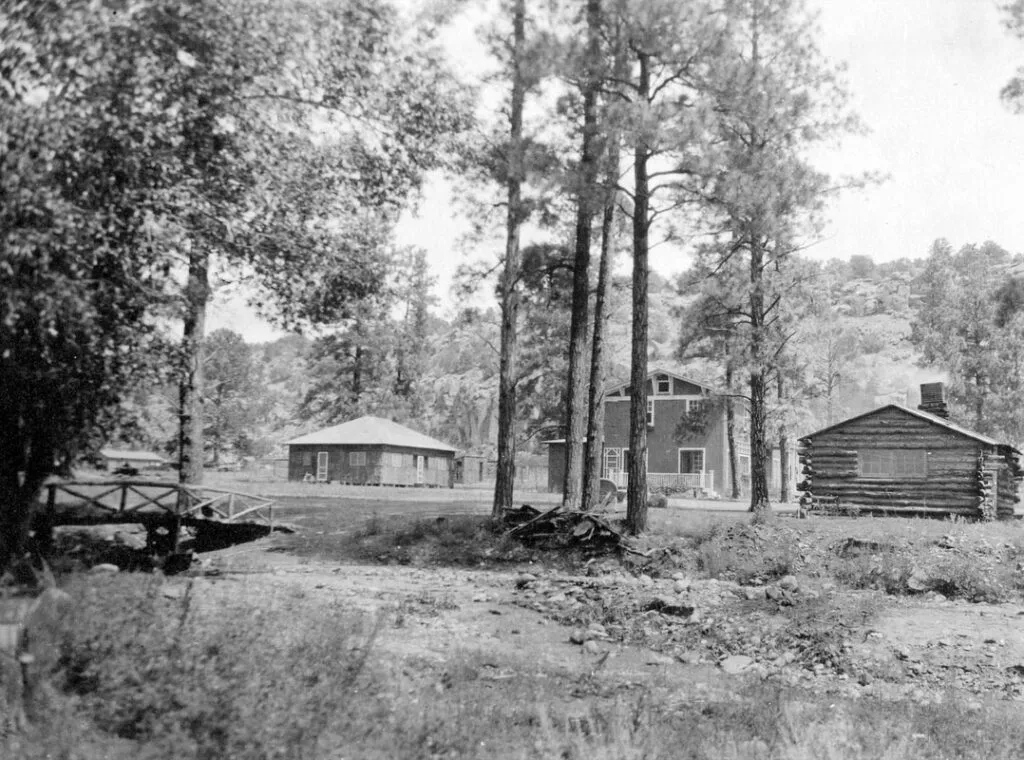
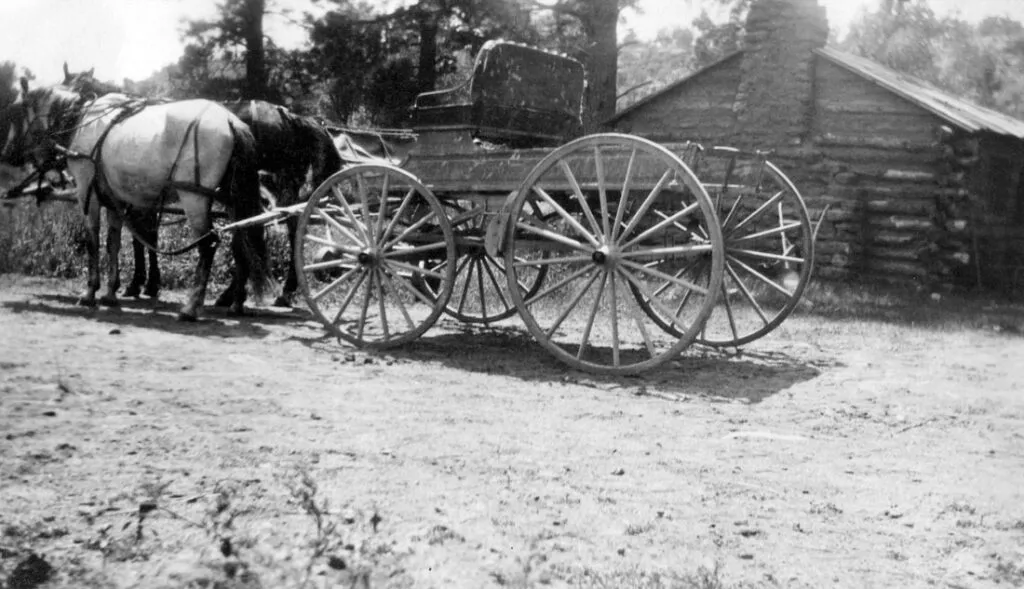
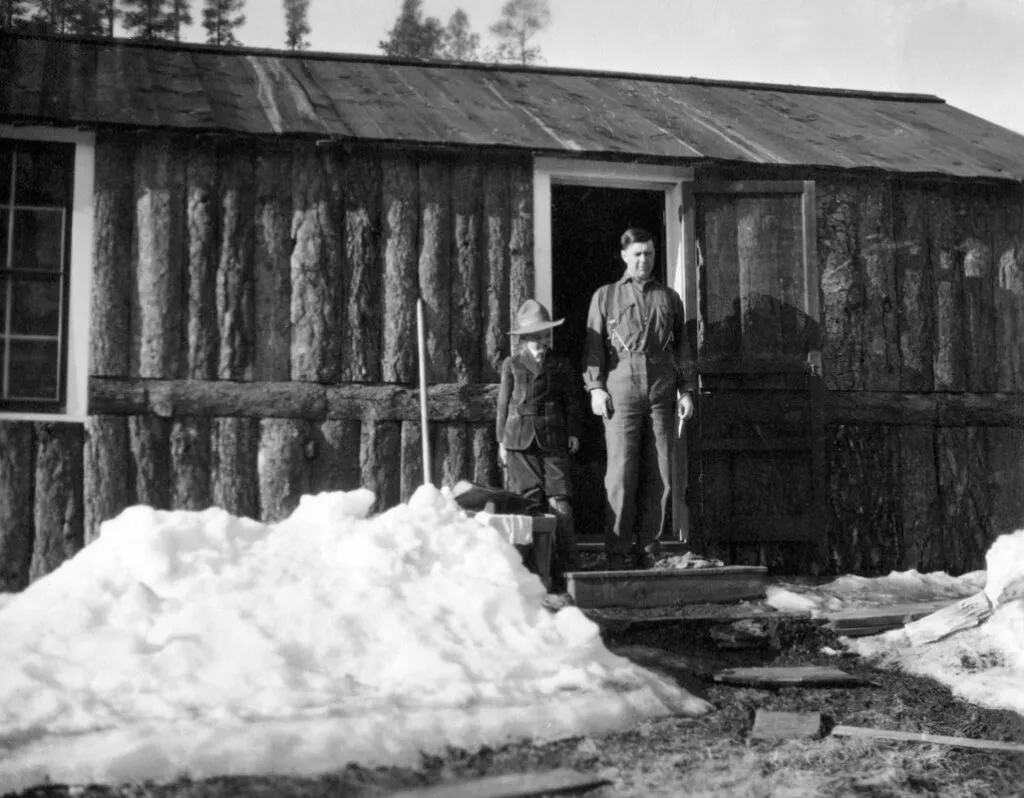
The plateau was not empty. Hispanic families began homesteading it after the Homestead Act, with Juan Louis Garcia filing a claim in March 1887 and Efren Duran receiving the patent for a 160-acre homestead in 1904. Victor and Refugio Romero built the Romero Cabin in 1912 and farmed a small homestead with their six children. The National Park Service counts 36 homesteads on the plateau, 30 of them Hispanic-owned and six Anglo-owned, although other counts divide the owners and holdings differently. The Army needed about 54,000 acres for the laboratory, most of it already federal land, but the private holdings were what mattered to the families.
The two largest private properties were Anchor Ranch and the Ranch School, both Anglo-owned. The government paid $43 an acre for Anchor Ranch, land only, and $225 an acre for the Ranch School with its buildings, which came to about 790 acres. The homesteaders received far less: about $7 an acre by one reckoning, and a range of $7 to $23 by another. Grazing permits were cancelled, and permit holders were paid $20 to $30 a head for their livestock.
The accounts handed down in families are blunt. Rosario Martinez Fiorillo, a descendant of homesteaders who were removed, recalled that soldiers came armed, and that nobody translated the letters the families received.
They came with guns and whatnot.
Rosario Martinez Fiorillo, descendant of Pajarito Plateau homesteaders, quoted by the National Park Service
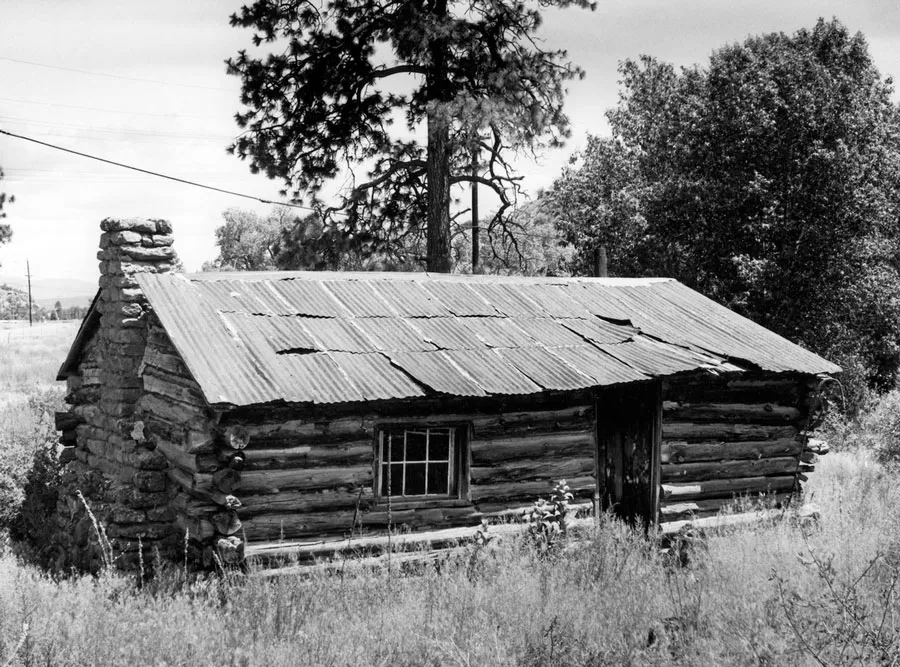
The Gomez family, on the land since 1899, told of buildings bulldozed and livestock shot. The official record spoke of few objections, and the families took a long time to be heard. Descendants filed lawsuits in 2000, and in 2004 Congress approved a $10 million compensation fund, which went to 973 descendants and one survivor, with about $2 million going to lawyers and an average payment of about $8,000. Of the homestead era only two structures remain: the Pond Cabin and the Romero Cabin, which was moved into downtown Los Alamos in 1984 and restored. The Pond Cabin is on the Pajarito Site, which is where this story goes next.
Anchor Ranch and the gun
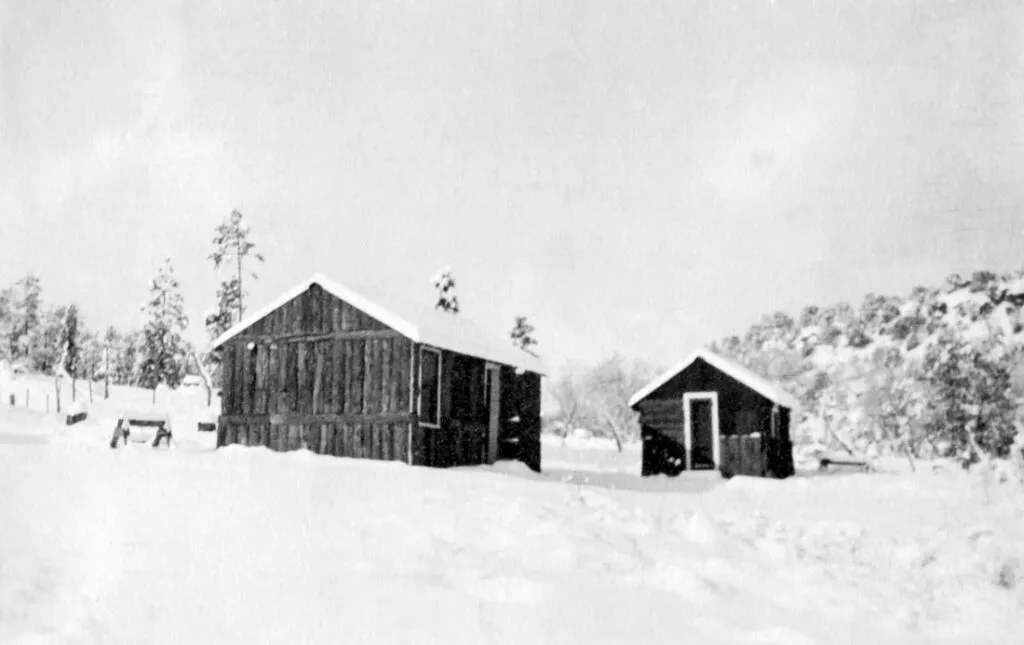
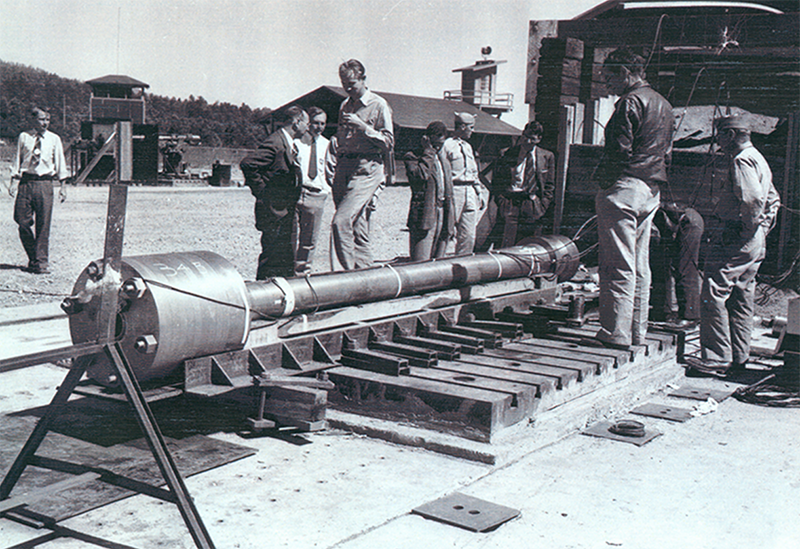
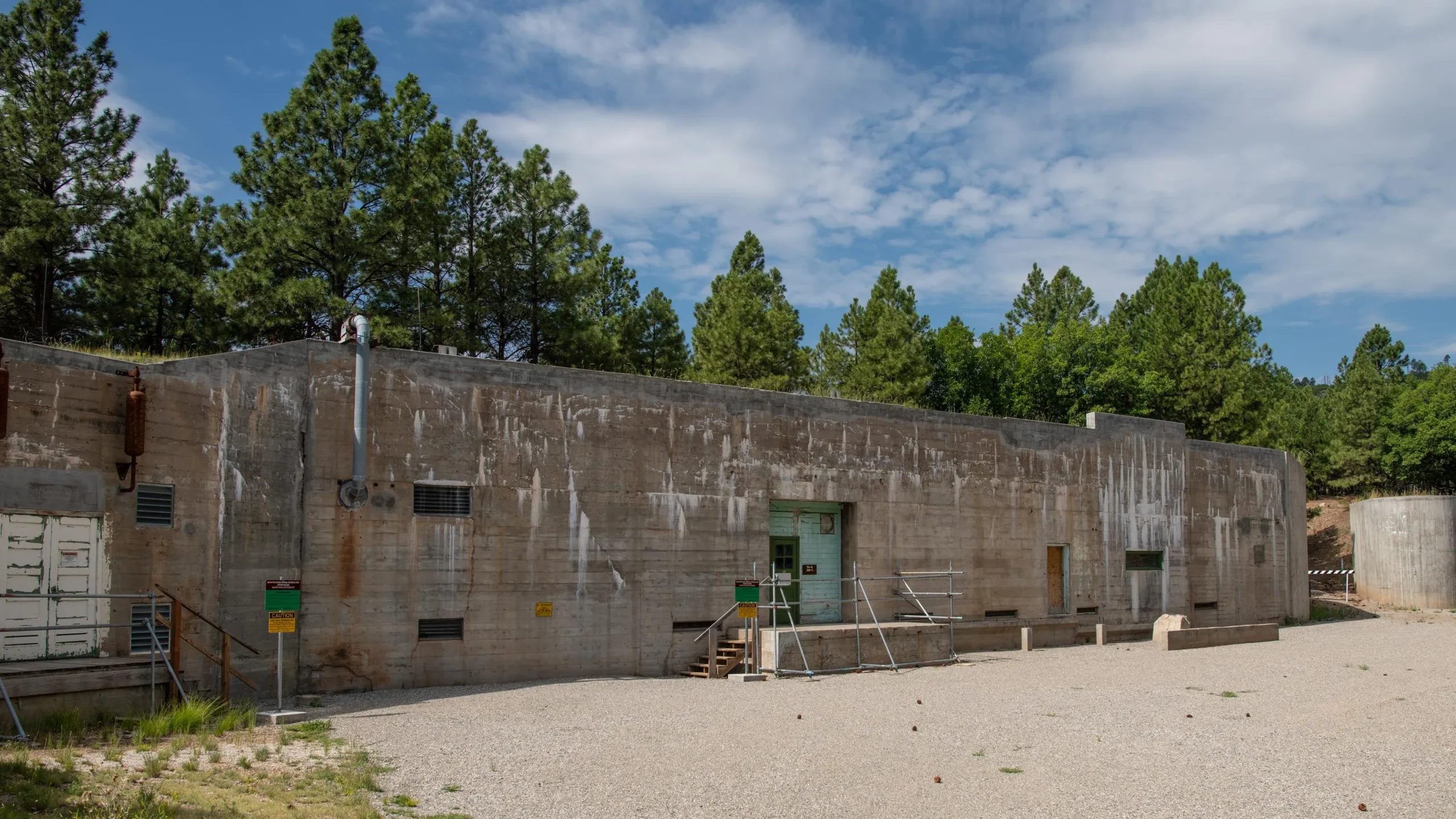
Anchor Ranch became the laboratory’s gun range. After the War Department bought the land, the ranch had its normal ranch buildings, a large flat area suited to gun emplacements, and a bordering canyon that protected the control building. A large periscope let researchers see the range during shots. Roads were a headache: the road nearby was hard to guard during tests, and cars occasionally got through the blockades. The tests were nonetheless carried out safely.
The ranch was divided in two. Anchor West, which the laboratory called TA-8, was for gun testing, and its control building still stands. Anchor East, TA-9, cast high explosives for the earliest implosion studies in a small casting building that ran from October 1943 to early 1945, when the large casting works at S Site replaced it. Early explosives work at Anchor Ranch used pentolite and ran into trouble detonating high-density charges, which showed how little anyone knew about high explosives at the time.
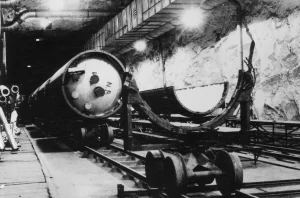
Why a gun? In the summer of 1942 the planners had chosen the simplest possible way to make a weapon: fire one piece of fissile material into another until together they went supercritical. For plutonium the design was called Thin Man, named by Robert Serber for its shape, and it would have been about 17 feet long. William Sterling Parsons, a Navy captain, took over the Ordnance and Engineering Division in June 1943. Charles Critchfield’s group tested scale models with 20 mm cannon and 3-inch guns, because full-scale Thin Man tubes took months to make, and Joseph Hirschfelder’s interior ballistics group estimated a muzzle velocity of about 3,000 feet a second and barrel pressure up to 75,000 psi. The first two test tubes arrived at Anchor Ranch on 10 March 1944, and test firing used a 3-inch gun. None of it could use plutonium, because the material did not yet exist in quantity.
The plutonium surprise
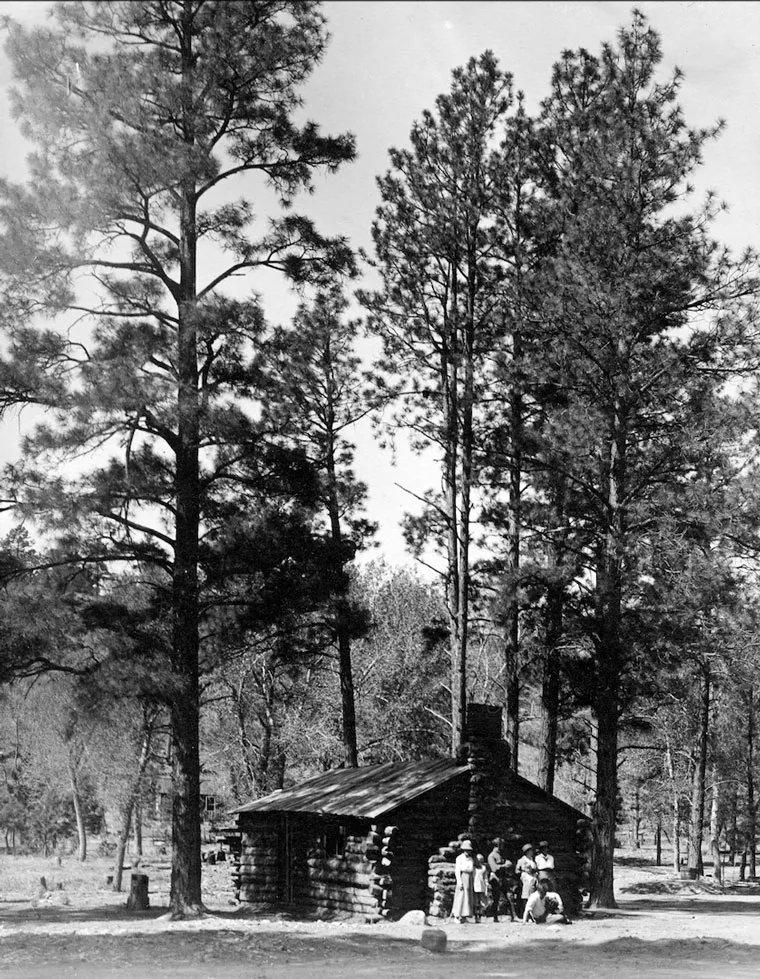
Thin Man died in a log cabin. Emilio Segrè’s group, the P-5 Radioactivity Group, had been measuring spontaneous fission in plutonium samples since mid-1943 at a place far enough from the mesa to avoid background radiation. They worked in an old log cabin in Pajarito Canyon, which is variously put at about 14 miles from the main technical area or about ten miles south-east. Whichever number you prefer, it was out in the canyon and it was quiet.
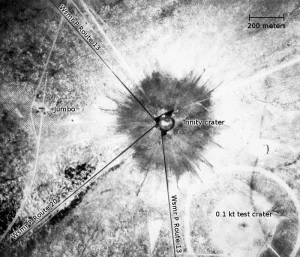
In April 1944 Segrè’s group measured plutonium bred in the X-10 reactor at Clinton. Reactor plutonium showed about 180 spontaneous fissions per gram per hour, against about 40 for plutonium-239 alone, and plutonium-240 itself about 1.6 million. The stray neutrons would set off a gun-type weapon early. A barrel long enough to avoid that would have been too long for any bomber. At a meeting on 17 July 1944 the participants agreed that a plutonium gun bomb was impracticable. The next day Oppenheimer wrote that implosion must receive overriding priority, and in August he reorganised the whole laboratory around it. The story of what that meant for the bomb itself is told in our Trinity Test post.
The gun work did not stop. It narrowed to a uranium weapon, Little Boy, developed by Francis Birch’s group under Parsons. The projectile was a hollow cylinder holding about 38.5 kg of uranium fired down a 72-inch smooth-bore barrel at a target insert holding about 25.6 kg, with four bags of cordite as the propellant. There was no full-scale test of a gun-type weapon before Hiroshima. The pieces were tested separately, and dummy projectiles were fired to check how they seated. Ernest Lawrence advocated a full test, but by early 1945 the design was regarded as nearly certain to work. Gun Site is sometimes described as the place where the Little Boy bomb was assembled, though the Park Service and the laboratory describe it as a test range. Archaeologists have since added a detail: crews unearthed pieces of paraffin wax that appear to have been used to measure neutron levels.
Finding it gave us a clue about work we didn’t know was happening there.
J. T. Stark, Los Alamos National Laboratory historic buildings specialist
The Pajarito Club
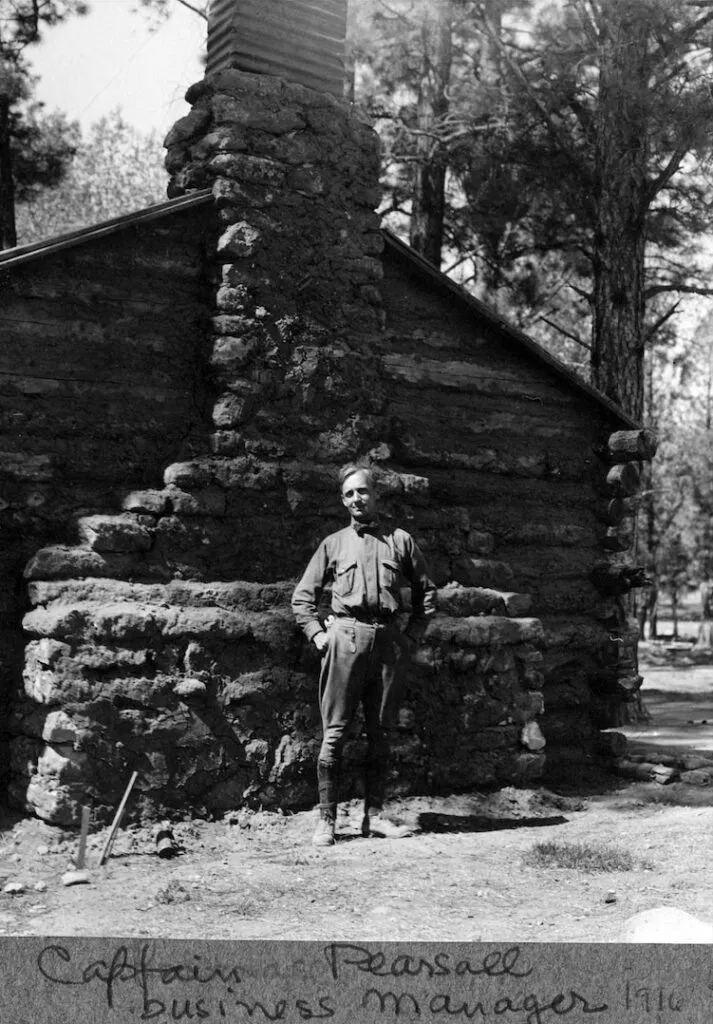
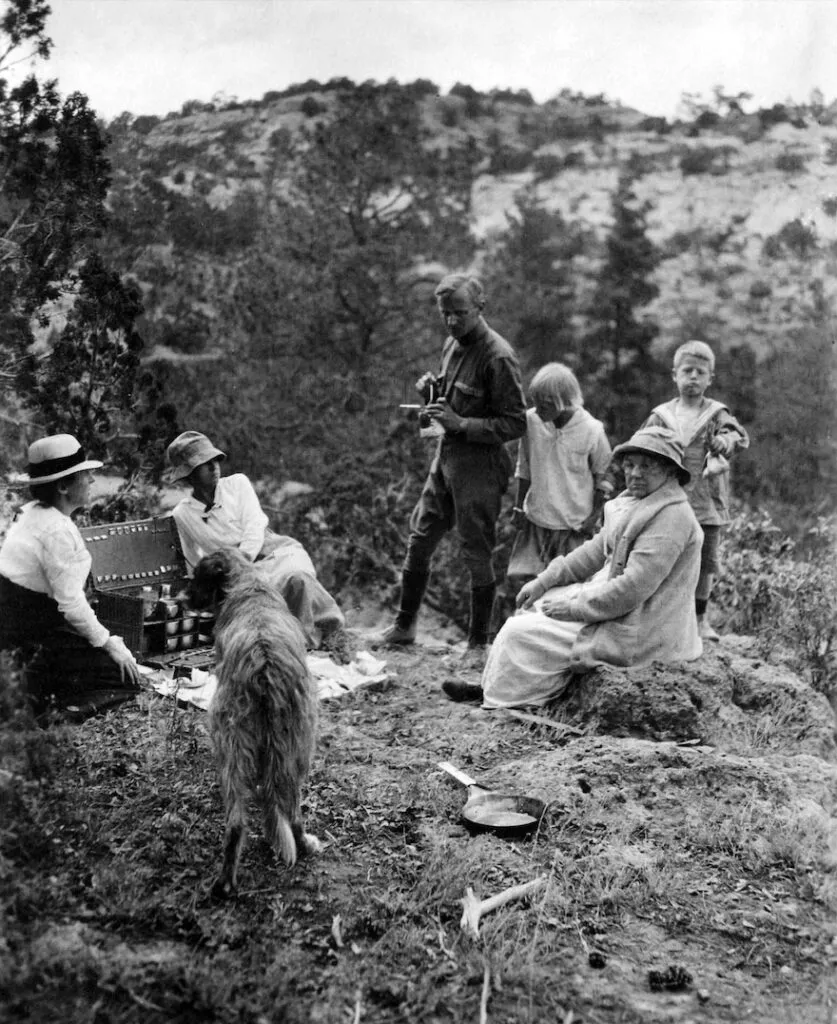
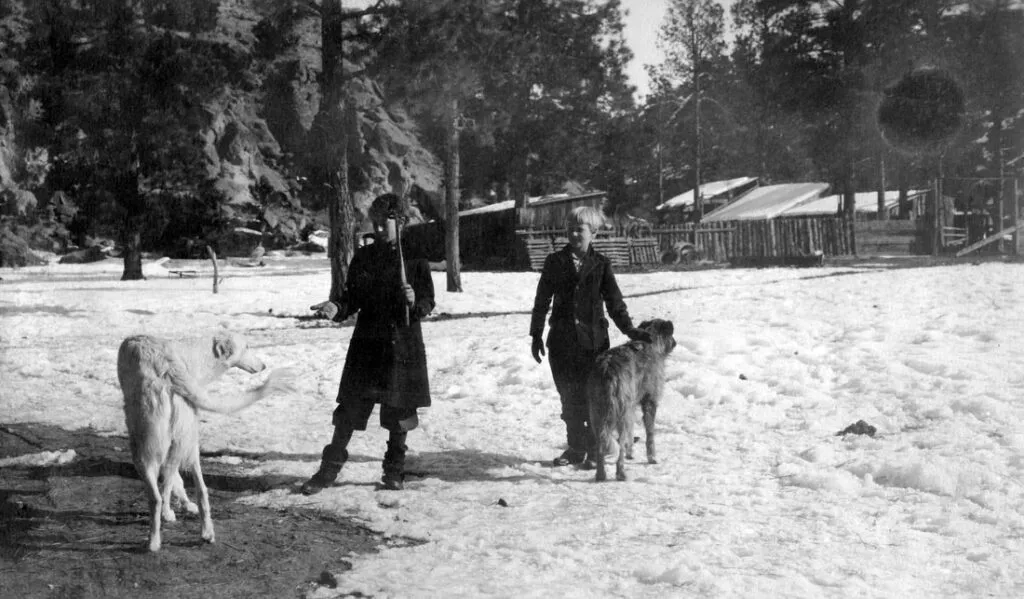
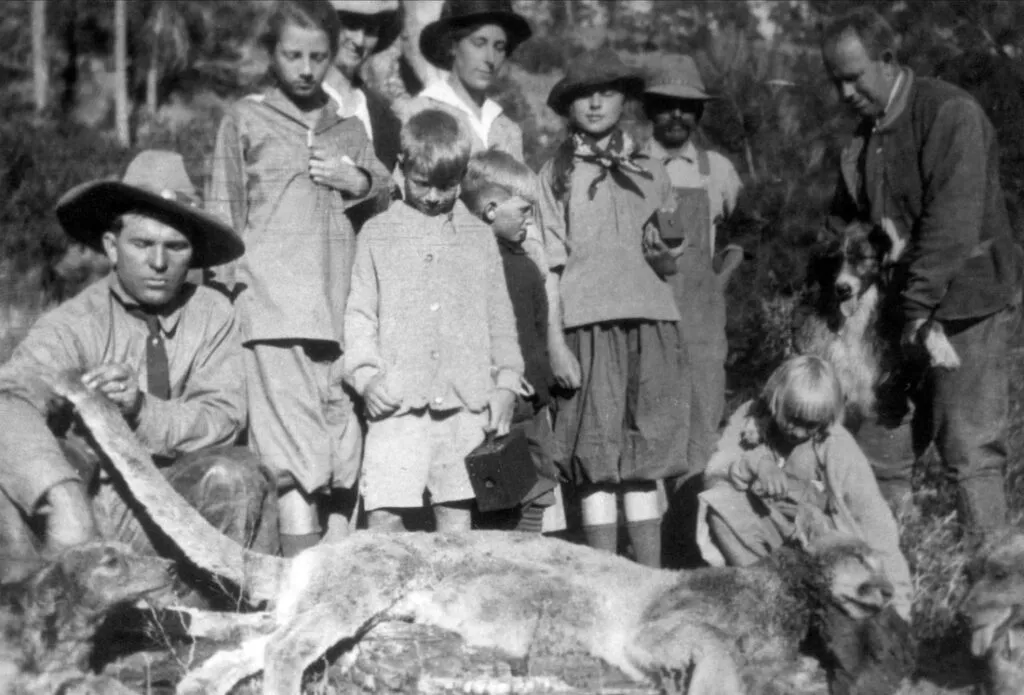
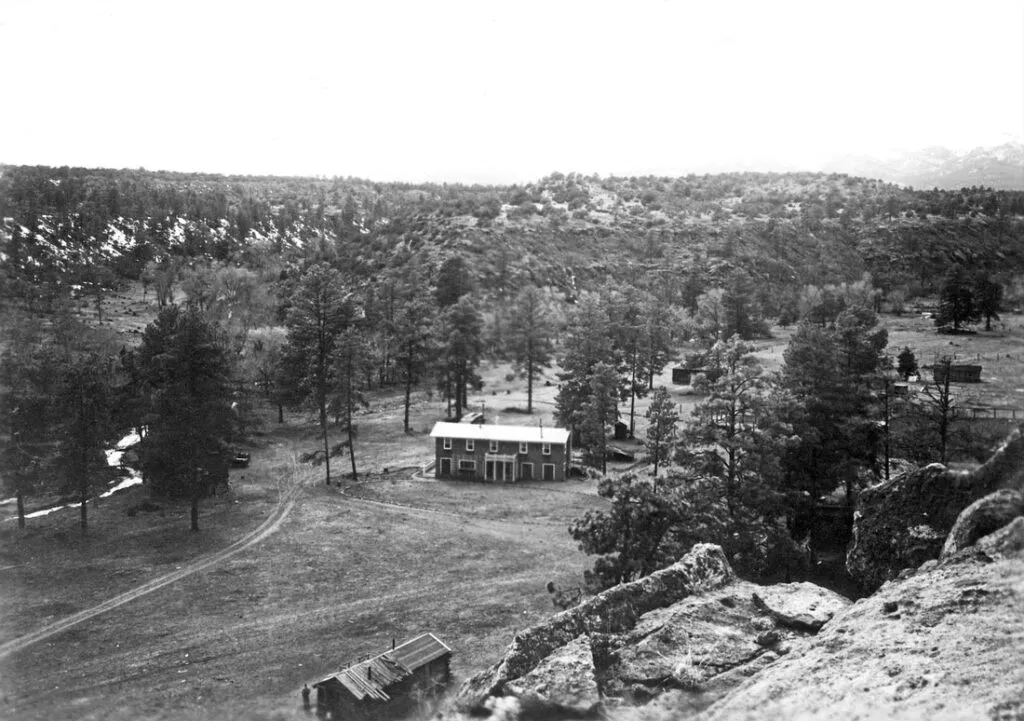
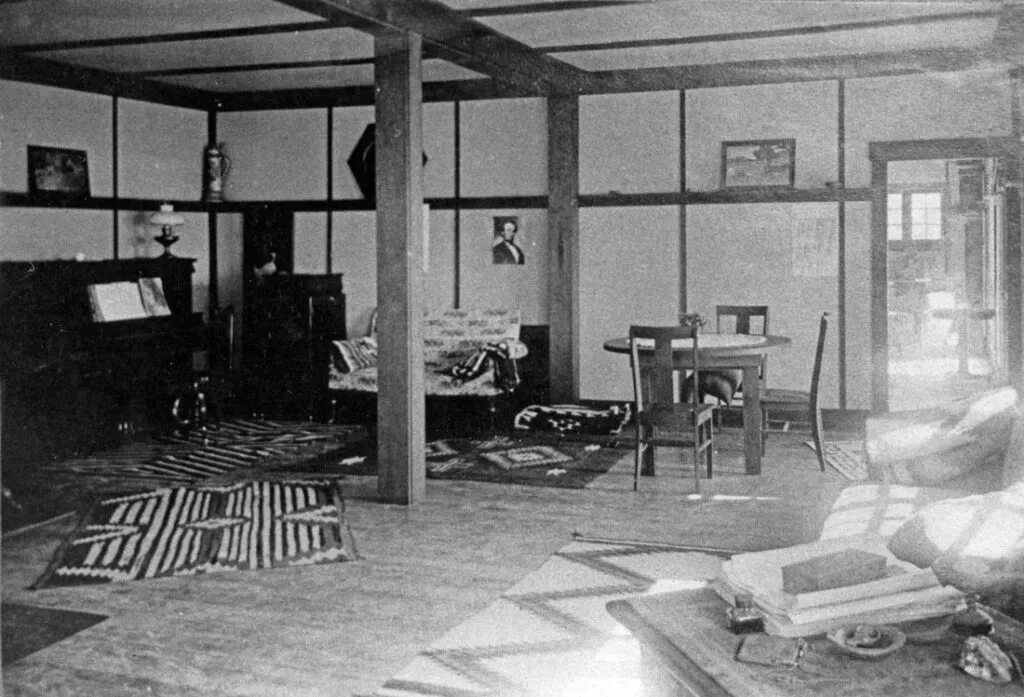
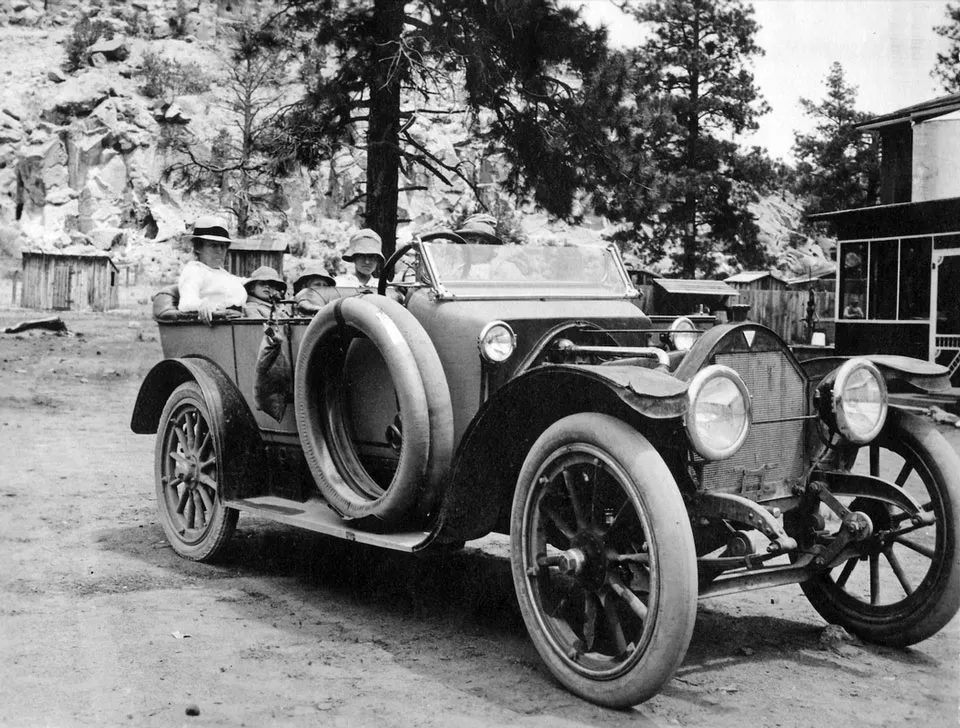
The cabin was older than the laboratory. In 1914 Ashley Pond Jr. learned that the Ramon Vigil Land Grant was for sale. He and four friends from Detroit, two bankers and two automobile executives, bought its 32,000 acres on the east side of the Jemez Mountains for $80,000. Pond’s plan was an elite hunting and fishing club in Pajarito Canyon. It had stables, a barn and a two-storey commissary that became the Pond home, guest cottages, an orchard, a tennis court and a log-cabin office with a library and a big fireplace. The guests included the archaeologists Jesse Nusbaum, Sylvanus Morley and A. V. Kidder.
The club closed in 1916. It had cost too much and, with the First World War escalating, the Detroit partners would not keep paying for a distant retreat. Pond turned to a nearby homestead, the Brook homestead on the plateau, and founded the Los Alamos Ranch School there, which is why the Army found a ready-made set of buildings in 1942. The Pond Cabin is the only surviving structure of the Pajarito Club. Between 1945 and 1952, when the area was Technical Area 18, it was used by Dwight Young.
Battleship bunkers and the implosion puzzle
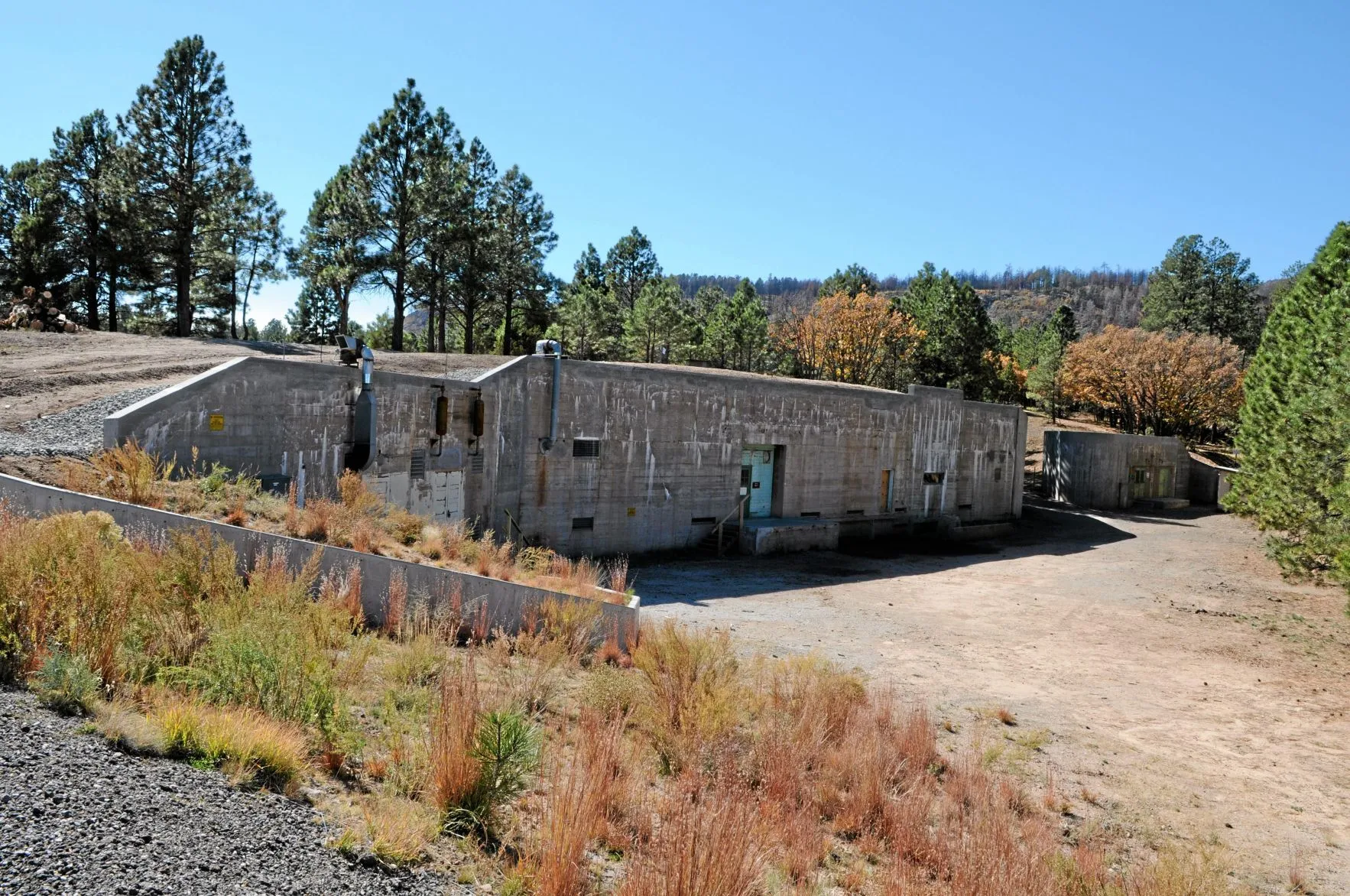
Once implosion became the priority, the quiet canyon turned into a proving ground. Later in 1944 it was used for the magnetic method of studying implosions. The tests took place in earth-covered concrete buildings known as the Battleship Buildings. The Battleship Bunker, TA-18-2, was built in 1944 to support implosion diagnostic tests for the Fat Man design. It is a cast-in-place concrete bunker whose west end is bow-shaped and steel-shielded, which gave it its name. Experiments there detected changes in a magnetic field during a high-explosive shot. The bunker had been restored by 2021, and two bunkers remain on the site, with one covered by a protective structure.
The dragon’s tail
The Pajarito Site’s best-known story is a bad one. In the summer of 1945 critical assembly experiments, in which a core is brought close to the point where a chain reaction begins, were done at the Omega Site in the Los Alamos Canyon. On 21 August 1945 Harry Daghlian dropped a tungsten carbide brick onto the plutonium core, causing a brief supercritical burst. He received a lethal dose and died 25 days later. Afterwards, critical assembly work moved to the Pajarito Site, which became the main critical assembly site in April 1946.
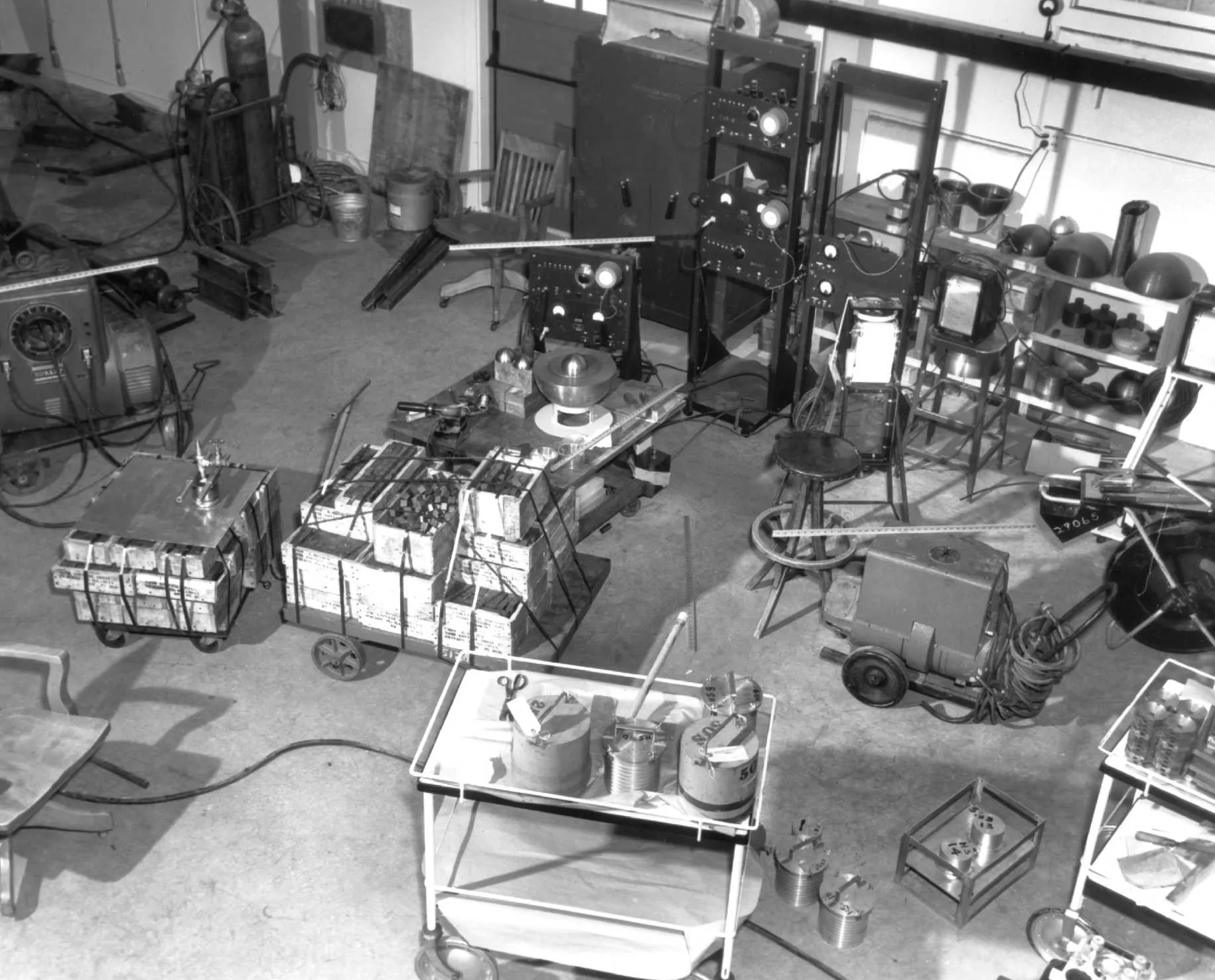
A month later it happened again. On 21 May 1946, at about 3:20 in the afternoon, Louis Slotin was demonstrating a criticality experiment to colleagues. The same 6.2 kg plutonium core was surrounded by two half-spheres of beryllium, which reflect neutrons back into the core. Slotin held the upper half-sphere with his left hand and kept a gap open with the blade of a screwdriver. The screwdriver slipped, the half-sphere fell and the core went briefly critical. Slotin lifted the shell off and ended the reaction, but he had already received a lethal dose of neutrons. This is the core later nicknamed the demon core.
It was an experiment with a reputation. The standard procedure used shims to keep the halves apart, and Slotin used none. He had done the test on almost a dozen occasions. Fermi had reportedly warned him that he would be dead within a year if he kept working that way. The film badges were in a locked box about 100 feet away. Slotin asked Raemer Schreiber to put them on the assembly, which had no scientific value and put Schreiber at risk. The phrase “tickling the dragon’s tail,” used for this kind of experiment, is usually attributed to Richard Feynman, though the exact wording varies from one telling to another.
Six other people were in the room: Alvin Graves, Samuel Kline, Marion Cieslicki, Dwight Young, Theodore Perlman and Private Patrick Cleary, with Graves standing closest. Slotin died at 11:00 a.m. on 30 May 1946, nine days after the accident, at the age of 35, with his parents present, and was buried in Winnipeg on 2 June. Graves developed acute radiation sickness and survived, with lasting neurological and vision problems, and died of a heart attack about 20 years later. Young recovered and died 29 years later. Cieslicki died of acute myeloid leukaemia 19 years later. The doses are uncertain. A 1948 estimate gave Slotin 880 rem gamma, and more recent estimates range widely, from about 2.9 grays to 21 sieverts.
What the accident meant depends on who tells it. The official 1946 account called Slotin’s quick reaction heroic. Schreiber, decades later, said his procedures were unsafe. The core was supposed to go to the Able test at Operation Crossroads, which our Operation Crossroads post covers, and after cooling was rescheduled for the cancelled third test. It was later melted down and the material reused. Slotin had also been the man who placed the initiator in the Gadget at Trinity, as our Trinity Test post tells.
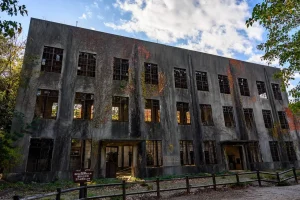
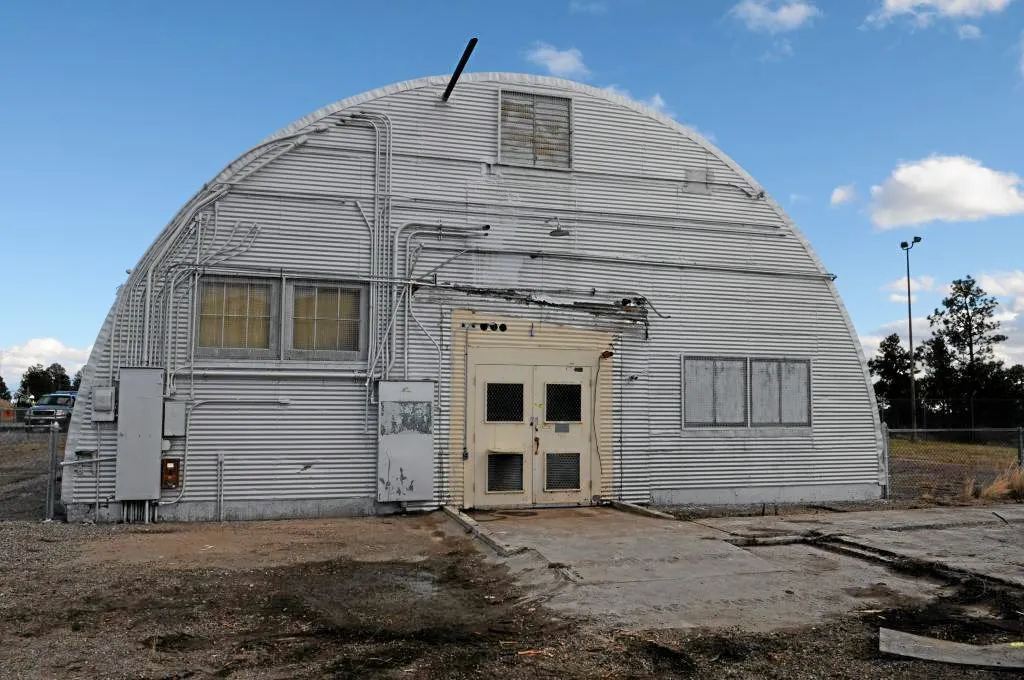
The Slotin Building is TA-18-1. It includes a high-bay addition built in 1946 to support criticality research, and it is the building where the accident happened.
From hand to remote control
Two fatal accidents in nine months settled how critical experiments would be done. The laboratory built remote-controlled buildings known as Kivas, later called the Casas, so that experimenters would not have to be in the room. Over the following decades the site, then called the Los Alamos Critical Experiments Facility, became a place for assemblies with names such as Planet, Comet, Flattop, Godiva IV and SHEBA. SHEBA was a solution assembly built to simulate criticality accidents at uranium enrichment plants. The site also trained people in criticality safety and emergency response.
In August 1998 the laboratory put TA-18 on stand-down after a criticality safety infraction. On 31 March 2004 the National Nuclear Security Administration decided to move the special nuclear material to the Device Assembly Facility at the Nevada Test Site. Godiva IV was disassembled between December 2004 and January 2006 and shipped to Nevada, and the last of the most sensitive material left on 28 October 2005. On 5 April 2007 only non-nuclear operations were approved. The research operations had ended in 2007 and many buildings were removed in 2009, as the archaeologist Rachel Adler has described.
What survives
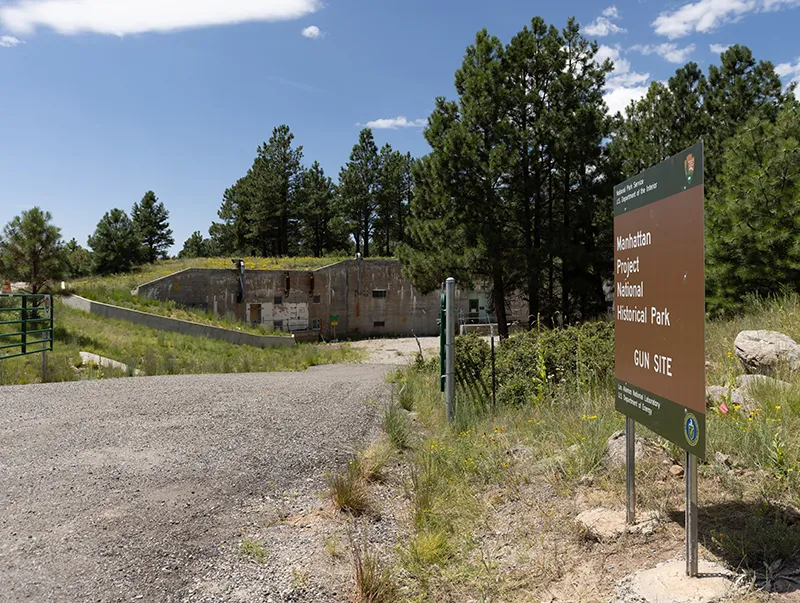
The Manhattan Project National Historical Park was established on 10 November 2015, when the Interior Secretary Sally Jewell and the Energy Secretary Ernest Moniz signed an agreement. The Department of Energy owns and manages the Los Alamos sites, and the National Park Service provides interpretation. The Los Alamos unit includes seven tagged facilities across three areas. Gun Site has three bunkered buildings, TA-8-1, TA-8-2 and TA-8-3, and a portable guard shack, TA-8-172. The Pajarito Site includes the Slotin Building and the Pond Cabin, TA-18-29. The third area is V-Site, where the high-explosive parts of the Trinity Gadget were assembled, and our Trinity posts cover that history.
At the Pajarito Site the surviving features include the Pond Cabin, the Battleship bunkers, the Casas (one with a guard tower), road structure, building pads, sidewalks and tree plantings. A cultural landscape study with the University of Oregon began in 2018. Most structures date from the mid-1940s, and Stark, the laboratory’s historic buildings specialist, says decades of weather, wear and neglect have taken their toll. The concrete used big smooth river rock aggregate and the walls used gypsum board as siding that was never meant to last. The Slotin Building, which the restoration team calls Casa One, is the current restoration focus. The archaeologist Ali Livesay says small finds, such as a child’s tea set spout near the Pond Cabin, bring human stories to life.
The strangest layer is older than all of it. The canyon walls are soft volcanic tuff, and Ancestral Puebloan people carved dwellings into them, called cavates. About 75 were documented in Pajarito Canyon, with an estimate that well over 150 exist. Adler describes about 1,500 years of continuous human occupation, with the period of significance now reaching back to about 980. The project reused some of the cavates, one for storing plutonium, and a hand-cut prehistoric trail used by guards carries graffiti, including one dated 1947. A vault built in 1948 to store radioactive material, with walls about 18 inches thick, is thought to have begun as a partly carved cavate.
Seeing it
You cannot simply go. The Gun Site is on laboratory property and cannot be accessed by the public. The Pajarito Site is open only on organised tours, with stops at the Pond Cabin, the Battleship Bunker and the Slotin Building. The tours run twice a year by the laboratory’s count, and three times a year by the Park Service’s, so check before you plan around either number.
Places are given by online lottery, not first come, first served, and entry is free. Each tour lasts about four hours with up to 30 people. You must be a US citizen aged 18 or over with original identity documents, be able to walk short distances, stand for 30 minutes and climb stairs, and not be employed by the laboratory. No phones, cameras or recording devices may be taken on the tour. The Slotin Building has at times been described as not yet open to visitors, needing funding and safety upgrades, so the interior stop may differ from year to year.
The Park Service’s Los Alamos visitor centre is at 475 20th Street in the Los Alamos Community Building, and it has generally opened Friday to Monday, 10 a.m. to 3 p.m. Hours change, so check. If you can’t get on a tour, the Bradbury Science Museum covers the project’s history.
Conclusion
The two sites tell the same story from opposite ends. At Anchor Ranch, a simple idea, shoot one piece of metal into another, was tested hard, and for plutonium it was undone by measurements made in a cabin in a quiet canyon. At the Pajarito Site, that quiet canyon became first the place where the measurement was made, then the place where the implosion bomb was probed, and finally the place where the people doing the probing paid for their own methods.
Under all of it are the families who farmed the plateau before 1942, and the people who lived in cliff dwellings centuries before them. The laboratory called these places Technical Area 8 and Technical Area 18. They were somebody’s ranch and somebody’s canyon first.
Did you know?
- About 25 satellite areas were built around Los Alamos, and by June 1945 about 40 percent of the laboratory's buildings stood at them.
- Anchor Ranch was bought for $43 an acre while Hispanic homesteaders received between $7 and $23.
- The Gun Site's control building sat behind a canyon wall, and a large periscope let researchers watch shots.
- Segre's group found reactor plutonium produced about 180 spontaneous fissions per gram per hour, against about 40 for plutonium-239.
- The Pajarito Club was a hunting and fishing club bought by Ashley Pond Jr. and four Detroit friends for $80,000 in 1914.
- The Pond Cabin is the only surviving structure of the Pajarito Club.
- Harry Daghlian died 25 days after dropping a brick onto the same core that later killed Louis Slotin.
- Slotin was buried in Winnipeg on 2 June 1946, three days after his death.
- Godiva IV was disassembled between December 2004 and January 2006 and shipped to Nevada.
- Pajarito Canyon has about 75 documented Ancestral Puebloan cavates and an estimated 150 or more.
- The park was established on 10 November 2015 with a memorandum of agreement signed by Sally Jewell and Ernest Moniz.