A blank space on the map
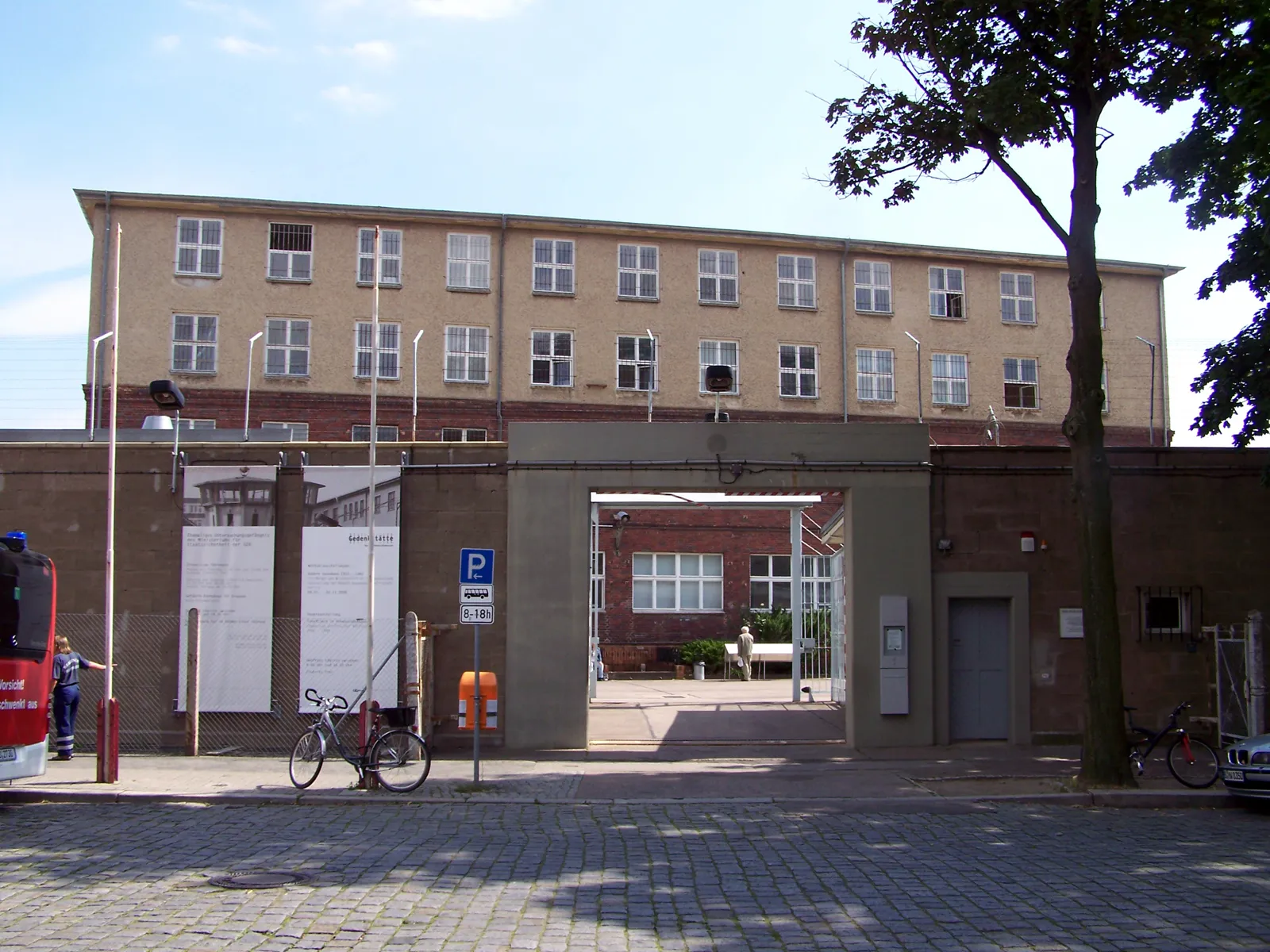
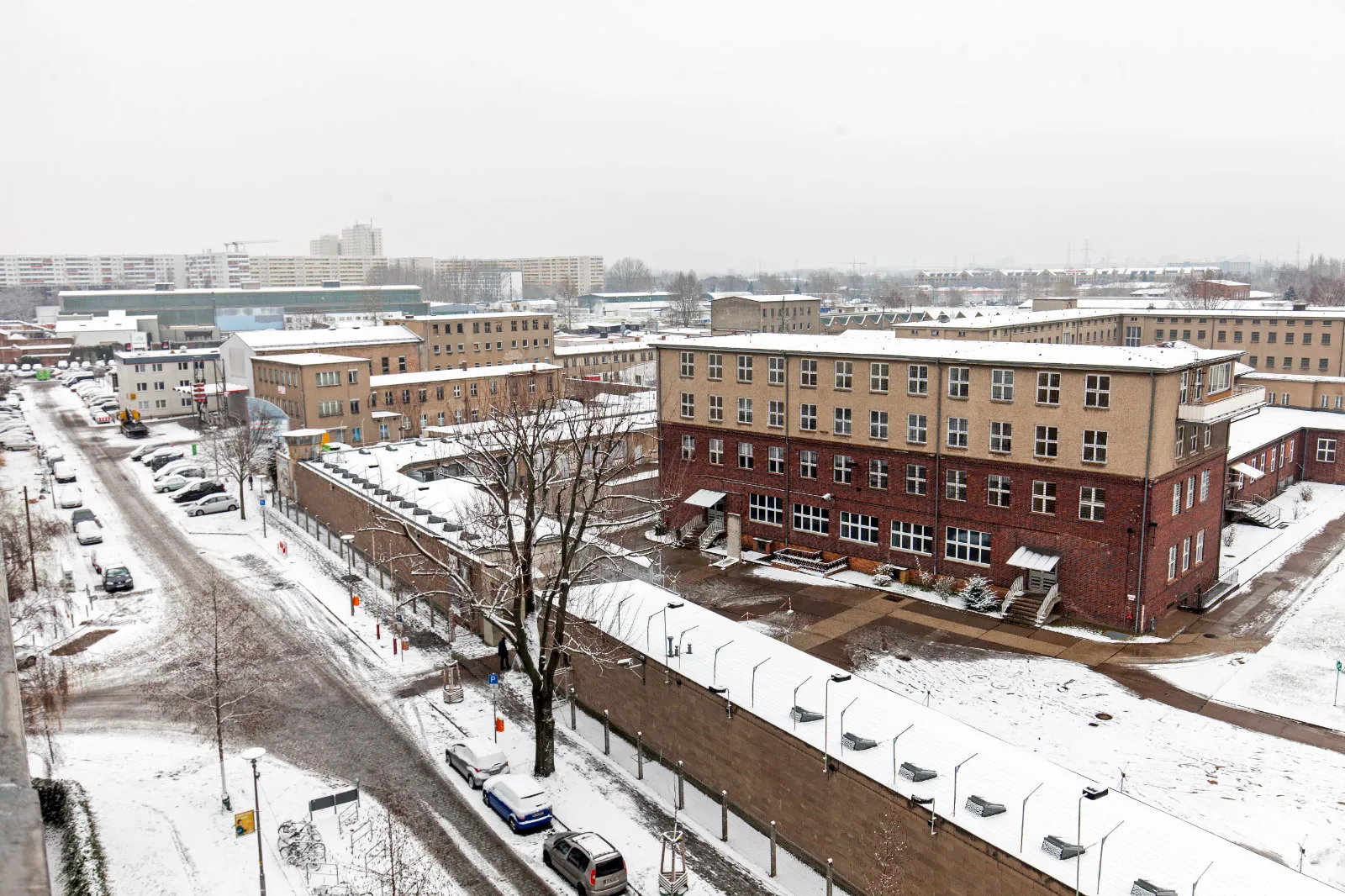
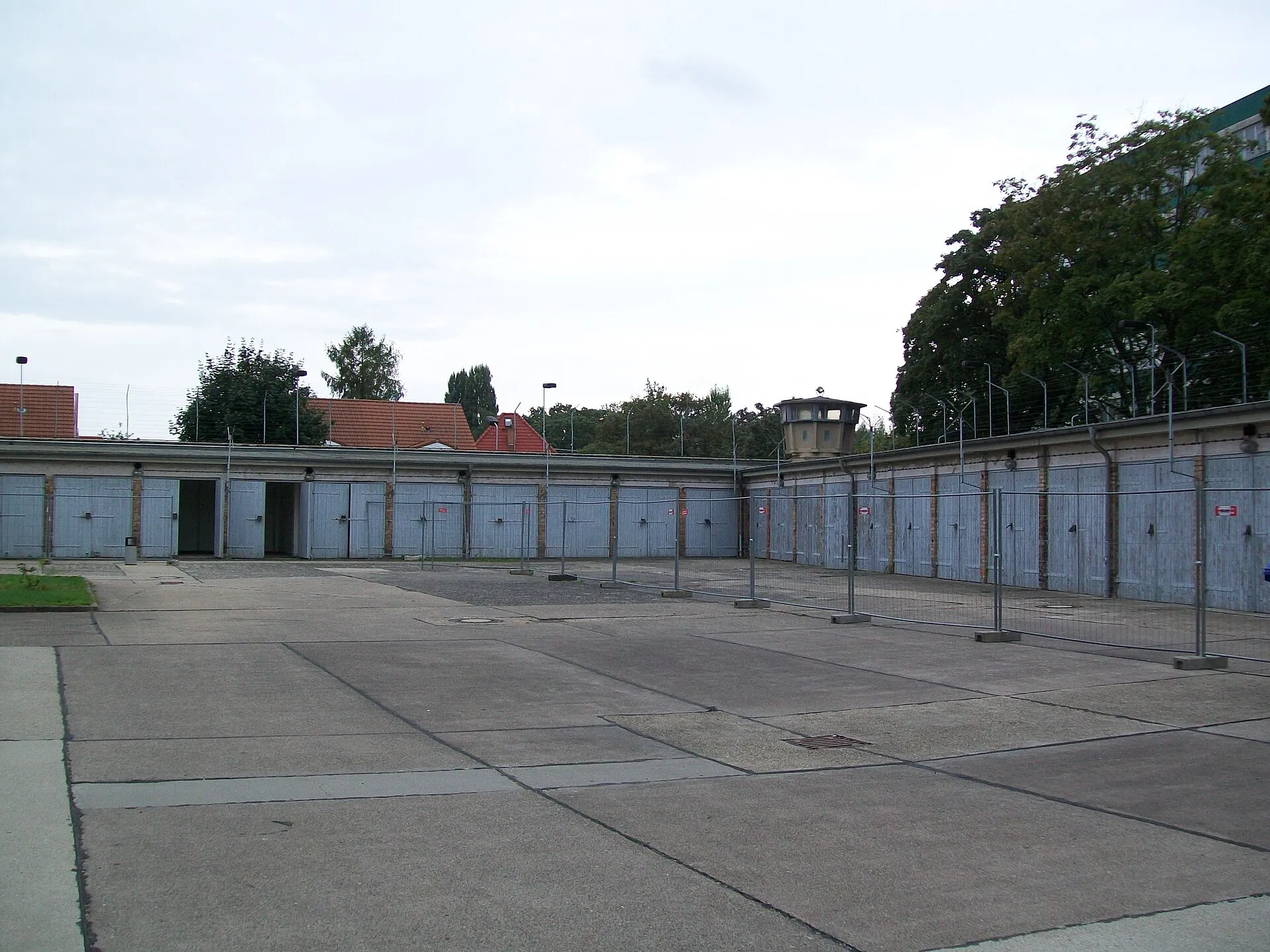
From the outside, the compound on Genslerstrasse looked like very little. Closed metal gates, watchtowers, cameras and armed guards faced the street, with ordinary apartment blocks beyond them. Behind that was a site that the Soviet secret service had fenced off in 1945 and the Stasi took over in 1951, and which was the second-largest restricted area of its kind in East Berlin, after the “military town” at Karlshorst. After the Stasi’s own headquarters on Normannenstrasse, it was the largest Ministry for State Security site in East Berlin.
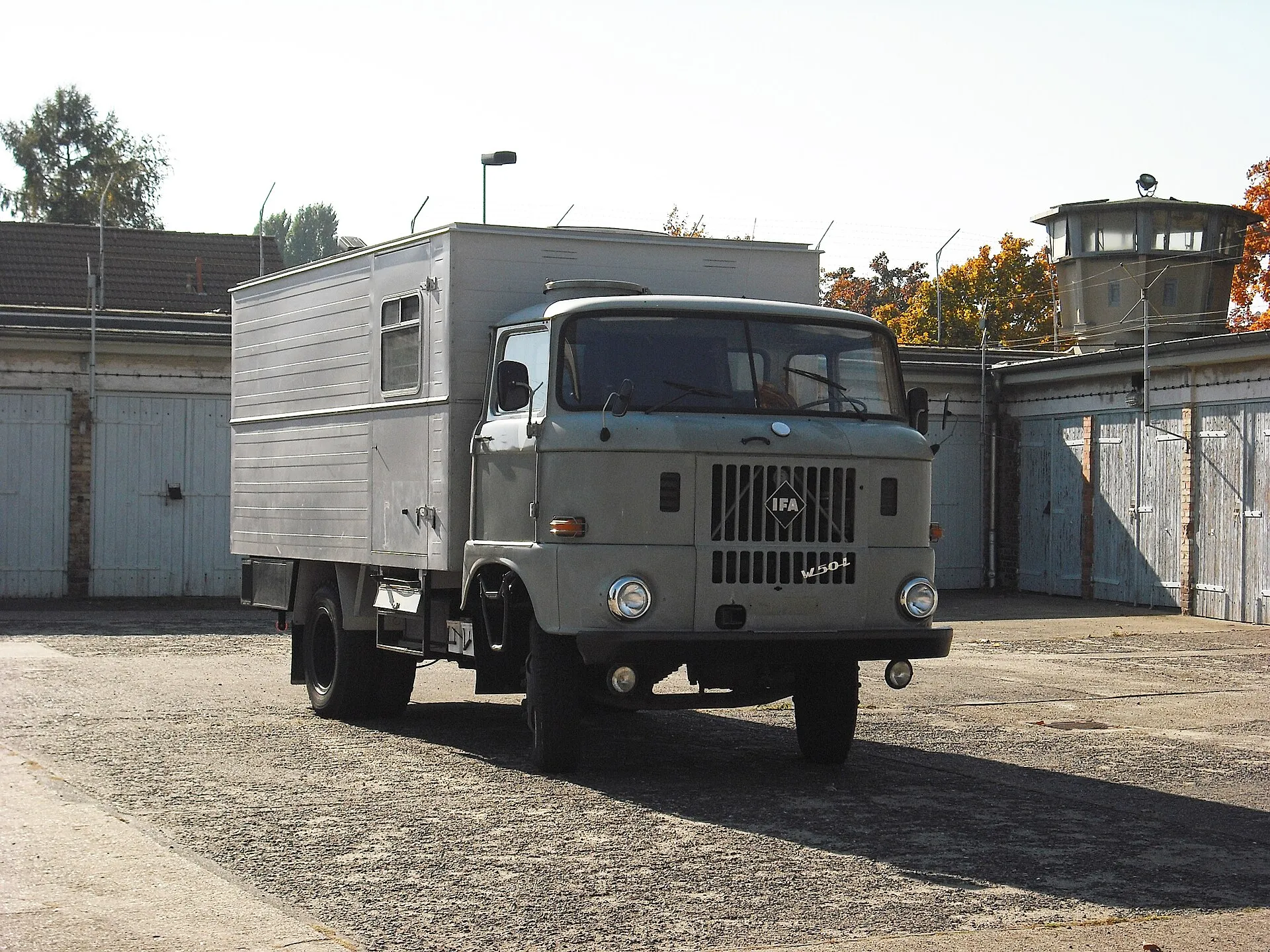
From the early 1970s, East Berlin city maps showed the whole area as empty space. For the prisoners the secrecy went further. They were held in strict isolation, cut off from the outside world, and never told where they were. Some were driven there in vans built to hide the route, and a guide on today’s tours describes arriving without any idea of the city beyond the walls.
A kitchen, a camp and a cellar
The site had an unremarkable start. The area had been industrial since about 1900, and in 1939 the red-brick main building was completed for the National Socialist People’s Welfare organisation, which ran it as a canteen kitchen. In the spring of 1945 Soviet forces took Hohenschönhausen, and in May or June the NKVD, the Soviet security service, set up Special Camp No. 3 on the grounds. It used the kitchen building and some barracks, partly on land that had held Nazi forced-labour camps.
Special Camp No. 3 was an internment and transit camp. Most of its prisoners arrived under a Soviet order of 18 April 1945 that targeted Nazi party members, police and intelligence staff and officials, along with alleged spies and saboteurs. Teenagers from the age of 12 were also held, on suspicion of belonging to the Nazi “Werewolf” resistance, and denunciations often led to arrest. The camp was mainly a transit station for more than 16,000 men, women and adolescents, who were sent on to other special camps such as Ketschendorf, Weesow and Sachsenhausen. At times more than 4,200 people were held there in very cramped conditions, with poor hygiene, scanty food and inadequate medical care.
The totals differ, and none of them can be treated as settled. Estimates of the number who passed through run from around 10,000 to more than 20,000, and the death toll is given as anything from 886 on the official statistics to around 1,000 and, in the highest independent estimates, 3,000 to 3,500. What every account agrees on is that the dead were buried anonymously, in mass graves or on a rubble dump, and that the camp was dissolved in the autumn of 1946, in October or November depending on the record. One of the prisoners was the well-known actor Heinrich George, who was moved to the special camp at Sachsenhausen in 1946 and died there shortly afterwards.
The site was also the headquarters for the wider system. The central administration of the special camps in the Soviet zone was based at Genslerstrasse, and the official figures, which are incomplete, count more than 122,000 people in ten camps, more than a third of whom died in custody. Most were held for years without trial. The last three of those camps were not closed until early 1950.
The submarine
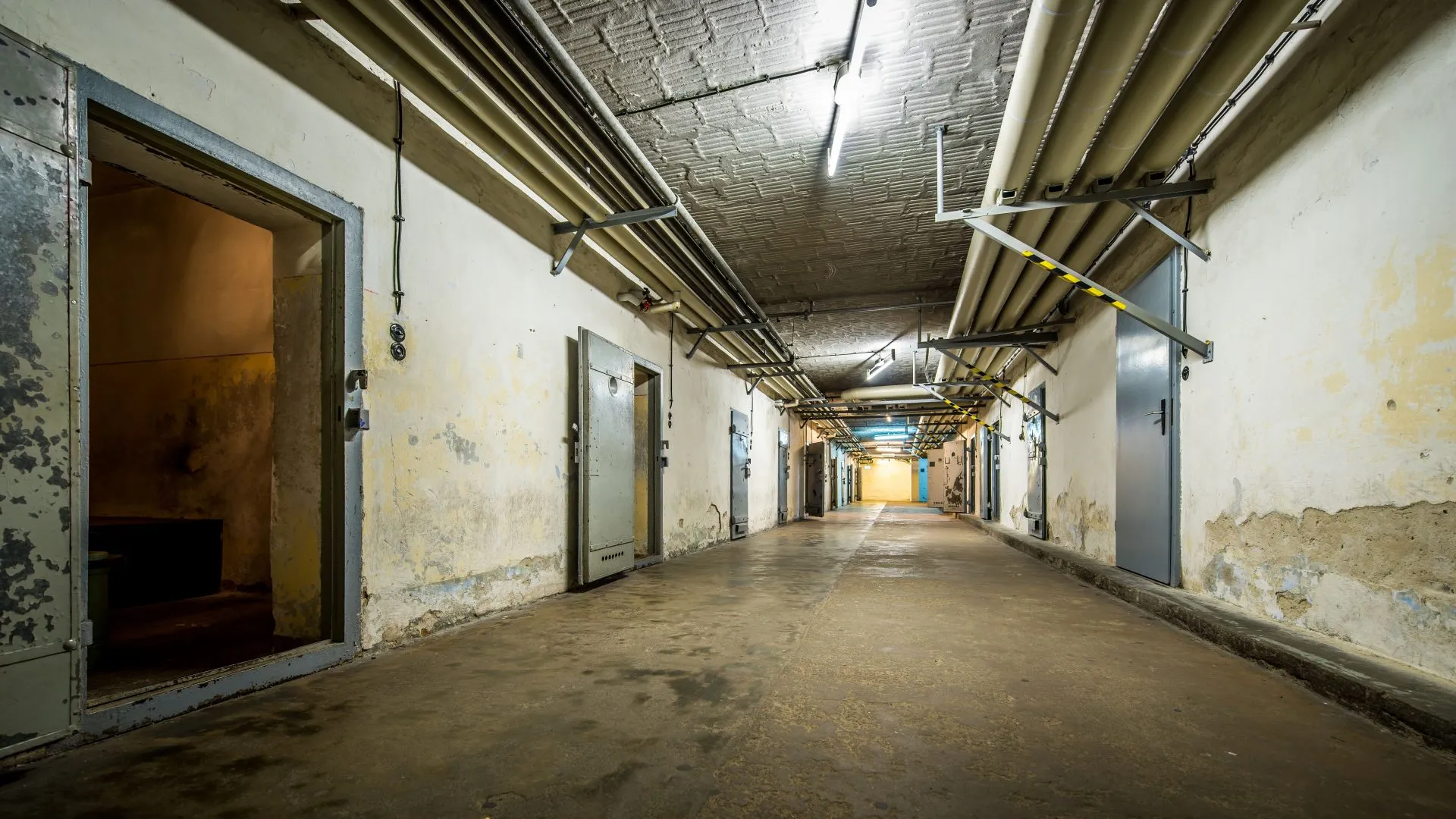
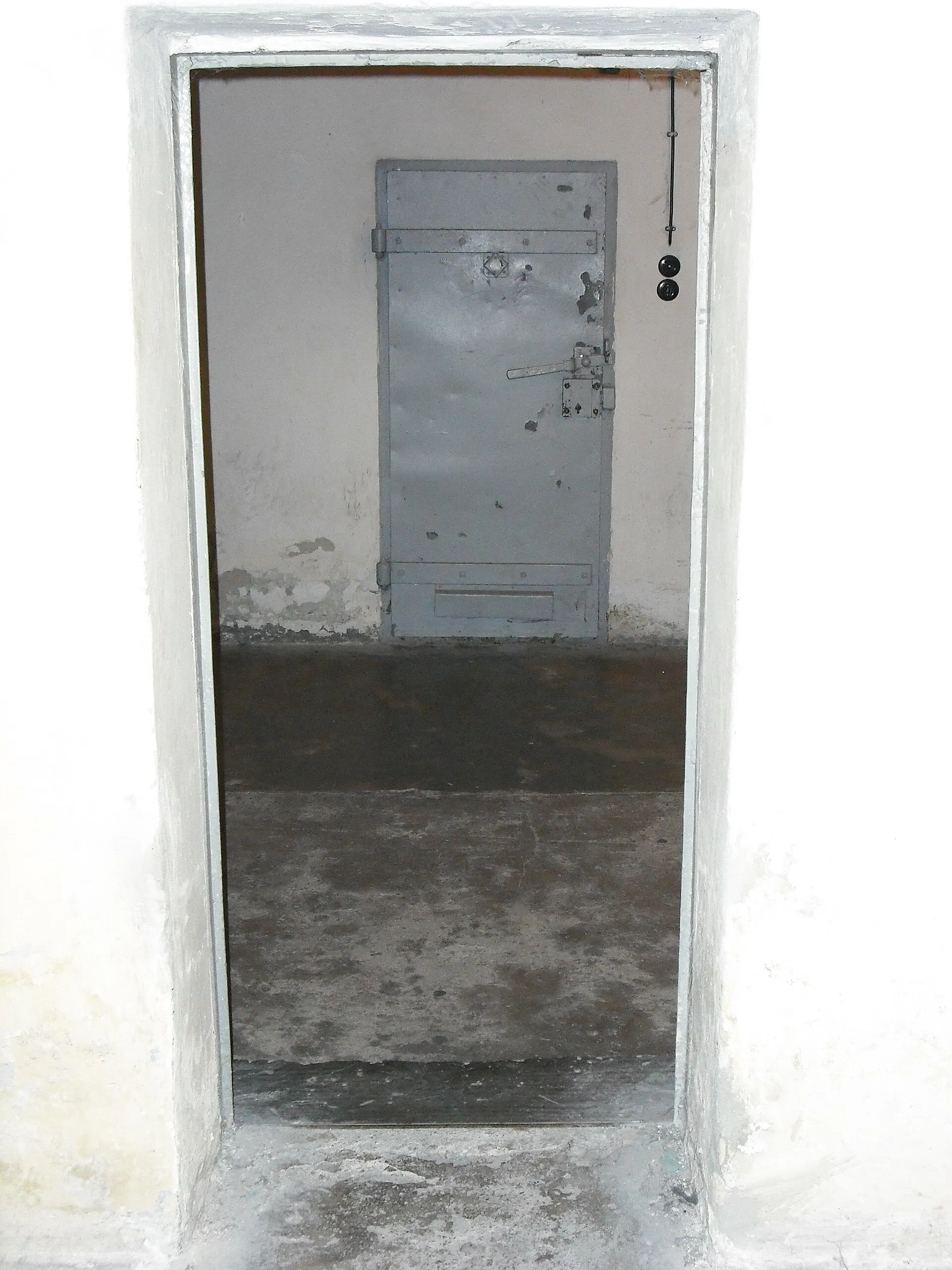
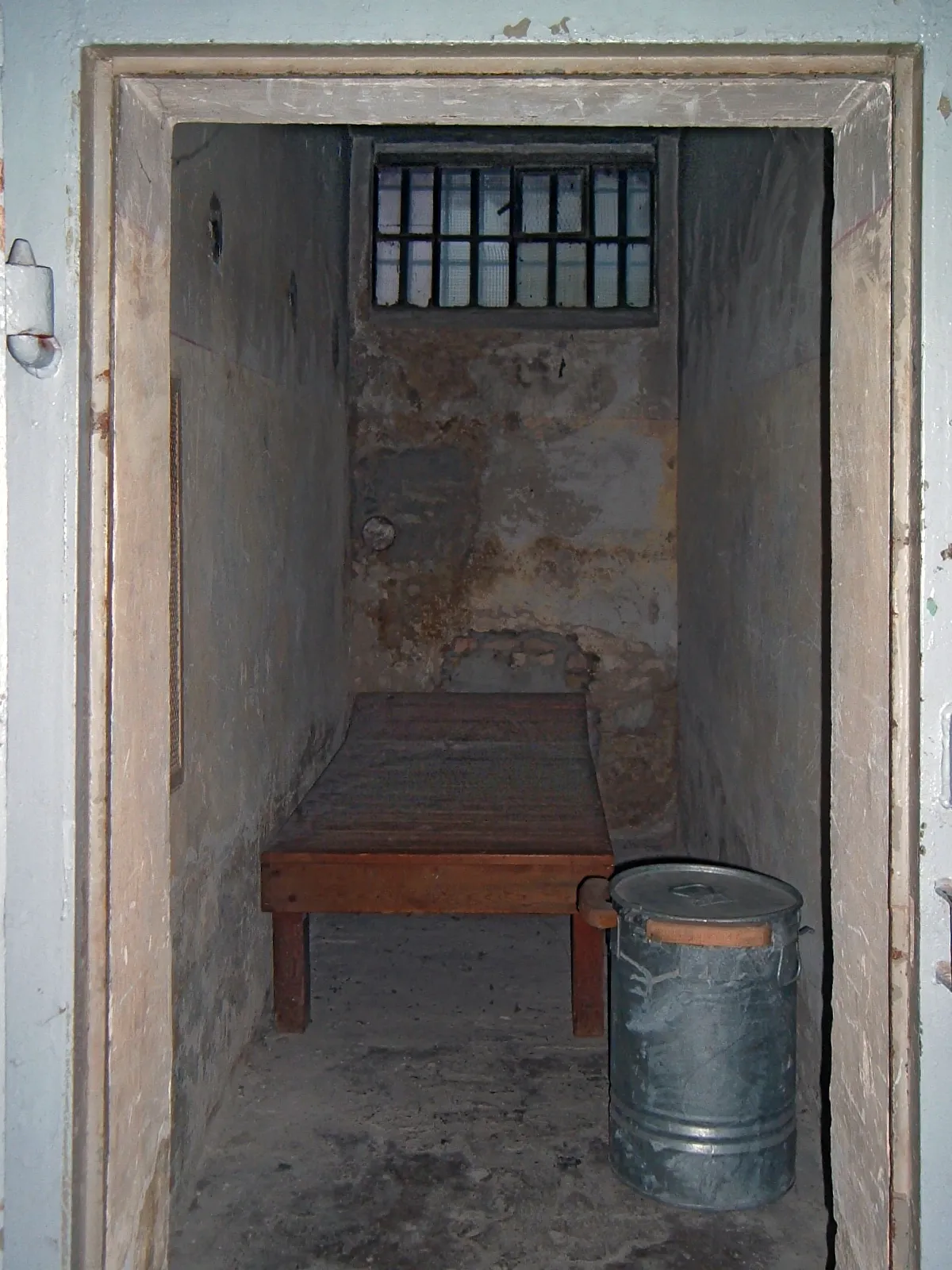
When the camp was dissolved, the Soviet security service kept the site. Prisoners who remained were put to work converting the cellar of the former kitchen into cells, and from 1947 the Soviets used it as a central remand prison. Its inmates called the wing the “submarine” (the U-Boot). The cells were windowless, about two metres by three, with wooden plank beds and a bucket. A bulb burned day and night. In the early years the cells were ventilated only through air holes in the lower part of the doors, and they were damp and at first unheated. Some cells could also be flooded, which is the usual explanation for the nickname.
The prison held suspected Nazis, but also suspected political opponents of the Soviet occupation, including members of the SPD, LDPD and CDU, and communists or Soviet officers who were thought to be disloyal. Interrogations usually lasted for hours and mostly took place at night, often with threats and physical violence, and former prisoners reported being forced to confess through sleep deprivation, long hours of standing or days in special detention cells. Many were later sentenced by Soviet military tribunals to long prison terms and forced labour. After the end of the SED dictatorship, the majority of former prisoners who applied for rehabilitation were declared innocent by the Russian military prosecutor’s office in Moscow.
The Soviet prison was known as the “Industriekombinat” and was run first by the NKVD and then by the Ministry of State Security until March 1951. In that year the building was handed over to the East German authorities.
The Stasi takes over
In 1951 the East German Ministry for State Security, the Stasi, established its own central remand prison in the former Soviet cellar, with the handover generally placed in March. Over the following decades it became the headquarters of a system. The Ministry would run remand prisons in each of the 15 districts of the GDR and another at its Lichtenberg headquarters, and all of them were directed from Berlin-Hohenschönhausen.
In the 1950s upwards of 11,000 people considered obstructive to the communist regime were held at the prison. A 2015 study of the staff gives about 11,000 as the total for the whole period from 1951 to 1989, so the real figure may be higher or lower depending on what is counted, and “about 11,000 or more” is the safest way to put it. They included leaders of the June 1953 uprising, Jehovah’s Witnesses, reform communists such as Walter Janka, and politicians who had fallen from favour such as the former foreign minister Georg Dertinger and Paul Merker.
The Stasi also reached across the border. In 1952 Walter Linse, a lawyer who worked in West Berlin for a group documenting legal violations in the GDR, was abducted from the street. We come to his case in a moment.
“I would not want to miss a single day, and I would do it again at any time.”
Siegfried Rataizick, the last head of the Stasi prison, quoted in a 2015 study by Elisabeth Martin (translated from the German)
The quotation makes a point that the facts alone cannot. Many of the people who ran the prison were not reluctant officials, and we will come back to them. First, the case of Walter Linse.
Walter Linse
Dr Walter Linse held a doctorate in law and worked as an economic-law expert for the Investigative Committee of Free Lawyers in West Berlin. On 8 July 1952, shortly before an international legal congress on violations of law in the GDR that he was helping to prepare, he was seized near his home. Hired kidnappers forced him into a disguised taxi and shot him in the leg. Erich Mielke, then Minister for State Security, signed his detention order the same day.
He was held at Hohenschönhausen until 3 December 1952. He was interrogated, often at night, until early December, and shared a bugged cell with two informers, with no contact with the outside world. On 3 December Soviet state security took him to its own remand prison in Karlshorst, where months of further interrogation followed. In September 1953 a Soviet military court in Berlin sentenced him to death by firing squad, and he was executed in Moscow on 15 December 1953.
The Soviet authorities refused for decades to look into his case. In 1996 it was reopened and the Russian authorities declared him wholly innocent. There is a complication that the memorial itself publishes: in 2007 it became public that during the Third Reich he had worked for the Chamber of Commerce and Trade in Chemnitz, where from 1938 to 1942 he was involved in the “aryanisation” of Jewish property. A final assessment of that role is still pending. Both facts belong in the story. A man can be unlawfully abducted and put to death by an unjust process, and also have a record that deserves scrutiny. The two things do not cancel each other out.
A prison built to disorient
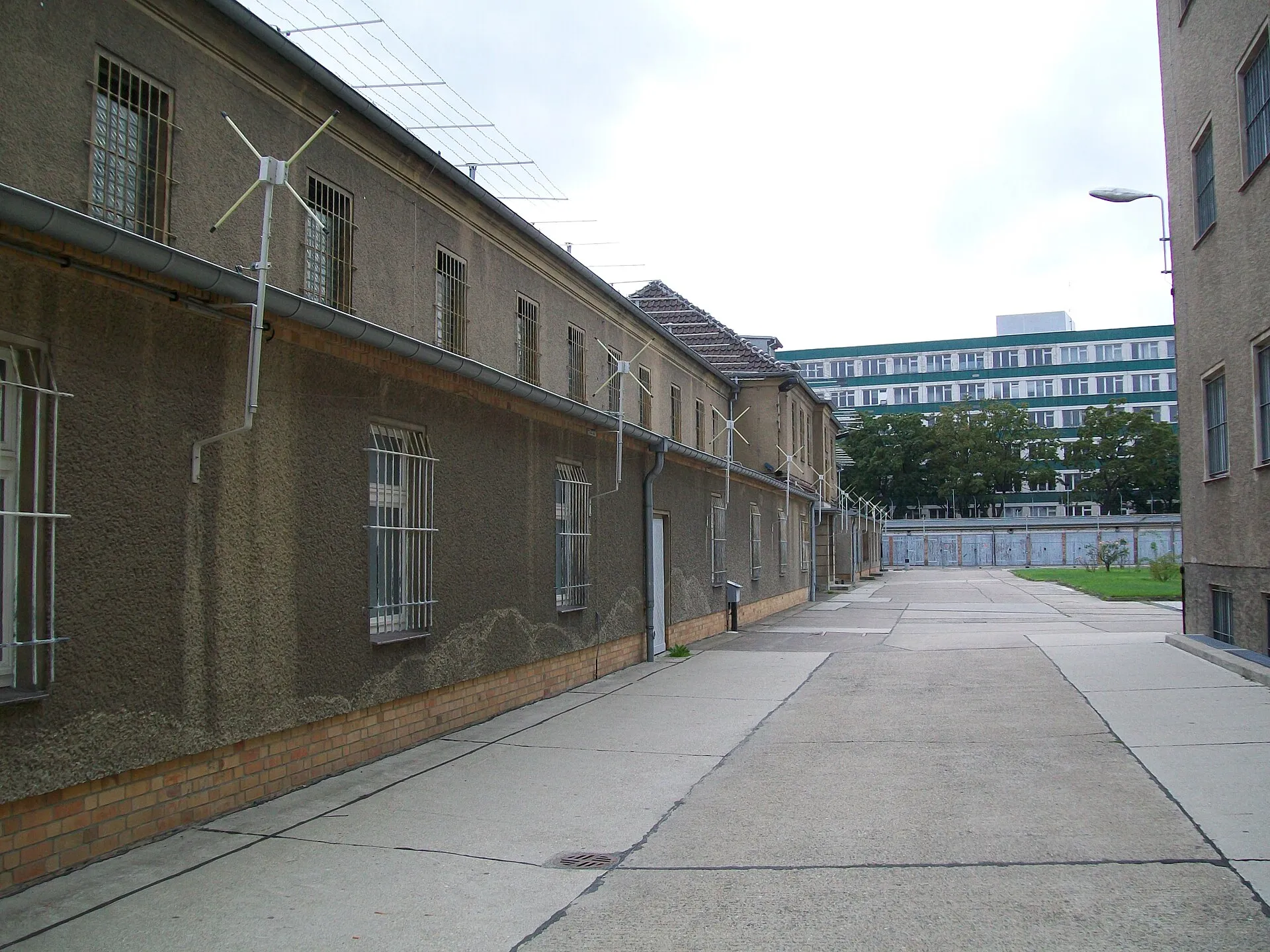
At the end of the 1950s the Stasi built a new block. Prisoners from the neighbouring labour camp, known as “X”, built a U-shaped building with cells and interrogation rooms. The date is given variously as the end of the 1950s, 1958 to 1960 and the end of 1960, and the size is counted as over 100 cells across three floors, over 200 cells, or a building designed for about 200 prisoners. This new building, with its separate custody wing and interrogation wing, remained the Stasi’s main remand prison until 1989.
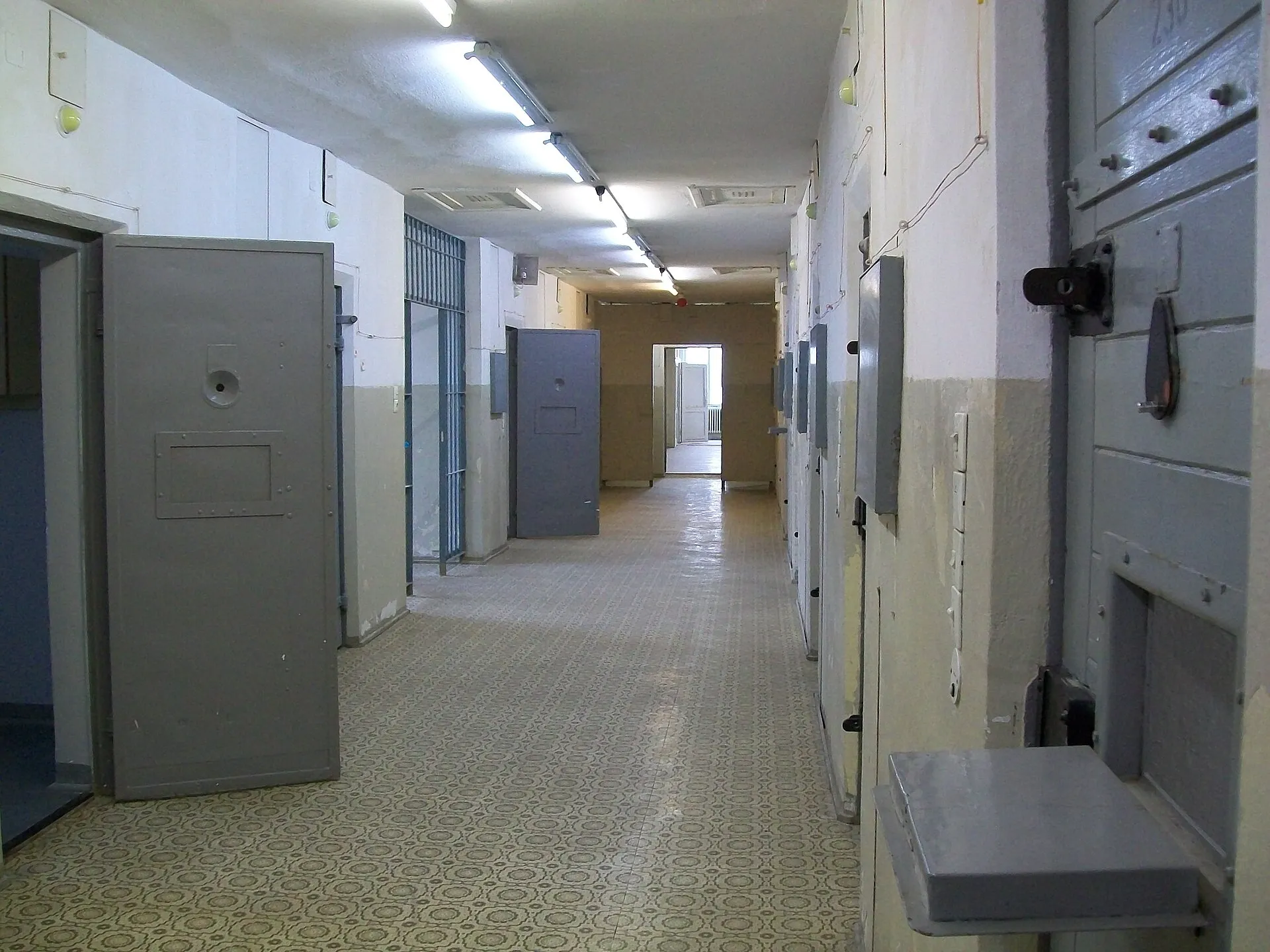
What matters is how it worked. Some prisoners were taken off the street in a van disguised as a delivery truck, with tiny individual compartments so that no one ever saw anyone else. Inside, they were moved one at a time, and a traffic-light system regulated movement in the corridors so that prisoners saw only guards and their interrogator. There were no communal meals. The details come from guides on the tour, but they match what is documented in general terms: prisoners were kept in strict isolation, cut off from the outside world and from each other, and never told where they were.
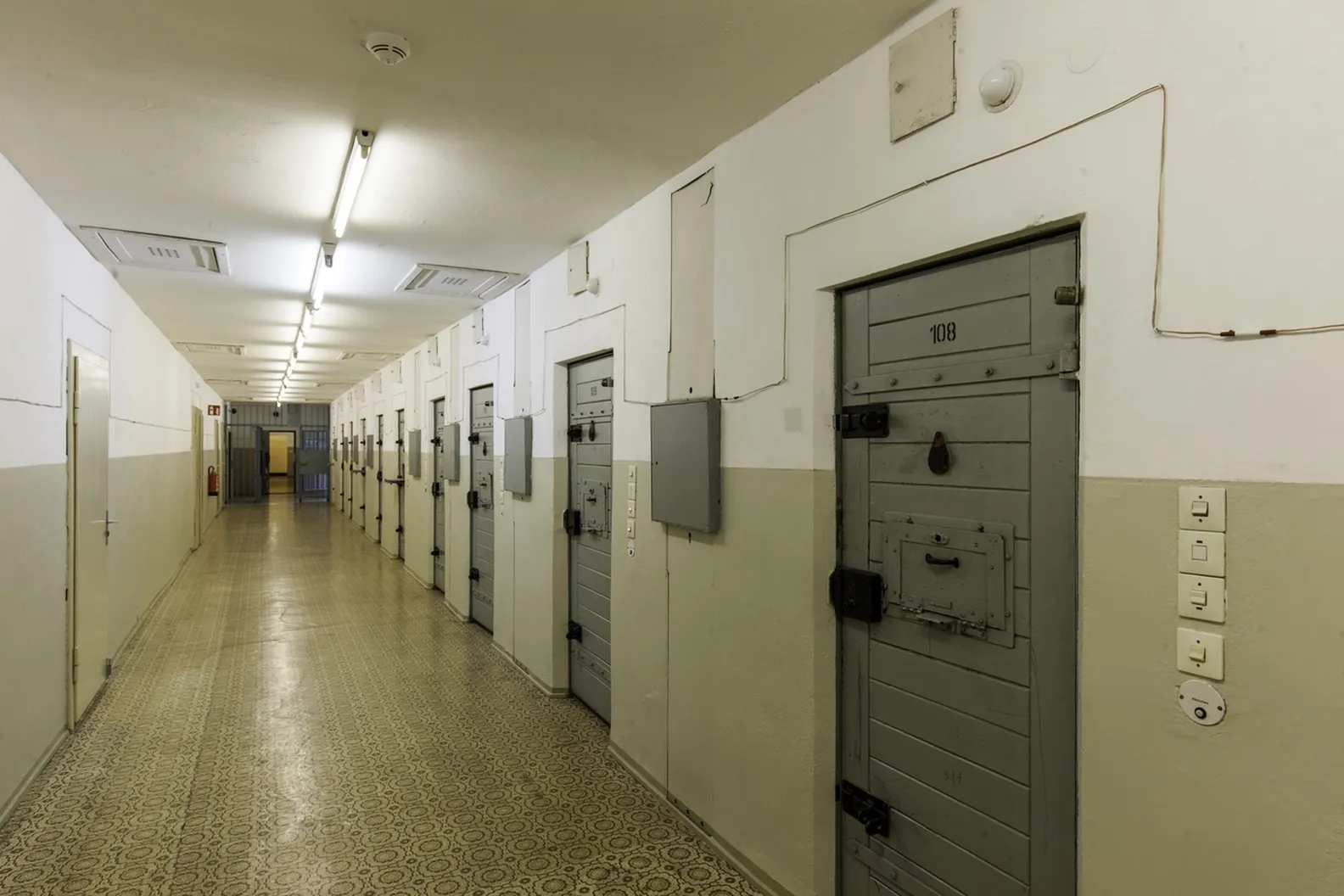
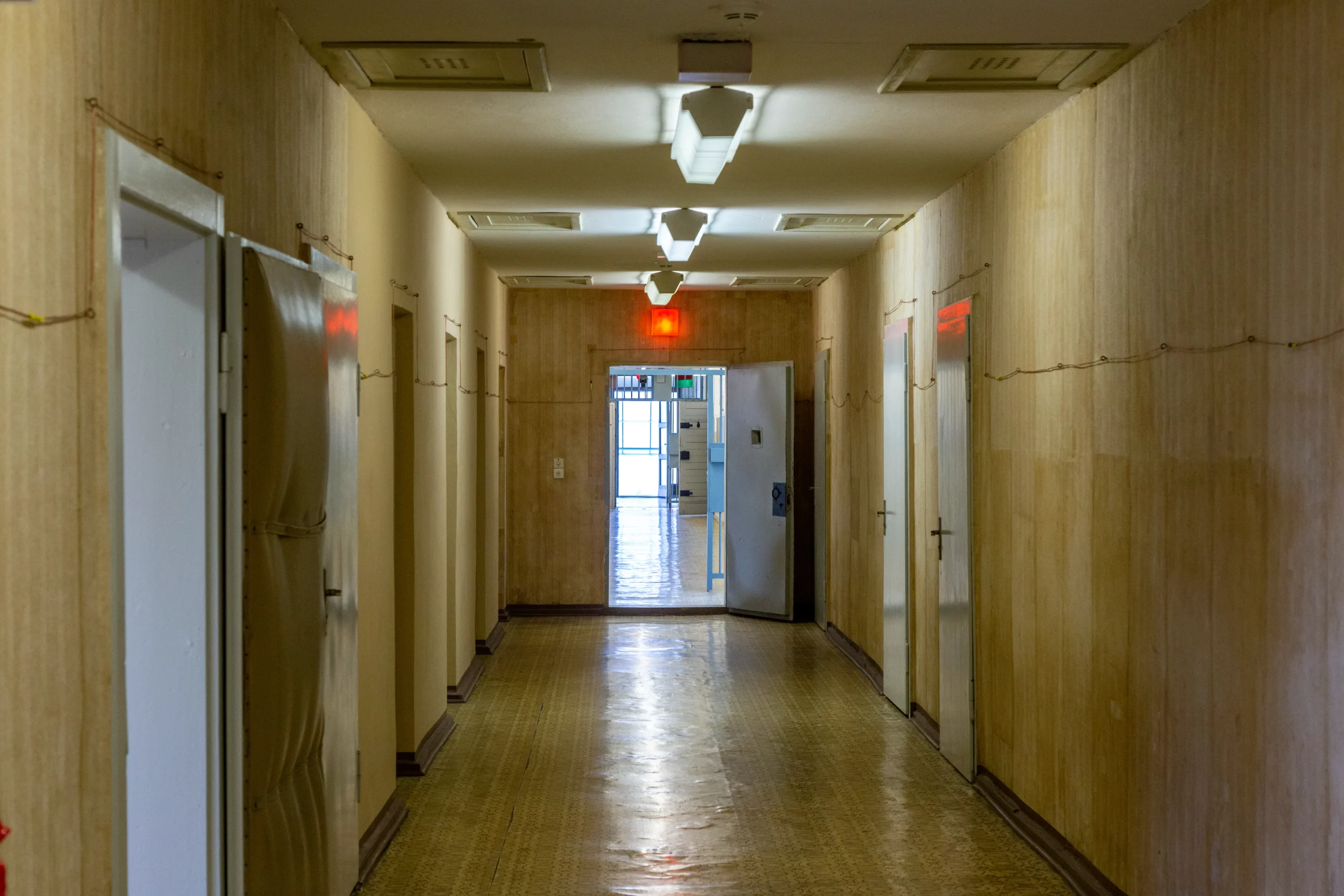
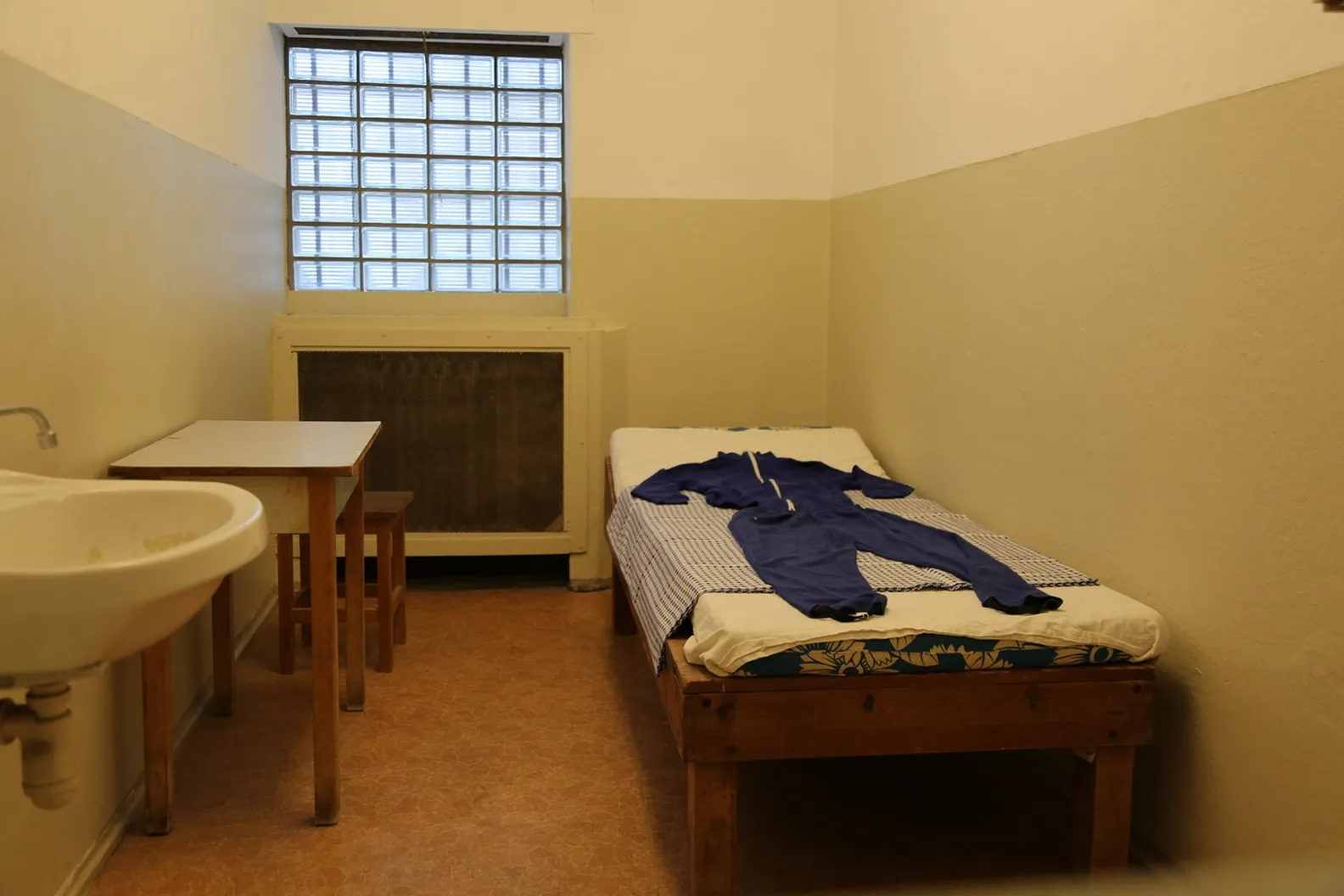
The cells in the new building were of a different kind. They had linoleum floors, a window of etched glass bricks that let in light but hid the view, and a toilet beside the door, which meant under the constant watch of the guard. Wire alarm lines outlined each cell door, and prisoners were required to sleep on their backs with their hands visible on top of the blanket, officially for safety and suicide prevention. By day they could sit only on stools, not on the bed. One cell was soundproofed and lined in black rubber, where prisoners were put, in the guides’ words, “ostensibly, to calm down”.
How the system worked
Physical violence was common in the 1950s, but gradually gave way to psychological methods. By the time the new building was in use, interrogators were trained specialists, and the aim of the process, which could last for months, was to obtain a statement that could be used against the prisoner in court. Sleep deprivation, total isolation and threats against friends and family were standard techniques. The interrogation rooms were upstairs, in the part of the building with the only comfortable furniture and the only clear windows. Interrogators sometimes kept prisoners waiting while they took phone calls, and sometimes tried to befriend them, offering books, medical care or time in the yard. The interrogator was, in effect, the prisoner’s only link to the world.
Alongside the cells there was a prison hospital, built in the 1950s and expanded in 1972, which treated prisoners from the three Berlin prisons and sometimes from other Stasi prisons. It had up to 28 beds in cells, an X-ray ward, operating rooms, a morgue and outdoor exercise cells that prisoners called “tiger cages”. In 1989 it was reportedly headed by a Dr Herbert Vogel with 28 full-time Stasi staff, though those figures rest on a single record.
The Stasi ran remand prisons in every district, and this one sat at the centre of that system. The restricted zone around it also housed units that developed wiretapping equipment, hidden cameras and forged passports, and, until 1984, parts of the Stasi archives. The prison was one part of an apparatus, and the apparatus was very large. The Stasi employed about 91,000 full-time staff at its peak, and 189,000 informal collaborators.
The people who worked here
It is natural to ask who did the work. A 2015 article by Elisabeth Martin, published by the Federal Agency for Civic Education, looks at the guards and interrogators of the prison, and its findings are worth summarising. Two units ran the prison, Department IX (investigation) and Department XIV (custody), both reporting directly to Minister Mielke. Department IX had 31 staff in early 1953 and 484 by October 1989, and Department XIV had 83 in 1953 and 255 in 1989.
From the late 1960s, Martin writes, the Stasi mostly recruited from families already tied to the state security services, the army or other armed organs. The recruits had been shaped by their households, schools, the youth organisation FDJ and the Stasi’s guard regiment, and the result was a strong “us versus the enemy” outlook. Staff received monthly specialist training and ideological instruction, including at the Stasi’s own law academy. Dissent and requests to emigrate were framed as part of a Western-directed campaign. Interrogators were expected to deliver a compliant prisoner to the court, often using coerced or falsified confessions, and justified this by reference to vague criminal-law clauses, such as the offence of “hostile agitation”, and to secret internal regulations.
Martin’s conclusion is that many former staff described the work as a matter of conviction and not only of employment, and that few showed doubt. She argues that the idea of simply following orders or fearing punishment is often self-serving, and that individuals bore moral responsibility. Sanctions, group pressure, privileges and career incentives reinforced compliance, but she holds that the dictatorship could not have lasted four decades without the staff’s ideological commitment. The remark of the last prison chief, Siegfried Rataizick, quoted above, comes from this study.
After the Wall
When the Berlin Wall was built on 13 August 1961, the pattern of imprisonment changed. The new block then mainly held people who had applied to leave the GDR or tried to escape, together with critics of the ruling party. Among those held in later decades were Rudolf Bahro, Jürgen Fuchs and Bärbel Bohley. Another prominent name from the 1980s is the civil-rights activist Vera Lengsfeld.
Not everyone who was held was famous, and not everyone was released into freedom. Some prisoners were released, often back into East Germany, where the Stasi continued to watch the population closely. We have deliberately kept to the people whose cases are publicly documented, because former prisoners still tell their own stories on the tours.
1989 and 1990
In the autumn of 1989 the East German state began to come apart. Between 18 October and the end of that year, 210 prisoners were released or transferred from Hohenschönhausen, and more than half were still there when the Wall fell on 9 November. The prison itself kept operating for almost another year. It was not stormed by demonstrators. That is said to have given staff time to destroy evidence, and our knowledge of the prison therefore relies heavily on former prisoners’ accounts and surviving East German records. The claim about destroyed evidence is not firmly documented, but the reliance on witnesses is a recurring theme in the memorial’s own work.
The prison closed on 3 October 1990, the day Germany was reunified. Two years later, in 1992, the site was placed under monument protection. It was declared a memorial in 1994, and in July 2000 it became an independent foundation under public law. The memorial’s first visitors came in 1994, and its early development was driven by former inmates.
From prison to memorial
What stands out at Hohenschönhausen is how much has been preserved. The high degree of preservation gives an authentic picture of the prison regime. The cell corridor still has its numbered steel doors. The interrogation rooms look strikingly ordinary, with veneer desks, curtains and telephones, and a barred window that has been painted over. The cellar of the “submarine” can still be entered. In 2008 the memorial received about 250,000 visitors, nearly half of them schoolchildren, and in 2023 its director Helge Heidemeyer reported 384,423. A new permanent exhibition opened in February 2023. The foundation is funded jointly by the federal government and the State of Berlin.
In May 2009 Chancellor Angela Merkel visited the memorial, and she is described as the first German head of government to do so, meeting three of the last political prisoners. The site also appears in several films and television series, among them The Lives of Others (2006).
The most distinctive part of a visit is the tours. Guides are former prisoners of the building, and historians. The foundation also maintains a contemporary witness archive and a media library with English-language videos and biographies.
Visiting
The memorial is at Genslerstrasse 66, in northeast Berlin. It is reached by tram (the M5 to Freienwalder Strasse, or the M6 or 16 to Genslerstrasse) or by bus 256 to Grosse-Leege-Strasse / Freienwalder Strasse. The exhibitions in the front building, Imprisoned at Hohenschönhausen and Involuntary Community, are free and open daily from 10:00 to 18:00, with a few closures around Christmas and the New Year. The cells and interrogation rooms can only be seen on a guided tour.
English-language tours have run at 10:40, 12:40 and 14:40, lasting about two hours including a short film, with groups limited to 25 people and a recommended minimum age of 14. Prices have been about 9 euros standard, 5 concession and 2.50 for school pupils, though older figures are lower, and schedules change, so please check the memorial’s own website before travelling. Individuals can book through the memorial’s ticket shop, and groups of seven or more must book ahead. Private photography is allowed on the tour. Allow time afterwards. This is not a place that suits a tight schedule.
Conclusion
Hohenschönhausen is a place where the machinery of a state security system can be walked through. The cells are small and plain, the interrogation rooms look like offices, and the methods used there were increasingly psychological: isolation, sleeplessness, and uncertainty about where one was. The map left the prison blank, and the prisoners were not told where they were.
The site also holds three different regimes under one roof, a Nazi-era kitchen, a Soviet camp and a German secret-police prison, and that layering is part of its lesson. Different governments filled the same walls for different reasons, and the people inside them were often unable to tell anyone where they were. Its survival as a memorial owes much to former inmates, who drove its early development and still lead many of its tours.
Did you know?
- The Stasi's central remand prison stood in a restricted zone that East Berlin city maps showed as empty space from the early 1970s.
- The cellar cells of the Soviet prison were windowless and were nicknamed the "submarine" by prisoners.
- Soviet Special Camp No. 3 at the same site closed in autumn 1946, after thousands of people had passed through it.
- The Stasi took over the prison in 1951 and closed it on 3 October 1990, the day of German reunification.
- Prisoners built the Stasi's new cell block themselves, using labour from a neighbouring work camp.
- Lawyer Walter Linse was abducted from West Berlin in July 1952, held at Hohenschönhausen and executed in Moscow in 1953; Russian authorities cleared him in 1996.
- Between 18 October 1989 and the end of that year, 210 prisoners were released or transferred, and more than half were still held when the Berlin Wall fell.
- The site was placed under monument protection in 1992 and became an independent memorial foundation in 2000.
- The memorial counted 384,423 visitors in 2023.
- Guided tours of the cells are often led by former prisoners of the building.