
The loudest place in the Pacific
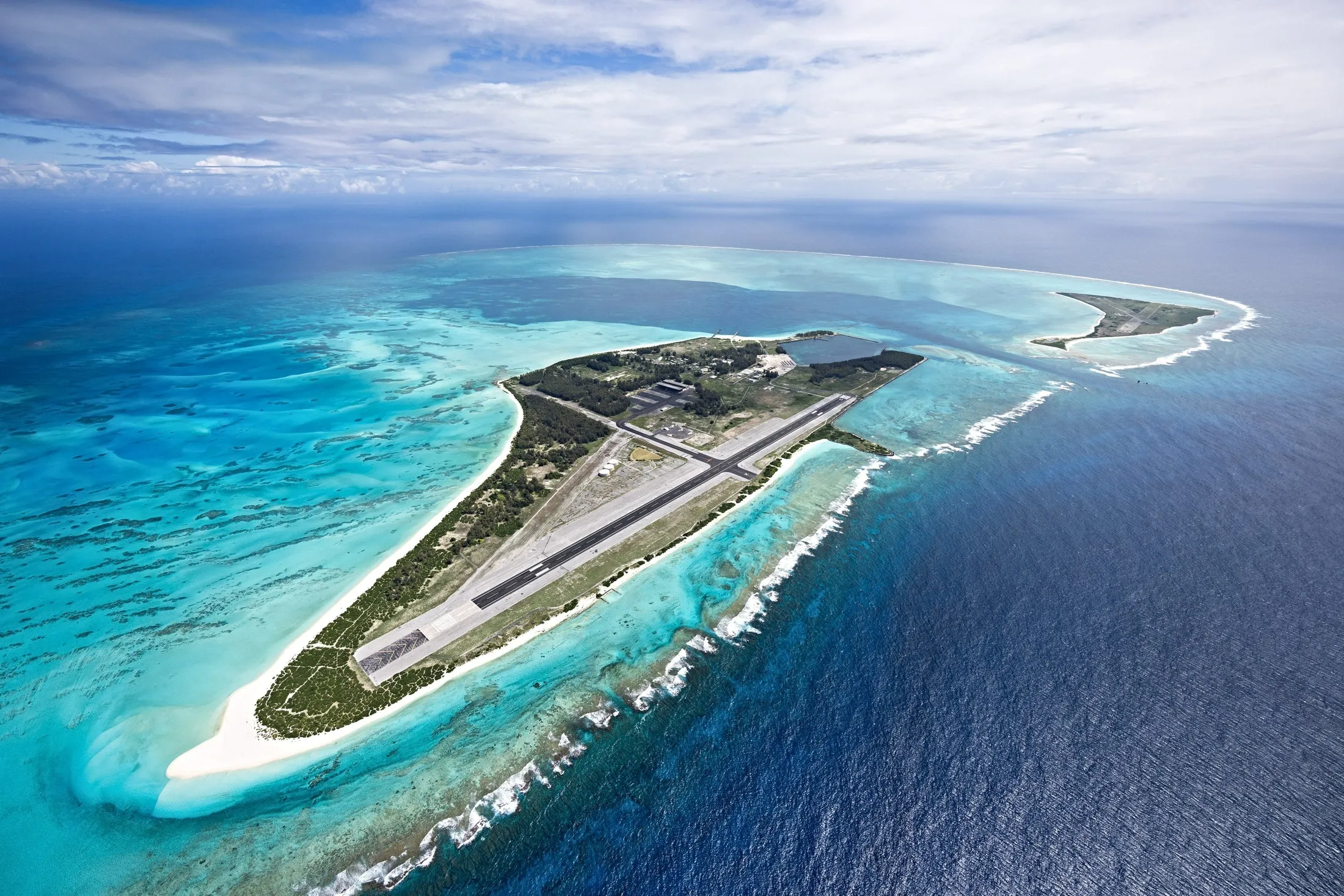
Midway is easy to misread on a map. It looks like an afterthought, a speck at the far northwestern end of the Hawaiian chain, so far from anything that the nearest large city, Honolulu, is about 1,300 miles away. The atoll itself is a ring of coral just under five miles across, with a lagoon inside it and three flat islands sitting on the reef. Sand Island, the largest, is about 1,117 acres. Eastern Island is a little under a third of that, and Spit Island is a sliver. Together they come to about 1,549 acres of dry land, in the middle of 580,000 acres of reef and ocean that make up the refuge around them.
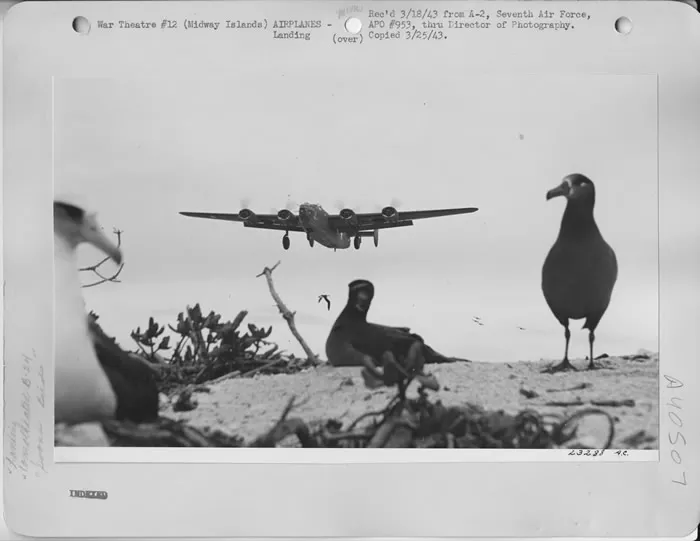
The Hawaiian names for the place are worth knowing. One is Kuaihelani, which the Fish and Wildlife Service uses for the atoll. Another is Pihemanu, which means the loud din of birds. After a visit in the nesting season, it is hard to think of a better description. The atoll is home to nearly three million nesting birds across the year and the largest colony of albatrosses on earth. It is a quiet place for people and a very loud place for everything else.
Most people know the name because of the battle, and the battle deserves its own telling. But the atoll is more than a footnote to one day in June 1942. It has been a coaling-station dream, a telegraph outpost, a hotel stop for passengers on the world’s first transpacific air route, a fortress, a submarine base, a Cold War radar and listening site, and now a refuge that happens to contain some of the best-preserved remains of the war in the Pacific. This is its story.
Claimed, annexed and forgotten
Native Hawaiians probably knew of the atoll, but there is no physical evidence of settlement, and no permanent settlement is recorded. The first recorded visit by an outsider was on 5 July 1859, when Captain N. C. Brooks of the sealing ship Gambia sighted it and claimed it for the United States under the Guano Islands Act of 1856. There was apparently no guano mining. In August 1867, Captain William Reynolds of USS Lackawanna formally took possession of the atoll, which is generally described as the first offshore island group annexed by the United States.
The next plan was a coaling station for steamships crossing the Pacific. In 1870 the Pacific Mail Steamship Company tried to dredge a channel through the reef, with USS Saginaw supporting the divers. The effort ended that October, and Saginaw was wrecked on the reef at nearby Kure Atoll on the way home. There is also a story that in 1888 a ship called the Wandering Minstrel wrecked on the reef while hunting sharks, and that the survivors’ tales inspired Robert Louis Stevenson’s novel The Wrecker. It rests on a single timeline, but it fits the place so well that we pass it on.
Wire and wings
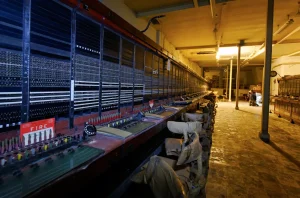
The turning point was a cable. In 1903 the Commercial Pacific Cable Company arrived to lay the first transpacific telegraph line, with Midway as a relay point between Honolulu and Guam and the Philippines. It was part of the first communications system to go around the world. Theodore Roosevelt placed the atoll under Navy control that year, partly to stop poachers killing seabirds, though one account dates the order to 1900. The first message was sent that July, and a greeting from Roosevelt is said to have circled the world in nine minutes.
The cable company’s staff were the atoll’s first permanent residents. They built four two-storey buildings, and a few of them lasted for a century. They also changed the landscape. Settlers brought coconut, ironwood and Norfolk Island pine, along with other non-native plants and animals, and the atoll has spent more than a century trying to put the consequences right. The Navy also stationed 21 Marines on the island between 1904 and 1908. The cable company handed its buildings and equipment to the Navy in 1952, ending its operations.
The second wave of modernity arrived by air. In 1935 or 1936, depending on the record, Pan American Airways built a refuelling base in the lagoon, with a wooden dock and a mooring barge. Its flying boats stopped there on the five-day crossing from Honolulu, and passengers stayed at a hotel which Pan Am called the Pan Am Hotel and everyone else called Gooneyville Lodge, after the albatrosses that sailors called gooney birds. The hotel is described as having 45 rooms; it was later used by the military and then demolished. Pan Am stopped operating at Midway in 1947.
Building a fortress
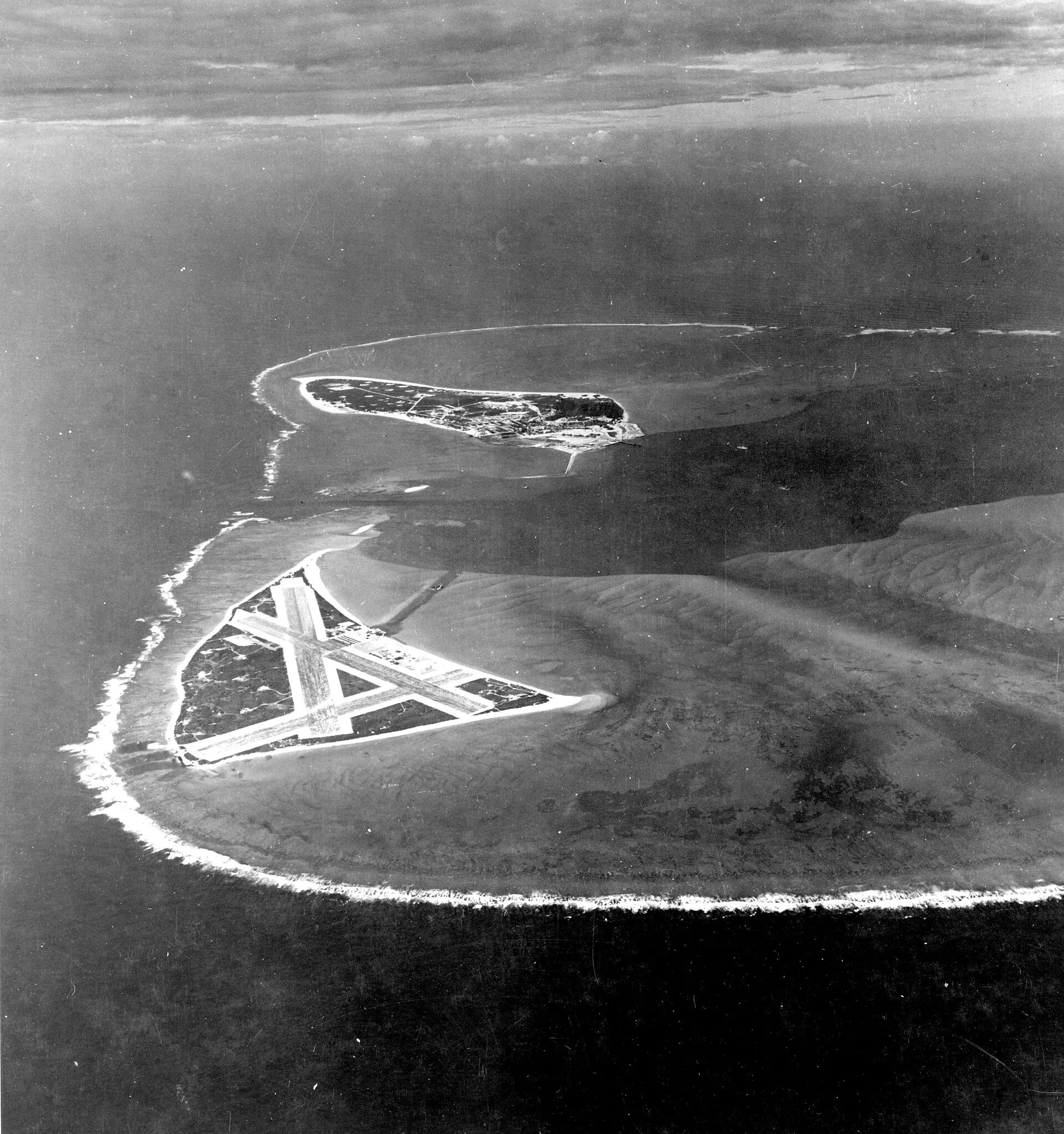
Everything changed in the late 1930s. The Navy decided Midway was strategically important enough to turn into a major base, second only to Pearl Harbor in the Pacific by the time of the build-up. In 1938 the Army Corps of Engineers dredged the lagoon. In 1939 the Navy awarded contracts for the facilities, with runways on Eastern Island being built by civilian workers from that year. Construction of the naval air facility began in 1940, using plans by the architect Albert Kahn, better known for his factories in Detroit. The Marines arrived in September 1940 as the 3rd Defense Battalion, to be replaced in September 1941 by the 6th Marine Defense Battalion.
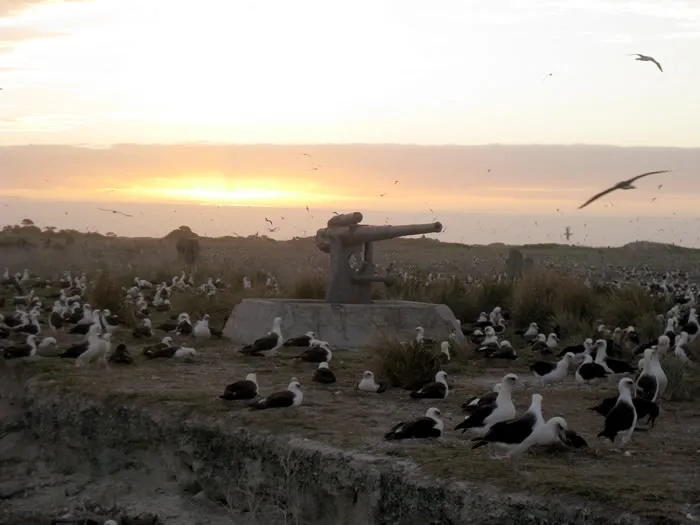
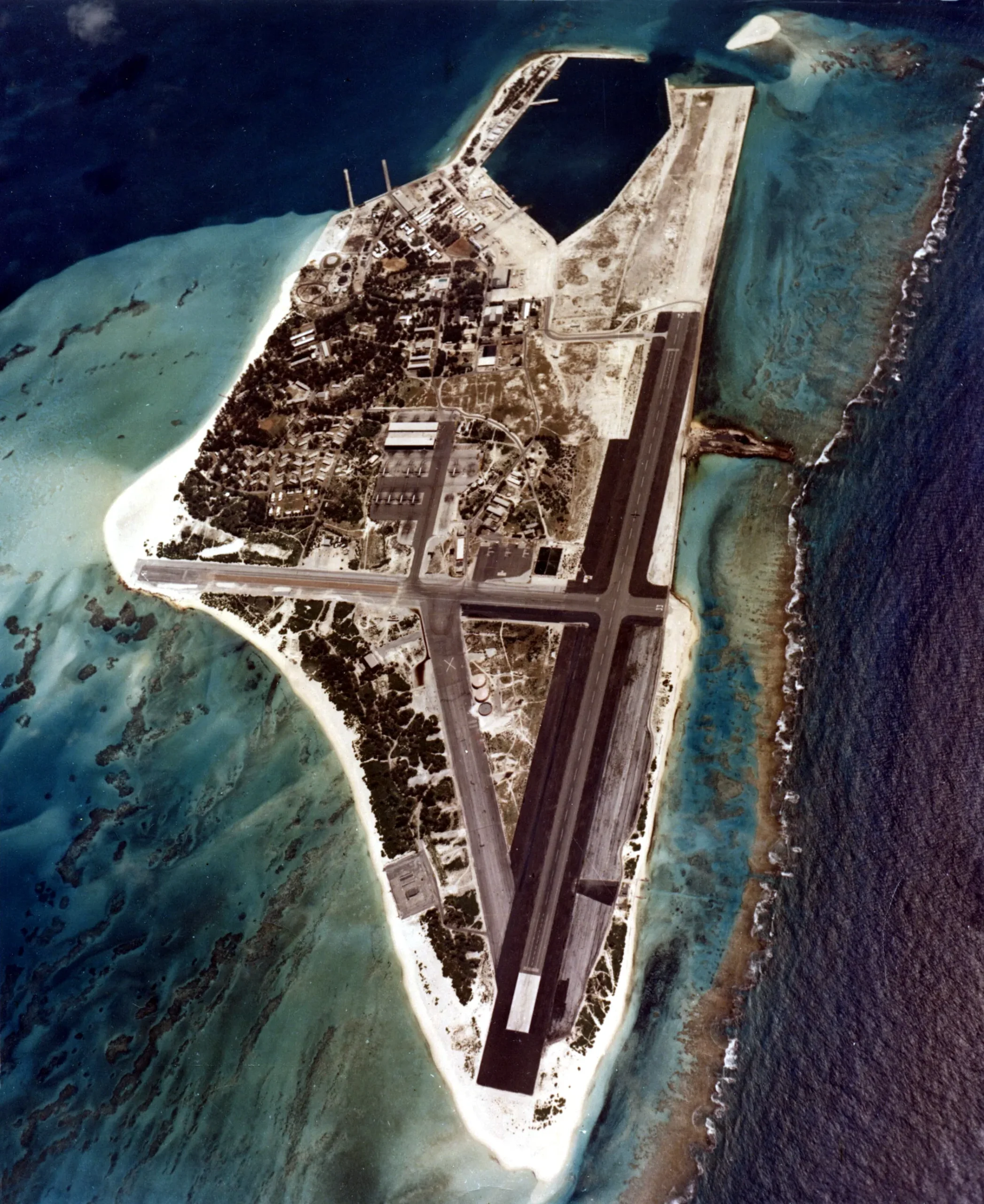
The result was a compact fortress. On Sand Island there were submarine and seaplane facilities, a harbour for refitting submarines, gun emplacements, pillboxes and magazines. On Eastern Island there were runways, and the atoll as a whole was built to serve as an advance base for aircraft and submarines.
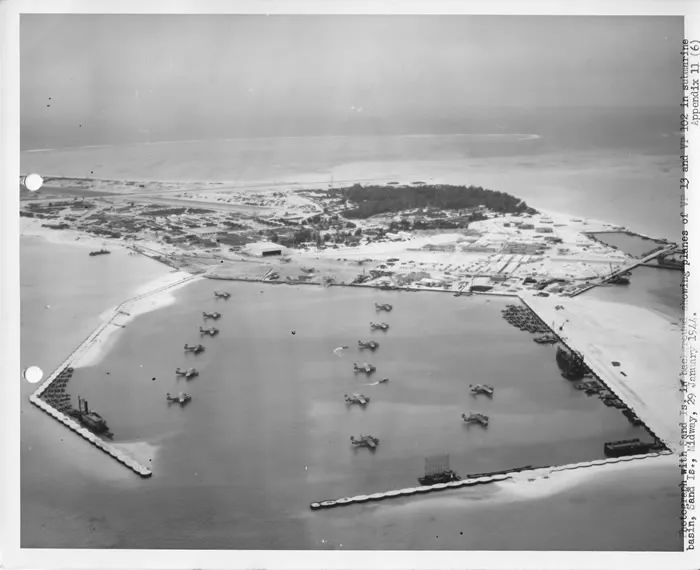
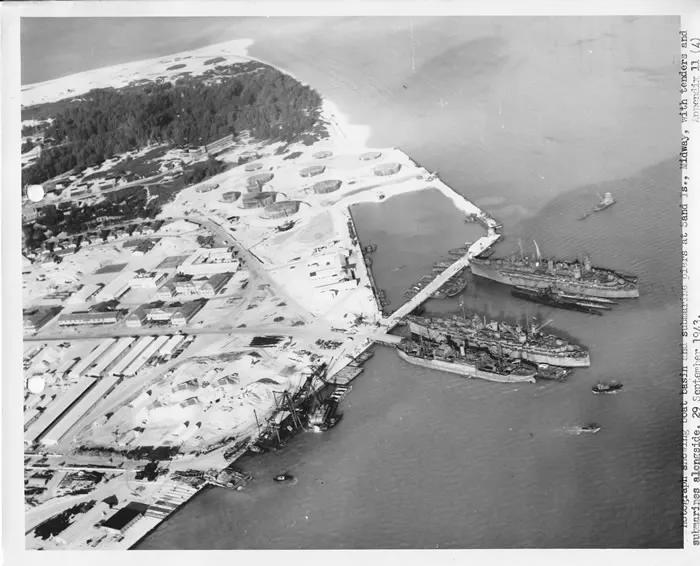
7 December 1941
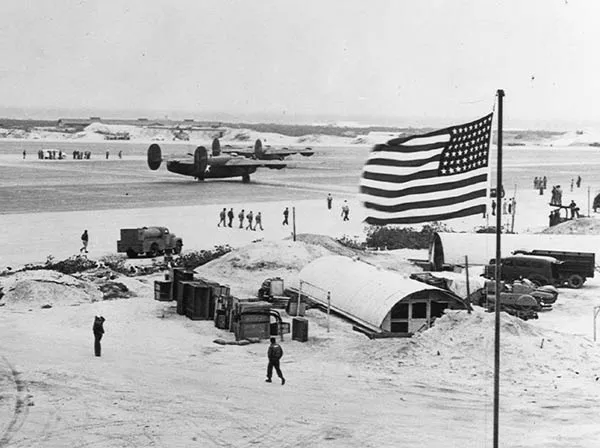
When Japan struck at Pearl Harbor, it struck at Midway too. Two Japanese destroyers shelled Sand Island for nearly two hours on the same day. Four Americans were killed and ten wounded. The best-remembered story is that of First Lieutenant George Cannon, who was in the radio control room on the second floor of the power plant. The thick concrete walls of the building protected the room. Cannon was mortally wounded but kept directing defensive fire, and he became the first Marine awarded the Medal of Honor in the Second World War. The building is still known as the Cannon Building. A Japanese submarine shelled Sand Island again in February 1942, on the 9th or the 10th depending on the record.
June 1942: the atoll’s part
By the spring of 1942 Admiral Yamamoto wanted to lure the remaining American carriers into a decisive battle by threatening Midway, and the story of how the Americans found out is one of the war’s best-known pieces of intelligence work. The code-breakers at Station HYPO, led by Joseph Rochefort, had been reading Japanese messages about an objective called AF. To confirm it was Midway, someone devised a ruse: the atoll was told to send an uncoded message saying its water distillation plant had broken down. Japanese traffic then reported that AF was short of water. That is how the Americans knew where and roughly when to expect the attack, and Admiral Nimitz was able to put his three carriers in position.
It is worth saying clearly what the battle was and was not. The main fighting took place at sea, 100 to 200 miles north of Midway, between carrier aircraft and carriers. The American carriers Enterprise, Hornet and Yorktown sank four Japanese fleet carriers, Akagi, Kaga, Soryu and Hiryu, and lost Yorktown. But the atoll had a part, and it was a hard one. At 5:45 a.m. on 4 June, a Midway-based PBY patrol aircraft sighted the incoming raid about 150 miles out, and radar picked it up ten minutes later. The Marine fighter squadron on the island, VMF-221, went up to meet it with a mixed force of aircraft that were in many cases out of date. Twenty-five fighters engaged, 10 returned and only two of those were fit to fly. Of the first 12 pilots, only three survived the initial fight.
The bombs started falling at about 6:30 a.m. They set the seaplane hangars on Sand Island on fire and ignited fuel tanks at the north end. On Eastern Island, two heavy bombs destroyed the powerhouse and a hit on the command post killed Major William Benson. Ground defences suffered 24 casualties. The Japanese had meant to knock the atoll flat before a landing. They did not manage that, partly because the American carriers were already in position, and the Midway garrison counter-attacked what it could. Marine dive bombers led by Major Lofton Henderson, and Army B-17 bombers, attacked the Japanese carriers that morning, with heavy losses and little to show for it. Henderson was killed, and only eight of his 16 dive bombers came back. The airfield that now serves the atoll carries his name.
The decisive blow came later that morning, when American dive bombers from the carriers found the Japanese ships rearming and refuelling. In a few minutes, three Japanese carriers were burning. A fourth, Hiryu, was crippled that afternoon and lost soon after. Yorktown was hit by Japanese aircraft on 4 June and then by a submarine’s torpedoes on 6 June, and finally sank on 7 June. Roughly 307 Americans and more than 3,000 Japanese died in the whole battle, though the Japanese total varies by a few dozen depending on how it is calculated. Admiral Nimitz said later that the judgement of one dive-bomber commander, Wade McClusky, decided the fate of the American carrier force and of the forces at Midway.
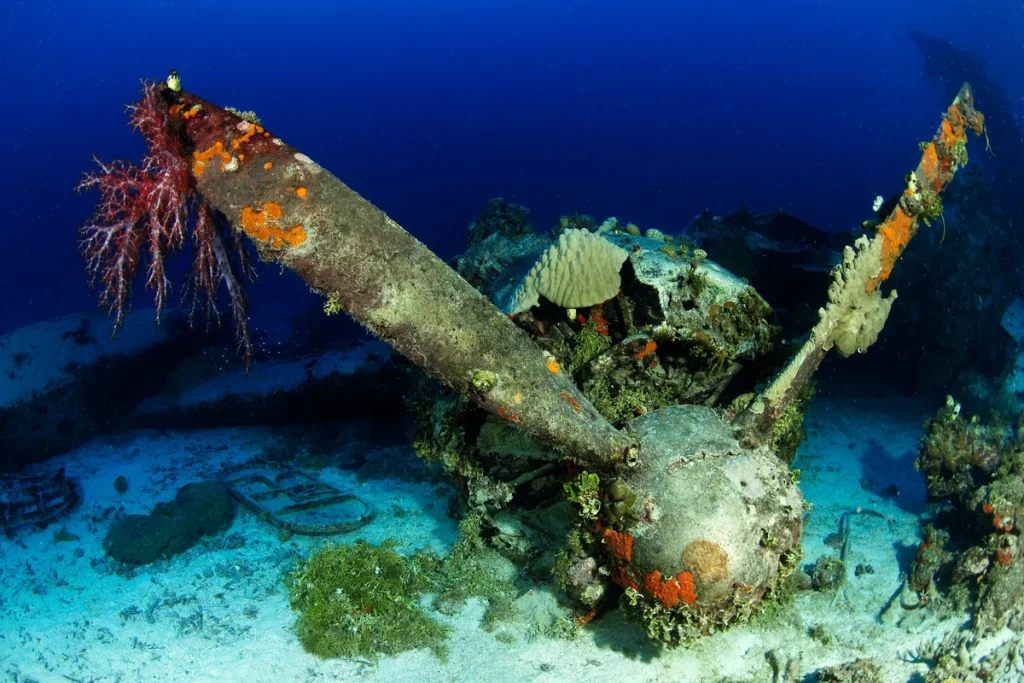
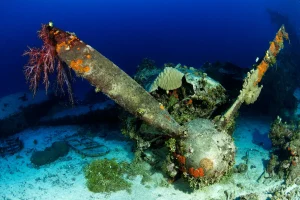
The aircraft that fell near the atoll that day are still there. Research has confirmed 31 plane crashes in the air battle over the atoll, 22 American and 9 Japanese, and all are considered war graves. The refuge’s own historians stress that, of all the history on the island, the fighting on the atoll itself lasted only about half an hour.
The base after the battle
The victory made Midway valuable all over again. After the battle the island was built up as a forward base for submarines and aircraft. Seabees began work on the airfield on Sand Island in July 1942, and it was completed in 1943 and extended with fill through the war. Black rats arrived with Navy ships in 1943, with long consequences that we return to below. At its peak the base held up to 10,000 troops by one estimate, while another describes 5,000 residents during the naval era. Both figures are rough.
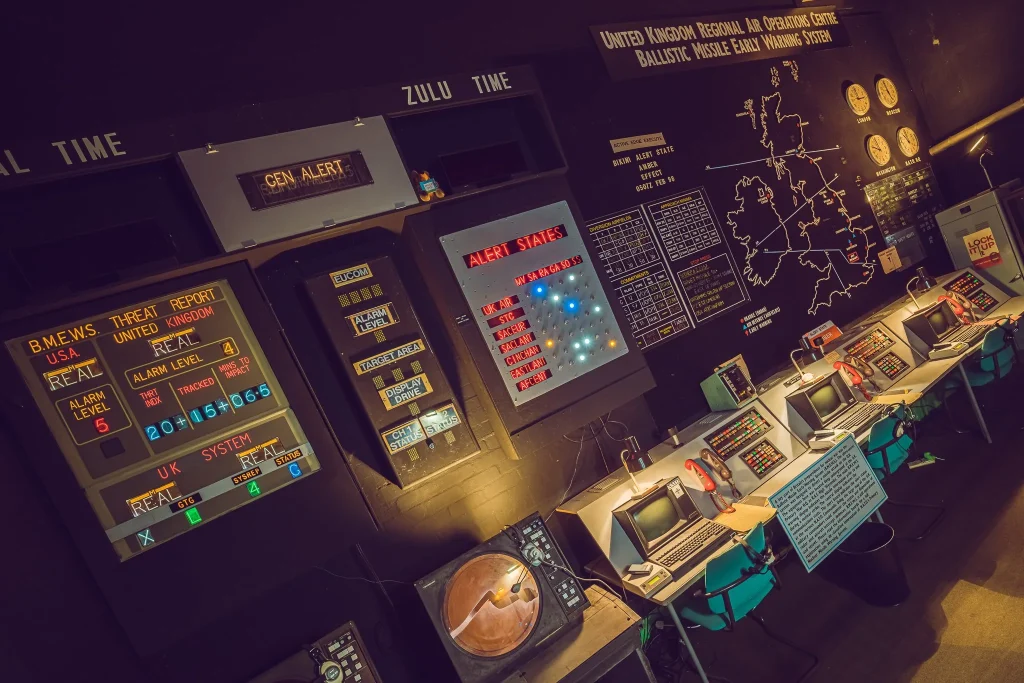
The Cold War kept the base busy. Korea brought thousands of service people through Midway for refuelling and repairs in 1950. The Navy reactivated the air station in 1953, and construction began on the Distant Early Warning Line, with the Pacific section based at Midway. In 1957 Seabees built a heavy-aircraft runway, a hangar, housing, a theatre and a chapel. A signals-intelligence site operated on Eastern Island from 1954 to 1971, and a sound-surveillance terminal, which used undersea cables and hydrophones to track Soviet submarines, operated from the late 1960s until 1983. During the Vietnam War about 3,500 personnel were stationed on Sand Island, and in June 1969 Midway hosted a meeting between President Nixon and South Vietnamese President Thieu. The base was downgraded to a naval air facility in the 1970s and was run by civilian contractors from 1981. It closed in September 1993, and the Navy spent a large sum, more than $90 million by one count, on cleanup.
Birds and bulldozers
The thing that makes Midway unusual among military bases is that the birds never left. The albatrosses that sailors called gooney birds have nested on the atoll for far longer than humans have been there, and they have an unfortunate habit of nesting on flat open ground, which is exactly what an airfield is. For years the people running the base saw the birds as a hazard. The Navy is reported to have killed more than 50,000 albatrosses over several decades, using bulldozers and flamethrowers, to keep them from flying into the early, underpowered jets, and numbers are said to have begun to rise from the mid-1960s. The scale of the killing rests on a single account, but the broad outline is well known.
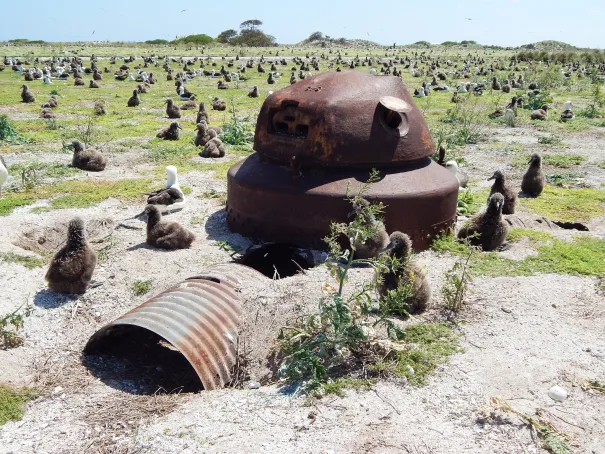
The ending is better. The refuge today is home to the largest albatross colony in the world, and the figures are dizzying. Nearly three million birds nest there, across 21 breeding species. More than a million albatrosses return each year, and the atoll holds somewhere between two-thirds and three-quarters of the world’s Laysan albatrosses, depending on the count. Biologists have banded more than 250,000 of them. The best known is a Laysan albatross called Wisdom, first banded in December 1956, who is believed to be the oldest known wild bird in the world. Her age is given as anything from 68 to about 75, and the number of chicks she has raised as somewhere between about 30 and more than three dozen. The safe way to put it is that she is in her seventies, and is still returning.
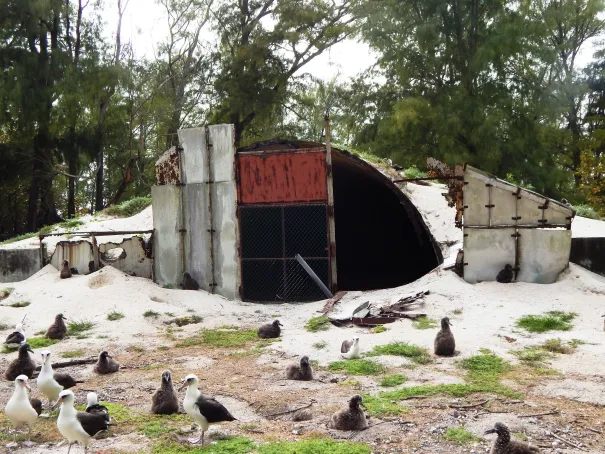
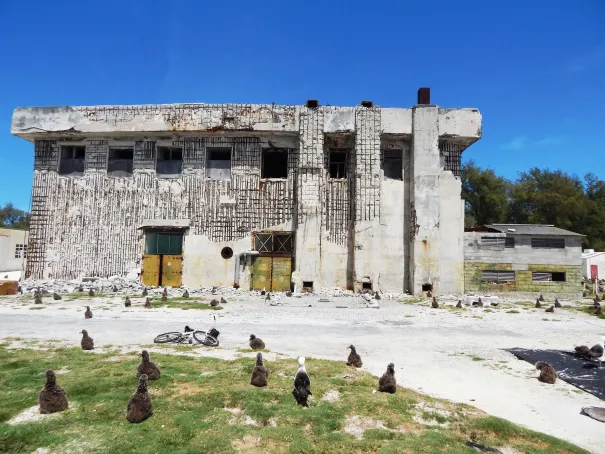
The albatross story has darker threads too. Plastic is a constant problem: the refuge removes about 20 tons from the shoreline each year, and nearly all chicks have plastic in their stomachs. Lead paint on old military buildings caused a condition called droop wing in chicks that ate the flaking chips, which led to the atoll being designated an EPA Superfund site and to a lead cleanup between 2011 and 2018. And in March 2011 the tsunami from the Japanese earthquake washed over much of the atoll and killed more than 110,000 nesting seabirds, though scientists did not expect long-term population effects.
What survives
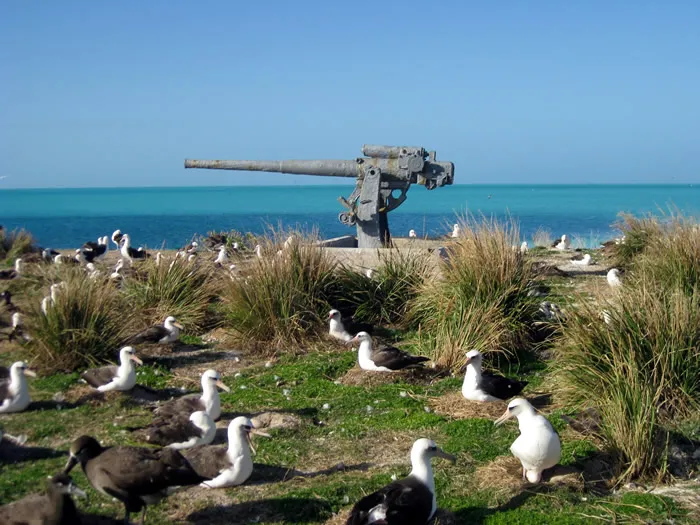
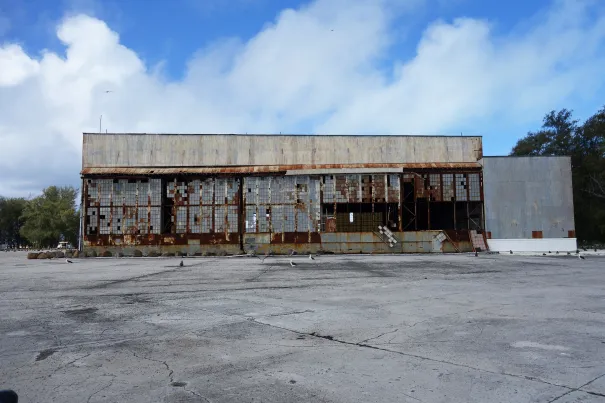
Much of the wartime fabric is still there, but not all of it. The most important remains are on Sand Island. Ammunition magazines, a concrete pillbox, gun emplacements for 3-inch batteries and two emplacements for a 3-inch naval battery make up the group of six defensive structures that became a National Historic Landmark, in 1986 or 1987 depending on the record. Two 5-inch coastal defence guns remain, one on its mount alone and one with its shield. The seaplane ramps and hangar on Sand Island and the runways on Eastern Island are also on the list of associated properties. The power plant, the Cannon Building, and two buildings designed by Albert Kahn, the theatre and the Officer-in-Charge house of 1941, have been described as eligible for the National Register. Six murals from the theatre were moved to the Pacific Aviation Museum in Hawaii. There is a memorial of three stone pillars. Four doctors are buried in the small Doctors’ Cemetery on Sand Island, with death dates between 1906 and 1950.
The refuge is a great monument to the people who passed here.
Edgar Fox, Marine veteran of the Battle of Midway, speaking about the refuge
Fox fought at Midway and returned in 2012 and again in 2022 for the 80th anniversary. He died in 2024. Colonel John Miniclier, reported to be the last survivor of the battle, died in 2025.
Refuge, memorial, monument
The designations came in a run. The atoll became an overlay National Wildlife Refuge in 1988 while the Navy still held it. On 31 October 1996 an executive order transferred it to the Department of the Interior, and the Fish and Wildlife Service took over. In 2000 it was designated the Battle of Midway National Memorial. In 2006 the northwestern Hawaiian islands became a national monument, renamed Papahanaumokuakea in 2007 and expanded in 2016, and in 2010 UNESCO included Midway in the monument’s World Heritage Site. About 40 to 50 refuge staff, contractors and volunteers live on Sand Island, compared with more than 5,000 residents in the naval era.
The tension in that story is the one between history and wildlife, and it has never been resolved. Visitors were allowed for years. A contractor ran a visitor program from 1996 until 2001 or 2002, when it withdrew after, in the words of a former executive, only one profitable month in six years. A later tourism program ran from 2008 until it was suspended, with public visits ending in 2012 or 2013 depending on the record. The dates blur, but the outcome is clear: tourism ended. The agency’s annual funding fell from about $4 million to under $3 million. Restoring a visitor program was estimated in 2016 to cost over a million dollars a year, not counting the start-up costs.
Meanwhile buildings were lost. A 2016 Government Accountability Office review found that the agency had kept most historic properties but had demolished seven without the required public notice. An advocacy group, the International Midway Memorial Foundation, says four of the five historic cable station buildings were demolished in October 2013, that the fuel farm and the water tower have gone too, and that the seaplane hangar is used for storage without maintenance. It is not a neutral voice, but it is specific. The agency’s position is that too many visitors would disturb the ecosystem, and that the birds are drawn to the lights that modern lodging would need. The advocacy group’s counter-position is that the agency has a duty to protect the history as well as the wildlife. Both are right about something, and the budget is not big enough for either.
The mice
The worst recent chapter involves a small animal. House mice arrived on Navy ships decades ago and, for a long time, were not a problem for albatrosses. In the winter of 2015 that changed. Biologists first saw wounded Laysan albatrosses, and the cause turned out to be mice that were chewing the necks and heads of nesting adult birds, an apparently unrecorded behaviour. About 480 birds are said to have been injured and at least 52 killed that season, and more than twice the normal number of birds abandoned their eggs. The attacks were captured on camera at night.
The answer was an eradication project run by the Fish and Wildlife Service with Island Conservation and the monument. It was delayed by COVID-19 and carried out in July 2023, with bait dropped from helicopters over Sand Island. Early results looked promising, but mice reappeared within weeks, and in September 2023 the project was declared unsuccessful. Mice were still present in many areas, and the cause was not immediately evident. The project has moved to what it calls a mitigation and learning phase, and Eastern Island, which has no mice, remains a refuge from them. The earlier eradication of rats, carried out in 1995 with the Navy paying and the Department of Agriculture doing the work, was successful, and Midway was declared rat-free in 1996. Bonin petrels, which had fallen from about 500,000 birds to fewer than 5,000 by the 1980s, rebounded to as many as a million.
The runway that planes need
Henderson Field, the runway on Sand Island, is one of the odder facts about the atoll. It is a 7,800-foot asphalt runway which serves as an emergency diversion for flights crossing the North Pacific. Twin-engine airliners are certified to fly only a limited time away from a suitable airport, and Midway sits roughly halfway between Asia and North America. The field has been used for real emergencies, including a Continental Boeing 777 in January 2004 that had lost an engine, a Delta 747 in June 2011 and a United 787 in April 2021. Because of the nesting colony, scheduled arrivals and departures are generally limited to night time from November to June.
The airport is also a problem. Boeing subsidised the upkeep for the first seven years after the transfer, and the Fish and Wildlife Service and the Federal Aviation Administration have shared a smaller bill since, which is widely seen as not enough. A report from October 2026 says the runway is deteriorating quickly enough to lose its FAA certification within five years and needs about $100 million for repaving, seawall repairs and harbour upgrades, and that Boeing and several airlines have urged the FAA to keep the field open. That is a single, recent report, and the figures should be checked before anyone relies on them. What is clear from the older record is that the airfield has been short of money for a long time. A 2021 advocacy document describes an emergency landing in which, it says, the crew could not raise anyone at the field and the lights failed to respond, a claim that was under investigation at the time.
Visiting
At present the refuge and memorial are closed to public visitation, and the only activities allowed are those that support airfield operations and conservation management. The agency offers virtual experiences instead. The sea around the atoll is a protected area, the aircraft that crashed nearby are war graves, and the islands are nesting ground for animals that cannot be disturbed. If the visitor program ever returns, it will need a plan we have not yet seen.
The best way we know to see Midway without going there is through the agency’s own stories. An April 2026 piece, published as part of the America 250 programme, tells the history through the veterans who came back to visit.
Conclusion
Midway is a place where almost every layer is the product of some other layer’s failure. The coaling station failed and the cable arrived. The cable made a base worth defending. The base became a fortress and then a victory. The fortress became a listening post for a war nobody fought. The listening post closed, and the birds, who had never left, took the place back. Each of these ended in something a visitor can still see: a pillbox, a gun, a runway, a nest.
We keep coming back to Edgar Fox’s phrase, a monument to the people who passed here. It is a better description of the place than the usual one, because it makes room for everyone who passed, from the cable company’s clerks and the Pan Am passengers to the Marines on Sand Island, and the thousands of men at sea whose graves are elsewhere. It also makes room for the creatures that were there before and after.
The battle gave Midway its name in history, but the atoll’s real achievement is more modest: a speck in the middle of an ocean that survived being turned into a weapon, and became something quieter. What happens next depends on a runway, a budget and a mouse, and none of the three is simple.
Did you know?
- Midway Atoll is about 1,300 miles northwest of Honolulu, and was annexed by the United States in 1867.
- The Hawaiian name Pihemanu means the loud din of birds.
- Nearly three million birds nest on the atoll across 21 breeding species.
- Pan Am flying boats stopped at Midway from 1935, and passengers stayed at Gooneyville Lodge.
- The cable station of 1903 made Midway part of the first round-the-world communications system.
- Two Japanese destroyers shelled Sand Island on 7 December 1941, the same day as Pearl Harbor.
- First Lieutenant George Cannon was described as the first Marine awarded the Medal of Honor in the Second World War.
- At least 31 aircraft, 22 American and 9 Japanese, are recorded as having crashed near the atoll in the air battle of 4 June 1942.
- Henderson Field is named after Major Lofton Henderson, who was killed attacking the Japanese carriers.
- A Laysan albatross called Wisdom, banded in 1956, is the oldest known wild bird in the world.
- A mouse eradication project in July 2023 failed, and mice still attack nesting albatrosses on Sand Island.
- The refuge and memorial are closed to public visitors.